Roman and Byzantine Empire Comparison Series- Part3: Imperial Life and Culture

Posted by Powee Celdran

WARNING: THIS IS TO BE MY LONGEST ARTICLE SO FAR, IT MAY TAKE DAYS TO READ SO I SUGGEST READ IT PER PART, THIS IS SUPPOSED TO BE AN ALL IN ONE ARTICLE ON ROMAN/ BYZANTINE CULTURE!! ANYWAY ENJOY!!

Previous Article on the comparison series: Roman and Byzantine armies (Part1)

Previous article on the comparison series: Emperors and the Imperial System (Part2)

51yH-GdxGtL._SX425_

Welcome back to another Byzantium Blogger article and part3 of the Roman and Byzantine Empire comparison series! This will be the final part of the 3-part comparison series and my longest ever article so far. In the last 2 articles of this series I have gone through the topics first on the evolution of the Roman army to the Byzantine army and in the next one about the imperial systems of Rome which had continued onto the life of their successor, the Byzantine Empire. Now this is the third and final part of this series, and will be the longest of the 3, I will now move on to the last but not the least important element of the Roman and Byzantine worlds, their culture and life in those empires as after all you cannot really tell the story of these ancient empires by just explaining how the empire was ruled or what kind of armies they had but by the way the empire as whole operated and how people lived in it. The last 2 articles have been extremely long ones as it had documented the whole stories of both empires from 753BC to 1453AD, though this one too will go on explaining the whole story within that long period of time, though cultural traditions compared to army structures and changes of emperor after all take centuries to evolve. Basically, before starting off the article, of course the Byzantine Empire is just another name for the Roman Empire continued in the Middle Ages all the way up to the 15th century, the only difference is the name mainly because the Byzantine Empire which was the Eastern Roman Empire was in the east and not based in Rome, and only for a short amount of time controlled Rome. Despite being a different empire in name, the Byzantines took with them almost all traditions from the Roman world before them including the Christian religion which grew in the times of the Roman Empire with great challenge until being tolerated and eventually the official state religion in the 4th century, though the biggest difference the Byzantines had from their predecessors, the Romans was language as the Romans of old used Latin and the Byzantines after them at first used it but shortly after would completely turn into a Greek speaking empire but the people of the empire despite speaking Greek and being mostly Greek in blood called themselves Rhomaioi which is Greek for “Romans”. Back to the beginning in fact, in the early days of Roman civilization, a lot of their ideas and traditions came from the ancient Greeks possibly due to their proximity as both civilizations were in the Mediterranean, and in fact the Romans had even claimed that they have originated from the ancient Greek city of Troy. Ideas of government, mythology and religious practices, war, and architecture were among some of the many things Rome borrowed from the Greeks and their neighboring Italian civilization, the Etruscans but over centuries, Rome became its own city state expanding its rule all over Italy and once it had control of Greece, Greek cultural influences have influenced Rome even more. From 27BC onwards, Rome would grow as a global empire controlling the entire Mediterranean as a “Roman lake” and spanning north to south from Britain to Egypt, west to east from Portugal to Iraq with roads and sea trade routes connecting it from end to end and with armies garrisoned all over the borders to keep the peace and progress within the empire known as the Pax Romana. Within the vast expanse of the Roman Empire, many people of different races have inhabited it including Italians, Gauls, Celts, Iberians, Germans, Africans, Punics, Egyptians, Jews, Syrians, and Greeks meaning several languages were spoken but Latin remained the official language of the state while Greek on the other hand especially in the eastern parts of the Roman Empire was the commonly used language. Why the Greek language became the highly spoken language in the east which was not only in Greece but in Asia Minor, Syria, and Egypt was because of another great empire that existed there before, the Macedonian Empire of Alexander the Great which was built up in only a quick amount of time during his short reign (336-323BC) but despite his large empire under him lasting only for 13 years until being divided by his generals after his death in 323BC, Greek customs, language, and people expanded out of Greece and Macedonia into Egypt, Syria, Persia, and all the way to India and for centuries these lands would take in the Greek culture. For instance, Egypt would end up becoming a Greek kingdom known as the Ptolemaic Kingdom and what was once the powerful Achaemenid Persian Empire would become the Greek Seleucid Empire until its fall to the new Persian Parthian Empire in the 1st century BC. In the east, Greek culture had become dominant while in the west the Romans expanded their territory even more after winning the Punic Wars against Carthage (North Africa) in the 2nd century BC but had also started expanding east conquering the Greek world, but at the end the saying was “Rome conquered Greece but Greece conquered Rome” which meant that despite the Romans taking over the Greek world, they did not destroy the Greek culture but instead embraced it and learned from it to build their empire culturally. When building their empire, the Romans learned new things from the civilizations they conquered and brought their culture and rule to them at the same time but the one thing the Romans did that helped them keep their empire alive for centuries unlike other empires before them which just simply fell without leaving much of a legacy was that they (the Romans) adapted to the changing of times when they needed to such as in the 3rd century with the weakening of their empire, barbarian invasions from the north, and the threat of the Persians in the east, the Romans had to adapt by changing the structure of their army and earlier on because of civil wars that could bring down Rome itself, the Romans had to adapt so therefore the republic was reformed into the empire with the emperor beginning with Augustus Caesar as its supreme leader, although still keeping institutions from the centuries old republic such as the senate. Now in the 4th century after a long period of chaos, Rome once again survived thanks to the civil and military reforms of the emperor Diocletian and in the long reign emperor Constantine I the Great (306-337), things changed even more with Christianity now made an official religion after a long period of operating in hiding and later century even fully becoming Rome’s official religion fully replacing the old Pagan religion and the old gods. The year 395 draws the line where the eastern and western Roman worlds would separate after the death of the emperor Theodosius I, the east which was the Greek speaking part of the Roman world then would go on as Byzantium for the next 1,000+ years and the west would only last very quickly and quietly vanish away. Many would put the year 476 as when the Roman civilization had ended and the start of the Middle Ages but that was only the year the Western Roman Empire quietly died out as the east survived under many more emperors as the Byzantine Empire going through a non-linear history of increasing and decreasing in power and influence lasting all the way up to 1453 living through the entire Middle Ages. Throughout its existence, the Byzantine Empire had preserved the ancient knowledge of the Greeks and Romans by maintaining a highly civilized and educated society compared to the rest of Europe in their time after the Roman Empire faded away turning into many kingdoms having to survive on their own and only in the Renaissance in the 15th century did Europe start discovering the knowledge of the past but this rediscovery did not come out the blue, the Byzantine Empire too was responsible for it as they preserved the old knowledge bringing it to Western Europe when the Byzantines fled they lost their empire to the Ottomans in 1453. Of course it has hard to think of the Byzantine Empire in the east as the continuation of imperial Rome in the Middle Ages when the Byzantines spoke Greek instead of Latin and adopted oriental fashions and practices, but behind it all, they kept the knowledge of ancient Greece and Rome from science and architecture to philosophy and art as well as the imperial systems from Rome. Nowadays it is obvious to see that Rome was such an advanced civilization with their roads, aqueducts, and structures that you can still see today as well as the knowledge we know of their armies and strong government systems but little do we know that the Romans learned from others in order to make their civilization such an advanced one and little do we also know that these superior systems the Romans had lived on in the Middle Ages in Byzantium while they have mostly been forgotten in Western Europe which was under Rome’s control too; also in the Middle Ages the west such as France and Britain may seem so far away from Constantinople wherein back then centuries ago they were under one empire but because many kingdoms arose and so did the immigrations of many races, these worlds started to seem further apart from each other. For such a long time, the Romans have left their mark in 3 continents: Europe, Asia, and Africa and till today it is obvious to see Rome’s legacy with the Roman numerals we still use, the alphabet many of us use depending where, the calendar and the planets of the Solar System named after Roman gods, and the languages of Italian, French, Spanish, Portuguese, and Romanian spoken by many which were languages that were derived from Latin; the language of imperial Rome and these languages that come from Latin today are not only spoken in Europe but in many parts of the world as well including countries in the Americas and Africa which had been colonies of these European countries that had Latin based languages. Now with Byzantium, the successor of Rome they had both kept the knowledge of Ancient Rome but had also developed their own culture that they had influenced to most of Eastern Europe including Russia. Now this article will be very long as it will cover 5 topics to discuss: the extent of the Roman and Byzantine worlds and how far they have left their mark, Roman and Byzantine architecture, arts and fashion, entertainment, and education and languages of the Roman and Byzantine worlds and will not anymore go through the imperial systems or military history as these have been discussed in the 2 previous articles of this series. If this article may be too long for you readers, you can skip to which section of it you would like to read by scrolling down. Also, this took me some time since the last one to write it basically because in the past weeks I have been quite busy finishing the new Byzantine Lego epic film I made “War of the Sicilian Vespers” set in the late 13th century: you can click here watch it. Anyway, let’s begin with the last and final part of this 3 part comparison series.

Roman_Empire_Trajan_117AD
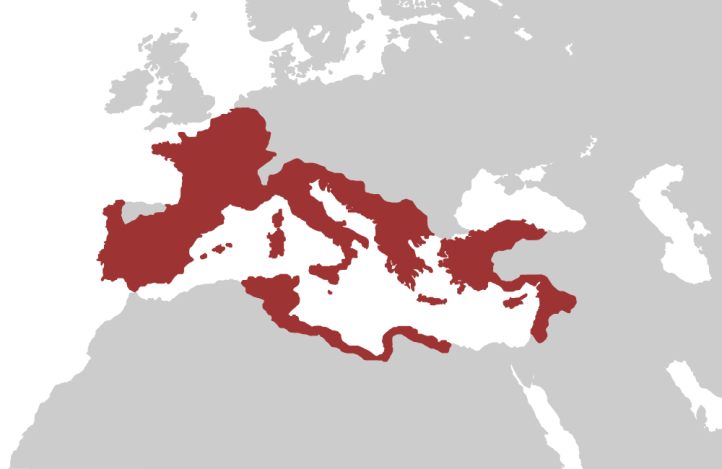
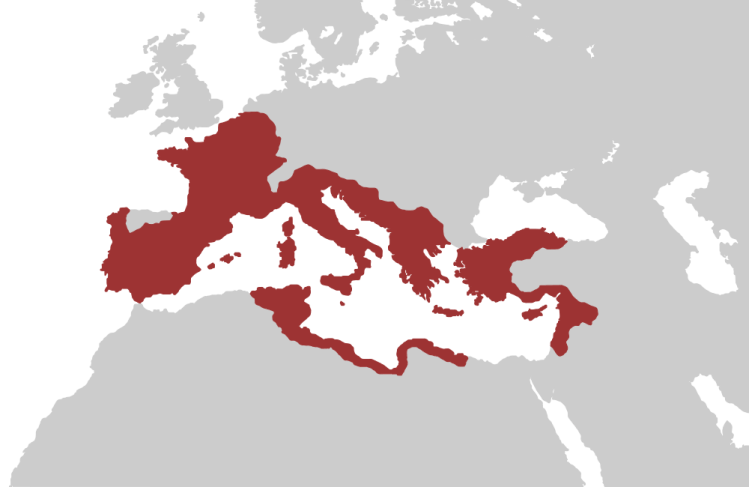
The Roman Empire at its height, 117AD with all its provinces
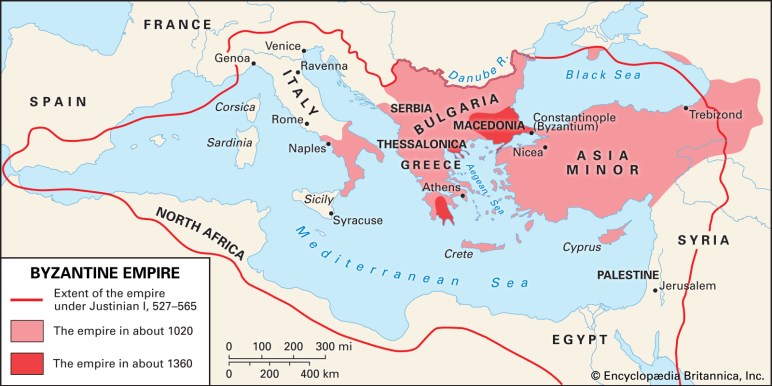
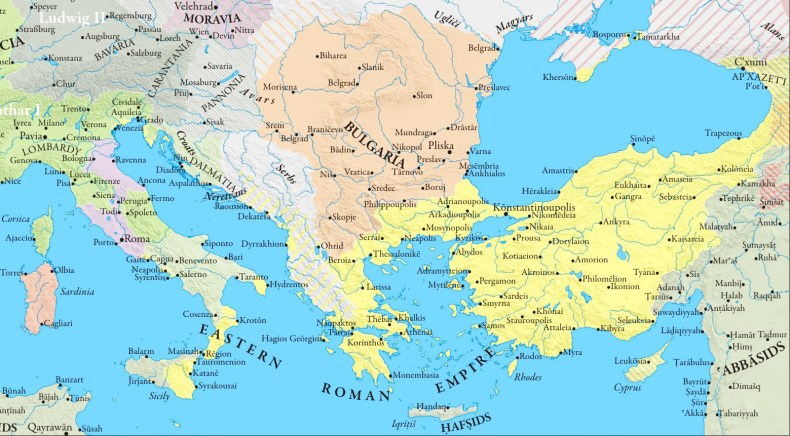
Byzantine-Empire
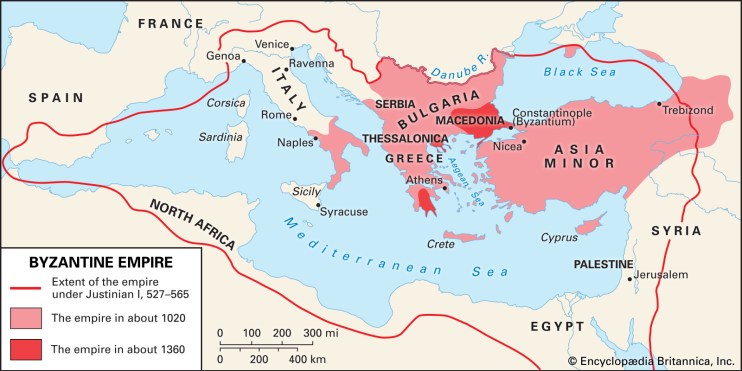
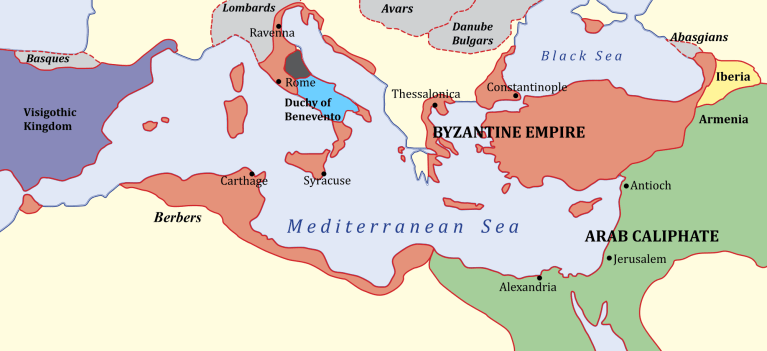
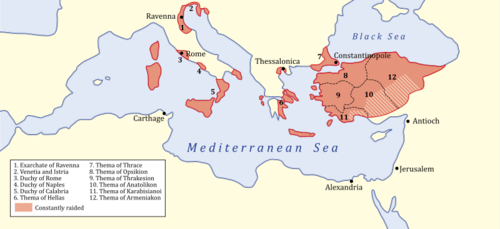
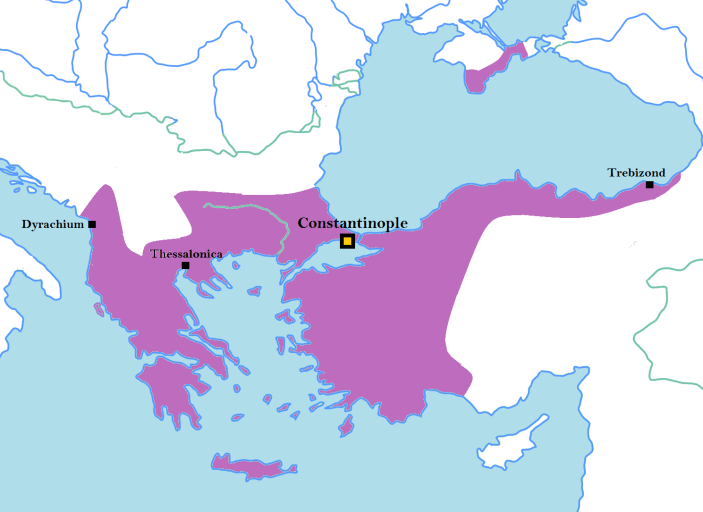
Extent of the Byzantine Empire in 3 different periods
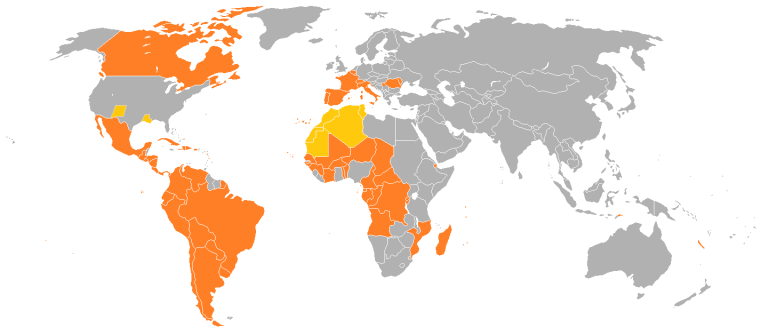
Romance_Languages-World-Map
Countries (global) that speak Latin based languages

Related Articles (Byzantine life articles) from The Byzantium Blogger :

7 Reasons to be Interested in Byzantium

The Surprising Life of a Medieval Empire

The Ravenna Mosaics and What to Expect

Byzantine Science and Technology

Byzantine Crime and Punishment

Foreign Lands and People According to the Byzantines Part1

Foreign Lands and People According to the Byzantines Part2

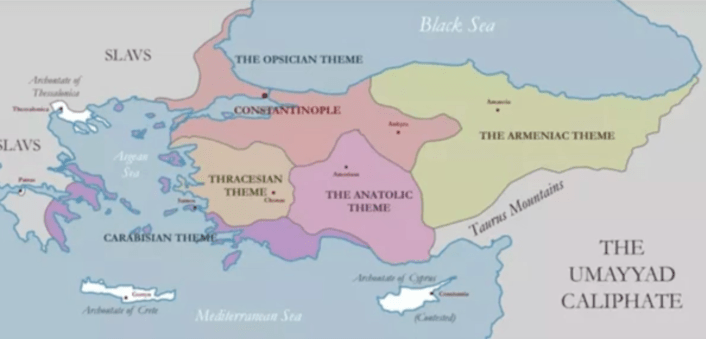
A Guide to the Byzantine Empire’s Themes

15 Byzantine Related States Part1 (1-7)

15 Byzantine Related States Part2 (8-15)

12 Turning Points in Byzantine History

Constantinople: The Queen of Cities and its Byzantine Secrets

Ethnic Origins of the Byzantine Emperors

The many sieges of Constantinople

Story of 3 plagues across centuries- COVID-19 Related

Thoughts on quarantine, self-isolation, and social distancing- COVID-19 Related

Related Read:

Roman Empire at its height (from Imperium Romanum).

Related Videos:

Ancient Rome in 20 Minutes (from Arzamas).

Daily life in the Late Roman Empire (from Eastern Roman History).


I. Extent of the Roman and Byzantine Worlds and Globalization
Palaiologos_Dynasty_emblem1

It is a known fact that for a time Rome controlled most of the known world but it did not happen in an instant as Rome itself before expanding had to fight its way from a small insignificant city state to the dominant city of Italy. The early history of Rome though is shrouded in mystery and its origins are mostly legends; and as legend claims the Romans were descendants of the ancient Greek city of Troy in Asia Minor and as the city fell to the Greeks of the mainland after the 10-year-long Trojan War, in the famous story The Aenid by Virgil, the Trojan leader Aeneas, the demigod son of the Greek goddess Aphrodite and the Trojan Anchises escaping Troy sailed down the Mediterranean and found himself in Italy where he would found the city of Alba Longa in Latium which is now the region of Lazio where Rome is located and his descendants from Alba Longa, the twins Romulus and Remus who were the demigod sons of the Roman god of war Mars would be the ones to establish the city in the 7 Hills which would be named Rome after Romulus after he killed Remus and became Rome’s first king. The early history of Rome though wherein from 753 to 509BC it was ruled by 7 kings remains unclear but a known fact is that Rome began as a small but growing settlement that was founded by immigrants and run-away criminals from all over Italy running away from their government making Rome be built as a haven for fugitives wherein they could restart their lives, the same way Australia was founded some centuries ago. In the early days of Roman history, Rome was basically only the city itself including surrounding areas and the port of Ostia while the rest of Italy was inhabited by different peoples such as the Italic tribes of the Samnites, Sabines, Umbrians and others occupying the central parts, the powerful Etruscan kingdom of Etruria occupying the lands north of Rome including Tuscany, Greek colonists at the south including in the island of Sicily, and in the north of Italy were the Gauls who were identified as Celts. Rome was though governed by a senate consisting of the patrician families of the city who were in that position because of their importance and heritage while the rest of the people even if they were as rich as patricians belonged to the class known as the Plebs which did not have the same rights or privileges as the patricians until later on when they would and the Plebs as they were citizens were allowed to enter the senate and have political positions. By the 3rd century BC, the Romans now restructured their army from the traditional phalanx formation of the Greeks to their own Manipular army structure consisting of 3 lines of differently armed and armored soldiers which enabled Rome to expand its control over Italy defeating all neighboring tribes and the Etruscans as well, also fighting off the Gauls who in 390BC attacked Rome, then Rome too took the south from the Greeks. Now at this time, Rome now being a regional power would engage in a series of 3 wars known as the Punic Wars with the Mediterranean naval superpower, Carthage and in 146BC, Rome became the dominant Mediterranean power after fully defeating Carthage as well as taking over Greece. When conquering Italy, the Romans had done conquests differently as when they conquered the people there, they gave them citizenship as a way to make a diplomatic alliance with conquered peoples in order to grow their army and have new members enter the senate so over time the Roman army and senate would not only consist of Romans but of people from beyond Rome especially from Italy while the people they conquered from lands beyond Italy who were bitter enemies to Rome were mostly enslaved when conquered. Meanwhile, in the 4th century BC when Rome was still expanding its rule over Italy, it was the Greeks who had dominated most of the world, particularly the east, this was under the empire of Alexander the Great, the king of the Greek kingdom of Macedonia built within only 13 years (336-323BC) with him personally commanding the armies and with them at all times to expand his empire. At his early death in 323BC, Alexander’s Empire stretched from Greece all the way to the Indus River, which was the border of India, but almost all his wars to build his empire were fought against the once powerful Achaemenid Persian Empire and after defeating it, Alexander took over the entire territory of Persia including Egypt but right after his death, he did not leave behind any dynasty that would continue to rule the vast empire he conquered, instead his empire was divided among his generals who formed their own empires such as Seleucus Nicator who created the Seleucid Empire building Antioch as its capital consisting of what was once Persian territory in the Middle East and the general Ptolemy Soter taking Egypt forming the Ptolemaic Kingdom with Alexandria as its capital. The Romans on the other hand coming from the “center” of what was the known world conquered both east and west and in the 1st century BC, the Romans themselves defeated the long lasting successor empires of Alexander the Great first defeating the Seleucid Empire in the east taking the Eastern Mediterranean, although the new Persian power known as the Parthians helped destroy the Seleucids from the east before engaging in a centuries long war with Rome beginning with their defeat at the Battle of Carrhae in 53BC, although 10 years before this the Romans began their conquest of the east under the general Pompey Magnus who had also captured Jerusalem in 63AD making Judea and the Levant under Roman rule. In the west meanwhile, the Greeks and Phoenicians have already made colonies along the Mediterranean coasts of France and Spain which include Massalia (Marseilles) and Cadiz but the Romans went further not just taking the coast but the inland parts as well conquering Spain and Portugal from the Iberian tribes and France from the Gauls, it was in the 50s BC when the Roman general Gaius Julius Caesar annexed the entire Gaul (France) as part of Roman territory. After Caesar’s death in 44BC the now large extent of Rome’s Empire was fought between his adopted successor Octavian and the general Mark Antony who made an alliance with Ptolemaic Egypt. Octavian won though and in 30BC after the defeat and deaths of Mark Antony and the Queen of Ptolemaic Egypt Cleopatra VII following the Battle of Actium in 31BC, the descendant of Ptolemy Egypt was annexed as a Roman province and particularly the emperor’s personal province as it proved to be a rich one and a strategic position in terms of trade as it linked the Mediterranean to the Red Sea which enabled access for the Romans to trade with lands as far as Africa and India where they could obtain rare luxuries such as ivory tusks, tortoise shells, and wild animals, but also Egypt supplied the Roman people heavily with grain as it had large amount of land and water to grow wheat and reeds for papyrus for scrolls.

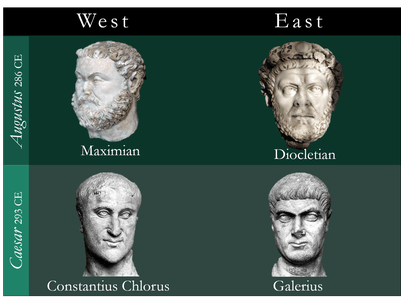
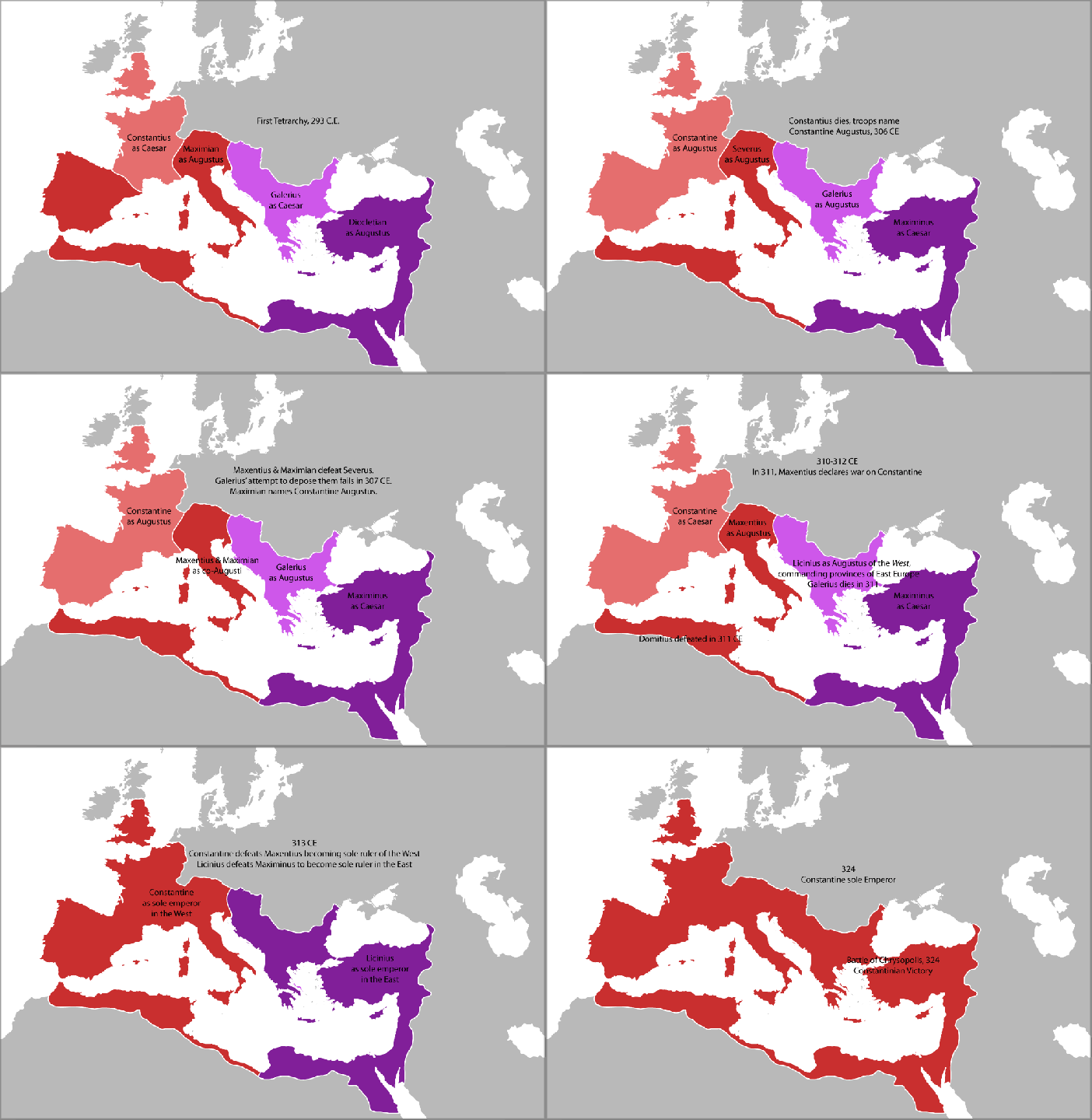
Now in 27BC, Octavian became the first emperor Augustus Caesar and the Roman Empire was born and so was “Pax Romana”, the term used for Roman globalization wherein the vast extent of land was under one ruler and under Rome which was the Caput Mundi or “capital of the world” and under this Pax Romana, the whole empire would be connected by efficient roads and sea routes, trade would function all over it, and its legions would be stationed along the borders from end to end. With such a vast empire, the Romans would subdivide it into provinces, though these provinces turned out to be as big as actual countries and some countries today originated as Roman provinces (like Portugal which was once the province of Lusitania); some would be under the rule of the senate which included Italy, Greece, Southern Gaul and Spain, Asia Minor and North Africa while others such as Egypt, the rest of Gaul, Judea, Syria and later Britain were imperial provinces directly under the emperor wherein the emperor himself appointed the governor in charge while in senatorial provinces the senate managed it and appointed its governor, basically the senatorial provinces were Rome’s more “peaceful” and “civilized” provinces which already had existing cities while the imperial provinces were the less peaceful or provinces in risk of invasion which needed more military presence. In the reign of Augustus (27BC-14AD), the empire’s natural borders were drawn and like many empires of the ancient days, Rome used natural borders to define their territory, these borders were then known as the Limes; in the north under Augustus the rivers Rhine which flowed out to the North Sea and Danube which flowed east into the Black Sea were set as the Roman borders of continental Europe while in the east the Euphrates River was set as the border with the Parthian Empire and in the southeast it was the Arabian desert, then in Africa the Sahara Desert was set as the border and in the west it was no other than the Atlantic Ocean as the Romans had no idea yet what existed beyond it. The land borders had permanent fortresses across it and would be built to station the legions in charge of protecting the borders, these fortresses called Castra especially the ones in Germany and Britain would evolve into existing cities today like York in England and Cologne in Germany, and these new settlements built by the Romans at the frontiers would be called Colonia while even in the Sahara, the Romans too built fortresses, though in some places like in the east where empires had already existed before, the Romans made these old fortresses theirs. In 43AD, the emperor Claudius I (r. 41-54AD) would annex Britain as a Roman province making it the farthest Rome reached to the north as well as adding the rest of North Africa which is today’s Morocco known as Mauretania and Thrace to Roman rule but it was under the emperor Trajan (r. 98-117) that Rome was at its largest extent after annexing Dacia beyond the Danube (today’s Romania) with the Carpathian Mountains as the new borders there, as well as annexing Armenia all the way to the Caspian Sea, and Mesopotamia (today’s Iraq) all the way down to the Persian Gulf with the Tigris River now the eastern border, then in the reign of Trajan’s successor Hadrian (r. 117-138), Rome’s imperial borders would be clearly defined and the wall in Britain built from coast to coast not to keep away the barbarian invaders from Caledonia (Scotland) but to stop Roman territory from further expanding, although a further wall would be built afterwards in Scotland known as the Antonine Wall by Hadrian’s successor Antoninus Pius (r. 138-161) in whose long peaceful reign was when the Pax Romana was fully in effect wherein wars or rebellions were very rare. Another part of the world under Roman rule though a client kingdom which had its own king who served Rome was the large area in the Crimea (today’s Ukraine) above the Black Sea which was the Greek speaking Scythian Bosporan Kingdom. Though the Romans controlled such a large territory, some parts of it were barely inhabited or were easily conquered as its inhabitants called barbarians did not have great cities the way things were in the east but were rich in resources as the provinces in Germany had wood from the forests, Dacia had gold mines, Gaul and Spain were rich in farmland, and Britain in wool while the eastern provinces were home to advanced ancient civilizations already having large cities such as Antioch, Alexandria, and Jerusalem that had existed for much longer whereas the west just had wooden settlements rather than full cities. Rome’s mission though when being control of the west and north belonging to barbarians was to “civilize” them by building roads and cities as the east was already highly civilized so in the west the Romans built cities or Colonias that began as trading posts along the roads that connected the empire, these trading posts would later become the cities of Milan in Italy, Lyon, Marseilles, and Paris in France, London in Britain, and another one being Sirmium in Serbia (today’s Sremska Mitrovica) which would be more important in the late Roman age. The east meanwhile was more crucial as it produced grain and made the empire rich also in the trade of spices, jewellery, and luxury goods that came from there while Egypt had turned out to be the most crucial province for Rome as said earlier giving Rome access to the Red Sea which allowed Rome to trade east with India and even with China and to the south with Africa and as trade passed Egypt particularly the capital Alexandria, Rome earned more from the taxation of trade when goods passed Egypt and Alexandria grew to be a rich and important city because of this making it also the 2nd most populated city in the empire next to Rome. Egypt meanwhile would be used as a kind of personal province for Roman emperors meaning they were the ones basically in charge of it and not the senate as it was the source of riches for the empire, therefore emperors wanted to be in charge of it and its riches which means it was the emperor who personally assigned the governor of Egypt which was a position of great importance and senators too were not allowed into Egypt without the emperor’s consent as it could mean wanting to take control of it. Also Egypt provided a lot of income to Rome from tourism as citizens were fascinated with Egypt, the pyramids, and its exotic ancient culture and there they could buy books on ancient magic the Egyptians made if tourists were interested. Basically, the soldiers in charge of protecting the borders would secure trade within the empire both in land and sea routes, and although provinces along the borders despite the Roman peace were not peaceful places, the Roman peace was effective as Rome remained not only peaceful but because of the trade all over the empire, a hub where goods from all over the world could be seen and bought, in fact even obelisks and a pyramid from Egypt was brought to Rome in order to display Rome as the “center of the world”. The popular saying “all roads lead to Rome” may be true in some ways but not entirely true; it is true because most roads led to Rome and trade in the empire usually passed Rome and as the center Rome was the hub of trade but saying is not entirely true as well as Roman roads went across the empire wherein some did not even pass Rome and because roads connected the whole empire goods could be brought from one end to another which is why you could find eastern perfumes and jewellery or exotic Asian or African animals as far as Gaul and weapons from Gaul as far as Egypt. Looking at the map of the Roman Empire, you would see roads (called Via in Latin) connecting the empire with many of them in Britain and Gaul but not much in North Africa but today many of them still stand such as the Via Appia from Rome down to Brundisium (Brindisi) in Southern Italy and the Via Egnatia in the Balkans which stretched all the way from today’s Albania to Thrace and into Asia Minor and along these roads, milestones were found along the way which told you how far you were to Rome, also they pointed the direction to Rome and to nearby cities. The Romans being masters of measurement math built these highways not only in a systematic way wherein they connected to other roads but built them as if they were meant to last by building first a 1m ditch covering it with sand and stones before putting the actual layer of the stone road and at the side of it was a ditch wherein water would flow, something like a sewer, later on this article will discuss more on Roman architecture. The roads meanwhile were used to make trade around the empire easier and a long them there were inns for travellers to stop in and guards patrolled it as well and so were there signs that advertised products like modern billboards- an early form of marketing the Romans developed, though road travel took much longer and was often times not that safe especially due to bandits and wild animals so sea travel was much quicker and efficient which is why the Romans had sea routes for ships as well and provinces like in North Africa would be more connected to the rest of the empire by sea routes than roads as after all the entire Mediterranean Sea was controlled by Rome as a “Roman lake” known to the Romans as Mare Nostrum meaning “our sea”. The Pax Romana was then effective in keeping trade running across the empire as well as keeping standard currency all over the empire but it could not be kept forever as the Roman Empire grown too big and expensive to manage, plague had killed many of its inhabitants, and in the late 2nd century the empire would be too difficult to run as the emperor Marcus Aurelius (r. 161-180) spent the rest of his reign traveling across the empire defending its borders, also the peace was not fully existent as Rome and Parthia at the east were constant wars and neither empire could conquer each other. Then later on, without much people left as citizens, the emperor Caracalla in 212 granted citizenship to all free inhabitants of the empire but to add more to the population, immigrants started coming in mostly barbarians from the north entering as soldiers in the Roman army known as the Foederati until eventually seeing Rome’s politics was weak, they would plan taking over the empire. In the 3rd century, Rome went through a long decline with weak emperors and military takeovers especially from the scheming Praetorian Guard and because of the Pax Romana and citizenship granted to anyone in the empire in this 3rd Century Crisis, emperors who came to the throne would no longer be Romans or Italians but provincials who gained experience in the army and were usually from the Balkans while at the same the borders were threatened by the Germanic Goths and Franks in the north and Sassanid Persians in the east who have defeated the Parthian Empire in around 225. At this time, in 260 the empire was at its lowest point as the emperor Valerian was defeated by the new enemy at the east, the Sassanid Persians who had defeated the Parthians, thus central Roman rule was weakened and from 260-274, the empire was even divided whereas 2 independent empires were proclaimed; the Gallic Empire consisting of Gaul, Britain, and Germania as well as Spain at one point and Syria becoming its own with Palmyra as its capital because Rome itself couldn’t defend the eastern borders from the Persians and northwest from barbarians though in the reign of the emperor Aurelian (270-275) both breakaway empires were added back to the main Roman Empire, also at this point the farthest province of Dacia was abandoned to further protect Rome. In 286, the Roman Empire under the emperor Diocletian would be for the first time divided into two official halves each ruled by an official emperor or Augustus appointed by the emperor and in 293 it was divided into 4 halves this would be known as the Tetrarchy as a way to make the empire easier to govern wherein one emperor does not have to run everything yet the emperors running it were all official and not usurpers, the 2 senior emperors would be known as Augustus, one in charge of the east and the other in the west and his junior emperor would be called a Caesar, though the highest in rank of the 4 emperors was the Augustus Diocletian who would take the easternmost of the 4 parts with Nicomedia as his capital acting as the most senior of the 4, from here on the east would be meant to last. At this point, Rome would no longer be the capital rather the capital would be where the emperor was which were in parts closer to the borders so in the east it was Nicomedia for Diocletian and his Caesar or junior emperor Galerius had Sirmium, in the west the Augustus Maximian had Milan and his Caesar Constantius I had Trier in Germany. Not long after, Constantine I the Great the son of Constantius I gained full control of the whole Roman world in 324 and in 330 established the port of Byzantium in the Bosporus between Thrace and Asia Minor as the new capital calling it Constantinople after him, from then on Byzantine history would begin.

Watch this to learn the history of Rome (from Fire of Learning).

Watch this to learn about the history of the Fall of Rome (from Fire of Learning).
100995671_250843302675574_8408079771107328000_n-1
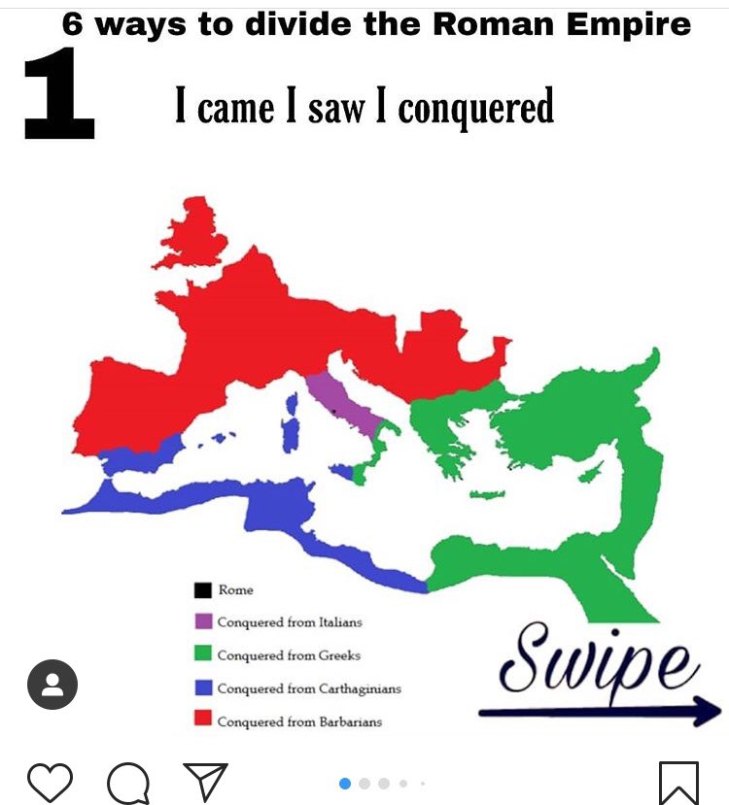
Roman territories conquered from various peoples
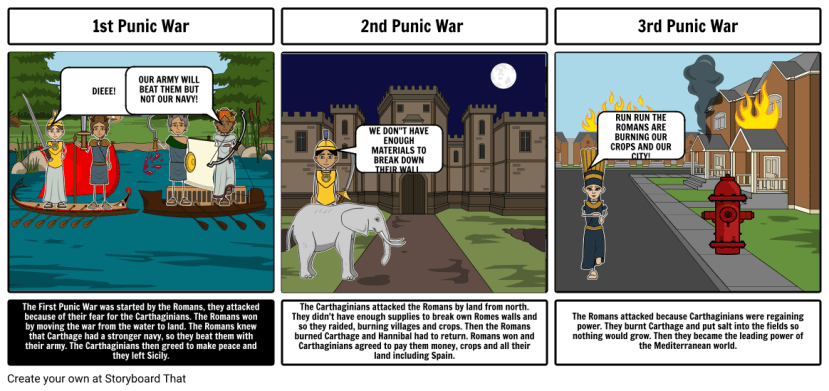
punic-wars
The Punic Wars between Rome and Carthage summarized
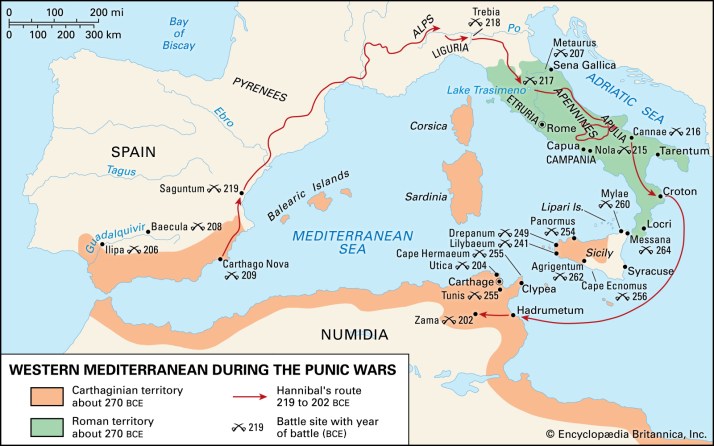
Mediterranean-Punic-Wars
Map of the Western Mediterranean in the 3 Punic Wars, 264-146BC
131
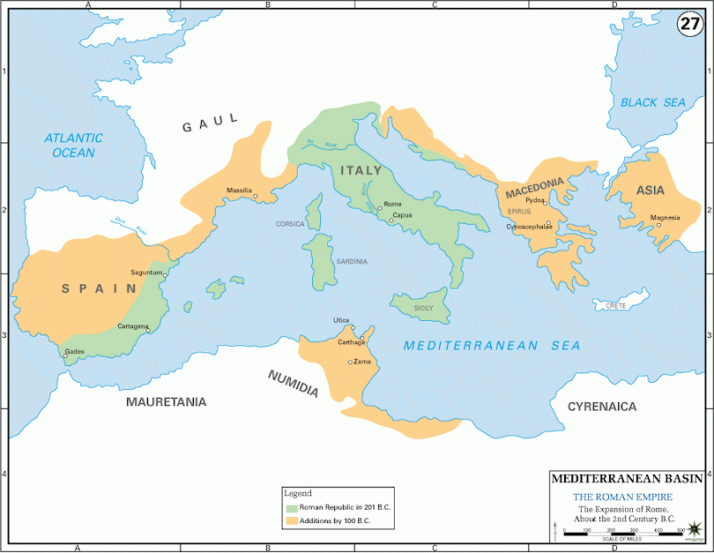
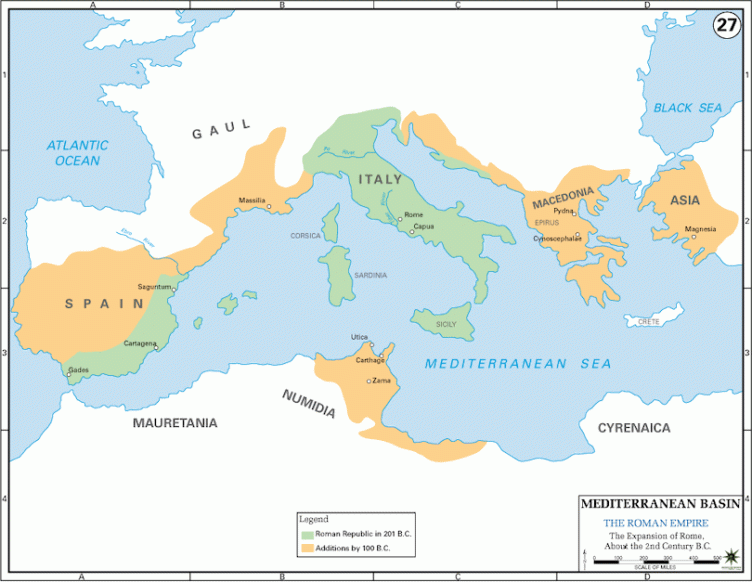
The Roman world at 100BC
zeav0i4c05k31
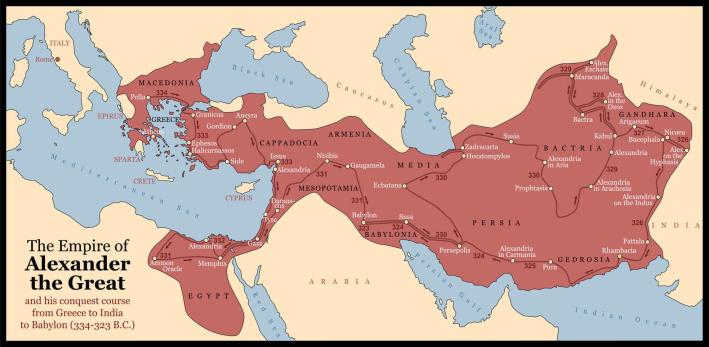
The Macedonian Greek Empire of Alexander the Great at 323BC
1200px-Map_of_the_Ancient_Rome_at_Caesar_time_(with_conquests)-fr.svg
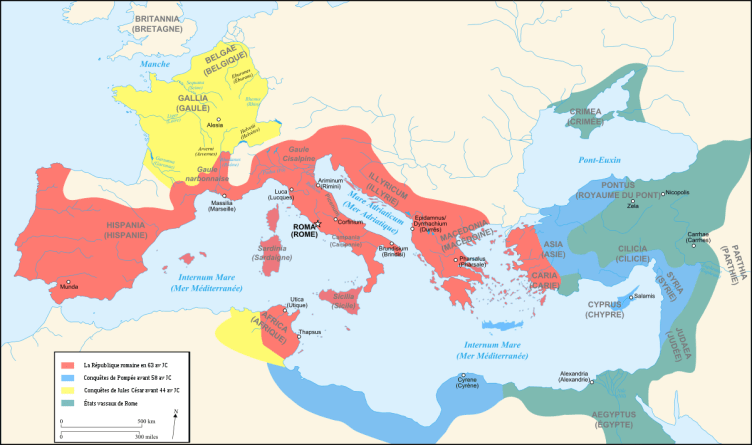
The Roman Republic at 44BC (red, yellow, blue), Rome at 63BC (red), Rome at 58BC conquered by Pompey (blue), Rome at 44BC  conquered by Julius Caesar (yellow), Vassal kingdoms of Rome (green)
95648513_528430791175463_5343895835505590272_n
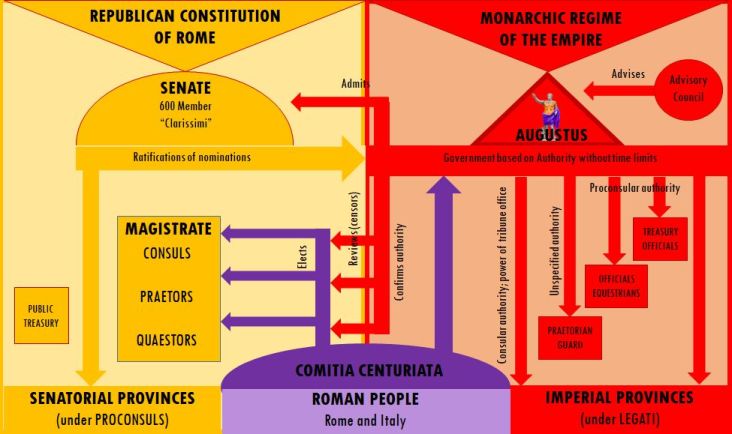
Roman senatorial provinces (red) and imperial provinces (purple)
transparent-maps-creative-1
The Roman Empire at Augustus’ rise to power, 27BC
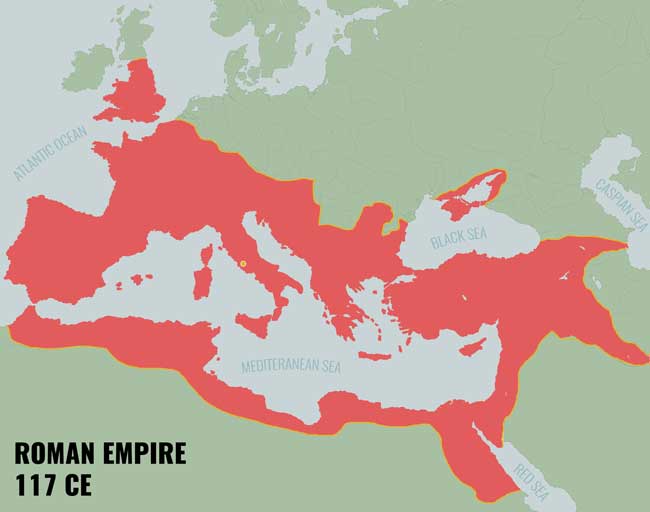
RomanEmpireMap117CE650x510
The Roman Empire at Trajan’s death, 117
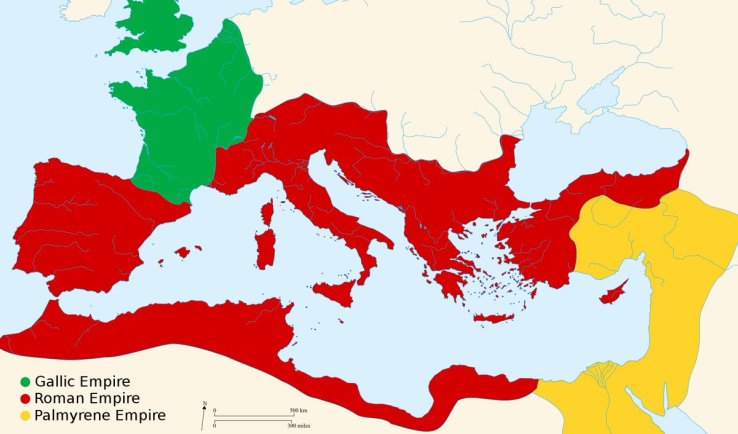
D50z0P_UwAAX-tZ
Roman Empire divided (260-274) in the 3rd Century Crisis, Gallic Empire (green) and Palmyrene Empire (yellow)
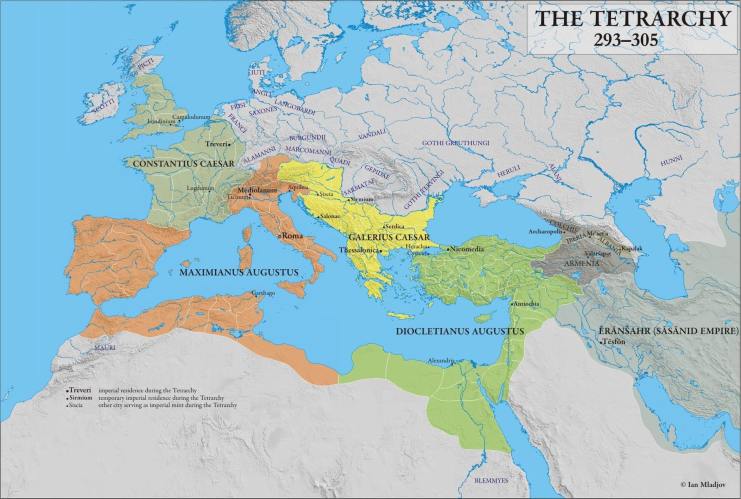
103757642_296266538197164_7514103849631734276_n
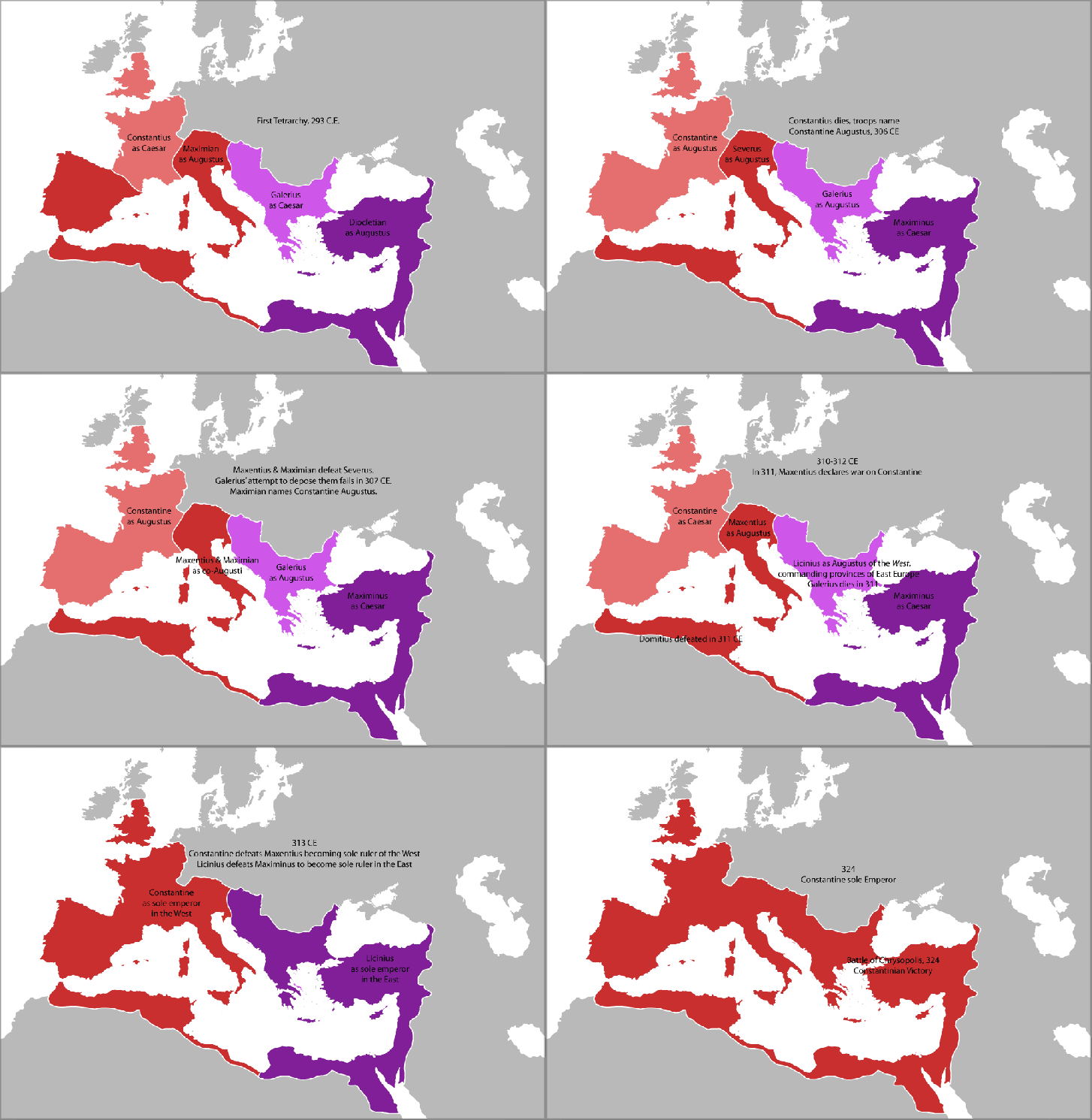
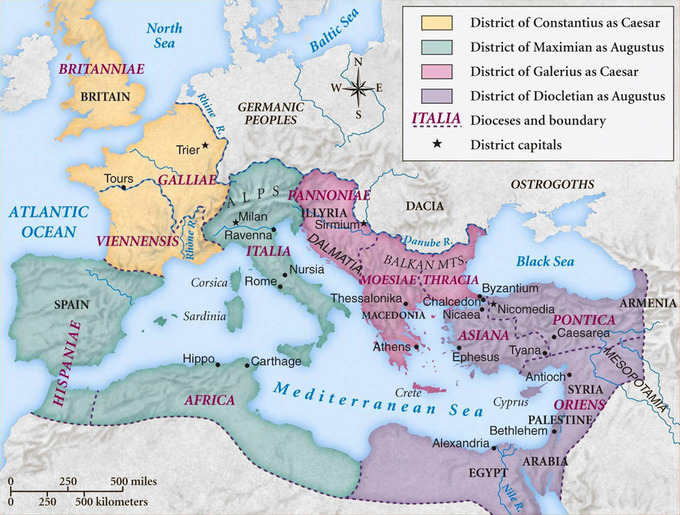
Map of the original Tetrarchy of Diocletian (293-305)


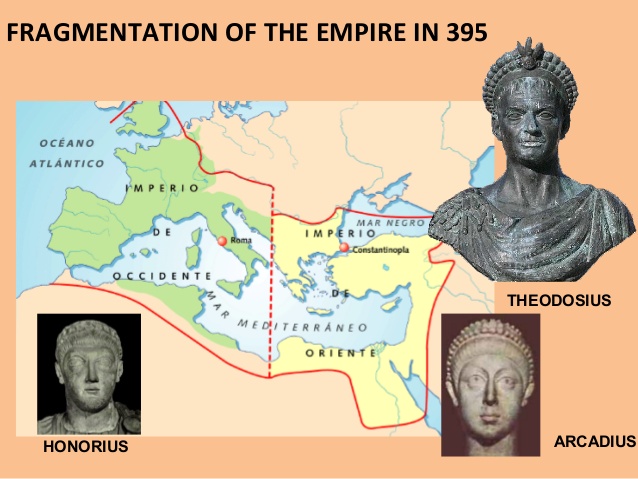
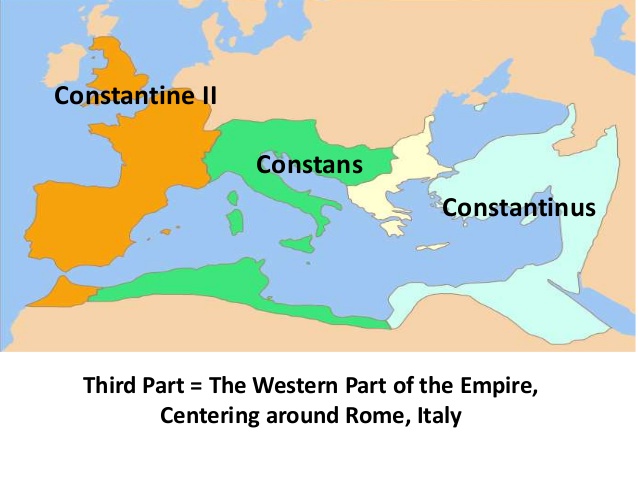
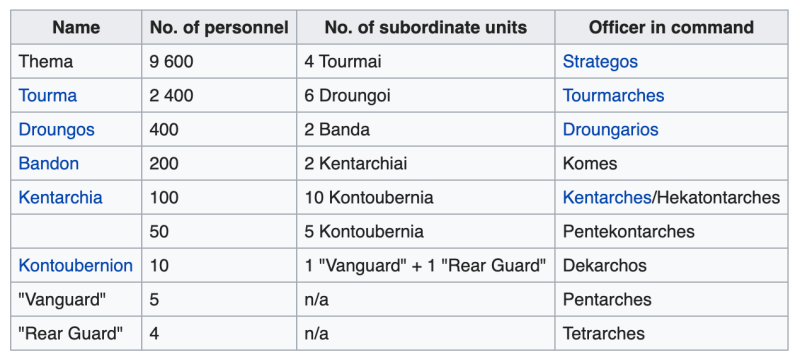
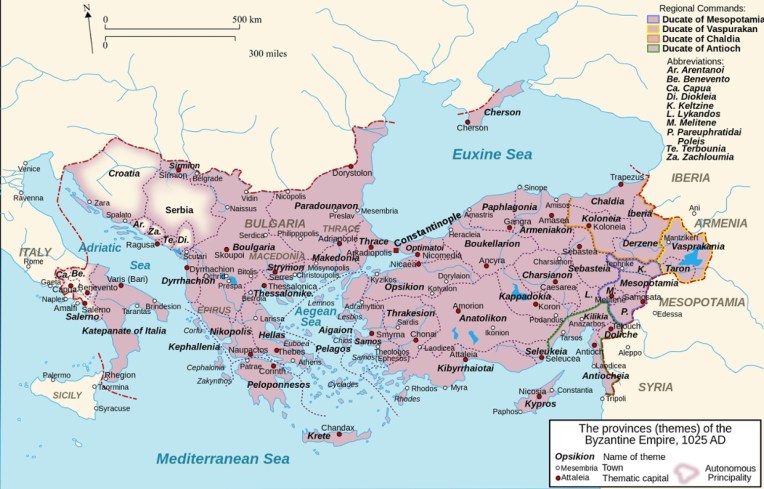
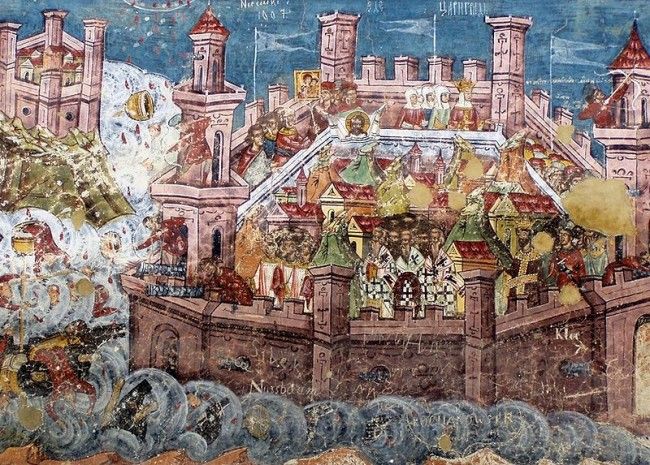
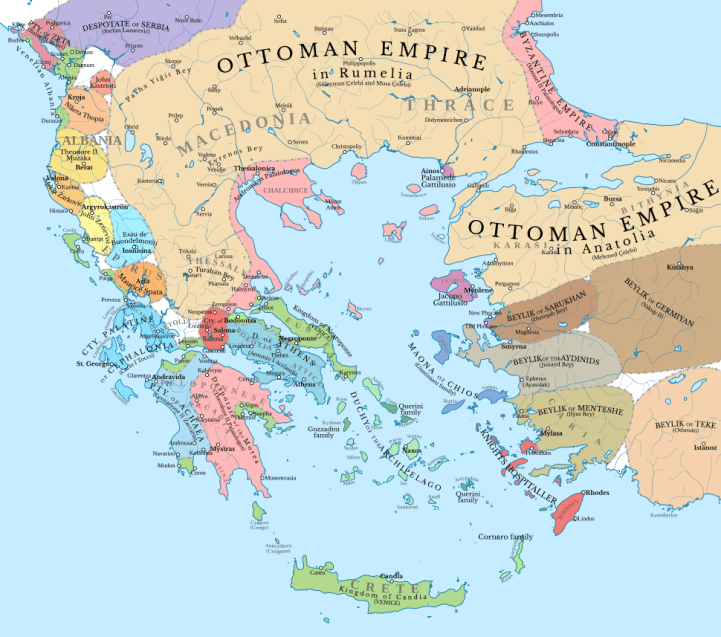
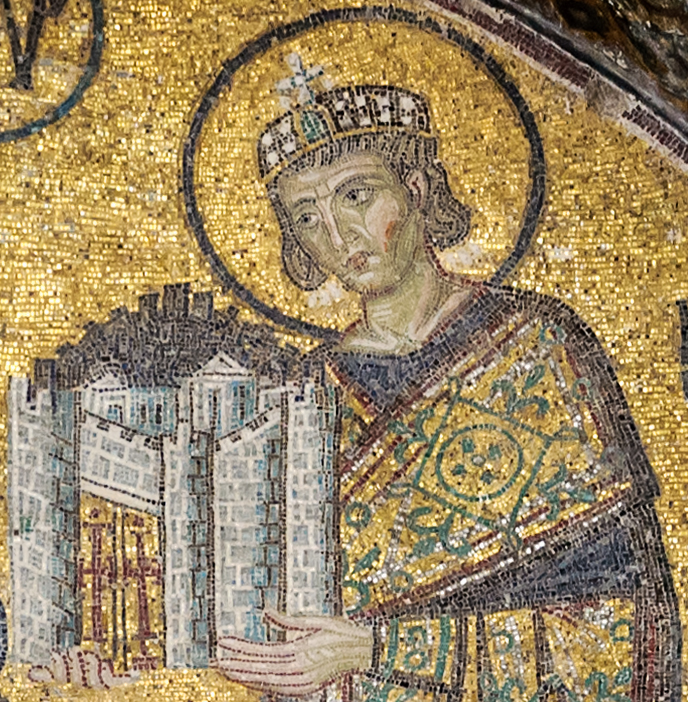
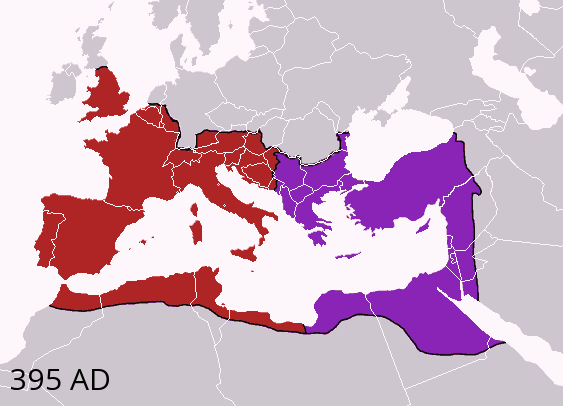
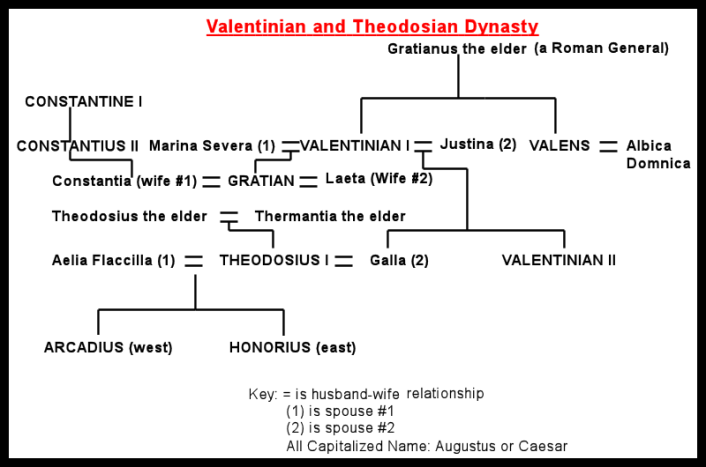
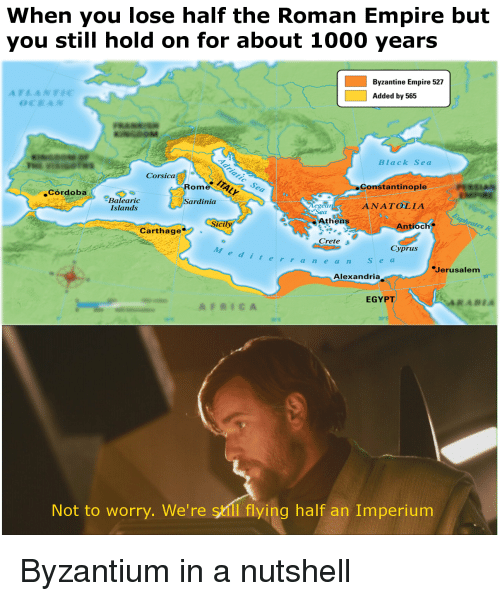
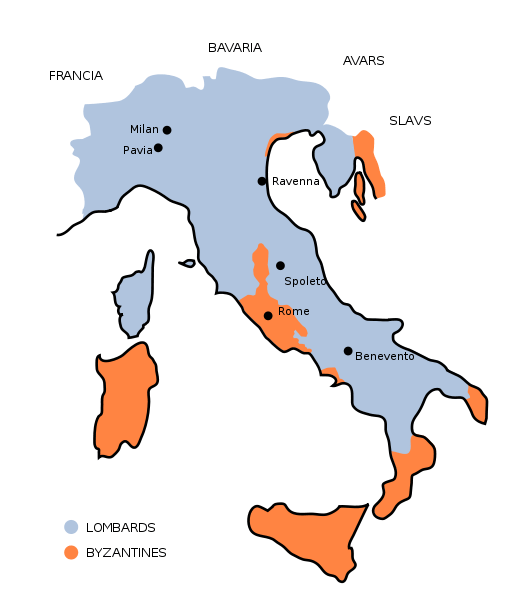
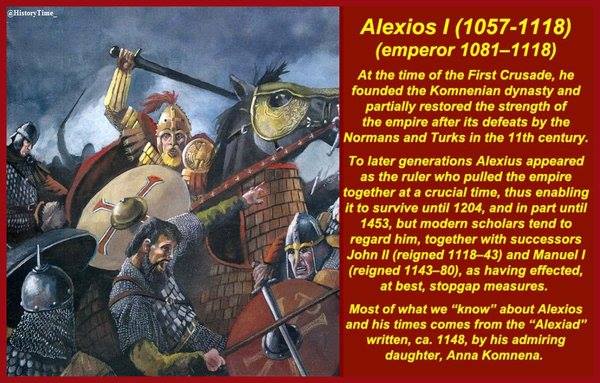
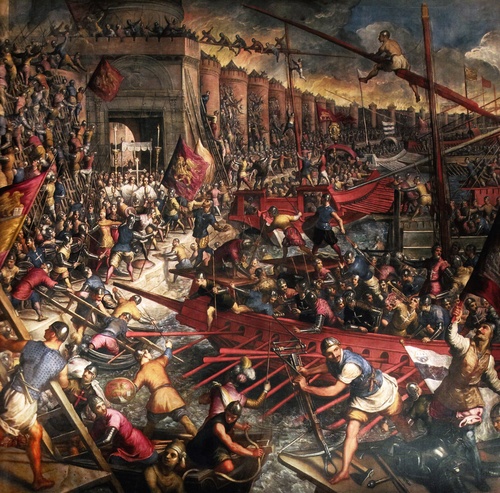
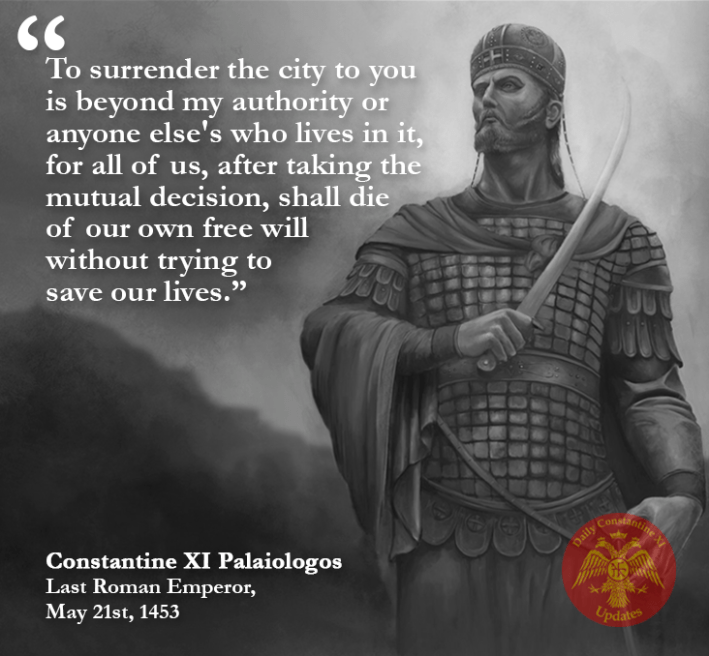
From 330 onwards, the Roman world would change with Constantinople (Greek: Konstantinoupolis, Latin: Constantinopolis) now being the dominant city in the east and the new “Caput Mundi” also known as Nova Roma or “New Rome” and compared to Rome it was in a much more strategic position in the waterway known as the Bosporus between Asia and Europe and in a location that was hard to attack, Christianity then was once illegal became the dominant religion, also the structure of the provinces would change from larger regions to smaller ones which was the new system under Diocletian’s Tetrarchy where each emperor of each of the 4 parts had their own provinces; in this case of the empire divided into 4 in the original Tetrarchy, Diocletian had control of the whole east and Egypt, Galerius had Greece and the Balkans, Maximian had Italy, Spain, and North Africa except Egypt, and Constantius I had Gaul, Germany, and Britain. Under Constantine I (306-337), the empire was whole again until split between his 3 sons after his death, afterwards the empire would remain this way always split between east and west with different emperors in joint-rule to make managing easier, though also at this time large waves of Germanic immigrants especially Goths came flooding into the Roman Empire as their homeland consisting of today’s Ukraine, Belarus, Poland, Romania, and the Baltic countries were in danger from Hun invasions from the east. It was in 395 however after the death of Emperor Theodosius I who was the last to rule the full Roman Empire north to south from Britain to Egypt west to east from Portugal to Syria, the Roman Empire was fully and formally divided between east and west acting as their own independent empires; the east passed on to his older son Arcadius (r. 395-408) and the west to the younger son Honorius (r. 395-423). In the west, in less than a hundred years, Roman rule would disappear as barbarian tribes from all over Europe who had immigrated into Roman territory began declaring their own kingdoms, first were the Visigoths under Alaric who sacked Rome in 410 and established his own independent kingdom in Spain afterwards, the Vandals then would travel into North Africa building their own kingdom with Carthage as its capital, thus in 455 after building a navy would again sack Rome. Britain too would be abandoned by the Romans who needed their troops there to fight off more barbarian invasions in Europe particularly the Franks who later beat the Romans and took over the north of Gaul, but the deadliest enemy came from the east (probably today’s Kazakhstan) these were the Huns, however they had posed more of a threat to the eastern empire than to the west but the west still did not live long enough. In 476, the barbarian general in the Western Roman army Odoacer after being denied territory given to him deposed the last Western Roman emperor the boy Romulus Augustus in the Western Roman capital which was Ravenna with a barbarian army, and instead of becoming the new emperor Odoacer decided the age of the emperors are done and instead made himself king of Italy and acknowledged the emperor in the east Zeno based in Constantinople as the real emperor. Not long after, in 493 was Odoacer overthrown and the Ostrogoths under their king Theodoric took over Italy. In the east meanwhile, things were far more stable, that the empire had all it needed to survive as it still had the rich provinces of Syria and Egypt and the old Roman roads connecting it, it had Greece and the Balkans as well and also Asia Minor which was vital in providing food supply as their main focus was in fighting the mortal enemy in the east, the Sassanid Empire; then as the new capital, Constantinople continued growing stronger and richer as the powerful 3-layered fortification was built under the emperor Theodosius II (r. 408-450), laws too were published, and a university too was built in the capital, though the only problem with them was having scheming barbarian generals particularly Goths in their army using the emperors as their puppet, which was one way to easily make the empire fall to barbarian invasion. However, the eastern emperor Leo I (r. 457-474) was able to end barbarian influence and his successor Zeno (r. 474-491) helped keep the east free from falling to barbarians the way the west did by keeping them out of the east and paying them to attack the west instead believing the west was no longer needed; then Zeno’s successor Anastasius I (r. 491-518) in his long stable reign made the eastern empire or Byzantium rich enough to take back the fallen west for the Romans. After 476, it was never though of that the Romans would once again rule the a large reunited empire with western parts that had fallen to barbarians but in the reign of the ambitious eastern emperor Justinian I the Great (527-565) it did actually happen that the Romans (Byzantines) with his ambitious project Renovatio Imperii helped the empire expand westwards and it was only under him and no one else that the Byzantines actually managed to do it. Justinian I meanwhile came at the right time to do such an achievement of in a way restoring the old Pax Romana, this was because the empire was rich after Anastasius I’s financial reforms, politically stable at the same time, and with the enemy, which were the Sassanid Persians, peace was made. In Justinian I’s long reign, his successful general Belisarius took back North Africa from the Vandals and Italy from the Ostrogoths placing them under Byzantine rule and not to be viewed as conquerors but liberators. However after these conquests, plague hit the Byzantine Empire hard in 542 and most of the hard work of Justinian was undone but not long after, things recovered again, the rest of Italy put back to Roman rule and later on the Southern coast of Spain too recaptured; aside from this Rome was once again under Roman rule but no longer as important as it was, instead it was just symbolic that they had Rome as the pope was now in charge of the city; also the Mediterranean was again a “Roman lake”. At Justinian I’s death in 565, the Roman world was again once more larger than ever spanning north to south from the Crimea in Ukraine to Egypt, west to east from Spain to Syria, but this moment of glory wouldn’t last long especially at this time, Europe was now in the dark ages, barbarian invasions became constant, and in the east Persia was still hungry for conquest, before all this tings looked bright for Byzantium but after Justinian I’s death in 565 it would never remain this way always. Justinian I’s successor Justin II (r. 565-578) could not live up to his uncle’s successful rule and as the new invaders, the Germanic Lombards began invading Italy he went mentally insane being unable to manage such a large empire that he abdicated making his adopted successor Tiberius II (r. 578-582) manage the empire for him. Under the Byzantine emperor Maurice (r. 582-602) the golden age of Justinian began falling apart as a new enemy rose from the north, the Slavs who began raiding the Danube frontier at the Balkans, Italy too began falling to the Lombards and Spain back to Visigoths and imperial territory was too much to handle that Maurice turned Byzantine Italy and North Africa into 2 semi-autonomous empires under the emperor known as Exarchates, however he also made peace with Persia after helping his Persian ally Chosroes II become king in Persia. Maurice however was constantly pressured by the Slavic invaders in the Balkans that his armies had to constantly fight even if their payment would be cut off because too much had already been spent in war. The soldiers though were not happy and in 602 they proclaimed the centurion Phocas as emperor and Maurice and his sons were executed, thus the Persian king with his friend dead saw it as an excuse to attack the Byzantines and because of this, Phocas pulled the army out of the Balkans to fight the Persians in the east allowing the Balkans to fall to the Slavs and Avars, and soon enough the Byzantines began to loose to the Persians. In 610, the Exarch of Africa’s son Heraclius after rebelling against Phocas sailed to Constantinople, overthrew and killed Phocas, and became emperor but the empire was now in ruins especially with the Persians swiftly taking Syria and Egypt as well. Heraclius however fought back, raised an army, and marched into Persian territory and in 628 after the king Chosroes II was deposed, the Byzantines won the war except it was not at all a great victory, many soldiers died, resources ran out, and instead of taking over Persia, the Byzantines and Persians returned to the same borders before the war that began in 602. Not so long after would the Byzantine Empire be again ruined, Heraclius in his last years in power saw another threat rise, this time of all people, the Arabs from the deserts of the south who had taken the new religion of Islam swearing to take the Roman world for themselves. After Heraclius’ death in 641, the Romans would now lose Egypt and Syria to the Arabs and this time for good seeing that they could not longer hold these places anymore especially since the Arabs threat was too strong and nothing familiar to them, before that the Romans and Greeks knew the Arabs existed in the deserts at the south but never knew they would rise and make their own empire, at the same time they were unfamiliar with the warfare of the Arabs as it was never thought they would be such a strong naval or military power. From then on, the Byzantine Empire would for the next 3 centuries have to fight on the defensive side against the Arabs and also the Slavs and Lombards, now during the reign of Heraclius’ grandson and successor Constans II (r. 641-668), the empire gave up the old system of Roman provinces and introduced the new governing system known as the “Themes” which were smaller provinces across the empire beginning in Asia Minor, the new heartland of the empire; these Themes were made to increase military presence and to recruit locally as Byzantium needed more soldiers to defend the borders, also each of these Themes had to provide food for the army and resources for the empire and both civil and military administration of each Theme would fall to one person, the Strategos which was a military or naval governor. Also with the loss of Egypt and Syria to the Arabs, which had for such a long time provided the Roman world with a lot with grain and resources, the Themes were needed to be created to increase more space for planting grain but at least Asia Minor had a lot of land for, also compared to Roman times in Byzantine times, with more immigrations into empire and new cities built, populations grew more, therefore people were needed to be moved around to different Themes across the empire to balance population. Several Themes created in Asia Minor (Turkey) were vital in producing grain and food for the empire while the naval Themes created among the Greek islands in the Aegean and Ionian Sea were to supply Byzantium with ships, sailors, and ship equipment like ropes, anchors, and nets. In the reigns of the emperors Constans II (641-668), Constantine IV (668-685) and Justinian II (685-695), Byzantium would now have fight on the defensive side, borders now had shrunken in the east that the Taurus Mountains in Asia Minor became the new eastern border with the Arab states, and most of Greece except for the coastal areas slipped away into Slavic control, however Italy still remained under Byzantine control although most of it had already fallen to the Lombards and North Africa would soon be entirely taken by the Arabs and so was Spain. However, in 681 a new enemy came in, the Bulgars coming from the Eurasian Steppes and after winning over the Byzantines in a battle, the emperor Constantine IV surrendered giving up Byzantine territory in Thrace (which is today’s Bulgaria) to them, thus the Bulgarians established their own kingdom becoming both an enemy and ally to the Byzantines. At this time, the Arabs attacked Constantinople twice, once from 674-678 and another from 717-718, but in both times the defending Byzantines won with the help of a new weapon invented, Greek Fire. Although within this time as well, Byzantium in 695 fell into what would be known as the “20-year-Anarchy” wherein there would be a change of 7 emperors within 22 years (695-717) that had weakened the empire so much that in 717 it seemed that the empire would easily be ended by the Arabs until in 718 both the Byzantines and their Bulgarian allies won a great victory forcing to the Arabs to retreat and never attack Constantinople again. Here, the general Konon who became Emperor Leo III (r. 717-741) restoring order after a long period of anarchy, and in his reign he continued to successfully fight against the Arabs pushing them away from Asia Minor and continued expanding the Theme system; his son and successor Constantine V (r. 741-775) did the same too also taking back most of the Balkans from the Bulgarians but Italy would eventually be ignored by the Byzantines causing the Lombards to further grow as a threat capturing Ravenna in 751 limiting Byzantine control to only Sicily and southern Italy, the pope in Rome would no longer trust the Byzantines as allies, instead he turned to the Franks who ruled France for support and with the help of the Franks, the Lombards were taken care off and Rome and its surroundings became independent under the rule of the pope becoming the Papal States. With the pope and the Franks allied, the pope in 800 crowned the Frankish king Charlemagne as “Roman Emperor” with the title Augustus or better known as the “Holy Roman Emperor” but this shocked the Byzantines who were really the successors of Imperial Rome while Charlemagne was a Frank and not at all Roman but Charlemagne and the Franks did not see Byzantium at all as an empire and their ruler not at all the Roman emperor basically because in 800, the Byzantine ruler was a woman, the empress Irene (r. 797-802) and the Franks saw that a woman could never rule, though Irene planned to marry Charlemagne to unite both empires and in a way restore Roman rule to most of the world that was once Roman, but instead the people of Constantinople lost faith in her especially in agreeing to marry a barbarian so in 802, she was overthrown and the finance minister Nikephoros I (r. 802-811) took over; though as emperor he refused to even acknowledge Charlemagne as western emperor and chose to instead destroy the Bulgarians once and for all, although in 811 his plan failed and the war with Bulgaria ended in total disaster with Nikephoros I dead and his skull turned into the Bulgarian king’s drinking cup. Byzantium would once again enter chaos especially facing war with the Bulgarians, but within this time period, emperors worked hard in developing the army and further increasing military rule across the empire. In the reign of Michael II the Amorian (820-829), the empire stabilized again despite Crete and Sicily falling to the Arabs and under his son and successor Theophilos (829-842), things had improved by a lot as the Theme system proved to be highly effective and a beacon system as built in equal distance from each other built across mountain tops or towers stretching from the Taurus Mountain borders to Constantinople, this was made to signal every Theme in time of war, but also to let the emperor be informed when the Arabs are raiding and to give a message to the Themes to send their army to help another Theme in danger. Now Byzantium would come out of its dark ages and once again enter another period of rebuilding the glory of the past under the long-lived Macedonian Dynasty beginning with its first ruler Basil I (r. 867-886), originally a peasant from Macedonia who as a wrestler usurped the throne in 867 and rebuilt Constantinople back into a glorious capital and began expanding east fighting the Arabs turning Byzantium from fighting on the defensive side back to fighting on the offensive. The next emperors after Basil I would do the same turning the tide of war against the Arabs pushing them back to deserts from where they came allowing the Byzantine Empire to live in peace once again like how things were in the “Pax Romana” under the Roman Empire in the past. The 10th century saw the Byzantine Empire become the most powerful and invincible army in the Middle Ages allowing Constantinople to grow rich and for emperors to now not only focus on the protection of the empire but in growing the empire culturally. At this time emperors like Leo VI the Wise (r. 886-912) and Constantine VII (r. 913-959) focused on writing books, establishing universities, building up the art scene of the capital, and making the imperial court as lavish as possible. While at this time as well, Byzantium’s borders began to expand again under capable military emperors like Romanos I (r. 920-944) who began pushing the Arabs out of Asia Minor, Nikephoros II Phokas (r. 963-969) who as a general in 961 took back Crete from the Arabs and as emperor reclaimed parts of Syria and the rest of Cyprus from the Arabs, then his successor John I Tzimiskes (r. 969-976) who once again returned parts of the Middle East to Byzantium after 3 centuries of Arab rule while also he took back most of Bulgarian territory. However it was during the successful reign of Basil II (976-1025) that the Byzantine Empire again reached its fullest extent of territory but not as large as it was in Justinian I’s reign; under Basil II known as “the Bulgar-Slayer”, the whole Bulgarian Empire was defeated and the rest of the Balkans was brought back to Byzantine rule, Armenia too was annexed but through diplomacy and not war, by his death in 1025 Byzantine territory stretched from Southern Italy to Armenia, the Crimea to Syria wherein at this point Byzantium had the most number of Themes, and all their neighbors came to respect Byzantium as culturally superior and fear attack them or else they would suffer the same way Bulgaria did being wiped off the map. However Basil II’s empire did not live that long and just right after his death, things would slowly fall apart again under a series of weak emperors. The rest of the 11th century after golden age of Basil II would be known as the “11th Century Crisis” which was similar to Imperial Rome’s “3rd Century Crisis” which was a period of turmoil that followed a period of great success, but for the Byzantines things got worse especially when another new Islamic enemy, and not Arabs but Seljuk Turks from Asia Minor this time started raiding into Asia Minor and in the Battle of Manzikert in 1071, the Byzantine army led by Emperor Romanos IV Diogenes (r. 1068-1071) was defeated allowing the Seljuks to takeover most of Asia Minor ending Byzantine rule which had been there for centuries. The Byzantines losing both Asia Minor to the Turks and Italy to the Normans, as well as most of the Balkans to the Pecheneg raiders still did not give up and could not afford to lose Asia Minor in which was vital in providing food resources for the empire and as the general Alexios I Komnenos came to the throne in 1081, he immediately set off in crushing Byzantium’s enemies at all sides, first dealing with the Normans who had invaded the Balkans and though later beating them was still unable to take back Italy, the Pechenegs too would be dealt with, and so would the Turks although Alexios I needed help from the west for the Seljuk threat but instead of a support army from the kingdoms of Western Europe, the 1st Crusade was launched which at the end did not help Byzantium and give back their lost territories but instead turned on them and took lost territories for themselves all the way down to Palestine. At this time at the end of the 11th century, Western Europe began to rise and the Crusades had begun, though it did not fully harm Byzantium, as when taking the Levant, they would instead focus on defending it from the Muslim armies leaving Byzantium to their own business. Alexios I died in 1118 with Byzantium much more stable than when he came to power, though his son and successor John II (r. 1118-1143) did even more than his father could by restoring most of Asia Minor to Byzantine rule and making the new Crusader states of Westerners acknowledge the supremacy of Byzantium in the east. It was under the reign of John II’s son and successor Manuel I (1143-1180) that Byzantium would see its last golden age and largest extent of territory as well as a time of great wealth and culture at the capital. Under Manuel I, Byzantine rule was restored to most of Asia Minor, Antioch was put under their rule as a vassal kingdom, and most of the Balkans still remained theirs, however Manuel I was a bit too ambitious that he still thought he could take back Italy and Egypt for the Byzantines but at the end his army was heavily defeated by the Seljuks at 1176, he then died in 1180 which mark the start of another decline, which happened mostly because of his spending but also because he trusted the west too much, the people began to grow unhappy. The next emperor, Andronikos I (r. 1183-1185), Manuel I’s cousin who took the throne after killing Manuel I’s son Alexios II (r. 1180-1183) would begin tensions with the west after the massacre of thousands of Italians in the capital but in 1185, the brutal emperor was killed by the same mob that put him in power when they turned their support to his rival Isaac Angelos who was crowned Emperor Isaac II (r. 1185-1195), but his reign was no better, he grew more and more suspicious of the west and had no other solution to improve the empire than raising taxes and neglecting the army making the Bulgarians rise up again and declare once again a new Bulgarian Empire in 1185 in which the Byzantines would never be able to beat. In 1195, Isaac II was suddenly overthrown by his older brother Alexios III (r. 1195-1203) and his reign was even much worse that the army devolved to the point of uselessness that when the 4th Crusade arrived to attack Constantinople in 1203, he could not do anything but flee making the Crusaders put Isaac II’s son Alexios IV in power, thus Isaac II though blind was released and put in the throne with his son, however both father and son did not have the amount of money needed to pay back the Crusaders and could not live up to their promises to help the Crusaders by providing an army so the people of Constantinople deposed and killed them in 1204 but still without the money to pay back the Crusaders, the Crusaders after months camping outside the city attacked while the Byzantines were defenseless, so as it happened Constantinople fell to the Crusades and the Latin Empire was established, most of Greece would be under different Latin states and Crete under Venice. The Byzantines however did not see it as the end, in the city of Trebizond in the Black Sea, a new empire was formed but did not really become a world power, and then in the city of Nicaea the Byzantines from the capital made it their empire in exile waiting to take back Constantinople. The Balkans and Asia Minor as well as Greece turned into a constant warzone wherein the Latin Empire, the Byzantines of Nicaea, Bulgarians, and the rogue Byzantine state of Epirus fought for control of but the Latins in Constantinople were too poor to actually keep their empire running so in only a few decades, the Byzantines surrounded them to only Constantinople but unable to breach the walls. However in 1261, in a great stroke of luck as the Latin forces left the city on a raid, a small Byzantine army from Nicaea which now had become a strong empire in Asia Minor even though in exile in one night took back Constantinople and their leader Michael Palaiologos was crowned emperor. Michael VIII (r. 1261-1282) was the first one to rule a restored Byzantine Empire once again in Constantinople after only 57 years of Byzantium’s absence, but not all was well anymore, the army had grown smaller, most of the old Themes were gone and when focusing on keeping the Latins away, Byzantine rule in Asia Minor began collapsing as the Turks started taking over, the people too were disunited and unwilling to submit to the pope and Catholicism even if that could help them. Michael VIII ended his reign tragically being hated by his own people for trying to save his empire by Church Union even if he took back the capital, but he still saved the Byzantines again from being taken back by the Latins in 1282, by the time the age of the Crusades too were over and during the reign of Michael VIII’s son and successor Andronikos II (r. 1282-1328), a new enemy rose in Asia Minor in 1299 this time to finish Byzantium for good, this was the sultan Osman beginning the Ottoman Empire. For the next years, the Byzantines would forever be fighting on the defensive again, this time against the Ottomans, however there was only one short period of revival under Andronikos III Palaiologos (r. 1328-1341) where the Byzantines became the dominant rulers of Greece only but were only still at the same level of power as their Balkan neighbors Serbia and Bulgaria. What would really be the death blow for Byzantium was the civil war of 1341-1347 between Andronikos III’s son John V and general John Kantakouzenos wherein John VI Kantakouzenos won with the help of the Ottomans giving them their first territory in Europe. By the end of the 14th century, Byzantium was now only limited to Constantinople which was a shadow of its old glories, and Southern Greece the rest already falling to Ottomans rule, Serbia and Bulgaria too were defeated by the Ottomans but the emperor then Manuel II Palaiologos (r. 1391-1425) despite being only emperor within the walls of the city still managed to keep Byzantium alive and through diplomacy weakened the Ottomans by starting civil wars among them. However, in 1402 Byzantium would be saved when the Mongol ruler Timur (Tamerlane) defeated the Ottomans in the Battle of Ankara giving the remains of the Ottoman Empire time to recover while Byzantium too recovered and was able to live for 50 more years. Both Manuel II’s sons John VIII (r. 1425-1448) and Constantine XI (r. 1449-1453) were the last emperors but still managed to keep their empire from falling, however in 1451 the young Mehmed II became the Ottoman sultan and swore to take Constantinople and finish Byzantium for good so he also asked Constantine XI if he could just surrender the city and he would spared but he disagreed saying he would instead fight to the death so in 1453, Mehmed II laid an army of about 100,000 to besiege Constantinople and within 6 weeks, the Ottomans won and Constantinople fell once and for all. Now for the Byzantine Empire from the fall of Western Rome in 476 to its fall in 1453, it may have lived a long life longer than its predecessor but its life was much more turbulent than Imperial Rome. Imperial Rome had enjoyed a long time of stability within the empire for more than 2 centuries from Augustus’ rise to power in 27BC to 193AD known as the “Year of the 5 Emperors” whereas for the Byzantines their “golden age” was on and off as it was only at its height of power in Justinian I’s reign (527-565) but where the actual golden age would take place was at the middle of its existence under the Macedonian Dynasty from Basil I to Basil II (867-1025), this is when the empire enjoyed stability and peace within the empire allowing the Byzantines to have a revival of arts and culture while the armies won several victories against their enemies, the Arabs and Bulgars. Before this, life in the Byzantine Empire for centuries since the 7th century was a hard one, invasions were constant and military presence was needed more, therefore Byzantium could not enjoy the same stability Imperial Rome had as the empire went on for 3 centuries of fear and martial law, but this gave time for Byzantium to develop their army into a powerful killing machine. The last centuries of Byzantium though would be a very different story, here the proud army they once had no longer meant anything as emperor thought it was too much to spend on them. The Byzantines on the other hand at least inherited all the hard work Rome had built including roads, aqueducts, and cities making the Byzantines able to keep their empire running. The only difference basically was the foreign situation, the Romans before did not face enemies as numerous and powerful as the Byzantines did, the Romans too did not see kingdoms in Europe become powerful the way the Byzantines did, while the Byzantines had to keep reforming systems including military structure, taxes, and economic to adapt to the changing of times.

Watch this to learn the history of the Byzantine Empire (from Fire of Learning).

Watch this to learn the history of the Fall of the Byzantine Empire (from Fire of Learning).

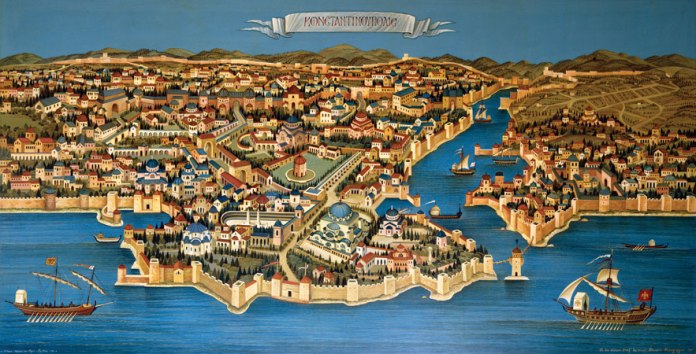
Konstantinoupoli_bg
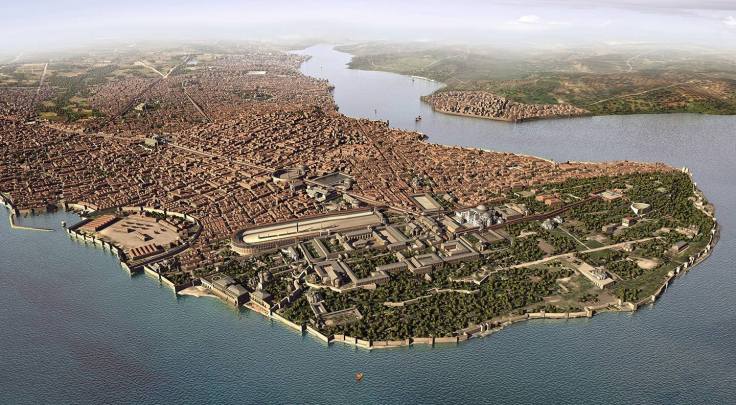
Constantinople, the “New Rome”, City of Constantine
090918-26-Attila-Hun-Ancient-History
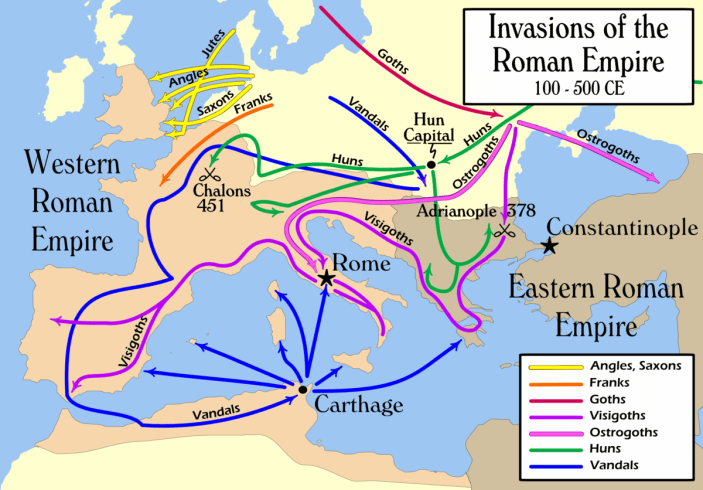
Map of the Barbarian Invasions into the Western and Eastern Roman Empires
rome-11-638
Division of the Roman Empire after the death of Theodosius I, 395
kb7xsuk2emmy
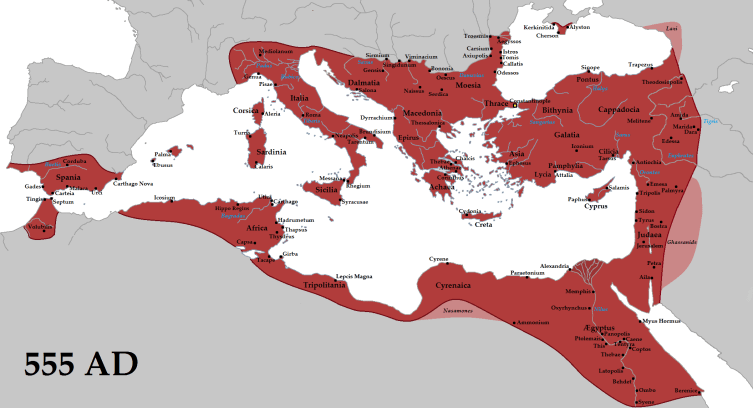
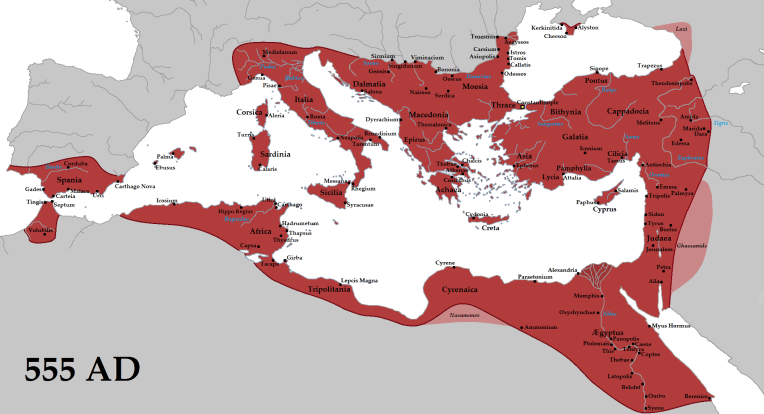
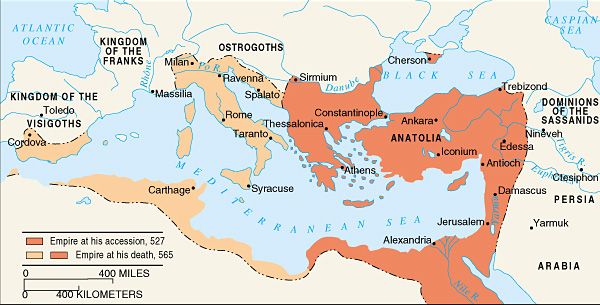
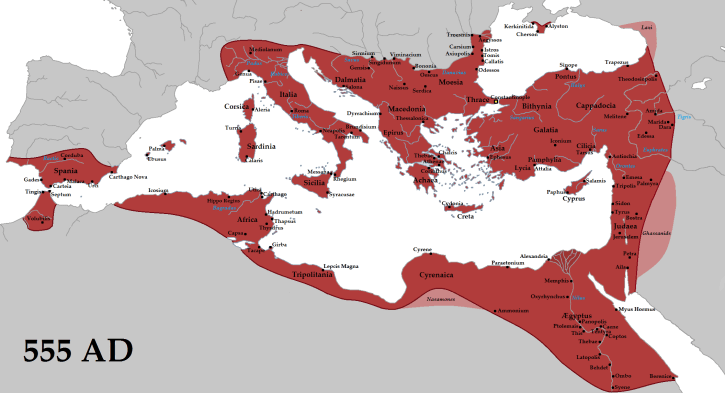
Map of the Byzantine Empire at its greatest extent under Justinian I, 555
35
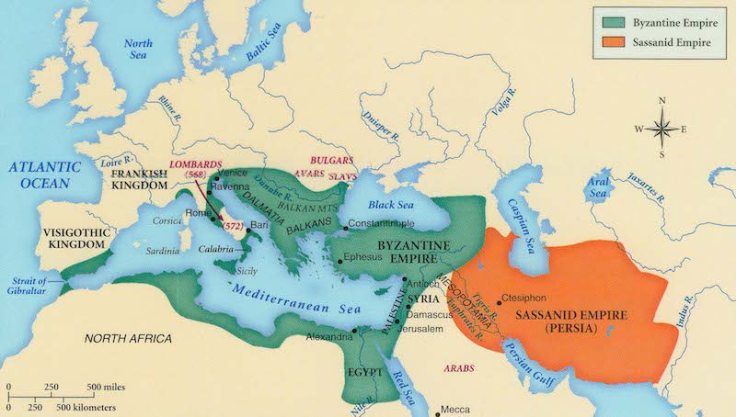
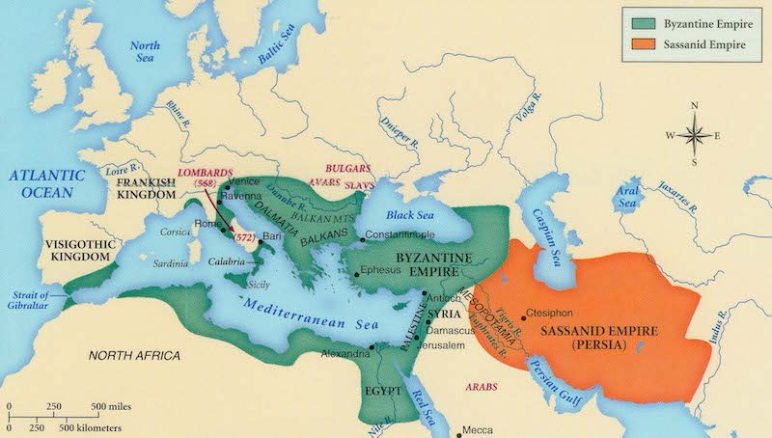
The Byzantine Empire at the end of the 6th century bordering the Persian Sassanid Empire
2000px-Byzantiumby650AD.svg
The Byzantine Empire at 641 with the loss of Egypt and Syria
06-11-20at-202.43.01-20pm
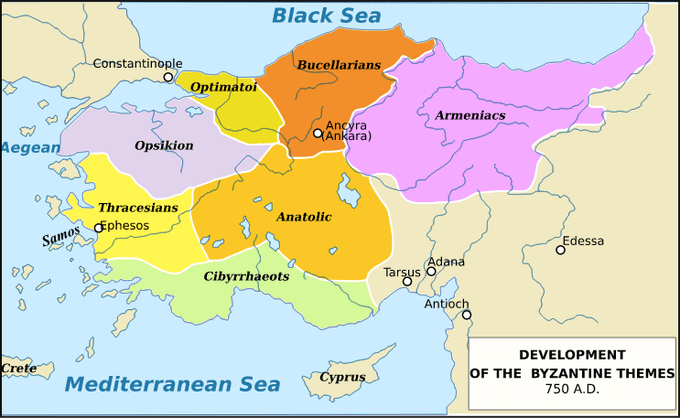
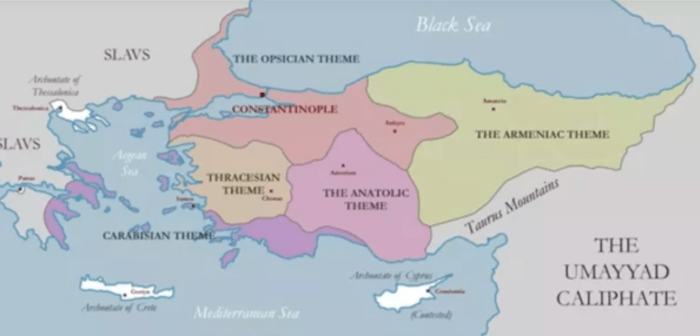
Early Byzantine Theme System in Asia Minor, 750
84405178_1059560454423004_4551359856975544320_o
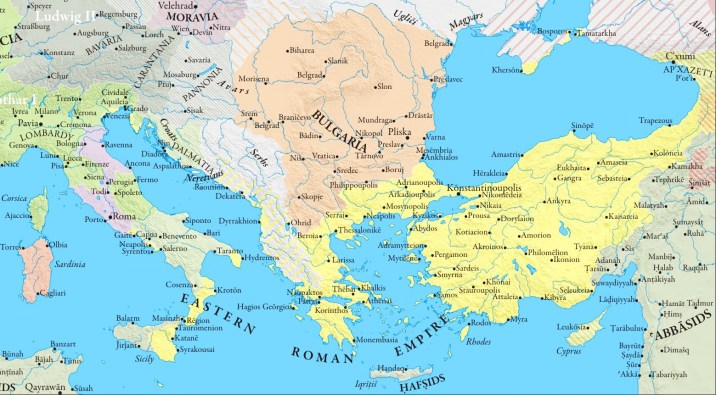
The Byzantine Empire (yellow) by 867
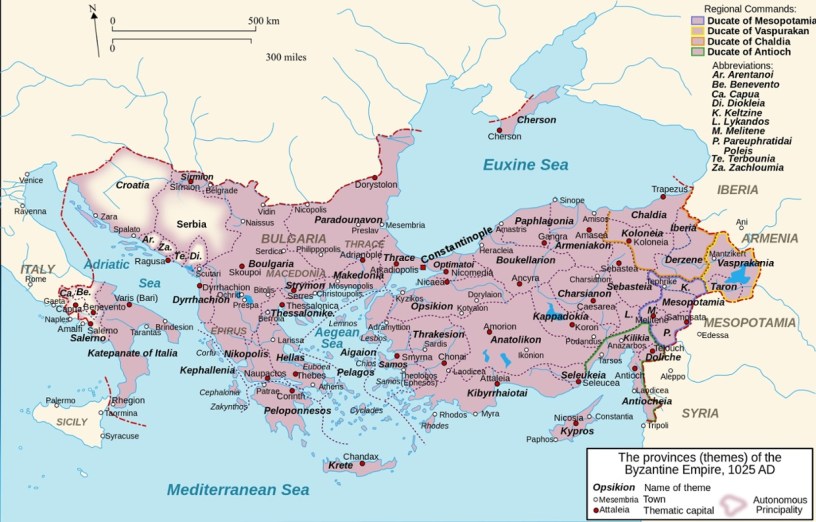
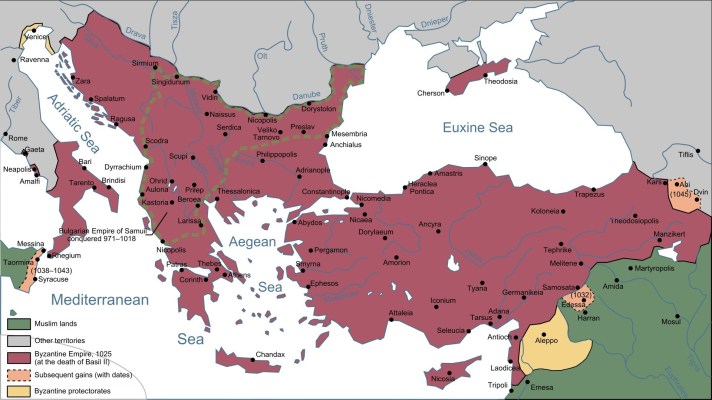
tmp942404674013626370
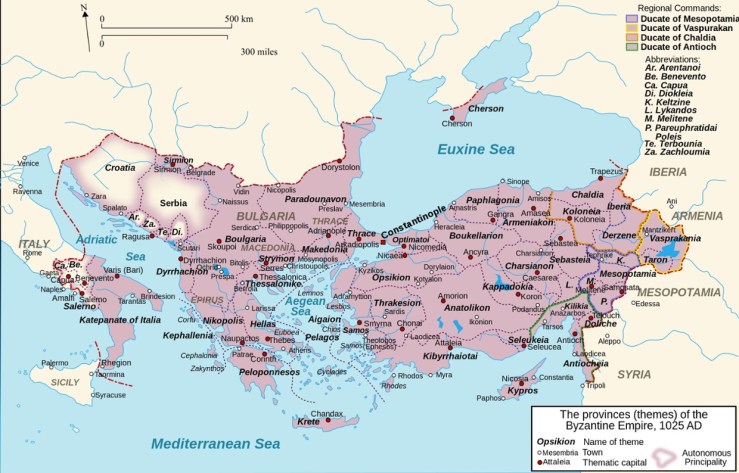
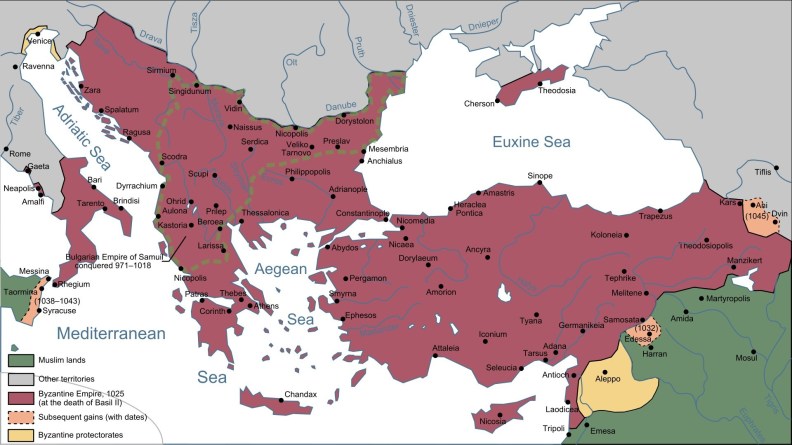
Byzantine Empire at Basil II’s death in 1025 with the fullest extent of the Themes
The_Byzantine_Empire,_c.1180
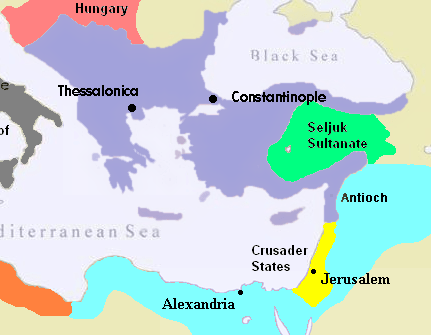
The Byzantine Empire (purple) in 1180 at Manuel I’s death
8358513_orig
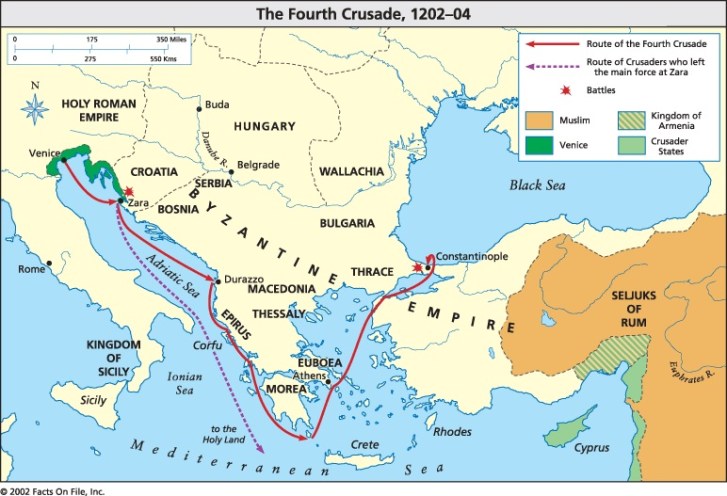
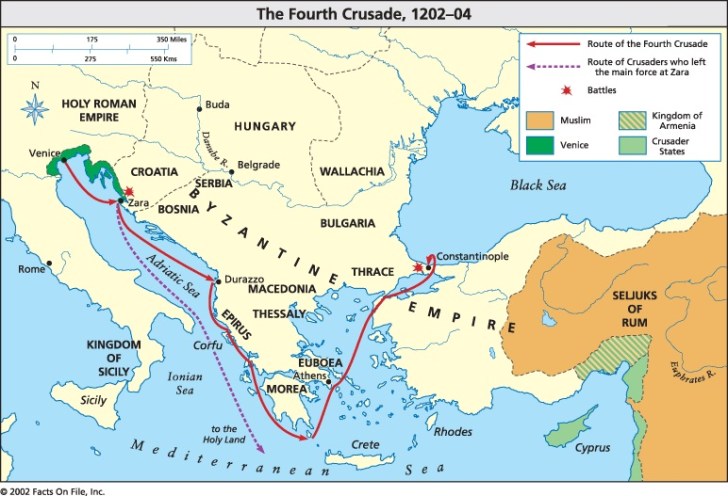
Route of the 4th Crusade, Venice to Constantinople
LatinEmpire
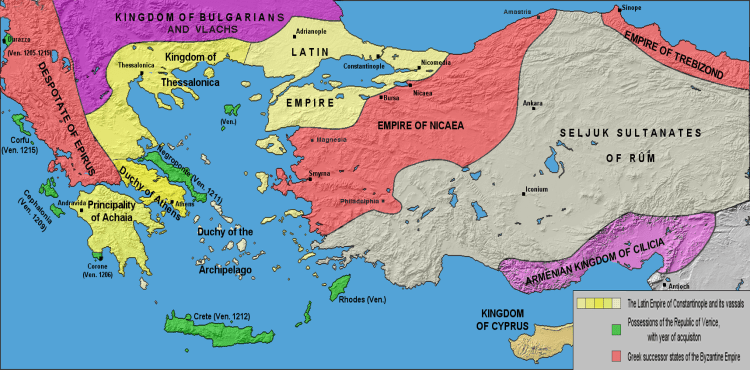
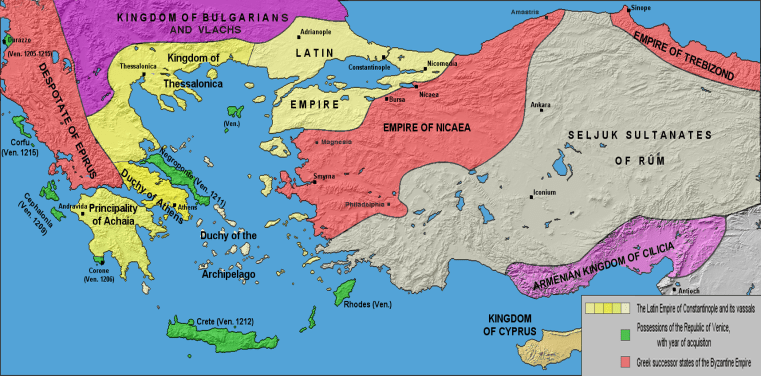
Aftermath of 1204, includes Empire of Nicaea (exiled Byzantines), Break-away Byzantine Empire of Trebizond, Latin Empire, Latin states in Greece, Venetian territories (green), new Bulgarian kingdom, and Break-away Byzantine Despotate of Epirus
67117456_2450690388321182_4840742323744669696_o
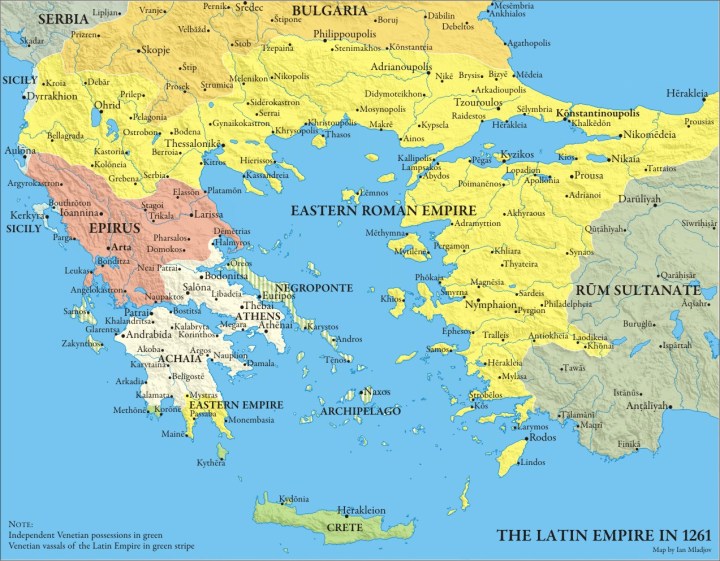
Byzantine Empire restored in 1261 (yellow)
45df9ca881f053e4dcb36bf7674b09ef
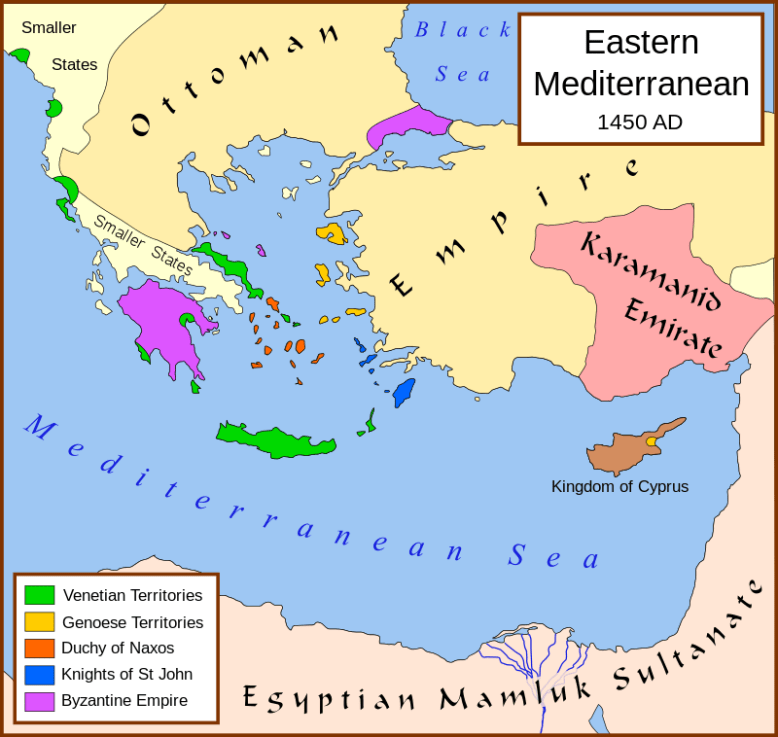
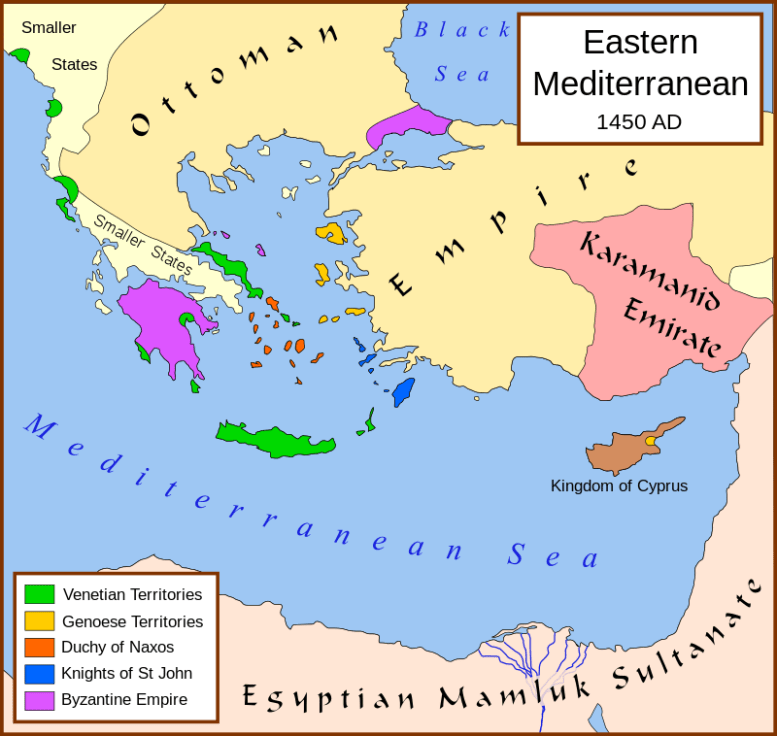
The last of the Byzantine Empire (purple) in 1450
18740093_1849050678678277_4640831353319197297_n
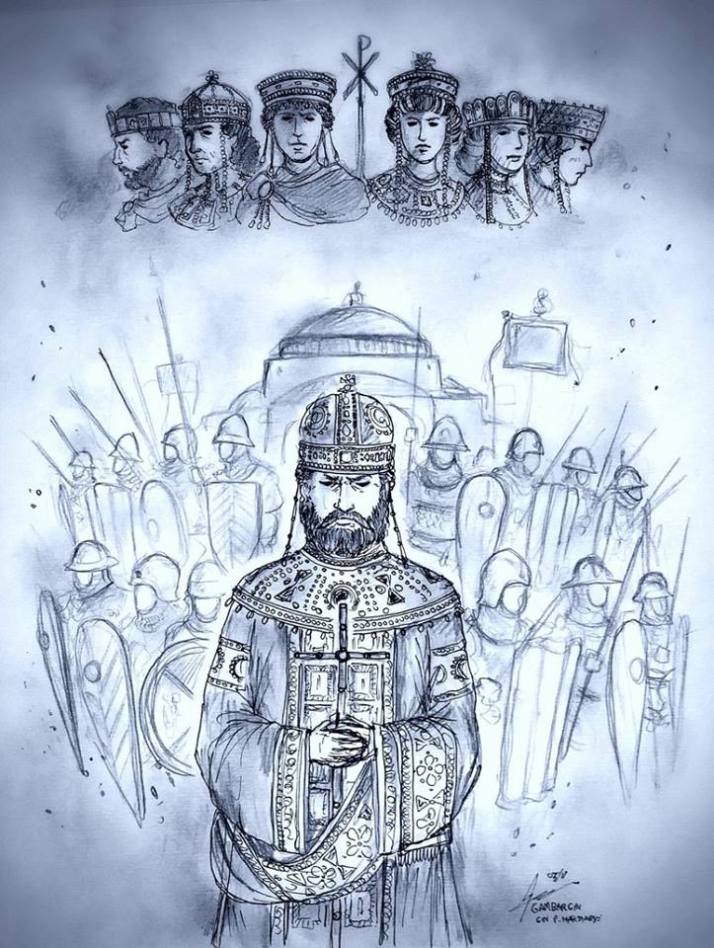
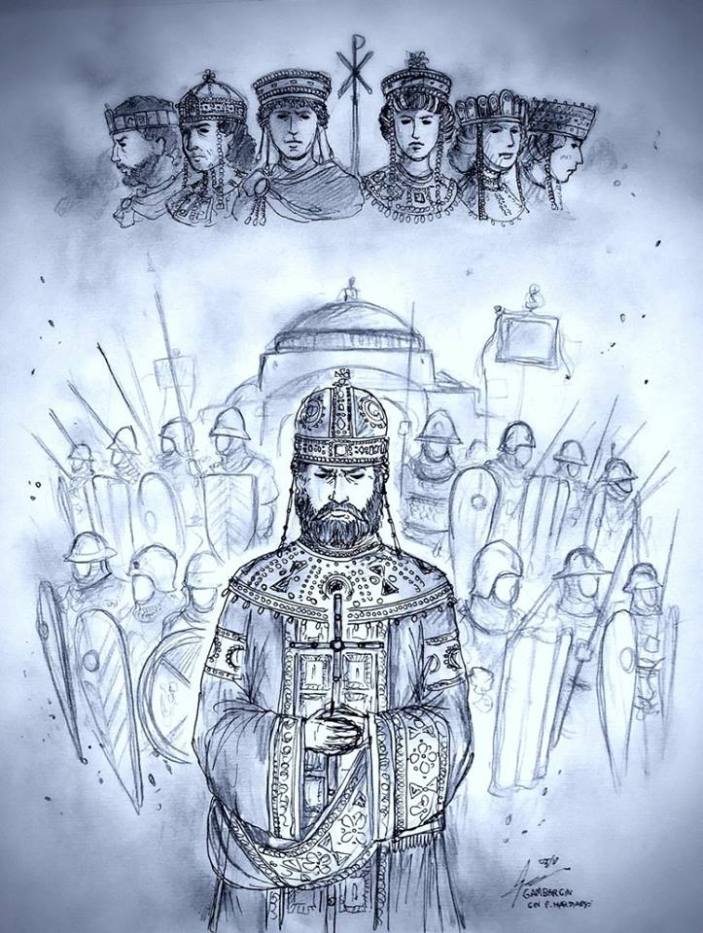
Constantine XI and the ghosts of the former emperors of Byzantium


II. Roman and Byzantine Architecture and Engineering

Palaiologos_Dynasty_emblem1

One of the things the Romans were best known for was their architecture that was not only spectacular but meant to last, but this unforgotten legacy of theirs was not entirely their own but something they borrowed from both the Greeks and the Etruscans. First of all ancient civilizations even before the Greeks such as the Egyptians and Babylonians have already built spectacular and massive structures in which some can be seen today like the pyramids in Egypt or the Gates of Babylon (which can be seen as a rebuilt version) but the Greeks have built actually more practical and sturdier structures in which many are still visible today even if they remain in ruins like the Parthenon in Athens, though what the Romans did that outdid the architecture of previous civilizations was that they built their structures not so much for show but to be meant to work and last for centuries. The one architectural element developed by the Romans was putting more use to the arch in all forms of public work as a way to strongly support structures as before that civilizations like the Mesopotamians, Egyptians, Greeks, and Persians used the arch but very limitedly, although the Romans had learned the technique of the arch from the Etruscans, but the Romans took the use of the arch to even higher levels which was in making larger structures such as high-rise amphitheaters, bridges, and aqueducts. The kind of architecture the Romans basically used was Classical architecture consisting mainly of columns, marble, brick, and triangular roofs which was the architecture of the Greeks too. Of course since Rome just began as a small city state, they did not come up with all those ideas on architecture and engineering which is the science of building on their own, rather they learned techniques of engineering from the Italian neighbor, the Etruscans who had already built trenches called a Cuniculus to irrigate land but over centuries the Romans further improved the engineering techniques the Etruscans once had making their own structures actually work so close to structures with modern engineering. Another thing the Romans had over centuries that remains one of their greatest legacies was constructing cities from scratch, especially in Western Europe where back then people weren’t as civilized compared to the east where there were actual cities. As Rome expanded its borders towards Europe (Gaul, Germany, Britain), they built simple army camps with wooden walls, which later involved into actual settlements with stone walls, roads, houses, and shops, which later became towns and trading posts along the highways that connected the empire. Some of these towns even grew to become cities like Lutetia Parisiorum which became Paris, Londinium which became London, and Mediolanum which became Milan. These Roman settlements in the rest of Europe since being built from scratch had a distinct yet simple layout of a grid pattern for streets wherein the roads intersected at right angles wherein engineers would use a tool called a Groma to measure street corners at exactly right angles, also longer diagonal main roads went across them, and the city was usually in a square or rectangular shape being surrounded by a wall, although these Roman settlements despite having already a large population did not necessarily have an actual stone wall the way larger cities like Rome did with the Aurelian Walls built between 271 and 275 that surrounded all of Rome’s 7 hills, rather they were just protected by a wooden wall, though a highway passed through them connecting them to the rest of the empire. On the other hand it is quite ironic that the new cities the Romans built across their empire especially in Europe were laid out in a simple grid system while the capital, Rome was not all laid out that way, this was because Rome’s structure was never planned and back in the past no one knew it would grow into such a large imperial metropolis. In the case of Rome, over centuries the city just kept on expanding in size as more people migrated from not just Italy but all over the empire as it kept growing, which meant nothing was really planned so over years and centuries buildings were just built here and there without much of a system. At the time of the republic however, the Romans being simple and practical people just built structures usually for practical uses such as theatres for entertainment, a forum for people to gather and shop, and a Basilica for government meetings to be held; meanwhile in Republican Rome the most important buildings in the city happened to be where the Roman Forum was, this was of course where the senate hall was where the Roman state was based in, also in the area of the Forum was where the Capitoline Hill was, the location of the Capitolium, the temple of Rome’s 3 major gods Jupiter, Juno, and Minerva. However after Rome’s conquest of Greece in the mid-2nd century BC, things began to change in Roman culture and it could be seen in their architecture; although long before that the early Romans adopted a lot of architectural elements from the Greeks who had also settled in Southern Italy, but after the conquest of Greece, the Romans started learning to have a more sophisticated lifestyle including constructing more extravagant than practical structures such as elaborate temples, triumphal arches, and triumphal columns with highly detailed sculptures, although triumphal arches had dated back to the Etruscans and triumphal columns began out as Obelisks with the Ancient Egyptians, in which the Greeks adopted later on. During the time of Rome’s first emperor Augustus Caesar, Rome had already grown into a congested and densely populated imperial capital, also buildings kept on being built without any height regulations and sometimes some buildings built as flats to house common people could be more than 6 floors high which were rectangular or square with a central courtyard, and sometimes if these buildings were not strongly built as many of them were built with only wood and clay, they could collapse killing people. For safety measures, Augustus as emperor had to issue a law to limit the height of buildings in Rome and other cities to 6 floors, however people too had complained about the congestion and traffic jams due to Rome’s narrow streets, irregular buildings, and warm climate which makes people want to be out more than indoors especially those living in cramped flats known as Insulae, so rulers beginning with Julius Caesar who was not emperor but dictator issued a law that horse drawn vehicles could only move at night to decongest the streets, although horses had also made it hard for people on foot to move around and their dung could cause disease so to deal with it, the emperor Claudius I (r. 41-54AD) forced people not only in Rome but in the other crowded cities of Roman Italy to walk on foot. In city life in Rome as well as in other cities all over the empire, streets were usually lined with shops specializing in certain products as in Ancient Rome there were no supermarkets that sold everything, instead shops sold their own particular goods such as meats from a butcher, olive oil and wine from their own shops, and some shops even sold specialty goods from the far parts of the empire and beyond such as ivory tusks and tortoise shells from Africa and perfumes from the Near East, also signs were placed outside stores to advertise what they sell. Meanwhile, Rome in the 2 centuries of the Pax Romana from the reign of Augustus (27BC-14AD) to the end of the 2nd century, Rome had 500,000 to 1 million people living in it from all parts of the empire and was in fact smaller in size compared to the great cities in the east like Antioch and Alexandria which meant in Rome houses were definitely packed and everything was very dense which meant it was in high risk of fires and disease to spread and true enough fires were very common and could just be started if someone’s candle fell, therefore it would scatter very fast especially since houses or flats of commoners and poor citizens were not only cramped but made of wood and clay while the houses of the rich were isolated and had more space including courtyards; the poet Martial even said that “there’s nowhere a poor man can get any quiet in Rome” in response to the cramped living conditions in the city. Rome though had a firefighting force that also served as a police force for the city known as the Vigiles which was created under Augustus who in his long reign spent a lot of time remodelling Rome although it still remained congested, though when talking about his reign, Augustus said he “founded Rome a city of brick and left it a city of marble”, and true enough he was responsible for many of Rome’s construction projects one of them being his forum in the center of Rome and the original structure of the Pantheon, the temple to all the gods which will be discussed later. One of the greatest feats of ancient architecture found in Rome is its sewer system known as the Cloaca Maxima or the “greatest sewer” which has been there ever since the beginning said to have been around since 600BC according to legend when Rome was under the rule of its Etruscan kings though it began as an open-air sewer wherein the waste from the drains of houses flowed into it and the sewer system flowed out into the Tiber River; the sewer system though got a major overhaul in 33BC by the general and architect Marcus Agrippa, the friend of Augustus before Augustus’ coronation as emperor in 27BC. It turns out many houses in Rome though not having modern plumbing at least had toilets connected to the sewage system, though many houses didn’t so people threw their waste down communal drains; meanwhile in other cities around the empire the Romans too developed them further by building sewer systems in them. Aside from the sewer systems, one of the greatest achievements of Roman architecture and engineering are aqueducts which were massive bridges that carried water above it and the waterline above was supported by a series of arches sometimes going up to 3 levels high depending on the elevation of the ground; the water here came from springs in mountains and hills and travelled for miles sometimes intersecting each other. At one point Rome had 11 aqueducts supplying water to its fountains and bathhouses, however not only Rome but the rest of the empire too had aqueducts which supplied water directly to other cities in the empire, although in the final days of Rome after the 5th century, the invading barbarian tribes destroyed many of these aqueducts to cut water supply to Rome and other cities but still many of these Roman era aqueducts can be seen today most notably the one in Segovia, Spain. Speaking about water, the Romans had taken it very seriously that they built up many fountains and entire buildings as bathhouses as well as communal public lavatories in their cities and not only in Rome but of course the grandest of these water related structures were in Rome although around the empire there were many bathhouses (called Thermae in Latin) that still exist today like the Roman Baths of Bath in England which gets its water supply from natural hot springs which people used for healing purposes. In Rome, one of the best examples of a Roman bathhouse is the Baths of Caracalla built between 212 and 216 with a heating facility underneath the heated baths which consisted of boilers (Hypocausts) beneath the tiled floor of the pools. Rome at the time of the empire wasn’t all just a congested and overpopulated city but supposed to be the grandest city of the world as after all it ruled the empire that controlled most of the known world so it had to have some of the grandest buildings in which emperors put a lot of attention to building. Some of the grandest structures Rome ever had in its imperial age was no other than the Colosseum or Flavian Amphitheatre built under Emperor Vespasian (r. 60-79AD) and opened under his son and successor Titus (r. 79-81AD); it was so large that it could seat up to 60,000 people to watch gladiator games and other shows, and it is so massive that most of its structure today remains intact; though this will be discussed later together with the Circus Maximus, another great work of architecture. Another of the grandest structures Rome had was Trajan’s Forum built under Emperor Trajan (r. 98-117AD) who in his reign Rome was at its height of territory which meant this forum would be where people could see and buy products all over the vast expanse of the empire and at the center of it was his triumphal column showing his military campaigns and victory over Dacia (today’s Romania) from 101-106, the column which is still intact today shows in perfect detail what Roman army units looked like and how they fought and lived also showing many scenes of the emperor Trajan. This column aside from the Column of Marcus Aurelius near it also shows detailed sculptures of the Roman army but aside from columns the Romans in Rome particularly built triumphal arches made for victorious generals, which at first were in the Via Appia heading to Rome but inside the city in the Forum exactly today are 3 triumphal columns still standing; one made for Emperor Titus when crushing the Jewish Revolt of 70AD as a general, the 2nd for Emperor Septimius Severus (r. 193-211) built to commemorate his victories over Parthia, and the other one for Constantine I the Great (r. 306-337), and these arches depict scenes of battle too and not only in Rome can you find these arches but across the empire as well and as late as 19th century Paris, the Arc de Triomphe was built to resemble a Roman triumphal arch while the column of Place Vendome to resemble a triumphal column. And lastly within Rome another grand imperial structure being one of the most impressive and still very much intact today is the Pantheon, built originally by Marcus Agrippa under Augustus but highly renovated under Emperor Hadrian (r. 117-138) which was built as a temple to all the Roman gods but the most impressive part of it is its domed roof being one of the earliest versions of a dome and in its time the largest dome in the world, within the high dome were symmetrical squares in the ceiling with stars in them made to represent the sky while above the dome was a large open hole where sunlight entered and despite it being open 24/7 rain water did not enter as the air inside from the marble floor pushed water out, another fine example of Roman engineering. Outside Rome there were several structures built to represent the power of Rome and many of them built by Hadrian such as his villa in Tivoli which had artificial lakes and Greek statues making the villa look like the complete edition of a luxury Roman villa built by the same emperor who built the architectural feat of a coast-to-coast wall in Britain. The Roman countryside on the other hand was far different from the congested cities but people there complained usually about crop failures and some about high rents they had to pay to the landowners who lived in the cities and not in the farm. However, the Roman countryside too shows sophisticated examples of Roman architecture which were not only found in large scale buildings like temples and theatres but in villas especially in the western parts which had a layout having a central courtyard surrounded by rooms and halls and usually consisted of 2 floors but the unique thing Roman villas had was an indoor pool known as an Impluvium for water supply underneath an open roof that gave it rain water and beneath the floors the same Hypocaust steam room as in the baths to heat it. Meanwhile, the Romans had highly improved the structure of ports by making them have artificial enclosed harbors with concrete structures built into the sea as well as a lighthouse to keep ships safe from the rough waters of the sea and a road leading directly to the city from the port, in fact Rome’s port of Ostia has 2 enclosed harbors the first one circular and the inner one hexagonal; although before the Romans the Greeks and Carthaginians had already built this kind of structure for their ports which most notably ancient Carthage had. Now as for other cities in the empire that had already been built up long before like Alexandria in Egypt and Antioch in Syria they already had sophisticated structures most notably Alexandria built under the Ptolemaic kings as their capital making it have a massive library, a main promenade street at the middle of the city, canals, and outside it at the seaside a towering lighthouse known as Pharos still there. However some cities in the east had already existed but grew to importance when being under the Romans such as Ephesus in Asia Minor which was another busy metropolis with a main promenade, a large library, and temple making it one of the largest cities in the empire for a time, then in North Africa (today’s Libya) the city of Cyrene rose to importance under Rome as intellectual center known for its medical school, then in Syria there was Palmyra which was an oasis city in the middle of the desert that rose due to its location as a major stopover in the trade route between the Roman Empire and Persia. Other mega cities were built by emperors over the existing town they were born in, these include Leptis Magna in Libya built by Emperor Septimius Severus and Philippopolis in Syria built by Emperor Philip I. Now basically why a lot of Roman structures still stand today is because for construction, the Romans in the 2nd century BC developed the material of concrete made of volcanic ash mixed with limestone and water made to be as hard as rock and with it they built their structures including roads. Today some of the best still intact Roman landmarks and feats of their architecture include the Maison Carrée in Nimes, France dating back to 2AD which shows the standard structure of a Roman temple, the Lighthouse of Hercules in the far end of northwestern Spain known as the “edge of the earth”, and in Rome aside from the Pantheon the Curia Julia in the Forum. Within the Roman world, seeing their landmarks as far as Spain or Britain shows that they built their influence all the way up to those far reaches, though on the other hand some far off places like Dacia in today’s Romania or Lusitania (Portugal) may have been under Roman control but you wouldn’t see much of their structures still standing possibly because it was too far away or emperors did not care much about these far off lands. Also by constructing villas and buildings such as temples in the Classical architecture shows in parts as far as Gaul and Britain shows that the Romans were interested to conquer those parts and bring “civilization” there. For the Romans to make such grand structures that are still visible today, they must have needed a lot of slaves to build it for them but also, all the knowledge they borrowed from the Greeks and Egyptians in terms of building were put into use with these structures.

Watch this to see what Ancient Roman architecture and life really looked like (from New Historia).

maxresdefault
Early Roman architecture, Etruscan influenced
705ad8ee4c2b283535271b91b6f914a2
Non-systematic layout of ancient Rome
5a9551ee68bb01cff234a6de27e7252b
Inside a multi-level Roman Insula
maxresdefault-3
Diagram of a Roman bath complex (Baths of Caracalla in Rome), includes pools, gymnasium, library
4a9860e0dd6e4c28203cf8d6e84d5798
Diagram of the architecture of the Pantheon and other Roman temples
ec5ada6fb5e4932a4e2b160085755ce6
Diagram of a basic Roman countryside villa (west)

Watch this to learn about 5 still intact Ancient Roman structures (from Kings and Things).

Read this article for news on a newly discovered Roman grid pattern foundation of a town (from Sky News).


In Rome’s successor Empire, the Byzantine Empire in its earlier years, they very much kept the same architecture their predecessors the Romans had which meant that they built their cities in the same way the Romans did which meant that the Eastern Roman cities which they had built in their Balkan territories or updates on earlier cities had the same Roman layout including streets in a grid formation, a public market or forum, a basilica for government offices, public baths, and a theatre either an amphitheater or racetrack or sometimes both while at the same the Byzantines when building structures retained Classical Roman architecture elements like columns and arches. However most of the cities the Byzantines had were already existing Roman cities like Ephesus, Antioch, Nicaea, and Nicomedia in Asia Minor, Thessaloniki and Athens in Greece, and in the earlier part of their imperial era they still had the 3 most important cities of the east Alexandria, Antioch, and Jerusalem; though what the Byzantines had different which was now common after 4th century Romans was that instead of building temples to the gods they replaced them with Christian churches, also many old Pagan Temples were destroyed or converted into Christian churches, even the Parthenon in Athens became a Byzantine Christian church, but aside from churches, Byzantines built numerous monasteries and libraries as well. Of course the city the Byzantines would put most of their attention to was their capital Constantinople, and like Rome it was also built on 7 hills in which you would notice today when going to Istanbul, and surprisingly it only took 6 years for Constantine the Great to turn the port town of Byzantium which originates to the 7th century BC founded by the Greek colonist Byzas of Megara into an imperial metropolis, and according to legend Constantine marked the city’s borders himself using his spear. Why Constantine chose this location out of everything else as Rome’s new capital was because it was in a strategic position between 2 continents (Europe and Asia), hard to attack as it was on a peninsula unlike Rome which was only surrounded by hills, also since 284 Rome was no longer the imperial capital and had been too overcrowded and decadent for a serious emperor to rule in it. However, before Constantine, the port of Byzantium was already quite populated as it was a port and it even had an Acropolis being the first hill with a temple above it and a Hippodrome or racetrack that had been there since the 190s built by the emperor Septimius Severus when he rebuilt the city after destroying it in a civil war, though Constantine when building the city to make it instantly an imperial metropolis by looting cities around the empire and taking its structures to the new city and moving several families from Rome and all over the empire into it, also he created a new senate there and a marble senate house resembling the one in Rome and outside it a large open air public square called the Augustaeum surrounded by roofed colonnades on all 4 sides and within the area was the Great Palace, later a large column with a statue of Emperor Justinian I on his horse would be built here. When Constantinople was built, it used the same architecture the Romans used for their cities including a systematic structure of streets whereas in Constantinople, a main boulevard known as the Mese (Greek for “middle street”) ran through the city starting at the 4 arched landmark known as the Milion or the dead center of the new Roman world beside the Augustaeum then passing through the city’s Praetorium or law court and through the Forum of Constantine, a large oval-shaped forum which was the city’s main square with the triumphal column of Constantine the Great at the middle which was made of the precious purple stone known as porphyry from Egypt and built by Constantine himself to commemorate the foundation of the city, today it is the oldest structure in Istanbul if not for the Hippodrome. The Forum of Constantine meanwhile had the other senate house and was surrounded by another set of colonnades going around in a circle, another Byzantine architectural feat surpassing that of the Romans, and aside from this, most of the Mese too was lined with covered colonnades on both sides. Now for architecture, the Byzantines like the Romans before them relied heavily on columns to support their structures and arches, though for columns the Byzantines heavily used the composite style ones which were used a lot in imperial Roman structures which were a mix of the Classical Greek style Ionic and Corinthian columns, and these columns can be seen a lot in Byzantine churches. Now for churches, the Byzantines built them in the unique layout of a Greek cross, which was square in shape but had 4 edges sticking out forming 4 naves and at the middle was where the dome was and this here is the layout of what was the largest cathedral in the world found in Constantinople, the Hagia Sophia. The original structure of the Hagia Sophia built under Constantine the Great’s son Constantius II (r. 337-361) was in the shape of a Roman basilica being rectangular in shape with a courtyard outside and inside the 2 sides lined with colonnades and the roof was simply just made of wood but this was later destroyed in a riot and rebuilt again but when being fully destroyed in the Nika Riot of 532, the emperor Justinian I in only 5 years had it rebuilt into the grandest cathedral ever with a dome 56m high with a diameter of 140m, also it surpasses the Pantheon’s dome in height but not so much in width, though this dome was built using the technique of penditives to support it as well as 3 semi-domes. The Hagia Sophia was constructed by the 2 greatest architects of Justinian’s time the Greeks Anthemius of Tralles and Isidore of Miletus, and only within 5 years as construction of it happened 24/7 with 5,000 workers and slaves from all over the empire building it per shift in which it was 2 shifts a day. Although 5 years was just for the construction of the main structure as the rest of it took years and years to decorate with its mosaics, marble and porphyry columns, and precious stones brought in from all over the empire including Egypt, Libya, Syria, and Greece. The Byzantines after the Hagia Sophia and even before it built structures similar especially for churches and many of them having domes, the other famous one being the Hagia Eirene Church in Constantinople in which its dome is not as high and round as the Hagia Sophia but from inside it surely is shaped like a semi-sphere, this is because of its outer layer which is higher vertically than it is inside, also the Byzantines commonly used small arch shaped windows all over the walls of their churches as well as arched facades and rows of columns. In later centuries beginning with the Macedonian Dynasty (867-1056), Byzantine church architecture evolved into a narrows cross-shaped layout with a central dome, later this evolved to a style with multiple domes, particularly 4 smaller domes with the central one being the largest, this could be seen in other Byzantine era churches of Constantinople like the Pantokrator church and the Chora church as well as the Church of the Holy Apostles which does not exist today in its original form, though the Holy Apostles church is what inspired the architecture of the famous St. Mark’s basilica in Venice, though overall the Byzantines have left behind hundreds of churches in the capital which almost all became mosques under the Ottomans. Now when it came to building structures, the Byzantines like the Romans before them relied heavily on brick and in their area the bricks they used were mostly red bricks compared to the brown ones used in Italy and to construct them, plaster was used; although marble too was highly used by the Byzantines but mostly for columns and for palaces including palace floors and church floors. When it comes to palace architecture, the Byzantines also used marble for the colonnaded facades, which was possibly how the exterior of the Great Palace and seaside Boukoleon Palace of Constantinople along the Marmara Sea looked like. However today, there is not much proof of what a Byzantine era palace looks like but when looking at the church mosaics in Ravenna, Italy one panel shows in good detail the imperial palace of Ravenna which was late in Roman and early Byzantine architecture showing it having Classical architecture with colonnades, arches, and sliding roofs. Byzantine cities like Constantinople and all others basically had similar architecture with the same brick houses, red roofs which were either sloping or flat, as well as villas for the rich population, which were usually 2 floors high like the typical Roman villa though its small windows which were round, square, or octagonal usually faced its inner courtyard rather than the busy street outside, meanwhile these city villas too had its own stables, animal sheds, storage rooms, and its own cistern or Impluvium where rain water is collected. City houses meanwhile usually had balconies as residents used them to get fresh air and if not balconies they used their flat roofs for that, though balconies had become very popular so at one point the emperor Zeno (r. 474-491) passed a law that balconies cannot block the views of others houses and also cannot block from others the view of the sea, also they had to be 10ft apart from the neighbors house and 15ft above the ground. The balconies however also created porticos on the street to give pedestrians protection from rain, snow, or heat, and later on the upper floors of houses rather than having balconies protruded out from above the ground floor. Many of the wealthier houses were made of brick and some even of marble and many having mosaic floors, also they would have their own enclosed private gardens, fountains, central heating underneath the floors or Hypocaust, a private chapel, and a connection to the draining system of Constantinople which flowed out into the Bosporus and Marmara Seas, same as in Rome where it flowed out into the Tiber River, though other Byzantines cities too had a sewer system as they were also Roman built. Like in ancient Rome, Constantinople too had busy streets lined with shops and traffic of people but horses, wagons, and carriages. The lower class people though like in Rome also lived in the cramped Insulae, which in Constantinople went from 5-9 floors high, meanwhile these flats which were so densely packed were the perfect place for fires and plagues to spread especially since they were made of weaker material like clay and wood and people in them kept their chickens or pigs. Other lower class workers of Constantinople had lived in shacks or hovels in some areas of the city, which were the dangerous parts wherein plague and fire as well as revolts could spread and rise up from. When it came to burying, the Byzantines who replaced the Roman burial pattern of cremation with burial in the ground buried their dead outside the city as the city was a place for life not death but also the dead bodies could be a source of disease, and only the imperial families could be buried within the city. Now aside from innovative houses, Constantinople had some of the grandest and most massive landmarks of their day for centuries and not only was this the Hagia Sophia but its massive oval marble Hippodrome which could sit up to 400,000 people and at the Spina in middle of it wherein chariots turned around were 3 columns, 2 Egyptian obelisks and the Serpent Column from Delphi in Greece as a way to show that Constantinople was the hub of the empire and all things met there, the same way Rome was. When it came to water, Constantinople at first did not have adequate fresh water supply nearby so emperors had to build cisterns to store water for the city and aqueducts to supply water all the way from Thrace into the city, which flow down into the cisterns. Constantinople then had 3 major aqueducts supplying it water and combined they measure up to 592km, longer than all the 11 aqueducts of Rome combined, the most famous Byzantine aqueduct being the one built by Emperor Valens (r. 364-378) which still stands today, though this is one of the only things he would be best known for. As for the cisterns, Constantinople had hundreds scattered all over the city, some underground and some open air, and more creatively the Byzantines did not just make them look like water storage plants but decorated them with recycled columns from all over the empire, one cistern being the Cistern of Philoxenos had over a thousand columns but the best known cistern is the Basilica Cistern across the Hagia Sophia which has 336 columns and had supplied water to the imperial palace, also the Byzantines used Roman engineering to connect the cisterns to supply water to fountains and houses. Constantinople and other cities meanwhile had a distinct pattern of the Mese running through several forums or public squares but also the city had several public parks for people to enjoy. Constantinople though was not built like the other symmetrical square Roman colonias as it was not on flat land but rather on a hilly peninsula sticking out into the Bosporus so the city had a triangular shape with a colony across it from the inlet known as the Golden Horn but most impressive of all were the 3-layered walls that surrounded all 3 sides of the city, the larger part of these walls being on the land on the west side while the other sides were surrounded by walls that were built into the seashore. These walls known as the Walls of Theodosius II built during his reign (408-450) was one of the greatest works of military architecture having 3 layers, first a moat, then an outer wall, and higher walls and in fact these walls were so strong that no medieval army could breach them except for the 4th Crusade in 1204 though they only breached through the lower and weaker sea wall, and only were the cannons of Sultan Mehmed II in 1453 were able to breach it. The entire span of the walls had 192 towers making it the walls mark the entire area of Constantinople making it the same size as Rome surrounded by the Aurelian Walls though the Theodosian Walls were much stronger and made of stronger stone and brick having the right amount of towers to station soldiers to guard it, also the Theodosian Walls have protected the city for about a thousand years and even in Ottoman times it was still in use and today most it still stands wherein you can really see it was built in perfect symmetry and not only does it look strong but it looks quite stunning as well in color with red bricks lining certain portions going on for kilometers. Other Byzantine cities too built walls like this and some can still be seen today like the walls of Thessaloniki, which also shows the same layout of a Byzantine city with columns, arches, and forums, but Constantinople was till the grandest of all Byzantine cities especially in the reign of Basil II (976-1025) that even the Varangian Rus mercenaries said no other city could like that and when returning to their native Scandinavia they called Constantinople no other than “the city” after seeing the walls, Hippodrome, forums, and Hagia Sophia. Throughout the empire no matter how far away from Constantinople, the Byzantines left their mark in their architecture particularly in churches and monasteries and some of the most notable Byzantine structures today include the churches of Ohrid in today’s Republic of Macedonia though some were built under the Bulgarians who adopted Byzantine architecture, then Thessaloniki in Greece and Sofia in Bulgaria too show many Byzantine churches, in Greece the monasteries in Mt. Athos and Meteora and in Eastern Turkey the Sumela Monastery of Trebizond dating back to the late 4th century show how talented the Byzantines were in building monasteries above high rocks and cliffs, and as far as the Sinai Peninsula you could see the walled Monastery of St. Catherine in the middle of the desert which was founded all the way in 565 by Emperor Justinian I. As for the Byzantine countryside compared to Western Rome where villas were scattered all over, in the east stone village communities with churches, baths, forums, streets, barns, and fountains were common whereas in the west by the 5th century onwards, people had already abandoned their farm villas to live in fortified settlements. The Byzantine countryside in Greece and Asia Minor too had many villas wherein the landowners had lived in, and usually communities would grow around it. In the west however, Byzantine style structures built in the late Roman age can still be seen like the Palace of Diocletian in Split, Croatia and the gates of Trier in Germany but the most impressive ones in Ravenna which include the churches with the most impressive mosaics on the walls and apses, some dating back to the 5th century Western Roman Empire but the most impressive of them being the Basilica of San Vitale dating back to the Byzantine era founded by Justinian I. The rest of Western Europe though falling into the Dark Ages still would not forget the architecture and building techniques of the Romans that in fact in the capital of Charlemagne’s empire which was Aachen in Germany, the churches and palaces were built resembling late Roman and Byzantine ones and some centuries later the west would improve on previous architecture building structures and churches in the impressive Romanesque and Gothic styles in which their spires and vaulted ceilings surpass the architectural wonders of the Romans and Byzantines, one of the largest and most impressive medieval structures in the west was the Romanesque style St. Peter’s Basilica in Rome long before it got its Renaissance dome, this structure in fact dates back to the late Roman Empire built under Constantine I. The medieval Europeans despite not enjoying the stability of Imperial Rome still focused on building impressive and strong structures even if losing the formula of making concrete the way the Romans did, but not only were these churches but castles wherein it required a lot of military engineering, basically the west after the fall of Rome did not forget the building techniques of the past, especially since they needed to use them for military purposes. In the early modern age, some countries would revive the Byzantine architecture of arches and domes for some buildings the same way they have revived Classical Roman architecture for government buildings and palaces with the Renaissance, Baroque, and Neoclassical architectures. Meanwhile, countries that took in Byzantine culture like Bulgaria, Serbia, and Russia too built their churches in Byzantine style.

38052293_2164705580470300_1998408421237325824_o
Byzantine Constantinople, city of many churches
IMG_1558
Structure of the Hagia Sophia dating back to 537 under Justinian I
istockphoto-1171548297-1024x1024
Different types of Byzantine structures
Constantinople_imperial_district
Map of downtown Constantinople including the Hippodrome
101659788_1148453538867028_2553638256843423744_n
Diagram of the 3-layered Walls of Theodosius II
Byzantine Thessaloniki
Byzantine Thessaloniki, Greece with its walls
DAE-10209093 - © - De Agostini Picture Library
Reconstruction of medieval St. Peter’s Basilica in Rome


III. Roman and Byzantine Art and Fashion

Palaiologos_Dynasty_emblem1

Now when it came to the arts, the Romans over centuries developed many techniques, although their art forms weren’t originally theirs but borrowed from the peoples they conquered, most particularly the Greeks and Etruscans known for developing Classical art, which depicts humans in realistic forms, the preferred art form being sculpture although pottery and portraits were popular art forms too. As a republic, Rome valued austerity and practicality so art wasn’t as important except to decorate their building and depict their leaders or consuls, for this they used the art form of sculpture. However, early Rome’s neighbor the Etruscans did develop sophisticated art forms including sculptures of mythological figures and gods using terracotta and frescos on their walls which used paints made from natural dyes like charcoal, chalk, and rusted iron to make black, white, and red to depicting the gods and their daily lives, also the Etruscans developed the art form of painting red clay pottery with black the way the Greeks did, these pots known as Amphorae would later would be one of the most valued trade items in the Mediterranean under the Roman golden age of the Pax Romana not only because they looked attractive but they had a lot of purposes especially for storing wine, olive oil, and other liquids. It was after Rome’s conquest of Greece in the 2nd century BC wherein Rome really took in the art culture that the Greeks have left behind in Greece and the near east following the expansion of Greek civilization under Alexander the Great; in Rome this meant that the aristocrats showed a lot of interest in collecting Greek art but Roman artists such as sculptors took inspiration from the Greek style of sculptures, Greeks in the Roman Empire too worked as sculptors and artists. Roman sculptors from then on had produced many busts and statues particularly of important officials and later emperors making them either out of marble, iron or bronze, terracotta, or the precious reddish-purple stone known as porphyry usually crafting them to look as realistic as possible showing the body parts and movements in precision. Generations of Roman sculptors learned the sculpture technique of the Greeks and Etruscans and would pass down the craft to their children. In the imperial age beginning with Augustus, emperors commissioned artists to sculpt them and their family members to look as realistic as possible but some statues depict the emperors in more unrealistic ways such as the famous statue of Augustus where he is depicted to look more god-like to emphasize the idea of the emperor as a god, although other statues and busts of Augustus show him looking more human and in another case, the horseback statue of Marcus Aurelius shows him as a strong general when in reality he was a quiet philosopher. Some Roman marble sculptures happen to look so intricate like the one of the emperor Commodus (r. 180-192) wearing lion skin that looks very realistic. Other forms of sculpture where you could see human figures carved into a friezes and reliefs used to decorate facades of buildings, arches, tombstones, and columns the most detailed and impressive Roman reliefs show miniature figures of soldiers and battles in Trajan’s column. Another form of art was cameo carving wherein profile images particularly of emperors and imperial family members were carved into layered stone or sometimes even in expensive precious stones which were brought in from trade with the east. Another way emperors were depicted were in coins people used all over the empire and the reigning emperor’s face was minted into coins to show the people they ruled what they looked like, though coin images of emperors were not as accurate as sculptures of them. Some drinking cups the Romans used were highly and elaborately decorated including silver cups that were sometimes lined with precious stones or had intricate carvings on them but on the other hand, colorful blown glass which was a product of the east especially from Syria were popular in the empire and all over it there were hot and uncomfortable workshops that produced glass items in all sorts of shapes and sizes, although glass became mass produced therefore it was a cheap houseware product, but glass wasn’t only for houseware equipment but for art as well as the Romans have produced some glass sculptures too the most notable being the opaque white Augustan glass vase carving known as the Portland Vase. From the Etruscans, the Romans borrowed the art of colorful fresco painting in which many decorated the walls of their houses with, the ones that survive to today are in the ruins of the houses of the cities of Pompeii and Herculaneum in Italy which after being buried in the ash from the eruption of Mt. Vesuvius in 79AD were left untouched. Here the frescos show actually realistic depictions of daily life, the Italian countryside, some show trees and plants, some show the town or the sea, and some even show portraits of the house owners while some even erotic art, some also depict the gods while surviving frescos from the catacombs in Rome and other Italian cities where Christians went into hiding show early forms of painted Christian art. Portraits of people were common too in the Roman Empire in which these were painted over wooden panels and depict human quite accurately, the most notable ones being the Fayum mummy portraits from Egypt which depict the Roman-Egyptians who are buried there while their portraits were found next to their tombs; another kind of panel art was called a Tondo, which was a round wooden panel with portraits on them. The most impressive Roman art form though has to go to the mosaics cause not only are they colorful but they were labor intensive and took so many craftsmen just to make a small one; these mosaics or tiled art like pottery and sculpture were crafted in tight workshops around cities and in these workshop workers cut sandstone and colored marble or glass into tiny cubes called tesserae which they would use to patch up actual patterned mosaics by placing them over mortar. Mosaics weren’t as popular by the era of the Roman Empire until the 3rd century as this was a labor-intensive craft but many houses of the Roman nobility had mosaic flooring, though mosaics after the 3rd century would grow very popular especially with the late Romans and their successors the Byzantines.

Roman art, particularly portraits actually do show a clear image of what Roman fashion styles looked like including clothing, hair, and accessories but clothing in ancient Rome was slow to evolve and remained the same for centuries from the time of the republic to the empire. Roman male fashion was very similar to Ancient Greek male fashion with the tunic is the basic garment, a single rectangular fabric woven into a shirt mostly made of linen or wool unlike the Greek version of a tunic called a Chiton which was just a piece of fabric pinned around the body. The Roman version of the tunic added sleeves and depending on social class, the length varied; for workers and many plebs they wore short tunics above the knee while senators or other upper-class men wore longer and looser tunics, although most Romans wore a belt to keep up their tunic. Roman women too wore tunics, although for them they wore it in the Greek style of wrapping it around their body and pinning it up in their shoulders. For undergarments men and women wore a Subligaculum beneath their tunics for the waist while women wore a piece of cloth wrapped around the chest called a Strophium, although there is not much evidence for this except for a mosaic showing women wearing while exercising, which shows they most probably used it only for exercising activities. Roman children too wore tunics as their basic outfit, although girls wore longer tunics that touched their feet while boys wore shorter ones though both held them up with belts at the waist, meanwhile both boys and girls also wore a type of toga called Toga Praetexta over their tunic until they came of age and together with it they also wore an amulet to keep of evil spirits, for boys it was the Bulla and for girls the Lunula. Togas meanwhile were the formal outfit for Roman men to be worn over their tunics, and every year Roman boys turning 14 attended a ceremony when they would enter manhood and exchange their childhood clothes for an adult’s tunic and toga. Roman citizens then wore toga for formal occasions and were color coded depending on their rank in society, many ordinary citizens would wear a plain colored toga, senators, consuls, governors, and other officials wore a white toga with a purple stripe wrapped around their white tunic with a purple stripe, while purple togas were only reserved for emperors, though purple togas were first worn by victorious Roman generals as Tyrian purple was an expensive dye made of the Murex shell, though if not for purple, the other popular Roman colors for togas that was also associated with the empire were red and dark blue. Togas meanwhile were not always worn because it could be easily dirtied and they were usually heavy, hot, and uncomfortable because they were not sewn but wrapped around the body as sewing was difficult and expensive so they were usually worn at times of year when the weather was cooler. Married women who were Roman citizens wore a piece of cloth pinned over their tunic with a Fibula called a Stola and sometimes would put another thin layer of cloth over it which could be used as a hooded cloak or veil called a Palla and women’s clothing were usually loose, then the Vestal Virgins of Rome in charge of guarding the eternal flame were dressed in white and mostly covered up with a large veil which was similar to the Roman bridal dress which was topped at their head with a metal wired cap or Apex. Roman male priests including the Pontifex Maximus or chief priest wore hooded togas while freedmen and slaves only wore tunics and freedmen too were forbidden from wearing togas so when outdoors they would usually wear a cloak. For footwear, Romans wore leather sandals called Caliga, the same sandals soldiers wore or sometimes wore leather or cloth boots. For soldiers, tunics were usually uniform and dyed with the available dyes but the material for their tunic underneath their armors varied depending on the regions they served as those in the warmer Mediterranean worse linen tunics which were usually white and those in the north wore wool tunics and for color red was the common one for the land army as it was the color associated with Mars, the god of war while naval soldiers or marines wore blue as it was associated with Neptune, the god of the sea. Pants however were looked down on by civilized Romans as they were barbarian clothing and Greeks and other Mediterranean people did not wear them, rather it was something more common with the Persians and barbarian tribes in Europe, although Roman soldiers in the north wore them because of cold climate. Now because of the trade that went on easily around the empire, people all over it wore accessories from different parts of the empire such as jewellery from the eastern provinces which were worn by women, sometimes the rich women even wore products that came from beyond the empire but were shipped in from the intercontinental trade, these included the expensive silks and cotton from China and India that were worn by men and women at times and it is said that the emperor Elagabalus (r. 218-222) was the first to wear everything silk; then gold earrings from Dacian gold, and Amber necklaces were other luxury items which came from the Amber from the Baltic Sea in Northern Europe through trade with Germanic tribes. In imperial Rome, women especially from the upper classes were very vain and would follow various trends apart from using perfumes and makeup which usually came from Arabia and Syria; these trends then included curling up their hair into a large nest of hair or dying it blonde, and slaves would take hours styling women’s hair. Men meanwhile dressed much simpler except for emperors in which many of them like Caligula (r. 37-41AD) and Nero (r. 54-68AD) were vain; although men’s hairstyles in Ancient Rome were very the same for a long time as in the republican era and in the early empire men preferred to have shorter hair and to be clean shaven and men would also go to specialty barber shops for shaves and fixing their hair, though being bald seemed quite unacceptable for Romans. Hairstyles though would change depending on the era as emperors would also be the ones setting the trends for men’s styling; for example for the longest times beards were rare among Roman men but during the reign of Hadrian (117-138), beards and large curly hair became fashionable up until the reign of Caracalla (211-217), afterwards beards still were common but hairstyles became shorter, though the clean-shaven look would become popular again under Constantine I (306-337).

Villa_of_the_Mysteries_(Pompeii)_-_frescos_02
Roman Frescos of Pompeii collection
HCF1_101_5b8ea862-80e8-4c17-8ea2-5d5669d55f15
Ancient Roman women clothing types

Read this article on news on newly uncovered intact Roman mosaics in a vineyard in Italy (from My Modern Met).


Late Roman art from the 3rd century onwards was mostly characterized by detailed tiled mosaics depicting people, houses, animals, and patterns which would be the art form of the Roman Empire’s successor at the 4th century, the Byzantine Empire when the capital had moved to Constantinople. Byzantine art would mostly be Christian art and this kind of art had originated with the Christians of Imperial Rome who have been practicing their faith when hiding in the catacombs, though after Emperor Constantine I’s Edict of Milan 313, Christianity became legal, thus Christian art became more dominant. With the rise of Christianity, mosaic art became more and more the dominant Roman art but so was ivory carvings in which images of Christ and saints were made, and so was the Chi-Rho (PX) symbol on the mosaics representing the initials of Christ in Greek, at the same times crosses were a popular subject in Byzantine art. The major cities of that time which were Antioch, Alexandria, Rome, and Constantinople became the major artistic centers of the early Byzantine Empire and in the early 5th century, Ravenna too became an artistic center but after the fall of Alexandria and Antioch to the Arabs in the 7th century, Constantinople became the dominant Christian art center in the east. Byzantine art was in some ways similar to Classical Roman art as the Byzantines still used the same art methods as their predecessors including realistic sculpture, mosaics, and carvings on stone or metal though the biggest difference between Classical Roman and Byzantine art was that Byzantine art emphasized more heavily on religious matters and rather than depicting religious figures in the realistic way Roman gods were portrayed, the Byzantines depicted Christ and Christian saints looking less natural and more godlike in a distinct way that they do not look like they come from earth but from a parallel dimension, this change of art happened because this was the way the early Christians in Imperial Rome who were mostly Greeks depicted their saints and as Christianity became the official religion, this became the dominant art form. As early as the 5th century, the late Romans (Byzantines) were already masters of mosaics compared to the Romans before them as by then they were able to fill up entire ceilings with tesserae to make mosaic patterns; samples of these very detailed and colorful mosaics that fill up entire walls and ceilings and even in the curved apse; these can be seen in the Church of Sant’apollinare Nuovo and the Mausoleum of Empress Galla Placidia which are both in Ravenna, Italy and the mausoleum shows some of the most impressive mosaics of a star sky ceiling on 4 sides and some parts even show realistic looking movements. In the 6th century, under Emperor Justinian I (527-565), religious and imperial art came into an all new level as they began to look more regal with the addition of gold backgrounds and samples of this can be seen in the Hagia Sophia’s 6th century mosaics and in Ravenna the perfect place to see these regal looking 6th century mosaics is at the Basilica of San Vitale which depicts the emperor Justinian I and his court surrounded by a gold background and across him his wife Empress Theodora and her court with a gold background and here both the emperor and empress have a halo on their head to emphasize them as the rulers of the world, but other than these figures the mosaics include intricate figure like rivers, plants, and lions. However, today only 2 large panel mosaics depicting Byzantine emperors and their courts can be found and both are in Ravenna, the first one being the panels of Emperor Justinian I and Empress Theodora and the other one at the Church of Sant’apollinare in Classe being the panel depicting Emperor Constantine IV (r. 668-685) with his 2 brothers and his son who would be his successor Justinian II (r. 685-695) as well as the bishop of Ravenna and priests on his right side. Meanwhile since Byzantium was a more autocratic society than Imperial Rome, emperors from looking like real human beings were made to look more godlike from another dimension which can be seen in how sculptures depict them as early as the Missorium of Emperor Theodosius I (r. 379-395); classical Roman busts and statues too were still common in early Byzantine art and many early emperors too like Constantine I, Constantius II, Valens, Theodosius I, Theodosius II, and Leo I had realistic looking busts and statues lined the streets of Constantinople, the most notable statue being the one of Constantine I above his column; also in terms of sculpture, the Byzantines mastered the art of intricate patterns on facades and column capitals. The next Byzantine emperors for the longest time after the 5th century would not have much portraits depicting them, possibly they have been lost but surviving evidence that suggests what they look like are the Byzantine imperial coins (Solidus) minted during their reign to show their subjects what they looked like, however some Byzantine coins do not depict emperors in much detail especially the later ones where only their robes and crowns are visible in the coin. Other earlier Byzantine figures and emperors too like Emperor Anastasius I (r. 491-518) and his wife Empress Ariadne are depicted on ivory carvings, the panel of 2 called Diptychs and 3 called Triptychs. For mosaics depicting emperors, there are very few left standing, so only the emperors Constantine I, Justinian I, Leo VI (r. 886-912), Alexander (912-913), Constantine IX (1042-1055) with his wife empress Zoe, John II (r. 1118-1143) and his wife empress Irene are those that are left showing them accurately in full color which they can all be seen at the Hagia Sophia. However, to see a more accurate depiction of the faces of the Byzantine emperors, the manuscript Mutinensis gr. 122 shows miniatures of all Roman emperors from Augustus to the last Byzantine emperor Constantine XI (r. 1449-1453) all with their imperial crowns. Other illuminated manuscripts that depict emperors include the cover of Basil II’s Menologion from 1000 which shows Emperor Basil II at the cover again looking more godlike than human, here he is in his imperial armor standing over the Bulgarians he defeated in battle. Another famous piece of Byzantine art is the Byzantine era comics known as the Madrid Skylitzes found in the national library of Madrid, Spain showing illustrated colored images of Byzantine life including the emperors and their reigns and battles spanning from 811 to 1057 drawn by the court official John Skylitzes (1040-1101), though an important guide showing medieval Byzantine life, figures here appear somewhat like childish drawings. The most well-known Byzantine art form were no other than religious icons hand-painted over wooden panels like the Roman portraits of Fayum, except Byzantine icons show saints on them looking like they are from another dimension and not like real humans with emotions, this tradition of icon painting dates all the way back to the early days of Christianity with St. Luke being known as the first icon painter. Icons including mosaics and any art depicting faces however from 730 to 787 and again from 815 to 843 became illegal so icons all over the empire were destroyed and owning them became illegal while priests, monks, and artists who supported icons too were imprisoned or even killed; this was under the Iconoclast emperors who thought icons brought doom to the dying empire, though these emperors like Leo III (r. 717-741) and his son Constantine V (r. 741-775) wanted Byzantium to be a militarized state under martial law wherein art would mean anything, although these emperors replaced mosaics depicting faces with simple art forms such as crosses being inspired by the Islamic art form of not using any images as it was a violation of the 2nd Commandment. In 843, the empress regent Theodora once again and forever legalized icons making them acceptable by the Orthodox Church too, and from then on, Byzantium went through an artistic renaissance under the Macedonian Dynasty beginning with Basil I in 867; here art was taken even to a higher level, new mosaics were made in the new churches built looking more impressive than before adding some emotions to the figures painted on them, some of the most impressive of the era found in the Monastery of Hosios Loukas in Greece, also detailed ivory carvings returned and instead panels entire ivory caskets were made. A new kind of Byzantine art form emerged at this time too, which were frescos painted all over the interior church walls and a lot of these can be seen in many Byzantine churches in Greece and Turkey and also in Byzantine influenced countries like Bulgaria, Serbia, Georgia, and Russia. Byzantine church frescos were made to look dark with dark blue backgrounds and at this time since Byzantium was a military power, emperors or those who commissioned these churches wanted to show saints depicted as soldiers with weapons and armor, this was to show that the Byzantine Empire was there to protect the world from the enemies of Christianity, the Muslims. Byzantine churches with mosaics and frescos were also built to be dark with small windows, mainly because this was to keep the harsh sunlight away from entering the churches which could lead to burning the paintings or mosaics especially since the sunlight could reflect on the mosaics. Under the Komnenos (1081-1185) dynasty and after the mass destruction of the 1204 4th Crusade, the Palaiologos (1261-1453) dynasty saw a renaissance of new arts developed especially fresco art and in the late Byzantine age another detailed illuminated manuscript was produced, this being the Alexander Chronicle in the 14th century which depicts the life and conquests of the Macedonian ruler Alexander the Great in Byzantine style including Byzantine costumes. In 1261 when the Byzantine Empire was restored to Constantinople after 57 years of Latin rule, the emperor Michael VIII Palaiologos seeing Byzantium could no longer be an imperial power chose to focus the empire on the arts instead although he wasn’t an artistic person but a soldier and statesman, he commissioned artists to redecorate the city and revive the arts of the past, although it was actually his wife Empress Theodora and son the next emperor Andronikos II that focused their time on the arts, at this time the Byzantines had ow begun adapting to paint frescos and make mosaics depicting landscapes with humans on it mostly religious figures except this time these figures were no longer on plain backgrounds and had shown more movement and emotion, this kind of art can be seen at the Chora Church of Constantinople. The Byzantine Empire existed up to when the Renaissance art movement was starting in Western Europe that the Byzantine emperor John VIII (r. 1425-1448) was depicted in a Florentine Renaissance tapestry looking more realistic, though Byzantium did not adapt to this realistic style as for them, they chose to make figures in their art not look like real humans with emotions but more like gods watching over you.

Now Byzantine art too is the best place to see what Byzantine fashion actually looked like. Roman fashion was slow to change but in the 3rd century there were major changes to Roman fashion, here the toga which was commonly used earlier became only in use for ceremonial occasions as the old Roman toga was difficult to wear and uncomfortable, instead the toga for everyday use was replaced with the large cloak called a Paludamentum which was before that a cloak used by soldiers and their commanders in which it would be pinned on their shoulder, this cloak was equivalent to the Greek Chlamys. The old basic Roman tunic in the 3rd century for men too was replaced with the larger and loose tunic called a Dalmatica that was either knee or ankle length and held up at the waist with a belt which would be the basic clothing piece throughout the Byzantine era, this unlike the Roman tunic had long and wide sleeves and was embroidered with patterns at the bottom part and at the shoulders and men too would from now one wear pants beneath this tunic. The Dalmatica was now the standard outfit for almost everyone from common people to soldiers and even to emperors; the soldiers at this point would now abandon their old Roman armor and tunics and instead wear the Dalmatica tunic beneath their new version of scaled armor and in fact the military unit of the Limitanei or border guards did not need any armor, rather they just wore the Dalmatica with a cloak over it when on duty. For footwear, the late Romans and Byzantines would still wear leather sandals but boots would end up becoming more common and nobles who wore low cut shoes wore high cut socks with them, though headwear would become more popular with the late Romans and Byzantines, particularly the flat cap known as the Pileus. From the 3rd century onwards, Roman fashion had become more “barbarian” and less Roman in look especially with the use of pants and large cloaks, but also the clothes of the wealthier people began looking more oriental like Sassanid Persian clothing with the use of more colorful silks. Clothing in the Western Roman Empire and the Byzantine Empire were one and the same as they originated from the same empire so people in both wore the Dalmatica as their basic outfit and sometimes would wear an inner tunic, also depending on social class or profession their clothes came in different colors. Common citizens usually wore plain colored tunics and cloaks, although there is not much evidence on what common Byzantine clothes looked like seen in images, but most likely commoners wore these kinds of outfits for centuries up until the end of the Byzantine Empire in 1453. Now in Byzantium there were 4 rival political factions; the reds, whites, blues, and greens so in events like chariot races, people of these factions would wear tunics and cloaks of their respective faction. When it came to colors, purple was only reserved for emperors and empresses and the mosaic of Justinian I in Ravenna shows him wearing a large purple cloak with gold embroidery over a white embroidered tunic which suggests this is what early Byzantine emperors wore, also the emperors of Byzantium wore full crowns lined with jewellery unlike in Imperial Rome where it was just a gold laurel wreath because the emperor wasn’t supposed to look like an absolute monarch in which a full crown displays, however the Roman emperor Diocletian (r. 284-305) replaced the wreath with an actual crown known as a Diadem to shows the emperor had absolute power. Byzantine senators like in Republican and Imperial Rome wore white except instead of a toga they wore a white cloak with a purple stripe over their long white tunic as seen in the Justinian mosaic too, though consuls sometimes wore a silk sash wrapped around their tunic looking similar to a Roman toga. After the fall of the western empire in 476, the rest of Western Europe entered the Dark Ages and fashions drastically changed to simpler wool or linen outfits when these people were now under barbarian leaders but in the east, fashion still remained sophisticated. Silk though was expensive for the longest time as they were imported all the way from India or China but in 552 during the reign of Justinian I, 2 Byzantine monks journeyed to China and smuggled silk worms back to Byzantium and because of this, Justinian I established silk manufacturing in the empire in order for the Byzantines to produce their own silks without having to get them all the way from China. Silk however would still remain expensive because it was hard to manufacture so only the rich, nobility, and generals could afford to wear it but when produced in Byzantium, craftsmen had sewn golden patterns like eagles into silk robes which nobles would wear as seen in some Byzantine manuscripts. Byzantine records though only usually show what generals or nobles wore and not so much common people like workers or merchants but it is highly likely that these common people stuck to the same fashion for centuries which was that of the Dalmatica and cloak which was definitely more sophisticated than the outfits of commoners in medieval Western Europe during Byzantine times. Byzantine women meanwhile wore clothing similar to Roman women except making them more modest so women most particularly nobles extended their tunics making them long sleeved while the Stola would still be in use over a woman’s tunic but the necklines which had been low-cut in Roman times became less revealing and closer to the neck in Byzantine times; women too in Byzantium preferred to cover their hair so they usually wore veils and sometimes a cap over it; manuscripts of empress meanwhile show them fully covered up in long tight silk robes with wide sleeves and sometimes with veils, meanwhile female dancers in Byzantium wore sleeveless tunics. The imperial costume from the large purple cloak over a white tunic would change possibly during the reign of Justinian II (685-695), the old costume then was replaced with the Loros consisting of a purple robe wrapped around with a long golden embroidered sash similar to a toga, and for the next 8 centuries onwards this would be the standard imperial outfit. Imperial family members too wore this same kind of robe except purple was reserved for emperors so family members wore blue silk robes instead with the same gold embroidery but for shoes imperial family members wore blue ones while the emperor wore purple shoes. Byzantine nobles in the late era wore the same silk robes, though in the last centuries of Byzantium, nobles particularly generals wore large hats, some being in the shape of a turban. Commoners and soldiers too wore turbans that were wrapped around the head as well as padded cushioned vests called a Kavadion. Like in Imperial Rome, jewellery too was popular among the Byzantine nobility especially women while Byzantine crowns compared to Roman ones were decorated with precious stones not only on the crown but in the Stemma or beads that were attached to the crown, though women wore jewellery more and took time fixing their hair too like in Imperial Rome. Meanwhile, priests and bishops in Byzantium wore a single vestment over their tunic called a Chasuble, this was the same outfit of patriarchs as well although patriarchs wore a gold one; priests meanwhile in the later Byzantine era wore black including a tall black headpiece, though Byzantine Orthodox priests and monks usually kept their hair long and had beards. In Byzantium, emperor’s set the trends for men’s appearances and hairstyles; in the early Byzantine era beginning with Constantine the Great, men kept their hair in a neat bowl-shape wherein the back part was longer, Constantine the Great too brought back the old Roman look of being clean-shaven and emperors all the way to the Byzantine emperor Leo I (r. 457-474) kept it this way except one emperor in this time Julian the Apostate (r. 361-363) chose to keep his beard rather than shaving it as he was a Pagan and he associated clean-shaven faces with Christianity and beards with Paganism. In the 5th century, men had their beards kept short which is seen in the image of Justinian I although others like the general Belisarius (500-565) kept a full beard, however it was during the reign of the emperor Phocas (602-610) when beards would be forever brought back and some emperors like Constans II (r. 641-668) is depicted in his coin with a very large beard. In the era of the Macedonian Dynasty beginning with Basil I in 867, Byzantine men would especially emperors preferred to have long hair and long beards, emperors later on even styled their beards with curls or splitting the ends in two parts. For the Byzantines, the beards ended up becoming a symbol of authority but also it was sign of being rich as it was probably expensive to maintain a beard.

45331797_315498765705719_2978871904984629248_n
The 4 Tetrarchs, left to right: Galerius, Diocletian, Maximian, and Constantius I in late Roman fashion

Watch this to learn the history of Byzantine art (from BBC).

Watch this to learn about the Byzantine-Chinese silk trade (from Kings and Generals).


IV. Roman and Byzantine Entertainment

Palaiologos_Dynasty_emblem1

Public entertainment played a very major role in Roman society not only in Rome among the people they conquered in their empire that even when being from far off lands away from Italy like Britain or Egypt, you could be not Roman in blood but in spirit if you enjoyed public entertainment. The Satires written by Juvenal in the early 2nd century says “two things only Roman people desire are bread and the games of the circus”; in this case the Roman government especially in the time of the empire usually gave their people free bread as the empire controlled Egypt that could produce an unlimited supply of grain for bread, therefore giving away people bread was done to make them content with their government no matter how corrupt or dysfunctional their government could be. Roman government officials ever since the beginning knew the masses (Plebs) were troublemakers and could plot to overthrow the Patricians at the senate so these officials thought that giving them free entertainment whether plays, music, other kids of shows, chariot races, or gladiatorial games could solve their anger and keep them distracted, and ever since the time of the republic the government had already been giving Roman people free entertainment. Rome and other major cities around the empire had an arena for gladiator games or shows, sometimes a Greek style open theatre which had already been built up by the Greeks in Greek cities of the empire for plays, and a hippodrome for chariot races; in Rome during the imperial era emperors would host and pay for games or other forms of public entertainment as well while in the provinces the local governments particularly the provincial governors (Proconsuls) paid for it. One of the most popular but most savage forms of entertainment were gladiator shows in which were fights to the death and had highly entertained people and this here was one of the many Etruscan influences on Rome. For the Etruscans, when a noble died, his slaves often challenged each other on a fight to the death for everyone to see and when the winner slays the loser, the winner too would later be executed. This tradition was later taken in by the Romans who had conquered the Etruscans north of them and for the Romans, they would usually hold these fight-to-the-death games on celebrations of the emperor’s birthday or like the Etruscans in commemorating the death of a deceased imperial family member. Gladiator fights became popular in Rome by the time Julius Caesar was dictator (48-44BC) wherein hundreds of gladiators who were slaves fought each other to the death, although at this time the massive Colosseum of Rome hadn’t been constructed yet. During the reign of Vespasian (69-79AD) the Colosseum of Rome made especially for gladiator games was constructed and in its completion in 80AD under Vespasian’s son Emperor Titus, the Colosseum being opened was celebrated with games going on for 100 days. The colosseum could sit up to 60,000 spectators and part of the multi-layered seats was the imperial box for the emperor and his family while below the ascending seats was where the sporting equipment was stored and was where the gladiators came out from. Many would think all gladiators that fought in the arena were slaves forced to fight to death while the winner would earn his freedom, although true enough many of them were slaves from all parts of the empire but some gladiators were freedmen or ex-soldiers who enjoyed fighting, also not all were men as some female slaves together with men were trained at fighting academies in different parts of the empire to fight as gladiators in various arenas around the empire, although female gladiators were not as popular as men as women were seen as inferior so in 200 Emperor Septimius Severus banned female gladiators. Sometimes senators would fight in the arena just to show off, while emperors like Caligula (r. 37-41AD), Titus (r. 79-81AD), Hadrian (r. 117-138) were known to fight in the arena although only as a quick act while the emperor Commodus (r. 180-192) was known to notoriously fight in the Colosseum in Rome and enjoyed doing it that in his reign he took gladiator fights more seriously than running the empire, a strange thing for an emperor since in Ancient Rome gladiators were seen as the bottom of society. In the Colosseum, Commodus was known to dress up like Hercules with a lion skin over his head and when fighting was known to have slain wild animals himself including a giraffe but when it came to fighting humans he did it the easy way as he went up against wounded soldiers or disabled people. Gladiators who were usually slaves came from all parts of the empire which means they were of different races but in the arena there were organized into different types of warriors with their own weapons and armor; the most famous and stronger types were the Murmillo which was a barely clothed warrior except for a full helmet, Scutum shield, a short Gladius sword, and an arm guard or Manica while the other type was the Thraex meaning “Thracian” which had the same equipment as the Murmillo except this one had a small square or round shield and a short curved sword, though despite its name, these did not necessarily come from Thrace although many Roman gladiators were in fact slaves from Thrace (northeast Greece). Other gladiator types came into the arena on horseback or chariots, another one known as the Dimachaerus fought with 2 small swords, and the famous Retiarius was barely clothed and equipped except for metal arm protection, a fisherman’s net, and trident. Many would also think that gladiators simply just died fighting to the death, but in truth despite gladiator games having no rules at all, when one combatant was wounded people would usually vote to spare him but sometimes with the “thumbs-down” they voted to kill him, but promoters disliked the gladiators being killed unnecessarily since it cost a lot to feed and train them, although some prisoners were just mercilessly killed in the arena by wild animals like the Christians who were persecuted under the emperors Decius (r. 249-251) and those during the Persecution of Diocletian in 303. Wild animals brought into arenas all over the empire through Rome’s wildlife trade included lions, leopards, hyenas, and rhinoceroses which were hunted down in Sub-Saharan Africa beyond Roman borders, tigers from Asia, wolves from Scotland, and bears from Germany and Russia; the Romans in fact in this trade have hunted down so many animals and in inaugural games of the Colosseum in 80AD, over 9,000 animals were killed 100 days and in the 123 day games of Emperor Trajan in the early 2nd century, more than 11,000 wild animals were killed that these animal killings in the arena had gone as far as wiping out some animal species like the Barbary lion of Saharan Africa. Gladiators on the other hand were not always the bottom of society as those who were known for their strength in numerous games ended up becoming celebrities among the common Roman people that terracotta sculptures of them were made as action figures the same way athletes today have action figures. Gladiator fights had indeed cost so much money to be held that during the celebration of Rome’s 1000th birthday in 248 known as Ludi Saeculares, the emperor Philip I had spent so much which ended up in thousands of gladiators and animals killed that this partly led to Rome’s economic downfall in the Crisis of the 3rd Century. Other than staging gladiatorial combats, the Romans in the imperial era staged another type of spectator sports which were mock naval battles known as a Naumachia wherein they would bring actual ships into a lake or body of water and make them fight each other, some evidence even say that the Romans filled up an entire arena with water to make a basin for ships to fight on, although only the arenas in Verona in Italy and Merida in Spain were known to be filled with water for these events. The first known mock naval battle in Ancient Rome happened in 46BC when Julius Caesar was dictator, here a basin in the Campus Martius of Rome was dug up with water from Tiber filled in it and actual warships fought in it with prisoners of war as combatants wherein some had even died in it, again in 52Ad the emperor Claudius I hosted another Naumachia this time in the Fucine Lake in Italy, then in 85AD Emperor Domitian held one in the Colosseum itself. Gladiator games in arenas were another way Roman people got entertainment seeing public executions, though in Roman Spain to substitute violent gladiator fights of humans killing humans, the emperor Claudius I was said to have introduced bullfighting which is still practiced in Spain today, but another less lethal but still dangerous form of entertainment the Romans enjoyed was chariot racing, a form of entertainment the ancient Romans had most probably borrowed directly from the ancient Greeks since in Ancient Greece, chariot racing was a popular sport and even held at the Olympics. In Rome, the racetrack known as the Circus Maximus found in the valley between the Palatine and Aventine Hills was said to been around ever since Romulus founded Rome in 753BC, although its founding date is not clear except that in 50BC Julius Caesar renovated it and enlarged it making it able to seat up to 250,000 people and those who watched races mostly did it for money as they paid betting on different racers and depending on which team won, those who betted for that team make money. In Ancient Rome there were at first only 2 teams for chariot racing, the reds and whites but later on there would 4 with the addition of the blues and greens though in the reign of Domitian (81-96AD) 2 new teams the golds and purples were added but after his death were phased out. Each team had their own racers and chariots and racers wore tunics of the color of their team and so did their supporters, each team too could have up to 3 chariots per race and these chariots either had 2 or 4 horses attached to it. Races consisted of 7 laps around the Spina of the racetrack (circus) which were found in major cities of the empire and not just Rome although the most famous one being in Rome, however these races could get dangerous as chariots when close to each other clashed or if it crashed into the spina, though the winner would be the chariot that made it full-circle at the 7th lap, even if the driver had fallen off and died that chariot still won but if the winning driver was still standing, the emperor or whoever hosted the race crowned him with a laurel wreath and if a slave won it, then he gained enough money to buy his freedom but at the same time chariot racing had even caused actual fights to the death among supporters of different teams. Like in the arenas, the emperor too had his own private box in the hippodrome called a Pulvinar which in Rome was connected to the imperial palace at the Palatine Hill. Other sports Romans enjoyed included their version of boxing called Pugilatus where boxers wore leather gloves and unlike in today’s boxing, Roman boxers could punch each other at any part of the body, then other sports people enjoyed were wrestling and Pankration which was a Greek sport being a combination of both boxing and wrestling without much rules. There were also more peaceful ancient Roman sports like hoop or discus throwing, ball games, foot racing, and javelin throwing and even when Greece was under Roman rule, the Olympics at Olympia, Greece meant to be an event to celebrate the god Zeus among Greeks as it’s said to be since 776BC was held either every 2 or 4 years. For sports, many wealthy Romans at cities commissioned their own gymnasiums at their villas for them to enjoy doing sports and exercising privately, in fact a mosaic shows young women exercising while only wearing their underwear to keep healthy. The emperor Nero (r. 54-68AD) was a patron of sports as he commissioned many sports complexes in Rome and around the empire for common people to exercise as before that sports was only a status symbol for the rich. Sports complexes were also found in bath complexes in cities which were another popular form not only of entertainment but for people to keep clean and healthy that in fact all towns in the empire had to have at least one bathhouse while cities had several for the health of their people as hospitals were only reserved for wounded soldiers. In Rome, the two largest bathhouses are the Baths of Caracalla and Diocletian which got their water supply from the aqueducts and had 3 bathing areas: a lukewarm pool, steam bath, and cold bath but not only did these bathhouses have baths, they too had a gymnasium, massage room, library, gardens, and shops; the Baths of Caracalla in Rome were said to at least take 1,600 bathers a day. Like in Ancient Greece, theatre too was a major public entertainment for Romans that in fact at first they performed Greek plays translating them to Latin as well as using masks for actors in dramatic roles, though the Romans would develop the style of acting using mimes for comedy plays wherein women would act in them too, the emperor Nero as well was said to be an actor acting in his own plays even singing in them and making monologues and would not allow any of the audience to leave or sleep while he performed yet the people loved him for being an actor and musician.  At home, Romans had different kinds of board games to keep themselves entertained such as their own kind of Chess called Ludus Latrunculorum which was a military strategy game, a dice game called Tesserae, and checkers called Calculi while at home people particularly the rich entertained themselves playing musical instruments like pipe instruments like horns usually for celebrations, lyres, lutes, drums, clappers, and organs. The rich meanwhile enjoyed having feasts wherein they would eat facing downward on couches eating food from the table across them usually with their hands and for these feasts slaves from the east were in great demand as they prepared their exotic dishes. There is a saying that the rich fell ill from overeating and the poor from not eating enough, though this topic on food will be saved for another future article. Roman men meanwhile enjoyed life in sex even if too much sex was looked down upon by Roman virtues as it was only seen for creating children that emperors like Augustus even passed laws to limit this kind of degeneracy. However, both men and women took pleasure in sex that brothels were found all over cities especially near arenas or circuses wherein men could hire prostitutes as prostitution in the empire was legal, frescos in fact show erotic scenes of Roman life in brothels. In the imperial age, the decadence of too much sex and feasting turned Rome into degeneracy especially during the reign of Caligula (37-41AD) and the early part of Claudius I’s reign his wife Messalina was known to cheat on him challenging a prostitute on a sex competition wherein she won sleeping with most men but the most degenerate time was during Elagabalus’ reign (218-222) where his focus was mostly on sexual activities and mostly with men. Beginning with Diocletian in 285, history of decadence and degeneracy made Rome become abandoned as the capital and this decadence was one of the factors that led to Western Rome’s fall.

Colosseum-before
Flavian Amphitheatre (Colosseum), finished under Titus
circus_maximus_sector
Diagram of the Circus Maximus, Rome


With the Roman Empire moved to the east becoming the Byzantine Empire based in Constantinople, many of Rome’s entertainment traditions would still remain however many of it would change especially with Christianity now becoming the official religion. Under Constantine I the Great in the 4th century, gladiator games would be phased out as they were seen as highly Pagan and not Christian however the emperor who would phase out almost all Pagan practices was Theodosius I (r. 379-395) and in 394 with the last Olympic Games he finally put an end to more than a thousand years of the Olympics in Greece, also he had destroyed Pagan Temples all over the empire both east and west and ended Rome’s long lasting Pagan institutions including the Vestal Virgins order finally extinguishing the eternal flame of the goddess Vesta also in 394 in order to make Christianity now the official religion. In the year 404 with the Eastern Empire under Theodosius I’s son Arcadius and Western Empire under the other son Honorius the gladiator games would finally end in its last game, however the end of the gladiator games was not only due to Christianity being the new official religion but also because they cost a lot and the empire no longer had that much funds the way they did before. In the Byzantine Empire, theatre plays the same way the Ancient Greeks and Romans were popular as well although unlike today where actors and actresses are global celebrities living luxurious lifestyles, there they were seen as the bottom of society as well while actresses were in fact equivalent to prostitutes which was the case with Justinian I’s wife Theodora who was an actress and circus performer who earlier on in life travelled the empire to perform shows, though history sometimes saying she was a prostitute means that being an actress was equivalent to that but true enough she was born poor in Cyprus despite travelling the empire. In the east in Roman times all the way up to Byzantine times when the empire moved east, circus performances with wild animals including bears and lions became popular and in fact it is said that Theodora’s father Akakios was a bear trainer and her mother a dancer. In Constantinople and in the Byzantine Empire the Roman factions in chariot racing still remained though eventually the reds and whites would be phased out and only the blues (Venetoi) and greens (Prasinoi) would remain but both would end up becoming political factions fighting each other on social issues sometimes even to the death. Constantine I who thought gladiator games were not Christian preferred chariot racing as the sport emperors should host and from then on it would be while the Church also did not go against it since races were meant to celebrate the emperor’s power. Back in Ancient Rome animal hunts were an entertainment form but since it as seen as Pagan, the emperor Anastasius I (r. 491-518) banned them while the emperor Leo I before him (r. 457-474) issued a law banning all forms of entertainment even music on Sundays. Now back to the races, in Constantinople it had become highly popular especially for people expressing their political opinions and during races they would fight over it as charioteers represented their faction’s political ideology, although in Byzantium the 7 laps of the race turned into 5. In 532, both rival greens and blues came together declaring the emperor Justinian I- although a supporter of the blues- their common enemy and rose up against him in a massive riot known as the Nika Riots lasting for a week wherein both greens and blues wanted Justinian I deposed and replaced with Hypatios, a nephew of the former emperor Anastasius I but when the crowds started to attack Justinian, he fled to the palace using the passageway that led from the imperial box to the palace though he still tried to convince the rioters to calm down or could have threatened to kill them but in a meeting at the palace, his wife Empress Theodora stepped up and decided it was better to kill off the rioters to save herself and Justinian so the army trapped the rioters in the Hippodrome and ended up killing 30,000 rioters. A similar incident like this happened in the Hippodrome of Thessaloniki in 390 when the emperor Theodosius I ordered his Goth Foederati soldiers to massacre the citizens who had previously killed the Goth commander in charge of the city and because of this, Theodosius had to do an act of penance before the Bishop of Milan, St. Ambrose. Although after this bloody massacre in 532, emperors would discourage chariot racing as it could lead to this kind of violence but emperors from then on would still prefer it as a way to entertain foreign guests showing them the sophistication of Byzantium and also Byzantine emperors at their birthdays celebrated it by giving free races for the people, this was also done when celebrating the birth of an imperial heir. Chariot racing in Constantinople’s Hippodrome found next to the Great Palace would be around until the city fell to the 4th Crusade in 1204. While Western Europe fell into the Dark Ages, the Byzantine Empire at least still enjoyed some public entertainment though when things drastically changed in the 7th century as the Byzantines now had to face constant war with the Arabs, entertainment became less and people now worrying about the survival of the empire began to care less about entertainment. At this point, only the nobles of the empire would enjoy themselves with new kinds of ways to enjoy life which not only included feasting or music but bride shows for imperial heirs wherein they would choose their wife and sports like Polo which was introduced to Byzantium from Persia back in the 5th century; in fact a Polo field was built at the edge of the Great Palace of Constantinople near the waterfront and emperors like Theodosius II (r. 408-450), Alexander (r. 912-913), John I Tzimiskes (r. 969-976), and Constantine VIII (r. 1025-1028) were said to be skilled Polo players, though Byzantine Polo was known as Tzykanisterion. People including emperors of Byzantium played board games at home like in Ancient Rome, and the most popular ones included Backgammon then called Tabula being one of the world’s oldest boardgames originating in Ancient Mesopotamia and in Byzantium it is said that the emperor Zeno (r. 474-491) enjoyed playing it. The game of Chess which began earlier on probably in India or China spread to Sassanid Persia during the reign on the Persian king Chosroes I (r. 531-579) and from Persia, the game was brought into Justinian I’s Byzantium wherein it would first appear as a circular form of Chess, though from Byzantium, Chess would be introduced to Western Europe. The people then would at least have Byzantine church music as entertainment as the Orthodox Church had sophisticated music using instruments like lyres and organs and the organ would also be one of the many things Byzantium introduced to the west as it in the 8th century it was first seen in the Frankish kingdom being given as a gift from Byzantium and in the 10th century, the Byzantine princess Theophano introduced the fork as an eating instrument to Western Europe after marrying the German emperor Otto II in 972, although at first the fork was seen as unnecessary by the west. Later on, the Byzantines would take in many western influences during the Komnenos era (1081-1185) these included using the crossbow as a weapon and for entertainment having jousts at the Hippodrome the way western knights did; in fact, the emperor Manuel I Komnenos (r. 1143-1180) held jousts at the Hippodrome taking part in it himself disgusting the people as jousting was seen as a barbaric sport. It is rather unclear if other cities around the Byzantine Empire still held chariot races until 1204 or 1453 but Constantinople did until 1204 as when Byzantium was restored in 1261, the empire had grown too poor to actually fund large scale entertainment events for the public, rather the money they had was spent to decorate buildings and churches with art. In fact in the year 1330, the 1000th anniversary of Constantinople’s founding by Constantine the Great in 330, there is no record of the emperor Andronikos III (r. 1328-1341) hosting a millennial celebration and possibly he didn’t as he forgot about the founding day or the empire was just too poor and war-torn at this point to have a large scale celebration. Although in the later years of Byzantium, the kind of entertainment common people got were acrobatics especially from Romany and Turkish immigrants in Constantinople who were said to be skilled acrobats; the Romanies were skilled at performing it above the cables connecting the masts of ships while the Turks entertained the people with their skill in walking tightropes.

hippodrome_of_constantinople__fidem_et_circenses_by_ediacar_dcavwrz-fullview
Hippodrome of Constantinople in the Byzantine era

Watch this to learn more about the Nika Riots of 532 (from Invicta).


V. Roman and Byzantine Languages and Education

Palaiologos_Dynasty_emblem1

Ever since the earliest days of Rome, society had 3 classes of citizens: the patricians or the “fathers” which were Rome’s important families, then the equites or businessmen, then the plebeians or commoners, though a plebeian even if as rich as a patrician at the beginning did not have the same rights or privileges patricians had like being part of the senate, though later the plebeians did get their representation in the Republic and were allowed to become part of the senate. As the Romans began their conquests out of Rome, many of the people they conquered were lucky enough to become Roman citizens especially since the Romans needed taxes and granting citizenship was the best solution for more taxes and citizens they could not only join the army but end up in a political position and even become emperor even if they were from as far away as Africa or Syria. However, not all inhabitants of the empire were citizens and these mostly included provincials (foreigners) or slaves though the biggest difference here between citizens and non-citizens of the empire here was that citizens had to pay certain amounts for taxes while non-citizens were usually exempted from taxes except they would have to pay an annual tribute which was not necessarily in the form of money as it could be produce sometimes. On the other hand, many of the prisoners of war from the lands the Romans conquered like North Africa, Greece, Egypt, Gaul, and Britain were turned into slaves, some ended up working in labor-intensive construction projects, some in mines, some in the fields, and some in homes as assistants of their masters. However, in Ancient Rome being a slave wasn’t the same as being a slave in modern empires that were shipped across the Atlantic Ocean to the Americas to work on fields, as in Ancient Rome some slaves rose up to importance as some of them especially Greek slaves were valuable as teachers or doctors and if these slaves proved their loyalty to their master, they could earn their freedom using the name of their former master (example: Marcus Antonius Pallas) thus becoming a freedman and even a citizen; in fact the 2 closest political advisors of the emperor Claudius I (r. 41-54AD) were liberated Greek slaves and so was the father of the emperor Pertinax (r. 193). Now as the Roman Empire expanded and with many becoming citizens, the Roman household tradition would become the household tradition and structure among almost all Roman citizens in the empire and so was the Roman system of education and the use of Rome’s language, Latin. In a Roman household since the earliest days, the father known as the Paterfamilias despite their social class was the complete authority over his family and slaves, and though men legally controlled women, women still advised their husbands and when unhappy with their marriage, they could file a divorce on their husbands, though when a couple divorced, the children would usually be under the care of the father. Women then were also not completely without rights as they were also citizens but did not have equal rights as men so women could not be in the senate or take any government position, neither could they vote on elections but they could work as shopkeepers, priestesses, midwives, and doctors but it was the primary duty of a Roman woman to take care of the house and family and bring up the children while the father worked either in a political, military, or religious career. When it came to children, Roman families usually had many children while wealthier families especially the imperial families in the era of the empire always had many children and sons were always preferred as they could carry the family name while for the imperial family sons were highly valued especially to be imperial heirs. Men in Ancient Rome usually had 3 names in their whole name (example: Marcus Tullius Cicero), the first being their first name or Praenomen, next was their family name, and the 3rd was their Cognomen in which they would be recognised as, but for those generals who conquered an entire place they would add a victorious title at the end of their name using the name of the place they conquered like Africanus or Germanicus. Children back then though usually died before they reached 7 or earlier due to sickness, while 15 was usually the average age for a person to live but if they lived beyond it, they would live a long life. Sometimes, if parents gave birth to a defective child, they would be abandoned and exposed to die, a practice that was common in Ancient Sparta though the Romans would not take this practice as seriously as the Spartans did. As children grew up, it was preferred that they were to be educated although in Ancient Rome education was not free and only the wealthier families despite social class could afford to send them to school or if they were extremely rich, they could hire a tutor (particularly) a Greek one for their children while those who could not afford were educated the hard and practical way by their parents who taught them their craft so they could follow their parent’s footsteps and these young men who had learned this way when grown up would sometimes join the army as a way to get out of their boring life and travel the empire; though only Roman citizens all over the empire could become the elite soldiers or legionnaires while those who were not citizens became Auxiliaries or support soldiers but after serving for 25 years would become citizens, while the legionnaires when retired after 25 years could be married and start a family after received a large benefit which was a villa and plot of land to retire to. For children in the empire, their education system was based on the Greek one and though some learned in actual schools where classes for boys and girls were divided, the influential Romans learned it more practically in a discipleship system following their Greek tutors, although these teachers could beat their students if students did not listen. The first stage of education came when children reached the age of 6 and here they would begin by learning letters, numbers, writing, and reading in which they would begin by reading the Greek classics of Homer and Hesiod as the Romans had less literary works compared to the Greeks until the golden age of literature under Augustus which was the age of the famous literary patron Maecenas and the poets Virgil and Horace; from their parents children  learned basic moral values which was Pietas or “duty”, for boys it would be duty to the Roman state and people and for girls to their family. Secondary education came at age 11 but only for boys as girls only learned the basics of reading, writing, and math and by 11 they would be trained to run a home while boys would begin learning the grammar or Latin and Greek, history, geography, geometry, astronomy, music, and philosophy again learning the teachings of the great Greek scholars of the past but would also learn about what the rest of the known world like the Egyptians, Babylonians, and Phoenicians contributed to these fields. At 14, boys now at the age of manhood would pursue what would be their college education and if they wanted a career in politics or law, they would have to learn rhetoric or public speaking, others would use their rhetoric education to get career as a philosopher and writer, but others after finishing rhetoric education would pursue a military career. Those who pursue a political career would go through the Curus Honorum or “ladder of offices” where they would go step-by-step up the political ladder and end up becoming a Legate (general) or consul even if they had come from humble origins, though later on some especially having a military career would go up the ladder from a common citizen to general to emperor, which was the case of Emperor Vespasian (r. 69-79AD) and the emperors of the 3rd century like Diocletian (r. 284-305). In Ancient Rome, illiteracy was high especially in the countryside but in cities literacy would be higher especially with the presence of more schools but in countryside communities, at least one person per community was literate while the rest were not so much due to lack of education but because their hard life didn’t require them education as they could learn to deal with life the hard way by already working the fields or workshop from a young age. For learning, no matter where, children would always have to copy down their notes somewhere so the media for copying notes could be in papyrus scrolls from Egypt which could be turned into documents and books or through a notebook made of wax tablets, while a bone stylus was used as a pen. For citizens all over the empire, Latin was of course the official language of learning and was the official language of government, however it was in the western parts of the empire, west of Illyria (the Balkans) which included Italy, Germania, Gaul, Spain, Northwest Africa, and Britain where Latin would be the common language people would understand as in the west of Illyria, the common language was Greek, which was the legacy of Alexander the Great’s Empire. People depending on what part of the empire despite learning in Greek and Latin if they were educated would speak their own tongues among each other and these languages included the Hispanic Celtic dialects spoken among the Iberian people of Spain, Gallic among the Gauls, Britonnic in Britain, Punic which originated from the Phoenician language among the Phoenician descended people of Carthage and North Africa, Coptic in Egypt, Aramaic and Syriac among Jews and Syrians, and Thracian in Thrace. In Greece and Asia Minor, Greek was the major language while in Italy it was Latin as older language like Etruscan had become outdated while the emperor Claudius I was said to be the last speaker of it. In terms of alphabet the Romans have developed the Latin one many countries use today, although this had such a long history being influenced by the alphabets of other cultures like the Phoenicians and Greeks. Other than creating a simple alphabet, the Romans too developed a numbering system though not as practical as the Arabic one many of us use, although compared to Greek numerals which substitute their letters for numbers, the Romans used actual figures for numbers which we also still use today and coming up with a numeral systems shows how the Romans were skilled in practical math especially the math to do with building and measurements. With an empire so large, being Roman wasn’t all about Rome or coming from Rome but about the whole empire itself so all cultures, languages, and religions were added to the Roman world and as conquerors the Romans were quite tolerant as they learned the skills and beliefs from other cultures especially the Greeks so they can use it to develop their own. In 212, the emperor Caracalla issued citizenship to all free inhabitants of the empire, here Rome would be now about the empire as whole so this enabled these soldiers from the Balkans to become emperors especially since the empire needed rulers more familiar with the frontiers than with the capital. The Roman Empire may have been very large but the Romans themselves knew lands far beyond their empire such as Scotland, the Baltic Sea, Sub-Saharan Africa, Persia, India, and China especially since the Romans traded with these places and vice-versa, however as seen in a 2nd century map, the Romans had thought Scandinavia was an island without connection to mainland Europe, also they had no idea what was below Sub-Saharan Africa as well as the Southern Hemisphere and the Americas across the Atlantic, so they would have no concept of products like tomatoes or potatoes until the 16th century. 

When it came to religion and religious practices, these were shared across the Mediterranean through centuries of trade which is why Greek, Roman, and Phoenician gods were the same in their abilities in which people sought after but different in name and appearance. For example, the Greek gods Zeus, Hera, and Athena in the Roman Pantheon were renamed Jupiter (or Jove), Juno, and Minerva but in appearance they were almost the same and had the same abilities; meanwhile, the Romans too had patron gods such as Mars who was the patron god of Rome and Vesta the patron goddess of homes. However compared to the Greeks who came up with all sorts of bizarre mythological stories about their gods, the Romans basically just copied the same stories from the Greeks as after all the Romans were said to be descendants of the Greeks of Troy, however the Romans created different kinds of gods for everything like Janus the god of entrances and exits, but what both had the same was that their superstitious beliefs in making animal sacrifices to the gods in order to receive their blessings as well as consulting oracles who spoke from the gods and priests (called Augurs) who interpreted omens by examining the innards of dead animals or studying the flight or eating patterns of birds. In Roman society, religion and political affairs were not divided but one mainly because they did not have much knowledge of science and medicine as much as we do so they would always turn to the gods for help. In the imperial age beginning with Augustus, the emperor was not only the ruler of the Roman world but the highest religious authority of the empire using the title of Pontifex Maximus or “chief priest” and when emperors died, it was tradition that their successor makes them a god which happened to Augustus after his death in 14AD, though emperors like Caligula (r. 37-41AD) and Elagabalus (r. 218-222) saw themselves as living gods, and Vespasian before dying in 79AD already knew he would become one, though the people still worshiped their emperors creating the “Imperial Cult”. As the empire expanded, the Romans however did not only stick to their gods or force their religion among the people they conquered- like the Spanish and Portuguese colonial empires- rather, they both introduced their gods to the people they conquered and took in the gods all of the people around the empire and made them theirs such as the Egyptian goddess of heaven and earth Isis who would be worshiped in Rome too and the Persian bull-slayer god of wisdom and light Mithras who would be a cult god among Roman soldiers. The emperor Elagabalus in his short-reign though had scandalized the Romans by introducing the abstract Syrian son god Elagabal without any physical form where he got his name from replacing the old Roman gods with this god, though his quick death in 222 ended this religious scandal. Though in 274, the sun god would return becoming the most powerful among all gods, but this time using the Latin name Sol Invictus in which the emperor Aurelian (r. 270-275) made an official cult of. The Romans controlling the Mediterranean tolerated its religions and absorbed them basically because they understood their gods and were similar to Roman gods, though the people of Gaul, Britain, and Germania worshiped either nature or different kinds of gods but since they did not speak Greek or Latin the Romans left them be as they did not know their language so they could not see their religion as a threat as in the Roman Empire you were free to practice your own faith as long as you shared it and worked hard, followed the laws of Rome, and paid taxes. However, despite the Romans’ tolerance to other religions, there were two that were highly suppressed by the Romans, Judaism and Christianity basically because of suspicion as the Jews from Judea since day one of Roman occupation in 63BC they resisted and worshiped privately not sharing their faith in their one God and were actively rebellious against Roman rule, meanwhile Christianity having the same God also was born in Judea and had spread around the empire through Christ’s apostles in the 1st century even reaching Rome but because Christians only lived among each other and being mostly Greek speaking people mostly slaves could be understood by the Romans therefore were thought to be plotting to overthrow the emperor as they only interacted amongst themselves. In 64AD, a large fire spread across Rome and the emperor Nero blamed the Christians for starting it and so began the first great persecution of Christians, here the apostles St. Peter and St. Paul were both martyred in Rome. Over the next centuries, Christianity would be allowed to grow even if living in secret in the catacombs and but times be persecuted such as under the traditionalist Roman emperor Decius (r. 249-251) but it still grew quick because many provincials and slaves in the empire wanted to convert to a faith that had a strict set of doctrine and promised a sure afterlife. The last major persecution of Christians happened in 303 which was decreed by Emperor Diocletian in his capital Nicomedia after he and his co-ruler Maximian declared themselves a gods and asked all people of the empire to sacrifice to the gods as he was desperate to save his empire from economic crisis, but the Christians resisted so the last massive persecution began. At this time the empire was divided into 4 parts, the Tetrarchy with 4 official rulers so in the east the rulers Diocletian and Galerius heavily persecuted Chrisitians torturing and killing them using any kind of means but many chose to die than give up their faith though in the west the emperor Maximian in charge of Italy, did not take the persecutions as seriously while his junior emperor Caesar Constantius I instead protected Christians in his area (Gaul and Britain). However Christianity had grown so fast by this time and spread all over the empire as far as Britain that you couldn’t tell who was a Christian anymore so in 311, Galerius put an end to the persecutions of Christians as he was seeking salvation from his sickness before he died and only 2 years later, Constantine the Great who in 312 received a divine vision of a cross had become sole ruler of the west and his eastern co-emperor Licinius fully legalized Christianity in the Edict of Milan, though with Christianity accepted Constantine himself had to clarify issues especially with growing heresy of Arius and the belief in the Holy Trinity at the Council of Nicaea in 325 establishing the official Nicene Creed, then in 380 Emperor Theodosius I declared Christianity the Roman Empire’s official religion, now beginning to purge the old Roman Pagan religion.   

12f90f2847c791cc3a631b18e1fad3cf
Ancient Roman Cursus Honorum
800px-Roman_provincial_languages_150CE
Roman Empire language map
101522295_247031433390417_2895024183337549824_n
Evolution of the Latin and Arabic alphabet from Phoenician
Ptolemy_Cosmographia_1467_-_world_map
2nd century Roman map of the known world
15-roman-gods-goddesses-facts_16-1
Pantheon of the Roman gods
the-spread-of-christianity
Spread of Christianity in the Roman Empire (184AD and 325AD)


One event in 312, Constantine the Great’s vision of a cross and his dream of a god more powerful than all other gods of the Roman Pantheon would change everything for when dreaming it, his interpretation was that god was no other than the God of the Christians and seeing the vision of the cross he saw the words In hoc signo vinces (en toutoi nika in Greek), he knew that this symbol would bring victory, and he knew it meant the cross Christ was crucified on so he had the Greek initials of Christ (Chi-rho) painted on his soldier’s shields as a sign that he was now going to accept Christianity. For Constantine, turns out his mother St. Helena was a Christian and his father the emperor of the west Constantius I though not a Christian protected Christians in his part when his other co-rulers Diocletian, Galerius, and Maximian persecuted them. In 324, as Constantine gained the whole Roman Empire for himself, everything would change from now on, especially since Christianity would now become the dominant religion, but not yet the official one but of course it was facing many doctrinal problems or heresies, this one particularly the belief if whether Jesus Christ was God or not as the Arians led by the theologian Arius believed Christ was not God but a man created by the father, though Christianity back then had no written beliefs so it was here at the Council of Nicaea in Asia Minor organized by Constantine I himself where the official doctrine was set known as the Nicene Creed and still the belief of Christians today but religious debates and problems did not end here and Christianity was still torn between the Orthodox belief or Nicene Christianity and Arianism, yet many bishops like St. Athanasius of Alexandria and St. Nicholas of Myra strongly defended the faith of Orthodoxy while Arian Christianity also spread. Constantine on the other hand was only baptized before his death in 337 ironically by an Arian bishop while his son and successor in the east based in Constantinople Constantius II was an Arian. Constantius II died childless in 361 leaving the whole empire to his cousin Julian who though was born a Christian turned his back on Christianity returning to Paganism which makes him known as “Julian the Apostate” and in his short 2-year reign he tried to return Paganism but it was useless as Christianity already outnumbered the Pagan one, though Julian believed that Christianity meant decadence and would bring down the empire while the old Pagan virtues would bring back the old glory of Rome. Julian however despite wanting to return Paganism did not persecute Christians as that could only double the number of Christians as it did before; though died in 363 in battle against the Sassanid Persians being the last Pagan Roman emperor, from then on, all emperors would be Christian. It would be in the reign of Emperor Theodosius I (r. 379-395), the last emperor of the unified empire when all things would change and not only because Orthodox Christianity was made the official religion in 380 but the old Pagan religion and culture of Rome would be finished off while the Roman world especially in the west would become more ethnic as more barbarian tribes from Europe migrated to serve in the Roman army as the Foederati and many of these barbarians would become generals while many sought to destroy the empire and declare their own kingdoms within Roman territory. At this point, Roman society not only became Christian but more foreign in influence, in the west more barbarian and the east more oriental with influences from Persia and the east but more than that, the east had a strong Classical Greek revival, but also as Roman rule was stronger in the east, Greek would become more and more the dominant language. In Rome’s successor, the Byzantine Empire society would still be the same with the patricians running the government and under them the plebs, but in the Byzantine Empire it was common for commoners to rise up and achieve important positions in government especially if they pursued a military or political career. Some poor commoners in the Byzantine Empire achieved the rank of emperor like Justin I (r. 518-527) who originated as a peasant in Macedonia before joining the army which enabled him to become emperor, then Leo III (r. 717-741) was originally a shepherd who became a spy and soldier before being appointed a general in which he would take the throne, Basil I (r. 867-886) also originated as a peasant but rose up to power by luckily ending up in the imperial court, and Michael IV (r. 1034-1041) who originally a commoner in Asia Minor became emperor by working his way up in the imperial court. Byzantine families were basically were Roman families continued in structure, the only difference being that Byzantine families were Christian; here the father was still the head of it while his wife still could have a say in things and could ask to divorce her husband if he was cheating on her. For Byzantine males, especially after Greek becoming the official language after the 7th century, the eldest son of the family usually takes his paternal grandfather’s first name which seen in the case of the alternating order of the names of the Byzantine emperors (John V- Andronikos IV- John VII). Byzantine families around the empire meanwhile also preferred sons over daughters since sons could carry the family name and when having sons it was ideal Byzantine families had 3 sons as one son would pursue a military career since the empire needed more soldiers, one pursued a political career which would make him a court secretary or lawyer, and the other one would pursue a religious career and become a priest and if possible he could rise up and become a bishop or even the Patriarch of Constantinople. With daughters, they would usually be educated at home and be trained to run the household in the future but when wealthy Byzantine boys or girls chose to pursue a religious career, it could sometimes shock their parents with the thought that they would choose a life of poverty over their own wealthy lifestyle. In terms of education, things in Byzantium were done almost the same way in Republican and Imperial Rome learning through practical means being a disciple of their tutor and taking 3 stages of education, the first stage lasting 3-4 years where children learned to read, write, and do basic math, then the second stage where they learned Greek and Latin grammar, astronomy, and the last stage where they would pursue their career. Byzantine education though would focus more on Christian theology and morals but since it was based on Classical Greek and Roman education, it still had to find ways to include Greek and Roman classics with Christian teaching, and as it turned out, Byzantine education did cover both Classical Greek and Roman as well as Christian teachings as it the classics could also help in understanding the Christian faith. Byzantine Constantinople although had more schools and universities established compared to imperial Rome, though most of these universities were to train people to be court officials such as secretaries or lawyers, basically they were more of finishing schools; these universities were mostly in Constantinople and the known ones were established by emperors like Theodosius II (r. 408-450), Justinian I (r. 527-565), Constantine VII (r. 913-959), and Constantine IX (r. 1042-1055) and not only in Constantinople were the universities founded in as in the earlier days of Byzantium before the dark ages of the 7th century, universities were founded in the intellectual centers of the empire which included Athens, Berytus (Beirut), Alexandria, and Antioch. In medieval Byzantium compared to medieval Europe, education was more accessible but still not affordable or free so only those who could afford to did it, though Byzantium had a more literate society than medieval Western Europe especially due to the presence of more cities and learning centers, but also because at monasteries people could learn a bit of reading and writing from the monks while in Western Europe only the nobility and churchmen could be educated, however in the later Byzantine era during the reign of Emperor Alexios I Komnenos (1081-1118) education in Byzantium became free. For those in the empire especially living in the countryside like in Asia Minor or rural Greece, children were educated by their parents in practical matters and were trained to continue their business, but many young men in the countryside when grown up would join the army seeing it as a life of opportunity but also because they wanted to defend their empire and Christianity, while army service which was for Byzantium 12 years compared to Rome’s 25 years offered a lot of pay and land to retire to, eventually those soldiers who rising up to power through the army by the 8th century would form the Byzantine military elite known as the Dynatoi. In Byzantine society, soldiers were often one of the most paid while generals basically ran the empire so compared to Rome’s society which was ran by those who were of noble lineage, in Byzantium it depended on those who were strong meaning military families to run the empire. In the time of the Byzantine Empire, people like in Ancient Rome could rise up to power and influence no matter who they were as long as they were a citizen of the empire and pursued a career especially a military one that could get them up the social ladder while in Western Europe then, many people had the same life being peasants tied to their land without much of a possibility to get out of it. Also, for someone to become an emperor in the Byzantine world, they have to be at least born in the empire even if not necessarily Greek which is why many emperors were in fact definitely not Romans of Italy anymore but not Greek as well but instead Syrian, Armenian, Thracian or of other descent. When it came to language, at the beginning when Constantinople was established as the new Roman capital, Latin was surely used as the official language of government but in that part people usually spoke Greek as the common language, and very shortly after Greek would become more and more dominant especially beginning with Emperor Leo I (r. 457-471) who was a Thracian and spoke Greek as his common language. Justinian I would be the last Latin native speaking emperor as he came from the western part of the Balkans where Latin was more spoken than Greek and as emperor he compiled his famous code of laws Corpus Juris Civilis in Latin which would be the basis for Byzantine law and would be more consistent than Imperial Roman law which was not codified in one book, this too would become one of Byzantium’s best remembered legacies, later on Emperor Leo VI (r. 886-912) updating it with the Basilika translated it to Greek adding in new laws as well. After Justinian I, the empire now more focused on the east became more and more Greek especially in language while emperors too like Maurice (r. 582-602) a Cappadocian and Heraclius (r. 610-641) an Armenian spoke Greek as their common language, therefore the empire would take in Greek as its official language. From the 7th century onwards, the Byzantine Empire became completely Greek speaking, people’s names and titles were changed from Latin to Greek, but in Church services the language of Byzantine Orthodoxy was always Greek as it was the common language among early Christians and only in the west after the fall of the Western Roman Empire in the 5th century did Latin become the language of the Church. In the earlier part of the Byzantine Empire before the 7th century when it was still in control of Syria and Egypt, Aramaic, Syriac, Punic, and Coptic languages were still common but afterwards Byzantium would be more Greek in speaking when only controlling the Greek parts, though Latin and other barbarian languages would still remain in Byzantine Italy, and from the the 7th century onwards Greek would be Byzantium’s official language. When the empire was forced into exile at Nicaea (1204-1261), the Byzantines realized their Greek heritage was stronger than their Roman one so from then on till the fall of the empire in 1453, Byzantines would put more emphasis on being Greek. At the next time Byzantium was at its height in the 10th and 11th centuries, it was plainly more a Greek Empire but of course not everyone was Greek as many foreigners with different languages lived in it such as Armenians, Jews, Slavs, Arabs, and Turks especially since they were neighbors of the empire while others were moved around the empire by the emperors to balance population. The Byzantines tolerated foreigners who lived in their empire or in Constantinople as the empire wasn’t so much about Constantinople or the Greeks but about the empire as a whole although Jews in Byzantium were a large population especially when losing their native land (Judea) after their rebellion against Roman rule during Hadrian’s reign (117-138), on the other hand Jews were quite looked down on by the Christian Byzantines and were not permitted in the army as the army was made for Christians willing to die for their faith, though Jews would mind their own business being traders and craftsmen. Slaves were seen around the Byzantine Empire too but not so much in the Roman Republic or Principate (early empire), though most Byzantine slaves consisted more of Slavs (in which they get their name from being slaves) rather than by prisoners captured in war.

In the Byzantine Empire, if the empire wasn’t constant war with their neighbors or facing civil wars, their minds were on constant religious debates. Like in Ancient Rome, religion and political matters were not separate worlds, Church and State were not separate as Byzantine emperors were in charge of the Church of Constantinople and could appoint its patriarch, also like in Ancient Rome where emperors deified their predecessor, for the Christian Byzantines some dead emperors depending on their deeds and achievements were canonized and made saints. In Byzantine society, religion and theology was not something only reserved for scholars or priests to debate on, it was something common people like merchants and traders at the street were interested about talking to their customers, though of course there would be many disagreements on religious matters. Ever since the 4th century, disagreements on religious beliefs have been frequent beginning with the question whether Christ was the Son of God or not which is what started the Arian Heresy and this belief would be popular with the barbarian tribes that took control of the Western Roman Empire. In the 5th and 6th centuries, the biggest religious debate was whether Christ was fully human or fully divine or in the middle which is still a confusing topic, then in the 8th and 9th centuries it was whether painting icons of religious figures was acceptable or not. From 730 to 843, the Byzantines legalized breaking icons and made icons illegal which shocked the Western Church and the pope in Rome beginning the split between Byzantine Orthodox and Latin Catholic Churches which would from then on never be resolved. In 1054, the final blow came that forever split Byzantine and Latin Churches which was on the debate on where the Holy Spirit came from, whether from the Father or the Son, this move led the Patriarch of Constantinople and the Pope in Rome to excommunicated each other and the with the same divide of the eastern and western Roman Empires, the west became Catholic under the pope and the east became Orthodox but in 150 years, the west got back at Byzantium for it by attacking and capturing Constantinople in the 4th Crusade. After 1204, the Byzantines would no longer trust the west after all the trauma and destruction the Catholic Crusaders caused on Constantinople though in 1261, the Byzantine Empire was restored in Constantinople but it was not over yet. Ironically, the emperor who restored Byzantine rule Michael VIII Palaiologos (r. 1261-1282) more than 10 years after returning the imperial capital to Orthodoxy just thought it would be better to just convert his empire to Catholicism and answer to the pope especially since this could mean support from the armies of the west if Byzantium would be under the threat of a Mongol invasion, which was at that time. The people however were unhappy with this that the hero who liberated their city from the Latins became a villain as the Byzantine people would prefer to die for Orthodoxy rather than give up their faith and answer to a foreign religious leader, who was the pope. When Michael VIII died in 1282, the Byzantine Church plainly showed they were against his plan so they did not allow him to be buried a proper Christian burial in Constantinople, instead his son and successor Andronikos II buried him outside the city in an unmarked grave, and as emperor Andronikos II cancelled his father’s proposed union and till the empire’s end in 1453 it would remain Orthodox, although twice in 14th century the Byzantine emperors John VIII and Constantine XI tried to unite the two churches to get support in fighting the Ottomans but this move was still opposed by the people with riots in the street. If the Byzantines had not left so much a mark with their empire physically, they have left behind a great deal of religious influence especially in Eastern Europe as in Serbia and Bulgaria as well as in Russia, their Orthodox faith is based on the Byzantine one even if they are not under the Patriarch of Constantinople. Back in the mid 9th century, 2 Byzantine Greek monks Constantine renamed (St.) Cyril and St. Methodius were sent by the Patriarch of Constantinople Photios to convert the Slavs north of the empire to Christianity and they did reaching as far as Central Europe; this move was not to force them to convert to Christianity but to gain more allies as converting them would be a way to gain their trust, and doing this the patriarch Photios though it better that their native Slavic languages should be used to convert them and when doing this, St. Cyril the monk developed a new alphabet based on Slavic and Greek letters. Up to this day, the Slavic countries including Russia, Belarus, Ukraine, Serbia, Bulgaria, and Macedonia use this alphabet which was a Byzantine influence. In the Eastern Europe, Byzantine influence can still be heavily seen in the Russian Orthodox church as well as in Serbia and Bulgaria with its art and religious services. In the west however, Byzantium did not have much a religious influence but in terms of reviving the Greek and Roman classics it did, as the Renaissance in Italy partly began with the Byzantine scholars fleeing Constantinople which fell to the Ottomans bringing their knowledge of the Classical Greek and Roman past with them, while some others brought it with them to Russia as well, therefore making Russia be Byzantium’s imperial successor.

188840d9704aef335ed90c139456975a
Language map of 6th century Byzantium
Map-Schism
Division of the Roman Catholic and Byzantine Orthodox worlds after 1054
95740484_131325725169750_8107410808889147392_o
Byzantine Empire being the true “Holy Roman Empire”

Watch this to learn the story of Emperor Julian the Apostate (from Milán Seres).

Watch this to learn more about the Foederati barbarian soldiers in the Roman army (from Kings and Generals).

Watch this to learn more about the Great Schism and split of Christianity (from Kings and Generals).


Well, now I’ve finally after so long come to the very end of this extremely long article! However before finishing this, when writing it I have just made os many discoveries on the Roman Empire and its successor, the Byzantine Empire. At this modern day even if the Roman and Byzantine Empire have been long gone, we can see so much of it in today’s society, how today’s governments work, and on how people are entertained, like in Roman times when food and entertainment was the best solution to distract the people and make them content, today it is very much the same with us. With the Byzantines, we can see them a lot in our modern world especially in the solutions emperors dealt with problems and with how we can use other means such as diplomacy or cold war with other countries rather than just declaring a full bloody war. On the other hand, Roman civilization itself took years to evolve and was influenced by so many different civilizations across the Mediterranean before creating its own and being at its height for 2 centuries. Like all empires, the Roman Empire as the historian Edward Gibbon said “had fallen because it simply existed too long”, that may have been the case but of course the age of such prosperity doesn’t forever, and too much spending had bankrupted the empire, also because Rome ended having too many external enemies and an unstable succession system. However, all these problems the Roman Empire faced in the 3rd century did not completely bring it to end, but the salvation of the empire came at cost, it had to be divided between east and west wherein the west would eventually fall and the east continuing the legacy of Imperial Rome for more than a thousand years. Looking back, the Roman Empire in all its centuries put all its effort to pursue one goal, which was to control the entire known world and with all their hard work and virtues such as Pietas or duty to Rome, the Romans did achieve their dream that was their divine destiny, which was that indeed they controlled the known world. The legacy of the Romans controlling such a vast empire would be forever remembered that modern empires long after their time like the British, Spanish, Russians, and Austrians and rulers like Charlemagne, Napoleon, and Mussolini would all base their imperial systems on imperial Rome. However, Imperial Rome’s real successor tends to be overlooked on, which is the Byzantine Empire and true enough they were the ones to continue Rome’s imperial legacy while Western Europe fell into the dark ages. Now, if the Roman Empire was meant to control the known world civilize the uncivilized, its successor the Byzantine Empire was there to continue everything Imperial Rome was, protect Christianity, and continue bringing stability, this is why the Byzantine Empire lived on so long and why the Byzantines themselves spent so much time developing their armies and constantly to war, this was not so much because of emperors not wanting to lose their throne, it was because they had a great imperial legacy worth fighting for. For me, I would say the Byzantine Empire among all empires is my favorite one not because of how unique they were but more because of their perseverance to live through such hard times and yet they have survived it but also because no empire other than them had such a great responsibility that they would keep with them throughout the centuries, which was to protect Christianity and continue Rome’s great imperial legacy when Western Europe had lost it. But like the Roman Empire and all other empires, the Byzantine Empire still had to end this was also because it had lived on for too long but of course with their situation of being attacked constantly on all sides, it is sure that they would fall but through their creativity, the Byzantines were able to turn their enemies away and through innovation they were able to highly improve their armies and if the situation of Byzantium on being attacked on all sides happened to another empire, especially those in the ancient days before Rome, they were sure to have fallen. I could also say that the Byzantine Empire is surely the real “Holy Roman Empire”, holy because their mission was in defending Christianity which they highly took seriously, Roman because they came directly from the Roman Empire and was in fact the continuation of the Roman Empire but just not based in Rome, and an empire because it did control vast territory and was under the rule of one emperor. At this day, even if the glories of imperial Rome back then such as gladiator fights, staged naval battles, aqueducts, and stone highways are gone they have evolved into a much higher level now with our modern aqueducts, highways, railroads, and skyscrapers but still, all this would have not been possible without a basis, so thanks to the Romans for giving us a basis on how to build cities in orderly grid patterns as well as giving us the basis for a system that could make us be able to transport water from such a long distance. Though what’s more to thank Roman civilization for is for introducing not only the foundations of new cities but to the rest of the world the Latin language that would be a basis for the languages of Italian, French, Spanish, Portuguese, and Romanian that are spoken in Europe, Africa, the Americas, and Asia, in fact even English gets a lot of influences from Roman Latin especially due to the Roman occupation of Britain, but the most we can thank Rome for is the use of the simple alphabet many of us still use as well as the Roman numeral system. Now for Rome’ successor, the Byzantine Empire, despite them being less known than their predecessor, there is still a lot we can thank them for big small from giving us a basis for many legal systems countries use today, to introducing us to using the fork, and for giving us such great works of art such as walls and ceilings filled with mosaics that even today seems impossible to do. However, the bigger things that Byzantium had influenced to the world today can be seen most especially in Eastern Europe through the Orthodox faith and Cyrillic alphabet. At this day, I can say for myself that among all empires in history, the Roman and Byzantine Empires are the two that we can surely relate to and because they were imperfect societies with imperfect leaders, they are fascinating to study and can very much relate to today’s world. Overall what Imperial Rome and Byzantium had in common was their history and the fact that common people could rise up to be the most powerful person in the empire, this is also an analogy to how Rome beginning simply as a small irrelevant city-state going all the way to becoming the ruling city of the known world. Of course if the Roman Empire or Byzantine Empire lived on much longer, they could have achieved even more possibly reaching the Americas and having colonies all over world, therefore we could all say we have a trace of imperial Rome, but even if the Romans had not conquered the whole world, we still have a lot of them in terms of their legacy in introducing an early form of globalization. Well, now finished my longest article so far and yet it is so long that it took me about 3 weeks to complete all this, but also I have been finishing a new Byzantine Lego epic which now out there online for all of you to watch. Also, at this point quarantine season has ended so before it had ended there was quite a lot time to do this 3 part series, though now after 2 months in the making of this 3-part series, it all ends. So this has been another article from the Byzantium Blogger, for now I’ll be taking a quick break before I return again on an article which I promised, which would be on Roman and Byzantine women and the next about food and feasting. Also no matter how long this article was, I wasn’t able to include topics like philosophy, science, literature, or expand more on religious because this would end making this article much longer but also i would need to do more research on those subject matters. Anyway, now that it’s all done… thank you all for viewing this article and the rest of the Roman-Byzantine Empires comparison series.

Roman and Byzantine Comparison Series- Part2: Emperors and the Imperial System

Posted by Powee Celdran

WARNING: THIS IS A VERY LONG ARTICLE! BUT ENJOY!

Previous article on the comparison series: Roman and Byzantine armies

Next article on the comparison series: Roman and Byzantine imperial cultures

51yH-GdxGtL._SX425_

Welcome back to another Byzantium Blogger article and part 2 of the Roman and Byzantine Empires comparison series! The last article I wrote just recently was the first part, which was on the similarities and differences as well as the evolution from the Roman to Byzantine armies. Now for part2, I will be focusing on what the Romans and their successors the Byzantines had in common in their government, more particularly the imperial system as well as on the evolution of imperial power. This article though will be another very long one but since most of you are still in lockdown period, this is still something to read to pass the time, also it will have a lot pictures and memes to add to the fun. So anyway, basically Rome and Byzantium were still the same empire except that the Byzantine Empire had continued the Roman Empire after the 4th century with the capital  known as the Caput Mundi or “Capital of the World” being moved east to Constantinople, formerly the port of Byzantium, but even with a new capital, the government systems had stayed more or less the same, which is why Byzantium was actually the continuation of Imperial Rome. The Roman Empire if included with its continuation the Byzantine Empire had lasted for more than 1,000 years under the rule of emperors and from the foundation of the Roman Empire in 27BC to the division of the empire between east and west in 395 wherein the east became Byzantium there were more than 70 emperors and from 395 to the end of the Eastern Roman Empire in 1453, there were 84 emperors. Now the year 395 marks the final division of the Roman Empire wherein the western half based in the city of Ravenna fell in less than a century in 476 while the eastern one based in Constantinople continued on for a thousand more years. The reason for why the Roman Empire survived not only the original one based in Rome but more so its continuation based in Constantinople was that the imperial government system was a stable one despite its succession and politics being not at all stable. The system was stable basically because it never changed and people were fine with it that way, but still this has been a very drastic change from the system of the early Romans. Even before the Roman Empire was founded in 27BC with Augustus Caesar becoming its first emperor, Roman civilization has already existed for several centuries with legend claiming that Rome had been founded in 753BC and till 509BC was a kingdom until the people overthrew their kings and established a republic where the senate ruled. However in 27BC things turned differently again where a ruler with ultimate power had returned yet at the end, the Roman people came to accept it due to the success of Augustus’ rule while before that, the Romans hated being ruled by a king. The rise of Augustus as emperor and more so his death in 14AD was a total turning point in the history of the Roman world as from then on, one person would be the ultimate ruler of the empire and for more than a thousand years the Roman world, with Byzantium following it would remain this way. The change in the Roman world from the Republican to Imperial system was a solution to stop constant civil wars the tore the Romans apart but even with the imperial system in place, this was not the outcome as civil wars had still gone on but not as frequent and every once in a while a usurping general or politician would be made emperor either by the army or senate. Now even if the Roman Empire was an empire with an absolute ruler, it was still not the same as how an absolute monarchy like other empires of the ancient or medieval world worked basically since the first Roman emperor Augustus got his title as “emperor” or imperator from the senate and from then on it would not be clear if he would rule for life and his successors would be emperors too or if the republic would return. Also it was not an absolute monarchy because the emperor’s power came from the senate and succession would be approved by them, however as centuries went by and the Roman Empire had evolved into the Byzantine Empire, the imperial system had however become more like a monarchy, except with unstable succession compared to other kingdoms and empires of their time. The republic though after Augustus never returned even if the senate remained, but when it came to the succession system of the empire, it would be not like other monarchies around the world where the eldest son clearly succeeded his father and only a few times was there a stable succession of imperial power from father to son as sometimes Roman emperors chose to adopt their successor or sometimes the senate or army could overthrow and emperor who would establish a new dynasty. Basically for someone to be an emperor in the Roman world, they were not there because of divine rights like many kings were but because they had the support of the senate, army, and people and if they had lost it, then they could be deposed and lose the imperial title. However by the end of the 3rd century after a 50-year long period of anarchy wherein any strong general could be made emperor by his army, the emperor Diocletian came to power and the Roman world would change as for the first time it was divided into parts with different emperors for each part but at the same time the power of the emperor would become more absolute as before that since Augustus in the period known as the Principate, the emperor held the title of Princeps as republican systems were still present and the emperor was basically the leader of the senate while after 284 the emperor would use the title of Dominus meaning “lord” to clearly show he had more absolute power. This system from then on would be known as the Dominate, which would then be in use at the time the Byzantine Empire had been established as the emperor Constantine I moved the imperial capital to Constantinople in 330 and would be the same system used by the emperors of Byzantium up until the empire’s downsizing in the 7th century, afterwards the emperor’s power would be very much like any other king up until Byzantium’s fall in 1453. In the Byzantine Empire, the power of the emperor had become more absolute and autocratic than that of the Roman emperors of the Principate period from 27BC to 284AD and succession too would be more stable as the succession from father to son would be very much the norm, however like in the Roman Principate, the Byzantine emperors too were still not ultimately powerful as their power was still at many times challenged and it was common for Byzantine emperor to be overthrown by the army and sometimes replaced by an ambitious general who would establish a new dynasty which would usually collapse and be taken over by another dynasty in less than a hundred years. In the past, I have made several articles on the Byzantine emperors and how many of them came to power and unlike other kingdoms of their time where the king was the absolute power and it was very unlikely for a common person to rise to power, in Byzantium it was the other way around since for centuries there were times wherein certain commoners got the chance to rise up and become emperor which had been a practice in the Roman Empire too which the Byzantines have taken with them. Also I have said many times before in my other articles on the emperors that many Byzantine emperors were put in power by the popular support of the army which their predecessors the Romans too had done many times, but also in the Byzantine Empire family members too had plotted against each other and had taken the throne by overthrowing their father or grandfather. Succession in the Byzantine Empire may have been very unstable especially in certain times of anarchy and military takeovers or sudden deaths of emperors without naming their successors thus leading to civil wars sometimes even within the family, but despite the total chaos the Byzantine imperial system went through, it was no match to how chaotic the Roman imperial succession system was especially with the senate and the army particularly the Praetorian Guard being the ones to decide who can become emperor. For Byzantium on the other hand, no matter how many violent changes of emperors there had been, the empire was in fact so successful that it lasted for more than a thousand years, this was probably because many emperors were power hungry not for selfish reasons but because they were committed to the survival of their empire cause after all, the Byzantines were the descendants of the very successful Roman Empire that ruled most of the known world of their time, which meant the Byzantine Empire calling themselves the Romans or Romaioi in Greek had a great legacy to live up to. Now this article will cover topics including the changes of systems from the republic to empire and eventually to Byzantium, the history of the Roman and Byzantine senates, the stable and unstable successions of both empires, imperial titles, break-away empires that stole their imperial systems, and how the imperial system evolved to become more autocratic over centuries and yet still keeping a successful empire from Rome to Byzantium. Also, the biggest change between the Roman and Byzantine Empire was that Byzantine Empire not only had an emperor with more absolute power but as well was a full Christian Empire which means things were more lenient in when it came to deposing emperors such as a deposed emperor would be blinded and sent to a monastery for life while in Imperial Rome, a deposed emperor was usually just simply killed off, but also since Byzantium was a Christian Empire since the time of Emperor Constantine the Great (306-337), emperors too had power over the Church which meant they could appoint someone, even a relative of theirs as the Patriarch of Constantinople. Now in this article, I will limit it to topics on the emperors and governing system of the empire and a lot on how stable and unstable successions worked, while facts and stories on Byzantine emperors including their ethnic origins were discussed in previous articles I made which are linked below, and the topic on imperial women and their power behind the throne would be something I would like to discuss in a future article. Anyway, this article will of course show the similarities and differences per each topic between the Roman Empire and their successor empire, the Byzantines wherein the year that would be the division line between both empires is 395; now this article will cover a very long period of history from 753BC to 1453.

Roman_Empire_Trajan_117AD
The Roman Empire at its height, 117
Byzantine-Empire
Map of the extent of the Byzantine Empire in 3 different periods
e582a473b08ac27de581d962fd99c572
All Roman emperors from Augustus to Diocletian (27BC-305AD)
71xkxmXTIOL._AC_SX522_
Coins of all Byzantine emperors (395-1453)
68914069_2297001080549899_7637012792196726784_n
Complete Genealogy of the Byzantine Emperors


Related Articles (Byzantine emperor articles) from The Byzantium Blogger:

Thoughts on quarantine and self-isolation with Roman and Byzantine related stories- COVID-19 related

Story of 3 Plagues Across Centuries- COVID-19 Related

Ethnic Origins of the Byzantine Emperors

Greatest and Worst Byzantine Emperors

12 Turning Points in Byzantine History

The Complete Genealogy of the Byzantine Emperors

The Byzantine Emperors and their personalities Part1

The Byzantine Emperors and their personalities Part2

The Byzantine Emperors and their personalities Part3

15 Byzantine Related States Outside Byzantium Part1 (1-7)

15 Byzantine Related States Outside Byzantium Part2 (8-15)

Crime, Punishment, and Medical Practice in the Byzantine World

The 94 Emperors of Byzantium

7 Reasons to be Interested in Byzantium

Related Article: Roman Republic vs Roman Empire and Imperial System (from The Collector).

Related Videos:

Timeline of all Roman and Byzantine Emperors (from Dieu le Roi).

Ancient Rome in 20 Minutes (from Arzamas).

Roman Emperors and their Deeds Part1 (from The Tiny Library).

Roman Emperors and their Deeds Part2 (from The Tiny Library).

Watch: Trailer for No Budget Films’ upcoming 2020 Byzantine Epic “War of the Sicilian Vespers” here.


I. Roman Republic to Roman Empire to Byzantium

Palaiologos_Dynasty_emblem1

The early history of Rome itself is shrouded in mystery but tradition says the Roman city state and its government was founded in 753BC by Romulus, the first king of Rome and a demigod being a son of the god of War Mars who gave Rome its name naming it after himself after he killed his brother Remus, otherwise it Rome would have been named “Reme” and when becoming its first king, legend claims that he had established the senate which consisted of 100 men consisting of the elders of Rome’s most distinguished families. These distinguished families were known as the Patricians and were the ones basically in charge of the government and after the overthrow of the kings in 509BC these Patricians would be the ones in the senate that would control the Roman state. The same system the Romans had of senate still exists in many countries with the same function of creating laws in which they did in Ancient Rome, although the word “senate” comes from the Latin word Senex meaning “old man” as the senate was basically an assembly of the head or elder of each clan who was elected. In the time of the Roman Kingdom from 753-509BC the senate acted as a board of advisors for Rome’s kings but at the same time the king’s of the early Roman city-state which was very much a small territory consisting of Rome and its surroundings were not like other kings of the time like the Egyptian pharaohs or Persian king of kings wherein they had divine rights as for these kings of early Rome, their sons weren’t always sure to succeed them as the senate had made the ultimate acclamation of the king when he came into power. As Rome was built from scratch by Romulus in the 7 hills along the Tiber, it was barely inhabited so as king he allowed run-away criminals from other Italian states to settle in Rome, Rome then would be a city founded by fugitives seeking refuge. However it is not clear though that the early Roman state was ruled by kings or how the Republic had formed since the Romans only began writing their history by the early 3rd century BC, although historians from later on like Livy (59BC-17AD) had documented the foundation of Rome to 753BC with Romulus as its first king and that 7 kings had ruled Rome until 509BC when the monarchy was overthrown and the republic established. The last 3 kings according to legend were Etruscan, coming from the neighboring kingdom while the last king Lucius Tarquinus Superbus (r. 535-509BC) had abused his power so much that in 509BC he was overthrown and senate stepped in electing 2 leaders to balance power so that one person does not hold ultimate power. These 2 leaders who the senate had elected and would be elected every year were known as the Consuls who would be the 2 leaders of both the senate and the army, however the foundations of the Roman Republic in 509BC by Lucius Junius Brutus who was one of the first elected consuls is also unclear as when the Romans began to write their history they were under the Republic system which was controlled by the senate and its two leaders, the Consuls. The story of the Roman Republic being established by Brutus after overthrowing the abusive monarchy is probably just a dramatized story on the origins of the Roman state and so were its foundations by Romulus who was a demigod and a descendant of the people from the ancient city of Troy. The most realistic theory on how and why Rome established a republican system instead of having a monarchy is because they borrowed this system from the Greeks as by 509BC when it was said that the Roman Republic was founded, Greek city-states like Athens already had this kind of republican system where a senate consisting of an elected council of the clan elders was in control of the state, and because of trade happening in the Mediterranean, ideas had also traveled, which included the idea of having a republic and elected leaders. Ever since the time of the Republic all the way to the time of the empire, the Roman senate was always based in the Roman Forum. Now today most countries also use the same system of a republic wherein leaders are elected but also the word “republic” originates from Ancient Rome coming from the Latin word Res Publica meaning “public thing”, although with early Rome being a republic with 2 leaders the Consuls elected each year, the Republic was still not overall a democratic one- like in Ancient Greece and Carthage as well- since only men could vote and only Patricians or those from important families could be in the senate while those not born to these families even if being as rich as patricians were part of the social class known as the Plebs which means they did not have the same privileges the patricians did meaning they could not be elected to government positions, yet they still were the actual working force behind the expanding power of the republic as the plebs were the ones who produced goods and served in the army. Since the plebs did not feel represented in the Roman state they had always threatened to leave the city until the patricians feeling like they would loose a lot needed them back so to make sure the plebs were represented, a new position in the senate was made known as the Tribune who represented the needs of the Plebs and by the early 3rd century BC the plebs had achieved equal rights with the patricians, meaning plebs could already be elected to serve in the government, from then on Rome was a full republic that would use the initials of SPQR in their flags meaning “Senate and the Roman People”. Members of the senate were elected once and stayed in the senate for life but could be elected as consul or to another position more than once but serving in that position for only a year, and in the senate, all senators were required to wear a uniform of a white toga with a purple stripe. With the senate in charge, several positions were created to manage the growing Roman state other than the consuls and tribunes such as the Praetors who were in charge of the army, the Quaestors who were in charge of finance, the Aediles who were in charge of public works, the Censors who were in charge of the census, and the Proconsuls who were governors assigned to representing the Roman state in newly formed provinces which were created out of land that Rome conquered when they had expanded, then at certain times when quick decisions needed to be made such as in wars and frequent invasions by neighboring tribes like the Samnites which were common in the early days of Rome, a dictator was chosen by the senate usually from among themselves as the supreme authority to act quick but when the crisis is dealt with the dictator had to put down his power, as the Romans back then did not accept being under control by a single authority. The Republic as it turned out was successful in first conquering most of Italy, winning the war against the Mediterranean naval power Carthage and the Macedonian Greek kingdom in 146BC adding Spain, Greece, and parts of North Africa to Roman territory and now the senate had control of the new provinces by appointing one of their own as the governor for each province. When Rome had expanded its control over Italy, instead of enslaving most of the population they made agreements with those they conquered and made them citizens so that more taxes could be paid to fund the state, more could join the army, and more could vote in elections, though when conquering lands beyond from enemies like Carthage and the Greeks, the conquered would be subjects and slaves to Rome. By 107BC, change would come to the Roman system when Gaius Marius, though not from a patrician family and not from Rome but a Roman citizen entered the senate and became consul, and with him in charge the Roman army was reformed into the legions and soldiers would not lift their loyalties from the senate to their generals who cared more about them. Some years later, the history of the Roman Republic would be marked by civil wars the first one from 88-87 between the successful general Sulla and consul Gaius Marius in which Sulla won and again from 83-82BC after Sulla returned victorious after defeating King Mithridates VI of Pontus, he marched on Rome and won becoming dictator for a year- an unusual act in a century as there hasn’t been a dictator in the republic since the 2nd Punic War against Carthage more than a century before Sulla- though he retired from power in 81BC. As dictator however, Sulla did not do it so much for ultimate power but to restore more power to the senate, which had been lost in recent years to the tribunes, army, and masses under the leadership of Marius. Not so long after the civil wars of Sulla, more civil war erupted again between two of Rome’s most successful generals and patricians, the next set of civil wars would be between Pompey the general who had annexed most of Asia Minor, Syria, and Judea to Rome and Gaius Julius Caesar who had conquered Gaul; before this Caesar and Pompey together with Marcus Licinius Crassus established the First Triumvirate with them 3 in charge of the Roman Republic, which was dissolved after Crassus died in 53BC loosing to the Parthian Empire in war, therefore Caesar and Pompey were the remaining 2 leaders. The senate then feared the growing power and influence of Caesar after his conquest of Gaul but in an act of defiance and bravery, Caesar marched his legions into Italy by crossing the Rubicon River in 49BC and from there the civil war with Pompey began which would last until 45BC wherein Caesar defeated Pompey’s faction. After coming out victorious again, Caesar used the tile Imperator for himself, which meant “victorious commander” and would later be the term used for the emperors and would use the titles of consul, tribune, and dictator for life all for himself which led the senate to come up with a conspiracy to kill him in fear that Caesar would make himself king, which the Roman senate had not ever wanted. However in 44BC the senate assassinated Caesar shocking the people who Caesar was popular with, but even with Caesar dead his legacy to establish a perpetual dictatorship did not end as he named his nephew Gaius Octavius Thurinus known as Octavian his heir and soon enough Caesar’s assassins Brutus and Cassius from the senate were eliminated in another civil war wherein the Second Triumvirate consisting of the general Mark Antony, Marcus Lepidus, and Octavian was formed and the war concluding in 42BC at the Battle of Philippi where Caesar’s lead assassins Brutus and Cassius were defeated. Though after this, the joint rule particularly between Mark Antony and Octavian was unstable with Mark Antony shifting his loyalty to the Ptolemaic Kingdom of Egypt, which led to a civil war between Mark Antony and Octavian, which concluded in 31BC at the Battle of Actium with Octavian victorious, and Egypt added to the Roman Republic. After this, Octavian was left as the sole ruler and instead of making himself dictator for life or king, he depended on the senate to vote him more titles of power such as Imperator, Princeps meaning “first in the senate” or “Princeps Civitatis meaning first citizen” and Augustus meaning “the respected one” so from 27BC onwards, Octavian began to use the title “Augustus” in which he would be known as and at the end ruled for 43 till his death in 14AD, not knowing he would rule for life. Also, since Rome’s territory had expanded so large from Gaul (France) all the way to Egypt, a senate could not handle administering an empire this large; therefore running it depended on a single authority. Because of this, the senate was in charge of Rome, Italy, Carthage, Southern Spain, Asia Minor, and Greece while the farther provinces like Gaul, Britain, and Egypt were directly under the emperor.

Watch this to learn more about Rome’s legendary first 7 kings (from Epimetheus).

VfptEGP8qd_1442517396591
City of Rome, founded 753BC (according to legend)
u12-ancient-rome-24-638
The 7 original kings of Rome, 753-509BC (according to legend)
Cicerón_denuncia_a_Catilina,_por_Cesare_Maccari
Roman Republican Senate
131
Map of the Roman Republic after 146BC
dd200c822e9f22244d9e56066760ed06
Assassination of Gaius Julius Caesar, March 15, 44BC
95648513_528430791175463_5343895835505590272_n
Map of Roman Senatorial Provinces (red) and Imperial Provinces (purple) in the early empire


In 27BC, the Roman Empire was established as the senate gave powers to Augustus, and from here onwards this period would be known as the Principate. Under the Principate, even if the emperor beginning with Augustus was the supreme authority of the Roman world, the Republic and the senate and its function was not at all abolished except that the emperor had power over the senate, had the last say in the passing of laws, could construct landmarks and buildings using his name, had his face minted on coins, and could appoint positions himself. Overtime the senate would turn to be more and more useless and barely able to function without the emperor giving them orders. Overall, the early emperors of Rome acted more like dictators for life than monarchs as their power was not as absolute as other kingdoms of their time had like the Macedonians, Seleucid Empire, and Parthian Empire, as well as the Ptolemaic Kingdom of Egypt except that Roman emperors ruled for life and could name their successor. Over time, the Romans could have gotten ideas of having a state ruled by an absolute power after their conquests of the kingdoms in the east such as Egypt, and over time Roman emperors like Caligula (r. 37-41AD) began thinking of themselves as divine, which was probably a custom the Romans borrowed from the traditions ancient Egyptian rulers had of them being like gods, and in fact Rome could have adopted these ideas of monarchy from Egypt back in Julius Caesar’s time since he too had a lot of connections with Egypt as he was a lover of the queen Cleopatra VII, although Egypt then was a Greek kingdom but had kept ancient Egyptian traditions such as the absolute power of a monarch. The emperor however had a dangerous position especially if he lost support of the senate so emperors tried to make sure the senate remained loyal to them, so after Augustus’ death in 14AD, he was succeeded by his stepson the general Tiberius (r. 14-37AD) who established the treason law to check the loyalty of the senate and the people to the emperor, which resulted in several exiles, tortures, imprisonments, and executions but despite this Tiberius’ reign was a successful by focusing more on consolidating the power of the empire and keeping the government and finance systems strong. It is quite strange though that the Romans from strongly hating rule by a single authority after the death of Augustus came to accept the new system as Tiberius became the next emperor rather than the republic returning, this is mainly because Augustus’ long reign was so successful that people living within the empire enjoyed peace, stability, and a golden age of the arts known as the Pax Romana, although the legions had fought hard to expand and defend territories. The emperor however was not at all safe in his position as the senate at times if having popular support could depose an emperor such as in 68AD when the senate voted the emperor Nero (r. 54-68AD) a public enemy and ordered his execution, however Nero rather than being executed fled Rome and had his secretary kill him. Later on during the reign of Emperor Domitian (81-96AD), tensions would grow between the emperor and the senate as Domitian felt he no longer needed the advice from the senate as they were just a bunch of old rich men while the emperor felt he could do everything by himself which led the senate to start distrusting him and eventually coming up with a plot to kill him, then in 96AD Domitian after spending years executing those he felt would assassinate him ended up assassinated himself, afterwards the senate had elected Nerva (r. 96-98AD), a senator as the next emperor. The 2nd century would then be a time of stability for Rome with the empire at its largest spanning north to south from Britain to Egypt, west to east from Portugal to Iraq and the emperor being the supreme authority and the senate under them but in the 3rd century chaos reigned and the senate and army played a big part in it appointing emperors beginning in 238 where in North Africa the governor Gordian I and his son Gordian II were proclaimed emperors by the army and senate but shortly after the 2 senators Pupienus and Balbinus as emperors but due to unpopularity had to step down and appoint Gordian I’s grandson Gordian III as emperor. Before this, in 212 the emperor Caracalla (r. 211-217) granted citizenship to all free inhabitants of the Roman Empire, which meant provincials and not only Italians could join the senate, although before this provincials who were Roman citizens could also join the senate. From 238 which would be known as the “year of the 6 emperors” to 284 there would be at least 27 official Roman emperors, most of them only reigning for a year or two being put in power by the army, this period would then be known as the 3rd century crisis, which was a period of military anarchy, and these emperors almost all proclaimed by the army would be known as “barracks emperors”. At this time, the army would now be the powerful force behind the government and not so much the senate anymore, also in these years Rome would be left to the senate as emperors had barely even set foot in Rome spending their short reigns commanding their armies against barbarian invasions all over the borders, thus emperors of this time were no longer the traditional Roman patricians but powerful generals many of them even being provincials from Illyria, Thrace, Syria, or North Africa rising to power in the army. At this time when emperors were proclaimed by the army, the senate had only once proclaimed an emperor, the old senator Tacitus in 275 who died a year later. The role of the Roman senate would forever change after the emperor Diocletian rose to power in 284; although an Illyrian and son of a liberated slave, Diocletian rose to power in the army and in 284 usurped the throne from the co-emperor brothers Carinus and Numerian, and afterwards in 286 divided the empire in two halves with Diocletian ruling the east from Nicomedia and his friend Maximian ruling the west from Milan, from here on Rome would no longer be the imperial capital, most especially since the capital needed to be where the emperor was and emperors now had to be closer to the borders. This system would further divided into 4 parts each ruled by its own emperor, this would be known as the Tetrarchy, though Diocletian would be the most senior of the 4 emperors and as emperor he no longer would use the title of Princeps and instead change it to Dominus meaning “Lord of the Romans” as a way to further increase the emperor’s power. Diocletian’s purpose to make the emperor’s power more absolute was basically a solution to end the anarchy crisis before him and in 300 as part of his reforms to increase imperial power, he further decreased the power of the senate and took away their role in appointing emperors which meant that being emperor no longer needed the consent of the senate; the senate though would still remain but no longer with as much power as they had before, rather the senate had devolved into something more like Rome’s town council and would remain this way for many centuries to come. The tetrarchy system on the other hand had brought back some stability by several reforms particularly military reforms in establishing a strong mobile army known as the Comitatenses which the emperor would be in command of while the other army would be the weaker ones consisting of border guards known as the Limitanei, but still did not stop civil wars as the Tetrarchs or 4 rulers fought each other for power until 324 when Constantine I won the wars and became the sole ruler of the empire, the in 330 he made the port of Byzantium into the new capital of the Roman world which be named Constantinople after him, part of the Roman senate would be moved there as well to act as the administrative council of the city. After the death of Emperor Theodosius I in 395, the Roman Empire would no longer be united, the east would live on as the Byzantine Empire with Constantinople as its capital and the west would gradually downsize due to barbarian invasions and would fall in 476. The Western Roman Empire would then use Ravenna in Italy as its capital and the senate would be based there as well but when Ravenna fell to the barbarian army of Odoacer in 476, the senate was still in place even if the Roman emperor was gone first under Odoacer who was ruler of Italy he was killed and replaced by the Ostrogoth Theodoric in 493 and the senate would still be in place as the king’s advisory council although the title “senator” was more like an honorary title without much significance. In 552, the Byzantines from Constantinople recaptured Rome and restored the senate to Rome, though their role would no longer be of the same power anymore, instead senators were just members of the nobility who would usually act as diplomats. Under the Papacy in Rome, the senate would act more like Rome’s town council, although it is not said until when the senate had lasted but the Roman Senate is still one of the hidden institutions in history that had lived on for so long that in fact it had even predated and outlived the era of the Roman emperors.

Principate_Diagram
The Roman Republic vs the Principate explained
RomanEmpireMap117CE650x510
The Roman Empire at its height, 117
Wars-of-the-Tetrarchy
Graphic map of the division of the Roman Empire in the Tetrarchy (293-324)
rome-11-638
Division of the Roman Empire in 395 between Theodosius I’s sons Arcadius (east) and Honorius (west)

Watch this for more info on the transition from the Roman to Byzantine Empires and the story of the Byzantine Empire (from Epimetheus).


True enough the Roman senate had existed centuries before the empire was founded and even centuries after the Roman Empire dissolved in the west, but in the east the senate still remained in Constantinople for centuries under the Byzantine emperors but had been slowly disintegrating over the years but the senate though had still existed only as a board of advisors for the emperor until Byzantium’s end in 1453. The senate in Constantinople known as the Synkletos in Greek would be the continuation of the Roman Senate except like in the late Roman period, the Byzantine Senate was no longer powerful and influential like in the Roman Republic and Principate, instead the Byzantine Senate was more of a board or city council of Constantinople consisting of the nobility wherein the head of each noble family sat in the senate. The position of senator in Byzantium too was a hereditary one wherein in each noble family of the city, the eldest son would take his father’s position as senator when the father had died. Also different races of people from within the empire such as Greeks, Armenians, Thracians, and Illyrians were part of the senate as long as they were from the Byzantine nobility. Like in the Roman senate before, Byzantine senators had a uniform except theirs like in the late Roman senate consisted of a white cloak or Chalmys over a long sleeved tunic, the mosaic of Emperor Justinian I in Ravenna depicts senators including the general Belisarius in this uniform. In Constantinople, the senate was based in 2 locations one being beside the Great Palace of the emperors and the other on the north side of the Forum of Constantine, the main city square. Like in the Roman senate, the Byzantine senate also elected consuls although the power of the senate and consuls was very much limited, also later on the head of the senate body would no longer be the consul but the Prefect of the City which would be like the Mayor of Constantinople. It was during the reign of Justinian I (527-565) where the position of the 2nd consul was abolished and instead the senate would only have one consul, which was usually the Prefect of Constantinople if not the emperor. In Byzantium, senators did not really have any power to appoint or overthrow emperors as in this case it was up to the army to proclaim and overthrow an emperor when they could, although there were times when senators had led people in plots to overthrow an emperor like in the Nika Riot of 532 where the senate moved to proclaim one of them as emperor and overthrow Justinian I, but this plot failed. The senate later though showed that they still had some powers when they took part in leading the people to overthrow the usurper emperor Phocas in 610, in 641 overthrowing the young emperor Heraklonas, and in the 7th century the senate played a major part in the reigns of Constans II (641-668), Constantine IV (668-685), and Justinian II (685-695) who all became emperor at a young age and needed much advice from the senate. However, in 695 the senate had led the Church, people, and army to overthrow Justinian II and cutting his nose off. There only very few times where a member of the Byzantine senate became emperor and many of them not by force, in one case a senator became Emperor Anastasius I in 491 after marrying Ariadne the widow of the emperor Zeno, then in 608 the senate elected the Byzantine governor of North Africa Heraclius and his son Heraclius as consuls wherein the son Heraclius was made emperor in 610, and in 802 the senate had voted to depose the empress Irene and replace her with Nikephoros I who as a member of the senate. Up until the 11th century the senate continued to exist and some of them even became emperors such as Romanos III Argyros (r. 1028-1034) who was a senator and Prefect of Constantinople who became emperor in 1028 after marrying Empress Zoe who was the daughter of the late emperor Constantine VIII (r. 1025-1028), then Zoe’s 3rd husband Emperor Constantine IX Monomachos (r. 1042-1055) was also a member of the senate and had allowed the merchant class to enter the senate, then later on the Doukas family which ruled the empire (1059-1081) were also a senatorial family from Constantinople. For the Byzantine people however, their loyalty would always be more on their emperors, generals, and the army wherein they despised the senate seeing them as nothing more than a body of useless, old, rich, and corrupt who were capable of doing nothing mainly because senators did not have much of a say in the Byzantine government the way the army did. By the 8th century onwards, Byzantium became a highly militarized state and the powerful aristocracy shifted from the senate to the provincial military aristocracy known as the Dynatoi. During the reign of the military emperor Alexios I Komnenos (1081-1118), the role of the senate had faded into irrelevance and the title of “senator” could even be bought from the emperor; also Alexios I had preferred the senate for family members, which is why he created all sorts of new titles. The last known act of the Byzantine Senate was in 1204 when they had elected one of their own men to replace the emperors Isaac II and Alexios IV Angelos, but after the 4th Crusade of 1204 members of the Byzantine Senate had fled Constantinople which fell to the Crusaders to the temporary Byzantine Capital of Nicaea, though after 1261 under the Palaiologos emperors who restored the capital to Constantinople, the senate would still remain in place but their title however just honorary, most of the time having a diplomatic function. The Byzantine Senate was recorded to have still been standing in the final year of the empire 1453 and the senate itself had ended with the empire when the Ottomans captured Constantinople.

Watch this to learn the history of the Byzantine Senate (from Eastern Roman History).


II. Stable Successions in Rome and Byzantium

Palaiologos_Dynasty_emblem1

In the Roman Empire, succession was where emperors were unfamiliar with and had no idea on how it worked. After all, the Roman Empire evolved from the Republic so the senate or the emperors themselves beginning with Augustus had no idea how a monarchy functioned, especially since the time when Rome was a monarchy is highly debated and may not have been true. Since Rome had been a republic for the longest time, people would never submit to a ruler with ultimate authority unless during a time of emergency, however after Octavian defeated all his rivals and became the only ruler, the senate voted him ultimate power as emperor, although he would be more like Rome’s supreme leader than a king. Octavian became Augustus and reigned for 43 years bringing success to Rome and expanding its borders in Europe, also within the empire he brought peace which allowed trade to operate from one end to the other, this then was known as the Pax Romana. In Rome as it was said, Augustus founded it a city of brick and left it a city of marble, which meant Rome under him turned into a grand metropolis. By the time Augustus died he had grown very popular among the people that they had gotten so used to being ruled by a single authority that after his death, no one was looking anymore for the return of the republic, instead they had just accepted it that a new emperor would come to power, which was Tiberius. As for Augustus, he had no clear idea on how succession would work so throughout his reign he kept on changing his mind on who would succeed him, at first he though of his nephew Marcellus then his friend Marcus Agrippa but both died ahead, then Augustus arranged for both his grandsons Gaius and Lucius to succeed him but they died. On the other hand, despite the empire of Augustus being a stable one, his family was not as his wife Livia had been secretly plotting against him to make her son Tiberius succeed him, then Augustus’ daughter Julia had also plotted against him and so did his other grandchildren. With Augustus’ grandsons gone by the time of his death in 14AD, there was no one left but his stepson and general Tiberius to succeed him and Tiberius would be emperor for the next 23 years till he died in 37AD isolating himself in Capri being tired of Rome and politics, instead more interested in astrology. Tiberius too did not have a clear succession plan since his son who was supposed to succeed him died some time in his reign, then a family member Agrippina the Elder tried to get in the way of the imperial succession by making one of her sons emperor but her plans failed and she was banished to the small Italian island of Pandateria. At the end, Tiberius was left with Caligula, son of Germanicus who was known as the “emperor Rome never had” and Agrippina to succeed him though before naming Caligula his heir Tiberius fell into a comma and when waking up again, Caligula had him suffocated to death by the Praetorian Guard commander. The young emperor Caligula took over and seemed popular at first but when recovering from a sickness he was totally different, grew very tyrannical and even thinking of himself as a god, at the same time he tried to invade Britain but instead made war against the sea, and he even made his horse a consul. Only 4 years into his reign, the Praetorian Guard and the senators thought of finally finishing him off for good and return the republic and in the beginning of 41AD, the Praetorian Guard assassinated Caligula but at the same day, another group of guards found Caligula’s uncle Claudius, Germanicus’ brother hiding behind a curtain and made him emperor. Just when the republic could have returned, Claudius I came to power the first one to be made emperor by the Praetorian Guard but during his reign, Claudius I proved to be successful and not just a puppet emperor of the army, though he did not want to be emperor, he had to do it to clean up the mess Caligula had brought. Everyone had thought Claudius was not capable of ruling but he proved he was by finally invading Britain in 43AD and had also constructed many projects in Rome including a new port and aqueduct. Within the family, things were however not stable as Claudius’ wife Messalina secretly plotted against him, quickly divorced him and married another senator though when the plot was discovered Messalina was executed and Claudius’ last wife Agrippina the Younger had been manipulating him to make her son Nero emperor. In 54AD, Claudius was allegedly poisoned by his wife and died in the night after which Nero became emperor, although he was not the legitimate successor since Claudius had son, Britannicus though later to eliminate him from coming into power, Nero had him poisoned. Nero would later on end up ordering the death of his mother and wife and would be overthrown when loosing the support of the senate and army in 68AD leading to his suicide. After Nero’s death there would be a period of anarchy with a year of 4 emperors which will be discussed later, but the 4th which was Vespasian (r. 69-79AD) had ended the anarchy and despite coming from an Italian family of origins had risen to power in the army being a general and when becoming emperor he established a new dynasty, the Flavian Dynasty which was though short lived. Vespasian had become a popular emperor despite introducing a urine tax and after 10 years in power he died and was succeeded by his son, the successful general Titus who had finished the Jewish Revolt of Judea and became a popular emperor and constructed the Flavian Amphitheatre or Colosseum in Rome but died only 2 years later and was succeeded by his younger brother Domitian, succeeded Vespasian after his death in 79AD. Domitian who had macro and micromanaged the empire himself tried to get the senate away believing he could run the empire himself in which the people were supportive of but when hearing of plots to have him killed, Domitian had many potential threats killed until he himself was assassinated in 96AD. With Domitian dead, the senate voted the old senator Nerva as the next emperor which may not have been the right move since the army could overthrow him but Nerva did the opposite thing and instead of being a puppet emperor, he chose to establish a dynasty but he had no children, instead he adopted the general Trajan as his successor. Nerva though old and only reigning 2 years established the period of what would be known as the “5 Good Emperors”, this one shows a time of stable succession but none of these emperors were the biological child of the previous emperors, instead these emperors would adopt their successor. These “5 good emperors” saw the time when Rome reached its peak in power; these emperors were Nerva (r. 96-98AD), Trajan (r. 98-117AD), Hadrian (r. 117-138), Antoninus Pius (r. 138-161), and Marcus Aurelius (r. 161-180), although it could also be called “the 6 good emperors” if Marcus Aurelius’ co-emperor Lucius Verus (r. 161-169) is included. Nerva had only ruled for 2 years and had adopted Trajan as his successor and under Trajan, Rome had expanded its territory to the fullest by conquering Dacia (today’s Romania) also taking over Armenia, Mesopotamia, and Jordan and by Trajan’s death in 117 Rome was at its most successful point with roads connecting and sea routes connecting it. Trajan too had no children so he adopted his nephew the governor of Syria Hadrian as his successor and as emperor Hadrian instead of conquering more territory focused on trying to keep the peace within the empire, had built a wall in the borders in Britain, and travelled all over the empire and had rarely set foot in Rome. Again, Hadrian had no children so he adopted the senator Antoninus Pius as his successor and Antoninus Pius as emperor would bring Rome a period of actual peace with less wars and no scandals, a very rare moment in Roman history and would begin the Antonine Dynasty, although without any sons he adopted Marcus Aurelius and Lucius Verus as his successors, also he married his daughter to Marcus Aurelius to make a dynasty. Marcus Aurelius and Lucius Verus ruled as co-emperors while Marcus focused on the west, Lucius focused on the east but after a war with Parthia, plague was brought into the Roman Empire by the soldiers depopulating it and killing Lucius Verus in 169, which was discussed in the previous pandemic article; meanwhile Marcus Aurelius then spent most his reign at the borders in today’s Austria fighting the Macromannic Wars against Germanic tribes which the Romans eventually crushed, but aside from being a warrior emperor, Marcus Aurelius was a philosopher too who wrote his famous book Meditations on his Stoic philosophy. These 5 emperors thought that adopting a successor would be a better way for a peaceful transition of power and felt better than a more qualified person in government would be better off at running the state rather than their children, however the last one of the 5 which was Marcus Aurelius did the opposite by making his son his successor. Marcus Aurelius died in 180 and made his son Commodus his co-emperor in 177, and for the first time in a long time a son succeeded his father as emperor in 180. Commodus (r. 180-192) was not interested in being emperor; instead all he cared about were gladiator games and joining them himself that he would have the empire ruled by advisors and as emperor, the only achievements he could do were putting up gladiator games, changing Rome’s name to Colonia Commodiana naming it after himself and even changing the months of the year naming them after different versions of his name. At the end of 192, Commodus was assassinated by being strangled and the Praetorian Guard chose to make Pertinax emperor. The beginning of Commodus’ reign in 180 marked the beginning of Rome’s decline as for the past many decades the empire had the most competent emperors until suddenly Commodus came in and by leaving the empire to other ministers and not caring for it, his death was brought by it followed by a period of slow decline for Rome.

transparent-maps-creative-1
Map of the Roman Empire under Augustus (27BC-14AD)
2131
Family Tree of the Julio-Claudian Dynasty (27BC-68AD)
guide_to_the_julio_claudian_dynasty_by_tomato_bird_d8whn1z-fullview
The 5 emperors of the Julio-Claudian Dynasty summarized
Flavian_family_tree
Family Tree of the Flavian Dynasty (69-96AD)
Untitled-2-8
The 5 Good emperors (96-180AD)

Watch this to learn about the succession pattern of all Roman emperors (from UsefulCharts).

Watch this to learn more about the 5 Good Emperors of Rome (from Dovahhatty).


Rome from the 192 to the 4th century was a period of unstable succession and if was easy for anyone to become emperor especially by having the support of the army and only a few times there would be a stable succession. In 286 the empire was divided in two and in 293 in 4 parts known as the Tetrachy with Diocletian as Augustus and Galerius as Caesar in the eastern half and Maximian as Augustus and Constantius I as Caesar in the west, then to ensure it would be a system of stable succession in 305 both Diocletian and Maximian retired and Galerius and Constantius I became Augusti and Maximinus II in the east and Severus II in the west became Caesars thus repeating the cycle however Constantius I’s son Constantine I was popular with the army after Constantius I’s death in 306, Constantine was made Augustus but not legitimately so Constantine I fought all rivals in the west including Severus II, Maximian who returned to power, and his son Maxentius until in 312 Constantine I gained the whole west for himself, then in 324 he defeated his rival in the east Licinius and gained the whole Roman Empire for himself making Constantinople the capital. When Constantine I the Great died in 337, again he did not make it clear on who would succeed him so the army decided his 3 sons would rule the empire divided into 3 parts and when coming into power they had ordered the execution of any potential threat whether family members or generals but the eldest son Constantine II (r. 337-340) felt bad he got the farthest parts which were Spain, Gaul, and Britain so he asked to switch places with the youngest brother Constans I, but Constans I did not agree so Constantine II led an army into Italy and was killed in battle in 340 by his brother’s forces. The youngest brother Constans I then was assassinated by his general Magnentius in 350 so the middle child Constantius II who ruled from Constantinople was the sole ruler who later defeated Magnentius but had no sons and at the same time no more male relative was left in the family except for his cousin Julian who hated Constantius II for having his father, Constantine the Great’s half-brother Julius Constantius killed in 337 when Julian was still a child. When Constantius II died in 361, he named the orphaned Julian his successor but Julian only ruled for 2 years as in 363 he was killed in battle against the Sassanid Persians and with no children, the army voted the young general Jovian as emperor who however died in less than year not even able to make it back to Constantinople so the army elected another commander named Valentinian as emperor. In 364 Valentinian I became emperor and founded his dynasty after making his younger brother Valens his co-emperor to rule the east from Constantinople while Valentinian I ruled the west but in 375 Valentinian died of a stroke caused by his bad temper so in the west his son Gratian (r. 375-383) succeed him but in the east Valens was killed in battle against the Goths in 378, so Gratian appointed the general Theodosius from Spain to be emperor of the east. Gratian though was assassinated in 383 and succeeded by his younger brother Valentinian II as emperor of the west but in 392 Valentinian II died under mysterious circumstances and Theodosius I was left as the sole ruler of the Roman Empire after defeating 2 rival usurping emperors. Theodosius I did not live long though and in 395 he died dividing the empire between east and west, the older 18-year-old son Arcadius was left in charge of the east the younger 10-year-old Honorius was left in charge of the west but both were incompetent rulers. Arcadius died not so long after in 408 passing the throne to his young son Theodosius II who reigned long (408-450) while in the west Honorius was troubled with barbarian invasions that in 410 the Visigoths sacked Rome, the first time it was sacked since the Gauls 800 years before, though in 423 he died without naming an heir but eventually his nephew Valentinian III became emperor until he was assassinated in 455 and the Western Roman Empire until its fall in 476 also went through a period of anarchy with a change of emperor almost every year or two years and powerful Goth generals behind imperial power. In the east which was Byzantium things were more stable and even thought Theodosius II had no children, his brother-in-law Marcian succeeded him but Marcian died in 457 without any heirs so the army appointed the Thracian soldier Leo Marcellus as emperor, although this was the ambitious Goth general Aspar who put Leo I in power as his puppet emperor but Leo I (r. 457-474) did not want to be a puppet emperor so he had Aspar killed and established a dynasty, he would then be succeeded by his grandson Leo II, son of his daughter Ariadne and the Isaurian general Zeno but the same year (474) Leo II died still only a child, so in an unusual case he was succeeded by his father Zeno who in only a few months was kicked out of power and replaced Leo I’s brother-in-law Basiliscus who a year later was overthrown as Zeno returned as emperor when Zeno died in 491, he had no children as Leo II died many years ago, so his wife married the senator and financial officer who became the next emperor Anastasius I but he was old and also had no children so he tried to arrange for his nephews to succeed him but none of them did, instead after he died in 518 the commander of the palace guard, the Illyrian peasant bribed the guards and was proclaimed Emperor Justin I who began the Justinian Dynasty in which none of the emperors in this one were biological sons of the previous one. Justin I before his death in 527 named his nephew Justinian I (real name: Flavius Petrus Sabbatius) his successor and Justinian I the Great (r. 527-565) ruled a long successful reign conquering back North Africa, Italy, and Southern Spain for Byzantium to restore the Roman Empire but he died childless so he named his nephew Justin II (r. 565-574) his successor. Justin II succeeded his uncle but the massive size of the empire and external threats everywhere was too much for him so he lost his sanity and had to abdicate but without any children, he chose to adopt the commander of the palace guard Tiberius who was the same age as him. Tiberius II Constantine in 574 stepped in as acting emperor and after Justin II’s death in 578, Tiberius II was full emperor but he died only 4 years later in 582 naming his son-in-law Maurice as his successor, Maurice then ruled for 20 years until the army overthrew him. The next emperor Phocas usurped the throne but was overthrown in 610 by Heraclius who became emperor establishing a linear dynasty as after his death in 641, he was succeeded by his son Constantine III who only ruled for months as he died and was succeeded by his half-brother Heraklonas who would be overthrown in the same year (641) as the army replaced him with Constantine III’s young son Constans II (r. 641-668) who ruled till adulthood but was assassinated in his bath in 668 for planning to move the capital to Syracuse in Sicily, but even though assassinated Constans II was succeeded by his son Constantine IV (r. 668-685), who was succeeded by his son Justinian II who was overthrown in 695 ending the Heraclian Dynasty though after 10 years he returned as emperor but in 711 was overthrown again and executed. Anarchy would continue until 717 when Konon the Isaurian shepherd turned general became Emperor Leo III (r. 717-741) who established his dynasty known as the Isaurians, he would then be succeeded by his son Constantine V (r. 741-775) who was overthrown a year after becoming emperor but returned to power the next year, then he would be succeeded by his son Leo IV (r. 775-780) who however died in only 5 years while his son Constantine VI was still too young so he ruled under the regency of his mother Irene who overthrew him in 797 and became sole empress until she was overthrown in 802 to be replaced by Nikephoros I (r. 802-811), the finance minister of Arab Ghassanid descent who established a short-lived dynasty and after his death in battle against the Bulgarians in 811 he was succeeded by his son Stauriakios whose rule only lasted for months as he abdicated due to injuries so his brother-in-law Michael I succeeded him but had to abdicate in 813 when a military rebellion went up against him. The next dynastic succession of emperors began in 820 by Michael II who after his death in 829 was succeeded by his son Theophilos (r. 829-842) but after his death his son Michael III was too young but he ruled till adulthood until he was assassinated in 867 by the Macedonian peasant Basil who had long been plotting to become emperor, but he got his wish and established a long-lived dynasty. The Macedonian Dynasty would be somewhat of linear succession as after Basil I died in 886 he was succeeded by his son Leo VI (r. 886-912) although Leo VI may not have been Basil I’s son but instead Michael III’s but he was legally Basil I’s son, though when Leo VI died in 912 he was succeeded by his younger brother Alexander since he was made co-emperor earlier by his father, but Alexander only ruled for a year and in 913 was succeeded by Leo VI’s only son Constantine VII who was too young when he came to power so a regency council ruled for him until 920 when the admiral Romanos I Lekapenos who was born an Armenian peasant usurped the throne and made himself emperor while Constantine VII was not removed except demoted to co-emperor while marrying Romanos I’s daughter Helena. Romanos I in 944 was overthrown by his sons but his sons were overthrown too and Constantine VII returned as full emperor till his death in 959 and was succeeded by his son Romanos II who died only 4 years later in 963. Since Romanos II’s sons Basil and Constantine were too young to rule alone but were co-emperors, Romanos II’s widow Theophano married the general Nikephoros II Phokas who was emperor from 963-969 until he was assassinated by his nephew John I Tzimikes who was emperor from 969-976 and to be in the family he married Romanos II’s sister Theodora. John I had died mysteriously in 976 and by then Basil II son of Romanos II was old enough so he became emperor but had to fight his rivals Bardas Phokas and Bardas Skleros who were unofficially proclaimed emperors by their armies. Basil II won and his reign lasted almost 50 years but he died unmarried and childless, so dying in 1025 without children he was succeeded by his brother the co-emperor Constantine VIII (r. 1025-1028) and he too only had daughters and no sons so he was succeeded by his son-in-law the senator Romanos III Argyros who he forced to marry his daughter Zoe. Romanos III ruled with Zoe until Romanos III was assassinated in his bath in 1034 by Zoe’s orders as she took the much younger secretary Michael IV the Paphlagonian as her husband who was emperor from 1034 to his death in 1041, afterwards Zoe adopted Michael IV’s nephew who became emperor Michael V (r. 1041-1042) but when he planned to get rid of Zoe, the people overthrew him and Zoe for a few months in 1042 ruled Byzantium with her sister Theodora until Zoe married the senator Constantine IX Monomachos (r. 1042-1055) who was emperor till he died in 1055, although Zoe had already died in 1050. With Constantine IX dead in 1055, Theodora was the last remaining member of the Macedonian Dynasty and she ruled by herself for a year (1055-1056) and when she died childless she passed the throne to her secretary Michael VI Bringas (r. 1056-1057), but after him a period of unstable succession would occur in Byzantium under the Komnenos and Doukas Dynasties until 1081 when the general Alexios I Komnenos became emperor. Alexios I in 1081 came to power by force but at the end stayed long enough to fix the succession problem by extending his family by marriages and creating new government positions for family members. Alexios I died in 1118 after a long reign and was succeeded by his son John II Komnenos (r. 1118-1143) who also ruled successfully and after his sudden death in 1143 he named his youngest son Manuel I as his successor, Manuel I (r. 1143-1180) though had ruled a long and successful reign too and was succeeded after his death by his young son Alexios II (r. 1180-1183), but since he was still young his mother the western princess Maria of Antioch acted as his regent but the young emperor’s power was challenged so in 1183 he was overthrown by Manuel I’s cousin Andronikos, this now begins the long period of unstable succession which will be discussed later. Byzantium then faced several imperial take-overs even if the next emperors were from one dynasty, the Angelos though in 1204, this dynasty ended as Constantinople fell to the 4th Crusade, 3 break-away Byzantine states would be formed and one of them being Nicaea would be the legitimate successor as its first emperor Theodore I Laskaris (r. 1205-1222) came from Constantinople and moved the empire to Nicaea in Asia Minor and 57 years after 1204, the Byzantines of Nicaea would restore the empire to Constantinople. Theodore I died in 1222 and without any sons was succeeded by his son-in-law John III Doukas Vatatzes (r. 1222-1254) who married Theodore I’s daughter Irene and only had one son with her who would again peacefully succeed his father after John III’s death in 1254. Their son was Theodore II Laskaris who only ruled for 4 years as he died suddenly in 1258 possibly poisoned by the ambitious general Michael Palaiologos, however Theodore II had a son, John IV who succeeded him though he was only a child, but in 1261 when Nicaea took back Constantinople under Michael Palaiologos’ orders, Michael was crowned Emperor Michael VIII establishing the Palaiologos Dynasty, therefore having the young John IV blinded and imprisoned. The Palaiologos Dynasty beginning with Michael VIII in 1261 back in Constantinople was a long and linear one where all emperors were in a straight line of succession until the fall of the empire in 1453, except that there still moments of unstable succession and civil wars within the family. Michael VIII after his death in 1282 was succeeded by his son Andronikos II (r. 1282-1328) but though he ruled long his grandson Andronikos III, which will be discussed later, overthrew him. The only time a stable succession in the Palaiologos Dynasty would occur would be after the son of Andronikos III, John V’s death in 1391 where his son Manuel II (r. 1391-1425) succeeded him and after his death in 1425 he would be succeeded by his son John VIII who however had no children so his brother Constantine XI took his place as the last emperor of Byzantium after John VIII’s death in 1448. Constantine XI too had no children so he died without an heir when the Ottomans took over Constantinople in 1453.

7trumpets-part1120607172126phpapp01-1-47-638
Division of the Roman Empire between Constantine I’s sons Constantine II, Constans I, and Constantius II
kb7xsuk2emmy
The Byzantine Empire at its height under Justinian I, 555
hercdyn3
The Heraclian Dynasty Family Tree (610-695)
LatinEmpire
Aftermath of Byzantium in 1204, new Byzantine Empire moved to the Empire of Nicaea (1204-1261)


III. Unstable Successions in Rome and Byzantium

Palaiologos_Dynasty_emblem1

After all the Roman Empire came from a republican system where leaders were elected every year so the idea of succession wherein a son succeeds his father as the leader of the empire was quite unfamiliar to them, also the idea of the eldest son succeeding their father wasn’t codified in Roman law, though emperors found ways around this such as adopting their heirs and making co-emperors to make succession stable but if not, then succession was surely unstable. Emperors did not have overall authority of naming their successor as the senate and army had to back their choice of successor. Particularly the unit of the Roman army that played a major role in appointing and eliminating emperors was the Praetorian Guard, the elite guard unit of the emperors and secret police force of Rome formed during the reign of Augustus, though ironically made to protect the emperor they were the ones who were responsible in making and destroying emperors as it was them that assassinated Caligula and made Claudius I emperor in 41AD. From Augustus’ coronation as emperor in 27BC to Nero’s death in 68AD, the Julio-Claudian Dynasty ruled the empire but none of the emperors were the son of the previous one. Nero (r. 54-68AD) as emperor thought of himself more of a performer than a ruler and was popular among the people but he was very suspicious of many high ranking people including senators and governor believing they would come up with a plot to assassinate him. Nero however had previously poisoned his step-brother Britannicus, ordered the death of his mother Agrippina the Younger to get rid of her from controlling him, then ordered the death of his wife Claudia Octavia and had later on kicked his second wife Poppea Sabina while she was pregnant thus killing her. In 64AD most of Rome burned while Nero was away but people particularly the senate put the blame on Nero for burning the city so that he could build his dream palace, Nero instead put the blame on the Christians and had them burned. In the last 4 years of Nero’s reign, the senate and governors from the provinces have been coming up with plots to remove him from power. In 68AD, Nero lost the support of the senate and army and was declared a public enemy while in Spain the legion proclaimed their general Servius Sulpicius Galba as emperor and when Galba marched in to Italy, Nero fled and committed suicide- by asking his secretary to kill him. The senate and army thought Galba would be the right choice for emperor since there was no one else and he was old and could die soon but when becoming emperor after Nero, Galba’s reign marked the beginning of a one-year anarchy period as at first he betrayed his soldiers by not fulfilling his promise of paying them bonuses. 69AD was the one year anarchy period known as the “Year of the 4 Emperors” as it began with the legions in Germany rising up against Galba proclaiming the governor Vitellius as emperor while Otho, the governor of the remote Lusitania (today’s Portugal) who helped Galba become emperor got a prophecy that he would be made emperor so he bribed the Praetorian Guards who were unhappy with Galba and in January of 69AD, they killed Galba and Otho became emperor. Otho however did not stay long in power as by April of 69AD, Vitellius with his legions marched in to Italy and defeated Otho’s army, therefore Otho committed suicide and Vitellius became emperor but would only rule until December of 69AD as earlier on the legions in Judea who were crushing the Jewish revolt proclaimed their general Vespasian emperor and by December Vespasian marched his legions to Italy, defeated and killed Vitellius and became emperor while Vespasian’s son Titus was left in charge to finish the Jewish revolt. Vespasian then became emperor and established the Flavian Dynasty, which ended in 96AD when his other son Domitian who was emperor was assassinated. The next time a period of unstable succession would happen was in 193 known as the “Year of the 5 Emperors” beginning with Commodus’ assassination at the end of 192 and when the year 193 began, the Praetorian Guard made the successful soldier Publius Helvius Pertinax as emperor but he only ruled for 3 months as he lost popularity with the Praeotrian Guard and the senate as he did not pay the Praetorian Guard their bonuses and instead only further disciplined them so when the Praetorian Guard turned to the palace to assassinate him, Pertinax made a speech to them but instead the guards stabbed him to death. Without an emperor, the Praetorian Guard then sold off the position in which a senator named Didius Julianus bought and was only emperor for a few months until the Praetorian Guard executed him the moment he fell out of favor, but also at the same time the general Septimius Severus was proclaimed emperor by his army and when reaching Rome he was made the official emperor, although 2 other generals which were Clodius Albinus in the west and Pescennius in the east had also been made emperors unofficially, which is why 193 is known as the “Year of the 5 Emperors”. Septimius Severus would first defeat Pescennius Niger in 194 thus capturing the port town of Byzantium and rebuilding long before it became Constantinople then Clodius Albinus would be defeated in 197 in Gaul; Septimius Severus then had spent his reign more on campaigning and growing the army rather than staying in Rome but in 211, he died while campaigning in Britain while his last wish was to reconcile his 2 sons Caracalla and Geta who were always against each other. As Septimius Severus died, both sons succeeded him as co-emperors but they still hated each other that in Rome they set barricades between each other, but when their mother Julia Domna tried to reconcile her sons, Caracalla had Geta killed in front of their mother at the end of 211. Caracalla (r. 211-217) tried to make himself popular by building the public baths in Rome and offering citizenship to all free inhabitants of the empire in 212 but the people still hated him for ordering massacres for those loyal to Geta, and in Alexandria in 215 Caracalla had even ordered a massacre of the people when seeing a play that was supposed to be about him murdering his brother out of self-defense. Since Caracalla was busy fighting wars against Parthia, he stayed in the east more but in 217 while stopping at a road in Asia Minor to urinate, a soldier who was refused the rank of centurion assassinated him though this soldier was sent by the Praetorian commander Macrinus to kill the emperor, 3 days later even if this soldier was killed, Macrinus who had the support of the army was proclaimed emperor and was the first emperor to never set foot in Rome while in office. Macrinus was only in power for a year (217-218) showing a rare case of how a dynasty was interrupted for a year as for this year the Severan Dynasty founded by Septimius Severus was cut off but a year later, Macrinus and his son Diadumenian who was made co-emperor by his father were killed by the army who then turned to support Caracalla’s nephew Elagabalus, a Syrian who was Julia Domna’s grand-nephew. Elagabalus (r. 218-222) though was young and more of a puppet emperor of his family while his mother Julia Soeamias was his regent, though Elagabalus’ reign was a scandal by replacing the Roman gods with Punic gods especially the sun god where he got his name from, and had even pretended to be a woman at times. His reign did not last long though as in 222 he and his mother were killed by the Praetorian Guard in Rome replacing him with his young cousin Severus I Alexander (r. 222-235), who had also been under the influence of his mother, Julia Mamaea the sister of Julia Soeamias. Severus Alexander despite his young age did his best to restore Rome from the immoral scandals of his cousin but his reign was also a disaster especially since a new empire, the Sassanid Persians rose in the east by around 224 and in the north Germanic tribes kept on attacking Roman borders. Severus was not that capable in defeating the enemy in the view of the soldiers so in 235 the soldiers discontent with his soft rule killed him in their camp in Germania together with his mother. 235 marked the start of the long 3rd century crisis as the Severan Dynasty fully came to an end and a centurion who originated as s shepherd in Thrace was made Emperor Maximinus I known as Maximinus Thrax or “big man from Thrace”, but was a brutal ruler who was said to be 8 feet tall and was only popular with the army as he demanded taxes from the people by force to fund the army, while at the same time he never even set foot in Rome. 238 would be known as the “Year of the 6 Emperors” as rebellions rose up all over the empire proclaiming their own emperors, first in North Africa where the governor was proclaimed Gordian I and his son co-emperor Gordian II but their reigns only lasted for 21 days being the shortest in Roman history as their forces were defeated by Maximinus’ forces who marched to North Africa, then in Rome the 2 senators Pupienus and Balbinus proclaimed themselves emperors but had to step down due to unpopularity and proclaim Gordian I’s grandson the 13-year-old Gordian III emperor before both co-emperors were killed by the Praetorian Guard. At the end of 238, Maximinus I was killed by his own soldiers when trying to march into Italy, Pupienus and Balbinus too were killed by their own guards and Gordian III (r. 238-244) was left as the only emperor being the youngest Roman emperor so far but had to rule under the regency of the Praetorian Prefect who later died and after his death in the east where Gordian III was as well commanding the armies, the new Praetorian Prefect Philip the Arab behind Gordian III’s back plotted to make himself emperor by cutting off the food supply for the army blaming it on Gordian III, so Philip had the army vote on who is the rightful emperor between him and Gordian III and when Philip was voted he had Gordian III assassinated and returned to Rome to get the approval of the senate, he then became Emperor Philip I (r. 244-249), who was in fact of Arab descent and in 248 made his young son Philip II co-emperor. However in 249, the general Decius who was declared emperor by his army launched a civil war against Philip I and in the Battle of Verona in 249 Philip I was defeated and killed, his son too was killed by the Praetorian Guard, and the victor of the civil war Decius became emperor and also made his son Herennius co-emperor but only ruled for 2 years as in 251 he and his son were killed in battle in Eastern Europe against the Goths. Decius’ other son Hostilian was also elevated to emperor after the death of his father and brother but the army had still made the governor in Thrace Trebonianus Gallus emperor, later in that year (251) Hostilian died and Gallus made his son Volusianus co-emperor but at the same time the Sassanids attacked the eastern borders and the Goths attacked the north again so the general Aemilianus was sent to crush the Goths and won and the other general Valerian was sent to fight the Sassanids, though after defeating the Goths, Aemilianus was proclaimed emperor by his army and when returning to Italy in 253 he battled against Gallus killing Gallus and his son in battle and becoming emperor. Aemilianus only reigned for a few months in 253 until Valerian marched in with his army the same year to avenge Gallus while Aemilianus’ troops killed him. Valerian (r. 253-260) then came in as emperor and stayed a bit longer while also making his son Gallienus his co-emperor, though the Sassanids were attacking the east again and Valerian led an army of 70,000 to attack them but with the plague happening he was defeated in 260 and captured by the Sassanid Persian king Shapur I, making Valerian the first Roman emperor to be taken as a prisoner of war by a foreign enemy shocking the Romans. Gallienus then became full emperor in 260 but his reign was faced by many revolts by several general, he then made his son Saloninus co-emperor in the west but was also killed in 260 by the rebel general Postumus who broke free from Rome and formed his own Empire made up of Gaul, Spain, and Britain but having to fight Germanic invasions, they did not bother to attack Rome. Gallienus’ rule was also troubled in the east as after the armies there drove out the Sassaninds, they proclaimed their own empire known as the Palmyrene Empire with Palmyra in Syria as the capital, then in 268 Gallienus himself was assassinated by a cavalry officer. After Gallienus’ death, the army proclaimed the general Claudius II Gothicus as emperor but his reign only lasted for 2 years (268-270) but at least he made the most of it by defeating the Goths again and taking back Spain from the Gallic Empire but in 270 he died of a plague and was replaced as emperor by his brother Quintillus but nothing much is said about his reign except that he died within the same year and was replaced the general Aurelian (r. 270-275) as emperor. Aurelian’s reign was short but successful as he built the powerful walls of Rome, defeated both the Gallic and Palmyrene Empires and brought them back to the united Roman Empire but he left Dacia abandoned and taken over by the Goths, he died in an army camp in 275 when his secretary faked a list of people he wanted dead and showed it to the Praetorian Guards who panicked and assassinated the emperor, but when the list was discovered to be fake, the secretary too was killed. Without any heirs, the senate chose the senator Tacitus to succeed Aurelian, though Tacitus was old and died a year later in 276 and was succeeded by his half-brother Florianus who only reigned for less than 3 months in 276 and was killed by his troops who went up against him, then he would be replaced as emperor by the general Probus (r. 276-282). Probus ruled a bit longer and made the most it too by defeating all rivals against him in a short matter of time and there was a bit of peace in the empire so he had the soldiers instead work on public works but in 282 when preparing for war against the Sassanids, the soldiers complaining about the hard work in having to drain a swamp somewhere in Serbia stabbed Probus to death. The soldiers then proclaimed the Praetorian Prefect Carus as emperor and as emperor he would continue with the campaign against the Sassanid Persians the next year making his son Carinus co-emperor in charge of the west but in 283 at a battle against the Persians it was claimed that Carus was struck by lightning and died that way. Carinus remained emperor in the west while Carus’ other son Numerian was made emperor in the east but when returning from the campaign Numerian died but the Praetorian Prefect Aper claimed he was still alive but when Numerian was discovered to be dead, the soldiers killed Aper and proclaimed the cavalry commander Diocles emperor who then became Emperor Diocletian in 284 and in 285 he defeated Carinus and took over the empire dividing it in half making his friend Maximian emperor in the west and he emperor in the east. In 293 the Tetrarchy system began, Diocletian and Maximian were senior emperors or Augusti and the generals Galerius and Constantius I were junior emperors or Caesars. The system though supposed to be to stop all the take-overs and civil wars still created more civil wars until Constantine I the Great defeated all rivals ending the Tetrarchy in 324.

4273379277_12cd49af2d_b
The 4 Emperors of 69AD- Galba, Otho, Vitellius, and Vespasian
AU0803eSeveranEmperors
The Severan Dynasty of the Roman Empire, 193-235
The Year of the Six Emperors
238, year of the 6 emperors- Maximinus Thrax, Gordian I, Gordian II, Balbinus, Pupienus, Gordian III

Watch this to learn more about the Severan Dynasty of the Roman Empire (from Dovahhatty).

Watch this to learn more about the Crisis of the 3rd Century in the Roman Empire (from Kings and Generals).


If the Roman Empire had gone through almost 50 years of anarchy military takeovers, and frequent changes of emperors from 235 to 284, its successor the Byzantine Empire went through the same but not as long as the 3rd century crisis in the Roman Empire. However, the long period of unstable succession and military takeovers in the Roman Empire was one of its legacies that was left behind in Byzantium. Continuing the imperial traditions of Rome, the Byzantine Empire though being a more absolute monarchy was still not a monarchy by “divine right”, also there was no codified Byzantine law for emperors to be succeeded by their eldest sons and to be emperor they still needed the support of the senate and army but more so the army, in which many Byzantine emperors took the throne by a military coup as a general or sometimes in a more peaceful way to gain power, generals by married the former emperor’s widow which with the case with emperors Anastasius I in 491, Nikephoros II in 963, and Romanos IV in 1068. After all, Constantine the Great had founded Byzantium after eliminating his rivals in the west until fully ruling it in 312 and in 324 after defeating Licinius became the sole ruler of the Roman Empire ending the Tetrarchy and making the new capital Constantinople. In the history of Byzantium there had in fact been 4 times when an emperor was deposed but returned for a second reign. The first emperor of Byzantium to be overthrown was Zeno in 475 due to his unpopularity for being an Isaurian originally named Tarasis Kodisa, which people in Constantinople considered as semi-barbaric and with the support of an army, Basiliscus usurped the throne and became emperor for a year but in 476 the army sent to Isauria to chase after Zeno defected to Zeno’s side and turned on Basiliscus forcing him out of power and making Zeno emperor again, Basiliscus was then sent to exile and locked up in a cistern in Cappadocia where he died of starvation shortly after. Zeno ruled for many years till his death in 491 but his reign was challenged by different usurping generals wherein he could have almost lost the throne. The next emperor to be overthrown but had returned to power was Justinian II who became emperor in 685 but as emperor he ruled without thinking practically and wasted the empire’s funds in conquests and trying to rebuild the greatness of Justinian I who ruled a century before him in which he was named after but in 695 the people, army, senate, and Church gathered and overthrew him cutting his nose off and sending him into exile for 10 years until but in 705 he returned to power despite having a cut-off nose and he spent his second reign being even worse executing all those who had conspired to overthrow him in 695 but at the end Justinian II was overthrown again in 711 and this time he was executed. The third emperor to be deposed but had returned to power was Constantine V, the son of Leo III of the Isaurian Dynasty who became emperor in 741 after his father died but his father’s general Artavasdos who helped him take the throne in 717 felt like he deserved the throne as Leo III promised him before so in 742 while Constantine V went on a military campaign, Artavasdos stole the throne from him for a year until Constantine V returned and defeated Artavasdos who had then had blinded and sent to live in a monastery for life, Constantine V then would create the special army force known as the Tagmata to have an army loyal to the emperor and he ruled for much longer till his death in 775. The fourth emperor to be overthrown but had returned to power was Isaac II Angelos who came to power in 1185 by popular support and having the emperor Andronikos I Komnenos beaten to death but as emperor Isaac II was no worse than his predecessor Andronikos I and the Byzantine army had fallen into decline then in 1195, out of nowhere while Isaac was out hunting his older brother Alexios III usurped the throne feeling he had the right since he was older and when Isaac returned he was blinded and thrown into prison with his son. The son however escaped and travelled to Venice to get the 4th Crusade to put him in power in which in 1203 his uncle Alexios III escaped Constantinople and lost the throne while Isaac II was released from prison but ruled together with his son Alexios IV since Isaac II was blind and had grown mentally and physically weak, but early in 1204 the people rose up against them for agreeing to pay off the Crusaders so both father and son were deposed, imprisoned again, and executed. The fourth case here shows the story of the Angelos emperors from 1185 to 1204 in which all of them came to power by force despite being in the same family and with both Isaac II and Alexios IV dead in 1204, the man responsible for it became Emperor Alexios V but ruled for only 2 months as the 4th Crusade army attacked and captured Constantinople forcing Alexios V to flee but when caught he was executed by the Crusaders who threw him off a column in Constantinople. In Byzantine history itself there had been so much more stories of unstable successions and takeovers such as in 602 when the emperor Maurice (r. 582-602) could not pay his army, which led them to rebel and proclaim the centurion Phocas as emperor who was only a low, ranking officer. Phocas still took over with the support of the army, marched in to Constantinople and had Maurice and his sons executed by beheading. Phocas spent most of his reign eliminating all potential rivals leaving the Sassanid Persians to quickly take over Byzantine territory but in 610 Heraclius from North Africa sailed to Constantinople and with the support of the senate and army deposed Phocas and executed him. In the Byzantine Empire though compared to the Roman Empire before them, deposed emperors weren’t punished as severely as in ancient Rome, the usurper who would take the throne usually killed off the former emperor such as the case with Maximinus I killing off Severus Alexander in 235, though in Byzantium the update in the law on emperors created punishments for deposed emperors which was that they would be blinded so that they would not be able to take back the throne or sent to a monastery for life, although Isaac II was the exception here as he came to power in his second reign blind and Justinian II in his second reign had a mutilated nose when the law said the emperor should be of perfect shape meaning missing no body parts and not blind. At the end of the 7th century, in 695 Justinian II was overthrown and his nose cut off, then the general Leontios who was an enemy of Justinian II was proclaimed emperor but 3 years later in 698 after a mission to take back Carthage from the Arabs that failed, the army that was sent decided to turn on Leontios and had one of the commanders, Tiberius Apsimar made emperor Tiberius III, thus Leontios was banished to a monastery, but in 705 Justinian II returned and had both usurpers Leontios and Tiberius III executed. After Justinian II was overthrown again in 711 and this time beheaded, the general who took over as emperor Philippikos Bardanes only stayed for 2 years (711-713) as the army decided to overthrow and blind him replacing him with his secretary Artemios who became Anastasius II (r. 713-715) who in 715 was again overthrown by the army and without anyone to make emperor they chose a random tax official and proclaimed him Emperor Theodosius III (r. 715-717) but he never wanted to be emperor so when the general Konon revolted he abdicated and Konon became Emperor Leo III. This anarchy period with 7 changes of emperor went on for only 22 years though from 695 to 717 whereas Rome in the 3rd century had a change of emperor more than 27 times in less than 50 years. For a Byzantine ruler, it was easy to loose the throne especially when loosing the support of the army, people, and senate which was the case of Empress Irene in 802 because of her unpopular decision in marrying the new Holy Roman Emperor Charlemagne for an alliance which the Byzantine people hated and move to depose Irene and replace her with the finance officer Nikephoros I (r. 802-811). In 813, the emperor Michael I abdicated when the general Leo the Armenian rose up against him and had later proclaimed himself Leo V but in 820 he was assassinated by his general Michael of Amorion who helped him come to power but both had fallen out with each other. After Leo V was assassinated, Michael II became emperor but was almost overthrown when Leo V’s other general Thomas the Slav launched a civil war that almost brought down Michael II but Thomas was eventually defeated. There would not be much of unstable succession in Byzantium until the 11th century when the Macedonian Dynasty ended after Empress Theodora (r. 1055-1056) died and was replaced by her secretary Michael VI Bringas who was unpopular with army which led them to proclaim the general Isaac Komnenos as emperor. Isaac I only ruled for 2 years (1057-1059) but tried to fix the ruin of the empire but after suffering a sickness had to abdicate and pass the throne to his friend the general and senator Constantine X Doukas (r. 1059-1067) who was a weak ruler and left the Byzantine army in ruin and after his death, instead of his son succeeding him his wife Empress Eudokia Makrembolitissa married the general Romanos Diogenes who became Emperor Romanos IV since Byzantium needed a strong ruler to defeat the invading Seljuk Turks but at the end the Byzantines in 1071 were defeated by the Seljuks at Manzikert and Romanos IV was captured but released although back in Constantinople, Constantine X’s son Michael VII (r. 1071-1078) was made emperor and while Romanos IV was on his way to return he was defeated and captured again and instead of being spared, Michael VII had him brutally blinded which killed him shortly after Now Michael VII was a weak ruler who listened to everything people in his court said and once even a rogue Norman mercenary went as far as proclaiming himself the Byzantine emperor but in 1078 the military rebellion of the generals Nikephoros Bryennios and Nikephoros Botaneiates went against him and Michael VII not being able to hold onto power abdicated and retired to a monastery wherein Nikephoros III Botaneiates became emperor for only 3 years as in 1081 the general Alexios Komenos usurped the throne and became Emperor Alexios I re-establishing the Komnenos Dynasty in which his uncle Isaac I was the first Komnenos emperor. Like the Severan Dynasty in imperial Rome which had a one year break from 217-218 when the general Macrinus took over between Caracalla’s assassination and Elagabalus’ ascension, the Komnenos Dynasty was to begin in 1057 with Isaac I but only had one emperor in its first period and in between Isaac I’s abdication in 1059 and his nephew Alexios I’s ascension in 1081 there was a whole Dynasty, the Doukas Dynasty between them. The Komnenos Dynasty saw a peaceful linear succession and 4 generations in one straight line were made emperors until Alexios I’s grandson Alexios II (r. 1180-1183) was overthrown by his relative Andronikos I Komnenos (r. 1183-1185) but because of tyrannical reign was overthrown by his cousin Isaac II Angelos who was already mentioned earlier, but Isaac II on the other turned out to another incompetent and corrupt ruler. After the fall of Constantinople to the 4th Crusade in 1204, the Empire of Nicaea had a stable succession for 4 generations until the last emperor John IV Laskaris who was still a boy was usurped by the general Michael Palaiologos when taking back Constantinople in 1261, John IV was then blinded an imprisoned while Michael VIII founded the Palaiologos Dynasty, the last one to rule Byzantium. Michael VIII though was peacefully succeeded by his son Andronikos II after his death in 1282, Andronikos II then had ruled a long reign of 46 years and in it his son co-emperor Michael IX died in which Andronikos II blamed his grandson Andronikos for, but the grandson Andronikos launched a civil war against his grandfather in 1321 and in 1328 the young Andronikos won and overthrew his grandfather sending him to a monastery. Andronikos III (r. 1328-1341) had a successful reign but his death was in 1341 was so sudden that he did not name his successor while he already had a son. The son John V was made emperor anyway but his reign was challenged as the aristocrats backed Andronikos III’s general John Kantakouzenos who was declared a public enemy by Andronikos III’s widow the empress Anna of Savoy. This was the second civil war in the Palaiologos Dynasty and a more deadly one, which ended in 1347 with John Kantakouzenos as the winner. In this case, John V like Constantine VII in the 10th century was not fully removed from power but made co-emperor while John VI Kantakouzenos (r. 1347-1354) was the senior emperor but in 1354 John V with the help of Genoese pirates took back the throne and banished John VI to a monastery but John V’s long reign was almost entirely unstable as in 1376 his son completely overthrew and imprisoned him and became Emperor Andronikos IV but in 1379 with the help of the Venetians and Ottomans, John V removed his son from power and became emperor again, but in 1390 5 years after Andronikos IV died his son John VII overthrew his grandfather John V out of revenge for only 5 months. John V was a rare case of an emperor and a tragic one as his reign of a total 50 years began with a civil war and was removed from power 3 times, he then died early in 1391 of grief and humiliation naming his second son Manuel II Palaiologos his successor. In less than a century after John V’s death in 1391, Byzantium fell to the Ottomans but the succession remained stable.


IV. Imperial Titles, Co-emperors, and Imperial Court in Rome and Byzantium

Palaiologos_Dynasty_emblem1

The Byzantine Empire and the Roman Empire before them had an extensive and elaborate court with people holding many different positions, lavish feasts, and advanced technologies. The Romans on the other only became extravagant people in the age of the empire as by Republican times the Romans were known as practical and hard-working people, although when it came to government things were quite complex especially with all the positions in the senate as mentioned earlier. The earlier emperors of Rome however did not use titles such as Rex that referred to them as kings- like how the Persian kings called themselves “king of kings”- even if the emperors have acted like kings at times but the titles they used such as Imperator referred to them more as the “supreme commander” or “dictator for life”. The title Caesar was originally the cognomen or 3rd name used the nickname of members from the Julian family, which Julius Caesar came from but when his nephew Octavian became the first emperor, the title became associated with the next emperors to come. As Octavian became emperor he added the title of Augustus to his name which was an honorary title given by the senate meaning “majestic” or “venerable” in which he would be forever known as, but it is quite confusing though that the name of the first emperor was not actually his name but the name used for all Roman emperors. Other than “Caesar” or “Augustus”, emperors were also given additional honorary titles like Nobilismus meaning “most noble”, Pater Patriae meaning “Father of the Fatherland”, Pontifex Maximus meaning “Chief Priest”, and Invictus meaning “unconquered”, but the original title they used was always Princeps Senatus or Princeps meaning “First in the Senate”. Now emperors or generals who returned victorious conquering a whole country would use the title of that country in their name meaning conqueror of that country, for example the general Drusus Claudius Nero when conquering Germany used the title Germanicus in his name and that title would be passed down to his sons which is why the famous Roman general Germanicus uses this name and his sons and descendants used this title as well and so did his brother Claudius but when emperor, Claudius I had conquered Britain therefore he gained the title Britannicus though he passed the title to his son. Also emperors during their reigns held the title of consul if they were elected and served as both emperor and consul, but aside from having political and military authority emperors too gained religious authority, which is why they used the title Pontifex Maximus or Chief Priest. Emperors though not supposed to be seen or acting like kings with divine rights but ironically when it was their birthdays the whole empire celebrated with feasts and soldiers were given a bonus pay and some emperors too were deified when they died, meaning they became gods if the senate voted that they become gods and people made sacrifices to them, therefore there was the cult of the Roman emperors that practiced emperor worship; for example Augustus after his death in 14AD was voted by the senate to be a god in the Roman Pantheon together with existing ones like Jupiter and Mars, his wife Livia too was made a goddess by Emperor Claudius I who after his death in 54AD became a god too. The legions in their campaigns also had one officer called the Imagnifer assigned to carrying a standard with the face of the emperor and if the standard was broken, it meant rebellion against the emperor. Augustus on the other hand who was deified after death did not see his position as emperor as something monarchical but rather something more republican as after all he was put in power by the senate and throughout his reign carefully made sure he was at the same track as them and would allow them to keep his power in check, however it was his successors from Tiberius to Nero and those after that took the role of emperor to a more autocratic level. Now in the imperial court, emperors were surrounded by many slaves, assistants, and secretaries while at the same time these secretaries were the people Roman emperors were closest too and at times had heavily influenced them in crucial decisions, yet many of these imperial secretaries were not of nobility and most were just freedmen either liberated slaves or children of liberated slaves. For example during the reigns of Claudius I and Nero, not only did the Praetorian Guard commander play an influential role in the emperor’s decision making, freedmen secretaries did too like for Claudius I it was the freedmen Narcissus and Pallas who had sat with him in dinners, stayed with him in his office almost all the time, and had even advised him in big decisions regarding the state or the imperial court like in this case, they advised him to have his wife Messalina executed seeing she might overthrow him. Now if the freedmen secretaries influenced Roman emperors in some state affairs and supervised building projects and the Praetorian commanders influenced them in military affairs, emperors too had appointed family members to act as co-emperors to help them run the empire and train them to be the next emperor. The first official duo to be co-emperors of Rome were Marcus Aurelius and Lucius Verus (161-169) who ruled them empire together with the same ultimate authority as emperor especially since the empire was too large for one man to govern, though Verus died in 169 from the plague and Marcus Aurelius ruled as sole emperor till he appointed his son Commodus as co-emperor in 177 which allowed him to quickly assume the title of emperor after his father died in 180. Though before Marcus Aurelius and Lucius Verus, there were some who practically acted as co-emperors except did not use the title beginning all the way to Augustus’ reign where his closest friend Marcus Agrippa acted as Augustus’ 2nd in command except did not use any title and he had this job from 27BC till his death in 12BC, then Tiberius in his early reign had his son Drusus and nephew Germanicus act as his co-emperos except without the title until Germanicus died in 19AD, and Drusus in 23AD, then later on Titus acted as co-emperor without the title during his father Vespasian’s reign (69-79AD), and Trajan in the last months of Nerva’s reign (96-98AD). After Marcus Aurelius, emperors would now appoint usually their sons now as co-emperors both as a way to ensure their succession and in case the emperor died someone would automatically succeed him, first Septimius Severus appointed both his sons Geta and Caracalla as co-emperors and used the title Imperator Destinatus for Caraclla meaning “Destined to be Emperor” and when Severus died in 211, both Geta and Caracalla were joint emperors but both hated each other so at the end of the year Caracalla had murdered his brother Geta. The usurping general Macrinus who had Caracalla assassinated in 217 in his 1-year reign made his son Diadumenian co-emperor until the army killed both father and son. The next emperors Elagabalus (r. 218-222) and Severus I Alexander (r. 222-235) both came into power at a young age so running the state was mostly done by the care of their mothers- next time in a future article I will talk about the powerful role of women in the Roman Byzantine Empires. After Severus Alexander’s assassination by the army in 235, the course of Roman history for forever change marking the start of the 3rd century crisis wherein from the years 235-284, it was easy for anyone regardless of race or class to become Roman emperor as long as they were strong willed men who had the trust of the army. Before this, all Roman emperors were of Italian origin or from patrician or equestrian class in society while only Vespasian (69-79) of the Flavian Dynasty was from a middle class Italian family, Pertinax (193) though was the exception as he rose up through the army though his father was originally a freed slave, but the emperor Septimius Severus though coming from an aristocratic family as a different case as he was North African, being the first Roman emperor of foreign blood as other emperors before him like Trajan or Hadrian were born in Spain but of Italian families. The 3rd century now would be a turning point not only for the change of the imperial succession from being republican to army related but also here the Italians would no longer be the master-race of the empire the way they were as emperors were of different races around the empire, most particularly Illyrians probably because of their skills as soldiers. The first of these “barracks emperors” in this 50-year military anarchy was Maximinus I Thrax (r. 235-238) who was not only a Thracian but of low birth, originally a shepherd who rose up the ranks in the Roman army, then emperors after him would either be nobles such as Gordian I and II (238), Pupienus and Balbinus (238), Decius (249-251), Trebonianus Gallus (251-253), Valerian (253-260), Tacitus (275-276), and Probus (276-282) and already had important positions in the empire such as senators or governors while other emperors in this time like Philip I the Arab (244-249), Claudius II (268-270), Aurelian (270-275), and Carus (282-283) were not so much of high birth but more of military men who advanced their careers in the army. The common thing that appears the most in this 3rd century crisis is the use of co-emperors as almost all the emperors from Philip I in 244 to Carus in 283 made their sons regardless of age- even if they were still children- as co-emperors, and since this was a time of anarchy emperors could do whatever they wanted like making their sons co-rulers even if they had no experience. This practice of making their sons co-emperors was to ensure their succession as emperor in case the senior emperor, their father died in battle. For Roman emperors, it was common that they led their armies in battle as after all their title meant “victorious commander” but in the 3rd century emperors would always be away from Rome with their armies. Unlike rulers of modern empires who had never been around the colonies of their empires, Roman emperors like Hadrian toured the empire as it was also necessary them to travel around the empire so that he got a better picture on how to rule it but this also led to usurpers to take the throne. The youngest emperor in this period was Gordian III (238-244) who was only 13 when becoming emperor and rather than having a family member as his regent, it was his Praetorian Prefect. All of this though would change after Diocletian came to power in 284, though originally a Greek-speaking commoner from Illyria (in today’s Croatia) born as Diocles who rose up to power by being in the emperor’s personal cavalry unit, he was a traditionalist and believer of absolute monarchy. First of all he made his friend Maximian, also an Illyrian as Caesar now meaning junior emperor in 285 which was the title for the “emperor-in-waiting” then in 286 Diocletian promoted Maximian to his co-Augustus beginning the Diarchy or Rule of Two wherein both were of equal power governing different halves of the empire, Diocletian took the east and Maximian the west. Diocletian later completely changed the role of the emperor from being the supreme leader of the senate to now something more like an absolute ruler, thus the title from “Princeps” or “Imperator” changed to Dominus meaning “lord” or “master”, and the new imperial system now called the Dominate. The system of the Dominate would not only apply to Diocletian in the Diarchy and in 293 onwards the Tetrarchy but to all 4 emperors, the Augusti and Caesars in the Tetrarchy in which all would now exercise more absolute power without much consent from the senate. This now would remain the system Roman emperors would use with emperors including Constantine the Great and all succeeding Western Roman and Byzantine emperors. Another items that had distinguished the authority of Roman emperors was the imperial attire which was a purple toga, first only reserved for victorious commanders in the Republic but in the time of empire, this became the attire reserved for emperors while in battle they would wear a purple cape over their armor as their title after all meant “victorious commander”, thus this associated the color purple with emperors. Now when it came to imperial crowns, the crown the Romans had used back in the time of the Republic was the Civic Crown or “Grass Crown” awarded to victorious generals when returning to Rome, later since the emperor was associated with a victorious general, their uniform included this Civic Crown, though under the empire the grass crown evolved into a metal golden wreath which became part of the emperor’s attire but only usually worn on ceremonial occasions. By the 3rd century the Civic Crown had evolved into what would be known as fuller Solar Crown inspired from the Ancient Egyptian crown, which had spikes coming out of it supposed to represent the sun’s rays, emperors at this time wore this to associate themselves with the sun god Sol Invictus. Now after 284 when Diocletian became emperor and changed the Principate to the Dominate, to assert more authority as emperor he changed the old imperial crown to the Diadem, which was full thin metal crown fastened around the head with jewels attached to it to show more authority; this design was taken from the rulers of eastern empire such as the Seleucid Greeks and Parthian and Sassanid Persians where their emperors were more autocratic rulers than the Roman emperors which is why Diocletian wanted to use their version of the crown for Roman emperors. From Diocletian onwards, the emperors including Byzantine emperors used this type of crown, also their imperial robes had started becoming more elaborate showing more purple, symbolizing the increase of the emperor’s powers over time. Now one last thing about imperial titles is that after Trajan’s rule (98-117), Roman emperors wanted to imitate both Augustus and Trajan which is why before an emperor came to power, people would say “may he be luckier than Augustus and better than Trajan”.

Watch this to learn more about the Tetrarchy from 286-324 (from Eastern Roman History).


Now in the Byzantine Empire the same old system from the late Roman Empire of co-emperors and all sorts of titles as well as the same imperial regalia continued, both in the eastern empire that went on for more than a thousand years and in the Western Roman Empire that only lasted until 476. In 324, Constantine the Great gained full control of the Roman Empire but when he died in 337, the empire was divided among his 3 sons ruling 3 different parts of the empire until the middle son Constantius II gained the whole empire but since the whole empire was too large to manage and he was in the east most of the time leading the armies against the Sassanid Persians, he needed a co-emperor to handle the west which became his cousin Julian who became Caesar in 355, but since he was popular with his army in 360 they crowned him Augustus when Constantius II was still alive but after Constantius II died in 361, Julian was the sole emperor of the empire without any co-emperor, then when he died in 363 Jovian became sole emperor of the whole empire even if his reign was short and had never even set foot into Constantinople, the capital. After Jovian’s death in 364, the army made the Valentinian I who was originally from a lower-middle class family in Pannonia as emperor though he chose to rule the west from Milan leaving his brother Valens in charge of Constantinople; in the west Valentinian made his son Gratian co-emperor in 367 and after Valentinian I’s death in 375 both sons Gratian and Valentinian II were co-emperors of the west while Valens was sole emperor in the east but after his death in 378, Theodosius I was made emperor in the east with Gratian and Valentinian II his co-emperors in the west till Gratian’s death in 383 and Valentinian II’s in 392, now as with Gratian the important moment that took place in his reign was that the title of Pontifex Maximus would no longer be used by the emperor, instead Gratian handed over the title to the pope in Rome while at the same Theodosius I would establish Nicene Christianity as the state religion of the Roman Empire. Now in the Byzantine Empire from that point on, the Patriarch of Constantinople was in charge of the Church in the capital and was the one who crowned the emperors but the emperor too had the power to appoint and remove the Patriarch, sometimes emperors too would make their son the Patriarch even if their sons had very little religious knowledge or experience. Like many before this time there were usurping unofficial emperors too and Theodosius I had to deal with two, the first one was Magnus Maximus who was finished off in 388 and the second was Eugenius who was dealt with in 394. Theodosius I thus in 395 died the last sole ruler of the full empire; the east then was passed on to his son Arcadius and the west to Honorius, now both emperors would rule two independent empires but using Nicene Christianity as the religion for both empires. First of all, Constantine I was the first emperor to convert to Christianity while Theodosius I was the one to make it the empire’s official religion and with Rome becoming a Christian Empire, the imperial symbol from the SPQR changed to the Chi-Rho (PX) which are the initials of Christ in Greek, also emperors would add a cross to their crown and in battle flags would carry the Chi-Rho or religious icons, meanwhile some Roman imperial symbols such as the eagle still remained in Byzantine flags and would be in use all the way till 1453. Now after the final division of the empire in 395, the east remained more stable while the west after 455 fell into ruin; though also the western emperor also had co-emperors as Honorius in his reign (395-423) had 3 co-emperors while the last emperor of the western empire Romulus Augustus (r. 475-476) was only a child and ruled through his father the general Orestes and when he was overthrown by the general Odoacer in 476, the emperor before Romulus which was Julius Nepos remained the emperor in exile until 480, though the imperial crown from Ravenna had been delivered to Constantinople. For both eastern and western empires after 395, the numbering system to identify emperors remained in continuation to that of imperial Rome; for example Constantine I would be from the whole Roman Empire and Constantine III would be of the Western Roman Empire though only a co-emperor, but also in the east they would continue the same numbering system from the old Roman Empire whereas they would also have another emperor Constantine III all the way to the 11th with the first one being Constantine I the Great, a much clearer example of this would be the Eastern Roman emperors Tiberius II and III whereas Tiberius I was the original Roman emperor Tiberius (r. 14-37AD). In the 4th century, there would have been already so many changes in the imperial system mainly the structure of the army and the dissolution of the Praetorian Guard of Imperial Rome, which was replaced in 312 by Constantine I by the Palatini Imperial Guard consisting of barbarian inhabitants of the empire, the Palatini remained both the imperial guard in the west till 476 and in the east till the 11th century, although in 460 the new guard unit of the Excubitors was founded by Emperor Leo I, which was however more of a ceremonial palace guard. When the Western Roman Empire was finished off in 476, the emperor in the east then which was Zeno became the first sole Roman emperor since Theodosius I even if the Roman Empire only remained in the east and no longer had Rome, and now when moved to the east Greek had been more and more widely used than Latin, people too began to refer to their emperors as Basileus which was the Greek word for emperor and would be a term referred to a Christian ruler while other barbarian and non-Christian kings of Europe at that time would be referred to as Regas, the Greek translation of the Latin word “Rex” or king. Now for the empresses, in Imperial Rome they were referred to as Augusta while in Byzantium it remained the same as well. The emperor’s title of “Basileus” can be seen in the famous Byzantine flag with a cross and on the 4 corners of the red flag 4 Greek letter “B” which stands for “King of kings ruling over kings and rulers”, the “B” then means “Basileus”. Though being Roman in legacy, Byzantium ended up Greek speaking therefore all titles the emperors and imperial court members in the Roman Empire were translated to Greek such as the title “Imperator” which in Greek became Autokrator which had the same meaning “victorious commander” or “self-ruler” and “Augustus” in Byzantium became Sebastos, which in Greek meant the same thing “the venerable” while empresses used the title Sebaste which was the Greek equivalent of “Augusta”. These Greek titles would be fully in effect by the reign of Heraclius (610-641), which ended the Dominate system of Diocletian transforming Byzantium into a regular militarized medieval empire, though during Justinian I’s reign in the 6th century this transition to Greek had been already taking place and more titles for court officials were created as well such as the title Kouropalates which is Greek for the person in charge of the palace or the “top manager” of the imperial court and was title given to family members usually the son or brother of the emperor; this title was created by Justinian I and used by his nephew and successor Justin II before he became emperor, for the emperor Maurice (582-602) this title was given to his brother Peter, for the emperor Heraclius this title was given to his brother Theodore and those with this title were in charge of the palace. For the Byzantines the title of “Caesar” which became Kaisar in Greek became less important than it was in Imperial Rome as “Caesar” would not just be the title for the junior or co-emperor but limited to an honorary title to successful generals and even foreign rulers who helped Byzantine emperors; in 705 the title of “Caesar” was given to the Bulgarian king Tervel by Justinian II for putting Justinian II back in the throne after exile, then in 1304 this title was given by the emperor Andronikos II to the Latin general Roger de Flor for leading the Catalan army that would assist the Byzantines in fighting the Ottomans, also the title of Caesar was given to some successful generals as well like Alexios Strategopoulos who recaptured Constantinople for the Byzantines in 1261 and in some rare occasions to the emperor’s father like in the case of Nikephoros II who made his elderly father Bardas a “Caesar”. “Caesar” though still had great importance and was given to imperial heirs such as in one case Constantine V in the 8th century gave the title to 2 of his sons Christopher and Nikephoros while the title below Caesar was Nobelissimos which was given to other male relatives of the emperor, but it was not so much a title to assure succession the way Caesar was. Now since it was not in Byzantine law that the eldest son was to succeed his father, emperors who wanted to create a dynasty ensuring the successions for their sons, at the beginning of their reign or when their first son was born the son would be given the title of co-emperor by his father so that if the father dies, the son immediately succeeds him, or if the other son too is made co-emperor and remains co-emperor with his older brother, he immediately succeeds after the older brother dies which was the case with Alexander in 913 and Constantine VIII in 1025. Although the title of co-emperor was just a title of importance and did not usually have much of an active role, there were some exceptions like in 474 when the 7-year-old Leo II became emperor following his grandfather Leo I’s death, he was too young to rule so his father Zeno was made co-emperor and it was him that ran the show and when his son died later that year, he immediately succeeded. In another case, since Emperor Justin I (r. 518-527) was too old and weak, in his last months before his death he made his nephew Flavius Petrus Sabbatius (aka Justinian I) his co-emperor and it was Justinian even before being co-emperor that was the power behind his uncle and his uncle was illiterate and never in his life learned to read and write, Justinian though had Theodora as his wife who had been a strong advisor to him but she was only empress in title and never made co-empress. In the case of Leo VI after his death in 912, since his brother Alexander was already made co-emperor by their father Basil I long before, Alexander immediately succeeded as senior emperor while Leo VI’s young son Constantine VII was already made co-emperor by his father; Constantine VII though would be a different story as for the longest time for 32 years from 913 to 945 though already having the title of emperor never got to act as one as for the first part until 920 he ruled under a regency council and from 920 to 944 he was only co-emperor under his father-in-law Romanos I who had in a way abused the imperial title making 3 of his sons co-emperors. Constantine VII on the other hand even as emperor could not make his own decisions when under the regency council and Romanos I and under Romanos I who’s 3 sons were co-emperors, Constantine VII was brought all the way down the college of co-emperors as the least important one and only in 945 did he get his chance to rule and make his own decisions. His grandsons Basil II and Constantine VIII were made co-emperors by their father, Constantine VII’s son Romanos II (959-963) but when their father died, they were too young so they remained co-emperors until 976 while their senior emperors were Nikephoros II (963-969) and John I (969-976), and after John I’s death the older brother Basil II succeeded as senior emperor while the younger one Constantine VIII still remained the junior co-emperor throughout Basil II’s 49-year reign as senior emperor. Also at one point there were 4 emperors, the 2 legitimate ones being Basil II and Constantine VIII and the usurping emperors Bardas Phokas and Bardas Skleros who were both defeated. Basil II then died in 1025 without any children so his brother finally succeeded him as the senior sole emperor, now since co-emperors’ reigns don’t really count in history Basil II would be Byzantium’s longest ruling emperor but if the reigns of co-emperors included his reign would have been a total of 65 years since his father made him co-emperor in 960, but Constantine VIII’s would in fact be longer by a year as he was crowned co-emperor in 962 making Constantine VIII the longest reigning Byzantine emperor and one of the world’s longest reigning monarchs. Women too could become co-emperors which was the case with the daughters of Constantine VIII Zoe and Theodora wherein both ruled together for a few months in 1042, although Zoe (r. 1028-1050) was only co-emperor with her 3 husbands Romanos III, Michael IV, and Constantine IX as well as with her stepson Michael V, Theodora was actually sole empress for a year (1055-1056). Later on from 1203-1204, both father and son Isaac II and Alexios IV had a joint rule as co-emperors wherein the son Alexios IV did most of the work as his father Isaac II was blind and weak. In the last years of Byzantium under the Palaiologos Dynasty (1261-1453) the practice of co-emperors would highly be in use; for example Michael VIII when recapturing Constantinople in 1261 immediately made his 2-year-old son Andronikos II co-emperor and it worked as he immediately succeeded his father in 1282 while Andronikos later on made his son Michael co-emperor with full imperial style calling himself Michael IX, though Michael IX did not died before his father did in 1320. All the way till the end of the Byzantine Empire would emperors make their sons co-emperor such as the usurping emperor John VI who took the throne from John V in 1347 would make his son Matthew co-emperor while John V still ruled as co-emperor and even when John V returned to power in 1354, Matthew was still co-emperor until 1357 while John V later made his son Andronikos IV co-emperor until Andronikos rebelled in 1373, thus the younger son Manuel II remained co-emperor and it was he who succeeded his father in 1391. Another solution Byzantine emperors had in securing their sons succession was to have their wives, the empresses give birth to them in the purple room of the palace to fully legitimize them as “purple born” as after all purple was associated with the emperors and the Greek title given to imperial heirs was Porphyrogennetos which meant “born in the purple”, this practice may have originated in 8th century Byzantium and was used ever since, however only one Byzantine emperor used this title in his name which was the 9th century Constantine VII Porphyrogennetos, while other emperors were “born in the purple as well”. Now since purple was the color associated with emperors, Byzantine emperors since Constantine the Great’s time wore a purple robe over their tunics, though later this late-Roman style toga would evolve into a one-piece purple robe with a long embroidered golden cloth wrapped around it known as a Loros which began under Justinian II’s first reign (685-695) and would be the same costume used by emperors all the way up to 1453, also imperial sons who were co-emperors wore the same imperial costume as their father as seen in a print depicting Emperor Manuel II (r. 1391-1425) with his son the co-emperor John VIII wearing the same robe as his father. Empresses and imperial family members meanwhile wore the same robe but purple was only reserved for emperors or co-emperors so instead they wore a blue, orange, or red robe. When it came to crowns, Byzantine emperors beginning in the 5th century would want to emphasize their authority more than the Roman emperors did so they made the Diadem crowns which began with Diocletian into larger crowns decorated with more jewelry and with beads sticking out of it known as a Stemma, this kind of crown can be seen on Justinian I’s head in his mosaic in Ravenna, though later on Byzantine emperors would further elaborate their crown or even attach feathers to it which was the case with 7th century emperor Heraclius. In the later years, imperial crowns would be further enhanced with more jewelry and with a cross added to show them as Christian rulers. In the last centuries of Byzantium beginning with the Komnenos emperors in the 11th century or earlier, the crowns were reshaped into round crowns covering the whole top of the head and the beads still sticking out of it and would be fully decorated with jewels, though in the last years when Byzantium had been loosing money crowns became less ornate but still in the same bowl shaped style which would be the crowns used up to the last emperor Constantine XI. Now back to imperial titles, a lot more would be added in the 11th century to the imperial court and family members such as Sebastokrator, which was a combination of the Greek for “Augustus” and “Imperator” which did not have much meaning but more used as title for family members to further associate them as part of the imperial family, this was created by the emperor Alexios I Komnenos (1081-1118) and first used by his brother Isaac. Under the Alexios I’s grandson Manuel I Komnenos (1143-1180) the title of Despotes which was Greek for “lord” was created and would become the highest awarded title next to the emperor and would later be used as the term for governors of Byzantine provinces like Morea and Thessaloniki, then the title Megas Domestikos was also created in 11th century which meant “Grand General” in Greek and the person who held this title was the one actually the second in command to the emperor, this title evolved from the Magister Militum in the early Byzantine era, notable people who held the title “Megas Domestikos” were Alexios I Komnenos before becoming emperor and John Kantakouzenos under his close friend Emperor Andronikos III (1328-1341) before he became Emperor John VI; then there was also the title Megas Doux or “Grand Duke” used for the grand admiral of the Byzantine navy. In the Byzantine Empire these titles like “Despotes” and “Megas Domestikos” were usually only for men or the “bearded-ones” and not eunuchs as in Byzantium having a bears was considered a symbol of authority while eunuchs who were beardless had less powerful positions in title but behind it they were still the powerful secretaries and chamberlains as well as effective organizers of court events, also for eunuchs, the most powerful position they could hold was that of general as the well known 6th century Byzantine general Narses was a eunuch and also eunuchs could even be Patriarch of Constantinople. Emperors of Byzantium were after all supposed to be the supreme military commander which is why when crowned they were traditionally lifted on a shield by their soldiers and usually led their armies in battle, therefore the emperor had to look the part as a strong military leader as Byzantium was a military state. Emperors meanwhile were not supposed to show any disabilities even though some like Zeno, Michael IV, John III, and Theodore II were epileptics, Isaac II in is second reign was blind, and Justinian II in his second reign had a mutilated nose. Now for a long time, the Byzantine emperors from Zeno in 476 to Irene in 800 were the sole rulers of the Roman world but in 800 with the Frankish king Charlemagne crowned Roman emperor by the pope, this had all changed, although the Holy Roman emperors beginning with Charlemagne were only “Roman emperor” by title as they had no connection by blood to imperial Rome the way the Byzantines did, but still the west would look down on the Byzantines as being not real successors to the Romans especially since the ruler when Charlemagne was crowned which was Irene was a woman and in the west, it was impossible for a woman to rule. The Byzantines still would continue calling themselves the Romans while even their enemies and neighbors like the Arabs and Turks referred to them as “Romans” while the west did not think that way and called them “Greeks” but Byzantine emperors too had referred to themselves as Basileus kai autokrator Rhomaion or “Emperor and Autocrat of the Romans”. Like the Roman emperors before, Byzantine emperors too had named cities or landmarks after themselves such as Justinian I who named his projects after him, also the same way some Roman emperors were made gods after they died, a number of the Christian Byzantine emperors such as Constantine I, Theodosius I, Leo I, Justinian I, Constantine IV, Nikephoros II, John III, and Constantine XI were made saints in the Orthodox Church after their deaths for their service to the Christian world. After the temporary fall of Constantinople to the Crusaders in 1204, the Latin Empire established there also called themselves the Romans and their empire “Empire of Romania”, the break-away Byzantine states of Trebizond and Epirus also thought of themselves as successors to Rome and so did the rulers of Byzantium’s neighbors Serbia and Bulgaria wherein their rulers called themselves Tsar which was the Slavic word for “Caesar” in which Russian rulers would use too. In the west, the Holy Roman Empire in Germany though not Holy, Roman, and Empire, their emperors too would use titles like Imperator Augustus or Imperator Romanus Electus meaning “elected Roman emperor” as emperors there were elected by the different princes of the empire or had to bribe them to elect him as emperor but till now the question remains unsolved on who are the real heirs of Rome after Byzantium fell in 1453.

EB1911_Plate_-_Shield_of_Theodosius
Emperor Theodosius I (center) with Arcadius (left) Eastern emperor, and Honorius (right) Western emperor


V. Break-Away Empires and Client Kingdoms

Palaiologos_Dynasty_emblem1

No matter how successful the Roman and Byzantine Empires were, they had some rulers who declared their own empires that were more or less the same as the main empire in terms of systems. Also throughout the long existence of the Roman and Byzantine Empires, they had a number of vassal kingdoms and client states, which had their own ruler but paid tribute to the emperor of Rome making their kingdom part of the map of the empire. The kings of these client kingdoms were natives of that land but were usually appointed king by the Roman emperor or senate and when a succession crisis happened in that kingdom, the Roman emperor could put a king in charge but if they turned on Rome, then Rome would fight back and if they won they would fully make that client kingdom into a Roman provinces such as the case with Dacia which fought Rome in 101 and surrendered in 102 but when the king Decebalus broke the treaty and fought Rome again, the Roman army led by Emperor Trajan defeated the Dacians and made Dacia (now Romania) a Roman province. Up until the 4th century, Rome had countless of client kingdoms with their own puppet kings all over the empire, which are too many to name although the most notable ones in the east and Africa were the Client Kingdom of Judea (37BC-44AD) ruled by 4 kings with name Herod, there was the Kingdom of Mauretania in North Africa, Kingdom of Commagene in Asia Minor (38-72AD), Kingdom of Cappadocia in Asia Minor (51BC-14AD), and the longest one though an on-and-off client kingdom was Armenia (33BC-387). In Europe, there were a few short-lived established client states in Britain like the Iceni Celtic tribe, which revolted against Rome in 60AD and was defeated and put directly under Roman rule. The longest client kingdom of Rome though was the Bosporan Kingdom located between the Black and Azov Seas in today’s Ukraine, which was a Scythian state with Greek language and culture and a client kingdom of Rome from 63BC to 370 which had supplied Rome a lot with its export of wheat, fish, and slaves; when looking at the map of the Roman Empire, you would see a small piece of land above the Black Sea part of Roman territory but not connected to the main empire, tis here was the Bosporan Kingdom. Now for the Roman army, foreign auxiliary units that specialized in certain war skills were needed which meant that these soldiers were usually located from these client kingdoms where their soldiers had their own skills, for example the Syrians and Armenians were skilled archers so the archer auxiliaries in the Roman army were supplied by these kingdoms, then the Gauls or Germanic tribes were skilled cavalrymen so the client kingdoms there if they had would supply the Roman army with auxiliary cavalry, the Thracians which were skilled javelin throwers would supply Rome with these auxiliaries, and the Balearic Islands in Spain having skilled slingers provided slinger units. For these client kingdoms, sons of their kings would be taken as hostages and educated in Rome and become a Roman citizen with a Latin name in order to be loyal to the emperor when they come to power in their kingdom, but to be a client king or queen they had to pay an annual tribute to the emperor. On the other hand, breakaway empires were a different story and in the 3rd century, Rome had 2 breakaway empires which were however also Roman ruled but with their own usurping emperor not answering to the main emperor of Rome. The first breakaway empire was the Gallic Empire formed in 260 after the defeat and capture of Emperor Valerian by the Sassanid Persians and while his son Gallienus who became emperor was busy putting down military revolts in the Danube, Postumus the governor of Germania who was of Germanic blood used this as an opportunity to begin his own empire with him as emperor based in today’s Cologne then Colonia Agrippina then when declaring his own empire, Germania, Gaul, Britain, and even Hispania were absorbed into it. This empire only existed for 14 years (260-274) with 5 emperors: Postumus (r. 260-268), Marius (r. 268), Victorinus (r. 268-270), Tetricus I (r. 270-274), and Tetricus II (r. 274) and though it was a separate empire it never attempted to march into Rome and capture it mainly because this empire was busy fighting off the invading barbarian Germanic tribes known as the Franks from the east. In 268 after Postumus’ death, the Roman emperor Claudius II re-established legitimate Roman rule to Hispania and Southern Gaul and in 274 the Roman emperor Aurelian took the whole empire back. Meanwhile in 270, 10 years after the Gallic Empire formed, another breakaway empire rose up in the east, which was the Palmyrene Empire, based in the city of Palmyra in Syria, which was though Roman in systems, culture, and army but Greek in language, this empire however only lasted for 3 years. In 260 after the Persians in Edessa defeated the emperor Valerian, the general Odaenathus was declared king of Palmyra but still acted as king in the service of Emperor Gallienus, and being king he defended the eastern borders for Rome and drove away the Sassanid invaders. However after he died in 267 his son Vaballathus became king under the regency of his mother Zenobia, then in 270 the army of Palmyra under Zenobia after defeating a Sassanid Persian invasion conquered Judea, Egypt, Arabia Petraea (now Jordan), and even Southern Asia Minor declaring Palmyra its own empire independent from Rome. However, only 2 years later in 272, the Roman emperor Aurelian marched into Asia Minor into Palmyra to retake the empire and in two battles, the forces of Zenobia were defeated, and Zenobia was put into trial but the fate or her and her son are uncertain. The next year, the Palmyrene Empire under Zenobia’s relative Antiochus was fully defeated and Aurelian razed Palmyra taking with him the treasures to be put in Rome and a year after that, the whole Roman world was united again when the Gallic Empire was defeated. The Palmyrene Empire though was Roman in institutions; it was more eastern in terms of culture. To think about, without Odaenathus and the Palmyrene Empire, Eastern Rome would have already fallen to the Sassanids especially if they haven’t fought back after Valerian’s defeat in 260. Now after these 2 breakaway empires there were no other illegitimate Roman Empires as the Western or Eastern Empires after 395 were both successors of the larger empire.

roman-empire-animation
Location of the Bosporan Kingdom in the Roman Empire (encircled in red)
D50z0P_UwAAX-tZ
The Roman Empire (260-274) with the breakaway Gallic and Palmyrene Empires

Watch this to learn more about the Palmyrene Empire (from Extra Credits).


In a previous article last year, I have discussed the many Byzantine related states outside the Byzantine Empire, here it will be discussed again but more briefly. After 476, the Byzantine emperor was now the sole ruler of the Roman world though based in Constantinople but by the 6th century, Italy, North Africa, and Southern Spain were added to the Byzantine Empire but since this would be too large to govern in the emperor Maurice in 284 established the Exarchate of Italy based in Ravenna and in 285 the Exarchate of Africa based in Carthage. The exarchates were basically smaller divisions of the main Byzantine Empire, which were larger versions of provinces and its ruler or governor known as the Exarch was appointed by the emperor and acted as a junior emperor in charge of those parts. The Byzantine Exarchate in Africa would fall in 698 when Carthage was captured by the Arabs before they would advance into Spain then the Exarchate of Italy fell many years later in 751 to the invading Lombards pushing Byzantine territory in Italy all the way to the south. Also some time in the 8th century, the naval Republic of Venice in Italy was formed, though it was not so much a breakaway state of Byzantium, although it was formed when the people rebelled against Byzantine rule because of the Iconoclast policies of Emperor Leo III (717-741), therefore the Venetians elected their leader known as the Doge meaning “Duke”. In the next centuries to come, Venice became a powerful ally and then powerful enemy to Byzantium and in the 4th Crusade in 1204 it was Venice who led the attack of the western kingdoms on Byzantium and took part of Byzantine territory including Crete as theirs. After Constantinople fell to the 4th Crusade in 1204, this is when the empire would be broken up into breakaway states and unlike the Palmyrene and Gallic Empires; these were never reunited with Byzantium. First of all, Constantinople and parts of Greece including Thessaloniki fell to Latin rule and the territory of Constantinople became known as the Latin Empire even if it was too small and too poor to call themselves an empire. The Byzantines of Constantinople meanwhile formed their own temporary empire in Nicaea just close to Constantinople, which would be the legitimate breakaway empire, and would use be in the same lineage as the Byzantine emperors, it would also be Nicaea that took back Constantinople 1261 and was the largest and most powerful of the breakaway empires. On the other side of Asia Minor, the city of Trebizond along the Black Sea (today’s Trabzon, Turkey) made its own empire in 1204 once the 4th Crusade took Constantinople; here the grandsons of the former Byzantine emperor Andronikos I Komnenos (r. 1183-1185) Alexios and David Komnenos formed their own empire in Northern Asia Minor with Trebizond as the capital. The Empire of Trebizond though would only be powerful for maritime trade and would not be the same military power Byzantium was. Now in Western Greece, another Byzantine breakaway state would be formed by the rogue Byzantine general Michael I Angelos, a cousin of the emperors Isaac II and Alexios III Angelos, this though wouldn’t be called an empire and instead a Despotate as its rulers only used the name Despot and not emperor. In post 1261 Byzantium, Nicaea would be transformed back into the restored Byzantine Empire under Michael VIII although the borders in Asia Minor would slowly collapse to the Turks, but the breakaway states of Trebizond and Epirus chose not to unite with Constantinople, as they wanted to be independent. Emperor Andronikos III Palaiologos however would annex Epirus into the Byzantine Empire in 1337 but 10 years (1347) later it was annexed into the new Serbian Empire of Stefan IV Dusan. Within the empire, emperors now had chosen to break it up into minor states ruled by family members, one of them being the Morea in Southern Greece with Mystras as its capital and then Thessaloniki would be in control by the Byzantine empress having her own court there; 2 empresses first Irene of Montferrat the 2nd wife of Andronikos II made her own court in Thessaloniki in 1303 and the next one would be the late Andronikos III’s wife and John V’s mother Anna of Savoy in 1351. Meanwhile at the beginning of the 14th century there would be an unusual case for a Byzantine family member becoming a ruler of a western state, this was in 1306 when Theodore I Palaiologos, the half-Italian half-Byzantine son of Emperor Andronikos II was made the Marquess of the feudal state of Montferrat in Northern Italy after his uncle on his mother’s side died without an heir. Although he was from the Byzantine imperial Palaiologos family, Theodore I had settled there and cut ties with his Byzantine heritage becoming a full Italian lord, his descendants too even though using the name Palaiologos would be fully westernized rulers putting their Byzantine heritage in the past. In the late 14th century up until 1453, the remains of Byzantium had one feudal state which was divided into territories of 2 rulers one based in the Greek island of Lesbos and the other in the port town of Ainos in Thrace but both under the Genoese Gattilusio family who were originally pirates; their rule was established after they helped John V retake the throne from John VI in 1354 and as a reward for the pirate leader Francesco Gattilusio, John V married his sister off to him and rewarded him with Lesbos wherein he would pay tribute to the emperor, Francesco would then put his brother in charge of Ainos. The Byzantine Empire never had much vassal states except in the 6th century under Justinian I wherein the Ghassanid Christian Arab kingdom in today’s Jordan and the Kingdom of Lazica in today’s Georgia acted as vassals to Byzantium, later on a couple of Serbian states would be vassals to Byzantium rather than Byzantine provinces before Serbia became its own kingdom and later empire. After the fall of Constantinople and final fall of the Byzantine Empire in 1453 to the Ottomans, the Byzantine Empire of Trebizond still outlived the main empire until the same Ottoman sultan Mehmed II captured Trebizond in 1461 wherein its last ruler David Komnenos surrendered to him. The Despotate of Morea ruled by the last Byzantine emperor’s younger brothers Demetrios and Thomas Palaiologos fell to Ottoman rule in 1460; Demetrios then would be captured while Thomas fled to Italy. Byzantium in it last years would only be at the level of power as its 2 neighboring empires in the Balkans, Serbia and Bulgaria in which the fall of Constantinople to the 4th Crusade in 1204 allowed them to form their own states and these empire shared about the same art, architecture, and imperial culture as Byzantium though both Serbia and Bulgaria fell to the Ottomans before Byzantium did. After 1453, it is a big question on which empire could call themselves the successor of Byzantium but Russia could be clearly it as they had taken with them the culture of Byzantium even if Russia itself was never under Byzantine rule though Serbia and Bulgaria having Byzantine culture had been under Byzantine rule before while the Ottomans however though being an Islamic empire took with them a lot of Byzantium’s government structures.


Now finally, this concludes this very long article but before I’m all done I would want to share a few of my learning on writing this piece on the differences in systems between the Roman and Byzantine Empires. When thinking of empires, we would usually think of those in the east like Persia, or China, or Japan where the emperor was a divine ruler or in modern empires where emperors just stayed in their palace while ruling a massive empire across continents but in the west in the empires like Rome and Byzantium, it was quite different. Although the Roman emperor may have been like a god, their power wasn’t overall absolute the way many kings were as the emperor after all was emperor because he had the support of the senate and army, yet emperors too had to be aware of the happenings in their empire, so they themselves led the armies in battle and toured the provinces. In Byzantium meanwhile, things were not much different except emperors had more absolute power and the senate was no longer of much importance as it was in ancient Rome. Now in both Imperial Rome and the Byzantine Empire, even if emperors were not supposed to be there by “divine right” what made it seem like they were was the emperors themselves when power wanting to create a dynasty. The Romans after all had no idea how a proper succession like in other kingdoms worked as they came from a republic where its leaders or consuls were elected every year and by the time Augustus created the empire in 27BC the senate still remained. For the system of the Roman Empire where emperors could easily take the throne and the fact that hereditary succession was not clear shows that the republic system still stayed even if the emperor possessed more power than the senate. Even all the way till the Byzantine era, you could still see some traces or their republican origins from ancient Rome as hereditary succession wasn’t clearly stated in their law. At the end, the Byzantine Empire and the Roman Empire before them despite all the military anarchy, messy succession, and court intrigues, their empires had a very strong and stable government system mainly because the imperial court was very organized, its people were educated, the armies were strong, generals knew how to adapt to the war tactics of their enemies, and last but not the least, the law was codified and not passed on from generation to generation. Succession on the other hand in both Rome and Byzantium was never linear like in the Japanese or Ottoman Empires where throughout the whole history, one dynasty ruled but the fact that there were so many changes in emperors and dynasties makes the history of Rome and Byzantium an interesting one. After all the government systems of the Romans and Byzantines were very effective that empires after them like the Holy Roman Empire, the Ottomans, Serbia, Bulgaria, and Russia base their imperial systems after the Romans and Byzantines. The word “byzantine” now could mean something very complicated true enough that word does describes everything the Byzantine Empire was but on the positive side this also makes the Byzantine Empire a very interesting and intricate empire to study that for me personally even after studying Byzantine history and culture for more than a year, I still have not discovered everything about Byzantine civilization. However when studying Byzantine civilization, it is also important to know its origins as it was not an empire that just came out of the blue, therefore to study the Byzantine world, you must get to know ancient Rome first. Rome on the other hand went such a long way from being a very practical republic to an empire with great excess, this is because they were destined to rule the world and by conquering so much land under the rule of the emperor and so much roads connecting it, so much wealth would come in especially to the capital, this then was known as the Pax Romana and the next article on this series will discuss more on that and how this culture of wealth, feasting, and having such as advanced and cosmopolitan empire continued with Byzantium. Now this concludes this article and up next will be the third and final part of the Roman and Byzantine comparison series, which will be basically all about their cultural similarities and differences. Now this is all for this extremely long article… thanks for viewing!


Roman and Byzantine Empire Comparison Series- Part1: The Army

Posted by Powee Celdran

WARNING: THIS IS A VERY LONG ARTICLE! BUT ENJOY! 

Next Article on the comparison series: Imperial Systems

51yH-GdxGtL._SX425_

Welcome back to another Byzantium Blogger article! The last 2 articles under special edition articles have been focused on the current COVID-19 pandemic issue of the present day relating it to the pandemics of the Roman and Byzantine world in the first article and the second one being about the issue of self-isolation of worldwide quarantine which also relates to stories from the Roman and Byzantine Empire of people who had also gone through the same thing including some holy men who chose to isolate themselves above columns their entire lives. Now for this article I am back to one of specialities in wiring, which is military history and the usual subject matter of elements in Byzantine history and this one will be the first in a 3 part series of the Roman-Byzantine Empires comparison, a topic I have always wanted to cover. However it would be too long to do a full article on comparing everything between Roman and Byzantine societies so instead I have broken it up into 3 articles wherein the first, which is this one, will focus mainly on the similarities and differences between the Roman army and their successor the Byzantine army, the second will be on the similarities and differences between the Roman and Byzantine imperial systems, and the third and last will be about the cultural similarities and differences between the 2 empires. So basically, the two empires to be featured here- the Roman and Byzantine Empires- are basically the same, the latter being the successor to the former and the empire that succeeded as the eastern half of the old Roman Empire when the west was lost. However since the Byzantine Empire continued the Roman Empire for about a thousand years, there was a huge difference in the life of the Roman Empire of antiquity and the Byzantine Empire of the Middle Ages though both in common were still the same empire having the same imperial system, the emperor as the head, while the biggest difference of course was the territorial extent while the previous Roman Empire controlled a much vast empire spanning 3 continents while its successor had a much downsized empire which over the years either gained or lost territory but never had as much as its predecessor had. The one element the Roman Empire and its predecessor the Roman Republic had strongly succeeded in and is well known for is its invincible army, which was the machine that helped Rome become the powerful empire it was. Over the centuries, the Romans have developed new tactics and military reforms to improve the army and by the 4th century when the Roman Empire gave birth to its eventual successor, the Byzantine Empire, this empire inherited Rome’s military structure among many things but over the centuries that Byzantium had existed, they too had made reforms that continued changing the structure of the Roman army including completely changing the army units, fighting styles, weapons, siege engines, and equipment. The long history of the Roman army from the old Roman Empire to the Byzantine Empire shows a story of adaptability to the fighting styles of their enemies in order to counter them as over the centuries of the existence of the Roman Empire all the way from the days of the Republic in the 5th century BC to the fall of the Byzantine Empire in 1453, war was constant and over so many centuries the Romans fought a diverse range of enemies from the Carthaginians to the Germanic tribes, from the Persians to the Turks and because of fighting so many wars, they not only learned the battle strategies of their enemy but took in and manufactured their own equipment and weapons based on that of their enemy. This article will cover the changes of the formations and units of the Roman army from the time of the Roman Republic to the rise of the empire in the 1st century BC to the rise of the Byzantine Empire in the 4th century with the capital moved to Constantinople and to the Byzantine era after that where the military structure underwent many new changes as the empire downsized. Also the article will go through points in history that changed the army structure which were mainly the notable reforms in Roman history such as the Marian Reforms of 107BC that laid the foundations of the Roman legions, then the reforms of during the reign of the first Roman emperor Augustus (27BC-14AD) that began the structure of the imperial army, then the reforms in the 3rd century that downsized the once powerful Roman legions into a more mobile army that would be the army that the Byzantine Empire inherited in which its structure would change by downsizing of the empire in the 7th century and from the on this would continue to be the Byzantine army structure for the next centuries until the last years of the empire when the army was no longer powerful or relevant whereas instead mercenary armies were more reliable. Of course since the Roman Empire’s borders had grown larger it meant that its army needed to expand and create legions having up to a thousand soldiers but with borders too large to defend, the army meanwhile had to be simplified and in the Byzantine era with shrinking borders and constant threats of invasions from the Arabs in the east and south and the Bulgars in the north, the army again needed to change this time to be localized to respond to threats much quicker, this system the Byzantines developed for their army to respond quickly to threats would be the Theme System of smaller military zones all over the empire evolving from the Roman provincial system in which provinces were equivalent to entire modern day countries. Aside from talking about the serious matters like the military governing systems of the empire, this article will go through more fun and interesting pieces of information such as the different kinds of Roman and Byzantine soldier units including Roman and Byzantine special forces and special guard units, armor, helmets, weapons, equipment, standards, generals, and army lifestyle as well as siege engines. Overall the Roman imperial army was a successful but was still one with a very complicated and detailed structure with so many roles and positions that may have not been so necessary while its successor, the Byzantine army was a much simplified version of the Roman army in its glory days, although this doesn’t mean that the Byzantine army was less successful. The Roman army may have been powerful and massive in number but their successor the Byzantine army despite being less in number were just as innovative as the Romans yet had more sophisticated weapons and wider variety of fighting styles, weapons, and unites while having more sophisticated siege weapons too like Greek Fire, an ancient flamethrower, it’s just that the Byzantine army and its power happens to be overlooked compared to the power of its predecessor’s army. Well, as you are all most probably still under lockdown, here is an interesting read to pass the time especially for those who want to know how different the Roman and Byzantine armies were. However, the article will only be limited to the Roman and Byzantine armies and not their navies while most of my information is not as complete as I am just putting the basics of the Roman and Byzantine armies based on videos I watched from Kings and Generals and Eastern Roman History, but anyway enjoy reading it as this is mostly all just basic facts.

Roman_Empire_Trajan_117AD
The Roman Empire at its height, 117
Byzantine-Empire
Map of the Byzantine Empire in 3 different periods (largest extent in 555, 2nd peak in 1025, and final years in 1360)
0e6a058aafdbf31f1fc282646ba171a5
Evolution from Roman to Byzantine legionnaire
dci598m-a5a81ecf-9de2-40c5-a785-155fb4af7cc8
Evolution of Roman infantry units, 753BC-1453AD

Note: This article almost all Roman and Byzantine army related and not so much on stories from these empires. Maybe not the kind of article for a light read. 

Also thanks to Foojer for the illustrations of the soldiers.

Related Articles (and Army Articles) from The Byzantium Blogger:

Thoughts on Quarantine and Isolation with Roman and Byzantine Related Stories- COVID-19 Related 

Story of 3 Plagues Across Centuries- COVID-19 Related

The Sieges of Constantinople

12 Turning Points in Byzantine History

A Guide to the Themes of the Byzantine Empire

The Art of War in the Byzantine World

Foreign Lands and People According to the Byzantines Part1

Foreign Lands and People According to the Byzantines Part2

Byzantine Science and Technology

The Surprising Life of a Medieval Empire

Byzantine Military Figures and History

Byzantine Siege Weapons and Naval Warfare

Warfare of the Romans

10 Greatest Special Forces in History

Watch this to see a time-lapse of the evolution of the Roman infantry soldiers (from Foojer).

Watch this to see a time-lapse of the evolution of the Byzantine infantry (from Foojer).


Part I. Army Structure and Reforms

Palaiologos_Dynasty_emblem1

First of all, the early history of Rome is shrouded in mystery as Roman only began recording their history in the 3rd century BC, so it’s unclear whether Rome was first ruled by kings until 509BC but the traditional founding date of Rome is April 21,753BC while 509BC was the founding date of the republic. In Rome’s early days, the city-state was at war with their neighbors, the other Italian kingdoms and city states including the Etruscans, which had influenced the fighting styles of the early Romans. The Etruscans and the early Romans had used a style of fighting similar to that of the ancient Greeks using the phalanx formation with soldiers dressed in light armor and bronze helmets holding long spears. The early Roman army though had conquered most of Italy and fought off the Gauls, afterwards developing the legion system for their armies which they recruited among the people of Italy that the early Romans conquered. From the 3rd to 2nd centuries BC, the Roman army used a simple battle structure known as the Manipular Structure also known as the “Polybian Army”, as the structure was recorded by the Greek historian Polybius (208-125BC). The Manipular Structure of the Roman army was said to have originated from the Samnites, a neighboring Italic people the early Romans fought yet had adopted their battle formations while its name comes from the word maniples meaning “handfuls” as the formation consisted of many soldiers armed with different types of weapons. The manipular formation was quite simple being almost all infantry units consisting of 3 lines of infantry soldiers known as the Triplex Acies divided into several blocks with loose spaces between each lines and blocks to give soldiers more space to move as they fight as these units fought in a checkerboard quincunx formation. There were 120 soldiers in each block or maniple and were equipped differently having different armor and weapon sets, which will be discussed later, although the one element the early Roman army had that made it stand out was that it was standardized with soldiers wearing uniform armor, helmets, and tunics, and even weapons similar to the hoplite armies of Ancient Greece, except the early soldiers of Rome had to provide their own weapons and armor which is why there was a difference in the weapon and armor types of the units, though Rome’s enemies at that time like the Carthaginians had a small professional army which were basically the officers with uniform equipment and armor while the rest of Carthage’s army was a multinational force of mercenaries from Numidia, Iberia, Greece, and Gaul all using their own weapons and armor, however this article is focused on the evolution of the Roman army and not the Carthaginian. The early manipular Roman army though was successful in the war against Carthage (The Punic Wars) as well as the conquest of Greece ending in 146BC with Rome victorious fully defeating the empire of Carthage as well as the Macedonian kingdom and Greek city-states and making itself a Mediterranean power. Despite powerful war machines such as the elephants of Carthage and phalanx of the Greeks, the Roman manipular army was able to succeed in overcoming both but this early formation of the Roman army did not last as Rome’s territory expanded more and their enemies like the fierce warlike Gauls of France Germanic tribes across the Rhine and Danube Rivers in Europe, the Seleucid Empire Greeks in the Middle East with their heavy Cataphract cavalry, and the Numidians of North Africa were powerful enemies, which meant the Roman army had to restructure itself and form an army as powerful as their enemies as well. In the days of the republic, the consuls or 2 leaders of the senate were also responsible to lead the army as generals and in 107BC, the Roman consul and general Gaius Marius (157-86BC) stepped in to reform the Roman army eventually forming the prototype of the imperial Roman legion system which increased the number of soldiers. Before Marius, the Roman army’s recruitment was limited and soldiers had to provide their own equipment but with Marius’ reforms to increase the number of soldiers, not only those who could afford but the masses could join the army as under the reforms, the state would now provide weapons and armor for the soldiers manufactured in central armies or Fabricae making the Roman army a professional one with uniform weapons and armor. The biggest change the consul Marius did with the army was creating transforming the old Maniple system into the Cohort system, which would then be the system used for the legions of the Roman Empire, and compared to the original maniple system, the cohort had a larger number of soldiers going from the 120 men the maniple had to 600 men which made up 1 cohort, while the cohort was divided into 6 centuries which at first had 80 men serving as the Roman legionnaires commanded by an officer called a centurion while the remaining 20 men would be reserve troops or non-combatants which served as the back-end of the army having roles such as military servants or engineers operating the siege engines. Also part of the Marian Reforms, each century which consisted of 80 men charged into battle throwing their primary weapons or pila or javelins and when charging at the enemy would group closer and form the Testudo or “tortoise” formation where all 80 men cover themselves up in shields, except at the back. Now if a single cohort already had 600 men, an entire legion had sometimes up to 10 cohorts having sometimes 6,000 men, though with this much soldiers, a legion would be already be the army in charge of defending one or more Roman provinces. In a Roman legion, the main forces would be the legionnaires divided into cohorts and subdivided into centuries, though an entire legion was not only made up of these organized units, as the Roman legion developed by Marius also included auxiliary units consisting of non-Roman citizens forming the reserve archer and light infantry units as well as cavalry units. In the legion, the most sacred symbol was the eagle (Aquila) and if it was lost, the legion was disbanded.

maxresdefault
Army units of the Carthaginian Army during the Punic Wars
3f1a4a63d3d078fd673936849d35ea8b
Structure of the Roman Legion Cohort System formed in Marius’ Reforms

Watch this to learn more about the early structure of the Roman Republican army (from Kings and Generals).

Watch this learn more about the Roman Maniuplar legion of the Republic (from Kings and Generals).

Watch this to learn more about the Marian Reforms and the start of the legions (from Kings and Generals).


In the decades following the military reforms of Gaius Marius, the Roman legions proved to be effective but this had also become a time of endless civil war in the Roman Republic where each faction commanded legions that fought against each other. Other than fighting civil wars, the army now having the legion structure introduced by Marius was effective in defeating the army of the Greek Seleucid Empire in 63BC as well as in conquering Gaul during Caesar’s campaigns, although the legions were not all that effective as in 53BC the Roman army suffered a heavy defeat to the new Persian Parthian Empire at Carrhae beginning the centuries long conflict between Rome and the Persians. In 31BC, all the civil wars in the Roman Republic came to an end after Octavian defeated his rival Mark Antony at the naval Battle of Actium and after coming out victorious, Octavian inherited all of Rome’s armies consisting of 60 legions. In 27BC, Octavian became Augustus, the first emperor of Rome (27BC-14AD) and becoming emperor he kept the same legion structure introduced by Marius but further broke it down from 60 to 28 legions in order to balance the number of soldiers per legion, though later on in Augustus’ reign following the defeat of the Roman army to the Germanic Tribes at Teutoburg Forest (9AD) with the loss of 3 entire legions, the Roman army was decreased to 25 legions and would remain with this number for about the next 300 years. Under Augustus and his successors, the emperors of Rome the legion system would remain the same except for some additional command positions, new units, and improved weaponry and armor sets (which will be discussed later), but also under Rome’s imperial system, the command of an entire legion of more than a thousand men was assigned to a general known as the Legatus Legionis or Legate who usually came from the Roman patrician class and was a senator who had gained military experience over the years, sometimes the legate was also a member of the imperial family; in the first ruling family of Rome, Tiberius before becoming emperor was a legate in charge of several legions while another imperial family member, Germanicus had commanded 8 legions throughout his military career. The legate was then in charge of thousands of soldiers including legionnaires and auxiliaries, then under the legate were the 6 junior commanders called Tribunus Laticlavius or military tribune, under them was already the basic division of the army or centuries commanded by a centurion while the cohort which consisted of 6 centuries was commanded by a senior centurion called the Primus Pilus, who had more military experience than the other centurions, while on the other hand auxiliary units such as cavalry formations were commanded by a lesser commander such as Decurion which commanded a small unit of 10 cavalry soldiers. In a legion, there were at the most up to 107 cohorts, divided into 6 centuries, while the most basic unit was a contubernium made up of 10 soldiers who shared the same tent at a camp. Under the empire, each of the 25 legions was given a number and a title (e.g. Legio V Macedonica or Legio II Augusta) and was assigned to specifics regions of the empire, primarily at the empire’s borders to protect them in case war broke out but if reinforcement was needed in another part of the empire, sometimes an entire legions was needed to travel that far to help another legion in trouble. Now an entire legion had more than enough manpower than you can think which made one legion enough to go to war, however sometimes that wasn’t the case as some of Rome’s enemies like the Parthians deployed double or more than the number of the Roman legion and would use elephants in battle, an ancient war machine equivalent to a tank. Unlike other armies of their time, the Roman army did not all fight as one, rather they were divided into several division or legions as the empire’s borders were too large and different kinds of enemies lived beyond its borders so armies were needed to be stationed in each part of the empire to deal with external threats. Because of the empire’s increasing borders, the legions at first moved very quickly building temporary camps as they continued their campaigns but during the reign of the emperor Claudius I (41-54AD), the empire reached the point of no longer rapidly expanding after Roman conquest of Britain in 43AD, therefore legionnaires were to be permanently stationed in not just wooden army camps but permanent stone army fortresses known as a Castra which were not only a garrison but were like a town having taverns, workshops, baths, training yards, and a villa for the commander. Although even when permanently settled in forts, legions would still send out cohorts or centuries of soldiers to further conquer regions or to suppress revolts or do scouting missions on what the conquered land has. Many of these Roman army fortresses like those in the newly conquered provinces of Britain and Germania were built from scratch but those in conquered provinces that had existing empire before like Syria and Egypt were built on existing structures which were also fortresses used by the previous empires there. Many of these fortresses would later evolve into towns and into cities, in fact some cities in England, Germany, and Central Europe originated as Roman army fortresses. Since the legions were permanently stationed in fortresses, sometimes their children were even born and had grown up there to later serve in the legions. Also since the legions were stationed in the remote borders of the empire, legionnaires were recruited locally from the provinces, and those who were Roman citizens would be recruited as the main fighting force or legionnaires while those who were barbarians or non-citizens but inhabitants of the Roman Empire were to be recruited as the auxiliary forces, although after serving for 25 years- the amount of time the legionnaires serve in the army- the auxiliaries would be given Roman citizenship as they retire. With recruitments done locally, the Roman army was a multi-national force of different ethnicities where there would be either Germanic barbarians, North Africans, Italians, Greeks, or Middle Easterners serving in the army, although despite their different ethnicities, the standardized armor, helmets, and weapons gave a single identity to the Roman army unlike the Carthaginian army of the past which allowed soldiers of different ethnicities to dress up in their traditional gear. Although in the Roman army, those who were citizens had uniform arms and equipment while the non-citizens serving as auxiliaries at first were armed with their own traditional weapons such as battle-axes if they were Celtic or Germanic tribes but serving in the Roman army, they were given a standard Roman armor and helmets while the language of the army was Latin. The Auxiliary army basically served as the support force for the legionnaires and were recruited among foreign people and even from soldiers of client kings under Rome. Auxiliary soldiers were needed in specialized positions in battle these foreigners were skilled at more than the Romans; these included Syrians specializing in archery, Gauls and Germanic people specializing in cavalry, and people from the Balearic Islands in Spain specializing as slingers. In 117AD, after the death of Emperor Trajan, the Roman Empire was at its height after the conquest of Dacia (modern day Romania) spanning from north to south from Britain to Egypt, west to west from Portugal to Iraq and at this time the legion system too was at its most efficient, but due to larger borders, more legions were created. On the other hand, due to extremely large borders, the Roman army had to be very active in constantly defending the borders with enemies everywhere which turned the Roman army from an offensive force to a defensive one and because of this, the Roman army had to be reformed again in the turbulent years of the 3rd century, this time to be downsized into a more mobile army.

transparent-maps-creative-1
Map of the Roman Republic after Julius Caesar’s death in 44BC
7acd2468724190ed2e95d99f99cd323c
Summary of the structure of an Imperial Roman Legion
9e02100cea996993ceef78e9100dfa5c
Flags and symbols of different Roman Imperial legions
RomanEmpireMap117CE650x510
Height of the Roman Empire in 117, after the Dacian Wars

Watch this to learn more about the military reforms of Augustus (from Kings and Generals).


The 3rd century became a chaotic time of the Roman Empire still in the period of the Principate, which began with Augustus in 27BC which led to changes not only in the army structure but in the imperial system as well which in 284 the Principate evolved into the Dominate System under Emperor Diocletian in which the emperor was given more ultimate power as way to solve the chaos in the empire. First of all, in the 3rd century one of the biggest turning points was when the emperor Caracalla issued Roman citizenship to all freeborn inhabitants of the empire and the several changes of emperor in which many of them were army officials proclaimed emperor by the army after deposing a previous emperor as a result of everyone becoming citizens, and due to this the command structure of the Roman army change wherein the legate or commander of a legion who was of senatorial rank was changed to someone of more military experience in order to gain more trust from the soldiers, thus in around 260, the legions were then no longer commanded by a senatorial legate but by a military officer or Prefect who was promoted to that position from the rank of the Primus Pilus or senior centurion. 260 was also a major turning point year for the Roman army as their defeat to the new Sassanid Empire of Persia and the capture of the emperor Valerian by the Persians proved the Roman legions were no longer invincible. The legions itself were broken down in number from more than 5,000 men to about 2,000+ as well as into smaller and less compact formations while foot soldiers- now called Pedes– became more flexible in armor and arms in order to move quicker as external threats grew more common. As a response to external threats and military failures against the Persians, Rome studied and adopted the battle tactics of their 2 major enemies the Gothic Germanic tribes of Central and Eastern Europe and the Parthian Persians in the east as well making arms and armor similar to that of their enemy as the best solution to fight the enemy was to learn their tactics and adapt to them. It was mostly the reforms of the emperor Gallienus (r. 253-268) that changed the legionary structure of the Roman army from a heavy infantry force to an army emphasizing more on cavalry units and in these reforms, the heavier Cathaphract cavalry based on the Parthian Cataphracts was introduced to the Roman army known in Latin as the Catafractarii. The biggest changes in the army however was the change of weapons and armor to a much heavier equipment in order to give the soldiers more protection as the number of soldiers grew smaller, thus ending the Cohort and Auxiliary system. At this point also, more barbarians from Europe such as Pannonians, Illyrians, and Goths were also recruited into the Roman army due to shortage of manpower, eventually these foreigners would later rise up the ranks and even become Roman emperors, such men of foreign origins who became emperors through military career were Claudius II, Diocletian, and Constantine the Great’s father Constantius I who were Illyrians and later emperors like Valentinian I and Valens who were Pannonians. Also due to the shortage of a citizen army and large numbers of barbarian immigrants coming in frequently, the Romans had also gone as far as recruiting loyal barbarians from beyond the borders in Europe such as Goths to fight in their army usually as cavalry units in their own armor and weapon types except under the command of a Roman commander, these units became known as the Foederati or “federated troops” and later on they would rise up the ranks and become influential generals; these included the general Flavius Aetius in the Western Empire and Aspar in the Eastern Empire both in the 5th century who were barbarian Gothic Foederati but gained influence over the imperial court. The reforms of the Roman army were later finalized by the military emperor Diocletian (r. 284-305) and by Constantine I the Great (r. 306-337), another military emperor and founder of the Byzantine Empire who moved the imperial capital to Constantinople in 330. First of all, Diocletian not only moved the capital out of Rome but divided the empire into 2 parts in 285, he further divided it into 4 parts in 293 creating the system known as the Tetrarchy which had 1 emperor per each division to make governing the massive Roman Empire more efficient, then the provinces of the whole Roman Empire were cut down to smaller areas called a Diocese forming almost 100 provinces to further secure every part of the empire also due to the lack of troops. Constantine the Great would later end the failed experiment of the Tetrarchy system and unite the empire again with Constantinople as its capital, though it wouldn’t be united for long and in 395 after the death of Emperor Theodosius I, the empire was formally divided between east and west, the east becoming the Byzantine Empire ruled from Constantinople and the west with Milan at first as its capital before moving to Ravenna in 402, thought the west would not last long and fall in 476 with the east still surviving. The east though in its continued existence kept the same new provincial structure of Diocletian and Constantine I. As part of Diocletian’s provincial reforms, the administrative command would fully be separated from army command so the provincial governor became a separate position with the title of Vicarii and the general in command of the legion became known as the Dux, where the title “duke” is based on; the late Roman dux commanded sometimes more than a legion of different provinces thus using the a title like Dux per Gallia Belgica meaning the commander of the armies in Gaul and Belgica, then a military position higher than the dux was the Magister Militum or “master of the army”. The rank of duke would continue to be used later on by the Byzantines as the title for general while in the last centuries the term Megas Doux would be used for the grand admiral of the navy. Now during the reign of Constantine, the first structure of the Byzantine army was formed as well which would be divided into 2 major groups, the first being the Limitanei, troops garrisoned in the borders of the Roman Empire or limes and second was the mobile army or heavy infantry in charge of the offensive known as the Comitatenses. Basically, the Comitatenses were the new version of the Roman special forces or legionnaires of before except these units also consisted of cavalry while the auxiliaries evolved into the Limitanei, although the Limitanei too would sometimes accompany the Comitatenses in campaigns while another unit known as the Ripenses also served as a other auxiliary unit in charge of guarding the frontiers, this time the river borders. Another addition Constantine I added to the Roman army was the Scholae Palatinae units or imperial guards, which replaced the Praetorian Guards of the Roman Principate, and then there was also the guard troops assigned to watch the capital, and the Bucellarii or general’s bodyguards. The early Byzantine Empire as well as the Western Roman Empire after 395 till the fall of the west in 476 would use the same structure of the late Roman army consisting of the Limitanei and Comitatenses units, the heavy Cataphract and Clibanarii cavalry units, the barbarian Foederati units, the elite Scholae Palatinae and Bucellarii units, and the command under the Dux and Magister Militum. Though the unit types had changed, the late Roman army (early Byzantine army) still retained the system of the legions where armies were stationed in different parts of the empire and would have to march if they were called to battle. During the height of the Byzantine Empire under Emperor Justinian I (r. 527-565), the same structure of the army since Constantine I was used except that during Justinian’s conquests of North Africa and Italy known as the Renovatio Imperii, the Byzantine army used allied mercenaries such as Huns, Herules, and Goths to fight for them, and also a new unit of the Excubitors or the heavily armed personal guards of the emperors founded in 460 by the Eastern Roman emperor Leo I, though this unit was mostly ceremonial. The same army structure since Constantine I in the 4th century which would used by Justinian I in the 6th would be in use up to the 7th century during the final war between the Romans and Persians (this time the Sassanid Empire) from 602-628 which was ended by Emperor Heraclius (r. 610-641). After Heraclius’ death, the Byzantine Empire would be forever shrunken after the new and swift spreading enemies, the Arabs would forever take away Egypt and Syria from the Byzantines, thus the army would be needed to reform again to make the fight against the Arabs more efficient.

tetrarchy-map3
Map of the 1st Roman Tetrarchy under Diocletian, 293
late-roman-army-d8c917bb-bda6-4ae3-a06d-6a55780665d-resize-750
Roman legionnaires of the late 3rd century in the new battle formation
4cb475ef9f60b9db1797f94552b4ec5c
Units of the late Roman army

Watch this to learn more about the 3rd century Roman army (from Kings and Generals).

Watch this to learn more about the changes of the Roman army by Diocletian and Constantine I (from Kings and Generals).

Watch this to learn more about the structure of the Late Roman/ Early Byzantine army (from Epimetheus).


The Byzantines coming after the Romans though may have had a whole lot different system for their army but had still kept the major defining element of the Roman army, which was it being a professional army as unlike other kingdoms in their day which only recruited soldiers in time for war, the Byzantines kept a standing army at all times to respond to threats they were unsure when it could happen. By the 7th century, the Byzantine Empire had lost a lot of territory including the natural borders of the Danube River in the north which were overrun by invading Slavic tribes and the deserts in Syria and Egypt which were overrun by the new enemy, the Muslim Arabs suddenly exploding into power from the Arabian Peninsula in search of lands to conquer and spread the religion of Islam. The Christian Eastern Roman Empire (Byzantium) took a heavy blow with the loss of the rich provinces of Egypt and Syria leading many of its inhabitants to Anatolia, the heartland of the empire and the empire itself had to reform its structure and the army as well to create a more efficient army system that will respond quicker to invasions. With a downsized empire and downsized army as well, the Byzantine emperors following Heraclius beginning with his grandson Constans II (r. 641-668) first introduced the new “Theme” System where the smaller provinces or dioceses in the late Roman and early Byzantine Empire once had at first introduced by Diocletian and Constantine I were even further reduced to smaller military controlled provinces called Themes, the first 5 military regions or Themes were formed in the Anatolian Peninsula or Asia Minor which were the Armeniac, Anatolic, Opsician, Thracesian, Carabisiani Themes, the first 4 being army Themes and the 5th being a naval theme. These Byzantine Themes were controlled by a general called Strategos in Greek who now served both as the general in command of his legion now reorganized into what is called a Thema in Greek and also served as the governor of the province or Theme controlling civilian matters. In an article I made before, I have described in detail how the Byzantine Themes worked and all the many Themes or military provinces all over the Byzantine Empire that were built over time. In that previous article from last October 2019, I have covered the topic on how the many Themes formed primarily being formed from the larger original Themes. The Byzantine emperors of next centuries including Leo III (r. 717-741), Constantine V (r. 741-775), Theophilos (r. 829-842), Basil I (r. 867-886), Leo VI (r. 886-912), Nikephoros II Phokas (r. 963-969), John I Tzimiskes (r. 969-976), and Basil II (r. 976-1025) further added new Themes to the empire as result of limiting the command power of a strategos to avoid military rebellion or as a result of the expansion of the Byzantine Empire particularly after coming out victorious in campaigns against the Arabs in the east and Bulgars in the north. A Byzantine Theme operated similarly to a Roman province except the general in command of the army served as the governor too and responded to the emperor in Constantinople, but sometimes these generals could challenge the emperor with their military power and would succeed in taking over the empire. In these Themes, it was somewhat like the medieval Feudal System of Western Europe too except soldiers did not own the land but were recruited locally from the farmers and people of the Theme had to provide for the soldiers of their Theme. By 1025, after the death of Emperor Basil II, Byzantium was again at another extent of its territory, though not as large as in the time of Justinian I in the 6th century, though under Basil II the empire spanned north to south from Ukraine to Syria, west to east from Southern Italy to Armenia and from end to end, military Themes were made, so as far as Italy and Armenia there were Byzantine Themes. There is not much record though on how much troops a Theme had but from 902-936 during the years of Byzantine prosperity under the Macedonian Dynasty a Theme had up to 9,600 soldiers per Thema (the Byzantine equivalent of a legion) commanded by the Strategos, which was more than that of one Roman legion and under the main army or Thema were 4 divisions called Tourma each consisting of 2,400 men commanded by a Tourmarches, then the Tourma consisted of 6 smaller divisions called Droungoi each consisting of 400 men commanded by a Droungarios, under the Droungos were the basic units of the Byzantine army called a Bandon in which 2 made up a Droungos; each Bandon then had 200 men commanded by a Komes, the Byzantine equivalent of a Roman centurion while the Bandon was equivalent to a Roman century except with more men and under a Bandon was the group of 100 men called a Kentarchia commanded by an Kentarches, the Byzantine equivalent of a centurion and this division was further divided into 10 Kontoubernia which had 10 men each that shared the same tent equivalent of the Roman contubernium. The complete 9,600 men was the average whole army per Theme in the 10th century while at that time the largest Theme had a total of 15,000 soldiers but the soldiers per Theme were deployed in smaller numbers when needed to reinforce other Themes, which meant probably 2 Tourma or 3 Droungoi were usually sent to deal with an unexpected raid of the enemy like the Arabs. However when emperors launched large-scale campaigns against enemies such as Nikephoros I’s campaign against the Bulgars in 811 or Basil II’s campaigns against the Bulgars in the early 11th century, the armies of several Themes were needed to be deployed. The Thematic army of Byzantium however compared to the Roman army of the past relied more heavily on cavalry than infantry units as their enemies too relied more on heavy cavalry which is why the Byzantines put a lot of emphasis on their heavy cavalry units or Cataphracts which then became the elite offensive force of the empire and were the main forces of each Theme’s army the same way the legionnaire was the main force of a Roman legion. When in battle, the Catpahract cavalry usually stood in front or flanking the infantry on both sides and arranged themselves in a wedge formation while the imperial guards or Tagmata protecting the general or emperor stood behind. Overall, the Byzantine Theme system proved to be effective especially since armies were recruited locally and were not far apart form each other so when one Theme was in danger, the emperor or the Strategos commanding a Theme could automatically send his army to help the other Theme in danger instead of having a legion march across the empire the way the Romans did before. The Byzantines of the 9th century under Emperor Theophilos had developed the communication system of lighting beacons above high mountain tops or towers that were equidistant to each other to warn another Theme that they are under attack to call for reinforcements; these beacons too went through a straight line from the eastern border of the empire in the Taurus Mountains of Asia Minor to Constantinople itself.  The Byzantine in the middle period or second age which was the age of the Themes from the 7th to 12th centuries had also developed new elite forces such as the Tagmata or the reserve forces which were an addition to the imperial bodyguard or Excubitors assigned to guarding the emperor and Constantinople but also to accompany the Thematic army in battle; the Tagmata units numbered as much as 42,000 men and each Tagma had 4,000 troops commanded by a general called a Domestikos. By the late 10th century, another elite force was added to the Byzantine imperial army, the Varangian Guard made up of Scandinavian and Russian mercenaries and later Anglo-Saxons, which would be more of a professional bodyguard unit serving to protect the emperor than an army of mercenaries. If the numbers of soldiers in the Byzantine army weren’t enough, Byzantines always got allies to fight for them usually by paying them off, most of them being the enemies of their enemies such as the Cumans who were enemies of the Pechenegs, also an enemy of Byzantium, thus the allies that would fight for the Byzantine emperor joining Byzantine forces in battle would be called Symachoi. The power of the Byzantine Theme army was at its peak from the 10th to 11th centuries when Byzantines expanded their power and fought on the offensive and not on the defensive, however this did not last long enough as in 1071, the Byzantines faced a heavy defeat to another new enemy, the Seljuk Turks at the Battle of Manzikert in eastern Asia Minor and following this defeat, the Seljuks quickly took over Byzantine territory in Asia Minor putting an end to Themes that had existed there, this battle also brought an end to the power and glory days of the Byzantine Cataphracts. The Byzantine Empire would again go through another short-lived period of glory under the Komnenos emperors Alexios I (1081-1118), John II (1118-1143), and Manuel I (1143-1180) and would reclaim territory back from the Seljuk Turks in Asia Minor but still failed to stop the Seljuks and with a decrease of soldiers, the army of the 12th century became more reliant on mercenaries. The dynasty that succeeded the Komnenos, the Angelos beginning 1185 brought in a period of decline of the once powerful Byzantine armies by neglecting it due to the lack of funds of the empire and this decision proved worse when the Byzantine Empire had temporarily ended in 1204 when Constantinople fell to the 4th Crusade army bringing an end to the Theme System and Varangian Guards as well. For the next 57 years the Byzantine regrouped their army and ruled their own empire from the city of Nicaea in Asia Minor until recapturing Constantinople in 1261. In less than 200 years from 1261, the Byzantine Empire would disappear though in those years would be ruled by the same dynasty, the Palaiologos but under them due to lack of funds and shrinking borders, the army was again neglected and very few troops were professional Byzantine forces, mostly the elite forces consisting of the commanders from the nobility while the other only native Byzantine army units were the elite palace guards called Tzakones coming from the Greek region of Laconia; the Palaiologos emperors then relied more on foreign mercenary armies and knights such as the Catalans, Serbs, Bulgarians, and Italians. In 1453, the Byzantine Empire had come to end with Constantinople finally falling to the new empire of the Ottoman Turks whereas the defending Byzantines only had 7,000 men in which most were foreign mercenaries while the Ottomans had about 100,000 troops. The Byzantines had almost the same legionary structure as the Romans except simplified and instead of Latin, the names of the units and command language were Greek.

Screen Shot 2019-10-01 at 12.36.16 PM
Map of the original 7th century Themes in Constans II’s reign
be019bcda1464e1c80175b74eeb04b2a
Military units from the Thematic Army, left to right: Cataphract, Akritai, Tagmata
0d95414c29b8f534852371ed13074e47
Different international units of the Byzantine Thematic army, 1000-1200
Screen Shot 2020-04-21 at 9.42.58 PM
Structure of the Byzantine Thematic army
tmp942404674013626370
Fullest extent of all the Themes in the Byzantine Empire, 1025

Watch this to learn more on the history of the Byzantine army (from Epimetheus).

Watch this to learn more about the creation of the Byzantine Theme System (from Eastern Roman History).


Part II. Unit Types, Armor, and Weapons

Palaiologos_Dynasty_emblem1

Now we move on to the second part of this article, which will focus on the similarities, and differences of unit types, weapons, and armor between the Romans and their descendants, the Byzantines. At first, the early Roman army before the republic was very simple similar to that of the Greek city-states having the elite forces of Hoplites which were barely armored except for possibly leather armor or if not a belted tunic and bronze helmet and were armed with long spears and large round shields as well as round bronze shields. According to the historian Livy, the early Roman army though had only 1 legion having 3,000 hoplites, 2,400 Velites or unarmored skirmishers equipped with throwing javelins but only wearing belted tunics and animal skin over their helmets, then there were 300 cavalry units or Equites in light armor. Now the early Roman army was very much similar to the Etruscan army and was a less formal and equipped version of the Greek armies; though the early Roman army had a few archer and slinger units as well as chariot units, and as for swords each soldier had his own sword of choice. The Romans had used the Greek way of fighting by being made up of clans thrusting with long spears in tight formations until these tactics were no match to the superior tactics of their enemies, the Gauls and Samnites which meant weapons and fighting styles needed to change and new kinds of units had to be made. During the period of the Roman Republic from the 4th to 2nd centuries BC, the Romans fought in the Manipular formation in which soldiers would be lined up into 3 lines in battle with 5 blocks of men per line in a quincunx checkerboard formation, the fighting style of the Samnites. Now in the manipular formation, the structure of the army wasn’t standard yet unlike the legion formation later on as each of the 3 lines consisted of different unit types armed with different weapons and equipped in the different armor sets. The first line of attack in the 3 lines consisted of the inferior units or the younger recruit soldiers known as the Hastati which were barely armored except for a bronze pot-shaped helmet with cheek-guards called the Montefortino helmet with feathers above it while for body protection the Hastati only wore a piece of metal over their tunic to protect their chest while their weapons included 2 throwing javelins or pila and the signature Roman short sword or Gladius Hispanica which was copied from the weapons of the Iberian tribes, though this sword was only a secondary weapon and its main use was for thrusting, then the Hastati soldier also carried an oval shield. The next attacking line was made up of more experienced soldiers known as the Principes which were more equipped and armored than the Hastati as the Principes had full chain mail shirts called Lorica Hamata in Latin- which was a heavy armor that was hard to move in and inspired by Celtic mail armor- though they had the same javelins, shields, swords, and helmets as the Hastati. The main purpose of the Hastati was to be the first line of attack on the enemy and when before sending out the more experienced Principes to dissolve the enemy’s battle formation, though if the Principes didn’t work it was up for the most experienced veteran troops or Triarii to give the finishing blow which is why the saying “it has come to the triarii” was made which meant that both the Hastati and Principes didn’t work out. Now the Triarii units being the elite forces and most experienced soldiers used the same chain mail armor as the Principes except had a different helmet resembling more of the one used by the Greek Hoplites except exposing the face, while for weapons the Triarii instead of javelins wielded a long thrusting spear like the Hoplites did as well as a large round shield and like Hoplites, the Triarii wore a similar kind of Corinthian helmet except the eye pieces were for decoration and over the forehead while the eyes were seen. Aside form the 3 main infantry units, the first attacking line of the Roman Republic army were the Velites or skirmishers which had only animal skin over the helmet, no armor except for a belted tunic and a round shield having 5-7 small dart javelins to throw, these units though were only used to harass the enemy. Supporting these infantry units was the ineffective early Roman cavalry made up of only 300 men and 30 per squadron and at first these units were barely armored until later on taking in the Greek bowl-shaped helmet and a metal cuirass while bore that they only wore a caped tunic and a leather helmet though were armed with a long spear or lance and a round shield. In the republic the consuls or tribunes commanded the army as the generals and used the same metal cuirass armor and pointed helmets Greek commanders used. After the reform of Marius in 107BC creating the legionary system, the units of Velites, Hastati, Principes, and Triarii which had earlier on helped in winning the war against Carthage and the Greeks were abolished and instead the army was standardized with each line of the citizen legion army equipped uniformly. The basic unit of the legion or legionnaire was armored in the chain-mail shirt or Lorica Hamata and used the Coolus helmet which now offered neck protection, then the legionnaire was equipped with 2 pila which Marius changed the mechanism of it by making the spearhead snap after it hits an enemy shield so it can no longer be reused, then the legionnaire’s melee weapon was his Gladius sword and dagger called Pugio while for defense a larger rounded edge rectangular wooden shield or Scutum was used. As for the skirmishers, the velites were abolished and replaced with the auxiliary army made of foreigners who were not citizens specializing in specific battle skills making them be the javelin throwers or cavalry men which wore the same chain mail armor as the legionnaires except had capes and hexagonal shields while using the same lance as their primary weapon. Other auxiliary units such as archers wore a simpler and cheaper armor made of metal scales known as Lorica Squamata which was an armor type dating back to the Ancient Egyptians; auxiliary archers mostly recruited from Syria and the east though were a distinct Roman unit as they wore tunic extending down to the ankles and pointed helmets. As part of creating the legions, Marius introduced new positions such as the Vexillarius where there would be one per legion carrying the legion’s flag which was the name of the legion and the symbol of Rome (SPQR), then one Signifer or sign bearer per cohort, and the most important being the Aquilifer dressed in the same chain-mail armor and an animal skin over the helmet like both the Vexillarius and Signifer and like both also carrying the Gladius and wearing a waistband too but this person carried the most sacred symbol of the legion or the eagle or Aquila. The design of the centurion that we know with the chain mail armor and crested helmet also dates back to Marius’ reforms where the circles placed over the centurion’s armor are his merit badges. The updated version of the Roman army or legion system created by Marius which had the legionnaires in mail armor and auxiliary units would be the same army that Caesar commanded in his campaigns like the wars in Gaul (50s BC) and also the same army in the civil wars in the following years before the birth of the empire. In the age of the Roman Empire, the same legion structure of Marius was kept except that the armor of elite force legionnaires changed from the heavy chain mail Lorica Hamata to the lighter plated iron armor known as the Lorica Segmentata worn over tunics and over it, they carried their swords or Gladius and Pugio dagger, though the imperial legionnaire still carried the primary weapon or Pilum except that the imperial legionnaire’s helmet was a larger and more rounded one called the Gallic helmet or Galea with a larger neck-guard, cheek-guards, and a protruding visor, this helmet would later be the more elaborate Italic helmet, then the legionnaire’s shield also evolved into the much larger rectangular wooden Scutum for the Testudo formation which covered up almost the entire body and had an iron rim and an iron boss at the center which could be used to bash against the enemy. The legionnaire in the Lorica Segmentata is the type of Roman legionnaire we are all familiar with, the figure synonymous with the Romans, same thing that always comes into our head when we think of the Romans and what comes out in memes on the Romans; this famous armor is made of fastened metal bands connected by leather straps and this type was invented for the legionnaires during the reign of Augustus (27BC-14AD), though this armor looking strong was actually light and flexible but not hard to break. The color of the legionnaire’s tunic under their armor was not always red as we know it to be as sometimes it depended on what dye was available but red was a common color since it was one of the cheapest dyes and it was identified with Mars, the Roman god of war, and usually matched the color of their shields, but when in a civil war against Romans, the shields of each army had to be a different color so they could tell apart which is an ally or not. Soldiers though in warmer areas like in Egypt or North Africa wore a white linen tunic which was warmer compared to the wool ones worn in the north while Roman marine soldiers who were assigned to ships wore blue tunics which matched their blue shields. The item legionnaires wore that was made to identify them was their belt called a Cingulum which had leather straps with metal bolts sewn into it that made an intimidating sound as they approached, which was a tactic to scare their enemy. The imperial auxiliaries mostly made of Germanic, Celtic, and Thracian tribes meanwhile did not change much from the auxiliaries of the late Republic still consisting of the non-citizen light infantry, archers, slingers, and cavalry with the same chain-mail or scaled armor, though auxiliaries had began using the Gallic helmet as well but also using the same Pilum javelins and Gladius swords, though the barbarian auxiliaries had sometimes chose to use their native weapons like the Celts or Germanic tribes would choose to use their native battle-axes and Thracians would choose to use their throwing javelins and axes. Under the Roman Empire new divisions such as the Praetorian Guard was created which will be discussed later, though another unit created were the Vigiles or Roman city police which were unarmored except for a helmet and carrying a sword for their weapons. Meanwhile the centurions which commanded a century were more elaborately dressed in their Lorica Hamata armor, though used the same Galea helmet but with a sideward crest so legionnaires could identify their commander in battle, while elite legionnaires of the 1st cohort wore their Galea with a front-to-back crest like the Praetorian Guards; then centurions also wore a cape, additional greaves to protect their legs, bracers for the arms in which some legionnaires wore as well but for weapons the centurion just carried a Gladius but always held a vine wood staff called a Vitis which was his symbol of authority. The second in command to the centurion was the Optio, which on the other hand wore the same Lorica Segmentata as the legionnaires but had a crest over his helmet and carried a commanding straight staff and not a vine staff. In a cohort there were additional junior officer positions as well such as the Cornicen which was the soldier that signalled commands to the other troops by blowing the horn he always carried and he wore either the chain-mail or scaled armor with a Gladius and animal skin (either that of a wolf, lion, leopard, or bear) over his helmet. Another junior officer in the imperial army as well was the Imagnifer who carried the image of the emperor in battle and if he destroyed the image it could signal the start of a revolt against the emperor, this soldier too like other junior officers wore the chain-mail or scaled armor and used animal skin over his head. Now the senior command officers of the army like the Tribunus Laticlavius and Legate both wore the Roman commanders fitted metal muscle cuirass armor, had an ornate Gladius sword, metal greaves and bracers and a cape although their helmets differed as the Tribunus had a tight Attic helmet which design is of Ancient Greek origin with a smaller crest while the general or Legate had the same helmet but with a larger crest. Now knowledge of what the Roman legions and their armor, weapons, and types of soldiers comes from carvings such as Trajan’s Column in Rome showing in full detail the Roman legions, different army units, weapons, siege engines, Testudo formations, and Dacian warrior with large scythe like swords curved inwards as part of the Roman victory of Emperor Trajan’s Dacian Wars (101-106AD).

03e6c7d716900d5ce82be6dbf34f30ac
Standardization of Roman spears (Pila), swords (Gladius), shields, helmets, and armor from Marius’ Reforms, 107BC
maxresdefault
Roman Legionnaire (left) and Auxiliary (right)

Watch this to learn more about the equipment of the Imperial Roman army (from Epimetheus).

Watch this to learn more about the evolution of the Roman helmets (from Epimetheus).


The 2nd century saw a period of the Roman army at its height with more conquered land, also there were a few changes seen in the clothing and equipment of the soldiers and not much in the army structure. In the 2nd century, the elite legionnaires though still wearing the well-known Roman Lorica Segmentata armor type had a change in helmet from the Gallic style Galea to the Italic style helmet which offered more protection and sometimes had the addition of built-in spikes; the legionnaires who served in the north of the empire where the climate was cooler had the sleeves of their tunics extended to become long-sleeved, also legionnaires and other auxiliary units in the north borders wore pants under their armor and tunics, also legionnaires in the northern borders would usually wear a long cloak over their armor that included a hood known as a “Gallic Cloak” in which the emperor Caracalla (r. 211-217) got his nickname from. 2nd century legionnaires also had additional metal arm protection or Manica, an armor piece of metal strips orignally worn by Gladiators that covered the entire arm as well as greaves for the legs and for their feet, soldiers would wear actual boots rather than the Caligae or sandals of before, while legionnaire junior officers like the Vexillarius or Signifer or centurions even wore a mask connected to their helmets. As for weapons, 2nd century legionnaires carried an updated sword called a Spatha, which was a long straight sword that replaces the standard Gladius; the Spatha though mass-produced like the Gladius was still a straight and simple sword but was more effective in slashing combat, while the daggers and spears though remained the same. The biggest change in the appearance of the army however came in the 3rd century when the legions were downsized and were now all citizens after the edict of Caracalla in 212 that made all inhabitants of the empire citizens and not only Italians which were legionnaires of before. The biggest change in the 3rd century armor was the Lorica Segmentata phased since this armor type was too light and did not allow much movement for soldiers, the large Scutum shields and the Testudo formation were phased out altogether as well; instead all units that wore this armor instead wore the simpler scale armor or an update version of the Lorica Squamata made of several small leaf-shaped scales linked by leather straps, while underneath it tunics changes and instead of the simple and loose tunics of before, late Roman soldiers wore long-sleeved tunics that were usually white and had patterns, also they wore pants beneath them. By the early 3rd century, the Gallic and Italic helmets of the past have changed by having larger cheek protection but later that century they have changed by a mile becoming simpler and more protective helmets that had more cheek and neck protection, no longer having the wide neck-guard, and at the same time became more compact, sometimes even having a nose-guard, this helmet then became what is called the Roman Ridge Helmet, which was inspired too by the designs of Gothic and Persian helmets, meanwhile commanders like the Centurions or the Dux wore this helmet sometimes with jewellery placed into it or with a crest above it. The 3rd century infantry soldiers or Pedes were divided into 2 main types the Limitanei and Comitatenses, the Limitanei were the border guards while the Ripenses were the river border guards but had a similar appearance being poorly armored except for the ridge helmet while having very little armor except for leather straps over their tunics to hold their weapons while their weapons included the spear or Pilum- similar to the legionnaire’s primary javelin- as the primary weapon and Spatha sword as the secondary together with a dagger and a large round or oval shield with the Chi-Rho (PX) or initials of Christ painted on it, again being influenced by the Germanic weapons. The Limitanei and Ripenses also had archer units or Sagitarii and units throwing javelins or Plumbata kept inside the shields, which had the same uniform of a long tunic though sometimes instead of helmets they wore the flat cap, or Pileus. The Comitatenses or mobile army on the other hand which took the place of the legionnaires wore the scaled armor or sometimes a long chain mail armor that covered almost the entire arms and extended to the knees unlike the old Lorica Hamata and the ridge helmet on the head while the Comitatenses used the spear with a color patterns in its shaft as well as their primary weapon and carried the same round shield and Spatha. The most elite forces of the late Roman army came by the 4th century which were the Palatini established by Constantine the Great taking the place of the Praetorian Guards, they on the other hand had more protection of scaled or chain mail armor over their tunics as well as a crest on their ridge helmet but carried the same spear, sword, and shield as the other units. Now in the late Roman and early Byzantine era, the empire took the cavalry much more seriously and developed a powerful cavalry unit or the Cataphracts in which the early Byzantine and late Roman version of them wore heavier armor as well as full arm and leg protection while their horses too were armored while their helmets were meant to protect almost the entire head having a distinct design of a pointed top and protecting the cheeks and neck was a straight piece of metal and strands of hair coming from the top of the helmet making this helmet inspired by the one used by the Persian Cataphracts, meanwhile the horse too was almost entirely armored. The cavalry of the late Romans was so much different from the auxiliary cavalry during the early empire and republic which was barely armored and paid very little attention too though like the auxiliary cavalry, the new Roman Cataphracts used the lance too as their main weapon. Like the Cataphracts, the other late Roman and early Byzantine cavalry unit of the Bucellarii or elite cavalry guards were also heavily armored in chain mail or scaled armor with the same helmets as the Cataphracts except with not so much armor on the horse as the Bucellarii were more of the Roman horse archers that had carried bows with them while riding, a battle tactic taken from another set of enemies, the Nomadic Huns and Sarmatians. If the rest of the units mentioned here were citizens of the empire and conscripted units, the unit of the Foederati were barbarian soldiers especially Goths and Franks from outside the empire that were settled within it in the condition that they fight for the emperor were allowed to use their native weapons such as broadswords, battleaxes, or throwing axes known as the Francisca which was like a Tomahawk and was named after the Frankish people who frequently used these axes, as well as round shields, though they also carried the standard legionnaire spear but wore their own types of helmets such as the Spangenhelm and their own tunics and capes. Then there were the palace guards or Excubitors were mostly made up of local provincial inhabitants of the empire such as Thracians, Illyrians, and Isaurians replacing the foreign barbarians that once had powerful positions in the army but abused it just like the Foederati. Now the commanders of the late Roman army such as the Dux and Magister Militum usually wore an ornate ridge helmet with a crest in battle and if not in battle the Pileus hat but usually the gold scale armor over his tunic and not so much the general’s muscle cuirass anymore which previous Roman generals wore but late Roman generals though had frequently wore the Chlamys cape over their armor instead of the traditional Roman cape of the empire that generals or centurions wore. Capes meanwhile were worn a lot by late Roman era soldiers regardless of their rank unlike the early imperial and republican army where capes weren’t so common. The biggest difference though in the later army which the Byzantines and Western Roman Empire took in was the military symbols and flags as in the 4th century when Rome became Christian, instead of using the SPQR or Aquila, the banner soldiers went to battle with was the Chi-Rho or first letters of Christ’s name in Greek sometimes together with the Greek letters Alpha and Omega and by around the late 3rd century, a new symbol was used to command the army, which was a dragon or Draco used as the eagle symbol for cavalry units carried by an officer called a Draconarius; this symbol was adopted from the Sarmatian cavalry and would be used for the next centuries by the Byzantine cavalry. On the other hand, the animal skins the legionnaires used to wear were not so commonly used anymore. The units of the late Roman army may have looked like a rip-off compared to the might of the legionnaires of the past but that doesn’t mean the late Roman and early Byzantine army was ineffective although their tactics may have been outdated compared to some of their enemies like the Persians. The style of the late Roman army though was still able to show its real strength when commanded by the general Belisarius in Justinian I’s wars against the Vandals in North Africa and Ostrogoths in Italy to take back Roman lands of the Western Roman Empire lost to the barbarians. However, late Roman soldiers were actually much more equipped in armor than the legionnaires of old as by the 6th century, soldiers had more head protection as well arm and leg protection using linked metal bracers and greaves as well as a vest of heavier lamellar scale armor that covered more body parts rather than just the simple Roman scale armor.  Some decades after Justinian I, the emperor Maurice (r. 582-602), one of Justinian’s successors records the late Roman/ early Byzantine army structure, weapons, and armor as well as the battle tactics and gear of their enemies such as the Persians, Goths, Slavs, and Lombards in the warfare manual Strategikon, not exactly written by the emperor but attributed to him.  

tumblr_inline_pem9j36kfr1rq29x2_1280
Arms, armor, helmets, and tunic of a late Roman legionnaire
e23fecdcc31ed87cc9a5edf95bd14e39
Weaponry of a late Roman Foederati soldier

Watch this to learn more about the cavalry of the late Roman army (from Kings and Generals).

Watch this to learn more about late Roman weapons (from Eastern Roman History).

Watch this to learn more about late Roman armor (from Eastern Roman History).


Together with the formation of the Byzantine Theme system in the 7th century to increase military presence all over the empire in order to respond quicker to the invading Arabs in the east, the units of the army and their armor types were updated as well to make them more compatible and even more superior to their enemies. The new enemy, the Arabs had a lot more men in battle using harassing tactics on the Byzantines and since the Byzantines did not have much manpower as the Arabs or their other new barbarian enemies like the Avars, Bulgars, and Lombards, they needed to rely more on their physical strength and protection so from the 7th century onwards, Byzantine soldiers had to be more equipped in armor and weapons compared to their predecessor army, the late Roman army. Also, the Byzantines updated the weapons and armor of the late Roman to adapt to the change of warfare of their time meaning, the Byzantines had to adopt the use of heavier lamellar scale armor and padded vests that eastern armies such as the Huns, Avars, and Persians used, axe and mace warfare, and shock cavalry troops as their enemies from the east and north had been using these things. In the Byzantine Thematic army of the Byzantine Second Age (7th to 12th centuries), the basic units of a Bandon, which were the Psiloi which made up of skirmishers and archers called Toxotai which were barely armored and only some of them wore chainmail while others wore only a padded vest called a Zava or Kavadion– sometimes over the chainmail- and some wore the basic Byzantine conical shaped helmets while other troops only wore a cloth turban instead of a helmet and for weapons these light infantry units carried either javelins while archers used short bows and melee infantry units either used the Spatha long sword or Tzikourion, the Byzantine battle-axe and a medium sized kite shield or Scutari. Both regular and elite infantry units of a Byzantine Bandon were the frontline spearmen/ shield-bearers or Skoutatoi or the border guards called the Akritai replacing the late Roman Limitanei, meanwhile were more equipped in armor wearing a lamellar scale armor or made of either leaf-shaped or rectangular scales over their chainmail with leather straps to support the scaled breastplate and for further protection in the arms, these units wore lamellar padding as well for their shoulders and another lamellar apron for their knees called Kremasmata, and for their arms they used linked metal bracers called Cheiropsella and for the legs these linked metal greaves were called Podopsella; now for their helmets these units wore a cone-shaped helmet or Kassis with a chainmail hood connected to it that gave head and neck protection, while for identification of the troops, these soldiers had 2 colored feather strands attached to the top of the helmet or a flowing crest sticking out of it, while underneath the armor and chainmail was sometimes the thick padded Kavadion vest or just a tunic and pants. The more advanced infantry units were meanwhile equipped with a larger variety of weapons that the Roman legionnaires that predated them as these Byzantine legionnaires used a longer spear or Kontarion as their main melee weapon and the Spatha long-sword or the curved single-edged sword called the Paramerion as a secondary weapon, and sometimes would optionally carry a mace called an Apelatikia in case of closer combat, while for their shields they would use the same large convex oval shield made of wood with an iron boss at the center. To put it short, the Byzantine army had uniform armor and weapons like the late Roman army regardless of rank, except that the stronger and more experienced ones like the Akritai, Catphracts, and Tagmata guard units were more equipped. The special cavalry forces of the Thematic Army or the Cataphracts meanwhile were the most armored of the Byzantine soldier units as they were Byzantium’s equivalent of the Western European knights as these units were assigned to their own horses. The Cataphract units wore the same conical helmet with chainmail connected to it except that their chainmail hood unlike the one of the Skoutatoi covered not just the head but the entire head and face leaving only the eyes visible while for the body they would wear up to 3 layers of armor beginning with either chain mail or the Kavadion and over it the lamellar breastplate called Klivanion, shoulder, and thigh guards or Kremasmata, and over it optionally they would wear a padded vest or Epilorikon which they wore over their armor instead of under it to prevent the scale armor from overheating especially when fighting in the hot sun; the Cataphracts too used the same linked metal bracers and greaves for arm and leg protection but the most unique feature of these Cataphracts was their horses were armored in the same lamellar armor as the riders. For their weapons, the Cataphracts were the most equipped in the Byzantine army carrying the same Kontarion spear as their main weapon for charging except with strands of string sticking from the tip of it, then the Spatha and Paramerion swords or sometimes both as their secondary weapons, and the same Apelatikia mace for close-combat, and sometimes but rarely in use was a small round shield. The lamellar scale armor was something commonly used by Byzantine soldiers and something unique to them though this armor type was more common among eastern armies such as the Persians, Mongols, and Chinese, while the Byzantines may have adopted this heavier armor from their old enemy, the Persians for more protection for their soldiers, while in the west the European armies of the early Middle Ages haven’t used this type of advanced and more protective scale armor, but rather used chainmail. Another element of warfare the Byzantines borrowed from the east was the horse stirrup from the Avars, which allowed more stability for the Cataphracts and cavalry units especially if they would perform archery while riding. Now the elite units the guarded the emperor and Constantinople wore the same Klivanion armor and helmet with full-face chainmail as the Cataphracts except instead of lamellar shoulder and thigh guards, the Tagmata wore a full set of the lamellar Klivanion with metal shoulder guards attached to it and leather straps sticking out of it in the upper arm and in the thighs making a leather skirt apron, but under their scale armor was the chainmail. The Tagmata for their weapons used the same spear and the Spatha sword as well as the same oval or kite shaped shield but would optionally use an axe as their weapon and over their armor they would usually wear a cape to distinguish them. The officers of the Thematic Byzantine army such as the Kentarches or Byzantine centurion, the Komes, Droungarios, Tourmarches, Domestikos, and the general or Strategos would wear the same lamellar scale armor except theirs would be made of larger semi-circle scales linked together by leather and sewn over a vest making an actual a single armor shirt with metal shoulder pads connected to them and the apron and arm guards of leather straps as well, and to distinguish them of their rank and status, these officers wore a colored crest over their helmets, a cape of expensive fabric, ribbons tied in certain parts of their armor, and partially seen would be their colorful silk tunic inside the armor. The generals or Strategoi would sometimes wear gold button in the leather straps that support their armor and gold knee pads with ornate carvings, and emperors in battle on the other hand would wear the purple imperial socks with the Byzantine eagle symbol sewn into it as well as the imperial purple cape. The Byzantine army would use the same plated lamellar Klivanion armor types up until the 3rd and final Byzantine period after the 13th century except by that time only the wealthier soldiers and soldiers of higher ranking would be equipped in a fuller set of scaled armor while the common infantry soldiers of the later period would be barely armored except for a tight leather vest with the same leather straps attached to it, the Paramerion sword and the same kite-shield, and for their head the new type of bowl-shaped helmet or onion-shaped helmet, the other elite marine soldiers using the same leather vest armor and a bowl helmet as well as the same kite shield and mace would be the Tzakones. Also, up until the final years of Byzantium, infantry units were still called Skoutatoi as they still carried their kite-shaped shields and spears, though in the later years Cataphracts would no longer be used. Elite Byzantine forces and officers of the late period though wore another type of lamellar Klivanion made of the same scales except being a more compact single piece of armor with a circular breastplate made of scales while the same scales protected the shoulders and arms though this type did not have leg protection. A fun fact about the name Klivanion used for the armor is that it is derived from the Greek word Klivanos meaning “oven’ because when it was under the sun it got so hot making the soldier feel like he is inside an oven. By the end of the Byzantine Empire in the 15th century, the Byzantine army was still more or less using the same types of armor and weapons as early as the 7th century while the rest of Europe already had knights in full plated armor from head to toe and the Ottomans had already been using canons and gunpowder. In the final siege of Constantinople in 1453, there were only about 3,000 Byzantine forces defending the city still in the same armor except the more elite force had addition of Western knight style metal greaves and bracers and using the same weapons that had been in use for centuries while the Italian mercenaries or Condottieri on their side were about the same number as the Byzantines but more equipped with Western plate armor, crossbows, and broadswords while the Ottoman army attacking had up to 150,000 men in different uniforms and tactics. However, the Byzantines hired Cretan archers in full armor to fight on their side even if Crete was at that time belonging to Venice and no longer Byzantium’s, but the Venetians still allowed the Byzantines to use their archers from Crete. When marching into battle, the Byzantines like the Romans before them used different kinds of flags to signal the troops, though it is unclear if the Byzantines used music to give commands to their troops. The Byzantines though did not have much symbols in battle such as the eagle and emperor’s image the Romans had, instead each Bandon carried the Byzantine imperial flag in battle carried by an officer called a Bandophoros and sometimes also carried flags with religious icons painted on them to further inspire the troops, but also the same symbols in the flag such as the Chi-Rho were also used by the Byzantine army to emphasize them being an all Christian army, while also the same dragon banners from the late Roman army were also used by the Byzantine cavalry. Evidence of Byzantine battle formations and troop types in the Byzantine middle period come from military manuals like the early 10th century Tactica by the Byzantine emperor Leo VI the Wise. There is not much clear evidence though today on what Byzantine armor or weapons were like except frescos in some Byzantine churches in parts that were once under the Byzantine Empire like Greece, Macedonia, and Turkey show military saints like St. Michael, St. George, and St. Demetrios in the full set of the Byzantine lamellar Klivanion armor sometimes wearing capes and holding weapons like the Kontarion spear or Paramerion and Spatha swords. Meanwhile, the 11th century illustrations known as the Madrid Skylitzes show Byzantine soldiers in battle but do not show their armor and weapons in detail, though another illustrated 14th century Byzantine manuscript called the Alexander Romance shows the ancient Macedonian ruler Alexander the Great and his army in Byzantine armor types and weapons in clearer detail.

arming_a_byzantine_cataphract_by_foojer_dcn4zpu-pre
Steps in arming a Byzantine Cataphract
50314611_2287997354566923_6516677140040122368_o
Fresco Byzantine saints in full scaled Klivanion armor


Part III. Special Guard Units

Palaiologos_Dynasty_emblem1

In the Roman Empire, perhaps the most well known guard unit were the Praetorian Guards, the elite units of soldiers made to particularly to guard the emperors and Rome itself but at the end turned out to be Rome’s troublemakers that would destroy and install emperors. The imperial Praetorian Guard troops were established in 27BC, the same year Augustus became the first Roman emperor from among the most experienced veteran soldiers of his legions that have served under Augustus’ uncle Julius Caesar’s legions some decades earlier as before that the Praetorian Guards were originally the bodyguards of generals during the Roman Republic guarding the general’s personal tent or quarters known as a Praetorium. Called Cohortes Praetoriae in Latin, the Praetorian Guards were the cohorts assigned to specifically guarding Rome and the emperor and were mostly based in Rome, or all over Italy. Members of this elite cohort were usually not only citizens but recruited only from Italy and members of the Praetorian Guard were usually all hand-picked by the emperor himself from among the bravest, most experienced, and oldest members from the legions. Members of the Praetorian Guard then since coming from the legions had more experience and were usually older than legionnaires though being in the Praetorian Guard, they did not have much action as much as they did in the legions as they were more senior soldiers making their jobs more intelligence than combat related. The Praetorian Guards were overall not just soldiers but intelligence units as well as sometimes Rome’s secret police when it came to uncovering plots against the emperor. Since these soldiers were not in the middle of the action, when they went to battle, their role was to guard the emperor if the emperor led the campaign or if not the emperor, they would serve as the general’s bodyguard unit which would be the most active role they would have in terms of combat, while their other active role was to put down mutinies of soldiers in camps. During the reign of Augustus (27BC-14AD), the structure of the Praetorian Guard was already formed having up to 9 cohorts consisting of 500 men each making a total of 4,500 Praetorian Guards as a whole and each of the 9 cohorts had only 30 that were Praetorian cavalry troops and the rest being infantry. The leader of the whole Praetorian Guard force was the Praetorian Prefect based in Rome, who was a man of Patrician or Equestrian class but was well connected and a skilled politician and soldier; basically the Praetorian Prefect was something like Rome’s mayor but was also one of the emperor’s closest advisors, yet later on the Praetorian Prefect would be the person who would always covet the rank of emperor and plot to take it. The first person to have to position of the Prefect was Publius Salvius Aper in 2BC under Augustus but the Praetorian Guard would rise to importance under the Prefects Lucius Seius Strabo and his son Lucius Aelius Sejanus; the latter under the reign of Tiberius would establish the Praetorian facility in the Viminal Hill of Rome called the Castra Praetoria, the main barracks of the praetorians. Now if the Praetorian Prefect was in charge of the whole guard force, the 9 cohorts operated like in a legion, though a tribune who was like a senior centurion commanded each cohort. Being the elite guard unit, the Praetorian Guards like other elite guard units in history such as the Persian Immortals had a distinct armor compared to the rest of the soldiers as well as a distinct helmet and gear. The Praetorian Guardsmen of Rome usually wore the metal or sometimes leather muscle cuirass armor that Roman commanders wore rather than the segmented metal armor or Lorica Segmentata or the scale or mail armor, while the Praetorians also included other features in their armor such as the leather apron straps both in the legs and upper arms, while they also wore leather or metal greaves and bracers, and officers of this unit had colored ribbons or belts fitted to the armor, then for their helmets they did not wear the common Gallic or Italic helmets the soldiers wore but instead had the more sophisticated compact Attic helmet which was based on the Ancient Greek Hoplite helmet, except exposing the face but what made their helmet unique was the visor sometimes with ornate carvings on them and the large crest above it, although this elaborate helmet as well as the armor were usually only ceremonial, but capes were one thing the Praetorians almost always wore as a way to distinguish them from the rest of the army. The Praetorians too would always wear a dark blue or red tunic under their armor that would be the same color as their cape and when not in battle and just patrolling Rome, the Praetorians did not wear their armor and instead just their tunic with their sword and shield. However, for the Praetorian Guard, usually the senior members wore the commander’s muscle cuirass armor while the units of the Praetorian Cohort wore the same Lorica Segmentata as the legionnaires, though in the 3rd century when this armor was phased out, the Praetorians would wear the scale armor instead but with the same helmets and neck scarf or Focale they had ever since. For weapons, the Praetorians when in battle or mounted on horses used the Roman spear or Hasta as their main weapon but when in the city all they needed was their Gladius sword but their colorful Scuta or shields were the distinct feature of them being similar to the rectangular Scutum of the legionnaires except theirs were also curved but instead of rectangular had rounded edges and their fronts were colorful and decorated with ornate patterns such as wings and thunderbolts as well as scorpions, stars, and crescents as each symbol represented which of the 9 cohorts they came from, the colors of the shields usually being blue or red had to also match the color of their cape and tunic. Now when recruited, if not being experienced soldiers originally as legionnaires, the younger recruits were selected from more prominent families in Italy and had to prove their connections to military commanders or senators and had to take a test to prove they were of good moral character. However being of good moral character would later not be what the Praetorian Guards were as early as the reign of Tiberius (14-37AD) as Tiberius’ Praetorian Prefect Lucius Aelius Sejanus had spent years plotting against the emperor to take the throne but when discovered he was executed. The Praetorian Guard had later played an important part in the successions of the emperor first by killing off Tiberius in 37AD by Caligula’s to make him emperor and in 41AD had successfully murdered Caligula afterwards installing Claudius I as emperor. Although the Praetorians assassinated Caligula and made Claudius emperor, Claudius did not act as if he were the puppet of the Praetorians though in the succeeding year sunder the next emperors the Praetorians would continue to do their part as the emperor’s protectors. In the 2nd century, the Praetorian Guards would be at their height not as plotters but in their intended function as the unit loyally serving the emperors even in battle such as in Emperor Lucius Verus’ eastern campaigns (162-166) and in Emperor Marcus Aurelius’ Macromannic Wars (166-180), in battle they would not only be the emperor’s protection force but the reserve force being the last line of defense when the other units couldn’t handle it, being like the Triarii of the Republic. However it was after Marcus Aurelius’ son Emperor Commodus’ death in 192 when the Praetorians would become the troublemakers as they killed Commodus’ successor Pertinax in 193 after his very short reign and worse than that, they had sold off the position of emperor to Didius Julianus who they later killed that same year as Septimius Severus was successfully made emperor by his troops. For the rest of the 3rd century, the Praetorian Guard would play an important part in destroying and installing a new emperor as seen in eliminating Elagabalus in 222 and Severus Alexander in 238, but under the reign of Diocletian (284-305), their influence would die out. It was under Emperor Constantine I the Great in the 312 after defeating his imperial rival Maxentius- who had the Praetorian Guards supporting him- in Milvian Bridge that the Praetorian Guards were finally dissolved. After 312, the trouble making Praetorians were replaced by the more loyal Scholae Palatinae that would continue to be the guard units of the Byzantine emperors up until the 11th century. In the early Roman Empire, even the Roman Praetorian Guard was made to guard the emperor, what a lot may not know is that the early emperors had in fact another set of personal bodyguards known as the Germanic Bodyguard or Numerus Batavorum. The reason for the emperors to have foreign guards that were not only non-Roman citizens but from outside the empire was so that they remained loyal as they served someone not of their own race unlike the Praetorians who were Romans meaning it would be more likely for them to plot to take over the throne. The Germanic Bodyguards of the Roman emperors were recruited from among warriors of Germanic tribes loyal to the Romans from beyond the borders of the Rhine in Germania inferior, most of these tribes being Frisians or Batavians from today’s Netherlands, and since the Dutch from today’s Netherlands are ranked the tallest people in the world, these bodyguards must have been really tall, a lot taller than the average Roman. There is no record of the armor or weapons these Germanic Guards used, although they most likely used their own native weapons such as swords and axes and wore their native scale or mail armor, helmets, and capes; also there is little information on how they were structured, though most likely there were only less than 1,000 of them in total and it is unclear if they were commanded by their own commander or by a Roman centurion. The Germanic bodyguards in the Roman army were first recorded being Julius Caesar’s personal bodyguards and under the first emperors Augustus and Tiberius they would still be the emperor’s personal bodyguard, then under Caligula they numbered up to about 1,000 as Caligula trusted them more to guard him rather than the Praetorians which was one of the reasons that cause the Praetorians to assassinate him, and after his assassination, the Germanic bodyguards chased down the Praetorians responsible for the murder. Under Claudius I (41-54AD) and his successor Nero (54-68AD), the Germanic Guards would still serve the emperor but after Nero was removed from power in 68, the new emperor Galba (68-69AD) dissolved the Germanic Guard as they were loyal to Nero leading the Batavians now under the Romans to be offended making them revolt against Rome. Later on however, some of the Praetorian Guards would be recruited from among the Germanic Roman citizens but used the Roman armor rather than their own native ones, but in the early years of the Byzantine Empire, the Foederati units would be the new version of the Germanic Guards except they were a mobile army and not an elite guard force. The most possible revival of the Roman Germanic bodyguard was the Nordic Varangian Guard of the Byzantine emperors, which came to their service in the 10th century and would be effective until 1204.

Watch this to learn more about the Praetorian Guards of the Roman Empire (from Kings and Generals).


Under Constantine I the Great, since 312 the new army unit that would replace the Praetorian Guard would be the Scholae Palatinae, meaning “Palatine Schools” while the term Schola applied to the regiments the Palatini soldiers belonged to. The entire Palatini force was made of of cavalrymen and each schola meant each cavalry regiment, which consisted of 500 men commanded by a Komes, which was equivalent to the rank of tribune. Since the late Romans had relied more on heavier cavalry, the Palatini were cavalrymen and were recruited from among the toughest warrior inhabitants of the empire, usually barbarians; in the east these units would be mostly made up of Goths and in the west would be Franks and Alemanni. The reason for recruiting foreign barbarians as the elite guards was not because they were larger and tougher but because they would prove more loyal, however that was not the case with the Goths as they rose to power as generals plotting to takeover the empire. The Palatini soldiers were equipped in the same armor as the mobile Comitatenses soldiers with the same scale armor or sometimes the plated lamellar over their large tunic but what made them different was usually their use of a cape, military badges for their success, and the Roman ridge helmet or Spangenhelm with strands sticking out or a crest like the Praetorian Guards and for weapons they used the Hasta spear as their main weapon and the Spatha sword as their secondary together with a round shield with the Chi-Rho symbol painted on it. Part of the Palatini unit was another smaller unit of soldiers called the Candidati  which were also elite guards accompanying the emperor but wore a white tunic and no armor. After the final division of the Roman Empire between east and west in 395, both empires would continue using the Palatini as their elite troops though their use in the west ended even after the western empire fell in 476 being disbanded by the Ostrogoth ruler of Italy Theodoric (r. 493-526). In the east, the Palatini served as the elite cavalry troops guarding the emperor in battle, joining the emperor Julian in his failed Persian campaign in 363 and accompanying Emperor Theodosius I in battle throughout his reign (379-395). Under the Byzantine (Eastern Roman Emperor) Leo I the Thracian (r. 457-474), the Palatini due to them being mostly made up of Goths were no longer in use as the elite guards of the emperor but instead as Constantinople’s guards while the new emperor’s bodyguard unit became the Excubitors now made up of not anymore of foreign barbarians but locals of the Byzantine Empire like Thracians, Illyrians, and Isaurians, however the Isaurians being in this position had ended up growing too powerful and arrogant during the reign of the Isaurian emperor Zeno (474-491), though the Excubitors despite their full set of armor and weapons would be mostly ceremonials except they personally guarded the emperor and his bedroom. Before becoming emperor, Justin I (r. 518-527), an Illyrian peasant travelled to Constantinople to serve in the Excubitor guard unit under Emperor Anastasius I (r. 491-518) and when Anastasius died childless the old Justin now the commander of the guard bribed his way to be proclaimed emperor. Justin I’s nephew and successor, Flavius Petrus Sabbatius better known as the most influential Byzantine emperor Justinian I (r. 527-565) also began his career as part of the Excubitor palace guards and so did his most successful general Belisarius. The Excubitors though being fully equipped in full scale armor and cape and a helmet as well as carrying a spear, sword, or axe, shield and dagger did not get into action much but were there primarily as a ceremonial guard position to guard the emperor and age did not matter when being in the Excubitors since there was not much action needed meaning even those of old age could still be part of it like Justin I who was still in the guard unit in his early 70s before becoming emperor. Since these were ceremonial imperial guards and not so much a fighting force much like the Vatican Swiss Guard and British Royal Guard, the Excubitor guards appear in the mosaics of Ravenna bearing spears and shields but not wearing armor stading next to Justinian I and Belisarius.  Both the Palatini and the Excubitors would be in use as Constantinople and the emperor’s guards until the late 10th century under the Byzantine emperor Alexios I Komnenos (r. 1081-1118), but by the 8th century under the emperor Constantine V (r. 741-775), the new elite guards for both the emperor and generals would be the heavily armored Tagmata, in which I have mentioned their arms and armor earlier; the Tagmata unlike the Excubitors were on the other hand an actual fighting force. However in 988 under Emperor Basil II (r. 976-1025), in Byzantium’s new golden age, the elite force to protect the emperor would dominantly be the Varangian Guard beginning as Nordic and Russian mercenaries ending up as the professional guard unit of the emperor. The Varangian Guard then would be the best known military unit of the Byzantine army aside from the Cataphracts as these soldiers were known for their undying loyalty to the emperor despite their foreign origins but in battle were toughest warriors in the Byzantine army for their strength and ability to wield massive weapons to take down several enemies at the same time. The Varangians, originally Viking warriors from Scandinavia in the 9th century settled in what is today Russia, Belarus, and Ukraine forming the state of the Kievan Rus, then in 988 when needed to defeat the rebel Byzantine army of Bardas Phokas and Bardas Skleros, the emperor Basil II needed assistance from a stronger mercenary army therefore asking the Prince of the Kievan Rus Vladimir the Great for an army. In exchange for Vladimir marrying Basil II’s sister Anna Porphyrogenita, the Rus sent an army of 6,000 mercenaries to Basil II and after defeating the rebels, these mercenaries would be an established unit in the Byzantine army, known as the Varangian Guard, the revival of the Germanic bodyguard of the early Roman Empire, except these soldiers were not of the Germanic tribes from Germany but from the far away lands of Russia and Scandinavia, home to the toughest warriors. The Varangian Guards stood out from the rest of the Byzantine army being double the height and frame of an ordinary Byzantine soldier usually having long blond hair and beards but the most distinctive feature the Varangian Guards used was their main weapon, their native large Scandinavian battle-axe or sometimes called a Dane-axe which they used as they charged out in battle altogehter ahead of the Byzantine forces able to bring more damage on men and horses. The Varangian Guards of Byzantium though wore the same lamellar armor of the Byzantine soldiers over their chainmail and had the same conical Byzantine helmet with the chainmail hood connected to it but their shields, swords, and daggers were their own native Nordic broadsword and Seax dagger and their shield was the classic Viking round shield, though they had worn the metal leg and arm guards of the Byzantines. Since Basil II was impressed by the skill and courage, he made the Varangians- who had converted to Christianity- into the elite bodyguard unit of the emperor and later in his Bulgarian campaign; the Varangians helped him defeat the Bulgarian Empire. Many of the Varangian recruits came at first from Russia then from Scandinavia itself particularly Sweden, Denmark, and Norway and would commit to serve the emperor for 10 years in exchange for wealth. At the end of the their 10 year service to the emperor, the Varangians left Byzantium rich as their pay was higher than any other Byzantine soldiers and when returning to Scandinavia, the Varangians would bring with the riches such as silk and jewellery from Byzantium and would tell stories of the greatness they’ve seen in Constantinople, which they called Miklagard meaning “the city” leading many young Nordic warriors to travel south to Byzantium to come home rich. The most famous warrior to serve in the Varangian Guard was the Harald Hardrada under emperor Michael IV (r. 1034-1041), before Harald returned to Norway and became king in 1046. People from as far as Iceland would also journey to Constantinople and join the Varangian Guard to come home rich such as Bolli Bollason from the Icelandic Laxdæla Saga but after the defeat of the Anglo-Saxons in England to the Normans who were also originally Vikings in 1066, the older defeated Saxon soldiers too had joined the Varangian Guard when travelling to Constantinople. It was under Emperor Alexios I Komnenos by the end of the 11th century when the Byzantine Excubitors and Palatini were disbanded and replaced by the Varangians as the emperor’s personal guard and from that point on, most of the Varangians would be more Anglo-Saxon than Scandinavian. The Varangian Guards were known to fiercely guard the emperor to the last man in battle as seen in the Battle of Manzikert against the Seljuks in 1071 where the Varangians stayed with the emperor Romanos IV till the end when the other Byzantine troops fled and in 1081 when they protected Alexios I in a battle against the Normans in today’s Albania; though in this battle the Varangians mostly made up of Anglo-Saxons were motivated to fight against the Normans for revenge for forcing them out of England but their anger in charging into battle ahead of everyone led to the Byzantine’s defeat. Later on in 1176, the Varangians again proved their loyalty in the Battle of Myriokephalon when the Seljuks already defeated the Byzantines but the Varagians fought to the last man to make sure their emperor Manuel I Komnenos, Alexios I’s grandson could escape and survive. The Varangians remained in the Byzantine army until 1204 when the 4th Crusade captured Constantinople and still being loyal to Byzantium, the Varangians were the last defenders of the city when all the other Byzantine soldiers fled but when the emperor Alexios V fled forgetting to pay the Varangians, the Varangians too had fled. Afterwards, the Byzantines would no longer have a military unit as fierce and loyal as the Varangians. In the early 14th century with Constantinople back in Byzantine hands but the Ottoman threat starting, the emperor Andronikos II Palaiologos (r. 1282-1328) hired a new band of mercenaries, this time the Catalan Grand Company thinking they would be as fierce and loyal as the Varangians but at the end were not as when the emperor had not paid them, they revolted and burned the remaining Byzantine farms in Thrace and Macedonia. The Catalan soldiers though were skilled warriors but poorly armored and equipped except for javelins and light armor but their main purpose was to fight for money and when not getting the pay they turned against the emperor who at the end using another mercenary army of Alans commanded by his son fought back the Catalans, though the Catalans still did not stop and further caused more trouble by taking over Athens. In the late Byzantine army however during the Palaiologos period after 1261, the new elite guard unit of Constantinople and the palace was the marine force known as the Tzakones or Tsakonians, a native Byzantine army coming from the region of Laconia in Southern Greece and when on duty they were equipped with only a leather cuirass armor, a bowl-shaped iron helmet, and a mace as their main weapon while sometimes some soldiers of this unit used a crossbow being one of the very few Byzantine soldiers to use crossbows, the commander in charge of this unit was the Stratopedarches. In 1453 during the fall of Constantinople, Byzantium no longer had its courageous elite forces such as Cataphracts and Varangian Guards except for an army of Italian mercenaries which were more effective than the heavily weakened Byzantine army of that time.

10005821_755249424508398_2557108112144154839_o
Late Roman Scholae Palatinae units, successors of the Praetorian Guard
varangian_guard
The Varangian Guards and their arms and armor

Watch this to learn more about the Varangian Guard of Byzantium (from Kings and Generals).


Part IV. Roman and Byzantine Siege craft

Palaiologos_Dynasty_emblem1

In the days of the Roman Republic, Rome still growing had not yet developed effective siege warfare and had no means to perform large-scale sieges of cities compared to how they were masters of it during the time of the Roman Empire. In the time of the Roman Republic, their enemies like the Macedonians, Carthage, and the Seleucid Empire were masters of siege warfare with weapons like the Balista, siege towers, and war elephants but the Romans learned the siege tactics from them before applying it to their warfare system, although the Romans were not known to use war elephants as a kind of tank except for 2 times one being in the civil wars of Julius Caesar (49-45BC) and another by the legion of Claudius I’s conquest of Britain in 43AD. Before the Romans developed a powerful siege system, the empires long before them the Egyptians and Assyrians have already developed siege weapons like the battering ram and scaling ladders while the Greeks have developed a specific division of the army in charge of artillery and the torsion catapult or the Ballista which fires javelins or stones at the enemy up to 500m. The Roman Republic army made when learning of the Greek ballista made up their own version of it and put it into great use. The ballista was however a large weapon in the form of a giant crossbow and was hard to move around, usually these were used in throwing stones or javelins during a siege either by the attacker or defender and not so much in a field battle. For field battles, the Romans developed a lighter and more mobile ballista called a Scorpion, which also launched javelins or projectiles up to 400m except, was faster, higher, and could be moved easily; now in a legion usually each century or group of 80 men commanded by a centurion had one Scorpion each. However the ballista and scorpion were mostly effective in the battlefield but not so much in besieging highly fortified stone settlements, so the Romans for this kind of siege warfare had to come up with means that could bring down the walls by digging trenches under it to collapse it instead of firing projectiles to take it down. If not for using pickaxes, crowbars, and hammers to take the walls down from below, the Romans used battering rams to open up a gate, scaling ladder to climb up walls which were very much dangerous as soldiers who were exposed to enemy projectiles could easily fall off or if cut down by the enemy the whole ladder and all soldiers on it would fall; but the most effective method being siege towers equipped with a battering ram in front to knock down the walls while the soldiers climb up the tower to breach into the fortification. The siege tower was thus more effective as it covered the besieging soldiers, had wheels to move it, and one it reaches the walls, it could easily unload soldiers, usually entire centuries (80 men). The siege tower was one of the siege engines the Romans borrowed from the Greeks, as earlier on the Greek armies like the Macedonian army of Alexander the Great had been using siege towers while the early Roman siege tower was not as effective as they were by the time of the empire. The most successful event of Roman siege warfare was at the Siege of Masada in 73AD where the Roman siege tower proved highly effective. The fortress of Masada was being held for months by the Jewish rebel army of Judea for months and was located in a high and unreachable plateau near the Dead Sea which the Roman 10th legion (Legio X Fretensis) despite being known for their great skill in siege warfare could not besiege as it was too high. For months, the legionnaires had been encamped surrounding the fortress until they came up with a solution to build a ramp up the steep plateau known as an Agger by filling up layers of earth and sand in order to roll up the siege towers. At the end, the agger enabled the legions to roll up the siege towers and successfully stormed Masada and captured it; today, the agger built by the Romans up to the fortress can still be seen. When taking a settlement, the effective solution the Roman legionnaires used would be the Testudo or “tortoise” formation which covered a century of soldiers which shielded up the whole century and was strong enough to protect them from flying arrows and javelins before they could get into the enemy settlement, however the formation could be broken when the enemy (either foreign or Roman) would drop large stones at it. One time, a whole century’s Testudo was impossible to destroy that the enemy Roman army in a civil war broke the formation by throwing an entire ballista to break it. The soldiers in a legion that handled the artillery were usually volunteer legionnaires or more often the auxiliary troops. For most of Roman history, the catapults they used were the Ballista and Scorpion to launch projectiles and only in the 4th century did the Romans develop a kind of catapult that launched large projectiles tossing it high up in the air, this new catapult was called an Onager meaning “wild ass” because of its violent kick when firing projectiles. The late Roman Onager was however smaller than the medieval catapult but worked the same way and could carry heavier weights than a ballista and swiftly threw projectiles. Like the Ballista and Scorpion, the Onager was torsion operated meaning by ropes except was operated by 2 wooden arms unlike the Ballista or Scorpion which was just operated by one arm and only 2 men while the Onager needed 4 men to operate it, one on each side. The Onager was first mentioned by the late Roman/ early Byzantine historian and soldier Ammianus Marcellinus in 353 and he mentions that it was difficult to operate and could kill the man operating when he wasn’t careful and although it launched massive stones tossing it up in the air, it wasn’t so effective in killing off enemies, rather it was more effective in scaring them away. Now the early Byzantines army beginning with Constantine the Great in the 4th century up to the military campaigns of Justinian I in the 6th century would be using the same siege engines as the Romans such as the Ballista, Scorpion, siege towers, battering rams, Onagers, except for the Testudo formation. The Ballista of the 6th century was however still as powerful as it was in Greek and Roman times as the historian Procopius during Justinian I’s reign recorded that a javelin launched from a ballista was strong enough to run through a Goth soldier and pin him to a tree. The Byzantine army of the middle period after the 7th century would also still sue the same siege weapons except had developed new powerful ones used in ships as well. The Romans too had used catapults and Ballistae on ships to fire at enemy ships and the Byzantines had used the same weapons too on their ships but the most powerful siege weapons the Byzantines had developed was in the 7th century, this was Greek Fire (also Hygron Pyr or liquid fire in Greek) which was an incendiary weapon and the medieval flamethrower. The Greek Fire is one of a few things Byzantium is well known for other than their art, Cataphracts and Varangian Guards, and Theme System and is one of the many things like the Theme System that Byzantium had to develop to counter the growing and deadly Arab threat. Greek Fire first came into use in 672 when the Arabs of the Umayyad Caliphate attacked Constantinople for the first time and the Syrian engineer Kallinikos created the weapon for the emperor Constantine IV (r. 668-685), and the Greek Fire is what helped the Byzantines drive away the Arabs. Today, the formula for Greek Fire is lost and remains unknown but it is known that it was a liquid fire ejected from a large siphon tank placed on ships and operated by a pump, and only a special unit of soldiers called the Siphonatores could operate it and only they knew how to operate the weapon. The liquid fire is most likely made from saltpeter which was an early form of gunpowder, naphtha oil, and sulphur but the Byzantine emperors had kept the formula of Greek Fire a state secret so that their neighbors would not copy it and in the Middle Ages, only the Byzantines used Greek Fire. Up until the late 9th century, Greek Fire was only used in ships as by that point, the emperor Leo VI invented the portable Greek Fire for soldiers besieging a city, this portable version called a Cheirosiphon was hand-held sometimes even by a single soldier and could blow out fire, although it wasn’t as powerful as the Greek Fire on the ships. The Byzantines too had used incendiary grenades and caltrops during sieges, which had been existent since Justinian I’s reign. Aside from using the powerful Greek Fire, the Byzantines had other means to besiege settlements such as siege ladders which can be seen in the Madrid Skylitzes when the Byzantine forces attacked Crete in 961 as well as ramps on their ships in case they besieged an island like Crete from the Arabs in 961 where the Cataphract cavalry would unload from the ships when the ship hits the beach, like the ramps of the World War II boats during the D-Day landings. The Byzantines too were patient in sieges and would wait a long time to starve the enemy before they would able to take a city and sometimes, another trick the Byzantines would use in siege warfare is to catapult the heads into a settlement, again a tactic used in the 961 Siege of Chandax in Crete wherein the general Nikephoros Phokas catapulted heads of Arabs they killed to shock the people who could be related to these killed Arabs. The Byzantines too had advanced medieval catapults such as the Mangonel. By the last years of the Byzantine Empire, their weapons which had been around since the time of the Romans were no longer effective compared to the cannons and gunpowder the Ottomans used, not even the Greek Fire. As the Ottomans used cannons and heavy artillery, the impregnable walls of Constantinople proved gunpowder and cannons could help break it open.

SCAN0256
Roman siege weapons (Scorpion, Onager, Siege Tower, Ballista, Battering Ram)
SCAN0249
Byzantine Siege Weapons (Mangonel, Scorpion, Greek Fire)
ATBgreek-fire11
Ships using Greek fire

Watch this to learn more about Roman Siegecraft (from Kings and Generals).


Part V. Army Lifestyle, Pay, and Logistics

Palaiologos_Dynasty_emblem1

The military superpower of the Roman legions that we all know was not formed over night as when the state of Rome had formed, it did not automatically have the all powerful legions known for its tactics, discipline, courage, and numbers. In the early days of the Roman Republic, the Roman army was not as large in number, not standard despite them having similar armor types, but was a disciplined army especially because their enemies like Carthage and the Greeks were already military superpowers while Rome was still growing; also the Republican army was not just made up of a fighting force but had a logistics force or baggage train of oxen that brought their supplies and a medical staff behind the battle to take care of the wounded soldiers. The soldiers of the Roman Republican army or Manipular Legions were also recruited from among men who had property and had enough money to provide for their own weapons and armor, which later turned out to be inefficient because this allowed for a minimal amount of men to be in the army. When all of this would change was in 107BC when the consul Gaius Marius made a series of reforms for the Roman army to make it a professional one in order to match the military power of their enemies; 109BC would be the last time the old Manipular structure would be seen which was in the Battle of Muthul against the Numidians. The biggest reform of Marius was in the recruitment of soldiers wherein he ignored the property requirement for soldiers therefore he recruited men from among the landless masses or Capitae Censi all over Italy as long as they were citizens, also Marius standardized the armor and weapons of the soldiers by having the state manufacture them which is why from Marius onwards, soldiers had uniform armor from the chain mail Lorica Hamata to the plated Lorica Segmentata and standardized weapons where all soldiers had the same Scutum shield, Gladius sword, and Pila or javelins, however officers like the Centurion would have had a more ornate sword while generals definitely had a more distinct and heavier ornate Gladius and an expensive metal cuirass armor. However, the only pieces the state provided for the legionnaires was their helmet, armor, shield, Pilum, Gladius, shoes, and tunic while the dagger, arm guards or Manica, and pants were extras like a DLC for a game, so soldiers usually had to provide for it themselves. Because of the reforms, soldiers were also paid an equal amount and the lower classes of Roman society could climb up the social ladder, meanwhile the soldiers in Marius’ army now being professional soldiers had to remain in the army for 16 years, whether or not there was war, they were in military service unlike before that when soldiers were only recruited for military campaigns and when over, they would disband; this was possibly done because by Marius’ time, wars had become more constant. When creating the legion system, the old units such as the Hastati, Principes, and Triarii were disbanded and all were to be equipped in the same way while all other symbols used before for war were disbanded except for the Aquila (eagle); then lastly the creation of Marius was the Cohort each consisting of 600 men with 480 being the fighting force and the rest of the 120 being the logistics force, engineers, and medical staff of the army usually stationed at the camps. Since the Roman legions had to march from place to place to place during campaigns, they had to bring their equipment with them, before Marius equipment was transported by a baggage train which later be too difficult when the marches were longer so part of Marius’ reforms was for soldiers to carry their own equipment while on marches, this included their food and shovels, crowbars, and pickaxes to dig trenches to make their camps as when they moved they had to build their own camps. The equipment was however left in their camps when the legions marched into battle. Meanwhile, Roman weapons and armor despite being standardized were actually not superior in quality to those of their foreign enemies but what made the legions powerful was their discipline, number, and their tactics which was marching into battle all at the same time unlike other armies where each man charged out on his own. After Marius’ reforms, the legionnaires now being paid regularly and given benefits such as land to retire to when finished with military service would be more loyal to their generals than to the Roman state itself and the legions too because of this when in military service had to be camped outside Rome and when a general returns to Rome victorious he would have to dismiss his legions and enter the city in triumph but if a general marched his legions into Rome, it would mean rebellion against the state. It was after the formation of the empire under Augustus though that the legions would grow more powerful and influential. In the years after Augustus, legionnaires would now build permanent camps where they would be assigned throughout most of their years in the army as soldiers were now not only needed to continue marching to expand the borders but to guard the borders as well, and even in periods of peace, soldiers would still remain in their camps except to patrol the borders, later this job would go to the Limitanei and Ripenses. Part of the soldiers’ service was not only to fight but also to build their camps and build roads as well in which they would march on. The permanent camps did not only have barracks for soldiers, but a villa for the commander which would in remote provinces like Germania which had no actual cities be the governor’s palace, an inn, fabrica or armory, a medical facility with doctors to treat the sick and wounded soldiers, and a shrine to make offerings to the gods. By the time of the Roman Empire, soldiers recruited as legionnaires served up to 25 years compared to the 16 year period of service earlier, which meant they were recruited at around 18 and would retire in their early 40s, meanwhile the Praetorians if recruited directly from civilians and not the legions, would only have 16 years of service. If done with 25 years, then soldiers would complete their service and be given a plot of land as their reward, though this had applied to legionnaire soldiers while auxiliaries or those of foreign origin when completed with their 25 year service would be automatically given Roman citizenship; but those who would have to retire from military service due to injuries or health reasons would be given a “justifiable discharge” but given less benefits. However, common soldiers if they have proven their skill in battle would be promoted to the rank of centurion if they were over 30 and would continue their military service for a longer period until they climb up the ranks to Primus Pilus or senior centurion, though other men would be recruited directly to the rank of centurion even at a young age and no military experience if they were from more prominent families, meaning they would be recruited by recommendation. A centurion however stayed in the same position if there was no conflict in the empire and was not just skilled and strong commander but had to be able to manage the troop’s food supply as well taking the role of the strict drill sergeant hated by the soldiers. However in times of instability, the centurion or Primus Pilus could even become emperor if his loyal troops proclaimed him, which was the case of the Primus Pilus Maximinus Thrax in 238, a man who rose up the ranks from a common soldier to emperor. When recruiting soldiers as legionnaires, before 212 they would all have to be Roman citizens from all over the empire regardless of race, but usually Gallic, Germanic, Illyrian, and Thracian Europeans or people of the countryside were preferred as these people were better skilled warrior as well as stronger and tougher than the average Roman or Italian from the cities. To be a legionnaire or even auxiliary soldier, the height limit would be 5ft7, which was tall in Roman standards but short in European barbarian standards, but aside from this height the recruits had to be physically strong, muscular, and have long fingers as this was needed for accurately throwing spears. Those recruited to legions had to have previous work that gave them physical strength too so army recruiters checked their occupation background and preferred to recruit butchers, hunters, construction workers, and blacksmiths over those of humbler professions like innkeepers or fishermen. When recruited, the legionnaires would spend 4 months training for war, then be given a symbol of identification which was a small lead disk or Signaculum which was like a dog-tag hanging on their neck aside from a neck scarf or Focale, and to be initiated they would have to take an oath or Sacramentum while holding a sword to their neck meaning they would sacrifice themselves for the emperor or be punished if breaking the oath. Now if soldiers violated the oat, punishment was severe, sometimes they would be flogged by their centurions or if discovered in starting a rebellion would undergo a punishment called Decimation, meaning the 10th soldier in a unit to be beaten to death by his own men. However, not only common soldiers faced harsh punishments, officers like centurions did too such as in one case in 38BC where the general ordered the centurion’s men to beat their centurion to death as a result for deserting from a battle. Now for salaries, a word which also originated from the Roman army meaning the soldier’s fixed payment in salt, the legionnaires were also paid in money called Stipendium, the basic salary in coins being called an Annona which was the basic salary for infantry soldiers, though in the later empire by the 3rd century, cavalry units would be paid a higher amount or Capitus which also for the maintenance of their horses, although the Praetorian Guards would be paid 1 ½ times more than a regular legionnaire and centurions 5 times more, while the Primus Pilus was paid 60% more than the common legionnaire. Under Emperor Septimius Severus (193-211), the pay for all units were increased to attract more to join the legions but by the later empire after the 3rd century, the infantry legionnaires were paid 400 denarii (coins) annually, the Auxiliaries paid 200 annually, and cavalry 600 annually, and a bonus would be paid in certain occasions like an emperor’s ascension to the throne, their anniversary as emperor, or their birthday, and even in the late empire soldiers were given land when they retired. In the Roman army before Constantine I’s reign (306-337), common soldiers lower in rank than the centurion were not supposed to be married and could only marry when retired, however Constantine I lifted the restriction but the soldiers’ families had to live with them in their camps, meanwhile sons of soldiers were also obliged to follow their father’s footsteps and serve in the army as well while sons of generals were automatically recruited to officer positions such as Valentinian I and Valens who’s father Gratian the Elder was general who rose up the ranks from a common soldier but his sons automatically became officers before becoming co-emperors in 364. As emperor Valentinian I in 372 decreed that soldiers had to provide their own food and supplies except weapons like in the early republic as for the longest time from Marius’ time to the imperial era, the state provided not only weapons and armor but soldiers’ food supply as well coming from farms all over the empire, stocked and distributed in granaries, though when on campaigns soldiers had to also hunt and forage for food. On the other hand, Roman emperors would or would not join the legions in battle themselves but many including Trajan, Marcus Aurelius, Septimius Severus, Valerian, Gallienus, Diocletian, Constantine I, Constantius II, Julian, Valentinian I and Valens, and Theodosius I commanded the legions themselves but did not lead them from the front, though they had also slept in a tent in the army camps at the borders even. Generals meanwhile had been leading armies in battle in the middle of action for the longest time in Roman history and sometimes would challenge the enemy general on a one-on-one duel. In the imperial era, if a general won a great vicotry, then he was awarded a triumph by the emperor, which was a triumphal parade in Rome where his legions march with him parading the spoils of war and captives too. Overall, the Roman army was best known for its disciplined organization aside from its complicated amount of positions and flags but this would be what they would be remembered for throughout history, that even in the futuristic setting of Fallout New Vegas, an outlaw group called Caesar’s Legion was an exact copy of the imperial Roman army.

maxresdefault-3
Standardized equipment of Roman legionnaires
The-pay-of-the-Roman-army-sestertii-per-year
Payments for different army units under different emperors

Watch this to learn more about the Roman Centurion (from Kings and Generals).

Watch this to learn more about the Roman fortifications (from Kings and Generals).


If the Roman army were well known for its discipline, and well organized structures, its successor, the Byzantine army would pattern most of its systems from the Roman army. After Constantine I, the Roman Empire now based in Constantinople would be a Christian one, and the army too had become a Christian army so by the time the Roman Empire evolved into the Byzantine Empire, the core values of the army would be serving God and the emperor, before that the core value of the Roman army was service to the emperor and to the gods. From the 4th to 15th centuries, Roman-Byzantine soldiers were motivated to fight for their faith but not in the sense of the medieval Crusaders who’s mission was to spread Christianity by fighting, for the Byzantines on the other hand it was to fight and sacrifice their lives for Christ against the infidel (Pagan barbarians, Heretics, and later Muslim Arabs and Turks). The reason for the Byzantines to start wars as well such as Justinian I’s 6th century campaigns was to fight and conquer to increase the presence of the Orthodox Christian faith aside from expanding territory. To emphasize the Byzantine army being a Christian fighting force, a Mass was held in the army camps for the soldiers before they went to battle which was a practice from the time of Justinian I’s army all the way to the last years of the empire, then the priest who was also stationed at the camp would bless the soldiers and standards before heading to battle and would shout to the soldiers as they left “Lord Jesus Christ have mercy on us” and the soldiers replied shouting “God be with us”, in the early years the shouts would be in Latin then from the 7th century onwards it would be in Greek. The priests however did not go to war, as it was shocking for the Byzantines if they did unlike the west during the Crusades when priests and monks fought in battle. Now when recruiting soldiers both in the early Byzantine Empire and in the period of the Thematic army, Jews or Heretics were not allowed to be recruited as the army was reserved for Orthodox Christians willing to fight and die for their faith. From the 6th century onwards, volunteers travelled around the empire to recruit men for the army but also sons of soldiers and officers like in the Roman legions before were obliged to follow their father’s footsteps and sign up for the army. If soldiers were loyal to their faith, they were not always loyal to their emperor but to their commanders, which is why many rebellions took place in which some were successful in overthrowing an emperor. Since the Roman army was paid regularly, their successor the Byzantine army also expected to be paid regularly and if not they would get uptight and rebel against the emperor which was the case in 602 when the emperor Maurice had to cut the army’s pay due to overextended wars leading the army in the Danube borders led by the centurion Phocas to rebel and overthrow Maurice, therefore the centurion Phocas with the support of his army was proclaimed emperor after he had Maurice executed. After the 6th century though because of the mistake Maurice made in not paying the army, under the Thematic System, soldiers were relatively well paid not only in salaries but in bonuses and like in the Roman Empire before them, Byzantine soldiers being professional soldiers were paid a regular salary and in the emperor’s birthday or ascension were paid extras, and during campaigns got paid more by taking a share of the plunder. The common soldiers of Thematic army were paid a salary (Roga in Greek) of 12-18 gold coins annually increased by 1 each year, though unlike the Roman legionnaires who had more than 20 years of service, Byzantine soldiers only had 12 years and could be married. Cavalry soldiers on the other hand like the Cataphracts received extra pay as maintenance for their horses and officers were obviously paid higher such as 72 gold coins per year while generals were the highest paid being paid up to 2,880 gold coins per year usually if they were in command of the most important Theme of the empire. Like in the Roman legions, Byzantine soldiers when retired were also given land and a villa as a benefit usually in the Theme he came from; according to a decree of Emperor Constantine VII (r. 913-959), the land given to an infantry soldier when retired had a value of at least 144 gold coins while the land a cavalry soldier retired to was worth 288 gold coins. In each Theme, the army was not focused on one fortress but in different ones while in the Themes along the borders, soldiers were assigned to guard the borders, though sometimes the class of the Akritai soldiers were assigned to that job. The Thematic army being a professional one had a central armory per Theme, which provided soldiers with standardized spears, swords, and shields as well as armor. Each Theme had also provided food for its soldiers, though sometimes another Theme would provide for a Theme that did not have much resources but Byzantines soldiers though did not carry most of their supplies in their campaigns, instead a baggage train did it for them. Basically, the Byzantines despite the strength of their army would only deploy troops to battle if absolutely necessary since emperors always chose the other option by paying tribute to other enemies to prevent war but with enemies that always been a constant threat like the Arabs or Bulgars, there was no choice but to go out to war; emperors though would just spend their way to peace because it cost less than providing for an army, also with a smaller empire compared to the Romans, less soldiers could be recruited. If the enemy would be a power inferior to Byzantium, the emperors could bribe their king or leader to not attack or if the enemy were more hostile the emperor would pay off their enemy’s enemy to attack them and give less trouble for the Byzantines. When it came to battle, Byzantine generals preferred to use harassing tactics by raiding enemy territory to scare them off, or to not attack by a massive force but rather by continuously harassing their enemies to make them submit, which was the battle tactic the Arabs used that won them many victories, and the Byzantines possibly learned this as a way to combat the Arabs. Now when in actual military campaigns, Byzantine generals highly valued discipline among their men and preferred that their soldiers move altogether in the same formation. In Basil II’s Bulgarian campaign in the early 11th century, the emperor Basil II himself would inspect all his soldiers and would make sure all soldiers moved in their formations and that no one charged out on his own heroically and if he caught a soldier do this, he would not reward them for bravery, instead he would dismiss the soldier from service without pay. However the Varangian Guards were the exception as they charged into battle ahead of the Byzantine forces but charged out not individually, although it was their purpose as shock forces to charge ahead and they were foreign warriors and not Byzantines, and in their Viking culture, it was the norm to charge right into battle and with their great strength, they were not at risk when they charged ahead. Before Basil II, the emperor Nikephoros II Phokas (r. 963-969) advised his generals to not only avoid an enemy force of superior strength but of equal strength, but he had also practiced extreme discipline in his army like when a soldier dropped his shield out of tiredness from the hot sun he ordered the soldier’s captain to cut off the soldier’s nose and flog him but the captain did not do it, instead Nikephoros himself did the punishment on the captain. When it came to generals leading battles, they did not usually lead the men at the front when charging unless they were certain of victory as the military manual of Emperor Maurice from 600 says that high ranking officers must stay in safe positions or else risk being killed and that soldiers must always stay within their formation or else the standard or flag will be lost. Like in the Roman Empire where emperors personally led campaigns and joined their soldiers, many Byzantine emperors did the same too such as Maurice, Heraclius, Constans II, Leo III, Constantine V, Nikephoros I, Nikephoros II Phokas, John I Tzimiskes, Basil II, the Komnenos emperors Alexios I, John II, and Manuel I, John III Doukas Vatatzes, and Andronikos III Palaiologos. Some emperors like Justinian I and Constantine VII did not set foot in battle but still won them by assigning a trusted and competent general for the battle. The Byzantines too did not like to take too much time fighting wars so to end them quicker, they would get spies to uncover their enemy’s secrets to know how to defeat them; in one story, the Byzantine spies of Emperor John I Tzimiskes (r. 969-976) who knew the Slavic language dressed up like Rus soldiers, went to their camp and stole the Rus’ military secrets giving them to the emperor. In the later years of the empire with a decreasing number of soldiers, the army would just take advantage of the situation like in 1261 when discovering the Latin army left Constantinople, the Byzantines of Nicaea quickly attacked Constantinople and in one night took it back. In Byzantium’s last centuries starting with the Komnenos emperors by the late 11th and early 12th centuries, the structure of the army became less professional being more like a feudal army of a medieval kingdom as the more elite soldiers had to provide their own arms and armor. When it came to genocide, the Byzantine army had not practiced it much whereas the Roman army before them did if they had defeated an enemy that had been very troublesome to them for many years. In Byzantium on the other hand, the army would rather use tactics to put their enemies in fear so they would not dare attack again such as in 1014 when Basil II defeated the Bulgarian army, and rather than wiping out the Bulgars he blinded his prisoners of war except for one man out of every group of 100 to put fear in the Bulgars in order for them to surrender to him, and true enough the Bulgars did surrender. In Justinian’s war against the Vandals in North Africa and Ostrogoths in Italy, he ordered his general Belisarius to not kill off the population to show them that they are being rescued and brought back to Roman rule rather than being invaded by a foreign power. There were at least two incidents however where the Byzantine army did actually carry out a brutal genocide which was in 961 when Nikephoros Phokas and his army besieged the city of Chandax in Crete from the Arabs and killed off the population after waiting so long to take the city and in 1091 when Emperor Alexios I with an alliance with the Cumans defeated the Pechenegs at the Battle of Levounion and to seal the deal with the Cumans, the mortal enemy of the Pechenegs, he ordered his army massacre the surviving nomadic Pecheneg people. However, the Byzantines following the same pattern of the Romans before them also but rarely celebrated a general’s great victory with a triumphal parade in Constantinople awarded to a general by the emperor where the soldiers march with the spoils of war and captives; for instance this happened in 961 when the emperor Romanos II awarded teh general Nikephoros Phokas with one after he returned in victory after conquering Crete and in 534 when Justinian I awarded one for Belisarius’ successful conquest of Carthage. For the Byzantines on the other hand, relying too much on the strength of their allies to win their wars had also led to their downfall especially in economic ways as a lot of these allies and mercenaries were willing to fight as long as they were paid a lot but at the end, the Byzantines had took this practice too seriously that they did not take recruiting their army seriously anymore and by the final days of the empire in 1453, the Byzantines no longer had a real army except for a few thousands, yet not much foreign aid came to them making the fall to the Ottomans a predictable one.


And here at least, this extremely long article has come to an end but this is just part of the Roman-Byzantine comparison series as this topic covers a lot of ground including military, government, and cultural aspects. The first one would probably be the longest of the 3 articles in this series as the Roman Empire and their successor the Byzantines put a lot of focus into their military superpower. The Romans at first had gone such a long way from starting out with a disorganized army system to a professional army with standard arms and armor, formations, specialized army units including foreign troops assigned to their own native skills, and fixed payments. However, the situation of war against enemies from beyond that the Roman army had faced made them adapt to the tactics of their enemies to learn from them to improve their own tactics. For instance almost a lot of warfare strategies, arms, and armor the Romans developed were not theirs but borrowed from their enemies and other powers such as siege tactics and engines adopted from the Greeks, helmets and mail armor from the Gauls, cavalry from the Persians, and heavy weapons from the Goths. The situation of their empire such as a reduction of soldiers and over-extended borders had also forced the Romans to make their army more mobile and relying more on cavalry that infantry. With the old Roman Empire gone by the 5th century, the Eastern Roman Empire thus inherited Rome’s imperial military power but with the Eastern Roman or Byzantine Empire again having to adapt to the situation of their times including constant invasions, their army had to innovate and rely not only on numbers of their men but on the strength and equipment of their soldiers meaning soldiers now had to be heavily armed but paid more as well to increase their morale. The Byzantines too aside from innovating their army had to divide provinces to smaller territories or Themes compared to the size of the Roman provinces which covered entire countries today, this way the Byzantines could increase their military presence as invasions from either the Arabs or Bulgars were constant. By the 10th century, the tide changed for Byzantium as the Theme System proved effective in helping Byzantium expand and drive away the Arabs giving them more time to expand even more. Though the Byzantines on the other hand if their army couldn’t handle it had to think of better ways to avoid war by paying off enemies if they accepted bribes or if not had to rely on mercenaries to fight their wars but at then end not all mercenaries could be trusted as they cared more about pay than serving a foreign ruler and because of this, the Byzantines had grown too reliant on mercenaries that in their final years with a very minimal army left, all they had to put their trust into were mercenaries which were mostly not at all trustworthy, so at the end this allowed the empire to quickly fall to the Ottomans. Now from writing this article, I have also come to learn that even if the Byzantine army had been so much different in appearance from the Roman army before them, they were still very much alike in terms of systems, formations, command, and of course being a professional army when other armies of medieval Europe were not; also it turns out that the primary weapon which was the spear had never changed from the early Romans to the Byzantines. Now the next 2 articles will be on different topics but will include some elements on the army as the next one which will be on the emperors and the next being on culture had a lot to do with the army as well since emperors were there not only as rulers but in the top command of the army and the army of the Romans and Byzantines did have a major part in putting emperors in power and in terms of culture, the Romans and Byzantines depended heavily on the strength of their armies. Anyway, this is all for now in part 1 of the Roman-Byzantine comparison series, coming next is the government systems comparisons… well, thanks for viewing!

Thoughts on Quarantine, Self-Isolation, and Social Distancing with Stories from Ancient Rome and Byzantium

A Cross-over article of Rome, Byzantium, Russia, Star Wars, and Fallout 

Posted by Powee Celdran

51yH-GdxGtL._SX425_

Welcome back to another Byzantium Blogger article in the time of the global pandemic of the coronavirus which seems to be not only be world threatening but life changing as well very drastically. Because of COVID-19 still ongoing, one of the worst possibilities is an extended period of lockdown and quarantine everywhere to avoid getting in contact with the virus but also to stop the spread of it. The last time I have done an article on 3 major pandemics in history, particularly in Roman and Byzantine history which were the Antonine Plague of the 2nd century, Plague of Justinian in the 6th century, and the Black Death in the 14th century and also the medieval origins of quarantine, a timely piece of information. The last time I mentioned that my next article would be a Roman and Byzantine Empire comparison, however that one would take too much time to write as it requires extensive research so this time I wanted to do another one relating to the situation of COVID-19 and the thought of the lockdowns all over the world and how it can affect us both good and bad. Now this article would be something rather more personal and an emotional piece at the same time as it reflects some of my thoughts on the lockdown during the coronavirus outbreak but it is also of course another Roman-Byzantine historical piece since I will relate to how certain Romans and Byzantine felt in facing self-isolation, thus this article is considered a special edition article. First of all, being on lockdown and having very limited space to go around and not being able to go out much as I used to is not so much a problem since I could survive months only staying at home now that there is such thing as the internet and online entertainment as well as things to do such as making an article like this and at the same time, I also have about a year’s worth of video games if I played nonstop. What bothers me however during lockdown is the thought of being confined to such a small space without having much access to the world outside for I don’t know how many more weeks which is basically the house I live in and my village which is quite small that it only takes 10 minutes to walk from one end to the other. Another thing bothering me about this is not just the thought of living this way under lockdown for so long but the fact that I’m actually going through this global crisis. Anyway, with all this happening, even back in Roman and Byzantine times, there were many stories of people who went through this kind of self-isolation for years not because of a pandemic but because they were forced to either by imposing it on themselves or because they had committed crimes and were forced to live their entire life in isolation, also this article will be exempting stories of imprisonment as this is more on comfortable self-isolated exiles or simply house arrests, since this situation now probably feels more like that than imprisonment. Since this blog page is about Roman and Byzantine history, I am limiting my stories here to people in those empires, which was basically the same empire if you think about it although with a few stories for exemptions later on including the exile of the family of the last Russian tsar and from fiction the case of Luke Skywalker in the new Star Wars trilogy and the whole premise of the game Fallout 4. This article will then mention first stories of forced self-isolation in certain islands during the Roman Empire period particularly in the time of Rome’s first imperial dynasty, the Julio-Claudians in the 1st century which will includes stories of imperial family members in their self-isolated exiles in which many of them had died in it. Next, I will focus on self-isolation and social distancing in the time of the Byzantine Empire which will be particularly on the Stylite saints, the ascetics who lived above columns their entire lives to stay away from everyone else in order to live in peace being the first to make social distancing popular. Afterwards I will discuss stories of some deposed Byzantine emperors and empresses who were forced to live quarantined for life in monasteries and how their lives had completely changed from the luxuries of the imperial court to the simple lifestyle of an ordinary monk or nun. The feeling of this quarantine period for me is something hard to get used to from always being out to all of a sudden having to be confined to such a small space, but I am alone here as everyone else is doing the same too and to further justify this feeling of mine, I will do this article as these people in history faced the same thing too getting used to a different kind of lifestyle all of a sudden. At the end of this article, my conclusion as the rest of this article is will be somewhat very deep and though this article is somewhat deep as it will go through some of my thoughts on lockdown, it will be quite an easy read too as it will not have too much scholarly information. After all, I am doing this article as a way to express myself in this time but also to show you viewers and Roman/ Byzantine history fans that even back then, emperors and rulers went through this kind of situation too especially after they were deposed.

90046963_504531703786304_5692995901220454400_n
Tips on how to avoid the Coronavirus from a Byzantine empress

Related Articles from the Byzantium Blogger

Pandemics in Roman and Byzantine History

Ethnic Origins of the Byzantine Emperors

Greatest and Worst Byzantine Emperors

12 Turning Points in Byzantine History

Natural Disasters in Byzantine History

Crime, Punishment, and Medical Practice in the Byzantine World

The 94 Emperors


The Julio-Claudians of Imperial Rome- Exiled in Islands

spqr_roman_sticker-r76a2b32234b441d78eba37a825d81256_0ugmp_8byvr_540

In the early 1st century AD, during the ruling period of the first emperors of Rome from the Julio-Claudian Dynasty, many imperial family members who were seen as a threat were forced into exile for their entire lives in islands in the Tyrrhenian Sea of Italy. The situation I am facing now that I with many others are in quarantine period is more like what these members of the Julio-Claudian ruling family faced being exiled in these small islands without seeing anything else but the land and the sea which is my feeling now that every day I see the same thing, basically the grass and streets of my village as well as the sky. These imperial family members were particularly Julia the Elder (39BC-14AD), the daughter of Rome’s first emperor Augustus Caesar (r. 27BC-14AD) and Julia’s daughters Julia the Younger (19BC-29AD) and Agrippina the Elder (14BC-33AD) and son Postumus Agrippa (12BC-14AD), as well as Agrippina’s children Nero Caesar (6-31AD), Drusus Caesar (7-33AD), Agrippina the Younger (15-59AD), and Julia Livilla (18-42AD). First of all, the first imperial family member to be banished was Augustus Caesar’s daughter Julia for some scandals she had been involved in. Julia had been married to Augustus’ trusted general Marcus Vipsanius Agrippa (62-12BC) and had 5 children with him including Augustus’ supposed successors Gaius and Lucius who died suddenly at the early years of the 1st century around the same time Julia was exiled; the other children of Julia and Agrippa were as mentioned earlier Julia the Younger, Agrippina the Elder, and Postumus Agrippa, however Marcus Agrippa had died too early to see his children grow up. After her husband Agrippa’s death, Augustus’ wife the empress Livia (59BC-29AD) had Augustus arrange for her son Tiberius to be married to Julia, although the marriage was not a happy one as Tiberius was still loyal to his ex-wife and because of an unhappy marriage, Julia began having affair with other men. In a theory but also shown in the Robert Graves novel and Tv series I, Claudius, Livia had been long planning to get rid of Julia and her children in order to clear the way for Tiberius to succeed Augustus as emperor so Livia could still continue ruling through her son the same way she did with her husband. In this story, Livia had her stepdaughter Julia go through a scandal of having an affair with a number of Rome’s senators in a single night but before that Julia had divorced Tiberius. Before Julia’s scandal, Tiberius had also lived in a kind of self-imposed isolation in the island of Rhodes where he stayed for a few years to get away from the busy life of Rome until he grew bored of living alone far away but in order to return to Rome, Julia had to be away so he could return as Augustus did not want his daughter anywhere near Tiberius who Augustus saw as a troublemaker. Now when Augustus found out about his daughter Julia’s affairs with numerous senators, he chose to simply banish her for that kind of behavior, yet he did not know Livia set it up. In 2BC, same year as the scandal, Julia was immediately banished to the island of Pandateria in the Tyrrhenian Sea (now called Ventotene) some kilometers away from the coast of the region of Lazio Italy, an island only 1.54sqkm. Today the island of Ventotene is much more inhabited and civilized having a population of 768 and a mayor but back in Roman times it was an isolated island barely inhabited by anyone except for maybe a few fishermen. Since this island was isolated and barely inhabited it was the perfect place to send a scandalous person like Julia into exile to rethink her whole life and to do this, the punishments had to be harsh which meant for the rest of her stay there, Julia was forbidden even to drink wine and to be in contact with any men and no men were allowed there except for the guards who would be watching her the entire time and the fishermen that lived there. On the positive side, Julia’s mother Scribonia who was Augustus’ first wife accompanied her to exile but for both of them, they only had each other to talk to and the same scenery of the sky, sea, and rocks every day, but still no visitors allowed except for boats coming in to bring food, now Julia’s exile to Pandateria is a true example of social distancing and isolation from the real world. In 4AD, after 5 years of living in exile in the small island of Pandateria, Augustus came to regret his decision of exiling his daughter to an isolated island but still did not want her to return to Rome or see her again, instead he moved her to an estate in the town of Rhegium in the mainland of Southern Italy where she would be at least allowed to own a property, have a yearly income, and be allowed to walk the town but under watch of Augustus’ agents. Now in the time Julia was exiled, her second son Lucius died of a fever in Gaul at only 18 in 2AD while her first son Gaius died of illness as well on a military expedition in Lycia at only 23 in 4AD. With Gaius and Lucius dead, their grandfather Augustus was left with no choice but to adopt his stepson Tiberius as his successor, thus Tiberius returned from self-isolation in Rhodes, however just to please his wife Livia did Augustus name Tiberius his successor when in fact he had plans to make his only surviving grandson Postumus Agrippa his successor.

Now Postumus was the youngest child of Marcus Agrippa and Julia and was already at a young age being trained to be a skilled general and politician like his older brothers Gaius and Lucius, however Postumus had an unpredictable personality, was violent, hard-headed, and cared for nothing really except fishing. In 6AD, resisting all efforts to improve his behavior, he went as far as to forcing his grandfather Augustus to step down from the throne but in return Augustus had him placed under house arrest in a villa and the next year he made clear to banish his grandson to the island of Planasia (now Pianosa), an island only 10.25sqkm off the coast of Tuscany in the Tyrrhenian Sea as well found between mainland Italy and Corsica. Like his mother Julia, Postumus was exiled to an island a small isolated island as well but the reason for Augustus to banish him there is though unclear but most probably Livia had set it up too as she hated Postumus and wanted to finally clear the way for her son Tiberius’ succession to throne as Postumus would be the last of the rivals for Tiberius. In 8AD, a year after Postumus was exiled, his older sister Julia the Younger had followed their mother’s footsteps too in being banished to island though in her case, she and her husband Lucius Aemilius Paullus had plotted against Augustus and with their plot uncovered the husband was executed and Julia the Younger banished to the small rocky island of Tremirius (now Isole Tremiti) in the Adriatic Coast of Italy some kilometers west off the coast from the Province of Foggia which faces the Adriatic; now this island was another small one being only 3.13sqkm, though Julia the Younger lived for over 20 years isolated in this small rocky island till she died in 29AD. Postumus meanwhile remained in the small rocky island of Planasia on the opposite side of Italy from Tremirius where his sister was; Postumus remained there for the next 7 years till his death in 14AD. Pianosa which was then called Planasia gets its name from the Latin word for “plain” its flat surface despite its rocky coastal outline, though today the island is only inhabited by 10 people and is marked with 3 fortresses all sticking out to the sea, also from 1856-1997 this island was used as a penal colony, which makes sense due to its small size and being isolated from everything else. Although before Roman times, Planasia had already a few huts built by early settlers and it was in these ancient huts where Postumus himself had settled in living alone all these years. Since it was hard to reach the actual island itself because of its rocky coastal outline, Augustus chose it as the best place to banish his grandson to and to further make it hard for him to leave and guests to come in, Augustus placed guards to watch over his grandson 24/7, also Augustus had ordered the senate to never allow his grandson’s release. Although in 14AD, Augustus and his senator friend Fabius Maximus travelled to Planasia itself according to the later historians Tacitus and Cassius Dio, where in this incident Augustus had gone there probably to makeup to his grandson though it is not said why Augustus went there but most likely he came there to reverse the plan of succession still believing Postumus as his rightful heir despite having him banished. In I, Claudius Augustus actually goes there to that island as a plan to check if his grandson is actually still alive so that he could finally come to succeed him, though after that visit, Augustus had never again returned to Rome as he suddenly died in August of 14AD in Nola. In his mind, Augustus had probably named Postumus his successor but died before he could clarify it, so instead Livia got things her way and from then on, Tiberius had succeeded Augustus as emperor. Shortly after Augustus’ death, Livia and Tiberius as the new emperor ordered the new Praetorian guard commander Lucius Aelius Sejanus to head to Planasia and kill Postumus and the orders were carried out, though 2 years later with Postumus dead his slave Clemens tried to impersonate him, yet the Roman people came to believe it forgetting how Postumus looked like. Meanwhile in the same year Augustus died and Postumus was assassinated, Julia the Elder who was still living in exile at Rhegium had died as well. Julia the Elder’s death, was most possibly caused by Tiberius’ actions once he became emperor and as emperor he was a lot more brutal than Augustus as he discontinued the privileges Julia had at her villa there basically because he hated her ever since, so it is highly possible that Tiberius had Julia locked up in her villa there and starved her to death, thus having his revenge.

Watch this to learn about how the Romans survived the Antonine Plague pandemic (from Invicta).

Roman_Empire_under_Caesar_Augustus
Roman Empire under Emperor Augustus
1000px-JulioClaudian.svg
Julio-Claudian family


Many years later after Augustus’ death in 14AD during the reign of Tiberius (14-37AD), Agrippina the Elder, the younger sister of Julia the Younger and older sister of Postumus would also follow her mother’s footsteps of being exiled to island, and even more surprising, Agrippina was exiled to Pandateria, same island her mother Julia the Elder was exiled to in 2BC until moving to Rhegium in 4AD. Now Agrippina had been married to Tiberius’ nephew the successful general and Roman war hero Germanicus (15BC-19AD) known for finishing the war between the Romans and Germanic tribes and because of that he had become popular enough that the people would choose him as emperor over Tiberius. However, in 19AD at the time Germanicus was put in charge of the armies in Roman Syria, he suddenly died of an illness caused most probably by poison, yet it was unclear who was behind the plot to poison him, although Agrippina had certainly believed Tiberius was behind it conspiring with Germanicus’ political rival the senator Piso to poison him all the way in Syria as Tiberius had appointed Piso governor of Syria most likely to keep a close eye on Germanicus. Piso was however put on trial and after being found guilty of murder he killed himself, but this still did not stop Agrippina from suspecting Tiberius as her husband’s actual killer. Agrippina meanwhile was a strong and independent woman for Roman times that when she was still married to Germanicus she accompanied him in all his campaigns in the woods of Germania staying in the camps of the soldiers training them even and in fact in one incident during a raid of the Germanic tribes on one of the army camps, she led the soldiers in the defense against the Germans. Now if Agrippina was tough enough to lead soldiers in fighting the unpredictable Germanic tribes while her husband was out in the frontlines leading his soldiers in battle, she was tough enough to stand up against the hard-headed emperor Tiberius. While Tiberius had appointed his son Drusus the Younger as his successor, Agrippina had her own plans to elevate the positions of her and Germanicus’ sons Nero and Drusus Caesars to be Rome’s future emperors but because of this, Tiberius grew suspicious on Agrippina while Tiberius’ trusted agent and advisor Sejanus continued stirring up trouble behind Tiberius’ back as in 23AD he had secretly poisoned Tiberius’ son Drusus making it however clear for Agrippina to have Tiberius make either of her sons the next emperor as Tiberius’ grandsons were too young and Tiberius could die any sooner. Tiberius though was still intent to get rid of Agrippina still seeing her as a threat to his family’s succession while behind it all he did not know Sejanus was plotting to take the throne but also to get rid of Agrippina. In 26AD, Tiberius retired to the large island of Capri to live his whole life in luxury and away from the politics of Rome which was left to Sejanus though it only became worse as in Rome Sejanus had one by one eliminated Tiberius’ enemies only to make himself closer to actually getting rid of Tiberius himself. Now in his reign, Tiberius had set up countless treason trials wherein numerous of those suspected as enemies of the state were executed or imprisoned and one of those accused of treason was Agrippina in 27AD basically because of her plans to put her sons in power, however unlike Sejanus who was discreet on his plot to take over the empire, Agrippina was open about it. In 29AD, Sejanus delivered his final attack on Agrippina and at that same time, Tiberius had made it final that Agrippina would be sentenced to exile in Pandateria, same island her mother was exiled to some 30 years ago. While Agrippina was exiled to the small rocky island of Pandateria, her eldest son Nero was exiled to the even more sparse and depopulated island of Ponza which was although slightly larger than Pandateria and only a few kilometers west of Pandateria, although both mother and son were not permitted to see each other despite their islands being close to each other. The punishment for Agrippina’s treason against Tiberius’ rule was exile basically as a way to punish her by reflecting on her thoughts and words as she had always wanted to rule the empire despite her not knowing the responsibilities of it, which is basically the reason why Tiberius exiled her to that small island, not only to suffer the same way her mother did but to have the island as her own empire and see how tiring it is to run one. In reality it was a lot worse being in that island despite being alone without anyone else because after a time you’d grow bored without talking to anyone especially for a person like Agrippina who was so used to socializing and openly speaking about her ambitions. Agrippina remained in that island in solitary exile except for the guards stationed to make sure she doesn’t escape until her death 4 years later in 33AD. According to the historian Suetonius, Agrippina’s death was caused by losing an eye after being beaten by the centurion in charge of guarding her while the historian Tacitus says Agrippina’s death was caused by starvation whether or not it was self-imposed or she was starved to death. Her son Nero meanwhile died in 31AD in Ponza, 2 years before his mother either by being executed by Tiberius’ orders or committing suicide to avoid execution. For the other son Drusus meanwhile, in 30AD a year after his mother and brother were exiled, he was accused of plotting against Tiberius as well and was thrown into the prison of Palatine Hill dying 3 years later (33AD) from starvation being left with nothing to eat in prison but the stuffing of his bed. Though before Agrippina, Nero, and Drusus died Sejanus’ plots were already exposed to Tiberius including poisoning Tiberius’ son, so Sejanus too was arrested, imprisoned, and sentenced to death. Tiberius lived till 37AD dying in Capri ironically appointing Agrippina and Germanicus’ third son Gaius “Caligula” as his successor. With Caligula as emperor (r. 37-41AD), he collected the ashes of his mother and brothers and returned them to Rome as they were popular among the people as the family of Germanicus, although ironically in 39AD as Caligula turned into the mad emperor he is known as, he exiled his 2 younger sisters Agrippina the Younger and Julia Livilla to Ponza, same island his older brother Nero was exiled to as he suspected them of plotting against him. However, Caligula was assassinated by his Praetorian Guards in 41AD replacing him with his uncle Claudius (r. 41-54AD), the younger brother of Germanicus as emperor and once coming to the throne, Claudius recalled his 2 nieces Agrippina the Younger and Julia Livilla to Rome. Now Emperor Claudius I would be a good example of social distancing in his earlier years as he basically remained away from the spotlight spending most of his time alone at home studying and writing books, also because he was a person with disabilities but it was only at an old age when he came into the spotlight as he became emperor. Now speaking of those exiled to the islands, it was probably not all to bad for them as they had a great scenery except that everyday would be the same, basically what quarantine feels like.

Watch “Revenge of Germania” to see the story of Agrippina the Elder and Germanicus in Lego (from No Budget Films).


The Stylite Saints of Byzantium

Palaiologos_Dynasty_emblem1

Now we fast-forward into history to the successor empire of the Romans, the Byzantine or Eastern Roman Empire, when the Roman Empire had become a strongly Christian Empire. For the Christians of the Byzantine Empire, holiness was defined by living an ascetic lifestyle completely distancing yourself socially as way to avoid temptation in order to control yourself. Ever since the early days of Christianity in the time of the Roman Empire, Christians have lived their lives for years as ascetics (hermits) especially in the deserts of Egypt and the Middle East as way to both avoid sin and temptation but also to be closer to God. One of the greatest examples of the early Christian ascetics was the hermit St. Anthony (251-356) living for more than a hundred years, most of it in isolation in the deserts of Egypt. Now during the early days of the Byzantine Empire, many Christian ascetics began to live their lives in isolation above columns in the various cities of the Eastern Roman Empire including its capital Constantinople as well as in Asia Minor, Greece, and Syria. These Christian hermits who lived above columns were known as Stylites, and in the history of Byzantium there were 124 stylite saints according to a report as late as the 19th century. Although these stylite saints did not only appear in the early days of Byzantium as after the Latin Crusader conquest of Constantinople in 1204, the French Crusader chronicler Robert de Clari reports that he saw hermits in Constantinople living above columns for years. These stylite saints have lived above columns for years meditating, praying, and fasting without ever leaving, although communities would develop around them at the base of the column believing these hermits had miraculous powers that could heal them, though these stylites being above the columns distanced themselves from their supporters that way. Now during this time of quarantine, if you are stuck in a unit many levels above the ground suspended in the air, think about those stylites of Byzantium that they were able to live in such as small space without ever moving for years usually till they died, but at least the advantage of living above these columns was that they could see everything from above like the city skyline. These stylites once climbing above these columns to live in them had gone as far as to not move their bodies in order to weaken them believing that weakening their bodies would help ensure the salvation of their souls. Now the goal of other stylite saints of the Byzantine Empire were to outdo the other stylite saints they knew by beating their record of number of years living above columns. The most famous Byzantine stylite saint is St. Simeon the Elder (390-459), a son of a shepherd from Asia Minor who entered monastic life at an early age and from that early age, he had already taken that life too extreme that he was asked to leave the monastery spending an entire Lent season in a hut without ever eating or drinking, thus miraculously surviving it, afterwards he chose to live alone in a narrow space between 2 rocks in the mountains of Asia Minor, but because of this feat of living alone under a rock, crowds flocked to him pestering him for blessing but Simeon did not want the crowds so instead he chose an all new lifestyle to totally distance himself from the crowds, which was to live in a small platform above a 3 meter pillar he discovered somewhere in Syria wherein he would get very minimal food of bread and goat’s milk delivered to him from boys from the nearby monastery, and he would receive them from a bucket lifted by a pulley. However when the monastic elders of the monastery found out about Simeon’s feat of living above the column for such a long time they suspected he was doing it out of pride and not humility so they decided that if he doesn’t obey and refuses to come down they’d drag him but if he submitted to them he would be allowed to remain above the pillar, however he chose to submit so they allowed him to stay. The next pillar he found was 15m high located near the city of Aleppo in Syria where he lived for 37 years till his death in 459, and over the years as Simeon remained above the column people would gather below it asking him for blessings until word of his ascetic feat spread all over the empire even reaching the court of the Byzantine emperor Theodosius II (r. 408-450) himself and as a devout Christian, Theodosius II came to respect St. Simeon and whatever he was doing. Now the British historian Edward Gibbon writes that according to a Syriac source, St. Simeon above the column was exposed to the hot summers and cold winters yet he miraculously survived them all while this Syriac source also says St. Simeon fastened himself above the column to restrict his movements and prevent himself from sitting down, but his restraints chafed on his flesh and revealed the bone and sinew, then 3 joints on his spine were dislocated because he constantly bent down and stood up again when he prayed; while also this source says for 9 months the boils on his left foot oozed pus and worms which fell to the ground with a stench so great that people had to smear cedar resin under their noses as they approached him. Meanwhile the emperors Theodosius II, his successor Marcian (r. 450-457), and his successor Leo I the Thracian (r. 457-474) came to admire Simeon for his ascetic feat that Simeon had even asked one of these 3 emperors to build a wall around his pillar so that he could no longer have any contact with the people who constantly pestered, meanwhile he did not allow even his mother to go near him and when his mother died he asked that her coffin be brought up to him to say goodbye to her. Simeon died in 459 living 37 years above the pillar near Aleppo and when he was found dead in that same pillar, a disciple found his body stooped in prayer and buried in a nearby church. This pillar though survived for centuries until only in 2016 when it was unfortunately hit by a missile.

Because of St. Simeon’s great feat of living above a column for years till he died, his disciple St. Daniel the Stylite sought to imitate his master’s lifestyle by also choosing to live above a column, though Daniel chose a column somewhere north of Constantinople beginning his residence there sometime after Simeon’s death in 459. However, Daniel squatted in a pillar belonging to someone’s property and the owner of the property appealed to the emperor Leo I himself and the Patriarch of Constantinople St. Gennadius to force Daniel out of there but the patriarch instead did not listen to the landowner and allowed Daniel to live above it even ordaining Daniel as a priest, while the Holy Orders took place with Daniel still above the column, now that’s a perfect example of an event happening with complete social distancing. Daniel then became famous for living above that column that he decided to move to a taller one so the emperor Leo I who had become a fan of Daniel decided to build a taller one next to it as well as a plank so Daniel could move to the next one from the one he was at, however the taller column was almost destroyed by a thunderstorm which almost killed Daniel, Leo I then wanted to execute the column’s architect but Daniel intervened to spare the architect’s life. Daniel lived above the column surviving numerous rain and snow storms as well as the strong north wind from Thrace which one time snatched his thin clothes away leaving him naked exposed to the icy rain that one day his disciples found him almost dead with him long hair and beard entirely glued to his skin that they had to thaw him with hot water, though after waking up Daniel claimed that he did not feel anything saying he dreamt of sleeping on a comfortable couch under warm blankets; Daniel too above the column had suffered several sores, cuts, and ulcers on his feet from constantly standing. St. Daniel though did not beat his master St. Simeon’s record of living above the column as St. Daniel only stayed above the column for 33 years until he died in 493, however in his life above the column he was frequently visited by the emperors Leo I and Zeno (r. 474-491). Other than St. Simeon and St. Daniel, Byzantine scholars report other extreme cases of stylites such as one reported by the theologian St. Gregory of Nazianzus (329-390) who lived in a mountaintop cave in Palestine for over 25 years and one hermit reported by the theologian St. Theodoret of Cyrus (393-466) who had stayed for 10 years in a tub suspended in midair from poles. Other than stylites, another extremist form of ascetics were the Dendrites like the Stylites except they chose to isolate themselves above trees and there were the Grazers who lived out in the wild for years without even preparing their meals and instead fed off from the earth until they ended up behaving like wild animals that they ran away whenever seeing people, thus making this an extreme case of social distancing while other ascetics tried to distance themselves from people by standing still covering themselves with animal skins. In Byzantium, the stylite saints or other hermits were so much more extreme than western monks as in the west monks lived in isolation in communities with other monks while in Byzantium these monks took it to an all new level totally isolating themselves from everything else.

90565349_1093184634393919_3124482630737723392_n
Stylite saints- social distancing in Byzantium
stylite03
Stylite saint comic


Exiled Byzantine Emperors Part1

Palaiologos_Dynasty_emblem1

If Byzantine ascetic saints chose to distance themselves from people in order to live holier lives, emperors who were deposed meanwhile were forced to live away from society usually in monasteries till they died without ever being allowed to leave. Monasteries in fact would be the most humane punishment for a deposed emperors as many other deposed emperors like Maurice in 602, Justinian II in 711, Alexios II in 1183, Andronikos I in 1185, and Alexios V in 1204 would end up being executed by the usurping emperor while other deposed emperors like Isaac II Angelos in 1195 were blinded and imprisoned by the usurping emperor and John V imprisoned for a time in 1376 before returning to power in 1379, though many deposed emperors were blinded as a way to disable them from taking the throne. Now before getting to the lives of the exiled emperors, one Byzantine emperor who could perfectly survive during quarantine is Julian the Apostate (r. 361-363) as he never really wanted the life of an emperor, instead he would rather spend his life studying philosophy and wouldn’t mind staying in the same place doing it. However, Julian was a tragic character as he was appointed the successor of his cousin Constantius II (r. 337-361) when in fact Constantius II came to throne killing off Julian’s father for being suspected as a traitor, Julian though ruled short and died in 363 in battle against the Sassanid Persian Empire, thus his plan to return the old Roman Pagan religion was never achieved. Julian’s predecessor Constantius II just to mention is a perfect example of being hygienic in order to avoid getting a virus like the one now especially since in one story when he entered Rome in a triumphal procession in 357, he sat still for hours in is carriage without ever touching his face, spitting, or rubbing his nose, that way you could surely avoid getting a virus. Now on to the deposed emperors, the first one to be exiled and isolated was Basiliscus (r. 475-476) who came to power in 475 after deposing Zeno, the Isaurian general and son-in-law of Leo I; Zeno at first only ruled for a few months after succeeding his son Leo II who died in childhood after ruling for a few months in 474 succeeding his grandfather Leo I. Since Zeno was an Isaurian, meaning of foreign blood and not Greek, he was unpopular and dethroned in 475 and Basilicus, his wife Ariadne’s uncle replaced him as emperor while Zeno fled to his native Isauria in the Taurus Mountains of Asia Minor, though Basiliscus sent as army led by the other Isaurian general Illus to capture Zeno, but instead Illus defected to Zeno’s side and marched back to Constantinople with Zeno in 476 eventually overthrowing Basiliscus who when overthrown hid in a church but when found, Zeno agreed to simply banish him and not shed any of his blood. Instead, Zeno banished Basiliscus and his family- his wife Aelia Zenonis and son Marcus to Cappadocia where they would die the slow way being enclosed in a dry cistern and only within months, during the winter of early 477 Basiliscus and his family died of starvation and lack of sunlight but also because of the brutal winter of Cappadocia. Many of the next deposed Byzantine emperors though would be forced to live their lives a simple monks in monasteries such as the usurper Leontios who in 695 overthrew Emperor Justinian II, slit his nose, and banished him to Cherson in the Crimea though 3 years later in 698 Leontios was overthrown by a military commander who became Emperor Tiberius III Apsimar (r. 698-705); Leontios like Justinian II got his nose cut as well and was confined in a Constantinople monastery for the rest of Tiberius III’s reign until 705 when Justinian II returned to power wherein when being re-crowned had both Leontios and Tiberius III displayed at the Hippodrome and beheaded while their bodies dumped in the sea. Justinian II though would be overthrown for a second time in 711 and this time actually beheaded and from then on there would be a change of Byzantine emperor every 2 years starting with Philippikos Bardanes (r. 711-713), then Anastasius II (r. 713-715), and Theodosius III (r. 715-717) though Theodosius III would be forced to step down from power in 717 replaced by Leo III the Isaurian (r. 717-741) while Theodosius III was confined to a monastery though interestingly the same year he was overthrown, he became Bishop of Ephesus. Leo III became known for instituting Byzantium’s Iconoclast movement which would go on for more than a century while his son Constantine V (r. 741-775) would take the Iconoclast movement even more seriously, but in 742 after Constantine V became emperor, his brother-in-law, the Armenian general Artavasdos who helped Leo III take the throne in 717 and had married Leo III’s daughter Anna usurped the throne from Constantine V believing Leo III promised him the throne but in the next year when his and Constantine V’s forces clashed in battle, Artavasdos lost and together with his 2 sons were blinded on Constantine V’s orders and afterwards, all 3 of them were confined for life in the Monastery of Chora outside Constantinople. The death date of Artavasdos and his sons remain unknown but Artavasdos as a supporter of the icons took the throne to revive the use of icons which Leo III and his son campaigned against. Constantine V had remained in power for many more years and after his death in 775 was succeeded by his son Leo IV who died in 780 ruling for only 5 years only to be succeeded by his son Constantine VI (r. 780-797) who was too young so his mother, Leo IV’s widow Irene of Athens ruled as his regent and at that time temporarily ended Iconoclasm. However, when Constantine VI grew up, he wanted to get rid of his mother’s influence, though he failed and in 797, Irene overthrew her son and blinded him sending him to live his entire life alone blind in a monastery till his death sometime before 805. Irene (r. 797-802) became the first female ruler of Byzantium but at the end the empress also ended up overthrown in 802 after agreeing to a marriage union with the newly crowned Holy Roman emperor of the west Charlemagne, but this decision of Irene got the people to rise up against her for agreeing to marry someone the Byzantines thought of as barbaric. Irene was then declared deposed and replaced by the finance minister Nikephoros I (r. 802-811) who banished Irene to Lesbos where her life completely changed being a nun and forced to spin wool, though in 803, a year after being exiled there, she died possibly because from the heartbreak of losing the throne. Nikephoros I however did not rule long enough as in 811 he was killed in battle against the Bulgarians who turned his skull into a drinking cup and was succeeded by his son Staurakios (r. 811) who was however paralyzed from the battle that killed his father so his reign only lasted for 2 months as his injuries were too severe, instead he was as usual sent to a monastery where he died the next year. Staurakios was succeeded by his brother-in-law Michael I Rangabe who had also stayed in power for so short as after 2 years, in 813 he abdicated from power in order to not be overthrown by the rebel army of the general Leo the Armenian, Michael I was then forced to retire to a monastery in the Princes’ Islands in the Marmara Sea off the coast from Constantinople where he would remain a monk for several years until he died there in 844; Michael I’s son Niketas who also became a monk with his father later became Patriarch Ignatios of Constantinople. Years later, an empress who would be sent into a nunnery was Theodora in 857, the mother of Emperor Michael III (r. 842-867) and like Irene, Theodora ruled as regent for her son and ended the Iconoclast movement for good but when Michael III grew up he wanted to be independent from his mother interfering so he had her banished to a nunnery in Constantinople where she would die 10 years later, 867 the same year her son was assassinated by the Macedonian peasant who became Emperor Basil I (r. 867-886), the founder of the Macedonian Dynasty.

Image-4-a2661347
Byzantine Monastery, exile place for deposed emperors


Exiled Byzantine Emperors Part2

Palaiologos_Dynasty_emblem1

In the era of Byzantium’s Macedonian emperors, many of its rulers, empresses in particular ended up exiled after failing in schemes in taking power. The first of the empresses of the Macedonian Dynasty to end up banished to a nunnery for life was Zoe Karbonopsina in 919, mother and regent of the younger emperor Constantine VII. Zoe was empress regent for her son after her husband, Constantine VII’s father Leo VI (r. 886-912), Basil I’s son died unexpectedly in 912 although for year from 912-913, Leo VI was succeeded by his brother and co-emperor Alexander but only a year into his reign he unexpectedly died too, which meant the young Constantine VII came to power under the regency for his mother. However, the regency for the young Constantine VII was chaotic as the council of regents fought with each other for the future of the young emperor and after a failed military expedition in Bulgaria, in 919 a rival faction of the regency in Byzantium led by the Armenian admiral Romanos Lekapenos, a commoner by birth seized the throne to protect the young emperor and forced the empress into the nunnery of St. Euphemia in Constantinople for life. The admiral however did not fully protect the young emperor, instead he became crowned Emperor Romanos I (r. 920-944) and ruled a successful reign while the young Constantine VII was demoted to the lowest rank of co-emperor as Romanos put all his sons in power including appointing one of them Patriarch of Constantinople and marrying his daughter to the young Constantine VII. Ironically, Romanos I met the same fate as the empress he banished as in the end of 944 he too was banished to a monastery as his sons, the co-emperors Stephen and Constantine Lekapenos fearing their old father will not choose them as his successors broke into their father’s room, arrested him, and sent him away to a monastery in the Princes’ Islands in the Marmara Sea. Although some 2 weeks later in the beginning of 945, the rightful emperor Constantine VII returned to power after such a long time by deposing the usurping brothers and ironically exiling them to the same monastery as their father. The story of Romanos’ exile to a monastery shows a complete change of lifestyle which he would undergo for the rest of his life having such a drastic transition from the lavish feasts and comfort of the imperial palace to the simple and uncomfortable lifestyle in a monastery. When the sons arrived in the monastery their father was sent to, their father appeared looking nothing more but a simple monk greeting his sons as if they were the emperors saying that he had nothing to offer them but boiled water as cold as snow and nothing to eat but beans and leeks, this then shows that no matter how powerful you were, when sent to monastery you were forced to live and eat like the monks and for 4 year until his death in 948, the deposed Romanos I remained in that monastery, though Constantine and Stephen were allowed to leave the monastery but instead exiled to separate Greek islands in the Aegean to live the rest of their lives. On the other hand, the rightful emperor Constantine VII Porphyrogennetos (r. 913-959) is another perfect example of a person who would perfectly survive quarantine life like the emperors Claudius I and Julian before him as like those 2 emperors of the past, Constantine VII was a true introvert, a total scholar, and artist who spent most of his life indoors doing what he loved most, reading and writing books, and compared to Romanos I and his sons who were sent to live in the monastery hating it as they were energetic men of action, Constantine VII would have loved the life of the monastery because of the peace but wouldn’t love it too much as well as he enjoyed living in the palace with all the luxuries including a mechanical throne that can be elevated that he saw no need to travel his empire and socializing with foreign rulers even was done in his throne room impressing them with his mechanical throne. Throughout his life, Constantine VII wrote and compiled books on his empire, its regions, and people without ever travelling it and instead he discussed his empire all based on reports from agents while just staying in his desk. Now during quarantine and you want to see the world so badly or know what is happening, be like Constantine VII and read stories about them and picture them in your head, and that way you can even make stories out of them. Constantine VII had left behind for his son and successor Romanos II (r. 959-963) and instruction manual for running the complicated Byzantine Empire, though the scholarly emperor Constantine VII met his death in 959 poisoned by his daughter-in-law, Romanos II’s wife Theophano, a commoner from Byzantine era Sparta who in 963 also allegedly poisoned and killed her husband but still remained empress after marrying the war hero general Nikephoros II Phokas, who became emperor in the same year (963). However, Theophano as usual again had plotted against her husband the emperor and in December of 969, Theophano with her new lover, the general John Tzimiskes plotted to assassinate Nikephoros II and one night the emperor was killed in his sleep and John I Tzimiskes was crowned emperor by the patriarch only if he agreed to the patriarch’s terms of executing his conspirators who joined him in killing Nikephoros II and banishing Theophano instead of marrying her. John I agreed to the terms, executed the assassins, and instead of marrying Theophano he married Constantine VII’s daughter Theodora and banished Theophano the Princes’ Islands as well to live the rest of her life there isolated in the island of Prote without ever being allowed to leave, although after John I’s death in 976, Theophano and Romanos II’s son Basil II (r. 976-1025) came to power and allowed his mother to be freed, Theophano though died probably 2 years after. The Macedonian Dynasty lived on to the next century, its last ruler was Basil II’s niece Theodora (r. 1055-1056) and after her death, she was succeeded by the military finance minister Michael VI Bringas (r. 1056-1057) who however got into a conflict with the general Isaac Komnenos and was forced to abdicate and live as a monk in a monastery, 2 years later (1059) he died in the same monastery he retired to. The next emperor Isaac I Komnenos (r. 1057-1059) grew up orphaned in the Stoudion Monastery in Constantinople but becoming a general, he would later take throne in 1059 but after pulling a muscle during a hunt, he fell into a fever wherein he thought he would almost die, he then chose to abdicate from power and return to the same monastery he grew up in. Isaac I when retiring to that monastery had a complete change of lifestyle from being on in the action as a general and emperor, he ended becoming nothing but a humble doorman without ever complaining or leaving the monastery, he however died a year later. Isaac I when abdicating appointed his most trusted man, the general Constantine X Doukas (r. 1059-1067) as the next emperor, though the new emperor was a weak ruler and so was his son Michel VII Doukas (r. 1071-1078). In 1078, a military rebellion led by generals Nikephoros Bryennios and Nikephoros Botaneiates forced Michael VII to abdicate, so Michael VII left behind his wife and young son and retired to the Stoudion Monastery as well becoming a monk for years, though later he ended up becoming the Bishop of Ephesus before dying in 1090 in Constantinople. The emperor who took over from Michael VII, Nikephoros III Botaneiates only stayed in power for 3 years as in 1081, he was overthrown by the rebellion of the general Alexios Komnenos and escorted to the Peribleptos Monastery of Constantinople where he remained for the rest of the year, dying in December. In one story, the deposed Nikephoros III was asked what he missed most about the imperial court life, he said he missed the food and feasting, which was not present at the monastery.


Exiled Byzantine Emperors Part3

Palaiologos_Dynasty_emblem1

In 1081, the general Alexios I Komnenos (r. 1081-1118), nephew of Isaac I, became Byzantine emperor, much of his story is written in the form of an ancient Greek epic in a book called The Alexiad by his daughter Anna Komnene (1081-1153) while she was living in isolation later on life. Before Alexios I’s death in 1118, his wife Irene was plotting to make their daughter Anna the next ruler as she was the eldest child of theirs but Alexios did not agree wanting his son John to succeed him which his wife totally did not agree with thinking John was nothing but useless, on the other hand Alexios I learned from his history that female rulers like the Irene of Athens brought disaster to the Byzantine state. Before dying, Alexios I quickly named John his successor and early in the morning John II was crowned emperor, though when Anna woke up her plans failed as her brother became emperor. Anna and her mother still would never stop plotting to take the throne but when John II discovered the plot, he later had his older sister Anna banished to a convent in Constantinople founded by their mother for life. Anna remained her entire life in that nunnery while her brother was emperor (till his death in 1143) as well as during the reign of her nephew Manuel I Komnenos (r. 1143-1180), John II’s son. Sometime in the 1140s, Anna while in isolation at the nunnery wrote her famous book The Alexiad, a true Byzantine era Greek style literary epic, except this book was not fictional, it rather told the story of her father Alexios I’s life describing him as a superhuman warrior, while the book had also describes the Byzantines’ view from her eyes of the first time the Crusaders arrived in her father’s court in the 1190s describing as well the traits and appearances of these First Crusade leaders from Western Europe. Anna Komnene died in isolation in that same nunnery in 1153 but she still remains one of the most famous Byzantine authors other than Constantine VII in writing a detailed account on the happenings of her time. Not so long after Anna Komnene’s death, Constantinople itself would fall to the army of the 4th Crusade and the Byzantines of Constantinople exiled to the city of Nicaea to build a temporary empire there which in a short matter of time grew to be a successful empire ready to take back Constantinople. John III Doukas Vatatzes (r. 1222-1254), the exiled Byzantine emperor of Nicaea could show a few tricks on how to sustain yourself during a lockdown as Byzantine Nicaea under him was basically a state in lockdown in terms of trade as he did not allow the trade of foreign goods in his empire, probably a way to economically weaken the trading power of the Venetians, the enemy of the Byzantines then; instead John III made sure everyone in his empire farmed their own crops and animals instead of importing them. John III’s grandson John IV Laskaris (r. 1258-1261) would be Nicaea’s last ruler before they took back Constantinople but he met a tragic end being self-isolated at a very young age. John IV was only 7 when coming to power after his father Theodore II Laskaris (r. 1254-1258), John III’s son suddenly died after only 4 years in power, meanwhile John IV’s mother the Bulgarian Elena Asenina had already died as well, and the boy emperor’s first regent his father’s friend George Mouzalon was killed in Theodore II’s funeral, thus the regency was taken over by the general Michael Palaiologos who’s army in 1261 recaptured Constantinople and behind John IV’s back, Michael crowned himself the restored Byzantine emperor Michael VIII (r. 1261-1282) and in John’s 11thbirthday at the end of the year, Michael gave him a gift of blinding him. The now blinded John IV was deposed and banished to a fortress where he lived the next 29 years in a small room no longer seeing anything; now this is a tragic story of forced self-isolation as the boy had done nothing yet he was only a child who lost both his parents and had dreams to be emperor of Constantinople restored to the Byzantines, but were all suddenly crushed on his 11th birthday. Only 29 years later in 1290 did the now adult John Laskaris have contact with the outside world but still unable to see anything, here Michael VIII’s son Andronikos II Palaiologos (r. 1282-1328), now having become emperor after his father’s death in 1282 made a visit to John Laskaris’ fortress where he apologized for his father’s attitude to John especially since Andronikos was the reason Michael VIII had John blinded so that Andronikos would be his father’s successor but and after Andronikos apologized, John Laskaris was in fact released from house arrest and allowed to live in Constantinople but being blind, he was unable to make himself emperor, John Laskaris then died in 1305. Andronikos II too met a tragic end in 1328 being overthrown by his grandson Andronikos III Palaiologos who won the civil war against his grandfather marching into Constantinople. The old Andronikos II was forced to abdicate and again live the rest of his life in a Constantinople monastery as a monk dying 4 years later in 1332. The grandson Andronikos III (r. 1328-1341) had a successful rule but met his end too soon in 1341 from malaria without naming his young son John V his successor believing he could live for many more years and because of this, a larger civil war broke out between the young John V’s supporters and Andronikos III’s trusted advisor John Kantakouzenos and his supporters ending in 1347 with John Kantakouzenos winning and crowned Emperor John VI who in 1354 however lost another civil war against the John V who returned to power. The deposed John VI was forced to retire to a monastery in Southern Greece using the name Joasaph but unlike all the other deposed emperors in monasteries, John VI was allowed to leave at certain points in some years but nevertheless remained in that same monastery which gave him time to write books including a history where he documented the Black Death Plague in Byzantium. Sometime in 1367, John VI now a monk left the monastery and travelled to Constantinople to negotiate a Church union with the Latin patriarch and in 1379, his grandson the emperor Andronikos IV after 3 years in power fled when his father John V returned again to power and arrested his grandfather the former emperor John VI. Now John VI’s daughter Helena was married to John V and in 1379 when John V and his 2 other sons Manuel and Theodore escaped the prison, Andronikos IV blamed Helena his mother for releasing his father and brothers so he arrested his mother and her father the monk John VI together with John VI’s other daughters Theodora and Maria holding all 4 of them in a fortress in the Galata District of Constantinople for 2 years until a treaty between John V and his son Andronikos IV was signed in 1381. The old John VI was then allowed to return to his monastery where he died 2 years later in 1383 being a little more than 90-years-old. Now, this completes the story of the exiled Byzantine emperors forced to live their lives in isolation or in very cramped spaces.

Watch this and see chapters 2, 4, and 7 to see the story of John IV Laskaris in Lego (from No Budget Films).


Extras

Palaiologos_Dynasty_emblem1

The last historical story to mention here on being forced into isolation in a small space is the Ipatiev House outside the city of Yekaterinburg in Russia where the last Russian tsar and his family were sent into exile and house arrest before being executed there. Since the Russian Empire is the successor empire of both the Roman and Byzantine Empires and also the Third Rome and the Russian tsar the successor of the Byzantine emperors, the Russian Empire ended in this kind of situation too involving strict confinement. In 1917, the Russian Revolution took over the country and the last tsar of Russia Nicholas II was forced to abdicate and leave the capital, St. Petersburg. By April 30, 1918, the former tsar Nicholas II, his wife the former tsarina Alix of Hesse, their 4 daughters Olga, Tatiana, Maria, Anastasia, and their son Alexei as well as their doctor and 3 servants moved into the Ipatiev House under the watch of the Soviet army Ural division which turned this mansion to be called “House of Special Purpose” which meant the place they would hold the deposed imperial family and keep them there as ordered. The tsar and his family then had the feeling of total isolation from the rest of the world while being watched at the same time as their lifestyle has completely changed from the luxurious life of the palace to being watched by the new army of Russia. In that house the tsar and his family were only allowed limited exercise at the yard to get fresh air while inside all windows were painted over in order for them to not get the slightest look of the outside world, although the tsar and his family were given rooms in the upper floor of the house while the lower floor was for the guards. The tsar and his family were kept in that house for 78 days until midnight of 16-17 July, 1918 when the new commanding officer of the house guards Yakov Yurovsky came in and went to the upper floor ordering the doctor to wake up the whole family telling them they had to evacuate again to another house with the reason being that the enemy army of the guards, the White Army located the house. Within only 30 minutes, the tsar’s family and servants packed up and were led to the basement where moments later after staying still waiting, they were tricked as Yurovsky and his men open-fired at them. However, it took between 20-30 minutes for them to all be killed as the tight space of the room made the slaughter difficult while the tsar’s family kept jewels beneath their clothes causing the bullets to deflect, instead to effectively finish them off, they were stabbed. The house of the execution although does not exist anymore today, instead it was replaced with the Church on the Blood as a memorial for the executed imperial family.

Now being on lockdown in the sense of being cut-off from the outside world has made me think of another similar story, except this time in fiction, which is in the new Star Wars trilogy, the self-imposed exile of Luke Skywalker for many years in the ocean planet of Ahch-to. For me, being confined to my house and small village which has a good amount of space, hills, and grass makes me think of being Luke Skywalker on Ahch-to distancing himself from everyone and most especially cutting himself off from the force feeling that he has failed to return the Jedi Order when his nephew Ben Solo who he trained turned against him. Once he saw his plans turn to failure and his Jedi Temple burned, Luke escaped to the unknown planet of Ahch-to in his X-wing so that no one will ever find him and once landing there finding the island where the Jedi Order began which had already been reduced to ruined structures, he landed his X-wing underwater in order to strand himself in that island for life. From then on, every day for Luke would be the same having the same routine eventually making him lose connection with the force that he could even feel the suffering happening across the galaxy. When in Ahch-to Luke had most possibly remained in that not so large but scenic island, which in reality is the island of Skellig Michael found south of the coast of Ireland and the ruins of the original Jedi Temple being the ruins of a 6th century monastic settlement where ascetic monks like those in Byzantium chose to live in isolation where at least there they lived on the ground unlike in Byzantium where ascetics like the Stylites lived for years above columns. In that island Luke had basically no communication with anyone, when in fact he may not have even talked with the Lanai caretakers there, and at the most the only other living things he had interactions with were the animals native to the planet. Luke’s location was only discovered later on by the Resistance and the only time he finally got in contact with someone from beyond the planet was with Rey when she arrived there asking Luke to train her which he at first chose not to but when he did, he only felt the Jedi must end. Luke at the end still never left the island and instead only projected himself across the galaxy using the force dying afterwards and joining the force. Only when dead did Luke realize he was wrong to think of ending the Jedi as Rey planned to do the same as Luke and strand herself in that island after seeing a dark possibility of her future until Luke’s force ghost appeared telling her she must continue the fight. Now out all the Star Wars exile stories I see Luke Skywalker’s is surely the one that relates to the lockdown situation and being cut-off from the rest of the world cause he actually managed to do it while Obi-Wan Kenobi exiled in Tatooine to hide from the Empire most likely had been interacting with people a lot all over the planet and had even fought using his lightsaber while Yoda exiled in Dagobah was something else because all those years alone wouldn’t be much as he had already lived for centuries.

Now another story in fiction I see a lot of similarities to is the game Fallout4 where a nuclear explosion part of the 1-day long Great War between the USA and China annihilated much of the Commonwealth (Boston and Massachusetts) and those who were to hide from it had to live their entire lives in underground vaults to stay away from radiation, a deadlier form of disease much deadlier than a virus and is present in the air. However, the radiation situation of Fallout is so much worse than this as no matter how many years have passed, the Commonwealth was still heavily affected by the nuclear damage and nothing could ever be rebuilt to normal. Your character meanwhile was evacuated from the house and forced to live in underground vault when at first thinking it was temporary but instead was frozen in a pod together with all the other people who entered the vault as a form of experiment by the vault company. Now in that vault, all the residents were in fact frozen when they thought they would be sanitized in them while the staff remained in that tight underground space for months until the food supply ran out and the guards rebelled against and killed the scientists thus escaping the vault probably dying after their escape from the nuclear damage which still remained heavy as no “all clear” signal was given yet. Your player meanwhile had remained frozen in the pod and so did everyone else except waking up only once seeing a mysterious group of people kidnap your baby son until later on you wake up seeing your spouse dead and all the other residents dead from suffocation while only you survived as the vault is totally abandoned with the skeletons of the scientists scattered in the floor. Only later when you exit the vault into the post-apocalyptic world do you find out you have been frozen in the vault for 200 years but still came out in the same body as you were 200 years ago making you the oldest person in the Commonwealth. When in the vault, you had no concept of the passage of time while also the freezing prevented you from aging but when coming out of the vault, your mission is to find your kidnapped son Shaun when at the end you find out it had been 60 years since he was taken and had been used to create humans using his uncorrupted pre-war DNA and when finally seeing him, he is actually older than you being already 60 although in reality being about 210, turns out he is also the head of the Institute using the name Father. When exploring the world of Fallout4 which was once Massachusetts, you would see another vault, which is Vault 81 that had survived these 200 years wherein generations were born and died in that vault without ever seeing the world outside.

large_thumbnail
Ipatiev House “House of Special Purpose” in 3D
91399251_2572767899500114_7788659600563109888_n
Coming out of Quarantine Star Wars meme


Alright, now I’ve come to the conclusion so basically the situation has gone out of hand but at least we handle them much better than people before as back then like during the Plague of Justinian or the Black Death, people did not think of going on quarantine, which is why a lot more had died. Now about the quarantine, sometimes I think it will make me insane especially just having such a small space to go around for weeks but on the other hand I should just remember this moment has given me time to rest and be productive and even do articles like this. I could think about this way that quarantine despite not being able to leave will allow me to be more productive, read and discover more on Roman and Byzantine history, just like how introvert emperors like Claudius, Julian, or Constantine VII spent most of their time or how Anna Komnene made good use of later years confined in a nunnery. The only thing that bothers me is simply the thought of it but at the end, I should remember those people I mentioned here especially from Roman and Byzantine history that they had it worse especially back then when there was nothing like the internet, video games, or movies to keep them busy and instead while in exile they had nothing to do but stare into the sky, grass, and sea. The worst thing that happened about these people who were forced into exile was the complete change of lifestyle such as the Byzantine emperors who had a life full of socializing and events to all of a sudden being banished to live in isolation in monasteries or same with the family of the last Russian tsar from being the rulers of the land to having to be forced to house arrest having to follow strict rules. Out of all these stories I think the worst case of isolation was that of the young deposed emperor John IV Laskaris in 1261, not only because he was blinded and sent to live above a fortress for 29 years but the fact that he had dreams to rule the empire restored to Constantinople but so suddenly all his hopes and dreams were destroyed when his regent Michael Palaiologos betrayed him and worse than that, the young deposed John Laskaris did not have the chance to grow up properly, instead he grew up isolated and in a tower for 29 years only coming out of there at 40 yet unable to live a good life as he was already blind. Now when quarantine makes you unable to do many things and had ruined your lives, think about John Laskaris and how everything he had ahead of him was ruined in an instant. On the other hand, I’d say the Roman imperial family members like Julia the Elder, Agrippina the Elder, or Postumus had it bad that they were banished to an island to die of boredom but unlike John Laskaris they had fresh air and were not blinded at so young when in fact these Roman imperial family members were much older and had the chance to grow up and were banished there for a reason which was because they did bad and plotted against the state while the boy emperor John IV did nothing wrong. On the other hand, the Stylite saints lived quite uncomfortable above columns being exposed to heat, rain, snow, and winds but it was their choice that they isolated themselves without ever leaving the columns just as how Luke Skywalker exiled himself to cut himself from the galaxy and the force. Now I can relate my feeling on this quarantine a lot more to the feeling of the Roman imperial family members exiled to the islands for life because basically like them I still have fresh air to breathe, and some space to walk around while my village feels as if it were an island too and like those islands they were exiled to, 10 minutes to get from one end to the other and I am also glad that I am living in a time where you can get yourself busy at home as almost everything productive I do is at home unlike for those characters in history when in exile they were had nothing to do and no one to talk when at least I can talk to people online. Anyway, I will miss going out and travelling but at least I can just imagine it an on the other had I’ve also come to think that in this quarantine period it would be as if time had not passed because it would be only when I’m out in the actual world when work progresses that I feel time had actually have passed but when only at home, I would basically have no concept from the passage of time like being in the Fallout vaults, and coming out of home from quarantine will feel very much like coming out of the vault. Lastly, I’d like to say even in tough situations like this, history can teach you a lot of things like even during lockdown you can look at these people I mentioned and how they handled or if you are an introvert think about emperors like Claudius I, Julian, and Constantine VII as they are surely to survive in a time like this. Also think about this time of quarantine as time of discovery, a time to read especially on history and from history you can learn how to deal with tough situations like this. Anyway, this is it and next time in a couple of weeks I would post the article I’ve long wanted to do, the Roman-Byzantine Empire comparisons, another interesting read for quarantine time. Anyway, thanks for viewing!

The Story of 3 Plagues Across Centuries

Posted by Powee Celdran

Story and Analysis of the Antonine Plague, Plague of Justinian, Black Death in the time of an Epidemic 

51yH-GdxGtL._SX425_

Welcome back to another article by the Byzantium Blogger! This one here is a special edition article made for times like this when a pandemic is ongoing and seems to be getting worse. Now that you are all at home as a safe way to contain the spreading virus, here’s something to read, now that you have time and it is something relating to the world issue now, the spread of COVID-19. If you think the Coronavirus nightmare is scary, read this and see that these 3 epidemics of the past were so much more deadlier going as far as having 5,000 death each day! Back then, without much medical science and knowledge of the disease, these epidemics spread even faster killing a lot more to the point of depopulating entire areas and damaging the economies of countries heavily. With the Coronavirus now, the impact in the economy will be very heavy as stocks will drop in certain companies especially since people will be at home and stop spending on travel in which many companies earn from but back in history, the plagues had an even worse effect on economies as they wiped out thousands, therefore the workforce was reduced and with so few people left to work and farm the fields, their pay had to increase a lot. Now since my site is about Roman and Byzantine history, this article will focus on 3 different pandemics particularly in Roman history which includes Byzantine history as well since the history of the Roman Empire continues up to 1453 as the empire moved east with Constantinople as its capital. The first of the 3 major pandemics here is the Antonine Plague from 165-180 which took place in the era of the Roman Empire while the next 2 happened in the time of the Eastern Roman Empire or Byzantine Empire during the Middle Ages which will be the Plague of Justinian in 542 and the most remembered major epidemic in the Middle Ages, the Black Death from 1347-1351. This article will use information from historians of those times who describes the epidemic and its effects as well how people in different parts of the world saw the ongoing epidemics; here some historians write exact details of the epidemic, number of deaths, symptoms, as well as trying to track down its origins, while other historians on the other hand write about the tragic effects of the epidemic, but modern historians and scientists also prove what really caused these epidemics. In history, there have been a lot of more major epidemics than these 3 but I am only choosing these 3 because my site is mostly about Roman and Byzantine history and in Roman and medieval history these were the 3 most significant epidemics that had a major impact on society. In this article, I will also do my best to mention exact details of the epidemic and the place of origin in which many of these epidemics began in either China or Central Asia and through trade routes spread west to the Roman and later Byzantine Empires. Also, this article will mention where these epidemics spread to, how badly hit places were, and the emperors and rulers during these times in which some had even contacted the plague and some even died from it. The first of these 3 epidemics which was the Antonine Plague was the deadliest epidemic in Roman history since it killed a large population of the Empire which was at its height in that time and because of it, it began the decline of the original Roman Empire while the second epidemic here which was the Plague of Justinian devastated the Byzantine Empire a lot undoing the great plans the Emperor Justinian had in mind, while the third which was the Black Death was said to be the most deadly in the Middle Ages because it spread all over Europe and took years to disappear and at the same time the Black Death hit the Byzantine Empire too when it was in its final years and therefore was one of the factors that severely weakened the Byzantine Empire in the 14th century. In a previous article I made which was on Natural Disasters in Byzantine History, I have also mentioned the Plague of 542 and the Black Death as part of the many natural disasters but since this is a time of another epidemic like these ones and is worldwide, I thought that it would be best to write an article on historical epidemics particularly those that took place in Byzantine history, and repeat some topics from the former articles I wrote but also as a way to learn from these pandemics and to show you all that this one right now would end like those did and back then it was even much scarier as people had no idea what it was or what caused it. Aside from writing about the stories of these pandemics in Roman/ Byzantine history, I will also discuss medical science in the Middle Ages and how Byzantium was quite advanced in medicine for their time but still could not stop the rise of plagues. Also, this article will have some interesting amount of trivia including some absurd medieval cures for the plague and how the idea of quarantine began. Now this article will be divided in 3 sections, 1 per epidemic but will also mention a bit of story. Also for this article, I am using as much sources as possible including some books that have detailed and interesting information on these plagues in history such as A Cabinet of Byzantine Curiosities by Anthony Kaldellis in which I have made many articles out of topics from that book and here I am using it for some information on the 6th century Plague of Justinian while for the 14th century Black Death, some information will come from another interesting book, Horrible Histories: Measly Middle Ages, but of course these pieces of information come from historians of those respective time periods.

95t3yr5xvfyy
Byzantine Imperial flag and symbols
90046963_504531703786304_5692995901220454400_n
Reminder from a Byzantine empress to prevent the spread of the Coronavirus


Other Articles from the Byzantium Blogger:

Natural Disasters in Byzantine History

The Sieges of Constantinople

7 Reasons to be Interested in Byzantium

Byzantine Science and Technology

Crime, Punishment, and Medical Practice in the Byzantine World

12 Turning Points in Byzantine History


I. The Antonine Plague (165-180)

Palaiologos_Dynasty_emblem1

In the 2nd century, the Roman Empire was at its height controlling a massive amount of land north to south from Britain to Egypt, west to east from Portugal to Iraq. For a long time (96-180), the Roman Empire was ruled by what is known as the “5 good emperors” which were Nerva (r. 96-98), Trajan (r. 98-117), Hadrian (r. 117-138), Antoninus Pius (r. 138-161), and Marcus Aurelius (r. 161-180) in which none of them were biological sons of the former. At this point in time, the Roman Empire was at a time of stability as its legions successfully protected the empire’s northern borders from the Germanic tribes and eastern borders from Rome’s mortal enemy, the Parthian Empire. However, the one foreign thing the legions couldn’t protect the empire and its people from was plague and in fact it was even the soldiers that brought the pandemic to the Roman Empire after a fighting a long war in the Middle East against the Parthians (the Persian Empire at that time). The name of the pandemic meanwhile which is “The Antonine Plague” is associated with the dynasty of the Roman emperors then, the Antonine Dynasty and not with the emperor Antoninus Pius as he had already been dead by the time of the plague. This plague began in the Middle East in 165 and in the next years spread across the Roman Empire by the legions marching through it and came to an end in 169, however 9 years later the plague returned and turned out to be even worse but by 180 it completely ended. This plague was documented by the historian Cassius Dio and the physician Galen which is why it is also called “the Plague of Galen”. According to Cassius Dio, in Rome itself there were 2,000 deaths a day which makes up to ¼ the population, therefore the mortality rate of this pandemic was 25% and at the end the total deaths in the Roman Empire was about 5 million, meaning 1/3 of the Roman Empire’s population was wiped out. Till today, the cause and exact kind of disease it is still remains undetermined but modern scientists suspect it was either measles or small pox but back then without much knowledge on how to stop it, it spread fast and especially since roads and sea routes connected the entire Roman world, travelers and soldiers who had easier access to travel the empire carried it around. Meanwhile, not only the Roman world was affected but the major empire in the east too, which was China.

Watch this to know how the Romans dealt with the Antonine Plague (from Invicta).

Roman_Empire_Trajan_117AD
The Roman Empire at its height, 117
Untitled-2-8
The 5 Good Emperors of the Roman Empire
antonine-plague-921671d9-f05b-4749-a0cf-8a000366ab1-resize-750
The Antonine Plague in Rome


The Spread of the Plague and its Symptoms  

The epidemic was said to first appear in the winter of 165-66 in the Roman siege of Seleucia on the west bank of the Tigris River in today’s Iraq as Roman soldiers contacted it there probably from the enemy, the Parthians. The Parthians though could have got the disease from further east from traders coming possibly from China as around the same time, outbreaks of the same kind of epidemic were happening in China which was then the Han Empire. In China meanwhile, a scholar named Ge Hong describes the symptoms of this epidemic as similar to the symptoms of smallpox in which people who are infected develop a fever and later have scares on their bodies. In China however, according to the modern historian Rafe de Crespigny, the outbreaks happened in different years and not all at the same time which were in 151, 161, 171, 173, 179, 182, and 185 during the reigns of emperors Huan (146-168) and Ling (168-189); de Crespigny also suggests that this plague led to the rise of cult faith healing movement led by Zhang Jue who’s movement started the disastrous Yellow Turban Rebellion (184-205). De Crespigny also came up with a theory that the ambassadors from Daqin which is what the Chinese called the Roman Empire brought the plague to it from China, however where the plague began was most likely in Central Asia and from there it spread east to China and west to the Roman Empire. In 166, the plague was already present in the Roman Empire and in that same year, the famous Greek physician of that time Galen of Pergamon (real name: Klaudios Galenos) travelled west to Rome from his native Asia Minor. Now the physician Galen is famous for being one of the first to systematize medicine in general and to study how body parts cooperate with each other, and it was in this plague that Galen made more discoveries on the human body. In 168, he arrived in Rome summoned by the emperor Marcus Aurelius and his co-emperor Lucius Verus (both adopted sons of the former emperor Antoninus Pius) and at that time he was present in the outbreak of the plague among the troops in the Roman city of Aquileia in Northeast Italy. Here, Galen mentions in detail the symptoms of this disease and how the whole body is affected; here he mentions that its duration is long and the symptoms include fever, diarrhea, pharyngitis or sore throat, skin eruption, and sometimes pus oozing out in the 9th day of the illness. Galen however describes the symptoms clearly but did not state what is, so up to this day it is suspected that this kind of disease that spread across the Roman Empire was smallpox. From Italy, the plague spread further north along the River Rhine, the frontier of the Roman Empire infecting not only the inhabitants of the empire but the Gallic and Germanic people beyond the river as well stopping their attacks on the Roman borders. It is unclear if this plague had even spread to Britain, Spain, or North Africa but it was heavily present in Gaul, Italy, the Danube borders, and the eastern provinces of the Roman Empire.


The Effects of the Plague

This plague not only depopulated the Roman Empire by killing off a third of its population but it had also weakened the empire’s defenses. First of all, in the east, when the emperor Lucius Verus led the attack against the Parthians in the east, the troops succumbed to the disease and the defenses were weakened. In the north meanwhile, the other emperor Marcus Aurelius was in a campaign against the Germanic Macromanni people beginning 167 but in 169 he had to postpone it due to the outbreak of the plague among his troops there stationed along the Danube. Lucius Verus too was with him in this campaign and was among those who contacted the plague and in early 169 when returning to Italy, he died of the plague leaving Marcus Aurelius as the sole ruler of the empire. The plague thus killed many Roman legionnaires in the frontiers and this weakened the defense of Danube as the emperor had to call off the war with the Macromanni. However, when the disease subsided, Marcus Aurelius now as sole ruler returned to the Danube frontier and spent almost his entire reign fighting the Macromanni, but the end he was successful but however he died in 180 while on the Danube frontier and not in Rome. While in his campaign against the Macromanni, Marcus Aurelius as the “philosopher king” wrote his famous philosophical work Meditations saying “even the pestilence around him is less deadly than falsehood, evil behavior, and lack of true understanding. Here, even Marcus Aurelius makes a point that what is deadlier than the spread of the disease is how people perceive it, which is true even today because the spreading virus is not as bad as how people see or how the media portrays it.The plague on the other hand returned in 178 and Rome was badly hit as Cassius Dio mentions about 2,000 people died each day though in 180, the same year Marcus Aurelius died, the plague disappeared. This plague however was not the kind of plague we all know caused by fleas transported by rats but it spread the same way as a plague did, and this one like the Coronavirus right now was also spread when humans make contact with each other, and back then the Romans probably had no idea of what social distancing was despite them being more hygienic people than the barbarians beyond their borders. On the other hand, this plague heavily affected and slowed down the Indian Ocean trade between the Roman Empire and India as a number of traders were killed by the plague as well and the plague was also mainly transmitted by people travelling.

In the next century, another pandemic broke out in the Roman Empire and this was one of the factors that severely weakened the strength of the Roman Empire during the 3rd century crisis. This major epidemic happened between 249 and 262 known as the “Plague of Cyprian” named after St. Cyprian, the bishop of Carthage who witnessed and described this plague. According to St. Cyprian, the symptoms of this plague were similar to the Antonine Plague being something similar to smallpox except in this one, people who were infected suffered a viral hemorrhagic fever similar to the E-bola virus. This plague on the other hand took a very long time for it to die out lasting for 13 years but its place of origin was unknown and in Rome itself it was said that there were about 5,000 deaths each day, worse than the Antonine plague. The Plague of Cyprian occurred during the reigns of 6 Roman emperors: Philip (244-249), Decius (249-251), Trebonianus Gallus (r. 251-253), Aemilianus (253), Valerian (253-260), and Gallienus (260-268). During the reign of Decius, Christians were blamed for causing the plague leading Decius to declare a massive persecution of Christians. This plague on the other hand heavily affected the Roman army killing off many soldiers thus making the army have to downsize, many workers too were killed so there was not enough man power anymore to maintain the empire, also prices had increased due to a decrease in workforce. The Plague of Cyprian too happens to be one of the reasons the Roman Empire declined in the 3rd century wherein the army had to downsize while at the same time the empire was at a succession crisis with takeovers and changes of emperor very frequently which led to the eventual formation of the Roman Diarchy in 284 and eventually the Tetrarchy in 293 both by Diocletian to stabilize the chaotic empire. In the 3rd century, the Roman Empire fell to its knees too not only because of plague and succession crisis but of constant wars as well with the Goths in the north and with the new Sassanid Persian Empire in the east which replaced the Parthians, thus a lot of spending was needed for these campaigns and with the plague, a large amount of the army was gone to protect the empire.

unnamed
Indian Ocean trade route between the Roman Empire and China
D50z0P_UwAAX-tZ
Map of the divided Roman Empire in the 3rd century
Tetrarchy-map1
Division of the Roman Empire under the 1st Tetrarchy, 293


II. The Plague of Justinian (541-542)

Palaiologos_Dynasty_emblem1

Watch this to learn more about the Plague of Justinian (from Voices of the Past).

In the 4th century, Roman history took a very big turn when the capital was moved east to the new city of Constantinople in 330 by Emperor Constantine I the Great and in 395, the entire Roman Empire was divided between east and west, the western half became the weaker one gradually loosing territory until it fell in 476 once the Romans lost control of Italy while the Roman Empire in the east based in Constantinople stayed strong becoming the Eastern Roman Empire which we know as the Byzantine Empire. In the 6th century, the Byzantine Empire reached its height of power under the emperor Justinian I (r. 527-565), the second ruler of the Justinian Dynasty who succeeded his uncle Justin I (r. 518-527), who was of humble origins and so was his nephew Justinian who was born Flavius Petrus Sabbatius in what is today’s Republic of Macedonia. It was under Justinian I the Great that the Byzantine Empire was at its largest in terms of territory stretching north to south from Ukraine to Egypt and west to east from Southern Spain to Syria but before the 550s when his empire was this large, his empire suffered one of history’s worst pandemics which was “the Plague of Justinian” named after him who ruled at that time and had even been a victim of the plague but survived it. Before the reign of Justinian I, the Byzantine Empire suffered yet survived a couple of epidemics but none of them were recorded as much as the 541-42 plague. In fact, one of the Byzantine Emperors before Justinian I, being Leo II died of an epidemic which was not recorded, although he was only a child when he became emperor and died. Leo II was only 7 years old when he became emperor in 474 succeeding his grandfather Leo I (r. 457-474) after his death, although 7-year-old Leo II only ruled for a couple of months as before the year 474 ended he died of an epidemic and since he was only a child, his immunity to disease wasn’t strong; the mortality rate on children from epidemics were really high back then as children before age 7 were bound to die from any disease no matter who they were since their immunity hasn’t yet been built up, even if they were rulers like Leo II. After his untimely death, Leo II was succeeded by his father as Emperor Zeno (r. 474-491) who was married to Leo II’s mother Ariadne, daughter of Leo I; here is one strange case in history where a father succeeds his son as ruler. Now back to the plague of Justinian, this happened to be significant in not only Byzantine history but world history as well not only because it was written about but because it finished off a large percent of the world’s population. This plague was said to have originated in the port city of Pelusium near Suez in Egypt according to the contemporary historian Procopius of Caesarea (500-570) but modern scholars suggest it actually originated in the Tian Shan mountain range located in Central Asia found along the borders of China, Kazakhstan, and Kyrgyzstan. Back in the 6th century, no one knew what was the cause of the plague and only in 2013 it was discovered that it was caused by the bacterium Yersinia Pestis, the same one responsible for creating and spreading the Black Death plague of the 14th century. Wherever it was where the disease started, its first appearance was first recorded in the Egyptian port of Pelusium which was then part of the Byzantine Empire and from there spread across the ports of the Mediterranean before arriving in Constantinople in 542 in which people back then say it was brought there by grain shipments from Egypt, which is most possibly true because the disease was transmitted by fleas carried by small mammals especially rats in which many were on these grain ships. This plague was not transmitted from person to person like many viruses such as the Coronavirus but rather transmitted by fleas infecting people when these fleas cling on to them which is why doctors were not affected more than others. In 542 the plague was at its worst killing thousands each day in Constantinople only, though in that same year its spread all over the ports in the Mediterranean including Antioch and parts of Spain along the coast while in 543 it arrived in Rome which had been reconquered by the Byzantines and from Rome it spread north around Italy, while in the same year it arrived in Marseilles and travelled north around Gaul (France) which was then part of the newly formed Frankish kingdoms. The plague was reported to have spread as far north as Britain in 547 as it was said that the king Maelgwn of Gwynedd in Wales had died from this same plague. Meanwhile not only the Byzantine Empire was hit hard by this plague, their neighbor and mortal enemy the Sassanid Persian Empire was hit even worse than Byzantium that the war between both empires was put on hold. Why Sassanid Persia was hit worse with more people dead was probably because their cities were more populated. At the end, this plague had wiped out 10% of the world’s population in the year 542 and in the next years it reoccurred, it finished off 13-26%. This plague would have recurrences up until the year 750.

78464035_707997939606101_8485343853350486016_n
Byzantine Constantinople
Justinian555AD
Byzantine Empire at its height (555) under Emperor Justinian I
plague541ab
Spread of the Plague of Justinian
vilius-petrauskas-plague-of-justinian
The Plague of Justinian, 542
the-plague-of-justinian-l
Plague of Justinian basic facts


The Plague According to Procopius and its Effects in Constantinople

The famous historian of Justinian’s reign, Procopius of Caesarea, who had documented the reconquest of Justinian’s armies of North Africa and Italy had witnessed the plague but remained careful to not get in contact of it, which is why he survived it and in his book Wars he writes in detail. Procopius mentions that the first symptoms shown on those who get the plague are a light fever in which those who get it or doctors who treat them do not worry about it thinking it will pass, however if the fever persists those who have it would fall into a deep coma, or strangely develop an acute dementia where they would imagine people attacking them causing them to scream and flee; the dementia is probably because people did not know what to do with themselves when being afflicted. Because of developing some sort of dementia, victims of the plague would throw themselves into water as soon as they see it, and this is what worried doctors more because these symptoms were unfamiliar to them. Procopius further explains that the plague’s symptoms include fever, headache, chills, swollen or tender lymph nodes, abdominal pain, and gangrene. The doctors meanwhile studied the plague by cutting up the buboes of the dead victims discovering a kind of malignant carbuncle had developed inside, then doctors had also predicted that many would die after they were freed from the bacteria due to blood loss and true enough it did happen, though doctor had also claimed that many would survive the illness although still die shortly afterwards. Women who were pregnant on the other hand would die if they were taken with the disease but unusually, if they gave birth, they would survive the plague but their newborns would not but also there were instances that the newborn infants would survive but their mothers did not. Now those who had survived the plague would still live normally and speak normally except the only difference would be that they would be talking with a lisp for life and barely be able to articulate some indistinct words. On the other hand, according to the other contemporary historian John of Ephesus, a rumor spread around Constantinople that monks were causing the plague, so people would flee from them on sight.

Only in Constantinople itself, the mortality rate reached to 5,000 deaths a day and its worst up to 10,000 deaths a day according to Procopius. With the crisis on going, people were assigned to be posted at gates to count the dead being brought out risking their lives. Later on, with the death toll rising so high, mass graves had to be created in the less populated Pera district across the Golden Horn from the city center of Constantinople but there they were poorly covered and when the south wind blew towards the city center, the stench of death blew all over the city. Some more dead bodies were stacked into rooms within fortresses with so much dead to fill up the rooms all the way to the ceilings. With so much deaths each day, groups were formed to search each house in the capital to take out any corpses they found and sometimes they even saw parents dead and their children still alive and even infants still suckling the breasts of their already dead mothers. People too were told by the city administration to wear nametags so that they could be identified if they died away from home. Procopius also mentions that the disease carefully picked out the worst people and spared them, which is probably a reference to the empress Theodora, wife of Justinian who Procopius despised, yet she did not get infected by the plague. The emperor Justinian I who at that time was around 60 however was one of the plague’s victims and had fallen into a comma for a long time, though not specified but at the end with proper medical treatment he survived. It is not clear how Justinian himself got the plague despite remaining most of the time at the palace, but most likely he had been inspecting the situation in the city, and that way he got in contact with the plague as the fleas got to him. In the eastern frontiers of the empire, the generals hearing that Justinian was infected by the plague had already brought up rumors saying he had died leading them to plot and take the throne for one of them but when hearing of Justinian’s recovery, their plans failed. Justinian however had recovered but took time to heal while his wife Theodora, the generals Belisarius and Narses, the tax reformer John of Cappadocia, and historian Procopius luckily did not get infected, but among the famous personalities of this time, Justinian’s jurist Tribonian who had codified the laws in 529 to create the Corpus Juris Civilis was another victim of the plague and he died of it in 542.

Plague
Transmission of the Plague


The Aftermath of the Plague 

The plague of 542 though lasting quicker was more deadly that the 14th century Black Death because only within months this one had killed up to 10,000 each day, although modern estimates say only 5,000 but still that was a lot of deaths in medieval standards when the world’s population wasn’t as much as it is today and the deaths per day of today’s Coronavirus isn’t yet at that level. However, the worst thing about the Plague of Justinian was it had undone all the great work Justinian had already been doing. Before the plague of 542, Justinian on track in expanding the Byzantine Empire by the reconquests of Italy and North Africa and creating grand monuments all over the empire most notably the church of the Hagia Sophia in Constantinople but because of the plague a lot of his progress had been undone. First of all, the plague had killed off many farmers across the empire meaning less grain was produced for its inhabitants which meant Justinian had to increase the grain tax. Also, the plague had affected the soldiers badly killing many of them meaning the conquests had to be postponed including the Lazic War against the Sassanid Persians in the east. Before the plague broke out, Byzantium’s eastern borders were threatened as the ambitious Sassanid king Chosroes I (r. 531-579) had invaded Byzantine Syria however it was the general Belisarius who had recently reconquered North Africa and came to close to reconquering Italy who was sent to the east and stop Chosroes I’s invasion the same time the plague broke out. Here, in one story Belisarius is said to have tricked the Persian army of Chosroes I that if they continue marching west, they would get the plague although Belisarius made it clear he and his army were not affected by the plague. Although when the plague had already devastated the Byzantine Empire and began killing its soldiers, the war with Persia had to be put on hold as not only Byzantium was heavily affected, the Persians too were. Now that the plague had heavily devastated Byzantium, Justinian had to put his projects, both military and construction projects on hold due to lack of funds from taxes as many people who pay those taxes had been killed. The Byzantine reconquests then had to be delayed for some years later but while it was delayed, this gave time for the Ostrogoths in charge of Italy under their new king Totila to regroup and begin retaking Italy again one by one after being previously defeated by Belisarius. Now onto the construction projects, one evidence of it is seen today with a partially completed basilica in Thrace which was one of Justinian’s works, today it still remains incomplete where its construction is believed to be halted because of the plague. Meanwhile trade in the Mediterranean had also collapsed with plague killing off many traders and also having to be stopped because the plague was spread commonly by sea trade.

Now if Procopius writes about exact details on the plague, the other contemporary historian John of Ephesus (507-588) writes the dramatic effects from the plague all over the empire. In his Chronicle he mentions that corpses laying all over the streets split open leaking puss everywhere, ships stuck at sea with their entire crews dead from the plague, houses that have become tombs where plague victims were rotting in their beds, villages where only one child survived, herds of cows that ran off to the wild now that the people to look after them were dead, and highways completely empty. If the world may be dead now because everyone is in their homes, back then in 542 the world was dead because people were dead. Another account of this plague was written by an actual survivor of it, the historian Evagrius Scholasticus (536-594) who was a child in Antioch by the time the plague broke out and he got in contact with it developing buboes yet he survived it and lived his entire life surviving the recurrences of this plague which at the different times it came back killed his wife, daughter, grandchild, his other children, and servants, and farmers on his estate. After the plague, it took years for Constantinople to recover, yet this did not stop Justinian from fulfilling his dream as by 553, the Byzantine reconquest of Italy had been completed not by Belisarius though but by the older and more experienced Armenian eunuch general Narses. The empress Theodora however died in 548, 6 years after the plague possibly because her immunity had been slowly weakened by it while Justinian survived her for 17 years dying in 565 at age 83. By the time Justinian I died, the Byzantine Empire had already completed its reconquest of Southern Spain leaving it at its largest territorial extent, which would not last for a long time. In his reign, Justinian I had faced many natural disasters including the plague yet he survived all of them and knew how to handle his empire in times of these kinds of situations wherein another less capable emperor, in which Byzantium had a lot of would not know how to handle a plague situation.


III. Black Death (1347-1351)  

Palaiologos_Dynasty_emblem1

About 800 hundred years after the Plague of Justinian came another epidemic as deadly as it, the well-known Black Death also known as the “Bubonic Plague” and the “Great Plague” which killed more in total than the Plague of Justinian, killing about 200 million in total in every place it spread. Justinian’s Plague was said to be worse because more people died in a short amount of time but Black Death raged for 4 years nonstop affecting almost all of Europe as whole as well as the Byzantine Empire which at that time had already been so reduced and weakened by war, yet it had still been alive at that time. The Byzantine Empire apparently lived through 2 of the world’s greatest pandemics in the Middle Ages and have suffered heavily from both, although the 14th century Black Death affected the European continent much more than it did to Byzantium. Apparently, Black Death began the same way the Plague of Justinian did and was transmitted by the same bacterium Yersinia Pestis which is carried by mammals particularly rats and infects people. Like the plague of Justinian, the Black Death mostly likely began in Central Asia as well as historical records say the plague had already been spreading in China and India in the early 1340s. A theory about how Black Death moved to Europe was because of climate change in Asia that dried out the grasslands causing the rodents to flee to more populated areas bringing the fleas with them. How it got to the Byzantine Empire and to the rest of Europe was through ships that came from the trading ports in the Crimean Peninsula in the Black Sea which was close to the steppes of Central Asia and at that time was held by the Republic of Genoa in Italy and the breakaway Byzantine Empire of Trebizond. Apparently, the ships that later brought the plague had come from the port city of Kaffa (known to the Byzantines as Theodosia) in the Crimea which had been previously besieged by a Mongol army that catapulted bodies into the city infected by the same disease. However, the trade along the Silk Road from China to Europe had also transmitted the plague. From there, the ships sailed and had docked in the ports of the Byzantine Empire including Constantinople spreading it there and later in 1347, the ships had arrived in the ports of Europe including Sicily, Genoa, and Marseilles. In 1348, the plague had spread to the rest of the Byzantine Empire from Constantinople including Greece as well as to Byzantium’s neighbors, the Serbian and Bulgarian Empires in the Balkans while in the west it spread all over Italy, Switzerland, France, and Eastern Spain. In 1349, the plague had gone even further reaching Western Spain and Portugal, Germany which was then the Holy Roman Empire, Hungary, and England and later that year, the plague had travelled to Ireland and Northern England as well as deeper into Germany. By 1350, the plague had reached Scotland, Denmark, Norway, Sweden, and Poland and by 1351 it began to subside but spread further to Lithuania, the Baltic countries, Finland, and Russia. While Europe had been heavily affected by it, North Africa and the Middle East too were hit as badly as well going as far as to Mecca in the Arabian Peninsula hitting it badly. The plague was most commonly brought around Europe by ships along trade routes and it was always the port cities that were affected at first which is why isolated mountain areas such as the Basque region between France and Spain and the inland parts of Poland were barely affected. At the end, the plague had extremely reduced Europe’s population within its 4 years of spreading killing off 75-80% of the population of France and Spain combined, 40% of Mamluk Egypt’s population, and much less in England and Germany which was only about 20% of it. The cities in which its populations were most affected by the plague include Paris, Florence, Hamburg, Bremen, and London where more than 100,000 of its inhabitants had died at the end of it Meanwhile, the economic effects of this plague were far worse than in 542 as a large percent of Europe’s population was killed and the workforce had been reduced which led to increased wages for peasants and laborers as well as reforestations in some areas due to the deaths of people there. Afterwards, it took 200 years for Europe to recover in population to the same level it was before the plague.

90079817_239367067198172_3523319143589740544_n
The spread of Black Death (1347-1351)
SilkRd-Map
Map of the Silk Road in the Middle Ages
maxresdefault
Spread of Black Death across the world


Black Death in Byzantium 

Watch this to learn about the Black Death situation in Byzantium (from Eastern Roman History).

From the Crimea, some of the Genoese ships docked there sailed to Constantinople bringing the plague there and from Constantinople, the plague was brought by ships to other Mediterranean ports. Meanwhile, the Black Death came at the worst time for Byzantium as the empire by this time had already been weakened after years of constant war, Constantinople falling to the Crusaders in the 13th century, civil wars between members of the Palaiologos imperial family, and the rising threat of the Ottomans from Asia Minor. 1347, the year the plague began in Europe was the same year a deadly civil war that severely weakened Byzantium ended and because of this, Byzantium was even weaker to protect itself from the plague. This civil war began in 1341 after the Byzantine emperor Andronikos III Palaiologos (r. 1328-1341) suddenly died, apparently also because of disease, in this case it was malaria that he apparently had but did not know it until he suddenly was hit by an illness after attending a meeting and 4 days later, he died. Andronikos III in his reign brought some stability to the empire but his biggest mistake was not naming an official successor thinking he would live much longer but death came to him suddenly at only age 44 and without naming a successor, conflict broke out between his 9-year-old son John V who had a claim to throne and Andronikos III’s close friend and advisor John Kantakouzenos (1292-1383), who was also a Byzantine chronicler. The young John V however came to power after his father died but his claim to the throne was challenged once his mother Empress Anna of Savoy declared John Kantakouzenos a public enemy therefore starting a civil war where the nobles and landowners of the Byzantine countryside supported John Kantakouzenos as emperor while the people in the city and traders supported young John V and his mother. The civil war ended in 1347 with John Kantakouzenos victorious and crowned Emperor John VI (r. 1347-1354), although he won the war by asking the enemy, the Ottoman Turks to support him and giving them Gallipoli in Thrace in exchange. John VI winning the war with the support of the Ottomans married his daughter Theodora to the Ottoman sultan Orhan and giving Gallipoli to them came to power at the worst time possible as when Black Death had arrived in Constantinople, the empire was already heavily weakened by the civil war. Among the victims of the Black Death in Constantinople was Emperor John VI’s youngest son Andronikos who was still a child and back then the mortality rate for children were higher than it was with adults. Accounts on Black Death from Byzantium were written by the historian Nikephoros Gregoras (1295-1360) and by the emperor himself some years later when he became a monk describe swelling occurring all over people’s bodies which later led to their deaths, yet this plague killed anyone it in infected no matter if they were rich or poor, however John VI describes the plague the same way the ancient Greek historian Thucydides described the Plague of Athens in the 5th century BC. In Byzantium though with more advanced medical practice, the plague did not last as long as it did all over Europe but there is although no record of the death toll in Constantinople, Thessalonike, or other cities in the empire. Black Death had reduced around 2/3 of Constantinople’s population at the end further weakening Byzantium’s economy at that time; John VI however did his best to keep the empire strong again despite the plague and the Ottomans already in Europe, but all of this was too much for him to handle. In 1354, John VI was overthrown by his son-in-law John V returning to power after he was defeated in 1347, though after this Byzantium would never recover again and hundred years later, the Byzantine Empire itself ended after falling to the Ottomans.

Todor_Svetoslav_1307
Byzantine Empire at the beginning of the 14th century (purple)


Symptoms and Causes of the Black Death

The symptoms of the plague are described more accurately by western writers like the Italian Giovanni Boccaccio (1313-1375) rather than by Byzantine writers. Boccaccio describes that the symptoms people develop are certain tumors growing in the groin or armpits, some growing the size of a small apple but growing as large as an egg, other than the swelling, the symptoms too include spots and rashes most likely caused by the flea bites. After the swelling, it was reported that the victims would develop an acute fever and later would vomit blood, and between 2-7 days of getting in contact with the disease, the victims would die. Another account on the plague written by the Flemish monk Lodewijk Heyligen describes that the plague had also mutated into a respiratory disease causing its victims to suffer an infection of the lungs causing a difficulty in breathing, which is how his master Cardinal Colonna had died after he was infected with the plague. Meanwhile monks and nuns had the highest risk of contacting the plague because they cared for the sick and dying patients, and true enough a lot of them had died from it as they did not have much means to protect themselves unlike doctors who were equipped with gloves, an entire face mask where only the eyes could be seen, and long cloak protecting them from head to toe.

Back in the Middle Ages, people were not familiar with what caused the plague, same thing in the 6th century Plague of Justinian and only modern research shows that both were caused by fleas brought in from different parts of Asia that were transmitted through rats and after infecting them, transferring to humans and infecting them with the rat’s blood too. Modern research meanwhile suggests that the fleas that caused the Black Death had originated in Southern China before reaching India and later Central Asia. However, in medieval Europe, no one knew it was caused by fleas that were carried by rats and instead believed that either God was punishing them or it was a miasma theory caused by bad air. In France, a medical faculty suggested to the king of France Philip VI (r. 1328-1350) that the plague was caused by bad air which was caused by a conjunction of 3 planets in 1345. On the other hand, what made the plague spread so quick affecting almost everyone more in Western Europe than in Byzantium was because of the differences in hygienic practices. In the Byzantine Empire, people had always been more hygienic than the people of Western Europe as the Byzantines- being descendants of the Greeks and Romans- knew how to wash their hands and bathe more while people of medieval Europe barely bathed and if they did, they would take a bath in rivers that were dirty, also people in medieval Europe did not also have toilets and toilet flushes which meant their waste was thrown into streets which suggests why the plague hit cities more, and also people had kept animals with them even in cities which made the transmission of this fleas more highly possible. On the other hand, children were more likely to be affected by the plague which is why children were easily affected by it more than adults basically because their immunities haven’t been built up yet. In the middle ages, people though did not understand why children were more vulnerable to the plague or other diseases which lead some priests to believe that children have it more as their punishment for being disobedient to their parents.


The Black Death around Europe

People all over Europe where Black Death had reached all had different perspectives of the plague but at the same time many events had happened at the same time of Black Death including the hundred-years’-war between England and France, however because both the people of England and France were affected by the plague, the war had to stop. In 1348 England, the people including soldiers had been suffering from the plague which gave an opportunity for the Scots in the north to invade England as its army was too weak to defend itself but the moment the Scottish soldiers marched into England, the plague struck them too and returning to Scotland they brought the plague there with them. Meanwhile in the Italian port city of Messina in Sicily, the people believed the plague appeared as a large black dog wiping out everything in its way and some people claimed to have actually seen, probably because of the dementia they suffer from the plague. In Scandinavia and Lithuania which had also been hit by the plague, people saw the plague in the form of a kind of maiden wherein Scandinavia they saw it come out from the breath of a person who died from the plague in the form of flame which would drift on to the next house infecting the people there while in Lithuania they saw the same kind of maiden waving a red scarf from a window waving it to let in the plague, though one story says a man sliced off the maiden’s hand and died after doing it thus saving his village. Around Europe, the plague had killed off thousands that there was not enough coffins or spaces to bury the dead so some had to be dropped into pits or even dumped in the river as seen in Avignon, France which made it even worse by contaminating the river. Without knowing how to cure the plague, some people had believed that the plague was caused by the devil possessing them so they thought they could get rid of it by whipping themselves and each other with spiked whips for 33.3 days (the number of years Christ lived on Earth). These people became known as the Flagellants and at first, they blamed the priests for giving them the plague but the priests fought back threatening to excommunicate them so the flagellants instead blamed an easier target, the Jews going as far as going to the Jewish communities and murdering anyone they could find. During Black Death, people especially in Germany had blamed the Jews for being the cause of the plague by poisoning wells since they were mysterious and only stayed amongst each other and mysteriously did not get the plague. In some places in Germany like Worms, Mainz, and Erfurt in 1349 the Jews who were blamed for causing the plague cheated on the flagellants and instead of being killed by them, they set fire to their houses as a form of mass suicide. At the end, 6,000 Jews died by mass suicide in Mainz and the entire 3,000 Jewish population of Erfurt did not survive. People had also thought the plague was caused by looking at victims, breathing bad air, drinking poisoned wells, but most commonly people blamed lepers for causing it. Since the Hundred-years’-war was happening then between England and France, the French and English blamed each other, in Spain they blamed the Arabs (Moors), and in Germany people had also nailed suspected poisoners into barrels and threw them off into rivers. One of the most famous things that came from Black Death and is well known till today is the nursery rhyme “Ring o’ Roses” which sings of people dying from the plague.

1-2-945x724
Illustrated map of Black Death in Europe


Medieval cures in Europe and Byzantium 

People in the middle ages had no idea on what caused the plague while at the same time, they also had no idea on how to cure it leading to doctors, especially in Western Europe to come up with all sorts of cures that never really seemed to work. Doctors suggested that people could be cured from the plague by throwing sweet smelling herbs or setting bonfires to clean the air, sitting in sewers to flush out the bad air of the plague by the bad air of the drains, drinking medicine of a 10-year-old treacle, killing all the cats and dogs in town, and for the rich to swallow powder of crushed emeralds, but worse than this one of the suggested cures was to shave a live chicken’s bottom and strap it to the plague sores, or like mentioned earlier to go around town whipping yourself. Some of the cures in the middle happened to be worse on patients such as making them eat arsenic powder or cutting them up to let out blood since medieval doctors believed people grew sick by having too much blood but at the end, these kinds of cures had ended up killing patients by poisoning them or by severe blood loss. The more effective solutions doctors had back then to test if people had the plague was to check their urine and if they saw blood in it, then there was no hope. Easier solutions though back then to avoid the plague was to do the same thing now and just stay at home but in the middle ages it was very much easy to catch the plague in the overcrowded cities so it was best to flee to your house in the countryside but only the rich who had country homes could do this while the poor especially those who were in the cities were left to die. A better solution to stop the spread of the plague was however only thought of after the Black Death by the Republic of Venice, this concept would become what we know today as “quarantine” which comes from the Venetian word quarantena meaning “40 days” though originally it was a 30 day period which in Venetian is trentine. The first mention of this quarantine period which was at first 30 days was in 1377 with the return of the plague and here in the city of Ragusa which is now Dubrovnik in Croatia, to avoid the plague or any disease from affecting the city, newcomers on ships had to dock at the harbor and stay on their ships or on the islands along it and not leave so that authorities would observe if they would develop any signs of the plague or not and if not, they were allowed into the city. The concept of quarantine we now know today thus was born in 1448 when the Venetians extended the period to 40 days, which proved to be more effective.

In medieval Byzantium on the other hand, the medical situation was a lot more different wherein people had a better understanding of medicine and how to treat sick people since there, major cities like their capital Constantinople had actual hospitals as Byzantine emperors invested heavily on them. Byzantine hospitals had wards with bed for patients, practiced sanitation, and had actual trained medical doctors. Some hospitals in the empire were associated with monasteries where monks and nuns acted as nurses as part of their religious duties. One of the hospitals in Byzantine Constantinople which was the hospital of St. Sampson and associated with the Church was found between the 2 most important churches of Constantinople, Hagia Sophia and Hagia Eirene. Another famous hospital of Byzantine Constantinople was part of the Pantokrator Monastery in which both the hospital and monastery were founded in 1136 by Emperor John II Komnenos (r. 1118-1143) and his Hungarian wife Irene; it had 50 beds and 5 wards, while one ward was for women, each ward had 2 doctors and assistants, also the hospital had a chief pharmacist. Byzantine hospitals were also required to have medical equipment such as lancets, cauterizing irons, catheters, and for the teeth forceps and were required also to have sharpeners for these tools in case they grew dull. The other medical tools in Byzantine hospitals included a tonsil knife, tooth file, a small scalpel for the eyelids, a rectal speculum, uterine dilator, rib saw, a clyster for irrigating genital passages, tweezers, various types of forceps, needles, and a kind of “skull breaker” which was something used to break a dead fetus and make its extraction easier. As part of Byzantine law which was decreed by Emperor Leo VI the Wise (r. 886-912) in 900 was that Byzantium needed female doctors to specialize in matters like childbirth and other medical issues only relating to women. It was also stated in the code of laws of Leo VI called Basilika that Byzantine law would punish with exile or death any doctor who cheated their patients or gave them the wrong drug that would end up killing the patients as this fell under the law of murder. Basically, Byzantium was medically more advanced because they kept with them the knowledge of the Greek and Roman medical sciences from Hippocrates and Galen which had been lost in the west, also the Arabs had learned the medical science of the Greeks and Romans possibly after their attempts to conquer Byzantium in the early Middle Ages.

81ffe5b3924d00b4cdf871fb54187b53
Comic strip of medieval plague cures


Well, this now ends my special edition article on these 3 major pandemics in history, and hope you have all learned a lot especially in a time like this. Of course these 3 pandemics that had happened before were definitely much worse than what is happening now as back then medical science hasn’t developed yet and people were unfamiliar with what was happening, which led to thousands of deaths each day. Whatever is happening now, just remember people back than had it worse while emperors in charge had no way of containing the spreading virus and it was only later on that people came up with solutions like quarantines to slow down the spread of the plague. Although in the Middle Ages, a small difference can be seen in medical science and handling diseases such as in the Black Death where Byzantium and Western Europe handled it differently. The Byzantine Empire having suffered badly in the 542 Plague and after encountering many plagues had learned how to handle epidemics and over the centuries before Black Death have developed medical technology advanced for the Middle Ages while Western Europe during Black Death had no idea what it was and how to cure it leading them to come up with all sorts of remedies no matter how stupid or deadly it turned out. At the end however, the solution to stop the spread of the plague was actually quite simple which was to keep cities cleaner as medieval cities were terribly dirty with human waste thrown into the streets. Medieval people too had no idea on how to stop the plague by creating lockdowns in cities which is why the plague just kept spreading and people kept dying. The effects of these 3 major pandemics in history though were severe and if the coronavirus would affect the economy heavy today, these plagues in history have done even worse since it killed off thousands which was large percent of the world’s population back in the Roman era and Middle Ages. The 2nd century Antonine Plague was a hard hit for the successful Roman Empire as its death toll started the decline of wealth and military power of the Roman Empire while the 542 Plague of Justinian undid a lot of progress the emperor Justinian had planned and would be one of the factors for the quick decline of the Byzantine Empire after his death. The 14th century Black Death meanwhile had a lot more consequences than the 2 other plagues I mentioned since it killed off so much people not only in Europe but in Asia, North Africa, and the Middle East as well meaning the workforce was severely reduced and it would take 200 years for the population of the areas affected to recover to the number it was before the plague. In Europe, the Black Death’s major impact was that it had ruined the centuries old medieval feudal system as many peasants were killed and those who survived became so valuable as there were only so little of them that farms and landowners all over Europe needed them more, so this meant peasants were no longer part of the land of the feudal lords and instead could sell off their services to anyone. People in the Middle Ages were a lot more superstitious and did not know the science behind the plague until only modern science discovered what it was, however the superstitious medieval people also saw the plague as a sign that things needed to change and afterwards, people had learned to keep their cities cleaner and be cleaner as well. Before ending, as an honourable mention, ironically the patron saint of pandemics is St. Corona who had also ironically lived in 2nd century Roman Syria during the time of the Antonine Plague. Now with the coronavirus happening, it could also be a sign that the world needs to rest and recover from all the pollution we have left on it whereas after this is all over, the world would have also recovered and be much cleaner same thing with the Black Death, whereas many people died leading to reforestations. Well, this is all for now and I hope you are all safe from the virus as I am, and hopefully will remain this way. Anyway, up next will be an article I have always wanted to do which would be a Rome vs Byzantium comparison table. Well stay safe everyone and thanks for viewing!

The Sieges of Constantinople

378, 626, 674, 717, 813, 821, 860, 907, 941, 1047, 1101, 1203, 1204, 1235, 1261, 1376, 1402, 1411, 1422, 1453 

Posted by Powee Celdran

It’s either I take this city, or the city takes me, dead or alive, the city is all I want” -Sultan Mehmed II the Conqueror, Siege of Constantinople, 1453

tRSvdXp

Welcome back to another article by the Byzantium Blogger, this new article which will be the second one for this year 2020 is once again going to be another Byzantine topic and something I always wanted to cover, which would be on the many times the Byzantine capital Constantinople was besieged, either by foreign enemy armies or by Byzantines themselves in the many civil wars the empire fought among themselves. Since the Byzantine Empire (Eastern Roman Empire) lasted for more than a thousand years with Constantinople as its capital, the capital has been besieged many times over the centuries but despite being besieged multiple times, no enemy was able to breach into the city, and only twice was the city’s walls breached and the capital captured by the enemy; first by the army of the 4th Crusade in 1204 and finally by the Ottomans in 1453, and one time it was successfully besieged- though by an infiltration and not a siege- by the Byzantines themselves when they recaptured the city in 1261. What saved the city multiple times from enemy armies attacking it were its strong multi-layered walls built in the 5th century during the reign of Emperor Theodosius II (408-450) which protected the city both from the land and sea and went as high as 12m. Since these walls were too strong and were surrounded by many moats as well as having many towers, none of Byzantium’s enemies had the technology to breach these walls except for the Ottomans in 1453, and only by technologically advanced cannons were they able to break through the walls as the Crusaders in 1204 were only able to capture the city as the overwhelmed Byzantine defenders fled due to the Crusaders’ surprise attacks in which they did not fully breach the walls but scaled the sea walls to break into the city. However, before the Crusaders in 1204 and Ottomans in 1453 were able to successfully besiege Constantinople, all other armies before them failed especially when the city’s walls were the most powerful in the world and could not be matched by any other while at the same time these enemies did not have the technology to attack the walls. The armies of the Goths, Persians, Slavs, Avars, Arabs, Bulgars, Kievan Rus, as well as Byzantine rebels failed to attack these walls and instead returned home defeated, thus allowing the Byzantine Empire to live on. In fact, one of the reasons why the Byzantine Empire lived on for so many centuries as a powerful state was because its capital was protected by extra-powerful walls allowing the city inside to grow. What also helped Byzantium win these wars and always successfully defend themselves and their capital was not because of having these powerful walls but because the Byzantines had many advanced means of protection such as powerful siege weapons like Greek Fire and also the diplomatic skills of emperors who were able to persuade other neighboring countries to help them attack the besieging enemy armies, but on the other hand sometimes it was all about luck that saved the Byzantines from enemy sieges, but also at the same time, the courage of the Byzantine soldiers helped defend their empire by their motivation to fight to defend the Christian faith. By However, at the end Byzantine control of Constantinople ended with the city being captured by the enemy in 1453 but this did not end Constantinople completely as the Ottoman conquerors rebuilt the dying Byzantine capital into a cosmopolitan world capital again, though before that the Ottomans too tried and failed many times to besiege the city. Before becoming an imperial capital, Constantinople was once the unimportant port town of Byzantium at the Bosporus Sea between Asia and Europe until the emperor Constantine I the Great, the founder of the Byzantine Empire chose this location as the new capital for the Roman Empire and being in a strategic location controlling trade in the narrow Bosporus Sea, it grew to become the world class imperial city it was known to be. In this article, I will cover all the sieges of Constantinople that were recorded in history as others may have happened but were not record it and together with the dates of the sieges, I will mention a short story behind these sieges, who the enemies were and how they fought, which Byzantine emperors were at the sieges defending the city, and how the Byzantines won or lost these battles. This article will be written in chronological order from the 4th to 15th centuries, although in some centuries, luckily Constantinople had not been besieged. At the end of this article, I will discuss the final siege of Constantinople in 1453 and make a quick review on the new 6 episode Netflix series Rise of Empires: Ottoman which tells the story of the 1453 Siege of Constantinople.

95t3yr5xvfyy
Byzantine Imperial flag and symbols
78464035_707997939606101_8485343853350486016_n
Byzantine Era Constantinople
61263513_347472422625599_7038904288029966336_n
Diagram of Theodosius II’s walls of Constantinople
SCAN0249
Byzantine siege weapons
68535248_2299631290286878_5382544992071843840_n
Meme of the Byzantine Empire’s protection of Europe from Islamic invasions


Other Related Byzantine Articles from The Byzantium Blogger:

The Art of War in the Byzantine World 

12 Turning Points in Byzantine History

Ethnic Origins of the Byzantine Emperors

Constantinople, the Queen of Cities and its many Secrets

Byzantine Imperial Personalities Part1

Byzantine Imperial Personalities Part2

Byzantine Imperial Personalities Part3

Natural Disasters in Byzantine History

Crime, Punishment, and Medical Practice in the Byzantine World

Byzantine Science and Technology

The 94 Emperors

7 Reasons to be Interested in Byzantium

Byzantium: The Surprising Life of a Medieval Empire


Pre-Constantinople Byzantium Sieges (478BC, 340BC, 193-195AD)

4336e681b006c7e6e77c089cc30ecad8
Byzantium before being Constantinople

Before Constantinople became the Roman Empire’s new capital in 330 under Emperor Constantine the Great, it was the small and unimportant but still promising port town of Byzantium which was said to be founded by the Greek colonizer Byzas of Megara in the 7th century BC. The first known date Byzantium was besieged was in 478BC by the combined armies of the Greek city states during the last days of Greek-Persian Wars when the Greeks have already driven out the Achaemenid Persian Empire’s armies from Greece. Though the details of the siege are unknown, it was a naval siege by the Greek navy and at the end it was successful and the Persians were driven back to Asia Minor.

The next recorded date old Byzantium was besieged was in 340BC by the Macedonian Greek army under their king Philip II, though he failed in besieging both coastal cities of Byzantium and Perinthus from the Thracians, though King Philip II despite these failed sieges would begin growing the small kingdom of Macedonia into a military power in which his son and successor Alexander III the Great would built on by swiftly conquering everything in the east including the Achaemenid Persian Empire expanding Macedonia’s empire all the way to India.

The next time Byzantium would be besieged would be centuries later from 193-195AD when it had already been under the control of the Roman Empire, and this time, Byzantium was used as one of the bases of Pescennius Niger, a general and rival emperor of the Roman emperor Septimius Severus (r. 193-211) who was crowned emperor the same year he laid siege on the port town of Byzantium, which lasted 2 years. During the 2-year siege of the Roman civil war, Niger was beheaded in 194 but Byzantium refused to surrender until Severus’ army stormed Byzantium and razed it to the ground. Septimius Severus, who originally was from Roman North Africa having both Roman and North African blood saw that Byzantium had potential so instead of leaving it fully destroyed after he captured it, he decided to rebuilt the city and during his reign, the original Hippodrome of Constantinople was constructed while more than a century after his death in 211, Constantine the Great would transform this port town into the new Roman capital.


Goths, 378- The first attack on Constantinople as the new Roman capital took place in 378 with the Goth army attacking, which is commonly known as the Battle of Constantinople. Prior to the attack of the Goths, the Romans and the Goths from beyond the northern Roman borders in Eastern Europe got into conflict with each other during the reign of Emperor Valens (364-378) who ruled the eastern half of the empire from Constantinople now that Constantine the Great had already founded Constantinople as the capital, meanwhile as Valens ruled the east, his older brother Valentinian I (r. 364-375) ruled the west from Milan. The Goths from Eastern Europe sought refuge in the Eastern Roman Empire in fear of Hun attacks from the east but the emperor Valens failed in settling them in his empire and instead of making peace with the Goths, the Goths rose up against Valens and in August 9, 378 the Goth army defeated Valens and his army by surprise attack at the Battle of Adrianopolis in Thrace just near Constantinople. Valens was thus killed in this battle and his body was never to be found, and shortly after the victorious Goth army led by their king Fritigern marched south to Constantinople which had already been fortified. Constantinople’s defending army though was outnumbered and leading the defense of the city from the Goths was Valens’ widow Empress Albia Dominica who reinforced the city’s defense with Arab warriors as the army of the city was outnumbered. The Arabs were recorded to fight excellently against the Goths and it was even said that one Arab warrior charged at the Goth army naked and sucked the blood from the neck of a decapitated Goth. In the end however, the Goths had to abandon the siege as their army was also outnumbered despite previously winning the Battle of Adrianopolis and instead of entering the city, the Goths fled to Thrace, Illyria, and Dacia. At this time, Constantinople did not yet have the powerful walls of Theodosius, yet its already existing fortification built by Constantine the Great was enough to make the Goths retreat, though the Goths too had no means to besiege the new capital. On the other hand, Valens died without any sons to succeed him so for a couple of months, Constantinople had no emperor and instead Valens’ nephew and Valentinian I’s son Gratian ruled over Constantinople until the general Theodosius I came to Constantinople early in 379 to become emperor and would be the last emperor to rule a united Roman Empire as after his death in 395, the empire was fully divided east and west between his sons Arcadius who would rule the east and Honorius who would the west. It would be Theodosius I’s grandson, Arcadius’ son Theodosius II that would have the powerful walls of Constantinople built during his long reign.

rome-11-638
Fullt division of the Roman Empire between east and west, 395


Persians, Avars, and Slavs, 626- For almost 3 centuries from 378 to 626, there had been no major siege of Constantinople by enemy armies or during Byzantine civil wars except for a few attacks by rebel Byzantine armies. During this time, Constantinople and Byzantium itself went through a golden age under the reign of Justinian I the Great (527-565) but decades after his death, the Byzantine Empire was too large to control with its borders spanning west to east from Southern Spain to Syria, north to south from Ukraine to Egypt and at the beginning of the 7th century, the emperor Maurice (r. 582-602) no longer had enough funds for the army so he decided to cut army pay leading a usurping centurion named Phocas to overthrow and execute Maurice and his family and become emperor (602-610). Earlier, the emperor Maurice made peace with the Sassanid Persian Empire, the long-time enemy of Byzantium by putting Chosroes II in the Persian throne in 591 but with his friend Maurice dead, Chosroes II declared war on Phocas for killing Maurice and due to the incompetent rule of Phocas, the Persians began quickly capturing all Byzantine provinces in the east going as far as to invading Asia Minor and as Phocas focused on wiping out any political enemy, Byzantium’s northern borders at the Danube too were threatened by new invaders, the Slavs and Avars. To save Byzantium from destruction, a rebellion led by Heraclius the Elder the exarch of Byzantine North Africa and his son Heraclius overthrew and executed Phocas in 610 and the son Heraclius was proclaimed emperor. As emperor, Heraclius (r. 610-641) was determined to end the Persian threat by marching out east to the Persian heartland itself and in 622 after raising an army, he left Constantinople and headed east into Persia. Now that Heraclius set off east to defeat the Persians, the Sassanid Persian shah Chosroes II who was still in power till then decided to weaken Heraclius and his army by having a branch of the Persian army attack Constantinople as the Persians already had control of Asia Minor. In June of 626, the Persian army under the general Shahrbaraz laid siege to Constantinople from the south and east both by land and sea, the Persians too got the Avars and Slavs at the north to ally with them and attack Constantinople from the land on the European side. However, even if the Persians had enough troops to take over the city and were masters of siege warfare, the narrow Bosporus was still controlled by the Byzantine fleet meaning Persian reinforcements could not come from that direction. Meanwhile, the city’s defending troops were outnumbered as the rest of the army headed east with the emperor but the city’s defenders fought with such courage led by the Patriarch Sergios I, the patrician Bonus, and Heraclius’ 14-year-old son and successor Constantine III who despite his young age showed skill in commanding the soldiers. Meanwhile in the east, when Heraclius heard of the attack on the capital, he sent a reinforcement army back to Constantinople led by his brother Theodore to attack the Persians from behind. In the end however, the Persians grew outnumbered and could find no means of attacking the powerful walls from either land or sea and the Avars and Slavs attacking in the land side only went as far as damaging the city’s water supply by cutting down the aqueduct but without any means to besiege to high and strong land walls of Theodosius II, they decided to abandon the siege. The Persians too did not have much of a strong navy to attack the walls and as weeks went by, supplies for the 3 attacking armies ran low leading them to all abandon the siege by July, though inside the city, Patriarch Sergios persuaded the people that they were under the divine protection and true enough people had claimed that they saw the Virgin Mary fighting the Persians, Avars, and Slavs herself with a sword and casting out firebolts. By August, the Persian, Avar, and Slav fleet were completely chased out by the Byzantines and 2 years later in 628, a rebellion within Persia overthrew Chosroes II and executed him and Heraclius ended the war victorious with all the lands the Persians captured returned to Byzantium. However, Byzantium’s victory against Persia did not last long as by the 630s, a new enemy came from the south and were once again fatal to Byzantium, which had already been exhausted from the war with Persia. This new enemy were the Arabs motivated by spreading the new religion of Islam and by 651, the Arabs have completely crushed the Sassanid Persian Empire. Heraclius died in 641 seeing most of his empire which were the rich provinces of Egypt and Syria lost to the Arabs.

Justinianus-Retake-Rome-690x460
Byzantine Empire during the reign of Justinian I the Great (527-565)
e407150068f40e9ecdf43874c17116f3
Fresco of the 626 Siege of Constantinople

Watch this to learn more about the Byzantine-Persian war from 602-628 (from Kings and Generals).


Umayyad Caliphate Arabs Part1, 674-678- After the death of Emperor Heraclius in 641, the Arabs from the desserts of Arabia began expanding their territory quickly with nothing stopping them, even the Byzantine fleet proved no match for them many times. Heraclius grandson Constans II (r. 641-668) reigned in fear of the Arabs invading Constantinople so he permanently abandoned the capital in 663 deciding to move the capital to Syracuse in Sicily but before doing that, he was assassinated in his bath in Syracuse by a slave wielding a soap dish by orders of a rival general named Mizizios. Following Constans II’s death, Mizizios was executed by orders of Constans II’s supporters and Constans II’s young son Constantine IV (r. 668-685) was proclaimed emperor. By the time Constantine IV came to power, the Arabs have declared a new empire, the Umayyad Caliphate founded by the general Muawiyah I in 661 after defeating the previous Arab Rashidun Caliphate, the first Arab empire founded by Abu Bakr after the death of the Prophet Muhammad. The new Umayyad Caliphate under the caliph Muawiyah I was determined to fight and end Byzantium and capture Constantinople for Islam and Caliph Muawiyah I spent his reign warring first with Constans II and next with Constantine IV. The first Arab siege of Constantinople took place beginning 674, 6 years after Constantine IV came to power and at this point, he had already grown wise in warfare despite his young age. According to the Theophanes the Confessor, who chronicles the siege, the Umayyad Caliphate attacked methodically by first securing their fleet along the Marmara coast of Asia Minor and sending fleets one by one to attack the sea walls of Constantinople. Within the 4 years from 674 to 678, the Arabs would rest during winter and send their fleets to attack at springtime but each time the Arab fleet tried to attack, there was no progress as they had no idea on how to besiege the walls by sea as the entire seaside of Constantinople was protected by walls. During the times when the Arabs were gathering their fleet and strength, the Byzantines used it to develop a new weapon that was unheard of back then, an ancient flamethrower that could pump out liquid fire to burn down ships while its flames could even burn in water. This new weapon would be known as Greek Fire and although it is said how this weapon worked, the formula remains unknown but the emperor Constantine IV approved of this invention by the engineer Kallinikos. Thanks a lot to the invention of Greek Fire and both Constantine IV’s leadership and approval of this weapon’s invention, Constantinople was saved from the endless attack of the Arab fleet. With Greek Fire put into action by the Byzantine navy, the Arab fleet attempting to besiege Constantinople was fled in terror of liquid fire blown at their ships and by 678, the Arab fleet turned away from Constantinople being overwhelmed by the Byzantine fleet and Constantinople was saved again. Also, it is said that in this siege, the now aged Abu Ayyub, the standard bearer of the Prophet Muhammad led the Arab army in the land attack of Constantinople but because of illness he died when the city was under siege and he was buried outside the city, though after the siege Constantine IV who threatened to destroy the tomb decided not to or else the Umayyad caliph would kill make Christians under his rule suffer, instead the tomb was left untouched until it was uncovered by the Ottomans after they captured Constantinople in 1453. The victory of the Byzantines against the Arab army was in fact even mentioned in Chinese sources of that time including the Old and New Book of Tang. The Umayyad Arabs on the other hand would have to wait decades to attack Constantinople again once they have regained their army, but during the meantime, they instead made their way into Europe through the long way by conquering North Africa first before invading Spain in 711.

Umayyad750ADloc
The Arab Umayyad Caliphate (661-750)

Watch this to learn more about Constantine IV and the defence of Constantinople (from Eastern Roman History).


Umayyad Caliphate Arabs Part2, 717-718-Almost 40 years after the Arabs last besieged Constantinople but failed in 678, the same Umayyad Caliphate would return in 717 again and try to take Constantinople now with a much larger fleet and army. In the years between both major Arab sieges, Byzantium rapidly declined as Constantine IV’s son and successor Justinian II spent his first reign (685-695) fighting wars against the Arabs and spending all the empire’s money on it until he was overthrown in 695 and the general Leontios replaced him as emperor but when Byzantine Carthage fell to the Arabs in 698, Leontios was overthrown by the army and replaced by Tiberius III who ruled until 705 when Justinian II returned to power with the help of the Bulgar army infiltrating Constantinople by passing through the aqueduct. Justinian II’s 2nd reign was in fact worse than his first one as in his second one he endlessly had his revenge on all those who wrong him in his first reign by executing them being oblivious to the external Arab threat, so in 711 Justinian II was overthrown again and this time beheaded and Philippikos Bardanes replaced him as emperor but in 713 was overthrown and replaced by his secretary Anastasius II (r. 713-715) who in his short reign discovered the Arabs’ plan in planning a new siege of Constantinople which made Anastasius II do all he could he stocking up Constantinople’s food and weapon supply in case of a sige but in 715 he was overthrown by the army and replaced by the reluctant Theodosius III (r. 715-717). Theodosius III did not care to be emperor so when the Isaurian general Konon rose up against him, Theodosius III abdicated and Konon became Emperor Leo III (r. 717-741). Now within the 22 years from 695 to 717, Byzantium had a change of emperor 7 times which led to the weakening of the Byzantine state as a whole and increased vulnerability for Constantinople to actually fall to the Arabs, thus ending Byzantium, but the end still did not come for the Byzantines. In 717, a few months after Leo III became emperor, the Umayyad army and fleet now amassed and headed for Constantinople and within these years, the Arabs were able to amass an army and fleet much larger than the one they had when the previously attacked Constantinople. It is said that the attacking Arabs had an army of 120,000 to 200,000 men and 1,800 to 5,000 ships, though it is unclear how much men and ships the Arabs had, they still outnumbered the defending Byzantine army. This siege however despite the Arabs having more men and ships than the last time lasted quicker and at the end, the Byzantines won once again through the same means as they did, defending against the Arabs the last time. First of all, Constantinople’s walls were still intact and the Arabs still had no means to breach them, second the Byzantine fleet defending the city once again used Greek Fire, and third the strength of the walls delayed the attack of the Arabs by months until winter came and the food supply of the Arabs ran out. The Arabs on the other hand were unfamiliar with winter and this winter was particularly a harsh one and by the time winter came, the Arabs’ food supply ran out and their army died of cold and starvation. The rest of the Arabs and their fleet chose to abandon the siege when all hope was lost for them and as they were retreating, Leo III used diplomacy to help the Byzantines win by asking his ally, the Bulgarian khan Tervel in the north- the same Bulgarian ruler who helped Justinian II come back to power in 705- to lead his cavalry army and attack the besieging Arabs. In 718, Khan Tervel and his army chased the remaining Arab army away forcing them to escape Constantinople by ships and at the end only 5 out of the 1,800 ships were able to escape the winter storms and Greek Fire at Constantinople making it back to the Umayyad lands in the south. Meanwhile, Emperor Leo III too knew the Arab mind and could speak Arabic as he grew up in Byzantine Syria having contact with the Arabs so he was able to help Byzantium win the war as he knew the tactics of the Arabs as well as their culture. Afterwards, Leo III began his long reign and his reign turned out to be successful in fighting off Arab invasions several times despite introducing the Iconoclast movement years later thinking it would save Byzantium from the Arabs as after 718, the Umayyads and in fact the Arabs in general would never attack Constantinople again.

Byzantine_Empire_717_AD
The Byzantine Empire in 717, after the 20-year-Anarchy period
ht7
Khan Tervel and his Bulgarian army save Constantinople from an Arab invasion, 717-718

Watch this to learn more about the 2nd Arab Siege of Constantinople from 717-718 (from Kings and Generals).


Bulgars, 813-814- For the rest of the century after Leo III came to power in 717, Byzantium after successfully defending their capital against the Arabs continued winning more wars against the Arabs in Asia Minor. At the end of the 8th century, with the Arabs becoming less a threat, the new threat came from the Bulgars in the north. The Bulgars began as Nomadic Turkic people from Central Asia originally coming from what is now Russia and by the late 7th century, they migrated to the Balkans defeating the local Slavic and Thracian people and in 681 with the Byzantines failing to chase out the powerful Bulgar invaders, the emperor at that time Constantine IV- who successfully defended Constantinople against the Arabs from 674-78- had instead gave up the fight and recognized the foundation of the First Bulgarian Empire in the Balkans surrendering his territories there in what is now Bulgaria to the first Bulgar khan Asparukh. From then on, the Bulgarians would be both an ally and a threat to Byzantium; although the Bulgarians helped Justinian II return to power in 705 and helped the Byzantines defeat the besieging Arabs in 718 but many times the Byzantines and Bulgarians were at war with each other especially during the reign of Leo III’s son Constantine V (741-775) who spent most of reign warring against the Bulgarians. In 811, the Byzantine emperor Nikephoros I (r. 802-811), who had come to power after deposing Empress Irene (r. 797-802), was determined to fight the Bulgars in the north and end the Bulgarian Empire for good so the emperor marched into Bulgaria with a large army. The Bulgarian ruler at that time, Krum (r. 803-814) at first wanted to persuade Emperor Nikephoros I to stop attacking but the emperor did not listen and continued to fight the Bulgars but at the Battle of Pliska on July 26, 811, the army of Nikephoros I was trapped and the Bulgars won a great victory over the Byzantines and the emperors himself was killed in battle while his head was given to Krum who used Nikephoros’ skull as his drinking cup. This battle would be one of Byzantium’s greatest defeats as heavy as the Battle of Adrianopolis in 378, but unlike in 378 when the Goths just fled after defeating the Byzantines, the Bulgars this time would just continue growing strong enough to end Byzantium for good. Nikephoros I’s son Staurakios (r. 811) succeeded his father but abdicated after 2 months due to being paralyzed from the battle that killed his father, Staurakios was then replaced by his brother-in-law Michael I Rangabe (r. 811-813) who also refused to make peace with Krum so instead Krum marched south with his army ready to capture Constantinople for the Bulgars. On June 22, 813, at the Battle of Versinikia the Byzantines were again defeated by Krum’s Bulgar army and Michael I fled the battle only to be overthrown by his general Leo the Armenian who became crowned Emperor Leo V (r. 813-820) that year. As Leo V became emperor, Khan Krum already made preparations to attack Byzantium but he still persuaded Leo V to make peace and Leo at first seemed to agree to it but his real intention was to kill Krum and end the Bulgarian conflict and as Leo ordered his men to fire arrows at the Bulgarian delegation, Krum fled and returned with a massive army with several siege engines to force Constantinople to surrender to him. Krum was able to capture 10,000 Byzantines but the walls of Constantinople proved to be too strong for his siege engines so in the winter of 813, Krum returned to Bulgaria to gather more men and siege weapons for the final attack. However, on April 13, 814 right when Krum was in the middle of preparing to finally besiege Constantinople successfully, he suddenly dropped dead from high blood pressure with blood bursting out of his eyes, ears, and nose. With Krum dead, his son Omurtag (r. 814-831) succeeded him as Khan of Bulgaria but the siege of Constantinople was abandoned by him and afterwards until the fall of the First Bulgarian Empire with their defeat by Byzantine emperor Basil II in 1018, the Bulgars would never attack Constantinople again.

Watch this to learn more about the Byzantine Bulgarian Wars in 813 (from Kings and Generals).


Rebel Army of Thomas the Slav, 821-822- After Khan Krum died in 814 and the Bulgar siege was abandoned, Leo V continued to rule the Byzantine Empire for 6 more years until he was suddenly assassinated during the Christmas Mass of 820 by orders of his trusted general Michael of Amorion who he fell out with. As soon as Leo V was assassinated, Michael’s men freed Michael from prison and proclaimed him Emperor Michael II (r. 820-829) but the throne was still not safe for him. Previously, Michael II as a general helped Leo V come to power in 813 by overthrowing Michael I, but aside from Michael II, another general named Thomas the Slav too helped Leo V come to power and in 820 with Michael II as the new emperor, Thomas the Slav felt he had the right to be emperor and not Michael II. In 821, Thomas in order to claim the throne amassed a massive army and launched a civil war against Michael II going as far as to attacking Constantinople. The civil war from 821-822 was one of Byzantium’s longest and deadliest civil wars and it had had gone as far as to the rebels actually besieging Constantinople itself. Thomas the Slav’s army was said to number up to 80,000 men while the imperial army of Michael II only had up to 35,000 men and the rebel army attacked both by land and sea, and in fact Thomas knew where the weak point of Constantinople’s walls was. Although it took some time for the imperial army to drive away the besieging rebel army, the imperial army of Michael II still managed to win by the help of Michael II’s diplomacy as well as with the advantage of the imperial navy having Greek Fire that was able to force Thomas’ fleet to flee. To fight off the besieging land army, Michael II called for help from the armies of the Byzantine Themes in Greece as well as from the army of the Bulgar khan Omurtag as at this point, Byzantium had already made peace with the Bulgars after the siege of 814. Thomas the Slav then fled north to Arcadiopolis and in 832, his men surrendered to the imperial army and in exchange, the imperial army executed Thomas the Slav.


The Rus Part1, 860- Later on in the 9th century, Byzantium had already been growing back into a world power that would be influential in Eastern Europe but a new mysterious enemy would come from the north and pose as a threat to the Byzantines. These new people from the north were the Rus, originally from Scandinavia but settled in what is today Russia, Belarus, and Ukraine and before they established their state in 862, 2 years before it they raided the Black Sea and the Byzantine ports there able to sail all the way down to the Bosporus and appear right outside the sea walls of Constantinople. This attack of the Rus in 860 wasn’t overall a siege of Constantinople as they did not lay siege to the walls of the city but instead their fleet passed through the Bosporus while their men got off the ships and pillaged the suburbs of Constantinople particularly the Asian side of the Bosporus and the Princes’ Islands in the Marmara Sea. The Rus here did not intend to capture Constantinople and takeover it, rather they were interested in looting monasteries as they already knew Byzantium possessed a lot wealth. The Rus raided the Bosporus with about 200 ships and as they looted the monasteries in the city’s suburbs, they killed many people but did not attack the city and kill anyone in side. The Byzantines on the other hand were not prepared for the siege and out of nowhere saw the ships coming into the Bosporus; this had been the first time the Byzantines of Constantinople had encountered Rus raiders, which is why they had called the Rus back then invaders from an unknown state. The Byzantines of Constantinople though not being directly attacked were in fear that they would be since they hadn’t known what the Rus were up to, but a few weeks later, luckily Constantinople was saved as the Rus turned back north as they were only interested in looting Byzantium’s wealth and relics. The Byzantine emperor at this time was Michael III (r. 842-867), the grandson of Michael II but the person who took a large part in defending the city was its patriarch St. Photios I who could not do anything physical to repel the invaders so instead he encouraged the people to pray convincing them they were under the protection of the Theotokos or Virgin Mary. According to one legend, Patriarch Photios dipped the relic of the veil of the Theotokos into the Bosporus and by doing it, it unleashed a power that caused a great wave to destroy the Rus ships. After this, Patriarch Photios thought it would be best to convert the Rus and the Slavs to Eastern Christianity to make them allies instead of enemies to the Byzantines.


The Rus Part2, 907- The second time the Rus from the north would attack Constantinople was in 907 by sea again, although details of this siege were unknown as it is only recorded in Rus tradition wherein the story was passed down through generations while Byzantine sources do not at all record this siege. What is known about this Rus attack was that it took place during the reign of the Byzantine emperor Leo VI the Wise (r. 886-912) and the leader of the Rus fleet was their prince Oleg of Kiev (r. 879-912), and that it had been the most successful of the 3 naval sieges of the Rus on Constantinople. The Rus however did not succeed in breaching into Constantinople as the gate was locked but the men of Oleg got of their ships and threatened to attack the city. The Byzantines defending the city were shocked that they were invaded so instead they surrendered to the Rus agreeing to pay tribute to them, and because of this the Rus decided to abandon the siege and leave Constantinople with the tribute the Byzantines paid them.

1-map-of-kievan-russia-900-1200
Map of the greatest extent of the Kievan Rus Empire (blue) next to Byzantine Empire (green)


The Rus Part3, 941- In 941, the Rus under the command of their ruler Prince Igor I of Kiev (r. 914-945) set off from the north to attack Constantinople again, and again they attacked Constantinople by sea. Out of all the 3 attacks, this one was the most brutal of the Rus attacks as here the Rus crucified many of their Byzantine captives even by hammering nails to their heads, the Rus too had drowned many of their Byzantine captives. The Byzantines were unprepared for a Rus attack in 941 as most of the Byzantine fleet was out in the Mediterranean fighting the Arabs but the Byzantine emperor at this time, Romanos I Lekapenos (r. 920-944) came up with a plan to save the city. As the Rus were attacking from the sea, Romanos I had the 15 ships left at the city fitted with the Greek Fire machines and as the ships departed the city, they burned the Rus fleet together. The chronicler Liutprand of Cremona here writes that when the Rus saw the Greek Fire emitted from the Byzantine ships, the Rus soldiers either fled in fear but with the power of the flames, the ships had no time to escape so many Rus soldiers jumped off into the sea with their heavy armor on and many Rus soldiers died not by the fire but by drowning due to their heavy armor. Once again, Greek Fire saved the Byzantines from a naval invasion and the surviving Rus stranded outside Constantinople were beheaded. This war with the Rus would end in 945; the generals at that time John Kourkouas and Bardas Phokas the Elder, father of the future emperor Nikephoros II Phokas (r. 963-969) were responsible for helping Byzantium win this war. The emperor Romanos I on the other hand despite his military successes against the Rus and Arabs did not meet a happy end as in 944 he was overthrown by his sons and exiled to a monastery in the Princes Islands where he died 4 years later.


Rebel Army of Leo Tornikios, 1047- For more than a century since the attack of the Rus in 941, with Byzantium under the Macedonian dynasty, Constantinople would never see a siege until a rebel army attacked in September 1047. At this time, Emperor Constantine IX Monomachos (r. 1042-1055) was in charge of the empire and was a weak and corrupt ruler that generals including his nephew Leo Tornikios wanted to overthrow. In September of 1047, the general Leo Tornikios arrived with an army ready to take Constantinople and be crowned emperor overthrowing Constantine IX and as the army defending Constantinople saw the rebel army attempting to attack the city, they began to panic while only the Saracen mercenaries of the emperor kept their cool and focused on defending the city. The rebel army almost won but instead of breaking into the city, their general Leo hesitated wanting to enter the city in a triumphal procession. The next day however, the emperor actually managed to be active in defending the city by organizing the soldiers in place when in fact he had no military skill and was suffering arthritis and gout. Leo did not expect the emperor to show some courage, though the emperor eventually sent his agents to the camps of the rebels bribing them to lift the siege, the rebels then accepted the bribes and left. Meanwhile Leo did not easily accept defeat so he went up to the defenders himself but instead the defenders began firing arrows at him forcing him to flee. By the end of the year 1047, Leo Tornikios was captured and suffered the traditional punishment for rebels in the Byzantine Empire, which was blinding.


Crusaders, 1101- By the end of the 11th century, the Crusades had already begun when the Byzantine emperor Alexios I Komnenos (r. 1081-1118) asked for an army from Western Europe to help Byzantium get rid of a dangerous enemy, the Seljuk Turks that had defeated the Byzantines heavily at the Battle of Manzikert in 1071 almost destroying the empire. The Crusader army from Western Europe set off to the east not really to help the Byzantines but to fight the Turks and Saracens out of religious zeal and to establish their kingdoms in the east, particularly the Holy Land. The Crusaders at the end did not return many territories the Byzantines lost over the centuries back to Byzantium but instead made kingdoms out of them, but it had helped Byzantium in a way that there were other kingdoms out there that the enemy, the Turks and Saracens would have to fight off as well so that Byzantium would not be directly threatened, though the Crusaders too at times would be a threat to Byzantium with their unruly attitude. By 1099, the Crusaders that had previously passed through the Byzantine Empire and Constantinople had achieved their objective by capturing Jerusalem but after that, more Crusader armies kept passing Byzantium and Constantinople itself from Western Europe to reinforce the Crusaders in the Holy Land. One particular Crusader army that showed bad behavior when passing Byzantium happened in 1101 which were made up of a disorganized group of uneducated peasant soldiers from Lombardy in Northern Italy led by the bishop of Milan Anselm IV. When the Lombard Crusader army arrived near Constantinople in 1101, they were starving and instead of asking for food, they instead pillaged the countryside surrounding Constantinople until the emperor Alexios I had the Crusaders escorted to a camp outside the city where they would be fed. The Crusaders though were probably not satisfied with the food given to them so a group of them decided to attack the walls of the city where the imperial Blachernae Palace was. As the group attempted to break open the walls of the palace, Alexios I ordered that a gate be opened in order to release his wild pets which were 3 lions and 7 leopards. The lions and leopards injured and killed a few Crusaders and scared away the rest, though the Crusaders had no experience fighting wild animals they killed a few with javelins including the lions and managed to break into the palace going as far as to killing the emperor’s pet lion inside and probably eating it after as they were starving. The emperor however did not want any trouble so he quickly got rid of these Crusaders by carrying out the plan and ferrying them quickly across the Bosporus to Asia Minor, and after that these, disorganized Lombard peasants would no longer be a problem. This quick siege though in 1101 was nothing significant but is rather something more comedic, but also it proved that the walls of Constantinople at this point were no longer as powerful as they once were and that an army of Crusaders could break into it, and about a hundred years later, the Crusaders would actually manage to breach it.

525693bad537221f6536204a9fdb19e5
Route of the 1st Crusade from Western Europe to the Holy Land


The 4th Crusade, 1203-1204- By the end of the 12th century, Byzantium would reach an age of rapid decline with one incompetent emperor after another beginning with Andronikos I Komnenos (r. 1183-1185) who would be deposed and executed by Isaac II Angelos (r. 1185-1195) another incompetent ruler who’s reign saw Byzantium lose Bulgaria again while many rebellions rose up against him and in 1195, his older brother blinded and imprisoned him and took over as Emperor Alexios III Angelos (r. 1195-1203) and was even worse than his younger brother. With Isaac II and his son Alexios in prison, young Alexios managed to escape and fled to Venice where he asked for the help of the Venetians and the new 4th Crusade which had been launched there to help him depose his uncle and put his father back in power together with him as Byzantine emperor. The Venetians too out of revenge wanted to attack Constantinople as the Byzantines had earlier chased them out years ago from their capital and instead of shipping the Crusader army from Western Europe to Egypt, the Crusaders were instead shipped to Constantinople. The rest of the story of the 4th Crusade and their attack on Constantinople from 1203 to 1204 had been covered in many of my other articles before, so here I will just go straight to the point in the story. Anyway, as the Crusaders arrived with their massive fleet of 210 ships overall containing an army of 20,000 men led by the old doge of Venice Enrico Dandolo, the emperor Alexios III at first managed to defend the city but as the Crusaders started to attack from both land and sea with the Dandolo himself inspiring them to attack, the Crusaders ended up capturing some towers and started launching flaming arrows, payloads, and bolts into the city burning the streets. With the Crusader army overpowering the defending Byzantine army, Alexios III instead of managing to continue defending the city, fled on July 18, 1203 to Thrace. Shortly after Alexios III fled, the siege was stopped and the young Alexios was brought into the city and crowned Emperor Alexios IV Angelos while his father Isaac II was released from prison and even if blind, he returned to being emperor. Now with Alexios IV ruling as the effective emperor while his father as co-emperor, the Crusaders did not leave and for months camped outside the city waiting for Alexios IV to return the favor by paying them 200,000 silver coins as he had promised to Dandolo. Alexios IV turned out to not have that much in his treasury as his uncle fled with the money so instead, he ordered many religious icons and precious objects to be melted down to create gold and make coins, though this turned the people of the city against him. By December of 1203, people began rioting against the young emperor demanding he cut ties with the Crusaders but Alexios IV still thought he needed to pay them off otherwise the Crusaders would kill him.

By the beginning of 1204, the court official Alexios Doukas Mourtzouphlos had deposed Alexios IV and his father Isaac II and put the 2 back in prison and shortly after Alexios IV was executed by being strangled by a bowstring and after hearing about the death of his son, Isaac II died from a heart attack. Now with both Isaac II and Alexios IV dead, Alexios V was crowned emperor but he would not rule long as the Crusaders were still outside the city still demanding that their debts be paid as Alexios IV had only paid half of what he promised. Alexios V tried to persuade the Crusaders and Dandolo himself to abandon the siege but finding out that Alexios V had executed Alexios IV, Dandolo ordered his men to chase Alexios V by horse so the negotiations failed and by April of 1204, Dandolo and the Crusader generals ordered their men to resume the siege of Constantinople. Alexios V in a short matter of time had the walls rebuilt from the damage caused by the attack in 1203 but the Crusader army came too soon, so Alexios V instead of choosing to give up instead rallied the people and the outnumbered army to his cause but none of it worked. The Crusader army were too much in number and with so much anger scaled the shorter sea walls of the city along the Golden Horn and began capturing the towers while the overwhelmed Byzantine forces inside did not know what to do anymore. Alexios V too had fled when nothing could be done anymore to prevent the Crusaders and in only a few days, there was no more resistance against the Crusaders and the city was now theirs. Now what caused the Byzantines to loose here was not so much that they were weaker than the Crusader army but they were outnumbered as in the years before the 4th Crusade, under the emperors Isaac II and Alexios III, the Byzantine army had been cut down but also a large number of the army was away in Asia Minor fighting the Turks. Whatever the case was, the actions of Isaac II and Alexios III in downsizing the army was done at the worst time possible especially since the 4th Crusade was launched wherein the west strongly wanted revenge on Byzantium blaming them for the failure of the 2nd and 3rd Crusades. On the other hand, Alexios IV was largely at fault here since he asked the Crusaders in the first place to put him in power and promised to pay them so much when he didn’t have that much leading to a massive attack by the Crusaders. After Alexios V fled and the city was left in chaos, the Crusaders who stormed the city burned and looted it for days even desecrating churches and killing anyone they saw, but Alexios V at the end did no live long enough as by the end of 1204, he was found and captured by the Crusaders and executed by being thrown off the column of Theodosius in Constantinople. However, there was still hope for Byzantium as the night when the Crusaders were breaking into the walls, the army secretly proclaimed another Byzantine noble named Theodore Laskaris as emperor and a year later when fleeing to Nicaea, he re-stablished the Byzantine Empire there. The 4th Crusade would be one of the worst attack on Constantinople, in fact it was said to be even worse than the final siege of Constantinople later on in 1453 as after it, the Byzantines had lost Constantinople for 57 years and even though returning in 1261, the damage the Crusaders had caused would be too much that Byzantium would never recover again.

8358513_orig
Route of the 4th Crusade (1202-1204), Venice to Constantinople

Watch this for the complete story of the 1203-1204 4th Crusade (from Kings and Generals).


Bulgarians and Nicaean Byzantines, 1235- The years following 1204 would turn the Balkans and Asia Minor into a constant battle ground between 4 forces, the exiled Byzantine Empire of Nicaea, the break-away Byzantine state of Epirus, the Latin Empire of Constantinople founded by the Crusaders, and the new 2nd Bulgarian Empire that would begin to grow now that the Byzantines had lost Constantinople. The Latin Empire that had ruled Constantinople would only get weaker and weaker after taking Constantinople as they would be attacked on all sides either by Epirus, Nicaea, and the Bulgarians. By 1235, the Latin Empire was ruled by the young Baldwin II of Courtenay under the regency of John of Brienne (r. 1229-1237) while the Byzantines exiled in Nicaea were ruled by a successful soldier emperor, John III Doukas Vatatzes (r. 1222-1254), son-in-law of the first emperor of Nicaea Theodore I Laskaris (r. 1205-1222), and the 2nd Bulgarian Empire on the other hand was ruled by Tsar Ivan Asen II (r. 1218-1241). Nicaea at this point had already grown to be a strong military power and with the strength of their army could already take back Constantinople for the Byzantines, but at the same time the Bulgarians were also making plans to take Constantinople from the Latins. Since both Bulgarians and Nicaea wanted Constantinople, John III and Ivan II decided to make an alliance and together both Byzantine and Bulgarian armies laid siege to Constantinople in 1235. To seal the alliance, Ivan Asen II married his daughter Elena Asenina to John III’s son and eventual successor Theodore II Laskaris (r. 1254-1258), although originally it was arranged for Elena to marry the young Latin emperor Baldwin II but instead, she was married to young Theodore II despite being only 11 while Theodore only 13. The siege however turned out to be unsuccessful not because the Byzantines and Bulgarians had no means to attack the city but both allies began to grow suspicious of each other and both Byzantines and Bulgarians could not decide on which of them would take Constantinople, so instead the siege was lifted. John III was suspicious Ivan II would take Constantinople for Bulgaria while Ivan II felt John III would take back Constantinople for himself. If this siege was successful and Bulgaria turned out to be the ones to take Constantinople, then history would turn out very differently now that Bulgaria would be the rulers of Constantinople and Byzantine rule would instead never be restored to Constantinople. However, both Nicaea and the Bulgarians were not greatly affected by this siege as by 1247, the Byzantines of Nicaea had already been able to surround Constantinople and all it would take would be another siege to return Constantinople to Byzantium.

08
Division of Byzantium after the 4th Crusade of 1204


Nicaean Byzantines, 1261- After the unsuccessful siege of 1235, the Byzantines of Nicaea were still more or less able to be strong enough to take back Constantinople by another siege although they attempted to besiege the city twice but failed. It was mentioned that in 1248 that John III Doukas Vatatzes attempted to besiege the city again but failed although details of this siege are unknown. John III died in 1254 and was succeeded by his only son Theodore II but 4 years later he also died and circumstances for his unexpected death could be that a rival general of his, Michael Palaiologos poisoned him to takeover especially since Theodore II’s son John IV Laskaris was only 7 when his father died in 1258. After allegedly poisoning Theodore II, Michael Palaiologos had Theodore II’s fried and John IV’s regent George Mouzalon killed at Theodore II’s funeral and by the beginning of 1259, Michael came to power as John IV’s co-emperor. It was basically Michael doing all the work in one by one finishing off the Latins and ending their control in Greece when his army won the Battle of Pelagonia before he could actually take back Constantinople. In 1260, Constantinople still under the Latins ruled by Baldwin II would encounter another siege by the exiled Byzantines at Nicaea, this time the army that was to besiege Constantinople was led by Michael himself and from Nicaea Michael quickly headed across the Bosporus and camped outside Constantinople’s north district known as Galata. At the end however, Michael did not really lay siege to the city as he found out he had no means to break through the walls even at the Galata district as he also did not have much of an army so he lifted the siege. The next year, which was 1261, Michael resumed his plans to take back Constantinople so instead of going himself, he assembled a small army led by his trusted general Alexios Strategopoulos and sent them off from Nicaea across the Marmara to Thrace to gather information from Byzantine spies there on another way they could besiege the city. In the town of Selymbria in the European coast of the Marmara, Alexios and his team discovered from spies that the Latin emperor Baldwin II sent his main army out of the city to raid an island belonging to Nicaea in the Black Sea, and using the moment to their advantage, Alexios and his men quickly headed to the land walls of Constantinople while the spies told them they could pass beneath them through the sewers and Alexios and a few of his men passed through the sewers and came into Constantinople for the first time in their lives, afterwards quickly killing the few Latin soldiers left in the city and opening the gate for their army to come in. In a single night, from July 24-25, 1261, the Byzantine army stormed Constantinople forcing the remaining Latin troops there to flee the city in fear, the emperor Baldwin II too escaped the city with his life boarding a Venetian ship back to France leaving behind his crown and sword, which would be surrendered to Michael.

Now that the Latins were forced to abandon Constantinople, the army sent away to the Black Sea could not return and had to take the long way back to Europe and Michael at his military camp thought it was a joke that his army took back Constantinople when hearing the news especially since Alexios’ army was only made up of 800 men. When Michael received Baldwin II’s crown and sword, he now believed it and in August of 1261, he came to Constantinople seeing the city for the first time in his life and was crowned the restored Byzantine emperor Michael VIII Palaiologos (r. 1261-1282). With Constantinople now restored to Byzantine control, the city’s population over the 57 years of Latin occupation dropped to only 35,000 and the ruin the Crusaders left was still visible including the rubble from the buildings they destroyed were left in the ground and never cleaned up. Michael VIII began his reign cleaning up all the mess the Crusaders brought all the way back in 1204, also he proclaimed his 2-year-old son Andronikos as his co-emperor, but John IV was still left in Nicaea ruling it until the end of 1261 when Michael VIII ordered 11-year-old John IV blinded and imprisoned. Now the story of the Byzantine reconquest of 1261 has been covered a lot in many of my articles, and in fact I even did the 2019 Lego film “Summer of 1261” on this story, which is both factual but at some points exaggerated. The Lego film remains factual in showing that the Byzantines took back the city from Latins by surprise, that Baldwin II fled, and that Michael VIII was crowned shortly after but what was made up in the Lego film and not historically accurate were some scenes such as when Michael actually took part in the attack himself when in reality he wasn’t actually in the city but in his camp when his army took it back, and the part where Michael and Baldwin fight where Michael wins and injures Baldwin was also not factual but made just to exaggerate the story, and also the part of the movie where Michael exiled the empress Elena Asenina, John IV’s mother was not factual cause nothing much is really recorded about Elena except for being from Bulgaria and being Theodore II’s wife and John IV’s mother, although in real history she was most likely already dead by 1261 as some sources say she had died probably by 1255. After 1261, Constantinople returned to being the Byzantine capital but Byzantium’s days would be numbered as less than 200 years later, Constantinople would once again fall and this time for good.

Watch “Summer of 1261” (2019) here to see the story of the 1261 Reconquest of Constantinople by the Byzantines visualised in Lego (from No Budget Films).

the_reconquest_of_constantinople_1261_by_faisalhashemi_d7ollcx-fullview
Reconquest of Constantinople by the Byzantines, 1261


Rebel Army of Andronikos IV, 1376- Shortly after Constantinople war returned to Byzantine rule, and the threat from the west was dealt with, the new threat, which were the Ottomans which would be a threat till the end of Byzantium had arisen by the end of the 13th century. Now the 14th century was one of Byzantium’s most turbulent times and was more or less the age of Byzantium’s decline being a century full of civil wars and the Ottoman threat growing larger and larger. The emperor John V Palaiologos (r. 1341-1391) ruled a long but disastrous reign being overthrown 3 times as well as returning to power 3 times; he first began his reign in a civil war with his regent John Kantakouzenos and lost it as John Kantakouzenos won the war in 1347 being supported by the Ottomans and when becoming Emperor John VI he allowed the Ottomans to take over parts of Europe for supporting him. In 1354 however, another civil war was ongoing and between John VI and John V and the young John V won it forcing John VI out of power but coming into power, John V saw that his empire had been weakened already by so much fighting so he chose to make Byzantium an Ottoman vassal. Because of agreeing to be an Ottoman vassal, John V’s grown up son Andronikos in 1373 rebelled against his father the emperor while at the same time, Savci Bey, son of the Ottoman sultan Murad I (r. 1362-1389) too rebelled against his father. Both sons however lost in their rebellions and Murad I had his son Savci Bey blinded and executed and since John V was his vassal, he ordered John V to blind and imprison Andronikos. John V followed the sultan’s orders and blinded Andronikos in one eye and imprisoned him and afterwards excluding Andronikos from succession as John V made his 2nd son Manuel heir to the empire. Andronikos remained in prison with his wife the Bulgarian Keratsa-Maria and young son John for 3 years until in 1376 when the Genoese from the Galata district of Constantinople freed the 3 from prison. John V meanwhile sold the island of Tenedos in the Aegean to Venice and by that time Venice and Genoa were at war with each other and with civil war in Byzantium getting in the way, both Venice and Genoa to their opportunities used this civil war between John V and his son Andronikos as a proxy war. Here, Genoa supported Andronikos and if he won the Genoese would put him in power while his father John V was supported by Venice and the Ottomans. Andronikos, being released from prison laid a 32-day siege on Constantinople in 1376 with the help of the Genoese and the rebel Ottoman army and won the siege taking over Constantinople. Now Andronikos would be crowned Emperor Andronikos IV Palaiologos and when taking over the capital, he had his father John V and 2 younger brothers Manuel and Theodore imprisoned, meanwhile Andronikos IV also gave Tenedos to the Genoese driving out the Venetians and gave Gallipoli to the Ottomans. Andronikos IV however would be nothing more than a puppet emperor of the Genoese and 3 years later, in 1379 with the help of the Venetian navy and Ottoman imperial army, John V was released from prison and he returned to power overthrowing his son. Andronikos IV meanwhile fled to the Genoese colony of Galata in Constantinople and held his mother Helena and her father- his grandfather the former emperor John VI- and afterwards would be moved by his father to Selymbria where Andronikos would still plot to take back the throne but in 1385 he suddenly died. The war between Venice and Genoa soon ended and the island of Tenedos was depopulated and its structures razed to the ground, while Byzantium was left even more vulnerable and surrounded by the Ottomans for good.


Ottomans, 1390-1402- The rest of John V’s reign after he returned to power in 1379 would be nothing but disastrous as the Ottomans were already surrounding Constantinople. Worse than this, Byzantium now surrounded had no more aid from their neighbor empires in the Balkans as the Second Bulgarian Empire had already been weakened by the Ottomans and Serbia which for a short time was a powerful Balkan empire fell to the Ottomans in 1389 when the Serbian army was defeated at the Battle of Kosovo. With Serbia defeated, the remaining 6 Serbian feudal states all became vassals of the Ottomans and even though the sultan Murad I was assassinated in the Battle of Kosovo by a Serb, this still did not stop the Ottomans from growing. Murad I was succeeded by his son Bayezid I (r. 1389-1402) and as sultan he was determined to besiege Constantinople and get rid of the one last problem to the growing power of the Ottomans, which was Byzantium. Meanwhile in what was left of Byzantium in 1390, John V was overthrown again and this time by his grandson John VII (r. 1390), the son of Andronikos IV supported by the Ottomans but 5 months later John V returned to power and John VII fled to the Ottoman court of Bayezid I. John V on the other hand did not want to fight the Ottomans so he had previously sent his son Manuel to be a hostage in the Ottoman court where he would have to go at least once a year and pay tribute to the sultan. With John V back in power in 1390, he had begun repairing the damaged walls of Constantinople but when Sultan Bayezid I heard of this, he ordered John V to raze down the walls he just rebuilt or else Manuel would be blinded and John V still behaving as an Ottoman vassal razed but this action humiliated him so much that he died early in 1391 from it at 58. When John V died, Manuel travelled from the Ottoman court to Constantinople where he was crowned Emperor Manuel II Palaiologos (r. 1391-1425) and it was only at this point in life when Manuel had married which he did shortly after becoming emperor. Unlike his father John V, Manuel strongly chose not to be a vassal of the Ottomans believing Byzantium could still grow but Bayezid I had already blockaded Constantinople and when hearing that Manuel II chose not to be a vassal, Bayezid I quickly responded by making preparations to besiege Constantinople. Beginning 1390, the Ottomans had already blockaded Constantinople which means the Byzantines would have to be contained and cannot escape and not help could come for them too and for 12 years it would remain this way. During this time, the Ottomans would at times already begin attacking the walls of Constantinople but would always end up failing to breach the walls of the city which still remained strong after nearly a thousand years, meanwhile the people of Constantinople too had begun to get used to being besieged for so many years. However, the Ottoman siege too would be interrupted which at first would be by the Crusader army launched by the Hungarians and in 1396 at the Battle of Nicopolis in Bulgaria, the European Crusaders and Ottomans would clash but at the end the Ottomans still won and continued surrounding Constantinople. In the middle of the Ottoman blockade of the city, the emperor Manuel II in 1399 quietly slipped out of Constantinople by ship to travel around Europe and ask for help against the Ottomans while appointing his nephew, the former emperor John VII in charge of the capital while he was away for the next 3 years. Between 1399 and 1403, Manuel II travelled to the courts of King Henry IV in England, King Charles VI of France, Holy Roman Emperor Sigismund, Queen Margaret I of Denmark, and King Martin of Aragon and this whole time he was worried on what will happen to Constantinople, and in fact Manuel II thought he would never return instead thinking he’d stay the rest of his life in either England or France. Luckily, Byzantium was saved in 1402 when the Turco-Mongol army of the Timurid army led by their emperor Tamerlane (Timur) himself launched an attack against the Ottomans. In 1402, the Ottomans were forced to abandon the siege of Constantinople now that Tamerlane had marched into Asia Minor with his army and at the Battle of Ankara, the Ottoman army was heavily defeated and Sultan Bayezid I too was captured and said to be put in a cage where he was taken all the way to the Mongol capital of Samarkand where he would die the next year. With Sultan Bayezid I gone, the Ottomans after ruling an empire for about a hundred year were more or less destroyed now that Bayezid I’s sons would end up fighting in each other for control of the empire giving Byzantium enough time to recover again. Manuel II returned to Constantinople in 1403 seeing the Ottoman siege gone and seeing more time to rebuilt his empire. Tamerlane on the other hand would not continue helping Byzantium as his main objective was to invade China and fight everyone in his way including the Ottomans.

Watch this to learn more about the Battle of Ankara in 1402 and how Byzantium was saved (from Kings and Generals).


Ottomans, 1411- Following the defeat of the Ottomans in 1402 at the Battle of Ankara by the Turco-Mongol army of Tamerlane, the Ottoman Empire was shattered and for 11 years from 1402 to 1413, the Ottoman Empire was shattered as chaos reigned over it now that Bayezid I’s sons Mehmed, Isa, Musa, Suleiman, and Mustafa would fight a bloody civil war against each other with each of them claiming the Ottoman throne for themselves. Although Tamerlane (Timur) confirmed that Bayezid I’s son Mehmed was the real claimant to the Ottoman throne, Byzantine emperor Manuel II backed Suleiman as claimant to the throne. Suleiman who was supported by Manuel II battled his brother Musa in 1410 and won but Suleiman’s supporters would end up defecting to Musa’s side and early in 1411, Suleiman was captured and killed by Musa’s orders. As part of having revenge on Suleiman, Musa retaliated by attacking anyone who supported Suleiman which meant even going as far as laying siege to Constantinople as Manuel II had backed Suleiman. In 1411, the Ottoman price Musa Celebi had laid siege to Constantinople for months all because Constantinople backed his dead brother, however Musa never came close to actually breaching into the walls as here Manuel II did not really use force to fight Musa but rather, he used diplomacy. Manuel II instead supported Musa’s rival brother the Ottoman price Mehmed Celebi and asked Mehmed to head over to Constantinople and attack Musa’s army. Later in 1411 or early in 1412, Mehmed and his army defeated Musa in battle and in 1413, Musa was killed and Mehmed I (r. 1413-1421) became sultan ending the long civil war and reviving the Ottoman Empire.

Watch this to learn more about the reign of Manuel II Palaiologos (from Eastern Roman History).


Ottomans, 1422- When Mehmed I became Ottoman sultan in 1413, the civil war and years of chaos the Ottoman Empire went through were over but at the same time Byzantium was given time to recover again and even with Mehmed I in power, Byzantium was left untouched as Mehmed I and Manuel II were allies, since it was Manuel II that supported Mehmed I’s claim as sultan. However, Mehmed I did not rule long as in 1421 he died and was succeeded by his son Murad II (r. 1421-1451) who on the other hand was determined to attack Constantinople and end Byzantium for good. In 1422, Murad II set off to Constantinople with an army ready to attack and capture it once more. The Byzantines meanwhile did not have much means to defend themselves this time but Manuel II who was still in power at this time acted quick to save Constantinople and this time he did as he had done 11 years earlier by supporting a rebel in the Ottoman Empire and here, he paid off a rival in the Ottoman Empire, Sultan Murad II’s younger 14-year-old brother Mustafa. After being bribed by Manuel II, Mustafa started a rebellion against his older brother the sultan, forcing Murad II to abandon the siege to battle his brother’s forces, though Murad II won and Mustafa was executed. With the Ottoman siege lifted, the people of Constantinople believed that the Theotokos (Virgin Mary) had saved them by firing firebolts on the Ottomans, the same way Constantinople was saved in 626 from the Persian siege. 3 years later though, in 1425 Manuel II who had reigned protecting Byzantium died and was succeeded by his son John VIII Palaiologos (r. 1425-1448).

970px-Map_of_the_southern_Balkans,_1410.svg
Byzantine Empire in the 1420s (pink) surrounded by the Ottoman Empire
siege_of_constantinople_1422_by_faisalhashemi_d6zadx8-fullview
1422 Ottoman Siege of Constantinople


Ottomans, 1453- The next time the Ottomans would attack Constantinople again would be 3 decades after 1422 and this time, they would finally be able to capture Constantinople, though with such difficulty. Now the Ottoman siege of Constantinople in 1453 ending with the fall of Constantinople is a well-known story and one of the most well-known stories in Byzantine and Ottoman history. I have written about the final siege of Constantinople of 1453 many times in previous articles, yet there is just so much to write about this ultimate siege that in this part of the article I will shorten the story of it and basically give out only the important details. To get to know more about the final siege of 1453, the book I read entitled The History of the Byzantine Empire by Radi Dikici in its final chapter focused on the last Byzantine emperor Constantine XI describes in detail all 53 days of the final siege. To see it actually visualized, the new Netflix series Rise of the Empires: Ottomans tells the whole story of the 1453 siege of Constantinople through 6 episodes, and although it centers more on the story of the conquering Ottoman sultan Mehmed II, it also shows how the Byzantines bravely defended their city but at the end were still outnumbered and had lost. Constantine XI Palaiologos (r. 1449-1453), son of Manuel II came to the Byzantine throne as the last emperor in 1449, 3 months after his older brother Emperor John VIII died in 1448, and it was through the decision of the Ottoman sultan Murad II that Constantine XI was crowned. In 1451 though, Murad II who attacked Constantinople back in 1422 died and was succeeded by his young son Mehmed II (r. 1451-1481) who since early childhood had the determination to capture Constantinople for the Ottomans and end the Byzantine Empire for good. The Netflix series shows in detail Mehmed II growing up believing he would take over the Byzantine Empire one day but he too was a cultured and highly educated man and by the time he became sultan in 1451 he was set to lead an epic campaign to capture Constantinople, although Mehmed II also had the option to capture Constantinople by forcing its emperor Constantine XI to easily surrender to him so that Mehmed will have Constantinople, but Constantine XI chose not to surrender, instead he chose to fight back Mehmed’s army even if he would die defending the city. Constantine XI barely had an army and resources to defend the capital, while at the same time he had failed to get a Crusader army from Europe to join him but instead was left with only an army of 7,000 including only 26 ships as well as 700 Genoese mercenary soldiers commanded by their general Giovanni Giustiniani Longo. At the same time, Constantine XI could have still chased out the Ottoman invaders if he could afford the massive cannon of the Hungarian cannon maker Orban but without much money to pay for Orban and his cannon, Orban instead offered it to Mehmed II who eventually paid for it and used the cannon to besiege Constantinople.

The epic siege began on April 6, 1453 with Ottoman army numbering up to 100,000 with a fleet of 106 ships arrived before the land and sea walls of Constantinople while the Byzantines had only less than 8,000 defenders including Genoese mercenaries and only 26 ships although the Byzantine and Latin navy had the advantage for they had larger ships and were better sailors than the Ottomans. However, the Ottomans still had much more of an advantage as they had cannons including the massive one of Orban, and although cannons kept firing at the 1,000 year old land walls of Theodosius II, the defenders late at night while the Ottomans were sleeping managed to repair the walls with the rubble while each night the walls were damaged. The cannon of Orban however did not last as it blew up a few days later from overheating but it had still created such damage on the walls killing many defenders as well. Another strategy to break into Constantinople in which Mehmed II came up with was to have his men dig under the walls in order to shatter it, but this plan had failed too as the Scottish mercenaries defending this part of the walls knew something was happening beneath so to fight back, they flooded the tunnels the Ottomans dug. In the 3rd week of the siege, Mehmed II came up with another plan, which was to move his ships over land to bypass the chain protecting the Golden Horn and at the end, this plan was successful as he rolled his ships from the Bosporus over land passing behind the Galata district of the city over wooden logs; the ships then fell into the Golden Horn shocking the Byzantines. The Byzantines though launched a counter attack late one night to destroy the Ottoman fleet that landed in the Golden Horn but the Byzantines were caught by surprise as the Ottomans fired cannons and flaming arrows at the attack ships as the Genoese governor at Galata betrayed the Byzantines to Mehmed telling of the plan Constantine XI came up to secretly attack the Ottoman fleet. After this the Ottomans were sure to be winning and the only hope left for the Byzantines was a reinforcement Venetian fleet sent by the pope and every day the people of Constantinople kept waiting it but it never came. In the last days of the siege, the defenders were still full of enthusiasm with the Genoese general Giustiniani still leading brave attacks on the attackers and Constantine XI still wouldn’t surrender. On May 29, 1453, the final day of the siege, the walls have already been weakened and the defenders outnumbered, but still, Constantine XI still not choosing to give up rallied his men with a powerful speech recalling the glorious past of Byzantium and its emperors reminding the defenders that would die fighting for the legacy of the Byzantine Empire. The defenders now were no match for the Janissaries, the elite soldiers of the Ottomans and as the Janissaries stormed the walls which had now been cracked open by the cannons, the defenders fled in shock while many were killed as well as Giustiniani himself was shot and injured by an Ottoman crossbow bolt. Constantine XI’s last moments also took place at this point as when he saw that all hope was lost, he chose to run straight into battle in a suicidal charge running to the thickest part of the battle where he vanished. The Venetian fleet that promised to reinforce the city too never arrived, so nothing could save Byzantium anymore. Later that day, the Ottomans came in victorious and Mehmed II marched in becoming ruler of Constantinople, thus Constantinople became the Ottoman capital and would remain the capital until the Ottoman Empire fell in 1922. Byzantium at least lived on for about 200 after Michael VIII took back Constantinople from the Latins in 1261 but with the city’s once powerful walls being too outdated, it was no match for the modern gunpowder, also the once powerful weapon of Greek Fire the Byzantines had used before had also proved to be no match to the guns and cannons of the Renaissance era. At the end however, it was not overall courage that led the Ottomans to victory but rather it was skill and persistence and being defeated many times and yet choosing not to give up despite loosing so much. For the Byzantines on the other hand, it was truly courageous especially for Constantine XI to stand up against the Ottomans and fight them off despite having so little men and resources as he did not want to see the thousand-year empire of Byzantium end shamefully. Unlike his father Manuel II and brother John VIII, Constantine XI was more of a warrior than a diplomat but at the end he still lost, though his courage was surely outstanding.

Now, I would say that the 6 episode Netflix series on the fall of Constantinople in 1453 was overall interesting and puts a lot of meaning to both the Ottomans and Byzantines rather than just showing the Byzantines as villains and the Ottomans as heroes, but no, the series shows the Byzantines as courageous despite the moments they fought each other especially with the Grand Duke Loukas Notaras and the Genoese Giovanni Giustiniani almost killing each other over small disagreements, but at least the series shows Constantine XI as courageous and would make the most out of the worst situation. Meanwhile the series too shows Mehmed II as an interesting character being overall dedicated to war and capturing Constantinople but at the same time very cultured and strategic while the Ottomans too were shown as very advanced in military skills. What was however missing in the series was that it did not establish too much on the backgrounds of the 2 empires, the Ottomans and Byzantines making its name misleading as even though it is called Rise of Empires, it already shows the Ottoman Empire as a fully risen empire and not the empire that was about to rise in 1299 with its first sultan Osman. Although it was a good thing it was accurate that the Byzantines were showed as already desperate and poor at that time, the series failed to give hints that Byzantium was once powerful. Also, the series would have been better if it had included more of Mehmed’s attacks on other territories that happened also in 1453 or much better if the series had shown Constantine XI’s younger brothers Demetrios and Thomas who were in charge of Southern Greece and how they would have dealt with the Ottomans. At the end however, I would say that this series was still a good one as it brings so much life to historical figures in the Ottoman and Byzantine empires.

Watch this for the complete story of the 1453 Siege of Constantinople (from Kings and Generals).

Watch this to see the trailer for the new Netflix series, “Rise of Empires: Ottoman”.

2bde7a4c19d5ff7dc15cd9302666320b
Map of the 1453 Siege of Constantinople


Well, once again I conclude another article, but still even by writing one I still learned so much. It is interesting to know and hard to believe that Constantinople in its more than a thousand years of being the Byzantine capital underwent numerous sieges and yet survived many whether it was an attack by foreign invaders or by rebel Byzantines during civil wars. It is said many times, that Byzantium and particularly the walls of Constantinople is what protected Europe for centuries from the rapid conquests of Islam but for the Byzantines, it was in fact not all about courage or the intense might of their capital’s walls that stopped the powerful armies from invading but their skills in diplomacy and readiness to innovate in warfare. Courage was not always key for the Byzantines winning all these wars and defending themselves but rather it was at most times developing new strategies and weapons like Greek Fire which they kept to themselves all this time, and thanks a lot to the Byzantines for keeping the formula of Greek Fire a secret, they were able to use this powerful weapon to their advantage making it their secret to winning wars. In many of these sieges though, it was all about the might of the capital’s walls both in land and sea that was key to their victory especially in winning against the 626 siege by the Persians, the Rus sieges, civil war sieges, and the Ottoman sieges before the final one in 1453. Meanwhile, the siege by the Crusaders in 1204 wherein they were able to take the capital was another story as here the Byzantines were just too overwhelmed and the Crusaders took the easy way into the city by using the sea walls and not the land walls, also if the Byzantines were not too overwhelmed and were more organised here, they could have actually repelled the invasion of the Crusaders. If not for the powerful cannons and gunpowder the Ottomans used in 1453, only the Byzantines would be the only ones to know how to besiege their city by knowing its secrets, which is is how the Nicaean reconquest army in 1261 was able to retake Constantinople. The final siege of 1453 however was ironic since all these centuries, Constantinople stood as the protection force against Islam but in 1453, the city ironically fell to an Islamic army. With whatever the Byzantines had in the final siege, they would still not be able to win as Mehmed II not only had a powerful army but his strategies were too brilliant yet unpredictable. The defending Byzantine under Constantine XI though proved themselves to still be courageous till the end as they did all they could to defend their city, but at the end still lost. If only Constantine XI was more of a diplomat than a warrior, he would still be able to successfully persuade the more powerful kingdoms of Europe to help them and with a combined effort, they would defeat the Ottomans, although Byzantium would still never recover again. The 4th Crusade was surely a very major turning point for the Byzantines as the damage it had done was already so much that nothing would enable Byzantium to be as powerful as it was under Justinian I, the Macedonian, or Komnenos emperors. Now before I finish, another thing I’d like to say is that it was not also all about weapons and advanced warfare skills that helped Byzantium win many times but knowing how to get around things, which was basically by diplomacy. Many times, the sieges on Constantinople were stopped when the emperors thought of a better solution to start a civil war on the attacker’s empire or get a neighbouring kingdom to attack the attackers, and many times this was the best solution to save Byzantium. Anyway, this is it for this article, and just as I had made a Byzantine era Lego movie last year on the 1261 Reconquest of Constantinople, I am now in the process of making one again, this time set in 1282, 21 years after the reconquest where the Latins are set to take back Byzantium again but again because of diplomacy, the Byzantines were able to preempt a Latin invasion and save their empire once again. So stay tuned and subscribe to my Youtube channel No Budget Films to see this movie “War of the Sicilian Vespers” soon come out. Anyway, this is all for this article on The Byzantium Blogger… thanks for viewing!

The Ethnic Origins of the Byzantine Emperors

Posted by Powee Celdran

Surprising Facts on the Mixed DNA of all the Byzantine Emperors

tRSvdXp

WARNING: THIS IS A VERY LONG ARTICLE 

Welcome back to another Byzantium Blogger article! It’s been a long time since I last wrote about and posted something, and now I’m back with my first article for this year 2020. Now I have finished off 2019 with an article of who I think are the best and worst Byzantine emperors, and now I will begin 2020 with another article on all the Byzantine emperors, but not on their lives, stories, achievements, failures, and personalities but on their ethnic origins that a lot of don’t know of. It is quite interesting to know the Byzantine emperors over 1,100 years from 330-1453 had a lot of mixed DNA especially since throughout Byzantine history, the imperial families had married many times into various royal families across Europe and the Near East making the emperors of the Byzantine Empire (the Eastern Roman Empire) a large mix of races. First of all, the Byzantine Empire itself was the Roman Empire continued in name and in origin but as its capital moved east to Constantinople, many of its people became Greek and spoke Greek and over the years eastern cultures influenced the empire’s culture itself but the ethnicities of not only its emperors but its people were mixed as the empire consisted of Greeks, Illyrians, Thracians, Slavs, Armenians, Isaurians, Bulgars, and more. Now in this article I will categorize it per dynasty of the emperors and discuss what ethnicities the emperors had based on where their parents came from and in some cases, where the emperors who started the dynasty came from. This article will then go through all the emperors of Byzantium from tis founder Constantine I the Great in the 4th century to the last emperor Constantine XI in the 15th century and as the history progresses, you will notice that the emperors of Byzantium’s later years have more mixed blood than those of the ones in the earlier years, this is also because as Byzantium’s history progressed, more kingdoms and empires had formed all over Europe compared to the earlier centuries when Byzantium as the Eastern Roman Empire was the world power. Many Byzantine emperors though were of Greek ethnicity as the Greeks were the majority race of the empire but many were not Greeks too despite being inhabitants of the empire but they found their way to becoming emperors mostly by being in the army, and here you will also come to notice that many of Byzantium’s emperors were military men and from military families too. Here in this article, you will be surprised to find out that some Byzantine emperors came from a mountain tribe race, which were the emperors of Isaurian ethnicity and you will also be surprised to see that one of the emperors came all the way from Spain in the far west, that one was of German descent, that one was of Arab descent, that many were Armenians, that the most influential emperor of Byzantium originated from an Illyrian peasant family, that the emperors of the last dynasty or the Palaiologos Dynasty had a mix of Greek, Hungarian, Armenian, Bulgarian, Italian, and Serbian blood, and the biggest mystery of all that the renowned Macedonian Dynasty of Byzantium may not have existed if not for 2 of its emperors if the rumours were true that its second emperor was the illegitimate son of the last emperor of the previous dynasty. Also, in this article I will give a quick introduction to the places some emperors originated in and its people, particularly the Illyrians, Thracians, Isaurians, Iberians, Ghassanids, Bulgarians, and Serbians; though the introduction to each race will only be mentioned once and another emperor of the same race as the previous will no longer have the ethnic introduction as it had already been mentioned. On the other hand, I have also made articles in the past that relate to this including the one of the genealogy of the Byzantine emperors which will help you understand the lineages and ethnicities of the different emperors as well as the other articles I’ve made too on foreign lands and people in the Byzantine times. Before starting off, this article may be a bit long as it covers all the emperors but not too long and also it will be an easy read as it only covers the ethnic origins and nothing more about their stories except only if their reputation as emperor had to do with their races. Now, let us begin!

95t3yr5xvfyy
Byzantine Imperial flag and symbols
scad-65879-107093-10d-037-048_orig
Byzantine Emperors variants
unnamed
Different looks of the Byzantine rulers
68914069_2297001080549899_7637012792196726784_n
The Complete Genealogy of Byzantine Emperors

Other Related Byzantine Articles by The Byzantium Blogger:

The Complete Genealogy of the Byzantine Emperors

Greatest and Worst Byzantine Emperors

12 Turning Points in Byzantine History

The Byzantine Emperors and their Personalities Part1

The Byzantine Emperors and their Personalities Part2

The Byzantine Emperors and their Personalities Part3

A Guide to the Byzantine Empire’s Themes

15 Related States Outside Byzantium Part 1 (1-7)

15 Related States Outside Byzantium Part2 (8-15)

Foreign Lands and People According to the Byzantines Part1

Foreign Lands and People According to the Byzantines Part2

The 94 Emperors

7 Reasons to be Interested in Byzantium

Related Videos:

The Roman Imperial Family Tree (by Useful Charts)

The Byzantine Imperial Family Tree (by Useful Charts)

Note: Names of Byzantine Emperors will be in BOLD letters


The Constantinian Dynasty (305-363) 

Palaiologos_Dynasty_emblem1

The first dynasty to rule the Byzantine Empire was the Constantinian Dynasty, which was also one of the many dynasties that ruled the Roman Empire but was a short-lived one too. Its founder was not Constantine I the Great, the founder of the Byzantine Empire but his father Constantius I Chlorus, a Roman emperor of the Roman Tetrarchy ruling the western half of the empire as Caesar or junior emperor from 293-305 with Maximian as the Augustus or senior emperor, and from 305 to his death in 306, Constantius I was the Augustus of the western half of the Roman Empire. Constantius I though a Roman emperor was ethnically an Illyrian but considered Roman as he lived within the empire and was a citizen. Now the Illyrians were the people that lived in the Balkans or Southeastern Europe- particularly Albania, Kosovo, Montenegro, Bosnia, and Croatia in the ancient days of the Greeks and Romans, being the northwestern neighbors of the Greeks before the Slavs arrived in the 7th century; the people here though not entirely Greek in ethnicity were civilized and not barbarians, had been both Hellenized and Romanized by Greek and Roman culture and many of its people in the age of the Roman Empire rose up to become successful generals in the Roman army especially against the Goths in the northern borders as the Illyrian people knew the borders of the Roman Empire in that part well and were needed to protect it from Goth invasions. Constantius I was born in the province of Dardania (today’s Southern Serbia), which was part of the region known as Illyria said to be born to a Roman noble family there of its local Illyrian ethnicity. When still a general before becoming ruler of the western part of the empire, Constantius I married Helena, a Greek woman from the province of Bithynia in northwestern Asia Minor making their son, the first Byzantine Emperor Constantine I the Great (r. 306-337) half-Greek, half-Illyrian but since living in the Roman Empire, a Roman whose real name was Gaius Flavius Valerius Aurelius Constantinus but born in today’s Niš, Serbia in 272. Constantine I succeeded his father as emperor of the west after his father’s death in 306, in 312 he became sole ruler of the western empire after defeating all rivals, and in 324 gained control of the whole Roman Empire both east and west, and in 330 he established Constantinople, a new city in the narrow Bosporus sea between Thrace and Asia Minor as the new capital of the Roman Empire, now the Byzantine Empire. Constantine I’s 3 sons and successors Constantine II (r. 337-340) who ruled the westernmost third, Constans I (r. 337-350) who ruled the central third, and Constantius II (r. 337-361) who ruled the eastern third including Constantinople were his sons with his 2nd wife Fausta, the daughter of Constantine I’s former rival emperor in the west Maximian (r. 285-310) and his wife Eutropia. Fausta’s father Maximian was one of the 4 original Tetrarch rulers of the empire aside from Diocletian, Galerius, and Constantius I but he stayed in power on and off after he retired in 305 as he never wanted to retire but stay as emperor until he forced to commit suicide by his son-in-law Constantine I in 310. Like Constantius I, Maximian too was an Illyrian, born in Sirmium in today’s Serbia and rose up to power by being in the Roman army being a close friend and ruling partner of the Tetrarchy’s founder Diocletian (r. 284-305), another Roman Illyrian too who was born in today’s Croatia; however Maximian’s wife Eutropia’s ethnic origins are unknown, but their daughter Fausta and son Emperor Maxentius (r. 306-312)- another western rival of Constantine I- had Illyrian blood and Fausta’s 3 sons with Constantine I who all became emperors had a mix of Illyrian and Greek blood. The 3 sons of Constantine I though never succeeded in ruling as the eldest one Constantine II (real name: Flavius Claudius Constantinus Augustus) was ambushed in battle by his youngest brother Constans I (real name: Flavius Julius Constans) in 340 for trying to invade Italy which Constans I held and Constans I was assassinated by one of his generals who had plotted to take over, and in 350 the middle son Constantius II (real name: Flavius Julius Constantius) was the sole ruler of the empire until his death in 361 leaving behind no heirs, instead he was succeeded by Julian (r. 361-363) his first cousin also from Constantine’s family. Julian known as “the Apostate” for renouncing Christianity was the son of Constantine I’s half-brother Julius Constantius and his wife Basilina a Greek woman in ethnicity but the daughter of Julius Julianus, the Roman governor of Egypt who was ethnically Greek. Julius Constantius was the son of Constantine the Great’s father Constantius I with his 2nd wife Flavia Maximiana Theodora whose ethnicity is unknown as well as her parentage as she could either be the emperor Maximian’s daughter with his first wife of the daughter of Maximian’s 2nd wife Eutropia with her first husband. Anyway the emperor Julian (real name: Flavius Claudius Julianus) had a mix of Illyrian blood from his father’s side and Greek blood from his mother’s side but his Greek blood could be seen more in his philosophical and intellectual personality; although he was one person of a tragic story since his mother died after giving birth to him and his father was murdered when he was only 5 in 337 being falsely accused by Constantine the Great’s sons the 3 emperors for poisoning their father. Julian grew up an orphan hating his cousins especially Constantius II, although he also married Constantius II’s sister Helena who died in 360 and Julian ruled alone as emperor until his death in 363 in battle against Sassanid Persia; he then died as the last male member of the Constantinian Dynasty and last grandson of Constantius I Chlorus at only 31, he was then succeeded by his bodyguard commander Flavius Jovianus Augustus who became Emperor Jovian (r. 363-364) after being elected by the army. The new emperor Jovian who was a military man of no dynasty was also another Roman Illyrian, born in 331 in today’s Belgrade, Serbia, which was then Singidunum, although on the return trip from Persia to Constantinople, Jovian died in February of 364 before in Asia Minor before reaching the capital at only 33.

68517882_442417309820154_6909105084945137664_n
Constantinian Dynasty family tree
tetrarchtable1
The original Roman Tetrarchy- Maximian, Diocletian, Constantius I Chlorus, and Galerius
Illyrian_Tribes_Visually_impaired_version_English.svg_
Map of the Illyrian lands in the Balkans
7trumpets-part1120607172126phpapp01-1-47-638
The Roman Empire divided among Constantine I’s sons Constantine II, Constans I, and Constantius II


The Valentinian Dynasty (364-379)

Palaiologos_Dynasty_emblem1

After Jovian mysteriously died in his tent in 364 before arriving back in the capital at only 33, the army elected another of their commanders to be emperor, and the person they elected was Flavius Valentinianus Augustus or Valentinian I (r. 364-375), also another Roman Illyrian. In this age of the Roman Empire, it turns out many of its emperors were no longer from the ancient patrician families of Rome like the Julio-Claudians of the 1st century where the emperors Augustus (r. 27BC-14AD) and Claudius (r. 41-54AD) came from but were from military families from the provinces, particularly Illyrians as many army men of the Roman Empire came from this part. Valentinian I’s family too were Roman citizens of Illyria coming from a prominent military family there although his father Gratian the Elder was an Illyrian of humble origins who gained wealth from years of serving in the Roman army and rising up the ranks. Valentinian I born in 321 and his brother Valens born in 328 were born rich in their family estate in today’s northern Croatia near the town of Vinkovci today and growing up they were well educated and not only trained in war but in painting and sculpture, later on both brothers became commanders in the army under the emperors Constantius II, Julian, and Jovian. From February to March of 364, Valentinian I ruled the whole Roman Empire from Constantinople but by the end of March of 364 he decided to rule the western half from Milan leaving his younger brother Valens (real name: Flavius Julius Valens Augustus) as emperor of the east based in Constantinople. Valentinian I’s first wife was Marina Severa, who’s ethnicity is not clear but is possibly Illyrian too like him and their son together was Gratian born in 359 in Sirmium in what is today Serbia. Gratian became co-emperor with his father in the west in 367 and became senior emperor after his father’s death from a stroke caused by his own anger due to annoyance from barbarian tribes negotiating with him in 375. Valens meanwhile ruled the east till his death in 378 being killed in battle against the Goths in Adrianople wherein his body was never found and from his death in August of 378 Gratian was sole ruler of both east west until January of the next year when he appointed the general Theodosius from Spain as ruler of the east who will be discussed later. Gratian ruled as senior emperor of the west with his younger half-brother Valentinian II born in 371, son of Valentinian I and his 2nd wife Justina, whose ethnic origin is unknown too except that she was the daughter of Justus, the Roman governor of Picenum in Italy which makes him probably a Roman Italian, so Valentinian II and his sister Flavia Galla the children of Valentinian I could have had Italian blood mixed with Illyrian. Valentinian I’s elder son Gratian however was assassinated in 383 and Valentinian II ruled as sole ruler of the west with Theodosius I as ruler of the east until Valentinian II mysteriously died in 392 leaving Theodosius I as sole ruler of the empire till his death in 395.

Valentinian I: Severa
Emperor Valentinian I (left) and wife Empress Marina Severa (right), Roman-Illyrians


The Theodosian Dynasty (379-457)  

Palaiologos_Dynasty_emblem1

In the eastern part of the Roman Empire, the Valentinian Dynasty ruled for only 15 years as a new person from a different family was put in charge of the east in 379 and he ruled successfully, this person was Theodosius I the Great (real name: Flavius Theodosius Augustus), a Roman of Iberian Spanish descent ruling the empire miles away from his native land from 379 to his death in 395. Theodosius I was a Roman of Iberian ethnicity, a native of Roman Spain born in 347 in Coca in what is today Segovia in Central Spain, his father the successful general Theodosius the Elder who was executed in 376 and mother Thermantia too were Roman Iberians, and in his father’s side the emperor Theodosius I though being mostly of Iberian descent, traces his ancestry to Sextus Julius Caesar, a Roman general based in Spain in the last days of the Roman Republic, a relative of Julius Caesar and possibly even his brother. Before going onto Theodosius I and his family, the Iberian people were what can be called the native inhabitants of Spain and Portugal in Roman times and earlier which were people descended from both Celts that settled in the Iberian Peninsula and Phoenicians or Carthaginian people from North Africa and when settled in the Iberian Peninsula mostly became agricultural people and not so much of warriors, at the same time many historians and writers all the way back to Herodotus from Ancient Greece to the Byzantine emperor Constantine VII in 10th century who will be discusses later document about the Iberian people and their native land, which is today’s Spain as well as Portugal. Meanwhile, the family of Theodosius I was a rich and powerful military family in the Iberian Peninsula being mostly of Iberian descent but Roman citizens too who lived in a large estate which happens to be in the farthest reaches of Spain which is in today’s Galicia, located in north-west Spain north of Portugal and along the Atlantic Ocean. Theodosius I was already a successful commander at a young age serving under his father but when his father was executed in 376, he retired at a young age to manage his family’s large estate in the far reaches of Spain, at this point he had married Aelia Flaccilla, also an Roman Iberian woman and in 377 they had their first child who would be the future emperor Arcadius.

In 379, Theodosius was invited to be emperor of the east by Gratian, who ruled at the west and was a close friend but he couldn’t rule the empire alone so Theodosius travelled thousands of kilometers across the empire from his native Spain to Constantinople where he would rule for the next 16 years and during this time in 384, his 2nd son Honorius was born also to him and Aelia Flaccilla though she would eventually die and Theodosius would be married again to Valentinian I and Justina’s daughter Flavia Galla making Theodosius part of the Valentinian Dynasty as well. After the death of Theodosius I’s brother-in-law Valentinian II in 392, he became the sole ruler of the whole Roman Empire but the last one to do it too as he died in 395, permanently dividing the empire between his 2 sons with Aelia Flaccilla, Arcadius (r. 395-408) who would rule the east from Constantinople and Honorius (r. 395-423) would rule the west from Milan later moving the capital to Ravenna in 402. From what I read in the History of the Byzantine Empire by Radi Dikici, Arcadius’ (real name: Flavius Arcadius Augustus) physical appearance was described as being short, dark-skinned, and curly haired before the arrival of the Visigoths and Moors in Spain must have looked like, which means his younger brother Honorius (real name: Flavius Honorius Augustus) who was also of Iberian descent must have looked like this as well and so was their mother and father; anyway, other than Arcadius’ and Honorius’ unique physical appearance and distinct Iberian genes, they were overall ineffective rulers who almost led both eastern and western empires to collapse due to the start of the barbarian invasions of the Roman Empire particularly, the Visigoths who would eventually settle into Spain, where their family came from. Honorius’ half sister on the other hand was the empress Galla Placidia of the Western Roman Empire, the daughter of Theodosius I and Flavia Galla, the daughter of Valentinian I and Justina making the empress Galla Placidia a mix of Illyrian blood from her maternal grandfather, Italian blood from her maternal grandmother, and Iberian blood from her father’s family; Galla Placidia was then first married to Ataulf the king of the Visigoths and later to the Roman Illyrian general Constantius III (r. 421) as Honorius’ co-emperor, and with Constantius III, Galla Placidia’s son was Emperor Valentinian III (r. 423-455) as the last ruler of the Theodosian Dynasty in the Western Roman Empire, though he was a mix of Illyrian blood from his father’s side and Illyrian, Italian, and Iberian blood from his mother’s side.

In the east on the other hand, the emperor Arcadius was married to Aelia Eudoxia, a woman who was half-Roman and half-barbarian as her father was a Romanized Frank named Flavius Bauto who was by blood from the Germanic tribe of the Franks east of the Roman borders in Germany and her mother was a Roman woman probably an Italian, however Aelia Eudoxia died in 404 before her husband Arcadius died in 408. Arcadius was succeeded by his 7-year-old son Theodosius II (r. 408-450), who would rule the eastern empire successfully for a long time until his death in 450; Theodosius II was married to Aelia Eudocia who was a Greek while Theodosius II and his influential sister Pulcheria were of Iberian descent from their father’s side and Frankish and Roman descent from their mother’s side giving them quite an interesting mix of genes, however Theodosius II died without an heir so his older sister Pulcheria ruled as empress for a short time in 450 until marrying the military officer Marcian (real name: Flavius Marcianus Augustus), another Roman Illyrian and military man born in 392 most likely in Illyria. Marcian (r. 450-457) however was more or less a puppet emperor to Aspar, a powerful Goth general and when Marcian died in 457 4 years after Pulcheria, Aspar placed the Thracian officer Leo as emperor.

EB1911_Plate_-_Shield_of_Theodosius
Emperor Theodosius I (center) with Arcadius (left) and Honorius (right)
1200px-Conquista_Hispania.svg
Roman Hispania (Iberia/ Spain), homeland of Theodosius I’ family
Theodosius I
Emperor Theodosius I (left) and wife Empress Aelia Flaccilla (right), both of Roman Iberian descent
rome-11-638
Division of the Roman Empire at the death of Theodosius I in 395 between his sons Arcadius (east) and Honorius (west)
House Of Valentinian and Theodosian Dynasty
Family tree of the Valentinian and Theodosian Dynasties


The Leonid Dynasty (457-518)

Palaiologos_Dynasty_emblem1

Following the death of Marcian in 457, the Eastern Roman Empire now becoming the Byzantine Empire independent and stronger than the Western Roman Empire would be ruled by another dynasty founded by Leo I the Thracian, which would become a very ethnically diverse dynasty. The dynasty’s founder Leo Marcellus was a Roman citizen of Thrace, the land northeast of Greece where Constantinople is located, although Leo’s family was said to be of Dacian origin coming from the people of Dacia, the barbarians tribes of today’s Romania the Romans conquered centuries before, though it is more believed that Leo was of Bessian stock, coming from the Bessi people, which were the Thracian tribes that lived in the Rhodope mountains that border today’s Bulgaria and Greece. Leo though being a successful commander grew up uneducated but as emperor reigning Byzantium from 457 to his death in 474 was a successful emperor, meanwhile his wife Verina and her brother Basiliscus who would later become emperor (475-476) have unclear origins but have most likely come from the Balkans and are either ethnically Thracian or Illyrian. Leo I as emperor got the title Leo I the Thracian form his Thracian origins; the Thracians on the other hand were the people who lived in today’s Bulgaria, northeast Greece and European Turkey and although they were neighbors with the Greeks, the Greeks and later the Romans saw them as barbarians due to their more unsophisticated clothing, fighting styles, and living conditions but these people over the years adopted Greek culture and language and even intermarried with the Greeks making many Thracians have Greek ancestry as well. Under the Romans, many Thracians had become gladiators but some had also become powerful soldiers and even emperors like Leo I and in the next centuries, these Thracian people would evolve to become Greek speaking as many Greeks of Thracian origins would become Byzantine emperors. By the late 7th century however, Bulgaria, which was back, then Thrace would be settled by the Asiatic Bulgar people who would also intermarry with the native Thracians. On the other hand, Leo I did not want to be controlled by powerful Goths like Aspar who made him emperor and instead he got rid of the Goths, had Aspar assassinated, and replaced the Goths with the Isaurian mountain tribes as his trusted warriors and his and Verina’s daughter Ariadne who was mostly of Thracian descent would be married to the Isaurian tribal chief and general Zeno who would take Aspar’s place in controlling the army.

Now with Isaurians coming in, Leo’s dynasty became more ethnically diverse as these Isaurian people were totally foreign and backward mountain people from the wild region of Isauria in the Taurus Mountains of Southern Asia Minor, in today’s border of Turkey and Syria. The Isaurian tribes of the Tuarus Mountains were described by many historians as rough, uncivilized, and barbaric marauders, living in backwards unsophisticated mountain ways having unsophisticated and crude clothing and weapons but were skilled and vicious warriors known for banditry that it was said that in history they had attacked many Romans that had passed their region by surprise which gave the Isaurians a bad name by the Romans throughout history. Leo I died in 474 succeeded by his grandson Leo II, the son of his daughter Ariadne and the Isaurian Zeno but by the end of the year, 7-year-old Leo II died and his father Zeno succeeded him beginning his reign already unpopular because of his Isaurian ethnicity. Though being seen by everyone especially Greeks and Roman of Byzantium as a savage, Zeno whose extremely long real name Tarasis Kodisa Rousombladadiotes was already the chief of the Isaurian mountain tribe when he came to Constantinople and married Ariadne and he was of royal birth being the son of the former tribal leader Kodisa, except that when he went to Constantinople to serve under Leo I he changed his name to the Greek Zeno to make him more acceptable to the population, but even when changing his name, the Byzantine people who were mostly Greek at this point could not accept being ruled by someone of the savage people they have hated over history, also at the same time, Zeno’s Isaurian tribesmen who came to serve the empire to became very arrogant. Only a few months into Zeno’s reign, he was banished from power early in 475 and fled to his native Isauria while Basiliscus, brother of Leo I’s wife Verina took over the empire allowing the people to kill any Isaurian they see, though later on in 476 Zeno returned to power and banished the incompetent Basiliscus. Zeno in his 2nd reign from 476-491 still remained highly unpopular not only because of his race but because in 476 the Western Roman Empire was completely dissolved but Zeno fought hard to stay in power and make the eastern empire stable even though by violent means and when he died in 491 of epilepsy, the Isaurian Zeno actually managed to remain in power without being overthrown again. With Zeno dead, the people now wanted a real Roman emperor and not an uneducated barbarian foreigner like Zeno but also the people were tired of violent men like Leo I, Basiliscus, and Zeno running their empire, also tired of massacres and barbaric Isaurians running the state, so the people demanded for someone more civilized and educated to be emperor, which then made Zeno’s widow Ariadne marry the finance minister Flavius Anastasius who then became Emperor Anastasius I Dicorus (r. 491-518), an old man who was not a soldier but a rich Roman Illyrian as well born in Dyrrhachium in today’s Albania; the Illyrian Anastasius I was known for his mismatched eyes where one pupil was black and the other blue giving him the nickname Dicorus but he was a successful economist emperor who made the empire rich and avoided violent conflicts as much as possible, he had also outlived his wife Ariadne by 3 years dying in 518 without an heir.

350px-628px-Western_and_Eastern_Roman_Empires_476AD(3)
476- Western Empire (purple), Eastern Empire (red) right before the fall of the west


The Justinian Dynasty (518-602)

Palaiologos_Dynasty_emblem1

The 6th century be a golden age for the Byzantine Empire after the emperors Zeno and Anastasius I left the empire stable and rich, though after old Anastasius I died in 518, he did not exactly have any heir but he couldn’t decide on which nephew would succeed him, so instead the army elected Justin, an illiterate man of low birth as emperor, although Justin had also bribed his colleagues, the palace guards to elect him as emperor. Justin I (r. 518-527) was born to peasant family in Dardania in around 450, which is today’s North Macedonia and Southern Serbia back then under the Eastern Roman Empire; Justin I (real name: Flavius Iustinus Augustus) was of Illyrian and Thracian descent but grew up poor despite speaking Latin as his first language and knowing very little Greek, and to escape poverty in his native Illyria, he travelled to Constantinople to find work eventually become part of the army under Emperor Anastasius I and later on becoming a member of the emperor’s palace guard or Excubitors and eventually becoming its captain, and basically out of luck he became emperor after Anastasius I died. Justin I though was old and had no sons, so instead he adopted his nephew Flavius Petrus Sabbatius Iustinianus as his heir and when Justin I died in 518, his nephew succeeded him as Emperor Justinian I the Great (r. 527-565), being Byzantium’s most influential ruler. Flavius Petrus Sabbatius was the son of Justin I’s sister Vigilantia and a former Byzantine soldier named Sabbatius, born in around 482 during the reign of Zeno in the same area in Dardania where his uncle was born and like his uncle he was of low birth as well but at an early age, he already left his native homeland for Constantinople where he grew up well educated as his uncle now in the palace guard paid for his education. By the time Justin I died in 518 and his nephew succeeded him as Justinian I, the nephew was already a genius at many subjects, fluent in both Latin Greek, and a critical thinker. Like his uncle, Justinian I was also a native of the Balkans and of Thracian and Illyrian Roman descent but despite coming from humble origins, he had great dreams for his empire, probably since childhood he already had these dreams and particularly his mission was to rebuild the power of the Roman Empire again by the re-conquest of Italy from the Ostrogoths, North Africa from the Vandals, and Spain from the Visigoths as well as codifying the laws, reforming the finance system, and having great construction projects including the great church of the Hagia Sophia in Constantinople. At the end Justinian I achieved these dreams of his but it was difficult as his empire which was on its way to success faced a deadly plague in 542 but Justinian I still managed to put everything back together and when he died in 565, the Byzantine Empire was at its greatest territorial extent stretching west to east from Spain to Syria, north to south from Ukraine to Egypt.

The influential person too behind the spectacular reign of Justinian I was his wife Theodora, a woman of Greek Cypriot descent born in 500 in Cyprus, although her Cypriot origins had made her unpopular as Cyprus was a far away land seen as backwards by the Greeks of Constantinople, but also she had been unpopular for coming from a poor background beginning as a circus performer. Theodora and Justinian I however had no children and Theodora died in 548, 17 years before Justinian I died, and Justinian never remarried afterwards, and when he died at 83 in 565 he was succeeded by his nephew Justin II (r. 565-578), born in 520 also in their family’s home in Dardania, he was the son of Justinian I’s sister also named Vigilantia and Dulcidio. Justin II or Iustinus Iunior together with uncle Justinian I and grand-uncle Justin I were the last of the Latin speaking Roman emperors and like the rest of his family was also of Illyrian and Thracian Roman descent, although like his uncle Justin II and his wife Empress Sophia had no sons and some years into his reign, Justin II descended into madness becoming unfit to run the large empire his uncle left behind so in 574, Justin II retired and adopted his friend and palace guard commander Tiberius Constantinus who was the same age as him as his heir. From 574-578, Justin II though insane and retired still held the title of emperor but Tiberius actually ran the empire as Caesar, Tiberius on the other hand was Thracian Roman born in Thrace in 520 and was the first of the Byzantine emperors to speak Greek as his native language instead of Latin. Tiberius II Constantine ruled as Augustus or sole emperor from 578 to his sudden death in 582 and having no sons, he was succeeded by his son in law, the Cappadocian Greek Maurice who would marry Tiberius II’s daughter Constantia. With Tiberius II Constantine as emperor, the bloodline of Justin I may have disappeared but it remained in name, as Tiberius II was adopted; on the other hand his wife, the empress Ino Anastasia was a Greek from a Black Sea island in Bithynia, the region of Northwest Asia Minor across the Bosporus from Constantinople and their daughter, the next empress Constantia was of Greek and Thracian descent. Tiberius II’s successor Maurice (r. 582-602) was a Greek from Cappadocia in inland Asia Minor born there in 539, though a provincial, he came from an important family as his father named Paul was the head of the Byzantine senate for a time and when Maurice became emperor in 582, his brother Peter was in charge of managing the palace. With Constantia, Maurice had 6 sons and 4 daughters, he too was a successful military emperor but ended tragically all because the army ran out of funds and he could no longer pay his soldiers in the Balkan frontiers, so these soldiers rebelled, deposed him in 602 making a low birth centurion named Flavius Phocas as emperor. Maurice and his 6 sons were executed by Phocas’ orders in 582, Peter too was executed later on and the empress Constantia and daughters too were executed in 605. The Justinian Dynasty by name ends with death of Maurice in 602 and he was succeeded by the sadistic emperor Phocas (r. 602-610), who only originated as a Centurion or low-ranking army officer of low birth, who by origin was most likely Thracian, though he was born in 547, his place of birth is unknown.

Byzantine_empire_graphic2
Family Tree of the Justinian Dynasty
Justinian555AD
Byzantine Empire at its height (555) under Emperor Justinian I
35
Byzantine Empire in 602 (green) after Maurice’s death


The Heraclian Dynasty (610-711)

Palaiologos_Dynasty_emblem1

The usurping emperor Phocas could have started a new dynasty but in 610, several rebellions raised up against him, especially the one in North Africa by the Exarch Heraclius the Elder. In October of 610, Heraclius the Elder’s son also named Heraclius sailed to Constantinople and overthrew Phocas executing him and was proclaimed Emperor Heraclius (r. 610-641), the emperor who turned Roman Byzantium into a Greek speaking empire. Flavius Heraclius was also born in Cappadocia in 575, his father Heraclius the Elder was a Byzantine of Armenian origin while his mother Epiphania was of Cappadocian Greek origin like Maurice making the emperor Heraclius considered half-Greek half-Armenian, it was also described that Heraclius at the time he became emperor in 610 as tall and muscular with curly light colored hair. Heraclius ruled long defeating the Persians and ending the Byzantine-Sassanid Persian war in 628 but ruled long enough to see the rise of Islam and the Arabs start raiding into Byzantine territory in the Middle East, but Heraclius had also left behind a large family being married twice first to Fabia Eudokia, a Byzantine Greek woman from Carthage where Heraclius grew up in and together they had two children one of which was Constantine III (r. 641) also known as Heraclius Constantine born in around 612, Heraclius’ successor who was mostly of Greek blood and 25% Armenian from his paternal grandfather Heraclius the Elder. Fabia Eudokia died too early also in 612 possibly from epilepsy, so Heraclius married again but out of everyone he married his niece Martina, the daughter of his sister Maria and marrying his niece, Heraclius had 9 children, one of which was Constantine III’s half brother and successor Heraklonas also known as Constantine Heraclius or Heraclius II (r. 641) who ruled with his mother Martina as his regent for a few months after allegedly poisoning Constantine III but in September of 641, Heraklonas and Martina were removed from power by Constantine III’s supporters putting Constantine III’s young son Constans II as emperor.

Constans II (r. 641-668) also known, as Heraclius Constantinus was the son of Heraclius’ first son Constantine III and Gregoria who was also a Byzantine Greek with Armenian ancestry and was the daughter of Niketas, a first cousin of Heraclius. Constans II was mostly of Byzantine Greek blood with Armenian ancestry as well from his great-grandfathers in his mother and father’s sides; Constans II on the other hand was born in 630 and surprisingly he had a twin brother named Theodosius, though at 11-years-old Constans II was appointed emperor by his father’s supporters and not his twin brother, though his twin brother would plot against him later on but would end up being sent to a monastery and executed. Constans II’s reign was faced with advancing armies of the Arabs quickly downsizing the Byzantine Empire forcing Constans II to reorganize the imperial governing system into Themes and to flee Constantinople in 663 in fear attempting to make Syracuse in Sicily as the new Byzantine capital but before that could happen, he was assassinated in his bath in 668 by a slave wielding a soap dish by orders of a rival general named Mizizios, described as a handsome man of Armenian origin who usurped the empire 668-669 until Constans II’s 16-year-old son Constantine IV (r. 668-641) overthrew Mizizios in 669 becoming the rightful emperor. Constantine IV was born in 652 in Constantinople as the eldest son of Constans II and his wife Fausta, the daughter of the general Valentinus who was mostly of Armenian origins, making Constantine IV and his 2 brothers Tiberius and Heraclius have strong Byzantine Greek and Armenian blood as well. From an early age, Constantine IV was already skilled at governing the empire as he was left in charge of Constantinople when his father fled in 663 and in his years as emperor, Constantine IV successfully defended Constantinople from an Arab siege with the use of Greek Fire for the first time, managed to negotiate with the Bulgarian invaders from Central Asia resulting in the establishment of the 1st Bulgarian Empire in 681, and resolve doctrinal conflict, but he died at only 33 in 685 from dysentery; meanwhile the image of the successful emperor Constantine IV can be seen at a church in Ravenna next to his co-emperor brothers Tiberius and Heraclius and his co-emperor son and successor Justinian II. After Constantine IV died young in 685, he was succeeded by his eldest son Justinian II (r. 685-695), born in 669 to Constantine IV and his wife Anastasia whose origins are unknown but most likely she was Byzantine Greek too making Justinian II have more Byzantine Greek than Armenian blood. Due to his tyrannical rule and delusions in conquests against the Arabs and Bulgars, Justinian II was overthrown by the people, senate, army, and Church in 695, his nose was cut off and he was exiled to Cherson where he would marry a Khazar or semi-Nomadic Turkic princess who he renamed Theodora as Justinian II saw himself as the new Justinian the Great but failed to be.

While Justinian II was in exile, these 10 years from 695 to 705 witnessed 3 changes of emperor, first the Isaurian descended general Leontios took over from Justinian II in 695 and he was the next Isaurian to rule Byzantium since Zeno but 3 years later in 698, Leontios was overthrown and replaced by Tiberius III Apsimar (r. 698-705), who was an unusual character as he was blond and of Germanic descent having strong German blood, most probably his family were Germanic mercenaries in the Byzantine army. However in 705, Justinian II returned from Cherson in today’s Ukraine coast of the Black Sea with his new Khazar wife and already with their newborn son and heir Tiberius who was half-Greek, half-Khazar, although Justinian II now known as Rhinotmetos in his 2nd reign for having his nose cut off became more brutal than ever executing anyone who wronged him in the past leading to more uprisings against him and in 711, he was overthrown again and this time executed by the rebel general, the Armenian Bardanes who first had Justinian II’s young son and co-emperor Tiberius killed before killing the emperor, and as emperor Bardanes or Vardan in Armenian changed his name to the Greek Philippikos and only reigned for 2 years from 711-713 as he was overthrown and replaced with his secretary, a Byzantine Greek named Artemios who as emperor became Anastasius II (r. 713-715) but was overthrown in 715 and replaced by a random tax collector of Byzantine Greek origin as well who as emperor became Theodosius III (r. 715-717) but had no interest in ruling so rebellion rose up against him by the general Konon in which Theodosius III abdicated in favor of.

hercdyn3
Family Tree of the Heraclian Dynasty
7593
Remains of Byzantium by 717


The Isaurian Dynasty (717-802)

Palaiologos_Dynasty_emblem1

In 717, the 22 years of anarchy Byzantium went through since the first overthrow of Justinian II in 695 had come to an end, and so did Byzantium’s first age, now Byzantium enters its second age where the empire has already become fully Greek and no longer Roman in language and identity, and only Roman in its imperial legacy. In 717, an Isaurian once again took the Byzantine throne, though it has been almost 300 years since the Isaurian Zeno had become emperor, so in the 8th century compared to the 5th, the Isaurians from the Taurus Mountains of Southern Asia Minor must have already become more civilized people. The new Isaurian who came to the Byzantine throne in 717 was Emperor Leo III the Isaurian or Syrian (r. 717-741), originally he was an Isaurian named Konon born in Isauria which was then Byzantine Syria in around 685 and at a young age his Isaurian family was relocated by Emperor Justinian II to Thrace where Konon lived his life as a shepherd without ever thinking he would be emperor one day. In 705, when Justinian II was on his way back to Constantinople passing through Thrace, he encountered the young shepherd Konon and noticed that Konon had a special gift which included speaking Arabic so Justinian II made Konon serve him as a spy and later he became the general or Strategos in charge of the Anatolian Theme in 715 under Anastasius II. In 717, Konon and his Theme’s army with the help of the Armenian Theme Strategos Artavasdos led a rebellion to take the throne and after forcing Theodosius III to abdicate, Konon became Emperor Leo III who ruled long and was best known for defending Constantinople for a second time against the Arab Umayyad Caliphate from 717-718, beginning the Iconoclast movement that shook the empire apart and led to Venice declaring independence from Byzantium, but was also know for once again reviving the power of Byzantium that had fallen over the years. Leo III’s wife Maria was probably a Thracian and with her his known children were his son and successor Constantine V (r. 741-775) and Anna who were half-Isaurian half-Thracian, although it is unclear if they were of Thracian descent too as it is not said where their mother came from. Leo III died in 741 and was succeeded by his son Constantine V nicknamed Kopronymos or shit-named and a year into his reign he was overthrown by his brother-in-law; the same Artavasdos who helped Leo III take the throne. Artavasdos (r. 742-743), was Armenian by origin with the Armenian name Artavazd and with Leo III as emperor, Artavasdos was his closest friend and advisor, was married to Leo III’s daughter Anna who he had children with, and was promised to succeed Leo when he died, however Leo III had a son so it was natural the son succeeded. In 743, however Constantine V returned to power after defeating and blinding Artavasdos and his sons sending them to a monastery and as emperor for the next many years Constantine V ruled successfully fighting off the Arab and Bulgar invaders but was a controversial figure for zealously leading the campaign against icons. Constantine V was first married at only 14 to the Khazar princess Tzitzak, daughter of the Khazar ruler Bihar who when married converted to Christianity and changed her name to Irene for an alliance with the Khazars. The Khazars meanwhile were a semi-nomadic but powerful Turkic tribe that converted to Judaism and formed their kingdom called Khazaria north of the Black Sea in what is today Southern Russia and Ukraine as well as parts of the Caucasus and the Caspian Sea area, they too were a powerful buffer state fro the Byzantines against the Huns and Arabs with a strong army of nomadic cavalry and Byzantium saw them as a powerful ally; the Khazar kingdom meanwhile existed from 650-969. With the Khazar Tzitzak renamed Irene, Constantine V had only one son named Leo after his grandfather who succeeded him after his death in 775 as Emperor Leo IV (r. 775-780) nicknamed “the Khazar” as he was half-Khazar from his mother while on his father’s side he had Isaurian and Thracian blood; the empress Tzitzak though was never recorded after giving birth to Leo IV as she probably died after giving birth to him in 750, although her name is the Greek translation of the Turkic word çiçek meaning flower. With his other wife Eudokia, a Byzantine Greek Constantine V had 5 sons named Christopher, Nikephoros, Niketas, Eudokimos, Anthimos and one daughter Anthousa, although it was still the eldest Leo IV that succeeded but he died 5 years into his reign in 780 from tuberculosis. Constantine V though had arranged for his son and successor Leo IV to be married to Irene Sarantapechaina, a Byzantine Greek noblewoman from Byzantine Athens born in 752 in the Athens that was no longer the powerful metropolis it was in Greek times but a quiet intellectual center; Irene though was orphaned but Irene was an ambitious one who plotted to make herself empress to end the Iconoclast movement. Leo IV and Irene’s son Constantine VI (r. 780-797) who by blood was Greek, Khazar, Thracian, and Isaurian became emperor in 780 at only 9-years-old so Irene was his regent for the longest time wherein she organized the council to end Iconoclasm but she and her son would constantly fight for power while Constantine VI’s half-uncles (Leo IV’s 5 half-brothers) plotted to take the throne as well. At the end however, the plot of the uncles was stopped and in 797 Irene took the throne as the first woman to be empress after blinding her son and exiling him but her actions had a lot of consequences and it had been a bad time for the empire. In the year 800, a Roman emperor returned to the west when the Frankish king Charlemagne was crowned Holy Roman Emperor by the pope, though Irene thought of making an alliance with him to unite their empires but once again the Byzantine people of Constantinople did not want another barbarian like Zeno to rule them so in 802, Irene was declared deposed and exiled replaced by a man again, the finance minister Nikephoros who founded a new dynasty.

Byzantine_empire_graphic4
Genealogy of the Isaurian, Nikephorian, and Amorian Dynasties

Watch this to learn more about the Khazars (from Kings and Generals).


The Nikephorian Dynasty (802-813)

Palaiologos_Dynasty_emblem1

Following the overthrow of Irene in 802, the Isaurian Dynasty ended and the Byzantine throne was passed into the hands of a man once again, this man was the finance minister Nikephoros I (r. 802-811), though his birthplace is unknown, he was born in around 750 and many sources which were Byzantine, Syrian, and Arabic say he is of Ghassanid Arab origin. It is not clear if Nikephoros I was fully ethnically Ghassanid or was had a small percentage of Ghassanid blood, but Nikephoros claimed not to be a mere Ghassanid descendant but a descendant of the last Ghassanid king Jabalah VI in the 7th century, though it is unclear how he was related to the last Ghassanid king. Now the Ghassanids have a very interesting story coming all the way as far south as Yemen and immigrating to the Levant region in today’s Jordan, which was Roman Empire’s eastern border sometime in the 3rd century and over the years they have settled down, became Christians, merged with Greek community, and formed a kingdom that would be a Roman and Byzantine vassal. These Ghassanids who had settled in the eastern Levant were pre-Islamic Christian Arabs that had formed their own client kingdom beginning in around 220 with Jafnah I Ibn ‘Amir as their first king and they have ruled the area paying tribute to Byzantium until the first Islamic Arab conquest of the 7th century. The Ghassanid kingdom fell in 638 with the first wave of Arab conquests by the Rashidun Caliphate, the first of the Islamic Caliphates forcing their last king Jabalah VI refusing to convert to Islam to flee into Byzantium to make a government in exile, which explains how Nikephoros I almost 2 centuries later could have been a descendant of the last Ghassanid king. It is believable that Nikephoros I is descended from the last Ghassanid king as the Ghassanids were still around only a bit more than a century before Nikephoros’ birth, meanwhile Nikephoros’ parents are unknown so it is unclear how much Ghassanid or Byzantine blood he had, his wife and her ethnicity too are unknown but with his wife Nikephoros I had at least 2 children, his son and successor Staurakios (r. 811) and daughter Prokopia. Nikephoros I ruling for 9 years tried to improve the weakened economy of the empire but had refused to accept Charlemagne’s position as emperor, also Nikephoros was determined to defeat the Bulgarians in battle but in 811 he was ambushed and killed by the Bulgarians in battle and his skull turned into the Bulgar khan Krum’s drinking cup, after his death he was succeeded by his son Staurakios who only ruled for 2 months as the injuries he got from that battle against the Bulgars left him paralyzed. Staurakios’ brother-in-law Michael Rangabe married to Staurakios’ sister Prokopia replaced him as emperor becoming Michael I (r. 811-813) and he was the first Byzantine emperor who’s last name was not Latin or Greek; Staurakios meanwhile retired to become a monk and died the next year. Michael I’s last name Rangabe was of Hebrew origin so that means in his father’s side he was of Jewish descent, though he was a Christian and it is not clear how much Jewish blood he had but it was known that Michael I’s father Theophylact Rangabe was a Byzantine admiral and Michael I was born in 770. With Prokopia, Michael I had 5 children but Michael I’s reign did not last long as 2 years later in 813 he had to abdicate in favor of the Armenian general Leo before Leo could overthrow him, Michael then retired as a monk and died 31 years later in 844. The next emperor was Leo V (r. 813-820), born in 775 known as “the Armenian” because of his Armenian descent as his father Bardas was an Armenian Byzantine, although Leo the Armenian was said to not only have Armenian blood but Syrian blood as well possibly from his mother, Leo’s wife Theodosia too was of Armenian origins. The Armenians meanwhile were one of the largest ethnic populations of the Byzantine Empire usually living in the eastern reaches of the empire in the east of Asia Minor where their homeland is. When Leo V took the Byzantine throne in 813, he was the general in charge of the Anatolic Theme and as emperor he ended the long war between Byzantium and the Bulgars, established the 2nd period of Iconoclasm that ended with Irene, but at the end despite having sons did not establish a dynasty as Leo V was assassinated in the Christmas Mass of 820 ordered by his trusted general Michael of Amorion who helped him gain power in 813.


The Amorian Dynasty (820-867)  

Palaiologos_Dynasty_emblem1

In 820, the new but short-lived Amorian or Phrygian Dynasty started and was founded by Michael of Amorion, a Byzantine Greek of Asia Minor born in the city of Amorion in the region of Phrygia in 770 to a family of professional peasant-soldiers. Michael was Anatolian Greek by blood and his family belonged to the religious sect of the Athinganoi, Christians who followed Jewish rituals. Michael rose to power after helping his friend Leo V take the throne in 813 but both began to distrust each other and Leo V had Michael imprisoned before sentencing him to death, but before Michael could be executed, he set up the assassination of Leo V which was carried out in Christmas of 820 and right after Michael II was crowned emperor still wearing his prison chains. Michael II though only ruled for 9 years until his death in 829 and had only one son; Theophilos with his first Thekla who was of Armenian and Byzantine Greek origin, though Thekla had died in 823 and Michael II married again, this time to Euphrosyne, the daughter of the late emperor Constantine VI and his wife Maria of Amnia, Euphrosyne then was the granddaughter of Empress Irene, although they had no children together. Michael II’s only son Theophilos (r. 829-842) succeeded him at 24; he was born in around 805 when his father was still in the army and he was mix of Byzantine Greek and Armenian blood. The emperor Theophilos was married to the Paphlagonian Greek noblewoman Theodora and together they had 7 children and it was their youngest child Michael III that became emperor following Theophilos’ death in 842. Theodora on the other hand came from Paphlagonia, the northern region of Asia Minor along the Black Sea but her family in both her father Marinos and mother Theoktiste’s side were of Armenian origins, Theodora too had 2 brothers Bardas and Petronas who would be influential figures later during her son’s reign. Now Theodora and Theophilos’ son Michael III who was born in 840 was also of Byzantine Greek and Armenian origins and in 842 at only 2-years-old he became emperor following his father’s death though his mother was his regent for the longest time and as regent she finally put an end to Iconoclasm in 843 and restored icon veneration, however the power behind her rule as regent were her brothers the state minister Bardas and general Petronas. Theodora though would later on be exiled to a monastery and a new mysterious Macedonian-Armenian peasant named Basil would rise to power becoming a favorite of Michael III assassinating Bardas first in 866 then he would become co-emperor and assassinate Michael III himself in 867 and would become emperor himself starting the Macedonian Dynasty.

84405178_1059560454423004_4551359856975544320_o
The Byzantine Empire in the 9th century (yellow)


The Macedonian Dynasty (867-1057)

Palaiologos_Dynasty_emblem1

Starting in 867, Byzantium would be ruled by its most glorious imperial dynasty, the Macedonians but this dynasty could have been only 2 emperors as the other members could have not been from the family of its founder, Basil I (r. 867-886). Basil I known as “the Macedonian” was born in 811 in the Byzantine Theme of Macedonia, west of Thrace near the city of Adrianople, although he was known as the Macedonian, his ethnic origins were a mix as in his father Bardas’ side, he had Armenian blood while in his mother’s side there was a mix of Thracian Greek and Slavic blood. Though both Basil’s parents were peasants of low birth, it is said that in his father’s side he is descended from the Arsacid kings that ruled Armenia from the 1st to 5th centuries, also Basil’s ancestry in his father’s side can also be possibly traced to Constantine the Great, the founder of Byzantium. Whatever the case of his ancestry is, Basil I was still born of Armenian, Greek, and Slavic origins in the Macedonian Theme which is why he is known as “the Macedonian” but even though he started out with nothing, he was destined by his mother to become emperor so at an older age he journeyed to Constantinople where his skill with horses got him a job as a horse tamer for the emperor Michael III himself which got Basil close to Michael III but Basil would stop at nothing to gain ultimate power and in 867 he assassinated Michael III and became emperor. Michael III on the other hand could not marry his lover Eudokia Ingerina as her family was Iconoclastic as Michael III’s family ended Iconoclasm and their marriage was a scandal so to keep her close, Michael III married her to Basil. It is then said that Basil’s first son with Eudokia Leo who would later succeed Basil as emperor was not actually Basil’s son but Michael and Eudokia’s illegitimate son as he was born in 866 when Michael was still alive while Basil’s other son Alexander who would also later become emperor is no doubt Basil and Eudokia’s son as he was born in 870 long after Michael’s death. Though born a peasant and illiterate, Basil I was a highly successful ruler who began a new golden age of conquest and the Renaissance of the arts for Byzantium. Eudokia Ingerina on the other hand was certified to be of noble ancestry as in her mother’s side she was a distant descendant of the imperial bloodline of the 7th century emperor Heraclius through Heraclius’ sister Maria while in Eudokia’s fahter’s side, she had a bit of Germanic ancestry as her father’s name Inger suggests some Germanic roots. On the other hand, it is still unclear if Basil I’s successor Leo VI (r. 886-912) was really his son but it was certain he was Eudokia’s son so that would mean Leo VI was mostly Byzantine Greek in blood with traces of Germanic DNA but if he were truly Basil’s son, he would have some Armenian and Slavic blood too; however the only proof there could be that Leo was not Basil’s true son was that Basil hated him and would beat up Leo while Leo also believed Michael III to be his father, meanwhile Leo’s younger brother Alexander was sure to be Basil’s son and his father had made him hate Leo believing Leo was not his brother which is why Alexander had hated Leo all his life. Eudokia however died in 882 before Basil who died in 886 said to be a conspiracy by Leo who had hated Basil too but whatever happened, Leo still became emperor becoming Leo the Wise for his great intellectual works and books he published but in his reign he had been married 4 times and 3 were unsuccessful to produce a male heir, it was only with his controversial marriage with his 4th wife Zoe Karbonopsina that Leo VI had a son, who would rule later as Emperor Constantine VII Porphyrogennetos born in 905. Leo VI suddenly died in 912 and was not succeeded by his young son but by his younger brother Alexander who has already been made co-emperor since their father Basil I’s reign, though Alexander ruled for only a year dying in 913 after a polo game passing the throne now to the young Constantine VII who ruled until 920 with the regency of his mother Zoe Karbonopsina until the Armenian admiral Romanos Lekapenos took over the regency in 920. Constantine VII meanwhile known as Porphyrogennetos or purple born was the only emperor to use this title even if many emperors were purple born but he had to be born in the purple room to legitimize his claim to the throne as he was born as Leo VI’s illegitimate son; his mother Zoe on the other hand was a Byzantine Greek and a relative of the chronicler Theophanes the Confessor, though if Leo VI were really Michael III’s son, Constantine VII would not be Basil I’s grandson and have none of Basil I’s blood and instead like his father he would have been of the Amorian bloodline (if the rumors were true) but Constantine VII though believed Basil I was his grandfather and not Michael III. Now again, if the rumors were true then only Basil I and Alexander were of the Macedonian bloodline and the rest from Leo VI and Constantine VII and their descendants would be of the Amorian bloodline that began with Michael II in 820.

In 920, Romanos I Lekapenos taking full control of the regency became emperor reigning from 920-944; he was born in 870 in the town of Lekape were his name comes from in Eastern Asia Minor to a family of Armenian peasants making him a Byzantine Armenian and like Basil I, Romanos I too was of Armenian origin and a born a peasant but his father saved Basil I in battle making him a member of the palace guard and young Romanos was educated in Constantinople and eventually joined the navy and became an admiral. Romanos I’s wife was Theodora but her origins were unknown, most likely she was of Byzantine Greek descent but she died in 922, 2 years after Romanos came to power but together they had 4 sons and 2 daughters who had both Armenian and Greek DNA; the 3 sons Christopher, Stephen, and Constantine would all be co-emperors with their father while the other son Theophylact would become Patriarch of Constantinople, and one daughter Helena was married to the real emperor Constantine VII to add her father into the imperial bloodline, meanwhile Romanos had an illegitimate son too named Basil Lekapenos who would later be the head court eunuch. Though Constantine VII was the real emperor, he was brought down to the lowest level of the empire’s rulers but soon enough the eldest son Christopher had died in 931 and in 944 the 2 sons Stephen and Constantine overthrew their father but early in 945 they too were overthrown and sent to the same monastery as their father allowing Constantine VII to return and rule in full power. Constantine VII was best known for being the erudite emperor who wrote many books on governing the complex Byzantine Empire and its people of different ethnicities but his books had also criticized the barbarians that lived outside the empire like the Franks, these books were made for his son and successor Romanos II (r. 959-963) born in 938 and for his successors too. Constantine VII died mysteriously in 959 and was succeeded by his son Romanos II who was of both the Macedonian bloodline from his father and Lekapenos bloodline from his mother, making him have Byzantine Greek, Armenian, Thracian Slavic, and very small hints of Germanic blood too from his great-grandmother but if the rumors were true, Romanos II would have not even been Basil I’s great-grandson and would still be an Amorian. By the time Romanos II became emperor, he was already married to Theophano, born in 941 who as a Byzantine Greek of Laconian origin from Southern Greece originating in what was before Sparta. Theophano was said to be of humble origins, an innkeeper named Craterus’ daughter born with the name Anastaso but she was the woman Romanos II wanted and they married but it is rumored she poisoned her father-in-law Constantine VII and later poisoned her husband Romanos II in 963 killing him. When Romanos II died he already had 3 children but they were all too young, first were his 2 sons Basil and Constantine who were already co-emperors and 2 days before he died his and Theophano’s daughter Anna was born, the first child was also named Basil after his great-great grandfather (supposedly) Basil I and was born in 958 before his grandfather Constantine VII died. Now when Romanos II died in 963 and the sons were too young, the successful general Nikephoros Phokas then stepped in to become emperor after marrying Theophano being the stepfather of her children. Nikephoros II Phokas (r. 963-969) was born to Byzantine nobility in Cappadocia in 912 to a family of Cappadocian Greeks, his younger brother Leo and father Bardas were successful generals too and so was Nikephoros II’s grandfather also named Nikephoros was a successful general; meanwhile Nikephoros II’s mother’s name is unknown but she was from the powerful Maleinoi family, another powerful Anatolian Greek family making Nikephoros II an Anatolian Greek Byzantine in heritage having a tall and thin appearance. Nikephoros II was a successful military emperor who’s greatest success was winning wars against the Arabs but was a disaster at diplomatic policies, at the end Nikephoros II was assassinated in his sleep in 969 as part of a conspiracy led by his wife Theophano and nephew the general John Tzimiskes. Once Nikephoros II was murdered in 969, his assassin and nephew John I Tzimiskes, son of Nikephoros’ older sister became emperor but Romanos II’s 2 sons were still the co-emperors while John I and Nikephoros II before him served as the acting senior emperors who had married into the Macedonian imperial family; Nikephoros II was married to Theophano but she took John Tzimiskes as her lover but at the end John banished Theophano and married Theodora, the sister of Romanos II and daughter of Constantine VII to join the family. John I Tzimiskes (r. 969-976) was born in 925 in Constantinople having both Anatolian Greek blood from his mother’s side and Armenian blood from his father’s; John Tzimiskes was born into the Kourkouas family, his father’s family who had Armenian origins and his nickname Tzimiskes is the Greek translation of the Armenian word Chmushkik either meaning “red boots” or “short stature” as John I was short in stature but big in brain, a successful general, and skilled diplomat. John I, who can be described ethnically as half-Greek half-Armenian, was also a social reformer emperor who swore to end corruption but at the end he died probably poisoned in 976 without any heir passing the throne to the rightful ruler Basil II (r. 976-1025) who was then old enough. Basil II, the son of Romanos II and Theophano was mostly Greek in blood with hints of Armenian from his ancestors Romanos I and Basil I or probably Michael III the Amorian if he was actually Basil II’s great-great grandfather, although strangely Basil II in appearance did not resemble the men of his family as instead of being tall and thin with a long bear, he was short and round with a short beard but with Basil II the bloodline of the Macedonians resumed after years of being ruled by outsiders first by Romanos I, then by Nikephoros II and John I consecutively and Basil II despite facing many challenges to his reign was a successful emperor who defeated the Bulgarian Empire in 1014 and incorporated the whole Balkans once again into Byzantium by 1018 but he was single all his life, never married, and never had children, instead his younger sister Anna was married to the Kievan Rus prince Vladimir I the Great thus converting the Rus people to Christianity, and without any heir Basil II was succeeded by his younger brother Constantine VIII (r. 1025-1028). Basil II known as “the Bulgar-Slayer” died in 1025 ruling for almost 50 years, being the longest reigning Byzantine emperor but spending his whole reign fighting wars and commanding his armies, he never had the time to have children but by his death the empire was at its peak again and the most powerful in Europe stretching west to east from Southern Italy to Armenia, north to south from Ukraine to Syria.

Basil II’s younger brother Constantine VIII meanwhile had been co-emperor for the longest time and only became sole emperor at 65; he was however a skilled administrator but not a tough and courageous ruler like his older brother; Constantine VIII unlike his brother was married to a Byzantine Greek noblewoman from Constantinople itself named Helena, the daughter of the Constantinople noble Alypius and together Constantine VIII and Helena had 3 daughters Eudokia, Zoe, and Theodora who were now mostly Byzantine Greek in blood. When Constantine VIII died in 1028 at 68, he had no sons to succeed him so he had his daughter Zoe who was already 50 marry the 60-year-old senator Romanos Argyros who succeeded as emperor. Romanos III Argyros (r. 1028-1034) was from the powerful Argyros family, a Byzantine Greek senatorial family based in Constantinople with Anatolian Greek origins from central Asia Minor, making his DNA Greek, however Zoe’s marriage to Romanos was not happy so with her new lover the young Paphlagonian Michael, they arranged to kill Romanos III in his bath in 1034. Michael IV was another emperor of peasant origins, born in 1010 in Paphlagonia to a Paphlagonian Greek peasant family but worked in Constantinople where he met Zoe and married her in 1034 becoming emperor until his death in 1041 from epilepsy, he however was quite successful but died too soon without an heir so he passed the throne to his nephew Michael V Kalaphates (r. 1041-1042), the son of Michael IV’s sister Maria and another Paphlagonian who originally a caulker became admiral; though the young Michael V, born in 1015 in Paphlagonia being the last emperor of humble origins was a weak-minded ruler who was easily overthrown in 1042 and throne was passed back to Zoe for a few months until she married again, this time to Constantine Monomachos, another Byzantine Greek noble from Constantinople belonging to a senatorial family. Constantine IX Monomachos (r. 1042-1055) was born in 1000 in Constantinople, his father Theodosius had already been an important politician under the emperors Basil II and Constantine VIII and all his life, Constantine IX knew nothing more except about the pleasures of living rich and as emperor, he never took his duties seriously seeing it only as a way to live in pleasure, he however died in 1055, 5 years after Zoe. With Zoe and Constantine IX dead, Zoe’s younger sister Theodora, born in 980 was the last of the Macedonians (or Amorians if the rumors were true), also the next female ruler after Irene and the last sole female ruler of Byzantium but she only ruled for a year from 1055 to her death in 1056 due to old age. With Theodora dead, the Macedonian Dynasty ended and the throne was passed on to the non-dynastic finance minister Michael VI Bringas (r. 1056-1057) who only stayed in power for a year barely able to hold it due to military revolts, his birth and ethnic origins too are unknown, although he is most likely a Byzantine Greek from Constantinople too.

mace
Family Tree of the Macedonian Dynasty (867-1056)
72631212_2356751534451965_7177841008267231232_n
Characters of 10th century Byzantium
b 1025
The Byzantine Empire in 1025 (red), at the end of Basil II’s reign
800px-Empress_Zoe_mosaic_Hagia_Sophia
Mosaic of Emperor Constantine IX Monomachos (left) and Empress Zoe (right) with Christ

Watch this to learn about the Macedonian Dynasty of Byzantium (from Porphyra Foundation).


The Komnenos-Doukas Dynasty (1057-1081)

Palaiologos_Dynasty_emblem1

The long-lived glorious Macedonian Dynasty ended with the death of Theodora in 1056 without any heir, so her finance minister Michael VI took over but was too weak to hold on to his power that he was forced to surrender the throne in 1057 to the rebel general Isaac Komnenos, a man from the Byzantine military elite. The general Isaac I Komnenos (r. 1057-1059) came from the powerful Komnenos military family born in 1007; his father was Manuel Erotikos Komnenos, one of Basil II’s generals but at a young age, Isaac was orphaned and placed under the care of Basil II, Isaac then grew up to be a successful military commander. Now the Komnenos military family that gained prominence during the reign of Basil II were of Thracian Greek origin originating in the city of Komne in Thrace, Isaac I then was more or less Greek in origin. Isaac I in his 2 year reign tried to clean up all the mess Byzantium went through under its previous rulers but was unable to do so due to his failing health. On the other hand, he was married to the Bulgarian princess Ekaterina, the daughter of the last Bulgarian ruler Ivan Vladislav defeated by Basil II in 1018 and Isaac’s children with her included one son and a daughter named Maria who never married but suggested to her father that he should be succeeded by his most trusted man. Isaac I abdicated in 1059, though his family would rule again years later but the throne was passed to his most trusted man starting the Doukas Dynasty with the general Constantine Doukas, another Paphlagonian Greek noble, born in 1006 as the son of Andronikos Doukas, governor of the Theme of Moesia, but as emperor Constantine X Doukas (r. 1059-1067) proved to ineffective and making the worst mistakes especially in cutting down the army in the worst time possible when the enemy, the Seljuk Turks began invading from the east. Constantine X was only a general in title as he did not care much or had no interest for the army but rather on theological matters; he was married to Eudokia Makrembolitissa, born in 1021 to the noble Byzantine Greek family of Makrembolites of Constantinople, she too was the niece of the patriarch Michael I Keroularios who’s sister was her mother. Constantine X and Eudokia’s son who later became emperor was Michael VII Doukas (r. 1071-1078), he was born in 1050 and was of Anatolian Greek descent from his father’s side and Constantinople Greek from his mother’s side but he did not immediately become emperor after his father’s death in 1067 as he was not interested to run the empire, instead his mother ruled as regent but a strong man needed to control the empire at this point when the empire was facing the Seljuk threat in the east. In the beginning of 1068, Eudokia married Romanos Diogenes, a Cappadocian Greek noble from a military family as well and coming from the powerful military Diogenes family born in 1030 in Cappadocia, he was not an ordinary noble but the son of the general Constantine Diogenes who was related to the powerful Argyros family where Romanos III came from and was a descendant of the Armenian Romanos I Lekapenos, the 10th century Byzantine emperor. Romanos IV Diogenes (r. 1068-1071) was of the Anatolian Greek aristocracy and tough commander but in 1071 when thinking he could crush the Seljuk Turk invaders from Central Asia in the east of Asia Minor, he had underestimated them and in the climactic Battle of Manzikert in 1071 he was defeated and captured by the Seljuk sultan Alp Arslan who then allowed him to return but returning to Constantinople, Romanos IV was betrayed and Michael VII took the throne in 1071, Romanos IV was captured and executed by blinding in 1072 by Michael VII’s supporters after Romanos lost the civil war. Michael VII only ruled for 7 years but was another weak ruler like his father Constantine X and in 1078 military uprisings rose up against him and Michael VII was forced to abdicate and be replaced by the 76-year-old general Nikephoros III Botaneiates (r. 1078-1081), who was of Byzantine Greek nobility as well coming most probably from Constantinople born in 1002. Michael VII was married to the Georgian princess Maria of Alania, the daughter of the Georgian king Bagrat IV of the Bagrationi Dynasty and the Georgian princess Borena of Alania and together Michael VII and Maria had a son named Constantine Doukas who a half-Georgian and half-Greek was co-emperor from his birth in 1074 to 1078. When Michael VII abdicated, his wife the then 25-year-old Maria of Alania well known for her beauty had to marry the 76-year-old general Nikephoros III to secure his position. Nikephoros III was too old though and faced challenges against his rule and in 1081 he abdicated once the young 24-year-old general Alexios Komnenos, the nephew of Isaac I came to power, though Nikephoros III abdicated and died later in 1081 Maria stayed in power as well under the new emperor who had even made Maria’s son Constantine co-emperor again.

80797246_2406469166269756_53471715769974784_o
Meme of Emperor Constantine X Doukas
Cappadocia-map-with-routes
Location of Cappadocia in Asia Minor


The Komnenos Dynasty (1081-1185)

Palaiologos_Dynasty_emblem1

When Nikephoros III abdicated in 1081, the Doukas Dynasty ended and with Alexios Komnenos coming to power, the Komnenos Dynasty that his uncle Isaac I started returned to power. Alexios I Komnenos (r. 1081-1118) was from the same Komnenos family as his uncle Isaac I; he was the son of Isaac’s younger brother John who had been offered the throne when his older brother abdicated in 1059 but he refused and 1067 John had died. Alexios I who was born in around 1055 meanwhile was primarily of Greek origin as his father’s family, the Komneni were of Thracian Greek origin and his mother Anna Dalassene was of Anatolian Greek origin. Although even being the 6th out of John and Anna’s 8 children Alexios at his 20’s was already a successful general, which enabled him to become emperor at 24. The empress Maria of Alania had still remained influential during Alexios I’s reign and even took care of his children particularly Anna Komnene who was destined to succeed her father so she was betrothed to Maria and Michael VII’s son Constantine Doukas who was again proclaimed co-emperor though Constantine died in 1095 and the ex-emperor Michael VII who became a monk actually happened to be the metropolitan or bishop of Ephesus who died in 1090, Maria meanwhile lived much longer dying in 1118, the same year Alexios I died. Alexios I meanwhile was married to Irene Doukaina, a member of the noble Doukas family that previously ruled the empire; she was born in 1066 as the daughter of Andronikos Doukas and granddaughter of the late emperor Constantine X who died a year after her birth, meanwhile Irene’s mother Maria was half-Bulgarian, half-Byzantine as her father was a Bulgarian noble and mother a Byzantine. Alexios I and Irene Doukaina had 9 children who were mostly of Byzantine Greek DNA with hints of Bulgarian from their great-grandfather; the eldest of the children was Anna Komnene the historian who was supposed to succeed her father, though the one who actually succeeded Alexios I was his son John II Komnenos (r. 1118-1143), meanwhile Irene died in 1138 when John II was emperor, something she could never approve of. The reigns of the Komnenos emperors beginning with Alexios I saw Byzantium be reborn into a Mediterranean power, see the threat of the Seljuks weaken and the rise of the Crusades, but still Byzantium was able to grow and be saved from falling part due to the hard work of Alexios I, his son John II, and grandson Manuel I. Alexios I’s first son John II, born in 1087 succeeded him but had to be crowned immediately as his mother Irene did not approve of him as successor rather she wanted her eldest child and Anna and Anna’s husband Nikephoros to run the empire but John II still came to power and ruled successfully. John II was described as being short, having dark skin and curly hair, and unusually ugly that he was nicknamed “the Moor” but he also had the title “John the Beautiful” mainly due to the success of his reign. John II was married to the Hungarian princess Piroska, born in 1088 and the daughter of King St. Ladislaus I of Hungary from the House of Arpad, the first ruling house of Hungary founded in 855; at this point Byzantine emperors would already be married to foreign princesses now that kingdoms had already been formed all over Europe and Byzantium needed alliances from them against powerful enemies like the Seljuks. Piroska when coming to Constantinople was renamed the Byzantine name Irene and although she was of the Hungarian royalty, she was part German as well as her mother was the German princess Adelaide of Swabia and with John II, Irene had a happy marriage and 8 children, although the son to succeed John II after his death in 1143 was their youngest child Manuel. Irene died in 1134 while John lived long enough to almost completely invade the Crusader kingdom and city of Antioch but before it his eldest son Alexios died on the campaign from a heatstroke in 1042 and so did his second son Andronikos leaving only 2 sons Isaac and Manuel alive but John II before dying by accidentally stabbing himself with a poisoned arrow during a hunt in Cilicia in Asia Minor chose his youngest son Manuel as his successor for he had the gift of leadership while Isaac was too hot headed.

In 1143, Manuel I Komnenos (r. 1143-1180) became emperor at 25 and his older brother Isaac and uncle also named Isaac, the brother of John II were imprisoned while Manuel would rule his 37 years successfully but was too ambitious, fought too many wars, and had too many projects, also he was too fascinated with the western people of Europe, now called Latins by the Byzantines that he introduced jousts to Constantinople and even took part in them shocking the population, also he was so interested in the west that he married twice to western Latin princesses. Manuel I who was born coincidentally in the same year his grandfather Alexios I died (1118) as the youngest child of John II was part Greek, part Hungarian, and part German first married Bertha of Sulzbach, a German princess who died in 1159, then afterwards in 1161 he married Maria of Antioch, a blonde Norman French princess from the Crusader kingdom of Antioch, who’s parents Constance of Antioch and the Prince of Antioch Raymond of Poitiers were both of French descent, together Manuel I and Maria’s son was to be Manuel I’s successor Alexios II Komnenos (r. 1180-1183) who was of Byzantine Greek, Hungarian, German, and French blood and he too at a very young age was married to the French princess Agnes, the daughter of King Louis VII of France. Manuel I died in 1180 leaving the empire large and strong again but his successor beginning with his young son Alexios II began to ruin everything as he ruled under the regency of his mother who was unpopular for being foreign, as she was a Norman French so in 1182, Manuel’s cousin Andronikos Komnenos, son of Alexios I’s other son Isaac who was John II’s brother marched into Constantinople and was welcomed by the population who wanted a true Byzantine to return to the throne and not a western sympathizer like Manuel. Andronikos I Komnenos (r. 1183-1185) although was half Byzantine at his father’s side and half Slavic in his mother’s side as his mother comes from the Galicia in today’s Ukraine and Poland and his Slavic blood explains why he was around 6ft 5 in height and in his 60s when he became emperor, he was still tall, muscular, and handsome and still looking young but he came to power through violent means, first he had the Italians of Constantinople massacred, had the empress Maria of Antioch executed, then had Alexios II executed in 1183 and after marrying Alexios II’s 12-year-old widow Agnes, he became emperor but his reign was full of blood and violence that everyone in the empire became paranoid and the Normans from Sicily even invaded Greece. In 1185, Andronikos I’s distant cousin Isaac Angelos gathered the people to rise up against him and in September of 185, Andronikos I was overthrown and killed tortured by the people of Constantinople, though Agnes was spared and later married the Byzantine noble Theodore Branas, meanwhile the Komnenos Dynasty in Constantinople was replaced by their relatives the Angelos Dynasty while Andronikos I’s grandsons Alexios and David through his son John established a separate Byzantine Empire at Trebizond in 1204.

Komnenian-dynasty
Mosaic of Emperor John II Komnenos (left) and wife Piroska-Irene of Hungary (right)
The_Byzantine_Empire,_c.1180
The Byzantine Empire by Manuel I’s death in 1180 (purple)


The Angelos Dynasty (1185-1204)

Palaiologos_Dynasty_emblem1

The family that took over from the Komnenos in 1185 was their relative, the Angelos family who brought Byzantium into rapid decline beginning with the dynasty’s founder Isaac II Angelos, a great-grandson of Alexios I. The Angelos family were Greeks in Asia Minor beginning as minor nobles, though it is said the family originated from the district of Agel in Upper Mesopotamia in the southeast of Asia Minor, which is probably where the family name Angelos came from. The first recorded member of the Angelos lineage was Constantine Angelos, a minor Byzantine Greek noble who married Alexios I’s daughter Theodora; their son was Andronikos Angelos a first cousin of Emperor Manuel I who was loyal to him and was against the next emperor Andronikos I, Andronikos Angelos too was a diplomat and in 1185 he died in Acre. Andronikos Angelos was married to Euphrosyne Kastamonitissa, also a Byzantine Greek noblewoman and their children included, 2 Byzantine emperors Isaac II (r. 1185-1195) and Alexios III (r. 1195-1203). Meanwhile Andronikos Angelos’ brother John’s illegitimate son Michael Angelos would later become the first ruler of the independent Byzantine state of Epirus in 1205. After rallying the people against Andronikos I in 1185, Isaac II Angelos who was mostly Byzantine Greek in blood became Byzantine emperor beginning successfully in driving out the Norman invaders but the rest of his reign brought political and financial disaster, part of it was having to pay a large dowry to marry the Hungarian princess Margaret, the daughter of King Bela III of Hungary, though this marriage caused him to raise taxes causing the Bulgarians to rebel and declare independence from Byzantium after being under Byzantine rule for almost 200 years since Basil II conquered Bulgaria. Isaac II was born in 1156 and was described to be tall and thin with reddish complexion and reddish hair, and at 29 he became Byzantine emperor, also by 1182 his son Alexios was born to his first wife who was a Byzantine Greek as well. Isaac II was a true Byzantine and anti-western that when the 3rd Crusade was launched he refused to help the German emperor Frederick I Barbarossa and instead allied himself with the Crusaders’ enemy the Ayyubid sultan Saladin as his family had ties with Saladin. The 3rd Crusade still ended in disaster and Byzantium particularly Isaac was blamed for it and the rest of Isaac’s reign was spent in pleasure allowing the empire to fall into despair. In 1195, Isaac II’s older brother Alexios Angelos, born in 1153 usurped the throne blinding and imprisoning his younger brother Isaac and becoming Emperor Alexios III who turned out to be an even worse ruler. Isaac II and his son Alexios were thrown into prison but Alexios was rescued and fled to the west asking Venice and the rest of Western Europe to have their new crusade, the 4th Crusade place him and his father in power and kick his uncle out. In 1203, the 4th Crusade arrived in Constantinople, Alexios III fled the city, Alexios IV (r. 1203-1204) was installed in the throne and his father Isaac II who was now old and blind also returned to power but was too weak to rule but to remain in power, young Alexios IV had to fulfill his promises and pay off the Crusaders the amount they agreed on to make Alexios emperor but the people of Constantinople rose up against young Alexios IV and early in 1204, Alexios IV and his father Isaac II were overthrown by Alexios V Doukas Mourtzouphlos (r. 1204) and executed in prison. Alexios V, though his last name was Doukas did not come from the same Byzantine noble Doukas family, instead he just had the last name, was a Byzantine Greek, and a court official who led the coup against the father and son in power, although Alexios V was married to Alexios III’s and Euphrosyne’s daughter Eudokia. Alexios V was also still not able to pay the debts to the Crusaders and their leader the Venetian doge Enrico Dandolo so in April of 1204; the Crusaders stormed Constantinople, Alexios V fled like a coward like Alexios III did, and the Crusaders sacked and burned Constantinople afterwards establishing the Latin Empire there with Baldwin I of Flanders (r. 1204-1205) as the first Latin Emperor. The Byzantine Empire would survive though with an exiled empire established in Nicaea by Theodore I Laskaris (r. 1205-1222) who was related to the Angelos family being married to Anna Angelina, Alexios III’s daughter.

8358513_orig
Route of the 4th Crusade, Venice to Constantinople


The Laskaris Dynasty (1205-1261)

Palaiologos_Dynasty_emblem1

When the Latin army of the 4th Crusade took over Constantinople in 1204, the ruling Angelos Dynasty ended but Alexios III, the previous emperor who escaped Constantinople in 1203 with treasury was still alive and out there wanting to take the Byzantine throne again even though Constantinople fell to the Latins, so instead Alexios III wanted to gain power over Nicaea, where the Byzantine Empire was exiled to. The first Byzantine emperor in exile at Nicaea was Theodore I Laskaris (r. 1205-1222), a member of the noble Byzantine Greek Laskaris family of Constantinople, born in 1174 in Constantinople. The Laskaris family was a rich one but with unknown origins, although they were Greeks, though the first recorded Laskaris members other than Theodore I and his brother Constantine was their father Manuel Laskaris, also Theodore and Constantine’s mother Ioanna Karatzaina was also a Byzantine Greek from Constantinople. The Laskaris family had only become powerful in latter years of the Angelos Dynasty when Theodore Laskaris married Alexios III’s daughter Anna Angelina; also before Theodore I became emperor in Nicaea in 1205, his brother Constantine was unofficially proclaimed emperor in Constantinople in 1204 before the Crusaders broke in, then the brothers fled to Nicaea, but a year later in 1205 Constantine Laskaris disappeared from the picture after being defeated in battle by the Latins, so Theodore I then became the first exiled Byzantine emperor but his reign at the end was successful able to allow the Byzantines to regain strength. The historian of that time George Akropolites describes Theodore I being short, quite dark in skin, having a long beard with divided ends, and one eye a different color from the other like the 5th century emperor Anastasius I; also Theodore I had no sons so his brothers plotted with the Latins of Constantinople to take the throne but at the end they were defeated in battle and Theodore I married his daughter with Anna named Irene Laskarina to the young general John Doukas Vatatzes who would succeed Theodore I when he died in 1222. Theodore I’s successor, his son-in-law John III Doukas Vatatzes (r. 1222-1254) was born in 1192 in the town of Didymoteicho in Thrace to the military aristocratic Vatatzes family, he was the son of the general Basil Vatatzes and a woman from the Angelos family who was the niece of the emperors Isaac II and Alexios III; John III then was mostly of Thracian Greek blood while his wife Irene Laskarina was mostly Byzantine Greek with Laskaris and Angelos blood as well as being a descendant of Alexios I Komnenos. John III’s reign was nothing more but successful and he had recovered many of the lands Byzantium had lost to the Crusaders but with Irene, they had only one child, their son Theodore II Laskaris (r. 1254-1258) born in 1222 who would succeed his father after his death from epilepsy in 1254, Irene had died much earlier in 1239 after a previous horse riding accident. Now Theodore II Laskaris was a descendant of many Byzantine ruling families including the Vatatzes, Laskaris, Komnenos, and Angelos but as emperor he the name he used was Theodore II Doukas Laskaris, although his reign was a short one but at a young age he was married to the Bulgarian Elena Asenina in 1235; Elena meanwhile was the daughter of the Bulgarian tsar Ivan II and Anna Maria of Hungary, and the marriage was made to seal an alliance between John III’s Byzantine Nicaea and the new Bulgarian Empire. Theodore II and Elena Asenina who was half-Bulgarian half-Hungarian had 1 son and 2 daughters and their son John IV Laskaris who was of Byzantine Greek, Bulgarian, and Hungarian descent succeeded his father Theodore II at only 7-years-old in 1258. Theodore II’s death case was in fact mysterious as in his reign, a Byzantine noble and general in Nicaea named Michael Palaiologos was growing influential and rising to power and had hated the emperor who was his childhood friend, so Michael could have poisoned Theodore II. Anyway, John IV Doukas Laskaris who was born on December 25, 1250 came to power at only 7 but his father assigned his loyal friend the commoner George Mouzalon as his son’s regent, though Mouzalon was killed in Theodore II’s funeral by orders of Michael Palaiologos and in the beginning of 1259, Michael stepped in as John IV’s co-emperor and was the one actually running the Empire of Nicaea. In 1261, Michael’s forces successfully recaptured Constantinople by surprise and when arriving there he was crowned Emperor Michael VIII Palaiologos, the restored Byzantine emperor and on John IV’s 11th birthday at the end of the year 1261, Michael had him blinded and the Empire of Nicaea was dissolved and Byzantium returned, the Laskaris line then ended as John IV was blinded and put under house arrest never to marry and have children.

LatinEmpire
Remains of the Byzantine Empire after the 4th Crusade of 1204


1381343_439541412818283_315328073_n
Portrait, icon, and coin of Emperor John III Doukas Vatatzes


The Palaiologos Dynasty (1261-1453)

Palaiologos_Dynasty_emblem1

Now we’re onto the last dynasty of the Byzantine emperors, the Palaiologos line founded by Emperor Michael VIII Palaiologos (r. 1261-1282), the Nicaean general who became the restored Byzantine emperor after the re conquest of Constantinople in 1261 and his line would last until the Byzantine Empire fell in 1453. When recovering Constantinople from the last Latin emperor Baldwin II in 1261, Byzantium was restored and he established his line by crowning his 2-year-old son Andronikos as co-emperor and blinding the real emperor at Nicaea John IV to stop him from gaining power. Now Michael VIII, born in 1223 in the Nicaean Empire came from the aristocratic Palaiologos family, a powerful Byzantine Greek family and his father was the general Andronikos Palaiologos while his mother was also a Byzantine Greek noble and a granddaughter of Alexios III Angelos which means Michael’s lineage can be traced back to the Angelos and Komnenos families that ruled Byzantium. The Palaiologos family meanwhile have many origin theories such as one that claims they originated in Ancient Rome from the town of Viterbo in Italy and were Roman aristocrats that migrated east when Constantine the Great moved the capital to Constantinople in 330, but the first records of the family are in the 11th century as local lords in Anatolia of Greek descent, the first known members of the family then were Nikephoros Palaiologos and his son George who were both generals under Alexios I and from then rose up to prominence. The name Palaiologos is Greek for “old word” but emperors of this line like Michael VIII used a much longer title, which was Michael Komnenos Doukas Angelos Palaiologos reflecting all the imperial families in his bloodline. Michael VIII was married to Theodora Palaiologina, another Byzantine Greek noblewoman who was from the Vatatzes family and a grandniece of Emperor John III, on her mother’s side, Theodora was also descended from the Angelos family but distantly related to Alexios III and Isaac II, Theodora though was 17 years younger than Michael. Together Michael VIII and Theodora had 8 children and the one to succeed Michael VIII after his death in 1282 while in the Thracian countryside was their eldest surviving son Andronikos II who was crowned co-emperor when his father restored Constantinople to Byzantine rule in 1261, although Michael VIII died unpopular for agreeing to unite the Byzantine Church with the Catholic Church of Rome even if he was the restorer of Byzantium and seen as the new Constantine the Great; Michael on the other hand did a lot to restore Byzantium that he even plotted with the king of Aragon Peter III to fight off the French occupiers of Sicily to stop another Latin invasion of Byzantium which was led by the French king of Sicily Charles of Anjou. When Michael VIII died in 1282, Andronikos II Palaiologos (r. 1282-1328) his son followed as emperor and by the time he came into power the Sicilian issue was taken care of but Byzantium was left weak and under the threat of a new rising power, the Ottomans. Andronikos II’s parents were both of Byzantine Greek descent so that means he was too, although Andronikos II’s first wife was the Hungarian princess Anna, the daughter of King Stephen V of Hungary and together their son was Andronikos II’s direct heir Michael IX who was half-Byzantine Greek and half-Hungarian would be his co-emperor, however Anna in 1281 before Andronikos became emperor. As emperor, Andronikos II married again this time to the Italian Irene of Montferrat from the ruling house of the March of Montferrat in Northern Italy and together they had 7 children who were of Italian and Greek blood wherein one of them, Theodore Palaiologos settled in Montferrat in Northern Italy in 1306 establishing the rule of the Palaiologos family there not as a Byzantine province but as an independent Italian state ruled by the Byzantine imperial family which would rule Montferrat until the 16th century. Andronikos II’s eldest son and co-emperor Michael IX after being defeated in battle by the Catalan mercenaries- who the Byzantines thought they could trust- in 1305 decided to retire from his ambitions in becoming emperor and taking no part in it; Michael IX born in 1277 was married at a young age in 1294 to the Armenian princess Rita, the daughter of the Armenian king Levon III and Queen Keran. At this time, the Armenians who were once a large population of inhabitants of the Byzantine Empire had already formed a kingdom of their own in Cilicia as their homeland was no longer under Byzantine rule after the Turks marched in to Anatolia after the Battle of Manzikert in 1071, which means that the Armenians were now a separate kingdom and the Byzantines married them for alliances. Michael IX and Rita’s children included Andronikos II’s grandson and successor Andronikos III Palaiologos (r. 1328-1341), who came to power by starting a civil war against his grandfather after he was blamed for causing his father Michael IX’s and brother Manuel’s deaths in 1320. The civil war between the grandfather and grandson lasted for 7 years from 1321 to 1328 ending with the grandson winning and Andronikos II forced to become a monk where he died in 1332.

Andronikos III who was of mixed Byzantine Greek, Hungarian, and Armenian DNA turned out to rule successfully and responsibly from being a selfish young man to recapturing lands the Byzantine previously lost to the Latins and by the time of his sudden death in 1341, Byzantium was actually quite a power in the Balkans again. Andronikos III married the Italian Anna of Savoy in 1326; she was the daughter of the Count of Savoy Amadeus V, born as Giovanna in 1306 and when marrying Andronikos changed her name to Anna and together they had 4 children and their first son John V would succeed his father after he died in 1341, although Andronikos III did not make it clear on who would succeed him and when he died suddenly, he did not name his heir so civil war broke out between the young John V and his mother against the rival claimant John Kantakouzenos, Andronikos III’s trusted friend and general. John V Palaiologos (r. 1341-1391) who was born in 1332 had Greek, Hungarian, and Armenian blood from his father’s side and from his mother; he was half-Italian and could speak it fluently but at only 9 his father died and he was not named the successor so a 6 year civil war broke out between his side and the rival John Kantakouzenos and at the end John Kantakouzenos won becoming Emperor John VI in 1347 and John V was brought down to co-emperor until John V took back the throne from John VI in 1354 when John V was already grown up. John VI meanwhile was of full Byzantine Greek heritage also coming from the noble Kantakouzenos family, born in 1292 as the only son of Michael Kantakouzenos and Theodora Angelina and he grew up close to the young Andronikos III helping him win the civil war against Andronikos II and later John VI before becoming emperor was married to Irene Asenina, who was a quarter Bulgarian as her grandfather was the Bulgarian tsar Ivan Asen III while her grandmother in her father’s side and maternal grandparents were Byzantine Greeks; now together with John VI they had 6 children, one of them which was Matthew was Byzantine co-emperor from 1353-1357, one daughter named Helena married the young John V, and the other daughter Theodora married the 2nd Ottoman sultan Orhan who John VI made a deal with to take the Byzantine throne, though as emperor John VI faced many disasters including Black Death. John V though returned to power in 1354 overthrowing his father-in-law and by that time he was already married to John VI’s daughter Helena and had 2 sons, which would be the future emperors Andronikos IV born in 1348 and Manuel II born in 1350, their other children were then born later on and were larger mix of bloodlines but the largest fraction of the DNA of Andronikos IV and Manuel II was Byzantine Greek. John V’s reign would turn out to be disastrous as not only did the rest of Europe not agree to help him against the Ottoman threat, but in 1373 Venice and Genoa were at war starting a proxy civil war in Byzantium between Andronikos IV supported by Genoa and John V supported by Venice and the Ottomans, although John V won against his eldest son at first, Andronikos IV returned in 1376 deposing his father with the help of Genoa and becoming Byzantine emperor until his father returned with the help of the Ottomans and deposed him in 1379. John V returned to power in 1379 now as an Ottoman vassal and Andronikos IV died in 1385; Andronikos IV meanwhile was married to the Bulgarian Keratsa-Maria who was the daughter of the Bulgarian tsar Ivan Alexander Shishman and a converted Jew named Theodora, together Andronikos IV and Keratsa’s son was John VII Palaiologos (r. 1390) who usurped his grandfather John V for 5 months in 1390 but John V returned to power for the last time but very quickly as in 1391 he died from humiliation or maybe suicide after following Ottoman orders in destroying the walls he had just rebuilt or else his son Manuel would be blinded, John V died at only 58.

Now John V’s successor was his 2nd son Manuel II Palaiologos (r. 1391-1425) who was a much more competent ruler and refused to be an Ottoman vassal; he on the other hand married later in life only when he became emperor, and as emperor he married the Serbian noblewoman Helena Dragaš, born to the Serbian noble Dejanović family in 1372, the daughter of the Serbian lord Konstantin Dragaš, although she had some distant Byzantine blood too being a descendant of Michael VIII through his son Constantine. Together Manuel II and Helena had 6 notable sons of Byzantine, Italian, and Serbian DNA who played an important part in the last years of Byzantium; the eldest was Manuel II’s successor and 2nd to the last Byzantine emperor John VIII Palaiologos (r. 1425-1448) born in 1392 who married 3 times but had no children, then there was the Despot of Morea Theodore II who ruled Morea from 1407-1448, Andronikos who was the last Byzantine governor of Thessalonike from 1408-1423, then the last Byzantine emperor Constantine XI Palaiologos (r. 1449-1453) born in 1405 who was married twice but has no children, then there was Demetrios II the Despot of Morea from 1449-1460, and the youngest was Thomas who was also Despot of Morea from 1449-1460 ending his reign when Morea fell to the Ottomans. The last Byzantine emperor Constantine XI due to his Serbian heritage from his mother who he was close to chose to use his mother’s last name Dragases in his title but in character he was courageous and would rather choose to die than surrender Byzantium, a trait his family members from the Palaiologos Dynasty did not have and when dying defending Constantinople from the final siege of the Ottomans led by Sultan Mehmed II, he left behind no heirs. Out of the 6 children, the youngest one Thomas had children with his Italian wife; the 2 sons Andreas and Manuel though had no children while the daughter Zoe would be married to the Grand Prince of Moscow Ivan III in 1472 making the descendants of Ivan III that ruled Russia have the blood of the Palaiologos family. After the death of the last Byzantine emperor Constantine XI in 1453, the place where the Palaiologos line lived on was in Montferrat in Northern Italy where they were its rulers until 1536, although using the Greek family name, they have become more and more Italian in blood through intermarriages and in culture became more Italian and western too.

67117456_2450690388321182_4840742323744669696_o
Map of the restored Byzantine Empire in 1261
74388650_719712698540741_4949079218769100800_n
Meme of Byzantium’s lowest point in 1350
970px-Map_of_the_southern_Balkans,_1410.svg
Remains of the Byzantine Empire in the 15th century (pink)
69610267_372371710321065_935872171207557120_n
Manuel II Palaiologos and his wife Helena Dragaš with their children including John VIII (left), Byzantine eagles on the robes of the 2 children Theodore and Andronikos (centre)
18740093_1849050678678277_4640831353319197297_n
1453 farewell to Byzantium, Constantine XI and above (left to right) with the ghosts of Emperors Basil II, John II, Justinian I and Empresses Theodora, Irene, and Zoe


Alright, so this wraps up my first article for this year 2020. This may have been an extremely long one but there was no other way but to make it this long especially it covered all of Byzantium’s emperors through 11 centuries from Constantine I the Great to Constantine XI. At least at the end, Byzantium had a satisfying ending in 1453 with its last emperor having the same name. as the first one and before dying before the city fell to the Ottomans, his speech recalled the glorious past of Byzantium and all its emperors. Other then getting to know about the lives, stories, achievements, and failures of the Byzantine emperors, it is also much more interesting to know their ethnic background, place of their family’s origin, or if it applies even what they were before becoming emperors especially since some Byzantine emperors were not born to an imperial family but rose up to power from humble or noble origins and from this had even founded new imperial dynasties that by Byzantium’s end in 1453, it had a total of 15 dynasties. Since the Byzantine Empire was so large and racially diverse and had also lasted for centuries, many of its emperors had come from all corners of the empire near and far including Thrace, Illyria, Cappadocia, Isauria, Armenia, Paphlagonia, Greece, and Macedonia and not only from Constantinople, the capital. Of course, other than many of these emperors coming from all parts of the empire having different ethnicities other than Greek, a lot were of mixed blood too with the intermarriages to different races and kingdoms that some emperors have complete mix of DNA, which especially is shown with the last dynasties of Byzantium like the Komnenos and Palaiologos wherein its rulers had some French, Italian, or German blood. Other than discovering all the secrets of Byzantium’s statecraft and warfare, luxuries and punishments, science and technology, what I find most interesting about the Byzantines is their racially diverse empire and multiracial people and emperors, well this is mainly because Byzantium was for the longest time a world power, the center of the known world, and the crossroads between east and west. Also, these ethnic backgrounds of the emperors have so much fascinating elements in them including the fact that some emperors like Theodosius I had come all the way from Spain, that Justinian I the Great the most influential emperor was born simple in the empire’s countryside in the Balkans, and that the empire’s founder Constantine I the Great despite being a Roman emperor had no Roman blood at all. On the other hand, what is also fascinating are the empire’s greatest mysteries still unsolved such as whether the emperor Nikephoros I really is of Arab Ghassanid descent, if the Palaiologos family really came from Ancient Rome, and most interesting of all if whether Leo VI was really Basil I’s son or not cause if the rumours were true and he was really Michael III’s son, then the Macedonian Dynasty would not have existed and instead it would be the Amorian Dynasty continued that brought Byzantium into a golden age. Now as I finish this article, I would like to say that this article was very hard to write, very intensive in research, but nevertheless it was fun writing again. Anyway, for this year I will have some more Byzantine posts but more on other civilisations in the Byzantine world too including Persia, Russia, and the Ottomans but up next, I will do an article on all the sieges of Byzantine Constantinople. Well, once again thanks for viewing!

Greatest and Worst Byzantine Emperors (330-1453)- Year End Article

Posted by Powee Celdran

tRSvdXp

WARNING: THIS WILL BE A LONG ARTICLE!! Also the final article for 2019! 

Welcome back to another article by The Byzantium Blogger and Happy Holidays! This here will be my year-ender article for this year 2019 and like all the other articles I previously did, this will be still long but at least still shorter and more straight to the point than the previous ones I did. This article will basically be on rating some of the best and worst Byzantine emperors in my opinion which means it will more or less focus on what some of Byzantium’s emperors successfully did or failed to do and anymore so much on the background of Byzantine history and their times. Since I cannot really rank who in my opinion are my best and worst emperors, I will do this list in chronological order from the Byzantine Empire’s founding in 330 to its fall in 1453, the first part will be my 15 greatest emperors out of Byzantium’s 90+ emperors and the second part will be my 12 worst emperors out of the 90+ emperors and this article does not have to be read all in one piece, rather you can read it part by part as each part emperor is rather short. The Byzantine Empire was one of history’s longest lasting empires living for more than 1,100 years and within 11 centuries its history had gone such a long way starting out as basically the continuation of the Roman Empire but moved to the east as it was based in Constantinople but overtime, the Byzantines as the successor to the old Roman Empire evolved into a Greek speaking empire and at its final years a small territory only holding the capital Constantinople and a few other areas. The course of the history of Byzantium (Eastern Roman Empire) had changed many times for better or for worse and a lot of these changes were mostly due to its emperor and their decisions. First of all, I will mention 15 of Byzantium’s greatest emperors in my opinion and why I consider them to be the greatest or most successful ones and what makes these emperors great were overall the successes they had in their reigns, how they left behind a great legacy for Byzantium, or how they left behind success for Byzantium. Meanwhile for the 12 worst emperors, I will consider them to the worst ones based on how much disaster and ruin they left Byzantium in and how these disasters brought great change to the empire just as how the great emperors changed the course of history of the empire leaving behind an age of success. On the other hand, talking about the Byzantine emperors and seeing if they were the greatest or worst is not all in all black and white, rather yin and yang as some of the greatest emperors of Byzantium had had a lot failures and some of there worst ones succeeded in some things but a few Byzantine emperors had reigned very badly. Also, some emperors that will be mentioned per part will not all be one emperor entirely but sometimes a couple of them especially for those points in time when there were 2 or 3 consecutive emperors having successful reigns or 3 or more consecutive emperors having terrible and disastrous reigns. Also, I will usually mention 1 emperor per dynasty as the Byzantine Empire had a total of 15 dynasties and to shorten things up, 1 emperor would be enough for 1 dynasty especially if this emperor did the greatest work out of all the rulers of his dynasty. Meanwhile, Byzantine history is quite rather complicated to read as it did not overall go in one straight line of success or decline but shows a history of success turning into decline and back to success again then back to decline and back to success again and lastly into permanent decline till the empire’s fall in 1453 when Constantinople was captured by the Ottoman Empire. Most of my information in this article is from the podcasts 12 Byzantine Rulers by Lars Brownworth and a new book on Byzantine history I’ve finished reading, The History of the Byzantine Empire by Radi Dikici in which I have learned a lot more on the lives, successes, and failures of all the Byzantine emperors. This article is also at the same time a much shortened version to the most recent one I did on the 12 Turning Points in Byzantine History, so if you’re looking for maps and important events in Byzantine history check my previous one as this will focus more on the emperors and which ones I have been very fascinated with and want to write about.

95t3yr5xvfyy
Byzantine Imperial flag and symbols
ac2d2e4e15730930f22fa30f8165ead9
Summary of the personalities of the Byzantine emperors Heraclius, Irene, Michael III, Alexander, Zoe, Manuel I, John VI, and Constantine XI


419QcOMHbqL._SCLZZZZZZZ_
History of the Byzantine Empire by Radi Dikici


Other Related Byzantine articles from The Byzantium Blogger:

12 Turning Points in Byzantine History

The Byzantine Emperors and their Personalities Part1 (330-867)

The Byzantine Emperors and their Personalities Part2 (867-1180)

The Byzantine Emperors and their Personalities Part3 (1180-1453)

7 Reasons to be Interested in Byzantium

The 94 Byzantine Emperors

The Complete Genealogy of the Byzantine Emperors

Videos on the Greatest and Worst Byzantine Emperors from Eastern Roman History:

Greatest Byzantine Emperors Part1

Greatest Byzantine Emperors Part2

Worst Byzantine Emperors Part1

Worst Byzantine Emperors Part2


15 Greatest Byzantine Emperors According to The Byzantium Blogger


 I. Constantine I the Great

Palaiologos_Dynasty_emblem1

The person to start the first part of this list on Byzantium’s greatest emperors is the founder of Constantinople and the Byzantine Empire itself, Constantine I the Great (r. 306-337). Before being emperor, Constantine I grew up in the confusing and dangerous world of the Roman Tetrarchy founded by the emperor Diocletian (r. 284-305) wherein the Roman Empire was divided into 4 rulers who all fought for complete power of the empire. Constantine I, a successful general later on was first crowned in 306 after his father Constantius I Chlorus died but for the next years he had to fight his way to gain full power over the Western half of the Roman Empire which he did after winning the Battle of the Milvian Bridge in 312. In 324, Constantine I gained full control of the entire Roman Empire becoming once again the ruler of the united Roman Empire after defeating his imperial rival Licinius. After gaining control of the full empire, Constantine decided to rebuild the Roman capital in the town of Byzantium along the Bosporus Sea and after 6 years it was rebuilt into the new imperial capital Constantinople named after him which became the “New Rome” and in fact this new city had grown powerful enough to rival Rome, the old capital that hadn’t been in use for decades. Constantine the Great’s achievements was not only in founding a new capital for the Roman Empire but in setting up the official belief for Orthodox Christianity in the Council of Nicaea in 325 that would be the religion that would define the Byzantine Empire throughout its existence. In 330, Constantinople was established as the new capital of the Roman Empire and here the Byzantine Empire or Eastern Roman Empire was founded although it would only be until 395 when the Roman Empire would be fully divided between east and west and the eastern empire based in Constantinople would be the Byzantine Empire, Constantine the Great though would die in 337 leaving the succession to the empire unclear. Constantine the Great then happens to be Byzantium’s greatest emperor basically because he founded the empire’s capital and established Orthodox Christianity as its official religion, also shifting the capital to the east had shifted attention to the eastern part of the Roman world which would be the land the Byzantine Empire would control for the next centuries.

Constantine_I_Hagia_Sophia
Constantine I the Great, the first Byzantine emperor (324-337), founder of Constantinople
Wars-of-the-Tetrarchy
Division of the Roman Empire in the Tetrarchy (293-324)

Watch this to learn more about the Rise of Constantine the Great and Christianity (from Kings and Generals).


II. Julian the Apostate

Palaiologos_Dynasty_emblem1

When Constantine the Great died in 337, the succession for the empire was unclear so his 3 sons ruled the empire together; the eldest Constantine II (r. 337-340) ruled the westernmost part of the Roman Empire, the youngest Constans I (r. 337-350) ruled Italy, and the middle son Constantius II (r. 337-361) ruled from Constantinople but the 3 brothers were suspicious of each other and when Constantine II tried to invade Italy he was ambushed and killed by Constans I’s army while Constans I later on was assassinated by a usurping general who was defeated by Constantius II who became the sole ruler of the Roman Empire once more but since he would be too busy having to protect the empire’s eastern borders against the Sassanid Persian Empire’s threat, he needed someone to protect the west from barbarian invasions, this person would be his cousin Julian, the last male member of the Constantinian Dynasty. Julian though was not really interested in being emperor but rather on scholarly work and philosophy but in 360 he was crowned by his troops in Paris and when Constantius II died in 361, Julian became the sole ruler of the Roman Empire. Julian though had hated his cousin Constantius II for having Julian’s father Julius Constantius, Constantine the Great’s half-brother killed after being falsely accused of poisoning Constantine Great, although Constantius II had purged many of his rivals systematically to secure his position, Julian was then left to grow up an orphan as his mother died when he was very young. Julian as emperor was however very different as he was a Pagan and would be the last Pagan Roman emperor but he too was a social reformer and despite wanting to undo Constantine the Great’s work of establishing Christianity as the Roman state religion, Julian had good intentions as he wanted to return to Paganism seeing that Christianity had devolved the empire into decadence, and by re-establishing Paganism, he thought that the Roman Empire would return to its old virtues that kept the state stable. Julian for me is considered one of Byzantium’s great emperors as he had great ambitions to return the Roman Empire into what it once was but his end was tragic after only reigning for only 2 years. In 363, when launching a military campaign against Sassanid Persia, he was killed in battle, thus his dreams were never achieved but if he lived much longer he would have been a great emperor if he had once and for all defeated the Persians, meanwhile Christianity would have also not died under his reign as despite being a Pagan, Julian did not plan to make Christians martyrs the way the Roman emperors of the past did. Instead, after Julian’s death, the Roman Empire returned to being a Christian one and 32 years later, the Roman Empire would be fully divided between east and west wherein the east would become the Byzantine Empire.

7trumpets-part1120607172126phpapp01-1-47-638
Division of the Roman Empire among Constantine I sons Constantine II, Constans I, and Constantius II

Watch this to learn more about Julian the Apostate’s reign (from History Matters).


III. Zeno

Palaiologos_Dynasty_emblem1

In 395, the emperor Theodosius I the Great (r. 379-395) suddenly died as the last full ruler of the Roman Empire and with his death the empire was divided wherein the east becoming the Byzantine Empire would be controlled by his older son Arcadius and the west by his younger son Honorius. The western half would rapidly decline due to barbarian invasions but the east would survive under competent generals and emperor like Theodosius II (r. 408-450). Thing however would not be overall stable for the east especially since at this time barbarian Goth generals had become influential up to the point wherein they controlled emperors and their decisions such as the Goth general Aspar who had influence over the emperors Theodosius II, Marcian (r. 450-457), and Leo I (r. 457-474), however Leo I the Thracian knew he did not want to be controlled so in 471 he had Aspar killed and when removing the Goths from power, he replaced them with another barbarian tribe, the Isaurians, a mountain people from Asia Minor led by their commander Tarasis Kodisa who was renamed Zeno after marrying Leo I’s daughter Ariadne. When Leo I died, his grandson who was Zeno’s son Leo II (r. 474) became emperor but died shortly after being succeeded by his father Zeno. Being of a different race (not Greek or Roman), Zeno had been unpopular with the people of Constantinople especially since his mountain tribe were in charge of the state so 2 months into his reign in 475 he was removed from power by Basiliscus (r. 475-476) spending his reign massacring the remaining Isaurians while Zeno fled back to Isauria but soon enough Zeno returned to power banishing Basiliscus. Though when back in power, Zeno (r. 476-491) faced one problem after the other first was that the Western Roman Empire had fallen in 476 to the barbarian general Odoacer and Zeno had to accept Odoacer’s claim over Italy though Odoacer had not proclaimed himself emperor, then Zeno had to face multiple rebellions against his rule all because he was an Isaurian putting them down one by one, and lastly faced the threat of invasion by the Ostrogoth tribe led by Theodoric in which he settled by paying them off making them take over Odoacer’s Italy instead. Zeno died in 491 leaving the Byzantine Empire stable, safe from being controlled by Goths, and safe from barbarian invasions, massacres, and plotting. For me, what makes Zeno a great emperor was that he managed to one by one take care of all the problems and leave the empire stable to the point that it could grow again and rebuilt the old Roman Empire despite him being a nobody chieftain from the mountains and at the same time unpopular all because of his race and with a story this colourful, looks like an interesting movie or series could be made about the emperor Zeno. Although other than Zeno, another great emperor was his successor Anastasius I Dicorus (r. 491-518) who married Zeno’s widow Ariadne and during his reign, his economic reforms left Byzantium rich at the end of his reign and with a full treasury, the empire could expand and reclaim all the lands the Romans lost to barbarian invasions.


IV. Justinian I the Great

Palaiologos_Dynasty_emblem1

Out of all the Byzantine emperors there is no one who has left such an important mark in history or had such an eventful reign than Justinian I the Great (r. 527-565). Justinian I, the most influential Byzantine emperor though was someone unlikely to become emperor as he was born a peasant named Flavius Petrus Sabbatius in Illyria and only by chance he became emperor, particularly because of his uncle the commander of the palace guards who became Emperor Justin I (r. 518-527) after the previous emperor Anastasius I died childless. When Justin I died in 527, he was succeeded by his nephew who despite low origins was very well educated and had the ambition to make the Roman Empire great again. Flavius Petrus Sabbatius became Emperor Justinian I and luckily when coming in as emperor Byzantium was a stable state thanks to the work of the emperor Zeno before him and already rich thanks to Anastasius I. Some of Justinian the Great’s greatest achievements still known up to this day was he codification of the Roman laws into the Corpus Juris Civilis or Codex Justinianus, the construction of the greatest and largest Christian church in the Middle Ages the Hagia Sophia in 537, and of course his hard work in his Renovatio Imperii which was the mission reconquering the lands the Romans lost to barbarian invasions and under Justinian I, the Eastern Roman Empire’s armies commanded by talented generals such as Belisarius and Narses reclaimed North Africa from the Vandals, Italy from the Ostrogoths, and a part of Spain from the Visigoths. Justinian I’s reign also had the most influential people in the empire best in their skill which included the greatest generals in Byzantine history Belisarius and Narses, the greatest legal scholar Tribonian, the greatest and most detailed historian Procopius, the greatest finance person John of Cappadocia, the greatest architects Anthemius of Tralles and Isidore of Miletus who were responsible for building the Hagia Sophia, and of course the empress Theodora, Justinian’s wife was one of the most influential people of that time. Other than achieving so much, Justinian’s reign being the most eventful in Byzantine history was also the one faced with so many natural disasters and tragic events such as the Nika Riot in 532 which almost overthrew him, the Great Plague of 542 wherein he almost died, and in 548 his wife Theodora died ahead of him but he still endured all this difficulty and up till his death in 565 at age 83, Justinian still continued running the empire well and doing ambitious projects including sending explorers to the far parts of Europe, Asia, and Africa no Roman has ever been to before and introducing silk manufacturing to Byzantium in which the technique was stolen from China. It was during his reign that Justinian had achieved a lot and brought a golden age to Byzantium but in his time, the Byzantine Empire was the only dominant power in the Mediterranean as the other world power was the Sassanid Persian Empire; though no matter how much Justinian’s reign had achieved, over-extending the empire’s borders would later make it difficult to run it. Anyway, no matter how much Justinian the Great is the most talked about and remembered when it comes to Byzantine emperors, his reign is still nothing but an epic story and if made in to a movie, it would a high budget epic, the same way his reign was a high budget Byzantine epic.

6e3
Meme on Justinian I’s ambitions and map of his empire by his death in 565

Watch this to learn more about Justinian’s reconquest of North Africa (from Kings and Generals).

Watch this to learn more about Justinian’s final reconquest of Italy (from Kings and Generals).


V. Maurice

Palaiologos_Dynasty_emblem1

The empire Justinian I left behind was large and powerful but his successors, first his nephew Justin II (r. 565-574) and his stepson and successor Tiberius II (r. 574-582) were not that talented in running the empire the way Justinian I was though they tried their best to keep the empire intact despite new barbarian invasions in the north from the Slavs and Lomabrds and the threat of Persia in the east growing stronger. However at the end of the 6th century, Byzantium would have another more competent ruler which was Maurice (r. 582-602), coming to power after marrying Tiberius II’s daughter Constantia. The Cappadocian general Maurice became a great emperor in terms of military matters and his reign began successfully; part of his achievements was establishing the Exarch system where Italy and North Africa would be governed semi-autonomously by their own exarchs acting like a junior-emperor while the emperor who rule from Constantinople but also Maurice brought the war with Persia to a successful end for Byzantium. With Maurice, the Byzantine-Sassanid war came to an end when he made his Sassanid ally Chosroes II the Shah of Persia overthrowing the previous ruler and because of this, the Byzantines after a long time no longer had to pay tribute to the Persians, meanwhile Maurice had also expanded Byzantine territory into the Caucasus. Maurice’s other achievement was in commissioning the war manual Strategikon which is attributed to him which gave the Byzantine army information of the enemy armies and what tactics to use in fighting them, however Maurice’s reign was one with constant warfare especially against the invading Slavs in the Danube borders in the north. Since the army had to constantly fight off at the Danube borders and the empire’s treasury was running low, Maurice decided to cut army pay leading to a military uprising among the troops of the Danube led by the centurion Phocas who overthrew Maurice in 602 executing him and his 6 sons, thus ending Byzantium’s golden age and the Justinian Dynasty. Maurice was a skilled emperor in military matters though his weakness was his inability to judge the mood of his soldiers leading to his downfall but he still had no choice but to not pay his men as the empire’s treasury was running low due to constant war; after Maurice’s death, the Byzantine Empire would descend into a time of trouble and more invasions.

35
The Byzantine Empire at the end of the 6th century


VI. Heraclius and his Dynasty

Palaiologos_Dynasty_emblem1

The 6th part of the greatest emperors of Byzantium however will not only focus on one emperor but his dynasty as the dynasty of Heraclius had a couple of great emperors which was not only its founder Heraclius (r. 610-641) but particularly his great-grandson Constantine IV (r. 668-685). After Maurice’s execution in 602, the Byzantine Empire descended into a time of chaos under the sadistic and inexperienced emperor Phocas who’s execution of Maurice provoked Persia to start a war with Byzantium again ending up taking almost all of Byzantium’s territories in the east including Palestine, Syria, Egypt, and even reaching deep into Asia Minor already about to invade Constantinople while the Slavs continued invading from the north. The terrible reign of Phocas (602-610) came to an end when he was overthrown by Heraclius, the son of the Exarch of North Africa and in 610 Heraclius became Byzantine emperor coming into power restoring order and cleaning up all the empire’s problems one by one. The Persians were at the height of their conquests at the beginning of Heraclius’ reign so he had to set out from Constantinople in 622 with a massive army to crush the Persians. With the Byzantines led by the emperor marching deep into Persian territory, the Persian army with the help of the Slavs and Avars attempted to besiege Constantinople in 626 but failed and in 628, Heraclius defeated the Persians ending the long war between them and Byzantium once and for all. Heraclius’ greatest achievement then was putting the war with Persia to an end and returning the territories the Persians took back to Byzantium though once the war was concluded, a new threat rose which was the Arabs and the rise of Islam. Heraclius himself got word from the Prophet Muhammad to convert to Islam but the emperor replied saying he would but his people would not leading to the Arabs to begin their conquest of Byzantium. With the rise of the Arabs, the now weakened Sassanid Persian Empire completely fell to the them while Byzantium was left to stand against the new threat. By the time of Heraclius’ death in 641, the Byzantine Empire had already now permanently become a Greek speaking one and no longer a Latin one and lost Egypt and Syria its richest provinces to the Arabs and what was left of it was Asia Minor and only small parts of Greece, Italy, and North Africa.

Heraclius’ grandson Constans II (r. 641-668) coming into power late in 641 was faced with all these new troubles including a shrunken empire and constant Arab invasions which would go on for centuries. The emperor Constans II was although an innovative ruler who reorganized the empire’s territories in Asia Minor into smaller military zones or Themes, also he sent a Byzantine embassy to the court of the Tang Empire in China but fearing that Constantinople would be lost to the Arabs he decided to leave the capital for good moving to Syracuse in Sicily where rumors came about that he would move the capital there permanently leading to his death in 668 wherein he was assassinated by a slave wielding a soap dish. The greatest emperor in the dynasty of Heraclius in my opinion perhaps is Constans II’s son and successor Constantine IV who came into power in 668 at only 16 but despite young age he was a very capable ruler and military strategist but at the same time a very underrated Byzantine ruler. Constantine IV’s greatest achievement was in successfully defending Constantinople from the deadly Arab siege from 674-678 and this was mainly due to introducing a new and rare weapon to Byzantium, Greek Fire in which its formula was only known to the Byzantines. Constantine IV’s other great achievement was organizing the 6th Church Council at Constantinople in 680-681 which ended the religious controversy of Monothelitism, though one of the not so great aspects of his reign was that he was forced to acknowledge the new Bulgarian State in the Balkans once the Bulgars led by their king Asparukh invaded and settled in the Balkans. For me Constantine IV is one of Byzantium’s greatest emperors because despite his young age, he was a highly intelligent ruler and military strategist who not only saved Constantinople from an Arab invasion but introduced the new deadly weapon, Greek Fire which would save Byzantium many times. Constantine IV may not be remembered too well in history despite his achievements possibly because his young age makes him seem to not qualify for a great ruler; though his end at the same time came too soon as he died in 685 at only 33 from dysentery and he was succeeded by his young son Justinian II (r. 685-695/ 705-711), who’s reign would bring the empire to decline.

hercdyn3
Heraclian Dynasty family tree

Watch this to learn more about the Byzantine-Sassanid Wars during the reign of Heraclius (from Kings and Generals).

Watch this to learn more about the rise of the Arabs in the 7th century (from Kings and Generals).

Watch this to learn more about the creation of the new Byzantine Theme System (from Eastern Roman History).

Watch this to learn more about Emperor Constantine IV (from Eastern Roman History).


VII. Leo III the Isaurian

Palaiologos_Dynasty_emblem1

The 8th century began chaotic for Byzantium, ever since Justinian II was overthrown for the first time in 695, there has been a change of emperor 7 times within 22 years from 695 to 717, Justinian II the last ruler of the Heraclian dynasty returned to power again from 705 to 711 but was again overthrown and beheaded. In 717, after 3 emperors a former Isaurian shepherd named Konon who at that time was the Strategos (general) of the Anatolic Theme came to power and became emperor renaming himself Leo III (r. 717-741). By the time Leo III became emperor, the Arabs of the Umayyad Caliphate have been amassing a large army attempting to capture Constantinople since they have failed before from 674-78 during the reign of Constantine IV. Leo III’s greatest achievement came in his first year as emperor when he successfully defended Constantinople from the Arab siege of 717-718; although the second time Constantinople was saved from an Arab siege was not all because of Leo III but because of the cold winter that weakened the Arab armies who were not familiar with winter, Greek Fire again, and the assistance of the army of the Bulgarian king Tervel. With Constantinople successfully defended again, the Arabs fully retreated never to attack Constantinople again and Leo III as emperor would have bigger achievements such as reforming Byzantine laws and reorganizing the army and by the end of his reign, he was able to score more victories beginning to push the Arabs out of Byzantine territory. However, despite Leo III’s successes in his reign, he is known for many great controversies particularly the Iconoclast movement which he started in 730 that developed into an empire-wide campaign in destroying religious icons which had resulting in making the empire and its people divided as well as in building more tension between the Eastern and Western Churches. Leo III’s Iconoclast policies had many negative effects too including the rise of the new Republic of Venice which broke away from Byzantine rule after the Iconoclast movement, but at the same time Leo III’s greatest achievement was that he at least brought some success in the Byzantine dark ages and successfully turned away the Arab invasions not only saving Byzantium but the rest of Europe form being invaded.

350px-ByzantineEmpire717+extrainfo+themes.svg
Byzantium under the Isaurians, 717

Watch this to learn more about the Arab-Byzantine Wars during the reign of Leo III (from Kings and Generals).


VIII. Basil I the Macedonian

Palaiologos_Dynasty_emblem1

The 8th century was a tough one for Byzantium as it faced constant wars against the Arabs and Bulgars, a deteriorating economy, and the movement of Iconoclasm tearing the empire apart but at the middle of the 9th century, things have changed for the better for the Byzantines. At this point, the Byzantines have been slowly growing more influential and more successful in pushing out the Arabs turning the tide of war against them from the defensive to the offensive. The 2nd half of the 9th century saw the Renaissance of Byzantium both in military and cultural power and the 2 people responsible for the start of a new golden age in the late 9th century were the emperor Basil I the Macedonian (r. 867-886) and the Patriarch of Constantinople Photios. First of all, Photios was responsible for reviving Byzantine art and culture and spreading Orthodox Christianity to Byzantium’s northern neighbors the Slavs and Rus which at the end helped these people become Christians and fall under Byzantium’s influence as a way to come to respect the Byzantines and stop attacking them, meanwhile Photios had also sent the missionaries St. Cyril and St. Methodius to convert the Slavs and introduce them an alphabet based on the ones the Byzantine Greeks used. Meanwhile, Basil I was a person very unlikely to become emperor as he was born a peasant in the Macedonian Theme and was illiterate but his strength and ambition for power helped him rise up; first he became a favorite in the court of Emperor Michael III (r. 842-867) and Basil rose up to power by scheming all the way up to the point of assassinating the weak drunk ruler Michael III in 867, and afterwards Basil became emperor. Basil I’s reign turned out to be nothing but successful both in military and cultural matters as he won many victories against both the Paulician rebels in Asia Minor and the Arabs thus reversing the tide of Byzantine warfare to fighting on the offensive side pushing the Arabs out after centuries of fighting on the defensive. Basil I’s reign also brought in a Renaissance of Byzantine art and architecture and despite being illiterate he reformed the Byzantine laws of Justinian I the Great translating them into Greek as Byzantium had now become a Greek empire and his achievements made Basil I be Byzantium’s “new Justinian the Great”, and other than that his great success was also establishing the Macedonian Dynasty, Byzantium’s most glorious one which would be a long-lived one.

mace
Macedonian Dynasty Family tree

Watch this to learn more about the rulers of the Macedonian Dynasty of Byzantium (from Porphyra Foundation).


IX. Constantine VII and Romanos I

Palaiologos_Dynasty_emblem1

This part now will not focus on one emperor but rather 2 emperors ruling at one point at the same time with successful reigns. Following the death of Basil I in 886, his successors in the Macedonian Dynasty would continue his military and cultural successes first with his son Leo VI the Wise (r. 886-912) but Leo’s death came too soon and was succeeded by his brother Alexander (r. 912-913) who was a failed emperor but luckily he died after only a year in power before he could ruin everything and was succeeded by his nephew Leo VI’s son Constantine VII Porphyrogennetos (r. 913-959) who was only a boy then and the first 7 years of his reign was marked by chaos among his regents until the admiral Romanos Lekapenos, an Armenian of low birth like Basil I stepped in to take the place not only as regent but as emperor reigning from 920-944 while Constantine VII was brought down to co-emperor for these 24 years. Romanos I became part of the Macedonian Dynasty after marrying his daughter Helena to Constantine VII and he made the rest of his sons co-emperors but despite his greed for power, Romanos I was still a successful ruler especially in military and diplomatic matters. First of all he ended the war with the Bulgarians by making peace with them, then he successfully drove out the Arabs gradually from Asia Minor through his successful general John Kourkouas, and in 941 he defended Constantinople from a naval raid of the Rus fleet in the Bosporus again with the help of the powerful weapon Greek Fire, but Romanos I successful reign ended in tragedy when he was deposed by his power-hungry sons exiling him to a monastery while these 2 sons were overthrown 2 weeks later and Constantine VII returned to power as sole emperor.

Constantine VII reign as senior emperor from 945-959 was a successful one more in cultural than military matters as he was not so much a military strategist but a scholar and artist and these skills made Byzantium now a rich empire into a cultural power that many looked up to for the splendor of the imperial court including an elevated throne and mechanical lions. Constantine VII’s greatest works were the many books he wrote on managing the Byzantine Empire and on dealing with foreigners giving detailed information about their cultures and behaviors; these books including De Administrando Imperio contain valuable information on the Byzantine Empire of the 10th century. Constantine VII died mysteriously in 959 and was succeeded by his son Romanos II (r. 959-963) and the successes of the Macedonian Dynasty would continue.


X. Nikephoros II, John I, and Basil II the Bulgar Slayer

Palaiologos_Dynasty_emblem1

This part now will focus on 3 consecutive emperors with successful reigns, again part of the glorious Macedonian Dynasty. The first of these 3 is Nikephoros II Phokas (r. 963-969), a Cappadocian general who gained success in the reign Romanos II (959-963) particularly by recapturing Crete from the Arab Emirate and re-establishing Byzantine rule there then he moved to the east to fight of the Arabs and reclaim Byzantine territory in Syria including Aleppo and when Romanos II died suddenly like his father in 963, Nikephoros II was crowned emperor by his troops and became senior emperor to Romanos II’s 2 young sons after marrying Romanos II’s widow Theophano. Nikephoros II’s 6 year reign was one mostly of military success reconquering Byzantine territories lost to the Arabs including Cyprus and Cilicia and reconquering parts of Bulgaria but his conquests against the Arabs in Sicily and Southern Italy ended up in failure and his diplomatic policies especially with the west never worked out well. Nikephoros II was rather unpopular as emperor for he was only a tough general and lacked charm and raised the taxes so high for his military campaigns and at the end he was assassinated in his sleep in 969 by his nephew John Tzimiskes in a plot to overthrow him.

John I Tzimiskes (r. 969-976), the second of these 3 great soldier emperors was already a successful general at first and after marrying Romanos II’s sister Theodora he became part of the Macedonian Dynasty and like his uncle Nikephoros II, John I’s reign was marked with more military success and with more charisma he was popular among the people. John I military success included expanding Byzantine territory back into Syria, Lebanon, and Palestine after beating the Arabs in battle as well as restoring Byzantine rule to some in parts of Bulgaria. John I happens to be one of Byzantium’s most underrated rulers as he was not only a successful general but a social reformer who introduced policies ahead of his time in limiting the power of the landed aristocracy as a way to avoid rebellions and civil wars, though this led to his death by poisoning in 976 as it was said that the corrupt court chamberlain Basil Lekapenos had poisoned him for taking away his lands. John I Tzimiskes died without children so the rightful emperor Basil II (r. 976-1025), the son of Romanos II and grandson of Constantine VII came to power but his early years in power before success came was full of challenge.

Basil II successfully defeated all opposition against his rule, campaigned against corruption in the empire, and introduced a new unit of Varangian warriors into the Byzantine army after making an alliance with the Prince of Kiev Vladimir the Great who Basil II married his sister Anna to. Most of Basil II’s reign after 991 then was spent in military campaigns against Byzantium’s mortal enemy then, the Bulgarian Empire in which Basil II was determined to crush. In 1014, Basil II and his army defeated the Bulgarians at the Battle of Kleidion in by 1018 the entire Bulgarian Empire fell under Byzantine rule, thus the whole Balkans returned under Byzantine control and so did most of Georgia and Armenia, and for defeating the Bulgarians he became known as Basil II “the Bulgar-Slayer” but Basil chose to instead respect the Bulgarians he conquered and lowered their taxes. Basil II though was more of a soldier than a scholar that he did not care much for the arts and was well loved by his troops that they saw him as their “father” as he lived their simple lifestyle rather than the luxurious ones previous emperors did that he chose to wear the military uniform rather than imperial robes, he too was never married and had no children, but by his death in 1025 the Byzantine Empire was large again stretching from north to south from Ukraine to the Levant, west to east from Southern Italy to Armenia and the Byzantine Empire became respected and feared all over the known world for their military power but the success Basil II would only last a short time and the decline would begin with Constantine VIII (r. 1025-1028), his brother and successor.

b 1025
Byzantine Empire at the time of Basil II’s death, 1025

Watch “The Rise of Phokas” to see the story of Nikephoros II Phokas (from No Budget Films).

Watch “Killing a Byzantine Emperor” to see the story of the death of Nikephoros II (from No Budget Films).

Watch this to learn more about the reign of Basil II the Bulgar-Slayer (from Tooky History).


XI. Alexios I, John II, and Manuel I Komnenos

Palaiologos_Dynasty_emblem1

Now the next part would again focus on 3 consecutive emperors with successful reigns beginning 56 years after Basil II’s death and within these 56 years Byzantium changed a lot more negatively than positively as corruption that Basil II swore to end returned to the Byzantine court, the Macedonian Dynasty came to an end in 1056, and the Byzantines after a period of success and influence would lose it all when their powerful army was defeated by the new enemy the Seljuk Turks at the Battle of Manzikert in 1071 while at the same year the Byzantines lost Southern Italy to the Normans. 10 years after the year of great defeat, a new the dynasty of the Komnenos would be established when the young 24-year-old general Alexios Komnenos was crowned Emperor Alexios I (r. 1081-1118) and would restore order and the greatness of Byzantium especially in its military power. Alexios I Komnenos came into power with a troubled empire but he would solve everything step by step over the years by driving out Byzantium’s enemies one by one beginning with the Normans who he campaigned against and drove them out of the Balkans by 1085, then afterwards dealing with the Pechenegs by making an alliance with the Pecheneg’s mortal enemy the Cumans and at a battle in 1091 Alexios I wiped out the Pechenegs massacring their race with the help of the Cumans, then the last but deadliest enemy he had to face were the Seljuk Turks who had taken over almost the entire Asia Minor. To deal with the Turks he had to ask for the help of the kingdoms of Western Europe, thus starting the 1st Crusade in 1095 and by 1096 and 1097, the armies marched through Constantinople causing more trouble than relief for the Byzantines and the emperor. At the end, the Crusaders did not fulfil their promises to return the lands they conquered back to Byzantium but instead made their own states out of them but at least it weakened the Seljuks and created a buffer zone for Byzantium as these new Crusader states would be the ones to now fight off the Arabs and Turks leaving Byzantium at a more peaceful position.

When Alexios I died in 1118, he chose his son John II Komnenos (r. 1118-1143) as his successor despite the family being against it but John II who did not seem to be anything useful in his early life actually turned out to be a great emperor and perhaps the greatest of the Komnenos emperors. John II spent most of his reign in the battlefield continuing his father’s successes and he was able to restore Byzantine rule to most of Asia Minor one by one defeating the Seljuk Turks in battle and at the same time trying to make sure Byzantium would maintain its superiority in the region over the new Crusader states of Outremer that he launched a campaign to take over the Crusader state of Antioch for refusing to pay tribute to Byzantium but he died from a hunting accident in 1143 before invading Antioch. John II was succeeded by his youngest son Manuel I Komnenos (r. 1143-1180) who was destined for greatness and his long ambitious reign would bring Byzantium to its last golden age of power as Manuel I focused on making alliances with other powers, fully established Byzantium’s superiority over the new Crusader states of Outremer which had begun to pay tribute to the Byzantines, and continued in fighting off the Seljuks further weakening them. However, Manuel I was just too ambitious that some of his biggest dreams of military conquests failed including the Byzantine reconquests of Italy and Egypt; at the same time Manuel I made many mistakes too including having all the Venetian traders of his empire arrested a banished feeling suspicious of their growing power and in 1176 he lost a terrible defeat to the Turks at the Battle of Myriokephalon. On the other hand, Manuel I had been too pro-western that he introduced western customs to the Byzantine court in Constantinople like jousting which the Byzantines saw as barbaric, he had also married twice and both to western princesses. Although by the time Manuel I died in 1180, Byzantium was large and powerful again having control over the entire Balkans while the Crusader states were part of the Byzantine protectorate too; however his constant spending on warfare left Byzantium bankrupt and his successors would all be weak rulers ruining the empire and by 1204 the greatest tragedy in Byzantine history happened when Constantinople fell to the 4th Crusade.

The_Byzantine_Empire,_c.1180
Byzantine Empire (purple) by the time of Manuel I’s death, 1180

Watch this to learn more about the reign of Alexios I and the 1st Crusade (from Eastern Roman History).

Watch this to learn more about the reign of John II Komnenos (from Eastern Roman History).

Watch this to learn more about the reign of Manuel I Komnenos and the 2nd Crusade (from Eastern Roman History).


XII. John III Doukas Vatatzes

Palaiologos_Dynasty_emblem1

1204 was a tragic year for the Byzantines as Constantinople fell to the armies of the 4th Crusade, the Byzantine Empire was temporarily destroyed, and the new Latin Empire ruled by the Crusaders was established in Constantinople. Meanwhile, the Byzantine Empire was rebuilt in exile based in the city of Nicaea in Asia Minor and over the years it would rebuilt itself. This part now will focus on a Byzantine Empire who did rule the actual Byzantine Empire in Constantinople itself but rather a Byzantine emperor in exiled which is Emperor John III Doukas Vatatzes (r. 1222-1254), a Byzantine general and son-in-law of the first Nicaean Byzantine emperor Theodore I Laskaris (r. 1204-1222). John III only came into power by marrying into the imperial Laskaris family and the beginning of his reign was met with opposition to him but he defeated all opposition to his rule and began a strong rule over an exiled Byzantine Empire. John III’s reign was one full of military and diplomatic success and his greatest achievements were in defeating the Crusaders that had taken over Byzantium one by one re-establishing Byzantine rule in Northern Greece that his victories had made it possible for the Byzantines to retake Constantinople. In 1235 he made an alliance with the new Bulgarian Empire which had formed in 1185 in order to retake Constantinople but this reconquest failed when it could not be decided on who would take control of Constantinople; though John III further made alliances with the Holy Roman Empire in Germany, the Papacy, and even the Seljuk Turks deep in Asia Minor. John III’s reign was nothing more but successful mainly because he was able to restore Byzantine power after a time of serious defeat and the loss of the capital that he was able to lay down the groundwork for the eventual Byzantine reconquest of Constantinople in 1261. John III was not only a military man but a scholar and modern-minded reformer known for promoting arts and culture as well as free education in the exiled empire of Nicaea as well as promoting self-sufficiency in his empire banning the import of foreign goods showing that the Byzantine even if in exile were able to become rich. John III was very popular among his people but still remains one of Byzantium’s least known but underrated emperors without much attention given to him mainly because there is not much record about his reign; however he suffered chronic epilepsy throughout his life and died in 1254, but if he lived longer it would have been more epic as he would have actually retaken Constantinople and actually become the restored Byzantine emperor with the Laskaris Dynasty in charge of the new empire.

08
Remains of the Byzantine Empire after the 1204 4th Crusade
1381343_439541412818283_315328073_n
Portrait, icon, and coin of Byzantine Nicaea emperor St. John III Doukas Vatatzes (r. 1222-1254)

Watch this to learn more about the Wars between the Byzantines of Nicaea and the Latin Empire (from Jabzy).


XIII. Michael VIII Palaiologos

Palaiologos_Dynasty_emblem1

Only 7 years after John III Doukas Vatatzes died, the Byzantines of Nicaea were able to reclaim Constantinople from the Latins and restore the Byzantine Empire after it disappeared for 57 years and the person responsible for the restoration of Byzantium was the emperor Michael VIII Palaiologos (r. 1261-1282). Michael Palaiologos was born to a Byzantine military elite family in the exiled Empire of Nicaea but grew up being raised by his older sister Irene who convinced him since childhood that he was destined to retake Constantinople, and throughout his life Michael had the ambition and motivation to do this. Michael was however a liar and troublemaker in his early life running into a lot of trouble with the Laskaris family; he too was a rival of Theodore II Laskaris (r. 1254-1258), John III’s son and successor and to escape him Michael fled to the court of the Seljuk sultan and served in his army until being called back to Nicaea. However everything would change in 1258 as Theodore II mysteriously died where it was said that Michael could have poisoned him and to secure his position as co-emperor of Nicaea to Theodore II’s 7-year-old son and successor John IV Laskaris (r. 1258-1261), Michael ordered John IV’s initial regent George Mouzalon killed at Theodore II’s funeral and when 1259 began, Michael VIII became the co-emperor of Nicaea and was the one to actually run the show. Within only 2 years in power, Michael proved he was a strong ruler as his armies defeated the Latins in Greece reclaiming most of the country for the Byzantines and by 1261 with the Latins only limited to Constantinople, Michael’s army led by the general Alexios Strategopoulos in a surprise attack with the main Latin army away infiltrated Constantinople late at night and in one night, the Byzantines reclaimed Constantinople forcing the Latins and their emperor Baldwin II to flee. Now with Constantinople and its surroundings back in Byzantine hands, Michael VIII seeing himself as the new Constantine the Great was crowned the restored Byzantine emperor in August 1261 but in Nicaea John IV still remained in power so to secure his claim to the throne and establish his own dynasty the Palaiologos, Michael had John IV Laskaris blinded and sent into house arrest at the end of 1261, though many of Michael doings including John IV’s blinding was done by the urging of his older sister Irene. Michael VIII would spend the rest of his reign trying to restore the Byzantine Empire, rebuilding the mess Constantinople turned into after the Crusaders ruined it in 1204, and restoring the army and navy but it had been too late as the Crusaders in 1204 had brought too much damage and the only way to restore Byzantine glory was to spend a lot of money the Byzantines no longer had. First of all Michael thought running the Byzantine Empire back in Constantinople was as easy as running Nicaea but it wasn’t especially since at this point Byzantium even though back in power was no longer the dominant power it once was but rather at the same level of power as its neighbors Bulgaria and Serbia, and worse the restored Byzantium was faced with the threat of the Latins making plans to retake Constantinople after they lost it in 1261. As a way to make peace with the Latins in the west, Michael VIII agreed to unite both the Byzantine and Latin Churches at the Council of Lyon in 1274 but this act of union which was to save Byzantium from the returning threat of the Latins made Michael VIII unpopular among the people. In 1282, when the French ruler of Sicily Charles of Anjou was making preparations to conquer Constantinople and Byzantium back for the Latins, Michael VIII when hearing of the plot came up with his own plot in paying off the Sicilians to start an uprising against their French rulers, thus saving Byzantium from another Latin invasions by pushing out the French from Sicily and establishing the rule of his ally Aragon over Sicily. Michael VIII died in December of 1282 away from Constantinople and his end was rather shameful as no matter how much he had been a hero before in reclaiming Constantinople in 1261 from the Latins he died hated by his people for actually agreeing to unite Byzantium to the religion of the Latins their enemy that after his death his son and successor Andronikos II Palaiologos (r. 1282-1328) chose to bury his father Michael VIII away from Constantinople so the mob would not desecrate his tomb, thus the hero of the Reconquest of Constantinople was not even buried in the city he fought so hard to reclaim.

the_reconquest_of_constantinople_1261_by_faisalhashemi_d7ollcx-fullview
Reconquest of Constantinople by the Byzantines, 1261
67117456_2450690388321182_4840742323744669696_o
The Byzantine Empire restored in 1261 (yellow)

Watch “Summer of 1261” to see the story of Michael VIII’s Reconquest of Constantinople (from No Budget Films).


XIV. Andronikos III Palaiologos

Palaiologos_Dynasty_emblem1

Michael VIII Palaiologos despite dying shamefully at least reconquered Constantinople established the Palaiologos Dynasty, the longest ruling dynasty in Byzantine history and the last one as well which would rule Byzantium till its fall in 1453. Michael VIII’s son Andronikos II when becoming emperor undid his father’s work and cancelled the union with the Latin Catholic Church and returned Byzantium to Orthodoxy but his long reign was one marked with a series of military failures, reduction of the army, the failed experiment of hiring Catalan mercenaries, and the rise of the new inevitable enemy, the Ottomans. In 1321, people were sick of the rule of the old Andronikos II and the high taxes he introduced wherein no one could afford food anymore so his grandson Andronikos III rose up and started a civil war against his grandfather intended to overthrow him and reform the failed state Byzantium turned into back into a powerful one. The young Andronikos III however even if an intelligent and cultured person at first did not seem as the rightful emperor for he lived a life of drunk and decadent young man addicted to gambling and fights that one day in 1320 he owed a lot debts to his lover’s family and for not paying off his debts, his lover’s family ordered archers to kill him but instead the young Andronikos escaped and instead they shot his younger brother Manuel killing him mistaking him for Andronikos (though in another story it is said that Andronikos had the archers kill Manuel mistaking him for the man his lover was cheating on). When young Andronikos’ father the co-emperor Michael IX Palaiologos heard about the death of his younger son he died of grief and worse the grandfather who was the old emperor Andronikos II reacted in rage to the death of his son and grandson blaming his grandson Andronikos for causing their deaths that the young Andronikos was removed from succession thus starting a civil war. When hearing of being removed from succession by his grandfather, Andronikos III raised an army of Byzantium’s young gangs in Adrianopolis in 1321 and many especially Byzantium’s young population fell to his cause now that they were tired of the weak rule of his grandfather and with more support young Andronikos’ side was winning the civil war that his grandfather fearing being deposed made his grandson co-emperor but the conflict was not even far from over as both rulers got suspicious of each other that the grandfather got an alliance from Serbia and the grandson from Bulgaria and at the end in 1328, Andronikos III wont eh civil war became the sole ruler of the Byzantine Empire and sent his grandfather into exile as a monk where he died in 1332.

As emperor, Andronikos III Palaiologos (r. 1328-1341) had completely changed his lifestyle going from the drunk and selfish young man he was into a responsible ruler committed to restoring Byzantium to its old glory and as a Balkan power again. Andronikos III’s reign was successful with many judicial reforms and military successes which were mostly due not only to the emperor but to his friend and advisor the general John Kantakouzenos who helped him come to power in the civil war against his grandfather and would later be Byzantine emperor. The military successes of Andronikos III were in taking back many Greek islands from the Latins and more importantly defeating the breakaway Byzantine state of Epirus and adding it back to Byzantium but against the new powerful enemy, the Ottomans Andronikos III never succeeded in battle against them allowing them to take most of Asia Minor while Byzantium had lost it, thus Byzantium’s power would now be mostly focused in Greece and Thrace. Andronikos III thought his reign would last long but when getting malaria, he suddenly died in 1341 without even naming his 9-year-old son John his heir, thus beginning another civil war between the side of his son John and John Kantakouzenos from 1341-1347. Andronikos III’s story is one of true character development like those seen in many books and movies going from a selfish decadent young man to a responsible, energetic, and committed ruler and perhaps he was the last great Byzantine emperor with great ambitions to restore Byzantium to its former glory as after him, the whole story of Byzantium would be a story of decline, although his unknown success makes him something like a Byzantine “fan-favourite”. At the same time Andronikos III was Byzantium’s millennial emperor since he reigned at the year 1330, 1000 since Constantine the Great founded Byzantium and Constantinople.


XV. Constantine XI Palaiologos

Palaiologos_Dynasty_emblem1

The Last Byzantine emperor ironically had the same name as the first, Constantine and even more ironically the last emperor’s mother was also named Helena like the mother of the first emperor, though the last emperor was the son of Emperor Manuel II Palaiologos (r. 1391-1425) a son of John V Palaiologos (r. 1341-1391) who was a son of Andronikos III Palaiologos (r. 1328-1341). After the death of Andronikos III in 1341, Byzantium’s decline would go on and on beginning with a deadly civil war from 1341-47 fought between his sons supporters and John VI Kantakouzenos, then the rise of the Ottomans once again who would already march into Europe making the Byzantine Empire their vassal and by the beginning of the 15th century, what was left of the Byzantine Empire was surrounded by Ottoman territory. In 1391, Manuel II came to power after his father died and refused to pay tribute to the Ottomans and instead asked the kingdoms of Europe for aid against the threat, though during his reign the Ottomans would besiege Constantinople twice but would fail as in the first siege the Ottomans were defeated by the Mongol army of Tamerlane leading to a temporary collapse of the Ottoman Empire but after 10 years would regain strength but would still not be able to successfully take Constantinople. After Manuel II’s death in 1425, he was succeeded by his son John VIII Palaiologos (r. 1425-1448) who would continue to seek aid from Europe but the Ottomans would now be unstoppable but Byzantine general was able to hold on Byzantine controlled Southern Greece (the Peloponnese) against the Ottomans, this was John VIII’s younger brother Constantine and when John VIII died in 1448, he chose Constantine to succeeded him and early in 1449 he was crowned.

Constantine XI Palaiologos Dragases (r. 1449-1453), the last Byzantine emperor had preferred to use his mother’s Serbian last name Dragases; and he was not like the many soft minded emperors of his time, he did not care much for intellectual matters but was a warrior and military strategist and even at the most desperate times he would make the most out of it and would choose to fight rather than surrender, a rare trait for a Byzantine emperor. Constantine XI knew the Ottomans would besiege Constantinople so did all he could to prepare for the defense including desperately getting the west to their aid again even if it meant the controversial unity of the Orthodox and Catholic Churches, but Constantine XI even when having the chance to pay for the super-powered cannon of the architect Orban did not pay for it basically because he had no money, so too bad for Byzantium as the new Ottoman sultan Mehmed II paid for it and would use to besiege Constantinople marking the end of Byzantium’s history. The young Ottoman sultan Mehmed II had a singular objective of ending the Byzantine Empire once and for all no matter how small and insignificant they have become to rid the Ottomans of their constant danger of always starting up movements to crush Ottoman power and slowly Mehmed made his way to finally take Constantinople. Mehmed who first of all wanted Constantinople to surrender offered to Constantine that he could surrender Constantinople but Constantine, a true Byzantine at heart did not want to see his city shamefully surrender to the Ottomans and his people be taken as slaves, he instead chose to fight to the death even with very limited troops as his empire now only consisted of Constantinople and Southern Greece so the remaining 7,000 troops left to defend the city were only 5,000 Byzantines and 2,000 Italian mercenaries while the Ottomans had over 100,000 men. The final siege brought by the Ottomans began on April 6, 1453 and would go on for 54 days until the empire fell but within these days the Byzantines and their Italian allies no matter how outnumbered they were, were not an easy enemy they fought the hardest and smartest they could almost to the point of forcing the Ottomans to retreat and Constantine XI himself who knew the military power of the Ottomans from before led the defense himself. The Ottomans may have had a larger army and stronger firepower including the massive cannon of Orban, siege towers, and a navy brought by surprise through land to attack the Byzantine fleet but the Byzantine had smart tactics in rebuilding the damage on the walls the cannon made, blowing up Ottoman siege towers, and almost burning down the Ottoman fleet. At the end however, the Byzantines were too outnumbered for such great city walls and in the last day of the siege, on May 29 through a weak point of the walls with a gate left slightly open the Ottomans stormed in and it was too late for the Byzantines to defend as their morale dropped when the Genoese general Giustiniani was injured and later on the Ottomans have broken in and the city was lost, Constantine XI now without hope keeping his city and empire sacrificed himself running to the thickest part of battle where he died fighting. Constantine XI, the last emperor is truly one of the greatest Byzantine emperors as he chose to stay in his city and die fighting to the last man to defend it rather than a shameful surrender; his decision may have been not practical if a bit quite stupid but at least he chose to give Byzantium and epic and meaningful ending and not a shameful surrender where he would just leave and fade out of the picture, but the Byzantine people would have also rather end up falling under the Ottomans than the Western Latins for they knew how bad the damage the Latins brought about in the 4th Crusade back in 1204. In 1453, the Byzantine Empire may have died but Constantinople lived on as when Sultan Mehmed II took over, he decided to rebuilt now into the great imperial city Constantinople hadn’t been for a long time for the Ottomans who keept the great architecture the Byzantines left behind. By 1460, the Ottomans took over the remaining Byzantine territory in Southern Greece under Constantine XI’s brothers and by 1461 the Byzantine Empire completely reaches its end when the breakaway Byzantine Empire of Trebizond fell to the Ottomans. Constantine XI’s story especially at the defence of Constantinople in 1453 is something to make an epic war movie about.

45df9ca881f053e4dcb36bf7674b09ef
The Byzantine Empire in 1450 (purple)

60675313_844559615910817_3819878539365187584_n

Watch this to learn more about the last Byzantine emperor Constantine XI Palaiologos (from Eastern Roman History).


12 Worst Byzantine Emperors According to The Byzantium Blogger


 I. Arcadius

Palaiologos_Dynasty_emblem1

The first ruler of the actual Eastern Roman or Byzantine Empire after the full division of the Roman Empire in 395 was Arcadius (r. 395-408), son of Roman emperor Theodosius I the Great. Arcadius who inherited the eastern empire did not have the strength and discipline of running an empire the way his father, the last emperor of the united Roman Empire did and instead of being a skilled general and politician like his father, Arcadius was a weak-minded and absent-minded daydreaming young emperor with a sluggish and half-dead appearance. Arcadius was basically oblivious to the intrigues of the court which his wife Empress Aelia Eudoxia was involved in, the ambitions of his scheming courtiers such as Eutropius and Rufinus, the rising influence of his Goth generals like Gainas, the rising influence of the Patriarch of Constantinople St. John Chrysostom who the empress later banished, and worse he did not even pay much attention the growing threat of the Goths under Alaric invading Greece. The emperor did not seem to care at all, instead Arcadius’ mind was more focused on theological matters rather than the well-being of the state. Arcadius for all his absent-mindedness to the current situations in the empire at least did not have any consequences for the empire caused by his reign for he was not an evil or corrupt ruler but rather someone with a lack of mental ability and awareness, although he also had some achievements but very minor ones including a forum in Constantinople he constructed named after him. Arcadius’ reign however was not a long one as he died in 408 at only 31 and was succeeded by his young son Theodosius II (r. 408-450) who would end proving to be a capable ruler in his later years known for constructing the formidable walls of Constantinople known as the Theodosian Walls; meanwhile if Arcadius was at the worst weak-minded, his younger brother Honorius (r. 395-423) who inherited the Western Roman Empire after their father’s death was worse for he did not care at all for the situation of his declining empire or the barbarian invasions, rather he was mostly concerned about his appearance and focused on a life of pleasure.

rome-11-638
Roman Empire divided between east and west in 395


090918-26-Attila-Hun-Ancient-History


II. Basiliscus

Palaiologos_Dynasty_emblem1

Byzantium in its first 2 centuries had not really suffered that much of the tragedy of having many weak emperors except for a few such as Arcadius and less than a century after his death, Byzantium would have another weak but short reigned usurping emperor named Basiliscus (r. 475-476). First of all, in 457 a Thracian military commander was crowned Emperor Leo I (r. 457-474) by the help of the ambitious Goth general Aspar, then Leo I got rid of Aspar’s influence killing him off and the Isaurian Zeno his son-in-law as the new commander, however because of his Isaurian race that the Byzantines saw as primitive, they came to hate Zeno especially when he became emperor in 474 and only 2 months into power, Zeno was overthrown and banished from Constantinople in January of 475, and one of those responsible for leading the take-over in government was Basiliscus, Leo I’s brother-in-law, the brother of his wife Empress Verina. Even before becoming emperor, Basiliscus who originates from the Balkans was already an incompetent general who during the reign of Leo I led an unsuccessful campaign to take back Carthage and North Africa from the Vandals despite leading a large and well-equipped army, but at the end his army was mostly destroyed. Basilicus short reign beginning in 475 already began disastrous, first he raised up the taxes so high to fill up the treasury and worse a great fire broke out destroying a lot of Constantinople. Worse, Basiliscus undid the work of the Church Council of Chalcedon in 451 and supported the heretical Miaphysite Christians and since the people were angry Zeno and the Isaurians who were in charge of the state, Basiliscus allowed the people to carry out a bloody massacre on the remaining Isaurians in the capital. Zeno meanwhile escaped back to his native Isauria in the mountains of Asia Minor and Basiliscus sent an army to chase and capture Zeno, however the general Illus who was in charge of the army defected to Zeno’s side and with Zeno marched back to Constantinople overthrowing Basiliscus in 476. Zeno then returned as emperor and banished Basiliscus and his family to Cappadocia where they were locked inside a cistern and there they died later that year.


III. Phocas

Palaiologos_Dynasty_emblem1

One of Byzantium’s worst emperors who’s reign had such terrible consequences was Phocas (r. 602-610), a centurion in the army of low birth who only rose up to become emperor after leading a military rebellion against the emperor Maurice (r. 582-602) for cutting the army pay. In November of 602, Maurice, the last representative of the Justinian Dynasty and the last emperor of the golden age was overthrown while he and his 6 sons were executed by Phocas who usurped the throne becoming emperor. Phocas’ rise to power immediately created tension with the king of Sassanid Persia Chosroes II an ally of Maurice who came to power in Persia through Maurice’s help. Phocas rather was busy spending his reign sadistically killing off anyone related to Maurice or any supporter of his and appointing anyone loyal Phocas in power as for Phocas loyalty mattered and not skill, also he carried out sadistic executions of anyone who did the littlest thing against him without paying attention to the growing threats including the continuous Persian invasions in the east, the Slavs at the north, and the Lombards in Italy. At the end, the people have grown tired of Phocas’ sadistic rule and the Exarch of North Africa Heraclius the Elder rebelled against him by cutting off the grain supply to Constantinople and in 610, Heraclius’ son also named Heraclius sailed to Constantinople and overthrew the usurper Phocas in October thus becoming Emperor Heraclius (r. 610-641) who would bring the Persian threat to an end. Phocas’ 8-year-reign had brought so much economic and military disaster to Byzantium that the Byzantines after his death were left to face off the dreaded threat of the war with Persia and at the end all the disaster brought by Phocas in executing Maurice and rising to power could never be undone in centuries especially since the war with Persia greatly weakened Byzantium’s military and economic power.


IV. Justinian II

Palaiologos_Dynasty_emblem1

Less than a century after Phocas came to power, Byzantium would have another emperor that would ruin everything although not in being useless but in being too ambitious especially in a time where it was impossible for Byzantium to once again rise and become the powerful empire it had been in the 6th century. The Dynasty of Heraclius beginning with Heraclius in 610 had competent and innovative rulers including Heraclius’ grandson Constans II (r. 641-668) and great-grandson Constantine IV (r. 668-685) but the last ruler of this dynasty Justinian II (r. 685-695/ 705-711) did not have any of the practical skills of his father Constantine IV and grandfather Constans II, instead his reign was driven by his ambitions to restore Byzantium into the world power it was in Justinian I’s time all because his name was Justinian being named after Justinian the Great but in Justinian II’s time, Byzantium was troubled being surrounded by enemies including the Arabs, Bulgars, and Lombards. Justinian II did have Justinian I’s ambitions but the empire of the late 7th century had limited resources, though the young Justinian II was a religious fanatic and was determined to finish off the Arabs once and for all and he spent his first reign constantly campaigning against the Arabs while his constant was against them bankrupted the empire. Justinian II too had bad diplomatic relations with the west going as far as to attempting to arrest the pope for not agreeing with his religious policy and back in Constantinople, his reign was corrupt as despite the low treasury of the empire, Justinian II spent the rest of the money in building lavish palaces that in 695 the army, the patriarch, and the people of Constantinople rose up against him, overthrew him, and cut his nose off banishing him to the far Byzantine colony of Cherson in today’s Ukraine for the next 10 years. Following Justinian II’s overthrow in 695, the anarchy period of Byzantium began where there would be 7 emperors in 22 years beginning with Leontios in 695 who was overthrown by Tiberius III in 698 who would be overthrown in 705 when Justinian II despite not having a nose returned to power with the help of the new Bulgarian kingdom. Justinian II’s 2nd reign from 705-711 then would be much worse than his first one as he turned into a super villain having revenge on anyone who had previously removed him from power. Turning into a sadistic tyrant, Justinian II executed almost everyone including bishops who opposed him and still did not learn from his mistakes still thinking himself as the new Justinian the Great even though the Byzantine Empire had grown even weaker. Finally in 711, a rebellion in Cherson rose up against him and at the end of the year deposed and beheaded him wherein the general Philippikos Bardanes came to power for only 2 years and order would only return when Leo III became emperor in 717; Justinian II’s 2nd reign then left Byzantium in a point of serious decline and massive reduction in territory that it could already possibly fall to an Arab invasion but from 717-718 under Leo III, Byzantium was saved from a large scale Arab invasion.

7593
Byzantine Empire at the death of Justinian II, 711

Watch this to learn more about Justinian II’s first reign (from Eastern Roman History).

Watch this to learn more about Justinian II’s second reign (from Eastern Roman History).


V. Constantine VI and Irene

Palaiologos_Dynasty_emblem1

From 718 onwards after Byzantium won over the Arabs, order would be restored to the empire that was near collapse under the reigns of Leo III (r. 717-741) and his son Constantine V (r. 741-775), although both were fanatically Iconoclast emperors who campaigned continuously in destroying religious icons but had a lot of military successes especially against the Arabs thus stabilizing Byzantium again. However after Constantine V died in 775 he was succeeded by his son Leo IV (r. 775-780) who was a weak ruler suffering from tuberculosis and by the time he died in 780, a mother and son would fight over control of the empire these were Leo IV’s wife Irene of Athens and son Constantine VI (r. 780-797). Constantine VI was only a boy when coming into power so his mother Irene took control over the empire beginning successful at first as she ended the Iconoclast movement at the Council of Nicaea in 787 but when young Constantine VI grew up in 790 he wanted full control of the empire but his mother who had not trained him to run the empire disapproved of it for she wanted to be the one running it. Constantine VI would eventually get rid of his mother and run the empire himself but he was not at all a competent one but rather a failure in leading the army as when he launched an attack against the Bulgars he was defeated and forced to flee making everyone in the capital see him as a coward. He had grown unpopular with the army so they thought of replacing him with one his uncles, a half-brother of Leo IV and in response Constantine VI ordered that uncle blinded and the other 4 uncles’ tongues cut off. His mother Irene meanwhile would stop at nothing to gain power so in 797 she led a conspiracy against her son, arrested and blinded him, thus becoming the first female ruler of Byzantium.

Empress Irene (r. 797-802) despite being the first woman in Byzantium to be emperor turned out to be nothing of a capable ruler, rather she had made poor decisions especially in economic matters that by the time she was ruling, the Byzantine economy was already weak and she still agreed to pay tribute to the Arabs, also she had grown unpopular with the people for blinding her son. Meanwhile things had grown even worse for Byzantium as in Western Europe, the Frankish king Charlemagne was crowned “Roman Emperor” by the pope insulting the status of the Byzantine Empire since now there was no longer a single remaining Christian Roman Empire but 2 and the one in the west was not ruled by anyone Roman but a barbarian. Worse for Byzantium than having a new Roman Empire established in the west was the empress Irene actually willing to marry the emperor Charlemagne, though this could have actually united both empires and reform the old Roman Empire but the people could not at all see this coming for they did not want a barbarian to rule over them so the people came together and in 802 declared Irene deposed; she was therefore replaced by the finance minister Nikephoros I (r. 802-811) who would be a more capable ruler and economist and Irene died a year later exiled in Lesbos. Irene’s failure was basically her weak ability in managing the empire’s economy and weak decision making especially in agreeing to marry Charlemagne and make Byzantium fall under him, though at least she would be succeeded by a skilled emperor in military and economic matters.


VI. Alexander

Palaiologos_Dynasty_emblem1

Byzantium would achieve an age of stability and a birth of a new golden age in the 2nd half of the 9th century under Emperor Basil I the Macedonian (r. 867-886) and his son Leo VI (r. 886-912) continued this success but Basil I’s other son who Alexander (r. 912-913) who succeeded his older brother Leo VI would in a way ruin the success his father and brother brought but luckily he only reigned for a year without running the empire so much. Leo VI the Wise died in 912 and his son Constantine VII was still too young, so the person to succeed him was his younger brother Alexander who was already co-emperor but Alexander had hated Leo ever since and before dying Leo told Alexander a prophecy that in 13 months his time will come. Alexander had hated Leo ever since due to his father’s influence as Leo was believed to not be Basil I’s legitimate son but the illegitimate son of the former emperor Michael III (r. 842-867) who was Leo’s mother Empress Eudokia’s lover, and Basil I had come to power by murdering Michael III; Alexander however who was born after Leo was by all chance Basil I’s son in which he bragged about. When Alexander came to power in 912, he could not think of doing anything better but getting rid of the legacy of his brother Leo VI so he fired the patriarch Leo put in power putting the previous patriarch Nikolaos Mystikos back in power, he also exiled the empress Leo’s wife Zoe Karbonopsina and her son Constantine VII. Alexander who at most times a drunk did not stop in his quest of vengeance against his dead brother so in a drunken rage when the Bulgarian ambassadors arrived to congratulate his rise to the throne he replied to them by telling them “get the hell out of here” thus refusing to pay the tribute to Bulgaria that Leo promised to pay to avoid war, and by doing this, Alexander restarted the war with Bulgaria making their king Simeon to make preparations to attack Byzantium. Alexander who was a pleasure loving emperor did care about the issues the empire faced and the Bulgarians began attacking while he on the other had was said to make Pagan sacrifices to a statue of a bull in Constantinople’s Hippodrome on the advice of soothsayers. On a hot summer day in 913, Alexander drank a whole bottle of expensive wine himself and afterwards played a game of polo wherein he died of a heatstroke caused by both the wine and heat, thus the prophecy of his brother of 13 months was fulfilled. Alexander may be one of Byzantium’s most obscure emperors but his short 13 month reign was too short to cause so much disaster but the only bad thing that basically happened was that the war with Bulgaria resumed and would continue for not so long until the later emperor Romanos I (r. 920-944) ended the war by making peace.


VII. Zoe Porphyrogenita and her Husbands

Palaiologos_Dynasty_emblem1

The Macedonian Dynasty was a successful one in Byzantine history and by the time of the death of this dynasty’s greatest ruler Basil II (r. 976-1025), Byzantium was again at its greatest extent from Italy to Armenia, Ukraine to the Levant and was renowned as a cultural power all over the known world but his successors would ruin all the greatness he brought, beginning with his brother Constantine VIII (r. 1025-1028) and since he had no sons he had to marry off his daughter Zoe to his successor the senator Romanos III Argyros (r. 1028-1034) who would turn out to be nothing more but a failed emperor with great dreams as he aspired to be like Justinian the Great again so he focused on bringing the war to crush the Arabs again and also to build new churches at such a grand scale but at the end Romanos III failed in military conquests and did not rule long enough. His wife the empress Zoe from the Macedonian Dynasty had never married until marrying him when she was 50 but she had grown tired of the marriage and fell in love with the young courtier Michael the Paphlagonian and together they had Romanos III killed in his bath in 1034, then they married and Michael IV (r. 1034-1041) was crowned emperor. The marriage between Zoe and Michael IV was never successful though but Michael was a skilled military emperor and administrator in this period of weak emperors though he died too soon from his epilepsy in 1041 to be succeeded by his incompetent nephew Michael V (r. 1041-1042). Michael V was perhaps the worst emperor in this time after Basil II as he was nothing more but a young power hungry ruler who desired to get rid of the empress Zoe and rule the empire himself and when attempting to banish Zoe, the people rose up against him and in 1042 he was overthrown by the mob and Zoe returned for a time as co-ruler with her sister Theodora until Zoe married the Byzantine noble Constantine Monomachos who became Emperor Constantine IX (r. 1042-1055). As emperor, Constantine IX would be one of the worst for he was already not committed to run the empire instead, his desire to be emperor was to live in pleasure and he ruled this way as he wanted to and the worst had happened as many rebellions rose up against him though they had failed. Zoe however died in 1050 while Constantine IX died in 1055, and after his death Zoe’s sister Theodora (r. 1055-1056) came to power as the last ruler of the Macedonian Dynasty and the 2nd female ruler of the empire since Irene but she did not live long enough to return the glory to the empire as she died a year later. Zoe was possibly one of the worst rulers of Byzantium because her excessive spending and court intrigues ruined the great work her uncle Basil II left behind and beginning an age of economic decline for the empire.

800px-Empress_Zoe_mosaic_Hagia_Sophia
Mosaic of Empress Zoe (right) and Emperor Constantine IX Monomachos (left)

Watch this to learn more about the 11th century Crisis of Byzantium (from Eastern Roman History).


VIII. Constantine X and the Doukas Dynasty

Palaiologos_Dynasty_emblem1

After 1056, the long-lived Macedonian Dynasty ended and a period of decline began, though the emperor Isaac I Komnenos (r. 1057-1059) tried his best to revive Byzantine power but due to sickness he had to abdicate in 1059 passing the throne to his friend, the general Constantine X Doukas (r. 1059-1067), who was more or less only a general in title but turned out to have no military skill and only interested in endless debates on philosophy and theology. Constantine X only came to power after Isaac I’s daughter convinced her father to appoint the man most loyal to him as emperor, and this choice was a total disaster. Seeing that the Byzantine Empire’s economy was already weak, Constantine X decided it would be best to disband most of the army to save up but he had turned out to make a very bad decision as the Hungarians had invaded the northern parts of the Byzantine Balkans and in the east the worse came when the Seljuk Turks under their sultan Alp Arslan began invading in Asia Minor while the Normans began invading Italy. Constantine X no matter how obscure he was, was one emperor who made one of Byzantium’s biggest mistakes in disbanding the army at such a wrong time and when he died in 1067, his son Michael VII Doukas was old enough but interested so Constantine X’s wife Empress Eudokia married the general Romanos Diogenes as Byzantium’s senate and people were seeking a strong military leader in a time of invasion so Romanos IV Diogenes (r. 1068-1071) became emperor and was determined to crush the invading Seljuk Turks. The Seljuks meanwhile never really had the intention to invade Byzantium but to invade Egypt instead but Romanos IV wanted to finish the Seljuks once and for all so the now undisciplined Byzantine army and surprisingly powerful army of the Seljuks met at the Battle of Manzikert in 1071 where the Byzantines were heavily defeated and the emperor Romanos IV captured. The emperor however made peace with the Seljuk Turk sultan Alp Arslan but when returning to Byzantine territory he was declared deposed by his stepson, now Emperor Michael VII Doukas (r. 1071-1078) who had Romanos IV blinded causing his death. Michael VII then would be another disastrous weak emperor making the worst decisions as during his reign, Byzantine currency devalued by a quarter and a rogue Norman mercenary proclaimed himself emperor making Michael VII ask their enemy the Seljuks for their help in dealing with this mercenary, though the Seljuks failed to capture him but in return for their services, Michael VII still had to surrender them most of Asia Minor. Court intrigues and corruption took place in Michael VII’s court mostly by his corrupt court official Nikephoritzes and rebellions rose up against him and in 1078, the general Nikephoros III Botaneiates (r. 1078-1081) overthrew him and became emperor but in 1081 Nikephoros III was overthrown and the young general Alexios I Komnenos (r. 1081-1118) who had previously succeeded in capturing the mercenary became emperor restoring Byzantium’s glory for a time.

80797246_2406469166269756_53471715769974784_o
Meme of 11th century Byzantine emperor Constantine X Doukas

Watch this to learn more about the period of Byzantine decline in the 11th century and the Battle of Manzikert (from Kings and Generals).


IX. Andronikos I Komnenos

Palaiologos_Dynasty_emblem1

For 99 years from when Alexios I Komnenos came to power in 1081 to the death of his grandson Manuel I in 1180, Byzantium was at a time of stability and in its last of what can be called a “golden age” as the rulers right after Emperor Manuel I Komnenos’ death in 1180 would be a bunch of sadistic, inept, corrupt, and weak rulers beginning with his young son Alexios II (r. 1180-1183) ruling under the regency of his mother the Norman princess Maria of Antioch who was terrible at running the state and worse, she was unpopular as she was a westerner. The Byzantines wanted a true-blooded Byzantine to run the empire so by 1182, Manuel’s cousin, Andronikos who was now over 60 but still very fit and tall had been banished for a long time entered Constantinople with little resistance and joy among the people. The cousins were very different from each other; first Manuel as mentioned earlier was a skilled diplomatic emperor but very western minded turning off his own people while Andronikos was a true Byzantine both a man of intellect and violence, and when he came to power as co-emperor, his supporters massacred the Latin particularly Italian population in Constantinople. Now to gain full power, Andronikos ordered the execution of the empress Maria and later had the boy emperor Alexios II killed himself and Andronikos I Komnenos (r. 1183-1185) became full emperor and despite being in the great Komnenos family and a grandson of the notable emperor Alexios I, Andronikos reign ended up in failure. Andronikos I at first swore to end corruption but he took extreme measures in doing this making the aristocracy hate him and since he started growing suspicious of everyone, he began a reign of terror torturing and executing anyone who opposed him personally. Meanwhile, due to the massacre of the Latins in 1182, the Normans in Sicily had every reason to avenge their people so in 1185 they sailed to the Byzantine city of Thessaloniki in Greece, sacked it, and invaded it and soon enough they were only a few kilometers from Constantinople. People in the capital too started rising up against Andronikos and the nobles chose the young Isaac Angelos as their emperor, though when Andronikos heard of this, he had Isaac arrested but Isaac fled and in the Hagia Sophia was proclaimed emperor. Andronikos I did not get far as he was captured by the mob, handed over to Isaac who had him imprisoned and beaten to death by the mob in 1185, afterwards Isaac II Angelos became emperor. Andronikos I’s short bloody reign brought so much trouble to Byzantium that the Normans had invaded, Cyprus became independent, but on the positive side his grandsons would establish a new Byzantine Empire in Trebizond by 1204.


X. Isaac II, Alexios III, and Alexios IV Angelos

Palaiologos_Dynasty_emblem1

This part will now focus on an entire dynasty of failed emperors, the Angelos Dynasty beginning with Isaac II Angelos (r. 1185-1195/ 1203-1204) who came to power after Andronikos I’s execution and at the beginning he seemed to do well as he drove out the Norman invaders from Byzantine territory but the rest of his reign afterwards was all failure. Isaac II thought of running the empire like his private property, he allowed corruption in the government to return, sold government offices to anyone, and increased the taxes so high for useless construction projects and his wedding to the Hungarian king’s daughter that these taxes caused the Bulgarians to rebel and declare independence from Byzantium. Isaac II failed to stop the Bulgarians from re-establishing their empire that had disappeared almost 2 centuries ago and was forced to recognize their independence. Also in Isaac II’s reign, the 3rd Crusade was launched and the German army of Holy Roman Emperor Frederick Barbarossa passed through Byzantine territory while Isaac refused to give aid and instead allied with the Crusaders’ enemy the Ayyubid sultan Saladin causing more tensions between Byzantium and the Crusaders; later Emperor Frederick died drowning in Byzantine territory and the west blamed Isaac for this.

In 1195, Isaac’s older brother deposed, blinded, and imprisoned him and became Emperor Alexios III Angelos (r. 1195-1203) and if Isaac II’s reign was already corrupt and disastrous for Byzantium, Alexios III’s was even worse for he did not seem to care about the issues of the Bulgarians growing, instead he was only focused on the pleasures of being emperor and that he held the title of it, worse he let the Byzantine army and navy decay to uselessness. The historian Niketas Choniates even wrote that Alexios III would sign any document no matter how stupid the terms were and when the Holy Roman emperor Heinrich VI threatened to invade Byzantium unless Alexios paid the tax, Alexios simply responded by robbing the wealth of the previous emperors’ tombs but luckily Heinrich VI died before he could invade. In 1203, Alexios III was overthrown after he escaped the capital when the army of the 4th Crusade from Venice arrived. During Alexios III’s reign, Isaac II’s son also named Alexios asked help from the 4th Crusade army in Venice to put him in power and deposed his uncle and Venice’s leader Doge Enrico Dandolo agreed as long as young Alexios paid his debts to them of 200,000 silver marks, thus the 4th Crusade army was diverted from the Holy Land into Constantinople. Alexios IV became emperor in 1203 after Alexios III fled and Isaac II was released from prison ruling together with his son but since he was blind his son did most of the work but as emperor all Alexios IV could do was to find ways to pay off that much money as the uncle fled with the treasury. Alexios IV’s solution was to melt down precious icons to produce silver but this made the people hate him and rise up against him and his father so early in 1204, Alexios IV and Isaac II were overthrown by the mob and senate, imprisoned, while Alexios IV was executed and Isaac II died after from a heart attack. 2 months later with Byzantium still unable to pay the debts to Dandolo and the Crusaders, the 4th Crusade army decided they could not waste time anymore and broke into Constantinople burning and looting it, thus the Byzantines lost Constantinople to the Crusaders and the Latin Empire was established there but would fall 57 years later when the Byzantines return.

Byzantine_Empire_1203_AD_Zoom
Byzantine Empire under Isaac II Angelos (r. 1185-1195)
CRUS0710-AlexiosIIIAngelos
Alexios III’s reign summarised
CRUS0717-Waiting4Alexios4
Alexios IV’s reign summarised

Watch this to learn more about Byzantium in the 4th Crusade (from Kings and Generals).


XI. Andronikos II Palaiologos

Palaiologos_Dynasty_emblem1

After 57 years of Latin occupation, the Byzantines took back Constantinople in 1261 and the emperor responsible for the restoration was Michael VIII Palaiologos (r. 1261-1282) though he died unpopular for agreeing to unite the Byzantine and Latin churches. Michael VIII’s son Andronikos II Palaiologos (r. 1282-1328) succeeded his father and chose to bury his father away from Constantinople so the crowds would not desecrate his tomb, then he cancelled his father’s union with the Latin Church making the Byzantine Orthodox Church independent again as he was a true Orthodox. Andronikos II seemed to do well early in his reign but when seeing that the Byzantine economy had already been ruined from his father’s ambitious plans to rebuilt the army and navy, Andronikos II decided to reduce the army and fleet but it came at such a wrong time for him to do that as a new inevitable power rose in Asia Minor, the Ottoman Turks under their leader Osman. Now with a reduced army, Andronikos II had no choice but to go through desperate measures to hire the troublemaking Catalan mercenaries from the Kingdom of Aragon in Spain led by the untrustworthy Italian general Roger de Flor who asked for so much including pay and titles for his services. The Grand Catalan Company despite being so undisciplined and poorly equipped were able to crush the Ottomans and take care of them but when waiting too long to get paid by the emperor, the rebelled and made their own states in Byzantine territory, burned the farms of Thrace, and massacred people along the way. The emperor needed to take care of the Catalan issue so he had his son co-emperor Michael IX and his army assassinate the Catalan’s general Roger de Flor but this also turned out to be a disaster as the Catalans fought back against the Byzantines for revenge starting the Byzantine-Catalan War ending up with the Byzantines at least winning but the Catalans taking over Athens. Andronikos II at least established the rule of the Palaiologos Dynasty in the small state of Montferrat in Northern Italy through his other son Theodore though in 1320 Michael IX and Andronikos II’s grandson Manuel died, which made the emperor blame his eldest grandson also named Andronikos for their deaths. The young Andronikos rebelled against his grandfather, started a civil war in 1321, and in 1328 old Andronikos II abdicated from power while his grandson Andronikos III came in, old Andronikos later died in 1332 as a monk. Andronikos II’s greatest failure was in making a stupid decision to reduce Byzantium’s own army and hire troublemaking mercenaries that ended up pillaging the Byzantine countryside further weakening the economy.

Todor_Svetoslav_1307
The Byzantine Empire in the 14th century (purple)


XII. John VI Kantakouzenos

Palaiologos_Dynasty_emblem1

In 1328, Andronikos III came to power after overthrowing his grandfather Andronikos II and the person who helped Andronikos III was his long-time friend John Kantakouzenos, who like Andronikos III began out as a selfish and pleasure loving young man but in later years changed his personality becoming more responsible. Andronikos III’s reign was successful in military matters and a lot of the successes were due to John Kantakouzenos as the empire’s prime-minister though Andronikos III would die suddenly in 1341 and the succession was unclear as Andronikos’ wife Anna of Savoy schemed to rule the state as the regent for her young son John V Palaiologos while the aristocrats backed Kantakouzenos and 7 years the civil war raged until John Kantakouzenos won in 1347 becoming crowned Emperor John VI (r. 1347-1354) as over the years he got the aid of the powerful Serbian king Stefan IV Dušan and later by the Ottoman sultan Orhan. John VI at first had no intention of being emperor but when coming to power he would end up doing all he could to secure his place but also he had joined the Palaiologos Dynasty by marrying his daughter Helena to John V. John VI meanwhile tried the best he could to rebuilt Byzantium after years of civil war but disaster struck heavy in his reign as from 1347-48, the plague of Black Death struck the Byzantine Empire and the Ottomans were growing ever stronger. What makes John VI possibly one of the worst emperors was his decision in asking the Ottomans for their help in claiming the throne in return for marrying his other daughter Theodora to Sultan Orhan who brought no Byzantine influence to the Ottoman court, agreed to pay tribute by sending Byzantine Greek boys to serve in the sultan’s army as Janissaries, and worse handing over Gallipoli in Thrace to the Ottomans beginning the Ottomans’ conquest of Europe to eventually surround Constantinople. In 1354, John VI would lose the throne when his son-in-law John V fought to return back to power; John VI lived the rest of his life till his death in 1383. John VI’s time in power was possibly the worst time for Byzantium with the plague, civil wars, and swiftly growing Ottoman threat but a lot of this misfortune was also brought by the emperor John VI himself for actually allowing the Ottomans to help which in return allowed them to enter Europe that by the next years under John V, Byzantium would end up surrounded by the Ottomans and forced to become a vasal to them. It’s quite a shame that John VI began as a skilled general and administrator under Andronikos III but his greed for power would turn the course of Byzantium’s history the wrong way and less than a century after John VI lost the throne, the Byzantine Empire fell to the Ottomans.

74388650_719712698540741_4949079218769100800_n
Meme of Byzantium’s lowest point in 1350, time of John Kantakouzenos


Alright, so this concludes this article and all my articles for the year. Before the year ends, I always wanted to write something about who I think are the best and worst emperors of the Byzantine Empire and after reading so much about the Byzantine Empire and their emperors, I can see for myself who I can consider the best and worst of them. All of this is mostly based on my opinion but when reading about them, I just came to realise that a lot of the best Byzantine emperors not matter how much greatness they brought to the their empire, they have also left behind a negative effect such as Justinian I the Great who may have done so much success in his reign but his endless spending caused the empire to be so large and loose money leading to disaster in the future and some of the worst rulers like Irene who may have bankrupted the state may have done good things too such as restoring the veneration of icons after a long period of Iconoclasm. Now if I could choose who my top favourites are for Byzantine emperors I would choose Zeno basically because he has interesting story and even if he was a barbarian from the mountains and an outsider in his capital despite being emperor he brought stability to the empire, then there’s Justinian the great of course because no other emperor in Byzantine history has had such an eventful reign, then there’s Constantine VII because he shows that a great emperor does not have to be a successful military leader but someone also who can outdo everyone in cultural splendour, then another favourite of mine despite being quite obscure is Andronikos III mostly because he shows a lot of character development from a decadent selfish person to an energetic and responsible ruler in a time when the empire was crumbling, and of course there’s the last emperor Constantine XI all because he showed a lot of courage and chose to fight to the death for the empire, giving Byzantium an epic and meaningful conclusion and not a shameful end. The Byzantine’s history had been a very long one and with a history this long, it was bound to have so many colourful characters and most them were its emperors. So anyway, this article is done and the year is vanishing; overall it has been a successful year in writing countless Byzantine articles. So thank you all for reading and hope to see you all again next year as I have more article on Byzantine history and other topics including Russia and the successors of Byzantium planned. Happy New Year and thank you for viewing!

12 Turning Points in Byzantine History

Posted by Powee Celdran

Ever since our rough crusading forefathers saw Constantinople and met, to their contemptuous disgust, a society where everyone read and wrote, ate food with forks and preferred diplomacy to war, it has been fashionable to pass the Byzantines by with scorn and to use their name as synonymous with decadence.” -Steven Runciman, 20th century historian

tRSvdXp

THIS WILL BE MY LONGEST ARTICLE!! To make it easier to read, you skip to one of the 12 sections and read it per day. 

Welcome back again to another article by the Byzantium Blogger! Now here is the article I have been long waiting to write about, the article that will pretty much sum up all the past articles I have written this year, which is now going to be the ultimate article for this year, 2019! This article will be on the 12 Turning Points in the history of the Byzantine Empire from its founding in 330 to its fall in 1453, which means it will cover up and summarize the 1,100 years of history and how things in the Byzantine Empire drastically changed within it. First of all, I have to start of course with giving a quick background on this Byzantine or basically the Eastern Roman Empire and civilization that lasted so long, how it survived this long, and how it changed so much. Basically, this Byzantine Empire is the Roman Empire itself that continued throughout the Middle Ages even without having possession of Rome, the former imperial capital that ruled most of the known world- particularly the Mediterranean- for centuries bringing a long era of stability and technological success. Since the Byzantine Empire had not only been born out of the Roman Empire but was actually the Roman Empire itself continued in the east, Byzantine history then actually dates back to even centuries before when the Roman Empire was founded becoming a powerful republic based in Rome that kept on growing and growing through conquests. As an empire, Rome itself was successful but continuous wars led to an unstable economy as well as unstable succession leading to the Crisis of the 3rd century that turned the course of Roman history around that in 284, the empire was divided that would eventually lead to the eastern half becoming the more powerful one as it controlled the richer eastern provinces while the west fell into decline. Many would think or were taught that the Roman Empire fell in the year 476 and the Dark Ages that happened throughout Europe followed it leaving no mention of an empire as successful and advanced or even more than Rome itself, but it was not all true that the Roman Empire had fallen in 476- although Roman rule only collapsed on the west- as the east survived with a strong empire governed by a metropolis even greater than Rome itself called Constantinople, which is now Istanbul, which has been the main topic of my previous article and this empire lasted all the way up to 1453. The word however used for this Roman Empire in the east that outlasted its predecessor, the actual Roman Empire is “Byzantine” but this name is quite misleading as in the time of the Byzantine Empire ruled at Constantinople from 330-1453, its people did not refer to themselves as Byzantine but as Roman, and this word “Byzantine” or “Byzantium” was used for the empire in the 16th century by western historians, first by the German Hieronymus Wolf in 1555 seeing the Eastern Roman Empire as not the legitimate successor of the Roman Empire but instead the German Holy Roman Empire as its successor and after him, all other western historians referred to the empire as the “Byzantine Empire” and not the “Roman Empire” to avoid confusion with the old Roman Empire, but they to believed that the Roman Empire had died long before their time and the empire in the Eastern Mediterranean that had been around not so long before their time was not considered the Roman Empire in their eyes. The name for the Eastern Roman Empire which is “Byzantium” comes from the first name of its capital Constantinople which was Byzantium, a settlement founded by the Greek colonist Byzas of Megara and his men in 667BC and from him, the original settlement got its name, and in the year 330, Byzantium was inaugurated as the new capital of the Roman Empire by the Roman emperor Constantine I the Great. In this article however, I will do as the western scholars did and refer to the Eastern Roman Empire as the Byzantine Empire or Byzantium to avoid confusion with the old Roman Empire and to begin Byzantine history though, there is no definite start as it could start with the founding of Byzantium in 667BC or some put that Byzantine history begins with the transformation of the Roman Empire into the Tetrarchy by the emperor Diocletian in 284, or with the founding of Constantinople as the new capital by Emperor Constantine the Great in 330, or with the final division between the Eastern and Western Roman Empires in 395 wherein the western empire collapsed in 476 leaving the eastern empire to survive for 977 more years. Meanwhile, western historians and intellectuals primarily from Western Europe from the 16th century onwards such as Voltaire, Edward Gibbon, and 20th century Steven Runciman have disregarded the Byzantine Empire itself with a lot of them saying that it was a failure of a civilization only filled with effeminate, corrupt, and treacherous people, intrigues, and with all this a history of decline but in this article I will prove them wrong as this Byzantine Empire was actually the one that protected medieval Europe from Islamic invasions and was actually a lot more advanced in technology, government, science, and in the military while the rest of Europe was backwards and little do we know that the Byzantines have contributed a lot to our civilization today. In the time of the Byzantine Empire, the people of the west had already not looked inward into the Byzantines only seeing them as a corrupt and treacherous empire full of schemes and poisoning also choosing diplomacy over war despite having to fight constant wars all the time to defend themselves but deep inside they were technologically advanced civilisation, the one where everyone read and wrote, had an organised professional army, ate with forks, and had a superior capital with massive walls, a cathedral that other could match, cisterns, sewers, aqueducts, porticos, and an imperial court with a mechanical throne. The Byzantine people themselves though Greek referred to the themselves as the “Romans” and so did people from the east that had relations with the Byzantines whereas the westerners only referred to them as the “Greeks”.  The history of the Byzantine Empire though would go such a long way having 3 major periods that were so different from each other which is why I am doing this article in order to discuss at what points in history did the Byzantine Empire change both physically and culturally beginning from even before Byzantium was born to its final days in 1453. It is quite confusing on how to place the Byzantine Empire as it is debatable if it was a Greek, Roman, or whatever kind of civilization but to put it short it was a hybrid civilization of Greek, Roman, and eastern cultures and over their history, their empire would change so much both culturally and physically which is why Byzantine history is divided into 3 ages. The first age of the Byzantine Empire goes through the founding of Constantinople in the 4th century ending with the 7th century when the Byzantine Empire changes from the powerful and massive Roman imperial state it started as to a smaller militarized Greek state. The second age of Byzantium goes from the 7th century to the 12th century showing how Byzantium adapted to these changes as their empire downsized and had to fight for their survival for centuries until eventually getting the upper hand and being a dominant power again as a Greek Empire. Lastly, the 3rd age of Byzantium goes from the beginning of the 13th century to the middle of the 15th century (1453) which now shows the period of decline for the Byzantine Empire itself due to a series of disasters and the capture of their capital by the 4th Crusade in 1204 and even though the Byzantines were able to take back their capital 57 later, it was too late to return to their former glory and their decline was inevitable until their empire fully fell in 1453 to the Ottomans, in which this date does mark the actual end of the Roman Empire. Although even up to its last days in the 15th century, the Byzantine Empire still remained the successor of the Roman Empire with its emperors calling themselves “emperor of the Romans” even though they have changed so much culturally that they no longer wore the clothes of the Romans and spoke Greek instead of Latin but their systems were still continued from the Romans. At this day, it is divided on how people see the Byzantines as some see them as an eastern power with eastern traditions and nothing Roman at all but in my observation, people I know from school or elsewhere when hearing about Byzantium or the Byzantines think of them as if it were the Roman Empire. Other than its Greek and Roman legacy, what played the most important part in the life of the Byzantine Empire was the Orthodox Christian faith and a lot of these turning points in its history will also be brought about by religious changes other than political and cultural changes over the centuries. Also, Byzantium has introduced to many lands beyond it, especially Eastern Europe to the faith or Orthodoxy, thus these lands including Bulgaria, the Balkans, and Russia were all descendants of Byzantium culturally. Now it is time to begin with the rest of the article and the point where I will begin with is on the era of the Roman Empire before Byzantium was even born and will have 12 points wherein its history’s course changed together with the stories of their more than 90 emperors and important contributions they brought to the world. This article on turning points too will mention a lot on all the people the Byzantines had encountered, traded with, and fought wars with over the centuries including the Goths, Huns, Vandals, Persians, Slavs, Lombards, Arabs, Bulgars, Russians, Seljuk Turks, Pechenegs, Normans, Venetians, Crusaders, Catalans, and Ottomans which have shaped the history of Byzantium but other than fighting all these external wars, the whole history of Byzantium was spent fighting civil wars amongst themselves, overthrowing emperors, and establishing dynasties having a total of 15 dynasties in their entire history. At the end will be my conclusion on what I think about Byzantium and how to make others see it. Also, I will try my best to make this article concise in history and more straight to the point as it will basically focus more on the happenings within and outside the empire rather than the lives of its emperors; now to know more about Byzantium’s history and its emperors, you can read the previous articles I wrote which will be linked below, and to make it more entertaining I will link videos too from Eastern Roman History and Kings and Generals and include several Byzantine memes. Also, thanks to the podcasts of 12 Byzantine Rulers by Lars Brownworth- in which this article will be patterned on and a new book I have read, the book The History of the Byzantine Empire by Radi Dikici for helping me with the information in this article.

Watch this for an intro to Byzantine history (from Eastern Roman History).

Watch this for the anime intro to the Byzantine Empire (from Remove Dank Memes).

95t3yr5xvfyy
Byzantine Imperial flag and symbols
Byzantine-Empire
Byzantine Empire evolution map
t1fy3sb5ved01
The Byzantine Empire personified
79088503_2381009292149077_694897086830739456_o
5 major turning points in Byzantine history (except 1)

Note: Names of BYZANTINE emperors will be in BOLD letters.

68914069_2297001080549899_7637012792196726784_n
The Complete Genealogy of the Byzantine Emperors

All the other Byzantine Related Articles from The Byzantium Blogger:

The Byzantine Emperors and their Personalities Part1 (330-867)

The Byzantine Emperors and their Personalities Part2 (867-1180)

The Byzantine Emperors and their Personalities Part3 (1180-1453)

7 Reasons to be Interested in Byzantium

Byzantium: The Surprising Life of a Medieval Empire

The 94 Byzantine Emperors

The Complete Genealogy of the Byzantine Emperors

The Ravenna Mosaics and What to Expect 

Constantinople: The Queen of Cities and its Byzantine Secrets

Byzantine Science and Technology

Crime, Punishment, and Medical Practice in the Byzantine Empire

The Art of War in the Byzantine World 

A Guide to the Themes of the Byzantine Empire

Foreign Lands and People According to the Byzantines Part1

Foreign Lands and People According to the Byzantines Part2

15 Byzantine Related States outside Byzantium Part1 (1-7)

15 Byzantine Related States outside Byzantium Part2 (8-15)

Natural Disasters in Byzantine History

Memes from Brilliant Byzantine Memes

Byzantine Era epic films from No Budget Films:

The Rise of Phokas

Killing a Byzantine Emperor

Summer of 1261

The Untold Byzantine Epic


I. The Roman Empire, 3rd Century Crisis, and the Tetrarchy

Yehoy-90-150cm-SPQR-Roman-Empire-Senate-and-People-of-Rome-Flag
Roman Empire flag

This had been quite a lengthy introduction but it was though necessary to explain what Byzantine history really is how to view it. Now the first of the 12 turning points will be an entire period of history itself beginning with the once powerful Roman Empire and the aftermath of it to give a background to Byzantine history and how the Byzantine Empire formed. Even before the Roman Republic in Italy was founded traditionally in 509BC, the settlement of Byzantium in the narrow strait of the Bosporus between Asia and Europe connecting the Black Sea and the Aegean had been founded back in 667BC by Greek colonists from the large civilized cities of Megara and Athens in Greece led by Byzas, but this settlement had only been a port settlement and nothing more. Meanwhile in Italy, Rome from a small Italian city state grew to be an empire controlling the entire Mediterranean and Gaul (France) being the dominant culture surpassing the Greek one before them, but Greek culture and language still remained strong in the Roman east. In 27BC, the Roman Republic became the Roman Empire with Augustus Caesar (Octavian) as its first emperor and at this point Rome’s history had totally changed as before the Romans would never allow themselves to be ruled by a tyrant but by the death of the first emperor Augustus in 14AD, people had already grown so used to this rule particularly because his reign brought success and stability and after his death, the republic never returned as he was succeeded by Tiberius as emperor. As an empire, the Roman world grew stronger and more stable with a powerful army to defend its borders and roads connecting the empire as well as aqueducts to provide water and technologically advanced cities and between the years 96-180AD, the Roman Empire was ruled by the “5 Good Emperors” namely Nerva (96-98), Trajan (98-117), Hadrian (117-138), Antoninus Pius (138-161), and Marcus Aurelius (161-180). Under the rules of these 5 emperors, peace and stability was kept within the Roman Empire that expanded so large north to south from Britain to Egypt, west to east from Portugal to Iraq but since the empire was so large, emperors like Marcus Aurelius had to spend most of his reign away with the army to protect its borders from foreign invasions; although these 5 emperors thought that adoption was the way for the succession of emperors to make things stable, succession became the major issue that will lead to the decline of the Roman Empire later on. After the death of Marcus Aurelius in 180, the rule of the emperors would not be too strong anymore except for Emperor Septimius Severus (r. 193-211) who’s rule was strong and he too elevated the settlement of Byzantium into something more as he rebuilt it after defeating a rebellion against him and built the Hippodrome which would be later one of the imperial city’s most important features. The 3rd century then would be a bad time for the Roman Empire’s existence due to foreign invasions particularly from the barbarians north of the empire, weak emperors, and constant wars leading to a decline in economy and increase in taxes, but also the lack of a formal succession system and the increased influence of the Praetorian Guard established back in Augustus’ time that would end up having to power and install and depose emperors too would be one of the major causes for the ruin of the Roman state. On the other hand, despite the Roman Empire being the dominant world power with internal stability, it had faced an ongoing conflict for centuries that was never resolved, which was the war with the Persians in the east dating all the way back to 53BC since the Romans lost at the Battle of Carrhae; the first conflict was with the Parthian Persian Empire up to the 3rd century which was replaced with the conflict between Rome and the Sassanid Persian Empire which would last until the 7th century.

From the years 235 to 284, the Roman Empire was in complete chaos in this anarchy period known as the “Crisis of the 3rd Century” having a total of 27 emperors within 49 years beginning with Maximus Thrax and ending with Diocletian and this was all mainly because of succession crisis and the schemes of the praetorian guard for power of the Roman state. Many of these 27 emperors were military men who seized the throne being proclaimed emperor by the army, many of them plotted against their predecessors to take throne, and many of them happened not be ethnically Romans or Italians anymore as most of them were Illyrians (from the Balkans) and primarily soldier emperors known as the “barracks emperors” but none of them were really the skilled and able military rulers the Roman emperors of the glory days were. Also during this crisis period in the 3rd century, the Roman Empire experienced 2 breakaway rebel emperies which were the Gallic Empire (260-264) wherein the provinces of Gaul and Britain fell under it and the Palmyrene Empire (270-273) wherein the eastern provinces fell under it but these empires came to an end when the emperor Aurelian (r. 270-275) from Rome itself reunited the whole empire, thought he crisis had not ended yet. At this point, the Roman emperors being away in military campaigns either against the barbarians across the borders or the Persians in the east had been barely in Rome which also caused several military rebellions by the praetorian guard in Rome that would gain strength in the emperors’ absences to overthrow him; meanwhile due to lack of funds the Roman army too had changed its structure abandoning the classic imperial legions of the past to a new kind of legionary forces of more mobile armies with lighter armor and weapons. However, this long nightmare of anarchy and chaos that ruined the ideals of internal stability the Romans valued so much would come to an end in 284 when an unknown commoner who was also an Illyrian named Diocles who was a cavalry commander in the army plotted his way to gain power by secretly eliminating the emperor Carus’ son and successor Numerian and in the city of Nicomedia in Asia Minor, Diocles was proclaimed emperor changing his named to the Latin name Diocletian. After defeating Carus’ other son and actual successor Carinus in 285, Diocletian became the sole ruler of the empire but he did not intend to keep it his way as it was too difficult for one man to rule the whole empire himself, so in 286 he adopted his friend Maximian who was also an Illyrian officer as co-emperor who would rule the western half of the empire while Diocletian would rule the richer eastern half also to keep a closer eye on their mortal enemy, Persia, this system of 2 emperors then became the Diarchy. Diocletian went such a long way from being someone of no importance to someone who had eventually solved the crisis as emperor but as emperor he did not choose to keep Rome as the capital anymore and instead the capital would be wherever the emperor is, in this case he chose Nicomedia. In 293, Diocletian further divided the empire into 4 parts with 4 rulers where he would rule the east as the senior emperor or Augustus and his son-in-law Galerius would be the junior emperor in the east or Caesar and the same applied in the west as well with Maximian as Augustus and his son-in-law Constantius I as Caesar; this system then would become known as the Tetrarchy and each of the 4 rulers governed a respective part of the empire. Diocletian though would be the most powerful of the 4 and he further strengthened the empire by reforming the army by lessening the power of generals so they could not overthrow the emperors, he too reformed the economy and provincial system, and also reformed the imperial system by making the emperors’ power more absolute thus outlawing assassination and starting the final persecution of the Christians in 303 fearing that they were plotting to assassinate him. Diocletian too solved the succession issue as well by having a junior emperor who would immediately succeed the senior one when he retires and at the end, both Diocletian and Maximian as senior emperors retired in 305 while their junior emperors became the Augusti and they appointed their Caesars too. However, this new system Diocletian created was not at all successful as it led to even more civil war especially since the military men he appointed into his new government were all power hungry men determined to gain full control of the whole empire but at least this reform lead to a physical change in the Roman world as the dominant power shifted eastwards and so did all the attention which would lay the foundation for the power of Rome to be based in the much richer east.

Watch this to know more about the Roman Empire and its 3rd Century (from Kings and Generals).

Watch this more more information of the Tetrarchy from Diocletian to Constantine the Great (from Eastern Roman History).

Roman_Empire_Trajan_117AD
The Roman Empire at tis height, 117AD
Untitled-2-8
The 5 Good Emperors of the Roman Empire- Nerva, Trajan, Hadrian, Antoninus Pius, and Marcus Aurelius
D50z0P_UwAAX-tZ
The Roman Empire divided during the 3rd Century Crisis (260-273) with the Gallic Empire (green) and the Palmyrene Empire (yellow)
03figurenicomediacityharborreconstruction
Byzantine era Nicomedia, capital of Diocletian
tetrarchtable1
The original Roman Tetrarchy- Maximian, Diocletian, Constantius I Chlorus, and Galerius


II. Constantine the Great and Constantinople

9049f96fa9e853bdc2f594e446a45893
Byzantine flag with the Chi-Rho

The Tetrarchy established by Diocletian meant to end all civil wars and succession crisis did not in any way solve these problems; although after Diocletian’s retirement in 305, in the eastern half which he ruled, things were however more stable but in the west things were chaotic as his partner Maximian did not want to retire and someone new would rise to power, a staff officer named Constantine, the son of Constantius I then the Augustus of the western empire. Constantius I Chlorus, another Illyrian military man only ruled as Augustus for a year from 305 to 306 but was successful in fighting off the Picts beyond the Roman borders of Britain, though he was terminally sick and died in 306 suggesting that his son who was popular with the army should be the next Augustus. Constantius I’s son Constantine I who was an army officer first under Diocletian would end up being proclaimed Augustus by the army in Britain even though he was not is father’s Caesar as the Caesar was the general Valerius Severus (Severus II) who was immediately made Augustus of the west by the eastern Augustus Galerius after Constantine was given the title. With Severus II as the senior emperor, Maximian would return from retirement and overthrow and execute Severus II and at the west Rome was no longer the capital ever since 284 and instead Mediolanum (Milan) in northern Italy was the capital of the west while Constantine remaining as Caesar had Trier in Germania as his capital. In 308 however, Diocletian once again returns and steps out from retirement for once to solve the crisis by establishing a new Tetrarchy where he forces Maximian to remain retired and in the west Licinius would be Augustus and Constantine as Caesar while in the east Galerius would remain Augustus and Maximinus Daia as Caesar. Maximian still plots to return to power by threatening to kill Constantine and his family but Constantine when discovering it from his wife Fausta who was Maximian’s daughter forces Maximian to commit suicide in 310 ending his threat then in 311 Diocletian died in retirement as a farmer living in a massive coastal palace in today’s Split, Croatia then in the east Galerius dies and conflict rises for control of the east between Licinius and Maximinus Daia. Even with Maximian dead, his son Maxentius was still plotting his way to gain control of the western empire but his ambitions were stopped by Constantine at the Battle of Milvian Bridge near Rome on October 28, 312 when Constantine invaded Italy to take it from Maxentius and before the battle, Constantine had a vision of a cross which meant to fight under the protection of Christ in which he had the soldiers’ shields marked with the Chi-Rho, the first two letters of Christ’s name in Greek as it was told to him “on this sign you will gain victory” and true enough he won the battle after Maxentius died falling into the Tiber River by the trap he set for Constantine. Now the Caesar Constantine ended the civil war of the Tetrarchy in the west and a year later, Licinius became full Augustus of the east after defeating Maximinus Daia and at this point both Augusti issued the edict of Milan for the tolerance of all faiths which ended the persecution of Christians beginning the start for Christianity to be the empire’s state religion. However, civil war resumed this time between the Augustus of the west Constantine and Augustus of the east Licinius and in 324 the conflict ended when Licinius was defeated at the naval Battle of the Hellespont and land Battle of Chrysopolis and surrendered but a year later Constantine changed his mind and had Licinius executed thus becoming once again the sole Roman ruler but not ruling in Rome.

After defeating Licinius, Constantine who was based in Nicomedia chose the settlement of Byzantium bringing it back to the picture by having it totally reconstructed into the empire’s new capital which would be able to rival or even surpass Rome in grandness and within only 6 years in became a metropolis as Constantine had treasures from all over the empire brought in to decorate it. At this point, in the year 325, Constantine had also organized the first Christian Church council at Nicaea to settle issues against the rising Arian heresy that was threatening the Christian faith and here at this council, Constantine read and approved the first official creed or written belief of the Christian faith, thus establishing Christianity as the empire’s religion replacing Roman Paganism. Constantine however did not stop in killing those necessary including family members as what mattered to him was more of the stability of the state so he had his son Crispus from his first marriage and second wife Fausta executed in 326, but because of the guilt for these actions, it is said he eventually converted to Christianity himself, although it was also because of the death of his mother St. Helena that Constantine became a Christian. In 330, the new capital was inaugurated and renamed Constantinople after the emperor Constantine I, and plans for building the great church began which would become the Hagia Sophia and here is when the Byzantine Empire would really begin as the main capital of the Roman Empire became Constantinople, also Constantine I chose this as the new capital for its strategic location and proximity to their mortal enemy, the Sassanid Persians. Constantine I the Great died in 337 and was baptized only before his death but once again no matter how much stability he restored, he did not leave behind a clear succession so without a proper successor, the army made his 3 sons with Fausta co-rulers of the empire where the eldest Constantine II ruled the western provinces of Britain, Gaul, and Spain; the youngest son Constans I would rule Italy, Central Europe, and North Africa; and the middle son Constantius II would rule the east based in Constantinople. Nevertheless, Constantine the Great’s rule did not only make an impact for Byzantine history but for world history itself as his founding of Constantinople would set the stage for a city that would play such an important role for the next 1,100 years and by adopting Christianity as the state religion, a new driving force that would hold the Byzantine Empire together had started. However these 3 sons did not have their father’s ruling skills but the hunger for power their maternal grandfather Maximian had,  so when the 3 came to power they ordered the army to execute their generals at the spot who the 3 ruling brothers suspected of plotting against them- issuing the Roman-Byzantine version of Order 66 from Star Wars; then the eldest son Constantine II feeling bad he got the most remote provinces asked his youngest brother to exchange places but Constans I disagreed and Constantine II launched an attack on Italy in 340 where he was ambushed by Constans I’s troops but in 350, Constans I was assassinated by orders a rebellious general named Magnentius. Constantius II was left to be sole ruler of the empire but he had to defeat Magnentius first, but as emperor the empire was too large for him that he needed someone to protect the west from barbarian raids into the borders while Constantius II would be busy fighting the Persian threat in the east. For the person responsible in protecting the west, Constantius II appointed his cousin Julian as Caesar in the west in 355, however Julian had hated Constantius II and his brothers for having his father Julius Constantius, the half-brother of Constantine the Great killed as part of the real life Order 66 for being falsely accused of poisoning Constantine the Great. Because Constantine I’s sons were Christians- although Constantius II being an Arian Christian- Julian thought it was their Christian beliefs that made them kill his father and Julian lived most of his life alone as an orphan studying to be a philosopher and admiring the Greek classics without any interest in being emperor but since he was the last male relative, he needed to do his duties as Caesar. While Constantius II was busy fighting the Persian threat which was their king Shapur II, Julian successfully stopped the invasion of the barbarian Germanic Alemanni and Frankish tribes into Gaul and was proclaimed Augustus by his army in today’s Paris in 360. Without wanting to have another civil war, Constantius II named Julian his successor before he died of sickness in 361 and from then Julian became once sole ruler of the entire Roman Empire and as a Pagan, he planned to restore Paganism but not persecute Christians as this would lead to more martyrs and resistance. Julian known as “the Apostate” wanted to end the empire’s decadence which he blamed Christianity for and return to Rome’s old virtues of courage and reason but as emperor he believed he could stop the Persian threat so in 363, only 2 years into his reign he marched into the Persian heartland with a massive army, succeeded at first, but when attacking the Persian capital of Ctesiphon he was forced to retreat and here he was killed in battle by a spear stabbing his liver and upon dying he admitted that Christianity has won saying “thou has conquered Galilean”. Julian could have changed everything by returning to Paganism and undo everything Constantine the Great envisioned but he both died too early and the Roman Empire’s population was already mostly Christian at this time, so whatever Julian had planned would have never really worked out.

Watch this for more information on Constantine the Great’s rise to power in the Tetrarchy (from Kings and Generals).

Watch this for more information on the rise to power of Constantine the Great’s 3 sons and their version of Order 66 (from The Lore Master).

Watch this to learn more about Constantine II and the conflict between Constantine the Great’s sons (from Eastern Roman History).

Watch this for more information on Emperor Julian the Apostate’s reign (from History Matters).

Wars-of-the-Tetrarchy
Division of the Roman Empire in the Tetrarchy (293-324)
68517882_442417309820154_6909105084945137664_n
The family tree of the Constantinian Dynasty
Constantine_I_Hagia_Sophia
Constantine I the Great, the first Byzantine emperor (324-337), founder of Constantinople
78464035_707997939606101_8485343853350486016_n
Constantinople, the “New Rome” founded by Constantine the Great
7trumpets-part1120607172126phpapp01-1-47-638
Map of the Roman Empire divided between Constantine the Great’s 3 sons- Constantine II, Constans I, and Constantius II


III. The Decline of the West and Survival of the East

Theodosius_I's_empire
The Roman Empire officially divided between east and west, 395

After Julian’s death in 363, the dynasty of Constantine came to end after ruling for much less than a century and the young general Jovian was proclaimed emperor by army as Julian and no heirs but all Jovian did was negotiate with the Persian king Shapur II to allow the Roman army to retreat at a great cause which was to surrender most of their eastern provinces to Persia which he did but at least the conflict with the Persians came to an end and would remain this way for a very long time. On the army’s long return to Constantinople, Jovian once again resumed Christianity as the state religion but died early in 364 before even reaching Constantinople, which meant the army had to find someone new to be emperor so they proclaimed Valentinian as emperor who would then begin a new dynasty. Valentinian I (r. 364-375) would although choose to rule the western half of the empire leaving his younger brother Valens (r. 364-378) to rule the eastern half based in Constantinople. Valentinian I was a strong military commander who was able to put down a large scale rebellion in Roman Britain and fight off barbarian invaders in the northern borders, but his temper was really bad and because of the complains of the barbarian tribe leaders to him, he got so angry at them that he died from a stroke caused by an outburst of anger in 375. Meanwhile Valens who ruled the east was a much weaker ruler if not for building a large aqueduct in Constantinople but in dealing with the Goths from the north of the Danube that had been settling into the Roman Empire, he had mistreated them causing the Goths to strike against him and in 378, Valens marched out into battle but near the city of Adrianople near the eastern capital, the Goths set a trap for Valens and in this battle, he was killed and his body would never be found as the army retreated and year of chaos fell upon the eastern empire in Constantinople as from 378-379, there was no emperor in the east while at the west Valentinian I’s young son Gratian ruled but saw it impossible for him to go all the way to Constantinople so in 379 he solved the issue by appointing the young general from Spain Theodosius as emperor of the east. As emperor, Theodosius I the Great (r. 379-395) ended the Goth threat by making peace with them allowing them to settle in the empire as long as they serve in the army to protect the borders against potential threats such as the Huns, these units of Goths in the Roman army became known as the Foederati. The Goths however could not be trusted as many of them who became generals were too ambitious and hungry for power and most of them too happened to be Arian Christians, so this was another threat for the empire that was Orthodox Christian. Theodosius I too did many great changes in shaping the Byzantine Empire itself which was primarily making the Orthodox Christian religion official while Arian Christianity and Paganism were to be outlawed, then in 391 he banned all forms of Pagan worship including ending the Olympic games in Greece that had gone on for centuries. In 392, the line of Valentinian I completely ended when his younger son Valentinian II who ruled the west since 383 after his older brother Gratian’s assassination suddenly died. With no more western emperor, Theodosius I became the sole ruler of the Roman Empire but he would be the last one as well to rule the full extent of the empire from Britain to Egypt, and Portugal to Syria as 3 years later, in 395 he died formally dividing the empire into 2 parts wherein his older son Arcadius would rule the eastern half with Constantinople as its capital and the younger son Honorius would rule the western half with Milan as its capital.

Now the east would remain rich and strong but the west would not as it would have a rapid decline beginning in 410 when the Visigoths sacked Rome and by 418 they gained control of Spain, then in 435 the Vandals drove out the Romans in North Africa establishing their kingdom there where in 455 they sailed to Rome and sacked it again; meanwhile Britain too had been abandoned by the Romans ever since the beginning of the 5th century and most of Gaul would fall to the Franks and Alemanni, and in the capital which moved from Milan to Ravenna which was also in Italy, the emperors had become puppets of their barbarian generals who were mostly Goths and in 455 the dynasty of Theodosius ended in the west and the next years would be dominated by weak emperors being overthrown one after the other. In the east on the other hand things were more stable even if it began with a weak and absent-minded ruler which was Arcadius but he had capable ministers like the Patriarch of Constantinople St. John Chrysostom and other capable generals behind him and after his early death in 408 he was succeeded by his young son Theodosius II (r. 408-450) who ruled at first with a capable general but when grown up he managed things well and made a lot of reforms to strengthen the eastern empire both militarily and culturally and part of his great works was fortifying Constantinople with the strongest walls ever seen that it managed to defend the city from the invasion of the Hun army of Attila that ended up attempting to invade Italy itself before Attila died in 453 unable to continue the Huns’ campaigns forcing them to retreat back to Central Asia. The only problem though in the eastern empire was that barbarian generals too controlled the emperors behind the scenes particularly the Goth Aspar who was controlling Theodosius II in his later reign before his death in 450 from a hunting accident and his successor Marcian (r. 450-457) who married his sister the empress Pulcheria too was a puppet of Aspar. When Marcian died in 457 without any heir, Aspar himself chose one of his army officers the Thracian named Leo as the next emperor but when becoming emperor, Leo I (r. 457-474) though uneducated knew that it wasn’t right to be under control of a barbarian general so to remove Aspar from power, he chose the Isaurian tribes from the mountains of Asia Minor lead by their chieftain Tarasis Kodisa renamed Zeno to be his loyal army instead of the treacherous Goths and in 471 Leo I fully got rid of the influence of Goths after assassinating Aspar, and the Isaurians then however became the new people to rise to power. Zeno who was the head of the tribe was married to Leo I’s daughter Ariadne and their son Leo II would succeed his grandfather Leo I after his death in 474 but later that year, the 7-year-old Leo II had died too leaving his father Zeno to become emperor of the east. Zeno though was an Isaurian making him another barbarian as well mainly because he was of a different race and not Greek which made him unpopular due to the racism of the people of Constantinople that early in 475, Zeno’s in-laws, his mother-in-law and Leo I’s wife Verina and her brother Basiliscus forced him out of power making him flee to his native Isauria with his wife, but as emperor Basiliscus was incompetent and violent that he had any Isuarian left in the capital massacred and when sending an army to chase down and kill Zeno, they defected to Zeno’s side and returned to Constantinople in 476 overthrowing Basiliscus.

When Zeno returned to power, all wasn’t well especially since the western empire came to its end when the barbarian general Odoacer overthrew the boy emperor Romulus Augustus at the Battle of Ravenna in 476 thus capturing Ravenna ending the long line of emperors. The last western emperor, Romulus though was also a puppet of a barbarian general which was his father Orestes but when Odoacer demanded he get land in Italy and Orestes refused, Odoacer attacked and overthrew the young emperor who completely disappeared from the picture, though Odoacer did not want to pose any threat to the east so instead he just congratulated Zeno for returning to power and instead of making himself, emperor Odoacer just chose to make himself king of Italy. Zeno on the other hand had was so unsecure of his power that he had to make every effort to secure his throne by getting rid of any of the generals who were plotting against him and he even exiled his mother-in-law Verina who had always been plotting to remove him. The much bigger threat Zeno faced was the Ostrogoths led by Theodoric who were set to invade the eastern empire now the Byzantine Empire but to avoid this, Zeno simply convinced and paid off Theodoric to turn west and attack Italy instead which he did in 489 and after besieging Ravenna for such a long time, the city surrendered to him in 493 and Odoacer was killed by Theodoric himself. Meanwhile, peace was achieved in Byzantium under Zeno’s reign and Zeno continued ruling till he died in 491 of his sickness which was epilepsy and once he died the people demanded for an emperor who was Orthodox and Roman as they were tired of barbarians ruling them as well as tired of all the internal conflicts, plotting, and violence like massacres. The people then got their wish as the empress Ariadne married again, this time to the aged Illyrian finance minister Anastasius Dicorus- known for his mismatched eyes which were a different color from each other- who was the complete opposite of Zeno and his predecessors Basiliscus and Leo I as Anastasius was an educated economist skilled in money and knew how to resolve issues with peace. Zeno though had helped the east survive and not end up like the west which had fallen to the barbarians all because their influence over the state was so strong but as emperor, Anastasius I (r. 491-518) first had to get rid of the Isaurians and their influence by banishing them from the capital and from then on, the rule of the east was restored to the Romans once again. Anastasius I did a lot in his reign and many of the great projects he did were economic reforms that helped make Byzantium rich enough to fight the Persians in the east and retake Italy from the Ostrogoths, and during his reign Anastasius managed to solve many issues peacefully though he was very old and in 518 he died at 87 without having a proper successor, thus the dynasty of Leo I came to an end but a golden age for Byzantium was about to come. The real turning point now is that Byzantium had actually survived and stayed strong while west collapsed in 476 but now that there was no more west and only the east, this is when the Roman Empire really becomes the Byzantine Empire.

House Of Valentinian and Theodosian Dynasty
The family tree of the Valentinian-Theodosian Dynasty
EB1911_Plate_-_Shield_of_Theodosius
Emperor Theodosius I (center) with sons Arcadius (left) and Honorius (right)
rome-11-638
Theodosius I divides the Roman Empire between sons Arcadius (east) and Honorius (west)
74415058_2356419604608046_6017632198289522688_n
Meme of Theodosius I reign and aftermath caused by his family
350px-628px-Western_and_Eastern_Roman_Empires_476AD(3)
476- Western Empire (purple), Eastern Empire (red)
090918-26-Attila-Hun-Ancient-History
Map of the Barbarian invasions into the Roman Empire
when-you-lose-half-the-roman-empire-but-you-still-27801897
Meme of the Eastern/ Western Empires


IV. The Reign of Justinian the Great

map9_2
The Byzantine Empire under Justinian I the Great

With the Western Roman Empire all gone with Italy falling to the Ostrogoths under King Theodoric the Great, Spain to the Visigoths, North Africa to the Vandals, Britain to abandonment, and Gaul to the Franks thus becoming the Kingdom of France under King Clovis I while the Eastern Roman Empire which then became the Byzantine Empire still managed to survive as it remained in control of the rich eastern and southern provinces of Egypt and Syria, and with a strong economy it could reconquer all these places the Romans had lost, and all it would take to do this and increase the power and prestige of the eastern empire was the will of a single man with a dream to make the Roman Empire great again, this would be the emperor Justinian I the Great (r. 527-565). It was however unlikely that Justinian, born Flavius Petrus Sabbatius in 482 during the reign of Zeno to an ordinary peasant family in Illyria (part of today’s Republic of Macedonia) would become emperor but in 518, the emperor Anastasius I died without a direct heir so the army elected Justinian’s maternal uncle Justin, who was soldier that rose up the ranks to becoming the commander of the palace guards as the new emperor, although Justin had bribed the guards to elect him. From 518 to his death in 527, Justin I though already very old ruled as emperor despite being illiterate as he was born a peasant and to escape poverty he moved to Constantinople at a young age and joined the army; Justin I though ruled carefully by not spending much on projects so when he died in 527, he was succeeded by his 44-year-old nephew Justinian inheriting a large treasury brought about by the previous emperors his uncle and Anastasius I before him. Even before being emperor Justinian I, Flavius Petrus Sabbatius already had big dreams, was well educated in Constantinople, and had a colorful life being both a legal scholar and soldier serving in the palace guards, which meant he had both great experience in government and military matters, but his greatest skill was ability to organize things and appoint people who were best at their skill rather than appointing them because of their high social standing. When becoming emperor, Justinian I’s first major project was to reform the law by codifying the entire laws of the Roman Empire and updating it and for this he appointed the highly skilled jurist Tribonian in 529 and in 6 years, the code of laws known as the Codex Justinianus or Corpus Juris Civilis was compiled which would then be the legal system the Byzantine Empire would use until it fell in 1453 and would be the basis for the legal systems of many countries today. Justinian I too had to reform the tax system and for the job he appointed John the Cappadocian who was however sadistic while the jurist Tribonian was corrupt and because of appointing these people, Justinian became unpopular among the people that in January of 532, a large scale riot broke out in the Hippodrome after the races when the rival blue and green factions united with the Greek word “nika” meaning conquer directed against the emperor forcing him to fire these 2 hated people in his court, however he refused and the crowds of the riot known as the Nika Riot started burning most of Constantinople up to the point of trying to overthrow Justinian and replacing him with Hypatius, a nephew of Anastasius I who was already old and unwilling to be emperor. The emperor did not want to end the conflict in blood so he chose to flee the city but his wife the empress Theodora refused saying it would be better to stay and die in power than lose it so Justinian ordered his troops led by the generals Narses, Mundus, and the young Belisarius to massacre the 30,000 protesters in the Hippodrome and after it was done, Hypatius too was executed. The empress Theodora was one of the most influential people of this time as she was also born a commoner and lived a hard life as a circus performer and then actress before marrying Justinian before he became emperor wherein Theodora became sort of the power behind him as she made quick decisions when he was indecisive. Other than Theodora, the 2 other most influential people’s in Justinian’s administration was the old Armenian eunuch general Narses and the young general Belisarius who was naturally talented in commanding his men and a skilled strategist and with these 2 generals, Justinian did not ever have to set foot in battle and lead campaigns himself as he trusted they would do a good job and would not rebel against him making one of the very few Byzantine emperors to never be present at military campaigns.

From 533 to 534, Justinian sent Belisarius on a mission to reconquer North Africa from the Vandal Kingdom to test their strength to reconquer Italy, and it the end Belisarius successfully destroyed the Vandal Kingdom based in Carthage and returned North Africa to Roman control coming back with a triumph where the Vandal king Gelimer was brought before Justinian. Thus, after this successful reconquest, Justinian grew strongly popular among the people compared to how he was some years back but back in Constantinople, the emperor had an even grander project which was to build the greatest church ever and in only 5 years from 532 to 537, this massive cathedral with the world’s largest dome then was finished mainly because he appointed the best architects Anthemius of Tralles and Isidore of Miletus for the job and had 5000 workers in 2 shifts working 24/7 to construct the cathedral, and when it was done it was further decorated with treasures from all over the empire and when completed in 537, Justinian I entered for the first time saying “Solomon I have outdone thee”. Starting 535, Justinian launched a massive military campaign to retake Italy from the Ostrogoths which was to be led mostly by Belisarius again but this reconquest proved to be harder than the one previously done in North Africa as the Ostrogoths were a harder enemy, though only in 540 was Ravenna, then the capital of the Ostrogoths in Italy captured by Belisarius and the Ostrogoths forced to flee all over Italy. However, it did not go all well as disaster struck for the Byzantines first the Ostrogoth king asked the Persian king Chosroes I to restart the war with the Byzantines to get their forces away from Italy, and being jealous of Belisarius’ successes, the empress Theodora recalled him back to Constantinople to be under house arrest. Worse than this, in 536 an ash cloud covered the sky for the whole year blocking out the sun causing famine and worse leading to an large scale epidemic in 542, which then turned out to be the catastrophic Plague of Justinian that wiped out a large percent of the Byzantine population not only in Constantinople but all over the empire, it ruined the hard work of the Byzantines in reconquering Italy, and Justinian too was affected by the plague falling into a coma that almost killed him while Theodora ran the state in these months, but fortunately he survived. On the positive side, the plague’s effect on the Sassanid Persian Empire was worse that the war between them and Byzantium never continued for now, and back in health, Justinian called Belisarius back to restart their campaign in retaking Italy. The continued reconquest was much longer and more tiring now that the Ostrogoths had a skilled and charismatic king, which was Totila and in 548, Theodora dies as Belisarius despite not being given enough funds by Justinian finishes the reconquest but Justinian fell into a depression from then for the rest of his life. The reconquest of Italy was only finished in 552 by the older Byzantine general Narses following the death of Totila at the Battle of Taginae and later that year the death of the last Ostrogoth king Teia, then by 554, the Ostrogoth Kingdom had fallen and Justinian’s mission to end the rule of the Arian kingdoms had come true and Orthodoxy was restored as the religion, but the Byzantines would not hold Italy for long. Meanwhile in the 550s, Justinian’s character in empire building had changed compared to the 530s where he was hopeful of his projects but since disaster struck in the 540s like the plague of 542, Theodora’s death in 548, and the deterioration of Byzantine military command in Italy, in the 550s Justinian was much more tired as most of his dreams were crushed but still, he managed to not give and finish what he started. In 555, success came again when the Byzantines were able to annex the southern coast of Spain into their empire, though they would not be able to conquer the rest of Spain from the Visigoths but this conquest was met with little resistance. The last battle of Justinian’s reign would take place in 559 when Belisarius would lead the veteran soldiers one last time, this time against the Kutrigur Huns that were planning to invade Constantinople and Asia Minor and this ended in success for the Byzantines as the Huns fled across the Danube. Belisarius had died in 565 and later that year Justinian I had died too at the age of 83 leaving behind the Byzantine Empire at its greatest extent as the Romans once again covered the entire Mediterranean from Spain to Syria and from north to south their empire stretched from Ukraine in the north of the Black Sea to Egypt, but a lot of the old provinces of the Roman Empire like Gaul, Germania, and Britain could be taken back anymore. Justinian I’s reign was a major turning point in the history of Byzantium as this was when the empire’s golden age took place and in the single reign of Justinian I, Byzantium had the best of everything; its greatest emperor and empress, greatest general which was Belisarius, its greatest architects, its greatest jurist, greatest financer, and greatest historian which was Procopius the secretary of Belisarius who recorded almost every detail of Justinian I’s reign. Though Justinian I’s long reign faced so many natural disasters like the plague and many earthquakes, his reign was the most eventful of all the Byzantine emperors, at the same time the zenith of Byzantine power and it was time when Byzantium had influenced the world a lot by creating a strong legal system and the world’s largest church then, the Hagia Sophia and it was also when the Byzantines conquered the most lands while at the same time, Justinian had sent explorers on missions to explore the far parts of Northern Europe, Africa, and Asia that no Roman has been to before, and part of these exploration missions, Justinian had also introduced the manufacturing of silk to Byzantium after sending monks to smuggle silkworms from China in 552. However, this golden age would be short lived as Justinian’s successors would not be as great as him.

Watch this to learn more about the Nika Riot of 532 (from Invicta).

Watch this to learn more about Justinian I’s reign and reconquest of Africa (from Kings and Generals).

Watch this to learn more about the Plague of Justinian and the final Byzantine reconquest of Italy (from Kings and Generals).

Watch this to learn more about Justinian and the silk production stolen from China (from  Kings and Generals).

Mapa_da_Europa_c.500_(com_legenda)
The remains of the Western Roman Empire in the 6th century, Byzantine Empire (orange)
032118-32-Byzantine-Byzantium-Rome-Roman-History
Mosaic of Emperor Justinian I (center) and his court
6e3
Meme of Justinian I’s goal
IMG_1558
The Hagia Sophia, built under Justinian I, completed 537
plague541ab
Spread of the Plague of Justinian, 542
kb7xsuk2emmy
The Byzantine Empire at its greatest extent under Justinian I


V. End of the Golden Age, Heraclius, the Persian War ends, and the Arab Threat

35
The Byzantine Empire (green) at the end of the 6th century 

After Justinian I’s death in 565, there would be no more ruler as skilled as him in managing an empire so large and eventually, everything Justinian worked so hard on during his especially the reconquests would all fall apart. Justinian I was succeeded by his nephew Justin II (r. 565-574) and he inherited an empire so large he could not manage it alone and soon enough, Byzantine rule in Italy would come to ruin as a new enemy, the Lombards from the north began invading. Under Justin II, the war with the Sassanid Persians resumed as he refused to pay tribute to them the way his uncle did and most of Italy except the major cities fell to the Lombards and since everything was just becoming too hard to manage, Justin II went insane that in 574 he abdicated adopting the guard commander Tiberius as his successor. The reign of Tiberius II Constantine first as regent for the insane Justin II from 574 to his death in 578 was marked with intrigue between him and Justin II’s wife Sophia who was plotting to take the empire for herself, but Tiberius disagreed and in 579 as the full emperor, Tiberius banished Sophia from power. As emperor, Tiberius II (r. 578-582) was highly popular with the people and he tried his best to manage the empire and its economy that was declining as well as in dealing with the war with Persia but he was not as skilled as Justinian I in running empire, then in 582 he died naming his son-in-law the Cappadocian general Maurice who was married to his daughter Constantia as his successor. Maurice (r. 582-602) had then proven to be a skilled ruler, a great military commander who led the troops in battle himself, and a diplomat as in 591 he ended the war with Sassanid Persia by making his ally Chosroes II king of Persia after overthrowing the rival king Shah Bahram and from then Maurice and Chosroes II became great allies. Before ending the war, Maurice as a skilled ruler established 2 semi-autonomous minor empires under the main empire or Exarchates in 584; one in Italy based in Ravenna and one in North Africa based in Carthage as a way to make it easier for the empire to run things and focus on the threat in the east. However, Maurice’s reign was not all that successful as the empire was in financial trouble and enemies raided from everywhere especially the Slavs and Avars that were constantly raiding the Danube borders. To further protect the Danube border, Maurice in 602 ordered the army to stay beyond the Danube for the winter while also cutting the pay for army as money ran out do to constant war and very massive borders to protect. However, the army was not pleased with this and a dissatisfied centurion or low ranking officer named Phocas staged a military rebellion against Maurice by marching south to Constantinople abandoning their mission wherein the emperor fled but when caught he surrendered to the rebels and Phocas having usurped the throne first executed Maurice’s 6 sons in front of him before having the emperor himself beheaded on November 27, 602, thus ending the Golden Age of Byzantium and the Justinian Dynasty and marking a turning point as after Maurice’s execution, the Byzantine empire would undergo a period of disaster.

Now the sadistic and inexperienced Phocas, who was relatively nothing before that came to power in 602 and his reign was nothing but disastrous as when finding out about Maurice’s unjust execution, the Persian king Chosroes II decided to resume the war between Persian and Byzantium and since the Byzantine army had been weakened and with Phocas not doing anything about it, the Persians began raiding into eastern Byzantine territory while in the north Byzantium continuously lost territory to Slavs while Italy slowly being taken by the Lombards. For Phocas, all that mattered was loyalty to him so during his tyrannical reign he executed all those loyal to Maurice including his family members as well as all those who defected in battle. The people had already grown tired of Phocas’ tyrannical rule that in 608, the Exarch of North Africa the Armenian Heraclius the Elder staged a rebellion against the emperor by cutting off the grain supply to Constantinople and in 609, the exarch sent his son also named Heraclius to sail to Constantinople to overthrow Phocas with his army. In October of 610, Heraclius invaded Constantinople and overthrew Phocas saying “is this how you governed wretch” and Phocas replied “and will you do any better”, then Phocas was executed and the younger Heraclius was proclaimed emperor beginning the Heraclian Dynasty. When becoming emperor, Heraclius (r. 610-641) first brought back order to the capital and to the crumbling empire but at this point things seemed to impossible to control as the armies of the Sassanid Persians one by one seized the rich eastern provinces of the Byzantines including capturing Jerusalem in 614, sacking it, and stealing the true cross itself while Egypt too fell to them in 619 cutting of the grain supply to feed the empire. For Heraclius on the other hand, he only struck against the Persian threat 12 years after coming into power as he needed more time to gain military experience in fighting an empire so powerful and in 622, he set out against Sassanid Persia. Heraclius would be the first Byzantine emperor to set foot deep into the Persian heartland going even further than Julian did almost 3 centuries before but when Heraclius was away campaigning in Persia, a Persian army with the help of the Avars and Slavs besieged Constantinople together in 626 almost succeeding but with limited resources, the strength of the city’s walls, a reinforcement Byzantine army from the emperor, and some divine intervention, the siege did not succeed and Constantinople was saved. Also, with the help of the Turkic Caspian tribes Heraclius bribed, they succeeded in defeating the Persians in Persia itself and in 627, the Persians suffered a crushing defeat at the Battle of Nineveh, followed by the overthrow and execution of the mentally unstable Persian shah Chosroes II in 628. Meanwhile, the Persian general Shahrbaraz asked Heraclius to put him power and in exchange the Persian would return the lands they conquered back to the Byzantines which they did together with returning the stolen relics such as the true cross Shahrbaraz was put in power, and in 629 the emperor himself returned the true cross to Jerusalem. The long war with the Persians since 602 had come to an end and so did the more than 600 year conflict between the Romans and Persians since 53BC at the Battle of Carrhae.

Returning to Constantinople in victory, Heraclius would suddenly hear news of a new force rising out of nowhere from the desserts of the south, this new force would be the Arab armies united under the Prophet Muhammad to spread the new religion of Islam; when getting word from a messenger of the Prophet to convert to Islam in order for both empires to be at peace, Heraclius agreed but said his people would not, although he and his people never converted, thus the centuries long conflict between Byzantium and Islam would begin. The armies of Islam from Arabia in the 630s then began raiding into Byzantine territory in the east that had just been taken back from the Persians and before the Byzantines suffered a heavy defeat to the Arabs which later resulted in losing Jerusalem once again, Heraclius went back to take the true cross for safekeeping in Constantinople and in 637, Jerusalem was besieged and fell to the Arabs, Antioch in Syria too would fall that same year, and soon enough Egypt would fall too. Heraclius did not have much longer to live and in 641 he died with a quick succession crisis following his death despite the threat of the newly risen Arab Rashidun Caliphate. In this succession crisis, there would be 4 emperors in the year 641 as Heraclius was succeeded by his eldest son Constantine III who died only after 3 months said to be poisoned by his step-mother Martina the 2nd wife and niece of Heraclius who then ruled for the next few months as regent for hers’ and Heraclius’ son Heraklonas, but in September of 641, the army loyal to Constantine III overthrew Martina and Heraklonas putting Constantine III’s 11-year-old son Constans II in power and here under the rule of young Constans II with the regency of the senate, things would change very drastically. Now the reign of Heraclius saw probably the biggest and most significant turning point in Byzantine history as the long war with the Persians that had been there ever since the Byzantine Empire was founded in the 4th century came to an end, but this war ended tragically not only for the Persians who lost but for the victors, the Byzantines as well as this war had totally weakened their army and resources that when the Arab threat had newly arisen out of nowhere, the Byzantines no longer had the means to fight a force this strong, so it was decided by Heraclius before he died that the Byzantines would have to abandon the rich eastern provinces for they would have to keep constantly defending with the limited resources they have. On the other hand, since the Persians lost heavily, their empire completely fell to the Arabs in 641 while Byzantium would once again survive no matter what but to survive, they had to adapt to the changes of losing so much that they had to restructure their army and provincial system into the Thematic System wherein Asia Minor (Turkey) would be divided into smaller provinces that would control their own armies due to future constant raids of the Arabs. Despite the Byzantines being a strong organised army, the Arabs despite being lighter and less armed than the Byzantines moved quicker and shocked the Byzantines with the speed and harassing tactics of their armies from then on. In 645, the Byzantines had completely lost Egypt to the Arabs and their capital there which was Alexandria would be razed and Cairo would rise as the Arabs’ new capital there. By the middle of the 7th century, the Byzantine Empire had drastically changed not only having a shrunken empire consisting of Asia Minor, Greece, some parts of the Balkans, parts of Italy, and parts of North Africa but their culture too had totally changed as at this point, they had given up their Latin past and everything including language and culture for the Byzantines would be totally Greek and it would remain this way till the end.

Watch this to learn more about the Byzantine-Sassanid conflict in Heraclius’ reign (from Kings and Generals).

Watch this to learn more about the rise of the Arabs and Islam in Heraclius’ reign (from Kings and Generals).

Watch this to learn more about the creation of the new Byzantine Theme System (from Eastern Roman History).

The Byzantine Emperor Maurice about to be executed by the usurper Phocas, having seen his five children killed in front of him, 602
Execution of Maurice and his sons under Phocas, 602
hercdyn3
The family tree of the Heraclian Dynasty


2000px-Byzantiumby650AD.svg
Remains of the Byzantine Empire in 641, after the reign of Heraclius


VI. The Byzantine Dark Ages, Iconoclasm, and Arab Wars

Screen Shot 2019-10-01 at 12.36.16 PM
The first Themes of Byzantine Empire, 7th century

Beginning in the 7th century during the reign of Heraclius, the Arabs had started being a perpetual threat to the borders of the Byzantine Empire and would remain so for the next 3 centuries, so from then on Byzantium had begun to fight always on the defensive side while at the same time, their culture had already become very Greek and so was their language. Heraclius grandson Constans II (r. 641-668) inherited an already shrunken empire in constant threat of Arab invasions and it was during his reign that the Arabs would start getting closer to taking Constantinople which was part of their mission in Islam. In 654, the Byzantine army of Constans II was heavily defeated in the naval Battle of the Masts but after this, the threat of the Arabs would subside for a while, although soon enough the Arabs grew even stronger by establishing a new empire in 661, the Umayyad Caliphate founded by Caliph Muawiyah I which would rule almost the entire Middle East and Mediterranean. To strengthen the empire’s defenses against the Arabs, Constans II had fully organized the first 4 Themes or military controlled provinces in Asia Minor in 659 which would continuously develop into more and more Themes for further protection. Although fearing that Constantinople was in a dangerous position that would be an easy target for the Arabs, Constans II left the capital with his wife and sons in it in 663 never to return again as he was making plans to move the Byzantine capital to Syracuse in Sicily thinking it was a safer location but there in 668, he was assassinated in his bath by a slave wielding a soap dish possibly by orders of the rebel general Mizizios who would eventually be executed by the soldiers loyal to the emperor and at the same year, Constans II was succeeded by his young son Constantine IV (r. 668-685) who would then prove to be an intelligent and capable ruler like his great-grandfather Heraclius. As emperor, Constantine IV faced the first Arab invasion of Constantinople by the Umayyad caliph’s army from 674-678 but with his strategic thinking, he had a new powerful weapon, which was Greek Fire put into use for the first time and at the end, this weapon saved the city by burning off the invading fleet of the Arabs forcing them to retreat. Constantine IV too had experienced a new enemy coming into Byzantine territory, the Bulgars from Central Asia and after defeating the Byzantines in 681, Constantine IV had no choice but to cede parts of the Balkans which would then be what is now Bulgaria to the first ruler of Bulgaria, Asparukh and within Byzantine territory the First Bulgarian Empire was formed. When Constantine IV died at only 33 in 685, he was succeeded by his 16-year-old son Justinian II who was already an impulsive ruler and religious fanatic who vowed to crush the Arabs completely despite Byzantium not having enough armies and resources to do it. Justinian II as emperor tried to live up to his namesake and idol, the emperor Justinian I the Great but the second Justinian was not anything like the original as he had a weak empire and no practical thinking but this did not stop him from ambitious plans of conquests and construction projects of grand palaces, which at the end made him very unpopular for his crushing taxes that in 695 the people, patriarch, senate, and army led by the general Leontios overthrew the emperor cutting his nose off and exiling him to the remote Cherson in the Crimea (Ukraine). Now the 22 years of anarchy in Byzantium had begun and so officially the second age of Byzantine history beginning with a depressing age of decline first with Leontios who was emperor for only 3 years from 695 to 698 until he was overthrown by Tiberius III after the Byzantines lost Carthage in 698 to the Umayyad Caliphate, this the Byzantines had lost Africa for good and Tiberius III’s rule had ended in 705 when Justinian II returned from exiled with the help of the Bulgars becoming emperor again by executing both Leontios and Tiberius III. Justinian II’s second reign (705-711) would then be much worse and much more tyrannical than his first one that he spent his second reign killing and mutilating all those who have opposed him in his first reign until the Byzantine Empire was at the verge of collapse as Justinian II had even executed the empire’s most capable generals. In December of 711, Justinian II was overthrown once again and this time beheaded and his whole family killed too ending the Heraclian Dynasty and the rebel general Philippikos Bardanes from Cherson who overthrew Justinian II came to power only ruling quickly from 711 till he was deposed by the army in 713 being replaced by his secretary Anastasius II as emperor who at least repaired Constantinople’s walls and restocked the food supply in preparation for an upcoming massive Arab Siege but in 715, Anastasius II was deposed by the army and replaced by the reluctant tax collector Theodosius III who ruled only until 717 when he abdicated in favor of Konon, the rebel general of the Anatolic Theme who was originally an ordinary shepherd from Isauria (Byzantine Syria) who rose to power under Justinian II as a spy sent to spy on the Arabs to know their plans. In the 22 years Byzantium underwent anarchy, the Arab Umayyad Caliphate was able to gain strength advancing into Europe passing North Africa into Spain.

The general Konon then became Leo III (r. 717-741) in March of 717 and ended the 22 years of anarchy that had 7 emperors by establishing the Isaurian Dynasty but when coming into power, the first thing he faced was the second Arab siege of Constantinople, again by the Umayyad Caliphate but this siege was even bigger than the first as the Arabs had an army of 150,000 and a fleet while the Byzantines only had 80,000. Due to 22 years of anarchy, Byzantium was on the verge of collapse and would have already fallen if the Arabs took Constantinople in the siege of 717-718 but again due to strength of the walls and Greek Fire, the new chain built at the harbor, the siege kept on being extended and the Arab army ran out of food supply when winter came causing them to starve and freeze to death, then with the help of the Bulgar khan Tervel and his army, the Arab forces were chased out from Constantinople abandoning the siege, thus Byzantium was saved again and the Umayyad Caliphate had been weakened. Leo III would later continue in military success in chasing the Arab armies away from Asia Minor but he too would be one of Byzantium’s most controversial rulers as in 726, he issued the first Iconoclast policy which was against the veneration of icons, and this would to massive internal conflict within the empire. Since Leo III was eastern and due to the influences of Islam, he did not agree with images of Christ or the saints so during his reign, even with the help of the Orthodox Church in 730, he launched an empire-wide campaign against icons known as the first period of Iconoclasm. The Byzantine Empire would now be torn as many especially those from the east agreed with the emperor’s policies but the those in the west did not, particularly those in what was left of Byzantine Italy including the pope based in Rome. Because of Leo III’s Iconoclast policies, the rift between the Eastern (Orthodox) and Western (Catholic) Churches would begin and grow deeper and will from then on remain this way. The pope and the Western Church had then saw the Byzantines as arrogant and not trustworthy anymore for turning against icons which had already played an important role in Christianity but also since they had not also helped Italy against the Lombard invasions due to their wars with the Arabs and in the 730s, opposition to the Iconoclast policies of Leo III would lead the settlement on the Venetian Lagoon in northern Italy to declare independence from Byzantium and beginning the Republic of Venice that would later be both a great ally and enemy of the Byzantines. Since Christianity did not make it clear if icon veneration was correct or not, Leo III thought it would be best to outlaw icon veneration as he believed that destroying icons which he saw as both useless and an act of idolatry was the only salvation for the empire as success was already going his way. When Leo III died in 741, his son and successor Constantine V began his reign fighting for power against his father’s trusted general Artavasdos who was promised the throne and in 742 while Constantine V set out for battle, Artavasdos who was also his brother-in-law usurped the throne as a means to bring back the veneration of icons but in 743, Constantine V defeated Artavasdos in a quick but violent civil war, had him and his sons blinded and returned to power ruling for the next 32 years being even more Iconoclast than his father in policies that he had almost every church ripped out of its icons and even went as far as torturing and killing monks who supported icon veneration. Despite Constantine V being the evil monster who sought out to destroy icons for good, he was a skilled military commander who spent most of his reign in war against the Bulgars in the north and Arabs in the east and had won many battles against them thus subduing the Arab threat for a long time, however during his reign relations with the western Church were quickly failing and Byzantine control of Ravenna and Northern Italy was lost to the Lombards without the emperor sending reinforcements. Constantine V died in 775 before returning to Constantinople on a campaign against the Bulgars and was succeeded by his eldest son with his first wife the Khazar princess Tzitzak, Leo IV (r. 775-780) who would die eventually due to his tuberculosis. Leo IV was married to Irene of Athens, who would eventually be the ruler to put an end to Iconoclasm and ironically the most Iconoclast emperor Constantine V married her to his son. Leo IV and Irene’s son Constantine VI (r. 780-797) became emperor at only 9 in 780 but under the regency of his mother Irene who in 787 organized the 2nd Council of Nicaea-despite opposition of the army loyal to the dead Constantine V and his Iconoclast policies- and here the veneration of icons was restored and the first period of Iconoclasm since 730 under Leo III had ended while Iconoclasm became heretical. In 790 however, Irene’s son Constantine VI had grown up and wanted to rule alone against his mother’s opposition so Irene was banished and Constantine VI became sole ruler but he was a weak and inexperienced one who always proved he could be strong one but was in reality a coward who once fled from battle against the Bulgars leading him to become unpopular with the army that revolts rose up against him making his mother co-ruler again in 792. However, Irene would still continue scheming to gain ultimate power for herself that in 797 she hatched a plot with the imperial court that succeeded in capturing her son that he was brought to the room where he was born in 27 years ago and blinded thus removed from power while some say he even died from the blinding. Irene then became the sole ruler of the empire and the first woman to rule it not as regent or empress but using the title “emperor” which was an act that shocked the west more than it did the Byzantines. For Western Europe which had not been under Roman control for nearly 4 centuries, they did not see Irene’s position as Roman emperor so the Frankish king (King of France) Charlemagne became the pope’s greatest ally against the Lombards in Italy and no longer the Byzantines who the west now saw as arrogant and in Christmas of 800, the pope Leo III crowned Charlemagne as the restored Roman emperor in the west or “Holy Roman Emperor”. The coronation of Charlemagne shocked Byzantium even more as they were at this point no longer the only surviving Roman Empire or empire on earth as the west had already crowned their emperor, and worse the Byzantines could not accept a barbarian like Charlemagne as emperor. Even worse, the empress Irene agreed for a marriage with Charlemagne that would unite both empires, though this move would have been an even more epic turning point as with both empires untied, the actual Roman Empire would have been restored but the Byzantine people were against this union as they could not accept a Barbarian Frank as emperor so with a major palace conspiracy was hatched and at the end it successfully deposed Irene in 802 replacing her with her finance minister Nikephoros I (r. 802-811)- who was of Ghassanid Arab descent- thus ending the Isaurian Dynasty since 717 and beginning the short-lived Nikephorian Dynasty, Irene then died a year later exiled in Lesbos.

As emperor, Nikephoros I was however supportive of Irene’s Iconodule policies in keeping icon veneration but more importantly he reformed the economy which Irene had ruined and at this point Charlemagne had come to the point of asking Byzantium for their approval of him as emperor as many foreign kings of the past asked for the approval of the Byzantine emperors for their claim to the throne, but Nikephoros did not accept it and in fact did not ever want to hear of Charlemagne’s name. Instead, Nikephoros prepared a massive campaign determined to crush the Bulgarian Empire that had been a pain to Byzantium and in 811 he almost succeeded in wiping out the Bulgarians although in July 26, 811 he fell into a trap causing a heavy defeat of his army to the Bulgar khan Krum, and Nikephoros himself was killed and his skull turned into Khan Krum’s drinking cup. Nikephoros I’s son Staurakios only succeeded his father as emperor for 3 months as that battle that killed his father left him paralyzed so he had to abdicate being replaced by his brother-in-law Michael I Rangabe (r. 811-813)- who was of Jewish descent- as emperor and in 812 he finally acknowledged Charlemagne’s claim to the throne but as “king” only and not “emperor” but Michael I’s reign was faced by the Bulgar threat of the khan Krum and in 813, the general Leo the Armenian revolted against him while Michael I abdicated in favor of Leo. Now this period from the middle of the 7th to the middle of the 9th centuries was a dark turning point for Byzantium as this was when the empire was possibly at its most challenged point in history having Arab invasions every now and then that almost ended the Byzantine Empire, countless civil wars and rebellions, the rise of Iconoclasm, and worst of all, Byzantium wasn’t alone anymore as the only remnant of the Roman Empire as Western Europe formed its own Roman Empire by crowning Charlemagne as emperor, giving a direct threat to the prestige of Byzantium. Other than that, at this point Byzantium now had to live surrounded by 2 threats that would not seem to end, first the Arabs and next the Bulgars who had built their own empire within Byzantine territory and in its position in Europe, Byzantium would now no longer be the only strong empire left due to the rise of the Carolingian Frankish Empire of Charlemagne in the west and the Bulgarian Empire in the north which had rapidly been growing its power. As the 9th century began, both Byzantium and Charlemagne’s Carolingian Empire would be the 2 Christian empires on earth and with Leo V (r. 813-820) as emperor, Iconoclasm would resume but not intense as the first stage of it from 730-787 but on the positive side, success would be in favor of the Byzantines in battle now that the Bulgarian problem was dealt with in 814 after their siege of Constantinople was lifted.

Watch this to learn more about the underrated and successful reign of Constantine IV (from Eastern Roman History).

Watch this to learn more about the Byzantine-Arab wars and the Siege of Constantinople from 717-718 (from Kings and Generals).

Watch this to learn more about the Byzantine-Bulgar wars of the 8th and 9th centuries (from Kings and Generals).

Watch this to learn more about the continuation of the Byzantine-Bulgar wars in the 9th century (from Kings and Generals).

69652750_2739661656066700_5527413032080113664_n
Mosaic of Emperor Constantine IV (center left) with brothers Heraclius (2nd left), Tiberius (3rd left), and son Justinian II (leftmost) in Ravenna
7593
The Byzantine Empire in 717 (orange)
ht7
Tervel and his army save Constantinople from an Arab invasion, 717-718
Aistulf's_Italy-en
Expansion of the Lombard kingdom of Italy in 751 (blue) and Byzantine territories left (orange)
352d8950d9e84c014a4efb559c5d8bbb
Map of Charlemagne’s Frankish Empire based in Aachen (Aix-la-Chapelle)


VII. The Macedonian Dynasty and the 2nd Byzantine Golden Age

Byzantine_Empire_842_AD
The Byzantine Empire in 842 (purple)

The non-dynastic emperor Leo V the Armenian in 815 would resume Iconoclasm but not to very great extent, basically only within Constantinople and areas around it but Leo V did not rule long as a conspiracy by his friend and trusted general Michael of Amorion assassinated Leo V in Christmas of 820 and afterwards proclaiming Michael of Amorion Emperor Michael II (r. 820-829) who would begin the short-lived but successful Amorian Dynasty. Michael II’s reign faced the threat of the Arabs rising again as the Arabs of Andalusia in Spain took Crete in 824 and the ones from North Africa began taking Sicily in 827; Michael II, though uneducated and an Iconoclast ruled well restoring stability to the empire and after his death in 829, he was succeeded by his only son Theophilos (r. 829-842). Theophilos turned out to be a successful intellectual emperor who began the Renaissance of Byzantine art, science, and academics being inspired by the court of the Arab Abbasid Caliph of Baghdad. Though fearing the Caliph of Baghdad would invade Byzantium, Theophilos spent a lot of his reign at war against the Arabs but lost many times and in 842 he suddenly died as the last Iconoclast emperor and was succeeded by his only 2-year-old son Michael III (r. 842-867) who at first ruled under the regency of his mother, the empress Theodora. In 843, the empress Theodora from Paphlagonia who was a strong Iconodule like Empress Irene decades ago organized a council that fully restored the veneration of icons but like Irene, when Theodora’s son Michael III was old enough, he banished her from power to be in charge. Michael III however was a weak ruler with little experience but the people behind his rule were skilled administrators such as his maternal uncle the Caesar Bardas and Photios who appointed Patriarch of Constantinople in 858. During Michael III’s rule, Byzantium encountered a new mysterious enemy for the first time, the Rus or Varangians from Kiev which would be the predecessor of Russia when they tried to invade Constantinople in 860 but to respond to this threat, the patriarch Photios had a more innovative solution which was to convert these people to Christianity in order to make them allies and because of Photios, Byzantine culture would begin spreading around Eastern Europe by converting the Slavs including the Bulgars to Christianity and most of this work was done by the Greek missionary brothers St. Cyril and St. Methodius. Meanwhile, a new and promising but very unlikely person had come into the picture in 862, an Armenian peasant from the Macedonian Theme named Basil who first met the emperor when taming his uncontrollable horse. The emperor Michael III and Basil then became very close but now in a powerful position, Basil though illiterate could not stop in his greed for power that in 866 he convinced the emperor that his uncle Bardas was plotting against him which led the emperor to have Basil kill Bardas, thus Basil was made co-emperor but Basil did not stop yet as in 867, he assassinated the emperor himself and afterwards became Emperor Basil I the Macedonian (r. 867-886) beginning a new golden age for Byzantium under the Macedonian Dynasty.

Basil I though being illiterate promoted learning in the empire and so did he reform the laws of the empire from the time of Justinian I and launch successful campaigns against the Arabs in Asia Minor. As emperor Basil I had become Byzantium’s “New Justinian” as like Justinian I, Basil I came from humble origins but rose up to be a great emperor as Basil I at his reign changed the tide of war for the Byzantines beginning to fight on the offensive against the Arabs after centuries of fighting on the defensive side and also under Basil I, Byzantine influence began to spread all over Europe as its people started adopting Orthodox Christianity, while Basil himself was a strong Orthodox Christian ruler. However, near the end of his life Basil I suffered depression after his eldest son Constantine died and he did not like his next son Leo from his second marriage thinking Leo would end up killing him to avenge Michael III as Leo believed he was Michael III’s son as Basil’s wife Eudokia was Michael’ mistress earlier. At the end however, Basil forgave Leo but not fully as after a hunting mission alone, Basil was stabbed by a stag’s antlers and from his wounds, he died days later still believing Leo to be poisoning him. Leo however still succeeded Basil I as Emperor Leo VI “the Wise” (r. 886-912) and his first act as emperor was to properly bury Michael III still believing him to be his father but as emperor, Leo VI was very much different from his father Basil I as Leo was a highly intellectual person and not very much a battle strategist, though ironically he wrote the military manual Tactica and his reign began the glorious 10th century for the Byzantines. Leo VI’s greatest achievements were in reforming the Byzantine laws Basil I started on which would be the Byzantine legal system till the end of the empire in 1453 but as the war resumed with Bulgaria, despite Leo using diplomacy to bribe the Magyars, Byzantium suffered heavy defeats and Leo was forced to pay tribute to the Bulgar ruler, Tsar Simeon. Leo VI also had a troubled marriage life that he married 4 times in order to produce a son and heir and it was only his 4th one which happened to be an illegal marriage that actually produced a son in 905 but in 912, Leo VI died of sickness and was succeeded by his youngest brother Alexander as he was made co-emperor by their father Basil I. Alexander (r. 912-913) was however certainly Basil I’s son and not disputed between Basil I and Michael III but as emperor, Alexander would be one of the worst as a lazy, drunk, and ineffective ruler who out of drunkenness refused to pay tribute to Tsar Simeon of the Bulgars thus resuming the war between Byzantium and Bulgaria; he too also got rid of any traces of Leo VI’s government out of hatred for his dead older brother and after only 13 months in power as prophesied by Leo VI, Alexander died of a heat stroke after a game of polo. Alexander died without any heir, so his nephew and Leo VI’s only son Constantine VII who Alexander had banished succeeded him at only age 8 and Constantine VII ruled the first part of his long reign from 913-920 under an unstable regency between his mother the empress Zoe Karbonopsina and the patriarch Nikolaos Mystikos and his council. Constantine VII Porphyrogennetos whose nickname was taken from the purple room he was born in to legitimize his claim to the throne and would be the only Byzantine emperor to officially use this name would be the first Byzantine emperor to live such a hard life till his death since Julian in the 4th century as his regency was never stable that at one point after a failed Byzantine invasion of Bulgaria, he was about to be given up until the admiral Romanos Lekapenos, another Armenian of low birth who rose up through the ranks rose up to protect the young emperor by making himself emperor in 920 while Constantine VII was taken out of the picture and made only co-emperor. Romanos I Lekapenos (r. 920-944) eventually became the senior emperor and the one running the empire himself after he joined his family to the imperial family by marrying his daughter Helena to Constantine VII but Romanos I was rather an unsophisticated and uneducated person who thought of running the empire like a family business so he appointed his sons Christopher, Stephen, and Constantine as co-emperors putting Constantine VII in the background as the least powerful of the 5 emperors, while Romanos I’ other son Theophylact was appointed Patriarch of Constantinople despite being only 16 in age. Romanos I however was successful diplomat and military emperor that in 927 he finally put an end to the Bulgarian War by making peace with Tsar Simeon’s son Peter I who had recently become the ruler of Bulgaria after his father died and in the east Romanos I led Byzantium in consecutive victories against the Arabs through the skilled general John Kourkouas who pushed Byzantine territory further east driving the Arabs away; meanwhile Romanos I had also driven the navy of the Rus again that tried to invade Constantinople in 941. Romanos I’s end though came tragically due to depression after the death of his eldest son Christopher in 931 and in December of 944, his sons Stephen and Constantine overthrew him and sent him to a monastery but 2 weeks at the start of 945, the sons were overthrown too and sent to the same monastery as their father, thus Constantine VII returned as the sole emperor after 24 years in the background. Constantine VII was however not a very skilled military commander like his father-in-law Romanos I but rather a highly intellectual scholar and artist who in those 24 years in the background spent it studying a writing 4 books which he would continue writing as emperor; the most famous of the 4 is De Administrando Imperio which would be the essential guide to running the Byzantine Empire and knowing about its lands and peoples. Though not being successful in military matters which included a failure in retaking Crete from the Arab Emirate based there, Constantine VII’s reign saw Byzantium at its height of prestige that foreign diplomats including Liutprand of Cremona from the Holy Roman Empire and Princess Olga of Kiev saw how sophisticated the Byzantine imperial court was. Constantine VII Porphyrogennetos though met a sudden death in 959 and was succeeded by his only son Romanos II (r. 959-963) as the other children were all daughters and Romanos II had been married to a Greek innkeeper’s daughter named Theophano; as emperor the young Romanos II would not be very effective spending most of life in pleasure but those who ran the court for him were skilled administrators like the eunuch Joseph Bringas. In Romanos II’s reign, one of Byzantium’s greatest successes came which was the long-awaited capture of Crete in 961 by the general Nikephoros Phokas and after 137 years of Arab control, Crete was returned to Byzantine control. After Nikephoros Phokas returned to Constantinople in triumph, the emperor ordered him to march out to the east to stop the constant raids of Sayf-al-Dawla, the Emir of Aleppo and in 962, Nikephoros and his younger brother Leo Phokas were able to crush the Arab armies of Say-al-Dawla and take back Aleppo from them. Though after the recapture of Aleppo, Romanos II had died in March of 963 at only 25 rumored to be poisoned by his wife Theophano who was said to poison his father too and on the return to the capital, Nikephoros was made emperor by the army but faced opposition by Bringas when returning to the capital.

After winning a fight against Bringas, Nikephoros II Phokas (r. 963-969) became senior emperor of the Byzantine Empire while Romanos II’s 2 young sons Basil and Constantine remained co-emperors but Nikephoros vowed to protect them after marrying Theophano and becoming part of the imperial family. Nikephoros II however was not a very popular emperor among the people as he was overall only a tough an unsophisticated, was unattractive, lacked charm, was in some ways too religious, and put the taxes so high to fund military campaigns but overall, he was the successful military commander the Byzantines never saw since the general Belisarius in the 6th century. Nikephoros II’s intentions for fighting continuous wars against the Muslim Arabs though was more to conquer in the name of Christianity and for his brutal murders of the Arabs in battle he was given the nickname “the white death of the Saracens”, and during his reign he continued in more victories by taking back the entire Cyprus in 965 after 3 centuries of shared rule between Byzantium and the Arabs and afterwards he recaptured Cilicia too. Nikephoros II however failed in defending Byzantine Italy that Sicily completely fell to the Arabs and the northern borders of Byzantium were threatened by the Bulgarians again, and only by bribing the Rus prince Sviatoslav I of Kiev were the Bulgarians taken care of. On the other hand, a plot led by the emperor’s nephew the general John Tzimiskes who was banished by his uncle rose against the emperor and on midnight of December 11, 969 the emperor was killed in his sleep at the palace in Constantinople by John Tzimiskes and conspirators wherein the empress Theophano took part in planning it. Following the assassination, John I Tzimiskes (r. 969-976) became emperor on the condition by the patriarch to banish Theophano and marry Romanos II’s sister Theodora to be part of the family, thus the Macedonian Dynasty had its 3rd ruler from outside the family. John I Tzimiskes though as emperor would be even more successful than his uncle Nikephoros II as John I was not only a successful commander but a skilled statesman who was increasingly popular with the people as he had charm, was skilled in diplomacy, donated a lot to charity, and made laws to protect the poor against powerful land owners. John I succeeded in diplomacy with Prince Sviatoslav I of Kiev then in conquests by beginning the Byzantine reconquest of Bulgaria in 971 and I 972 he returned to the far eastern parts of the empire to drive away the armies of the Arab Abbasid Empire based in Baghdad. John I would be the first Byzantine emperor since Heraclius in the 7th century to go that far east and in his campaign, John I was able to retake Antioch and afterwards succeed in taking almost all of the Levant, though not successful in taking back Jerusalem. In 976, John I died mysteriously when returning to Constantinople said to be poisoned by the eunuch and imperial chamberlain Basil Lekapenos, the youngest son of Romanos I. John I would be one of Byzantium’s most underrated emperors as during his reign, the Byzantines were once again able to take back lands farther to the east and north that they had lost 3 centuries ago and during his reign, Byzantine influence further spread across Europe including the Holy Roman Empire based in Germany after John I married his niece Theophano to the Holy Roman Emperor Otto II, and this marriage introduced the fork to Western Europe. With John I dead, the Macedonian Dynasty would resume under rule of one of its own family members itself and no longer ceremonial as the young co-emperors and sons of Romanos II Basil and Constantine were old enough and the older brother Basil II (r. 976-1025) became senior emperor but the first part of his reign would be challenged for a very long time. First of all, Basil II’s reign was first dominated by the chamberlain Basil Lekapenos and the rebel general Bardas Skleros challenged his rule but first Lekapenos would be dealt with until 2 rebel generals rose against Basil II even declaring themselves emperor; the 2 were Bardas Skleros and the other was Nikephoros II’s nephew Bardas Phokas but Basil II and his brother and co-emperor Constantine VIII still held Constantinople. Basil II knew that diplomacy would be the best solution to solve the conflict so he married off his sister Anna to Rus Prince of Kiev Vladimir I, son of Sviatoslav I in exchange for an army of 6,000 large and strong men which would then be the famous Varangian Guard unit that would protect the emperor, also because of the marriage between Vladimir and Anna, the Rus had converted to Christianity beginning the Christianization of Russia which would become one of the countries under the influence of Byzantium. With the help of the 6,000 Varangians Bardas Phokas’ army was defeated in 989 while the general himself died too and 2 years later, the other rebel general Bardas Skelros was dealt with but spared wherein Basil got advice to strengthen the army and government by not spoiling commanders and government officials. Basil II would be very much different from all his intellectual and cultured family members that ruled the dynasty as he was overall a soldier without any care for intellectual matters and he spent most of his reign away from the capital in military campaigns living and eating like the rest of the army even choosing to wear military uniform instead of imperial robes. In the early part of Basil II reign, Byzantium faced the constant threat of the Bulgarians trying to restore their rule to the parts the Byzantines under Nikephoros II and John I reconquered and Basil II at first failed at battle against the Bulgars as the Bulgar tsar Samuil had restored the power of the Bulgarian Empire and was determined to crush the Byzantines, though after facing defeat, Basil II too was determined to crush the Bulgarians. By 1000, Basil II finished off the Byzantines’ war with the Arab Fatimid Caliphate based in Egypt through diplomacy to resume fighting the Bulgarians at the north and in 1014, a major victory came for the Byzantines when Basil II and his army together with the Varangians crushed the Bulgarian army at the Battle of Kleidion and the 15,000 Bulgarian prisoners of war were blinded with 1 person out of every group of 100 left with 1 eye to lead them back to their tsar Samuil in their capital, Ohrid. When Samuil saw his men defeated and blinded, he collapsed and soon enough died of a heart attack and 4 years later, the whole Bulgarian Empire was defeated and the entire Balkans were added to the Byzantine Empire. After more than 3 centuries, the Bulgarian Empire and its threat formed out of Byzantine territory in 681 came to an end and by having Bulgaria, Basil II now called “the Bulgar-Slayer” after his conquest of Bulgaria thought it better to understand the people more and tax them less to keep them in peaceful terms and this plans worked, so next thing Basil II did was again successfully campaign against Georgia and the east and here, most of Georgia and Armenia were annexed to the empire as well. Before starting a Byzantine reconquest of Sicily, Basil II the Bulgar-Slayer died in 1025 leaving the empire large, rich, stable, and influential as longest reigning Byzantine emperor ruling for almost 50 years and if included his reign as co-emperor it would be 65 years but Basil II never married and had no children, so the empire was left to his younger brother Constantine VIII. By the end of Basil II’s reign, Byzantium had once again another massive empire having the entire Balkans and Asia Minor stretching west to east from Southern Italy to Armenia, north to south from the Crimea in Ukraine to Syria and the second golden age of Byzantium would be at its climax during the reign of Basil II. Unlike the golden age during the reign of Justinian I in the 6th century, the second golden age happened under a series of emperors culminating with Basil II but in its second golden age under the Macedonians, Byzantium was not however a global Roman power controlling the entire Mediterranean, rather it was its golden age as a Greek empire and not a global power but only the dominant power in Eastern Europe and the Eastern Mediterranean, but still the influence of Byzantium had spread all over eastern Europe, cultural prestige of the Byzantine Empire would now be acknowledged by the Holy Roman Empire, and the greatness of the Byzantium would be heard off all the way as far north as Scandinavia where they referred to Constantinople as “the great city”. The 10th century was a glorious one for Byzantium and a major turning point due to the fact of winning countless victories and spreading their influence and Orthodox Christianity all over Eastern Europe and in the empire itself, this century surprisingly had only 8 emperors and one dynasty which meant despite some rebellions, there was real stability but this golden age the Macedonian Dynasty brought that increased the power and of the Byzantine Empire again after 4 centuries would however not last very long.

Watch this for more information about the emperors of the Macedonian Dynasty (from Porphyra Foundation).

Watch this to learn more about Nikephoros II Phokas and his encounter with Bishop Liutprand of Cremona from the Holy Roman Empire (from Voices of the Past).

Watch this to learn about the reign of Emperor Basil II the Bulgar-Slayer (from Tooky History).

Watch this to learn more about the Varangian Guard elite forces (from Kings and Generals).

mace
The family tree of the Macedonian Dynasty
72631212_2356751534451965_7177841008267231232_n
Characters of the Macedonian Dynasty
Screen Shot 2019-10-14 at 11.51.41 PM
The Byzantine Empire at the beginning of Basil II’s reign, 976
tmp942404674013626370
The zenith of the Byzantine Empire and all its themes under Basil II, 1025


VIII. The Crisis of the 11th Century and the Battle of Manzikert 

b 1025
Byzantine Empire at its fullest extent in 1025 (red)

The 10th century was the golden age for the Byzantine Empire in its second age where its power and influence had spread to faraway lands and the 11th began in greatness for the Byzantines now that the Bulgarian Empire was fully defeated and the entire Balkans added to Byzantium by Basil II. When Basil II died in 1025, the Byzantine Empire was basically at its peak for the 2nd time and the most respected power in Europe aside from the Holy Roman Empire but this success would not last long and all it would take are some ineffective rulers and a corrupt court to ruin everything. Basil II unmarried without any sons was succeeded by his younger brother Constantine VIII (r. 1025-1028) who had been co-emperor all his life ever since 2-years-old in 962 and he was the complete opposite of his older brother as Constantine VIII was a pleasure loving ruler who cared nothing about running the empire like his father Romanos II. Constantine VIII undid most of his brother’s great work in lessening the power of the rich land owners by making them powerful again and as emperor, he was however too old and despite having knowledge of running the empire did not care to use it and only 3 years later he died, meanwhile he too had no sons and instead only 3 daughters and his middle 50-year-old daughter Zoe succeeded him after she was married to the senator Romanos Argyros who became the emperor Romanos III (r. 1028-1034) and the 4th one from outside the Macedonian Dynasty. Romanos III was however a skilled administrator and had good intentions but as emperor was not effective for he thought too much about himself and his plans seeing himself as a “new Justinian the Great” and a great “philosopher king” but failed at being it for he failed in continuing successful conquest against the Arabs and spent the full treasury Basil II left behind on unnecessary building projects. The marriage between Zoe and Romanos III did not work out and Zoe already in her 50s soon had an affair with the young palace servant Michael the Paphlagonian and in 1034, Romanos III died in his bath said to be killed by orders of Zoe and Michael. Zoe remained as co-ruler of the empire as Michael IV (r. 1034-1041) became emperor despite his humble origins and his rule was an ambitious one marked by successful military conquests with the help of the Varangian Guards which included the future king of Norway Harald Hardrada this time against rebels in Bulgaria but Michael IV’s health was bad suffering epilepsy his whole life and in 1041 he retired to become a monk dying shortly after passing the throne to his nephew Michael V Kalaphates (r. 1041-1042). Michael V whose father was originally a caulker turned admiral was the last person of humble origins to become Byzantine emperor but there was nothing good about the young Michael V as he was nothing but a power-hungry ruler who tried to exile the empress Zoe but he instead was taken down by a mob in 1042 and blinded. For a few months, Zoe and her sister Theodora were co-rulers of the empire until Zoe married for the 3rd time, this time to Constantine IX Monomachos (r. 1042-1055) who immediately became emperor but as emperor, Constantine IX did not care to do a good job, rather he thought that all it meant to be emperor was to keep spending and live a life of pleasure. Constantine IX’s troubled reign would begin the crisis as the Seljuk Turks began raiding the east of the empire and the Pechenegs in the north, and worse the final schism between the Eastern (Orthodox) and Western (Catholic) Churches took place in 1054 when the pope and Patriarch of Constantinople excommunicated each other and from then on, both Churches would be against each other and the pope would no longer be an ally of Byzantium. Constantine IX died a year later in 1055 and was succeeded by Zoe’s younger sister Theodora who would be the 2nd and last full female ruler of Byzantium after Irene more than 2 centuries earlier but a year later in 1056, Theodora died thus ending the long-lived glorious Macedonian Dynasty that stayed in power for almost 200 years since its founder Basil I.

The person to succeed Theodora, the finance minister Michael VI Bringas (r. 1056-1057) was not at all effective and because of his insulting the military aristocracy, they rose up against him until he surrendered in 1057 to the rebel general Isaac Komnenos who became emperor Isaac I (r. 1057-1059), the first of the Komnenos Dynasty. The general Isaac I Komnenos tried his best to restore the glory and economy of Byzantium in Basil II’s time that quickly faded away but due to his failing health, Isaac I abdicated in 1059 and retired as a monk in the monastery he grew up in passing the throne to his friend, the general and aristocrat Constantine Doukas. As the new emperor and founder of the Doukas Dynasty, Constantine X (r. 1059-1067) who helped Isaac earlier gain power turned out to be one of Byzantium’s weakest rulers with a disastrous reign as he only focused his entire life on debating about philosophy and theology leaving the once invincible and feared Byzantine army into decline that he disbanded 50,000 Armenian troops in Asia Minor due to lack of funds and did not care to strengthen the economy, therefore the threat of the new Islamic enemy, the Seljuk Turk threat from Central Asia led by their sultan Alp Arslan had arrived in Asia Minor, and at the same time the Norman adventurers from Northern France who were descendants of the Vikings began raiding into Byzantine Italy. When Constantine X died in 1067, his son Michael VII Doukas was old enough to rule but he had no interest at all so his mother the empress Eudokia Makrembolitissa served as regent until early in 1068 when Byzantium needed a strong military emperor so she married the Cappadocian general Romanos IV Diogenes who then became effective emperor from 1068 to 1071 and had proven to be a more ambitious one but was overall an usurping general who wanted the throne for himself. As a general, Romanos IV was determined to stop the Seljuk threat of Alp Arslan in the east despite Byzantium still neglecting the army and relying too much on foreign mercenaries. Meanwhile the Seljuk sultan Alp Arslan did not really have any intention to conquer Asia Minor or the Byzantine Empire, rather he wanted to conquer the east of Asia Minor in order to march into Egypt, the seat of the Arab Fatimid Caliphate. In 1071, Romanos IV set off east to stop the Seljuks but at the fateful Battle of Manzikert in August 1071, the Byzantine army faced a heavy defeat and the Romanos IV himself was captured but at the end made peace with Alp Arslan but returning to the capital, he was overthrown by the Doukas imperial family who had hated him making Michael VII Doukas (r. 1071-1078) emperor and after losing in the civil war against the Doukas family in 1072, Romanos IV was blinded and died of his wounds. 1071 then had been a disastrous year for the Byzantines and a major turning point as their army was nearly annihilated at the Battle of Manzikert by the new threat, the Seljuk Turks who had just newly converted to Islam but pledged to spread it quickly through violence, and following the defeat of the Byzantines, most of Asia Minor was lost and many of the Themes collapsed; meanwhile in the west 1071 had also been the year the Byzantines lost the entire Italy to the ambitious Normans led by Robert Guiscard. Michael VII as emperor would continue the crisis as he was a weak ruler with no interest in running the empire but only in theological matters like his father Constantine X and Michael VII’s reign was faced with the Seljuk threat growing stronger and stronger taking almost the entire Asia Minor except for the Aegean coast, the weakening of the economy, and also many usurpers went against him making themselves emperor including a rogue Norman mercenary. Before Michael VII was overthrown in 1078 by the 78-year-old general Nikephoros Botaneiates who became Emperor Nikephoros III (r. 1078-1081), he sent an embassy to the Song Empire of China but it reached there only 3 years later, the same year Nikephoros III was overthrown by the young 24-year-old general Alexios Komnenos. Nikephoros III who came to power by marrying Michael VII’s Georgian wife Maria of Alania had a reign too troubled being again faced by many usurping generals and in 1081, he ironically met the same end as Michael VII, abdicating and retiring to a monastery. In 1081, the Byzantine Empire had rapidly reached the point of collapse due to internal instability that had returned and major external threats which were the Seljuks at the east, Pechenegs at the north, and Normans in the west but with Alexios I Komnenos as emperor, stability would return. 10 years before order would be restored, the Battle of Manzikert took place marking one of the biggest turning points in Byzantine history as from then on, not only did Byzantine rule weaken in Asia Minor, the Turks had come in and from then on would be a constant pain to Byzantium the way the Arabs were in the past centuries and at the same time, Byzantine rule after 5 centuries collapsed in Italy with the invasion of Normans beginning an age of pressure for Byzantium from both east and west.

Watch this to learn more about the Crisis of the 11th century and the end of the Macedonian Dynasty (from Eastern Roman History).

Watch this to learn more about the Battle of Manzikert in 1071 and the collapse of the Byzantine Theme System (from Kings and Generals).

800px-Empress_Zoe_mosaic_Hagia_Sophia
Mosaic of Emperor Constantine IX Monomachos and Empress Zoe
645x344-1519326620426
The Battle of Manzikert, 1071


IX. The Komnenos Dynasty and the Crusades

Byzantiumforecrusades
The Byzantine Empire (pink) in 1081 under Alexios I

The 11th century was big century for the Byzantines as it began with the continuous victories of Basil II and the collapse of the Bulgarian Empire which was added to Byzantium, then this golden age was followed by one of decline due to weak emperors and the end of the Macedonian Dynasty, the followed by a series of military defeats and the loss of most of Asia Minor to the Seljuk Turks at the Battle of Manzikert in 1071 as well as the loss of Italy to the Normans. With 2 new powers rising, the Seljuks in the east that had taken most Asia Minor from the Byzantines and then crushing the Arab kingdoms of the Middle East and the Normans in the west that had taken England in 1066 and Southern Italy in 1071, the Byzantine Empire was in serious trouble but the young general Alexios Komnenos would come to save the empire one by one cleaning up the mess. Alexios I Komnenos (r. 1081-1118), the 6th of 8 children became emperor after a war against the Seljuks rising up against the old Nikephoros III in 1081, forcing him to abdicate, and becoming crowned emperor; Alexios I then continued the Komnenos Dynasty that his uncle Isaac I planned to start in 1057 until he abdicated in 1059 and as emperor Alexios I would do what his uncle failed to do in restoring Byzantine power. The first challenge Alexios I had to face was the Norman threat of Robert Guiscard as in 1081 he made his move crossing the Adriatic Sea from Italy into the Balkans and at the Battle of Dyrrachion in today’s Albania, Alexios I’s forces together the Varangian Guard now made up of Anglo-Saxons from England seeking revenge against their Norman conquerors met up with the Normans but were defeated and the emperor forced to flee allowing Robert Guiscard to begin the Norman conquest of the Balkans which however stopped when Guiscard died of a plague in Greece in 1085 forcing his army to retreat. The next challenge for Alexios I was the Nomadic Pecheneg threat in the north of the Balkans and in 1091 he was able to subdue it by bribing the Pecheneg’s mortal enemy, the Cumans to fight on the Byzantine’s side and the Pechenegs were taken care of and every last one of them destroyed. Now it was time for Alexios I to face the bigger problem, the Seljuks and take back Asia Minor but his army was not strong enough for the job requiring him to hire mercenaries from Western Europe despite relations with them ruined after the Schism of 1054. When the pope, Urban II got word of Alexios I’s request he summoned the Council of Clermont in 1095 declaring a new movement which would be the First Crusade in which many nobles of Europe pledged to join it with their armies but their intention to start this crusade against the Islamic army of the Seljuks was not to help Byzantium but to capture Jerusalem which had fallen to the hard-core Islamic Seljuks for Western Christianity. The first group of the First Crusade that set out from Western Europe was the People’s Crusade led by the monk Peter the Hermit and when arriving at Constantinople, Alexios did not expect this as he asked for an army of knights and not poorly armed and disorganized peasants but the emperor sent them anyway eastwards deep into Asia Minor which ended in disaster as the peasant army was massacred. In 1096, the real Crusade army led by the nobles arrived but Alexios I was in shock as his old enemy Robert Guiscard’s son the Norman prince Bohemond was one of its leaders and here the tension between the Byzantines and Crusaders was born. The Crusaders felt like the Byzantines had betrayed them when their army took the city of Nicaea back wherein the Crusaders thought they could take it for themselves but the Crusaders had betrayed the Byzantines even more by taking the lands which were once under Byzantine rule for themselves even if the objective was to return them back to Byzantium. Eventually, most of Asia Minor was returned to Byzantium but Antioch was captured by the Crusaders in 1098 with Bohemond becoming its prince and Jerusalem was captured in 1099 with a Western Christian kingdom established there. The Seljuk Empire meanwhile which had been such a great threat was weakened by the help of the Crusaders and despite having new Crusader kingdoms known as Outremer built in the Middle East, Byzantium had once again begun to stabilize and grow in power by the end of the 11th century. Alexios I’s military experience and diplomacy in turning Byzantium’s enemies against each other helped Byzantium survive a tough century of near decline and as emperor Alexios I spent most of reign in military campaigns in which he enjoyed most while in the early part of his reign, the state was managed by his mother Anna Dalassena and to solve the issue of succession crisis and military rebellions, Alexios’ solution was grow the imperial family and make them fully run the state. As emperor Alexios I had also made education in the empire free for everyone and his reign is documented in detail in the book The Alexiad by his daughter Anna Komnene which also describes how the Byzantines saw the Crusaders, mostly as uneducated barbarians with great military strength but no interest in art and culture in which the Byzantines making them now see the Byzantines as effeminate and weak people.

The reign of Alexios I brought in an era of restoration known as the “Komnenian Restoration” and after his death in 1118, he was succeeded by his son John II Komnenos (r. 1118-1143) continuing the restoration though as emperor John II spent most of his reign campaigning against both the Turks and Crusader kingdoms in the east sometimes turning them against each other. For being a morally good and ruler with practical ambitions, he was called “John the Good” and at the same time he was a skilled general and disciplinarian to his troops able to seize the city of Shaizar in Syria himself while his Crusader allies were too lazy to help him. John II’s death though came too soon as when was hunting in Cilicia in Southern Asia Minor in 1143, he accidentally cut himself with a poisoned arrow killing him a few days after, he was then succeeded by his youngest son Manuel with his wife the empress Irene of Hungary. Manuel I Komnenos (r. 1143-1180) would be the ambitious last Byzantine emperor to dream at a full imperial scale but his goals though were not practical and would once again drain the Byzantine economy. Manuel I tried to retake Italy in 1147 for the Byzantines but failed and with the help of the Crusaders kingdoms of Outremer, from 1154-1169 he tried his luck in something the Byzantines would have never done, the reconquest of Egypt from the Fatimids. Although in 1147, Edessa in Syria which had been captured by the Crusaders ended up falling to the Turks making Europe launch the 2nd Crusade which with no other way east by land had to pass through Constantinople and because of the failure of this Crusade ending in 1150, the west blamed Manuel I for conspiring with the Turks to attack them. In his reign, Manuel I at least brought the prestige of the Byzantine Empire back with its territory still containing the entire Balkans and most of Asia Minor, meanwhile the Crusader kingdoms of Outremer had also acknowledged Byzantium as the superior empire of the east and their influence was still strong in Eastern Europe, although the Byzantium of Manuel I was not as powerful and influential as it was in the time of Basil II a century before and nothing compared to the Byzantium of Justinian I in the 6th century. Manuel’s down side though was that his foreign policy with Venice, Byzantium’s greatest trade ally was bad and he preferred to give more trading rights to Genoa and Pisa instead which led to conflict between Byzantium and Venice wherein Manuel confiscated all Venetian properties, burned their ships and warehouses, and arrested thousands of Venetians all over the empire in a single day in 1171 beginning the hatred between Byzantium and Venice. Manuel I had also tried to invade Hungary but near the end of his reign, he suffered a heavy defeat to the Seljuks in 1176. On the other hand, the Byzantines were turned off by Manuel being too pro-western that he married the Norman princess Maria of Antioch and introduced western customs to Byzantium that the people saw as barbaric such as jousts. Now the turning point of the 12th century was that Western Europe had now emerged with the presence of the Crusades and their kingdoms while Byzantium would again be challenged in its position as the powerful empire and Manuel I’s reign though would be the last golden age of Byzantium being the last emperor of a time when Byzantium was a dominant eastern power over the Crusaders as after his death, Byzantium again would go through another dark period of decline. Now with the presence of the Crusades, Western Europe and Byzantium would no longer trust each other and vice-versa as the west would only be envious and suspicious of the Byzantines thinking them as traitors blaming them for the failures of the Crusade operations while now Byzantium will only  usually have disgust for the westerners and their barbaric ways and disloyalty to them.

Watch this to learn more about the reign of Alexios I and the 1st Crusade (from Eastern Roman History).

Watch this to learn more about the reign of John II Komnenos (from Eastern Roman History).

Watch this to learn more about the reign of Manuel I Komnenos and the 2nd Crusade (from Eastern Roman History).

Watch this to learn more about the beginning of the Byzantine-Venetian conflict in 1171 (from Eastern Roman History).

AlexiosI_Diplo
Emperor Alexios I Komnenos
13087383_10153744612353250_8973938830550924634_n
Summary of Alexios I Komnenos
Cyu5XnZXEAE4unD
Mosaic of Emperor John II Komnenos and his wife Empress Irene of Hungary
John'sEmpire
Byzantine Empire under John II Komnenos
9048
The Crusader States of the Near East (Outremer), 1135
Manuel-I-Komnenos-and-his-second-wife-Maria-of-Antioch
Emperor Manuel I Komnenos (left) and his wife Empress Maria of Antioch (right)
second-crusade-1147-49
Map of the 2nd Crusade’s Route, 1147-1149
The_Byzantine_Empire,_c.1180
The Byzantine Empire (purple) under Manuel I Komnenos


X. The Angelos Dynasty, the 4th Crusade, and the Temporary Collapse of Byzantium

Byzantine_Empire_1203_AD_Zoom
The Byzantine Empire in 1203, under the Angelos Dynasty

The death of Manuel I in 1180 saw the end of Byzantium’s new golden age under the Komnenos emperors and the economy weakened by Manuel I’s constant conquests in which some were not successful and at his death, he was succeeded by his 11-year-old son Alexios II Komnenos (r. 1180-1183) ruling under the regent of his mother the Norman princess Maria of Antioch. In 1182 however, Manuel’s cousin Andronikos returning to Constantinople from exile under Manuel I seized the throne and became co-emperor beginning his reign with the massacre of thousands of Italians living in the capital as a way to get rid of the western influences Manuel I had put to the capital and empire. The sadistic Andronikos then imprisoned the empress having her son the emperor to sign her death warrant therefore executing her and in 1183 he had the young emperor Alexios II executed as well, afterwards he became emperor Andronikos I Komnenos (r. 1183-1185) and at 65 he married Alexios II’s 12-year-old widow Agnes of France. The already old but still 6ft 5 and athletic Andronikos I vowed to end corruption but his reign ended up being a totalitarian regime where he was suspicious of anyone who said things against and had anyone who did that tortured and executed, in fact he even took part in torturing them himself. In retaliation for Andronikos I’s massacre of the Italians (Latins) in 1182, the Normans from Sicily invaded and sacked Thessalonike in Greece, Byzantium’s 2nd largest city in 1185 and back in Constantinople the nobles began a plot to overthrow him and place his distant cousin Isaac Angelos in power. Andronikos I knowing of the plot had Isaac Angelos arrested but Isaac escaped decapitating the agent sent to arrest him and made a speech to the people convincing them to turn against the emperor. On the night of September 11, 1185 Isaac II Angelos was declared the new emperor and the next day, the mob turned against Andronikos I and as he tried to flee, Andronikos was captured and brought before Isaac who turned him to angry crowds who slowly tortured him to death in the Hippodrome of Constantinople the same way he tortured the many people in his short reign. By the time Isaac II Angelos became emperor, the age of ruin for Byzantium would begin with him as he failed to deliver all the promises he made as he really had no intention to make Byzantium great; in fact Isaac II Angelos and his family that would rule Byzantium for the next 19 years was one of the many disasters that just so happened to Byzantium and was never meant to happen. Things would have gone a different way if the emperor Manuel I had his cousin Andronikos I executed and the whole Angelos family exiled, but he didn’t see the future and how much these emperors would ruin the empire. The first thing Isaac II did when coming into power was to increase the tax for the Bulgarians breaking the promise of Basil II as a means for providing enough money for his dowry to marry the Hungarian princess Margit and this tax made him unpopular that the Bulgars led by the Asen brothers rose up against Isaac later in 1185 declaring independence and forming the 2nd Bulgarian Empire. It had been 167 years since Basil II conquered Bulgaria adding them to Byzantium but in 1185 all because of the unpopular tax of Isaac II, Bulgaria once again gained their independence becoming a threat to Byzantium again, although the new empire would be weaker than the old one but even if Isaac sent armies to crush them, his plans failed but on the other hand he was able to take care of the Norman problem in Greece. In 1187 though, the Islamic armies of Saracen sultan Saladin captured Jerusalem dissolving the Christian kingdom there leading Western Europe to start the 3rd Crusade worrying Isaac. However, the kings of the Crusade Richard I the Lionheart of England and Philippe II Auguste of France were no threat as they took the sea route to arrive in the Holy Land but the German Holy Roman Emperor Frederick I Barbarossa took the land route passing the Byzantine Empire. At the end, the 3rd Crusade failed to capture Jerusalem again and Frederick Barbarossa died drowning in a river in Asia Minor; the westerners then blamed Isaac II for being behind Frederick’s death and the failure of the Crusade for he was suspicious of the Crusades invading Constantinople and instead chose to make an alliance with Saladin that didn’t work well. Isaac II’s rule was not overall successful and his weak leadership and lack of creativity began the long decline of Byzantine military power and cultural prestige making Byzantium now nothing more than an ordinary kingdom now distrusted by the Crusaders. Isaac II spent the next part of his reign planning to attack the new Bulgarian Empire but in 1185 while out hunting, his older brother Alexios had the army declare him emperor and when returning, Isaac and his son Alexios were arrested while Isaac was blinded in order to not take the throne back.

If Isaac II had already mismanaged the Byzantine economy, lost so many lands, neglected the army to uselessness, and still continued suspicion on westerners, his brother Alexios III Angelos (r. 1185-1195) was even more corrupt doing even worse by spending all the empire’s money on building lavish palaces and having parties while the empire was already suffering losing so much land to the Bulgarians too. Alexios III also had no awareness to the situation of the empire that when the army of the 4th Crusade arrived in Constantinople in 1204 he did nothing in defense, instead fleeing the city like a coward. Sometime in 1201, Isaac II’s son Alexios was rescued from prison and brought to Venice asking the leader of their republic, Doge Enrico Dandolo for their help in overthrowing Alexios III and putting him in power, the Venetians then agreed when the young Alexios promised he would pay them 200,000 gold coins and help them in their campaigns in the Middle East. Enrico Dandolo who had been blinded by the Byzantines in the time of Manuel I’s war with Venice wanted revenge on the Byzantines so he made used the 4th Crusade to try taking back Jerusalem as a coverup for his actual plan, to capture Constantinople and Alexios was what he needed to cover it up for he knew Alexios would not fulfill his promises. The army of the 4th Crusade consisting mainly of French and Venetians set off for Constantinople in 1202 after attacking the Hungarian city of Zara despite Pope Innocent III’s wishes to do the Crusade to fight the Muslims and retake Jerusalem in which the 3rd Crusade failed to do, instead the Crusaders broke their word in attacking a Christian empire, the Byzantines. In 1203, the Crusader fleet and army arrived at Constantinople and as Alexios III fled with the treasury, the Crusaders installed Alexios IV Angelos as emperor but the Byzantine people could not accept him so his father Isaac II who had been blinded 8 years ago was released from prison and made co-emperor with his son. Alexios IV spent his few months in power with the Crusader army camped outside the capital and unpopular among the people for agreeing to pay his debt to the Crusaders and Venice while the Byzantine economy was bankrupt. Alexios IV with his uncle taking the treasury when fleeing on and on kept on trying to gain a total of 200,000 gold coins that he had to melt down the icons from the church but in December of 1203, the population went up against him and his father that they had to barricade themselves in the palace and in January, Alexios Doukas led the palace coup that overthrew both father and son putting both in prison and executing Alexios IV there, Isaac II then died of a heart attack after hearing of his son’s murder. Alexios V Doukas Mourtzouphlos then became emperor only for a short time in 1204 and he did all he could to restock the weapon and food supply of the city but he was still not able to pay off the debts so in April of 1204, the Crusaders smashed their way into the city through the sea walls causing the weakened Byzantine army and the emperor to flee in panic and the Varangian Guards appearing for the last time making their last stand against the Crusaders but at the end, the Crusaders won and successfully captured Constantinople establishing the Latin Empire. With the Crusaders gaining victory, they divided up what was left of Byzantium which meant Constantinople and surroundings fell under the Latin Empire under Baldwin of Flanders, Crete and many islands would fall under Venetian rule, and the Italian state of Montferrat would control Thessaloniki. The Byzantines though survived as the survivors of the attack in the capital established a new Byzantine Empire with the same systems from Constantinople in the city of Nicaea in Asia Minor under the Laskaris Dynasty beginning 1204. Meanwhile, the grandsons of Andronikos I Komenenos Alexios and David established their own separate Byznatine Empire of Trebizond along the Black Sea also in 1204 in the aftermath of the 4th Crusade while in 1205 Michael Angelos, a cousin of Isaac II and Alexios III established the Byzantine Despotate of Epirus in Western Greece but Byzantium now would be divided for the next 57 years without a central power. The Latin Empire in Constantinople meanwhile would not be effective at all and with a very weak treasury, they did not even bother to repair the destruction they left behind in Constantinople and the Bulgarians would continuously attack them before the Byzantines would come back again.

Watch this to learn more about the story of the 3rd Crusade (from Kings and Generals).

Watch this to learn more about the story of the 4th Crusade (from Kings and Generals).

8358513_orig
Route of the 4th Crusade, Venice to Constantinople
8052
1204- The 4th Crusade Siege of Constantinople’s Sea Walls


XI. The Return and Decline of Byzantium

08
The remains of Byzantium after the 4th Crusade of 1204

Once the Byzantine capital fell to the army of the 4th Crusade, Constantinople became the seat of the new Latin Empire but this empire would not be anything successful with a great legacy, instead one with 57 years of shameful history. In 1205, a year after the Latins captured Constantinople, their army was defeated by the new empire of the Bulgarians at the Battle of Adrianople and their emperor Baldwin I was captured and executed. The same year the battle happened; the Byzantines exiled from Constantinople built their own micro empire with Nicaea in Asia Minor as its capital and slowly, Byzantine power grow again even if not having its capital, but at the same, the Byzantines too had their own breakaway empires at Trebizond and Epirus formed at the same time. The exiled empire then would be ruled by the Laskaris Dynasty beginning with Theodore I Laskaris in 1205 until his death in 1222 and his entire reign was spent at constant war to protect the borders of Nicaea against the Latins, Bulgarians, and the remains of the Seljuk Sultanate in Asia Minor but also under his reign the Byzantine army that had been away in Asia Minor when the capital fell to the Crusades regrouped at Nicaea therefore strengthening the army again. The Byzantines in exile though would have hope with stability resuming after defeating the Seljuk army and the deposed emperor Alexios III in 1211. When Theodore I died in 1222, he was succeeded by his son-in-law John III Doukas Vatatzes (r. 1222-1254), a Byzantine noble from Greece who’s long prosperous reign would end the 40 years of chaos and ruin the Byzantines faced following the death of Manuel I in 1180 due to the corrupt rule of the Angelos emperors and the 4th Crusade. John III was no other than a modern minded, tolerant, economically innovative, generous, and intellectual ruler but at the same time an ambitious general with the aim to take back Constantinople. John III’s reign was marked with military success even though the Byzantines were at exile as he began Nicaea’s Byzantine reconquest of the parts of Europe lost to the Latins while at the same time John III had made diplomatic relations with the 2nd Bulgarian Empire making peace with their king Ivan Asen II and with their armies combined, they almost reclaimed Constantinople in 1235 but did not succeed as none of them made up their mind in who will take it; and part of his diplomacy with Bulgaria was to marry his son to the Ivan II’s daughter Elena Asenina. The biggest threat though Nicaea faced in John III’s reign was a possible Mongol invasion as the Mongols from faraway were at their height then, but this threat made the Seljuks and Nicaea allies and fortunately despite military preparations, Nicaea was spared from Mongols as their armies weakened the Seljuks. However, John III despite his successes and bringing success to Nicaea suffered severe chronic epilepsy his whole life, he too had only one son Theodore from his marriage to Theodore I’s daughter Irene Laskarina who could no longer give birth after suffering a horse riding accident, she later died in 1239 and John III would be later married to a German princes strengthening relations with the Holy Roman Empire. When John III died of his epilepsy in 1254, Nicaea was a strong and successful state and both in life and death, John III remained extremely popular for his charitable work and reviving Byzantium’s military power; he was then therefore the kind of emperor the Byzantines would never have except for once. Also, during John III’s reign, the Byzantines in exile have come to realize that they were all in all Greek and started being proud of this heritage abandoning their Roman heritage that had long been gone. John III’s son and successor Theodore II Laskaris (r. 1254-1258) was not so much the ambitious and over-achieving general his father was but instead a highly intellectual man, though in his reign Nicaea was already strong and stable thanks to his father that the mission to take back Constantinople could be achieved, however Theodore II died only 4 years later after coming into power, probably also to epilepsy which he shared with his father. Theodore II’s son John IV Laskaris was only 7-years-old when his father died so initially he was to rule with his regent, the commoner George Mouzalon but it did not go this way as in the funeral of Theodore II, Mouzalon was killed by soldiers by orders of the scheming Byzantine noble and John IV’s relative Michael Palaiologos who could have possibly been behind the unexpected death of Theodore II by poisoning him.

Now that Nicaea was the most powerful of the successor Byzantine states after the 4th Crusade next to Trebizond and Epirus, Michael as regent for John IV acted on regaining Greece for the Byzantines before he was able to successfully recapture Constantinople with little resistance in 1261. Over the years, the Latin Empire in Constantinople grew very poor and weak and the only way to sustain its economy was to sell off the important relics of Constantinople to Western Europe and while the Byzantines were quickly gaining back all they had lost, the Latin emperor Baldwin II could not do anything to stop it while Constantinople was in ruin with all the damage the Crusaders brought not repaired and its once elegant streets polluted with their trash. In July of 1261, a small army sent by Michael Palaiologos led by the brilliant general Alexios Strategopoulos was able to successfully infiltrate the capital finding out that the main garrison was away raiding an island belonging to Nicaea and in one night, the Byzantines retook their capital forcing Baldwin II to flee with the help of the Venetian ships. In August of 1261, Michael VIII Palaiologos (r. 1261-1282) was crowned the restored emperor of the Byzantines back again in Constantinople’s Hagia Sophia and he vowed to restore the empire and establish the Palaiologos Dynasty but this also meant deposing the young emperor John IV Laskaris of Nicaea and in John IV’s birthday, December 25, 1261 John IV was blinded by Michael’s orders as a birthday gift and sent to a monastery as a way for Michael to establish his dynasty and make his son co-emperor without facing opposition. Now the Byzantine Empire was restored and Constantinople its seat again but it was too late for Byzantium to return to its glory days a century ago under Manuel I as the devastation of the 4th Crusade was too large and the economy not too strong anymore. Michael VIII would at least do his best to make Byzantium at least significant again in repopulating the capital and by making it a cultural power in the arts but the army at this point had grown too weak and at the end, Byzantium now had only been a local power in the Balkans only at the level of their neighbors the 2nd Bulgarian Empire and the Kingdom of Serbia which had increased their power during Byzantium’s absence after the 4th Crusade. However, the army by the 13th century after the restoration had already declined and many of the troops were now mercenaries and without much troops left to guard the frontier in Asia Minor, Michael VIII focused his attention on Europe more making Byzantium’s power mostly dominant in Greece, Macedonia, and Thrace leaving Asia Minor, once the Byzantine heartland neglected and soon enough a major target for Turk raids. Michael VIII though would use diplomacy as his greatest tool to keep Byzantium alive when its empire was now weak and crumbling which included planning to unite the Eastern (Orthodox) and Western (Catholic) Churches for once to end all the conflicts with the west but this plan did not work but instead Michael VIII had made strong ties with Genoa, making them Byzantium’s new naval ally replacing Venice. At the end of Michael VIII’s reign, he was able to stop the Latins once again from reclaiming Constantinople in 1282 by masterminding a massive riot in Sicily that eventually overthrew their French overlord Charles I of Anjou; Michael VIII died in December of 1282 mysteriously in a Thracian farm village.

With Michael VIII dead, his son and co-emperor Andronikos II Palaiologos (r. 1282-1328) succeeded him and ever since the beginning, he lacked his father’s skilled diplomacy and strong leadership, instead he was a hard-core Orthodox Christian that stopped his father’s plan of union with the Catholic Church and spent most of his reign at least on the positive side focused on the arts and construction of monasteries but his rule was weak and ineffective leading to the slow decline of Byzantium despite already having a successful time in culture known as the “Palaiologan Renaissance”. Andronikos II’s reign would face a threat never seen before, the Ottoman Turks rising out of nothing in Asia Minor in 1299 when a leader of a small Turkic tribe there named Osman declared war on the Byzantines having the dream to conquer Constantinople and build an empire so large. Osman and his army began capturing a few Byzantine cities in Asia Minor in which the Byzantines now neglected and Andronikos II in 1302 only responded to it by a hiring an army of undisciplined and poorly armed Catalan mercenaries (Almogavars) known as the Great Catalan Company from the Kingdom of Aragon in Spain led by the Italian general Roger de Flor. The Catalans were able to subdue the Turkish threat of Osman but became worse than the enemy when they turned against the Byzantines by sacking the towns of Thrace and Macedonia for not paying them enough; at the end though, the emperor’s son co-emperor Michael IX with his Alan mercenaries assassinated Roger de Flor thus disbanding the Catalan mercenaries. Andronikos II though was not a skilled diplomat like his father and for diplomatic relationships with foreign countries all he could do was marry off his daughters to foreign rulers including the Mongols although Andronikos II’s greatest achievement was in appointing his son Theodore with his second wife as the Marquess of Montferrat all the way in Northern Italy thus establishing the rule of the Palaiologos family there as well which would last until the 16th century after Byzantium itself fell. However, Andronikos II’s weak rule and military failures soon led his grandson also named Andronikos to rebel against him in 1321 after he had been disinherited by his grandfather for causing the death of his brother and father the co-emperor Michael IX. In Easter of 1321 after being disinherited from succession by his grandfather, the young, selfish, and arrogant Andronikos fled to Adrianople assembling an army of Byzantium’s young gangs led by him and his friend John Kantakouzenos and launched a civil war against his grandfather the emperor. After 7 years of civil war, the younger Andronikos with more support especially among the young population tired of the rule of the useless old population won the civil war with the support of the Bulgarians while his grandfather with the support of Serbia lost and in 1328 was overthrown after 46 years in power retiring to a monastery. Andronikos III Palaiologos (r. 1328-1341) then became emperor promising to restore Byzantium to its former glory and military power that had declined with his family. The energetic emperor Andronikos III proved to be another successful military emperor the Byzantines hadn’t had in a long time as he took back Chios, Phocaea, and Lesbos for Byzantium from the Latins and in 1338 he gained the greatest success no Byzantine was able to achieve in the past years, which was that he was able to fully annex the entire break-away Byzantine Despotate of Epirus returning it back to the legitimate Byzantine rule until it fell to Serbia in 1347, but despite all his successes Andronikos III failed to regain Nicaea from the Ottoman Turks. Even in a time the Byzantine Empire was in decline, they still had the kind of emperor in Andronikos III that dreamed big in restoring the empire’s old military power but his death came too soon as in 1341 he died of his chronic malaria disease at only 44. Andronikos III’s story shows complete character development going from a selfish and arrogant young man with a horrible personality to becoming a responsible and energetic emperor concerned for the future of his empire and by the time he died, the Byzantine Empire was again stable and a dominant Balkan power but because the 4th Crusade had brought too much ruin to Constantinople, Byzantium could no was no match for the growing power of the new Turkish state, the Ottomans and also only equal to their neighbours, the newly emerging empires of Serbia and Bulgaria.

Watch this to see the rise and fall of the Latin Empire each year from 1204 to 1261 (from S&F Production).

Watch this to learn more about the reign of Emperor John III Doukas Vatatzes of Nicaea (from Byzantine Real History).

Watch this to learn more about the Empire of Nicaea and the aftermath of the 4th Crusade (from Jabzy).

XC7b9Vb
Meme of Enrico Dandolo and where the Byzantine Empire went after the 4th Crusade
sinope-wallachia-and-bulgaria-empire-of-trebizond-durazzo-1205-121-latin-41362555
Division of Byzantium meme
1381343_439541412818283_315328073_n
Portrait, icon, and coin of Emperor John III Doukas Vatatzes
the_reconquest_of_constantinople_1261_by_faisalhashemi_d7ollcx-fullview
Reconquest of Constantinople by the Byzantines, 1261
67117456_2450690388321182_4840742323744669696_o
Restoration of the Byzantine Empire (yellow) in 1261
Entrada_de_Roger_de_Flor_en_Constantinopla_(Palacio_del_Senado_de_España)
The Grand Catalan Company arrives in Constantinople, 1302
Todor_Svetoslav_1307
The Byzantine Empire (purple) in 1307 under Andronikos II
800px-Osman_I_area_map
The Early Ottoman Empire in Asia Minor, 1320s


XII. Ottoman Conquests and the Last Days of Byzantium

45df9ca881f053e4dcb36bf7674b09ef
Remains of the Byzantine Empire (purple) in 1450

Under the rule of the Palaiologos Dynasty in the late 13th and early 14th centuries, the Byzantine Empire despite returning to power had only been a regional or local power in the Balkans and had already devolved into a 3rd world kingdom while at this point, the time of the Crusades have passed and Western Europe emerged even more into powerful kingdoms like England and France as well as the German Holy Roman Empire. Though being culturally strong in arts, their prestige had long disappeared from how it was back in the time of the Macedonian Dynasty in the 10th century as back then Western Europe looked up to Byzantium as superior in culture but now in the 14th century, Western Europe looked down on and laughed at Byzantium for being so backwards with their centuries old fashions and military tactics, while the west was advancing militarily and culturally. Centuries ago, the west looked to Byzantium for military aid against barbarians, now the Byzantines looked for military aid from the west especially against the new inevitable enemy, the Ottomans in Asia Minor, but the west did not see the Ottomans as a big problem and did not see the point of giving aid to Byzantium. Worse, even if the Byzantines were already on the verge of collapse, they still did not bother to fight civil wars within their empire all for power. After the death of Andronikos III of malaria in 1341, he was left with his 9-year-old son John V Palaiologos to succeed him with the regency of his mother, Andronikos III’s Italian wife Anna of Savoy who thought that her husband’s closest friend and advisor John Kantakouzenos was betraying them and planned to take the throne for himself so in 1341 Kantakouzenos was declared a public enemy the civil war between the young emperor John V and John Kantakouzenos began. The people of the capital including Italian merchants and the navy back the young John V and his mother while the Greek nobles of the countryside backed John Katakouzenos, though Kantakouzenos’ side would end up failing at the war until he sought aid from the Serbian king Stefan IV Uroš Dušan, the future Emperor of Serbia who eventually betrayed him taking sides with the imperial family and so did the Bulgarians until Kantakouzenos was left with no choice but to ally with the Ottoman sultan Orhan, the son of Osman in exchange for marrying his daughter Theodora to the sultan and the Peninsula of Gallipoli beginning the start of the Ottoman conquest of Europe. Now this 6-year civil war ended in 1347 undoing a lot of the stability Andronikos III brought in his reign, though John Kantakouzenos won becoming Emperor John VI (r. 1347-1354) making John V only co-emperor while John VI entered the imperial family by marrying his daughter Helena to John V and at the same year John VI became emperor, the terrible plague of Black Death struck the Byzantine Empire killing many of its inhabitants before it made its way to Europe. The civil war from 1341-1347 together with the Black Death had brought so much ruin to the Byzantines that no matter how skilled John VI was as emperor, these disasters were too hard to reverse and the Ottomans grew even stronger having both Asia and Europe. In 1354, civil war resumed ending when John V now grown up returning to power with the help of the Genoese pirates of Francesco Gattilusio giving them Lesbos in exchange for their service and John VI was ousted from power retiring as monk in a monastery in Greece. John V’s long reign till his death in 1391 was one full of tragedy and possibly the most tragic in Byzantine history as now Byzantium was no match to the Ottoman threat so John V had to travel to Europe to seek aid from their old enemy the Latins but failed when Hungary refused to help unless Byzantium converted to Catholicism, though he had later converted to Catholicism in Rome, then was jailed in Venice for not paying off debts that he was released only when the crowned jewels of Byzantium were pawned, and when returning to the capital in 1341 he was forced to surrender to the Ottomans making Byzantium now an Ottoman vassal. The tragedy wasn’t over yet as in 1373, John V’s eldest son Andronikos revolted against him for willingly surrendering to the Ottomans making John V disinherit him but with the help of Genoa, Andronikos won the civil war and became Emperor Andronikos IV Palaiologos (r. 1376-1379) overthrowing his father and putting him in prison. 3 years later, John V and his sons Manuel and Theodore escaped prison and overthrew Andronikos IV thus John V returned to power as an Ottoman vassal again but his reign was challenged again in 1390 when his grandson, Andronikos IV’s son John VII Palaiologos took the throne for 5 months forcing his grandfather to flee to the court of the Ottoman sultan Bayezid I. John V though returned to power with the help of the Ottomans but his son Manuel was forced to be a hostage of them and when John V was ordered by the Ottomans to raze the walls of the capital he newly repaired he did it or else Manuel would be blinded, but due to humiliation from this act, John V died in 1391.

At this point Byzantium had no more change for survival as 2 years ago in 1389, the Ottomans marched into Serbia defeating their empire at the Battle of Kosovo, though the Ottoman sultan Murad I was killed here, the Serbian states were forced to become Ottoman vassals and in 1393, the 2nd Bulgarian Empire fell to the Ottomans too, Byzantium therefore was surrounded in an Ottoman sea. Now as emperor, Manuel II Palaiologos (r. 1391-1425) refused to be an Ottoman vasal the way his father did and in 1394, the sultan Bayezid I laid siege to Constantinople while Manuel II left the city to travel around Western Europe asking for help putting his nephew, the former usurping emperor John VII in charge of the city. From 1399 to 1403, Manuel II travelled to the royal courts of England, France, Denmark, Aragon, and the Holy Roman Empire where they now would see that Byzantium’s prestige has faded with Manuel II in his old fashioned robes and beard and he returned without any aid except for money given to him by the king of England Henry IV for the defense of the city. However, when Manuel II returned, the Ottoman siege was gone as in 1402 the Mongol army of Timur (Tamerlane) defeated Bayezid I’s army at the Battle of Ankara capturing the sultan putting him in cage bringing him as a prisoner to the Mongol capital Samarkand, though Timur would not attack Constantinople nor make an alliance with the Byzantines. For the next 11 years the Ottoman Empire would be unstable without an actual sultan in charge giving Byzantium enough time recover except that Byzantium was only left with Constantinople and Southern Greece or the Morea and when the Ottomans laid siege again in 1422, they failed when Manuel II convinced the sultan Murad II’s younger brother to start a civil war against the sultan. The wise and diplomatic Manuel II retired as monk in 1425 dying 2 days after retirement and was succeeded by his eldest son John VIII Palaiologos (r. 1425-1448), and as emperor he undid most of his father’s hard work in keeping Byzantium alive but at least the empire still lived up to the 15th century when Western Europe was already developing and becoming more modern. John VIII thought the best way to deal with the Ottomans was to unite both Byzantine Orthodox and Roman Catholic Churches for this was the only way the west would help the Byzantines and at the Council of Florence-Ferrara in 1439 both Churches were united with John VIII travelling to Italy himself with a Byzantine Church delegation but when returning to Constantinople, the union was cancelled when the population broke out rioting. John VIII then spent the next part of his reign strengthening the defenses of the city in fear of another Ottoman siege and 1448 he died childless despite marrying 3 times. The succession was then unclear so John VIII’s mother the Serbian princess Helena Dragaš served as regent for the city for a few months until the sultan Murad II approved John VIII’s younger brother Constantine as emperor despite the younger brother Demetrios coveting the throne.

In January of 1449, 44-year-old Constantine XI Dragases Palaiologos was crowned the last Byzantine emperor in the church at Mystras, the capital of Byzantine Morea in the Peloponnese (Southern Greece) where Constantine was its governor (despot) before becoming emperor, and as governor he had experienced the strength of the Ottoman army when Murad II had battled him there. The last Byzantine emperor ironically had the same name as the first Byzantine emperor Constantine, and his mother was also named Helena, the same name of the first Byzantine emperor’s mother, though Constantine XI wasn’t named after Byzantium’s founder, rather he was named after his Serbian maternal grandfather Konstantin Dragaš. Becoming emperor, Constantine XI assigned his younger brothers Demetrios and Thomas as the despots of the Morea and by the time he sailed to Constantinople from Greece, he had to use a Catalan ship as the Byzantines now had no more money for ships. By 1450, Constantine’s mother had died and the emperor himself was unmarried, then in 1451 Murad II died and was succeeded by his young but ambitious son Mehmed II as sultan of the Ottoman Empire who had a lifelong dream to conquer Constantinople. When Constantine attempted to turn Mehmed II away by starting a civil war in the Ottoman Empire, Mehmed considered Constantine an enemy and began preparations for besieging the city and at this point the Hungarian engineer Orban offered his services to Constantine to create a massive cannon for the city’s defense but Constantine could not afford it so Orban turned to Mehmed instead who commissioned him. Constantine XI now tried his luck to get the west to start a Crusade again, this time against the Ottomans so he tried again in uniting the Orthodox and Catholic Churches but again the people protested and because of this the grand admiral Loukas Notaras said he’d “rather see the Turkish Turban than the Latin Mitre over the city” meaning he preferred Ottoman conquest over union with the Latin Church due to the harsh memories of the 4th Crusade and by December of 1452, the only support from the west that came were a small force of Venetian, Genoese, and other Italian mercenaries. On April 6, 1453 the Ottoman army 150,000 strong led by the 21-year-old Sultan Mehmed II assembled outside Constantinople with the massive cannon of Orban beginning the 53 long day siege. The Byzantines meanwhile with their Italian allies only had 8,000 men as the city had already been depopulated and the structured had weakened due to age and from the damage caused by the 4th Crusade 2 centuries ago and even the 1,000 year old walls of Theodosius II that has withstood so many sieges was no match for this cannon Mehmed was using. Over the course of days, the cannon kept smashing through the walls of Constantinople but the defenders did not give up and kept rebuilding the damage but to further weaken the defense, Mehmed surprised the Byzantine fleet and the harbor locked by the chain built by Leo III 7 centuries ago by ordering his ships dragged across land to bypass the chain and come out on the other side of the harbor. Constantine XI meanwhile did not give up and even at the beginning when Mehmed offered that he would be spared if he surrendered the city, he chose to not surrender and fight to death making the last Byzantine emperor a courageous one who chose death over shameful defeat. When there was no more hope left for the Byzantines, on the night of Monday May 28 everyone gathered in the Hagia Sophia for the last Christian service held there and for that moment only, the hatred between the Latins and Byzantines and the differences between Orthodoxy and Catholicism were put aside and Christian unity returned for one moment as everyone prayed together seeing the end was near. Before the final battle took place, Constantine XI gave a final inspiring speech to the army both Latins and Byzantines recapping the whole glorious and shameful history of the Byzantines but at the end saying the Byzantines were noble people and descendants of Ancient Greece and Rome but he also forgave all the Latins for everything they did wrong to the Byzantines in the past years. On Tuesday May 29, 1453 the Ottoman elite troops or janissaries broke into the walls that the cannon damaged, the defending army was shattered, and Constantine XI made his last stand disappearing where the battle was thickest and his body was never to be found. The Byzantines lost and the commanders the grand admiral Loukas Notaras and Genoese general Giovanni Giustiniani were captured while Mehmed II entered Constantinople victorious first turning the Church of the Holy Apostles where the Byzantine emperors were buried into a mosque to be followed by the Hagia Sophia. Constantine XI then died not only the last of the Byzantine emperors since Constantine the Great but the last of the Roman emperors since Augustus Caesar as the Byzantine Empire was certainly the continuation of Imperial Rome. Mehmed II now saw how much ruin Constantinople was ever since the 4th Crusade broke into the city in 1204 and decided to rebuilt everything making Constantinople that had fallen into ruin into an elegant imperial city again but under a new empire this time. On May 29, 1453, 1,123 years and 18 days of Byzantine history had ended and Constantinople became an Islamic imperial city, thus the long dream of Islam to conquer the city was achieved, though it had been the Turks and not the Arabs that seized it. Byzantium though would not fully die until Morea still under control of Constantine’s brothers Demetrios and Thomas fell in 1460 and the Empire of Trebizond under the Komnenos rulers in 1461; but Byzantine legacy would still remain as first of all the Palaiologos family still had control of the Italian state of Montferrat since 1306 though over the years they have forgotten their Byzantine Greek heritage and in 1472 the daughter of Thomas Palaiologos who was Constantine’s niece Zoe would be married to the Russian ruler Ivan III of Moscow and from then on Russia would see themselves as the successors of Byzantium and as Constantinople was the “New Rome”, Moscow would then consider themselves the “New Constantinople” and “Third Rome”. Many Eastern European countries too since 1453 despite under Ottoman rule would still see themselves carrying the Byzantine legacy but Western Europe on the other hand had now emerged out of the Middle Ages welcoming the age of Renaissance or rebirth of the Classical past but all this that had happened in Europe would not be possible if not for Byzantium that had preserved the knowledge of the Ancient world.

Watch this to learn more about the 1341-1347 Byzantine Civil War (from Jabzy).

Watch this to learn more about the Black Death’s effects in Byzantium (from Eastern Roman History).

Watch this to learn more about the Battle of Kosovo and the defeat of Serbia (from Kings and Generals).

Watch this to learn more about the Battle of Ankara in 1402 (from Kings and Generals).

1-2-945x724
Spread of the Black Death Plague across Europe

60675313_844559615910817_3819878539365187584_n

2bde7a4c19d5ff7dc15cd9302666320b
Map of the Ottoman Siege of Constantinople, 1453
73137440_283279449221897_7664384992436289536_n
Constantine XI (right) in an 1830’s Greek independence poster
18740093_1849050678678277_4640831353319197297_n
Farewell to 11 centuries of Byzantine history (330-1453)

Watch this for the complete final speech of the last Byzantine emperor Constantine XI (from Eastern Roman History).

Watch this to learn more about the final Siege of Constantinople by the Ottomans in 1453 (from Kings and Generals).


Well, this is finally where this extremely long and the longest article I ever made will come to an end. For the Byzantine Empire, it was such a feat that it lasted so long and not only did it last for more than a millennium, it carried out the remains of all the years of the Roman Empire for 1,100 years, but of course these 1,100 years were not at all an easy ride but a tough one with many successes and obstacles one after the other that had changed the Byzantine Empire so much from being a powerful world empire to becoming a 3rd world local power at the end. The course of the history of Byzantium were all dependent on these 12 turning points either for good or bad. If not for the chaos the Roman Empire faced in the 3rd century, the empire may have not been divided with its power shifting east. If not for the ambitions of Constantine the Great, the Roman capital in the east which would be Constantinople would have not been existent, neither would Christianity as the official religion of the empire. If not for the division of the western and eastern empires or the fall of the Western Empire, the Byzantine Empire would not be the surviving Roman Empire and the west would still live on or if not for Byzantine emperors in that time like Zeno who paid off the barbarians to invade the west, Byzantium would have already fallen like the west. If not for Justinian the Great and his conquests and projects, the Byzantine Empire would never be a world power at this scale. If not for the overthrow of Emperor Maurice the Persians would have not brought destruction to Byzantium, and if not for the epic war with the Persians at the beginning of the 7th century, Byzantium would have still remained strong enough to fight off the new Arab invaders. If not for the rise of the Arabs and Islam, Byzantium would not have to fight so much wars and create the Theme System but if the Arabs won in their 2 sieges of Constantinople, the Byzantine Empire would have already disappeared by then and if not for the Iconoclast movement beginning with Emperor Leo III, the west and Byzantium would have still trusted each other. If not for the emperors of the Macedonian Dynasty, Byzantium’s influence to other countries would not be strong and the Byzantine Empire would not rise up again, instead remain constantly fighting off the Arabs and other enemies like the Bulgarians to defend themselves. If the Byzantines simply left the Seljuks to advance and take Egypt without provoking them to start a war, the Battle of Manzikert would not have happened, the Byzantines would still hold on to Asia Minor and face no Turkish threat, therefore no need to start the 1st Crusade. If not for the Crusades, Byzantium would not have to worry about the threat coming from the west nor would the Crusaders from the west have suspicions about the Byzantines and if not for the weak Angelos rulers, Byzantium would not fall into ruin and be destroyed by the 4th Crusade. If not for the exiled empire of Nicaea growing in strength or if not for Emperor Michael VIII Palaiolgoos, the Byzantine Empire may not return and will remain as a broken empire that would quickly fade away. Lastly, if not for the Ottomans, the Byzantine Empire may still be around although since it would have been too old and broke at this point, it would never be a powerful empire again but if they at least agreed to convert to Catholicism, the west would have come to their aid and defeated the Ottomans. The biggest turning points in Byzantine history had happened to be the rise of the Arabs which had changed the shape of the empire forever downsizing it, then the Battle of Manzikert in 1071 that even lessened its size more, and lastly the 4th Crusade’s capture of Constantinople that left the empire in ruin never to recover again. Even though Byzantium still stood but already very weakened at the 15th century, it still did not forget how much greatness it had before, how its capital’s walls stood as a protection force for centuries, how their culture and religion influenced many countries to be like them, and how they preserved the knowledge of Ancient Greece and Rome that had been lost in the west. In the last years of Byzantium, they have influenced the west yet again as scholars from the capital after the Ottoman conquest of 1453 had fled to Western Europe bringing the knowledge of Greek and Roman science and philosophy they have preserved with them influencing them to western culture. The west meanwhile have been so moved by the Renaissance and rediscovery of the Classical past but did not credit Byzantium for their help, rather the west’s advancements made them forget all about the Byzantines still thinking them as the cheaters they were at the time of the Crusades; though if Byzantium had lived a little longer they would have seen the Age of Discovery but would have been to powerless to take part in it. Eastern Europe meanwhile particularly Greece, Serbia, Bulgaria, and Russia would be the ones to see themselves as the descendants of Byzantium and those that carried out its legacy and if Turkey which was the heartland of the Byzantine Empire before does not have much of its Byzantine legacy anymore due to it being the seat of the Ottomans, the country that certainly seems to be the descendant of the Byzantine Empire in culture is Greece. Existing for more than 1,100 years, Byzantium has seen world history itself take its shape seeing the collapse of the Roman Empire and the end of antiquity, the rise of Islam, the rise of Western Europe, the spread of Christianity, the Crusades, and the rise of the Ottomans as well as many civil wars, epidemics, and natural disasters but despite all that, it is amazing to know that the Byzantine Empire survived even by having weak rulers and so much intrigues but behind all that, their government system was strong. Now, this concludes my ultimate article for the year on the 12 turning points in Byzantine history, but before the year ends I have another one coming up on best and worst emperors. Anyway, thanks for viewing!

Constantinople- The Queen of Cities and its many Byzantine Secrets

Posted by Powee Celdran 

If the earth were a single state, Constantinople would be its capital” -Napoleon Bonaparte

WARNING: THIS IS A VERY LONG ARTICLE!! 

tRSvdXp

Welcome back to another article by the Byzantium Blogger! I haven’t posted in quite some time but now this article will be the second travel article in this blog site, thus another special edition article as on the other hand, my travel articles are in my other blog site Far and Away. Recently I have travelled, and this time I had the chance to go to Constantinople (Istanbul), once the center of the Byzantine world itself! Now because of travelling to Constantinople, I do deserve to make an article on the “Queen of Cities” and the center of the Byzantine world for over 1,100 years (330-1453) and of the Ottoman world for almost 500 years from 1453 to 1922. The Istanbul of today is a busy, crowded, but very much alive metropolis with interesting sites to see in almost every corner but the sites you see in Istanbul today are all mostly from the Ottoman era such as the mosques and bazaars making the landmarks that were once there in the Byzantine era before the Ottomans conquered the city in 1453 look like very rare sites. However, since the Byzantines (Eastern Romans) had Constantinople as their capital for over 1,000 years, you would of course obviously see the Byzantine remains of the city and not only the famous Hagia Sophia. When the Byzantines had Constantinople as their capital, it was the most spectacular city of the middle ages and everywhere had large and impressive landmarks, paved roads, forums, fountains, sewers, cisterns, markets, and harbors and today it is not hard to find all these things that had been there centuries ago during Byzantine times but you need sharp eyes to locate them as many of it are in ruins as the structures built during the Ottoman era dominate the city’s skyline. In history, Constantinople has been the seat of 3 empires; first being the Byzantine Empire from its founding in 330 up to the city’s capture by the 4th Crusade in 1204, then the capital of the Latin Empire from 1204 to the reconquest of 1261 by the Byzantines making it their capital again up to the fall of the city to the Ottomans in 1453 and from then till the end of the Ottoman Empire in 1922, it was their capital. Under both the Byzantines and Ottomans, Constantinople was a world capital known as the “City of the World’s Desire” and in the rules of both these empires, grand structures were built to increase the city’s prestige but for the short period of time as the capital of the Latin Empire after the 4th Crusade that looted and burned most of the city, Constantinople did not progress and instead was only left in decay that when Byzantine rule was restored in 1261, the old glory days of Constantinople could never return only until the empire fell and the Ottomans took over it in 1453. The location of Constantinople (Istanbul) is actually more ancient than you think that it has existed even longer before the time of the Byzantine Empire as it began as a Greek colony named Byzantium (Byzantion in Greek) founded as early as 667BC, way longer before the Roman Republic itself was founded (509BC). The name Byzantium which was the original name of the Ancient Greek colony before it became Constantinople comes from its alleged founder, the Greek hero Byzas of Megara who established a colony on the European side of the Bosporus Sea across the Asian side to look for a new life for the Greeks living in the crowded cities of Megara and Athens. The colony of Byzas became known as Byzantion in Greek and became an important trading town due to its location in the only entrance to the Black Sea from the Mediterranean and over the centuries it fell under the rule of the Persian Empire, Sparta, Athens, Alexander the Great’s Macedonia, then the Roman Republic later becoming the Roman Empire. The only time Byzantium played a crucial role in Roman history was during the civil war of 193-194 when it took sides with the rival emperor Pescennius Niger against the emperor Septimius Severus but with the side of the rival Niger defeated, Severus punished Byzantium by razing it to the ground but eventually the emperor Septimius Severus rebuilt it. Byzantium would once again return in the 320s at the time of the Roman Tetrarchy after the Roman emperor Constantine I the Great of the west wins the civil war against his rival Licinius of the east and decides to restart Rome again by reestablishing the capital of the Roman Empire which would be Byzantium. Constantine the Great now ruling the whole massive Roman Empire himself decided it would be better to start Rome anew by having Byzantium as its new capital and only within 6 years from 324 to 330 did the town of Byzantium grow into a large and busy metropolis, but of course Constantine the Great did not entirely build everything from scratch but instead moved several important treasures from all over the Roman Empire to his new city in which he modelled it after Rome itself as Byzantium too had 7 hills just like Rome. After Constantine the Great’s death in 337, Byzantium actually did become Rome’s new capital receiving the title “The New Rome” and in Constantine’s honor, after his death Byzantium was renamed Constantinople (Konstantinoupolis in Greek) meaning “Constantine’s city”. Now for the next 11 centuries under the rule of the Byzantine (Eastern Roman Empire), Constantinople due to its strategic location in the only entrance to the Black Sea rapidly grew in wealth and importance, although despite its perfect location that would be important for trade, its major flaw was that it was in an active seismic zone that was prone to earthquakes and throughout the history of the Byzantine Empire, Constantinople had faced many devastating earthquakes. On the other hand, we all know the name of the Eastern Roman Empire based in Constantinople after the time of Constantine the Great as the “Byzantine Empire” but during the 1,100 years that the Byzantine Empire ruled from Constantinople, the term Byzantine was never used by the Byzantines themselves or even by outsiders as this Byzantine Empire was actually called the Roman Empire itself back then even if not having control of Rome as well as the Roman Empire of the ancient days being long gone. The name “Byzantine” which would be used for this empire based in Constantinople would only be used a century after the empire fell beginning with the German historian Hieronymus Wolf in the 16th century as to the west, this empire in the east could not be called anymore the Roman Empire as it did not control Rome anymore and ended up eventually speaking Greek instead of Latin. Meanwhile, if westerners did not refer to the Byzantine Empire as the Roman Empire, eastern people especially the Muslim Arabs and Turks did refer to it as the Roman Empire while people from the north, primarily the Nordic Varangians referred to Constantinople as Miklagard meaning “The Great City”. Over the course of centuries, under both Byzantine and Ottoman rules, Constantinople did have a great importance of the world that people from all over the known world mostly saw it as the capital of the world and even in the early 19th century, the Emperor of France Napoleon I Bonaparte even said “If the earth were a single state, Constantinople would be its capital”. When the Ottomans took over Constantinople in 1453, the people referred to their new capital as Istanbul but it was only officially renamed to Istanbul in which it’s called today in 1930; its name today though comes both from the Turkish name Islambol meaning “City of Islam” and Eis tin Polin meaning “To the City in Greek” which shows that even up to now, both Byzantine Greek and Turkish influences have shaped Istanbul. Now in this article, I will primarily focus on what has been there since the time of Byzantine Constantinople before the Ottoman conquest if 1453 together with stories behind these important landmarks that took place in Byzantine times. The landmarks and attractions I will feature in this article will include one of the most influential buildings of world history which is the Hagia Sophia which was once the Church of Holy Wisdom dating back to the 6th century, the Hippodrome which was the center of attraction of the city during Byzantine times, the Forum of Constantine which was the main square of Byzantine Constantinople, the powerful walls of Theodosius II that surround the city, the archaeological museum, the Great Palace and Blachernae Palace, and of course some hidden secrets of Istanbul including the Greek quarters of Fenerand Balat, the seat of the Greek Orthodox Patriarchate,and the Princes’ Islands outside the city in the Sea of Marmara. And of course behind all these locations I will mention, there will be some interesting stories revolving the emperors of the Byzantine era that have made an important mark in the city’s history including Constantine I the Great, Theodosius II, Justinian I the Great, Leo III, Empress Irene, Basil I the Macedonian, Constantine VII, John II Komnenos, Isaac II Angelos, Michael VIII Palaiologos, the last emperor Constantine XI Palaiologos, and many more. And out of these Byzantine rulers, the one who the biggest impact in constructing the most landmarks in Constantinople was not other than Justinian I the Great as well as the Ottoman sultan Mehmed II who conquered it in 1453, which means in this article there will be a lot of mentions of Justinian I and Mehmed II. Now when in Istanbul, Byzantine landmarks are actually quite common that when you spot ancient structures made of red brick or marble columns, you could immediately tell they came from the Byzantine era but many of these however are in ruins. Now this article will once again be a special edition one as it is a travel related one and compared to last travel article I made which was on the mosaics of Ravenna in Italy, this one will be so much longer and more detailed as it this one is not about a city conquered and richly decorate by the Byzantines and only held by them for 2 centuries but the imperial city itself that was the center of the Byzantine world for 11 centuries and of the Ottoman world for 5 more centuries. Now this article may be a bit inconsistent as in some parts I will use the words “Constantinople” or “Istanbul” for the city as well as use the Greek, Latin, and Turkish terms for some places as this city was a big melting pot of these 3 languages and cultures and many more as well. To make it simpler to read, you can read by part and skip to other parts as it will be divided into 5 parts (the Hagia Sophia, Hippodrome area, Hagia Eirene and Topkapi, the area of the walls, and the Princes’ Islands) and most of it will be focusing on the Byzantine backgrounds of Istanbul’s landmarks and areas including what was there in Byzantine times.

95t3yr5xvfyy
Byzantine Imperial flag and symbols
78464035_707997939606101_8485343853350486016_n
Reconstruction of Byzantine Constantinople from above


Key Years in the History of Constantinople:

667BC- Founding of Byzantium by Byzas of Megara

195- Roman emperor Septimius Severus destroys old Byzantium and rebuilds it with the Hippodrome

324-330- Construction of Byzantium into the new Rome and renamed “Constantinople” by Constantine I the Great who becomes the first Byzantine emperor

395- Eastern and Western Roman Empires fully divided, Eastern Empire becomes Byzantium

476- Collapse of the Western Roman Empire, survival of the Eastern Roman Empire

532-537- 5 years in the reign of Justinian I where the Hagia Sophia is built into the structure it is today and other projects constructed as well, first golden age of Byzantium

626- Unsuccessful siege of Constantinople by the combined armies of the Sassanid Persians, Avars, and Slavs

674-678- First unsuccessful siege of Constantinople by the Arab Umayyad Caliphate

717-718- Second unsuccessful siege of Constantinople by the Arab Umayyad Caliphate

726-843- Period of Byzantine Iconoclasm

867- Beginning of the reign of Basil I and start of the Macedonian Dynasty and new golden age for Byzantium

1096- First Crusade armies pass through Constantinople

1204- 4th Crusade captures Constantinople and establishes the Latin Empire in it

1261- Byzantines of Nicaea recapture Constantinople ending the Latin Empire and beginning the rule of the Palaiologos Dynasty

1453- Ottomans successfully capture Constantinople under Mehmed II making it their capital, end of Byzantine Empire, Hagia Sophia turned into a mosque

1922- End of Ottoman Empire, replaced by the Republic of Turkey

1928- Constantinople officially renamed “Istanbul”

1935- Hagia Sophia transformed into a museum


Other Byzantine Related Articles from the Byzantium Blogger:

The Ravenna Mosaics and What to Expect (special edition article)

The Complete Genealogy of Byzantine Emperors and Dynasties (special edition article)

The 94 Emperors of Byzantium

7 Reasons to be Interested in Byzantium

Byzantium: The Surprising Life of a Medieval Empire

Byzantine Fashion, Architecture, and Arts

The Art of War in the Byzantine World

A Guide to the Themes of the Byzantine Empire

Natural Disasters in Byzantine History

Byzantine Science and Technology

Articles from my other site, Far and Away:

Byzantine and Ottoman Palaces of Istanbul

Travelling the Byzantine World

Byzantine Mosaics in Rome

Moscow- The 3rd Rome and its Highlights

Watch this for a summary of the Byzantine Empire’s history (from Ted-Ed).


The Hagia Sophia 

1-s2.0-S0267726108001280-gr3
Layout of the Hagia Sophia

Watch this to know more about the Hagia Sophia and its story (from Ted-Ed).

The first location I will feature in this article is of course the most spectacular and most iconic landmark of the city, the Hagia Sophia Museum which was the main cathedral of the Byzantine capital and the seat of the patriarchate of Constantinople and after the conquest by the Ottoman Turks in 1453, it was converted into the main mosque of the city. The name Hagia Sophia is Greek for “Holy Wisdom” as in Byzantine times it was called the “Church of Holy Wisdom”, Sancta Sophia in Latin, and Ayasofya in Turkish and the most spectacular feature of the Hagia Sophia that impressed everyone over the centuries is its very high dome rising at 55m above the ground with a diameter of 33m and it has been this size ever since the 6th century.  This has been the world’s largest cathedral for almost 1000 years until the Seville Cathedral in Spain was completed in 1520. The Hagia Sophia structure was originally planned by the first Byzantine emperor Constantine I the Great (r. 306-337) after he inaugurated Constantinople in 330 but construction of the first structure which was only a stone church with marble columns and a wooden church began under his son and successor Constantius II (r. 337-361) in 360 and its name back then was still “The Great Church” as it was larger than all other churches built in the city. Following some riots that took place in the early 5th century during the reign of Arcadius (395-408), the original church largely was largely burned down and in 415 a new church structure was rebuilt over it by Arcadius’ son and successor Theodosius II (r. 408-450) and his sister Empress Pulcheria in the same stone structure with a wooden roof but a bit larger than the first one. In 532, the massive Nika Riot that broke out in Constantinople completely burned down in the 2nd church structure which led to the emperor at that time, Justinian I the Great (r. 527-565) after suppressing the riot to have the whole church fully rebuilt into the grand structure it is today with its dome. The Hagia Sophia structure seen today dates back to the 530s and was one of the major construction projects of Emperor Justinian I, Byzantium’s most influential and over-achieving emperor and despite its massive size inside and out, it only took 5 years to complete (532-537) which is mainly because there were 5000 workers per shift involved in the building of it and the construction of it went on 24 hours each day but also the construction was carried out very quickly because the emperor hired the 2 best architects of his time which were Anthemius of Tralles and Isidore of Miletus to lead the project, as the emperor wanted this impressive cathedral to be completed before he dies. Construction of the new Hagia Sophia began on February 23, 532 and finished on December 27, 532 and when the emperor Justinian I entered it for the first time he was so impressed saying “Solomon, I have outdone thee” meaning his work has surpassed Solomon’s Temple in Jerusalem. The emperor Justinian I was known for the best people according to their skill which included the architects of the Hagia Sophia but the emperor himself in fact lived for almost 3 more decades after the cathedral was completed but in these next decades, the church would continue to be lavishly decorated with mosaics, columns, and important relics coming from all parts of the empire in which during his reign reached its height spanning from the north coast of the Black Sea to Egypt from Southern Spain to Syria. The Hagia Sophia in the latter part of Justinian I’s reign however suffered a few unfortunate events including a massive earthquake in December of 557 and in 558 the dome split in half and completely collapsed, and only in 562 was the church fully completed at least 3 years before Justinian I’s death (565) at age 83. With the new cathedral completed, the first emperor to be crowned in it- as emperors before were crowned in the older church- was Justinian I’s nephew and successor Justin II (r. 565-574) and at the ground floor, the site in which the emperors were crowned by the patriarchs as the emperor stood over a large shield lifted by the soldiers can still be seen today which is a large marble circle surrounded by other circles known as the Omphalion. The mosaics in the Hagia Sophia were first assembled during Justinian I’s reign and completed during Justin II’s but the mosaics seen today are mostly from the 10th to 12th centuries as the period of Byzantine Iconoclasm from 726-843 beginning with the reign of Leo III the Isaurian (717-741) destroyed the original mosaics as the emperors of this time did not want to see images of people but when the veneration of icons were restored, a new set of mosaics were added to the church. However, after the Ottomans captured Constantinople in 1453 and turned the Hagia into a mosque, all the mosaics were covered under a layer of plaster that was painted over, but still, if you saw the Hagia Sophia before 1453, it would have looked so spectacular with every corner and space filled with mosaics with gold as the dominant color as for now it can be seen that almost all the mosaics here have a gold background. The first mosaic added to the Hagia Sophia following a century of the Iconoclast period was the apse mosaic found in one of the apses supporting one of the 2 semi domes supporting the main dome which depicts a full body mosaic of the Virgin Mary dressed in dark blue on a throne holding the Child Jesus Christ dressed in gold and with a gold background showing a strong contrast of colors; this was inaugurated in 867 by the Patriarch of Constantinople Photios I, the emperor Michael III (r. 842-867), and his co-emperor Basil I who would become the sole emperor that same year after assassinating Michael III. During the reign of Basil I the Macedonian (867-886), the Hagia Sophia underwent many renovation in order to restore it to its former glory before the Iconoclast emperors which meant the addition of more mosaics, relics, and treasures. In the ground floor, the entrance now was actually in Byzantine times the imperial entrance which was the gate reserved for the emperor only and above the door of the imperial entrance is a still intact ornate mosaic which shows Emperor Leo VI the Wise (r. 886-912), the son and successor of Basil I bowing down to Christ who is seated on a jeweled throne holding an inscription in Greek letters saying “peace be with you, I am the light of the world” and on the upper left side of Christ is the Virgin Mary in a circle and on the upper right circle is St. Gabriel the Archangel. In the ledge above the main hall of the Hagia Sophia are the unreachable mosaics of the patriarchs of Constantinople in white robes including St. John Chrysostom and St. Ignatios the Younger and the 4 pendentives that support the main dome depict images of seraphim. Meanwhile, above the door of the southwest entrance of the Hagia Sophia which is now the exist is another intact mosaic with gold background and at the center of it is the Virgin Mary on a throne with the Child Christ on her lap and on her right you can see the iconic mosaic of emperor Constantine I the Great in full imperial robes presenting a model of the city while on the left of the Virgin Mary is the emperor Justinian I the Great in full imperial robes presenting a model of the Hagia Sophia, this mosaic here shows the 2 greatest emperor of Byzantium presenting their greatest contributions to Byzantine society, the city itself and its main church which would be the world’s largest church for a long time. At this entrance where this mosaic is, you will also see a large ornate iron door known as the Nice Door which was originally part of a Pagan Temple in Tarsus, Turkey dating back to the 2nd century BC but was incorporated into the Hagia Sophia in 838 by the emperor Theophilos (r. 829-842).

In the upper floor of the Hagia Sophia on the other hand, you will see more impressive treasures and even more mosaics as the ceilings and even hidden corners and arches of this part are decorated even more with symmetrical patterned mosaics but using the same color combinations of gold and dark blue but the mosaics and elements found in the upper part have more interesting stories. First of all in the upper floor of the Hagia Sophia, you will find the Loggia of the Empress which was once the spot where the empress and court ladies were positioned in during services as the lower floor was only reserved for men but from above the empress could watch the emperor during events including coronations, the throne of the empress however cannot be seen today but circle marker marks the spot where the empress’ throne was. In the upper floor, you will find the tomb of Enrico Dandolo, the Doge or ruler of the Republic of Venice that led the 4th Crusade in attacking Constantinople first in 1203 and afterwards sacking it in 1204 ending Byzantine rule temporarily and establishing the Latin Empire in it. For 57 years from 1204 to 1261 when Constantinople was under rule of the Latins (Western Europe), the Hagia Sophia and many other churches were converted into Catholic churches and ironically the man who led the attack on Constantinople was buried in the main cathedral and even after the Byzantines took it back in 1261, his body was never removed and it was only removed in 1453 by the Ottomans who at least did justice to Byzantium by throwing his bones to be eaten by the dogs mistaking him for a saint. As Constantinople was retaken by the Byzantines of the Empire of Nicaea from the Latins in July of 1261, Michael VIII Palaiologos was crowned here in the Hagia Sophia in August and the Hagia Sophia once again returned to its original function as an Orthodox cathedral and to mark the end of the Latin occupation and the return of the cathedral to Orthodoxy, the mosaic known as the Deësis in the upper floor was made which is a panel that depicts Christ at the center flanked by the Virgin Mary on the left and St. John the Baptist on the right and when looking at it closely it seems that the eyes of Christ will follow you as you move left or right. However, when the Byzantines returned in 1261, the Hagia Sophia was also left in ruin like the rest of the city as the Crusaders previously sacked it and without much money left, the Byzantines weren’t able to reconstruct the Hagia Sophia to its former glory. Close to the Deësis is a unique but also quite bizarre find within the Hagia Sophia which is very obvious to spot, which are 2 runic inscriptions which were graffiti made probably by the Varangian Guards, the Viking mercenaries from Scandinavia that served as the imperial bodyguard beginning in 988 under Emperor Basil II of the Macedonian Dynasty (r. 976-1025), it is not clear however what year these runes were carved but it appears that there are 2 separate runic inscriptions carved into the stone of the balcony of the upper floor and the longer inscription was said to be carved by a mercenary named Halfdan due to being bored during the church service taking place here. Meanwhile just near it is a section that depicts 2 not very large but interesting mosaic panels divided by a window; the first one of the left depicts an image of Christ in a dark blue robe flanked by the emperor Constantine IX Monomachos (r. 1042-1055) on his left offering a bag of coins which is his donation to the Church and on the right is Empress Zoe Porphyrogenita of the Macedonian Dynasty, the emperor’s wife and co-ruler and also the niece of Basil II; here both are in their full imperial robes and crowns and it is said that in the face of the emperor Constantine IX was changed 3 times but the body remained the same as the empress Zoe was married 3 times, first to Emperor Romanos III (r. 1028-1034), then to Emperor Michael IV (r. 1034-1041), and then to Constantine IX who outlived Zoe as she died in 1050. On the right side of the window is the mosaic panel depicting the Virgin Mary carrying the Child Christ and flanked by the emperor John II Komnenos (r. 1118-1143) on the left and his wife Empress Irene of Hungary on the right and connected to it in the adjacent right corner is a mosaic of John II’s son and co-emperor Alexios depicted as a young man; here the 3 are seen donating gifts and money as they donated a lot to help the Church and also the empress is seen having orange hair showing that she is of Hungarian descent. Now in the less decorated area of the upper floor, all alone tucked in a dark alcove between the 2 arches high above the ground is a full mosaic of the emperor Alexander of the Macedonian Dynasty (r. 912-913). Alexander was the younger son of Basil I and the younger brother and successor of Leo VI the Wise who only ruled for a year till his sudden death but was not a very skilled and likeable ruler and was also a drunk who ruined the Byzantine state in short reign is why he deserved to be in that dark corner all alone. When the siege of Constantinople took place in 1453, during the night of Monday May 28, the last liturgical service took place within the Hagia Sophia and here for only one moment, both Orthodox and Catholic faiths were united putting aside all their differences but at the next day, the city fell and when the young Ottoman sultan Mehmed II rode into the city, when seeing the great church in as state of ruin he immediately ordered the Hagia Sophia turned into a mosque and all the mosaics be covered by plaster that would be painted over with geometric patterns and over the centuries of Ottoman rule, the Hagia Sophia was again richly decorated though as a mosque this time. In the lower floor, you will see a handprint high above a wall as it was said that the sultan rode into the Hagia Sophia and leapt so high from his horse; though Mehmed II had also stopped his men from killing people in the Hagia Sophia as he wanted to continue in making the city a great imperial city but an Islamic one, and legend too says that the priests in the Hagia Sophia melted into the walls when Mehmed II rode in. By the 19th century however, the Ottoman sultan Abdulmecid I allowed most of the mosaics to be restored by the Swiss-Italian brothers Gaspare and Giuseppe Fossati who discovered mosaics hidden behind the plaster that were damaged or not completed which included mosaics of the patriarchs of Constantinople, other saints, and emperors like John V Palaiologos (r. 1341-1391) in which they made colored sketches of. If you look carefully in the Hagia Sophia, you will see a couple of Easter Eggs including a glass rod that measures earthquake damage in the staircase that has been there since Byzantine times, the original church bell of the Hagia Sophia, the marble door, large tablets with writings on them inscribed in Greek, and ornate mosaic patterns almost everywhere. During the Ottoman period beginning 1453, a lot more were added to the Hagia Sophia including the 8 large shields in the main nave containing Quran inscriptions, many structures outside which are mausoleums of sultans, and of course the 4 minarets in which 3 are made of stone and 1 made of brick and when looking carefully, you will see at facades of the 2 supports 2 sun symbols which was once the symbol of the Ancient Macedonian Empire showing that elements from all over the Byzantine world were added to this monument. When it comes to mosaics, for me I honestly think the ones in the San Vitale Church and the Mausoleum of Galla Placidia in Ravenna are far more impressive but the ones in the Hagia Sophia are more interesting as the mosaics here are not only spectacular works of art but have more fascinating stories behind them and even more, the Hagia Sophia itself has been one of the world’s most influential landmarks as it had a dome so high and large that many especially foreigners thought it was a miracle that it even existed that they even thought that the dome was hanging from a chain from heaven, also foreign guests had also thought that because of the impressiveness of the Hagia Sophia, they say “this is where God lived”, and after the Ottoman conquest, Istanbul’s mosques’ architectures were patterned after the Hagia Sophia. The Hagia Sophia is probably one of the few buildings in the world that has such as fascinating story where almost every object in it has a story as it went such a long way from being the greatest church early in the Middle Ages, to being looted and desecrated, loosing its value and falling into despair, and then becoming a lavish grand mosque, before turning into a museum, but for the longest time it had been a place of worship for 2 faiths sharing the same God.

DSC08521
The Hagia Sophia, structure since the 6th century
DSC08473
Mosaic of Emperor Leo VI bowing before Christ at the imperial entrance
DSC08520
Entrance mosaic of the Virgin Mary and the Child Christ flanked by Emperor Justinian I (left) presenting the Hagia Sophia and Emperor Constantine I (right) presenting Constantinople
DSC08487
Deësis mosaic (1261)
DSC08497
Mosaic panel of the Virgin Mary flanked by Emperor John II Komnenos (left) and Empress Irene of Hungary (right) with their son co-emperor Alexios (right corner)
DSC08502
Mosaic of Christ Pantocrator flanked by Emperor Constantine IX Monomachos (left) and Empress Zoe (right)
DSC08508
Emperor Alexander mosaic tucked in a dark corner
DSC08481
Ground floor of the Hagia Sophia including the Omphalion viewed from the Empress’ Loggia


The Hippodrome, Great Palace, and Forum of Constantine 

Constantinople_imperial_district
Map of the imperial quarter of Byzantine Constantinople and its landmarks

Just a short walk south of the imposing landmark of the Hagia Sophia is a large elongated public square now completely paved in stone; it may not look like much today but in Byzantine times, this was the main public gathering of the city where some of the most important events of Byzantine history took place, the Hippodrome of Constantinople. The Hippodrome (Hippódromos tes Konstantinoupóleos in Greek) was the main social center of the city where for a long time the horse races took place in which the rival factions- the blues, greens, reds, and whites- bet on their charioteers and fought against each other. The Hippodrome on the other hand happens to be one of the city’s landmarks that dates back to the original city of Byzantium before the founding of Constantinople by Constantine the Great as the Hippodrome itself dates back to 203 as one of the new structures the Roman emperor Septimius Severus rebuilt when he completely rebuilt Byzantium after he razed it down; and a fun fact about this, when he rebuilt the city he renamed Byzantium into Agustina Antonina after his son who would succeed him as Emperor Caracalla. Now when Constantine the Great rebuilt Byzantium into the metropolis of Constantinople to be the “New Rome”, he also expanded the original Hippodrome to make it larger than the Circus Maximus in Rome and when completed, it was 450m long and 130m wide with a large racetrack at the center surrounded by cascading seats in a U-shape able to hold 100,000 spectators. The Hippodrome today may not look like much but back then it was one of Constantinople’s largest landmarks standing strong and able to be seen from almost everywhere in the city center. Today, the seats that once surrounded it rising above the ground are gone which makes the once massive Hippodrome look a lot smaller but in fact the ground of the Hippodrome today was raised by a few feet, while its original ground level can be seen only in the holes where the 3 columns still stand. The only pieces in the Hippodrome square today that are from the Byzantine era are the 3 columns which came from different parts of the empire in order to make Constantinople have the best treasures of the Eastern Roman Empire and these 3 columns include 2 obelisks that came from Egypt and the Serpent Column found between the 2 obelisks which was the Tripod of Plataea that was originally made in 479BC to celebrate the victory of the Greeks over the Persians ending the large scale Greek-Persian Wars and originally this column was in Delphi in Greece but in the 4th century was brought to Constantinople to further decorate the new city, however today only the cast iron spiral bottom part can be seen as the top of it which featured 3 snake heads came off in 1700 during Ottoman times. The first marker coming from the north is the Obelisk of Thutmose III which dates all the way back to 1490BC during the reign of the pharaoh Thutmose III in Egypt and till this day it is still in perfect condition. This obelisk was originally found in the Temple of Karnak in Egypt and brought to Constantinople in 390 by Emperor Theodosius I the Great (r. 379-395); at the pedestal of the obelisk you will still see intact sculptures of the events such as races and cheer squads that took place in the Hippodrome, as well as spectators at the benches, and a carving of the emperor Theodosius I himself offering a laurel crown to the victor of one of the races; beside Theodosius I are his sons Arcadius and Honorius who would rule the formally divided Roman Empire after Theodosius I’s death in 395, wherein Arcadius ruled the east which then became the Byzantine Empire and Honorius would rule the Western Roman Empire that would collapse less than a century later in 476 where the east would live for almost 10 more centuries. The 3rd and southernmost column in the Hippodrome is known as the Walled Obelisk which is not in really good condition now as it appears to be severely damaged, although its date of construction is unknown but the plaque at the base of it says it was constructed by the intellectual 10th century emperor Constantine VII Porphyrogennetos of the Macedonian Dynasty- who will be discussed more later-and his time it was reported that it was decorated with bronze plaques with sculptures depicting the victories of the emperor’s grandfather, the emperor Basil I; though during Ottoman times the obelisk’s stones were damaged as the janissaries (elite soldiers) scaled as part of their training. At the northern end meanwhile is something much newer which is the German Fountain built in a Neo-Byzantine style with mosaics as well which was an object given as a gift to the Ottoman sultan in 1900 from the German emperor Kaiser Wilhelm II during his visit to Constantinople. In Byzantine history, the most important events that took place here was of course the Nika Riot of January 532 that started here when the rival blue (venetoi) and green (prasinoi) factions united causes after the races to overthrow the emperor Justinian I saying the Greek word “nika” meaning “conquer”. The blues and green were the 2 major factions in Justinian I’s reign and supported 2 different causes as the blues supported the aristocrats and people of the city while the green supported the lower classes and merchants as well as provincials but since both factions disliked the corrupt and sadistic people the emperor appointed to run the empire’s finances and laws, the rose up against the emperor threatening to kill him. Justinian I however at the imperial box escaped to the Great Palace just next to it where he remained as the riots damaged most of the city burning it including the old Hagia Sophia as well as proclaiming an old man named Hypatius as the new emperor but shortly after, the massive riot suppressed by the urging of the empress Theodora, the wife of Justinian I who ordered the generals Belisarius, Mundus, and Narses to slaughter all the 30,000 rioters that were in the Hippodrome. Triumphal processions wherein generals marched after their victorious conquests carrying along with them spoils of war and captives ended in the Hippodrome such as the one of Belisarius in 534, 2 years after the Nika Riot and following his complete reconquest of North Africa from the Vandals and here the captured king of the Vandals submitted to Justinian I himself. Meanwhile, before these events, early in 475 the emperor Zeno (r. 474-491) was deposed here after discovering a plot by his rival Basiliscus to kill him causing him to flee the city though he returned a year later to become emperor again after overthrowing Basiliscus (r. 475-476), then in 743 the emperor Constantine V after returning to power publicly blinded the deposed rival emperor Artavasdos here, in 802 the palace ministers and senators met and deposed the empress Irene here, and in 1185 the mob beat up the tyrannical emperor Andronikos I Komnenos to death here. The Hippodrome too had many more objects and structures before including a gate with 2 towers and above the gate a bronze statue of 4 horses which was however looted in 1204 by the 4th Crusade and taken to Venice where it is now. Following the 4th Crusade and the Byzantine reconquest of 1261, the Hippodrome had fallen into ruin and during Ottoman rule beginning 1453, the Hippodrome’s original function disappeared only becoming the ground for minor imperial ceremonies. Another part of the original structure seen today is the remains of where the elevated seats were found in the slopes at the south side of it; although there were structures here much grander and technologically advanced in that time including the Kathisma or the imperial box where only the emperor and imperial family could sit which once had a secret tunnel that leads directly to the Great Palace found just right next to the Hippodrome in the east.

In what is now the massive but impressive 17th century Sultanahmet Mosque or Blue Mosque with 6 minarets was one where the Great Palace of the Byzantines stood which was connected directly to the Hippodrome and the palace itself was not merely one structure but a complex of palace structures for the imperial family, libraries, churches, and the senate hall built over the centuries. Today, the area where the complex once stood is now boarded up with streets, buildings including the 4 Seasons Hotel, and mostly restaurants but below them, you can see that the old structures of the palace have been excavated including the famed Magnaura or great hall of the palace that was said to have the imperial throne wherein foreign ambassadors from Italy saw the throne rise up from a mechanism behind it with 10th century emperor Constantine VII seated on it as well as a golden tree that had a mechanism powering it. The complex of the great palace also included a grand church built in 880 by the emperor Basil I which was the Nea Ekklesia church and was the next grand scale church to be built in the city after the Hagia Sophia in the 6th century, but after the Ottoman conquest it became a gunpowder storage which blew up completely in 1490 then right next to the complex to east of it, though not existing anymore today was once the Tzykanisterion or the imperial polo field in which the emperor Alexander died in 913 of a heart attack after playing polo in a hot summer day. The palace complex too extended further south to the shores of the Sea of Marmara which was in Byzantine times where the coastal Bucoleon and Hormisdas palaces once stood which were once built along the sea side in the sea walls itself. The remains of the Bucoleon can still be seen today but with the main road in front of it, it no longer touches the sea, though it was in this palace where the emperor Nikephoros II Phokas (r. 963-969) of the Macedonian Dynasty was assassinated in his sleep in a December night of 969 by the general John Tzimiskes who would succeed him as emperor. Overall, the whole area south of the Hagia Sophia which includes the Hippodrome, the palace complex, and the Little Hagia Sophia Church or Church of St. Sergius and St. Bacchus was actually where all the grand buildings of the Byzantine Empire stood and even more extend to the west of it along what was once the former main street of the capital known as the Mese.

Today it is hard to imagine that the street heading west from the Hippodrome where the 6th century Basilica Cistern and the Milion stone which measured distances where the tram now passes was once the main street of the city lined with colonnades known as the Mese. Now down the road from the Hippodrome is another iconic Byzantine landmark, the Column of Constantine dating back to 330 built by Constantine the Great to commemorate the founding of Constantinople as the new capital of the Roman Empire. The Column still stands today at 35m but appears to be burnt which is why it is called the “Burnt Pillar” or Çemberlitas in Turkish and it is found in an elevated location which is in one of the 7 Hills of Istanbul and the square where the column is happens to be the back entrance to the famous Grand Bazaar which had already been a major market area during Byzantine times. The column still retains its original porphyry blocks in which it was made of but these blocks appear burnt and partially damaged which is why the blocks are supported by unattractive iron bands but at least it still stands today making it a landmark even older than the Hagia Sophia that is still intact as the Hippodrome which is much older can hardly be seen in its original form. In the previous article on natural disasters in Byzantine history, I have mentioned the story of this column and how it survived over the centuries; first of all it used to be standing at 50m high with a large golden statue of Constantine the Great above it as the god Apollo and in the orb it was holding was said to hold a fragment of the true cross of Christ overall putting together Christian and Pagan elements, although in 1106 a strong wind knocked out the statue destroying it so some years later, the emperor Manuel I Komnenos (r. 1143-1180) replaced the statue above with a large cross but after the Ottoman conquest of 1453, the cross was removed and in the following years, the Ottomans would restore what was left of the column. This square however today because of it retaining a spacious area around the column is not hard to imagine that it was once the busy main square of the city built as a circular forum surrounded by colonnades like the forums in Rome.

f285a884c132221b7abbb5958de2452d
Location of the Byzantine Hippodrome of Constantinople
IMG_1769
The Hippodrome today
circus-and-hippodrome-of-christian-constantinople-english-school
Illustration of the Hippodrome in Ottoman times
77185546_481512309146218_7799961824182403072_n
Blue Mosque (Sultanahmet) former site of the Great Palace
b5cf9f2254157111737ff60a0813a9ef
3D map of the Great Palace Complex in the Byzantine era
DSC08532
Porphyry Column of Constantine (Çemberlitas) today
3920133010_63fa45e961
Column of Constantine during the 12th century after Manuel I’s reign


Hagia Eirene and Topkapi

Constantinople
The Augustaion in the Byzantine era

As I continue the article, I haven’t yet mentioned a few areas in today’s Istanbul which were once vital to Byzantine Constantinople and many of these parts are located close to the main church, the Hagia Sophia are found surrounding it. Of course, these impressive sites since Byzantine times include the Basilica Cistern (Yerebatan Sarnici in Turkish) which was the largest of the many cisterns beneath Constantinople that stored the water supply of the city and this one dates all the way back to the 6th century, also built under Emperor Justinian I. Now right beside the Hagia Sophia at the south of it which is now the square of the Hagia Sophia that now has a large fountain at the center of it was in fact back in Byzantine times also another square or forum. This forum located next to the Hagia Sophia was once a large colonnaded square forum called the Augustaion (Augustaeum in Latin), which was one of the original squares built by the Roman emperor Septimius Severus before Constantine the Great rebuilt the city into a metropolis. This square however was mostly built up and updated by the emperor Leo I (r. 457-474) but after being destroyed in 532 by the Nika Riot, Justinian I rebuilt it in a much grander scale the same way the Hagia Sophia was built within it, in 543 he erected an ornate column with carvings surrounding it depicting his victories patterned after Trajan’s Column in Rome and above it an equestrian statue of him with a large crown. The column may have disappeared today but at least the square still survives and it is the best place to see the 6th century grandeur of the Hagia Sophia up close. Meanwhile, what many of us do not know is that in the street right next to the Hippodrome on the west was once in Byzantine times the Pornai Street or the street of prostitution which were streets that have been around since Ancient Greek times, and here the historian Procopius of the 6th century puts that the empress Theodora who was Justinian I’s wife worked as a prostitute here before marrying him, however this was not true and was only a myth created by Procopius to put her down cause in reality, Theodora originated as a dancer and performer but still performed some erotic acts, but as empress she was influential behind Justinian though she died in 548, 17 years before he did. Also, beside today’s Hippodrome itself, if you look carefully you will see the ruins of what was the 5th century Palace of Antiochos, a minor round Byzantine palace where the influential eunuch Antiochos of the 5th century emperor Theodosius lived and part of the remains you will see is the martyr’s shrine of St. Euphemia which was once a church.

Meanwhile, between at the north of the Hagia Sophia between it and the Hagia Eirene churches is now an open space with only a small wall separating them but in Byzantine times this space was once where the Hospital of St. Sampson was located which was dedicated to the 6th century St. Sampson the Hospitable, a doctor who had even healed the emperor Justinian I from a sickness. Now north of the Hagia Sophia, right inside the walls of the Topkapi Palace complex is the former church of Hagia Eirene, in which its structure is the same age as the Hagia Sophia as well but not as grand as the Hagia Sophia but even before the 6th century, the church structure of the Hagia Eirene has already existed ever since the reign of Constantine the Great as he commissioned this church and was alive to see it completed before his death in 337. However before the church was constructed, this was once the site of a Pagan temple dating back to Ancient Greek times when the city was still called Byzantium, though because of the Nika Riot of 532m the original Hagia Eirene was destroyed and afterwards, Justinian I had it rebuilt the same time he had the Hagia Sophia rebuilt. After the Constantinople earthquake of 740, when the emperor Constantine V (r. 741-775) came to power, he redecorated the Hagia Eirene that had been damaged by the earthquake but in redecorating it, he stripped it off of its mosaics and icons replacing it with simple symbols such as the large cross on the apse as he was the 2nd Iconoclast emperor after his father Leo III and turned out to be the most fanatical Iconoclast emperor who totally wanted to do away with anything depicting faces of Christ or the saints, also using the word “saint” angered him; however, the name of the Hagia Eirene means “Holy Peace” and does not use anyone’s name just like Hagia Sophia which means “Holy Wisdom”. Fast-forward to 1453, when Sultan Mehmed II entered Constantinople conquering it, he unusually chose not to convert the Hagia Eirene into a mosque the same way he did to all other churches, this was mainly because the main mosque of the city which was the Hagia Sophia was just right next to it, instead the Hagia Eirene became the arsenal for the Ottoman army, particularly the janissary unit. The large area north of the Hagia Eirene is now the museum that was once the Topkapi Palace (Topkapi Sarayi in Turkish), the main palace of the Ottoman sultans beginning in 1465 with Mehmed II and ending in 1853 with Abdulmecid I who moved the palace to Dolmabahçe along the Bosporus. In Byzantine times, the hill where Topkapi stands which is one of the 7 hills of Istanbul called the Seraglio Point did not have much except for the Hagia Eirene and a few monasteries, although in Ancient Greek times this was the acropolis of the city where the temple was placed, which then became the Hagia Eirene, then in Byzantine times the rest of the palace today was just an open park area, although within the Topkapi palace complex itself, you will still see some remains of Byzantine columns that once stood there. When Mehmed II conquered the city, he decided not to use the old Great Palace the Byzantines used beside the Hippodrome as it was largely outdated and in ruins so in 1459 he decided to build his new palace above this hill at the peninsula and was completed in 1465 and it was also a perfect spot as it was a promontory overlooking 3 bodies of water: the Golden Horn to the north, the Bosporus to the east, and the Marmara Sea to the south. Now to the west of Topkapi at the slopes of the hill is the large and sprawling Gülhane Park meaning “Rosehouse Park” where you can see one object dating back to early Byzantine times, the Goth Column from the 4th century and in this area too is the large Istanbul archaeological museum dating back to the 19th century during the late Ottoman period. The collections inside the museum however were only collected in the 19th century in order to showcase all the precious historical finds from within the Ottoman Empire which means inside you will see the ornate blue ceramic mihrab from Karaman in Turkey, a large portion of the Ishtar Gate of Babylon, the intact Treaty of Kadesh from Egypt which is the first recorded peace treaty made on stone as a peace agreement between the Egyptians and Hittites in 1269BC, and another impressive find inside the museum is a fully intact Ancient Greek sarcophagus said to be the Tomb of Alexander the Great from the 4th century BC taken from Alexandria as the carvings in the tomb’s surface depict the victories of Alexander the Great over the Persian Empire. The museum too features treasures of the Egyptian, Hittite, Assyrian, Babylonian, Phoenician, Greek, and Roman civilizations which all thrived in the areas that became under Ottoman rule but of course, you will also see Byzantine treasure in the museum, particularly the still intact porphyry sarcophagi of the Byzantine emperors from the 4th to 5th centuries in the museum’s courtyard, although the 3 sarcophagi outside are unnamed so it’s not clear which of the emperors are buried in them as these were taken from the Church of the Holy Apostles in the west side of the city where the emperors were once buried before it became the Fatih Mosque.

DSC08464
Hagia Eirene, structure since the 6th century
DSC08467
View of Istanbul’s Asia side from the Topkapi gardens


Fatih, Fener, Balat Districts and the Walls of Constantinople 

DSC08586
View of Istanbul and the Golden Horn from the Tekfur Palace

Now at this part we head to the western districts of Istanbul which are the hilly districts of Fatih, Fener, and Balat west of the Forum of Constantine which of course have already been up and alive in the time of Byzantine Constantinople. In one of the 7 hills found in the Fatih district is the Istanbul University and the square outside the main campus called Beyazit Square was once a forum originally built by Constantine the Great and later enlarged in 393 by Emperor Theodosius I creating the Forum of Theodosius, although where the Column of Theodosius once stood is now in the middle of the main road next to the square, which is where in 1204 after the 4th Crusade captured the city, the deposed Byzantine emperor Alexios V was thrown off from above the column as a form of execution. Further west from the Beyazit Square up the road is a Saranchane Park where it looks like Byzantine remains have been excavated and it was here where probably many Byzantine era mansions of the nobility were located such as the one of the Angelos family where in 1185, Isaac Angelos escaped from killing the man sent to arrest him before he convinced the people of Constantinople that he is the rightful emperor and not the sadistic Andronikos I Komnenos (r. 1183-1185). From this small park, you can see right ahead of you the gigantic Aqueduct of Valens build over the highway which was originally built by Constantine the Great in the 4th century but finished by the emperor Valens (r. 364-378) later that century as the main water supply source for the city in both Byzantine and Ottoman times in which the water here was brought all the way from a forest kilometers outside the city; it remains one of the largest and most impressive landmarks of the Byzantine city aside from the Hagia Sophia, Cistern, Forum of Constantine, the walls, and Hippodrome but aside from a water source, it was also a place for enemies to sneak as in 705, the emperor Justinian II with the help of the Bulgarians returned to power by sneaking into the city through it as he had been deposed from power 10 years earlier. Down the road heading south from aqueduct will take you back to the Sea of Marmara in which the south side of the city faces and further west will take you to the Fatih Mosque (Fatih Camii in Turkish) which was once the Church of the Holy Apostles and burial site of most Byzantine emperors until in 1453 when Mehmed II converted it into a mosque immediately after the conquest; the Basilica San Marco in Venice too was modelled after the original Byzantine Church of the Holy Apostles. To the northwest of this part is the Fener district of Istanbul which is where to see what would have looked like of Byzantine Constantinople today but not entirely because all the houses here are relatively new but it still has the Byzantine atmosphere of the city mainly because this became Istanbul’s Greek quarter after the Ottomans took over the city. This part although has some of the most picturesque colorful houses in the city and are mostly made of wood and what makes the area more charming is that is built in the slopes again of one of the 7 hills of the city, also one of the most impressive buildings here is the Phanar Greek Orthodox College which is a large and tall red brick building that surprisingly dates back to 1454 a year after the Ottoman conquest even if it looks new, this was built to be the school for those who remained Greek Orthodox Christians after the conquest of the Muslim Ottomans. This part of Istanbul where you can see Greek style wooden houses and narrow streets extends as well to the Balat District right below and beside the waters of the Golden Horn. Here, you can see at least what the actual Byzantine city had looked like, although this part is only a recreated Byzantine world and not an original one which is the complex of the Greek Orthodox Patriarchate today. It is quite strange though that the seat of the Greek Orthodox Church is not Greece but in Turkey but of course, back in the centuries the Byzantine Empire ruled, the patriarch who headed the Greek Orthodox Church (mainly the Byzantine Church) was of course based in Constantinople but in Byzantine times at the Hagia Sophia. After the Ottoman conquest of 1453, the patriarchate still remained but was moved to the Church of the Pammakaristos also in the Fener area but after the Pammakaristos was turned into a mosque by Sultan Murad III, the patriarch moved his office here in 1597 which was an old Byzantine convent and from then on the patriarchate was based here. The complex includes peaceful walkways lined with trees and Byzantine style wooden houses with 2nd floors protruding, and even Byzantine symbols carved or placed into the walls of these houses, but they were of course not built in Byzantine times but only made to recreate the Byzantine look in the now Ottoman city, also the trees still remaining in this area suggests that the Fener area was actually the forested part of the city as it was said to be in Byzantine times. The center of attraction in the complex is the St. George’s Cathedral, which is actually despite its small size the seat of the Greek Orthodox Church the same way St. Peter’s Basilica in Rome is the seat of the Roman Catholic Church; though the reason why the cathedral which is the cathedral that is the seat of Greek Orthodoxy despite being a major religion looks so small and subdued is because in Ottoman times, the laws of the sultan stated that places of worship such as churches had to be smaller than the mosques they built in order to still be kept running as the Ottomans allowed the Christians to still practice their faith but did not have as much privileges as Muslims did. The cathedral’s exterior however is very simple and only one straight line and it only dates back to the 17th century long after the fall of Byzantium, though the inside is still quite stunning not in terms of grandeur but having a dark but very holy and mystical atmosphere. Though the cathedral may be new, its interiors such as the icons in the iconostasis are original Byzantine pieces and the important things inside are the relics of the 4th century Patriarch of Constantinople St. Gregory Nazianzus and the 5th century Patriarch of Constantinople St. John Chrysostom, also a fragment of the pillar of the Flagellation of Christ is found here too attached to a column.
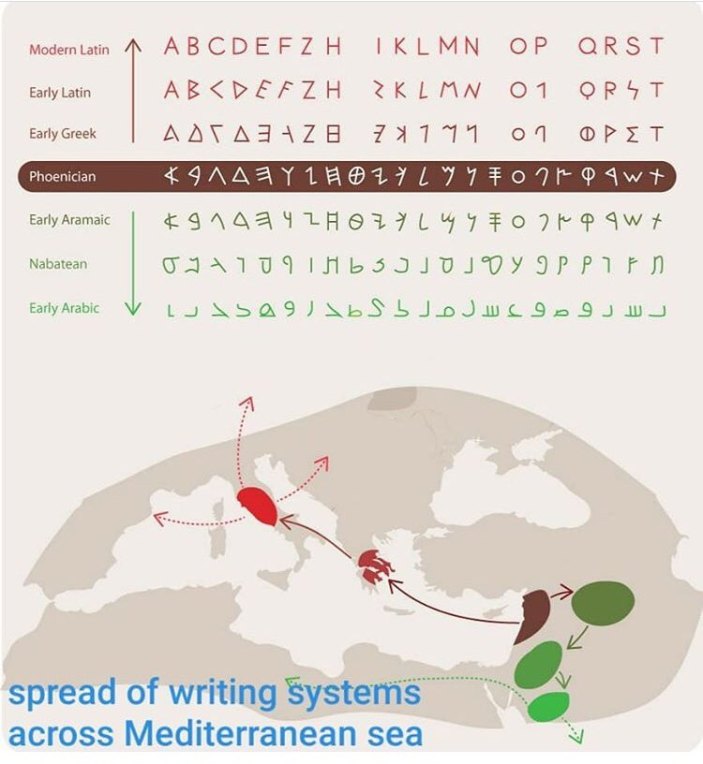
Meanwhile, further up from the Fener area (Phanar in Greek) is already the walls of Constantinople which were the Walls of Theodosius II that have been there since the 5th century and is still mostly intact but in the area near the walls is another important Byzantine landmark, the legendary Church of Chora (Chora in Greek meaning countryside) as when it was built all the way back in the reign of Justinian I in the 6th century, this part of the city was less populated already having a rural setting and in the last years of Byzantium, farms could already be found within the city walls which was probably in this part due to the heavy damage the Crusaders left on the city leaving no more money for the Byzantines to rebuild these parts. A few years ago when I went to Istanbul I’ve seen what the inside of the legendary but difficult to locate Chora Church which is now a museum looked like and the mosaics and frescos inside dating to the later Byzantine period were very impressive; the art inside though was only added in the 14th century by the Byzantine statesman Theodore Metochites during the time of the Palaiologos emperors, the last ruling dynasty of Byzantium. Although not being able to go to Chora this time, I saw something new and equally interesting as well which is the Tekfur Palace also known as the Palace of the Porphyrogennetos which was part of the larger Blachernae Palace complex in the northwest corner of the Walls of Constantinople; this area is called the Blachernae district which even though within the walls was in Byzantine times already the suburb area of the city but even though it was a suburb area, the emperors still chose to build palaces here probably to be away from the city center. The walls itself here are very old dating back to the 5th century but the large palace structure build along it known as the Palace of the Porphyrogennetos actually dates back only to the late 13th century built by Emperor Michael VIII Palaiologos after the reconquest of 1261 and the main building of it which is a 3 floor building is quite impressive and still intact up till now that it is even enclosed with a roof and glass windows with a museum inside it on Turkish ceramics from Iznik (formerly Nicaea). It is however commonly thought that this palace was named after the 10th century emperor Constantine VII Porphyrogennetos (r. 913-959) and that the purple room with porphyry walls where the Porphyrogennetoi or imperial heirs were born as way to legitimize their claim to power stood here. Constantine VII of the Macedonian Dynasty however was an influential intellectual Byzantine emperor who although lived an unfortunate life surrounded by plots against him since childhood succeeded in ruling the empire and promoting it as a cultural power, though he is the only emperor to use the title Porphyrogennetos which is Greek for “purple born” but all other imperial heirs were born in the purple room too, though this was at the Great Palace. This palace on the other hand was made centuries after Constantine VII’s death and is ironically named after another Porphyrogennetos or imperial heir named Constantine, the son of Michael VIII who however did not succeed his father as emperor as he was the third son, it was the eldest son Andronikos II Palaiologos that succeeded his father in 1282. This palace on the other hand is an architectural marvel with its alternating layers of red and white brick as well as red and white arches and from the third floor you can get spectacular views of the Golden Horn to the north and the hills outside the city. A quick walk north along the walls from here is the actual Blachernae Palace itself in also built along the walls but at the corner of the massive land walls and the lower sea walls at the shores of the Golden Horn; in Turkish the palace is called Vlaherna. The Blachernae Palace was constructed all the way back in 500 under Emperor Anastasius I (r. 491-518) but it only became the actual imperial residence in 1081 when Alexios I Komnenos (r. 1081-1118) became emperor and built during the reign of Alexios I on this spot was the dungeon building known as the Prison of Anemas named after Michael Anemas its first inmate in this deep and dark dungeon, later the emperor Isaac II Angelos would be imprisoned here in 1195 after being overthrown by his older brother Alexios III Angelos (r. 1195-1203) and with the arrival of the 4th Crusade, Isaac II was released from this dungeon and put back in power until he was overthrown again and executed the next year by a revolution. Then in the 1370’s, the son of the emperor John V Palaiologos Andronikos IV was imprisoned here too but after being released and overthrowing his father in 1376, John V and his 2 other sons the future emperor Manuel II and Theodore had their turn to be imprisoned here as well until 1379 when they escaped and John V returned to power; then at the final siege of 1453, John V’s grandson and Manuel II’s son, the last emperor Constantine XI Palaiologos defended the city from the Ottomans at the palace walls itself as the Ottomans were attacking from this side. In the final years of Byzantium, the emperors turned out to be mostly based in this part of the city where the formidable land walls were.
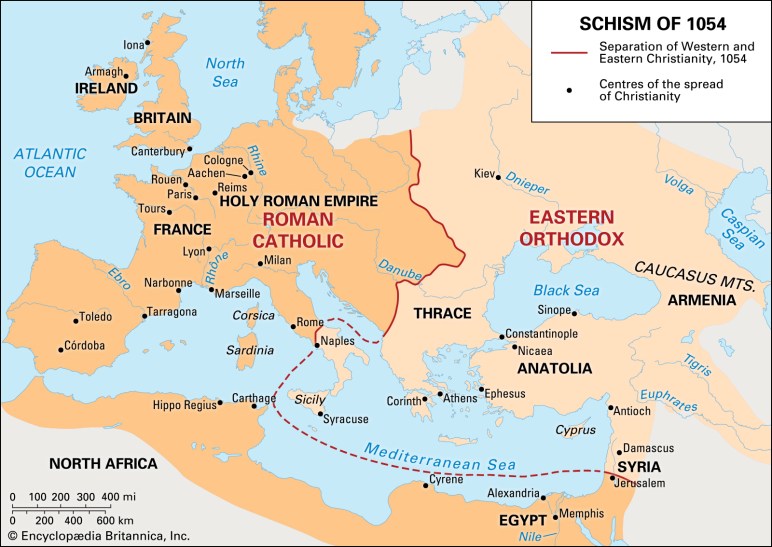
Stretching for 5.7km north to south from the Golden Horn to the Sea of Marmara is the formidable land wall of Constantinople commonly called the Walls of Theodosius II (Teodos II Surlari in Turkish) was the formidable and impossible to penetrate walls of Constantinople that had 2 layers of walls and a moat, siege engines and traps, 192 towers for extra protection, and 11 gates. The original walls of Constantinople were built by Constantine the Great in the city’s founding but were smaller and not as powerful so in the early part of the reign of the young Theodosius II, from 412-422 these new and extremely effective walls were constructed 2km west of the old walls, although the one really responsible for the construction was Theodosius II’s regent Anthemius but the walls were named for the emperor who ruled a long reign till his death in 450. The walls however were damaged over the centuries by many earthquakes but many of the emperors over the centuries kept on repairing and adding more defenses to it, but more than that, it survived numerous sieges and was only successfully breached in 1453 by the Ottomans. These walls had successfully defended Constantinople against Atilla the Hun in the 450s; against a massive siege of the combined armies of the Sassanid Persian Empire, the Avars and Slavs in 626 during the reign of Heraclius while he was away fighting against Persia; against the 2 massive land and naval sieges of the Arab Umayyad Caliphate, the first from 674-78 during the reign of Constantine IV and the second from 717-718 at the beginning of Leo III’s reign; then against the Bulgars in 813, and 3 times against the Rus and all failed as they did not have technology advanced enough to break walls these large and strong. The army of the 4th Crusade were only able to successfully breach into Constantinople the easy way as they did not break open the massive walls but instead scaled the lower sea walls along the Golden Horn breaking into the city; then when the Byzantine army of Nicaea in 1261 led by the general Alexios Strategopoulos reconquered the city, they broke in by sneaking under the walls but were met with little resistance by the Latins as their army was weak and ineffective and in only one day, they took the city back. Between 1390 and 1453, the Ottomans failed 3 times to breach the walls of the city and only in 1453 they were successful all because of a massive cannon that battered the walls countless times before creating a whole for the army to storm in, though this siege took many days but at the end the Ottomans led by Mehmed II were able to successfully capture the city on Tuesday May 29, 1453 thus fulfilling the long dream of Islam ever since its rise in the 7th century to take Constantinople. The land walls no matter how strong also had its weak points including the small River Lycus that once flowed through it, though it had dried up now.

DSC08548
Aqueduct of Valens from Sarachane Park
DSC08556
Interior of St. George’s Cathedral
IMG_1655
Palace of the Porphyrogennetos (Tekfur Palace)
14a326f592f3499261d4436adf712bc6
Reconstruction of Byzantine era Blachernae Palace


Princes’ Islands 

754px-Princes'_Islands_travel_map.svg
Map of the Princes’ Islands in the Sea of Marmara

Now to the last section of this extremely long article, which will be a location away from the city center itself on the Sea of Marmara (Propontis) to the southeast of the city, this location then is the Princes’ Islands, an archipelago of 9 pine-forested islands having 4 large islands and 5 small ones. To get here, you have to board a ferry from the Kabatas area along the Bosporus near the Dolmabahçe Palace which was said to be in 1453 the location wherein Mehmed II ordered his men to drag their ships across land from the Bosporus to the Golden Horn to surprise the Byzantine navy defending the Golden Horn during the final siege. While at the ferry, you can see the Bosporus and Marmara Seas itself and look back at the days of the Byzantine Empire and the naval battles that took place where you could get the picture of how the Byzantine navy successfully defended the capital with the use of their ultimate naval weapon, Greek Fire. On the other side of the Bosporus, you will see the side of Istanbul that belongs to Asia that in Byzantine times were the suburbs of Scutari (now Üsküdar) and Chalcedon (now Kadiköy) before arriving south at your destination, the scattered Princes’ Islands, called Prens Adalari or simply Adalar in Turkish. Out of the 9, the most visited and the one that is the largest and most developed is the Büyükada Island or “Big Island” (Prinkipos or Prote in Greek) and like the other islands in this archipelago in the Marmara, this was one of the islands important Byzantines were exiled to. During the centuries the Byzantine Empire ruled, opposition was common and many emperors and empresses were overthrown and as a result of this, they were exiled but to live in a less luxurious and less comfortable life and in order to live this life, many of them were exiled to these islands to live as nuns or monks and never permitted to return to Constantinople, and because of an extreme change of lifestyle, death came to them sooner than expected due to stress. The convent found in the Big Island is where the empresses Irene in 802, Theophano in 969, and many others were exiled to after being removed from power; also, in 1929, Leon Trotsky from Soviet Union Russia was banished here and lived here until 1933. This island though first appears in the scene of Byzantine history as early as 569, when the emperor Justin II, Justinian I’s nephew and successor built a palace and monastery here but today you will mostly see large Ottoman era mansions which happen to be mostly home to Greeks, Armenians, and Jews. Other than that, the Big Island is plainly a relaxing area to enjoy nature not too far away from Istanbul as here you can get the feeling of a quiet Greek island within Turkey but you can also get the feeling of the drastic change of life the empresses went through after being deposed from the busy city to a peaceful and boring island. Meanwhile the other 8 islands particularly the Kinaliada Island were where the deposed Byzantine emperors were exiled to such as Michael I Rangabe in 813 after being overthrown by the rebellion of the general Leo the Armenian who became Emperor Leo V, Romanos I Lekapenos (r. 920-944) who was exiled here by his sons in 944 before Constantine VII returned to power a year later exiling Romanos’ sons here as well to be with their father, and Emperor Romanos IV Diogenes in 1071. The Sea of Marmara on the other hand where these islands are found turns out to be the world’s smallest sea and it is also found within the Istanbul area but despite being the world’s smallest sea, it is also one of the world’s most important waterways as it is the only connector from the Black Sea to the Mediterranean via the Strait of the Bosporus in the north and the Strait of the Dardanelles in the south.

DSC08625
Skyline of Constantinople from the Marmara
DSC08635
Büyükada (Prote) Island


Well, now this finishes my travel article on Byzantine Constantinople. The city itself may now look quite lost and inconsistent as all forms of architecture may be seen side by side with each other making you think that the city does not follow one kind of architectural style most cities do. However, its inconsistency makes Constantinople unique as it was an imperial city for more than a thousand years and many cultures had met and settled here, thus making their mark which is why my article was inconsistent with the use of Greek, Turkish, and Latin terms and even using both names of the city in the same article. Constantinople was not only the imperial center for the Byzantines and Ottomans, it was where people from all over the empire settled making it a city with a cosmopolitan society as it had Varangians or Norsemen, Jews, Armenians, Turks, Arabs, Egyptians, Latins, Slavs, and many more living in the same city doing their business and Constantinople was one city that allowed all sorts of cultures to live in it. Although when going to Istanbul today, it seems that it is impossible to see the grandeur and splendour the city had when the Byzantines had it as their capital if not for the Hagia Sophia, but this not true as all you need is a close look at the smallest details of the city and with some imagination when seeing what is left of the massive Hippodrome, palaces, and forums you can end up seeing for yourself how spectacular this city was. For many centuries, Byzantine emperors especially Justinian I had decorated and built up the imperial city at its grandest scale and for centuries it has amazed anyone who saw it for the first time or any foreigner who came for business as now other city in Europe was as large and technologically advanced as Constantinople with the Hagia Sophia’s large size and dome, fountains, cisterns, forums, mechanisms, universities, and intellectual people. However, one event would change everything fully for the Byzantines, which was the attack of Constantinople by the 4th Crusade in 1204 and after this, the grand imperial city was looted and left in ruin, although even the Crusaders when looting it were amazed to see how big the city was and because it was so large and grand, it took days to loot it. When Byzantine rule returned in 1261, it was too late as the damage the Crusaders brought to the city was too much and the Byzantines at this point have grown too weak financially to bring the city back to its former glory and in less than 200 years, Constantinople fell in the final siege to the Ottomans. Though when the Ottoman sultan Mehmed II captured the city, he once again restored it to its former glory but under new management, which was the Ottoman Empire, but even with a new power and totally different culture taking over, Byzantine elements remained as their style inspired the many new mosques the Ottomans built. Only less than a hundred years after the Ottoman conquest, Constantinople would again be the great imperial city with the grandest of landmarks during the reign of the sultan Suleiman I the Magnificent in the 16th century. Now Constantinople really shows how an imperial city lasted for so many centuries and continued to have the grandest landmarks for so long but it is not so much the kind of the city to admire for its exterior beauty as it may look inconsistent, but rather it is the kind of the city to see its great legacy and the glory it once had from inside, the same way you look at the Hagia Sophia. Other than Constantinople, there was no other imperial city this grand and significant than Moscow which had eventually became called “The New Constantinople” and “Third Rome” after the Byzantine Empire fell in 1453 for Russia was the one to actually inherit the culture and legacy of the Byzantine Empire when the Ottomans took over Constantinople. Meanwhile, back to Constantinople, its walls which may still look intact had played a very crucial role in history as it defended the great city against countless invasions for about a thousand years and till this day, because the walls still stand, it looks like they were built to last. Byzantine remains of the city may be a thing of the past that have been buried in time but some areas like the Patriarchate in the Fener area even if not dating back to Byzantine times would at least still show you what the Byzantine era city may have looked like. Lastly, the Princes’ Islands is an alternative place to go in the city to see a totally different side wherein you will feel like somewhere else even if still in the city area, which is how probably the emperors who were exiled there felt. Now, this concludes my special edition article on Constantinople, the “Queen of Cities” and surely I could say it is the “Queen of Cities” as no other city had such a long history of grand landmarks being built over centuries in which many still last till now. Since this article is done, there is one more big article I will do before the year ends and it will be my ultimate Byzantine article, which are the 12 turning points in Byzantine history! Well, this is all for now… thanks for viewing!