6 Times Empress Theodora Exercised Political Power

Posted by Powee Celdran
324916680_501335022136474_5359653165260915756_n

Welcome back to the Byzantium Blogger and here we are again with another Byzantine history article! In this one being the 9th part of this series featuring top lists concerning the lives of certain emperors who I think have interesting stories, it will be a spin-off article to the previous article I wrote featuring 10 Unknown Facts about Emperor Justinian I the Great as this one will cover the story of his wife the famous empress Theodora.
450964314_526607313028289_5083437527912262132_n
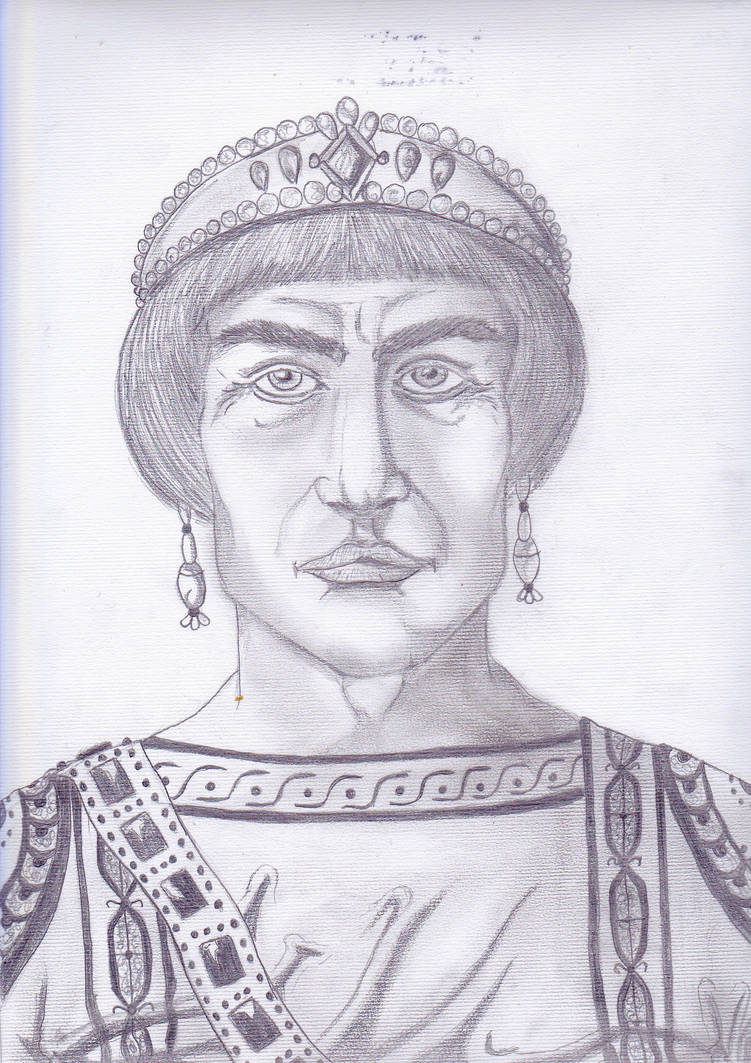
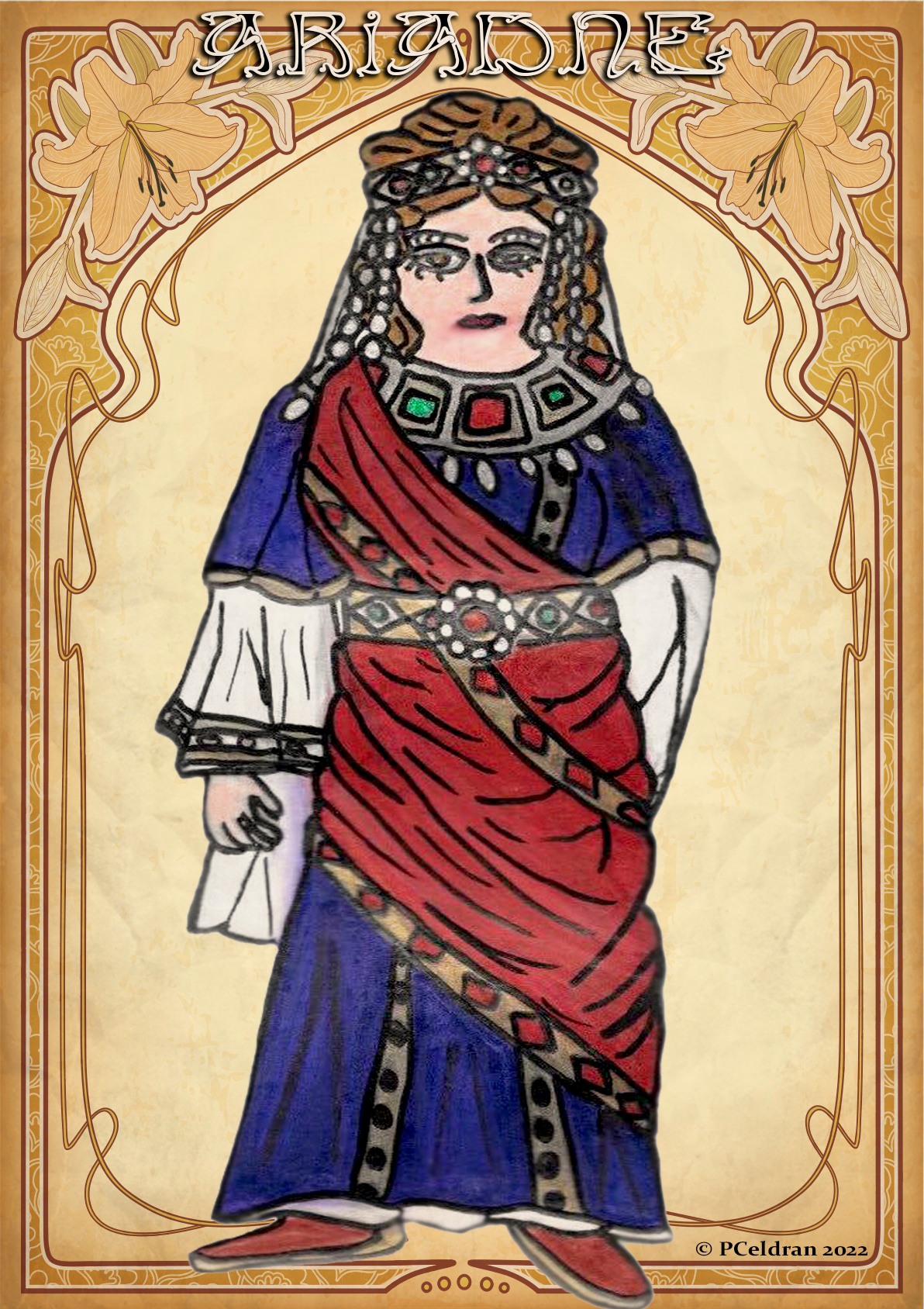
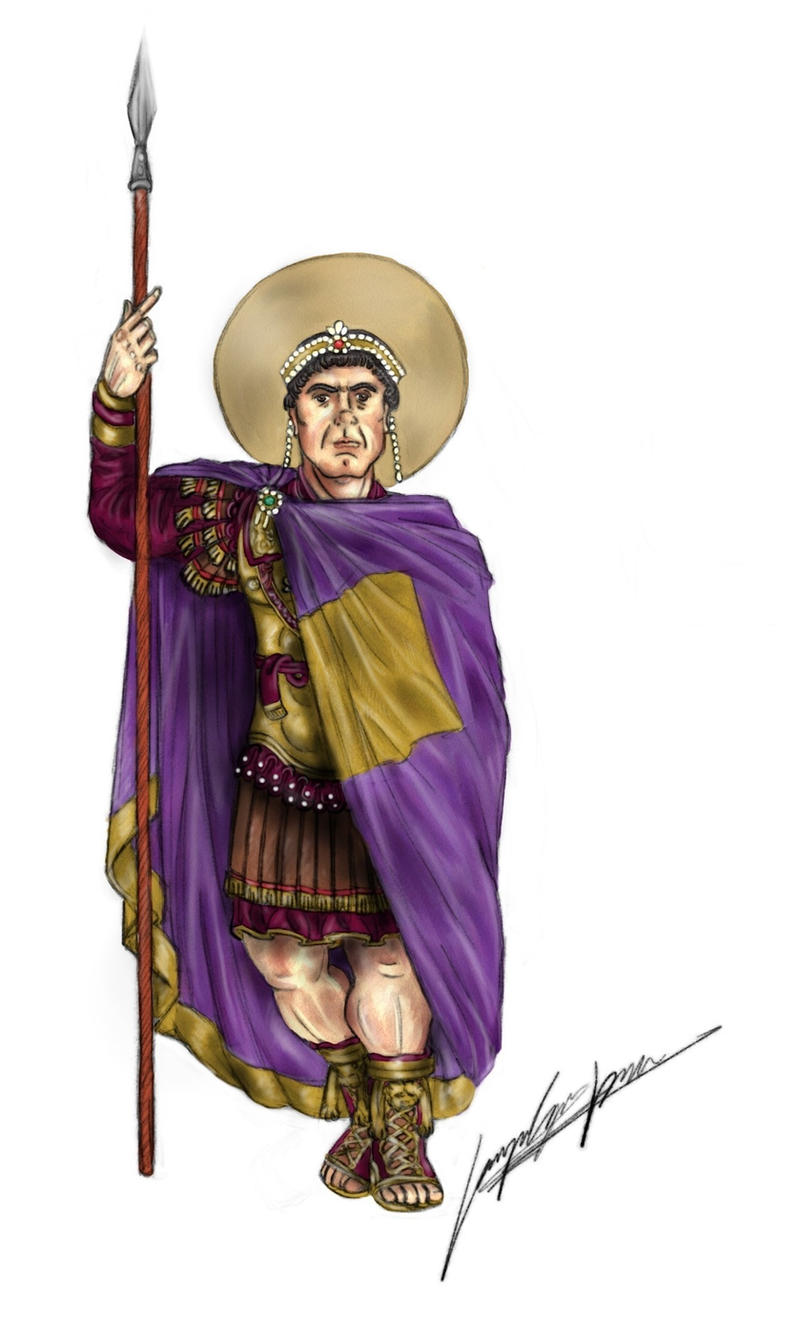
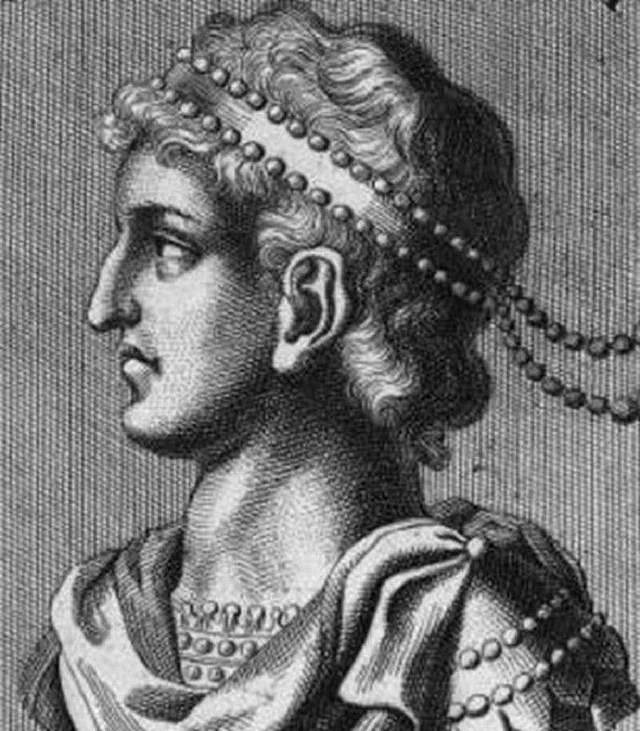
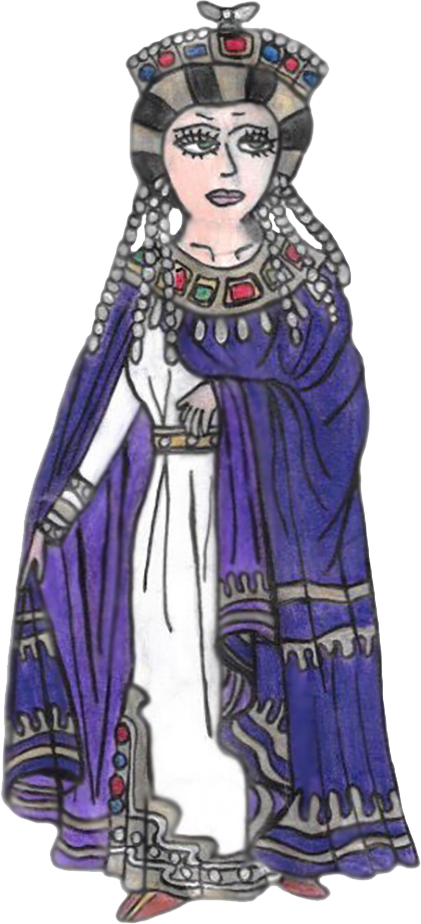
Byzantine empress Theodora, wife of Justinian I the Great, art by myself

Now, Theodora the wife of Justinian I (r. 527-565) is one of Byzantine history’s most famous figures but also one of the most famous women rulers in history as she had an impressive story of rising from humble origins as a stage performer to becoming the empress of the Byzantine or rather Eastern Roman Empire. As empress, Theodora played a crucial role as one of her husband’s chief advisors that true enough she too was behind many of his reforms. During her time as empress, Theodora influenced Justinian mostly in his policies on women’s rights and court rituals and ceremonial, but it was she who more or less saved his position as emperor and hers as empress during the Nika Riot of 532 that almost cost them their lives as Theodora intervened by having Justinian brutally suppress it with force. Theodora too was influential in religious policy in the Byzantine Empire especially regarding the Monophysite Christian faith which she was part of despite it being considered heretical while she too played an important role in forming their ruling dynasty known as the Justinian Dynasty. Overall, Empress Theodora played such a crucial role in her husband’s rule that she was called by him as his “partner in deliberations”. Unfortunately, Theodora did not influence her husband throughout his entire reign as she died in 548 long before Justinian’s death (565), but in her time as empress-consort to Justinian, she was definitely an influential figure although mostly in domestic policy as she more or less did not have any role in Justinian’s foreign policy which he was very well-known for. Now, this article was not originally in the line-up for my top lists concerning the lives of Byzantine emperors, but since Theodora has such an interesting story and has wielded real power, I decided to include her as well basically as a spin-off to the Justinian I article I wrote previously. In this article, we will go over 6 different occasions in which Theodora as empress and even before that wielded and exercised political power and was influential in government affairs. Before we begin with the list, I would first give a background to Theodora which includes the Byzantine Empire she grew up in and her origin story.

95t3yr5xvfyy
Flag of the Byzantine Empire

Follow me, Byzantine Time Traveller on Social Media:

Instagram: @byzantine _time_traveller

Facebook: Byzantine Time Traveller

Youtube: No Budget Films

Website: Byzantine Time Traveller

Deviantart: Byzantium-blogger55

Art Station: Powee Celdran Porphyrogennetos

Patreon: Byzantine Time Traveller


Both Theodora’s year and place of birth are disputed as she could have been born as early as 490 or possibly 497 or even as late as 500 whereas sources differ on her place of birth as according to the 12th century historian Michael the Syrian, she was born in Syria while others say she was a native of Cyprus born there or that she came from the region of Paphlagonia in Asia Minor.

19800794_1783257018357077_9211726549800501661_o
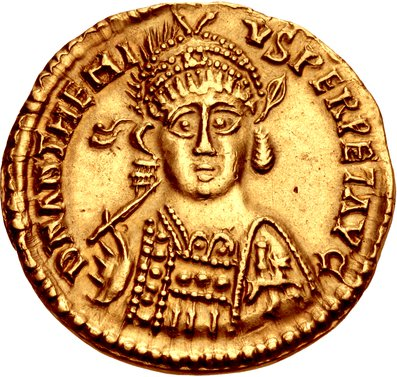
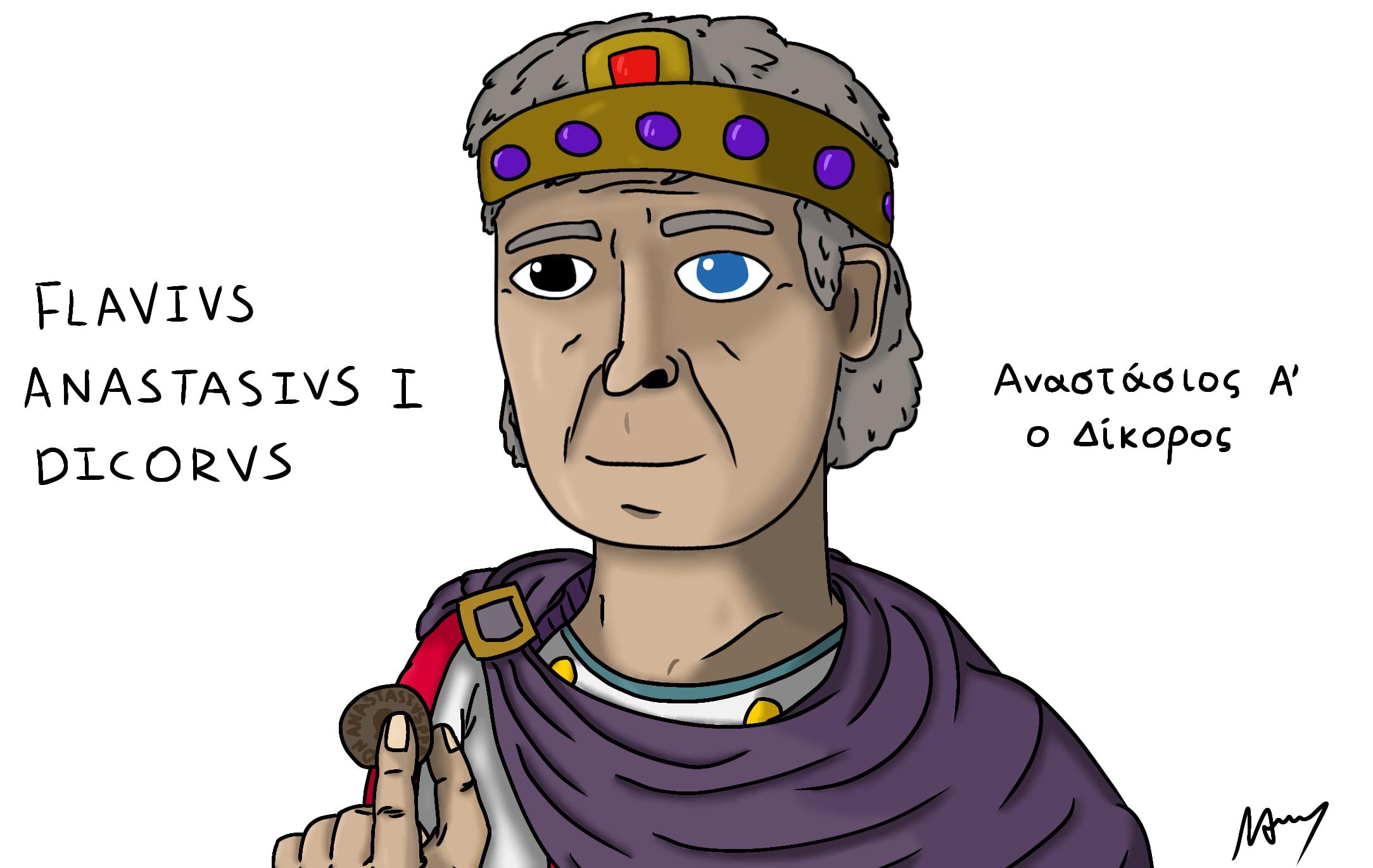
Anastasius I, Eastern Roman emperor (r. 491-518), art by Amelianvs

Whatever is said about her place or date of birth, she was born and had grown up in the reign of the Byzantine emperor Anastasius I (491-518) whereas Theodora was the 2nd daughter of a bear trainer for the capital Constantinople’s Green faction named Acacius and an unnamed wife who was a dancer and actress; Theodora too had an older sister named Comito and younger sister named Anastasia. Now, during the time Theodora had grown up, the Byzantine Empire had just recently stabilized politically thanks to the rule of the emperor Zeno (r. 474-475/ 476-491) who managed to defeat all local rebellions in the Eastern empire- despite the Western Roman Empire having fallen in 476- whereas Zeno’s successor Anastasius I during Theodora’s early years had worked hard to stabilize the empire economically in order to make it financially prosperous. After the death of Theodora’s father Acacius when she was still very young, her mother remarried but due to lacking a strong source of income, she presented her 3 daughters to the leader of the Green faction who however refused her offer. Theodora’s mother instead presented her daughters to the rival Blue faction who this time took pity on the family and thus gave the position of bear keeper which Theodora’s late father held to her stepfather.

290163803_1162741927628090_1305080198725612731_n
Theodora as a dancer, art by myself

Theodora then grew up to become an actress in the capital Constantinople, however according to the slander done by the 6th century contemporary historian Procopius, Theodora was not only an actress but a prostitute. However, back then, actresses were considered to be in the bottom of society and therefore equivalent to prostitutes while actresses back then too were known to have done scandalous acts on stage while barely clothed and were also known to have entertained men by doing sexual services off stage. Again, according to Procopius- although again this may be false- when Theodora was an actress, she made a name for herself with her pornographic portrayal of Leda and the Swan where she would lie naked on stage and have birds eat seeds from her naked parts. Later, when Theodora was fully grown up, she travelled to North Africa as a concubine of a Syrian official named Hecebolus who was appointed by the emperor Anastasius I as Governor of Libya but according to Procopius, Theodora left him there due to his mistreatment of her and thus Theodora travelled to Alexandria in Egypt. When in Alexandria, Theodora met its patriarch Timothy IV who was a Monophysite Christian, and it was mainly due to her meeting him that she converted to the Monophysite Christian faith. After her stay in Alexandria, Theodora travelled to Antioch where she met the Blue faction dancer Macedonia who was an informer of Theodora’s future husband Justinian, nephew of the reigning emperor Justin I (518-527), and it is possibly Macedonia who introduced Theodora to Justinian who then was still known as Flavius Petrus Sabbatius.
312976017_1144966363104753_8608341563045065593_n
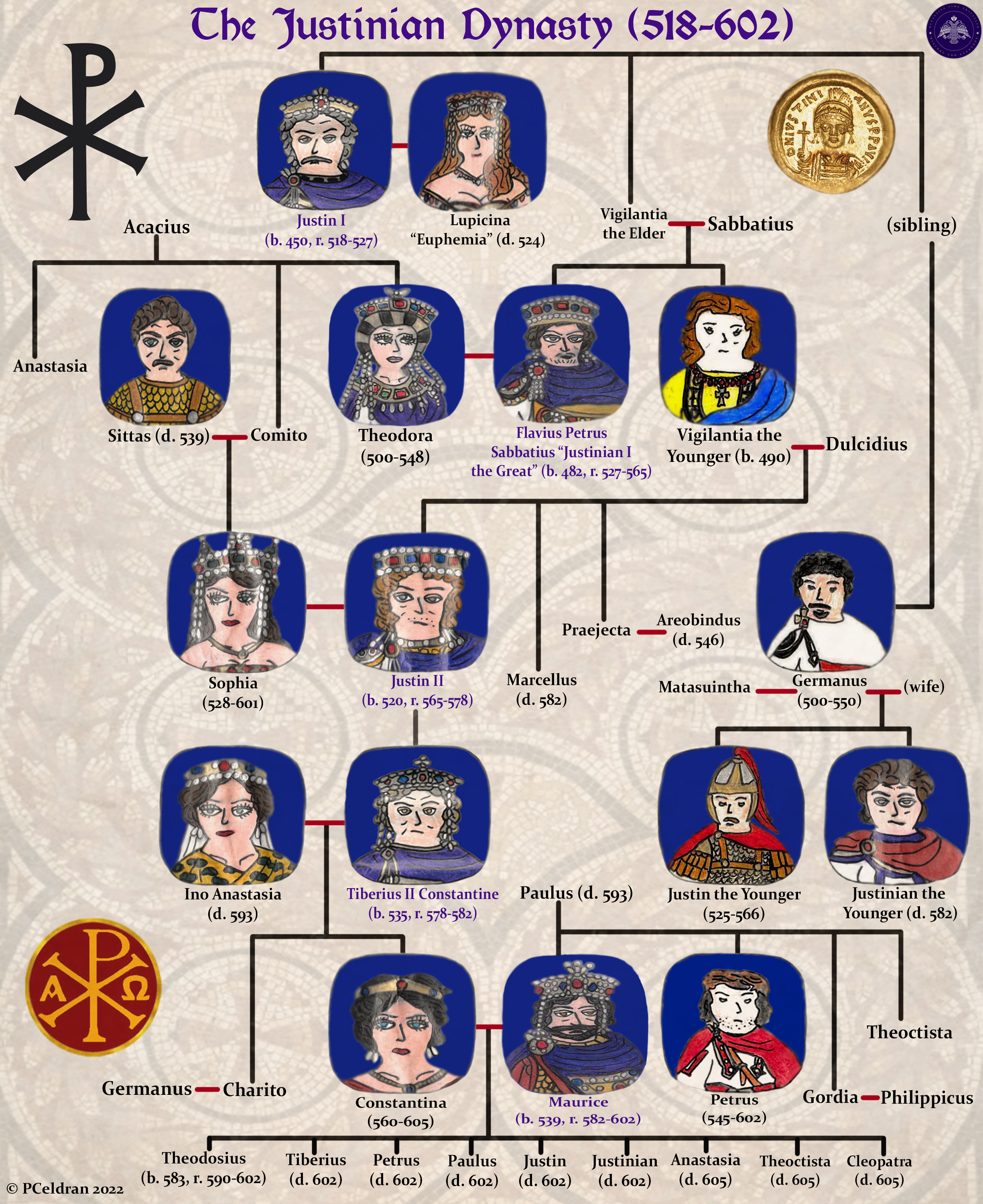
Genealogy of the Justinian Dynasty of the Byzantine Empire (518-602), illustrated by myself
eastern_roman_empire_480_by_sergiulusardu_dgy21i9-fullview
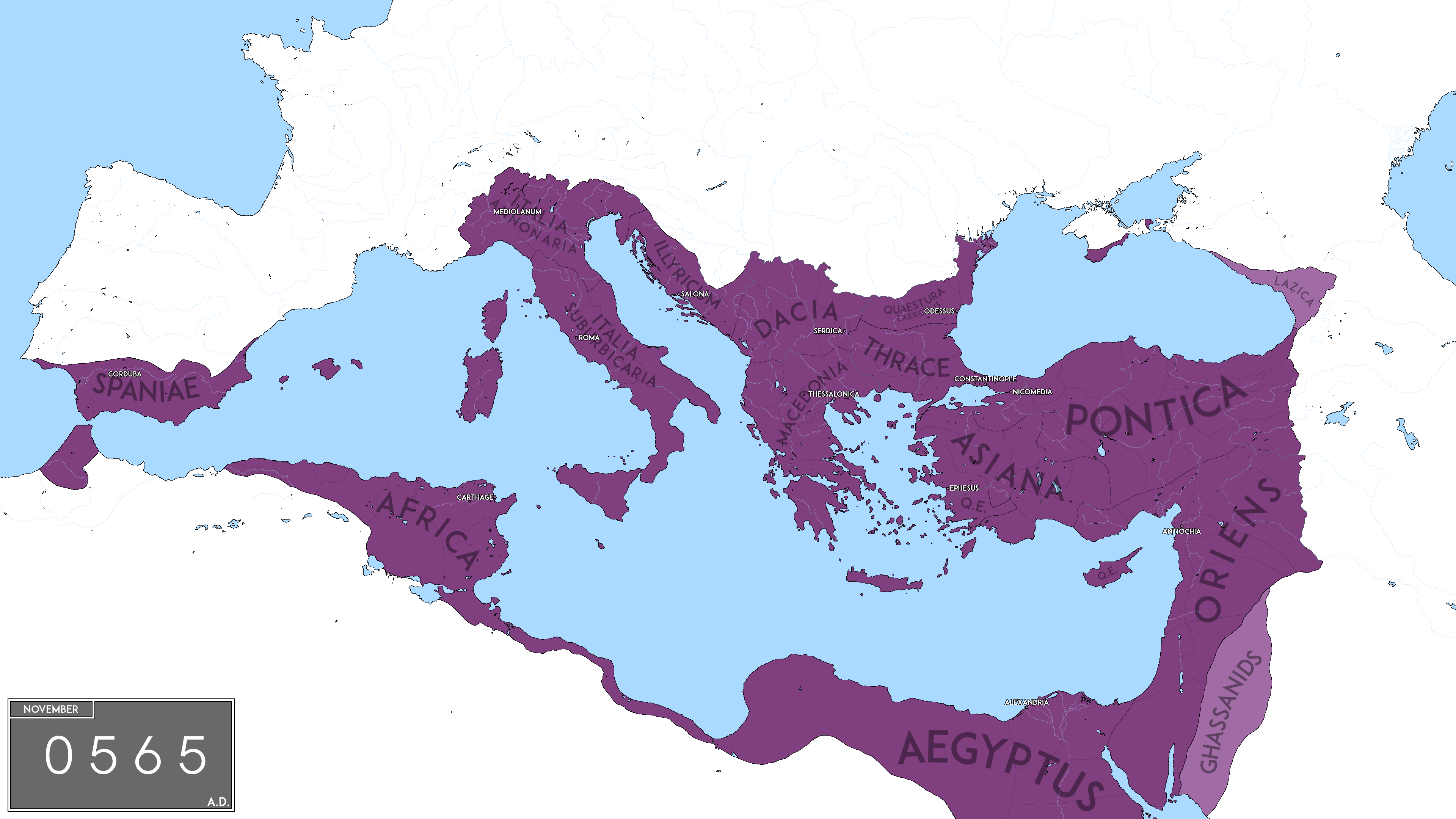
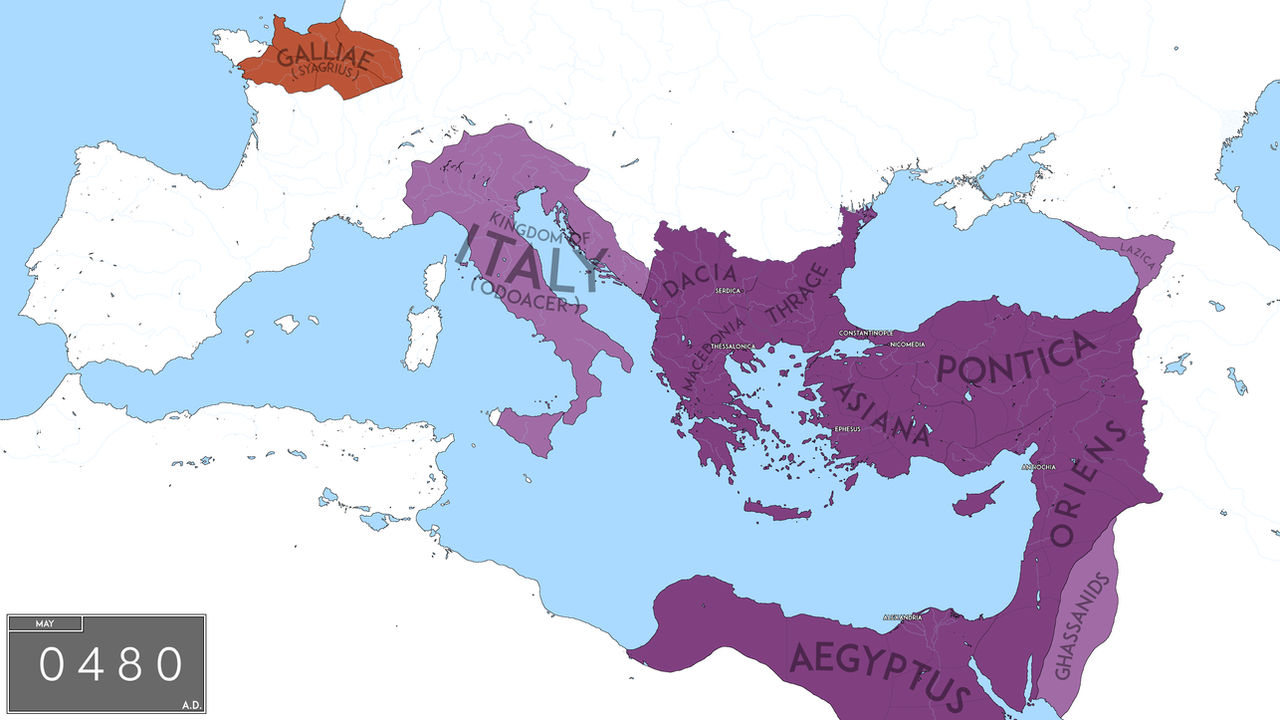
Map of the Eastern Roman/ Byzantine Empire (purple) following the fall of the Western Roman Empire in 476
Theodora (San Vitale)
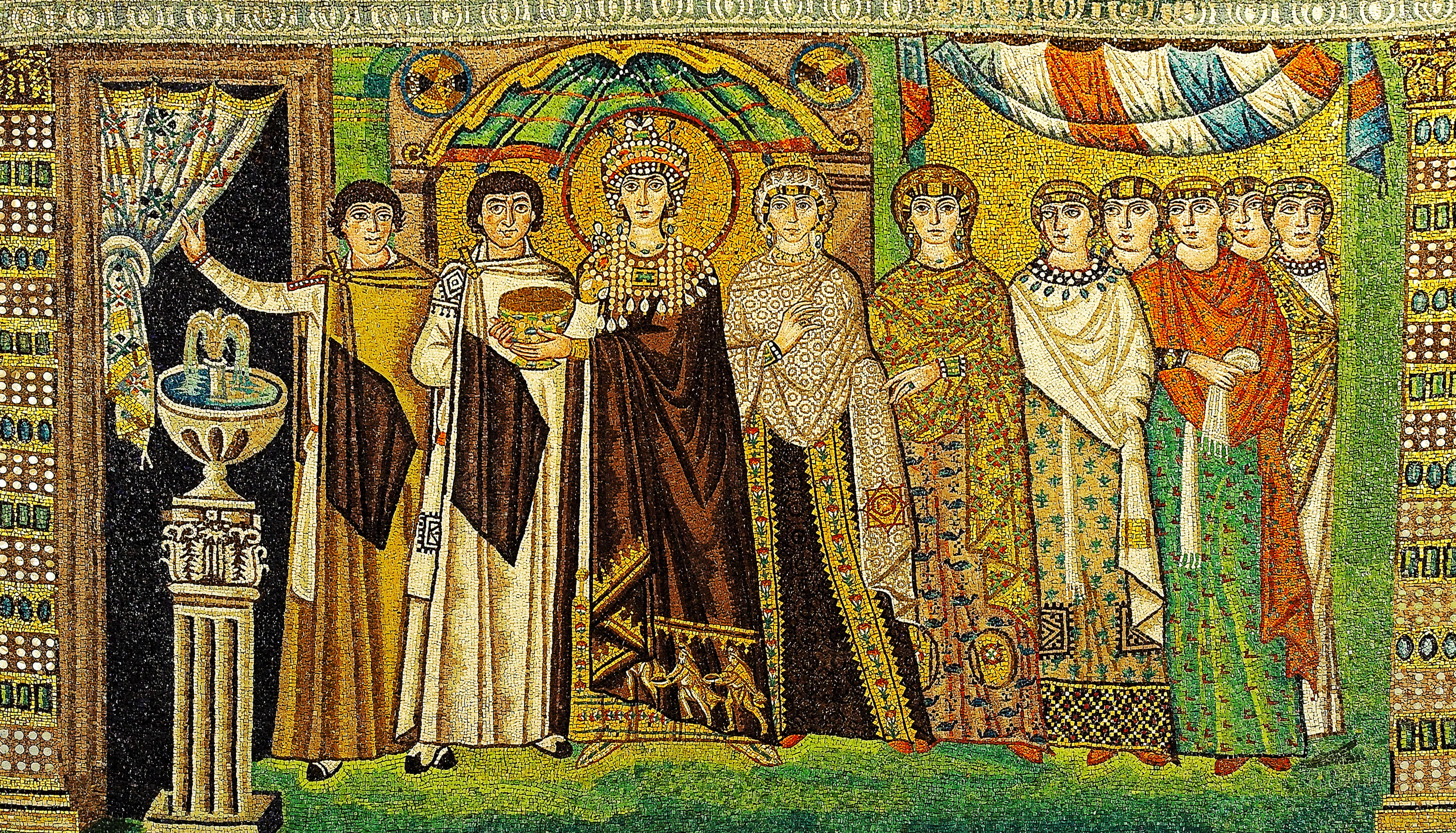
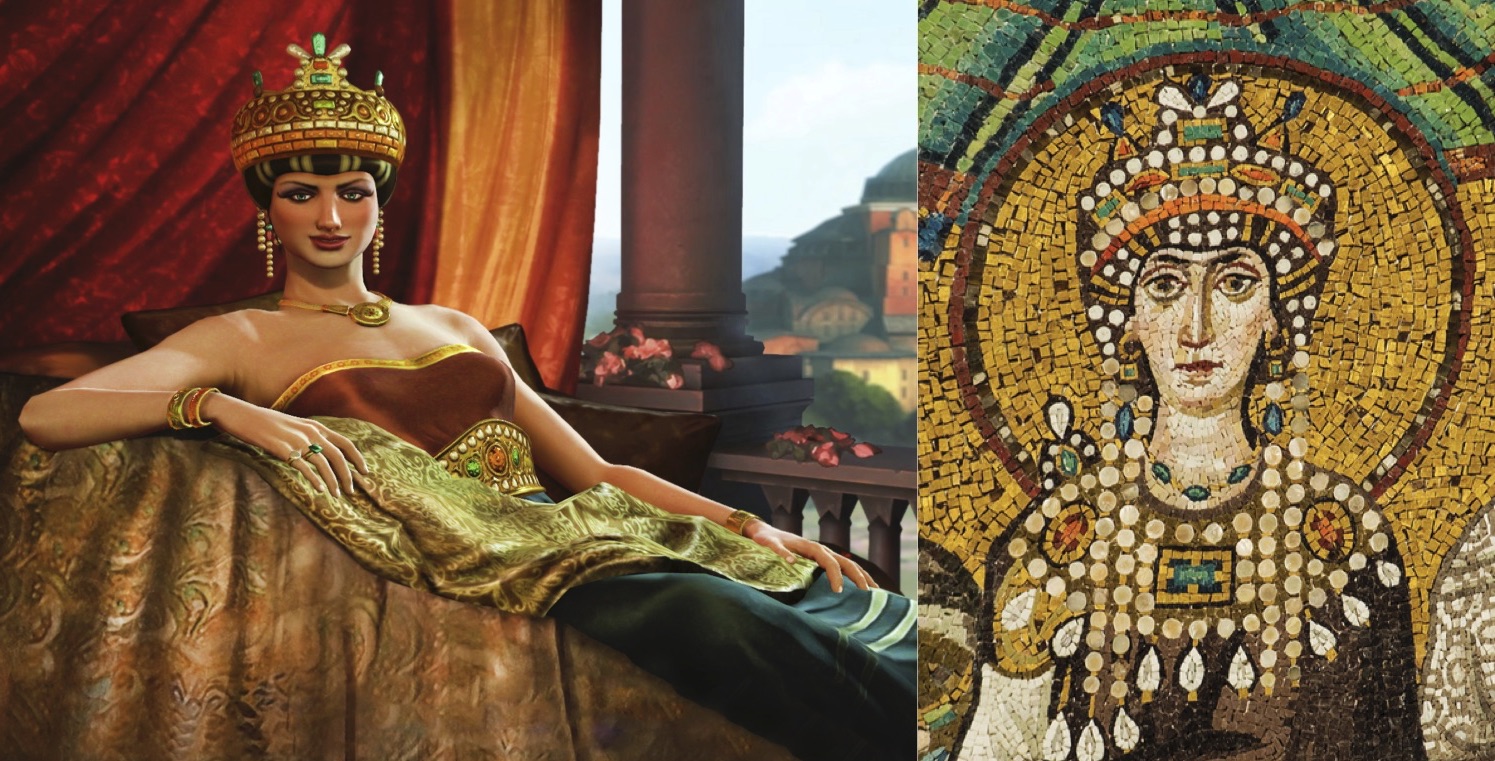
Mosaic of Empress Theodora and her court from the Basilica of San Vitale in Ravenna, Italy

Related Articles from the Byzantium Blogger:

Byzantine Alternate History Chapter III

Byzantine Alternate History Chapter III- Spin-off

8 Times Emperor Zeno was a Survivor

5 Achievements and 5 Failures of Theodosius I the Great

10 Achievements of Constantine I the Great

7 Times Constantine XI Exemplified Bravery

10 Unknown Facts About Emperor Justinian I

8 Times Michael VIII Palaiologos was an Evil Genius

10 Surprising Facts About Basil II

5 Reasons to Feel Bad for Justinian II and 5 Reasons to Hate Him


I. Theodora and Justinian- Changing the Marriage Law         
2f1c608066438c072614c5033855489c

Like Theodora, Justinian or Flavius Petrus Sabbatius who was to be her husband but much older than her also came from humble origins as he was born to a peasant family in the Balkans in 482, but it was thanks to his uncle Justin who rose up the ranks due to military service to why Justinian too was able to climb up the social ladder and eventually become a patrician as he was adopted by his uncle who using the great wealth he amassed by serving in the imperial army paid for the young Justinian’s education.
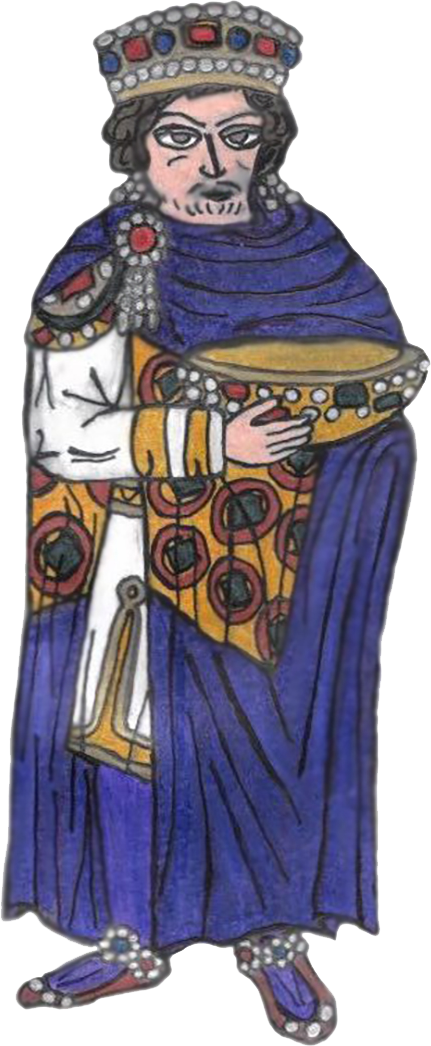
439287331_1782023492281106_2811697738245513587_n
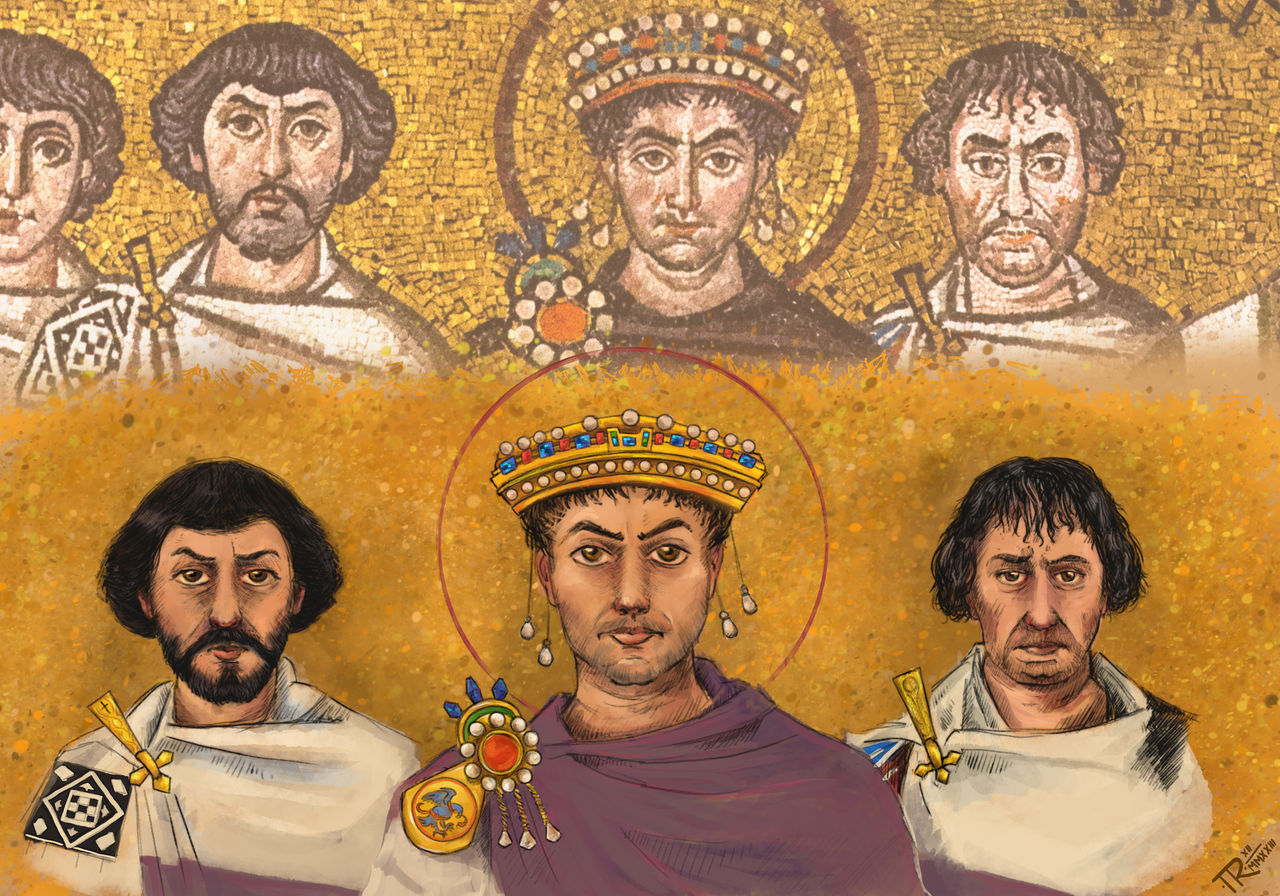
Emperor Justinian I the Great (r. 527-565), art by myself

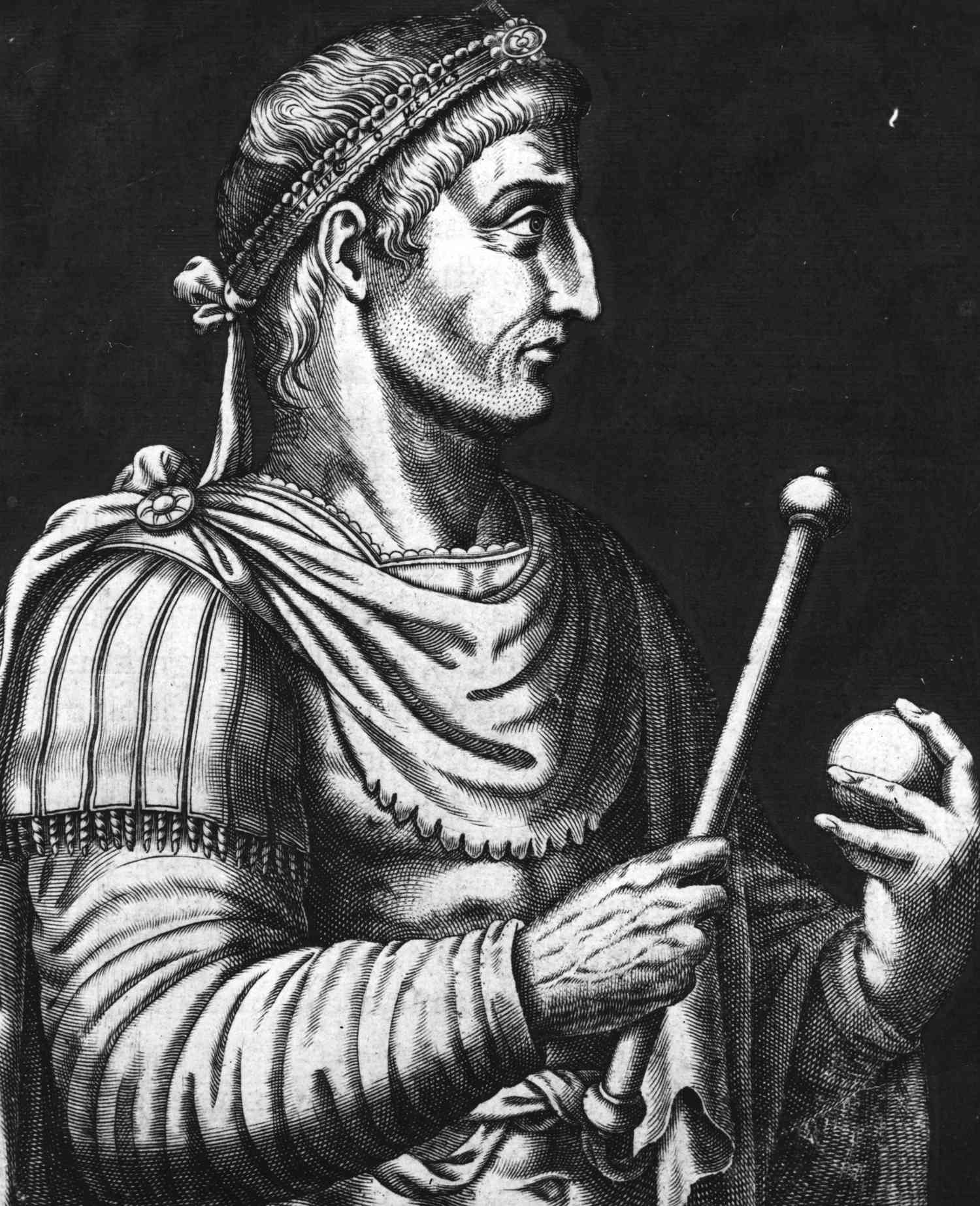
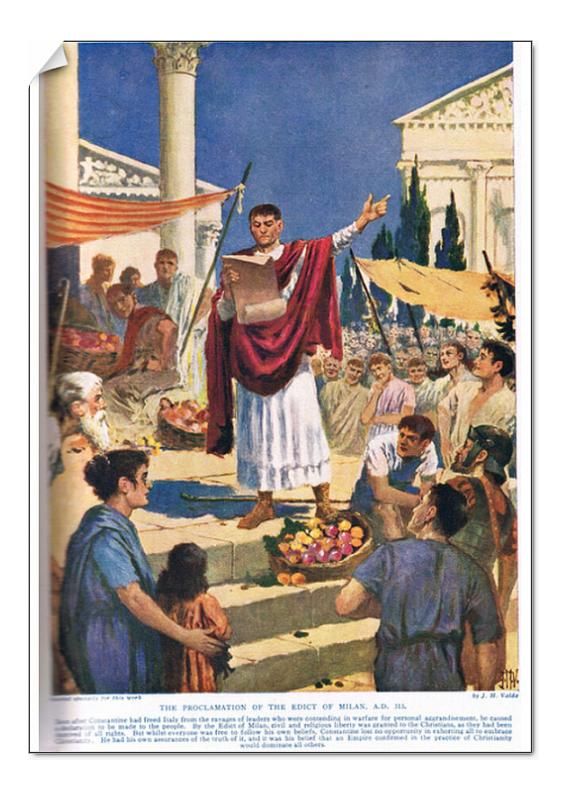
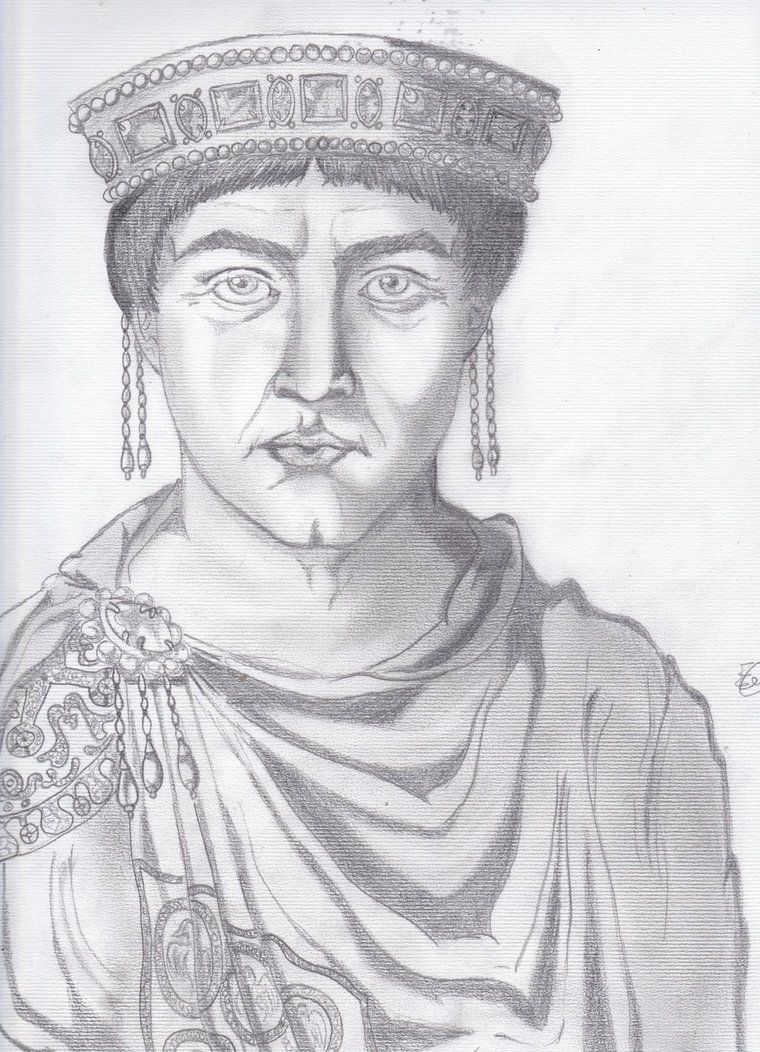
By the time the emperor Anastasius I died at the very old age of 88 in 518 without a named successor, the palace guard force or rather the Excubitors and the imperial court elected Justin who was the commander of the palace guard force as the new emperor although with the backing of Justin’s brilliant nephew Justinian who began using this new name meaning “son of Justin” due to being adopted by Justin. Despite his humble background as a peasant and his illiteracy, Justin I proved to be quite a capable emperor, although it was again his nephew Justinian who was the brains behind his rule as he possessed more intellect than his uncle did. In 521, Justinian held the ceremonial position of consul for the year and although it is not recorded when or where he met Theodora, it is already mentioned that he already was together with Theodora during the time he was consul in 521. Eventually, Justinian planned on marrying Theodora but was unable to as a law from the time of the Roman emperor Constantine I the Great (r. 306-337) forbade any man of senatorial rank- which Justinian had at that time- from marrying actresses, although by this time Theodora was no longer an actress but this law also forbade senatorial men from marrying former actresses too. Additionally, Justin I’s wife Euphemia- also known as Lupicina- who did not have the title of “empress” due to her origin as a former slave strongly opposed Justinian marrying Theodora and thus it was only after her death in 524 when the emperor Justin considered passing a new law that would allow senatorial men to marry actresses so long as the woman repented her old ways as an actress and if the marriage would be approved of by the emperor.
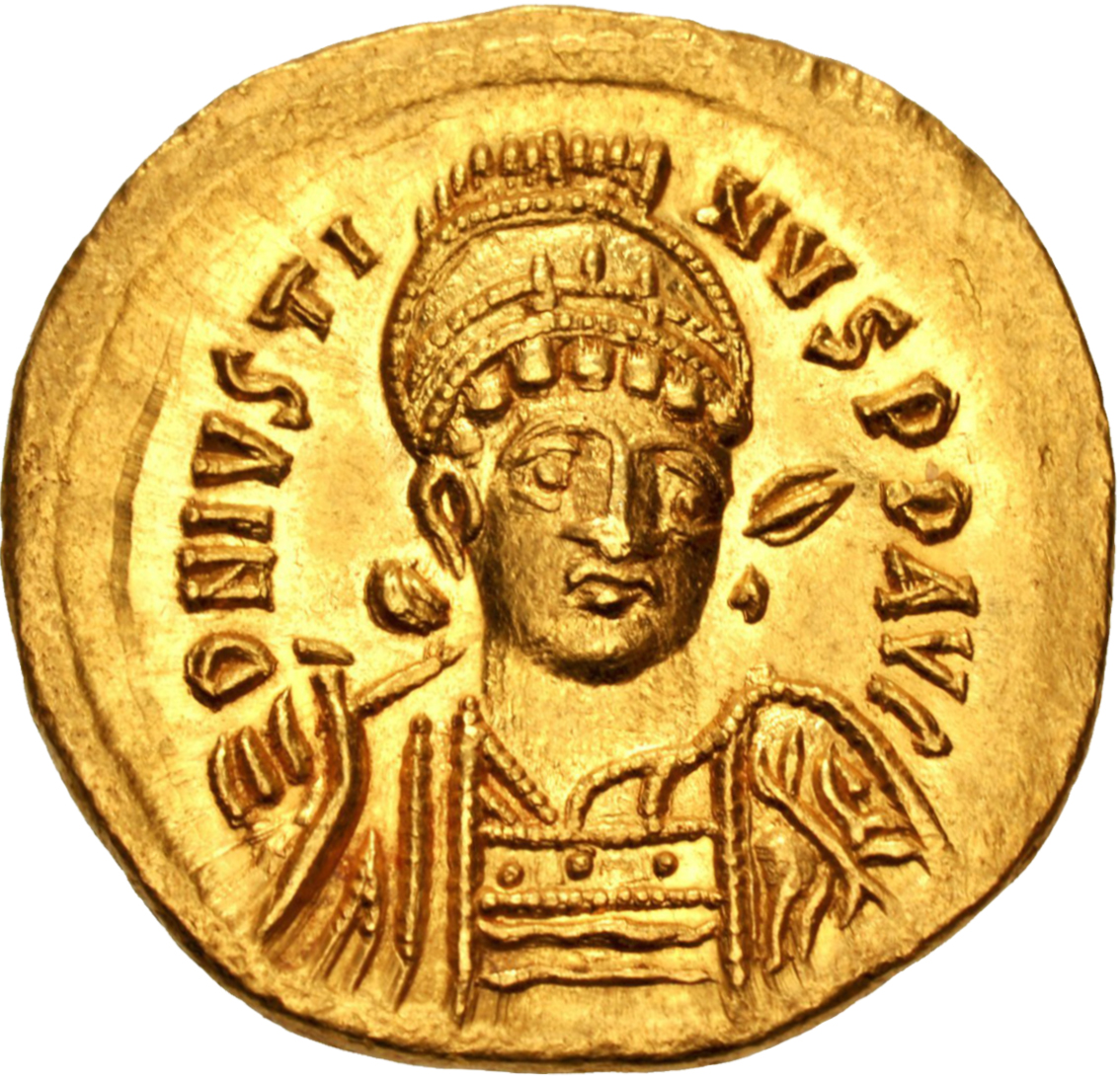
Solidus_of_Justin_I_(obverse)
Gold solidus coin of Emperor Justin I (r. 518-527)

This decision of Justin to overturn this law again was mostly thanks to the influence of Justinian and Theodora as well thus making this an early stage of when Theodora despite her past as an actress have power and influence over government matters. With this new law passed by Justin I allowing senatorial men to marry former actresses, Justinian and Theodora then married possibly in around 525. Justin I then died in 527 from an infected old war wound and thus his nephew succeeded him as Emperor Justinian I at the age of 45 whereas Theodora as his wife was crowned as the new empress or Augusta. According to Procopius, Theodora since day one of their rule helped Justinian make decisions, plans, and political strategies while she also participated in state councils. Overall, Theodora too shared Justinian’s vision in expanding the empire territorially and that the emperor and empress were God’s representatives on earth, though Theodora would not really have any role in Justinian’s foreign policies and territorial expansion.         

m77k4p7hpxb81
Byzantine emperor Justin I (r. 518-527), uncle of Justinian I, art by Byzansimp
justinian_and_theodora_simple_digital_art_by_byzansimp_dfasrwi-fullview
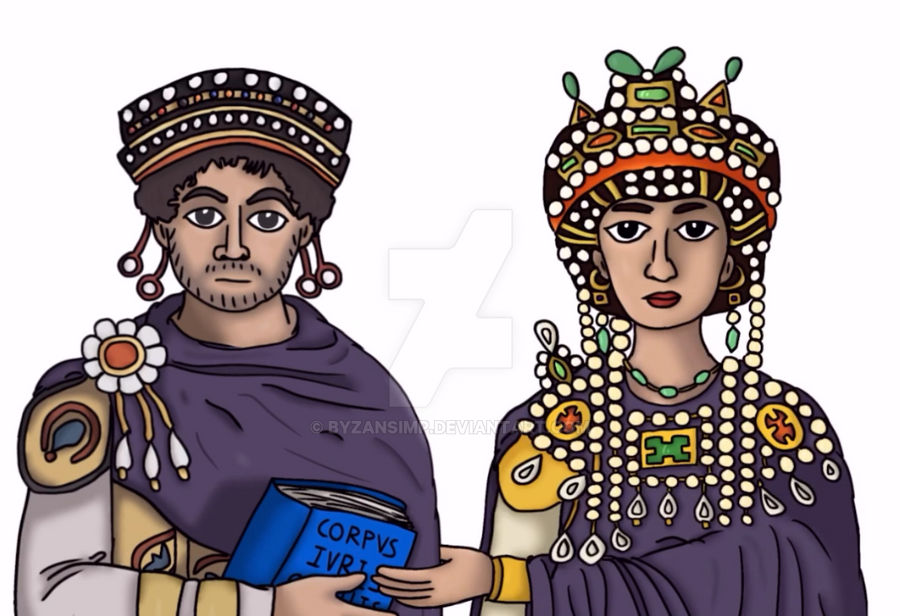
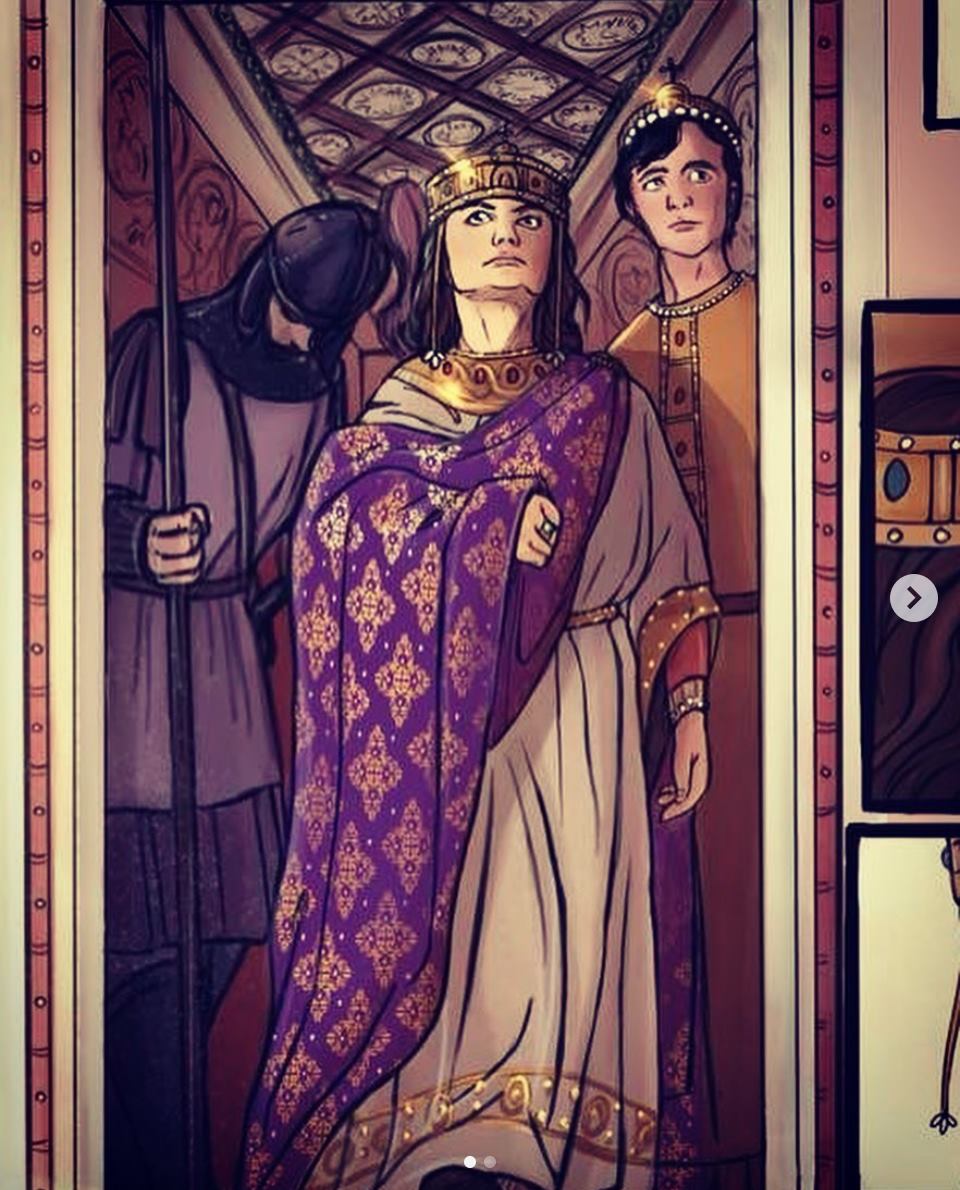
Emperor Justinian I and Empress Theodora, art by Byzansimp

II. Theodora and Women’s Rights             

2f1c608066438c072614c5033855489c

Many of Justinian I’s policies, especially those concerning women’s rights and helping underprivileged women were greatly influenced by Theodora. Being a woman from the bottom of society and thus knowing what it was like to be underprivileged, Theodora when becoming empress made it her mission to help those who lived that kind of life she did before.
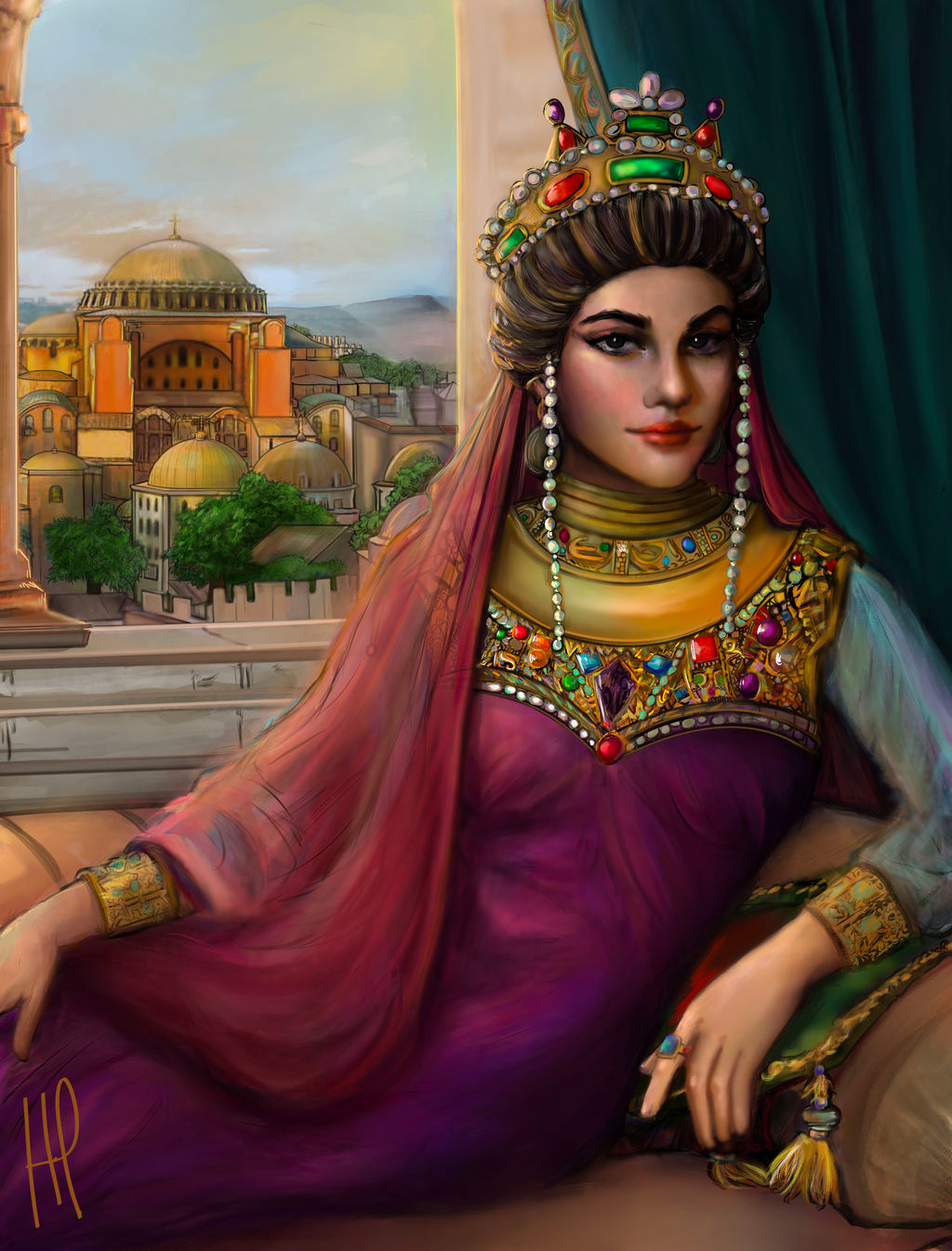
image-37
Empress Theodora in the palace

For instance, Theodora was known to have bought girls who had been sold into prostitution and freed them so that they could have a better future while she also founded a convent in Asia Minor across the Dardanelles Strait where ex-prostitutes could support themselves. As early as 528, both Theodora and Justinian ordered the closure of a number of brothels and the arrest of their owners all while freeing the prostitutes kept in them in which she rewarded them each with clothing and a gold nomisma coin. Additionally, some of Justinian’s legislations which were definitely influenced by Theodora expanded the rights of women in divorce and property ownership, made it possible for rapists to be put to death, forbade the exposure of unwanted infants, gave mothers some guardianship rights over their children, and forbade the killing of a wife who committed adultery. The historian Procopius however has mixed things to say about Theodora and her role in promoting women’s rights as in his book Wars, he says she was naturally inclined to assist women in misfortune but in his other work The Secret History, he says she was accused of unfairly championing the wives’ causes more so when they were charged with adultery. Meanwhile, the famous Code of Justinian only allowed women to seek divorce from their husbands if they were abused or if they caught their husbands in obvious adultery, and women seeking divorce had to provide clear evidence of their claims.
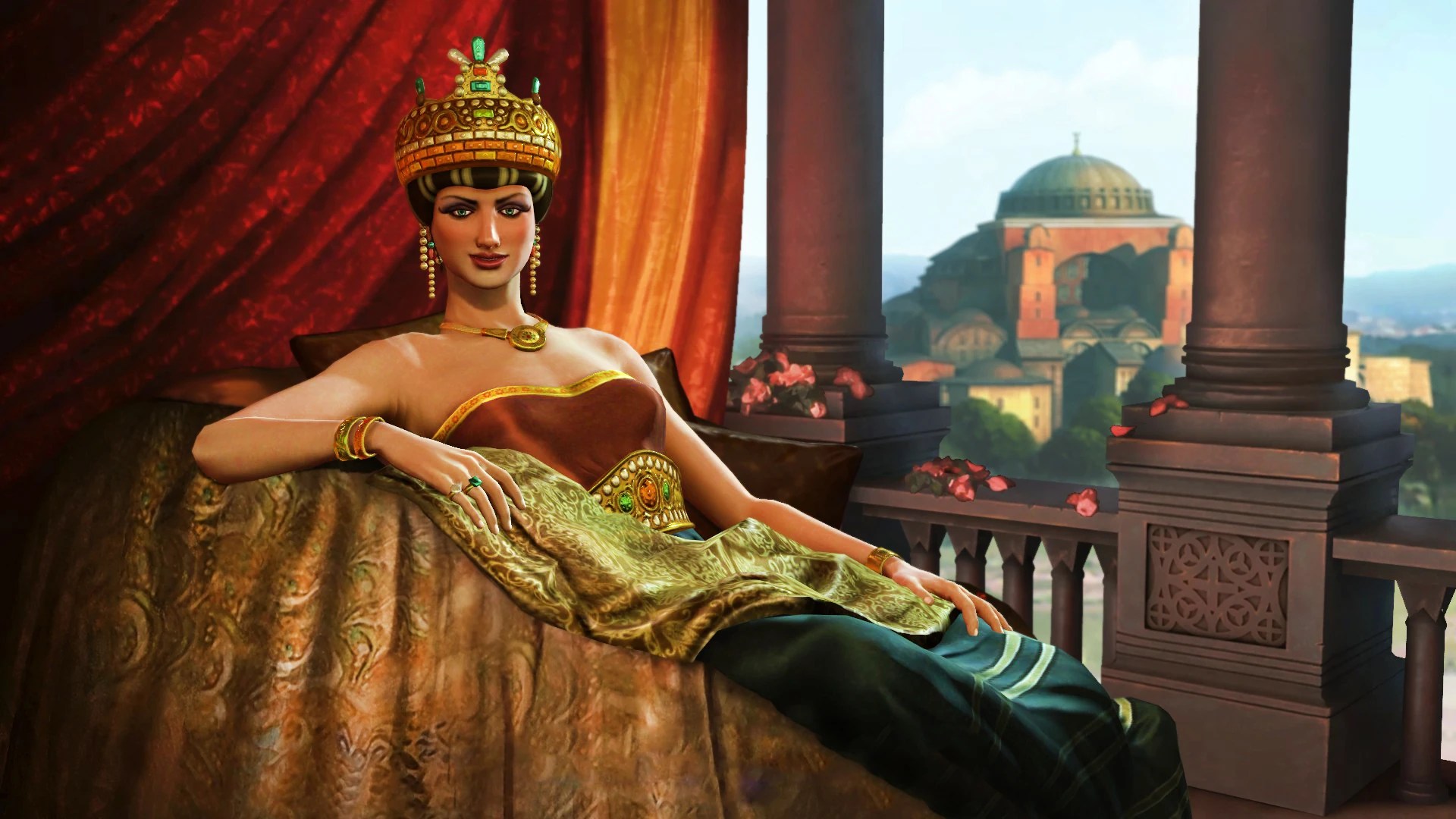
Theodora_Civ5
Empress Theodora, wife of Justinian I (from Civilization V)

III. Suppressing the Nika Riot            

2f1c608066438c072614c5033855489c

As already mentioned earlier, the Byzantine Empire and particularly Constantinople had two rival factions that were competitors in chariot racing, the Blues and the Greens which stood for two different ideologies, the Greens for radical ideas and the Blues for established ones. Although Justinian and Theodora greatly supported the Blue faction, they were intent to limit the power of both warring factions in order to achieve peace and order in the capital especially since members of both factions were engaged in constant street wars.

justinian-the-great-v0-wsz1nprc8z8b1
Emperor Justinian I the Great

In one instance in early 532, Justinian and the urban prefect (mayor) of Constantinople Eudaemon had the leaders of the Blue and Green factions arrested for starting a street war that killed a number of people and thus these said leaders were sentenced to death by hanging. However, two of the convicted people managed to survive as the scaffold they were being hung on collapsed and thus began a major riot in Constantinople’s streets. Usually, the members of each faction would shout the Greek word Nika meaning “conquer” at their respective charioteers during races, however this time as members of both factions marched to the Hippodrome, they both united together shouting “Nika” against Justinian and Theodora who were watching from the palace. Justinian though listened to their demands which was to fire his two unpopular ministers being the legal minister Tribonian and the finance minister John the Cappadocian, however he only pretended to fire them all while the riots had just gotten worse as the members of both factions set many public buildings including the Church of Hagia Sophia, the palace gate, and the public baths on fire all while they too stormed the prison and freed prisoners.
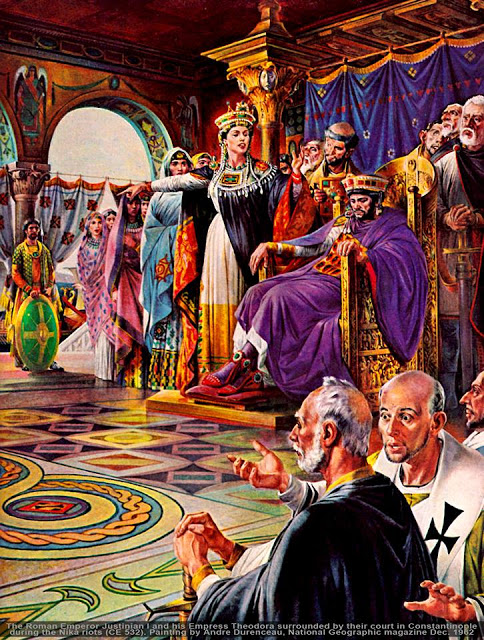
11Justinian court
Theodora convinces Justinian to crush the Nika Riots, 532

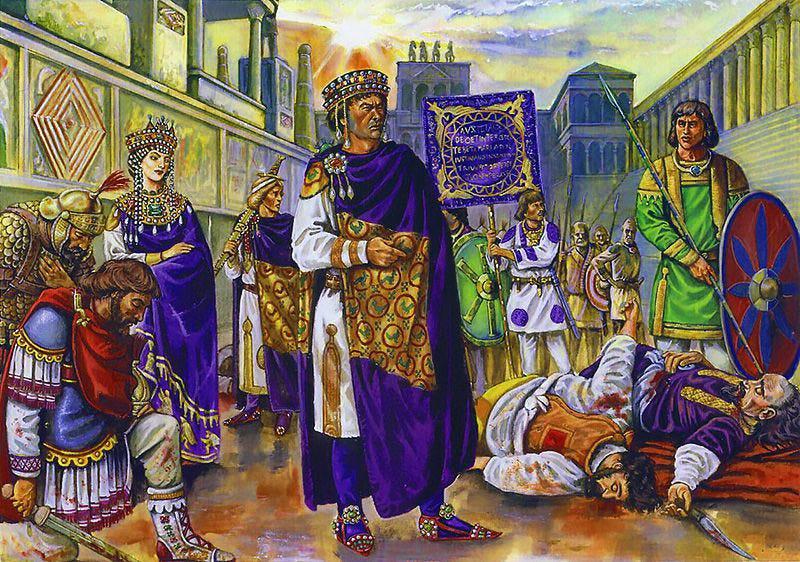
In the meantime, the riots had intensified too due to the backing of many senators and nobles who detested the rule of Justinian and Theodora especially since both originated as commoners. The mob thus later on proclaimed a man named Hypatius who was the nephew of the former emperor Anastasius I as emperor against Justinian which was therefore the last straw for Justinian and Theodora. At this point Justinian being advised by his court considered fleeing the capital even if it meant losing the throne until Theodora, according to Procopius, stood up and convinced Justinian not to leave. To put it short, according to Procopius, Theodora made a long speech saying that it would be better to die than lose the throne, thus Justinian took this advice to heart and interpreted this as killing off the violent mob. Being motivated by Theodora’s speech, Justinian then sent his best generals Belisarius and Mundo to lock up the Hippodrome and slaughter the rioters inside whereas the court eunuch Narses was tasked to pay off the leaders of both factions to stop rioting. At the end of the day, around 30,000 civilian rioters were killed in the Hippodrome whereas their imperial candidate Hypatius too was put to death and so were the senators who backed the riots. With the riots over, Justinian and Theodora began their ultimate project of reconstructing Constantinople into a grander imperial capital. Several structures in Constantinople such as the Church of the Hagia Sophia we see today were thus built under the supervision of Justinian and Theodora.
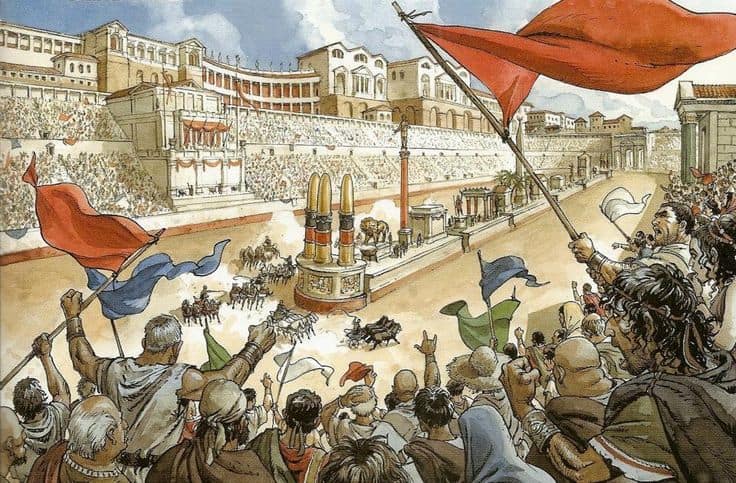
f9fb0a187c6e429d1e9b2c84e723043b
The Blue and Green factions at a chariot race in Constantinople
2cxdiivud6dc1
Justinian and Theodora at the aftermath of the Nika Riots, 532

IV. Theodora and the Imperial Court

2f1c608066438c072614c5033855489c

In the first half of Justinian I’s reign, Theodora- before her death in 548- true enough played an active role in court politics whether it be introducing new customs or removing and installing new people in power. Theodora was true enough very interested in court ceremony that Procopius says that senators and patricians were required to prostrate themselves whenever entering the imperial couple’s presence.
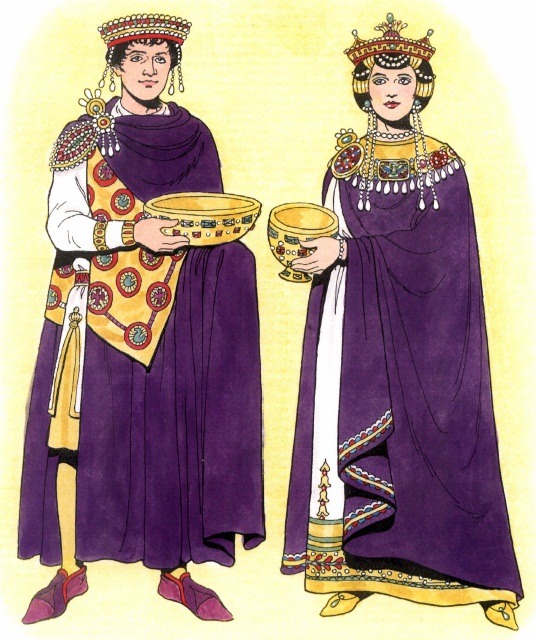
tumblr_pxbv2e6Sx81tfpj0go3_540
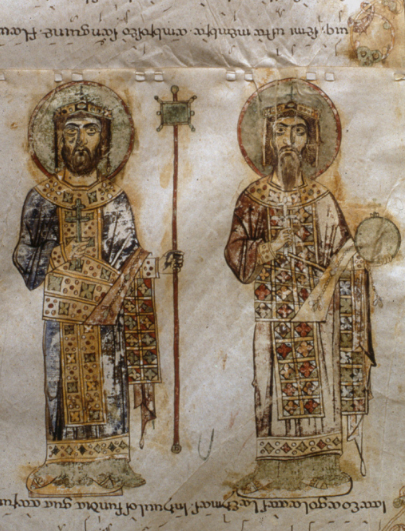
The imperial couple Emperor Justinian I and Empress Theodora

It was even said that government officials who wished to meet the emperor and empress were treated like servants and had to first wait in a small, stuffy room before meeting them. When meeting the emperor and empress, Theodora insisted that they pay their respects by lying face down in front of the couple while also having to kiss their shoes. Theodora too insisted that these officials should not ask anything or make any requests unless she asked them first. In the meantime, Theodora also played an influential role in the imperial court of Justinian especially when it came to dealing with her rivals there such as the famous and accomplished general Belisarius and the finance minister John the Cappadocian. Now, John had been the empire’s top financial minister since Justinian came to power in 527 which made John in charge of collecting taxes empire-wide and raising funds for Justinian’s wars and construction projects. Additionally, John had also been the target of the Nika Riot in 532 wherein he was actually fired due to popular demand, however once the riot was brutally suppressed, Justinian not only restored John to his position but also appointed John as the Praetorian Prefect of the East. However, John’s growing power and influence over Justinian’s imperial court soon enough began making Theodora threatened by it thus building a strong rivalry between them.
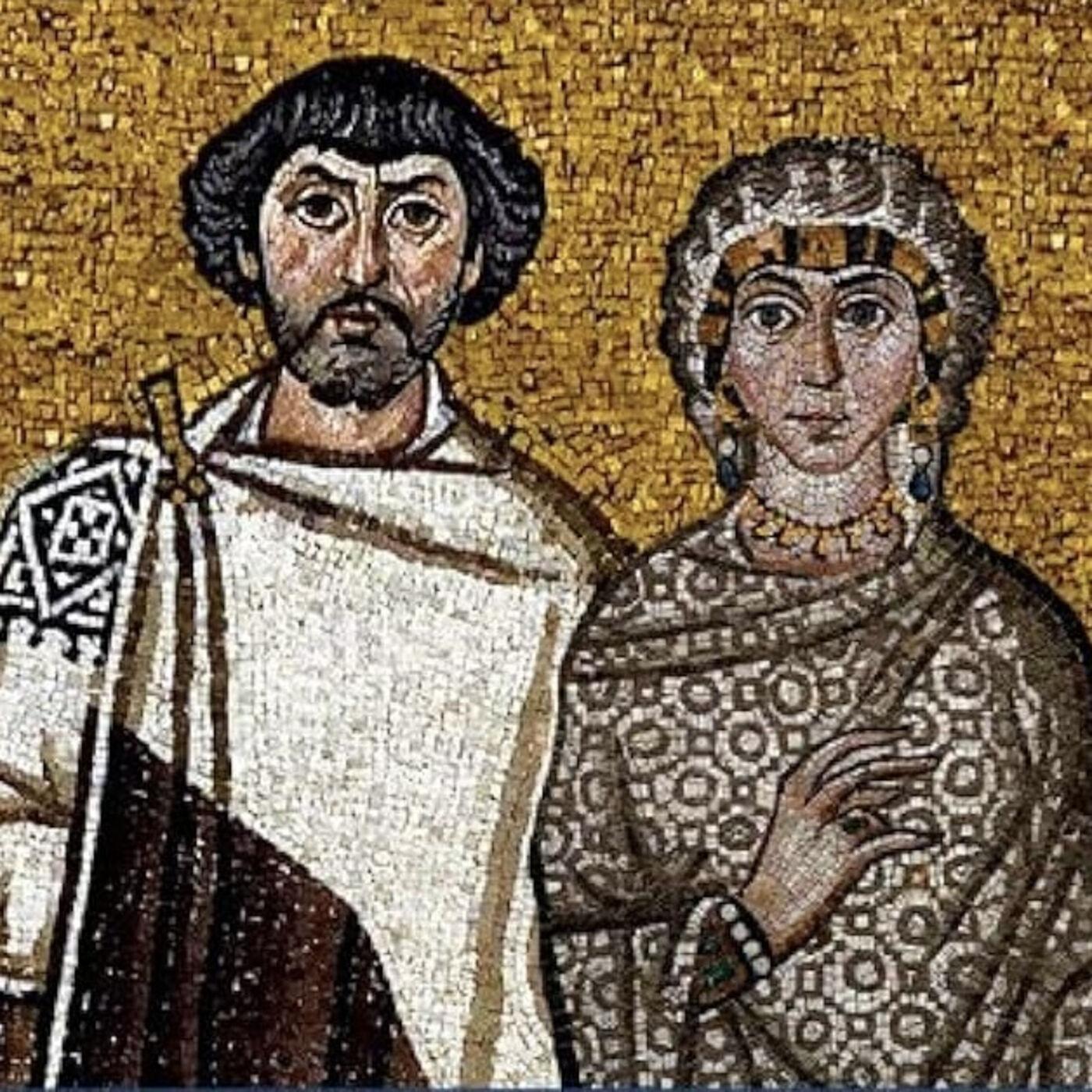
constantinople-show-its-QhZMmVSR6K--aGrmyswVhWu.1400x1400
Belisarius (left) and his wife Antonina (right)

Apparently, it was not only Theodora threatened by John’s growing power and influence as Belisarius too felt the same thus both Theodora and Belisarius’ wife Antonina- who Theodora knew from the past as they were both actresses- plotted to remove John from power. According to Procopius, in 541 Antonina arranged a private meeting with John supposedly to conspire against Justinian, though this was simply to set him up. John fell for the trap and met with Antonina at a palace in Chalcedon across the Bosporus from Constantinople without knowing that both Antonina and Theodora had already sent the palace guard commander Marcellus and the eunuch Narses to spy on John there. John was true enough discovered and caught though he managed to flee the city, though John lost his position as finance minister and Praetorian Prefect of the East and was thus replaced with Theodotus.
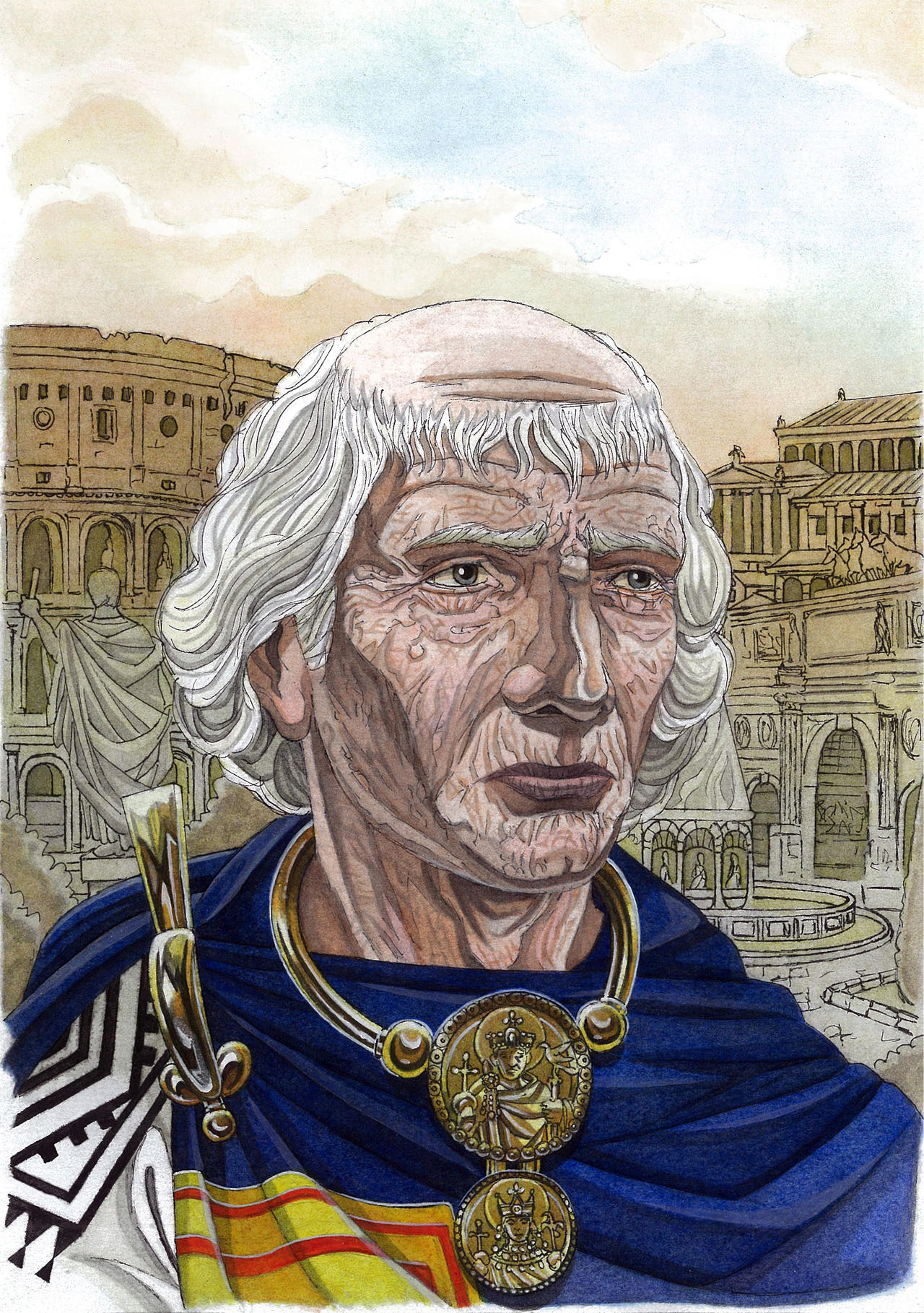
general_narses_by_amelianvs_d96qbnk-fullview
Narses, the eunuch general, art by Amelianvs

John was thus forced to become a priest while his wealth and property was confiscated by Justinian, although when John came into conflict with a bishop in Asia Minor wherein the latter was found murdered, John was accused of the crime and thus exiled to Egypt where he losing his wealth was forced to become a beggar. However, when Theodora died in 548, Justinian recalled John to Constantinople, but he never returned to politics and died peacefully sometime later. On the other hand, Theodora too played a role in recalling Belisarius from his successful campaign against the Ostrogoths in Italy in 540 out of suspicion when Belisarius was so close to finishing off the war. With Belisarius recalled and moved east to battle the Sassanid Persians, the situation in Italy eventually worsened as the Ostrogoth threat was renewed and thus Belisarius was sent back to Italy in 544 this time with less troops and resources as both Justinian and Theodora now were suspicious of his growing popularity and power. Belisarius unlike John though was never successfully removed from power, rather Belisarius retired from military service in 548 but would continue loyally serving Justinian.      
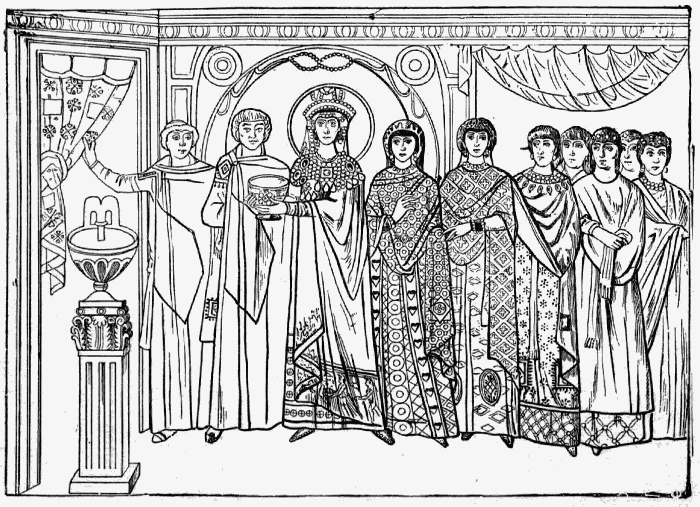
fig-11
Sketch of Theodora and her court of women and eunuchs

V. Theodora’s Religious Policy          

2f1c608066438c072614c5033855489c

Theodora too played a major role when it came to Justinian’s religious policy and despite both following different sects of Christianity as Justinian was definitely a strong believer of Orthodox (Chalcedonian) Christianity and Theodora on the other hand was a devout Monophysite Christian, which was rival to Chalcedonian Christianity. Although both emperor and empress belonged to different Christian sects, they still got along together as this was true enough part of Justinian’s larger policy to show unity in the empire as a whole between the Chalcedonian and Monophysite populations.

65546329_10156496750868786_4009700704980566016_n
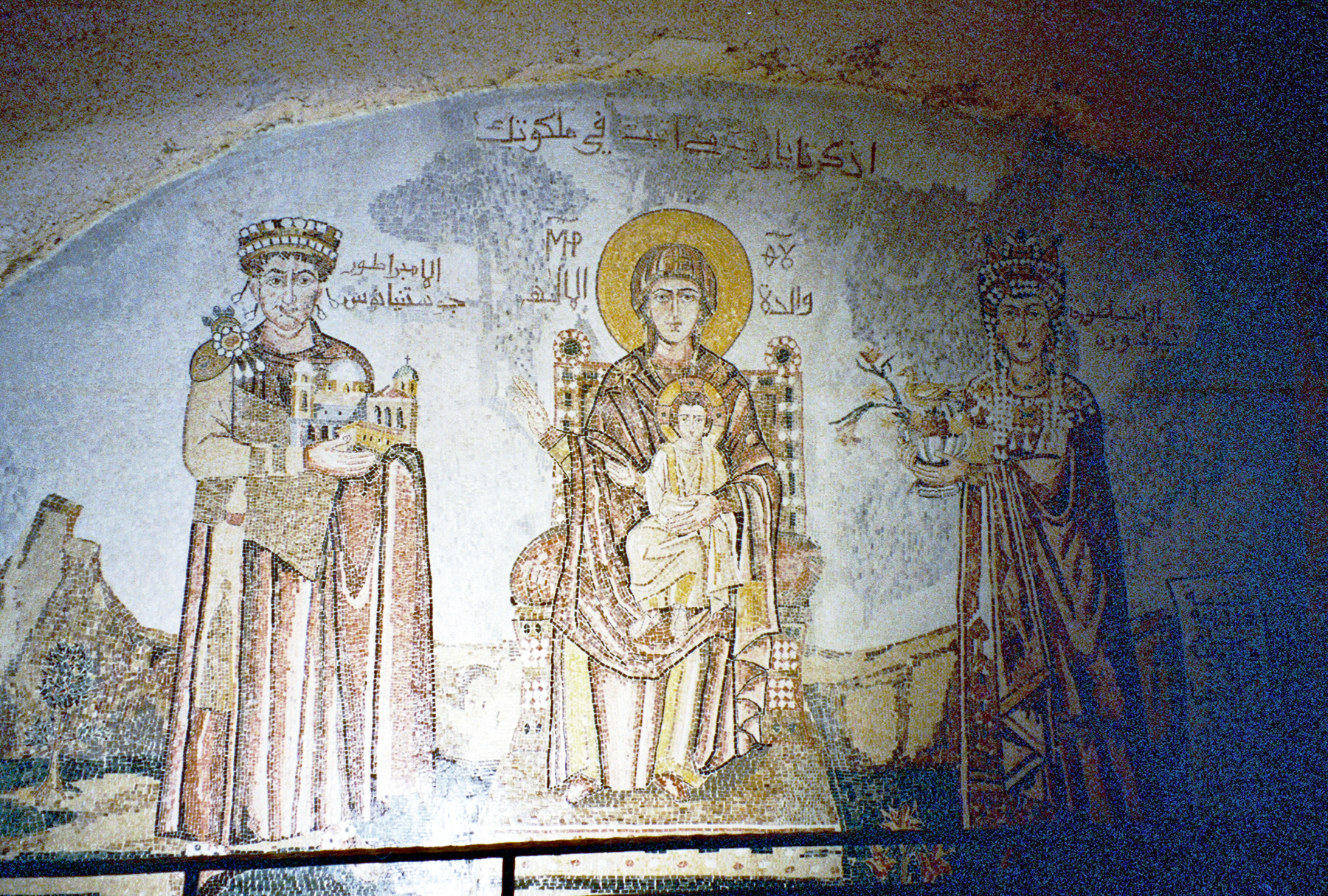
Monophysite Syriac icon of Empress Theodora

As a strong believer of Monophysite Christianity, Theodora founded a Monophyiste monastery in the quarter of Sykae in Constantinople across the Golden Horn (today’s Galata) while she also provided Monophysites who were persecuted by Chalcedonian Christian leaders shelter at a palace in Constantinople’s imperial palace complex. Theodora true enough even once appointed the Monophysite Anthimus I as Patriarch of Constantinople (535-536), although after just one year he was excommunicated and thus Theodora hid him in her quarters of the palace for the next 12 years. Additionally, Theodora too appointed the Monophysite Theodosius I as Patriarch of Alexandria following the death of the previous patriarch Timothy IV in 535, thus she was able to outmaneuver Justinian here who had intended to appoint a Chalcedonian as Patriarch of Alexandria; however Theodosius did not last as Patriarch of Alexandria as soon enough he was removed from his position by the Chalcedonian mob in Alexandria, thus Theodosius and his Monophysite followers were exiled by Justinian to Thrace.
Pope_Vigilius
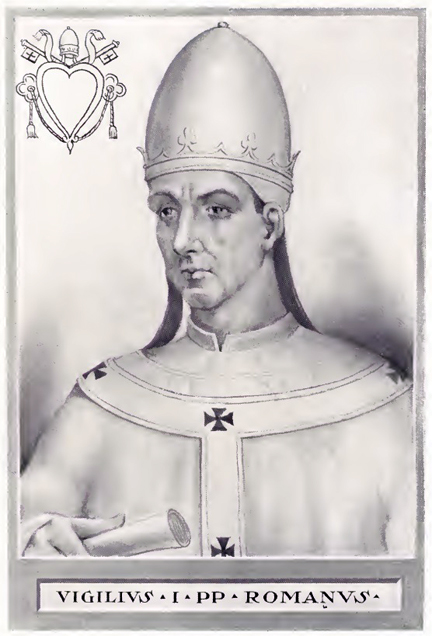
Pope Vigilius, installed by request of Theodora

At around the same time too, Theodora had also played a role in choosing the Patriarch of Rome or the pope by having Belisarius who had taken Rome in 536 from the Ostrogoths remove the current pope Silverius who was installed by the Ostrogoth king from his position and replace him as pope with Vigilius in 537 who was a Monophysite and ally of Theodora. On the other hand, Theodora too played a role in sending missionaries to Nobatia in the south of Egypt to convert its people to Monophysite Christianity in around 540 again outmaneuvering Justinian who here wanted to convert them to Chalcedonian Christianity. Although Justinian had already sent Chalcedonian missionaries to convert the people of Nobaita, Theodora in advance informed its governor to delay these missionaries so that hers would get ahead, and they true enough did and thus the people there converted to Monophysite Christianity.
Created by AccuSoft Corp.
Mosaic of Justinian I and Theodora at a monastery in Syria

VI. Establishing a Dynasty and Matchmaking           

2f1c608066438c072614c5033855489c

One thing Theodora had also played a main role in was in forming what would be known as the Justinian Dynasty by marrying off members of her own family to different nobles and generals of the Byzantine Empire as well as to members of her husband Justinian’s family. Prior to marrying Justinian, Theodora was known to have had illegitimate children with other men, one unnamed daughter and a son named John. This unnamed daughter now was married to a relative of the former emperor Anastasius I after the emperor Justin I by the influence of Justinian and Theodora overturned the law that forbade patrician men from marrying women of low birth. Theodora’s son John however only arrived in Constantinople to meet his mother after she had already married Justinian, but he was sent away and never to be heard of again.
Benjamin-Constant-L'Imperatrice_Theodora_au_Colis_e
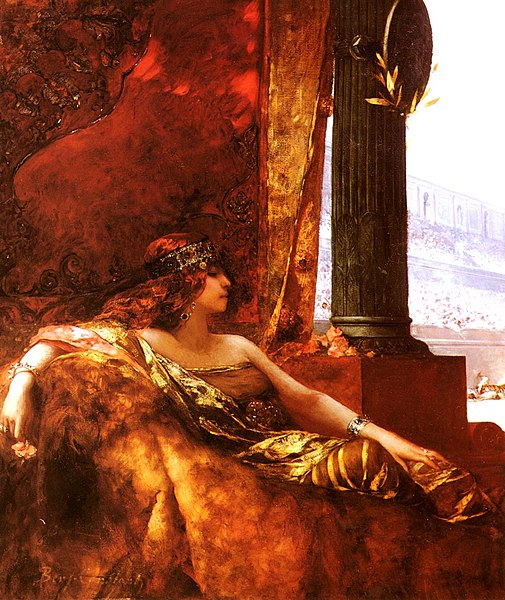
Painting of Theodora at the Colosseum by Jean Benjamin Constant

On the other hand, Theodora too had her long-time friend and fellow actress and dancer Antonina from the past marry the influential general Belisarius by the time Justinian had become emperor whereas Belisarius had been promoted to a high military position. Theodora too meanwhile had also engineered another marriage between her older sister Comito and the general Sittas who was once Justinian’s bodyguard before the former was emperor and a mentor to Belisarius in military matters. Together, Sittas and Comito were known to have at least one daughter named Sophia who was Theodora’s niece and some years later Theodora possibly made the most important matchmaking in the Justinian Dynasty as she was the one to have possibly engineered the marriage between her niece Sophia and Justin, the nephew of Justinian who was his sister Vigilantia’s son. Justin II would thus succeed Justinian I when the latter died in 565 whereas his wife Sophia became the new empress following in the footsteps of her aunt Theodora, though that would be a different story altogether. Theodora though never lived to see her niece become the new empress as in June of 548 she died possibly of cancer as sources are not clear of the cause of her death. At her death, she was as young as 48 but most possibly at 51 all while her husband Justinian would rule for the next 17 years without an empress as he refused to remarry despite never having had any children with Theodora. Theodora was thus buried in the Church of the Holy Apostles in Constantinople and in one instance in 559 when Justinian celebrated a triumphal procession for the victory of Belisarius over an invading band of Huns, the procession was diverted to the Church of the Holy Apostles so that Justinian could light candles for her tomb. When Justinian died in 565 at the old age of 83, he was buried next to his wife Theodora.
theodora_by_avapithecus_dg3eqpo-pre
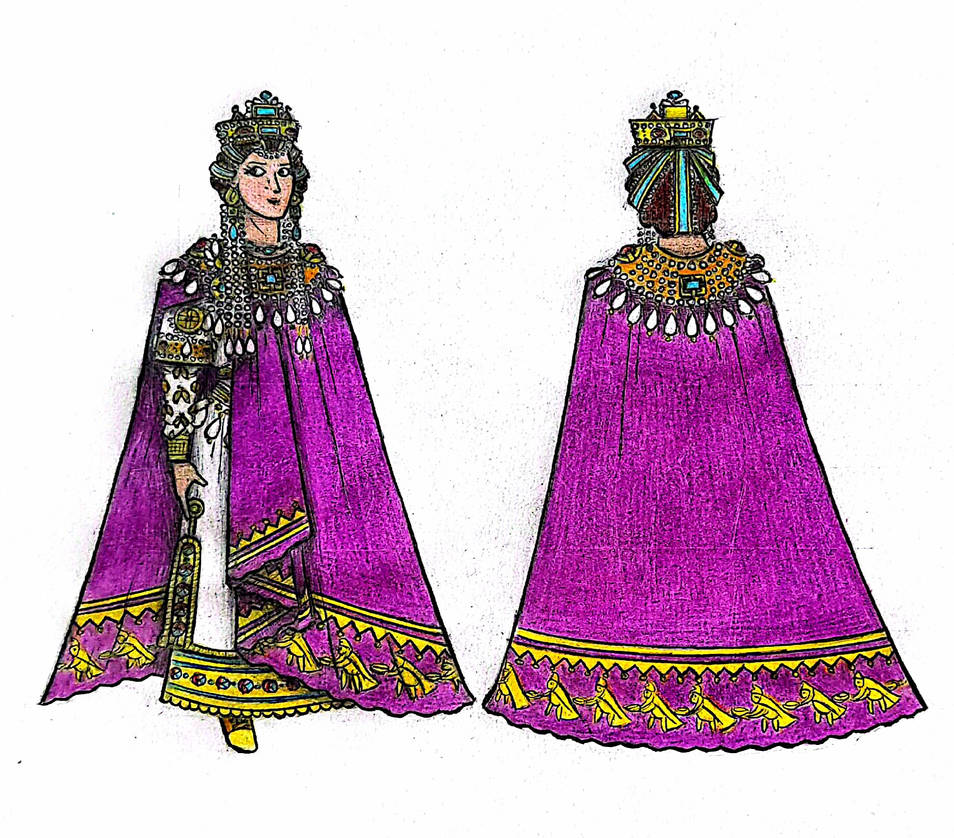
Empress Theodora front and back, art by Avapithecus


Conclusion          

2f1c608066438c072614c5033855489c

Theodora is one historical figure difficult to judge especially since sources that talk about her are very biased especially Procopius who on one hand in his work Wars describes Theodora as a courageous woman but in his work The Secret History Theodora is portrayed as evil and openly sexual, thus it is difficult to tell which one is true about her. Despite what sources such as Procopius say against her, Theodora is still an overall powerful woman and despite her low birth and lack of education she still possessed a lot of intelligence which thus made her have an influential role in running the empire and advising her husband the influential emperor Justinian I.
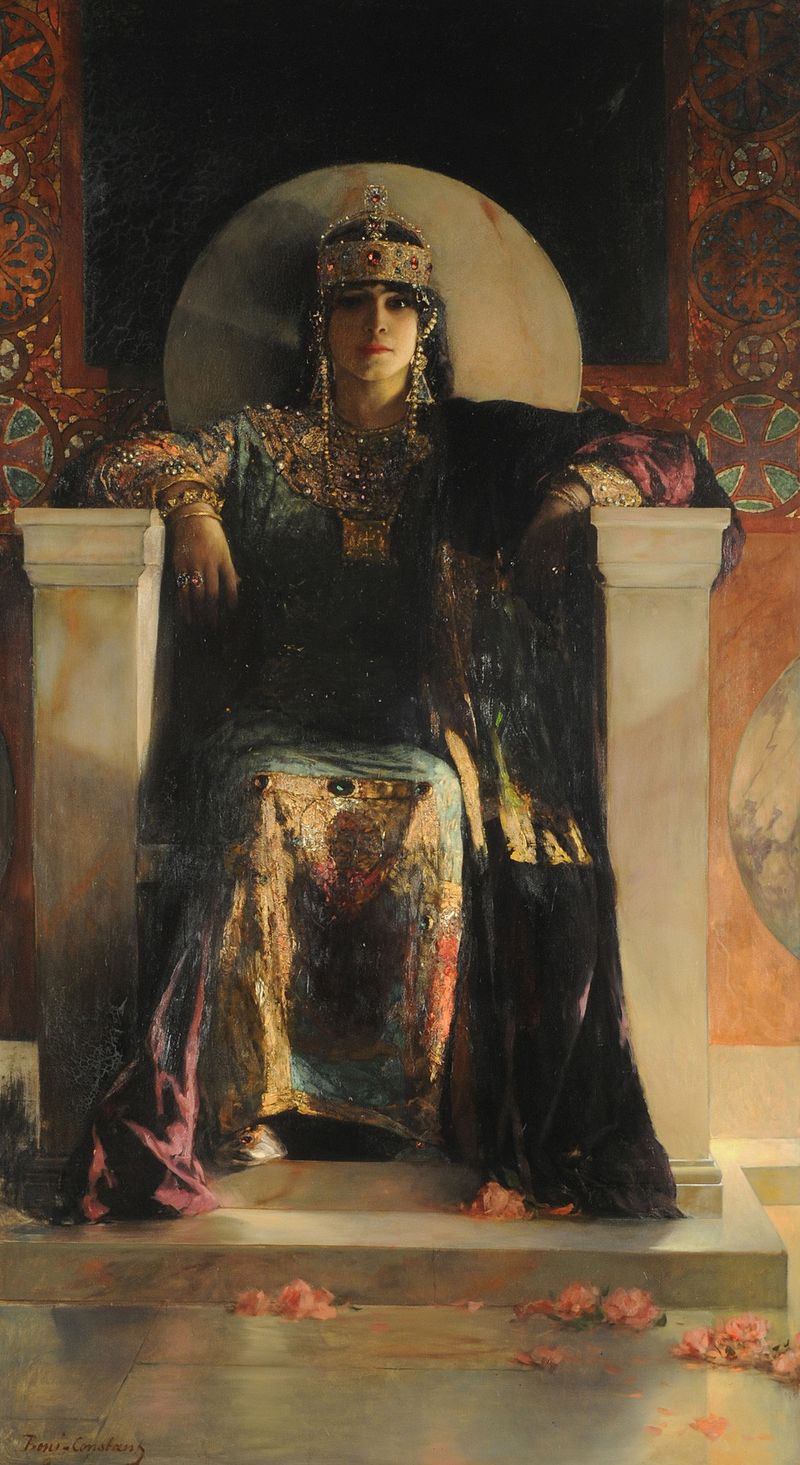
800px-La_Emperatriz_Theodora_-_Jean-Joseph_Benjamin-Constant
Empress Theodora, painting by Jean-Benjamin Constant

The one thing Theodora shows that can still be admired greatly today is “woman power” especially seen when she did not hesitate to suppress the violent Nika Riots with violence, and it is thanks to her that Justinian stayed in power and was thus able to rule for such a long time and achieve many accomplishments. Of course, the one thing that Theodora should be most remembered for is her role in promoting and enforcing women’s rights in the Byzantine Empire which thus makes her a woman ahead of her time and till this day Theodora too should be considered a champion for women’s rights. On the other hand, Theodora’s role in influencing and being in charge of court politics too shows her as a perfect example of a powerful woman, though this was not uncommon among Byzantine empresses throughout Byzantine history. Overall, it is really Theodora’s role in promoting women’s rights by having Justinian pass laws that supported it that makes her definitely an exceptional woman ahead of her time. The one thing Theodora lacked in though was influencing foreign policy as she was never shown to have influenced Justinian in it considering that many foreign wars were fought during Justinian’s reign. Another negative side of Theodora is that she too failed to produce children with Justinian, hence there was no clear succession plan by the time she died in 548, although Theodora still did at least engineer the marriage between her niece Sophia and Justinian’s nephew Justin who was to be the next emperor Justin II (r. 565-578). However, Theodora too was influential in religious matters in the empire especially with regards to Monophysite Christianity and because of this she is considered a saint in the Monophysite (Oriental Orthodox) Church. Now, Justinian I’s reign was surely a great and influential one in Byzantine history, but it would have not been that great if Theodora were not there to advise and influence him. What are your thoughts now about Empress Theodora and do you really think she was a very influential figure in 6th century Byzantium? I would like to thank you all for reading this article and please continue to support me by following and subscribing to my sites!    
8 Times Emperor Zeno was a Survivor

Posted by Powee Celdran

324916680_501335022136474_5359653165260915756_n

Welcome back to the Byzantium Blogger and here we are again with another Byzantine history article! In this one being the 8th part of this series featuring top lists concerning the lives of certain emperors who I think have interesting stories, we will talk about Zeno (r. 474-475/ 476-491), the Eastern Roman emperor in whose reign saw the fall of the Western Roman Empire.

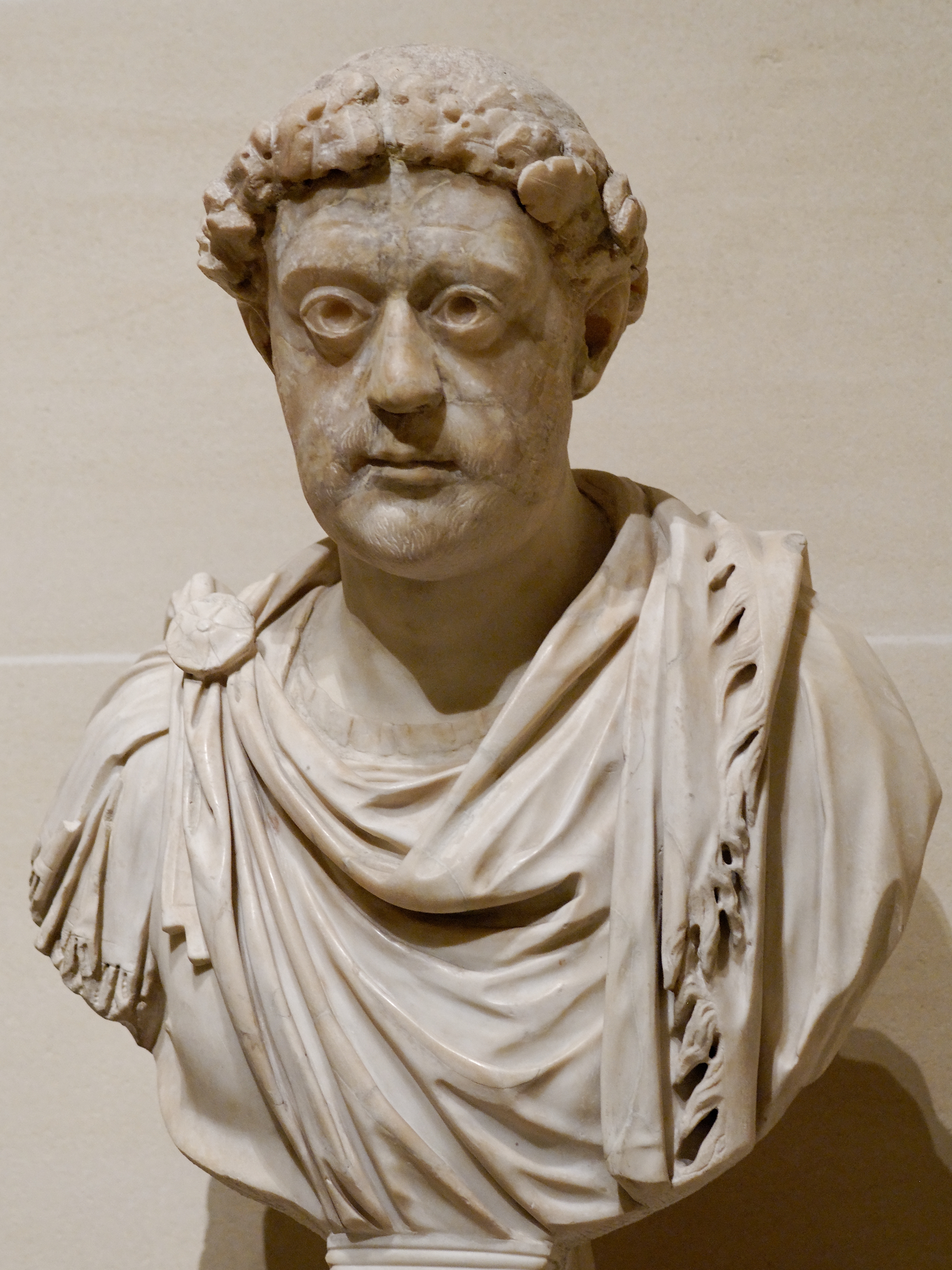
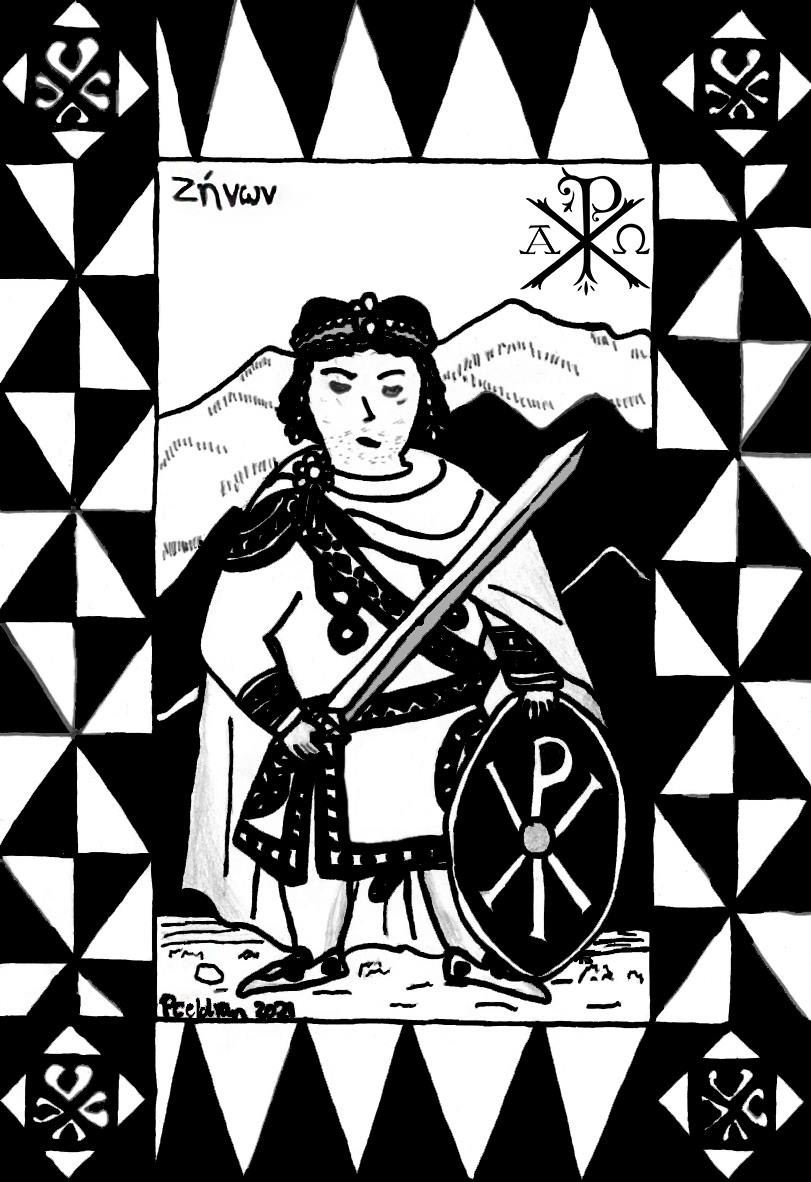
Eastern Roman emperor Zeno (r. 474-475/ 476-491), art by myself

Apart from being the emperor of the east who saw the fall of the west in 476, Zeno had a reign full of domestic revolts in which one even ousted him from power from 475-476, nevertheless, Zeno managed to survive all these local rebellions against his rule and die in 491 at least still in power, hence Zeno is what you can call a “survivor”. Zeno now inherited a highly unstable Eastern Roman Empire in economic crisis and plagued with revolts and religious dissension, but at the end he overcame all this and thus is credited for further stabilizing the empire and thus paving the way for the Byzantine golden age that would take place in the reign of his successors namely Anastasius I (r. 491-518) and Justinian I the Great (r. 527-565). Therefore, if we think of the reign of Justinian I the Great in the 6th century as the golden age of Byzantium or rather the Eastern Roman Empire, we have Zeno to thank for paving the way in order for this said golden age to happen. However, before we get to this Byzantine golden age in the 6th century and even into the reign of Zeno who stabilized the empire, we would have to go through a quick background on who Zeno is, his origin story, and what the Roman Empire was like- both in the east and west- before Zeno’s rise to power in 474. This article thus will begin with a quick background to the Roman Empire in 5th century in order to establish the time Zeno ruled in then afterwards we will proceed to Zeno’s reign wherein we will cover 8 events which proved how Zeno was a survivor himself.

Semissis_of_Zeno-1
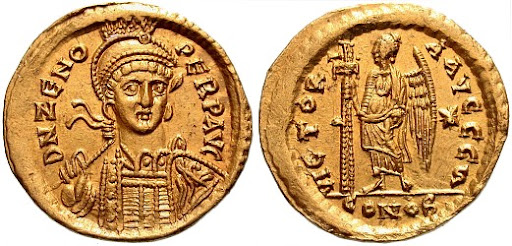
Coin of Emperor Zeno

Zeno now as emperor was generally unpopular due to his Isaurian origins in which most people of the Eastern empire saw as “barbarian” which is one of the main reasons to why he faced so much opposition including major revolts wherein one as mentioned earlier even succeeded in overthrowing him. Despite his unpopularity, Zeno though managed to survive all these plots against him through his political will, cunning nature, ruthlessness, and ability to play his enemies against each other, and again it is mostly thanks to Zeno’s abilities and cunning to why Eastern Rome managed to survive and not collapse like the Western Roman Empire and therefore enter a golden age. In the 8 events covered in this article, we too aside from going over Zeno’s life and reign will go over how he managed to survive these plots and thus become known as a “survivor”. However, this article will not go over much about Zeno’s religious policy which he was also known for as most of this article will simply be about Zeno’s political life and achievements, though we will also go over a few minor details about his life.

95t3yr5xvfyy
Flag of the Byzantine Empire

Follow me, Byzantine Time Traveller on Social Media:

Instagram: @byzantine_time_traveller

Facebook: Byzantine Time Traveller

Youtube: No Budget Films

Website: Byzantine Time Traveller

Deviantart: Byzantium-blogger55

Art Station: Powee Celdran Porphyrogennetos

Patreon: Byzantine Time Traveller


Ever since the death of Emperor Theodosius I the Great (r. 379-395) in 395, the Roman Empire was permanently divided in two- east and west- never to reunite again. Between the two halves of the Roman Empire post-395, the Eastern Roman Empire consisting of the eastern provinces which was based in Constantinople would remain as the far more stable one as compared to the west which in 410 witnessed the first sack of Rome in over 800 years by the Visigoths led by their rogue leader Alaric whose people had eventually established the Visigoth Kingdom in Gaul, a barbarian kingdom within Roman territory.

crossing-of-the-rhine-81f45797-e82e-4463-8d68-118b4599cc8-resize-750
Barbarians cross the frozen Rhine River, 406

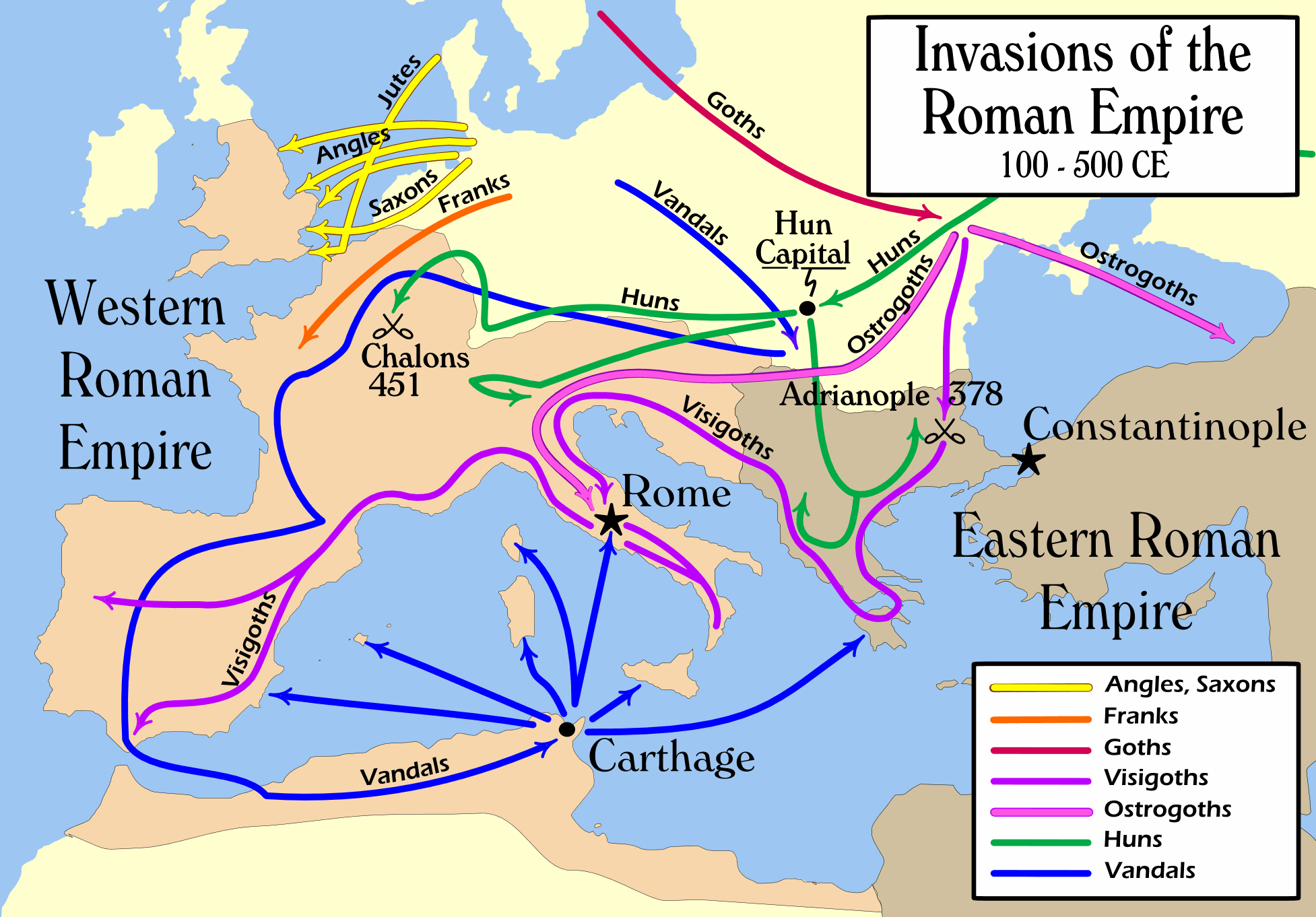
Other than that, the Western Roman Empire due to all its previous wars was short of troops that in 406 without any troops left to defend the borders anymore, several barbarian tribes from across the Rhine River crossed it when it froze and thus flooded into the Roman Empire. In order to settle down these invading tribes, the Western Roman emperors settled them in different parts of the Western Roman Empire as Foederati or soldiers given land in exchange to fight for Rome, however these barbarians soon enough turned out to be rebellious and thus established their own kingdoms in Western Roman territory. One of the most notable of these barbarian tribes establishing their own kingdom in Roman territory were the Vandals who being settled in Southern Spain crossed the Mediterranean Sea in 429 into North Africa wherein they established their own kingdom there under their king Genseric (r. 428-477) by 439 after capturing the city of Carthage from the Romans.

The-Vandals-Maritime-Power
The Vandals in North Africa

The lifetime of King Genseric thus saw the Vandals transform from a small insignificant Germanic barbarian tribe into the naval power of the Western Mediterranean. Meanwhile, the Eastern half of the Roman Empire based in Constantinople would turn out to be far more stable and prosperous thanks to it possessing the richer provinces such as Egypt and Syria thus allowing its emperor Theodosius II (r. 408-450) to have a long and stable reign. Although long and most of the time stable, Theodosius II’s reign witnessed the fall of North Africa to the Vandals, a short war with the Sassanid Persian Empire in the east in the 420s, and several raids into the Balkan provinces by Rome’s deadliest enemy, the Huns led by their fearsome king Attila (r. 434-453). Fortunately, the Eastern Roman Empire had a full treasury which allowed Theodosius II to keep Attila away by paying him off a heavy tribute and when Attila decided to attack Constantinople in 447, he failed to do so thanks to the city being heavily fortified by massive walls built earlier on in Theodosius II’s reign.

3047-1
Attila, King of the Huns (r. 434-453)

Being unable to attack Constantinople, Attila instead decided to attack the much weaker Western Roman Empire but was defeated by a coalition of Romans and barbarians in Gaul at the Battle of the Catalaunian Plains in 451. Furthermore, after Theodosius II died in 450 from a horse-riding accident, his successor and brother-in-law Marcian (r. 450-457) reversed his predecessor’s policy by cancelling the payment of tribute to Attila and thus attack Attila’s lands in today’s Hungary. In 452 meanwhile, as Attila attempted to invade Italy, the heartland of the Western Roman Empire, he was turned away and forced to return home, both due to the intervention of Pope Leo I and because Marcian’s troops attacked his lands. Attila then died in the following year (453) and thus disintegrated his powerful Hunnic Empire, and although the Eastern empire was stable once again, the west would face another tragedy in 455 when the Vandals from North Africa led by Genseric sacked Rome following the death of the Western Roman emperor Valentinian III (r. 425-455), thus making this the second time Rome was sacked in the 5th century. Just 2 years later in 457, both the east and west would gain highly competent emperors; in the east, Marcian had died in 457 and having no sons to succeed him, the powerful barbarian descended general Aspar who was the power behind Marcian’s rule elevated one of his own army officers being a Thracian named Leo as his “puppet” emperor as Aspar due to his barbarian origins and belief in Arian Christianity was disqualified from being emperor; in the west meanwhile another powerful barbarian general by the name of Ricimer elevated Majorian (r. 457-461), an aristocratic military officer as his puppet emperor.

Majorian
Majorian, Western Roman emperor (r. 457-461), art by UltimusRomanorum

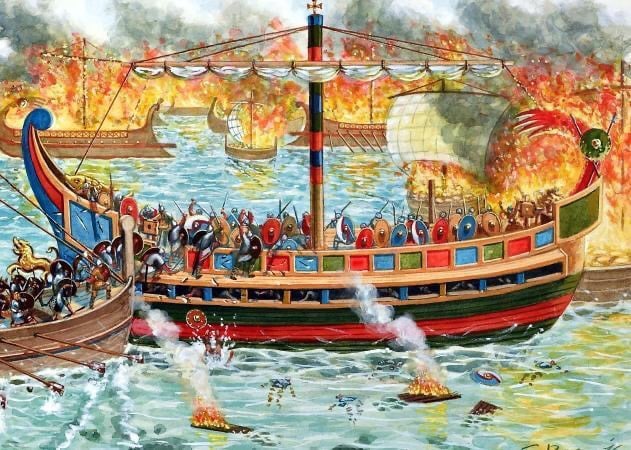
Both Majorian in the west and Leo I in the east however did not want to be puppets to barbarian generals and so Majorian in the west embarked on his own campaigns to prove his independence but despite successfully defeating the barbarians in Gaul and Hispania- namely the Visigoths, Burgundians, and Suebi- his attempt to crush the Vandal Kingdom for good in 460 was thwarted by the Vandal king Genseric who had Majorian’s ships burned before it even took off from the harbor in Hispania. In 461, Ricimer fearing the growing independence of Majorian had Majorian executed when the latter returned to Italy, thus the last hope of restoring Western Rome was gone. Leo I (r. 457-474) of the east on the other hand had started his reign agreeing to be a puppet of Aspar as Leo was seemingly unambitious, though eventually when getting a taste of power, he felt that it was time he should exercise power on his own and thus get rid of the strong influence of Aspar and his barbarian troops that made up most of the Eastern Roman Empire’s army.

7701
Leo I the Thracian, Eastern Roman emperor (r. 457-474)

In order to balance out the influence and weight of the Germanic barbarians in the Eastern Roman army, Leo called upon the Isaurians, tough and warlike people from the Taurus Mountains in Southern Asia Minor to be a professional unit in the army and leading this contingent of Isaurians was the future emperor Zeno then known as Tarasikodissa (or Tarasis son of Kodisa) who back then was an Isaurian tribal chieftain. The Isaurians now although known to be fierce warriors were seen by the mostly Greek population of the Eastern Roman Empire as “internal barbarians” as despite being Roman citizens and subjects for some 500 years already as well as Orthodox (Chalcedonian) Christians, they still did not integrate into Greek and Roman society and instead spoke their own Isaurian language and retained their tribal customs. Tarasikodissa in the meantime who was born in around 425 was most likely from the ruling class of the Isaurians wherein his father like himself was also a tribal chieftain whereas Tarasikodissa too had a mother named Lallis and a brother named Longinus who both came to Constantinople with him all while Tarasikodissa too was said to have been married with children by the time he came to Constantinople to serve the emperor.

318500514_618207226733559_1634673437988737093_n
Genealogy of the Leonid Dynasty of the Eastern Roman Empire (457-518), illustrated by myself
Invasions_of_the_Roman_Empire_1
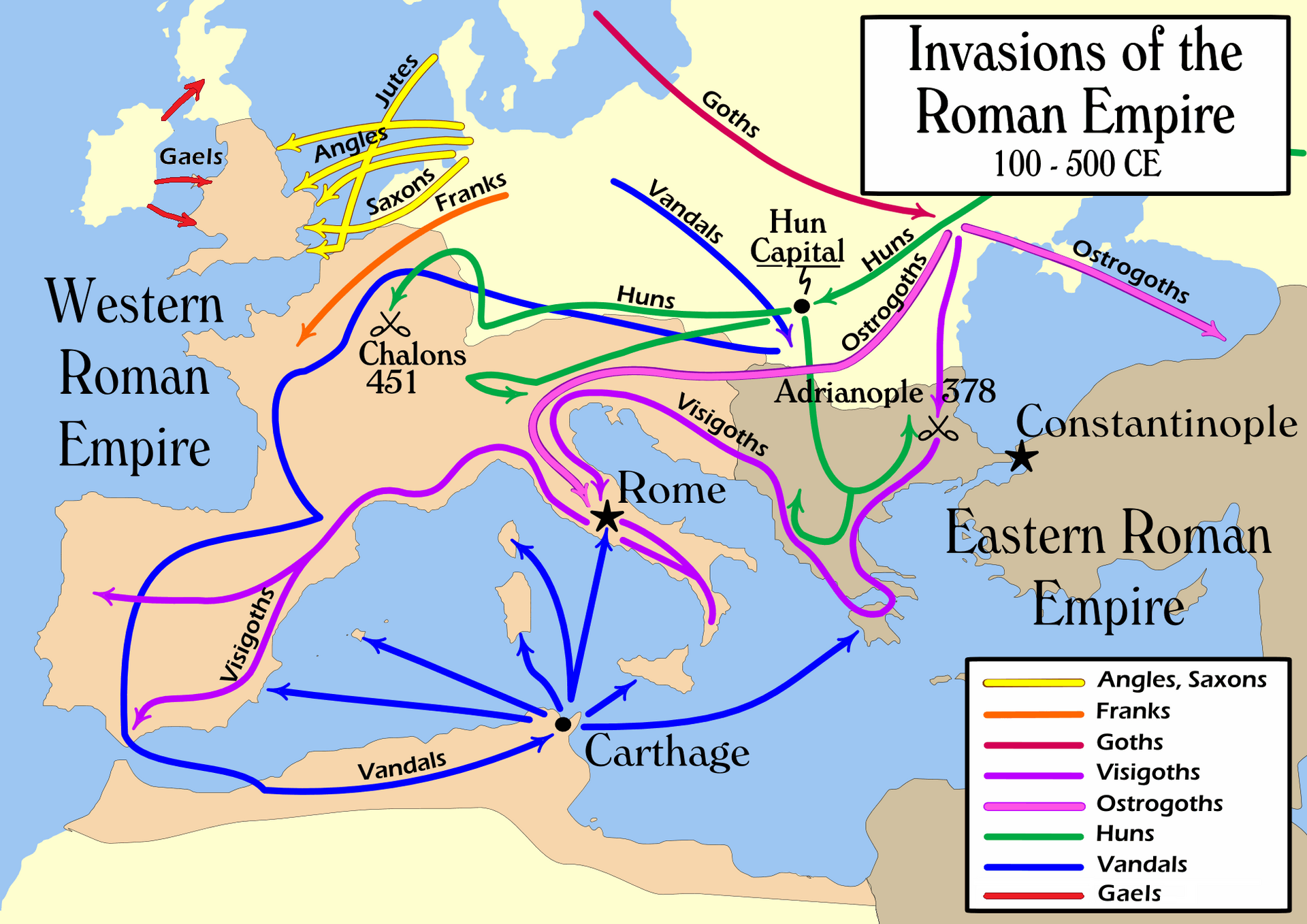
Map of the barbarian invasions into the Roman Empire
26114218_2427327720667358_6686163877547196455_n
Romans and barbarians against Huns at the Battle of the Catalaunian Plains, 451
Genseric_sacking_rome_456-1
The Vandals’ Sack of Rome, 455

Related Articles from the Byzantium Blogger:

Byzantine Alternate History Chapter II

Byzantine Alternate History Chapter II- Spin-off

Byzantine Alternate History Chapter III

Byzantine Alternate History Chapter III- Spin-off

5 Achievements and 5 Failures of Theodosius I the Great

10 Achievements of Constantine I the Great

7 Times Constantine XI Exemplified Bravery

10 Unknown Facts About Emperor Justinian I

8 Times Michael VIII Palaiologos was an Evil Genius

10 Surprising Facts About Basil II

5 Reasons to Feel Bad for Justinian II and 5 Reasons to Hate Him

Article on Zeno on The Freelance History Writer– Guest Post by Me


I. Zeno’s Rise to Power and the Assassination Attempt by Aspar         

2f1c608066438c072614c5033855489c

The first recorded mention of Tarsikodissa before he was known as “Zeno” was in 464 when being already part of the new imperial guard unit created by Emperor Leo I known as the Excubitors and here Tarasikodissa when in the palace discovered letters written by Aspar’s son Ardabur inciting the Sassanid Persian king Peroz I (r. 459-484) to invade the Eastern Roman Empire.

5ee8971a1a0ba8.55898279-original
Coin of Eastern Roman emperor Leo I

When Leo I discovered these letters, Leo fired Ardabur from command all while Leo too gained the trust of Tarasikodissa who then became a close friend of his. Tarasikodissa after gaining the trust of the emperor in 466 married Leo I’s and his wife Verina’s elder daughter Ariadne all while Tarasikodissa would change his name to the Greek “Zeno” to be more acceptable to Constantinople’s Greek speaking population, and thus he would be known by this time throughout his life. In the meantime, Zeno’s first wife Arcadia may have already died at this time as it is not mentioned that he divorced her to marry Ariadne while in the following year (467), Zeno’s and Ariadne’s son named Leo after his grandfather was born. In 467 as well with no emperor in the west, Leo I appointed his friend and top general the aristocrat Procopius Anthemius who was the son-in-law of the former emperor Marcian- and Leo’s rival to the throne when coming to power back in 457- as emperor of the west, though with Ricimer still around and still influential in the west, Anthemius (r. 467-472) would end up becoming Ricimer’s puppet as well.

314612613_598714015349547_339923401848435521_n
Procopius Anthemius, Western Roman emperor (r. 467-472), art by Amelianvs

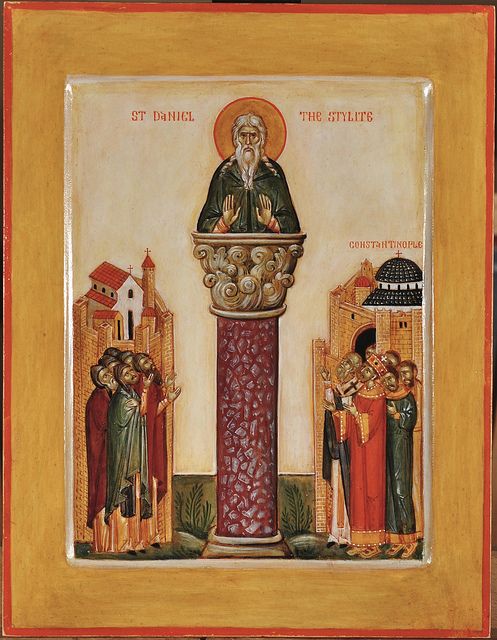
With Anthemius emperor in the west, he together with Leo I launched a massive invasion on the Vandal Kingdom in 468 with about 1,000 ships, however this invasion failed with the fleet destroyed at the Battle of Cape Bon thanks to the incompetence of the expedition’s top commander Basiliscus, Leo’s brother-in-law which thus allowed Genseric an opportunity to burn half of the Roman fleet. Zeno in the meantime was fortunate to not be present in this failed expedition against the Vandals in 468 which true enough bankrupted the empire, rather in the same year he was appointed by Leo as the Magister Militum per Thracias or the “Master of Soldiers in Thrace” wherein Zeno here was appointed to expel attacks in the Balkans by the Huns and Ostrogoths. At this same expedition as well, Aspar who now was feeling threatened by the growing power and influence of Zeno plotted to assassinate Zeno by bribing the bodyguards that Leo sent to accompany Zeno in order for them to kill Zeno while on campaign. Leo however before the expedition consulted with St. Daniel the Stylite- a monk living above a column in Constantinople- on Zeno’s fate on the campaign wherein Daniel warned Leo that Zeno would be in danger but would survive. Zeno true enough was informed of the plot set up by Aspar and thus he managed to barely escape alive to the city of Serdica (today’s Sofia, Bulgaria).

aspar__eastern_roman_emperor_maker_by_byzantium_blogger55_df93b99-414w-2x
Aspar, Eastern Roman general, art by myself

Because of this incident, Leo grew even more suspicious of Aspar and his family all while Zeno on the other hand chose not to return to Constantinople and instead travelled east first to his native Isauria to put down a local rebellion and after that to Antioch where he was appointed by Leo as Magister Militum per Orientem (Master of Soldiers in the East) and during his time in the east, Zeno was known to have dealt with an invasion of the Tzanni tribe into Roman Armenia in 470. Aspar in the meantime used Zeno’s absence from Constantinople as an opportunity to increase his power and influence that he even had Leo appoint his son Patricius as Caesar. Leo however soon enough recalled Zeno from the east and Basiliscus- leader of the failed expedition against the Vandals in 468- from exile in order to deal with Aspar and his family. In 471, Leo with the support of both Zeno and Basiliscus had Aspar and his son Ardabur treacherously killed in the palace, although the other son Patricius escaped alive, though Aspar’s murder created further trouble as people loyal to Aspar revolted in Constantinople’s streets and even stormed the palace. With Aspar dead, Zeno thus took Aspar’s position as Magister Militum Praesentalis, basically the most senior military commander of the empire and together with Basiliscus subdued a rebellion by Aspar’s ally and brother-in-law the Ostrogoth general Theodoric Strabo who agreed to renounce his rebellion against Leo in exchange for being given the title of “Magister Militum”.

Solidus_of_Anthemius-1
Coin of Western Roman emperor Anthemius

In the meantime, over in the west in 472, Rome was sacked again for the 3rd time in the 5th century this time by Ricimer’s troops who were engaged in a civil war against Anthemius who again did not want to be Ricimer’s puppet. In this Sack of Rome, Anthemius was found and killed under Ricimer’s orders and was thus succeeded by Olybrius (r. 472) who was the Vandal king Genseric’s puppet, though in the same year both Olybrius and Ricimer died. With Ricimer dead, his nephew the Burgundian Gundobad as the new kingmaker in the west elevated the palace guard commander Glycerius (r. 473-474) as the new Western emperor, though he was not recognized by Leo I who instead appointed the general in Dalmatia Julius Nepos as his candidate for the west. However, before Nepos could make it to Italy, Leo I died in early 474.  

Location of Isauria in Asia Minor
384296094_832511601996935_8698933272735102769_n
Roman defeat to the Vandals at the Battle of Cape Bon, 468

II. Zeno’s First Reign and Basiliscus’ Usurpation          

2f1c608066438c072614c5033855489c

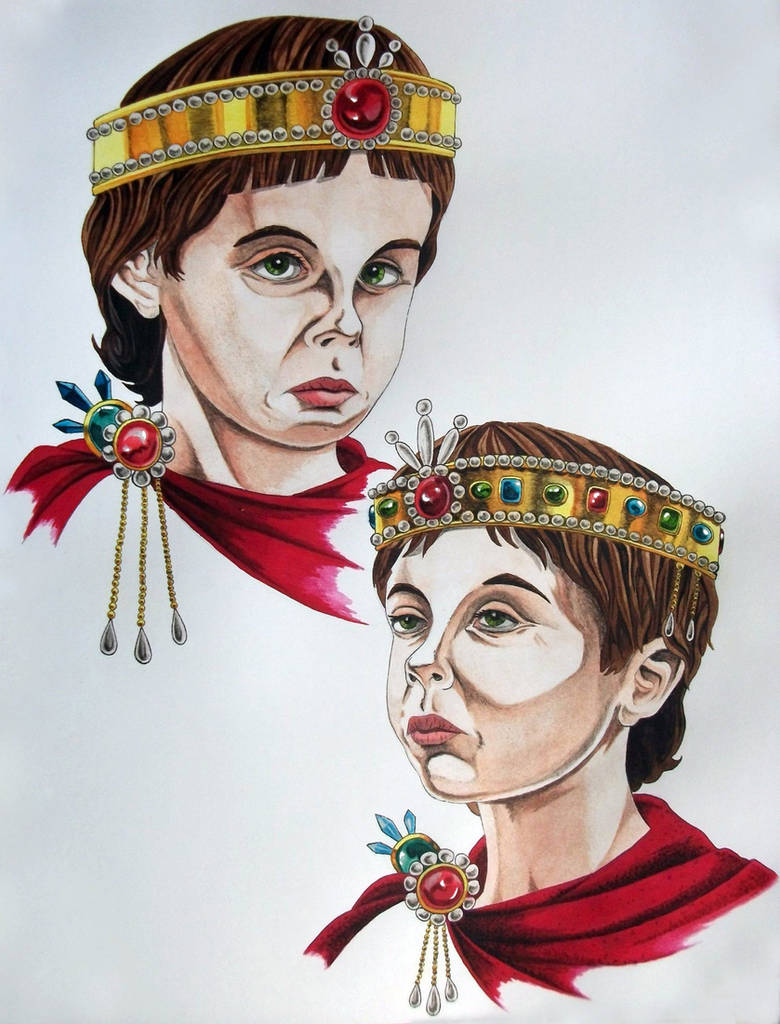
With Aspar and his power eliminated, Leo I could now focus on his succession and thus in 473 he appointed his grandson Leo II- Zeno’s and Ariadne’s son- as his Caesar or junior emperor and following Leo I’s death in 474 from dysentery, Leo II succeeded as Augustus or senior emperor despite being only 7 years old.

385873252_719079726924683_6428671588927526859_n
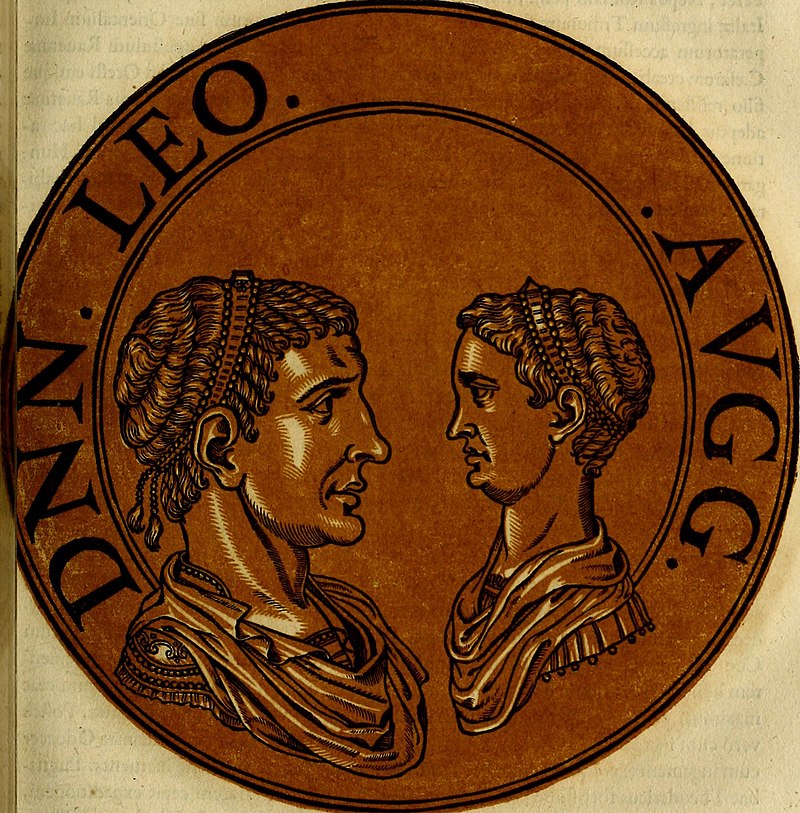
Eastern Roman emperors Leo I (left) and his grandson Leo II (right, r. 474)

Due to his young age and thus his inability to rule alone himself, Leo II’s father Zeno by the convincing of his wife Ariadne and mother-in-law Verina was crowned as his son’s co-emperor and thus was basically the real power of the empire. During the time his son was senior emperor, Zeno first of all confirmed Julius Nepos (r. 474-475) as Western Roman emperor and concluded a lasting peace with the Vandal king Genseric by sending the Eastern Roman senator Severus to Carthage to negotiate the peace; Genseric would then die in 477 at peace with the Eastern Romans. Although Zeno was highly successful, things would turn around for him when his son the emperor Leo II suddenly died later on in 474 which thus made Zeno the sole ruler and it was here when he would be a target by the elite people of Constantinople and the Senate due to his Isaurian origins which they saw as “barbarian”. True enough, the Isaurians in the capital had also begun behaving badly through their drunken behavior and arrogance that they had gone as far as looting homes and beating people up in the streets which therefore further ruined Zeno’s reputation. Just 2 months into power as the sole emperor, in early 475, Zeno’s mother-in-law Verina organized a plot to oust Zeno and place her lover the former Magister Officiorum also named Patricius on the throne, and this conspiracy was supported by Verina’s brother Basiliscus, the Isaurian generals Illus and Trocundes who were both brothers, and the powerful Ostrogoth general in Thrace Theodoric Strabo. When hearing of the plot, Zeno thus fled the capital in early 475 taking his wife Ariadne, mother Lallis, a few Isaurian loyalists, and the imperial treasury to Isauria where he would hold himself up.

images-6
Plaque depicting Eastern Roman emperor Basiliscus (r. 475-476)

Although Verina intended to place her lover Patricius on the throne, it was instead her brother Basiliscus who took the throne for himself and thus he had Patricius executed which only turned his sister against him. In his short reign (475-476), Basiliscus had only further alienated the people that supported him as for one when he allowed the people to massacre the Isaurian population in Constantinople, this only turned the powerful Isuarian generals and brothers Illus and Trocundes against him and furthermore, Basiliscus appointing his nephew the inexperienced Armatus as the senior Magister Militum Praesentalis instead of Theodoric Strabo who had more military experience too enraged Strabo. Due to Zeno taking the treasury with him, Basiliscus who was short of funds was forced to impose heavy taxes on his people which too turned the people against him. Additionally, Basiliscus being a Monophysite Christian which was seen as heretical by the Orthodox Church also turned the Church against him that soon enough there were riots in the streets against him encouraged by the Church and by Daniel the Stylite who after many years descended from his column to incite the riots. Basiliscus’ reputation was further damaged when a large fire burned down several parts of the city including a major library and palaces wherein Basiliscus did nothing to contain it. Due to his incompetence, the Senate true enough turned against Basiliscus too and instead decided to secretly support Zeno who they intended to put back in power.

0c916e907a292a42c2afbbb457d37698
Icon of St. Daniel the Stylite

In the meantime, Basiliscus had also sent the Isaurians Illus and his brother Trocundes to hunt down Zeno in Isauria wherein they managed to capture Zeno’s brother Longinus and make him their hostage, however they failed to capture Zeno who held himself up in a fortress. Rather than taking the fight to Zeno, Illus and Trocundes after being bribed by Zeno switched sides to him and together marched back to Constantinople. When hearing that Zeno was near the capital, Basiliscus then sent his nephew Armatus to stop Zeno but Armatus too was bribed by Zeno while also promised by Zeno the title of Magister Militum Praesentalis for life while Armatus’ son was also promised with the title of Caesar, thus Armatus too switched his support to Zeno. In August of 476, Zeno thus besieged Constantinople all while Basiliscus lost all support as the Senate true enough opened the city’s gates to Zeno. As Zeno returned to power as emperor, Basiliscus and his family fled to the Hagia Sophia cathedral but were eventually betrayed to Zeno by the Patriarch of Constantinople Acacius, thus Basiliscus surrendered to Zeno in exchange for a promise that Zeno would not shed any of their blood. Rather than violently executing Basiliscus and his family, Zeno instead sent them to Cappadocia and locked them up in a dry cistern wherein they all died in 477 due to starvation. As for Armatus, although being promised by Zeno the title of Magister Militum Praesentalis for life, Zeno in 477 changed his mind and had Armatus executed fearing Armatus would be trouble in the future whereas Armatus’ son was removed from power and forced to become a monk.    

Solidus_of_Basiliscus_and_Marcus
Gold Solidus coin of Emperor Basiliscus

III. The Fall of Western Rome              

2f1c608066438c072614c5033855489c

Meanwhile in the Western Roman Empire- which basically just consisted of Italy at this point- the Eastern Roman candidate Julius Nepos came to power in 474 and thus as Western Roman emperor he remained in friendly terms with Zeno in the east, until Zeno was overthrown by Basiliscus in 475. During the period Zeno was ousted from power, Nepos too faced a revolt by his Magister Militum Orestes- who formerly served Attila the Hun- who in 475 succeeded in forcing Nepos out of power and fleeing back to Dalmatia.

romulus_augustus_by_amelianvs_d5g20md-pre
Romulus Augustus, last Western Roman emperor (r. 475-476), art by Amelianvs

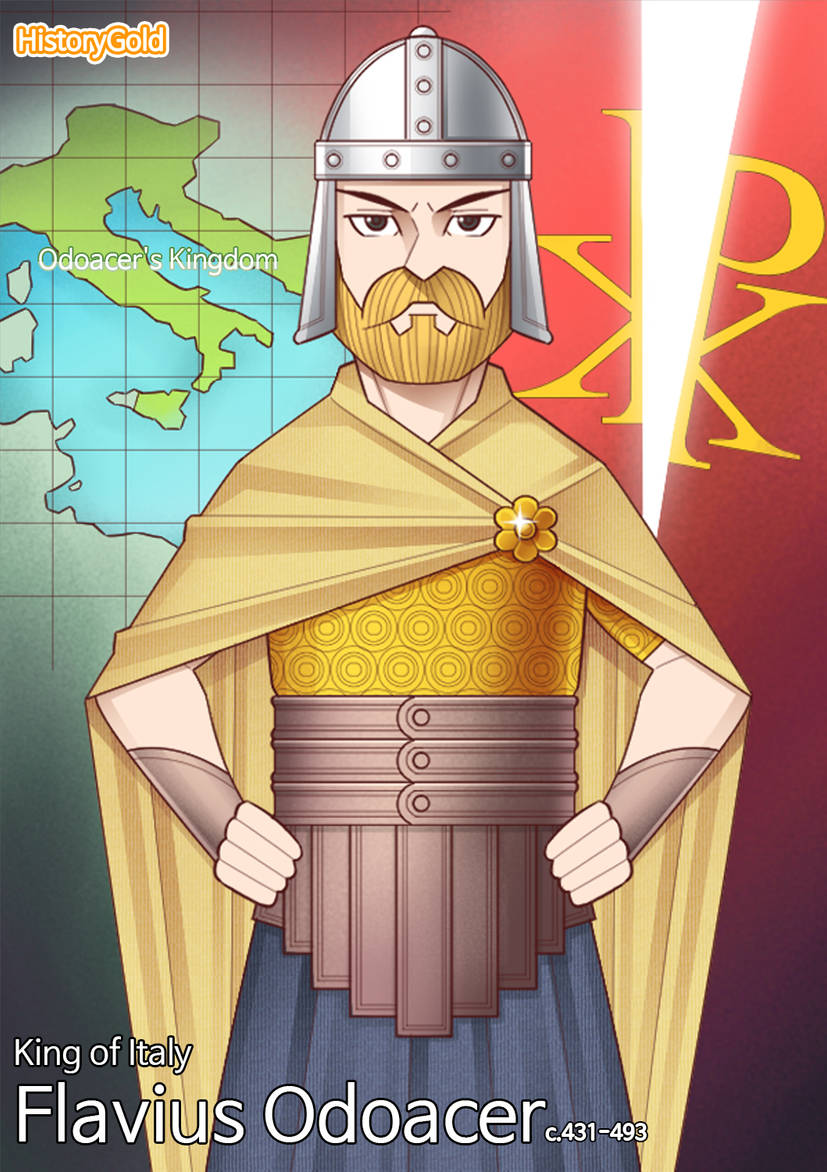
Instead of making himself emperor, Orestes placed his young son Romulus Augustus (r. 475-476) as his puppet Western Roman emperor as Orestes intended to be the new kingmaker in the west. Orestes however faced opposition by a faction of his army, namely the barbarian Foederati troops under Odoacer- who also served Attila previously with Orestes- who were not given the land in Italy promised to them by Orestes. In 476 then, Odoacer and his troops rose up against and killed Orestes and then marched to Ravenna, capital of the Western Roman Empire wherein during a skirmish outside the city’s walls killed its defending commander Paulus, brother of Orestes, thus leaving the young emperor Romulus Augustus with no more support. Romulus with no one to defend him anymore simply surrendered to Odoacer and thus ended the Western Roman Empire simply because Odoacer refused to rule as “Western Roman emperor” and instead as “King of Italy” whereas Romulus after surrendering the throne was sent into exile at a castle in Southern Italy where he would live out the rest of his days.

_history_of_italy__flavius_odoacer_by_storiagold_det44nu-414w-2x
Odoacer, King of Italy (r. 476-493), art by StoriaGold

Although abolishing the Western Roman Empire and ruling as a barbarian king, Odoacer allowed the Roman Senate in the west to still function all while he too kept many of the Roman political institutions in place, though as a symbol of having abolished the Roman Empire in the west, Odoacer sent Romulus’ crown to the Eastern emperor Zeno who had just returned to power after ousting Basiliscus. Zeno was thus the sole Roman emperor from here on and aside from recognizing the abolition of the Western Roman Empire, he too recognized Odoacer as his vassal “King of Italy” and a “patrician” in status. Meanwhile, Zeno in 476 as well received another embassy, this time from the former Western emperor Julius Nepos who here was residing in Dalmatia, and here Nepos had asked Zeno for money and troops in order to take back Italy from Odoacer, though Zeno at the end only recognized Nepos as Western Roman emperor in name only and that his holdings were only just Dalmatia. Although Nepos was still intent to take back Italy, he never succeeded as in 480 he was assassinated in Dalmatia, thus Odoacer saw this as an opportunity to invade and annex Dalmatia into his own Kingdom of Italy, and this conquest was recognized by Zeno as well.   

Europe_and_the_Near_East_at_476_AD
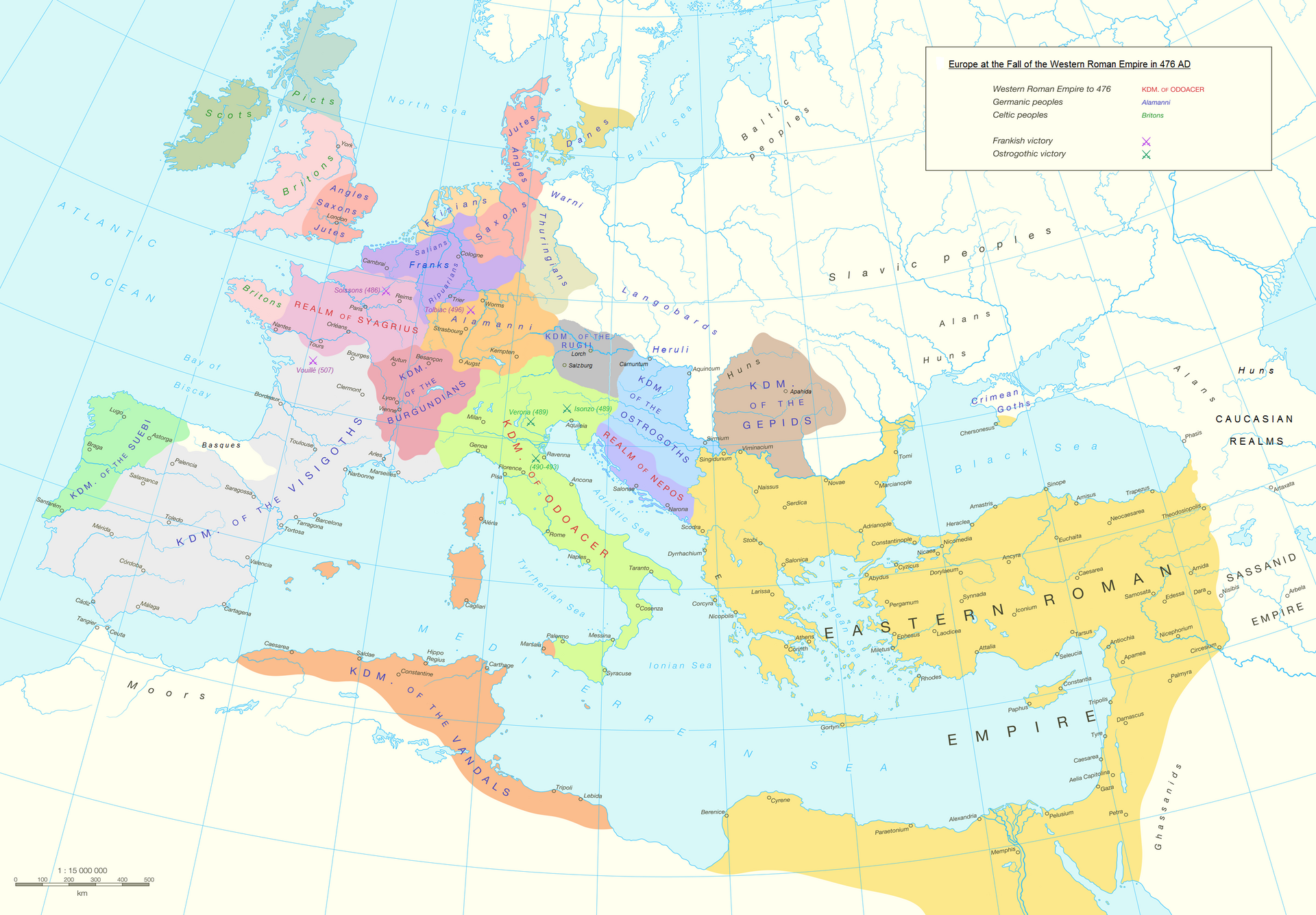
Map of Europe and the Mediterranean during the Fall of Western Rome, 476
what-happened-to-romulus-augustus-after-his-deposition-v0-ho19cp2ika4c1
Odoacer overthrows Romulus Augustus in Ravenna, 476
1447695836
Zeno receives the crown of Romulus Augustus in Constantinople

IV. The Revolt of Marcian          

2f1c608066438c072614c5033855489c

Although Zeno managed to regain the throne for himself in 476, 3 years later in 479 he almost lost it again due to the rebellion of his brother-in-law Marcian. Now, this Marcian was the son of the former Western Roman emperor Anthemius who had been executed under Ricimer’s orders in 472, and in his mother’s side this Marican was a grandson of the former Eastern Roman emperor and Leo I’s predecessor Marcian who he was named after. The younger Marcian now was related to Zeno due to being married to Leontia, the younger sister of Zeno’s wife Ariadne.

emperor_zeno_by_spatharokandidatos_dabyoff-pre
Emperor Zeno, art by Spatharokandidatos

Due to his connections to the ruling Leonid Dynasty, Marcian in 479 decided to rebel against Zeno with the support of his brothers Procopius and Romulus and by rallying the troops and people in Constantinople who opposed Zeno again due to the emperor’s Isaurian origins. Marcian thus led the people to riot in the streets wherein they went as far as storming the imperial palace and the house of Illus, Zeno’s trusted commander and fellow Isaurian. Zeno true enough almost fell victim to the riots as his own loyalist troops were overwhelmed and ambushed by the rioters from the rooftops of the houses in Constantinople. The rioting was only stopped thanks to Illus bringing in a unit of Isaurian soldiers into Constantinople during the night and bribing off some of the troops supporting Marcian to switch sides which thus allowed Zeno to flee the city. In the next morning, Marcian now saw that his situation was hopeless and his ally being the Ostrogoth general in Thrace Theodoric Strabo would not arrive in time, thus he and his brothers sought refuge in the Church of the Holy Apostles but eventually they were found there and arrested. Zeno then sent Marcian and both his brothers to Cappadocia but there, they tried to escape with the help of some monks but at the end failed and thus the brothers were forced by Zeno to become monks. Marcian in particular this time as a monk in Cilicia attempted to escape again and this time succeeded until he was eventually caught by Illus’ brother Trocundes and thus Marcian was under captivity. When Illus revolted against Zeno in 484- which will be mentioned later- Illus sent Marcian to Italy to ask for help from its king Odoacer, though after this Marcian is never mentioned again, thus it is most likely that he died a peaceful death in Italy.

unnamed-4
Gold Solidus coin of Emperor Zeno

V. Dealings with the Ostrogoths         

2f1c608066438c072614c5033855489c

Originally, the Ostrogoths were the Gothic people known as the Greuthungi who invaded the Roman Empire in the 370s as refugees fleeing the Huns and defeated the Romans at the Battle of Adrianople in 378 with the assistance of their Gothic cousins the Thervingi- later known as the Visigoths. The Greuthungi following the catastrophic battle were settled in both Eastern Roman Pannonia and Thrace by the new Eastern emperor Theodosius I the Great and when there they would eventually become the Ostrogoths.

27e7b2ce9b1d7fa23bc06f16dcde98d6
Ostrogoth army

By the mid 5th century, the Ostrogoths of Pannonia were subjugated by the Huns who under Attila began expanding as an empire whereas these Ostrogoths too assisted the Huns in raiding Roman territory. However, following Attila’s death in 453 and the fragmentation of the Hunnic Empire, the Ostrogoths had gained independence as their own kingdom in Pannonia under the rule of King Valamir (r. 447-465) of the Amal Dynasty all while the Huns in 454 after being defeated by their Ostrogoth and Gepid subjects were forced out of Europe. Valamir would then rule his people in Pannonia together with his brothers Vidimir and Theodemir whereas his nephew and Theodemir’s son Theodoric the Amal was sent to the Eastern Roman capital Constantinople as hostage in the court of Emperor Leo I wherein the young Theodoric would be educated under Aspar. In the meantime, the other group of Ostrogoths in Thrace being Foederati troops under Theodoric Strabo had also become powerful in Leo I’s reign thanks to Strabo being the powerful Aspar’s brother-in-law.

ostrogoths-84ecf929-43f4-421d-ba3f-b63029313ca-resize-750
Ostrogoth warrior, 4th century

Theodoric the Amal meanwhile returned to his homeland in around 469 when his father became king following Valamir’s death in battle against neighboring tribes and when back home, the young Theodoric scored a major victory against their neighbor, the Sarmatians. The Ostrogoths of Pannonia however soon left their homeland and migrated further south wherein they reached Macedonia by the time Zeno became emperor in 474, and later in 475 Theodoric the Amal succeeded as king of his people following the death of his father Theodemir. At the same time as Theodoric the Amal came to power, a strong rivalry began growing between him and the Thracian Goth’s leader the general Theodoric Strabo wherein the latter supported Basiliscus in his rebellion against Zeno in 475. With Zeno back in power as emperor in 476 with Basiliscus ousted from power, Theodoric Strabo though continued to oppose Zeno, thus Zeno used the rivalry between both Ostrogoth leaders to his advantage by having the Amal attack Strabo in Thrace. In 479 when Marcian rebelled against Zeno, Strabo too as an enemy of Zeno allied with Marcian and it was here when the Amal was sent to attack Strabo.

6c9f12d78da6da6a246a17ed8c1f3bd5
Ostrogoth warrior on horse

Zeno though promised to reinforce the Amal with imperial troops, however no troops arrived and the Amal was thus forced to agree to a truce with Strabo wherein both were to make a request to Zeno to extend the Amal’s territory and to restore to Strabo his title of Magister Militum. Zeno however at this point refused the Amal’s request and instead decided to support Strabo while even giving him back his title of Magister Militum which only further enraged the Amal who then pillaged his way across the Balkans until reaching Epirus where an army sent by Zeno subdued them through a surprise attack. Zeno however soon enough began fearing Strabo and thus to get rid of a potential threat by Strabo, Zeno in 480 paid off the Bulgar tribes north of the Danube to attack Strabo in Thrace. Strabo though managed to defeat the Bulgars and thus moved to Constantinople intending to attack it but seeing the might of its land walls and hearing of his own people causing trouble, he turned back and when in Macedonia he suddenly died by falling off his horse into a spear. Although Theodoric Strabo was dead, problems weren’t over yet for Zeno as for one Theodoric the Amal continued pillaging Eastern Roman Greece all while Strabo’s men all defected to the Amal. Once the Amal killed off Strabo’s son, Theodoric the Amal was the undisputed leader of the Ostrogoths whereas Zeno could do nothing anymore to subdue him.

1676255064_6
Ostrogoths in battle

VI. The Revolt of Illus           

2f1c608066438c072614c5033855489c

Despite the Isaurian general Illus as mentioned earlier helping Zeno defeat his rivals first being Basiliscus in 476 and then Marcian in 479, Zeno eventually began growing suspicious of him due to his victories making Zeno suspicious that Illus would use his popular position in order to overthrow Zeno one day. Zeno thus began plotting ways to get rid of Illus and so did Zeno’s mother-in-law Verina who hated Illus too. Shortly after Marcian’s failed revolt in 479, Verina attempted to have Illus assassinated but failed, thus to punish her, Zeno at the suggestion of Illus banished her to the Fortress of Papurius in Isauria where she was to be under the watch of Illus and his brother Trocundes.

273052707_676187393517139_8960966135038696063_n
Empress Ariadne, wife of Zeno, art by myself

Although imprisoned, Verina managed to write to her daughter Ariadne to convince both her husband Zeno and Illus to release her. Illus though refused to release Verina and thus Ariadne like her mother before her attempted to assassinate Illus who at this point was in Constantinople. The assassin sent to kill Illus however only succeeded in wounding Illus by cutting off one of his ears as Illus attended a race at the Hippodrome of Constantinople. Feeling betrayed by Zeno who he believed sent the assassin to kill him left the capital for Asia Minor and together with his brother Trocundes and friends the Pagan philosopher Pamprepius and the general Leontius rose up in rebellion against Zeno in 484. Illus and his men thus based themselves in Papurius where Verina was imprisoned in which was the center of their revolt. Rather than proclaiming himself as emperor against Zeno, Illus knowing he wouldn’t be popular due to his Isaurian origins proclaimed his co-general Leontius as his puppet emperor in Tarsus wherein Verina was released from prison only to perform the coronation of Leontius in order to legitimize him as she was part of the ruling Leonid Dynasty. Zeno in the meantime could not fully put his attention in crushing Illus’ revolt as in 484 as well he was simultaneously dealing with another revolt by the Samaritan Jews in Samaria who rose up due to persecution by the emperor.

1
Eastern Roman army, 5th century

According to the 6th century historian Procopius of Caesarea, Zeno himself personally travelled to Samaria wherein he brutally suppressed the revolt. A division of the imperial army though was sent to crush Illus’ revolt in Isauria but failed, thus in the following year (485), Zeno sent another army led by the general John the Scythian and the emperor’s new ally, Theodoric the Amal of the Ostrogoths. This attempt in 485 was more successful though as John the Scythian managed to contain the rebels to Papurius and blockade them there. During this time, Trocundes was killed in a skirmish outside the fortress with Zeno’s forces whereas Verina on the other hand died in prison all while the blockade of the fortress had lasted for 3 more years and during this time as well, Illus had Pamprepius executed when they had a falling out. The fortress only fell to the imperial forces in 488 with the support of a traitor being the late Trocundes’ brother-in-law and thus ended Illus’ rebellion. Illus and his puppet emperor Leontius were then beheaded and their heads were sent to Zeno.    

fortress_of_cilicia-97
Fortress of Papurius, Isauria

VII. Dealings with Theodoric the Amal and Odoacer         

2f1c608066438c072614c5033855489c

Following the death of the Ostrogoth general Theodoric Strabo in 481, the Ostrogoth king Theodoric the Amal was basically the undisputed leader of the Ostrogoths especially since Strabo’s army had defected to him. The emperor Zeno true enough could not stop the Amal’s rising power and so in 483 Zeno appointed the Amal to the position of Magister Militum Praesentalis or the most senior general in the empire and in the following year (484), the Amal was even made consul for the year making him the first barbarian and non-Roman citizen to have this title.

Theodoric the Amal, King of the Ostrogoths (r. 475-526)

In 485, with the Amal now an ally of Zeno, he as mentioned earlier was sent with his army of Ostrogoths to attack Illus and his rebels in Isauria which ended mostly in success. Although allied to Zeno, Theodoric the Amal who still wanted more power and recognition from the emperor this time rebelled in 486 going as far as to attacking Constantinople’s walls and severing its water supply being the Aqueduct of Valens. In the meantime, as Illus’ rebellion in Isauria was ongoing, Illus seeking for allies against Zeno turned to the King of Italy Odoacer who in an act of assisting Illus invaded the Eastern Roman Empire’s westernmost provinces being Illyria. Zeno however being adept at diplomacy turned to his ally, the Rugii tribe in today’s Austria by having them invade Odoacer’s Italy. Odoacer however responded to this in 487 by invading the Rugii lands north of Italy which he successfully annexed into his kingdom. Zeno now seeing Odoacer as a problem due to supporting Illus’ rebellion and attacking an Eastern Roman ally being the Rugii decided to now turn on Odoacer.

zeno-the-isaurian-425-491-eastern-roman-emperor-from-474-to-475-and-again-from-476-to-491-M9HADR
Illustration of Emperor Zeno

Here, Zeno saw that he could eliminate two problems to him at the same time being Theodoric the Amal and Odoacer by having the former attack the latter and this true enough would benefit both Zeno and the Amal as for Zeno it would clear a major problem for him and for the Amal it would mean more land for him and his people to settle in. In order to get Theodoric the Amal to give up his attack on Constantinople, Zeno in 488 asked him to invade Odoacer’s Italy in which the Amal gladly accepted the offer especially since it would give him and his people lands to settle in permanently considering that the Ostrogoths for the longest time were simply roaming around the Balkans without a permanent capital. Later in 488 then, the Amal departed the Balkans with his people and troops and thus began their long march to Italy arriving there in 489 meeting Odoacer and his forces at the Battle of Isonzo wherein the Amal defeated Odoacer who was thus forced to flee to Verona.

Tancredi_Scarpelli_-_Death_of_Odoacer_killed_by_Theodoric_king_of_the_Ostrogoths_-_(MeisterDrucke-38315)
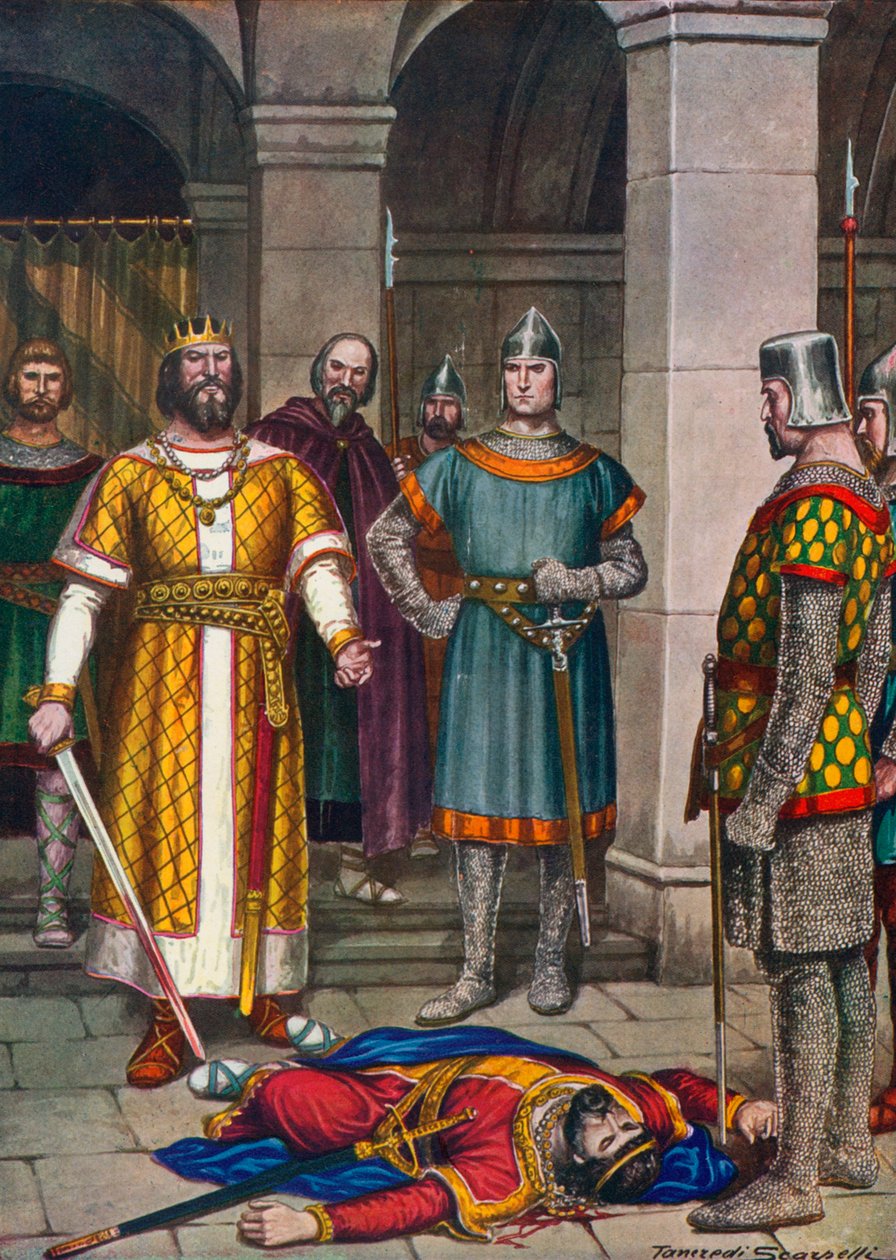
Theodoric the Amal kills Odoacer in Ravenna, 493

The Amal then laid siege to Verona and was successful and thus he now occupied most of Northern Italy forcing Odoacer to flee back to his capital Ravenna. Odoacer however in 490 managed to turn the tide by defeating a division of the Amal’s forces outside Ravenna and thus recapture most of Northern Italy from the Amal. However, the Amal managed to gain allies from the Visigoth Kingdom in Gaul and with them he defeated Odoacer once again at the Battle of the Adda River, thus this time Odoacer fled back to Ravenna which the Amal would blockade for the next 3 years. By 493 after 3 years of being blockaded and without making any successes, Odoacer decided to negotiate with the Amal with the condition that both would rule Italy together. Just 10 days later after the negotiation however, Theodoric the Amal suddenly betrayed his word and brutally killed Odoacer personally with his sword slicing Odoacer from his shoulder to thigh. Following Odoacer’s death, Theodoric the Amal purged the rest of Odoacer’s family and allies who he had put to death, and thus the Amal was the undisputed ruler of Italy- and some of Illyria and Pannonia- now having transformed into the Ostrogoth Kingdom which Theodoric the Amal would rule until his death in 526 though like Odoacer before him he too kept many Roman institutions in his kingdom in place such as the Senate. However, by the time the Amal had taken over all of Odoacer’s kingdom, Zeno had already died.    

Theodoric-the-Great-c-451-or-453454–526
Theodoric the Amal in Ravenna

VIII. Zeno’s Religious Policies and Death        

2f1c608066438c072614c5033855489c

Before we get to Zeno’s death in 491, we would have to first go through his religious policy and the religious conflicts in the Roman world during his time. Now, during the 5th century the Roman Empire’s Christian population- its majority- had been split between the Orthodox or rather Chalcedonian Christians and the new sect of the Monophysites which were strong in the empire’s eastern provinces. The Chalcedonians here had believed that Christ had two natures: human and divine whereas the Monophysites believed Christ only had one being divine.

main-qimg-55fa06804a2a21fd1ff4680dc1ec66e8-lq
The Council of Chalcedon, 451

The Council of Chalcedon in 451 headed by the Eastern Roman emperor Marcian and his wife the empress Pulcheria- sister of the late Theodosius II- had meanwhile condemned the Monophysite position as heresy though the Monophysites still remained strong. Basiliscus who overthrew Zeno in 475 was a Monophysite as well which is why he was unpopular and thus overthrown as Zeno returned to power in 476. Zeno however being unpopular among the people of the capital Constantinople for being an Isaurian despite being a Chalcedonian Christian needed the support of the people of the eastern provinces- Egypt, Syria, Palestine, and Asia Minor- who were mostly Monophysite. To gain the support of the Monophysite population, Zeno and the Patriarch of Constantinople Acacius in 482 issued a decree known as the Henotikon or “Act of Union” which was made to compromise with the Monophysites over the natures of Christ. Although this decree was accepted in the Eastern empire, the Patriarch of Rome Pope Felix III did not accept it as he saw it as compromising with heretics, thus in 484 Felix III excommunicated Patriarch Acacius, therefore beginning the Acacian Schism between the Churches of Rome and Constantinople that would last until 519, long beyond Zeno’s death.

158879134_548779396091876_488658624703300232_n
Emperor Zeno, artwork by myself

Zeno on the other hand could not do anything to solve the schism, though in 488 he recognized the autonomy of the Church of Cyprus under its bishop Anthemius. The last few years of Zeno’s life and reign meanwhile remain rather mysterious as not much is recorded anymore about him after 488 except for one incident in 489 when he closed the Persian school at Edessa and replaced it with a church as the school taught Nestorian Christian teachings which was also seen as heretical. Zeno thus died in April of 491 at the age of 66 possibly from epilepsy which he had throughout his lifetime, dysentery, or from excessive drinking. According to later Byzantine sources such as George Kedrenos in the 11th century and John Zonaras in the 12th century, Zeno when falling unconscious was buried alive by the orders of his wife Ariadne and when Zeno was heard screaming inside his tomb, Ariadne ordered passersby to ignore his cries for help, thus Zeno eventually died. This scenario of Zeno being buried alive however is not likely as these sources mentioning it were written centuries after his time and were basically made to slander him again because of his Isaurian origins which means to say that even centuries after his time, he still remained unpopular in memory. Whether Zeno was buried alive or not, he at least died secure on the throne without being overthrown again which therefore again shows him being a survivor.

19800794_1783257018357077_9211726549800501661_o
Anastasius I, Eastern Roman emperor (r. 491-518), successor of Zeno, art by Amelianvs

Zeno though died without any successor considering that his only son with Ariadne Leo II had died back in 474 whereas Zeno’s other son from his first marriage had died as well, thus shortly after Zeno’s death Ariadne who survived him was to choose the successor and here, she chose the court administrator the 60-year-old Anastasius who was successful at managing the empire’s finances and was said to have been Ariadne’s lover. Once Ariadne married Anastasius, he thus succeeded as the new emperor Anastasius I who was more favorable to the people of Constantinople who demanded that their new emperor be “orthodox” and “Roman” as he unlike Zeno did not seemingly sympathize with the Monophysites and was not an Isaurian. The Isaurian population of the empire however felt betrayed by Ariadne choosing Anastasius as the new emperor as they backed Zeno’s brother Longinus who they believed Ariadne would marry following Zeno’s death. The Isaurians thus rioted in Constantinople which therefore led to the civil war known as the “Isaurian War” beginning in 492 when Longinus was exiled by the new emperor. This war would thus drag on until 497 ending with a victory for the imperial forces and the Isaurians subdued and dispersed across the Eastern Roman Empire.   

zeno-entombed-alive-AY4J42
Emperor Zeno buried alive, 491
7bb7260c844303069532f40289a800a5
Investiture of Anastasius I as emperor, 491


Conclusion           

2f1c608066438c072614c5033855489c

Although highly controversial as an emperor, Zeno in his 17 years in power had achieved a lot, and most of his achievements proved important for the survival of the Eastern Roman Empire. Whatever you may say about Zeno, he at least managed to stamp out all local rebellions in the empire, clear out major potential threats such as Theodoric Strabo and Theodoric the Amal, and die at least secure on his throne with an empire still intact, therefore one could say Zeno played a key role in stabilizing the Eastern Roman or Byzantine Empire.

GettyImages-1371473407-770x769.jpeg
Emperor Zeno illustration

Now, a lot of the stabilizing process done by Zeno for his empire was due to his cunning nature and political abilities as seen by having his enemies fight each other like when he had Theodoric Strabo and Theodoric the Amal fight each other and later when Theodoric the Amal fought against Odoacer; by managing to get his enemies to defect to him as seen when he got Illus, Trocundes, and Armatus to side with him when he retook power from Basiliscus; and sometimes he too managed to survive out of pure luck as seen earlier on when he evaded an assassination attempt by Aspar before he became emperor, when he survived the revolt of Marcian, and when Theodoric Strabo suddenly died. Not to mention, a major reason to why Zeno managed to survive and stay in power with an empire intact was his adept ability not just in local politics but in diplomacy and foreign policy as was seen when Western Rome fell in 476 wherein Zeno agreed to have Odoacer’s Kingdom of Italy as his vassal and when he had Theodoric the Amal eliminate Odoacer later on. Zeno now was definitely the right emperor the Eastern Roman Empire needed at such a difficult time as his cunning and ruthlessness was highly necessary for the empire’s survival as if a weaker emperor ruled Eastern Rome at this time, then the empire would simply fall just as the west did. Although successful in keeping the empire intact, Zeno too had many faults most notably his religious policy in compromising with the Monophysite heretics which only further divided the empire religiously and created a schism with the pope in Rome that would take a long time to heal. Now, by stamping out local rebellions across the empire and thus stabilizing it- although not financially- Zeno surely paved the way for the Byzantine golden age after his time though he was not influential in starting this golden age as the job would be left behind to his successors namely Anastasius I whose genius economic policies made the empire rich, Justin I (r. 518-527) who further stabilized the empire, and most notably Justinian I the Great who would make the empire physically great. Now, what are your thoughts about Zeno and his reign, and do you really think he stabilized the Byzantine Empire in order to kickstart its golden age? I would like to thank you all for reading this article and please continue to support me by following and subscribing to my sites!           
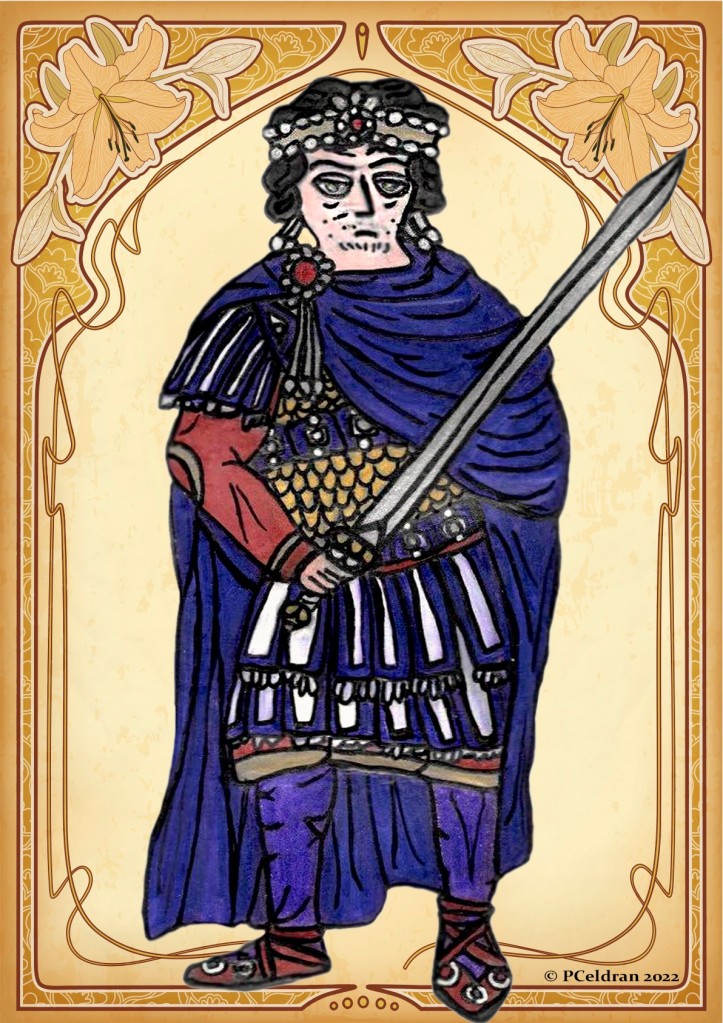

5 Achievements and 5 Failures of Theodosius I the Great

Posted by Powee Celdran

324916680_501335022136474_5359653165260915756_n

Welcome back to the Byzantium Blogger and here we are again with another Byzantine history article! In this one being the 7th part of this series featuring top lists concerning the lives of certain emperors who I think have interesting stories, we will talk about Theodosius I the Great (r. 379-395), the last ruler of a united Roman Empire.

241426872_2655529718074965_3090408841786348095_n
Emperor Theodosius I the Great (r. 379-395), art by myself 

Now Theodosius the Great is one of history’s most polarizing figures as he is both seen as a hero especially to Christians for championing Christian orthodoxy and making Christianity for the first the time the Roman Empire’s official religion but at the same time he too can be seen as an intolerant religious extremist especially since it was under his rule when the ancient Pagan faith was stamped out. Now in the previous article about Emperor Constantine I the Great (r. 306-337), we went over how Christianity became a major religion that would not only become legal but would unite the Roman Empire, however under Theodosius I who would rule decades after Constantine I, Christianity- particularly Nicene Christianity- would ascend higher to not just a religion tolerated in the Roman Empire but to the official religion of the empire itself. For his role in making Christianity the official state religion of the Roman Empire, Theodosius I thus plays an important role in shaping history itself especially since this was a major turning point wherein Christianity would defeat the old Pagan faith of Rome that had defined it for centuries.

Theodosius1cng11100822obverse
Coin of Emperor Theodosius I

Other than his role in further shaping Christianity in making it an official state religion, Theodosius I too was known for many other achievements such as in winning 2 bloody civil wars, concluding a major external threat to the Roman Empire being the Goths by agreeing to a settlement with them, and further transforming the new empire’s capital of Constantinople into something really worthy of being an imperial capital. However, despite his achievements, Theodosius too had a number of failures that would not only affect his reign in the short-term but the Roman Empire itself in the long-term and this would include his policy of settling the Goths in the empire, causing further division in the empire’s society through his religious policies, and lastly in dividing the empire permanently among his two weak and incompetent sons. Now, in this article we will exactly go over 5 of Theodosius I’s achievements and 5 of his failures in an alternating pattern, therefore we will go over an extensive analysis on Theodosius’ life and reign and see if he really deserves his title of “the great” or not. Before beginning this top 10 list, I will give a quick background to the life of Theodosius I the Great and the Roman Empire he grew up in and inherited.     

95t3yr5xvfyy
Flag of the Byzantine Empire

Follow me, Byzantine Time Traveller on Social Media:

Instagram: @byzantine_time_traveller

Facebook: Byzantine Time Traveller

Youtube: No Budget Films

Website: Byzantine Time Traveller

Deviantart: Byzantium-blogger55

Art Station: Powee Celdran Porphyrogennetos

Patreon: Byzantine Time Traveller


Theodosius was born in the Roman province of Hispania (in modern Spain) in 347 during the reign of Constantius II (r. 337-361) in the east and his brother Constans I (r. 337-350) in the west- both the sons of Emperor Constantine I the Great. Theodosius’ father of the same name being Count Theodosius or Theodosius the Elder, a native of Roman Hispania was an aristocrat and high-ranking general in the Roman army while his mother Thermantia too was a native of Hispania.

290058941_1344091749332544_7274599495996732321_n
Emperor Constantius II (r. 337-361), art by myself

In the empire meanwhile, the Western emperor Constans I was killed by his own rebellious troops in 350 which therefore forced his older brother the Eastern emperor Constantius II to take action and fight a bloody civil war against these rebellious soldiers which ended in 353 with Constantius victorious. Constantius although the sole emperor appointed his cousin Gallus to be his subordinate emperor of Caesar in the east while Constantius ruled the west, but Gallus’ defiance only led to him being executed by Constantius in 354. With Gallus gone, Constantius in 355 appointed his last surviving male cousin Julian as his new Caesar this time in the west as Constantius had to face the renewed threat of the Sassanid Persian Empire in the east, although after a number of victories over invading barbarian tribes from across the Rhine River into the Roman Empire, Julian too would turn out to be rebellious to the point that he would be acclaimed by his own troops as emperor against Constantius. Before the troops of Julian and Constantius would clash in a civil war, Constantius II died in 361 naming Julian his successor and thus Julian (r. 361-363) inherited the whole empire itself.

449189143_870126678477837_4880318500040339912_n
Emperor Julian (r. 361-363), art by Amelianvs

As a Pagan, Julian attempted to reverse the pro-Christian policies of his predecessors and return Rome to its old Pagan faith, but this never came to happen due to Julian’s death in 363 while on campaign against the Sassanid Persians in Persian territory. Following Julian’s death, the new emperor Jovian (r. 363-364) who was acclaimed by the army returned Rome to the Christian faith and concluded peace with the Sassanid ruler or shah Shapur II (r. 309-379) but died in 364 before returning to the capital Constantinople. With no more emperor again, the army elected the general Valentinian as the new emperor and once arriving in Constantinople, Valentinian I (r. 364-375) divided the empire into 2 parts wherein he would the west from Milan and his younger brother Valens (r. 364-378) would rule the east from Constantinople. Valentinian I thus spent his reign in campaigns against the barbarian tribes across the Rhine and Danube Rivers while Valens in the east defeated an attempt to overthrow him by the usurper Procopius (r. 365-366), fought a number of wars against the Sassanid Persians over the eastern border, and concluded peace with the Goths across the Danube after a short war with them.

342360026_102288862858034_1403832604165522461_n
Emperor Valentinian I (r. 364-375) with his guardsmen

In the west meanwhile, Britain which was a Roman province was almost lost to a local rebellion supported by a number of invading Celtic and Germanic tribes in what was known as the “Great Conspiracy” if it were not for Theodosius’ father Count Theodosius being sent by Valentinian to crush this said invasion of Britain in 368. In this campaign to subdue the local revolts in Britain supported by invading barbarians, the future emperor Theodosius I accompanied his father wherein he served in his staff. Due to his success in crushing the Great Conspiracy in Britain, Theodosius the Elder was assigned in different parts of the empire by Valentinian to repel barbarian invasions and crush rebellions whereas his son the future emperor later gained his first independent command in 374 assigned as the commanding officer or Dux in the province of Moesia Prima along the Danube. When assigned here, the son Theodosius in 374 as well defeated an invasion of the province by Sarmatians who he forced into submission. However, in 375 the Western emperor Valentinian I suffered a stroke out of anger when negotiating with the leaders of the Germanic Quadi tribe which thus caused his death on the spot, thus the west passed into the hands of Valentinian’s older son Gratian (r. 367-383) who was not as capable as his father. As a result of Valentinian’s death, Count Theodosius after suppressing a revolt in North Africa was executed there in 376 by the orders of the new administration in the west who were jealous of his growing power and influence.

8p12dv4josmc1
Emperor Valens (r. 364-378) at the Battle of Adrianople (378), art by Giuseppe Rava

Following his father’s execution, Theodosius the Younger retired from military command and returned to Hispania where he would marry and start a family, but in the same year (376) disaster struck the eastern half of the empire ruled by Valens as thousands of Goths fleeing from the expansion of the Huns from the east all migrated into Roman territory crossing the Danube. The mass migration of the Goths had therefore turned into a major refugee crisis that Roman authorities in the Balkans could not handle thus leading to a major war breaking out between the Romans and the Goth migrants. In 378, the Eastern emperor Valens finally decided to take action by intending to crush the Goths once and for all, however he was met with disaster at the Battle of Adrianople which ended with a victory for the Goths and 2/3 of the Roman army annihilated with Valens himself killed and his body never found. With no more emperor in the east and the Goths victorious, the Goths thus freely pillaged their way across the Balkans and even attempted to attack Constantinople but failed.  

318551879_618205226733759_4305991106533828152_n-1
Genealogy of the Valentinian-Theodosian Dynasty of the Roman Empire (364-457), illustrated by myself
THE-‘BARBARIAN-CONSPIRACY-OF-367
The Great Conspiracy of Roman Britain, 367-368
y3jt0d3gyxf51-2
Roman defeat to the Goths at the Battle of Adrianople, 378

Related Articles from the Byzantium Blogger:

Byzantine Alternate History Chapter I

Byzantine Alternate History Chapter I- Spin-off I

Byzantine Alternate History Chapter II- Spin-off II

Byzantine Alternate History Chapter II

10 Achievements of Constantine I the Great

7 Times Constantine XI Palaiologos Exemplified Bravery

10 Unknown Facts About Emperor Justinian I

8 Times Michael VIII Palaiologos was an Evil Genius

10 Surprising Facts About Basil II

5 Reasons to Feel Bad for Justinian II and 5 Reasons to Hate Him

8 Key Events in the Life of Theodosius I the Great- Article by The Collector


I. Achievement- Conclusion to the Gothic War         

2f1c608066438c072614c5033855489c

By 379 with the Goths still mindlessly pillaging the Balkans, the Western emperor Gratian arrived there from the west, though he came too late to save his uncle Valens who had already been killed in battle.

Gratian_Solidus
Coin of Emperor Gratian of the west (r. 367-383)

Although Gratian could have took his uncle’s place in ruling the east and thus rule the east and west together, he saw that this would be impossible considering that the Goths’ threat in the Balkans was still at large, thus Gratian needed to appoint someone to rule the east as his imperial colleague. Luckily, Theodosius the Younger by this time had come out of retirement in Hispania and had returned to commanding the troops in the Balkans against the Goths, thus being the first general in the eastern provinces that Gratian encountered, Gratian decided to appoint Theodosius as his co-emperor in the east replacing Valens that Theodosius too was given the rank of Augustus or senior emperor. The situation in the Balkans however was so severe wherein the Goths were everywhere that Theodosius in fact could not even travel safely to the capital Constantinople, therefore for one year he had to remain in Thessaloniki which he would use as his base of operations to battle the Goths.

Bust_of_Theodosius_I
Bust of Emperor Theodosius I

As emperor in the east, Theodosius decided to take action against the Goths and due to the lack of troops as many had been slain in the previous year at the Battle of Adrianople, Theodosius decided to recruit untrained farmers and miners who in order to avoid conscription ran away and even mutilated themselves but at the end were still found and conscripted anyway. Additionally, Theodosius too resorted to hiring Goth mercenaries to fight the Goths but this only led to further disaster as these mercenaries defected to their fellow Goths anyway and thus in 380, the defection of the Goth mercenaries and the inability of the conscripted recruits to fight led to another defeat for the Romans by the Goths. Although facing defeat, by the end of 380 the Goths in the Balkans were eventually subdued enough for Theodosius to be able to reach Constantinople and thus move his court there. In 381, Theodosius gained what would be a “propaganda victory” when the Goth chief Athanaric personally came to Constantinople and submitted to Theodosius who even gave a lavish funeral for Athanaric when he died later that year, but this still did not stop the Goths from pillaging the Balkans. Eventually, in 381 as well, Western forces sent by Gratian managed to score a victory over the Goths in the Balkans and thus reducing them, though Theodosius came to a point wherein he believed that the Goths could not be fully removed from Roman territory. Theodosius in 382 thus agreed to negotiations with the Goths wherein it was agreed that the Goths would be allowed to settle along the Danube border in exchange for military service to Rome as auxiliaries.    

30629764_10216183466329915_7100632773483823104_o
Roman defeat at the Battle of Adrianople, 378
Theodosius1cng11100822
Solidus coin depicting Theodosius I (left) and Theodosius I and Gratian (right)

II. Failure- The Rise of the Barbarian Foederati        

2f1c608066438c072614c5033855489c

Although Theodosius I brought an end to the war with the Goths by 382 by agreeing to settle the Goths along the Danube frontier in exchange for them providing the Romans with military assistance as auxiliaries, this decision of Theodosius would in the long-term be critical for the Roman Empire as a whole. First of all, although the Goths were settled down in exchange for defending the borders and providing troops for the Romans at war, they were not made into Roman citizens, instead they were left to their own devices.

ee56ef427ef0165b3ca9ac2b21bccc8d
Goth Foederati soldier in the Late Roman Empire

The Goths settled by Theodosius along the Danube hence became known as Foederati or “federates” meaning that they were allied with the Romans and were expected to assist the Roman troops in times of war but as non-Roman citizens, they were still under their own tribal leaders. In times of war, these barbarian Foederati although expected to fight alongside Roman troops could act independently by fighting under the command of their own leaders while also using their own native weapons and armor. As barbarians by blood, the Foederati proved to be successful in battle especially during Theodosius I’s reign as will be seen later, however their lack of loyalty to the Roman emperor and their failure to integrate into Roman society would prove to be troublesome later on as true enough their failure to integrate- which they probably did not intend to- would lead them to rebel against Roman authorities. One such example of how the Foederati proved to be capable warriors but at the same time troublesome to Rome would be the case of Alaric, leader of the Visigoths who in 394 led a contingent of his own Goth Foederati fighting alongside Theodosius I in a civil war battle- which will be mentioned later.

giulia-valentini-alarico-color
Alaric I, King of the Visigoths (r. 395-410), art by Giulia Valentini

Despite helping Theodosius win this said battle in 394, Alaric who would feel betrayed by the emperor for not getting the recognition he wanted and not being compensated for all the men he lost but at the same time having enough confidence to rule his own people rebelled against Roman authorities in 395 following Theodosius’ death. Alaric’s rebellion thus proved to be troublesome for the Romans that Alaric true enough defeated Roman legions multiple times and when not being satisfied with anything the Romans tried to do to settle him down but also having grown more powerful with more troops, Alaric eventually sacked Rome itself in 410 whereas his people would establish in Gaul the Visigoth Kingdom, an independent barbarian state within Roman territory. Unfortunately, emperors after Theodosius did not learn from his mistake of settling barbarians in Roman territory and making them Foederati or allied troops as emperors after Theodosius true enough continued this policy which only led to more rebellions by these barbarians and thus the creation of several barbarian kingdoms within Roman territory in the west which would include that of the Burgundians, Franks, Vandals, Suebi, and Ostrogoths. To put it short, Theodosius’ policy of settling invading barbarians in Roman territory and making them Foederati would be one of the reasons for the fall of the Roman Empire in the west a century after his time.    

main-qimg-63f726f0fff07368a4454249ba906356-lq
Barbarian Foederati in the Late Roman Empire

III. Achievement- Nicene Christianity as the Empire’s Official Religion            

2f1c608066438c072614c5033855489c

Since the reign of Constantine I the Great (306-337), the Christian Church had been torn apart over beliefs in the Trinity whereas the “orthodox” believed in Christ as the Son of God and therefore divine whereas the other sect being the Arians- named after the founder of this movement the presbyter Arius of Alexandria- believed Christ to be just a creation of God and therefore just man.

Nicaea_icon
Constantine I and the Nicene Creed at the Council of Nicaea, 325

Constantine I true enough tried to settle this issue through the Council of Nicaea in 325 which resulted in the formulation of the Nicene Creed, however this did not solve the problem of Arianism and therefore Arian Christianity flourished across the empire and beyond that many barbarian nations such as the Goths even converted to it. Despite the flourishing of Arianism, the opposite of it being orthodoxy which believed in the Nicene Creed hence becoming known as “Nicene Christianity” was still strong thanks to Church leaders like Athanasius, Bishop of Alexandria and it was true enough strong among the people in the Roman Empire’s Western provinces such as Hispania where Theodosius came from. As emperor, Theodosius made it clear that he strongly championed Nicene Christianity that as early as 380 when in Thessaloniki he issued what was known as the “Edict of Thessalonica” together with his Western co-emperors Gratian and Valentinian II (r. 375-392)- son of Valentinian I from his second marriage- which more or less decreed that those who believed in the Nicene Creed and the consubstantiality of God the Father, Son, and Holy Spirit could call themselves “catholic” and thus have their own churches and those who did not believe in it were simply labelled as “heretics” and therefore “insane”.

Homilies_of_Gregory_the_Theologian_gr._510,_f_723
Manuscript depicting the First Council of Constantinople, 381

To put it short, the Edict of Thessalonica issued by Theodosius I was the official decree that made Nicene Christianity as the Roman Empire’s official religion, thus making it the only legal religion whereas others were therefore outlawed, however Theodosius still did not force heretics, Pagans, and Jews to convert to it but rather as would be explained later would make it more difficult for them. Now following the declaration of Nicene Christianity as the empire’s official religion, Theodosius when arriving in Constantinople late in 380 fired the city’s Arian archbishop Demophilus and replaced him with the Nicene bishop Gregory of Nazianzus from Cappadocia who became the first Patriarch of Constantinople. In 381 meanwhile, Theodosius together with Patriarch Gregory would convene the second ecumenical council- the first being the Council of Nicaea- which was known as the “First Council of Constantinople” which intended to resolve the schism between the orthodox and Arians. To put it short, this council was a success for orthodox or Nicene Christianity as it confirmed the Nicene Creed as Christianity’s official beliefs and thus condemned Arianism and its teachings as heresy all while the council too defined the third person in the Trinity being the Holy Spirit as equal to the Father and “proceeding” from him and that the Church of Constantinople was second to Rome.   

second ΟΙΚΟΥΜΕΝΙΚΗ ΣΥΝΟΔΟΣ (1)
Fresco depicting the First Council of Constantinople, 381

IV. Failure- Divisive Religious Policies Part I, Theodosius Against Pagans          

2f1c608066438c072614c5033855489c

Despite Theodosius I’s success in ending the schism with the Arians and further defining orthodoxy through the Council of Constantinople in 381, his declaration of Nicene Christianity as the empire’s official religion however would lead to further division in the empire especially among fanatical Christians who now would feel more superior against Pagans.

Eugenius, You Need Jesus
Theodosius I the Christian emperor, art by UltimusRomanorum

Although Theodosius had at first a cautious policy towards Pagans that he still allowed them to continue performing their traditions such as animal sacrifices and allowed Pagan temples to be open, he however failed to control fanatical Christian mobs from damaging them especially since many of Theodosius’ officials who influenced him, namely his Praetorian Prefect of the East Cynegius were fanatical Christians too. Theodosius’ major failure here now was in failing to stop the destruction of Pagan temples across the empire by fanatical Christian mobs that he even later on tolerated them and their actions. A major player in the destruction of temples during Theodosius’ reign was the said Praetorian Prefect of the East Cynegius who encouraged the destruction of temples empire-wide and even allowed Christian mobs who killed Pagans in the streets to be unpunished for it. On the other hand, although many Pagan temples were destroyed across the empire by Christian mobs, a number of temples too across the empire were converted into Christian churches during Theodosius’ reign as part of his policy as well to preserve ancient structures. Theodosius however despite still pursuing a cautious policy towards Pagans still showed intolerance towards them in the beginning of his reign as seen in 380 when he prohibited Pagan sacrifices which intended to divine the future and furthermore his decrees against Manichaeans and other heretical sects. As will be seen later, Theodosius’ policies against Paganism in particular would be more extreme in his latter reign especially with the attacking of the Library of Alexandria which Theodosius tolerated.

GettyImages-599955065-1024x807
The attacking of the Library of Alexandria during Theodosius I’s reign

V. Achievement- Civil War Victory over Magnus Maximus          

2f1c608066438c072614c5033855489c

In 383, with Theodosius I having ruled the east for already 4 years, trouble would start brewing in the west, particularly in Britain when the general there Magnus Maximus, Theodosius’ old friend and fellow Roman-Spaniard proclaimed himself emperor out of rebellion.

magnus_maximus_by_walrok_d27a18j-414w-2x
Magnus Maximus (r. 383-388), usurper emperor of the west, art by Walrok

From Britain, Magnus Maximus marched on to Gaul where he engaged in civil war against the Western emperor Gratian ending with Gratian defeated- thanks to his soldiers defecting to Maximus- and fleeing to Lugdunum (today’s Lyon, France) where he was found and killed by Maximus’ forces. Despite Gratian killed and his half-brother and Western co-emperor Valentinian II now threatened by Maximus’ ambitions, Theodosius at first did not do anything about it and instead focused his attention east, to the Sassanid Persian Empire. Here in 383 as well, Theodosius sent his military assistant and future general Stilicho, a half-Roman half-Vandal to Persia to negotiate peace with the Sassanid shah Shapur III (r. 383-388) which true enough ended in success as this put a temporary end to Persian hostility with Rome in exchange for Armenia to be portioned in two between the Romans and Sassanids. After settling peace with the Sassanids, Theodosius himself in 384 travelled to Northern Italy and successfully brokered peace between Valentinian II and the usurper Magnus Maximus wherein both would co-rule the west while Theodosius remained in the east. In the meantime, as Theodosius remained in the east, he in 386 defeated another Goth invasion into the Roman Balkans and thus resettled the defeated Goths in Phrygia in Asia Minor but in 387 he would have to turn his attention west again when Magnus Maximus broke off the peace agreement and suddenly crossed the Alps from Gaul and invaded Valentinian II’s Italy.

4b1481cf42ef9919a83167b977cd921a-1
Emperor Valentinian II (r. 375-392) of the west 

Valentinian II then together with his mother the empress Justina and sister Galla escaped Italy and fled to Constantinople to appeal to Theodosius for military aid against Maximus. Theodosius then agreed to support Valentinian II against Maximus in exchange for marrying Galla which Theodosius did in late 387 considering that his first wife and mother of his two sons Aelia Flaccilla had already died in 386. After marrying Galla, Theodosius then personally led his army together with the Frankish general Arbogast to Italy in order to reclaim it from Maximus for Valentinian II. Theodosius’ Eastern forces then clashed with the rebels of Maximus at the Battle of Poetovio in 388 in today’s Slovenia which then ended with Maximus defeated and executed. Theodosius then proceeded to Milan returning his brother-in-law Valentinian II to power while also appointing Arbogast as Magister Militum or “Master of Soldiers” in the west and considering that Valentinian II’s mother Justina had died in 388 as well, Arbogast was therefore the new power behind Valentinian II’s rule. Theodosius’ victory over Magnus Maximus was thus a total one as following the execution of Maximus, Theodosius then sent Arbogast to Gaul to kill off Maximus’ son and co-emperor Flavius Victor (r. 384-388) which ended successfully. Theodosius would then remain in Italy for a couple of years after his victory here in this civil war.    

europe3830825_Psv97dH
The Roman Empire and the wider world during Theodosius I’s reign

VI. Failure- The Massacre of Thessaloniki and Dealings with Ambrose of Milan     

2f1c608066438c072614c5033855489c

The reign of Theodosius I too had seen a series of unrest across the Roman Empire such as a major riot in Antioch in 387 which Theodosius had to suppress with brutality. However, one event that took place in 390 was more severe and this resulted in a massacre of civilians, this was thus known as the “Massacre of Thessaloniki”.

0-galerian_galerius_thessaloniki_3d-1
Thessaloniki, 4th century

Now, the cause of the massacre was apparently due to the murder of the commander of Thessaloniki’s local garrison being the Goth Butheric who prior to his murder by the people of Thessaloniki arrested and jailed a popular charioteer in the city. The people thus demanded that Butheric release the charioteer but Butheric refused, thus the people rioted in the streets and killed Butheric. Theodosius meanwhile was nowhere near Thessaloniki when the riot in 390 occurred, rather he was still holding court in Milan but when he got word of the riot, he according to a number of historians out of his “volcanic anger” sent troops- mostly consisting of Goth Foederati- to Thessaloniki ordering them to massacre the rioters. Theodosius however soon enough changed his mind and decided to not push through with his order, but it was too late as the soldiers he sent had already arrived in Thessaloniki and trapped the rioting civilians in the city’s Hippodrome. The troops true enough sent by Theodosius to quell the riot were not Romans but Goth Foederati and due to them being barbarians, they slaughtered everyone in the Hippodrome including the women and children that it was said that up to 7,000 people were killed in only 3 hours.

78004f7b27a337c102fb1078aff0200f
Bishop Ambrose of Milan bars Theodosius from the cathedral

Now this event can be seen as a failure of Theodosius I’s reign as not only did he fail to prevent the massacre but this permanently stained his reputation especially since he was trying to promote his image as a Christian ruler. Sources however are conflicted if whether this massacre happened or not, but it still surely did stain Theodosius’ reputation that he true enough even got into trouble with the Church for it. When hearing of Theodosius’ role in the massacre, the Bishop of Milan Ambrose who was also a major player in Theodosius’ reign banned Theodosius from receiving communion until he repented for his sin while Theodosius too was banned from entering any church. This would true enough be the first time in history where the Church would have power over a ruler no matter how powerful he was and would thus set the stage for Church leaders being allowed to excommunicate rulers if they had sinned. After 8 months of penance, Ambrose finally allowed Theodosius back into communion by Christmas of 390 but only on the condition that Theodosius would have to have a firmer stance against Paganism.

Massacre_in_the_Hippodrome_of_Thessaloniki_in_390,_16th_century_wood_engraving-1
Massacre of Thessaloniki, 390

VII. Achievement- Theodosius’ Constantinople and Art Patronage         

2f1c608066438c072614c5033855489c

Although the new Roman imperial capital was founded in 330 by Emperor Constantine I the Great, it took some time for it to develop into a real imperial capital with grand monuments. It was thus during Theodosius I’s reign when Constantinople did become something worthy of being called an imperial capital thanks to his patronage of the arts. Under Theodosius, the old Forum Tauri or “Forum of the Ox” in Constantinople was renovated and expanded into what would be known as the “Forum of Theodosius” named after the said emperor which had included a triumphal arch and triumphal column modeled after Trajan’s Column in Rome both built in Theodosius’ honor and above the column stood a statue of Theodosius himself. Additionally, Theodosius I was said to have constructed the Golden Gate then outside Constantinople’s walls following his victory over Magnus Maximus in 388 as a triumphal arch before entering the capital.

37d0c7_d1477ed68b8245708722906242383c62~mv2_d_3204_4765_s_4_2
Obelisk of Theodosius in Constantinople

Other than that, Theodosius too had a large obelisk shipped from Egypt to Constantinople in order to decorate the city’s Hippodrome. Now, back in 357, the emperor Constantius II had 2 Ancient Egyptian obelisks shipped from Karnak to Alexandria wherein one obelisk made it to Rome which became known as the Lateran Obelisk, though the other remained stuck in Alexandria for some decades. It was thus only during Theodosius I’s reign in 390 when this said obelisk finally left Alexandria and arrived in Constantinople under Theodosius’ watch and when it arrived in Constantinople, a large base was added to it which features bas-reliefs on all 4 sides depicting Theodosius I, his family, and his court and till today it stands in the location of the city’s Hippodrome. One of the most notable artistic items now from Theodosius I’s reign is a large ornate ceremonial silver dish known as the Missorium of Theodosius which was found in Spain and shows the emperor Theodosius I himself at the center of the dish, his son and co-emperor Arcadius to his left and Western co-emperor Valentinian II to his right, a palace structure behind, soldiers, and mythological figures below. This dish was apparently made in 388 as well to celebrate Theodosius’ 10th year in power. Due to the creation of many artistic and architectural finds in Theodosius’ reign, historians too identify his reign as the “Theodosian Renaissance”.

forum_Theodosien_version_2
Reconstruction of the Forum of Theodosius I in Constantinople
aa11
Golden Gate of Constantinople, built under Theodosius I
Disco_de_Teodosio
The Missorium of Theodosius I

VIII. Failure- Divisive Religious Policies Part II, The End of Paganism        

2f1c608066438c072614c5033855489c

As mentioned earlier, Theodosius I in the latter part of his reign would take a firmer stance against Paganism and other religions other than Nicene Christianity, the new official religion of the Roman Empire.

theodosios
Painting of Emperor Theodosius I

A lot of this was due to the penance he had to perform as ordered by the Bishop of Milan Ambrose to make up for his sin of ordering the massacre at Thessaloniki. Ambrose thus encouraged Theodosius to crack down more seriously on Paganism and Pagan practices in order for Theodosius’ soul to be saved and true enough a lot of Theodosius’ decrees targeted against Paganism took place between 389 and 391 which was at the same time as the Massacre of Thessaloniki. In this short period of time, Theodosius ordered the closure of Pagan temples across the empire all while also tolerating Christian mobs in destroying Pagan temples and killing Pagans in the streets. Additionally, many Pagan holidays celebrated across the empire were turned into workdays but the biggest blow to Paganism by Theodosius was the extinguishing of the sacred fire at the Temple of Vesta in Rome that had been burning for centuries without stop.

066e182c9735eb4d260111b391416c27
Ancient Olympic Games, ended by Theodosius I in 394

Other than the fire being extinguished, the ancient institution being the order of the Vestal Virgins which guarded the fire for centuries was disbanded on Theodosius’ orders. Lastly in 394, Theodosius put an end to the Olympic Games in Greece which had been ongoing since Ancient Greek Times and thus it was in 394 as well when the last games were held as apparently it was due to its Pagan origins and connections with the old gods to why Theodosius decided to end it. Although Theodosius’ decrees to end all Pagan institutions in the Roman Empire could be seen as a success from a Christian point of view, it would still be considered a failure as not only was it a cultural genocide on old traditions, but it too would again further divide the empire’s society as would be seen after Theodosius I’s death wherein fanatical Christian mobs now feeling empowered would continue destroying Pagan sites and massacre Pagans at will.

social-media-crop-Dedication-of-a-new-Vestal-Virginby-Alessandro-Marchesini-1663–1738-Public-Domain-via-Creative-Commons
Vestal Virgins of Rome, ended by Theodosius I

IX. Achievement- Civil War Victory over Eugenius           

2f1c608066438c072614c5033855489c

In 391, Theodosius I returned east to Constantinople leaving his co-emperor and brother-in-law Valentinian II in charge of the west in Italy under the protection of the Frankish general Arbogast. However, in 392, Valentinian II was found dead in Gaul hanging from a rope in his room either by suicide or assassinated by Arbogast who he fell out with. Valentinian II possibly killed himself due to being pressured by Arbogast who acted as if he were the emperor in the west leaving Valentinian powerless, though it could also be possible that Arbogast had him killed as he wanted a new puppet emperor.

Eugenius_coin_(transparent)
Coin of Eugenius (r. 392-394), usurper emperor of the west

Following Valentinian II’s death, Arbogast true enough elevated a new puppet emperor being Eugenius, a rhetoric teacher in Gaul who despite being a Nicene Christian tolerated Paganism. In order to gain a support base, Arbogast and Eugenius rallied their Pagan subjects who were persecuted by Theodosius’ decrees to their cause despite both leaders being Christian anyway. As for Theodosius, he only decided to take action against Arbogast and Eugenius when hearing of them supporting Pagans and reopening Pagan temples and thus by early 394, both sides prepared for war against each other. Before marching west to Italy to confront Eugenius and Arbogast, Theodosius as mentioned earlier recruited more Goth Foederati to his side due to the lack of Roman citizen troops and his intention to win the war and leading this group of Goth Foederati that Theodosius and his general Stilicho recruited in the Balkans was Alaric. Additionally, Theodosius had also recruited auxiliaries from Iberia in the Caucasus and Arabs as well and once amassing his army, Theodosius marched west and eventually confronted the rebel troops at the Frigidus River in today’s Slovenia in September of 394.

battle-of-the-frigidus-ed88cbfc-7c24-447a-ba3f-3ba30c0453e-resize-750-1
The Battle of Frigidus and its aftermath, 394

The battle then began with Theodosius ordering his Goth Foederati led by Alaric to clash at the rebel forces which only resulted with thousands of Goths dead and it is said that Theodosius ordered this so he could get rid of the troublesome Goths. In the second day, the battle was more intense, however a miracle happened first when a number of Arbogast’s men defected to Theodosius and when a sudden Alpine wind known as a Bora blew into the battlefield blowing against Arbogast’s forces wherein the arrows they fired went back at them. Thanks to this sudden wind, Theodosius’ forces gained the upper hand and emerged victorious as they stormed into Eugenius’ camp and thus captured and executed Eugenius. Arbogast meanwhile fled the battlefield and 2 days later committed suicide in order to avoid capture and execution as he was found dead. The victory of Theodosius at the Battle of Frigidus in 394 is often seen as the triumph of Christianity over Paganism as true enough the Christian Theodosius defeated an enemy supporting the Pagan faith.    

battle_of_the_frigidus_river_by_amelianvs_d5gqv05-fullview-1
Roman forces clash against each other at the Battle of Frigidus (394), art by Amelianvs
battle_of_the_frigidus__394_ad_by_arvidhjorth_dcmii0c-pre
Theodosius I’s army at the Battle of Frigidus, art by ArvidHjorth

X. Failure- The Permanent Division of the Roman Empire and Incompetent Heirs          

2f1c608066438c072614c5033855489c

With Eugenius and Arbogast defeated and dead in 394, Theodosius I, the victor of the Battle of Frigidus was thus the sole ruler of the entire Roman Empire from Portugal to Syria and Britain to Egypt, but he too would be the last emperor to rule a united empire alone. Theodosius’ time as sole ruler of the entire Roman Empire unfortunately only lasted 4 months as in January of 395, he died in Milan after suffering from a disease involving severe edema.

423221361_229628120214079_3653801196180212457_n
Arcadius (r. 395-408), Eastern Roman emperor, son of Theodosius I, art by myself

Before his death, Theodosius decided to once again split the Roman Empire in half wherein the east would be ruled by his older son and co-emperor since 383 Arcadius (r. 395-408) from Constantinople and the west by his younger son and co-emperor since 393 Honorius (r. 395-423) from Milan. Both Arcadius and Honorius now were Theodosius’ sons from his first marriage to Aelia Flaccilla- who died in 386- and at Theodosius’ death both were still young with Arcadius only 18 and Honorius only 10 thus both rulers would be under the protection (and dominance) of powerful figures, Arcadius under the general and Praetorian Prefect of the East Rufinus and Honorius under his father’s trusted general Stilicho. Apparently, Theodosius shortly before his death appointed Stilicho as guardian of his young son Honorius in the west with the rank of “supreme commander” of the armies and true enough both Stilicho and Honorius were present at his death whereas Arcadius was left behind in Constantinople. Theodosius’ body was then laid in state in the palace for 40 days whereas his funeral took place at the cathedral in Milan where its bishop Ambrose despite his conflict with Theodosius in the past gave a speech praising the late Theodosius for suppressing Paganism.

gettyimages-1148855104-612x612
Honorius (r. 395-423), Western Roman emperor, son of Theodosius I

It was only later on in 395 when the body of Theodosius was brought over to Constantinople and buried in a porphyry sarcophagus at the Church of the Holy Apostles built by Constantine I earlier on in the century. Now, Theodosius’ death would be a disaster for the empire as a whole as not only was the empire fully divided but from 395 onwards, the Roman Empire would never be reunited again. Although the empire was divided in two, both eastern and western halves despite having different emperors and different officials still functioned as one empire as both halves shared the same administrative systems whereas people too could travel between both halves without restrictions. However, the major failure here was that Theodosius had failed to properly train his young sons to run an empire or rather because they were too young when their father died. Whatever the case was, both Theodosius’ sons Arcadius and Honorius proved to be totally incompetent rulers under the dominance of powerful figures at a difficult time.

638f2836aa1593e2c706d3c092f4029e
Flavius Stilicho, half-Vandal half-Roman general, guardian of Honorius

Shortly after Theodosius’ death as well, the empire would face trouble again when Alaric, leader of the Visigoth Foederati at the Battle of Frigidus declared rebellion against Rome for apparently not being rewarded what was due to him in helping Theodosius win the battle wherein he lost a lot of his men. In an act of rebellion, Alaric proclaimed himself as “king” of his people and began pillaging the Balkans under the Eastern Roman Empire and would later be a problem for the west, which though is a story for another time. In other words, the Roman Empire at Theodosius I’s death in 395 was a literal mess being split in half and never to reunite all while barbarian forces such as those under Alaric have broken loose and ready to rebel. Among the two halves of the Roman Empire after Theodosius’ death, the Western Roman Empire would fall just some 80 years later in 476 but the Eastern Roman Empire based in Constantinople on the other hand would last for more than a thousand years in what would be known as the “Byzantine Empire”. As a side note though, despite Theodosius’ sons Arcadius and Honorius being incompetent rulers without any achievements, Theodosius’ daughter Galla Placidia (born 392) from his second marriage to Galla- who died in 394- would not only outlive her older half-brothers but be a powerful figure for most of the 5th century. Theodosius I too had founded a dynasty that would rule both the Eastern half of the empire until 457 and the west until 455 and even after the dynasty’s fall, it still produced many prominent elites in the empire.

Partition_of_the_Roman_Empire_in_395_AD-1
The Roman Empire permanently divided between east (purple) and west (red) at Theodosius I’s death, 395


Conclusion      

2f1c608066438c072614c5033855489c

Theodosius I “the Great” is surely a controversial figure in history as despite some of his achievements, some of his policies would also be disastrous in the long-term for the Roman Empire namely his divisive religious policies which would further tear the empire’s society apart, his policy in settling invading barbarians as Foederati which would only lead to them causing trouble for the empire later on, and his decision to divide the empire in two which would only accelerate the decline of the west.

Theodosius-I-Engraving
Theodosius I, last emperor of a united Roman Empire

Despite his faults which proved to cause some ruin for the empire in the long-term, Theodosius’ many achievements throughout his 16-year reign can still make him be known as “the Great”. Theodosius’ title of “the Great” however is more or less given to him by the Church for his role in strengthening its influence by making Nicene Christianity the Roman Empire’s official religion and for stamping out Paganism but he too deserves the title for many more reasons. Apart from his role in Christianity in making it an official religion, Theodosius too stabilized the Roman Empire after winning two major civil wars and he too turned Constantinople into what it would be remembered as, a magnificent imperial capital with impressive landmarks. However, on the negative side, as said earlier, Theodosius’ policies and actions would also affect the empire in a negative way as for one, his decision to settle barbarian invaders as Foederati in the Roman Empire would only later on lead to these barbarians to rebel and create their own states within Roman territory all while the two civil wars he fought- first against Magnus Maximus and next against Eugenius and Arbogast- only further depleted Roman troops that the next century would see the Roman Empire short of them and thus fall victim to more barbarian invasions.

Theodosius web-1
Icon of Emperor St. Theodosius I the Great

On the other hand, Theodosius too was an emperor that ruled at very complicated times for the Roman Empire and in just 16 years as emperor, he saw a lot happening. Theodosius I was therefore the right emperor for the kind of complicated time he ruled in as he true enough managed to hold the empire together despite it being finally and permanently divided after his death. Theodosius’ greatest legacy however was in making Nicene Christianity the empire’s official religion which thus further defined Christianity as a Roman faith and thus a main pillar of the Eastern Roman or Byzantine Empire that would last for over a thousand years beyond Theodosius’ lifetime, hence for this, Theodosius I is considered a saint in the Orthodox Church. The reign of Theodosius I the Great can therefore be considered a major turning point in history as it was true enough during the 16 years he was in power when Christianity triumphed over the old Pagan faith and thus, we have Theodosius to thank for making Christianity the dominant religion it is today. Now, what are your thoughts on Theodosius I the Great and do you really think he deserves his title of “the Great”? I would like to thank you all for reading this article and please continue to support me by following and subscribing to my sites!                      
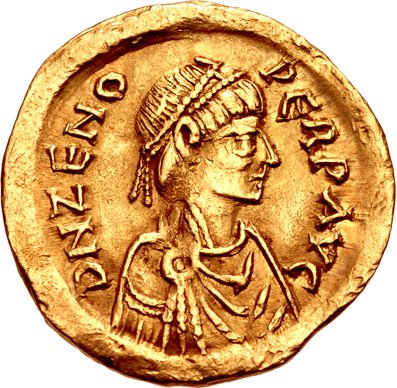
10 Achievements of Constantine I the Great

Posted by Powee Celdran

With free minds, all are to worship their Gods.” -Constantine I the Great

324916680_501335022136474_5359653165260915756_n

Welcome back to the Byzantium Blogger and here we are again with another Byzantine history article! In this one being the sixth part of this series featuring top lists concerning the lives of certain emperors who I think have interesting stories, we will talk about the first Byzantine emperor being no other than Constantine I the Great (r. 306-337).

448464487_492420283347355_2844080268006287233_n
Emperor Constantine I the Great (r. 306-337), art by myself

Now in history, very few rulers have such a great legacy the way the Roman emperor Constantine the Great does especially in his role in shaping the faith of Christianity and turning it into a major world religion and in establishing a city being Constantinople that would be the Roman Empire’s new capital for over a thousand years. Constantine the Great’s role both in legalizing the once underground faith of Christianity and establishing Constantinople as the Roman Empire’s new capital therefore set the foundations for what would be the Byzantine Empire (Eastern Roman Empire), thus in this article we will go over these major achievements of Constantine as well as some others as they too would play a role in the establishment of what would be the Byzantine Empire. Apart from his role in shaping Christianity as seen with his issuing of the Edict of Milan in 313 that legalized Christianity and the Council of Nicaea in 325 that set the official creed of Christianity and in establishing Constantinople as the new imperial capital, Constantine had many other achievements too such as the number of battles he won in order to secure the Roman Empire for himself and the reforms he made which would be long lasting ones and important for the survival of the Roman Empire. While covering 10 of Constantine the Great’s achievements in this article, we will also go over his rather fascinating story of how he inherited a divided Roman Empire which he managed to reunite and stabilize, therefore we will also see why he deserves the title of “the Great”. Before beginning this top 10 list, I will give a quick background to the life of Constantine I the Great and the Roman Empire he grew up in.

95t3yr5xvfyy
Flag of the Byzantine Empire

Follow me, Byzantine Time Traveller on Social Media:

Instagram: @byzantine_time_traveller

Facebook: Byzantine Time Traveller

Youtube: No Budget Films

Website: Byzantine Time Traveller

Deviantart: Byzantium-blogger55

Art Station: Powee Celdran Porphyrogennetos

Patreon: Byzantine Time Traveller


In the 3rd century AD, the Roman Empire although massive and powerful faced a time of crisis- the Crisis of the 3rd Century- marked by constant civil wars and military rebellions that saw a change of emperor numerous times in only 50 years, plagues, foreign invasions, and separatist movements that at one point the Roman Empire was split into three with two parts being breakaway states: the Gallic Empire in the west and Palmyrene Empire in the east.

13eac961ad7626a7b03933a85a8a0987
Roman emperor Aurelian (r. 270-275) with his troops during the 3rd century crisis

The empire was only reunited with these two breakaway states returning to the main empire by Emperor Aurelian (r. 270-275) in whose reign the future emperor Constantine I the Great was born. Constantine was born in Naissus (today’s Nis, Serbia) in 272 to Flavius Constantius Chlorus, an Illyrian military officer serving the emperor Aurelian and Helena, a woman of low birth and Greek origins. The young Constantine barely spent time with his father due to the latter’s military career which brought him up the ranks in the Roman army under the next few emperors in the Crisis of the 3rd century which was put to an end in 284 by Diocletian, another Illyrian army officer and a friend of Constantius who following the disastrous Persian campaign of 283 was proclaimed emperor by the army in Asia Minor on their return trip from Persia. Diocletian (r. 284-305) first of all in 285 named his colleague and fellow Illyrian military officer as well being Maximian as his Caesar or junior co-emperor who in the following year was elevated to the rank of Augustus or senior emperor and thus the empire was divided in half with Diocletian ruling the east from Nicomedia (today’s Izmit, Turkey) and Maximian the west from Mediolanum (today’s Milan, Italy).

Medallion_of_Diocletian_(obverse)
Gold medallion of Emperor Diocletian (r. 284-305)

This division of the empire was to make the administration and military for such a massive state to be run much easier and despite there being two emperors, it was still a single empire with Diocletian as the senior one. However, the division of the empire in half soon enough proved to be not as effective and thus in 293, Diocletian further divided the empire this time into 4 parts into what would be known as the Tetrarchy and here as Diocletian and Maximian ruled as co-Augusti, they had additional junior emperors or Caesars under them wherein for Diocletian it was his other fellow army officer Galerius (r. 293-311) who would rule the Balkan provinces of the empire and for Maximian it was Constantine’s father Constantius I (r. 293-306) who would be in charge primarily of Britain and Gaul.

cJWDV1ZnjcXw1K.bijbnyA
Porphyry sculpture of the original 4 rulers of the Tetrarchy: Diocletian, Maximian, Galerius, Constantius I

Additionally, as part of Constantius’ service to Diocletian, his son Constantine at a young age was sent to Diocletian’s court in Nicomedia as a hostage to be formally educated in Classical philosophy, statecraft, and military affairs. During his time in Nicomedia, Constantine despite being a Pagan probably began his path towards Christianity by attending the lectures of Lactantius, a Christian scholar in the city, though during this time, Constantine had also taken part in the campaigns of Diocletian and Galerius against the barbarians across the Danube River in 296 and against the Sassanid Persian Empire in the east from 297-299 which thus gave him military experience. Constantine too while in Nicomedia in 303 witnessed the initiation of the Great Persecution of Christians issued by Diocletian and Galerius, though Constantine played no role in it. In 305 meanwhile, Diocletian after 20 years in power decided to abdicate due to illness all while encouraging his co-Augustus Maximian to do the same, thus Constantine’s father Constantius I became the new Augustus in the west and Galerius the new Augustus in the east taking Diocletian’s place as the new senior Augustus. Additionally, two new Caesars were appointed which were Severus II (r. 305-307) who was to be Constantius’ junior emperor and Maximinus Daza (r. 305-313) being the nephew of Galerius who was to serve his uncle. Constantine meanwhile being given no position escaped Galerius’ court and travelled with great speed from Asia Minor to Gaul to serve his father the new Western Augustus in his campaign in Britain.          

318474261_618205093400439_1336930475696049836_n
Genealogy of the Constantinian Dynasty of the Roman Empire (293-363), illustrated by myself
Map_of_Ancient_Rome_271_AD.svg
Map of the Roman Empire divided during the Crisis of the 3rd Century
Tetrarchy_map3
Map of the Roman Empire’s 4 Divisions in Diocletian’s Tetrarchy
Anthimus,_Bishop_of_Nicomedia,_and_those_with_him_(Menologion_of_Basil_II)
The Great Persecution of Christians under Diocletian, since 303

Related Articles from the Byzantium Blogger:

Byzantine Alternate History Chapter I

The Legacy of the Byzantine Empire

7 Times Constantine XI Palaiologos Exemplified Bravery

10 Unknown Facts About Emperor Justinian I

8 Times Michael VIII Palaiologos was an Evil Genius

10 Surprising Facts About Basil II

5 Reasons to Feel Bad for Justinian II and 5 Reasons to Hate Him


I. Constantine I’s Rise to Power           

2f1c608066438c072614c5033855489c

In the summer of 305, once Constantine joined his father Constantius I in Gaul, they crossed the English Channel to Britain by ship and proceeded north to Eboracum (York) which was a major Roman military base.

1024px-Bust_of_Constantius_Chlorus_-_Altes_Museum_-_Berlin_-_Germany_2017
Sculpture of Emperor Constantius I (r. 293-306), father of Constantine I

From 305-306, Constantine and his father campaigned against the Picts beyond Hadrian’s Wall in today’s Scotland but did not achieve much success. In July of 306, Constantius having become severely sick died in York naming his son Constantine as his successor thus the troops with them proclaimed Constantine as Augustus on the spot all while the provincial governors in Britain and Gaul which were under Constantius’ control recognized Constantine as their emperor, though Hispania did not. As the new Augustus in the west, Constantine sent word to his senior Augustus Galerius in the east of his elevation, however when receiving word of it, Galerius was enraged but eventually accepted Constantine not as Augustus but as the new Caesar in the west as true enough the west needed a new Caesar as the role of Augustus was already reserved for Severus II. As the new Caesar in the west, Gaul, Britain, and Hispania were under Constantine’s control wherein following his acclamation in Britain, he travelled to Trier in today’s Germany which he used as his capital like his father before him.

GettyImages-2661780-56aacb1f3df78cf772b4887a
Emperor Constantine I the Great

During his stay in Trier, Constantine greatly renovated the city and pursued a policy of tolerating its Christian population unlike Galerius in the east, though during his time in Trier Constantine was away most of the time campaigning against the Franks east of the Rhine River. In the meantime, over in Rome, the former Western Augustus Maximian’s son Maxentius rebelled proclaiming himself emperor in 306 when hearing of Constantine having been recognized as Caesar by Galerius. In response to Maxentius’ rebellion wherein he even proclaimed himself as Augustus, Galerius sent his Western co-Augustus Severus II to attack Rome and force Maxentius to surrender but this attempt failed. Maxentius’ rebellion meanwhile brought his father Maximian out of retirement wherein the soldiers serving Severus II who once served Maximian defected to Maximian and thus imprisoned and later executed Severus in 307.

ecc24eafae986f9fb90b88ceb39d9a84
Sculpture of Emperor Galerius (r. 293-311)

In 307 as well, Maximian in order to regain his position as Augustus considered allying with Constantine that he even married off his daughter Fausta to Constantine in Trier. The Roman Empire was thus in a state of confusion again wherein the west had 2 men claiming to be Augustus (Maximian and Maxentius) and one Caesar being Constantine, however Constantine did not care much about this as he was busy campaigning against the barbarians across the Rhine. In order to solve this situation in the west, Galerius in 308 had Diocletian come out of his retirement in Dalmatia and have a meeting in the military fortress of Carnuntum in today’s Austria with Galerius and Maximian. In this meeting, it was agreed that Maximian must once again retire, Constantine would remain as Caesar, and Maxentius was not to be recognized as anything which further enraged him. The east meanwhile stuck to the status quo with Galerius as Augustus and his nephew Maximinus as Caesar whereas a newcomer being Galerius’ close friend Licinius I (r. 308-324) was appointed as the new Augustus in the west.    

Statue_of_Constantine_-_geograph.org.uk_-_3563471
Statue of Constantine I the Great in York, Britain
Trier_-_Aula_Palatina
Basilica of Constantine I in Trier, Germany

II. The Battle of Milvian Bridge         

2f1c608066438c072614c5033855489c

In 310, as Constantine was away campaigning against the Franks, his father-in-law Maximian once again usurped power in Gaul claiming that Constantine had died in campaign thus making a number of Constantine’s soldiers proclaim Maximian as emperor.

1024px-Musée_Saint-Raymond_-_2017-09-02_-_Inv._Ra_34b_-_4654
Sculpture of Emperor Maximian (r. 285-305, 306-308, 310)

Constantine true enough who was still alive rushed south forcing Maximian to flee to Marseille wherein he held himself up until its garrison opened up the city to Constantine. Maximian was thus found and although he was spared by Constantine, he was encouraged to commit suicide by hanging himself later that year. Although Maximian’s son Maxentius was never in good terms with his father, he used his father’s death claiming it to be done by Constantine as a pretext to declare war on Constantine. In the meantime, in 311, the senior emperor Galerius died in Thessaloniki after declaring an end to the persecution of Christians whereas later that year it was Diocletian’s turn to die in retirement. With Galerius dead and the new Western Augustus Licinius preoccupied with problems in the east, Maxentius in Italy had his chance to rule alone without anyone getting in his way as Constantine too was busy campaigning again in Britain. Constantine however left Britain and prepared to march for Italy in early 312 whereas he too sealed an alliance with Licinius to preempt Maxentius making an alliance with Licinius, thus Constantine’s half-sister Constantia- daughter of Constantius I from his second marriage- was married to Licinius.

ec8df2595a382c2e7efa774bcedb6058
Emperor Maxentius (r. 306-312), son of Maximian

After crossing the Alps with his army, Constantine arrived in Italy ready to wage an open war against Maxentius’ troops wherein Constantine managed to successfully capture Turin, Milan, Brixia (Brescia), Verona, Aquileia, Modena, and Ravenna from Maxentius’ forces. Maxentius meanwhile believing he was still in a secure position despite these previous defeats- as he true enough had the Praetorian Guard still loyal to him and enough food supply in Rome- ordered that all the bridges across the Tiber River be cut off and one temporary bridge built in order to face off Constantine’s army. Maxentius too consulted the keeper of the Sibylline Books who gave him a prophecy saying that the “enemy of the Romans would die” which he believed to be Constantine. Meanwhile, Constantine on his way to Rome according to the historian Eusebius claimed to have seen a cross in the sky with the Latin inscription In Hoc Signo Vinces meaning “in this sign you will conquer” and later that night he had a dream wherein he was told that in order to defeat Maxentius he would have to paint the initials of Christ or the Chi (X) Rho (P) in Greek on all his soldiers’ shields. True enough in the following day, Maxentius’ soldiers were shocked seeing these symbols on the shields of Constantine’s soldiers that it was said that they lost focus allowing Constantine’s cavalry to crash on them and force them to retreat to the temporary wooden bridge Maxentius had built over the Tiber. As most of Maxentius’ army all crowded on the wooden bridge, their combined weight caused the bridge to fall and drown them in the river including Maxentius who too died drowning in the Tiber. Constantine thus entered Rome the next day victorious with the head of Maxentius paraded on a spear whereas the Roman Senate agreed to recognize Constantine as a legitimate Augustus.

Detail-from-The-Battle-of-Milvian-Bridge-by-Giulio-Romano
Constantine’s victory over Maxentius at the Battle of Milvian Bridge, 312
99RR7WjzIGYUdHj37I0Dcq5gqQwOTKwupVYoLDeUFW4
Maxentius drowns to death at the Battle of Milvian Bridge

III. The Edict of Milan          

2f1c608066438c072614c5033855489c

Following Constantine’s victory over Maxentius at the Battle of Milvian Bridge in 312, Constantine began a propaganda campaign to damn the memory of Maxentius which included cancelling all his policies and renaming all structures Maxentius named after himself after Constantine all while Constantine too permanently disbanded the infamous Praetorian Guard due to their support for Maxentius.

Sala_di_costantino,_visione_della_croce_03
Constantine’s vision of the cross before the Battle of Milvian Bridge

Additionally, Constantine believed that his victory over Maxentius was due to the Christian God who sent him the said vision and dream in the first place, thus Constantine began pursuing a policy of minting coins with the “Chi-rho” symbol on it as well as putting it on his Labarum or military standard. After celebrating his triumph in Rome and staying there for a few months, Constantine travelled north to Milan to formally seal his alliance with his Western co-Augustus Licinius and it was here where Licinius and Constantine’s half-sister Constantia were married. Aside from the marriage, it was in Milan in February of 313 wherein both Constantine and Licinius issued what is famously known as the “Edict of Milan”. This edict issued by both co-emperors therefore granted full tolerance to Christianity and all religions in the Roman Empire, therefore ending the persecution of Christians issued by Diocletian and previous emperors and making Christianity now legal empire wide.

fae5e22b1d005b8f02e27225609ba956
Constantine I issues the Edict of Milan, 313

The Edict of Milan additionally granted Christians restoration for all property seized from them during Diocletian’s persecution. Although this edict was to benefit Christianity a lot, it was also meant to allow all religions in the empire to be practiced freely without the fear of being persecuted, though at the same time the edict also allowed Christians who were allowed to practice their religion freely to have their own versions of it- which shall be discussed later. The meeting between Constantine and Licinius in Milan however was brief as Licinius soon got word that the Eastern Augustus Maximinus Daza invaded Licinius’ territory in Europe. Licinius although eventually defeated Maximinus who later died in 313 as well thus giving Licinius full control of the eastern provinces but eventually, he would renege on the Edict of Milan he agreed to with Constantine thus leading to conflict to break out between both emperors some years later.

Licinius_&_Constantine_montage-1
Sculptures of co-emperors Licinius I (left) and Constantine I (right)

IV. Constantine’s Monetary Reforms           

2f1c608066438c072614c5033855489c

Aside from his victories in battle, Constantine the Great’s legacies too included economic reforms, notably reforming Roman currency and fixing the inflation that defined the Roman Empire’s economy in the 3rd century. Diocletian meanwhile too attempted to fix inflation by reintroducing the minting of silver coins which included the silver-bronze billon coin which still did not solve the inflation problem, though even in Constantine’s reign the billon still continued to be used.

Labarum_of_Constantine_the_Great.svg
Labarum (standard) of Constantine I

As emperor, Constantine I did not bother anymore to reform Diocletian’s silver currency, rather although the year is unknown, Constantine instead issued a new gold coin known as the Solidus which was much lighter in weight compared to the old Aureus gold coin. Constantine too in his later years was known to have had several gold, silver, and bronze statues melted across the empire to be minted into coins in order to fill the imperial treasury, though this was also part of his new religious policies that favored Christianity and looked down on the old Pagan faith. Constantine additionally, as mentioned earlier, minted Christian symbols on his coins such as the “chi-rho” as his way of promoting his new favored religion. The solidus coin meanwhile issued by Constantine I would turn out to last as the standard gold currency of the Roman (Byzantine Empire) for the next 7 centuries wherein it only devalued in terms of its gold content in 11th century Byzantium. On the negative side though, Constantine was known to have issued harsh tax policies including the introduction of the Chrysargyron or tax to be paid in both gold and silver by traders in the empire every 5 years which made him unpopular too.  

Solidus_of_Constantine_I,_AD_320
Gold Solidus coin of Constantine I

V. Constantine’s Administrative and Military Reforms       

2f1c608066438c072614c5033855489c

Just as he reformed the Roman Empire’s currency and issued laws regarding the Christian faith, Constantine the Great too had a number of reforms regarding the Roman state and its society. First of all, Constantine in 326 reversed the pro-equestrian class trend of the past by restoring positions in the Roman Senate to the old aristocracy, though he also made it possible for one to be elected as a senator by being elected to the position of Praetor.

constantine_the_great_by_oznerol_1516_d5vdfj5-fullview
Constantine I the Great in imperial attire with a diadem crown, art by Oznerol-1516

However, in this process, Constantine had also removed a lot of power that the senate once had in order to project the power of the emperor and the army. As part of projecting the emperor’s power, Constantine too continued Diocletian’s practice of the emperor wearing a jeweled crown known as a diadem. When it came to the military, Constantine was most famous for once and for all disbanding the infamous Praetorian Guard that was known to have installed and betrayed emperors in the past centuries and it was due to the Praetorians supporting his rival Maxentius why Constantine put an end to them. To replace the Praetorian Guard as the elite bodyguard unit of the emperor, Constantine created a new army unit known as the Scholae Palatinae in which its members were recruited from among the barbarian tribes subdued by the Romans which thus included Franks and Alemanni serving in the west and Goths in the east. Aside from disbanding the Praetorian Guard and creating the Palatini to replace it, Constantine too continued his predecessor Diocletian’s military reforms which divided the Roman army into two parts, one being the mobile field armies replacing the old legions known as the Comitatenses and the border guard army known as the Limitanei all while two new officer positions were introduced being the Magister Peditum or “Master of the Infantry” and Magister Equitum or “Master of the Cavalry”. This new system in the Roman army would thus be so successful that it would be in use for centuries.     

229f070887b177895fa863a335b18acc
The late Roman army during Constantine I’s time

VI. Civil War Victories over Licinius          

2f1c608066438c072614c5033855489c

As mentioned earlier, although both Constantine and Licinius agreed to allow Christians in the Roman Empire toleration through the Edict of Milan, both rulers would end up eventually falling out with each other.

0a572e0f6217325be0071c1a1a45df68
Sculpture of Emperor Licinius I (r. 308-324)

This was mainly due to Licinius reneging on this agreement by restarting the persecution of Christians in his part of the empire being the east and in allegedly masterminding a failed assassination attempt on Constantine. In 316, both factions of Constantine and Licinius went to war with each other clashing at the Battle of Cibalae in Pannonia (today’s Croatia) which ended with Constantine victorious. The two factions again battled each other in 317 at the Battle of Mardia in Thrace again ending with Constantine victorious, thus Constantine and Licinius reached an agreement wherein both Constantine and Licinius would still rule the empire as co-Augusti wherein both Constantine’s sons Crispus from his first marriage and Constantine II from his marriage with Fausta would rule as Caesars together with Licinius’ son Licinius II who was to be made an additional Caesar. With the conflict between Constantine and Licinius settled, Constantine basing himself in Sirmium (in today’s Serbia) resumed his campaign against the Goths across the Danube.

1706486293_484_Milvian-Bridge-–-Constantines-Victory
Constantine’s and Licinius’ forces clash in battle

Licinius in the meantime despite settling peace with Constantine still reneged on the agreement as seen in 320 when he began oppressing Christians again, although this time pursuing a bloodless persecution wherein he instead fired Christians from government positions and confiscated their properties. Licinius’ anti-Christian policies thus led to Constantine once again declaring war on him and both factions thus clashed again in 324 at the Battle of Adrianople wherein Licinius was aided by Goth mercenaries and Constantine by subdued Franks. The battle here ended once again with a victory for Constantine allegedly due to the newly gained religious zeal of his soldiers whereas Licinius fled across the Bosporus and elevated his administrative officer Martinian as his co-Augustus. Despite having a fleet of 350 ships, Licinius was once again defeated at the naval Battle of the Hellespont by Constantine’s navy of only 200 ships commanded by Constantine’s son Crispus. The civil war eventually culminated in September of 324 at the Battle of Chrysopolis where the defeated Licinius and Martinian both surrendered to Constantine in exchange for being allowed to retire in Thessaloniki and Cappadocia respectively. Constantine however still did not trust Licinius and thus in 325, he accused Licinius of plotting against him and thus had him executed by hanging whereas in the following year (326) Constantine had Licinius’ son Licinius II killed. Overall, with Licinius eliminated in 324, Constantine thus assumed full control of the Roman Empire being its first sole ruler in 39 years.  

Tapestry_showing_the_Sea_Battle_between_the_Fleets_of_Constantine_and_Licinius-cropped-1
Licinius’ defeat at the Battle of the Hellespont, 324
lsrwwj7lltl71
Constantine’s forces defeat Licinius’ at the Battle of Chrysopolis, 324

VII. The First Council of Nicaea and Promoting Christianity          

2f1c608066438c072614c5033855489c

Following Constantine’s victory over Maxentius in 312, Constantine had begun favoring the Christian faith more and more especially since he believed it brought him to victory, though he was also greatly influenced by his mother Helena who was a Christian yet Constantine ironically had not yet converted to the said faith.

OrthodoxiconofsaintsConstantineandHelen_3_620x
Icon of Constantine I and his mother St. Helena

The Christian Church however in Constantine’s time was divided over beliefs as the orthodox belief here was that Christ was both divine and human but the popular belief of Arianism by the followers of the Egyptian priest Arius believed that Christ was only a creation of God and therefore just human. Due to the differences of beliefs concerning Christ’s natures, Constantine doing his part to unite Christianity as the religion he believed would unify the empire called for what would be an “ecumenical” meaning “world-wide” or rather “empire-wide” council in 325. The location Constantine chose for the council to be held in was the city of Nicaea in Bithynia in Northwest Asia Minor wherein he invited all bishops of the empire to attend.

448142266_3785056271822096_5743127550682910006_n
St. Nicholas assaults Arius at the Council of Nicaea, art by Sarusquillart

The notable Church leaders to attend the council included the heretic Arius himself and his followers such as the Bishop of Nicomedia Eusebius, the Bishop of Alexandria Alexander I and Alexandria’s future bishop Athanasius who both strongly opposed Arius and his teachings, the Bishop of Caesarea in Palestine also named Eusebius who was Constantine’s biographer, the Bishop of Myra St. Nicholas (better known as Santa Claus himself), Constantine’s advisor Hosius of Cordoba from Hispania, and even bishops from faraway lands such as Persia, Georgia, and the Gothic lands. During the meetings of what would be known as the First Ecumenical Council in Nicaea, arguments raged on and turned into fights wherein St. Nicholas was said to have assaulted Arius in the middle of an argument over the natures of Christ.

Nicaea_icon
Constantine I and the Nicene Creed at the Council of Nicaea, 325

Although the council at the end formulated the official creed of Christianity known as the Nicene Creed, condemned Arianism as a heresy, and also set the date for Easter, the council still did not solve the problem of the Arian heresy which thus continued to exist even after 325. Despite Constantine failing to fully unite the Christian Church under one belief, he was able to promote the Christian faith through other means as was seen with his construction projects of magnificent Christian churches such as the pope’s basilica and the first version of St. Peter’s Basilica in Rome. Additionally, Constantine’s mother Helena who he named as his empress or Augusta as well being the more devout Christian took a pilgrimage to the Holy Land in 326 to visit the sites in the life of Christ and she true enough with the blessings of her son constructed several churches there. In the Holy Land, Helena was most famous for discovering the True Cross and on the site of its discovery, Constantine ordered the construction of what would be the Church of the Holy Sepulcher.   

first synod
The First Council of Nicaea, 325

VIII. The Founding of Constantinople

2f1c608066438c072614c5033855489c

Apart from his role in shaping Christianity into a major world religion, Constantine the Great’s other greatest legacy was in giving the Roman Empire a new capital that would last as one for over a thousand years and this city would be Constantinople.

Constantine_I_Hagia_Sophia
Emperor Constantine I presents his city, Constantinople

The site Constantine chose for his new capital was the city of Byzantium, originally founded back in the 7th century BC as an Ancient Greek port colony which true enough was in such a strategic position wherein it could control trade between the Black Sea and Mediterranean considering that its position was in the Bosporus being the only passageway between both seas. Additionally, Byzantium was also in a strategic position as it was close to the empire’s two frontiers being the eastern border with the Sassanid Empire and north being the Danube thus giving the emperor an easier time to defend both critical borders. Additionally, it was also in Chrysopolis which was just right across the Bosporus from Byzantium where Constantine finally defeated Licinius in 324, thus seeing the city across Chrysopolis possibly also gave Constantine a reason to build the empire’s new capital there.

ppr0325-the-emperor-constantine-founding-constantinople-by-peter-paul-rubens
Constantine orders the construction of New Rome

Constantine’s main reason now to move the capital east was mainly because he saw the east to be richer and more populous compared to the depopulated west where Rome was and although given other options to relocate the Roman capital to such as Serdica (today’s Sofia, Bulgaria), Sirmium, Thessaloniki, and even Diocletian’s old capital of Nicomedia, he chose Byzantium which too was near Nicomedia. However, when Constantine chose Byzantium to be the new capital in 324, it was not a large city yet, though in only 6 years from 324-330, Constantine managed to expand the city 3 times its original size and decorate it well enough to the point of it being worthy of an imperial capital.

F77QB-jXMAAmP4Y
Reconstruction of the Forum of Constantine in Constantinople

Among the many new structures Constantine added to Byzantium in order to make it an imperial capital included the first structure for the great palace, the expansion of the city’s Hippodrome, a main passageway known as the Mese, several churches such as the main cathedral then being the Hagia Eirene, a forum named after him featuring a tall porphyry column at its center with his statue above as the sun god Apollo known as the Column of Constantine, and a wall to defend the west side of the city which was not surrounded by sea. In order to decorate his new capital, Constantine had raw materials brought from all parts of the empire to Byzantium while also looting many ancient sites across the empire such as Pagan temples for pieces. To put it short, the process of turning Byzantium into an imperial capital was so impressive and in 330, the city was dedicated and was thus known as Nova Roma or “New Rome”, though generations after Constantine’s time would call the city as Constantinople or “Constantine’s city”. An additional thing Constantine had built in the city from scratch was the Church of the Holy Apostles which he intended to be his resting place but also to house the relics of all 12 Apostles with Constantine being the 13th of them.   

1-The-Emperor-Constantine-took-his-spear-and-traced-the-new-boundaries-of-his-ever-more-splendid-capital-city-of-Byzantium-by-Roger-Payne-768x512-1
Constantine the Great establishes New Rome (Constantinople), 330
byzantium-1
Illustration of Byzantine era Constantinople, founded in 330

IX. Wars Against the Franks, Goths, and Sassanids        

2f1c608066438c072614c5033855489c

Aside from being successful in civil wars against rival emperors in the Roman Empire, Constantine was also greatly successful in foreign wars against Rome’s external enemies. Early in his reign following his first proclamation as emperor in 306, Constantine being based in Trier already immediately campaigned against the Franks across the Rhine from Gaul in which he was successful.

justine-cruz-justine-cruz4-for-uplox-1
Emperor Constantine I the Great in armor

Constantine only abandoned his campaign against the Franks in 310 when his father-in-law Maximian rebelled against him, though following this Constantine left the job to his generals to take care of the Franks as he proceeded east. During the time Constantine was in conflict with Licinius during the 320s, he too focused his attention to battle the Goths and Sarmatians beyond the Danube as in 322, the Sarmatians under their king Rausimond invaded the Roman Balkans. Constantine’s response however was swift and in 323 he crossed the Danube invading Gothic and Sarmatian territory wherein Rausimond himself was killed in battle. In 328 meanwhile as Constantinople was being constructed, Constantine continued his campaigns against the Goths wherein here he constructed his bridge across the Danube as his intention was to reconquer Dacia, the Roman province in today’s Romania abandoned in the 3rd century by the emperor Aurelian and thus overrun by the Goths.

Sarmatian warriors
Sarmatian warriors, 4th century 

In 332, Constantine then allying with the Sarmatians marched his armies into Gothic territory to the point of forcing the Goths to submit to Rome due to running out of food supply as a result of the harsh winter. Eventually, Constantine decided to turn on his Sarmatian allies in 334 when they overthrew their leaders, and again Constantine was victorious thus annexing some of Sarmatian land beyond the Danube and resettling the defeated Sarmatians in Roman Illyria as farmers. By 336, Constantine was able to reconquer the southern part of Dacia from the Goths and Sarmatians but at the same time he too would be preoccupied with problems in the east. Now in around 335, the Sassanid Persian king or shah Shapur II (r. 309-379) after consolidating his power began raiding Roman territory in the east, thus Constantine sent his second son with Fausta Constantius to guard the eastern frontier.

shapur+II+long+crown-1
Shapur II, Shah of the Sassanid Empire (r. 309-379)

At the same time too, Constantine wrote a letter to Shapur wherein Constantine asserted his role as the protector of Christians telling Shapur to treat his Christian subjects well or else face war. Shapur II however was only insulted by Constantine’s letter and so in 336 he sent an army to invade Armenia- a Roman client kingdom and a Christian state since 301- which ended in success wherein Shapur placed a Persian client on the Armenian throne. In response to this, Constantine prepared for war naming his nephew Hannibalianus as “King of Kings of the Pontic People” both as an insult to the “King of Kings” Shapur II but also to give off the Pontic lands in Asia Minor to Hannibalianus. The Persian campaign however never happened due to Constantine’s sudden illness in 337.

wd3uwnho6eu41
Shapur II (left) and Constantine I (right)

X. Death and Succession     

2f1c608066438c072614c5033855489c

In 337 in the midst of planning his campaign against the Sassanid Persian Empire, Constantine suddenly fell ill wherein he knew that his death would come soon, thus he prepared his own resting place at the Church of the Holy Apostles in Constantinople which he recently finished. Due to his illness, Constantine left Constantinople for the hot springs near Nicomedia to heal, and there when realizing that he would die anytime soon announced that he wished to be finally baptized as a Christian in the River Jordan.

395446979_855626446370087_453245595386921066_n
Constantine I the Great, art by Chrysa Sakel

Constantine however never made it as far as the River Jordan, instead he was baptized in Nicomedia where he ironically chose its Arian bishop Eusebius to baptize him, which means to say that if Constantine were baptized, he was therefore baptized into the Arian sect of Christianity. Shortly after his baptism, Constantine died on May 22 of 337 at the age of 65. Now before his death, the one thing Constantine had to work on was his succession as true enough by the time he died his eldest son Crispus from his first marriage had already died apparently by being executed in 326 under his father’s orders. Now back in 326, Constantine’s second wife Fausta accused her stepson Crispus- who she was jealous of- of trying to assault her. Constantine thus fell for his wife’s accusation and immediately had Crispus put to death, however Constantine soon discovered the truth from his mother Helena- who died in 330- that Crispus was innocent, and thus out of rage on his wife, Constantine thus had Fausta executed by locking her up in an overheated bath wherein she suffocated to death. With Crispus gone, the succession for the empire was now in the hands of Constantine’s 3 sons with Fausta: Constantine II (r. 337-340), Constantius II (r. 337-361), and Constans I (r. 337-350).

290058941_1344091749332544_7274599495996732321_n
Emperor Constantius II (r. 337-361), son of Constantine I, art by myself

Before his death, Constantine despite having reunited the Roman Empire agreed to split it among his 3 sons wherein the eldest being Constantine II was to take the western provinces including Britain, Gaul, and Hispania; the middle son Constantius II was to take the eastern provinces ruling from Constantinople; and the youngest son Constans I was to take the middle provinces including Italy, Pannonia, Illyria, and most of North Africa. Additionally, Constantine appointed his nephews Dalmatius and Hannibalianus as additional successors wherein Dalmatius would rule Greece and some of the Balkans while Hannibalianus would be King of Pontus in Northern Asia Minor. Although Constantine was mostly successful in his life and reign, his succession plan would end in failure. Following Constantine’s death, his middle son Constantius rushed back from the Persian border to Constantinople and together with his 2 brothers ordered the murders of his uncles and cousins to avoid a potential power struggle, thus both Dalmatius and Hannibalianus were killed as well and their lands respectively turned over to Constans and Constantius. The 3 brothers were thus all acclaimed as co-Augusti but mistrust eventually broke out between them as in 340, Constantine II invaded Constans’ Italy and was killed by Constans’ troops while in 350 Constans himself was killed by his own troops. Constantius II would thus be the senior Augustus of the Roman Empire although appointing his surviving cousins as his Caesars first being Gallus (r. 351-354) who was later executed under Constantius’ orders and then Gallus’ half-brother Julian (r. 355-361) who eventually rebelled against Constantius who although died in 361. With Constantius II dead, Julian would once more rule a united Roman Empire as Augustus (361-363), but he too would die in 363 in battle against the Sassanid Persians thus once and for all ending the Constantinian Dynasty.    

2544640085_df08f16610_b
Baptism of Constantine the Great by Bishop Eusebius of Nicomedia, 337
Impero_Romano_da_maggio_a_settembre_337
The Roman Empire divided after Constantine I’s death in 337: Constantine II (orange), Constans I (green), Dalmatius (yellow), Constantius II (aqua)


Conclusion          

2f1c608066438c072614c5033855489c

Despite being known as “the Great”, Constantine I although having many achievements was far from the perfect example of a ruler as not only did he execute his own wife and son and many of his relatives in the name of power, his succession plan ended in failure wherein his sons fought each other and further tore the Roman Empire that Constantine reunited apart once again in civil wars.

Orthodox_icon_of_St._Constantine_the_Great_3_copy_1800x1800
Icon of Emperor St. Constantine I the Great

Despite having so many achievements in his reign, Constantine the Great had two major failures one being his inability to solve the Arian heresy despite calling for the Council of Nicaea in 325 and the other being his failed succession plan that only further divided the Roman Empire he worked so hard to reunite. Although he had some failures, Constantine can surely deserve his title of “the great” as for one he was never defeated in battle, he reunited the Roman Empire torn apart by civil war, he turned Christianity from a persecuted faith to a major world religion in such a short amount of time, and lastly, he established a new capital that would last for over a thousand years. Among his many achievements, Constantine’s role in shaping Christianity into a major world religion through his Edict of Milan and the Council of Nicaea is surely a legacy that can still be seen today considering that Christianity no matter what sect of it is a dominant religion across the world, thus this makes him be considered an Orthodox Christian saint too. Second of all, Constantine’s other greatest legacy can be seen with the establishment of Constantinople as the Roman Empire’s new capital as this gave birth to what would be the Eastern Roman or Byzantine Empire that would last for over a thousand years and thus, we have Constantine to thank for bringing it into existence. Although having some failures, Constantine due to the legacy he has left behind does true enough deserve the title of “the great”. Now, what are your thoughts on Constantine the Great and do you really think he deserves the title of “the Great”? I would like to thank you all for reading this article and please continue to support me by following and subscribing to my sites!   
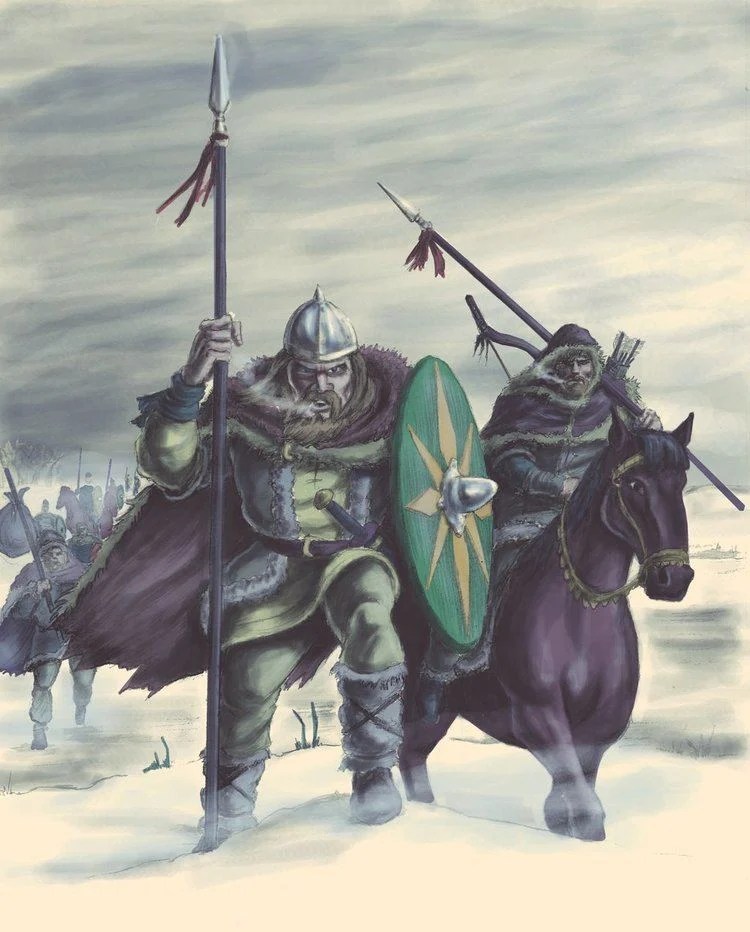
7 Times Constantine XI Palaiologos Exemplified Bravery

Posted by Powee Celdran

As to surrendering the city to you, it is not for me to decide or for anyone else of its citizens; for all of us have reached the mutual decision to die of our own free will, without any regard for our lives“. -Constantine XI Palaiologos, 1453

324916680_501335022136474_5359653165260915756_n

Welcome back to the Byzantium Blogger and here we are again with another Byzantine history article! In this one being the fifth part of this series featuring top lists concerning the lives of certain emperors who I think have interesting stories, we will talk about the last Byzantine or rather the last Roman emperor Constantine XI Palaiologos (r. 1449-1453)- also known as Constantine Dragases Palaiologos– best remembered for his last stand against the Ottoman Empire in their conquest of Constantinople in 1453 which put a definite end to the Byzantine Empire.

a3423085369d9a932360234fe4b86287
Constantine XI Palaiologos (r. 1449-1453), the last Byzantine emperor, art by Olga Shvetskaya

Additionally, this article was made for the special occasion of this day being May 29 which was the day Constantinople fell to the Ottomans in 1453, and I thought that there would be no better way to commemorate this occasion than by making an article focused on the last Byzantine emperor. Constantine XI now is best remembered for his bravery and heroism especially in refusing to surrender to the Ottoman sultan Mehmed II (r. 1451-1481) and instead fight to the death to defend his city, Constantinople against the massive armies of the Ottomans besieging it. Despite Constantine’s brave decision, he was outnumbered and thus after nearly 2 months, the Ottomans broke into Constantinople all while Constantine led one last heroic last stand dying in battle with honor. However, although Constantine XI is best known for his acts of bravery during the final siege of Constantinople by the Ottomans in 1453, the rest of his life prior to the siege has shown him a number of times show some examples of bravery and defiance which makes him one of the most courageous of all Byzantine emperors, a trait not common for the Byzantine emperors during Constantine XI’s time. Now in this list, we will go over 7 incidents wherein Constantine XI exemplified bravery and defiance both during his impressive pre-imperial career as the Despot of the Morea from 1428-1449 and during his short but eventful reign as the last Byzantine emperor from 1449-1453. On the other hand, I have also covered Constantine XI in videos found on my channel No Budget Films both during his pre-imperial career and as emperor, the links to the videos will be found below. Before beginning this top 7 list, I will give a quick background to the life of Constantine XI Palaiologos and the Byzantine Empire he grew up in.

95t3yr5xvfyy
Flag of the Byzantine Empire

Follow me, Byzantine Time Traveller on Social Media:

Instagram: @byzantine_time_traveller

Facebook: Byzantine Time Traveller

Youtube: No Budget Films

Website: Byzantine Time Traveller

Deviantart: Byzantium-blogger55

Art Station: Powee Celdran Porphyrogennetos

Patreon: Byzantine Time Traveller


By the 14th century, the once powerful Byzantine Empire had been severely reduced in size, population, and wealth all while it too had been further broken apart by a series of civil wars and foreign invasions that took great amounts of land away from the empire.

Palaiologos-Dynasty-Eagle.svg-1
Flag of the Byzantine Empire under the Palaiologos Dynasty

The most significant of these foreign enemies that conquered Byzantine lands both in Asia Minor and in Europe were the Ottomans, once a small Turkish state or Beylik that eventually transformed into an empire. Ever since the Ottomans gained their first holding in Europe being the Gallipoli Peninsula in 1354, their expansion into the Balkans was rapid that they soon enough conquered most of Serbia and later Bulgaria and Greece. In order to keep the Byzantine Empire alive as the Ottoman Empire was expanding, the Byzantine emperor and Constantine’s grandfather John V Palaiologos (r. 1341-1391) submitted to the Ottomans sultan Murad I (r. 1362-1389) as a vassal thus making the Byzantine emperor have to follow every order his overlord, the Ottoman sultan gave.

5a3bf3cf33106ee3f0ba9e735099b9f0-3
John V Palaiologos, Byzantine emperor (r. 1341-1391), grandfather of Constantine XI

John V’s decision to submit Byzantium to the Ottomans as a vassal however further complicated things in the empire as it led to more civil wars in Byzantium that further destabilized it. By the time John V died in 1391, the Byzantine Empire was only left with its capital Constantinople which had become a shadow of its former self as the great imperial capital, a few islands in the Aegean Sea, and half of the Peloponnese Peninsula in Southern Greece known as the Despotate of the Morea, a semi-autonomous Byzantine state usually ruled by the emperor’s son or brother. Following his death, John V was succeeded as emperor by his second son and Constantine’s father Manuel II Palaiologos (r. 1391-1425) who earlier on in his reign witnessed the Ottomans led by their new sultan Bayezid I (r. 1389-1402) blockade Constantinople as punishment for Manuel refusing to continue being their vassal. All while Constantinople was under siege by the Ottomans, Manuel II travelled across Europe visiting the royal courts of France and England to ask for financial and military assistance against the Ottomans. However, all while Manuel was away in Europe, the Ottoman Empire out of chance temporarily collapsed when Sultan Bayezid I was defeated in 1402 at the Battle of Ankara by the powerful Turco-Mongol ruler Timur (r. 1370-1405) who captured Bayezid bringing him several kilometers away to Timur’s capital of Samarkand wherein Bayezid died in captivity there which thus also lifted the Ottoman siege of Constantinople.

1-aaaa-manuel-II
Manuel II Palaiologos, Byzantine emperor (r. 1391-1425), father of Constantine XI

The capture of Bayezid thus threw the Ottoman Empire into a state of chaos wherein his sons all battled each other for control over it and thus giving the Byzantines some time to recover that they true enough even regained Thessaloniki, their second city from the Ottomans. The future emperor Constantine XI was thus born on February 8 of 1404 in Constantinople following his father’s return from Europe and as the son of an emperor, he was a purple-born prince or Porphyrogennetos born in the purple-room of the imperial palace. Constantine too was the 4th out of the 6 sons of the emperor Manuel II and his Serbian wife Helena Dragas, daughter of the Serbian prince and Ottoman vassal Konstantin Dejanovic (r. 1378-1395) who had been killed in battle by the Wallachians in 1395 as he fought on the side of the Ottoman sultan Bayezid I. Little though is known about Constantine’s early life except that it was said that from an early age he was already courageous, adventurous, and skilled in martial arts, horsemanship, and hunting. Constantine too grew up at a time when his father the emperor was in relative peace with the Ottoman Empire that had now restabilized under Sultan Mehmed I (r. 1413-1421), the son of Bayezid I and victor of the Ottoman civil war. However, things would all change with Mehmed I’s sudden death in 1421.  

319802474_624220516132230_8369698091548619634_n
Genealogy of the Palaiologos Dynasty of the Byzantine Empire (1328-1453), illustrated by myself
Map_of_the_southern_Balkans,_1410.svg
Map of the Byzantine (pink) and Ottoman Empires and other states after 1403

Related Articles from the Byzantium Blogger:

10 Unknown Facts About Emperor Justinian I

8 Times Michael VIII Palaiologos was an Evil Genius

10 Surprising Facts About Basil II

5 Reasons to Feel Bad of Justinian II and 5 Reasons to Hate Him

Byzantine Alternate History Chapter XII (finale)

Byzantine Alternate History Epilogue

The Legacy of the Byzantine Empire

Related Videos on Constantine XI from No Budget Films:

The Last Roman Dynasty Part 8- Schisms at the Verge of Extinction

The Last Roman Dynasty Part 9- The Fall of Constantinople (finale)


I. The 1422 Ottoman Siege of Constantinople            

Palaiologos_Dynasty_emblem1

Following the Ottoman sultan Mehmed I’s death in 1421, the Byzantine emperor Manuel II Palaiologos together with his eldest son and co-emperor John attempted to interfere with the succession of the Ottomans by having a rival claimant challenge Mehmed I’s son Murad II (r. 1421-1451). However, Murad II emerged victorious in this conflict and thus to punish the Byzantines for interfering in the Ottoman succession crisis, he decided to lay siege to Constantinople in 1422.

1200px-Sultan_Gazi_Murad_Han_II_-_السلطان_الغازي_مراد_خان_الثاني
Murad II, Ottoman sultan (r. 1421-1451)

In this siege, the Ottomans brought with them numerous siege engines including cannons as Murad II did indeed intend to conquer the city. Although the siege lasted for months, the Ottomans failed at taking the city and this was according to Byzantine tradition due to divine intervention by the Theotokos or “Mother of God” who scared the Ottoman besiegers away. However, another main reason to why the city was saved was because Manuel II apparently gave money to Murad II’s younger brother Mustafa in order to start a rebellion in Ottoman territory against his older brother, the sultan. Due to Mustafa’s rebellion in Asia Minor which was not only assisted by the Byzantines but by the Ottomans’ rival Turkish Beyliks of Asia Minor such as the Germiyanids and Karamanids, Murad was forced to lift his siege and crush this said rebellion. Now speaking of the future emperor Constantine XI, apparently it is a known fact that during this Ottoman siege of 1422, he took part in helping lead the defense of the city despite being only 18 that his actions during the siege impressed his eldest brother the co-emperor John that John came to trust him more than his other brothers, thus Constantine would be awarded with the title of “Despot”.

1879px-Device_of_the_Palaiologos_Dynasty.svg
Byzantine Palaiologos Dynasty eagle

In the meantime, Murad II due to his failure to take Constantinople began laying siege to Byzantine Thessaloniki in 1423- which was eventually taken again and this time for good by the Ottomans in 1430- whereas John travelled to Western Europe to ask for support against the Ottomans who have now returned as a threat to the Byzantines. The aging emperor Manuel II on the other hand following the siege of 1422 suffered a stroke leaving him paralyzed on one side of the body and thus because of this, the imperial government was left in the hands of his eldest son and co-emperor John. Manuel seeing the Ottomans were unstoppable then decided to once more submit to the Ottomans as a vassal through a peace treaty with Murad II wherein Manuel here was assisted in signing it by his 4th son Constantine. In July of 1425, Manuel II died at the age of 75 and thus his eldest son John succeeded as the new senior emperor John VIII Palaiologos (r. 1425-1448).

siege_of_constantinople_1422_by_faisalhashemi_d6zadx8-pre
The 1422 Ottoman Siege of Constantinople, art by FaisalHashemi

II. The Campaign Against Carlo I Tocco           

Palaiologos_Dynasty_emblem1

As John VIII became senior emperor, he rewarded his younger brother Constantine not only with the title of “Despot” but with his own lands to rule being a strip along the Black Sea north of Constantinople beginning at the seaside town of Mesembria. As ruler of this small territory, Constantine proved to his eldest brother to be loyal and capable whereas John’s younger brother being Manuel’s 2nd son Theodore II, the Despot of the Morea since 1407 on the other hand expressed discontent about ruling the Morea.

23b7271ac8fecff58d8ff9d653290586-1
John VIII Palaiologos, Byzantine emperor (r. 1425-1448)

Due to Theodore’s lack of interest in ruling, John VIII designated Constantine as Theodore’s successor as Despot of the Morea. Theodore however soon changed his mind about his uninterest to rule, though it was too late as by 1427 Constantine was already assigned to the Morea as an additional despot, thus Theodore and Constantine were to share rule over the Morea. Now, a major reason to why the Morea needed an additional ruler or despot was because it was threatened by external powers namely the Ottomans who attacked it in 1423, the Latin Principality which ruled half of the peninsula ever since the Crusaders’ conquest of it which followed their temporary capture of Constantinople back in 1204, and lastly by the ambitious Italian pirate lord Carlo I Tocco (r. 1376-1429) who was the Count of Cephalonia and Zakynthos and since 1411 the Despot of Epirus. During the 1420s, Carlo I had been conducting constant naval raids on the Byzantine Despotate of the Morea and its ruler being Theodore II was ineffective in containing Carlo’s raids, thus giving the new emperor John VIII a reason to appoint his brother Constantine as an additional Despot of the Morea. John VIII together with Constantine in 1427 then travelled to the Morea wherein they both personally led the campaign against Carlo’s forces there before arriving at the city of Glarentza which Carlo’s forces captured. Subsequently, Carlo’s pirate fleet was defeated by what was left of the Byzantine navy at the Battle of Echinades in the Ionian Sea off the coast of Glarentza. Due to his defeat, Carlo was forced to cede his conquests in the Morea to the Byzantines including the city of Glarentza and to hand over his niece Theodora Tocco in marriage to Constantine. In 1428, Constantine and Theodora were married, though in 1429 both Carlo I and Theodora died wherein the latter did not produce any children with Constantine.

83f444591b64db2a7d83996bc66e2514
Byzantine victory at the Battle of Echinades, 1427

III. The Conquest of the Principality of Achaea       

Palaiologos_Dynasty_emblem1

With the threat of Carlo I Tocco taken care of, the Byzantine Despotate of the Morea was split among the brothers Constantine and Theodore II Palaiologos which was later further complicated when their youngest brother Thomas who was only 19 in 1428 was appointed as an additional Despot of the Morea, thus making there be 3 despots! Since the lands given to them in the Peloponnese Peninsula were too limited for all 3 brothers to rule over, the 3 brothers thus decided to declare war on their neighbor in the peninsula, the Latin Principality of Achaea.

Coat_of_arms_of_the_Principality_of_Achaea.svg
Coat of arms of the Principality of Achaea

In 1429, the brothers marched on Patras, capital of Achaea which they laid siege to but ultimately failed due to Theodore’s unwillingness to fight and Thomas’ inexperience due to his young age. Constantine however being the most courageous of the brothers decided to continue the siege despite his brothers abandoning him and so together with his secretary George Sphrantzes, they continued laying siege to Patras which turned out to be longer than expected. At one point during the siege, Constantine’s horse was shot by an arrow while he was on it leading to his near death if it were not for Sphrantzes saving his life here. Eventually, the Latin defenders of Patras after negotiations opened the city to the Byzantines in May of 1429 wherein the people of Patras thus recognized Constantine as their new overlord, though the city’s bishop refused to surrender and thus held himself up in a fortress for 12 months before finally surrendering. With the Byzantine conquest of Patras, most of the Morea was thus returned to Byzantine rule, however due to the Latin Principality of Achaea being an Ottoman vassal the way Byzantium was, the sultan Murad II in 1431 in an act to punish Constantine who was his vassal for attacking a fellow Ottoman vassal sent his general Turahan Bey with an army to attack the Byzantine Morea not to conquer it but to teach Constantine a lesson.

Thomas_Palaiologos2
Thomas Palaiologos, Despot of the Morea (r. 1428-1460), brother of Constantine

In 1432 then, the Principality of Achaea was finally dissolved when its last prince Centurione II Zaccaria (r. 1404-1429) died and since he had no sons but rather a daughter being Caterina who was married to Constantine’s youngest brother Thomas, Thomas then took control of his late father-in-law’s lands and rather than continuing to rule as Prince of Achaea, Thomas chose to abolish the title and thus the entirety of the Principality of Achaea was annexed into the Byzantine Despotate of the Morea leaving the entire Peloponnese Peninsula once again under Byzantine rule. Constantine meanwhile was not to last long in the Morea as in 1435, he was called by his eldest brother John VIII to return to Constantinople and rule as its regent while John would be away for the Church Council- the Council of Florence-Ferrara- in Italy intended to unite the Byzantine Church with the Church of Rome and thus submit to the pope. Constantine’s older brother Theodore however mistook this as his eldest brother favoring Constantine over him and so both brothers thus almost had a civil war with each other if it were not for the Patriarch of Constantinople Gregory III Mammas and their mother Helena Dragas intervening. At the end, it was agreed that Constantine was to rule in Constantinople while John was away in Italy whereas Theodore and Thomas would remain in the Morea. With the agreement settled, Constantine arrived in Constantinople in 1437 whereas John left for Italy.  

21middle700-111-1
John VIII Palaiologos (on horse) depicted in a Renaissance Italian painting

IV. Brother Against Brother: Constantine Against Demetrios          

Palaiologos_Dynasty_emblem1

Although John VIII returned to Constantinople from Italy in 1440 having officially signed the union with the Catholic Church which thus formally reunited both Byzantine Orthodox and Latin Catholic Churches, his return to Constantinople was met with great opposition among his subjects. The Byzantine populace true enough could not accept the fact of submitting their faith to another being the Latin Catholics, thus they saw this as their emperor betraying them and their religion. Constantine on the other hand supported his eldest brother’s decision to submit to the pope, however their younger brother being Manuel and Helena’s 5th son Demetrios did not and thus he with the support of the people angry at the Church Union began plotting to seize the throne in the name of Orthodoxy from his eldest brother.

Du_jm06U0AEWQwG-1
Demetrios Palaiologos, brother of Constantine XI

All while Demetrios who true enough was the most neglected of the 6 Palaiologos brothers began plotting to seize the throne, Constantine was in search for a new wife wherein his choice was Caterina Gattilusio, daughter of the Genoese lord of the island of Lesbos Dorino I Gattilusio (r. 1428-1455) who was a relative of Constantine’s too. In 1440, Constantine sent his secretary Sphrantzes to Lesbos to propose and arrange the marriage, and in 1441 Constantine himself travelled from Constantinople to Lesbos to marry Caterina. Constantine however after marrying left Lesbos leaving his new wife behind there with her father as Constantine was to return to the Morea and resume his duties in ruling as its despot whereas he discovered that his brothers Theodore II and Thomas had ruled it well while he was away. In 1442 however, Demetrios who had been ruling Constantine’s former territories along the Black Sea made his intentions to take the throne clear wherein he even allied with the Ottoman sultan Murad II who provided Demetrios with troops. Although Constantine attempted to negotiate with his younger brother Demetrios by agreeing to switch places with him whereas Constantine would return to ruling Demetrios’ lands and Demetrios would be Despot of the Morea, it was too late as Demetrios had already been marching on Constantinople.

John_VIII_Palaiologos,_Sinai-1
Portrait of John VIII Palaiologos

The situation in Constantinople was apparently so serious that the emperor John VIII who did not have enough troops to defend the city had to ask for Constantine to come over from the Morea and defend the capital. Before Constantine arrived, Demetrios had already began his attack on the capital all while Constantine before reaching Constantinople passed for his wife Caterina in Lesbos but before reaching the capital, they were stopped for months at the island of Lemnos by an Ottoman naval blockade which supported Demetrios. In Lemnos, Caterina died, although soon enough a Venetian fleet arrived to break the Ottoman blockade which thus allowed Constantine to reach Constantinople and force Demetrios to lift his siege. The defeated Demetrios was thus imprisoned and kept under the close watch of Sphrantzes whereas in 1443, Theodore decided to abandon his position as Despot of the Morea and instead rule the town of Selymbria near Constantinople where Demetrios was imprisoned in, thus leaving only Constantine and Thomas in charge of the Morea.

240826758_294319265789025_1335935724433286010_n
Lesbos under the rule of the Gattilusio family

V. Constantine’s Campaigns in Greece and the Defense of the Hexamilion Wall           

Palaiologos_Dynasty_emblem1

During the time Constantine and Thomas ruled as Despots of the Morea, the Byzantine Morea was a thriving cultural center that was definitely more prosperous than the capital Constantinople and thus it was the goal of both Constantine and Thomas to keep the Morea prosperous in case Constantinople falls to the Ottomans. Part of the brothers’ projects was the reconstruction of the Hexamilion Wall which blocked off the Isthmus of Corinth- the entrance from mainland Greece to the Peloponnese Peninsula- which their father Manuel II had built but was destroyed by the Ottomans in their attack in 1431.

445197129_975145564619081_4861967256694766114_n
Engraving of Constantine XI

In 1444, the reconstruction of the wall was completed which impressed many inhabitants of the Morea including the Venetian lords there. Additionally, Constantine had also staged local athletic games for the people of the Morea wherein they could run races for prizes in order to appease them. Constantine’s and Thomas’ policies true enough made them popular rulers in the Morea and to further increase his popularity among his subjects, Constantine in 1444 as well decided to lead a campaign deep into Ottoman held Greece and recapture territory for the Byzantine Empire. This was true enough the perfect time to do this as the Ottomans here were busy defending the Balkans against a massive Crusade launched by the kingdoms of Europe- namely Hungary and Poland- to stop the Ottoman advance. Here, Constantine first marched north and invaded the Latin Duchy of Athens- another Ottoman vassal as well- wherein the Duke of Athens Nerio II Acciaioli (r. 1435-1451) surrendered to Constantine as a vassal and thus began paying tribute to him instead of the Ottomans. After his successful campaign against the Duchy of Athens, Constantine proceeded north marching his army which included 300 soldiers provided to him by the Duke of Burgundy Philip III the Good (r. 1419-1467) to Thessaly wherein he managed to recapture some territory there from the Ottomans.

Murad_II_and_Władysław_III_of_Poland
Sultan Murad II with the slain Wladyslaw III of Poland and Hungary

The Ottoman sultan Murad II however in November of 1444 managed to defeat the multi-national European Crusade at the Battle of Varna wherein the King of Poland and Hungary Wladyslaw III (r. 1434-1444) was even killed all while the Hungarian general John Hunyadi who was in charge of the armies barely escaped with his life. Due to Murad’s recent victory, he now could focus his attention once again on the Byzantines and particularly Constantine who he now saw as a threat due to his expansion into Thessaly. As Murad returned to Greece, the Duke of Athens Nerio II returned his loyalty to Murad becoming his vassal again and thus turning on Constantine. With an army of 60,000 men, Murad II accompanied by Nerio II of Athens marched into the Morea in 1446 again to punish Constantine for his defiance in attacking a fellow Ottoman vassal and attacking Ottoman territory. As usual of him, Constantine refused to surrender his conquests in Greece to the Ottomans and instead prepared to go to battle. The Ottomans true enough recaptured what Constantine had gained in Greece and following that laid siege to the Hexamilion Wall at the entrance of the Morea forcing both Constantine and Thomas to rush north with 20,000 men to defend it. Although bravely defended by the Morea’s Byzantine troops, the wall stood no chance against Murad’s cannons which reduced it to rubble all while many of the defenders were either killed or captured whereas Constantine and Thomas barely escaped with their lives. The Ottoman troops under Turahan Bey then proceeded south to pillage the Morea, though they failed at besieging its capital Mystras which was on the slope of a mountain. When seeing that the Ottomans were once again unstoppable, Constantine and Thomas agreed to surrender once again as a vassal to them and to resume paying tribute. Additionally, both brothers promised that as Ottoman vassals they would never restore the Hexamilion Wall again. Furthermore, Murad II scored an additional victory in 1448 against the Hungarians led by John Hunyadi again and their allies at the Second Battle of Kosovo (Kosovo II) while in the same year as well both Theodore the former Despot of the Morea and the emperor John VIII died, thus leaving the Byzantine Empire in a succession crisis.   

242499317_1005396033577488_7611154578357180249_n
Life in Byzantine Morea, 15th century
315209975_597809198773362_5824902372058001479_n
Ottoman victory at the Battle of Varna, 1444
242545923_382123290110709_1727126756310793749_n
Byzantine army in the Morea, 15th century

VI. Constantine’s Defiance Against the Ottomans as Emperor     

Palaiologos_Dynasty_emblem1

John VIII Palaiologos in 1448 true enough died without naming a successor but it was still clear that Constantine was obviously his most preferred choice among his younger brothers all while their mother Helena Dragas now very old true enough also favored Constantine among her 6 sons.

285771807_477037347517215_3123854646537102619_n
Empress Helena Dragas, mother of Constantine XI, art by myself 

Among the 3 surviving Palaiologos brothers Constantine, Demetrios, and Thomas, Constantine too was the most popular among the populace though Demetrios was still favored by the pro-Orthodox faction and so he and Thomas went to Constantinople to compete for the throne leaving Constantine behind in the Morea. However, neither Demetrios nor Thomas became emperor as their mother for one ruled as regent in Constantinople while there was no emperor whereas she too was saving the spot for Constantine all while she too wrote to the Ottoman sultan Murad II to approve of Constantine as the new Byzantine emperor. As Byzantium’s overlord, Murad II true enough approved of Constantine as the new Byzantine emperor and in January of 1449 at a small ceremony in Mystras, Constantine was crowned as Emperor Constantine XI Palaiologos not by the Patriarch of Constantinople but by a local bishop as if he were crowned by the patriarch in the Hagia Sophia in Constantinople, it could spark riots considering Constantine supported his late brother John VIII’s policy of Church Union. Shortly after his coronation, Constantine XI travelled to Constantinople by a Catalan ship- considering the Byzantine navy now was almost non-existent- all while he left the Morea to be ruled by Demetrios and Thomas with the former replacing Constantine in his position as Despot of the Morea.

_byzantine_empire__constantine_xi_palaiologos_by_historygold777_de2rcef
Constantine XI Palaiologos, art by HistoryGold777

Now the Constantinople that Constantine XI was to rule in was no longer the grand imperial metropolis but a shadow of its former self with its population having dropped to only 50,000 thanks to all the civil wars and the plague of Black Death in the previous century, but this still did not stop Constantine from ruling and preserving his empire. As emperor, Constantine’s first acts included securing peace with Murad II as the sultan’s vassal and searching for a new wife considering both his wives had died in the past and thus Constantine sent envoys to the King of Aragon and Naples Alfonso V (r. 1416-1458) as well as to the breakaway Byzantine Empire of Trebizond and the Kingdom of Georgia in hopes to find a potential wife from either of the states. The search for a wife and a possible alliance with a more powerful kingdom however failed all while in 1450, Constantine’s mother Helena died and in 1451, Murad II died and was thus succeeded by his ambitious young son Mehmed II who at only 19 had the intention to no longer have Byzantium as a vassal but to conquer it.

Gentile_Bellini_003
Sultan Mehmed II the Conqueror (r. 1451-1481)

Knowing that Mehmed II would be a serious threat to Byzantium, Constantine once again began searching for allies which here was primarily the pope Nicholas V who Constantine appealed to willing to once again submit the Byzantine Church to his authority the way his late brother did but failed to do. On the other hand, in order to distract Mehmed, Constantine attempted to release Mehmed’s second cousin Orhan who lived as a hostage in Constantinople and use him to start a rebellion in the Ottoman Empire against Mehmed as Orhan too had a claim to the Ottoman throne. Constantine’s scheme to release Orhan and start an Ottoman civil war however failed as Mehmed discovered the plot thus angering him. The plot of Constantine to start an Ottoman civil war thus gave Mehmed a pretext to achieve his ultimate goal, the conquest of Constantinople which he believed was totally necessary not only because it was his life’s ambition but because he believed that destroying the Byzantines would allow the Ottomans their survival as true enough despite the Byzantines having been so reduced, they were the ones after all asking for assistance from the more powerful west against the Ottomans. Mehmed II then began his preparation for his siege in 1452 constructing the Fortress of Europe in the Bosporus in order to fully block off Constantinople from foreign aid coming from the Black Sea.

ana-cagic-s-1
Emperor Constantine XI Palaiologos, art by Ana Cagic

The construction of the said fortress on Byzantine soil thus angered Constantine who then declared war on Mehmed by fortifying Constantinople’s walls and arresting all Turks within the city who he later had executed in retaliation to the Ottomans destroying a Venetian ship using the fortress’ cannons and executing its crew. The Venetian ship incident true enough made the Republic of Venice ally with the Byzantines against the Ottomans and even promise to send Constantine with ships for Mehmed’s upcoming siege. On the other hand, the Hungarian engineer Orban offered Constantine his services to create a massive cannon which could defend Constantinople against the Ottomans but lacking the funds to construct the cannon, Constantine declined the offer and thus Orban instead offered his services to Mehmed who then funded the cannon’s construction.

ib7aTThF_400x400
Giovanni Giustiniani Longo, Genoese Italian mercenary general

Constantine meanwhile also asked his brothers in the Morea Demetrios and Thomas to come to his aid but they both failed as the Ottomans led by Turahan Bey had just attacked their lands all while the other powers of Europe furthermore could not help too as for one France and England were still fighting each other at the Hundred-Years’-War, the kingdoms of Spain were still fighting the war known as the Reconquista, and the Holy Roman Empire in Germany was as usual at war with each other. However, by the end of 1452, the pope true enough answered Constantine’s call for aid by sending the Papal legate Cardinal Isidore of Kiev, a native Byzantine Greek from the Morea who converted to Catholicism to Constantinople and despite the people rioting once again against Church Unity, the Church Union was formally sealed at the Hagia Sophia. Although no real assistance from Western Europe came, an army of 700 Genoese soldiers specializing as crossbowmen led by the general and former pirate Giovanni Giustiniani Longo from Chios arrived in Constantinople in January of 1453 ready to assist Constantine whereas Mehmed eventually marched his massive army of 80,000 with the newly created massive cannon included to the walls of Constantinople.

Eastern_Mediterranean_1450.svg
Map of the Byzantine Empire (purple) in 1450
13d498d3101c333f4fa55e80ed73fda4
Fortress of Europe (RumeliHisari) in the Ottoman era painting

VII. The Siege and Constantine’s Last Stand          

Palaiologos_Dynasty_emblem1

Despite Mehmed II having brought a massive army with him with 70 cannons included, the land walls of Constantinople which date back to the 5th century were still very massive enough to slow down a siege as it true enough successfully defended Constantinople numerous times in the past 11 centuries.

db2e2qo-ddf388e9-8bcd-4e55-a998-a7610e2d70b6
Mehmed II in full battle gear, art by Elveo

As Mehmed II began his siege, Constantine XI’s first act in defending the capital was in raising a large chain to block off the Golden Horn harbor from the Ottoman fleet. Now, in this article I will no longer mention the full details of the 1453 Siege of Constantinople as that will be for another time, rather here, we will simply discuss Constantine’s part in his defense of the city. As for Constantine XI, during the siege considering that he had run out of funds whereas the people inside too were starving, Constantine had metal objects taken from churches and from the houses of the rich melted in order to mint coins. The siege thus dragged on for over a month that at one point, the Ottomans using their cannons opened up a small breach in the land walls near the imperial palace wherein Constantine himself repelled the Ottomans’ attack here. Constantine too true enough sent messages to Mehmed promising to pay him as much tribute money as he could in order for Mehmed to lift his siege. Mehmed however declined the offer as at this point, he had no other intention but to take Constantinople, though Mehmed also offered Constantine an ultimatum wherein he would be allowed to return to ruling the Morea with his brothers if he surrendered Constantinople to the Ottomans.

siege_of_constantinople_1453_by_faisalhashemi_d7b6l6a
Map of the 1453 Ottoman Siege of Constantinople, art by FaisalHashemi

Constantine in his usual bravery and defiance refused Mehmed’s offer and according to later chroniclers, Constantine was said to have responded to Mehmed: “As to surrendering the city to you, it is not for me to decide or for anyone else of its citizens; for all of us have reached the mutual decision to die of our own free will, without any regard for our lives”. As the days passed with no additional help from the west arriving, the defending Byzantines observed strange things occurring to them first of all a lunar eclipse which was true enough part of an ancient prophecy saying that the city would fall during one, then next came an incident where the icon of the Theotokos suddenly fell on the ground while it was on a procession thus suddenly turning the weather to rain and hail, and lastly a mysterious blue light was seen above the Hagia Sophia cathedral which the Byzantines took as a sign of doom and the Ottomans outside the walls as a sign of victory; the blue light over the Hagia Sophia though is said to have been due to the result of a volcanic eruption all the way in Vanuatu in the South Pacific Ocean which happened at around the same time.

constantine-xi-palaeologos
Constantine XI at the defense of Constantinople, 1453

On May 28, the night before the city fell, Constantine with the rest of the defenders whether Orthodox or Catholic all gathered in the Hagia Sophia for one last service wherein for once since 1054, both Churches were reunited as all knew their end was near. The Ottomans however without warning began their final attack on the city in the early hours of May 29 and during this attack, Giustiniani was wounded thus leaving Constantine in charge of both the defense and leading Giustiniani to safety. Due to Constantine and the rest of the defenders overwhelmed, the Ottoman troops broke in to one of the breaches they made into the wall and stormed into the city with one division climbing a tower, putting down the Byzantine flag, and raising the Ottoman one. Seeing that the city had been lost to the Ottomans, Constantine once again refusing to surrender led one last charge disappearing into the thick of battle never to be seen again. With the last Byzantine emperor gone at the age of 49, Mehmed II thus rode into the city victorious and having conquered the Byzantine capital he became known as “Mehmed the Conqueror” thus putting an end to the Roman state once and for all.

1_0BqqcG9qcGReFKxtcy5i9Q
The Fall and Ottoman Conquest of Constantinople, 1453
FT6GJ67WUAAtTzW-1
The last stand of Constantine XI (May 29, 1453), art by Chrysa Sakel
constantinople__29_may_1453_by_faisalhashemi_d7pcjlv
Constantine XI’s final charge against the Ottomans on May 29, 1453, art by FaisalHashemi


Conclusion

Palaiologos_Dynasty_emblem1

Following the Ottoman conquest of Constantinople which thus eventually became the new Ottoman capital under Mehmed II, Constantine XI’s allies who survived had different fates: the Genoese general Giovanni Giustiniani died of his wounds on a ship headed back home to Chios, Constantine’s top advisor Loukas Notaras was captured by Mehmed and executed, Cardinal Isidore managed to escape across the Golden Horn alive disguised as a slave, Mehmed’s cousin Prince Orhan who also fought at the defense of Constantinople was captured and executed as well, and Constantine’s trusted secretary George Sphrantzes who was a witness to the 1453 Siege of Constantinople was captured and enslaved by the Ottomans but shortly after released whereas he retired as monk and wrote his history on Constantine XI and the final siege.

Constantine XI
Emperor Constantine XI Palaiologos in the Portuguese blue and white tile art style, art by myself

As for Constantine’s brothers the Despots of the Morea Demetrios and Thomas, they would hold out against the Ottomans in the Morea until Mehmed’s conquest of it in 1460. Thomas with his family fled to Italy but before convincing Pope Pius II to launch a new Crusade to take Constantinople back from the Ottomans, Thomas died there in 1465. Demetrios on the other hand although wanting to continue in submitting to the Ottomans as a vassal was tricked by Mehmed and imprisoned in the former Ottoman capital Edirne (once Byzantine Adrianople) wherein he would die in 1470. Once Mehmed II had conquered the Morea, his next conquest was that of the Empire of Trebizond which too fell in 1461 with Mehmed’s capture of the city of Trebizond along the Black Sea therefore putting a definite end to the Byzantine Empire. Additionally, once Mehmed captured Constantinople in 1453, the Church Union Constantine XI had worked so hard to achieve was dissolved as Mehmed true enough opposed it seeing it as a threat to him and he dissolved it by appointing the anti-unionist Gennadius Scholarius as Patriarch of Constantinople. Although turning the Hagia Sophia and many other churches in Constantinople into mosques, Mehmed at least allowed his Orthodox Christian subjects there to continue practicing their religion so long as Islam remained the majority.

193348435_2588121728149098_6294426632351766564_n
Constantine XI, the last emperor with the great rulers of Byzantium’s past above, left to right: Basil II, Manuel I Komnenos, Justinian I, Theodora, Irene of Athens, Zoe Porphyrogenita, art by Gambargin

Constantine XI meanwhile according to legends among Greeks in Constantinople did not exactly die but rather before being killed by the Ottomans was carried off by an angel and placed in a cave beneath Constantinople’s Golden Gate wherein he would one day return to liberate the city from the Ottomans. Whether Constantine XI really died or not during the siege of 1453, he would still be the last Eastern Roman emperor in one straight line that goes all the way back to the first Roman emperor in Constantinople Constantine I the Great (r. 306-337)- who he coincidentally shared the same name with- and more so all the way back to the first Roman emperor Augustus (r. 27BC-14AD). Constantine XI’s example thus shows that the Roman Empire ended with a worthy emperor who although may have not been the greatest warrior and administrator but someone willing to fight and die for his empire no matter the cost thus giving the Roman (Byzantine) Empire itself a deserving ending wherein it fought courageously against the enemy rather than shamefully surrendering- the way the Western Roman Empire ended in 476. Overall, Constantine XI both during his time as emperor and before it is one perfect example of bravery, courage, and sometimes defiance in dire times which truly makes him admirable whereas other men of his time facing the same situation would have not reacted to it with such courage. Certainly, Constantine XI’s life is one of bravery and heroism when all seems to be lost and this surely makes him worthy of being one of Byzantium’s greatest emperors in terms of example. Now, what are your thoughts on Constantine XI and his rule as well as on his examples of bravery and defiance? I would like to thank you all for reading this article and please continue to support me by following and subscribing to my sites!        
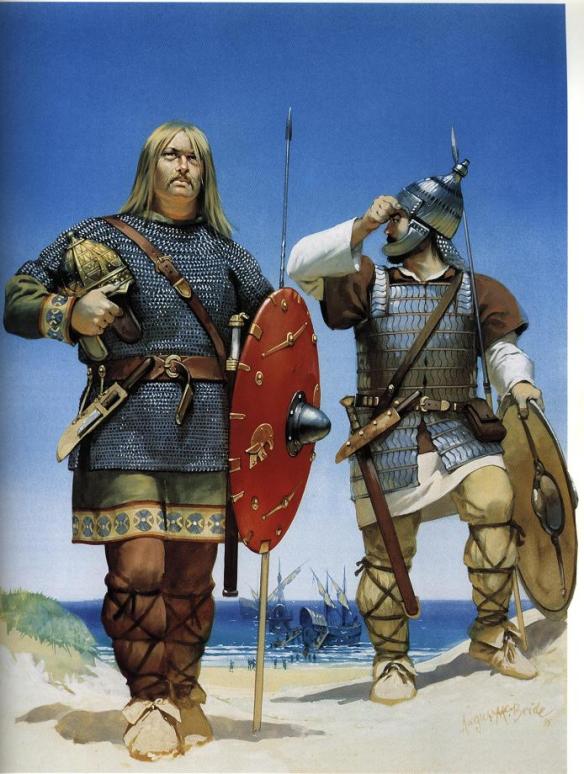
Arabs as High Officials in the Byzantine Empire- A Guest Post by Natalie Mallat

Posted by Natalie Mallat

324916680_501335022136474_5359653165260915756_n

About me

Natalie Mallat is a freelance writer with a particular interest in Medieval Arab history. She enjoys running the history blog You can follow her Instagram @medievalarabhistory and Linkedin @bibliotecanatalie for regular posts.

Mamun_sends_an_envoy_to_Theophilos
Abbasid caliph Al-Ma’mun (left) sends an envoy to Byzantine emperor Theophilos (right), from the Madrid Skylitzes

Abbasid and Byzantine sources are filled with names of Arabs in Byzantium. Capturing Arabs and transferring them to Constantinople was a common practice after raiding Abbasid frontiers. The De Ceremoniis of Constantine VII Porphyrogennetos highlighted the employment of Arab prisoners in manufacturing industries and the service of landowners or the State. The Emperors had a general strategy of using converted Arab fighters and spies against the Caliphate. Byzantines considered Arab prisoners very valuable as fighters. When a large army of the Bulgarian Khan Symeon attacked Constantinople in 896 AD, Emperor Leo VI entirely relied on them to protect the city. Converted Arabs were placed in important Byzantine military positions including the Imperial Guard. There were no ends to the Arab possibilities and some of them became Emperors. Arab sources refer to Leo III (Ilyun) born in Umayyad Syria, Nikeporos I (Nakfour) of the Christian Ghassanid tribe, and Nikeporos II Phokas. In his book al Kamil fil Tareekh, Ibn al Athir refers to Phokas’ father as one of the best Muslims at Tarsus called Ibn al-Faqas. Arab merchants were seen walking freely in Constantinople. The Byzantine capital had mosques and places of stay for them.

dejv66n-f012ecd6-8193-4e4d-98c4-1b344974583c
Constantine VII Porphyrogennetos, Byzantine emperor (r. 913-959), art by Powee Celdran

The Imperial satisfaction with the performance of Arabs gained them continuous privileges and allowed them to reach high positions. Samonas, a man from a distinguished Arab family and one of many who were made eunuchs and taken to Constantinople, became the right-hand man of Emperor Leo VI. Emperor Theophilos, who waged war against the Abbasids, tried to assimilate Arabs into his Empire. The Emperor was fond of the sophisticated culture of the Arabs and had special admiration for Caliph Harun al Rashid. Athanasia of Aegina married a Muslim Arab by an imperial decree. The Arab family of Al Nu’man, known in Greek as Anemas, descends from the son of the Arab Amir (Prince) of Crete captured by the Byzantines. He became loyal to the Byzantines and had a splendid career in Constantinople. Byzantine Princess and historian Anna Komnene mentioned his grandsons Michael and Leo. Emperor Constantine IX recruited many Arabs, enlisted them in particular Tagmata under the command of Arab Generals, and dispatched them to guard the oriental Themata. The Imperial privileges granted to the θέματα (Themata) families incited them to give their daughters as wives to Arabs. The Arab Khase family held a high administrative position under Emperor Alexander.

John_the_Grammarian_as_ambassador_before_Theophilos_and_Mamun
John the Grammarian as ambassador before Abbasid Caliph Abdullah Al Mamun (left) and Byzantine emperor Theophilos (right). Chronicle of John Skylitzes, cod. Vitr. 26–2, Madrid National Library

Arabs were recruited to teach the language to Byzantines who held prestigious positions. It was common for Byzantine diplomatic ambassadors and statesmen to speak Arabic. Constantinople had a population of Arab-Byzantine marriage offspring. During the fall of Arab Tarsus, some of the Byzantine women who had been married to Muslim Arabs took their children to Byzantium and baptized them. When Nikephoros Phokas attacked Syria, he killed most of the captured men but took the Arab women and children to Constantinople.

In Arabic chronicles, Byzantine Emperors raised some of the converted Arab prisoners to the patrician degree and encouraged the Byzantine Patrikoi to give their daughters as wives to them. Arab prisoners were integrated into the societies of the Byzantine cities. The Hagiographer of Sta. Theodora of Thessaloniki narrated the story of a man called Elias who lived in Myriophytos and was a member of an Arab family. A colony of Arabs in Athens entered the service of the Byzantine state. An Arab Chase who was captured as a child became the slave of the Patrikios Damian and had exceptional service in the Byzantine Empire. He remained a true Sarakenos in thought and manners and religion. Chase was raised to be a Byzantine Protospatharios and had great freedom of intercourse with Emperor Alexander. His brother the Protospatharios Niketas was appointed the military governor of the Thema of Kibyrrhaiotai.

emperor_nikephoros_ii_phokas_of_byzantium_by_byzantium_blogger55_df2cimy-414w-2x
Byzantine emperor Nikephoros II Phokas (r. 963-969), art by Powee Celdran

The Emperors were very charitable to the Arab prisoners and confined them in imperial prisons. Ibn Hawqal named Dar al Balat, Tarqsis, the Obsiq, the Buqlar, and the Numera. Modern historians identified some of these imperial prisons as Thrakesion, Opsikion, and Boukellarion. Many Arab prisoners received excellent treatment like the poet Abu Firas who was captured during the fall of Lerapolis and remained in Constantinople for four years. A practice of Arab prisoners’ attendance at the Christmas Day and Easter Sunday Imperial banquets was established under Leo VI and continued till Constantine VII Porphyrogennetos’ reign. This was recorded by the Arab historian Harun ibn Yahya, who was one of these prisoners during the time of Leo VI. He wrote:

During the feast, the Emperor comes from the church to that assembly, and takes a seat in front of the golden table. It is the Christmas Day. He orders that prisoners should be present and sitting around these tables, … on which an amazing amount of hot and cold food was served. Then the imperial herald said: I swear by the head of the Emperor that in these meals there is no pork at all. Then the food is carried to them in gold and silver plates. … This continues for twelve days, and when the last of these days comes, each prisoner was given two dinars and three dirhams.

Exceptional importance was given to dealings with Arabs. According to the rules of the Kletorologion, the Arab “friends” (ambassadors) should be seated during Imperial celebrations at an advanced table even before the other Christian Bulgarians and Franks. Arab prisoners were invited twice to the Imperial banquets- on Christmas Day and Easter Sunday. These prisoners were Arab aristocrats who could later be ransomed for a high amount of money. Constantine Porphyrogennetos invited the two envoys of the Abbasid Caliph to an imperial banquet in August 946 AD. He ordered that forty prisoners from the Praetorium be present. When forty Arab prisoners were invited again to Constantine Porphyrogennetos’ banquets on Sunday 9 August 946 AD, the day after the feast of the Transfiguration, the Emperor tipped them 1,000 miliaresia and sent a lump sum to the prisoners who were still confined in the Praetorium. Based on Theophanes Continuatus, the Arab prisoners, both males and females, were tipped three nomismata each on Good Friday by Romanos Lekapenos. Also, there was a presence of the newly converted Arabs, who were employed in the imperial guard, the hetaireia. At times, Arab prisoners would be allowed to return home. The geographer Al Mukaddasi mentioned watch stations in Palestine to which Byzantines brought Muslim captives to sell them or exchange them for men or jewelry.

Fighting_between_Byzantines_and_Arabs_Chronikon_of_Ioannis_Skylitzes,_end_of_13th_century.
An Arab–Byzantine battle as depicted in the 12th-century Madrid Skylitzes

Although many prisoners held an esteemed position by the Byzantines, there were times when they suffered from ill-treatment or restrained religious freedom. For example, when Emperor Theophilos attacked Sozopetra and Melitene, he severely punished the Muslim prisoners by tearing out their eyes and cutting their ears and noses. A great number of Arab captives were executed by Emperors Basil I and Nikophoros Phokas. The Byzantines aimed to convert the Arabs who remained in Constantinople. Empress Theodora ordered to baptize all of the Arab prisoners and improve their conditions. While 8,000 Arabs agreed, the 12,000 who refused were executed. Emperor Michael III adopted a policy of religious tolerance towards the Arab prisoners and gave them the freedom to adopt Christianity or return home. However, the privileges given to Arabs displeased the Byzantine aristocracy who tried to paint a negative image of them. The Andreas Salos apocalypse presented the devils in the form of Arab merchants walking freely in Constantinople and dressed in black garments, the official color of the Abbasid Caliphate. They expressed their displeasure in the quote no Ismaelite will be found in the city. Future Emperor Constantine Porphyrogennetos expressed his dissatisfaction with the Arab aristocracies describing his uncle Alexander as being persuaded by malicious and foolish men. Many Byzantines were suspicious of converted Muslim Arabs. Michael III refused to accept the converted Arab prisoners until they went to the border where prisoners of war were usually exchanged and returned willingly to Byzantine lands.

Sometimes this Byzantine resentment turned into violence. The members of the Khase Arab family were physically attacked and stoned to death before the altar of a church. Emperor Constantine Monomachus was forced to deport tens of thousands of foreigners after the angry population of Constantinople demonstrated in front of the Imperial Palace. Records show that among these were Arabs. Byzantine sources even mention an attempt by Samonas to escape from Byzantium to Syria. Thus, the Arab-Byzantine relations were complex yielding periods of both cooperation and complexity. The situation of Arabs in Byzantium dramatically changed depending on the political conditions and the mood of the Emperors. 

Samonas_incites_Emperor_Leo_against_Andronikos_Doukas
The Arab eunuch Samonas and the Byzantine emperor Leo VI (left), from the Madrid Skylitzes

Works Cited

Durak, K. (2014). Performance and Ideology in the Exchange of Prisoners between the Byzantines and the Islamic Near Easterners in the Early Middle Ages. In book: Medieval and Early Modern Performance in the Eastern Mediterranean (pp.167–180). DOI: 10.1484/M.LMEMS-EB.1.102266

Ramadan, A. (2021). Assimilation of Arab Minorities into Byzantine Society: In response to the hypothesis of A. Kaldellis.

Ramadan, A. (2009). The Treatment of Arab Prisoners of War in Byzantium, 9th-10th centuries.

Insights from 4 Content Creators on Popularizing Byzantine History

Posted by Powee Celdran

324916680_501335022136474_5359653165260915756_n

Welcome back to the Byzantium Blogger! For this post, I would be taking a break from my recent series on the top lists concerning Byzantine emperors and will thus return to doing an interactive article wherein this one will feature interviews with fellow content creators on Byzantine history such as myself. Now, it’s been already 2 years since I have done an article that cover interviews with other content creators and history enthusiasts and their insights on promoting and popularizing the subject. Of course, despite history being something of the past and thus something that never gets old, over these past 2 years, trends in social media have evolved and so have posting styles and strategies regarding the subject matter of history all while there too have been new creators that I have come across, and thus it is for these reasons to why I have decided to once again bring back this kind of article for my site. Now in this article, I will be interviewing 4 different history content creators on social media who I have just got the pleasure to know of and come across lately on their insights on Byzantine history and how it can be popularized not just to the small groups of scholars and historians but to a vast audience across the world coming from all kinds of backgrounds. Basically, here I will ask these 4 creators first what got them into the said subject of history- particularly Byzantine history- and why they choose to create content on it, if content creating can make the said subject popular worldwide, their tips and strategies in promoting history, and last but not least if one does not need to be a scholar or historian to share the said subject of history. Overall, the aim of this article and the interviews with these creators is really to show how history can be promoted and shared these days to everyday people through content creators on social media and not just something made only by and for scholars and historians who specialize in the field.

95t3yr5xvfyy
Flag of the Byzantine Empire

Follow me, the Byzantium Blogger on Social Media:

Instagram: @Byzantine_time_traveller

Facebook: Byzantine Time Traveller

Youtube: No Budget Films

Website: Byzantine Time Traveller

Deviantart: Byzantium-blogger55

Art Station: Powee Celdran Porphyrogennetos

Patreon: Byzantine Time Traveller

DchqHQZX4AAYnAJ
Map of the Byzantine Empire at its fullest extent (565)

Other Interview Articles from the Byzantium Blogger:

The Legacy of the Byzantine Empire, featuring an interview with 3 Byzantine history enthusiasts

Byzantine History for Everyday People- 5 people react to Byzantine history quotes

Marketing Byzantine History Part I- 3 Content Creators on Popularizing Byzantine History

Marketing Byzantine History Part II- 5 Content Creators on Popularizing Byzantine History

Interviews with Content Creators on Further Popularizing Byzantine History


Interviews with the 4 Content Creators

Palaiologos_Dynasty_emblem1

First of all, I shall introduce the 4 different creators that will be interviewed for this article, and though they may have different points of views when it comes to history- particularly Byzantine history- they all have a common passion for history and thus choose to create content for it. The first of the creators that will be interviewed here goes by the name Bizanten’den Masallar on Instagram (follow on Instagram @bizantenden_masallar) who I have already known for 2 years but has lately been creating fascinating content on Byzantine history using AI and surprisingly talks about the rather hidden parts of Byzantine history no one knows much about such as daily Byzantine life as well as its religious and social history.

The second of the creators that will be interviewed here goes by the name Byzantium Aeternum on Instagram (follow on Instagram @vasilia_romaion) who I have got the chance to know lately and creates content on Byzantine history using AI to create stunningly artistic images that bring the Byzantine Empire to life. This creator now through AI generated images tells the rich and fascinating story of Byzantium from the lives of its complex emperors, epic battles, plots, and more.

The third of the creators that will be interviewed here goes by the name Basileus of Hellenes and Romans on Instagram (follow on Instagram @_eastern_roman_history_) and also has the YouTube channel The Eastern Roman covering the story of Byzantium through memes. On Instagram, this creator tells the rich and fascinating story of the Byzantine Empire through engaging images whether historical ones or modern recreations or through memes to explain Byzantine history to everyday people.   

Last but not the least for the creators that will be interviewed here is Natalie Mallat who on Instagram goes by the name Medieval Golden Age (follow on Instagram @medievalarabhistory) all while she too is the writer of the site Biblioteca Natalie which features countless articles on historical topics, mostly about medieval Arab history. Basically, Natalie creates very informative and engaging content on medieval Arab and sometimes Byzantine history and despite mostly featuring medieval Arab history, I still chose to interview her for this article which mostly focuses on Byzantine history due to the highly interesting nature of her content and the extensive connections and shared history between the Byzantines and Arabs.

Now, as for how the interviews will work, I will post each question that I came up with separately and below them will be each of the interviewee’s own responses to the respective 4 questions.

78557410_1714698615330851_8662166437156093952_n
Byzantine era Constantinople

The Questions

1) What got you into Byzantine (and medieval Arab history for Natalie) and why did you choose to create content on it?

Bizanten’den Masallar (BM): I live in Kocaeli. Back in the day, this place was called Nicomedia and it was a Roman capital under Emperor Diocletian. It is 30km off Iznik, which is where the First Ecumenical Council of Nicaea was convened; 80km off Istanbul, Constantinople, Kostantiniyye, or whatever you call it, so I’m literally living in what was once the heart of the Eastern Roman world. Also, the Byzantine Empire is well-studied in academic circles in Turkey but for the common man, it is the little rump Greek state that their ancestors constantly whipped until the jewel herself, Constantinople was taken. I want to show that the empire itself was, and still is, far more than that. That is why I post in English and Turkish. If I could do anything to change the perception of one single IG user from Turkey or abroad about Byzantium, I believe I’m doing a fine job!  

Byzantium Aeternum (BA): When I was a child, history magazines that my father used to own, and later in my teenage years, strategy games, and online communities.

Basileus of Hellenes and Romans (BHR): Well, since I was little, I was into history and WWII history. In middle school I started focusing on Ancient Greek history and slowly begun studying Byzantine history through watching history videos. Here on Instagram, I started the channel back at June 2023 and really got “boosted” between September and October.

Natalie Mallat (NM): Many people love medieval history because of the events, interactions, and ideas that moved across borders. Although extraordinary, Medieval Arab history is an underrated subject today. Pre-Islamic Medieval Arabs lived in the vast realms of Arabia, the Levant, and Mesopotamia. Their political, economic, and religious role moved in the Byzantine and Sassanian orbit. With the rise of Islam came a unique phase in history. The Arabs formed the largest empire ever seen and reached new intellectual heights. The Abbasid Caliphate, with its iconic capital Baghdad founded at the heart of the ancient civilizations, was labelled by modern European scholars as “The Golden Age”. It was marked by the dominance of Islam and the Arabic language, the revival of ancient knowledge, groundbreaking scientific innovations, philosophical transformations, and an age of Arab travel and discovery. The Arabs interacted with many nations, from the Byzantines to the Persians, Europeans, Africans, Turks, Indians, and the Chinese. By creating content on Medieval Arab history, I am shedding new light on a forgotten Arab phase that might shape our modern understanding of global history. I am also inviting critical thinking and connecting with history enthusiasts.

byzantium-2
Byzantine Constantinople visual map

2) Do you think Byzantine (and medieval Arab history for Natalie) can be popular worldwide through content creators like you?   

BM: Compared to, say, 10 years ago it has become popular to some extent- thanks to you and a few other dedicated posters. On a personal note, the job you’ve done here and on YouTube, in particular, is absolutely amazing I’ve got to say… Can we go further? Well, of course we can, but for that to happen, I think we should start focusing what I call “beyond the pentarchy of Justinian, Constantine- the first and last, Belisarius, and Basil II”. I’m OK with popularizing these figures even further, sure, but the focus should shift to the religious, social, cultural, and financial side of the empire as there is a huge uncharted territory to be unearthed there- for the common man on social media, nor for the academicians obviously!

BA: Yes, that’s what I strive to do. Byzantine history has been stained through the centuries as either boring medieval Greek history or the Gibbon perspective of a continuous decline of the Roman Empire. By utilizing AI to get more cinematic, photorealistic images and content, I try to reach a wider audience. Pop culture is a major factor in today’s Western civilization, so by using a medium similar to “historical epics”, I try to popularize the history and world of the empire to people who otherwise would not have any contact with it!   

BHR: It would definitely be if people forget about the common stereotype regarding Byzantium (Theocratic dark age state). Here in Greece in particular, we could emphasize more on late Roman scholars instead of the more famous Classical Greek ones. From what I’ve seen, Byzantium as a whole is really starting to become popular over at the US and to people who are interested into medieval history.

NM: History is already rich in content that is worth sharing. Arab and Byzantine interactions lead to a significant cultural exchange on both sides. Despite times of political unrest, diplomacy was active between Byzantium and the Arabs. Yet, only a few accounts on social media platforms show real interest in this history. Content creators can help make this topic popular, interesting, and entertaining through interactive methods and digital elements. The audience can learn from these stories and share them with their friends. Motivating them to connect to this past would challenge their views on the Arabs who are a heavily stereotyped group in the modern mind.

Sanvitale03-1
Mosaic of Justinian I and his court at the Basilica of San Vitale in Ravenna, Italy

3) What are your tips and strategies in promoting history?

BM: I should possibly go on from where I left off in question 2. I want a major portion of my content about the Byzantine Empire to be related to the daily, religious, and social life in Byzantium. Adding content about the political and diplomatic relations of the empire with its on-and-off enemies such as Bulgars, Turks, Arabs, and Latins or how those peoples viewed the Byzantines is also something I enjoy and I have come to realize that such posts really grab the attention of my followers. I also enjoy collaborating with fellow content creators, though some with clear political agendas do make life difficult. But I mostly post what I enjoy and what I consider to be more significant in terms of promoting the lesser-known sides of the Eastern Roman Empire.

BA: Write about the basics, add details later, try to combine text with visualization. If you can find situations or events of Byzantine history that resemble modern reality or pop culture themes that are well known, try to do that and make the connection (Game of Thrones wild fire- Greek Fire for the empire). Make the history exciting without distorting its reality!

BHR: You could “improvise”. What I mean is that you could make posts about the not so popular facts about history. On the other hand, nowadays, many historical events can be covered by memes. So, I think that memes can become a modern way of promoting interesting historical facts.

NM: Posting daily content on various social media platforms will help promote history and increase engagement rates. Also, using visual aids, music, and creative illustrations will make the posts fun and attractive. I like to encourage interest by collaborating with other history accounts as well. This is an effective way to interact with a larger audience. I can learn more about others and build bridges that connect cultures and ideas. An important strategy is to have an open-minded approach towards history and to maintain high respect for other subjects. Another strategy is to share details that will spark enthusiasm and make people want to know more. This was the reason why I started my website “bibliotecanatalie.com”, dedicated to blog articles and historical research. I also welcome article collaborations and write for magazines and historical websites.

678
Greek Fire used at the Arab Siege of Constantinople (674-678)

4) Do you agree that you do not need to be a scholar or historian to know so much about your subject matter and share it?

BM: I am an avid reader. I read academic articles, manuscripts from back-in-the-day times, books written centuries ago and books written even two weeks ago! Being a translator and interpreter, I believe my memory is a huge strength in that regard, so I can keep track of a new Kaldellis podcast, a 150-year-old book by Charles Oman, an abridged history by Eutropius, and an academic article published two months ago about how Byzantine-Seljuk relations affected religious cults in both sides at the very same time. Nevertheless, I do not see any harm in posting “Eastern Roman” content or a personal interpretation on a certain aspect that is not academic. When I quote academicians, I always come up with sources too, so, no, I don’t think you need to be a scholar to share such content.

 BA: In this I’m conflicted. I am a post graduate student of Byzantine history, so yes, I believe that serious research is first and foremost the basis to know your subject matter. Of course, intellectual academic elites shouldn’t not exclusively hold the right to promote history, but academic way of thinking sure helps to point the right way. Having said that, anyone who holds a passion about the history of something and spends time doing serious work, even in an amateurish way, should share this work and help it reach people from around the globe. The only danger that exists in the sector of amateur history buffs is personal agendas that shouldn’t definitely apply to historical storytelling.   

BHR: Being a scholar nowadays, with the wide web of the internet, is more like a prestige title because you can search for books and have a study of your own and share it on social. Still if you want to make a new theory or a professional study/claim you will need to have an academic degree at minimum.

NM: Definitely. History is not only for scholars or historians. Most people’s knowledge of history does not come from academic classrooms, but rather from movies, articles, fiction and non-fiction books, and social media platforms. In this digital age, there are no ends to people’s possibilities. We are capable of producing great works filled with creativity and passion. There are always interesting stories to tell and we should not be afraid to be involved.

14633476_131314547341517_8080009739665339147_o
Skyline of Byzantine Constantinople


Conclusion

Palaiologos_Dynasty_emblem1

Based on the responses of the 4 creators in this interview article, Byzantine history and/ or medieval Arab history despite being the lesser-known side of the medieval world can still have the potential to be as popular a subject the way let’s say medieval Europe or Ancient Greece and Rome is. The only thing Byzantium as well as medieval Arab history needs nowadays are content creators to popularize it in social media or websites in order to reach a wider audience from across different backgrounds and from across the world, and that way the subject matter can go beyond the perception that it is only a subject for scholars and historians. On the other hand, the responses here also show that a subject matter like Byzantium can be made more popular, accessible, and interesting to everyday people if it was explained in a more interesting way that goes beyond the stereotypes Byzantium gets as an over-religious empire with a history of continuous decline that only interests academics but rather a story of an empire that bravely fought and sustained itself for over a thousand years with many fascinating stories here and there about the lives of emperors, epic battles, and their advanced technology and culture. A subject like Byzantine history meanwhile could also be popularized to a wider audience again as the responses here say through stunning visual images if it were on social media or through engaging captions or if it could be related to pop culture of today. On the other hand, although it would be great to see Byzantium or medieval Arab history as well popularized and shared not just by historians to fellow academics but from history and enthusiasts or content creators to a wider audience of everyday people, content creators and enthusiasts too must be careful when sharing history which means it must be shared in a factual and unbiased way, and that way it can surely appeal more to everyday people across different cultures. Overall, based on the responses of the interviews here, Byzantine history (and/ or medieval Arab history) can surely not be only a subject among scholars and historians but to the wider world, though it will certainly have to take some time before topics like Byzantium and medieval Arab history can be as popular as other parts of history like Ancient Greece and Rome and medieval Europe, thus it will be the job of content creators online to do so.        

Illo-2-a47ccd3
Visual map of the Byzantine Empire in 976

Now as for me, I highly agree with the responses of the 4 creators to the questions I asked them regarding popularizing Byzantine history as well as medieval Arab history as true enough being a content creator, I believe that it is our job as content creators to make a topic like Byzantine history accessible to everyday people as true enough our followers are not exactly academics but people from different backgrounds and from different parts of the world. For me, I believe that a subject like Byzantine history which still remains not very popular and accessible outside scholars and historians can only be made popular and accessible to everyday people if it were shared on social media and websites by content creators but in a carefully researched and factual way. Meanwhile, something like Byzantine history too can be made popular and accessible worldwide if it were linked to the histories of other countries as Byzantium true enough in their very long history had been in contact with so many different parts of the world whether the kingdoms of Western Europe, the Middle East, Central Asia, Africa, India, or China. On the other hand, as I already said before, a good film or series that will cover Byzantine history would be another good way to promote its history and make it well-known across the world and to everyday people, however we just have to hope and wait for that to come. Now, before finishing off I would like to thank the 4 creators interviewed here once again being Bizanten’den Masallar, Byzantium Aeternum, Basileus of Hellenes and Romans, and Natalie Mallat for their time and effort in answering the questions and also for sharing with me the same idea in making a subject like Byzantine history more popular to everyday people. Once again this is Powee Celdran, the Byzantine Time Traveler… thank you for reading this article!          

10 Unknown Facts about Emperor Justinian I

Posted by Powee Celdran

324916680_501335022136474_5359653165260915756_n

Welcome back to the Byzantium Blogger and here we are once again with another Byzantine history article! In this one being the fourth part of this series featuring top lists concerning the lives of certain emperors who I think have interesting stories, we will go over probably the most famous Byzantine, the emperor Justinian I the Great (r. 527-565), the legendary 6th century ruler who had left behind a great legacy that still lives on to this day. Many now would remember Justinian I for the building of the impressive church of the Hagia Sophia of Constantinople which still stands today in Istanbul, issuing his famous code of laws known as the Corpus Juris Civilis, and for sending his armies to reconquer the lands the Romans once had such as North Africa which had fallen to the Vandals and Italy to the Ostrogoths.

9781529365382
“Justinian: Emperor, Soldier, Saint” by Peter Sarris

However, other than these famous achievements Justinian had, there are surprisingly many things people may not know about him which are equally just as impressive as the famous things he is remembered for. Just recently, I have finished reading the newly released ultimate biography of the said emperor Justinian the Great by Peter Sarris- Justinian: Emperor, Soldier, Saint– and because of this I decided to create a video on it on my channel No Budget Films (found below) and subsequently this article. Now, as you guessed it, this article will cover some top 10 interesting and yet unknown trivia about Justinian that not a lot of people may know about wherein I discovered most of it from that same book I recently finished. These unknown facts about Justinian I covered here include his other wars of reconquest not as well-known as that in Italy and North Africa, his rather eventful pre-imperial career, his construction projects, and numerous policies throughout his entire reign which thus makes him be remembered as the “emperor that never slept”. Since this article aims to focus on the lesser-known facts about Justinian I, it will therefore no longer explain his full story in detail. For this article, we will simply go over 10 unknown facts about Justinian and so before we begin please check out the video below covering exactly what this article will cover being some 10 surprising unknown facts about the life and reign of Justinian the Great.

Watch my video on Justinian I here
95t3yr5xvfyy
Flag of the Byzantine Empire

Follow me, Byzantine Time Traveller on Social Media:

Instagram: @byzantine_time_traveller

Facebook: Byzantine Time Traveller

Youtube: No Budget Films

Website: Byzantine Time Traveller

Deviantart: Byzantium-blogger55

Art Station: Powee Celdran Porphyrogennetos

Patreon: Byzantine Time Traveller


Before we proceed to the top 10 list, here is a quick background on the Byzantine or rather Eastern Roman Empire that Justinian I inherited when becoming emperor in 527. Now during the 5th century, much of the Western Roman Empire- which separated from the east due to the division of the Roman Empire in 395- lost its territory to invading barbarian tribes: The Franks, Burgundians, and Visigoths taking much of Gaul; the Visigoths and Suebi taking Hispania; the Vandals taking North Africa; and Britain being abandoned. The Western Roman Empire itself completely fell when Italy was taken over by the barbarian general Odoacer in 476 who after deposing the last Western Roman emperor Romulus Augustus (r. 475-476) made himself “King of Italy”. However, Odoacer’s rule over Italy would end with his murder in 493 by the Ostrogoth king Theodoric the Amal (r. 475-526) who thus took over Italy transforming it into the Ostrogoth Kingdom which he would rule until his death in 526.

Eastern Roman emperor Zeno (r. 474-475/ 476-491), art by myself 

Meanwhile, the Eastern Roman Empire based in Constantinople was at a much more stable situation as compared to the west despite it facing some political instability during the reign of Zeno (474-475/ 476-491) whose rule saw the fall of the Western Roman Empire and a series of military revolts against his rule. Although faced with numerous revolts against his rule, Zeno died in 491 still in power leaving the empire in a much more stable state as compared to how it was when he became emperor. What was thus needed for the Eastern Roman or Byzantine Empire was a ruler who could lead it out of troubled times and into a golden age and fortunately, the Byzantines got one with Anastasius I (r. 491-518), the finance minister who succeeded Zeno after marrying the late emperor’s wife Ariadne. In his long reign, Anastasius faced war against the Sassanid Persian Empire in the east from 502-506 which was although resolved through diplomacy, though more importantly he was known for his economic reforms wherein he left the empire with 320,000 pounds of gold at his death in 518. Although Anastasius I left the Byzantine Empire economically prosperous, his reign was also marked with religious division in the empire between the Orthodox and Monophysite sects of Christianity, the latter one supported by the emperor. Now with the Byzantine Empire prosperous at Anastasius’ death, all the empire needed was someone to use this money to expand the empire’s borders and construct landmarks worthy of making Byzantium a world power, and this someone would be Justinian. However, it would not be Justinian’s time to rule yet as first his uncle Justin I (r. 518-527) would have to rule to pave the way for Justinian’s rise to power.    

312976017_1144966363104753_8608341563045065593_n
Genealogy of the Justinian Dynasty of the Byzantine Empire, illustrated by myself
4131
Map of the barbarian invasions into the Roman Empire
eastern_roman_empire_480_by_sergiulusardu_dgy21i9-fullview
Map of the Eastern Roman Empire (purple) following the fall of the Western Roman Empire in 476

Related Articles from the Byzantium Blogger:

5 Reasons to Feel Bad for Justinian II and 5 Reasons to Hate Him

10 Surprising Facts About Basil II

8 Times Michael VIII Palaiologos was an “Evil Genius”

Byzantine Alternate History Chapter III

Byzantine Alternate History Chapter III Spin-off


I. The Name        

2f1c608066438c072614c5033855489c

Although being the most influential emperor of Byzantium, Justinian the Great came from humble origins born in Roman Illyria in today’s Macedonia in the year 482 during the reign of Zeno to a family of peasants.

e0e90aed1841b40cc6b3870aa89c0468
Emperor Justinian I the Great (r. 527-565), art by Spatharokandidatos

Justinian true enough was not his actual birth name, rather he was born with the name of “Flavius Petrus Sabbatius”. Although the date remains unknown, the young Petrus was taken to the Byzantine capital of Constantinople by his uncle Justin- Petrus’ mother’s brother- who had become a military commander to be educated in the best ways possible. It was due to being adopted by his uncle Justin as a son that Petrus changed his name to “Justinian” meaning “son of Justin” and thus from then on, he was known by the name Justinian. After years of intensive studying as his uncle Justin commanded Byzantine troops in numerous battles notably in the war against the Sassanid Persians from 502-506, Justinian following in his uncle’s footsteps joined the imperial army wherein he was eventually placed in the elite palace guard force known as the Excubitors and later in the highly elite unit of 40 men sworn to protect the emperor known as the Candidati. Although being part of the imperial army of Anastasius I, Justinian had never set foot in any battle throughout his service, however things would change for him when the Byzantine emperor Anastasius died in 518.

4xgwjo7hpxb81
Byzantine emperor Anastasius I (r. 491-518), art by Byzansimp

II. The Power Behind the Throne         

2f1c608066438c072614c5033855489c

With the death of the Byzantine emperor Anastasius I in 518 without any named heirs, Justinian’s uncle Justin who was the commander of the palace guard force immediately succeeded as emperor despite his humble background and illiteracy. As Justin was uneducated and illiterate, the power and brains behind his rather successful rule was his brilliant nephew Justinian who was now appointed by his uncle as the new commander of the palace guard force.

Solidus_of_Justin_I_(obverse)
Gold solidus coin of Emperor Justin I (r. 518-527)

It is believed that it was Justinian who successfully convinced the pope Hormisdas by writing to him to come over to Constantinople in order to solve the schism between the Churches of Rome and Constantinople in 519- this schism had been ongoing since Zeno’s reign- which was therefore successfully resolved through a council held in Constantinople. Aside from that, Justinian during his uncle’s reign eliminated a potential threat to his power by having his rival the general Vitalian- who previously rebelled against Anastasius I from 513-515- killed in 520 whereas in the following year 521, Justinian was appointed as consul of the year thus boosting his power and influence.

kavad1+face
Kavad I, Shah of the Sassanid Empire (r. 488-531)

Furthermore, Justinian greatly influenced his uncle Justin’s domestic and foreign policy such as by having Justin overturn a law that forbade men of patrician status from marrying actresses which Justinian had done in order to marry the love of his life, Theodora all while it was possibly Justinian too who convinced his uncle to engage in proxy wars against their main enemy, the Sassanid Empire under Shah Kavad I (r. 488-531) such as by having Byzantine ships transport the Ethiopians (the Kingdom of Aksum) across the Red Sea to invade the enemy Sassanid-allied Kingdom of Himyar or rather Yemen in 525. A lesser-known fact about Justinian in his pre-imperial career was that at one point he was almost arrested by Constantinople’s mayor for stirring up trouble using the blue faction; however, he was immediately pardoned by his uncle, the emperor. Although Justinian was practically running the empire for his uncle, he was never made his uncle’s co-emperor until shortly before Justin’s death in 527. Following Justin I’s death, Justinian thus succeeded him as emperor with his wife Theodora as his empress although inheriting a war with the Sassanid Persians as a result of diplomatic relations failing between both Byzantines and Sassanids during Justin I’s rule as a result of the Byzantines starting proxy wars against the Sassanids. This war known as the “Iberian War” would go on until 531 ending with a truce concluded between both empires wherein Justinian was to pay the new Sassanid shah Khosrow I (r. 531-579), the son of Kavad I an annual tribute of 11,000 pounds of gold which was possible as the treasury was completely full thanks to Anastasius I’s economic policies.   

m77k4p7hpxb81
Byzantine emperor Justin I (r. 518-527), uncle of Justinian I, art by Byzansimp
272813762_528077378483219_780689797380689797_n
Sassanid army, 6th century
Theodora_Civ5
Empress Theodora, wife of Justinian I (from Civilization V)

III. Construction Projects          

2f1c608066438c072614c5033855489c

In 532, Justinian could have lost the throne to the violent Nika Riot in Constantinople if Theodora had not intervened by having Justinian send the troops to kill off the rioters which at the end resulted in 30,000 dead. As the violent riot among Constantinople’s blue and green factions combined was violently put down, Constantinople was left in ruins, although Justinian saw this as an opportunity to rebuild the capital at a much grander scale.

241750117_1496220277423684_1109642967277871651_n
A diagram of the Hagia Sophia in Byzantine Constantinople built under Justinian I

Among the many structures rebuilt by Justinian was the great church of the city or the Hagia Sophia- in which the original structure was also destroyed in the Nika Riot- which was completed in only 5 years despite its massive size! However, other than the Hagia Sophia which was the most famous construction project of Justinian, he had also rebuilt other churches such as the Hagia Eirene which still stands today and the Church of the Holy Apostles which houses the tombs of the Byzantine emperors including Justinian after his death in 565. Justinian too built several more churches and structures around the capital most notably his own triumphal column with his own equestrian statue above built in 543 outside the Hagia Sophia which became a major landmark of Constantinople though it no longer exists today, but another landmark built by Justinian that you can still see in today’s Istanbul is the Basilica Cistern which stored water for the imperial palace complex. Justinian too was known to have built other structures even beyond the capital and these included several fortresses all over the Balkans and later on the famous church of San Vitale in Ravenna Italy which features a mosaic depicting Justinian and Theodora with their respective courts and in Egypt the Monastery of St. Catherine which was built later on in his reign. What I would say though is the most impressive thing constructed by Justinian was the city of Justiniana Prima in today’s Serbia built near Justinian’s birthplace, and although it is now in ruins, the city was impressively built from scratch! At its prime, Justiniana Prima was a complete Roman city with baths, an agora, marketplaces, fountains, shops, colonnaded walkways, and running water. Justinian sadly may have never personally seen the city he had built and named after himself all while in just less than a hundred years, this grand city would be abandoned due to the migrations of the Avars and Slavs into the Balkans.

hagia-eirene-church-topkapi-sarayi
Church of Hagia Eirene in Constantinople, built under Justinian I
Basilica_Cistern_after_restoration_2022_(11)
The Basilica Cistern in Constantinople, built under Justinian I
78557410_1714698615330851_8662166437156093952_n
The Column of Justinian and Hagia Sophia in Constantinople
Caricin_grad_foto_Narodni_muzej
Justiniana Prima, city built under Justinian I in today’s Serbia

IV. The Emperor that Never Slept             

2f1c608066438c072614c5033855489c

It is surely no doubt that Justinian the Great was a highly active and ambitious emperor, hence he is known as the “emperor that never slept” as he true enough had to do something in every single day of his reign from passing laws to masterminding imperial conquests.

Corpus_juris_civilis_(1663)
Justinian I’s Corpus Juris Civilis

Already during the early years of reign, Justinian began what would be the codification of past Roman laws into a single code of laws known as the Corpus Juris Civilis which was an ambitious project consisting of 3 parts- the Codex, Digest, and Institutes– commissioned by Justinian and headed by his legal minister Tribonian wherein work on this project began in 529 and finished in 534. As the emperor that never slept, Justinian in his long reign was known to have passed over 400 laws most of which regarded property rights, marriage, criminal laws, religious laws, and tax reforms in which many of these said laws he passed made him unpopular among his subjects and the senate wherein the latter would despise his increasingly autocratic way of ruling as Justinian true enough set the standard for emperors acting as God’s representative on earth. However, thanks to the workaholic Justinian being constantly having to do something, the empire he ruled was not only kept stable but had thrived under him despite some setbacks.

Sanvitale03-1
Mosaic of Justinian I and his court at the Basilica of San Vitale in Ravenna, Italy

V. The Plague of Justinian           

2f1c608066438c072614c5033855489c

Speaking of setbacks during Justinian the Great’s reign, a majority of them took place in the 530s and 540s beginning with the mysterious weather conditions caused by volcanic eruptions across the world- according to modern research- that affected the entirety of the empire from 536-537 causing poor harvests, an invasion of the eastern provinces by the Sassanid Persian shah Khosrow I in 540 which included the Persians’ capture of Antioch from the Byzantines, and in 541 the arrival of the bubonic plague which was first recorded in Byzantine Egypt.

996b196a83794e7ee99537e7922e2ed1
The Plague of Justinian, 542 

As reported by the historian of this time Procopius, the plague when reaching Constantinople in 542 killed 5-10,000 people a day to the point that there was not enough space to bury the dead all while people of all social classes and walks of life were affected by it. Among the victims of the plague was the emperor Justinian himself who fell into a comma due to it but miraculously survived it and true enough lived for several more years after the plague. Although the emperor survived the plague, his chief legal minister Tribonian did not. Due to the plague occurring in Justinian’s time with the emperor contracting it, it was thus known as the “Plague of Justinian”. To put it short, the Plague of Justinian would be the worst plague pandemic to hit the Byzantine Empire until the plague of Black Death in the 14th century as here, 1/3 of its population had died from it and not to mention it had severely shattered the empire’s economy too. The Plague of Justinian true enough too did not end in the 540s as it would make comebacks every now and then until the 8th century.   

vilius-petrauskas-plague-of-justinian
The Plague of Justinian in Constantinople

VI. The Religious Fanatic Emperor         

2f1c608066438c072614c5033855489c

As being the “emperor that never slept”, Justinian other than being a workaholic was also a fanatical Orthodox Christian whose reign saw the persecution of several religious minorities across the empire including Arian and Monophysite Christians, Jews, and Pagans in order to enforce what was known as “Imperial Orthodoxy” as the official state religion.

439287331_1782023492281106_2811697738245513587_n
Emperor Justinian I the Great (r. 527-565), art by myself

Under Justinian, the old Pagan faith was fully outlawed wherein it true enough became criminal for someone to perform Pagan practices such as sacrificing animals to the old gods and thus one could be jailed or even executed for doing so. Perhaps the greatest blow against the old Pagan faith by Justinian was his shutting down of the prestigious Neoplatonic philosophy academy in Athens in 529 due to its association with Paganism, thus following this the city of Athens would for a long time lose its importance. In the meantime, other branches of Christianity such as the Monophysites and Arians as well as Jews suffered too under Justinian though not as severe as the Pagans did as rather these groups due to not sharing the imperial religion were simply treated as second class citizens and therefore could not join the government or army and could not advance up in society. Strangely, Justinian’s wife the empress Theodora was a Monophysite Christian which is why Justinian true enough at times had an inconsistent policy in tolerating Monophysites or not. Justinian true enough held the Church Council of Constantinople in 553 to resolve the issue between the Orthodox and Monophysite Christians in his empire and possibly unite them both, but this council did not achieve any success to unite both Christian sects. Additionally, Justinian as a fanatically Orthodox emperor also used defending the Orthodox faith as a reason to declare war against foreign enemies such as the Arian Vandals and Ostrogoths and the Zoroastrian Sassanid Persians.  

Second_Ecumenical_council_by_V.Surikov
Justinian I at the Church Council of Constantinople, 553

VII. The Emperor that Never Left the Capital        

2f1c608066438c072614c5033855489c

As much as he did not sleep, Justinian too never left the capital Constantinople, except for once in 526 before he became emperor when he visited Armenia to check its defenses against the Sassanid invasion and two times at his old age; one in 559 and the other in 563, but still, these were only to nearby springs for health reasons.

11Justinian court
Emperor Justinian and Empress Theodora at their court in Constantinople

Justinian was the ideal “palace emperor” as for almost his entire rule, he was simply found at the palace surrounded by a large imperial court together with his wife the empress Theodora, at least until her death in 548. As emperor, Justinian had no need to set foot beyond the capital as he appointed loyal people to administer the provinces- that governors true enough had to swear an oath of loyalty to the emperor before being appointed- as well as capable generals to handle the wars of defense and conquest and such generals not only included the famous Belisarius and Narses but a large number of Justinian’s relatives too such as his cousin Germanus and his sons Justin and Justinian the Younger who become prominent in Justinian’s latter reign. Although definitely not a master of conquering by force, Justinian achieved his ambitions of conquests not only through having loyal generals do the work for him but by manipulating his way to conquering through meddling with the politics of other kingdoms to achieve his end goal of conquering them as was again seen when conquering North Africa and Italy. Justinian truly was known to have shown an interventionist and opportunistic style of imperialism through his means of conquest wherein his primary reason for an invasion would again have to do with Orthodoxy and defending it against enemies of the faith. Despite never leaving the capital, the Byzantine Empire under Justinian still grew by more than 50% with the reconquest of North Africa from the Vandals and Italy from the Ostrogoths and later Southern Spain from the Visigoths all while it remained highly stable and prosperous despite facing the plague.  

justinian_and_theodora_simple_digital_art_by_byzansimp_dfasrwi-fullview
Emperor Justinian I and Empress Theodora, art by Byzansimp
DchqHQZX4AAYnAJ
Fullest extent of the Byzantine Empire (gold) under Justinian I

VIII. The Reconquest of Spain      

2f1c608066438c072614c5033855489c

Many would come to remember Justinian’s reign for the Byzantine conquest or rather the Roman reconquest of North Africa from the Vandals and Italy from the Ostrogoths, however many may not know that Justinian had also masterminded the Roman reconquest of at least Southern Spain from the Visigoth Kingdom in the 550s.

justinian-the-great-v0-wsz1nprc8z8b1
Emperor Justinian I the Great

Now, Justinian would again have a valid reason to invade and conquer another kingdom if it had to do with defending the Orthodox faith by fighting a non-Orthodox power, however when it came to his conquest of Spain, his reason was primarily for the sake of vanity and simply restoring it to Roman rule. True enough in his reconquest of Spain, Justinian’s ally there the Visigoth rebel leader Athanagild was an Arian Christian rebelling against the Visigoth king Agila (r. 549-554) who was also an Arian. And if you wonder how Justinian had set his eyes on the Iberian Peninsula far to the west, this was because the same rebel leader Athanagild in 551 sent word to Justinian asking for military assistance against the king Agila to which Justinian seeing an opportunity to expand the empire agreed to and thus sent troops to Spain from Sicily led by the aged general Liberius who was already in his 80s. Despite his old age, Liberius managed to take at least the southern and eastern coastal regions of Spain from the Visigoths and annex it to the Byzantine Empire as the province of Spania by 554 all while Athanagild later managed to overthrow the rule of Agila and take over the Visigoth Kingdom but turning on the Byzantines who helped him in the first place. On the other hand, the Byzantine conquest of Southern Spain was at least meant to secure the Mediterranean and the rich grain producing provinces of North Africa by stopping the Visigoths of Spain from invading it. Although the Byzantines surely did control at least some territory in Spain up until the 7th century, up to this day, the borders of Byzantine territory there remain unknown due to no historical records about the extent of Byzantine territory there all while there too is little known remnants of Byzantine structures in Spain and very little archaeological evidence of it as well.

justinian_i___belisarius_and_narses_by_wolvercorte_dgn7lz7-fullview
Justinian I (center) with his generals Belisarius (left) and Narses (right), art by Wolvercorte
Iberia_560.svg
Map of Byzantine territory in Spain (green) since the 550s

IX. The Imperial Silk Industry           

2f1c608066438c072614c5033855489c

Among the many traits of Justinian, he was definitely an economic genius too and this was seen through a very smart economic policy he made to revive the empire’s economy which had been ruined by plague. Now in the past, silk has always been a very rare commodity especially for the Romans as it came all the way from China, thus making it very expensive to purchase all while the Romans had no knowledge of making it.

440386aa1d556767852d555290953016
A sample of Byzantine silk

It is thanks to Justinian to why the Romans or rather the Byzantines managed to be able to manufacture silk within the empire and thus make it easier for it to be available around Europe. In order to do this, Justinian organized an operation by sending Nestorian monks to travel all the way east to China, although sources do not specify the name of the land they travelled to but rather just the land north of India. When there, these monks after observing the silk making process managed to smuggle the silkworms which made the silk in the first place by stuffing them in their canes and thus transporting them all the way back to the Byzantine Empire. When the monks returned to Constantinople in 552 and showed the silkworms to Justinian, state-owned silk manufacturing facilities were soon enough established across the empire thanks to these smuggled silkworms and the knowledge of silk manufacturing taken by these monks which thus enabled the Byzantines to manufacture their own silk without having to buy overpriced silk from the Persians anymore. Due to now producing silk within the empire, the imperial economy was thus able to recover after having deteriorated from the plague all while the empire too could generate extra income for the next centuries to come despite facing so many setbacks.

Monks present silkworms to the Byzantine Emperor Justinian
Justinian I receives the silkworms from the Nestorian monks, 552

X. Death and Succession           

2f1c608066438c072614c5033855489c

No matter how great Justinian I’s rule was, his final years were rather disappointing.

justinian_the_great_by_jfoliveras_dfaotr9-fullview
An old Justinian I by JF Oliveras

Although Justinian in his last years got to see the cathedral of the Hagia Sophia with the dome that we see today finally completed, peace with Khosrow I’s Sassanid Empire once again settled, and more laws passed, he also witnessed an unsuccessful attempt on his life in 562 by a group of disgruntled bankers in the capital. Justinian though finally met his end on the night of November 14, 565 at the age of 83 wherein it was said that he died in his sleep in the imperial palace. Justinian however died childless considering that his wife the empress Theodora never produced him children all while he too never remarried following her death in 548. The worst part still was that before his death, Justinian never named an heir despite having male relatives to succeed him, however it is said that Justinian’s death was witnessed by the eunuch official Callinicus who claimed that the dying Justinian named his nephew named Justin as his successor.

6ksqr4eviw581
Emperor Justin II (r. 565-578), nephew and successor of Justinian I 

The question now was which Justin was to succeed Justinian as there were two, one being Justinian’s sister Vigilantia’s son who was the Curopalates or “head of the palace” and the other being his cousin the late Germanus’ son who was a successful general. Among the two Justins, it was Justinian’s sister’s son that succeeded him due to having the support of the court including the eunuch Callinicus and palace guards all while his wife Sophia, Theodora’s niece may have played a role in getting the senate to support him in taking the throne. Once Justin II (r. 565-578) was confirmed as the new emperor by the senate and the Patriarch of Constantinople, he was crowned and what followed was Justinian’s grand funeral procession in the streets of Constantinople which according to the court poet Corippus was a lavish occasion all while Justinian was laid in a golden tomb whereas an ornate purple silk burial shroud with gold patterns depicting his victories sewn into it was made by the new empress and Justin II’s wife Sophia to bury him in. Corippus also mentions that even though dead, Justinian’s body had not turned pale and true enough many centuries later, in the Crusaders’ sack of Constantinople in 1204, when they looted Justinian’s tomb at the Church of the Holy Apostles, they found that his body had not decayed.

dfvceci-fb0229f8-78e0-4b7d-905a-b4e4481ca340
Church of the Holy Apostles in Constantinople, resting place of Justinian I, art by DPapArt
4KJUSTINIAN
The Byzantine Empire (purple) at Justinian I’s death, 565


Conclusion

2f1c608066438c072614c5033855489c

Now this is about it for the top 10 unknown facts about Justinian the Great. Certainly, Justinian the Great is perhaps one of history’s most complex figures as you may either see him as a great and ideal ruler who was wise, just, and full of energy or a power-hungry megalomaniac waging wars unnecessarily for his own personal greed. Although whichever way you may view him, in my opinion he was still one of the greatest Roman emperors due to the great legacy he has left behind, most notably his codification of Roman laws as this true enough still lives on today as the basis for many of our modern laws and not to mention he too is a saint in the Orthodox Church for his role in shaping Christianity. Now, if you feel that I have missed out on anything about Justinian and his reign or if you have any opinions on Justinian then please leave it in the comments. This is about it for this article and please don’t forget to follow my sites and subscribe to my channel to see more Byzantine content, and once again thanks for reading!       


8 Times Michael VIII Palaiologos was an “Evil Genius”

Posted by Powee Celdran

324916680_501335022136474_5359653165260915756_n

Welcome back to the Byzantium Blogger and here we are again with another Byzantine history article! In this one being the third part of this series featuring top lists concerning the lives of certain emperors who I think have interesting stories, we will talk about possibly one of the most scheming and ambitious and often times ruthless but highly effective Byzantine emperors being Michael VIII Palaiologos (r. 1261-1282).

435319939_759209919527079_401418573333152001_n
Michael VIII Palaiologos, Byzantine emperor (r. 1261-1282), art by myself

Michael VIII is surely remembered to be one of Byzantium’s most ruthless emperors yet also highly intelligent all while he too had a great number of achievements. Despite brutally overthrowing a well-loved dynasty being that of Laskaris that ruled the Byzantine Empire in exile- the Empire of Nicaea- by blinding the child ruler John IV Laskaris (r. 1258-1261), Michael VIII scored a number of achievements most notably recapturing the Byzantine capital Constantinople from its Latin occupiers in 1261 and thus restoring the Byzantine Empire itself. Michael VIII too had the achievement of establishing the Palaiologos Dynasty, Byzantium’s last and longest ruling dynasty that would rule for nearly 200 years from the reconquest of Constantinople in 1261 up until the city and the Byzantine Empire itself fell to the Ottomans in 1453. However, many of Michael’s achievements that saved his empire and his position as emperor and that of his family had a lot of ruthless and at times unethical acts involved such as blinding a child ruler, murders, bribing, starting rebellions, and making unpopular alliances.

220px-Palaiologos_Byzantine.svg
Palaiologos coat of arms

Nevertheless, Michael’s actions that were somewhat unethical at least proved effective in saving the empire at times of crisis even if they were unpopular among his subjects, most especially his policy of reuniting with the Catholic Church which was a major highlight of his reign but would also lead to his downfall. This list will thus cover what I think are the 8 times Michael VIII had proven to be an “evil genius” before and during his reign as emperor. Now, in the past I have covered Michael VIII a lot in a number of articles on this site and in videos on my channel No Budget Films– the links to the videos will be found below. Before beginning this top 8 list, I will give a quick background to the life of Michael VIII Palaiologos and the Byzantine Empire he grew up in.

95t3yr5xvfyy
Flag of the Byzantine Empire

Follow me, Byzantine Time Traveller on Social Media:

Instagram: @byzantine_time_traveller

Facebook: Byzantine Time Traveller

Youtube: No Budget Films

Website: Byzantine Time Traveller

Deviantart: Byzantium-blogger55

Art Station: Powee Celdran Porphyrogennetos

Patreon: Byzantine Time Traveller


In 1204, the Byzantine Empire temporarily collapsed as the armies of the 4th Crusade from Western Europe captured Constantinople, the Eastern Roman Empire’s capital for over 800 years and thus establishing the Latin Empire there.

2b0db9a33934cf9bc61b1ef178cf1da7
The 4th Crusade’s capture of Byzantine Constantinople, 1204

The Crusaders or Latins would then carve up what was once Byzantine territory amongst themselves which then led to the creation of several Latin states in what was once Byzantine Greece which would be vassals to the Latin Empire based in Constantinople. The Byzantines however still managed to put up a resistance against the Latin invaders by forming for themselves a number of breakaway Greek states- the 3 major ones being the Empire of Nicaea in Western Asia Minor established by refugees that fled Latin Constantinople, the Despotate of Epirus in Western Greece, and the Empire of Trebizond in Northeast Asia Minor along the coast of the Black Sea. Among the 3 breakaway Byzantine states, the Empire of Nicaea eventually grew to be the most stable and successful of them as the Byzantine Empire itself in exile. Although beginning in an unstable situation as it was threatened by the Latin occupiers of Constantinople from the north and the Seljuk Sultanate of Asia Minor from the east, the Empire of Nicaea under its first ruler Theodore I Laskaris (r. 1205-1221) eventually stabilized with all external threats more or less eliminated. Theodore I’s son-in-law and successor John III Doukas Vatatzes (r. 1222-1254) after eliminating internal threats to his rule began the expansion of the Empire of Nicaea not only into Asia Minor but into Europe as well.

John III Doukas Vatatzes, Emperor of Nicaea (r. 1222-1254), art by myself

Although failing to recapture Constantinople from the Latin Empire in the siege of 1235-1236, John III brought further stability and prosperity to the Empire of Nicaea all while annexing territory by winning victories against the Latins, the 2nd Bulgarian Empire, and Nicaea’s rival Byzantine state being the Despotate of Epirus who he captured the major city of Thessaloniki from in 1246. Although still the Byzantine Empire in exile, the Empire of Nicaea still grew to be the dominant power of the region in John III’s reign all while the Latin Empire that had taken over Constantinople in 1204 had been extremely reduced in size and treasury thus becoming a failed state. It was in this Byzantine Empire in exile being the Empire of Nicaea where the future emperor Michael VIII Palaiologos was born in around 1223 or 1224 to the noble Palaiologos family which had been a prominent family of the Byzantine military aristocracy since the 11th century. Michael too was a great-grandson of the former pre-1204 Byzantine emperor Alexios III Angelos (r. 1195-1203) which thus makes him have connections to the previous ruling dynasties of Byzantium being that of Komnenos, Angelos, and Doukas. It was during the reign of the exiled emperor John III Vatatzes when Michael, the son of John III’s top general Andronikos Palaiologos began his career as a governor of the Thracian towns of Melnik and Serres which were under Nicaean rule. From an early age, Michael had already possessed imperial ambitions that in 1253, he was accused of plotting against the emperor John III. In order to prove his innocence, Michael was forced to hold red-hot irons but when refusing to do so, he was imprisoned by the emperor only to be released when swearing an oath of loyalty. For proving his said “loyalty”, John III rewarded Michael with the new military position of Megas Konostaulos being the head “police general” of the empire as well as marriage to Theodora, the grand-niece of the emperor. 

319689434_624219646132317_414678617979197603_n
Genealogy of the Palaiologos Dynasty of the Byzantine Empire (until 1328), illustrated by myself
sack-of-Constantinople-crusader-ships
The 4th Crusade’s Sack of Constantinople, 1204
Map of the fragmented Byzantine Empire after 1204 with the respective coats-of-arms of the successor states

Related Articles from the Byzantium Blogger:

10 Surprising Facts About Basil II

5 Reasons to Feel Bad for Justinian II and 5 Reasons to Hate Him

Byzantine Alternate History Chapter X

Byzantine Alternate History Chapter XI

Related Videos on Michael VIII from No Budget Films:

Summer of 1261: A Byzantine Epic (2019)

War of the Sicilian Vespers: A Byzantine Epic (2020)

The 57 Years: Byzantium in Exile- Part 3 (2020)

The Last Roman Dynasty: Part 1- Michael VIII’s Imperial Restoration (2021)

The Last Roman Dynasty: Part 2- Michael VIII’s Redemption (2021)


I. His Violent Rise to Power- The Murder of the Mouzalons          

Palaiologos_Dynasty_emblem1

Following the Nicaean emperor John III Vatatzes’ death in 1254, he was succeeded by his only son Theodore II Laskaris (r. 1254-1258) who was known to have favored commoners serving him instead of aristocrats.

urn_cambridge.org_id_binary_20190711053828053-0676_9781108690874_48071plt3
Theodore II Laskaris, Emperor of Nicaea (r. 1254-1258)

Michael meanwhile despite being Theodore II’s second cousin was known to have had a strong rivalry with Theodore since childhood, and with Theodore as emperor, their rivalry grew even stronger especially since Michael represented the aristocrats of Nicaea who Theodore hated. Theodore II true enough fired and imprisoned many aristocratic generals and replaced them with commoners loyal to him, most notably the Mouzalon brothers Theodore, George, and Andronikos. Fearing imprisonment from Theodore II, Michael in around 1255 or 1256 escaped the Empire of Nicaea east to the Seljuk Sultanate of Rum to serve as a general for the Seljuk sultan Kaykaus II (r. 1246-1262) wherein Michael was to command the sultan’s Christian forces. During his time serving the Seljuk sultan, Michael was known to have fought a battle against the Mongols which however ended in a defeat for him and the Seljuks, though soon enough he was recalled back to the Empire of Nicaea by Theodore II to fight against their rival in Greece, the Despotate of Epirus. As Theodore’s health began to fail by 1257, Michael who Theodore was suspicious of was recalled from command once again and this time imprisoned again. However, shortly before Theodore II’s death in August of 1258, Michael was released from prison all while the dying Theodore named his closest friend and top advisor and general George Mouzalon as regent for his 7-year-old son John who was to succeed his father.

151_-_John_IV_Laskaris_(Mutinensis_-_color)-2
John IV Laskaris, Emperor of Nicaea (r. 1258-1261), son of Theodore II

The aristocrats’ faction which was led by Michael was true enough shocked that the commoner George Mouzalon was to run the empire for the young John IV, thus once Theodore died, Michael together with the aristocrats orchestrated a coup to remove George and his brothers from power. George however knowing he was unpopular among the aristocrats advised them that he was going to resign as regent, however Michael who was the leader of the aristocrats convinced George to not do so, though this was meant to lead George into a trap. Just 9 days after Theodore II died, during his funeral, as the Mouzalon brothers entered the church, they were suddenly hacked to death by the Latin mercenaries under Michael’s command who had here mutinied due to their lack of pay, although the eldest Mouzalon brother Theodore survived the plot but was unheard of afterwards. Michael’s involvement in the murders was revealed when George Mouzalon’s wife fled to Michael’s house wherein Michael told her to remain silent about the murders or she too will suffer the same fate. With the Mouzalon brothers taken care of, Michael then purged all those loyal to them by having them either executed or imprisoned all while the aristocratic generals and officials previously imprisoned by Theodore II were released and reinstated to their positions.  

romanie1255
Map of the Empire of Nicaea (yellow) in 1255

II. The Nicaean Victory at the Battle of Pelagonia              

Palaiologos_Dynasty_emblem1

Once the Mouzalon brothers were eliminated, Michael having the backing of the aristocracy assumed the position of regent for the young new emperor John IV Laskaris that in the course of only a few months he assumed the high court titles of Megas Doux and then Despotes. Michael too promised that he would make sure the young John IV was to be unharmed and that he would be Michael’s successor, but again this would turn out to be not the case.

Miniature_of_Michael_VIII-1
Michael VIII Palaiologos, Co-emperor of Nicaea (1259-1261), Byzantine emperor (1261-1282)

On New Year’s Day of 1259, Michael VIII Palaiologos was formally crowned by the Patriarch of Constantinople in exile Arsenios Autoreianos as co-emperor of John IV wherein Michael was the one to actually wield real power over the empire with the young John IV only remaining as a puppet in the palace. In the meantime, the Empire of Nicaea’s main rival at this time, the Despotate of Epirus ruled by Despot Michael II Komnenos Doukas (r. 1230-1268) forged a multi-national alliance against Nicaea with the Latin states of Greece being the Principality of Achaea ruled by Prince William II Villehardouin (r. 1246-1278), the Duchy of Athens, and the Duchy of the Archipelago, as well as with the Serbian Kingdom to the north and the Kingdom of Sicily ruled by Manfred Hohenstaufen (r. 1258-1266) who were to provide Michael II of Epirus with troops. When hearing of this alliance against Nicaea, Michael now the co-emperor of Nicaea immediately sent an army to cross over to Europe led by his younger brother John Palaiologos and the aristocrat general Alexios Strategopoulos. Although the Nicaean forces which included several Cuman mercenaries were much smaller in number than the forces of the Epirotes and Latins combined, the Nicaeans still managed to win a decisive victory over their enemies at the Battle of Pelagonia in either July or September of 1259.

992b95d3e7bff41900a9b9d88bc97526-3
Latin knight of the Principality of Achaea

The Nicaean victory here was more or less caused by the Epirotes abandoning their Latin allies even before the battle began and the defection of Despot Michael II’s son John Doukas to the Nicaean forces. It is believed here that Michael Palaiologos himself orchestrated the disorder among their enemies before the battle by sending his agents with forged letters informing both Latin and Epirote leaders to turn on each other through rumors. Although the Latin-Epirote alliance was defeated, the contingent of the Latins consisting of the Principality of Achaea led by their prince William II resisted bravely against the Nicaeans despite losing at the end with William himself found and captured. This battle too was the last recorded mention of the legendary Varangian Guard of Byzantium fighting in battle wherein it is said that William was escorted to prison by the Varangians. Following the battle, the victorious Nicaean forces even went as far as to occupy Epirus itself, although in the following year (1260), the Nicaeans were expelled from Epirote territory when Michael II retook his lands all while his son John defected back to him.

Coat_of_Arms_of_the_Latin_Empire.svg
Coat of arms of the Latin Empire of Constantinople

To put it short, the Nicaean victory at the Battle of Pelagonia cleared all obstacles for Nicaea’s ultimate goal, the reconquest of Constantinople from the Latins as for one it removed a major threat to them being the Despotate of Epirus all while their victory also forced the defeated Principality of Achaea to now be Nicaea’s vassal which thus made them stop paying tribute to the Latin Empire and instead to Nicaea. With Achaea no longer a vassal to the Latin Empire, the Latin Empire itself had no more allies and source of income and so in 1260, Michael Palaiologos himself led an army to recapture Constantinople from the Latins. This attempt of Michael however failed as he both lacked a navy and had no knowledge on how to breach the city’s walls, thus Michael was forced to conclude a one-year truce with the Latin emperor Baldwin II (r. 1237-1261) all while Michael was to use the time to find himself a navy.

307039740_554383379782611_6484536813730490979_n
The Battle of Pelagonia (1259), art by Faisal-Hashemi

III. The Reconquest of Constantinople and Blinding of John IV Laskaris

Palaiologos_Dynasty_emblem1

All while Michael Palaiologos concluded an alliance with the Republic of Genoa in March of 1261 in order to take back Constantinople from the Latins wherein he granted Genoa a large number of concessions such as the use of some ports and trading privileges in Byzantine waters, he also sent his general Alexios Strategopoulos with a small task force of 800, most of which consisted of Cuman mercenaries to Thrace in order to survey Constantinople’s walls.

437272532_405002545719167_4612292539581620696_n
Baldwin II, Latin emperor of Constantinople (r. 1237-1261), art by myself

In July of 1261, as Alexios received information from local farmers that the main Latin garrison in Constantinople was away raiding a Nicaean held island in the Black Sea, he took it as an opportunity to lead an attack on the city despite being given orders by Michael to not engage in combat with the Latins. Here, a division of Alexios’ army managed to sneak through a tunnel beneath the walls at night, kill the sleeping guards, and open the gate to the rest of the army. In a surprise attack that only took place in the course of a single night, Alexios’ army of 800 overpowered the Latin garrison of Constantinople and thus recaptured Constantinople itself from the Latins. The last Latin emperor Baldwin II meanwhile was awoken by the noise of the Nicaeans and Latins battling each other and thus being powerless, he fled the city during the night of the Byzantine reconquest to a Venetian ship and thus headed back to Western Europe never to see Constantinople again. The Latin Empire thus fell whereas Constantinople being captured by the Empire of Nicaea returned to Byzantine rule after 57 years. Michael who was at his camp in Asia Minor eventually got the news from his sister Irene that Constantinople had been retaken, though he was not convinced about it until a messenger presented to him Baldwin II’s crown and sword that he abandoned as he fled the city.

311786306_580246877196261_5118231990120314608_n
Michael VIII’s triumphal entry into Constantinople, 1261

In August of 1261, Michael entered Constantinople for the first time in his life with a triumphal parade celebrating the reconquest of the city by Alexios and its return to Byzantine rule. Once the parade was over, Michael had himself crowned once again by the patriarch Arsenios in the Church of the Hagia Sophia, this time as the restored Byzantine emperor. Following this, Michael inspected the city that had fallen to ruin under 57 years of Latin rule wherein its population had dropped to 35,000 all while several buildings lay in ruin as the Latins did not bother to repair them. Immediately after regaining Constantinople, Michael set off to repopulate the capital by relocating people from other parts of what was once the Empire of Nicaea into it whereas he too restored a number of churches, monasteries, public buildings, and the sea walls damaged by the Crusaders’ attack of it in 1204. The one obstacle to Michael VIII’s rule that remained however was the existence of his co-emperor the boy John IV Laskaris who was still ruling in Nicaea. John IV however since Michael’s takeover in 1258 remained completely powerless with his name even removed from all imperial business, and thus to finally get rid of him once and for all, Michael during the Christmas of 1261 sent his agents to Nicaea to blind John IV as Michael believed that John might try to take the throne from him in the future. With John IV blinded and thus completely disabled from ruling for life, Michael then imprisoned him for life in a castle owned by the Palaiologos family along the Asian coast of the Sea of Marmara.

Chrysobull_of_Andronikos_II
Andronikos II Palaiologos, Byzantine emperor (r. 1282-1328), son of Michael VIII

Michael’s blinding of John IV in the meantime was also done to secure the establishment of Michael’s dynasty as Michael true enough had already named his infant son Andronikos as his heir and co-emperor, therefore blinding John IV meant clearing an obstacle for his son’s succession. Michael meanwhile too had John IV’s sisters married off; 2 of them to Italian nobles whereas the other one was already married to the Bulgarian tsar Konstantin Tih (r. 1257-1277), and these marriages were done in order to prevent their descendants from challenging the rule of Michael’s descendants in the future. Although Michael was now basically the undisputed ruler of the restored Byzantium, news of John IV’s blinding was eventually leaked despite Michael trying to keep it a secret and thus Michael was excommunicated by the patriarch Arsenios- a loyalist of the Laskaris Dynasty- whereas Michael was powerless to have his excommunication lifted until 1268 when he replaced Arsenios as patriarch with Joseph I. However, in 1290, during the reign of Michael’s son and successor Andronikos II Palaiologos (1282-1328), Andronikos himself visited John in the castle he was imprisoned in and even released John from imprisonment. John IV despite still being blind would live out the rest of his days in Constantinople until his death in around 1305.  

the_reconquest_of_constantinople_1261_by_faisalhashemi_d7ollcx-fullview-2
The Byzantine Reconquest of Constantinople (1261), art by Faisal-Hashemi
9de5ef793c65601aae6931be3c42ea8a
Coronation of Michael VIII at the Hagia Sophia in Constantinople, 1261
100733383_2657447884502573_2375599900940304384_o
Map of the Byzantine Empire restored (yellow), 1261

IV. Further Reconquests and His Betrayal of Genoa        

Palaiologos_Dynasty_emblem1

Although the Byzantine Empire had been restored in 1261, it was surrounded by hostile powers on all sides who more or less did not recognize the restoration of Byzantium. These included the Despotate of Epirus to the west, the still remaining Latin principalities in the south, the Second Bulgarian Empire and Serbian Kingdom in the north, and the Seljuk Sultanate and Empire of Trebizond in the east.

michael_viii_palaiologos_by_ediacar_dbvt0az-fullview
Michael VIII Palaiologos at the ruins of Constantinople, art by Ediacar

Although Michael VIII failed to diplomatically settle conflicts with the Kingdom of Sicily of Manfred Hohenstaufen and with the Despotate of Epirus, in 1263, he sent an army of 15,000 men with 5,000 Seljuk mercenaries to the Morea (Peloponnese Peninsula) in Southern Greece with the goal to conquer the entire Principality of Achaea ruled by William II who had recently returned to the Morea from captivity in Nicaea and broken off his vassalage to Michael VIII. Despite Michael’s army suffering a number of setbacks against the Achaean forces which also included the Seljuks mercenaries defecting to the Latin Achaeans, the Byzantines were at least able to recapture the southeastern corner of the Peloponnese Peninsula known as the region of Laconia from the Achaeans and thus establishing what would be the Byzantine Morea. In 1263 as well all while Michael’s forces battled the Achaean forces in Southern Greece, his own Byzantine fleet assisted by his allied Genoese fleet which numbered up to 48 in total encountered a much smaller Venetian fleet in the Aegean Sea off the coast of the Morea; and at this time in history, the rival naval republics of Venice and Genoa were at their usual wars against each other.

800px-Byzantine_Empire_Flag_(1350_AD).svg
Combined flags of the Byzantine Empire and Republic of Genoa

The fleets thus battled each other at the Battle of Settepozzi wherein 14 ships- both Byzantine and Genoese- engaged the Venetian ships only to be routed by the Venetians with 4 ships captured. The naval battle thus ended with a victory for the Venetians. When hearing of the Byzantines’ and Genoa’s defeat to the Venetians at Settepozzi, Michael was enraged at the Genoese navy for their incompetence that he immediately turned against his Genoese allies by dismissing 60 Genoese ships from his service and instead sought to make an alliance with Venice instead. Although Venice at this time was an enemy of the Byzantines as they for one were the power that backed the Latin Empire that the Byzantines destroyed, Michael saw it as more convenient to ally with the Venetians seeing them as the stronger naval republic as they true enough had just defeated the Genoese at a naval battle. Beginning 1263, Michael concluded an alliance with the Republic of Venice granting them the same concessions he granted to Genoa back in 1261, however this Byzantine-Venetian alliance would not last as in 1268 the Venetians had turned on the Byzantines leading to Michael having to restore his old alliance with Genoa. The Genoese meanwhile also decided to no longer engage in battle against the Venetians at sea, but this still did not prevent the Genoese from losing once again, this time at a larger scale to the Venetians at the Battle of Trapani in 1266.     

genoa_flag__by_politicalflags_dbqwirt-fullview
Flag of the Republic of Genoa
Flag_of_Republic_of_Venice_(1659-1675).svg
Flag of the Republic of Venice
Venetian_galley_at_Curzola-engraving
A Venetian galley ship, 13th century

V. Marriage Alliances with the Mongols          

Palaiologos_Dynasty_emblem1

Although Michael VIII’s Byzantium was surrounded by hostile neighbors, Michael himself as a diplomatic genius managed to for one make treaties with the Mamluk Sultan of Egypt Baybars (r. 1260-1277) and with the King of Hungary Stephen V (r. 1270-1272) wherein Stephen’s daughter Anna was married to Michael’s son and heir Andronikos; other than that, Michael managed to get the King of France Louis IX (r. 1226-1270) who was basically the most powerful ruler of Europe to recognize the restoration of Byzantium.

Michael_VIII_Palaiologos_and_family
Emperor Michael VIII Palaiologos (right) with his wife Empress Theodora (left) and son Constantine (center)

The one power however that had been posing a major threat to the restored Byzantine Empire like it did to everyone else were the ever-expanding Mongols from the far east. In 1265, Michael himself was ambushed in Thrace by an army of Mongols led by Nogai Khan, general of the Golden Horde- the Mongol Khanate of Russia- as Michael was returning to Constantinople only with a few troops. Here, Michael barely escaped alive to the Marmara coast as even his own officers deserted him to save their own lives. Rather than choose to fight on the defensive against the ever-expanding Mongols who had constantly threatened the powers of Europe, the Middle East, and Asia, Michael saw their attack on him as an opportunity to settle off their threat diplomatically and possibly even forge an alliance with them. Michael true enough decided to get the same Nogai Khan who attacked Thrace as his ally by sending off his illegitimate daughter Euphrosyne to Russia in order to marry him. Additionally, Michael also sought to conclude another alliance with the Mongol power of Persia known as the Ilkhanate ruled by Hulagu Khan (r. 1256-1265)- the same Mongol leader who sacked and destroyed Baghdad in 1258- by having his other illegitimate daughter Maria marry him. However, before Maria reached Persia, Hulagu had died in 1265, thus when arriving in Persia, Maria was instead married to Hulagu’s son Abaqa Khan (r. 1265-1282), and as the wife of the khan, Maria would be an influential Christian leader among the Mongols. Following Abaqa’s death in 1282, Maria would return to Constantinople wherein she would establish a monastery which is now known today as “St. Mary of the Mongols” named after her.

AbaqaOnHorseArghunStandingGhazanAsAChild
Abaqa Khan of the Ilkhanate (on horse, r. 1265-1282), son-in-law of Michael VIII
Panagia_i_mouchliotissa
Church of St. Mary of the Mongols in Constantinople

VI. Dealings with Charles of Anjou and the Union with the Catholic Church         

Palaiologos_Dynasty_emblem1

In 1266, Michael VIII would gain a new challenger to his rule and empire, and this would perhaps be the deadliest threat to him which was the Frenchman Charles of Anjou of the Capetian Dynasty and younger brother of King Louis IX of France. Charles in 1266 with the backing of the pope Clement IV invaded Hohenstaufen held Italy wherein he defeated the forces of the King of Sicily Manfred Hohenstaufen at the Battle of Benevento wherein Manfred himself was killed, and thus Charles had taken over Southern Italy and began calling himself as “King of Sicily”.

karl_i_von_anjou
Charles of Anjou, King of Sicily (r. 1266-1282)

To further make things worse for Michael, Charles and Pope Clement IV sealed an anti-Byzantine alliance known as the Treaty of Viterbo with all of Michael’s enemies namely the Prince of Achaea William II and the former Latin emperor Baldwin II in 1267 all while Venice too joined the alliance; the aim of this alliance was to take Constantinople back for the Latins and destroy Byzantium once and for all. Charles on the other hand further expanded his power in 1268 by invading Sicily which he thus made as his naval base in order to invade Byzantium. Now for Michael, the only solution he saw to prevent the rising threat of Charles of Anjou was to submit himself and his empire to the pope and Catholic Church as by doing this, Byzantium would become a Catholic power thus giving the Catholic ruler Charles no reason to invade a fellow Catholic power. Michael however failed to achieve this said union with the Catholic Church as Pope Clement IV died in 1268, so instead Michael tried to get Charles distracted by writing a letter to Charles’ brother Louis IX of France to ask Charles to provide him with troops for his Crusade in Tunisia.

14cbab0182eac98668d425fd373b117e
St. Louis IX, King of France (r. 1226-1270), brother of Charles of Anjou

Charles true enough was delayed from attacking Byzantium as in 1270, most of his troops were forced to fight for his brother Louis IX in his Crusade known as the 8th Crusade, however in the same year the 8th Crusade failed with Louis IX’s death. Charles thus took this as an opportunity to launch a naval attack on Byzantium, though this attempt ended in failure as a storm destroyed Charles’ fleet, thus preventing Charles from launching an expedition against Byzantium for many years. Some years later in 1274 as the Church Council of Lyon in France was being held, Michael seeing this as an opportunity to unite the Byzantine Orthodox and Latin Catholic Churches sent his own representatives there to submit to the new pope Gregory X. True enough, Michael’s submission of his empire to the pope was a success, and here at the Council of Lyon in 1274, the union between both Churches were sealed with the blessing of the pope, thus more or less healing the Great Schism between both Churches since 1054.

3e821856bc7958aeaa35f883607e42e5
The Council of Lyon, 1274

However, back in Constantinople, this Church Union of Michael was not well received by the people as their memory of the Latin Catholics’ sack of Constantinople in 1204 was still fresh, thus they all saw Michael as a traitor for submitting to the very enemy he destroyed when recapturing Constantinople in 1261 being the Latin Catholics. Michael VIII thus further lost his popularity as first of all he already lost it for blinding John IV and now he even further lost it for betraying his Orthodox people. Michael’s Church Union true enough was to have such great consequences for him that his older sister Irene became his enemy for doing this all while the Patriarch of Constantinople Joseph I resigned as he could not accept the fact of submitting to the pope. Michael VIII however was still willing to persist with this Church Union he agreed to and in order to make it seem like he was serious about it to the pope, he replaced Joseph I as Patriarch of Constantinople with John XI Bekkos who strongly supported the union all while Michael too had anyone who protested or spoke against his Church Union jailed, exiled, or even blinded. True enough, due to so many anti-Unionists being imprisoned under Michael, there was soon enough no more prisons in the empire to keep them that Michael later had to issue the death penalty on those who opposed his policy of Church Union. Furthermore, Michael’s attempt at submitting to the pope for Church Unity would also set a standard for future Byzantine emperors in order to seek military aid from the Catholic west.

Battle_of_Benevento_2
Charles of Anjou defeats Manfred Hohenstaufen at the Battle of Benevento, 1266
CharlesofAnjouempire
Map of all territories of Charles of Anjou (blue)

VII. Byzantine Involvement in the Bulgarian Civil War

Palaiologos_Dynasty_emblem1

In 1277, Byzantium’s northern neighbor being the Second Bulgarian Empire- founded in the late 12th century after declaring independence from Byzantine rule- fell into a state of civil war when angry peasants decided to revolt against their tsar Konstantin Tih.

KonstantinTih
Konstantin Tih, Tsar of the 2nd Bulgarian Empire (r. 1257-1277)

The main reason for the peasants’ uprising beginning 1277 was mainly due to the inability of the tsar to send his forces to protect them from the constant Mongol raids on Bulgaria’s northern frontier, the Danube River led by no other than Michael VIII’s son-in-law Nogai Khan of the Golden Horde. Led by a certain charismatic peasant named Ivaylo, the peasants of Northern Bulgaria who broke out in revolt defeated a Mongol raid and afterwards confronted the Bulgarian army led by the tsar himself in battle wherein the peasants won the battle with the tsar Konstantin himself personally slain by Ivaylo. With the tsar dead, Ivaylo then proceeded to capture a number of fortresses leaving only the Bulgarian capital Tarnovo under the control of the widowed Bulgarian empress Maria, Michael VIII’s niece. Meanwhile in Byzantium, Michael VIII when seeing that he could manipulate the situation in Bulgaria to his advantage married off his daughter Irene to a Bulgarian noble and relative of the ruling Bulgarian dynasty living in Byzantium who was then proclaimed as Tsar Ivan Asen III all while Michael too sent gifts to the Bulgarian nobles or boyars to recognize Ivan Asen III as their ruler instead of the rebel Ivaylo.

teodor-manolov-2022-ivaylo-rgb
The Uprising of Ivaylo in Bulgaria (1277-1278), art by Manol Teodosii

Eventually in 1278, the Bulgarian empress Maria who despised her uncle Michael VIII agreed to join forces with Ivaylo and thus opened Tarnovo to him and soon enough married him, thus making Ivaylo Bulgaria’s new tsar. However, due to being a peasant, Ivaylo lacked the skills needed in running a kingdom and thus Michael was able to exploit Ivaylo’s weakness by having his troops annex some of Bulgaria’s southern territories which were left undefended all while having the Mongols led by Nogai Khan resume their attacks on Bulgaria’s northern border to simply get Ivaylo away to fight them. Although initially successful in defending the first Mongol attack, Ivaylo would not succeed in fending off the second attack wherein he was this time besieged by the Mongols at a fortress south of the Danube. With Ivaylo away from Tarnovo, Michael VIII in 1279 thus saw it as the perfect opportunity to install his Bulgarian puppet Ivan Asen III who was thus welcomed into Tarnovo as the new tsar when the nobles began spreading rumors that Ivaylo had died all while the empress Maria was exiled back to Constantinople. Ivaylo meanwhile managed to survive the Mongol attacks and return to Tarnovo taking Ivan Asen III and his supporters by surprise.

ESE6bHEXsAI4YpW
Nogai Khan, son-in-law of Michael VIII

With Ivaylo still refusing to surrender his claim as Tsar of Bulgaria, Michael VIII sent 2 armies to attack Ivaylo in Bulgaria in which Ivaylo managed to defeat both armies sent against him in 2 different battles. Due to Ivaylo’s victories over the Byzantine forces, Ivan Asen III and his wife Irene cowardly fled Tarnovo for Constantinople seeing that Ivaylo could not be defeated. Michael VIII however was so infuriated with his daughter and son-in-law for their cowardice that he now refused to support Ivan Asen III and thus Ivan too lost his position as Tsar of Bulgaria as in Tarnovo in 1280, the nobles elected one of their own being George Terter I (r. 1280-1292) as the new Bulgarian tsar. Ivaylo on the other hand gradually lost a great amount of support as many of his allies deserted him due to the never-ending state of the civil war in Bulgaria and his inability to gain the support of the nobles. Without much support left, Ivaylo in 1280 fled north across the Danube River into Nogai Khan’s territory hoping to get the support of Nogai and the Golden Horde. Word of Ivaylo fleeing to Nogai however reached Michael VIII in Constantinople who then sent his son-in-law and the former Bulgarian tsar Ivan Asen III to Nogai in Russia to negotiate and send gifts to Nogai. Although Ivaylo was initially received well by Nogai, during one dinner feast, Ivan possibly being given orders by Michael reminded Nogai that Ivaylo was an enemy of his father-in-law (Michael) and thus deserved to die. Nogai thus suddenly drew his sword and stabbed Ivaylo to death claiming to do it in honor of his father-in-law Michael, thus ending the problem of Ivaylo once and for all.

269599962_2189829467837165_5191881703009976490_n
The Uprising of “Tsar” Ivaylo in Bulgaria

VIII. Byzantium’s Role in the Successful “Sicilian Vespers” Revolt

Palaiologos_Dynasty_emblem1

Michael VIII’s reign as a whole true enough saw many victories for the Byzantines whether direct or indirect as for one in 1275, the Byzantine navy scored a decisive victory over the fleet of the Latin states of Greece at the Battle of Demetrias despite previously losing to them at the Battle of Neopatras.

152_-_Michael_VIII_Palaiologos_(Mutinensis_-_color)
Michael VIII Palaiologos of Byzantium

In the meantime, Michael’s archenemy from the west Charles of Anjou still ruling as the King of Sicily in 1280 sent an army of 8,000 to invade Byzantine Albania. Although the French forces of Charles besieged the Byzantine fortress of Berat in Albania, a Byzantine army led by the general Michael Tarchaneiotes who was the emperor’s nephew managed to lift the siege and expel the French invasion in 1281 all while capturing Charles’ general Hugh de Sully. Despite the Byzantine victory over Charles’ land invasion in 1281, in the same year a new pope was elected being the Frenchman Martin IV who was blindly loyal to Charles of Anjou. The new pope thus excommunicated Michael VIII without any warning despite Michael having now submitted to the Catholic Church, therefore giving Charles every reason to invade Byzantium.

1200px-Coat_of_Arms_of_Charles_I_of_Anjou_(per_pale_Jerusalem_and_France_Ancient).svg
Coat of arms of Charles of Anjou

Due to the previous failure of Charles army’s land invasion of Byzantium, Charles then turned to employing a strategy of having a naval invasion that would directly invade Constantinople and thus in order to carry out this ambition, Charles assembled a massive fleet in Sicily as well as in Naples, Southern France, and in his allied Latin territories in Greece. Knowing that Michael’s rule was unpopular among his subjects in Byzantium and that he had multiple enemies on all sides, Charles exploited the situation by allying with Michael’s enemies notably the break-away Byzantine states of Epirus and Thessaly, the Serbian kingdom under its newly crowned king Stefan Uros II Milutin (r. 1282-1321), and the Second Bulgarian Empire under Tsar George Terter I. Michael however did the same by forging additional alliances against Charles, here with the Mamluk Sultanate of Egypt and most prominently with the Kingdom of Aragon in Spain under King Peter III (r. 1276-1285) who too was an enemy of Charles.

The Sicilian Vespers, 30 March 1282
The breakout of the Revolt of the “Sicilian Vespers” in Palermo, 1282

In early 1282, Charles was fully set to launch his invasion of Constantinople but before being launched, a rebellion among his subjects in Sicily broke out wherein the people of Palermo following the Easter Sunday Mass suddenly massacred the French garrison there. Apparently, Michael knowing Charles’ rule over his people of Sicily was unpopular for his harsh taxation and bad treatment to them exploited the situation by paying off the local lords of Sicily to make their people break out in revolt. Within the same year (1282), the rebels overran the entire island of Sicily and expelling Charles’ forces from it all while later that year, Peter III of Aragon arrived in Sicily with an army and fleet and when being welcomed by the rebels took over the island making it part of the Crown of Aragon. Charles thus lost control over Sicily which therefore aborted his naval invasion of Byzantium all while he too would die a broken man in 1285.

Pedro_III_rey_de_Aragón
Peter III, King of Aragon (r. 1276-1285), King of Sicily (r. 1282-1285)

Michael VIII at least lived long enough to see Charles’ invasion of his empire aborted and Sicily falling under the rule of his ally being Peter III, however Michael himself did not have much longer to live all while his empire too was still surrounded by hostile powers, namely Serbia whose king Stefan Milutin began raiding Byzantine territory in the Balkans claiming to do it in the name of the Orthodox faith as he considered Michael an enemy of it for submitting to the pope. In December of 1282, Michael when traveling in Thrace died of an illness in a small village and due to being seen as a heretic for submitting to the pope, he was denied a proper Christian burial in Constantinople, instead he was buried at a simple grave in a monastery in the Thracian coast of the Sea of Marmara. Following his death, Michael was succeeded by his son and heir Andronikos II Palaiologos whose first act as emperor was to cancel his father’s policy of Church Union and return Byzantium to Orthodoxy.

Francesco_Hayez_023
The Rebellion of the Sicilian Vespers, 1282


Conclusion

Palaiologos_Dynasty_emblem1

And now this is about it for this article covering the life and highly eventful though controversial reign of Michael VIII Palaiologos. For having a number of achievements such as taking back Constantinople from the Latins and repopulating the city from 35,000 to 70,000 inhabitants, stabilizing the empire’s borders, and preventing a massive invasion through the revolt of the Sicilian Vespers, Michael VIII thus more or less can make it to the list of the greatest Byzantine emperors and is surely a defining figure of 13th century Byzantium.

Palaiologos-Dynasty-Eagle.svg-1
Palaiologos Dynasty flag

However, despite his achievements, Michael’s reign also saw a number of failures such as his neglect of defending the empire’s eastern frontier in Asia Minor against the Seljuks and the expanding Turkish states known as the Beyliks which would later prove fatal for the empire and thus Michael himself could be blamed for Byzantium’s eventual loss of all their territories in Asia Minor for simply focusing his attention west instead of east. Other than that, all while Michael had achieved a lot as emperor, his means for achieving his end goals may have been rather unethical, deceitful, and ruthless such as blinding a child emperor and murdering his regent and submitting to the Catholic Church despite it meaning betraying his people, but at the end, he still achieved his goals which thus more or less saved his empire and established his dynasty which would be Byzantium’s last and longest ruling one. As already mentioned, Michael’s greatest failure was to protect his empire’s eastern frontier from the expansion of the Turks, however his other failure was also in submitting his empire to Catholicism as despite it securing the empire in the short-term, it would continue to create further division in Byzantium in the years to come as Michael’s example true enough set the standard for future emperors to consider submitting to the pope for help from the west. Now what are your thoughts on Michael VIII and his rule? I would like to thank you all for reading this article and please continue to support me by following and subscribing to my sites!            
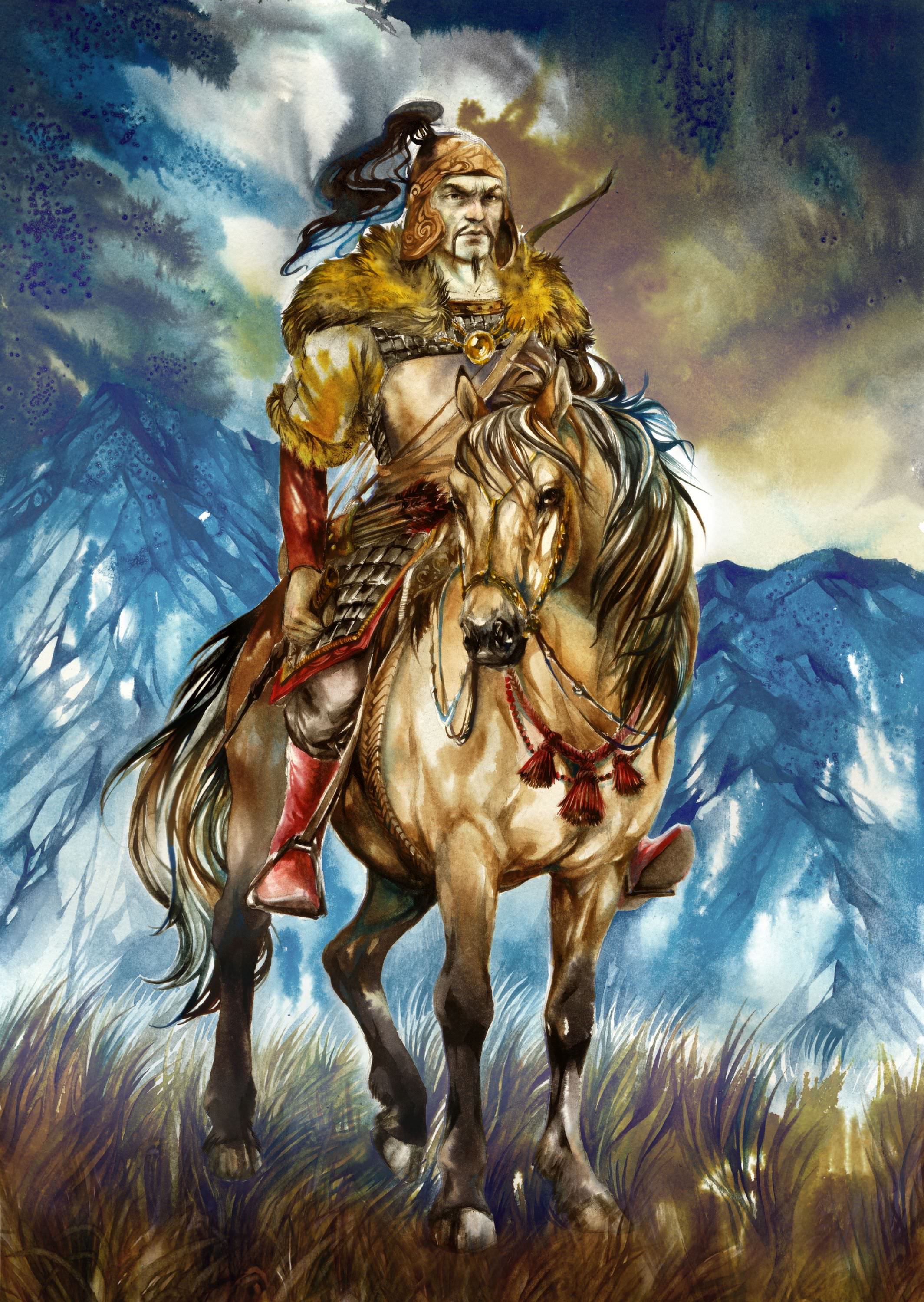
10 Surprising Facts About Basil II

Posted by Powee Celdran

324916680_501335022136474_5359653165260915756_n

Welcome back to the Byzantium Blogger and here we are once again with another Byzantine history article! In this one being the second part of this series featuring top 10s concerning the lives of certain emperors who I think have interesting stories, we will talk about the longest reigning and one of the most badass Byzantine emperors of all time, Basil II (r. 976-1025) of the Macedonian Dynasty often remembered as the “Bulgar-slayer”.

434936266_1577162609744065_2815011193395310519_n
Basil II, Byzantine emperor (r. 976-1025), art by myself

Basil II now may be remembered as a ruthless warrior emperor hence his title the “Bulgar-slayer” as he literally slayed and conquered the Bulgarian Empire and wiped it off the map, but aside from his rule being one of constant warfare, it also saw Byzantium at its golden age as a medieval superpower both culturally and militarily whereas Basil II too was known to be a capable administrator and reformer. In this article, we will go over 10 surprising facts about the life and nearly 50-year rule of the legendary emperor Basil II. Now, I have also done a video covering Basil II with the same topic as this article on my channel No Budget Films, and the video was made as a result of one of the comments I got on the previous video I made on Justinian I the Great and since I already covered the most influential Byzantine emperor being Justinian the Great then why not also cover the next possibly most influential Byzantine emperor after Justinian being Basil II. If you want to know more about Basil II and his times, then please also check out the board game I created being Battle for Byzantium which takes place more or less during Basil II’s rule, the link to the game will be found below. Before we begin the article please don’t forget to check the video I made below also covering the top 10 surprising facts about the life and reign of Basil II.

Watch my latest video on Basil II here

Check out my board game Battle for Byzantium here.

95t3yr5xvfyy
Flag of the Byzantine Empire

Follow me, Byzantine Time Traveller on Social Media:

Instagram: @byzantine_time_traveller

Facebook: Byzantine Time Traveller

Youtube: No Budget Films

Website: Byzantine Time Traveller

Deviantart: Byzantium-blogger55

Art Station: Powee Celdran Porphyrogennetos

Patreon: Byzantine Time Traveller


Before we go through the list, here’s a quick background on the Byzantine Empire at the time of Basil II. The Byzantine or Eastern Roman Empire had since the 7th century been fighting on the defensive position against the expansion of foreign enemies, notably the Arabs and the Bulgarians and was thus gradually losing territory. However, by the mid 9th century, the Byzantine Empire’s situation had begun to stabilize and thus the Byzantines were able to recapture lands in the east lost to the Arabs in the past centuries as well as lands to the north lost to the Bulgarians who had settled in Thrace and formed their state there since the late 7th century. In 867, Basil II’s great-great grandfather and namesake Basil I (r. 867-886) despite his humble origins as a peasant managed to seize the throne and become emperor and as emperor, his reign saw Byzantium expand eastwards recapturing territory lost to the Arabs all while the empire too underwent the beginning of its golden age of culture and learning. Basil I’s son and successor Leo VI the Wise (r. 886-912) as a learned scholar promoted this new literary golden age of Byzantium but had mixed results militarily as his reign saw a number of setbacks for the Byzantines in wars against the Bulgarians and Arabs. Leo VI’s son and successor being Basil II’s grandfather Constantine VII Porphyrogennetos (r. 913-959)- who like his father was also a learned scholar emperor- came to power at a young age due to his father’s untimely death, and because of his young age, Constantine was sidelined by the admiral Romanos Lekapenos who then took over as senior emperor and thus basically ran the empire. The reigns of Romanos I Lekapenos (920-944) and that of Constantine VII following the deposition of Romanos I in 944 saw the Byzantine Empire achieve rapid military successes and conquests in the east, most notably the capture of the city of Melitene from the Arabs in 934, therefore paving the way for the Byzantines to now fight on the offensive against the Arabs who were now in the retreat. With Constantine VII back in power in 945, this age of military successes continued especially due to talented generals in his service such as the Phokas brothers Nikephoros and Leo and their nephew John Tzimiskes who managed to drive the Arabs out of Byzantine borders and expand into Syria retaking the lands the Byzantines lost centuries earlier.

328411198_704536058014470_2367837047826867317_n
Genealogy of the Macedonian Dynasty of the Byzantine Empire, illustrated by myself
78280655_124846375627221_139711283229360128_n
Map of the Byzantine Empire (pink) during the 10th century, art by Byzantine Tales

Related Articles from the Byzantium Blogger:

5 Reasons to Feel Bad for Justinian II and 5 Reasons to Hate Him

Byzantine Alternate History Chapter VII

Byzantine Alternate History Chapter VIII

A Review and Reaction on Basil: Basileus Part I

A Review and Reaction on Basil: Basileus Part II

A Review and Reaction on Basil: Basileus Part III


I. His Reign was Longer than You Think       

280298062_464423228778627_4268010409978706889_n

Basil II is often remembered as the longest reigning Roman emperor and this is true because his entire rule as senior emperor was a total of 49 years from 976 to 1025, however he actually had a reign longer than this as he had already been crowned by his father the Byzantine emperor Romanos II (r. 959-963) as co-emperor in 960 thus making his total rule one of 65 years!
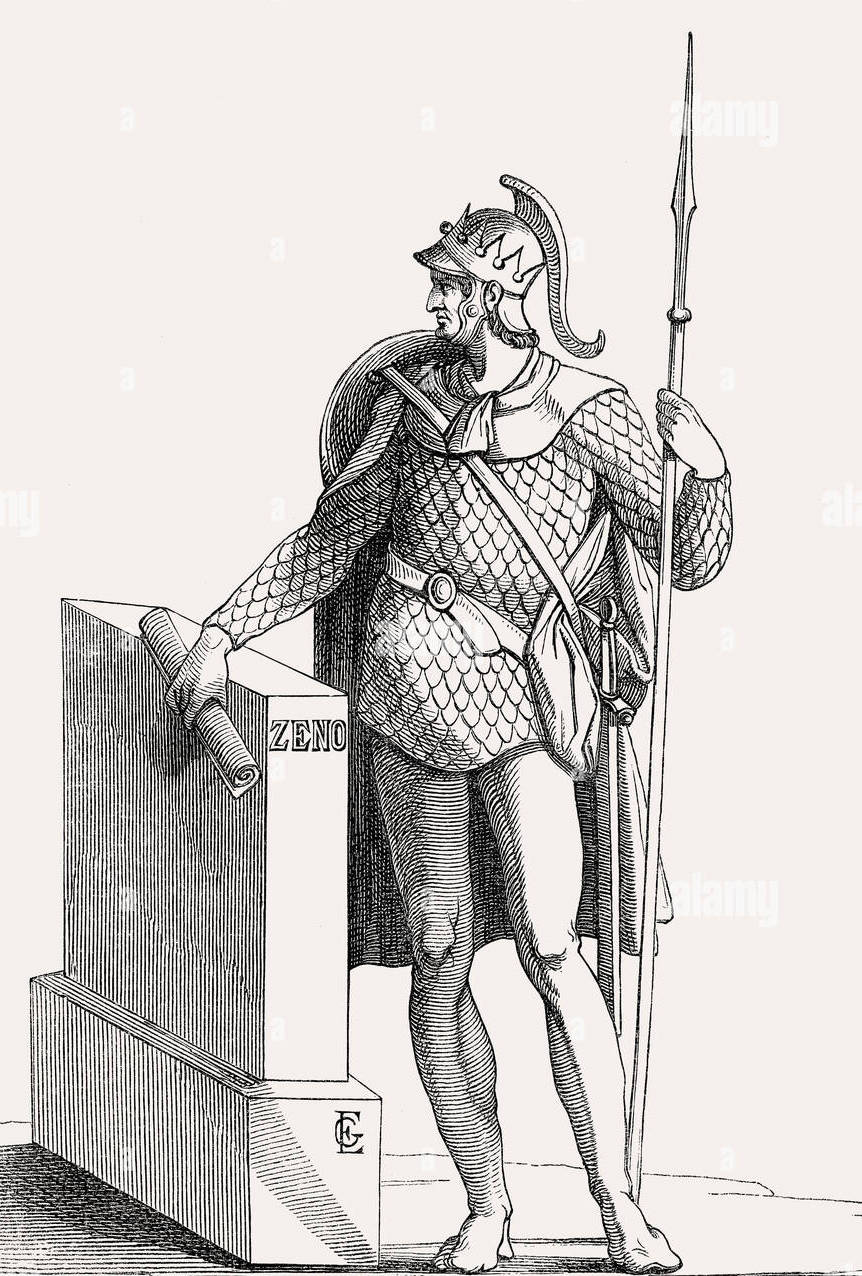
dejv66n-f012ecd6-8193-4e4d-98c4-1b344974583c
Constantine VII Porphyrogennetos, Byzantine emperor (r. 913-959), grandfather of Basil II

Basil as part of the legendary Macedonian Dynasty founded in 867 was born as a purple-born prince or Porphyrogennetos in the purple-room of the imperial palace in 958 to Romanos II of the Macedonian Dynasty and his wife Theophano who is said to be an innkeeper’s daughter from what was once Sparta and when Basil was born his father Romanos was not yet the senior emperor as his father and Basil’s grandfather Constantine VII was still alive. In Byzantine tradition, imperial heirs who were either children or grandchildren of reigning emperors were born in the purple room of the imperial palace in the capital Constantinople to ensure their succession, which is thus why Basil as well as his younger brother Constantine and younger sister Anna were born there. Now in 959, just a year after Basil was born, his grandfather Constantine VII died at the age of 54- allegedly poisoned by his daughter-in-law Theophano- and thus his father and Constantine’s son Romanos II succeeded as emperor wherein he then crowned Basil who was only 2 years old as co-emperor in 960 followed by Basil’s younger brother Constantine VIII who in 962 was also crowned by his father as co-emperor. If Basil’s full reign counting his time as junior emperor from 960 to 976 was 65 years, the rule of his brother Constantine VIII was even longer by one year making it 66 thus it means to say that Basil II wasn’t actually the longest reigning Roman emperor, it was actually his brother, however Constantine VIII only became senior emperor after succeeding Basil II after the latter’s death in 1025 all while Constantine only ruled as senior emperor for 3 years until his death in 1028.   


emperor_romanos_ii_and_empress_theophano_by_byzansimp_dfgv65n-fullview
Emperor Romanos II (left, r. 959-963) and his wife Empress Theophano (right), parents of Basil II, art by Byzansimp
FRX0L3DXoAEcHoW
A recreation of the co-emperors Basil II and his brother Constantine VIII based on their coin, art by Byzantine Tales

II. He did not Rule Independently until Later in Life           

280298062_464423228778627_4268010409978706889_n

As already mentioned, Basil II began his rule as a junior co-emperor in 960 when being crowned by his father Romanos II. Now, Romanos II’s rule was mostly successful for the Byzantine Empire as a whole as it saw the reconquest of the entire island of Crete from Arab pirates in 961 by the accomplished general Nikephoros Phokas and more victories against the Arabs in Syria despite Romanos being another “palace-emperor” who never set foot in battle.

312225392_561951928959959_1366722356569585347_n
Concept art of Empress Theophano, mother of Basil II

Romanos II however died in 963 from a fever after a long hunting trip at the age of only 26- again it is rumored that Theophano, his wife poisoned him- when Basil was only 5 whereas Basil did not immediately succeed his father as the new emperor, rather he kept his position as a junior co-emperor and so did his younger brother Constantine all while the position of senior emperor passed to the same powerful general Nikephoros Phokas who rose to the throne after marrying the late emperor’s wife Theophano. Basil II and Constantine VIII remained as junior co-emperors in the 6-year reign of Nikephoros II Phokas from (963-969) and in the next 7 years under the next senior emperor John I Tzimiskes (969-976) which followed the assassination of Nikephoros in 969. The reigns of both senior emperors Nikephoros II and John I were successful ones militarily that it secured the empire’s frontiers for Basil’s rule in the future by once again expanding east this time deep into the Levant and north into Bulgaria, however both their reigns were rather short whereas Nikephoros II’s reign too saw a number of military failures against the Arabs in Italy. Basil on the other hand may have been influenced by his two senior emperors who were both warriors to be a warrior emperor as well in the future unlike his father, grandfather, and great-grandfather who were all palace-emperors. Basil however was not yet able to rule alone as although Basil finally succeeded as senior emperor following John I’s untimely death in 976, he was not entirely an independent ruler.

269902048_652490109529509_1219157073848948327_n
Character art of Basil Lekapenos by Byzantine Tales

First of all, Basil remained under the domination of his powerful great-uncle the eunuch Basil Lekapenos- son of the former emperor Romanos I Lekapenos- who controlled the court whereas half of the empire did not support him and instead supported the usurper general Bardas Skleros who declared rebellion against the administration of Basil II and Basil Lekapenos in honor of the late emperor John I. For the next 3 years, Skleros had seized almost all of Asia Minor for himself in a series of battles against the loyalist forces. Even though Skleros was eventually defeated by Basil II’s loyalist general Bardas Phokas- nephew of Nikephoros II- at a battle in 979 with the assistance of 12,000 troops from the Georgian Principality of Tao, Lekapenos still dominated the young Basil II’s rule with Basil II still only as a puppet all while the defeated and wounded Skleros fled to Baghdad, capital of the Abbasid Caliphate. Lekapenos however would fall from power when being accused of corruption and conspiring with the rebels against Basil II and thus from 985 onwards with Lekapenos banished and his property confiscated, Basil II was literally an independent ruler free from the domination of powerful court officials and generals despite his rule now challenged by the general Bardas Phokas.    

437700976_813499600797377_5787229224771915632_n
Senior Byzantine emperors Nikephoros II Phokas (left, r. 963-969) and John I Tzimiskes (right, r. 969-976)
battle_of_pankaleia__phokas_vs_skleros_by_nikosboukouvalas_dfy0foh-414w-2x
Bardas Phokas and Bardas Skleros clash at the Battle of Pankaleia (979), art by Nikos Boukouvalas

III. He Established the Legendary Varangian Guard Unit         

280298062_464423228778627_4268010409978706889_n

In 986, the young and inexperienced Basil II now basically fully in command of the empire led an offensive against the expansion of the Bulgarians under their leader Samuil by attempting to lay siege to the city of Sredets (Sofia).

247462270_600615391383648_6371592095807013923_n
The young co-emperors Basil II (left) and Constantine VIII (right), art by Byzantine Tales

Although the Bulgarian Empire in the Balkans which had been around since the late 7th century had already been defeated and subjugated by John I Tzimiskes in 971 who expelled the invading Kievan Rus’ forces from Bulgaria and had the last Bulgarian tsar Boris II (r. 969-971) captured, a Bulgarian resistance in the western parts of the Bulgarian Empire still free from Byzantine rule started rising under the warlord Samuil who fought against the expansion of the Byzantines and then defeated Basil in 986 first by lifting the Byzantines’ siege of Sredets and afterwards crushing Basil’s forces at the Battle of the Gates of Trajan in Thrace. This defeat of Basil thus led to the general Bardas Phokas to declare rebellion against him seeing Basil’s weakness, however Basil here was willing to prove he was not weak. Basil II here decided to conclude an alliance with the Prince of the Kievan Rus’ Vladimir I the Great (r. 978-1015) whose forces had occupied Byzantine Cherson in the Crimea and thus Vladimir here agreed to evacuate his troops from Cherson, provide Basil with an army of 6,000, and even convert to Orthodox Christianity if Basil was to marry off his younger sister Anna to Vladimir.

440518-1
Vladimir I the Great, Grand Prince of Kiev (r. 978-1015)

Vladimir on the other hand had been searching for religions to convert to and given the choice to convert to either Islam, Judaism, Latin Christianity, and Orthodox Christianity, he chose Orthodoxy, the religion of the Byzantines after receiving reports from his ambassadors who saw the greatness of Byzantium’s greatest church, the Hagia Sophia in Constantinople. In 988, the deal was sealed between Basil and Vladimir and once Anna was sent to Cherson to marry Vladimir in 989, Vladimir and his men in return converted to Orthodoxy whereas Vladimir too sent the said 6,000 warriors of Rus’ and Scandinavian origin to Byzantium to serve Basil. In 989, thanks to the strength of these fierce warriors, Bardas Phokas’ rebellion was crushed wherein Phokas had even died in the said battle against Basil and the Varangians in Northwest Asia Minor all while the defeated rebel troops of Phokas defected to Basil’s side as well following Basil’s victory.

df1qub8-473ad858-2bb5-4eeb-b9a8-b17001f20609
Concept art of a Varangian Guard in the service of Byzantium by myself

Due to their bravery in this said battle against Bardas Phokas but also due to their loyalty to the emperor, these Rus’ and Scandinavian warriors had become an institution in the Byzantine army known as the Varangian Guard which would from here on loyally serve Basil II and future emperors as their bodyguard unit in battle while also performing certain functions including guarding the imperial treasury, prisons, and the imperial quarters. From the 990s onwards many Rus’ and Scandinavian warriors would travel all the way to Constantinople to enlist in the Varangian Guard after hearing stories of how much wealth they would attain and battles they would fight if they joined it. In the meantime, with Bardas Phokas defeated and dead, the other rebel general Bardas Skleros who recently returned to Byzantium after his exile in Baghdad when being recalled by Phokas peacefully surrendered to Basil in 991 and died shortly afterwards thus ending all opposition against Basil II’s rule.

079214588f79d43aa39ef6119fe90feb
Emperor Basil II and the legendary Varangian Guard, art by Amelianvs
434915987_359403259842513_1698052857067309519_n
The Varangian Guard in battle, art by Javier Ferrando

IV. His Physical Appearance and Personality        

280298062_464423228778627_4268010409978706889_n

Not many Byzantine emperors get a very detailed description of their physical appearance and personality the way Basil II does by the 11th century court historian Michael Psellos (1018-1078) who was born towards the end of Basil’s reign. According to Psellos, Basil was a stocky man who was shorter than average in height but impressive to look at when on horseback. Psellos too describes Basil to be not an articulate speaker while also having a loud laugh that convulsed his whole frame. True enough, we too have existing proof of Basil’s complete appearance from the illuminated manuscript known as the “Psalter of Basil” which is part of the 11th century Menologion of Basil II compiled by Basil himself and here it shows Basil in imperial armor with the appearance of a middle-aged man with a short beard. Now, Basil too was known to have ascetic tastes that he cared little for the pomp and ceremony of the imperial court despite growing up with the luxuries of the imperial court as a palace prince. Additionally, Basil had despised literary culture and affected scorn for the learned classes of the empire. Psellos too describes Basil II’s character to be “two-fold” as he was a villain in wartime and an emperor in peace therefore showing he was competent at all times whether in war or peace. Basil too was said to have preferred the fast life of war and commanding armies wherein he liked to eat and sleep with his troops and wear military attire instead of imperial robes. In the battlefield, he was known to be a strict micromanager who always insisted that his soldiers stay in formation and if they charged out bravely against the enemy, they would not be rewarded but dismissed for insubordination.

Basilios_II-1
Basil II from the Menologion of Basil

V. His Campaigns Against the Arabs         

280298062_464423228778627_4268010409978706889_n

Although Basil II is best remembered for his successful campaigns against the Bulgarians, he like his two predecessors Nikephoros II Phokas and John I Tzimiskes also campaigned against the Arabs in the south and east which is not as well-known as his wars against Bulgaria.

8650150_f520
Basil II, art by Amelianvs

As soon as Basil took care of the internal threats of Bardas Phokas and Bardas Skleros by 991, he began to turn his attention east to expel the forces of the Arab Fatimid Caliphate whose presence had been threatening Byzantine Syria as a result of the weakness the Byzantine Empire was at due to the recent civil wars first between Basil II and Bardas Skleros and after that the one between Basil II and Bardas Phokas. The civil wars in the Byzantine Empire thus allowed the Arabs of the Fatimid Caliphate to retake some of the territory in the Levant recently captured by the former emperors Nikephoros II and John I and to threaten the Arab Hamdanid Emirate of Aleppo as well which was a protectorate of the Byzantine Empire. In 992, Arab forces from the Fatimid Caliphate under the general Manjutakin invaded the Hamdanid Emirate, defeated their allied Byzantine forces in battle, and then laid siege to its capital Aleppo. The Fatimids though failed at besieging Aleppo all while the Byzantines drove away the Arab offensive on Syria in 993, however in the following year (994), the Arabs again led by Manjutakin returned to attack Syria and this time defeated a Byzantine army under the general Michael Bourtzes at the Battle of the Orontres which thus forced Basil to intervene by leading the army himself.

1892ac524fc87c2bd3b4008ca5f39a6b
Army of the Fatimid Caliphate

Here in 995, Basil rushed from his campaign in Bulgaria to Syria in only 16 days and when arriving, they were able to disperse the Arab armies forcing them to flee back to Damascus without being engaged in battle against the Byzantines. The Byzantines then later laid siege to Tripoli in Lebanon although unsuccessfully all while the Fatimid caliph Al-Aziz Billah (r. 975-996) was willing to personally lead the fight against the Byzantines, but he failed to do so due to his death in 996. Even with the caliph dead, the war between the Byzantines and Fatimids continued due to the Byzantines supporting an anti-Fatimid rebellion in Tyre, Lebanon. In 998, the Byzantine forces once again lost to the Arabs, here at the Battle of Apamea in Syria, thus Basil once again led his forces to Syria in 999 wherein this time he campaigned deep into Fatimid territory in Syria, though in the following year 1000 both Fatimids and Byzantines agreed to conclude peace as Basil for one had to focus his attention north to crushing Bulgaria whereas the new caliph Al-Hakim (r. 996-1021) had to deal with his own internal problems in the caliphate. During the reign of the caliph Al-Hakim, relations between the Byzantine Empire and Fatimid Caliphate were ruined due to Al-Hakim’s persecution of Christians in his lands and his destruction of the Church of the Holy Sepulcher in Jerusalem in 1009.

FatimidCaliphate969
Map of the Fatimid Caliphate (green)

VI. His Campaigns Against Bulgaria         

280298062_464423228778627_4268010409978706889_n

Ever since Basil II’s defeat to the Bulgarian leader Samuil in battle in 986, Basil gained a lifelong desire to crush the Bulgarian state once and for all.

images
Samuil, Tsar of Bulgaria (r. 997-1014) 

By the time Basil took care of all opposition against his rule in 991, he immediately began campaigning against Bulgaria which now had been rapidly expanding under Samuil that the Bulgarians true enough had gone as far as raiding into Central Greece all while also retaking recent Byzantine gains by expanding east to the Black Sea and west to the Adriatic Sea. In 995, the Bulgarian forces led by Samuil campaigned deep into Byzantine Greece and even defeated a Byzantine army outside Thessaloniki, the second city of the Byzantine Empire. However, in 997, a Byzantine army under the general Nikephoros Ouranos defeated the Bulgarians at the Battle of Spercheios in Thessaly wherein Samuil barely escaped alive and as soon as Basil concluded peace with the Fatimid Caliphate in 1000, he then put all his attention on crushing Bulgaria.

basil_ii_by_oznerol_1516_d6j7v1b-fullview
Basil II on horseback, art by Oznerol-1516

Here, Basil pursued a policy of gradually attacking Bulgarian territory and annexing land year by year and true enough it worked as by the same year, Byzantine forces under the generals Nikephoros Xiphias and Theodorokanos had captured the former Bulgarian capitals of Pliska and Preslav and in the following years, the Byzantines captured more Bulgarian territory in Thrace and Macedonia whereas Basil based himself in Thessaloniki to oversee the campaigns. In 1004 after a series of back-and-forth territorial gains by both Byzantines and Bulgarians, the Byzantines scored once again another major victory over Samuil at the Battle of Skopje and thus recaptured the city of Skopje itself whereas in the following year, the governor Bulgarian held Dyrrhachion in Albania Ashot Taronites surrendered the city to the Byzantines. Samuil was thus from here on forced to fight on the defensive position- as most of his territory had already been taken by the Byzantines- until 1014 when Basil was now in a position to fully conquer Bulgaria once and for all which was primarily due to the Byzantines’ victory over a Bulgarian offensive on Thessaloniki in 1009.

Victory_of_the_Byzantines_over_the_Bulgarians_from_John_Skylitzes
Basil II’s Bulgarian Campaign from the Madrid Skylitzes

VII. His Conquest of Bulgaria          

280298062_464423228778627_4268010409978706889_n

After years of back-and-forth war against the Bulgarian Empire of Samuil, Basil II finally had his chance at decisive victory over the Bulgarians in 1014 at the Battle of Kleidion wherein Basil and his general Nikephoros Xiphias managed to outmaneuver the Bulgarian army at a mountain pass all while Samuil once again barely escaped the battlefield alive.

SamuilsDeathBGhistory
The Battle of Kleidion (1014) and its aftermath from the Manasses Chronicle 

The battle thus ended with a decisive Byzantine victory wherein it is said that Basil had captured about 15,000 Bulgarian prisoners-of-war in which he had 99 out of every 100 men blinded with only one out of the 99 left with one eye in order to lead his men home, though this may simply be an exaggeration, but he still blinded his prisoners. The reason now for the mass-blinding was because blinding was a Byzantine punishment usually done on rebels and here, Basil saw the Bulgarians as rebels against Byzantine authorities. Samuil, the Bulgarian tsar allegedly suffered a stroke and died in the Bulgarian capital Ohrid when seeing his men return to him blind. Whatever really happened here, the Battle of Kleidion was the decisive battle that paved the way for Byzantium’s complete conquest of Bulgaria that later that year, Basil captured the Bulgarian capital Ohrid, although at around the same time the Byzantines would suffer a minor defeat to the Bulgarians in battle. Meanwhile, the late Samuil was succeeded as “Tsar” of Bulgaria by his son Gavril Radomir, but in the following year he was assassinated by his cousin Ivan Vladislav who then took over as Bulgaria’s new ruler. Ivan Vladislav would then lead a last-ditch resistance effort against Byzantine expansion but without any success as the Bulgarians once again suffered a crushing defeat to the Byzantines led by Basil himself again in 1017, thus forcing the last of the Bulgarians to flee to Dyrrhachion which becomes their last stronghold.

1018-the-emperor-basil-ii-at-the-walls-of-ohrid-pinterest
Basil II enters the Bulgarian capital Ohrid

By 1018, the Bulgarian Empire was completely annexed into Byzantium as a province and thus wiped off the map following the final defeat of the Bulgarians outside Dyrrhachion and the death of Ivan Vladislav in battle, therefore Byzantium’s borders once again extended north to the Danube River for the first time in 400 years. Bulgarian resistance against Byzantine rule was fully crushed later in 1018 when the last independent Bulgarian governor Ivats was captured and blinded by Byzantine authorities. The Byzantine conquest of Bulgaria thus made Byzantium feared by other powers that neighboring kingdoms like Croatia which was a former ally of Bulgaria under the co-rulers and brothers Kresimir III (r. 1000-1030) and Gojislav (r. 1000-1020) submitted to Basil’s Byzantium as vassals fearing that they would suffer the same fate as Bulgaria in being wiped off the map if they didn’t, thus Croatia would remain a Byzantine vassal until Basil’s death in 1025. Other than Croatia, the small Serbian principalities in the Balkans too surrendered to Byzantium as vassals all while Basil II later celebrated his triumph over Bulgaria at Athens before returning to Constantinople. Although Basil gained the reputation of the merciless “Bulgar-slayer” for conquering Bulgaria, he was still tolerant to his new Bulgarian subjects that he integrated the Bulgarian nobility or boyars into the empire’s elite and allowed Bulgarians to pay taxes in kind if they didn’t have coin.

3d3b91e994338b24f7a8cc3de8b4abf5
Basil II at the aftermath of the Battle of Kleidion, 1014
431030138_935694814934673_6209681592909035674_n
Basil II has a Bulgarian prisoner-of-war blinded after the Battle of Kleidion 

VIII. His Campaigns Against Georgia          

280298062_464423228778627_4268010409978706889_n

Although famous for his conquest of Bulgaria, Basil II roughly at the same time had also been waging wars with the new Kingdom of Georgia in the east. Back in Basil’s early reign, he concluded an alliance with the Georgian prince David III of Tao (r. 966-1001) against the rebels of Bardas Skleros in exchange for giving David lifetime rule over territories in Eastern Asia Minor.

342347219_274166394942998_5576845947941069703_n
Bardas Phokas, Byzantine general and ally of David III of Tao, art by Byzantine Tales

The alliance with David III was true enough successful as David’s forces numbering up to 12,000 helped Bardas Phokas defeat the rebellion of Skleros in 979. However, due to David’s friendship with Bardas Phokas, he supported Phokas’ rebellion against Basil II from 987-989, but due to Phokas’ defeat and death, David had to surrender to Basil agreeing that his lands would go to Basil after he dies, and true enough when he died in 1001 by being assassinated by his nobles, Basil inherited David’s lands in Iberia and thus extending Byzantium’s borders eastwards wherein these new territories incorporated into the Byzantine Empire were organized into the Theme of Iberia. Basil’s claim to David’s lands however were challenged by the new Georgian king Bagrat III (r. 1008-1014) and after his death in 1014 by his son the ambitious George I (r. 1014-1027) who then allied with the Fatimid caliph Al-Hakim and invaded Byzantine Iberia while Basil was still busy with his Bulgarian campaign.

411458551_1099410777903694_4491778899702769443_n
The Battle of Shirimni between the Byzantines and Georgia, 1021

Once finished with his Bulgarian campaign in 1018, Basil immediately headed east to campaign against Georgia, though he would only launch a full-scale war in 1021 as soon as George I’s ally Al-Hakim was dead. Here, Basil and the Byzantine army with the Varangian Guard included marched into Iberia wherein they retook what George had taken from them, and from there they were able to proceed east wherein they crushed the Georgians at the Battle of Shirimni along Lake Palakazio, and thus forcing George to flee back to his country after Basil had won a costly victory. George however was still intent to crush the Byzantines that he even supported Nikephoros Xiphias’ rebellion against Basil from 1021-1022 which however failed as Basil managed to turn Xiphias’ allies against him which thus resulted in Xiphias surrendering to Basil and afterwards banished to a monastery. Furthermore, Basil gained more allies when the Armenian King of Vaspurakan Senekerim (r. 1003-1021) surrendered his kingdom to Basil in exchange for being given lands in Byzantium. Thus in 1022 Basil once again marched his army into Georgian territory and this time once again crushed the Georgians at the Battle of Svindax. This time George now defeated all while his kingdom was surrounded by Byzantine forces both by lands and sea agreed to surrender all the lands he took from the Byzantines back to them as well as to hand over his infant son Bagrat- the future King of Georgia Bagrat IV (r. 1027-1072) as a hostage to Byzantium or else Georgia would be annexed by Byzantium the way Bulgaria was.

376565723_699982382281836_7926029549093017506_n
Byzantine forces defeat George I of Georgia in battle, from the Madrid Skylitzes


IX. His Military and Social Reforms        

280298062_464423228778627_4268010409978706889_n

Although mostly remembered as a formidable military commander, Basil II too was a brilliant reformer emperor whose economic policies made Byzantium a rich world power. Here, Basil passed a number of laws that further protected peasants and small landowners across the empire by making it difficult for them to sell their land but at the same time also making it difficult for the rich and powerful landed aristocracy known as the dynatoi to buy land from these small landowners and peasants in order for them to grow their wealth and influence as in the past years, many small landowners lost their lands due to the dynatoi buying them off which further decreased the number of tax payers who owned lands.

coin-of-basil-ii-7573
Coin of Basil II with his brother and co-emperor Constantine VIII

Basil’s reform here proved to be so effective that with more people owning their lands, there was more tax to be paid which further increased the imperial treasury. Additionally, Basil II more or less got rid of several of the old troublemaking aristocratic families of the empire such as that of Phokas and Skleros who rebelled against him and replaced them with new families of humbler origins who then became the new elite of the empire due to their military service and loyalty to the emperor. These new military families that rose to prominence under Basil II’s rule included Diogenes and Komnenos wherein members of these families served as officers of Basil- notably Constantine Diogenes and Manuel Komnenos- and would in the future produce emperors as well; Constantine Diogenes’ son true enough was the future emperor Romanos IV Diogenes (r. 1068-1071) and Manuel Komnenos’ son was the future emperor Isaac I Komnenos (r. 1057-1059) all while Manuel’s descendants would be the rulers of Byzantium’s Komnenos Dynasty (1081-1185). Basil too took care of the sons of slain military officers by watching over them and providing them with the finest education and these sons of military officers included the future emperor Isaac I and his brother John Komnenos, father of the future emperor Alexios I Komnenos (r. 1081-1118).  

Byzantine_agriculture
Byzantine peasants from an 11th century manuscript

X. He Never Married              

280298062_464423228778627_4268010409978706889_n

For all the greatness Basil II was remembered for, he never in his entire life married and had children, thus for the 49 years he ruled as senior emperor, there was no empress. As a person, Basil when in his older years was known to be so serious in his role as emperor that he had no time to relax and true enough he too had no close friends, which also explains why he never married. Additionally, back in 991 when Bardas Skleros surrendered to Basil, Skleros advised Basil to “admit no woman to the imperial councils” and to be “accessible to no one and to share with only a few your most intimate plans”; Basil true enough took this advice to heart. Basil II to put it short was dedicated to his empire but he too was greatly admired by his soldiers who were undyingly loyal to him and certainly willing to die for him.

48422719_2103176446371399_3720059947468193792_n-1
Manuscript depicting co-emperors Basil II (left, r. 976-1025) and Constantine VIII (right, r. 1025-1028)

Now in 1025, as Basil had finished his wars against Bulgaria and Georgia, he now began making preparations for a massive expedition to take Sicily back from the Arabs who in the past century had completely taken over the entire island from the Byzantines, but this expedition never happened as in December of that year, the 67-year-old Basil II died of a fever in Constantinople. Having no children, Basil was succeeded by his incompetent and useless younger brother and co-emperor for the longest time Constantine VIII whose line would continue the Macedonian Dynasty until it died out in 1056 with the death of his daughter the last Macedonian Dynasty ruler Theodora (r. 1055-1056). At Basil’s death in 1025, the Byzantine Empire was at its largest since the days of Justinian I in the 6th century, and here in 1025 it stretched north to south from the Crimea and Danube River to Syria and west to east from Southern Italy to the Caucasus. Additionally, the Byzantine Empire at Basil II’s death in 1025 was not only a massive one with a powerful army but also a cultural superpower respected and feared by all neighboring powers for its advanced literary culture despite Basil never having really been an intellectual person himself. Basil II was thus buried at the Church of St. John the Theologian in the suburb of Hebdomon outside Constantinople and the epitaph on his tomb says:

From the day that the King of Heaven called upon me to become the emperor, the great overlord of the world, no one saw my spear lie idle. I stayed alert throughout my life and protected the children of the New Rome, valiantly campaigning both in the west and in the outposts of the east… O, man, seeing my tomb here, reward me for my campaigns with your prayers”.

4KMACEDONIAN
The Byzantine Empire (purple) at Basil II’s death, 1025


Conclusion

280298062_464423228778627_4268010409978706889_n

And now this is about it for this article covering the life and surprising facts about the Byzantine emperor Basil II. True enough, Basil II is one of Byzantium’s most fascinating characters as he more or less was the kind of emperor who was active in all fields which makes him somewhat the perfect example of what a Byzantine emperor was, cruel to his enemies but wise in ruling a vast empire with great knowledge not only in war but in diplomacy and statecraft as well as he true enough was also able to annex territory for the empire without shedding any blood but rather through diplomatic means. To put it short, Basil II not only expanded his empire’s borders in all directions, but he also stabilized it politically by clearing out all threats to his rule all while promoting his empire’s culture through diplomatic means as seen when getting the Kievan Rus’ of Vladimir I the Great to convert to Orthodoxy, the Byzantines’ religion and in projecting Byzantium’s image to the world as a cultural power as well. The only problem now happens to be the succession as Basil true enough had no heirs whereas his successors would gradually ruin all of his achievements and thus return the Byzantine Empire back into a state of crisis that would define Byzantium in the latter half of the 11th century. Now what are your thoughts on Basil II and his rule? Once again, I would like to thank you all for reading this article and also watching my video on No Budget Films and please continue to support me by following and subscribing to my sites!