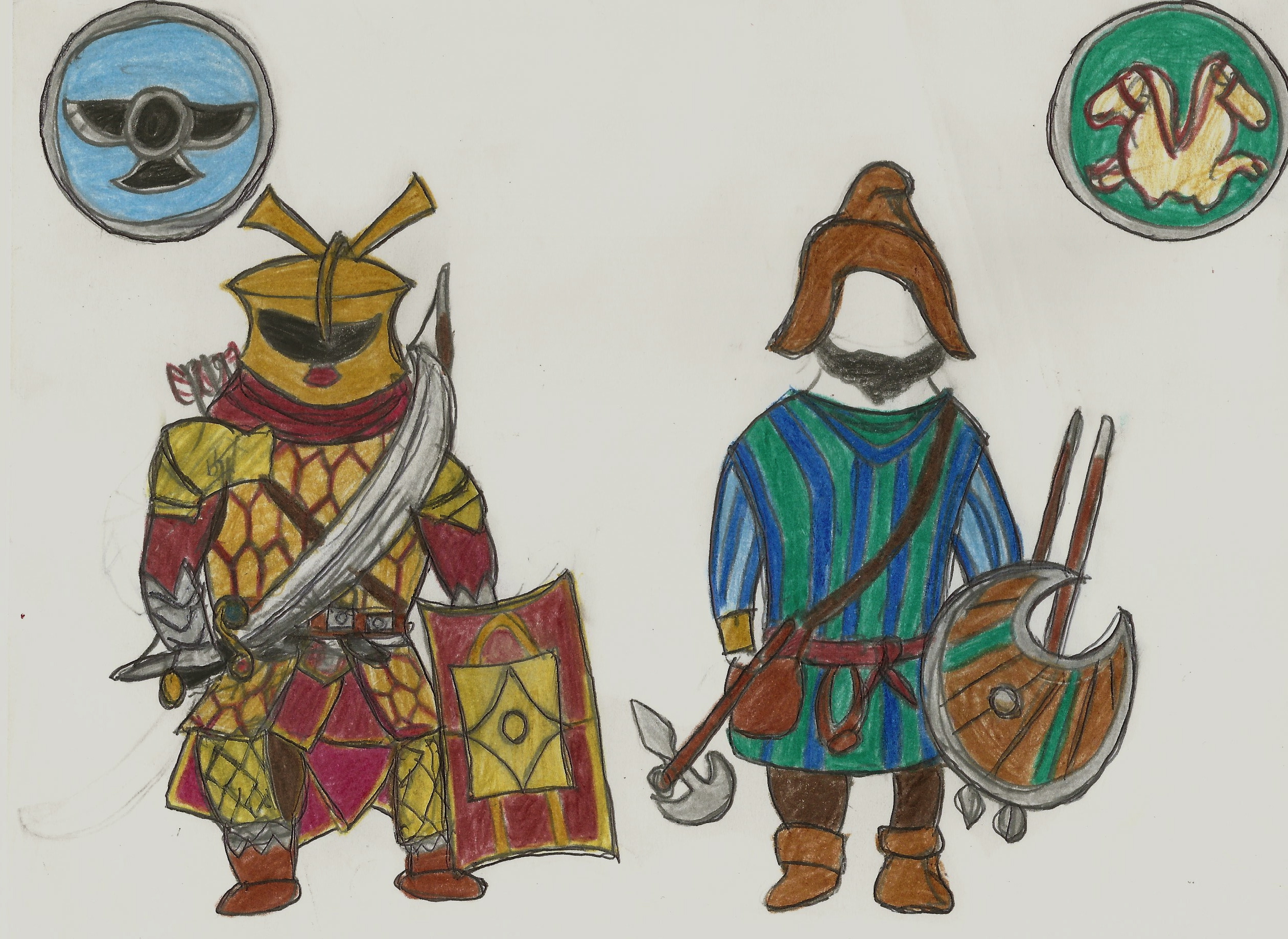
The Early Russian army- Russia’s undiscovered military forces

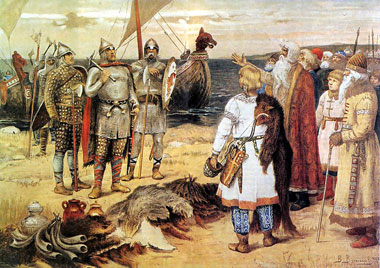
Russia itself had a long history of wars and conquests and of course Russia grew from small city-states to a powerful empire from conquests with a powerful army that developed over time. Most of us are familiar with the Russian army of the imperial age from the 18th-20th centuries and more so familiar with the Russian army from the time of WWII and the Soviet era but here, it will share the information on Russia’s early military forces before Russia’s imperial age. Over here would be a bit of Russia’s early history before we knew of Russia’s existence and the interesting facts of Russian military force in the Middle Ages and Renaissance, especially during the 16th century. Russia began out as small city-states along the rivers of Russia and present day Ukraine and Belarus founded by the Varangians or Norsemen in the 9th century. Throughout the centuries, the city-states of Novgorod, Kiev, and Moscow grew to be powerful and rich trading with the Byzantine Empire down south but in order to expand their territory; they had to conquer lands beyond them. It was Moscow that became Russia’s dominant city-state had the strongest military force, in the 16th century; Ivan IV, prince of Moscow, becoming Russia’s first Tsar, Ivan the Terrible, turned the principality into an empire. With the military force, Russia fought several enemies including the Tatars, Siberians, and Mongols in the east, Teutonic Germans and Polish in the west, Byzantines and Turks in the south. These military units mentioned here were used long ago in different Russian states under different princes, and the units were very similar to those not only in Russia but other Slavic countries as well, although it was Moscow that grew to be the power in the east. With the wars and conquests, Russia became an empire and continuously expanded growing from weak undeveloped city-states to a leading world power.
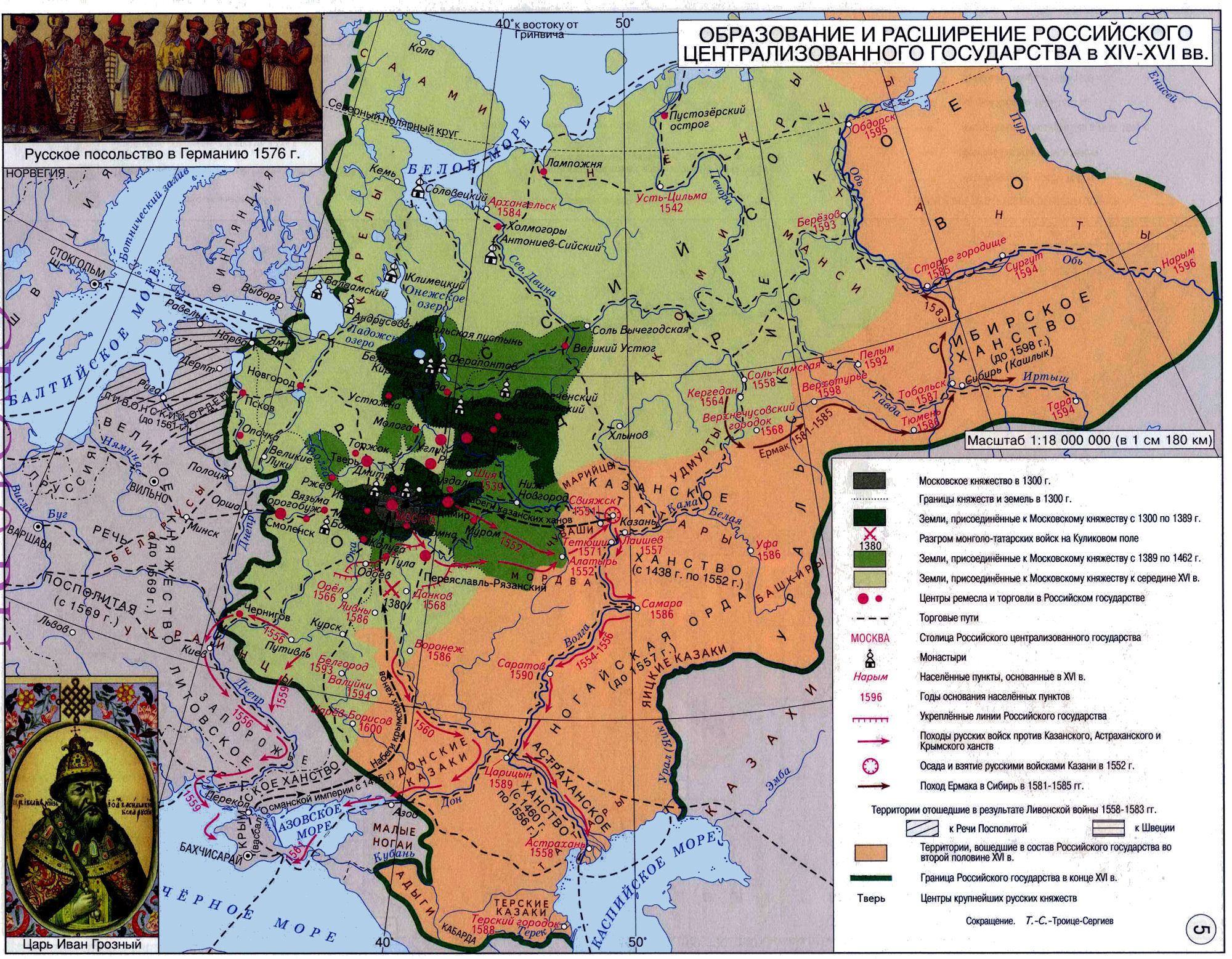
Map of Russia 16th cent
Map of the Russian Empire
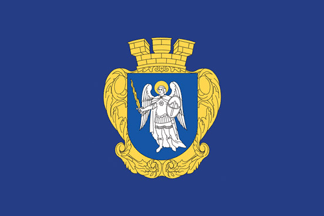
Russian state of Kiev flag
Russian state of Moscow flag
Russian arms and armour samples

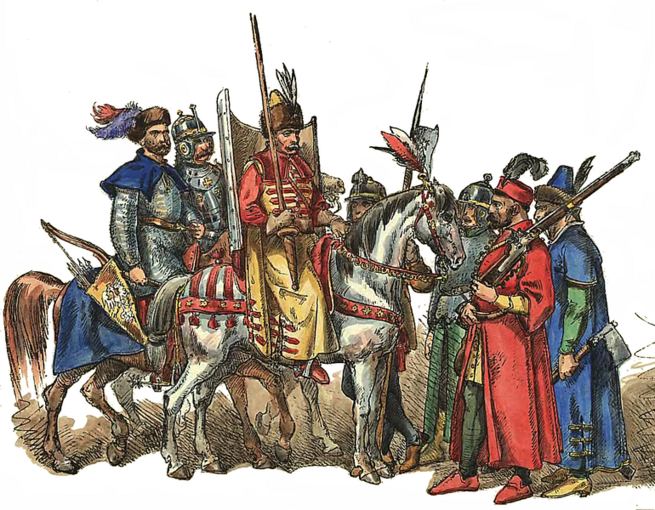
The old Russian army at the time the empire was formed was made up of a few distinct units, although there were only a few type of units in the Russian army compared to the number of units of any other medieval European army or the Byzantine or Ottoman armies. The Russian military force of the middle ages though were distinct from the rest of Europe and looked more civilized and fashionable compared to the Mongol army, although the Russian troops lacked armor except for chain mail, which is one thing that made them different from other European armies, though the Russian soldiers and elite horsemen wore the chain mail under their fur cloaks as fur cloaks was somewhat the uniform of the old Russian troops. To begin talking about the early Russian army units, we start with the Boyars, these units were the highest ranking forces and were the military commanders in Russia’s Muscovite period back in the time of Ivan the Terrible and earlier when Russia was ruled by princes. The boyars were next to the princes of the Russian states and were the commanders of the regular soldiers, they were similar to the knights of medieval Western Europe. The Boyars had chain mail underneath their fur cloaks and sometimes during battle, some of them had an armored vest, but usually they had a fur overcoat with rich patterns over the chain mail and on their head, they usually had fur hats. For weapons, the Boyars held a long curved sword similar to the Turkish kilij, and later on when guns were introduced to Russia. As commanders and Russian nobles, the Boyars were mounted on horse during battle. The Boyars were not just the nobles or knights in Russia (Moscow) but also in Ukraine (Kiev), Moldavia, Wallachia, Bulgaria, and Serbia, which were all Slavic countries.

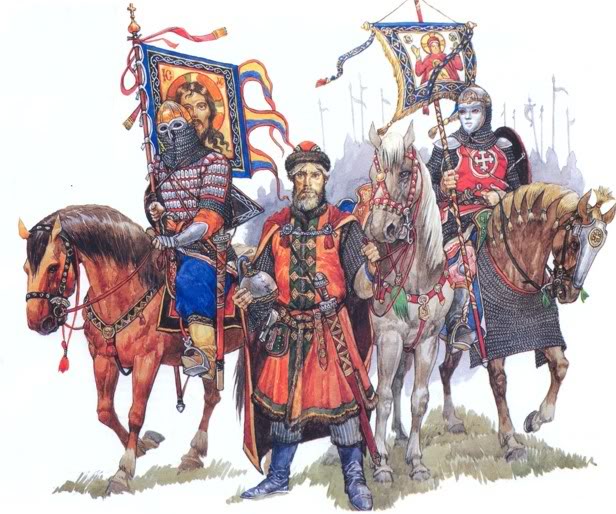
Russian Boyar sample
Russian Boyar with cavalrymen
Russian Boyar and infantry soldier in battle against Mordovian
Russian Boyars
Russian Boyars

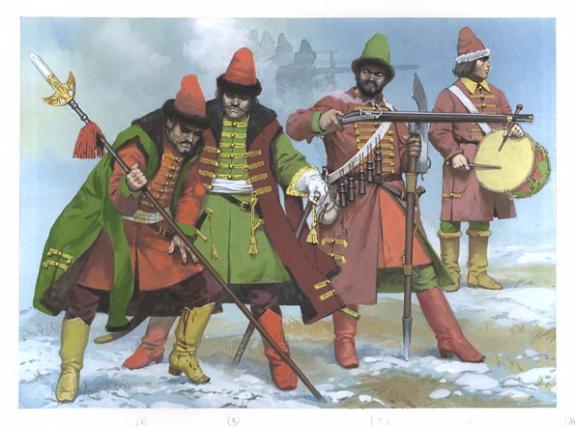
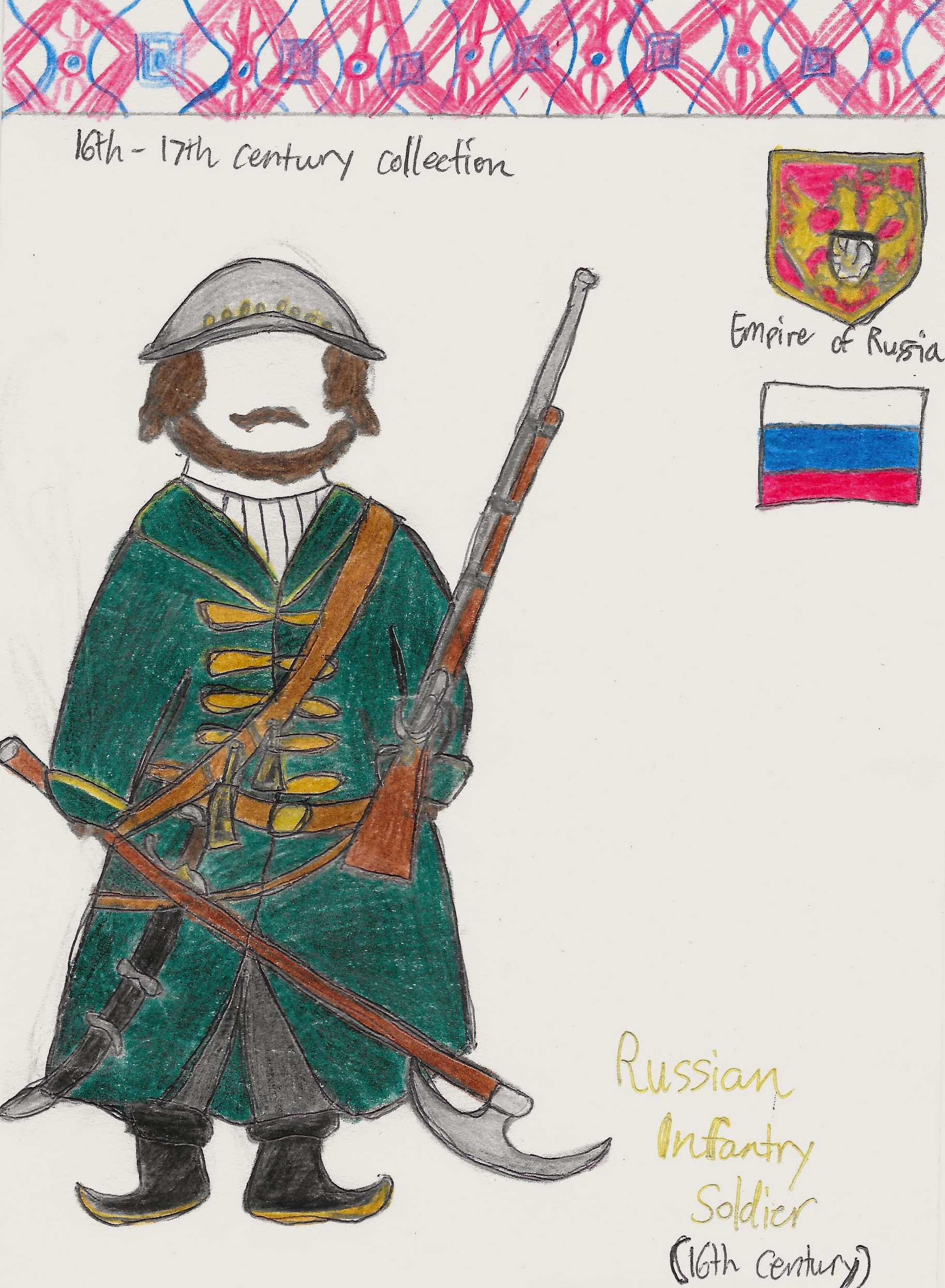
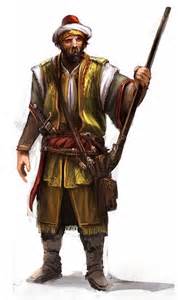
The infantry units of the early imperial Russian army was called the Streltsy, created by the 1st Russian tsar, Ivan the Terrible between 1545 and 1550 in order to have a large number of soldiers to build up the 1st Russian empire. The Streltsy units were first used as elite guardsmen of Moscow then later for Russia’s wars with the Mongols in the south and the Livonian war with Poland and Lithuania in the northwest. These units fought well in battle especially having a set of weaponry, at least having 3 weapons together. The basic weapon for the Streltsy were firearms, the particular firearm they carried was a Harquebus rifle, which European armies use as well in that time. These units were also equipped with gunpowder and musket balls in a flask attached to their belt. For melee combat once the enemy is to close or if out of ammunition, these units carried a large war-axe called a Bardiche for fighting full force. As an alternative weapon, these units were required to have a saber sword together with the war-axe, the saber was a long curved sword used to fight at close combat if there is no time to slay the enemy. Like most Renaissance forces, the Streltsy either carried a large war-axe or a pike or poleaxe but always had to have a saber as an alternative. For their uniforms, the Streltsy had identical blue, red, or green fur coats depending on their rank and had pointy orange boots and no armor at all, except some of them had chain mail underneath the coats; for headgear, they either had a small round metal helmet or a fur hat. The Streltsy were basically the infantry soldiers of the early Russian empire and fought in many campaigns to expand the empire until the late 17th century when they evolved into the imperial guards.
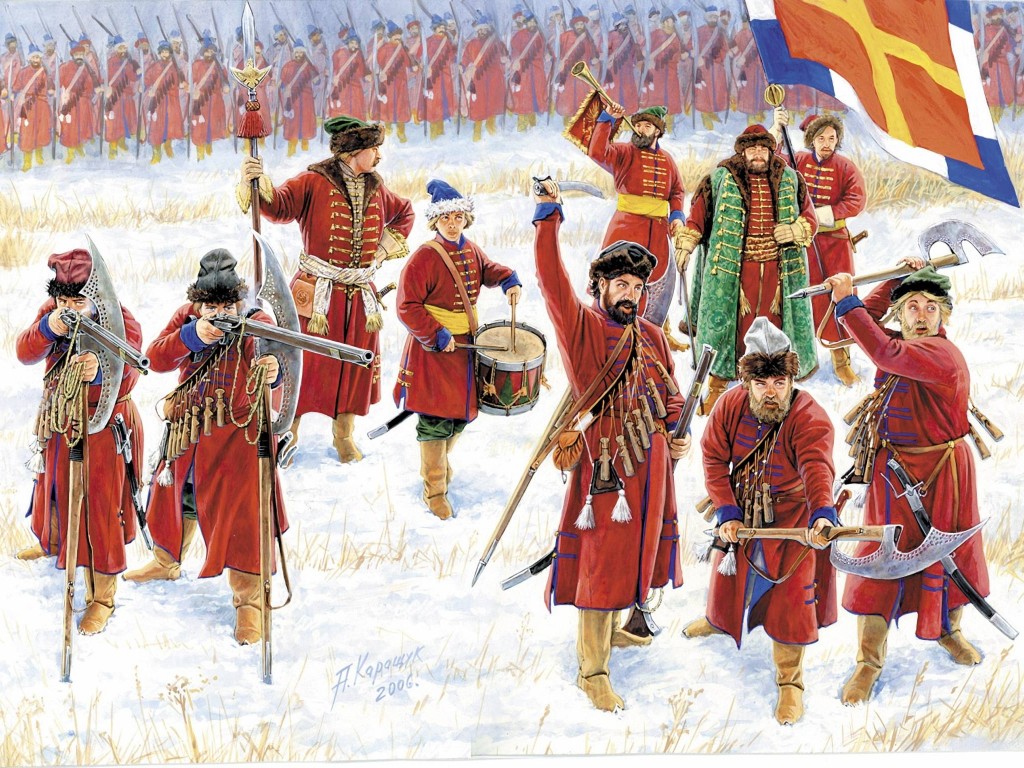
Streltsy units in battle
Sample Streltsy unit
2 different Streltsy units
Streltsy unit types
Streltsy unit types
Russian Streltsy sketch (repost)

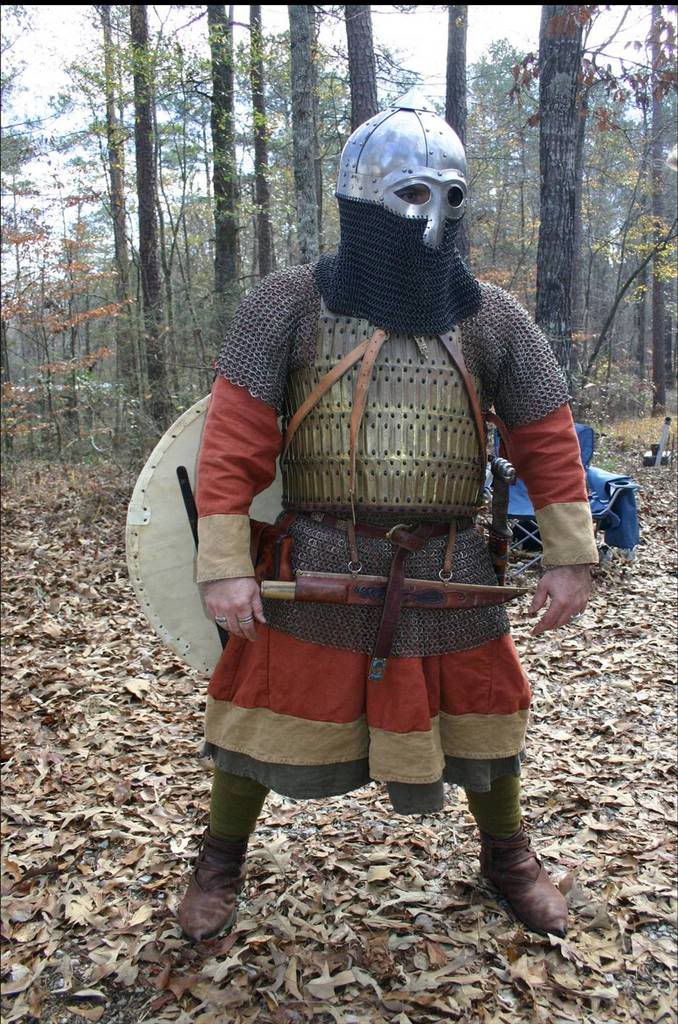
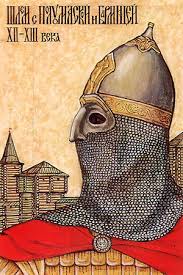
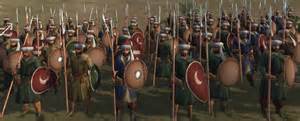
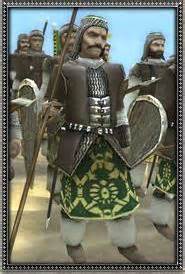
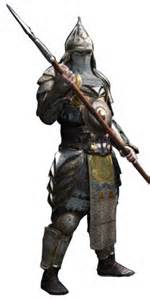
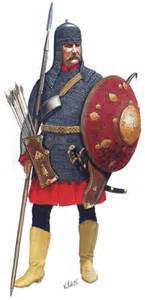
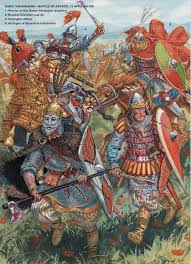
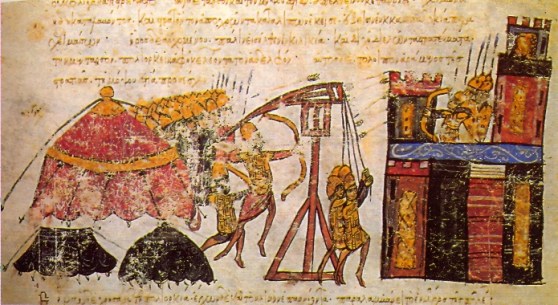
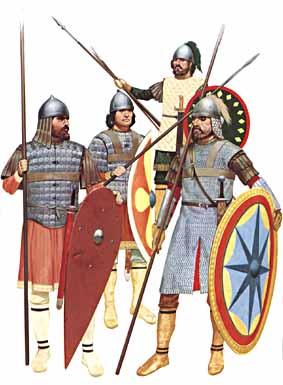
Earlier on in the 13th-15th centuries, when Russia was made up of many principality states, each states had forces skilled especially in cavalry and archery just like the Mongols. Although the Russian states had a few infantry units skilled in melee combat and archery. Back then, the Russian units looked similar to the Byzantine military units, some having cone shaped helmets, long spears, similar curved swords, maces, bows and arrows, chainmail, padded cushioned armor, and triangular shields. Back then the Russian armies fought wars with the Mongol hordes in the south but could barely beat them, though at the west they were able to counter attack the German Teutonic knights. To describe the look of the early Russian units, they looked very similar to Byzantine military units but had a few Oriental looking elements such as long arrows in a large quiver, silk outfits, fur, and pointy fur hats like the Mongols. Other samples of the early unnamed Russian military units were equipped with crossbows, had fur coats over the chainmail suit, and round helmets just like the Byzantine crossbow units. The Russian archer units, which went either on foot or horse, were unarmored but had a cone hat and padded outfit, for weapons, a longbow with a large quiver of arrows, and for a melee weapon, either a sword, axe, or mace. However, there were only a few Russian units of the middle ages that had full armor, although it was not as full as the armor of European knights but was a lot lighter, made up of several iron strips with engraved details. These metal armored pieces were only put to protect the chest, arms, and legs and were not full but were only placed over the chainmail. As for the full helmet set, the Russian troops wither had a cone shaped helmet over the head and chainmail below it to cover the face or also just chainmail over the head without a helmet. The Russian units back then were strong in handling large and heavy weaponry but the army was not as well organized and disciplined as the Byzantine army was.

Byzantine-Russian units in battle
Early Russian archer unit
Russian (Varangian) heavy infantry unit
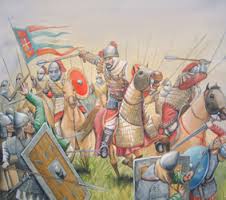
Russian cavalry charge

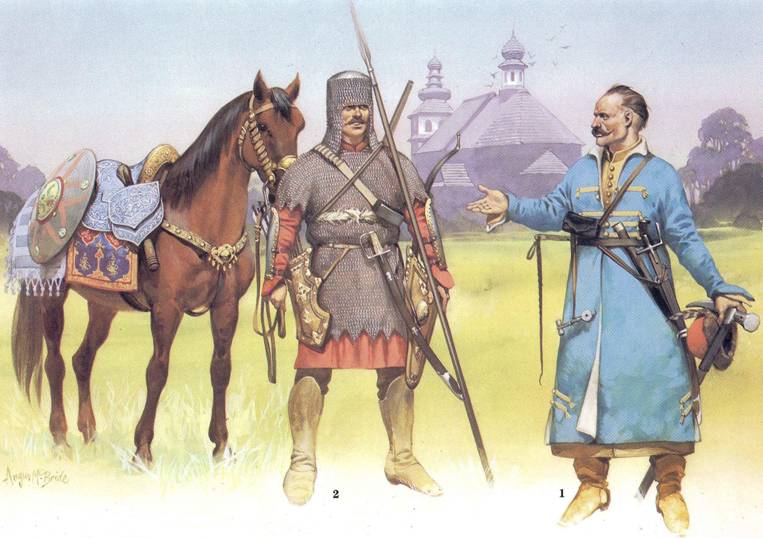
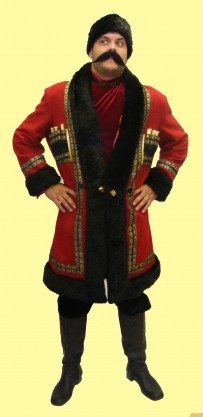
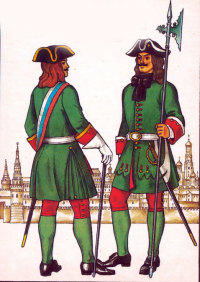
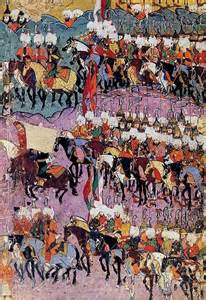
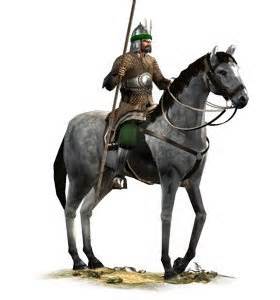
The rest of Russia’s early military units remain to be unknown, especially the infantry forces but the best known of all the Russian military units of the middle ages are the cavalry forces, most especially the Cossacks. In the early days of the Russian empire, the Cossacks were the special forces of the Russian military especially used in cavalry charges and long distance campaigns. The Cossacks were originally skilled horsemen from all over Russia, especially the far reaches or the Steppes at the Urals, Siberia, Astrakhan, the Don, and the Dnieper, the Cossacks as well came from other Slavic countries like Ukraine, Belarus, and Poland. For the Cossacks, the commander of the cavalry units was called a Hetman; they were somewhat the generals of the Cossacks and were assigned to commanding the forces, however the Hetman title was only used for the commanders of the Polish and Ukrainian Cossacks and not the Russians. The Cossacks were plainly cavalry units best skilled in shock charges and attacking in full force. The Cossacks were unarmored but instead had a set of Oriental silk clothing or fur coats, sometimes with chainmail underneath. For headgear, Cossacks usually hat a tall fur hat or a helmet with fur lining. For weapons, the Cossacks usually carried a wide curved saber sword a their basic weapon, or sometimes a long spear for thrusting, and sometimes a rifle. During the time of Tsar Peter the Great, Russia was modernized and the army was also reorganized to be more orderly, the Cossacks too became more orderly with the green Russian military jackets and orderly formations in battle.

Cossack thrusting
Cossack thrusting
Russian Cossacks on horse
early Russian Cossacks
Early Russian Cossacks
Russian Cossack warriors

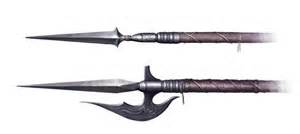
The early Russian forces of medieval times of different states had a complex set of weaponry. The early Russian forces did not take armor that seriously but relied a lot on weapons since the early Russian troops were mostly skilled in full force combat rather than defensive tactics. Early Russian weapons were one of a kind and unique to Russia although some were based on Oriental, Byzantine, and Nordic weapons though Russian troops used them with full force. One of the weapons unique to Russia was the long thin curved saber sword used by most units especially the heavy infantry, cavalry, and Cossacks, and later on the Streltsy, although some early Russian infantry troops used the same long thin swords the Normans used. Many of the Russian states including Moscow and Kiev used the rare Russian oriental weapons that came in all sorts of curved shaped for the blades and a lot of bows and arrows while the troops of Novgorod used a lot of weapons European armies use mainly because Novgorod was Russia’s trading hub with Europe. The weapons the Russians used, which ere the same in Europe included the medieval war hammers, pikes, Norman long swords, and crossbows. One of the main weapons many Russian infantry and cavalry soldiers used was the bow and arrow, coming in different sizes, the infantry used longbows for long distance and heavy impact shots, while light cavalry units used shorter bows for skirmishing the enemy basing it on Mongol horse archery tactics. The arrows used for the bows were stored in ornately designed quivers which also stored the bow, crossbows however were stored separately but its bolts were put in ornate quivers too, however bows and crossbows served as just one of the weapons Russian troops used as they would carry a set of javelins, a sword and shield, a mace, or spear. Many of Russia’s early weaponry were the same as the weapons the Byzantines used, which includes the long curves swords, long cavalry spears, and the different types of maces for quick striking. For shields, early Russian troops used either the long kite-shaped Byzantine shields or the large round Turkish shields. The early Russians had all sorts of unique weapons including a cavalry lance with a long curved blade, which is their version of the European pike. One of the weapons most unique to Russia and neighboring countries like Poland and Lithuania was the large war axe called a Bardiche, which had a large curved blade for heavy slashing. The Streltsy units later on used the Bardiche as a support for Russia’s newly introduced rifle guns. Later on however, Russia’s army was re-organized using newer rifles and flint-l;ock-guns with European sabers but some weapons such as the Bardiche and the long curved saber were kept. To describe the Russian troops and their weapons, especially the Cossacks, they did not wield one but a set of them all stored with them for battle.

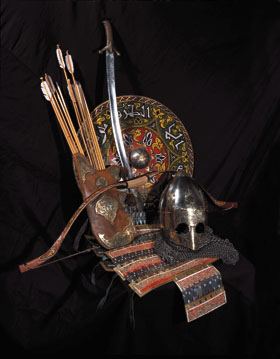
Set of Russian spears and lances
Early Russian weapon samples
Unique Russian Cossack sabre
Russian Bardiche blade
Different Russian bows and crossbows with arrows and quivers
Different types of Russian maces

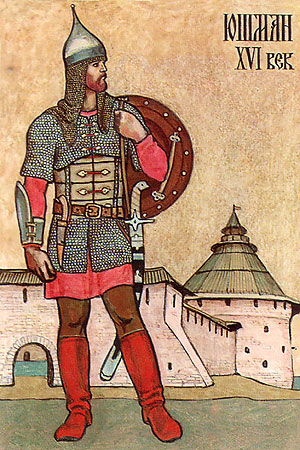
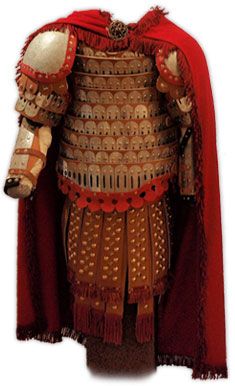
The early Russian army was not very well organized but was strong in combat and skilled with weapons, but aside from weapons, the early Russian forces had different sets of armor as well. Most Russian forces, especially the light infantry that were just rural recruits did not rely on armor much but instead just padded vests, however the elite forces, had a full set of armor. From the 13th-16th centuries, Russian troops did not have the same armor as European knights did but instead used the same style as the old Byzantine armor with more features added to them. Chainmail suits was one thing common to most Russian soldiers, especially the infantry that served as their basic protection, however the elite forces placed some metal paddings over the chain mail. A lot of the early Russian armors looked the same as the classic Byzantine armor with padded scales over the chain mail an the cone shaped helmet although the Russians added new elements to eat, mostly fur linings and lighter metal for the armor. Just like Byzantine armor, the early Russians had scales over the chainmail but made a lighter version of the padded armor to make combat quicker and also the padded armor was cushioned; also as an alternative to the metal padded scales, Russian troops used only cushioned padded armor over the chainmail to lighten the weight but it also served as a protection, and also the difference between Russian and Byzantine armor styles was that the Russians used more cloth and fur both over and under the armor more than they used metal. True enough Russian and Byzantine armor is very similar mainly because the soldiers who served the Byzantine Empire were not Greek, rather they were Russian mercenaries skilled in all sorts of martial arts and close combat attacks, the most famous of these Russian mercenary units were the Varangian guards. Of course the Russians got their armor design from the Byzantine Greeks from their service to Byzantium as the Byzantines for a long time used Russian and Nordic mercenaries. Unlike the regular Byzantine armor, the Russians had different details such as lighter metal scales over the chainmail giving extra protection to the chest, back, and shoulders, and unlike the full set of medieval knight’s armor, the Russian padded armor only covered a few parts. The Russians also got their armor design from Byzantium since earlier to that; their battle outfit looked very much like Norsemen. In addition, the Russian soldiers had metal bracers and greaves for arm and leg protection together with a chainmail to protect the face and neck attached to the cone shaped helmet. The Russians either used the Byzantine style cone shaped helmets or the round eye protection Nordic helmets, however some of the elite units had chainmail covering the head forming a square shape even giving eye protection. In some ways, Russian armor looks a little similar to the armor the Ottoman Turks had mainly from the light armor pads over the chainmail protecting the chest and shoulders and the helmet shape; however the light cavalry units with their padded cushion armor and fur hats looked somewhat like the Mongol warriors. On the other hand, some units especially the Cossacks went unarmored in battle but only using fur cloaks, as they did not need the armor since they were skilled and fast riders. Later units like the Streltsy also did not use armor since they were over armed with weapons and were supposed to be like the troops of Renaissance Europe. Of course, Russia’s army became more organized in its imperial age having a professional army with green coats and advanced weapons and orderly in battle.
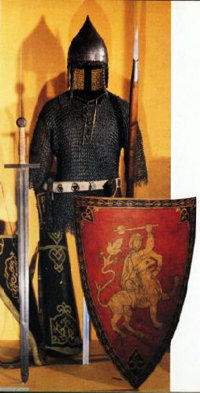
Early Russian chain mail armour with sword and shield
Russian light cavalry armour
Early Russian infantry soldier with padded armour
Russian armour with scale protection for chest
Russian armour samples
Russian helmet sample
Cossack outfit
Cossack outfit
Russian imperial army outfit
Russian Imperial army outfit

The Russian army before the imperial age of Russia was not very well organised and disciplined, in fact some of the names of the units are missing and only a few of their names remain known today such as Streltsy and Cossacks, however the type of armour and weapons the early Russian troops used are still known. In the Middle Ages, Russian forces had unique armour and weapons and were basically based on arms and armour of the old Nordic and Slavic nations though when Byzantine influence got to Russia by trade, the Russians started using the same type of armour the Byzantine troops did. On the other hand, the battle formations and weaponry mostly for archery is somewhat like the battle formations and skills of the Mongol and Turkish army. To describe the troops and battle strategy of the early Russians, they were not known known to be organised as the Byzantine and Ottoman armies were, neither were they skilled in defensive tactics, although the Russians were best at full force combat especially using heavy weapons for full force melee combat and at the same time being skilled in archery even from horseback making them better off with offensive tactics. Even if the early Russian army was unorganised, but at the same time strong in attack, the Russian states were able to build an empire easily driving away the Mongols, conquering the Tatars, Teutonics, and other tribes of the area, also fighting off the Ottoman Turks, and from this Russia grew to be a powerful empire. With Russia as an empire, the army became organised with different types of units and battalions with identical green coat uniforms, rifle guns, and sabres but most of all, the Russians were most excellent in their cavalry. For more than 300 years, Russia, with the help of the army ruled as one of Europe’s most powerful empires. That’s all for now… thanks for viewing!

Fresco Hall Stained Glass window- the making

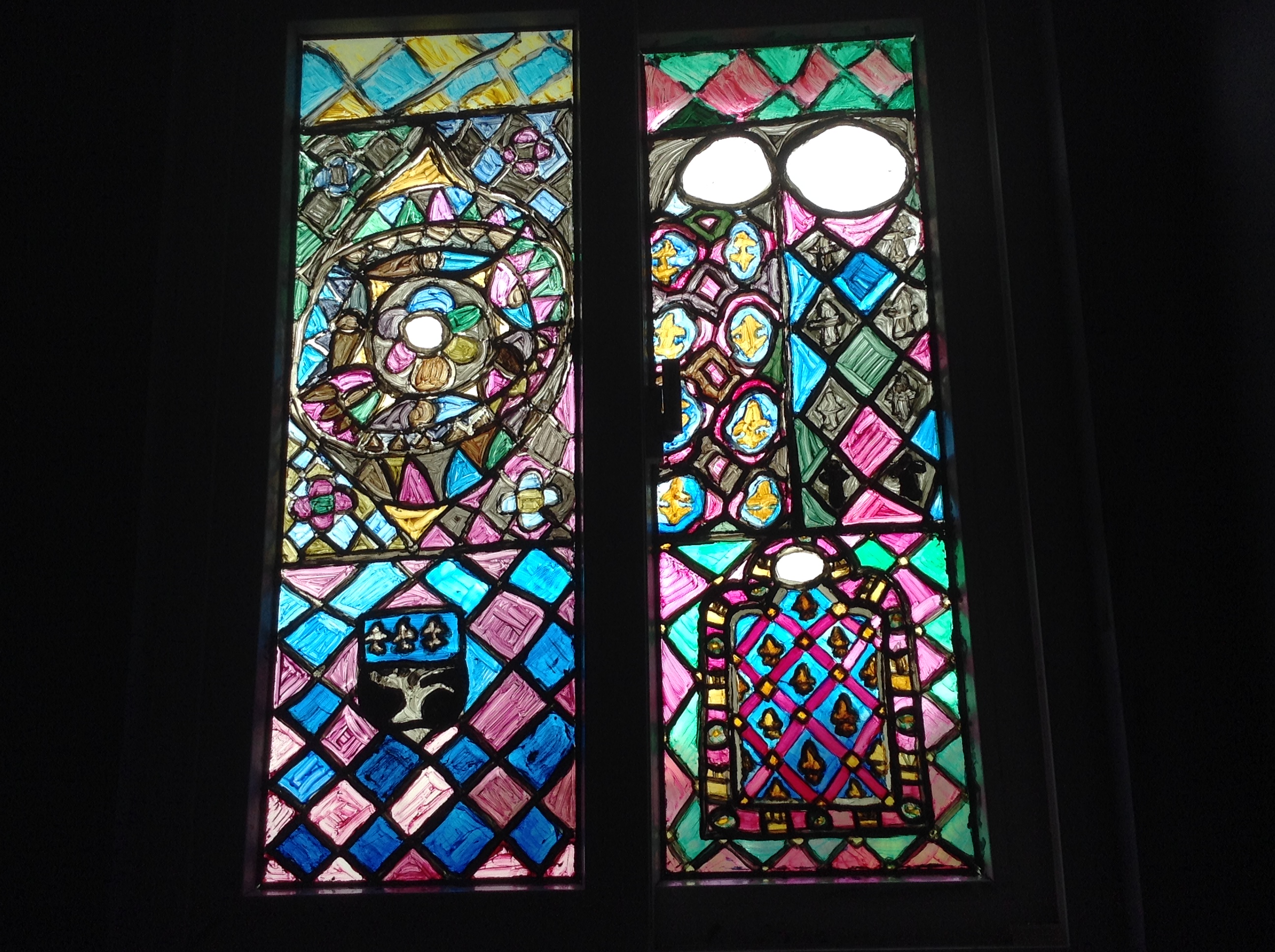
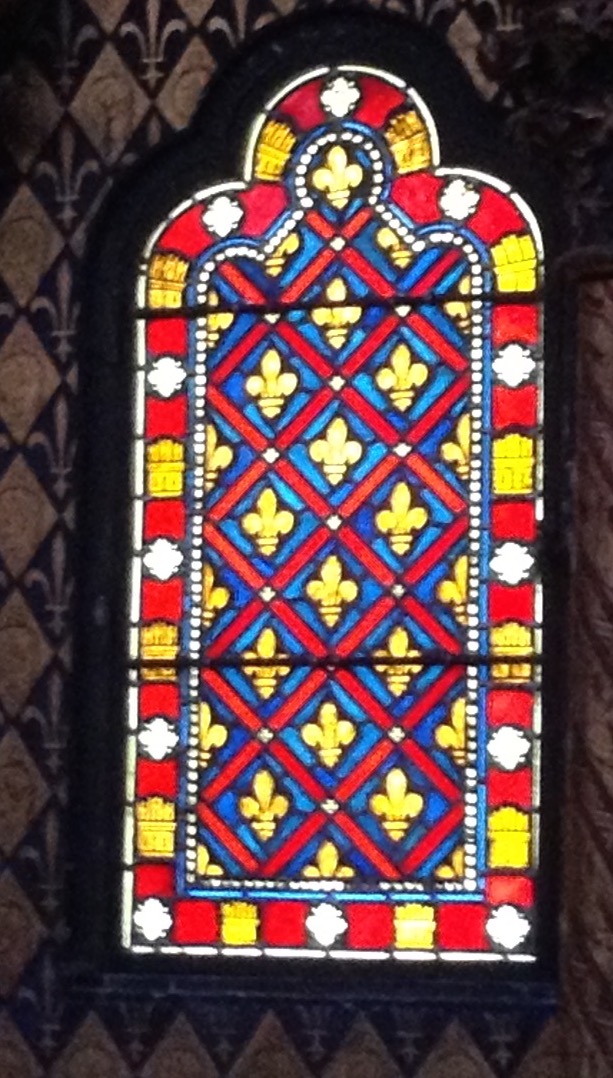
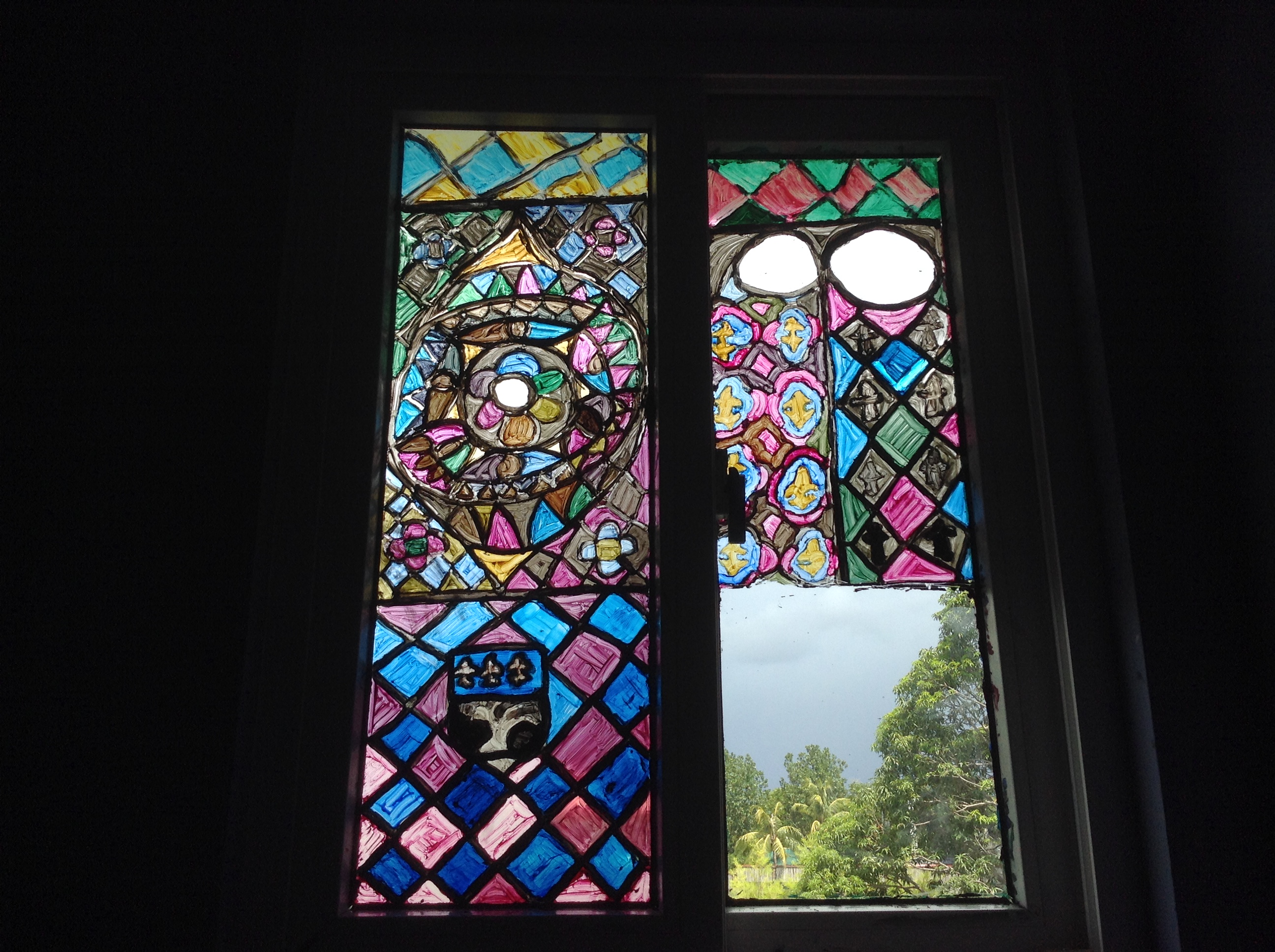
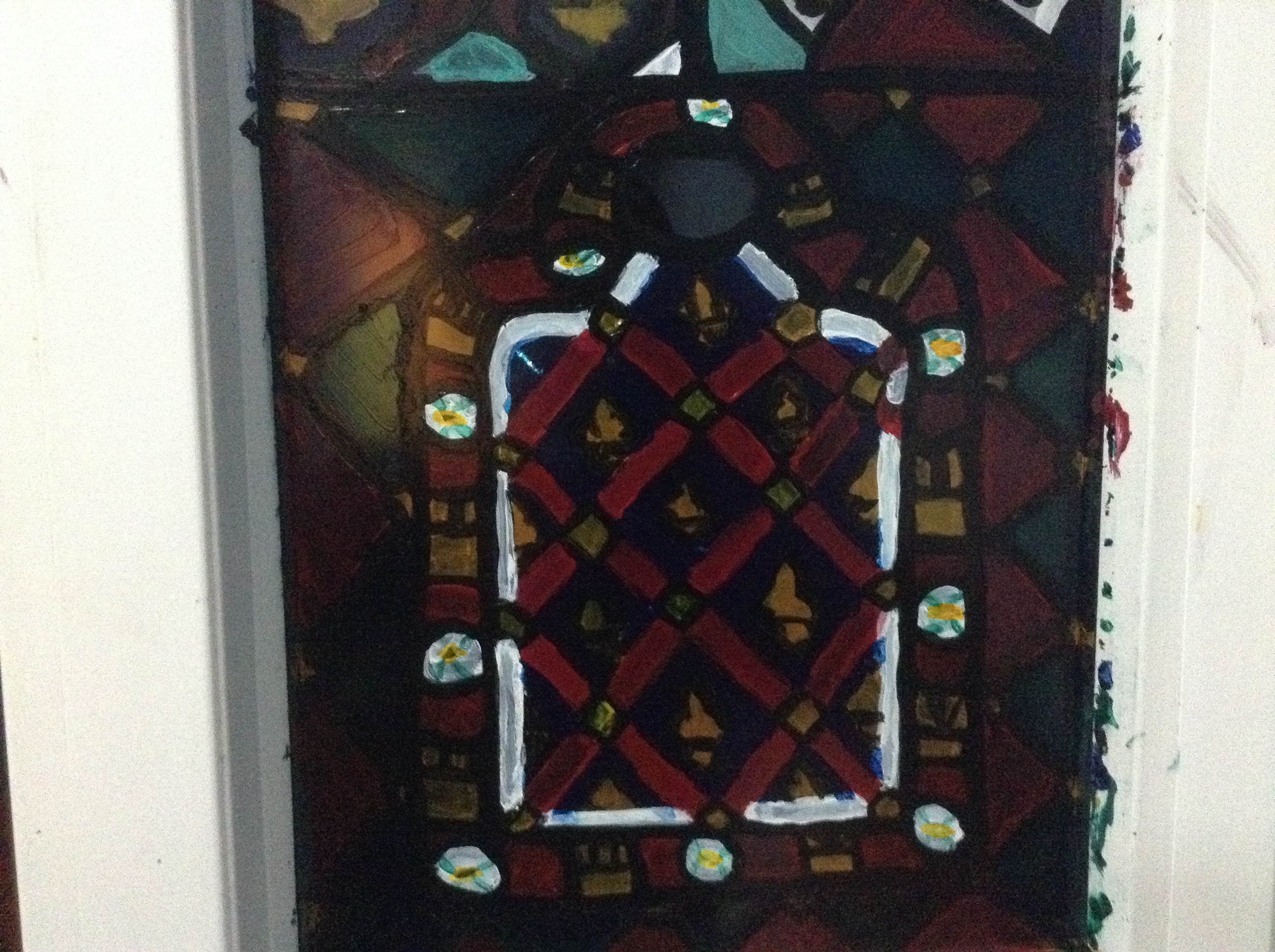
As I have mentioned about last year, for quite a time I’ve been doing some painting work with the help of others in the making of a spectacular “Fresco Hall” or murals in a simple bathroom, this also includes a complex stained glass on the bathroom’s window. This time, I have made an update to the bathroom’s paintings, in particular a small addition to the stained glass window. This art I have put into the window is originally inspired by a small portion of the actual stained glass window found in the Sainte-Chapelle in Paris. My window design was made replacing an older and much more plain design of the original bathroom stained glass window, and now it has the design of the French fleur-e-lys pattern with red linings and a red frame with alternating designs, around it is a red and green checkered pattern, and in fact it did not take too long to make.

finished product of the new stained glass portion
The whole window set with the new portion stained glass

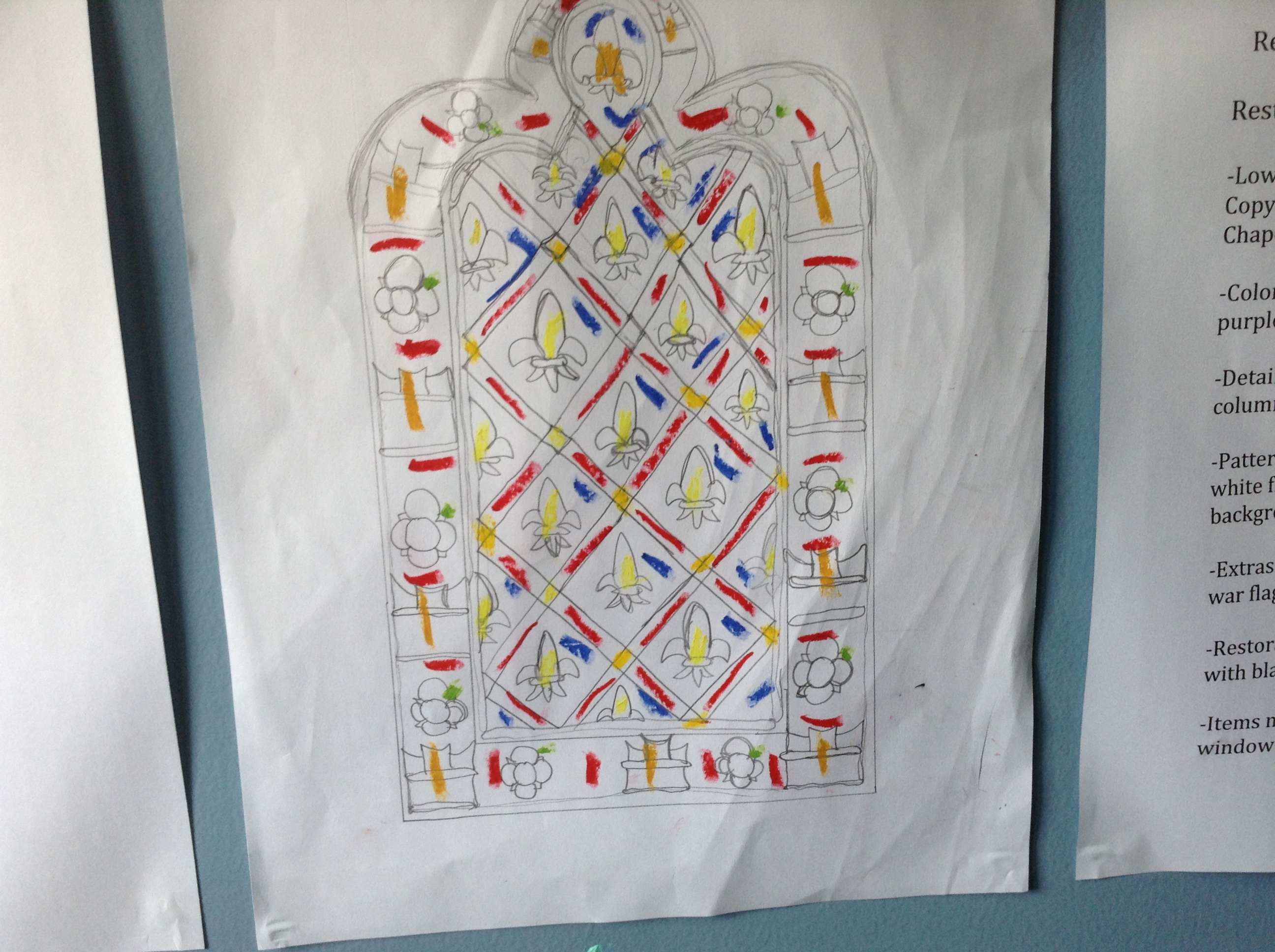
Beginning the whole stained glass renewal and bathroom paintings restoration project, I of course begin with a plan for the project and a design for the stained glass. First of all the original piece that inspired this stained glass project is a stained glass piece found placed into one of the walls of the Sainte-Chapelle in Paris but not a stained glass piece in the large windows itself as it would be too difficult to copy the design of the 15 windows of the Sainte-Chapelle (found in the middle of the Palais de Justice in the Ile de la Cite, Paris). The window from the Sainte-Chapelle I’m trying to make my own version out of may not be an original 13th century made stained glass window. That window in particular is very small but I’ve spotted it when I was in the Sainte-Chapelle and thought of doing something like it when I do a bathroom restoration project as it looks simple to make and does not use too much colors. When making the window design, I did not end up using too many colors which would end up being useless but only used a few colors; black, red, blue, yellow, gold, green, and white and only used 3 paint brushes in the making. When making the whole thing, I begin with a sketch of the design on paper to make a draft for me to follow to do the actual paining itself. To guide me while painting the windows, I placed a print out of the picture of the actual window in the Sainte-Chapelle and the sheet with my sketch. Afterwards, the actual painting of the window begins, starting by outlining the frame with black marker then traced with black paint for the permanent frame. When making the stained glass window, I use painting as a method for making it rather than the longer medieval way of patching up glass, which would take longer, but when painting the design on the window, I did as precisely as possible.

Original design from the Sainte-Chapelle, Paris
Sketch for the window design
Starting off the window painting

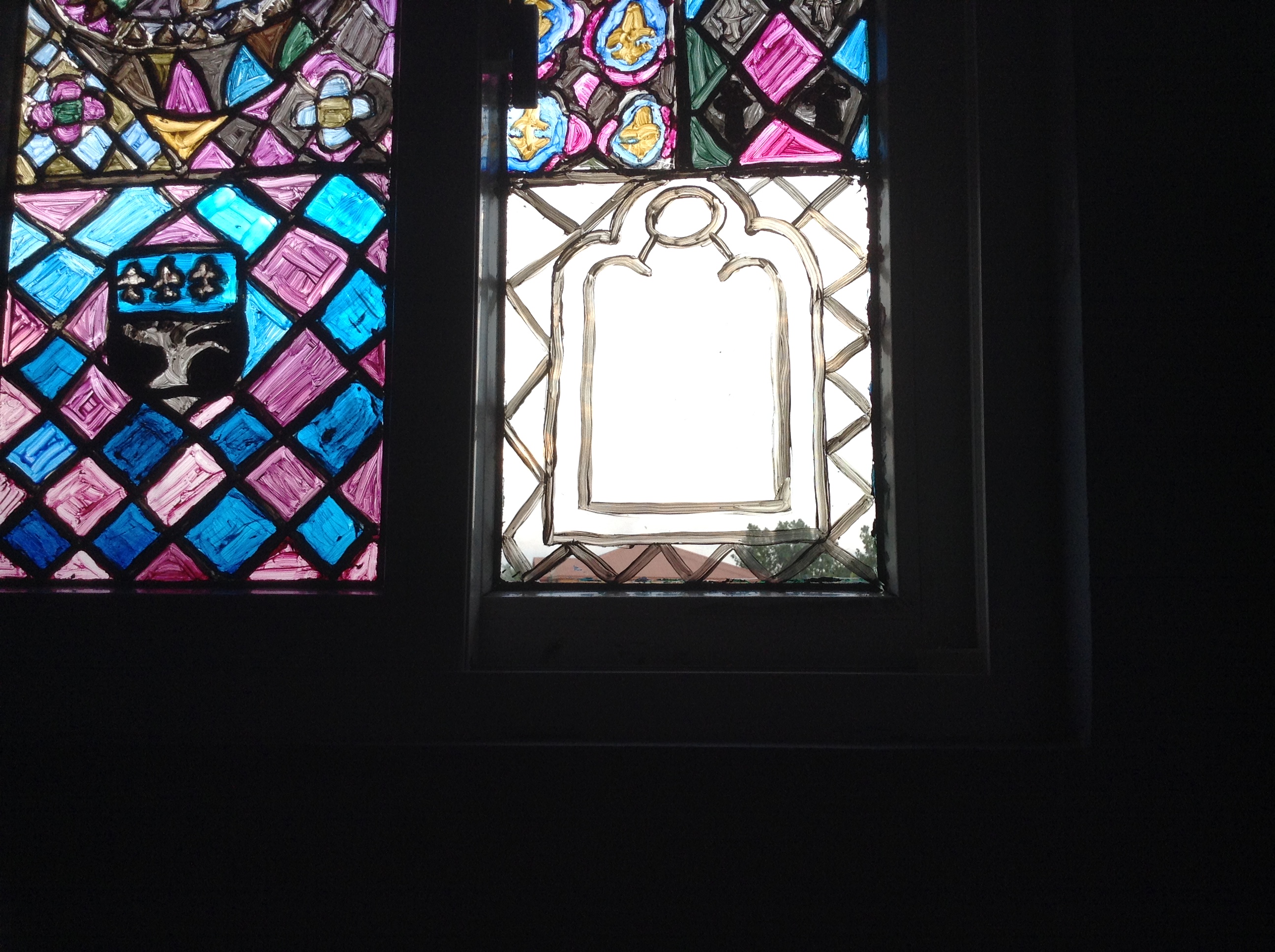
The painting progress of the window begins first with scraping off the old design painted on the window, which has been around for 2years now, but this old design has been replaced with this stained glass project. When the old window design is gone, the whole lower part of the right window is empty leaving this empty space to be the exact same spot where the new window design would be. With the portion of the window plain and clear, the painting work begins with the outlining of the frame, first with black marker then black paint over it making the lining. The first thing outlined is the frame; first an inner box forming an arch above, the next layer is the outer box much larger and also forming an arch above, outside the arched boxes is the diamond patterns for the alternating red and green. The arched pattern goes with 2 layers, the inner and outer, the inner arch first curves then makes a straight slanted line meeting with a circular pattern enclosed at the top, which would be left plain without any paint serving as a light hole, the original Sainte-Chapelle stained glass does not have this light hole though. The next step is making the pattern within the inner box, made up of symmetrical intersecting red lines, intersected with yellow squares, forming symmetrical diamonds between the lines, which is original to the Sainte-Chapelle stained glass. Within the diamonds, the fleur-de-lys pattern goes next outlined then painted within each diamonds, if the diamonds are only half as it touches the black borer, the fleur-de-lys would be cut in half as well. The next step in the making would be the design in the outer box layer, this would be the design of the gold Castilian castle and the white York rose alternating each other going around the frame of the box, the patterns curve to as it reaches the curved portion above. After this, the next step is coating the gold fleur-de-lys with the blue background giving it a traditional French look, the blue has to be carefully done without overlapping and must be surrounding the fleur-de-lys and within the red lines. The inner box lines with the gold and blue patterns is also lined with white bordering right next to the black outline separating the inner and outer box in order to follow the Sainte-Chapelle pattern, when doing the white, it must be thinly done making it look like an extra border where the blue and gold ends but the red lines and yellow intersecting squares overlap it. After this, the next step is painting the red background for the outer box between the castles and white rose patterns, the red background for the outer frame is also seen in the Sainte-Chapelle version as well. Next goes, the outside squares already as the actual window pattern is almost done; the outer squares however is much easier to make, as the red and green squares only alternate each other, in the intersecting points of the green and red squares would be the same gold-yellow intersecting small squares again, and to make it properly proportioned and aligned, black paint is used again to line the squares over the colored glass. Lastly is the finishing touches, here the whole window design is mastered where no mess is left and everything must be perfectly aligned, proportioned, and completely colored, most of the paints are used again but used less already and only to make the colors complete. Most of all, black is used again to properly line the design and make it aligned well, afterwards, its all done.

starting with the outline
Full outline of the window
Window with the red lines with diamonds in the middle for fleur-de-lys design
The flour de-lys and castle and white rose pattern added
The blue background for the diamonds added
The red backgrounds and red squares added
Almost done with the colours finished

As the whole painting progress is done, the window can be seen differently during day and night. After all, its just a small portion of the whole stained glass windows that was done but it still gives more vivid detail to the window rather than just alternating squares like before. As the window is complete, it is best seen during day especially when the light is at its brightest, here the window can be seen in its natural colors as the sunlight hits it, in fact the outside can be slightly seen with light passing through but it cannot be seen to clearly with the puzzle of colors. The window during night is completely different as the colors look much more flat without natural light but the precision of colors is seen much better at night without any light passing through. However, during sunset or sunrise is the best time to see the window as the light slowly changes making the perspective of the colors change slowly. When seeing the window itself, a mix of art, especially of medieval symbols of Europe is seen making it a medieval cultural reproduction having the symbols of France (the fleur-de-lys), Castile (the castle), and England (the white rose) combined giving it an authentic medieval look. Most of the window’s design remained true to the original Sainte-Chapelle window, except for the light hole above and the alternating green and red squares outside the frame. Rather than the window itself, the bathroom restoration project includes a few new painted tiles on the walls. There are 4 different examples of the new tiles of the walls added in this restoration project; the national symbol of Medieval and Renaissance France, which is the 3 fleur-de-lys with a white divider and blue background, the other is the seal of Rome with the gold eagle and wreath with red background and the standard (SPQR), the other seal on the tiles is the Genoa football team seal, one of my favorite football team seals, and lastly is the design of the classic Byzantine war flag giving a piece of Byzantium into the whole art filled bathroom.

Night view of the new window design
Day view of the window design
SPQR Roman symbol tile
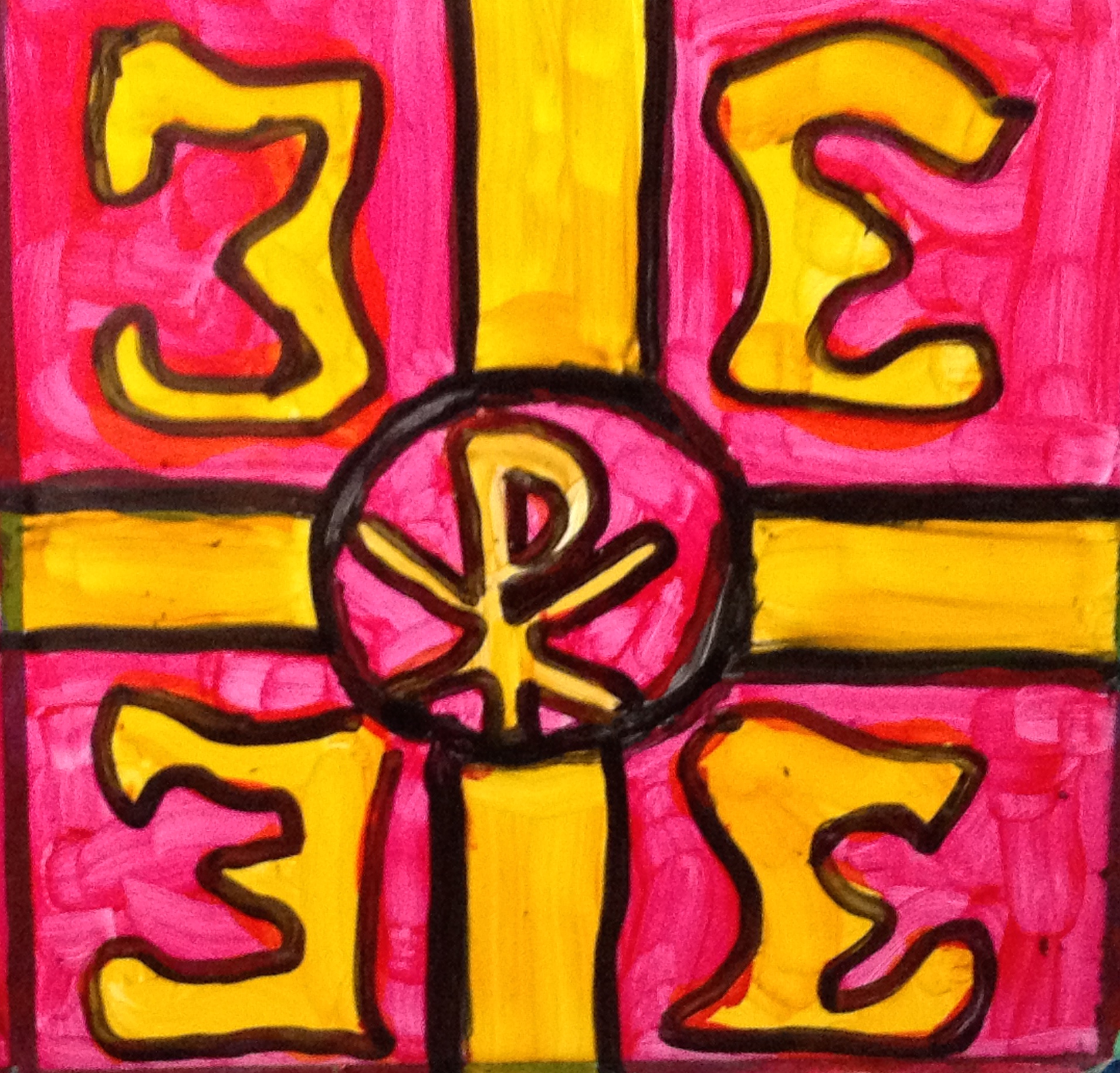
Byzantine war flag tile
Medieval French symbol tile
Genoa symbol tile
FC Genoa symbol tile
The window at sunset
Full window in warm color

Overall, doing the whole restoration project was not as difficult as I expected it an in fact took quick in the making. Mainly, not much was done this time compared to before, but the highlight of all this was making the window. This time, what is new to me is working on a painting design with advanced planning and an advanced sketch, also I had design kept in my mind ever since seeing the original piece in Paris but of course it does not have its medieval originality any more but is still something unique. True enough, it is a lot better and faster to work with a plan of the actual thing, anyway hope the newly installed stained glass stands strong… thanks for viewing!
A Homemade Museum of Military Figures and Sketches (Musée de L’armée dans Maison)

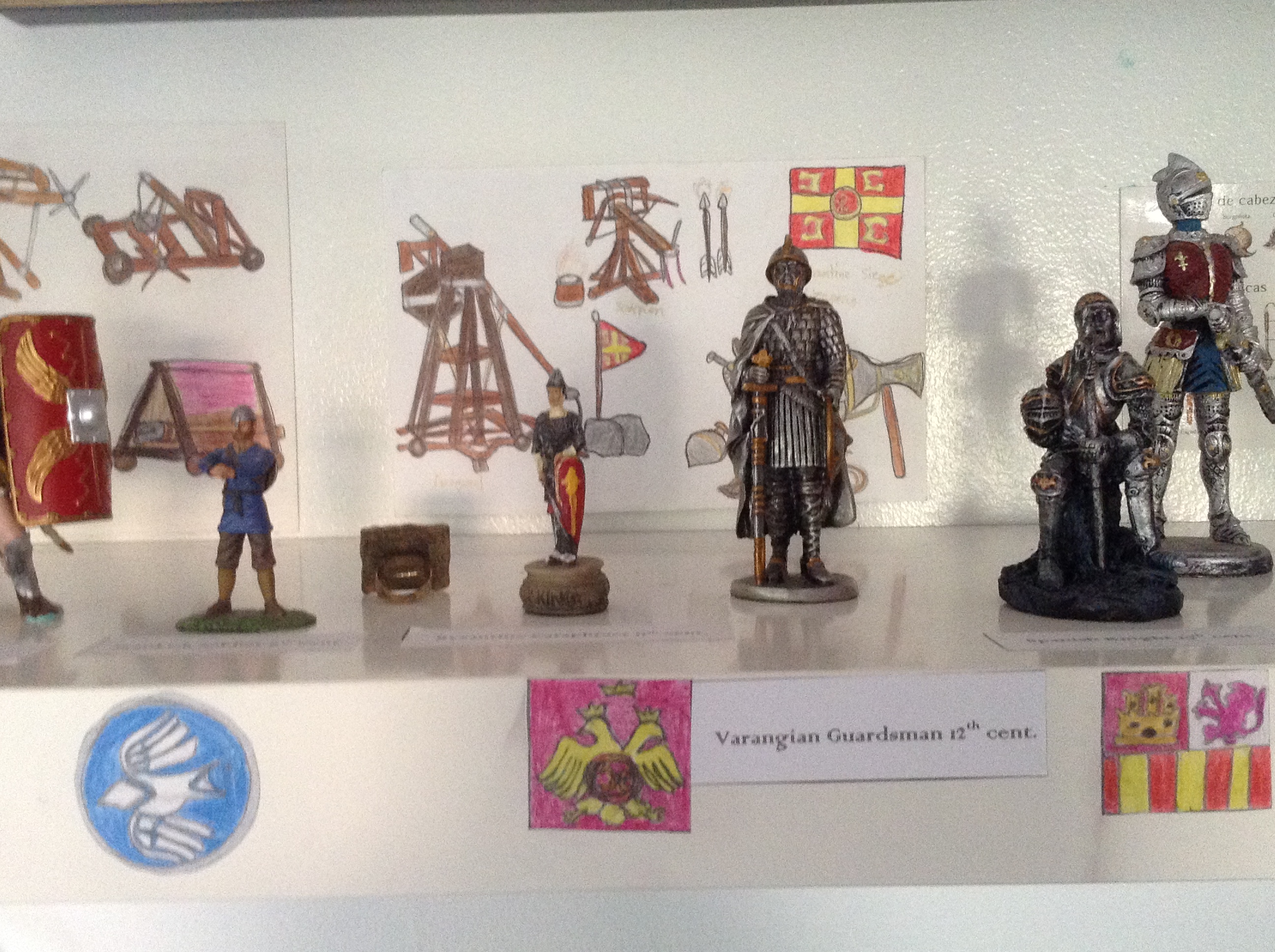
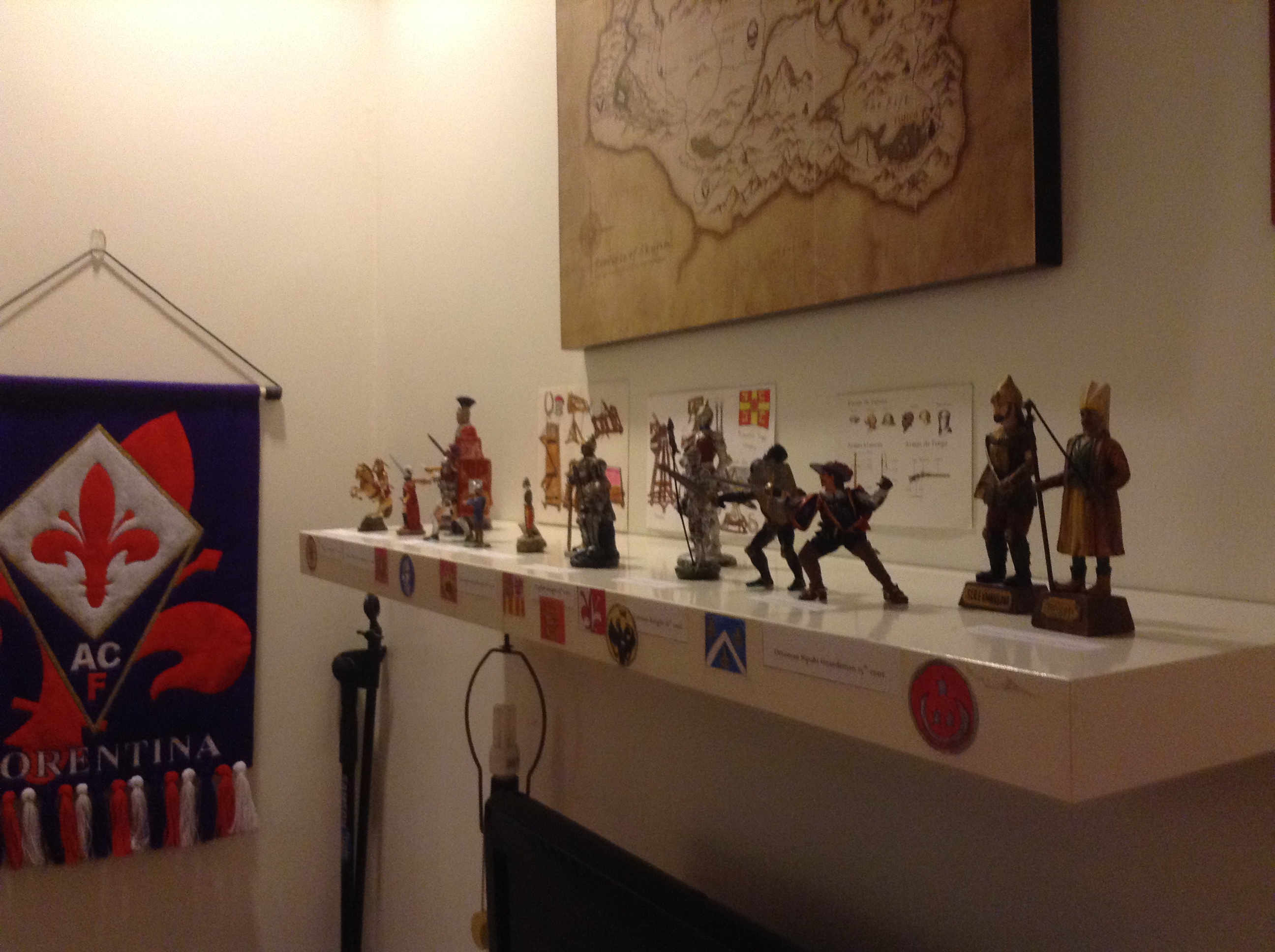
Some time before, I have mentioned about my vast collection of military figures from different historical periods. Now I have made a type of “museum” displaying these figures accompanied by my sketches of historical period soldiers, weapons, and siege items. This sort of museum in my house is called the “Musée de L’armée dans maison” in French, which means the homemade army museum based on the original Musée de L’armée in the Hôtel des Invalides in Paris, which shows a massive collection of the history of the French army from the 13th– 20th centuries. The one I put up on the other hand shows a small but extensive collection of military scale model figures from almost every country in Europe dating from antiquity (4th century BC) to the 17th century having all sorts of soldiers, knights, legionnaires, warriors, and even samurais. The first and ultimate collectors items military figures are above the upper shelf arranged left to right in chronological order, behind them are my sketches of siege weapons (the chart of Roman siege items behind the Roman figures and the Byzantine siege weapons behind the Byzantine figures) while a postcard of Renaissance swords, guns, and helmets are behind the Renaissance figures. The scale model figures go from Greek, to Roman, to Barbarian, to Byzantine, to Medieval, to Renaissance, to Ottoman, here’s the list of the figures:

  • Macedonian Cavalryman 4th cent BC.
  • Roman Legionnaire 2nd cent
  • Roman Auxiliary 1st cent BC.
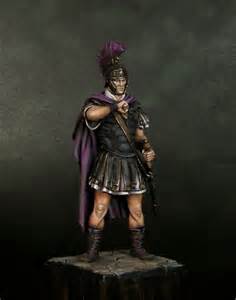
  • Roman Praetorian Guardsman 1st cent
  • Roman Centurion 1st cent
  • Frankish Soldier 6th cent
  • Byzantine Cataphract 11th cent
  • Varangian Guardsman (Byzantine) 12th cent
  • Spanish Knight 15th cent
  • English Knight 15th cent
  • Italian Knight 16th cent
  • German Knight 16th cent
  • French Musketeer 17th cent
  • Ottoman Sipahi Guardsman 15th cent
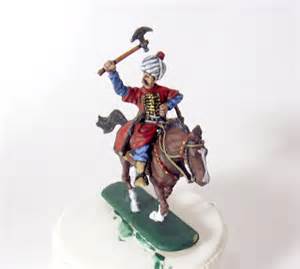
  • Ottoman Janissary 16th cent
  • Macedonian Cavalryman, Roman Legionnaire, Praetorian Guardsman, Roman Auxiliary, Roman Centurion figures
    Macedonian Cavalryman, Roman Legionnaire, Roman Auxiliary, Praetorian Guardsman, Roman Centurion
    Frankish soldier, Byzantine Cataphract, Varagian Guardsman, Spanish Knight, English Knight
    Frankish soldier, Byzantine Cataphract, Varagian Guardsman
    Spanish Knight, English Knight, Italian Knight, German Knight
    Spanish Knight, English Knight, Italian Knight, German Knight
    French Musketeer, Ottoman Guardsman, Ottoman Janissary
    French Musketeer, Ottoman Guardsman, Ottoman Janissary

    Full view of the Figures on the shelf
    Full view of the Figures on the shelf

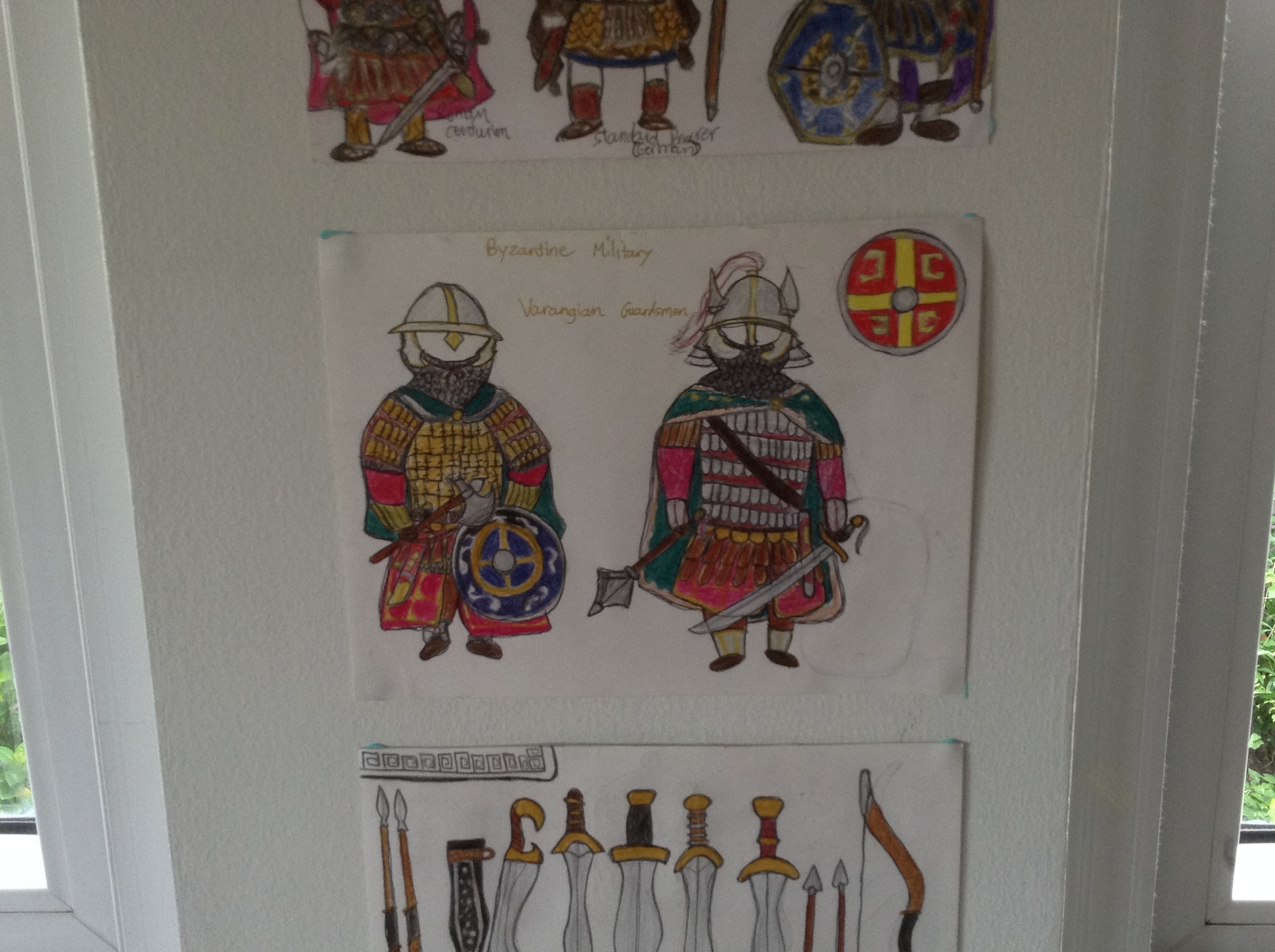
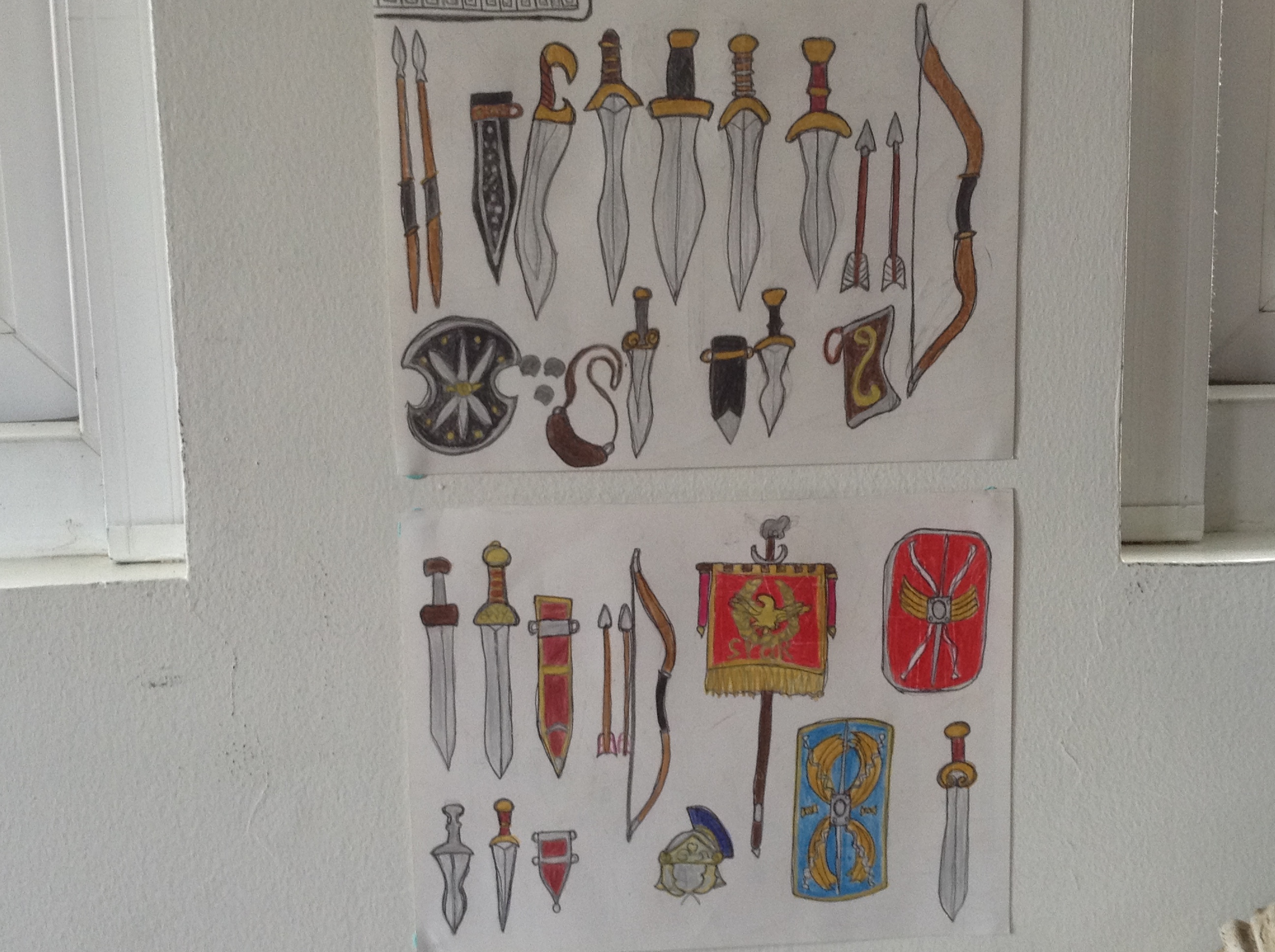
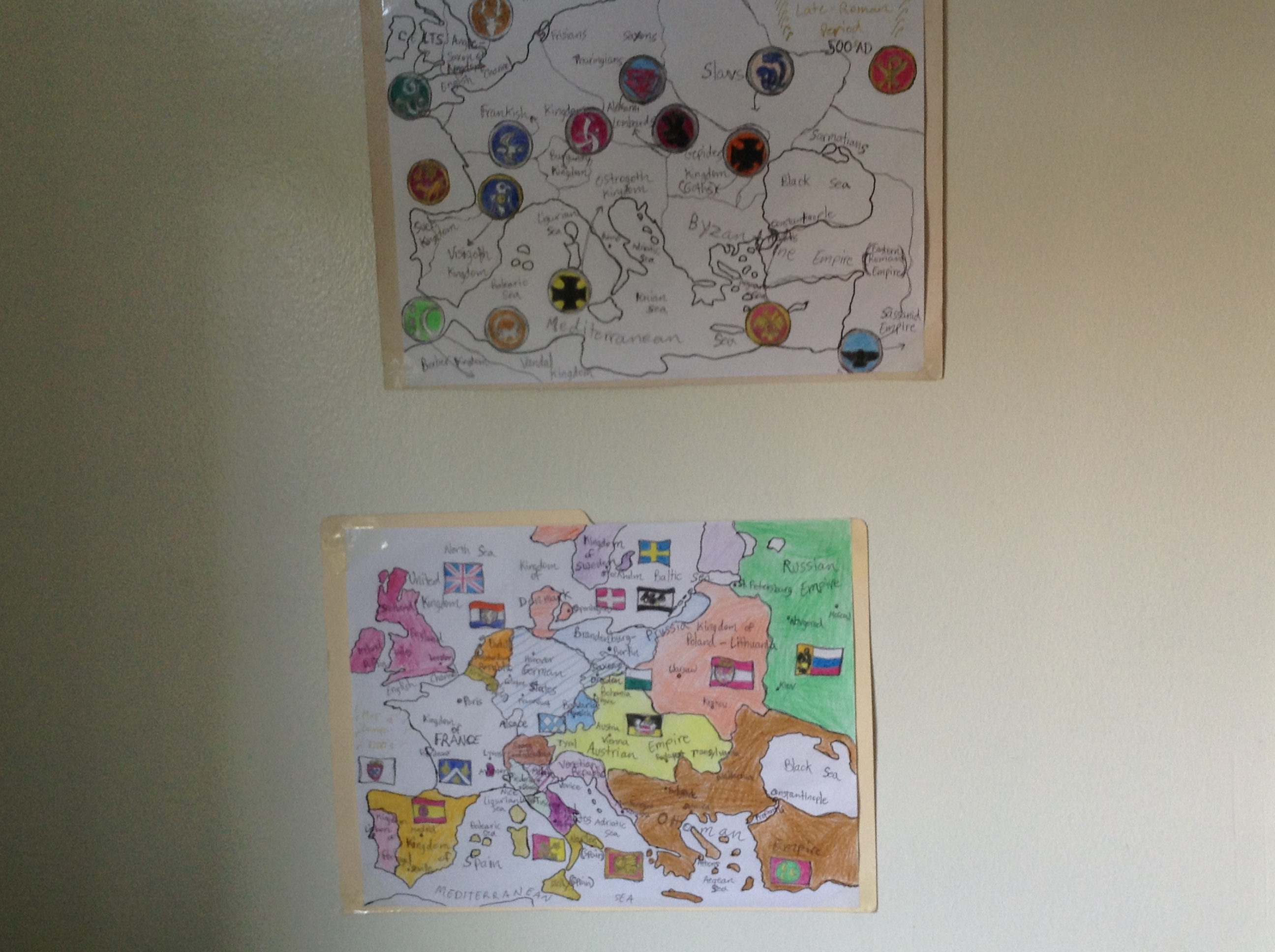
Displayed on the walls are sheets with some of my sketches of historical soldier sets, which happen to be the best of them. First of all is the sheet with the 2 Greek Hoplites, the one on the left with white armor, a helmet, red cape, and a spear with a shield, the one on the right has a blue cape, bronze plated armor, a large round shield and a Greek sword. Below it is the sketch of 3 Roman military figures of the Roman army, a centurion, a standard bearer, and a praetorian guardsman. The next one below it shows 2 Byzantine military figures, the Varangian guards, soldiers from Nordic countries and Russia who served in protecting the Byzantine empire, both these Varangian guards carry a sword and axe or mace, have scaled armor, and a green cape. Right below it are 2 charts of weapons, one showing ancient Greek weapons, the other showing Roman weapons. The set with Greek weapons shows some of them including swords, javelins, bows, and daggers but lacking in spears and large round shields; the Roman weapon set on the other hand shows some swords, daggers, shields, bows, a banner, helmet, but lacking spears. The other wall shows historical maps (my sketches too) one of them is Europe in the 500’s (6th century), the other is Europe in the 1200’s (13th century), and the other is Europe in the 1700’s (18th century). In each map, it shows how the geography of Europe has changed over the centuries; such as in the 6th century, Europe was still made up of large kingdoms ruled by different tribes, as in the 13th century Europe is made of some small but some large kingdoms, but in the 18th century Europe’s kingdom’s were larger and some started forming empires but some remained as small independent states. Anyway, there is still a lot more to go in the collection.

Greek Hoplites and Roman military figures sketches
IMG_2784
Byzantine Varangian Guards sketch
IMG_2785
Greek weapons chart (above) Roman weapons chart (below)
Europe Map 13th century with medieval charts and sketches
Europe Map 6th century (above) Europe Map 18th century (below)

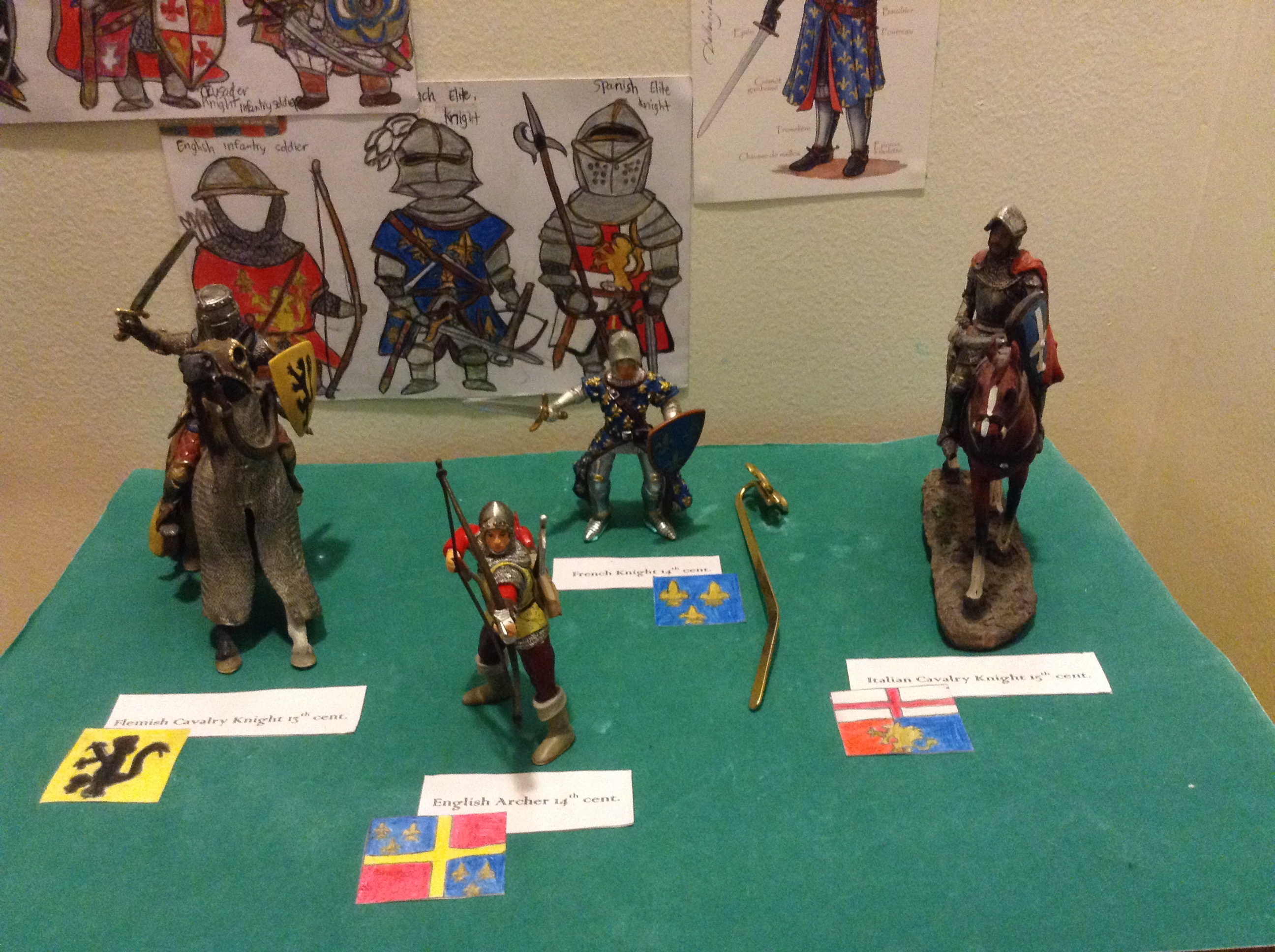
The next shelf shows the medieval army collection, of course above it are a few charts and sketches, and one of them is a postcard showing a full-scale crusader knight’s armor, showing its parts and weapons, although it is in French. The sketches show 6 different medieval soldier units; a Hospitaler knight, a Jerusalem knight, a Saracen soldier, an English longbow archer, a French knight, and a Spanish knight. On the table are the 4 medieval soldier figures:

  • Flemish Cavalry Knight 13th cent
  • English Archer 14th cent
  • French knight 14th cent
  • Italian Cavalry Knight 15th cent
  • Medieval military figures (Flemish Knight, English Archer, French Knight, Italian Knight)
    Medieval military figures (Flemish Knight, English Archer, French Knight, Italian Knight)

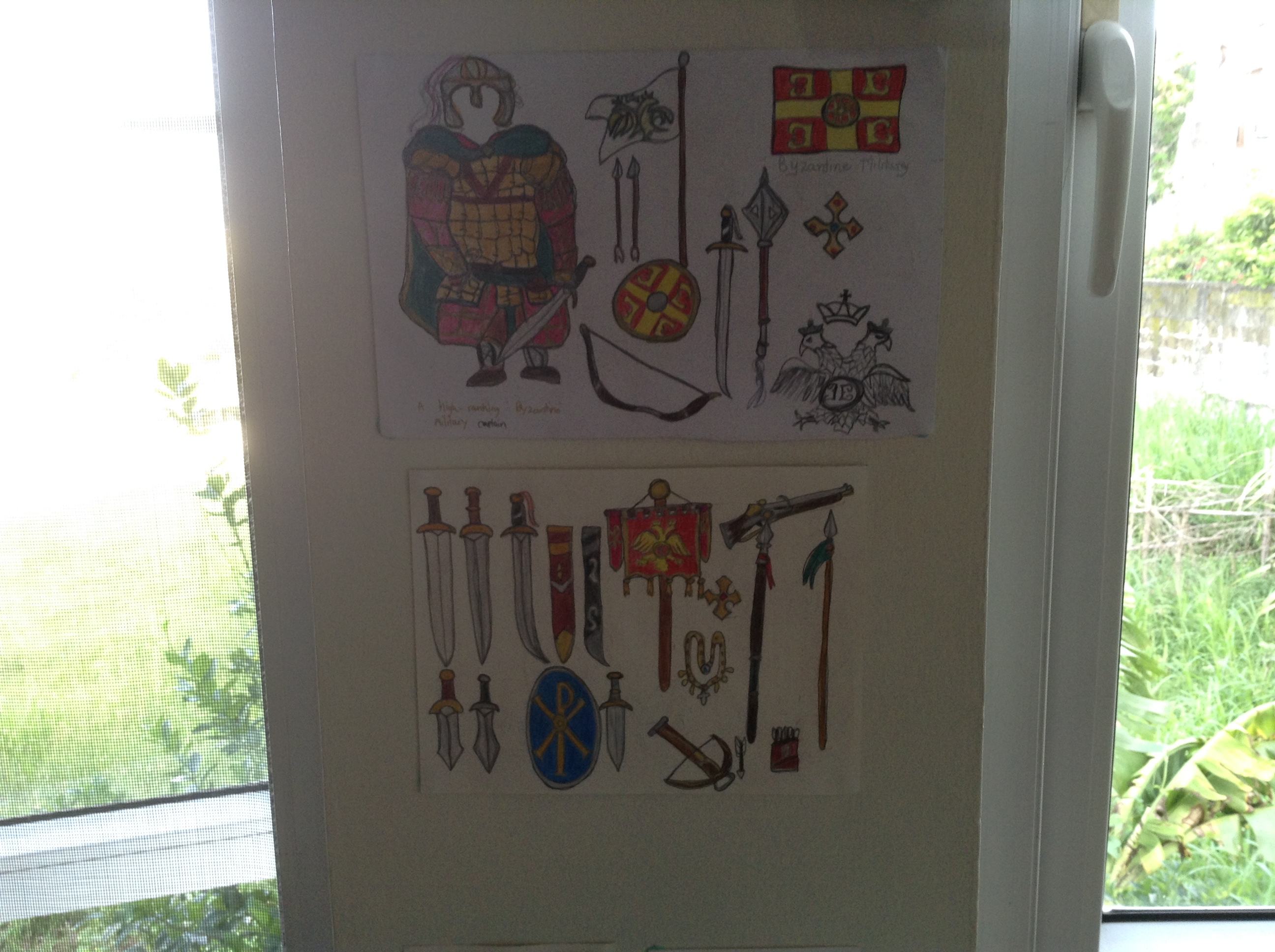
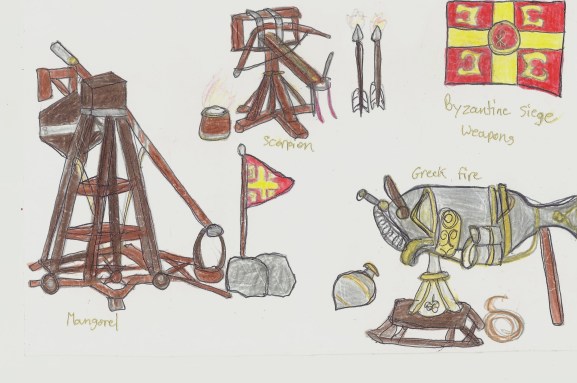
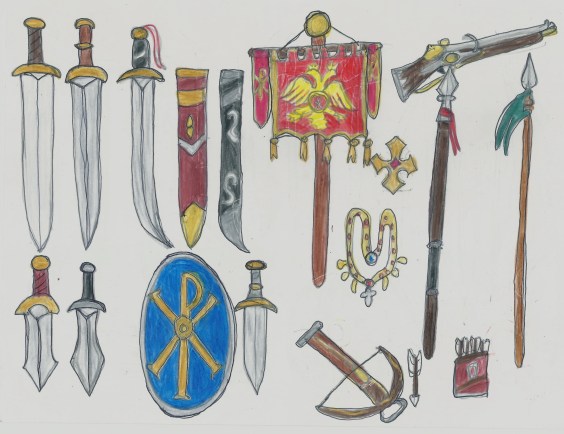
The next table has more of the figures but before the figure; let’s first go with the sketches and charts above. First of all is my sketch of the Byzantine military basics with the Byzantium war flag, basic weapons, a shield, Byzantine symbols, and a figure of a Byzantine army captain. Below is the chart of Byzantine weapons such as swords, shields, daggers, spears, a banner, a crossbow, and an early rifle. There is also a postcard showing the different types of French imperial guards of the 19th century, though this may look out of place, so does the Japanese print beside it. On the table, there are 7 figures, one side shows some other medieval European figures, while the other side shows a distinct Japanese Samurai collection, here’s the list:

  • Saracen Soldier 12th cent
  • Hospitaler Knight 13th cent
  • Polish Cavalry Knight 15th cent
  • Samurai standard bearer 16th cent
  • Samurai Spearman 16th cent
  • Samurai Katana warriors 16th cent
  • Samurai Katana warriors, Samurai spearman, Samurai standard bearer, Polish cavalry knight, Saracen soldier, and Hospitaler knight (sadly broken down) and Japanese traditional print and French Imperial Guard postcard behind
    Samurai Katana warriors, Samurai spearman, Samurai standard bearer, Polish cavalry knight, Saracen soldier, and Hospitaler knight (sadly broken down) and Japanese traditional print and French Imperial Guard postcard behind
  • Sketch of Byzantine military basics and army captain (above) sketch of Byzantine weapons (below)
    Sketch of Byzantine military basics and army captain (above) sketch of Byzantine weapons (below)

    IMG_2805

This is all now for my homemade military figures collection museum, if you were all wondering what it has, this is what. To give it more of a museum look rather than house decorations, I put different charts and panels with the warfare theme behind the figures to make it looks like it has a theme relating to the history period of each soldier, also there are flags beside the labels of the soldiers to point out which country it is from. The homemade museum of course is not overall the figures coming from different countries itself but on the charts and historical drawings it has, all of it put together to make history alive and visible in the same room, that’s all for now, thanks for viewing!

Mysterious Death case- “Death by Fright”

One of the only characters in history that has only been killed by being poisoned through frightening was the legendary 1st century Roman general, Germanicus (15BC-19AD). Germanicus’ death happened on October 10, 19 AD in Antioch, Syria but the case of the death happens to be unclear and remains to be one of history’s most unsolved death cases. The whole story of Germanicus, his rise to power, death, and the aftermath of it is all covered up in No Budget Film’s (Youtube) Lego film, “Some Justice” based on the epic I, Claudius. The whole story of this takes place back in the time of the Roman Empire when it was still new, not yet a 100 year yet but already facing nerve-racking scandals and threats that could shake it down. The Lego film “Some Justice” is a Lego period action and drama film directed by Powee Celdran starring an enable voice cast of Gaston Roxas, Powee Celdran, Nuni Celdran, Michael Zeitouni, Jag Manuel, Francis Ventura, and Santiago Roxas, set in the Imperial era of ancient Rome. SPQR Banner

Germanicus and his army in Lego
Lego film, Some Justice poster

The whole story of the mysterious and unsolved death of the Roman war hero Germanicus is told in story many year later by his brother, Claudius Caesar (Emperor Claudius I) who had unexpectedly been made emperor of Rome. Claudius writes in his books that his brother, Germanicus (full name: Drusus Claudius Nero Germanicus) was Rome’s greatest general and war hero by wining great victories in his battles successfully conquering lands in Germany and bringing Roman control, however what happened to him in Antioch, being frightened to death was one of the most disastrous things that could happen. Germanicus, however as a war hero and general has another long but fascinating background stories, beginning as an unknown and new war commander having his first chance to command an army and win the battle when a terrible disaster happened to the Roman army in a conquest in Germany. This disaster, which happened to the Roman army in 9AD, was the Teutoburg forest campaign where the Roman legion was wiped out by hiding German skirmishers as the Romans were betrayed by their German allied forces leading them into a trap. The Romans were quickly wiped out and the previous general killed himself out of defeat but some surviving soldiers led by a young and inexperienced officer, Cassius led the escape and made it back to Rome reporting to the emperor, Augustus about the defeat, which made him panic but afterwards he found a solution, which was to retake the woods of Germany. In order to do this, he sent Germanicus, then not that well known but confident that he could take back the lost lands, which were once Rome’s, Augustus at the same time trusted Germanicus in this as he had great confidence in him. In 12AD, Germanicus having control of the 2nd legion stationed in Germany set out on his conquest to retake the Teutoburg forest no matter how dangerous it could be. In his conquests in Germany, Germanicus’ wife, Agrippina came along with him and stayed behind at the forts although she had a desire for fighting that she always wanted to join the battle but it was too dangerous for her, although in the forts, she practiced sword and shield skills with the soldiers while Germanicus went on his minor campaigns. When it came to the major campaign in taking back the Teutoburg forest, his officer Cassius who had survived the battle showed Germanicus and his army the way through the forest as they saw the scenes of the massacre of the Roman troops and soon enough, he was able to defeat the Germans and avenged Rome’s defeat in the forest. Shortly afterwards, the German campaign continued on when Germanicus’ legion pushed their campaign forward as there were more lands in Germany, east of the Rhine that were still dangerous and not yet under Roman control. To put an end to the wars and pressure on Rome in the German frontiers, Germanicus went off to battle one more time to finally face off the German tribes of the Suebi and Cherusci beyond the Rhine and expand Roman territory until the Weser River. In the next campaign at the Weser River, Germanicus and his legions were well prepared to face whatever the Germans have to attack them and here the German tribes were twice more fierce and savage. Even with the Romans all set for battle, however their leader Germanicus had been hit in throat by a German skirmisher in a previous battle and the night before got a fever, which made less energetic and soft in voice during battle and at the same time couldn’t give commands clearly but his soldiers still followed his commands as he still spoke with his strong German accent. When the Romans marched through the woods, they were not surprised with the Germans’ surprise attacks and the Romans made their way defeating the Germans throughout the forest until reaching the German camp where Germanicus got of his horse clashing with the German war chief, the leader of the tribe, who was the fierce warrior Ingomer. Earlier, Ingomer rapidly wiped out the Roman troops but the Romans retaliated and wiped out the German army while Germanicus and Ingomer dueled to the death until Ingomer found out all his troops were gone causing him to escape into the woods going insane. When the battle was finished, the officer Cassius was first to notice it that Rome has succeeded and conquered the German woods then Germanicus spoke to his troops that they have won as the Roman standard was planted on the German camp claiming it for Rome, afterwards, the Roman troops made it back to Rome with a triumphal entrance in the streets of Rome with the crowds cheering for them. When Germanicus got to the senate house, the senate awaited him and so was the emperor Augustus himself, here Germanicus was given recognition, which includes his name, derived from the lands he conquered. After his great conquests, Germanicus had grown extremely popular and thought by everyone as hero, however it was becoming dangerous for him already as others thought he had been rising to power so quickly that it would be dangerous for Rome.

Claudius Caesar in Lego narrates the story
Romans and Germans clash in battle (Lego)
Germanicus' triumphal parade in Lego
Germanicus’ triumphal parade in Lego
Germanicus and Ingomer duel (Lego)
Lego Germanicus figure
Germanicus leading his forces
Map of the German campaign

With Germanicus’ popularity, the crowds and citizens of Rome and the whole empire thought of him as a hero but at the same time, Rome’s powerful and long time politicians thought of him as a threat to their power as he rose to power quickly at a younger age and those Roman senators haven’t had any great achievements even at an older age, at the same time Germanicus had gone arrogant and big headed from all his achievements. When the emperor Augustus died in 14AD, it was Germanicus’ uncle, Tiberius followed Augustus as Roman emperor but at the same time Tiberius was one ruler who was always pressured, lacked ambition, was weak with power, and did not want to be emperor in the first place, in fact it was his mother that was motivating him and taking control of him so she could rule through him. Tiberius also envied Germanicus’ popularity, although a Roman senator, Piso requested to Tiberius that Germanicus must be sent away as he would be a threat to the Roman senate an the emperor, at the same time Tiberius ha plans to send him away to Syria and appoint him as governor so he wouldn’t be involved in the politics of Rome. When Germanicus was appointed governor of Syria in 1n 18AD, Piso had already been governor at the same time, which made Germanicus remove him from his position, this then brought more hate on Germanicus from Piso. On October 10, 19AD when Germanicus returned back home to his house in Antioch after watching over the city, his officer Cassius (with the Indian accent) reports to him that he has found signs of trouble inside the house and that he must be careful when entering. Germanicus did not believe the trouble inside the house and feeling proud and nothing could stop him, he just entered. When Germanicus entered the house, he suddenly felt nauseous and his vision changed seeing things going around and his heart started pounding, after a while he saw items that scared him a lot such as skeletons, decaying animal corpses, and his name written with blood on bones, this then started frightening him. When his wife came in, she asked if anything was wrong, he simply said everything is scaring him and he feels like he’s being poisoned, shortly after he went to the bed and felt something different, his heart pounded faster and stopped, moments later he passed out and never woke up again. When the family entered, including his brother Claudius and the officer Cassius, Germanicus had died already, Agrippina commanded that the corpse of Germanicus must be placed in the city square to show the marks of poisoning. Afterwards, Germanicus funeral happened in the streets of Antioch, here his ashes were already placed in an urn and Agrippina held it speaking to the people that their hero is dead and it is time to avenge his death. The ashes were then brought back to Rome and the people out of anger began uprisings against emperor Tiberius thinking he planned the death of Germanicus, their hero. Here Tiberius was greatly pressured since he did not plan it, but at the same time, Germanicus’ family avenged his death by planning out a trial on whoever was behind the poisoning.

Lego Germanicus setting sail
Portrait of Germanicus and wife Agrippina the Elder by Rubens
Lego Germanicus and Cassius outside the house
Death of Germanicus in Lego
Lego Agrippina at Germanicus' funeral
Lego Agrippina at Germanicus’ funeral
Claudius at Germanicus' funeral
Claudius at Germanicus’ funeral
Germanicus' deathbed in Leg
Germanicus’ deathbed in Lego
Death of Germanicus painting

At the dinner table, Germanicus’ family, Agrippina and Claudius, and his cousin Castor, who was his lawyer at the same time and Tiberius’ son, discussed the trial. Here they came up with the plan to charge Piso for having Germanicus poisoned as they suspected it was Piso who was behind it since he hated Germanicus most. Claudius suggested that Piso must be tried at the senate and Tiberius himself must directly make the decision and speak to Piso directly. The trial of Piso then began, Castor was the one who presented the case made against Piso, however Piso disagreed with them saying it was all nonsense and he had proof of Germanicus ordering him to leave having letter with the imperial seal. The senate then panicked about thinking what was in the leeters, however Tiberius ordered them to keep quiet as he also had a strong speaking talent (with a Russian accent) and ordered the trial to be called doff for the day. Later that day, Tiberius’ top agent and head advisor behind his rule, Sejanus came to Piso’s house and asked for the letter to bring to Tiberius so he could read it. The next day, the trial resumed and there was still no evidence on the death of Germanicus and who was behind it, certainly there was a person behind it, but to get the trail quickly finished, Tiberius denied Piso’s request to save him and made him fail the trial leading him to suicide. The truth behind Germanicus’ poisoning and frightening to death was that Piso was actually paid off to join the plot of an ex- German war chief turned into a mercenary who wanted revenge on Germanicus. This person behind the death was the war chief Ingomer, mentioned earlier who lost his lands to the Romans and was forced to escape, here he got back at Germanicus. However, it was Germanicus’ 7-year-old son, Caligula who hated him as well so he suggested to Ingomer that Germanicus must be killed by fright. It was later discovered that the war chief was behind it but he drowned himself in order to not face trial, the case was in a way solved and Germanicus’ death was avenged.

Planning out the trial
Lego Emperor Tiberius
Piso's trial in Lego
Piso’s trial in Lego
Based on I, Claudius- Germanicus' death by Caligula
Based on I, Claudius- Germanicus’ death by Caligula

The whole case of Germanicus’ death has been one of the most mysterious but thrilling death cases of all time, as it had been so hard to discover but it was very unlikely that it was his son, a noticeable enemy, and long time enemy behind it all. On the other hand, Germanicus life and achievements was an interesting story, since he had gained many achievements especially in war at a young age, he was the Alexander the Great of Rome and similar to Alexander, Germanicus’ death came unexpectedly at a young age (32). The whole story of this however, remains to be one of the most memorable in the timeline of the empire’s ruling dynasty throughout Roman history.

Warfare of the Ottoman Empire

The Ottomans were at first a set of tribes from Central Asia making their way inhabiting Turkey (Asia Minor). These tribes were called the Turks, the Ottomans though was one of the tribes out of all of them that have succeeded in taking lands of the Byzantine Empire bit by bit. The Ottoman Turks have grown to become a leading power after their legendary conquest of Constantinople in 1453 bringing an end to the Byzantine Empire and beginning a new one, the Ottoman Empire. From 1453 until the 1600’s, the Ottoman Empire was the dominant empire of Europe especially in the Mediterranean taking the place of Byzantium, and also ruled their powerful empire from the city of Constantinople. The Ottoman Empire has grown through expansions particularly by having a powerful army with diverse and extremely detailed military units. The Turkish military units focused here are those from the time of the height of the Ottoman Empire from the 15th-18th centuries.

Ottoman Empire map
Ottoman Empire map
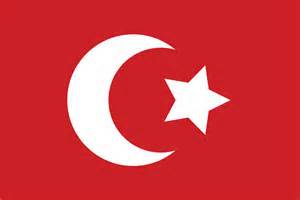
flag of the Ottoman Empire
Flag of the Ottoman Empire
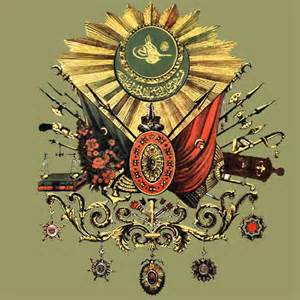
Ottoman imperial symbol

First of all, the Ottoman Empire was mainly an Islamic Empire but a powerful one, dominating the Mediterranean world (Europe, Africa, and Asia) for about 200 years. They started all out as Nomadic tribes migrating from central Asia to the Middle East and converted to Islam. The empire first of all started with Osman their first sultan, the empire and I slowly expanded with their Byzantine conquests weakening Byzantium. In 1453, the Ottomans successfully captured Constantinople; the Byzantine capital led by their sultan, Mehmed II and from then ended Byzantium bringing their empire in, also reorganizing the army. Afterwards, the empire continued to grow with their conquests in Wallachia, Greece, and most Eastern Europe. It was their sultan, Selim I in the early 1500’s that brought the empire to its largest extent conquering Egypt, most of North Africa, and parts of Persia and during the reign of Sultan Suleiman I the Magnificent; the Ottoman Empire was at its height of power. The empire continued to remain strong until the Italians and Spanish crushed their navy at the Battle of Lepanto in 1571, but still remained strong until the 1700’s. Afterwards, the Ottoman Empire began to decline after losing wars with Russia, the Greek liberation in the 1800’s, and the overthrow of the sultan in the early 1900’s. The Ottomans though ha powerful army units changing throughout history but had the same strategies. Their units were mostly infantrymen but also some cavalrymen and have battle tactics, which were mostly Asian, inspired. Like the Byzantines, the Ottomans relied a lot on range combat, cavalry, and artillery but had more modern weapons including guns and gunpowder and cannons too. The Ottomans too were one of the first in Europe to have a standing army rather than unprofessional soldiers only coming in time for war like the rest of Europe at that time.

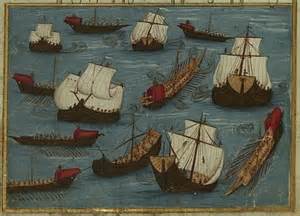
the Ottoman imperial navy (1500's)
The Ottoman Imperial navy (1500’s)
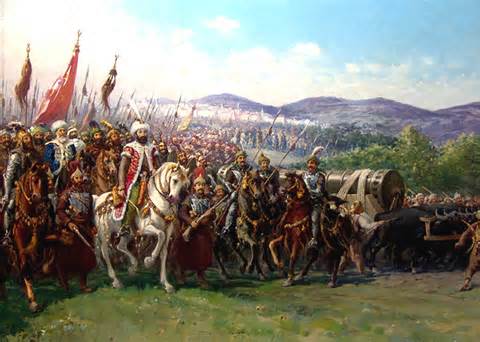
Ottomans siege Constantinople (1453)
full scale Ottoman army
Full scale Ottoman army
painting of the Ottoman cavalry troops
Painting of the Ottoman cavalry troops

The most famous of the Ottoman military units were the Janissaries, the elite imperial guard forces. The Janissaries were mainly elite guard forces guarding the emperor (sultan), especially in battle; they were based in the cities of Constantinople and Edirne. The Janissary units started out in 1383 by Sultan Murad I, they were at first a slave army made of Greek Christian boys but later grew into the elite military forces and were even powerful enough to be feared by citizens. The Janissaries have a standard uniform having no armor but thick robes that could hold up 1 or 2 long swords called kijil and yatagan and either 2 pistols or a rifle together wit gunpowder flasks and daggers. Their main weapon was basically firearms, which mainly a long and narrow but also an effective musket (rifle) designed for the Ottoman army being more effective than European muskets, it was loaded with musket balls and gunpowder and ornate in design. Janissaries also used pistols instead of a rifle as it would be lighter and also used he same gunpowder and musket balls. As a secondary weapon, they used a long curved sword for close combat and a dagger for sidearm, yet they also used early versions of grenades. These units were clearly infantry but some were mounted placed beside the emperor in battle, when war was not going on, they were stationed guarding major cities. The Janissary uniform was distinct from the rest of the army as they had a standard headpiece used as a hood, except only covering the back and softer clothes; they were also the highest paid units. In battle, some of them were equipped with drums or musical instruments to play music to command other troops of Janissaries and other units. They served in the conquests of sultans Selim I and Suleiman I in expanding the empire.

Janissaries in battle
an Ottoman Janissary
Janissaries in Assassin's Creed Revelations
Janissaries in Assassin’s Creed Revelations

Another type of Ottoman infantry units were the Piyade (Yaya), the common infantry troops, they were not as trained and professional as the Janissary units but had a major use in battle. The Piyade units had a set of light armor, basically chain mail and pads compared to the Janissaries, though were an earlier type of units. As weapons, they used long curved swords, spears as well as axes and clubs, some of them were archers as well using either bows or crossbows but barely used guns. These units were basically light infantry but had good use as well.

a Piyade spearman
 Piyade spearman
Piyade units spear formation

The Ottomans had cavalry army units as well; in fact their original units were cavalry. One of the units was called the Sipahi, these were armored cavalrymen using lances, bows, swords, axes, or clubs as weapons. The sipahi were heavy cavalry units with full armor and chain mail as well as a helmet for head protection and a few pieces of cloth for lining. These units were used to perform shock charges in battle first by shooting arrows at the enemy then charging at their lines, these units were their version of the Byzantine Cataphracts. The Akinci was another type of cavalry unit, which were less armored, only having robes and swords or bows as their weapons. Their main use in battle was to scout on the enemy and do skirmish attacks by shooting arrows. The Silahtar on the other hand were the elite cavalry assigned to protecting the sultan in battle. They did not have armor but had distinct outfits. These units were more of the imperial cavalry bodyguards and were the highest ranking among the soldiers.

dismounted akinci unit
Dismounted Akinci unit
Sipahi cavalry unit
Sipahi cavalry unit
Silahtar cavalry unit
Ottoman armored Sipahi unit dismounted
Sipahi unit infantry

Another of the most skilled units in the Ottoman army was the riflemen. These units were basically stationed in the front lines of the battle but also in hiding spots to shock the enemy attack. The Ottoman riflemen did not have much armor on them but had a pointed helmet with scarves lining it. Their main weapon was a long and thin rifle using gunpowder and musket balls and as a sidearm, they were equipped with a dagger or short sword. Another thing the riflemen used were grenades with different explosions, mostly smoke explosions but some with gunpowder with heavy impact.

Ottoman rifleman concept art
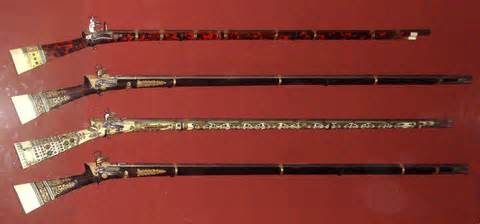
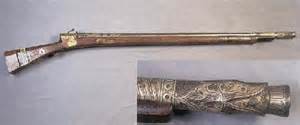
Ottoman Turkish rifles
Ottoman rifle close-up

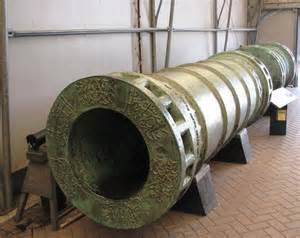
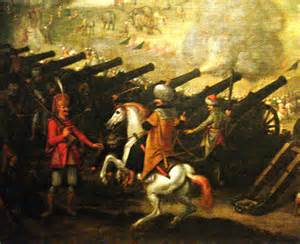
Another part the Ottomans took seriously in battle were their artillery, particularly the cannons. In battle they had all sorts of cannons, the most famous one being the bombarders, short round cannons, use during the siege of Constantinople in 1453. The commonly used cannon of the Ottomans was the battering gun (darbzen), having heavy fire, used usually in sieging walls and attacking large ships. The “balyemez” was a medium size cannon with a longer range, usually used in ships and the sahalaz was a light cannon used in light fire attacking small ships. The later cannons the Ottomans used had more effect such as grapeshot, round shot, and chain shots.

regular Ottoman cannon
Regular Ottoman cannon
bombarder cannon
Bombarder cannon
Ottomans using large cannons in seige
Ottomans using large cannons in siege

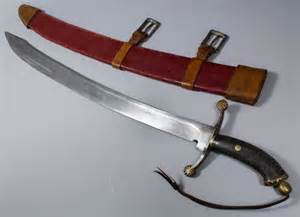
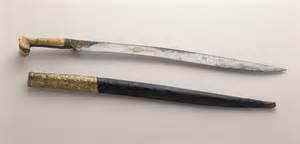
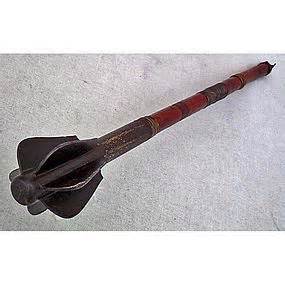
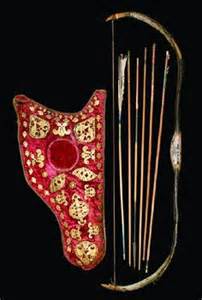
The Ottomans had all sorts of weapons from bow and arrows to heavy fire rifles. First of all, the swords were the most common weapons, the Ottomans had 2 basic types of swords, the “yataghan” and “kilij”; the yataghan was long curved edge sword with a fine tip used by the Janissaries and navy men while the kilij was a long, thin, and curved sword used by infantry soldiers especially the Janissaries. The Ottomans also used round edged maces of clubs as a basic weapon in close combat, used by the Sipahi cavalry and infantry units. They also used bows with the same type of arrows but the bow size made the range and impact of fire different; the look as well happened to be different as it was completely a bent semi-cricle  the infantry units were sometimes equipped with bows and arrows for long range combat or crossbows for short range combat. Spears or pikes were also used for thrusting at the enemy as a melee weapon. Daggers as well were used as a sidearm, so were pistols, used by the Janissaries and most units. The rifles the Ottoman used for long-range combat were long and thin making the shots accurate and the fire too was strong. They too used grenades, in fact one of the first using them to create mini explosions with gunpowder.

Turkish kilij sword
Turkish kilij sword
Turkish Yataghan sword
Ottoman Turk mace
Ottoman Turkish mace
Ottoman Turkish bow and arrows
hybrid spear/ axe tips
Hybrid spear/ axe tips
Ottoman grenades (hand-held)

To fully describe the warfare of the Ottoman Turks, it also involves a mix of culture and is not all about fighting without skill or design but it has a bit of music, art, design, and different cultures in it. Most of Ottoman Turk warfare is based on Asiatic cavalry warfare from the early days, which includes horse archery and shock charges. Although a part of Ottoman warfare comes from Arabic, Syrian, and Persian warfare, which is mostly the armor the Ottoman forces wear looking similar to the armor of Islamic warriors during the time of the crusades especially the weapons they use. A part too of Ottoman warfare comes from Byzantine Greek war culture, which includes especially the siege tactics, large melee weapons and battle formations; it has also a mix of Renaissance European war tactics as it involves cannons and guns. Overall, Ottoman warfare is a mix of the warfare of these cultures put together as one making it its own.

Ottomans siege Constantinople 1453
Ottomans siege Constantinople, 1453 (the aftermath)

With a unique warfare, which only fits in as theirs, the Ottomans were able to build a large and powerful empire lasting for centuries.

The end, thanks for reading!

My military figures collections

For quite a time, and even till now I have an expanding collection of military figures from all the ages, mostly from ancient and middle ages. My vast collection of figures were attained through time, most of it I bought as a collectible from different places in Europe. My collections includes ancient soldiers, Medieval knights, Renaissance armed men, eastern warriors, and Japanese Samurai. All of them I classify in order to identify what their type is and where it was from.

I. Ancient military figures:

Ancient warfare collection

Shown above: Praetorian guardsman, Roman centurion, early Roman legionnaire, Frankish warrior, and Macedonian cavalryman

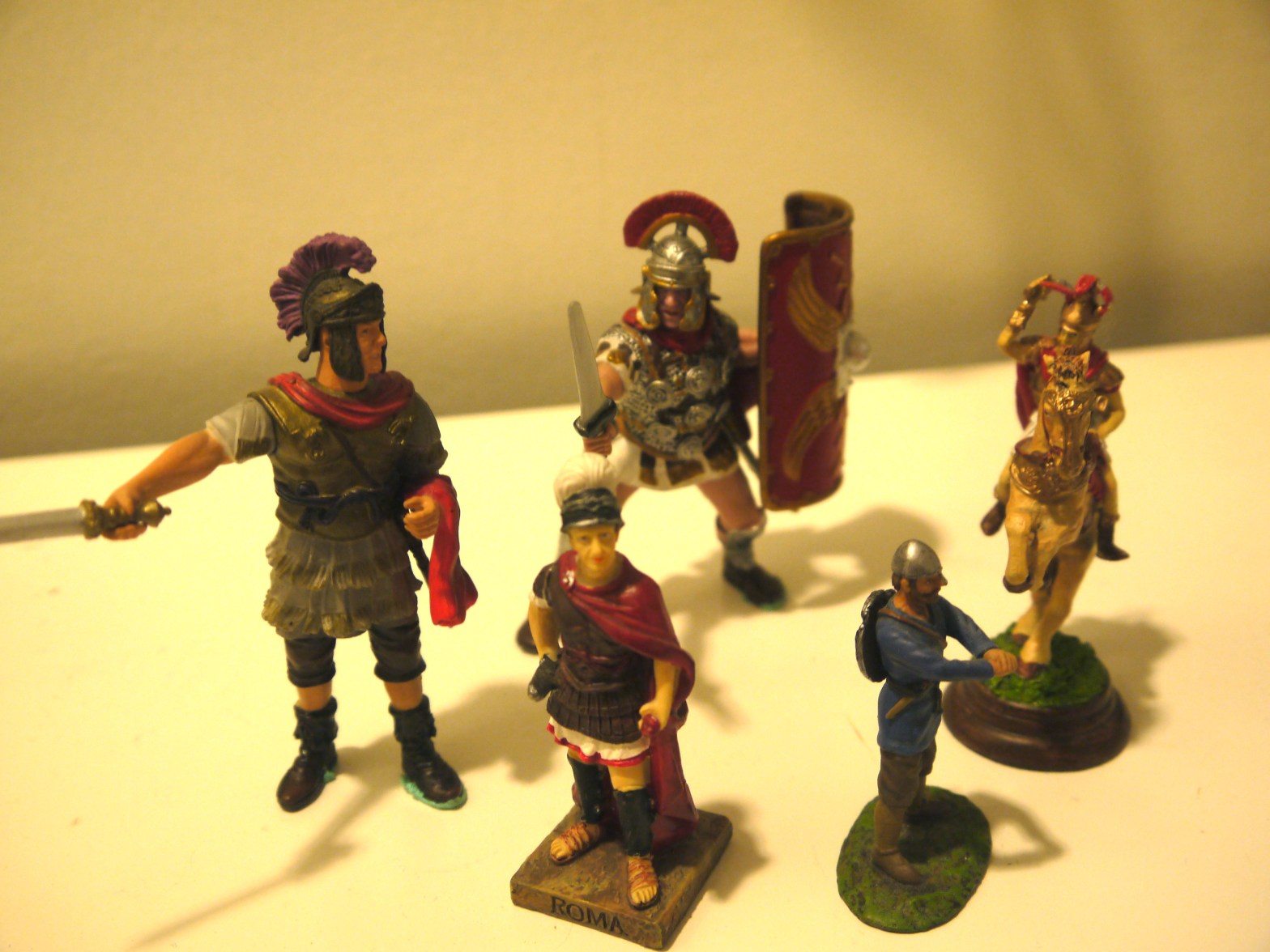
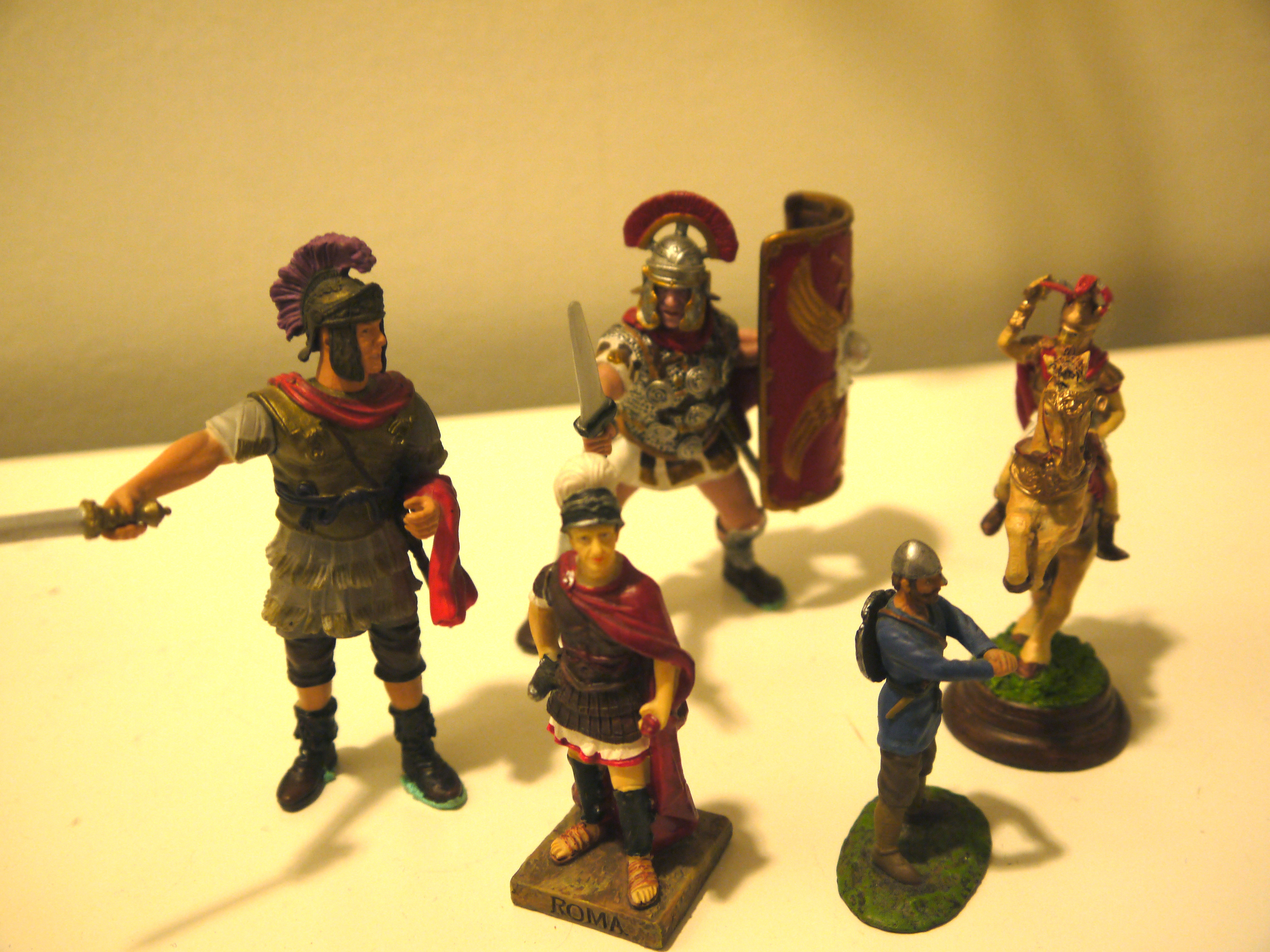
These figures shown here is a part of my collection, classified as ancient warfare figures, total of 5 so far. Here is a Roman Praetorian guardsman figure, the Roman military unit in charge of protecting Rome, seen with a gold metal chest plate, a helmet with a crest, and a sword pointing outwards. The other Roman figure, seen in front is a miniature size early Roman infantry unit with a long red cape, a unique helmet, and leather armor, a unit from the time of the Roman Republic. Behind is a Roman Centurion figure, an army officer with a large square shield, a helmet with the crest sidewards, and a chain-mail armor, this outfit was worn by army officers only. In this picture is also a Frankish warrior part of the Germanic tribesmen, seen with simpler armor which is only a tunic, also with a round helmet, and a round shield at the back. The one on the right is a Macedonian cavalryman figure, mounted on a horse holding its sword. The 3 Roman figures, I got them in Rome during my trips, the Frankish warrior is from Germany, while the Macedonian cavalryman is from Greece. (sorry the photo mat be a lot blurred)

II. Crusades military figures:

Crusades warfare collection

shown above: Hospitaler knight, Italian cavalry knight, Byzantine infantry soldier, German cavalry knight, and French knight

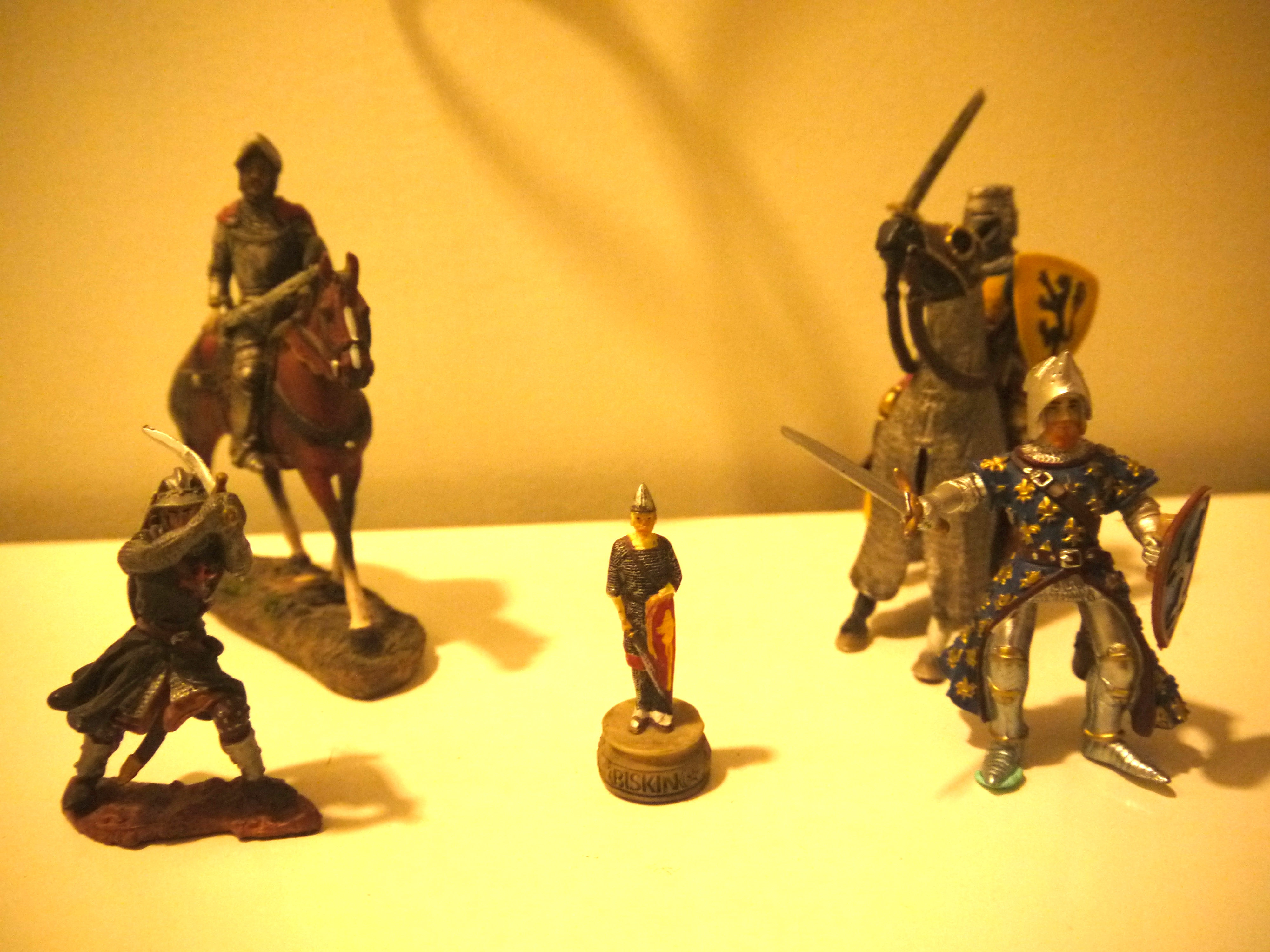
These figures shown above are 5 Medieval figures from the time of the crusades, 4 are knights, one is a Byzantine soldier. Shown here is a knight of the Hospitaler order in the Holy Land during the crusades, wearing a black cloak over the chain mail armor holding its sword. The larger figure beside it on the horse is an Italian cavalry knight with full armor and chain mail, with a red cape. At the center, the miniature figure is a Byzantine infantry soldier, probably a Cataphract unit, however not wearing the lamellar but a chain mail, a long narrow shield, and thin longsword. To the right of it is a French knight, with the French blue-design cloak over its full armor underneath, with the French pointed-front helmet opened, holding a broadsword and a shield with the French coat of arms, the 3 fleur-de-lys. Behind it is a German/ Flemish crusader knight on an armored horse, wearing chain mail with a yellow tunic over and a square helmet, holding a shield with the Flemish coat of arms and a broadsword. The Hospitaler knight is from Germany, the Italian cavalry knight and Flemish cavalry knight from Belgium, the French knight from France, and the Byzantine soldier from Turkey.

IV. Eastern military figures:

Eastern warfare collection

shown above: Ottoman warrior, Saracen warrior, Ottoman Janissary

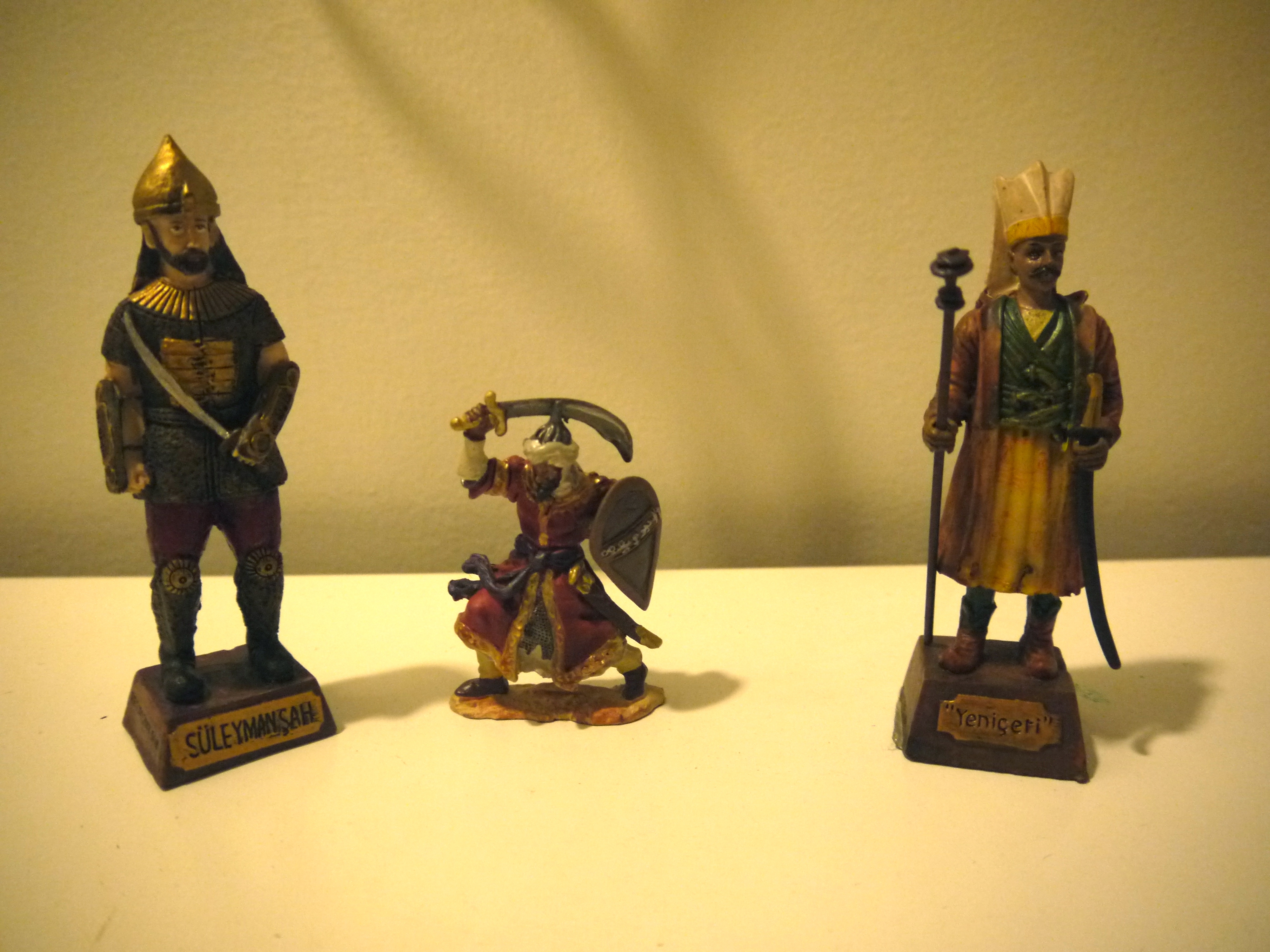
The 3 figures above are of the eastern armies during the Middle-ages , from the Islamic Empires such as the Saracens.The one on the left is an Ottoman warrior with chain-mail and padded armor, the cone helmet and holding a kijil sword. The one at the center is a Saracen soldier from the Crusades, wearing a coat over the chain mail, the cone helmet with a scarf, holding a scimitar sword and a narrow oval shield. On the right is an Ottoman Janissary, the elite protectors of the Ottoman Empire and guards of the sultan, instead of armor, the janissaries wear layers of robes, a headpiece, holding a gun pole, 2 guns sheathed, and a kijil sword. The ottoman warrior together with the Janissary came from Turkey, as from Spain is the Saracen warrior at the center.

IV. Medieval/ Renaissance military figures:

P1210775
Medieval/ Renaissance warfare collection

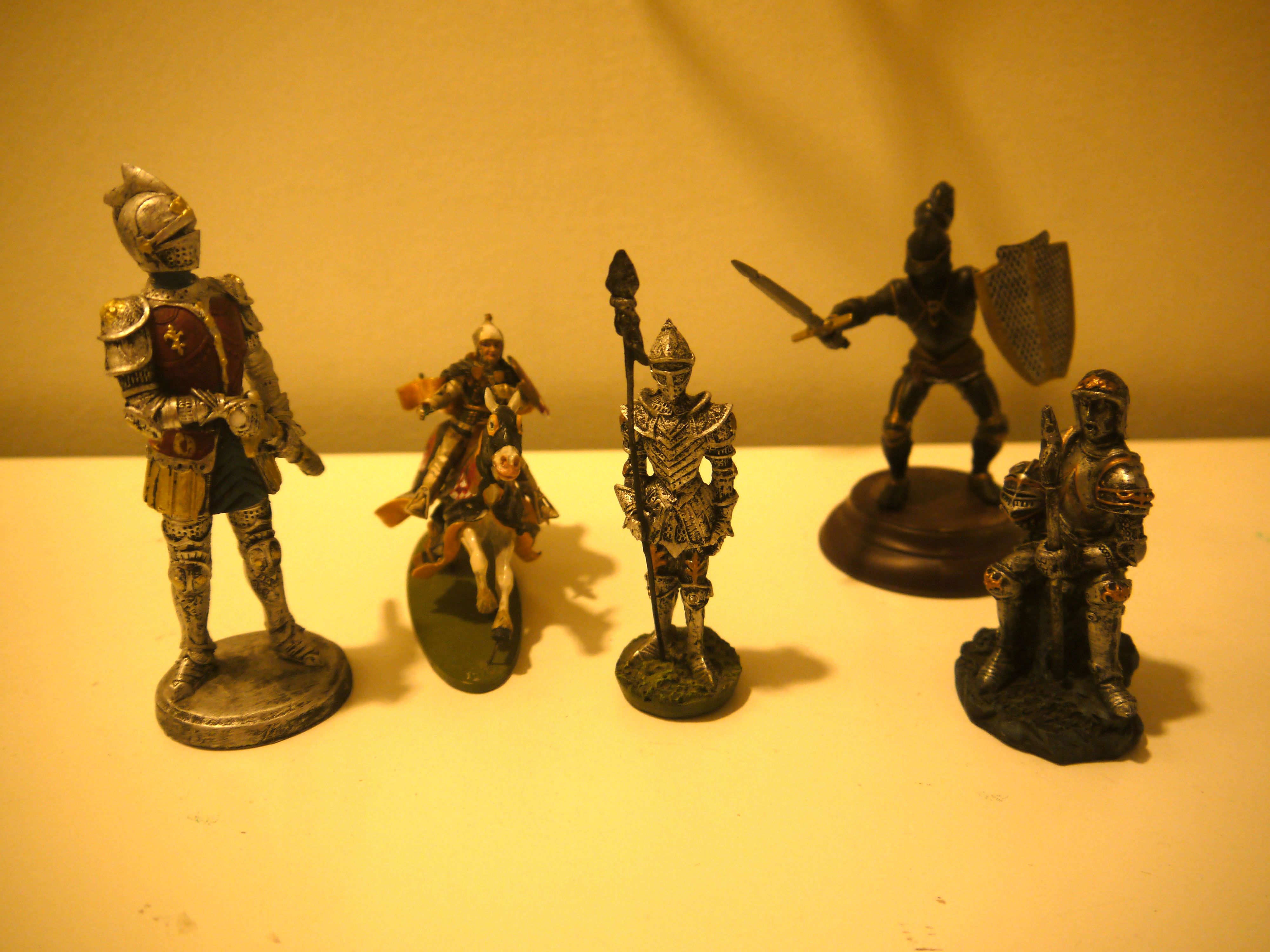
These figures shown above are each from the Medieval and Renaissance age, from the 1300’s, 1400’s, and 1500’s, most include full-armored knights. On the left is an English knight from the hundred year’s war, (13-1400’s) in full armor but with a red tunic over, the English knight has a full helmet and carries a longsword. Next to it is a miniature German cavalry knight of the late Middle ages, mounted on a horse with full armor and a large cape. At the center is an Italian Renaissance knight, with full detailed armor, used during the Renaissance holding a lance. To the right is a Spanish Medieval knight in full armor, sitting down, holding a helmet and a war hammer. Behind it is a Renaissance French knight, seen in the new invention of black armor and is shorter than older armors, having a helmet with a large feather giving it a Renaissance look,it carries a Renaissance sword, and a full metal shield. The English knight figure came from Belgium, so did the Italian knight, the Spanish knight was from Spain, while the German knight from Germany, and the French knight from France. The armor of these figures show the development of armor at the end of the Middle Ages.

shown above: English knight, German cavalry knight, Italian Renaissance knight, Spanish knight, French Renaissance knight

V. Japanese military figures:

Japanese Samurai warfare collection

shown above: 2 Samurai katana warriors, naginata warrior, flag bearer

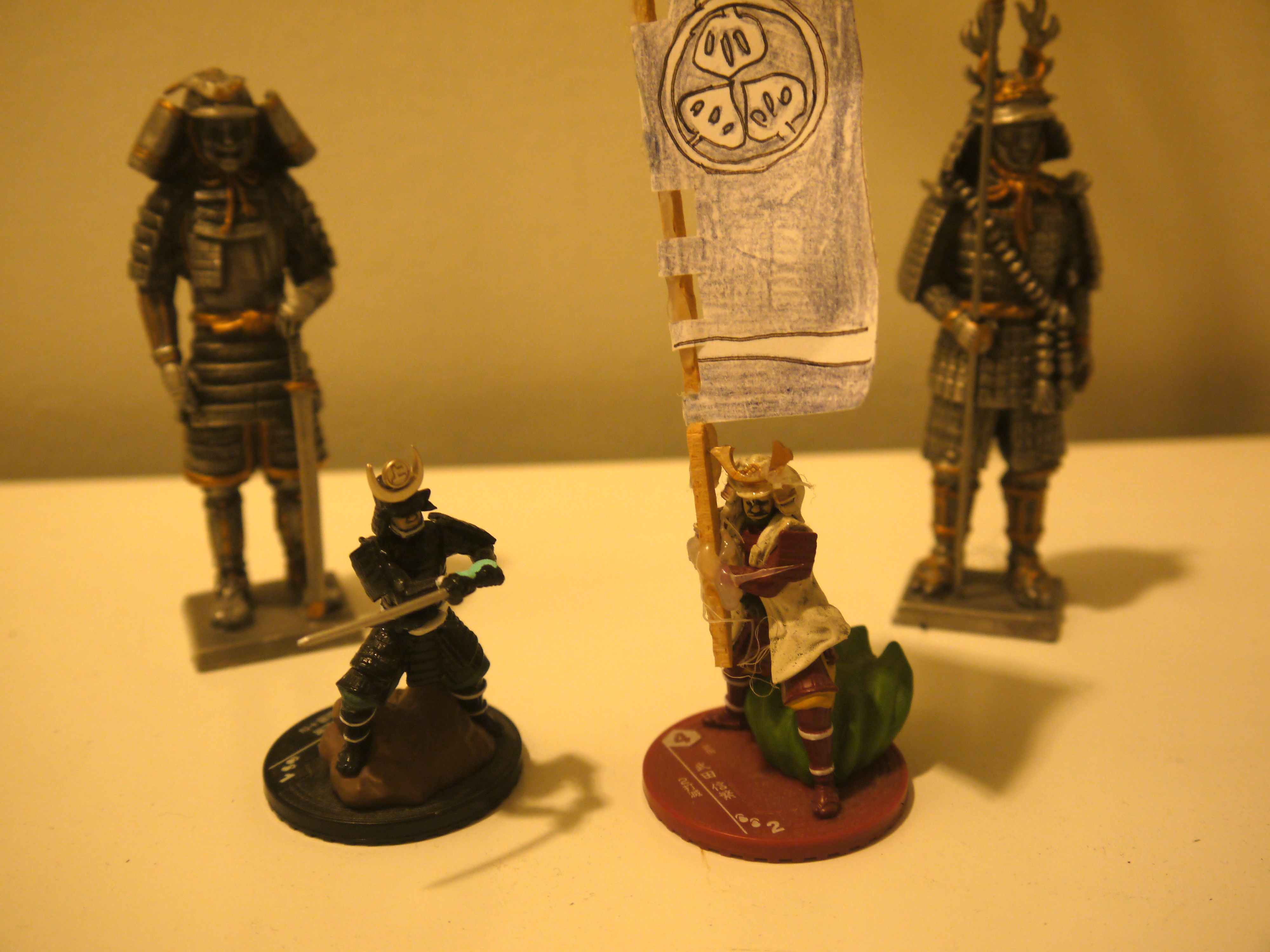
As the European knights had strong armor and weapons, the Japanese knights, called the samurai did too. The 2 metallic figures at the back do not have color but show in exact detail how samurai padded armor looked like. The one on the back-left has a lighter padded armor but with a wider helmet, only carrying a katana sword; the one on the back-right has larger heavier armor and the same type of helmet, holding a naginata, or samurai spear. The 2 figures at the bottom include a samurai katana warrior (left) with black armor and a katana blade; on the right is a samurai flag bearer with red armor but a cloak over it, instead of a weapon, it carries a war standard with the Tokugawa Shogun seal. The 2 metallic figures were from Japan, while the other 2 are simply action figures.

This collection of mine at the start was mostly Medieval knights, though I wanted to improve by suing other sets which expanded it having Renaissance, Roman, Turkish, and Japanese figures. This collection of mine is still yet progressing.

Warfare- The Romans

Throughout the history of Ancient Rome, the army was one of the most important parts taken seriously. Rome’s conquest depended on their large and effective pushing their territory to the farthest reaches of the world. The Roman army had changed over time in their history beginning as regular citizens fighting as soldiers but not highly trained. Later on, Rome’s army evolved to professional soldiers forming legions, which were all in all 28 units. The Roman army was made of not just legionnaires but different military units recruited from Rome or the provinces. The different types of soldiers included legionnaires, auxiliaries, and some from the early parts of Roman history. The Roman army was very obvious to recognize as they had uniform armor and colors, as well as the same standards they bring to battle.

The Roman army standard
th
Roman legions in battle

Rome all began in 753 BC as a small city state in Italy, but overtime the army developed in Rome’s campaigns around Italy to grow their territory as a way to defend themselves from their enemies found around Italy, which included the Sabines, Volscians, Lucanians, Etruscans, and Aequians, which were from all over Italy. First of all, Rome had an army made up citizens and mostly landowners but not highly trained, armored, or equipped. When Rome began fighting wars with foreigners like the Carthaginians and Greeks, the army improved with more units and armor too. Rome’s professional army called the legions was started by Roman general Gaius Marius at the end of the 2nd century BC. The legions began to conquer far away lands like Gaul, Syria, Germany, and Britain at the time of Julius Caesar at the 1st century BC and when the empire began with Augustus, the legions were assigned all over at the empire guarding the frontiers, most were placed at the empire’s borders. The army of Rome continued to stay for the next centuries of the empire.

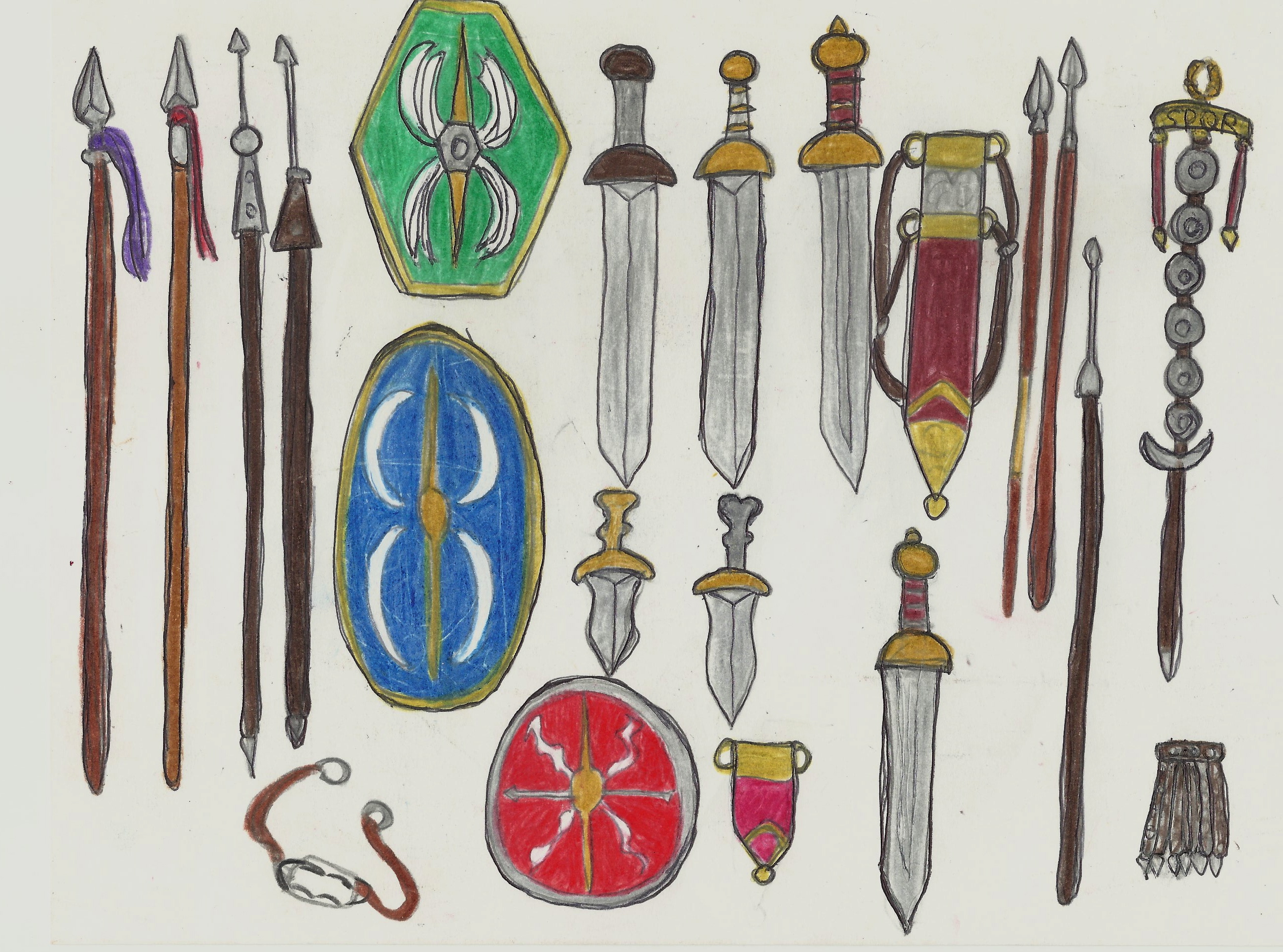
Roman weapons part 1
SCAN0260
Roman weapons part 2

First of all to begin with is the weapons the Romans used. In battle, the Romans relied more on using swords for melee combat but more importantly shields as they fought more defensively and organized. At the early days of Rome the army was not too organized, but instead fought loosely and in one formation carrying only swords and sometimes javelins and spears. When the legions were created, these new units fought in a more organized way with their javelins, swords, and shields. The old units, the auxiliaries were still used then as archers, spear men, or horsemen to support the legions. The weapons shown above are mostly the swords, which was standard weapon for all types of Roman soldiers, these Roman swords were called Gladius, a short straight-bladed sword with a rounded edge, it has either a flat or curved hilt. Most Roman soldiers carried a dagger along with them as a secondary weapon, called Pugio, shown above having a short and wide or narrow blade. Shown above here too include the Roman javelins, the earlier ones were shorter and more similar to those the Greeks and everyone else used, though the later javelins were only used by the Romans, it was longer and thinner with a sharp narrow edge which cracks when it hits the ground, it was called Pilum. Another type of Roman weapon shown here is the spear, called Hasta, which was mainly used by auxiliary troops, it was longer and wider than a javelin. The additional Roman weapons shown here include the bow and arrows used by the archers and the sling. And of course the shields, almost all Roman troops used them, some were large and wide, the rest were round a small, and all had a color code between red, green, and blue. The Romans too carried standards or flags with the Roman symbol, SPQR and the eagle in battle which symbolize the legion, if it were taken by the enemy in battle, the legion would break apart and flee.

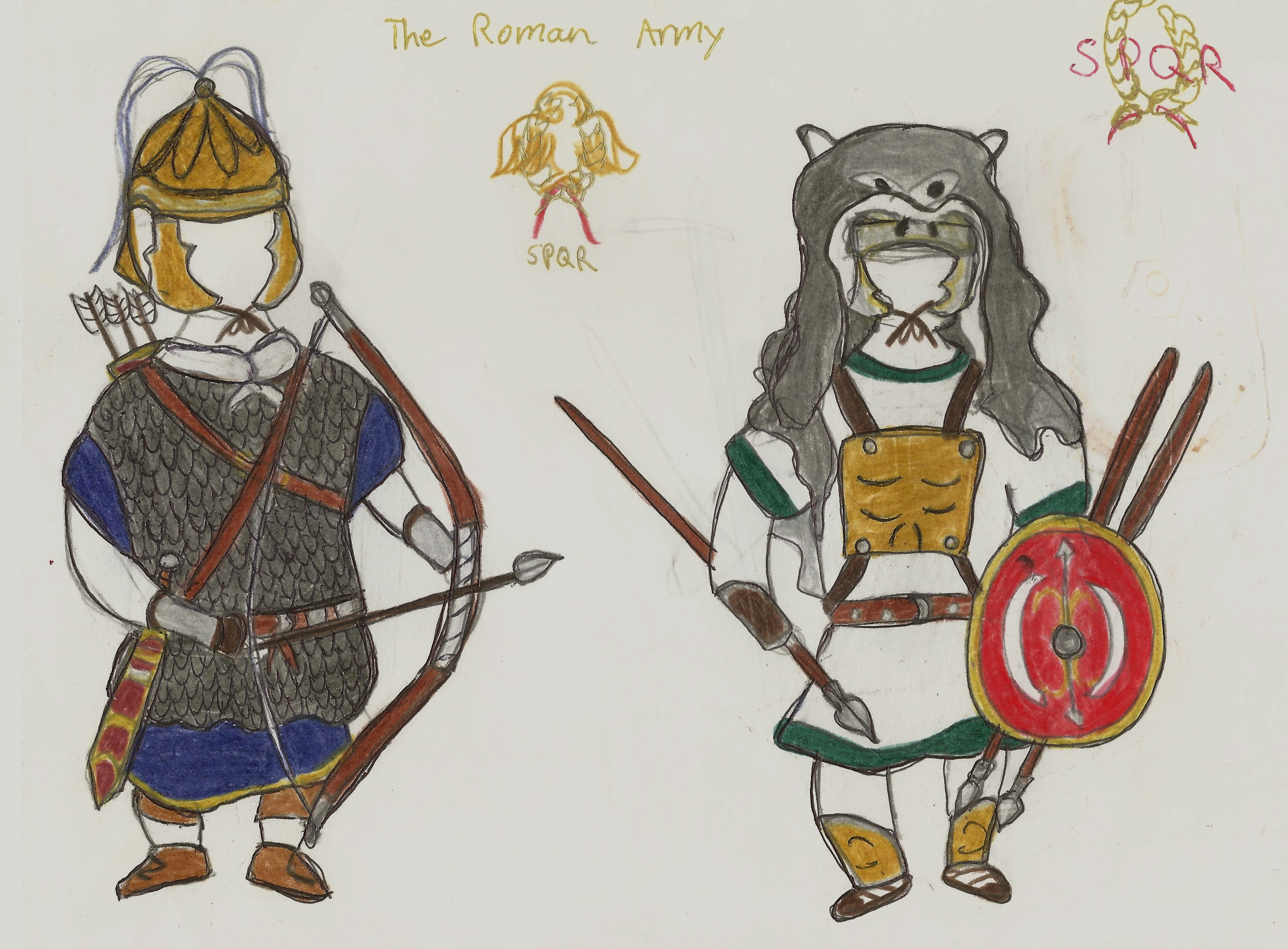
early Roman units- triarii and auxilia
Early Roman units- triarii and auxilia

Above here in this panel is an early form of a Roman soldier (left) from the early days of the Republic and a Roman auxiliary (right), the supporting Roman army unit. The Roman army unit on the right, is called triarii or hastati, which were Rome’s earliest units, part of the citizen army. These early units were not really trained or armored but instead had a light bronze helmet with a 2-stranded feather sticking out; they did not wear much armor but a metal chest pad over their red tunic, a pair of gauntlets and greaves. For weapons, these early units carried the hasta spear or javelins, a small oval shield colored red or blue, and the gladius sword. On the right is an auxilia or auxiliary unit, this auxiliary unit was one of those not recruited from Rome but from the provinces, this one shown here is an auxilia infantry. This auxiliary unit has a green color-coded tunic, a bronze helmwt with feathers sticking out, a gladius sword, a basic Roman javelin called pilum, and a smaller legionnaire’s shield as these units were not fighting full combat but only as infantry support. The auxiliaries were more armored with a chain-mail cuirass almost looking like the Carthaginian soldiers, these units were also created later on when Rome fought wars with Greece and Carthage, they were more trained and skilled, though came earlier than the legionnaires. When the legions were invented, the auxiliaries were still used and part of the legions supporting the main units of soldier, called cohorts, and served as back-up troops.

Roman archer auxilia and velites unit

Above here are 2 other Roman army units, an auxiliary archer (left) and a skirmisher (right), both did not fight in close-combat battle but fought in range combat. The Roman archer on the right served as another form of auxiliary units with the bow as its basic weapon and a set of arrows and also carries a gladius sword in case the enemy comes close. The Roman archers wear a heavier bronze helmet for headgear and a long chain-mail suit or cuirass with a tunic under; the units however were not basically Romans but outsiders recruited in the Roman legions. On the left is a Roman skirmisher called velites, these units however were used in the early part of Roman history, and were not often used later on. These velites, were more of skirmishers holding a small round shield for defense and in battle threw sets of javelins, and used a dagger for defense. The velites fought more lightly and were mostly disguised with a wolf, bear, or jaguar headpiece; they were not really armored but instead had a metal chest pad over the tunic.The velites however were never really used unless in skirmishes.

Roman cavalry auxilia

Another part of the auxiliaries was the Roman cavalry. The Roman legionnaires were not made to be cavalrymen though the different units from different provinces especially those from Gaul or Germany were used as cavalrymen to fight supporting the Roman legions. The Roman cavalry such as the one shown above wears a different type of helmet, a heavy iron helmet, called the Gallic helmet, the chain-mail cuirass suit, a tunic (colored green shown here) with different color codes and a cape matching the tunic’s color. The cavalrymen use a spear (hasta) as their main weapon used for lancing, also a small hexagonal shield, a a sword for secondary weapon. The Roman cavalrymen were mostly used when it came to flanking and charging at the enemy but also to protect the main forces.

Roman legionnaires; regular cohort and praetorian cohort

Shown above here is Rome’s special forces, the legionnaires, the main units in the legion, called cohorts. These were the special forces of the Roman army and the main units of a legion. These units made up the cohorts in the legion, which were broken down into 6 centuries, each century has 80 soldiers with a commander; this new invention and formation in the Roman army was invented later on by General Gaius Marius. The one on the left is a basic Roman legionnaire, a soldier part of the centuries and cohorts, in a uniform outfit together with the rest of the soldiers, which was the basic look for the Roman special forces. This legionnaire on the left has the standard iron plated armor made of large iron plates linked with leather strands, a belt and a leg protection which also makes a noise in battle, a red tunic under, and an cape which is optional, also shown with the standard advanced Roman helmet, a later invention, this was the Gallic helmet worn by most Roman troops. The soldier on the left carries the standard legionnaire’s weapons, the Gladius sword, the large rectangular shield called Scutum, a dagger sheathed for defense, and the javelin used as its first weapon to throw at the enemy. Each unit in a century uses the javelin first throwing it at the enemy, then afterwards it is once used and cannot be used anymore so the sword is its main weapon with the shield forming the shield wall formation called Testudo to charge at the enemy. the one on the right shows a different type of legionnaire, also part of the cohorts but a more elite force. These units were the Praetorian infantrymen, they served as bodyguards supporting the general’s units in battle; they were not heavily armed but had great strength compared to other army units. The praetorian legionnaire units had the same iron plated armor and a tunic under, the one here has a blue tunic; although they had a different helmet, this was only rare to these unit which was fully Roman based, having a short back and a round shape, and a crest above, and of course a cape at the back, which is shown here as blue. These units used the same weapons except for the javelin, instead just the gladius, though this one here has the rounded hilt gladius and the same scutum shield but with rounded edges and a dagger sheathed. The praetorian infantrymen however were not mainly used in full combat but as elite defense troops.

Roman standard bearer and Centurion

The legions had additional units too, though these units were rare as they had only one in each group. Each century had one centurion, an officer and the century’s commander and a standard bearer, assigned to carrying the Roman war flag, also in a century was the horn blower, though has the exact same look as the standard bearer, except holding the battle horn instead of the flag.The standard bearer (left) has a different look from the rest of the army, as it is not basically Roman but from other provinces, seen wearing animal pelts covering the helmet (either a wolf, bear, or leopard, depending from which part of the empire). The standard bearer has a distinct armor from the rest, instead of being chain mail or iron plated armor, it uses gold scale armor; as for weapons, the standard bearer does not carry much but a common Gladius sword, a dagger, and of course the war flag or standard. On the right is a centurion, the group’s commander seen wearing a different set of armor too; the centurion wears a chain mail outfit with leather strands for protection int he arms and legs. A centurion has the same Gallic helmet (called Galea) though instead of the the crest facing forward, it is sidewards signifying its office in the army; for weapons, it does not hold much but  the same sword, though a heavier and decorated one, together with a dagger but barely holds a sheild or a standard unless needed to; it also wears a tunic underneath and a cape over the armor. The centurions were one of the most important units in the army making them have many requirements which is that they have to be Roman, above 30, experienced in military skills, served in the army for years, and has to have connections with the generals. In fact there are actually notable centurions from the Roman army such as Lucius Vorenus, Titus Pullo, Cassius Chaerea, and St. Longinus, each were from different time sin Rome’s history.

sample Roman Praetoorian guard
Sample Roman Praetorian guard

One last unit in the Roman army, which has not been mentioned yet but definitely should is the Praetorian Guard. These units were one of the rarest but most powerful, their role was to protect Rome and were the only forces allowed in Rome and the major cities. The praetorian guards were established only when the empire began under Augustus Caesar and began to serve as the imperial guards though the emperors had their own personal foreign bodyguards from Germany or Spain. The praetorian guards became powerful and part of Rome’s politics at the time of emperor Tiberius from the ambitions of the praetorian captain Sejanus. The Praetorian guards played a significant role in Rome’s history when assassinating emperor Caligula and proclaiming Claudius emperor in 41AD. Later on the guards played a few important roles in proclaiming Domitian and Pertinax emperor though they also killed them. The guards were then reduced overtime and finally disbanded by emperor Constantine the Great in 312AD. These units had a signature body armor either made of leather or metal with a signature purple as the color for their cape and dark blue for their tunic, they had a distinct helmet only worn by the praetorians with a thick purple crest. For weapons, they carried the same sword, a dagger, and a hexagonal shield and sometimes a spear. The praetorian guards were best known for protecting Rome and the emperor though they were the most powerful and power-hungry and mostly involved in the plots to overthrow the emperors and make a new one.

Roman siege weapons
Roman siege weapons

Another thing about the Romans in warfare was siege craft, they were one of the best at it in history. The Romans came up with all sorts of siege weapons for their conquests especially when it came to besieging walls and cities. One of the siege weapons they invented was the balista, though it was not clearly their but the Greeks first made it; it was made to blow out heavy bolts or incendiary arrows to wipe out a number of enemies. The Roman developed siege weapon was the scorpion, an elevated balista which was narrower; it was faster and more effective shooting out a number of arrows at the same time. Another of their siege weapons was the battering ram, though others may have used it earlier, though the Romans made it movable and faster to break through gates. The Romans too highly used the onager, another siege weapon as a sort of catapult, though smaller but catapults either rocks, flaming hay stacks, or molten rocks to destroy walls. One of their greatest siege weapons was the siege tower, which was designed to carry soldiers to attack the walls of a fortified place by climbing up the series of steps it has. The Romans were famous for using their siege weapons when besieging forts and cities, one of the most known ones was the Siege of Masada where the Roman army attacked the Jewish fortress and captured it with their skill in siege craft and the engineering behind it.

th-3When the Romans expanded their territories to as far north as Britain, to Egypt in the south, to the Atlantic in the west, and to Mesopotamia in the east, they have succeeded and conquered with their military strength. At the same time as having their powerful army, the Romans had an effective navy too protecting the seas as the army protected the land. Behind Rome’s conquests and victories were the brilliance and braveness of the great Roman generals like Fabius Maximus, Marcellus, Scipio Africanus, Pompey Magnus, Julius Caesar, Marcus Agrippa, Germanicus, Domitius Corbulo, and Flavius Aetius. These generals had expanded Rome’s lands and also defended Rome and helped save it to be at its greatest in history. Part of the Roman warfare world was engineering, which is what made their troops, weapons, and armor effective. Throughout its history, Rome continued to have its peace kept within the empire with the army protecting it from any threat to come…. that’s all for now, thank you for reading about the fascinating Roman world!!

th-4

Byzantine naval warfare, siege weapons, battle tactics

Posted by Powee Celdran 

The Greeks began to fling their fire all around; and the Rusii seeing the flames threw themselves in haste from their ships, preferring to be drowned in the water rather than burned alive in the fire.” -Liutprand of Cremona on Greek Fire, 941

As I have written a long post on Byzantine military units, this time I’m again on Byzantium though on their navy an battle tactics this time. Just as they had an interesting, powerful, and multi-cultural army, their navy was quite fascinating too and their siege weapons even more. The Byzantines though had ordinary warships, mostly small in size as they did travel that far, though they had extra-ordinary siege weapons compared to the rest of Medieval Europe. Part of their extremely powerful and unimaginable siege weapons was the naval cannon, or Greek Fire which blew out liquid fire, they also had more powerful siege weapons to think of.

2000px-Byzantine_imperial_flag,_14th_century.svg

The Byzantine Empire mostly had everything based on what their predecessors, the Romans had and made different versions of them including the army, the navy, and architecture. Just as the Romans did, the Eastern Romans or the Byzantines who followed them after the fall of the western empire took some of Rome’s influences and great works they’ve done in the past. Part of the Roman world which Byzantium took was the navy, the Byzantines made a different versions of the Roman navy building different types of ships. The Byzantine ships were however not large but small and powerful. The Byzantines too need to have a strong navy as their empire which lasted for more than 1000 years controlled the seas. The Byzantine navy controlled the many different seas such as the Mediterranean, Aegean, Bosporus, Adriatic, Ionian, and Black seas and the navy was most needed in protecting the trade routes at sea by making sure the enemy ships were kept away to make travel and trade by sea safe. For the many years of Byzantium’s wars and military campaigns, the navy was overall needed to transport armies and fight the fleets of the many different enemies of theirs, which included the Sassanid Persians, the Germanic tribes, pirates, Slavs or Bulgars, Muslims, Russians, Mongols, Venetians, Crusaders, and Ottomans. For so many years, the Byzantine Empire had a successful navy keeping the empire strong.


mosaic of Byzantine ship
Dromon warship
Dromon warship
sample Byzantine warship
Sample Byzantine warship
ships using Greek fire
Ships using Greek fire


There were actually only a few types of Byzantine war ships though most of them were not large in size but effective. Some of the Byzantine ships included an evolved version of the Roman trireme, the basic warship boarded with archers and spearmen ready to attack the enemy ship, it also had an ability to ram the enemy ship or let soldiers board it. Most of the Byzantine warships were however small with 2 or 3 sails, these were also used as trading ships too. The common but most effective Byzantine warship was the Dromon, a 2 or 3 sailed galley powered by oars and a pointed edge. Its main ability was launching a powerful siege weapon, Greek Fire which was fire blown out from the ships that scared the enemy ships. Throughout the naval history of Byzantium, Greek fire was the effective weapon that burned down many enemy ships and scared enemy soldiers. Byzantine ships however did not carry much siege equipment, though some carried scorpion though most carried soldiers firing missiles or the ship itself was the weapon.

my sketch of Byzantine siege weapons
Byzantine siege weapons
soldiers operating Greek fire
Soldiers operate Greek Fire
Greek fire blowing out fire
Greek fire in action (AC Revelations)
Greek fire grenade
Greek fire grenade


At both land and naval battles, the Byzantines used quite a set of siege weapons. Their siege weapons included some Roman based siege weapons and some advanced Medieval siege weapons. Part of Byzantine siege weapons that were Roman based were was the scorpion, a smaller version of a ballista firing out a series of bolts either with flames or without. The scorpion the Byzantines used was the same as the Roman mounted crossbow, it was used on both land or on ships as its bolts could damage or burn enemy ships. Other Byzantine siege weapons included the same Medieval siege equipment for sieging castle walls such as the trebuchet or mangorel, a tall and heavy-supported catapult throwing large rocks or flamed hay balls to damage or burn walls. Other of their siege weapons than catapults were battering rams and siege towers which were useful to make soldiers invade the walls. The most effective and popular Byzantine siege weapon was Greek fire, a cannon used both on land and sea blowing out flames to quickly bun enemy ships and armies. The Greek fire was developed as early as 672, by the Byzantines Greeks giving it its name, it was first used in defending Constantinople from the Arab invasions, true enough it was successful in defending them. The Greek fire was mostly used for warships, its edge had a spout where the cannon was located blowing out liquid fire, it was highly effective in burning several ships. Its main weapon was the liquid fire most possibly consisting of naphtha and quicklime, however its formula is a mystery only kept to the Byzantines- and died with them with the fall of the empire in 1453- but it was extremely powerful. The Greek fire used different grenades and caltrops powering them, overall it was an incendiary weapon. The ingredients for the liquid flame of this flame thrower include combinations of pine resin, naphtha, quicklime, calcium phosphide, sulfur, and niter. This flamethrower was either a large cannon mounted on a warship or even portable being carried when sieging towers, it took 2or 3 soldiers to operate this weapon. This weapon was is also highly popular for its effectiveness in naval battles, it is mentioned in movies, series, literature and games like Assassin’s Creed Revelations (2011). The Byzantines overall used powerful siege weapons not for invading other cities although they did and were highly effective when conquering other lands to the north and east, though they used these weapons more in the defence of their empire.

Byzantine units at the middle of battle
Byzantine cavalry charge
Byzantine Cataphract cavalry charge
Byzantine army units sieging
Byzantine siegecraft (Madrid Skylitzes)

Aside from siegecraft, army units were important in controlling the siege craft and were the main part of the battle. The Byzantine empire had several different military units and each ad a different function. For example, Cataphract cavalry units formed a wedge formation performing a shock charge, first by shooting arrows from riding then charging straight at the enemy. The cataphracts however were more for land battle and not for siege or defence. The lighter units such as the archers and foot soldiers handled the defence, the archers were more important units of defence and sieging walls by firing either regular and incendiary arrows at the enemy above or below or with great effect lighting the oil or hay to burn down the enemy. The foot soldiers on the other hand were more of use operating siege weapons like the Greek fire, scorpion, trebuchet, and battering ram and were the first line of defence when sieging or being sieged. The Varangian guard units were mostly used when at full battle mode especially when the battle becomes intense, these units fought with their superior strength and advanced battle tactics.

early Byzantine army units
Early Byzantine army units
Byzantine and Varangian forces
fall of Constantinople, 1453
Fall of Constantinople, 1453


Throughout Byzantium’s history, from its beginning as the Eastern Roman empire after dividing from Rome in the 4th century until its fall in 1453, its military has evolved. At the beginning days, the Byzantine army was very much similar to the Roman army, from the time of Emperor Constantine the Great until Justinian I when the western empire fell and the east rose as the Byzantine empire. In Emperor Justinian’s time, the army evolved with more units but more on foot soldiers, the army expanded too as Justinian fought wars conquering lands far beyond which were once part of the Roman empire, which he succeeded retaking from Barbarian Vandals, Ostrogoths, and Visigoths. The next series of wars the Byzantines fought with were with the Sassanid Persians then the Islamic Arabs, here they invented new siege weapons such as Greek fire to defend their cities from invasions. At the same time they defended their cities from Muslim invasions, the Byzantines expand their territories north by fighting the Slavs and the Russians (The Rus‘), afterwards allying themselves an using their warriors as Byzantine forces, which were the Varangians. The Byzantines too invented the Cataphract cavalry when fighting the Turks at the east but at times they lost greatly but when fighting land and naval battles wight the Russians, they had won. At the latter part of their empire’s history, they fought defending their empire from the Seljuk Turks, Crusaders, Venetians, then finally the Ottoman Turks. From so much battles, the Byzantine army began to decline beginning the 1200’s, so did their empire’s size. It all came to an end at the final battle in 1453 where they were defeated by the Ottomans besieging Constantinople itself. Here the Ottomans developed highly-powered cannons that the Byzantines with their’s capital’s thousand year old walls had no chance to stand against. On May 29, 1453, the Ottomans took over Constantinople and the last Byzantine emperor Constantine XI was killed and the rest of the city fled and the Ottoman Sultan Mehmed II took over making Constantinople the capital of the Ottoman Empire. The Byzantine Empire then ended as the Ottoman Empire began to grow in place of them while the Renaissance began too.

images

Well, this was a lot more again about Byzantium, anyway this is it, hope this was interesting. After all, Byzantium has many different parts of it history, warfare, art, architecture, and civilisation unexplored.. watch out for more posts!

Military figures sketches- Byzantium

Byzantine war flag
Byzantine war flag

Posted by Powee Celdran 

For another time, I am back blogging about the amazing world of Byzantium, this time it would be plainly focusing on Byzantium’s interesting and very detailed military. he military was one of the major and most important parts in the history and civilisation of Byzantium. The Byzantine Empire, which lasted for about 1000 years dominating the eastern part of the world in the Middle-ages had a very detailed army, somewhat powerful but not overall powerful. The Byzantine army is best known for being diverse, having many different types of units such as cavalry, infantry, skirmishers, and hired mercenaries, some were not even from the empire itself. The Byzantine army then took design seriously but also fought effectively. Here it will show how different types of Byzantine military units look like, their armour, weapon sets, and colours shown in my sketches of different Byzantine soldiers.

my sketch of Byzantine army captain
My sketch of Byzantine army captain
sample Byzantine captain
Sample Byzantine captain

Above here shows my sketch of a Byzantine army captain, a set of weapons, and the standard of Byzantium’s military. First of all (shown in the first picture far above) is Byzantium’s war standard, a red flag with a yellow cross, and the eagle symbol at the centre together with 4 seals in each square, the shields used this same symbol too. In this panel right above, it shows the Byzantine war flag an its imperial symbol, the 2-hear eagle; it also shows a simplified set of Byzantine weapons including a mace, sword, bow and arrows, round shield, and a war flag. The army captain to the left has a distinct look, looking large and a lot stronger with a full lamellar armour or metal padded armour, though it has a distinct look for leading the different army units of Byzantium in battle. This army captain has a large protective metal helmet with a plume, a green cape, gold metal shoulder pads, metal bracers and greaves, and an ornate red silk outfit under the armour; for weapons, the captain holds a large one-handed xiphos sword. This Byzantine captain somewhat is based on an Elven army unit from LOTR and The Hobbit by J.R.R. Tolkien as the Elven races may resemble the Byzantines (in my opinion).


SCAN0219
My sketch of a Byzantine rifleman and infantry soldier

In this panel shown above are two types of different Byzantine army units, a rifleman (left) and a foot-soldier (right) together with the Byzantine war standard and the eagle symbol. On the left shows a Byzantine rifleman or arquebusier, this was however a unique type of Byzantine army unit which came a little later in Byzantium’s history, towards the end of the empire, during the Palaiologos dynasty when gunpowder from China was introduced to Byzantium making a new type of weapons for the arm, the gunmen equipped with rifles as their weapons. The rifleman does not carry any other weapon but the advanced weapon of a rifle powered with Chinese gunpowder, and on the other hand a Byzantine dagger for melee combat. The rifleman shows more of a Chinese appearance mainly because of the gunpowder it uses which comes from China as well as the silk it wears making it have an oriental pattern. The rifleman however is not and does not have to be fully armoured but instead wears a silk robe with a few pads for protection and a simple round helmet and a pack of gunpowder and bullets; these units are placed above buildings to shoot from above. On the right is a sketch of a Byzantine foot soldier, a common type of infantry soldier in the empire throughout the whole history of Byzantium, these units were called skoutatoi. This type of solider is most likely ordinary in battle only equipped with a regular sword and round-shield, it simply serves as a common soldier together with thousands of others. This foot soldier wears simply a round cone helmet with chain-mail protecting the face and neck but not covering the arms an body; protecting the body is a lamellar armour of metal plates with a sash and a sheathe, under is a tunic, also has a pair of greaves and bracers. This foot soldier is an evolved version of a Classical Roman infantry soldier. Both these soldiers shown above (the rifleman and infantry soldier) are both local Greek army men and not hired but recruited from within the empire making them not as advanced as Byzantium’s special forces but serving as auxiliary units. The rifleman however may not be accurate as it is based on the Byzantine rifleman from Assassin’s Creed Revelations (2011).

Byzantine crossbow soldier

Above here, this single unit is a sketch of a Byzantine crossbow archer. This type of Byzantine soldier is not part of the special forces or elite army but part of the common infantry and under archers, as it is not a powerful in battle, these units are usually Greeks. This crossbow man is a later unit in the Byzantine military only appeared at the time of the Palaiologos dynasty before the fall of Byzantium. This is a more advanced version of a Byzantine army unit as it holds a more effective archery weapon, usually placed above buildings or on walls during sieges for short-distance shots on enemies. This crossbowman carries its basic weapon, the effective short-ranged crossbow and a short-sword for melee combat; the helmet may look more different designed for aiming with a wide brim. This soldier’s armour is a little more different, instead of metal cuirass it has a padded vest called epilorikon, and leather strips protecting the arms and thighs together with a cape covering. This soldier unit was sort of based on a type of Byzantine army unit from Assassin’s Creed Revelations.


Cataphract cavalry, elite forces
Byzantine cataphract units, standard bearer and cavalryman

Shown above here are 2 types of Byzantium’s elite forces, the Cataphracts (my sketch above), called Cataphractaii or Kataphraktoi in Greek. On the left is a different type of cataphract, a standard bearer holding the Byzantine war banner in battle; this unit has a round leather helmet and a cape with fur; for armour it has chain-mail underneath and lamellar over it, also additional leather strips. The standard bearer is shown fully covered up in winter battle outfit, although it carries basic weapons, a Byzantine one-handed sword and a cataphract’s pointed long shield. On the right is a cataphract cavalryman shown with its horse, both the horse and the soldier fully armoured.  The Byzantine cavalry cataphract such as this is in full armour from head to feet, it has a round pointed helmet with a plume sticking out and chain-mail flowing from head to body protecting the face and neck. The cataphract cavalryman has a full set of armour with chain-mail under and silver lamellar (plated) armour over it together with a cape, leather strips, a set of bracers and greaves. The cataphract cavalryman carries not just a single weapon but a number of them at the same time; it uses either a long kite-shaped shield called skouton or as shown here a large or small round shield; for melee weapons it carries a one-handed longsword for close-combat or a mace, it also holds a spear for lancing when riding; sometimes these horsemen carry bows as the first weapon they use; the horse as well is armoured. The cataphracts were basically fully armoured soldiers, this is what it means in Greek. The cataphracts were invented in the 10th century during the time of Byzantine emperor Nikephoros II, these units were inspired by eastern cavalrymen from the Sassanid and Parthian Persian empires carrying a set of weapons, which was very effective, these cavalrymen were mostly Greeks from Greece and Turkey, the major parts of the empire. The cataphracts were actually successful in the Byzantine army having horse archery and wedge-formation in battle, the performed tactics including missile throwing while spinning in a circle and shock charge with the wedge formation; these units however were not much used in the later period of Byzantium.


Varangians at battle
Byzantine Varangian guards

Above here (my sketch) shows 2 types of Varangian Guards, however these units were much alike an do not have much difference. The Varangian guards were the Byzantine elite units mostly serving as the emperor’s bodyguards at battle. These units were basically not from the empire and not Greeks but began as Viking, Germanic, or Rus’ (Russians) mercenaries originating as the imperial bodyguards during the reign of emperor Basil II after his conquests of Rus’, afterwards those warriors turned to serve Byzantium. For the next couple of centuries, these units became one of Byzantium’s most important army units and elite forces just as the cataphracts were. The cataphracts however were more effective as cavalrymen while the Varangians were more effective infantrymen and extremely skilled in battle and loyal soldiers. The Varangians were more trusted as they were not Byzantines but Norsemen or Russians making them brave and strong as well, there were also highly equipped and armoured. The Varangians had a double set of armour including a full helmet but not covering the eyes or mouth but having chain-mail protecting the face and neck going down to the body. They had either a wide round helmet with cheek guards or a 2 sharp points and scaled at the back, which sort of makes it look like a Samurai helmet, their helmets had a long plume sticking out. For armour, these units had chain-mail underneath sometimes or just their silk outfit but they always had their lamellar armour, their main protection over, their armour included leather strips, greaves, bracers, and a short or long cape either coloured red or green. The Varangian guards carried quite a lot of weapons including a one-handed longsword and a mace or war-axe carried at the same time as well as a large round shield, which was more of Viking use than Byzantine, these units however were not much of missile soldiers but heavy infantrymen for melee combat. The Varangian guards to simply put it were more more influenced by Viking war tactics than Byzantines, though they were in great use for their discipline and bravery in battle for over 500 years of the Byzantine Empire.


Byzantine units- Almogavar and archer
Byzantine units- Almogavar and Archer

Above here is another my Byzantium army sketches, this one shows two units far different from each other an Almogavar mercenary and an archer called Toxotai or PsiloiThe Almogavars although were not Byzantines within Greek territory themselves, neither from Turkey or nearby but were Catalans and Aragonese from the Kingdom of Aragon in Spain. The Almogavars have a distinct look from all Byzantine soldiers being bigger in size and heavily armoured however the real Almogavars were not as big in size and heavily armoured but were fully armoured in chain-mail and a round helmet carrying a shield with the red and yellow colours of Aragon. The Almogavar unit shown in my sketch is actually based on a Dwarven army unit from LOTR and the Hobbit, wearing a set of padded square-linked armour, chain-mail, a heavy battle-axe, a dagger sheathed, a tunic under, and covered in fur; though the exact Spanish Almogavars did not have this Dwarven look. On the right is a Byzantine archer unit, these were actually soldiers from Byzantine Greek territory themselves, coming from the regions of Asia Minor (Turkey). The archer shown here is a lot similar to how the exact Byzantine archers looked like, with padded lamellar armour, the standard round helmet, a tunic under, but with the bow as their main weapon. The archers were the standard infantry units of Byzantium, using archery as their skill though held a sword as their secondary weapon. The archers were not overall powerful forces but were important in the army especially as they fire arrows at the enemy having also to incendiary skill launching flame arrows, in battle, they were protected by the Cataphract cavalry, while the cataphracts shock charge, the archers are protected in firing arrows.

Byzantine weapon set part1
Byzantine weapon set part2


The Byzantine army carried a range of weapons too; their standard weapons and battle equipment were swords, spears, shields, war-axes, daggers, clubs or maces, bow and arrows, crossbows, and javelins. Shown above in my sketches are different types of basic Byzantine weapons. There were two basic types of swords most military units used called Paramerion, a thin-long curved sword and a Spathion, a long wide straight blade; the paramerion was a later version of a Byzantine bale inspired by eastern Scimitar swords while the spathion was a classic Byzantine swords inspire by the Roman longsword, Spatha, whig was however very heavy. For shields, the Byzantines used many different types, mostly inspired by Roman round and square shields with the same Roman colours red or blue however the Byzantines coloured their shields differently with red, green purple, black, or white having new Byzantine symbols this time such as the (PX) symbol, the Byzantine war flag symbol, or simply 2 coloured stripes; a common type of Byzantine shield mostly used by the cataphracts and light infantry was the skouton, or the long oval kite-shaped shield made with wood and iron. Other basic weapons included a spear, called Kontarion, which was 2-3m long, the main weapon for he cataphract cavalry use for thrusting when doing shock charge. The rest of Byzantine weapons included a shot war-axe as a secondary melee weapon and a mace or club together with a dagger. war-axes, maces, and daggers were used by most soldiers such as archers, cataphracts, and light infantry as a secondary weapon for the sword if the sword may be too heavy or too slow to pull out, it would be quicker to defend themselves with a shorter and denser weapon. Also shown above here are other weapons such as bows used by archers when firing at a long range and by cataphracts as one of their weapons; the Byzantines too used crossbows as an alternative for bows when at a short range, in the later period of the empire they began to use gunpowder weapons including rifles. Other battle equipment shown here is the Byzantine war standard with the (PX) symbol replacing the Roman (SPQR) and having the classic Byzantine yellow 2-headed eagle.


types of Byzantine shields
Types of Byzantine shields
sample Byzantine spatha
Sample Byzantine Spatha
sample full lamellar armour
Sample full lamellar armour
full Byzantine Varangian armour
Full Byzantine Varangian armour

In terms of armour, the lamellar plated armour was what was unique to Byzantium in the Middle-Ages as most of Medieval western European armies did not use this advance type of armour with decorations on them. The Byzantines used many different layers of armour, some were worn at the same time, though different units wore different types. The elite forces such as the Cataphracts and Varangians had 3 sets of armour including the Kavadion or tunic under the cuirass, Lorikion or chain-mail, and the paced lamellar vest called Klivanion, here the types of armour shown in the previous sketches are mentioned. In addition, some Byzantine soldiers wore the lamellar vest together right the chain-mail but some just wore either one of them. However there were more armour sets but used optionally such as the Epilorikon worn over the armoured vest or over a leather vest if the soldier did not use armour, and also the Kremasmata which was the leather strips used to protect the soldier’s legs and arms which were not really covered by armour, most soldiers usually used these leather strips. Another part of the armour required by all soldiers was the bracers and greaves to protect the arms an legs, either made of leather or metal. Of course the Byzantines had different colours over and under the armour, though this was not important in battle, just to show their empire’s colours. To make it short, Byzantine amor is an improved and more covering version of Roman armour, either heavy or light and is sort of a cross-over between Medieval European armour and Japanese Samurai or Asian armours but it it is its own.

sample Byzantine armour style with basic weapons
Sample Byzantine armour style with basic weapons

images


To simply describe, Byzantium’s warfare is its own but inspired by different warfares of different cultures from other empires before and during their time. Part of Byzantine battle strategies including armour and types of weapons were inspired by Roman warfare from the Roman empire before it. Part of Byzantine warfare such as cataphract cavalry and archers were inspired by the warfare of eastern empires such as the Sassanid Persians, and some parts such as the Varangians were inspired by the northern people. As it is inspired by different cultures, this is what makes the warfare of Byzantium interesting, but in fact it made it its own. This is all for now, it may have been long but surely interesting, anyway up next, more on Byzantine warfare… watch out for more!

Warfare- Ancient Eastern Empires

Hello everyone, I’m back again with my historical warfare posts featuring my sketches of different of armies from history. This time, I’d go in detail with the warfare of the Eastern kingdoms and empires from ancient times, parallel to times of Greece and Rome. Surprisingly the eastern empires of the world, located in Asia Minor, Syria, Egypt, and the Middle-east had battle strategies, weapons, and armor a lot different from those in the west. The empires and kingdoms that will be covered would be the Persians, Parthians, Armenians, and Sassanids, each of them were very different from the common places in the west.

Persian Empire battle standard
symbol of Persian empire
Symbol of Persian empire
full extent of the Achaemenid Persian empire
Full extent of the Achaemenid Persian empire

The first part of this post would focus mainly on the 1st Persian Empire, also known a the Achaemenid Empire, or simply the Persian Empire. The Achaemenids were the first Persians to build an empire stretching across the Middle-east in a short matter of time. The empire began under Cyrus II the Great, the first king of Persia, and in his reign (559-530BC) he conquered the lands outside of Persia (Iran) extending to Asia Minor and Armenia. Cyrus the Great simply began being ruler of the small Persian kingdom in Iran and conquered regions beyond it such as Medea, Judea, Phoenicia, Babylon, and Lydia in Asia Minor, the Persian empire’s capital was Ecbetana. He was most famous for conquering Babylon but failed to conquer the Bactrian and Scythian tribes. His successors were Cambyses II, Darius I, and Xerxes I, in their reigns they expanded the empire conquering Egypt, Thrace, and parts of India. When building their empire, they defeated powerful rulers including extremely wealthy Lydian king Croesus and the pharaoh of Egypt. At the beginning of the 5th century BC, the Persians fought a series of wars with the Greeks, the Greek-Persian wars, here the Persians managed to invade Greece for a while but were driven away by the armies of the Greek city states combined. The Achaemenid Persians were overall a powerful empire having an army large in size, but not strong in battle, and a large powerful fleet, and had lots of wealth. The Persians are famous for inventing the messaging system and road systems building highways around the empire extending across the deserts, plains, mountains, rivers, and seas. For the remaining years after defeat in the war with the Greeks, the Persians continued to rule their great empire. The Achaemenid Persian Empire came to their end when their last king, Darius III was defeated by Macedonian king Alexander the Great, from then the Persians and all their lands including Egypt were ruled by the Macedonian Greeks; after Alexander’s death, the succeeding Persian empire would be the Seleucid Empire, though they were more Greek than eastern.

Persian warriors carved on walls
Persian army at battle
Persian Immortals in phalanx formation
my sketch of Persian warriors
My sketch of Persian warriors

The Persian army was made up of a variety of units of all sorts of skills. The Achaemenid Persian army was many in number but majority were weak and untrained for battle. Only a few of them, called the Immortals, the elite army units and the protectors of the king. The rest of their army were untrained citizens from all over the empire simply asked to fight for Persia as slaves and not soldiers. In battle, the Persians relied mostly on missile weapons than melee weapons, these missile weapons they used included bows and arrows or javelins. The citizen army were mostly peltasts or hillmen weakly trained and only skilled with using missile weapons and usually used one of each and holding a dagger on their side. The only elite force highly trained for battle were the Immortals and the Cataphracts who handled a set of weapons such as a bow, a sword or axe, javelins, and a shield. The Immortals were more of an infantry force, at battle using the phalanx formation and using both melee and missile combat. The Cataphracts were more of cavalry men skilled in archery and lancing when on horse. The Persian warriors however did not wear much of armor, the Immortals and the Cataphracts though wore only padded armor or scales rather than full armor as the Greeks did. The Persian cavalry was usually made up of horses, camels, charriots, and sometimes war elephants. The Persian army did not take the use of armor seriously but instead carried more weapons as wearing armor would be too heavy when marching in desert heat. The elite warriors usually wore a sheet of padded armor around the body but not covering the arms, under they wore tunics and on their head they had headscarves and under they had pants and boots. Most of their soldiers were not armored and simply wore tunics and headscarves, or phrygian caps. For shields, the Persians either used large square shields for phalanx when using spears, or round shields with a curve when firing javelins, their shields were usually made of wood, some were metal; for their weapons they used different types of curved swords called kopis, they also used javelins, bows and arrows with the incendiary effect to burn down enemy armies. In my sketch above, it shows 2 Persian elite warriors, on the left a cataphract, on the right an immortal; also shown here are Persian weapons a bow, a set of arrows with a Persian quiver which had a design with a curve to hold both the arrows and the bow, also here is a Persian curved sword and dagger. Most of all, they used missle weapons as they were more of skirmishers in battle.

the Parthian Empire symbol
Parthian Empire symbol
map of Parthian Empire
Map of the Parthian Empire

The first empire, the Achaemenids fell under the Greeks for a matter of time dissolving to the Seleucid Empire. The Seleucid Empire (mentioned in the previous page) was more of Greek than eastern but had few parts of eastern culture. The Seleucid Empire stretched across the Middle-east from Mediterranean Syria and Turkey to eastern Iran, Parthia was one of the states of the Seleucid Empire. In the 2nd century BC, the Parthians formed their own faction and revolted against the Seleucids, later capturing their regions around Persia, the new empire was the Parthian or Arsacid Empire. A famous Parthian ruler was Mithridates I, he was responsible for building the empire and expanding it weakening the Seleucids after battles. The Seleucid Empire then fell to the Romans after battles, so did the Ptolemaic Egyptian empire, but the Parthians remained with most of the land in the east preventing the Romans to go through. After defeating the Seleucids, the Romans then tried to make their way to Parthia, though they lost at the Battle of Carrhae where Roman leader Crassus was defeated. Afterwards, for the next 2 centuries Rome and Parthia were always at war with each other, and there was no successful result, Rome never invaded them nor did they invade Rome, and at times they made peace. However, the neighboring kingdom to Parthia, Armenia was a weaker kingdom but allied with Parthia, however both Romans and Parthians fought for it. One of the significant fights between them was during the reign of Roman emperor Nero, which involved Roman general Corbulo to deal with the issue. At the end, Corbulo was able to capture Armenia from Parthia and claim it for Rome while Parthia stayed alone, but later on went through more conflicts with the Romans. Armenia then fell under Roman control for the longest time while Parthia was sometimes captured by Rome, however the Romans did not fully invade Parthia but took some of their territory. The Romans invaded until the Euphrates area while Parthia continued to keep their lands beyond it including Babylon and Persia; Parthia’s capital was still Ecbetana though the Seleucid’s earlier used Antioch as their capital, though the actual capital of Parthia was Ctesiphon in Iraq. The Parthian empire came to its close after their last war with Rome involving the last Parthian king Artabanus V and the Roman army, after the war, the Romans and the Parthians finally made a full peace after all. After the king’s death, the dynasty ended falling to the Sassanians, a new dynasty, they were to be the enemies of the Byzantines, the successor to Rome in the east.

Parthian cavalry at battle
Parthian war elephants
A Parthian camel cataphract
my sketch of Parthian cataphract cavalry
My sketch of Parthian cataphract cavalry
other sketch of Parthian cavalryman
Other sketch of Parthian cavalryman

When it came to battle, the Parthian empire had a more organized and strategized army compared to the Persians. The Parthian army was mostly made up of cavalrymen, also called cataphracts,which were the most important part of their army. Their cavalry was made up of simple horsemen, then cataphracts which were more armored horsemen, also camel cavalry, war elephants, chariots, and an infantry. The infantry men were not as strong and carried limited choices of weapons, which were mostly missile weapons for skirmishing. Their infantry were mostly hillmen or skirmishers, though their cavalry was more advanced having different ways in battle from thrusting with spears, slashing with swords, throwing javelins, and shooting arrows while riding on horse. The Parthians used camels too as a way to be faster in riding, the soldiers on camels were mostly archers but also spearmen. The difference between the Parthian army compare to the earlier Persians was that they were more organized and had full armor, especially the horsemen, even horses and camels had armor. The Parthians used nearly the same weapons as the Persians though cavalrymen used a bow, sword, shield, and spear combined, this was much more effective and useful in battle. The Parthians too used large armored war elephants, which were also useful in creating bigger destruction on the enemy by ramming and archers shooting arrows from above. For armor, the Parthians used more of it, having a full set of body armor made of soft pads or scales, together with chain mail and a full helmet covering the face, though lined with scarves, and a cape. The infantry used simpler armor or just wore tunics, their military outfits had to be more fit for dessert combat. With their strong cavalry including archers and elephants, the Romans could definitely not beat them.

th-7

Sassanid empire symbol
full extent of Sassanid empire
Full extent of Sassanid empire

After the Achaemenids, Seleucids, and Parthians, the concluding dynasty of the Persian Empire was the Sassanids or Sassanians. After the Arsacid Parthian dynasty faded away in the 3rd century AD, the Sassanid dynasty took its place and changed the course of the empire, the new dynasty and empire began with Ardashir I, first Sassanian ruler. For the Sassanids, Ctesiphon remained as their capital, and they remained with the same Persian religion since the early days before the Persian empires began, Zoroastrianism. However, the Eastern Roman Empire turned to Christianity, and some of the Christians there settled in the Sassanid Empire following the Nestorian branch of Eastern Christianity, these Christians were a lot more different and traveled far to the east, probably even reaching China.The Sassanids were somewhat more different from the Parthians as they expanded their lands more to the north retaking Armenia and the east of Asia Minor, even capturing Syria and Egypt from the Eastern Romans. One of the most significant wars between the Romans and the Sassanids happened in the 4th century AD, when the eastern empire was still new, in fact in these wars, eastern emperor Julian was killed in battle with the Sassanids. One thing the Sassanids had was an army mostly made of cavalry just as the Persians did, they had the same elite cavalry unit called cataphracts, also had horse and camel archers, war elephants and chariots. The Sassanids had quite a lot of land around the deserts and traveling may have been easy in fact the Sassanids knew ways of getting to China by land; their empire spanned across the Middle-east going from Asia Minor and Armenia, the Caucasus mountains to the north, to the Arabian peninsula in the south, and as far as the Indian border in the Indus to the east. The Sassanid Empire came to an end when falling to the Arab conquests of the Muslims. Afterwards, the Sassanid Empire died and the Persian empires fully ended making the Islamic Empire be dominant in ruling the east and southern parts of the world. After that the world changed as the Persian world came to an end, though they were one of the most influential eastern empires.

Sassanid cavalry man
Sassanid cavalryman
Armenian hillmen
Armenian hillmen
my sketch, Sassanid cataphract (left) and Armenian hillman (right)
My sketch, Sassanid cataphract (left) and Armenian hillman (right)

Shown above is my sketch of a Sassanid cataphract warrior (left) and an Armenian hillman (right). The Sassanid army was usually made up of cavalry, mostly archers on horses or camels. These cavalry warriors had a round helmet with chain mail flowing down from their head to their body, a set of scarves on their head and carried together a bow, a spear, a sword, and a shield. On the left sketch shows a Sassanid cataphract infantry warrior, fully armored (drawing based on Easterling warrior from LOTR trilogy), this time for a difference it has a large square shield for infantry, holds a large curved scimitar sword, and at the back, a bow and a quiver with arrows. This warrior has padded armor in a hexagonal patter, an unusual helemet, and headscarves. The Sassanid cavalry army all looked the same, same padded armor, and chain-mail, and same set of weapons except only a small round shield for cavalry, though the Sassanid army was highly organized. On the right is an Armenia hillman, the Armenians though did not have a strong army with cataphracts or elephants, instead lightly armored hillmen or skirmishers without armor but tunics and a phrygian cap, holding a set of javelins, a wooden shield, and an axe, sword, or dagger for melee weapon, they also used slings though some hillmen used spears. These hillmen were not much organized but more of skilled skirmishers coming from the mountains of Armenia using mountain warfare. The Armenian skirmishers look a little similar to that of Scythian warriors, except not on horses.

To conclude the topic on Eastern warfare, to tell the difference, the eastern armies relied more on cavalry, archery, and skirmishing, though were very intricate in warfare. The eastern armies compared to the west came in more colors, having artistic designs, and different smart battle strategies of skirmishing or shock cavalry charge, they also had better styles of armor being more comfortable to travel through deserts and mountains. Their skills also matched the areas they were from, and in battle they came in large numbers, most of them however were unarmored but those who were well-trained and fully armored had unmatched skill in battle. Of course the eastern world had more gold and riches making the empires together with their army powerful as well. So this is it… hope you had learned, see you soon for more!