Posted by Powee Celdran

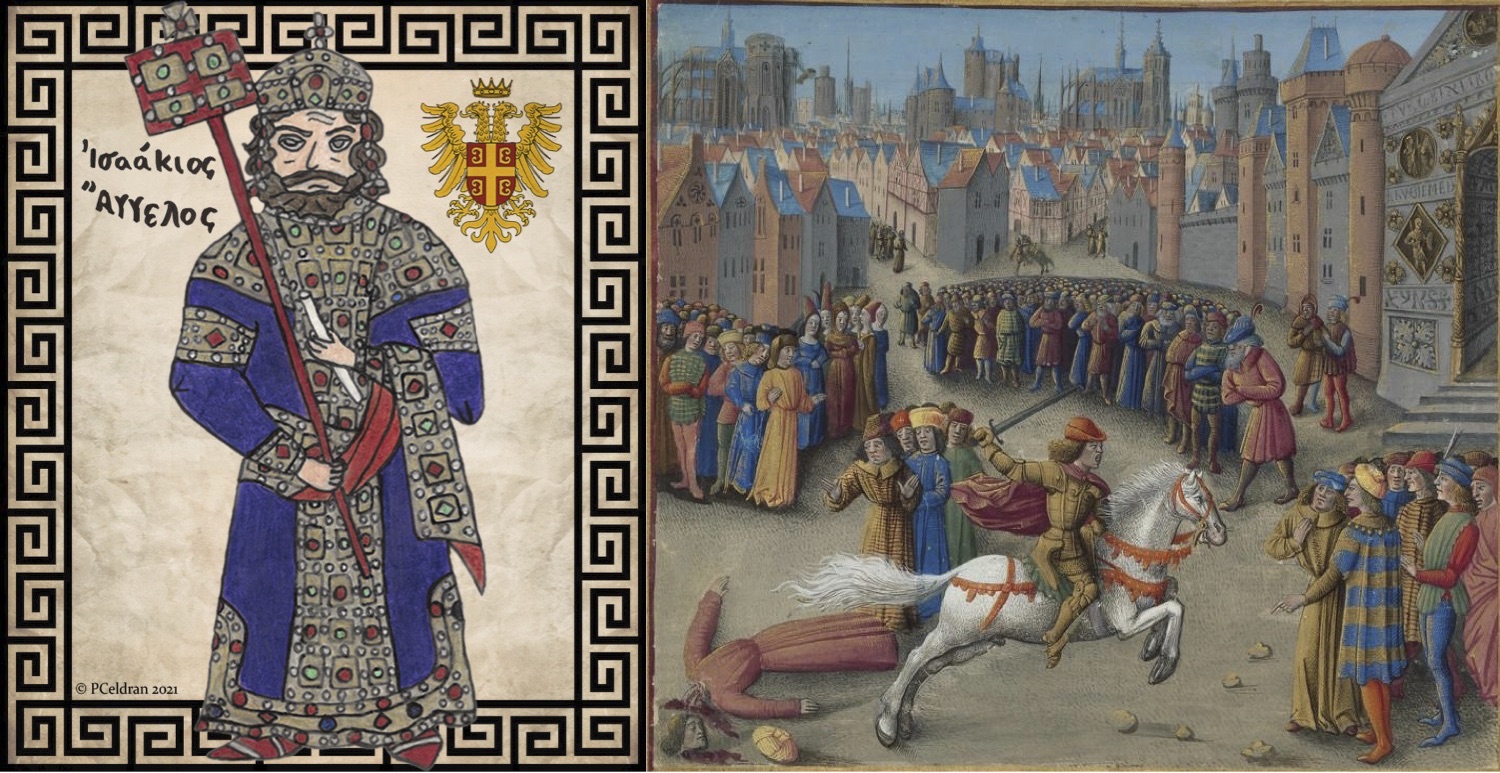
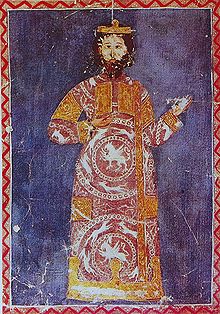
Welcome back to the Byzantium Blogger and here we are again with another Byzantine history article! In this one being the 14th part of this series featuring top lists concerning the lives of emperors who I think have interesting stories, we will go over Emperor Isaac II Angelos (r. 1185-1195/ 1203-1204) who may be one of Byzantium’s most controversial and often negatively portrayed emperors.
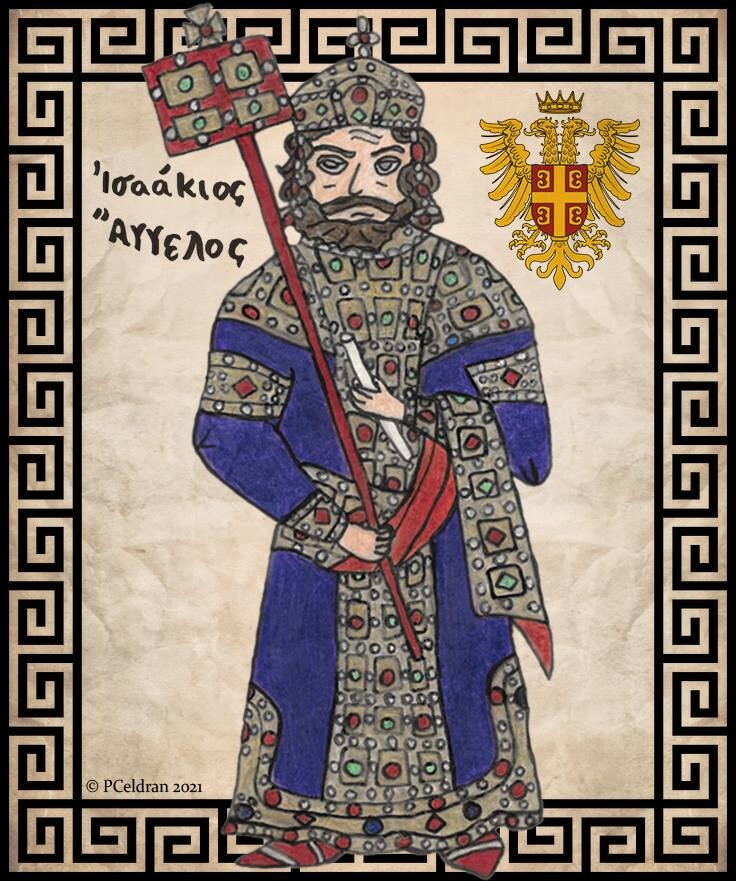
Isaac II Angelos now may not be one of the most remembered of Byzantine emperors, though despite being rather obscure, his 10-year reign from 1185-1195 together with his shorter second reign from 1203-1204 saw a lot happening both in the Byzantine Empire and in the wider world. Isaac was born to Byzantium’s aristocracy in the last golden age of the Byzantine Empire as a dominant power during the era of the Komnenos Dynasty founded by Isaac’s great-grandfather Emperor Alexios I Komnenos (r. 1081-1118) who we discussed in the previous article. Although not the most likely of people to succeed to the imperial throne, Isaac came to power by chance in 1185 when the people rioted in his favor against the last Komnenos emperor, the cruel and autocratic Andronikos I Komnenos (r. 1183-1185) who was then beaten to death by his own people whereas Isaac was proclaimed as emperor in his stead. As emperor, Isaac witnessed a number of successes such as the defeat of the Norman invasion of Byzantium immediately after he became emperor and the subduing of several rebel generals who rose up against his rule.

However, despite seeing some victories, Isaac II’s reign had seen more defeats and setbacks such as the major uprising of the Vlach and Bulgarian people that led to Bulgaria declaring independence from Byzantium, numerous revolts against his rule, foreign invasions, and military defeats. After a troubled and rather incompetent 10-year rule, Isaac II fell from power when his older brother Alexios usurped and blinded him and thus took over as Emperor Alexios III Angelos (r. 1195-1203). Despite blind, Isaac II regained the throne together with his son Alexios IV (r. 1203-1204) with the help of the 4th Crusade which too ousted Alexios III from power. Isaac’s time back in power however was short-lived as just months after, a palace coup in Constantinople in 1204 deposed him and his son leading to the death of both and what followed was the 4th Crusade’s violent and unforgettable sack of Constantinople and the temporary collapse of the Byzantine Empire. Now, Isaac II Angelos often gets a reputation as a corrupt and incompetent ruler without much skill in running the empire while his dynasty is often depicted as the destroyers of Byzantium, thus in this article we will examine his rule and see whether he was really that way or rather it being because of the situation the empire he ruled was at. Here, in this article we will go over 5 moments of victory in the life and reign of Isaac II and 5 moments of defeat. Before beginning this top 10 list though, I would first give a background to the 12th century Byzantine Empire Isaac grew up in together with the Crusades. Additionally, in my channel No Budget Films, I’ve made 2 Lego films being House Komnnenos: A Byzantine Epic and Revolution in Constantinople in which both feature the character of Isaac Angelos in it.

Follow me, Byzantine Time Traveller on Social Media:
Instagram: @byzantine_time_traveller
Facebook: Byzantine Time Traveller
Youtube: No Budget Films
Website: Byzantine Time Traveller
Deviantart: Byzantium-blogger55
Art Station: Powee Celdran Porphyrogennetos
Patreon: Byzantine Time Traveller
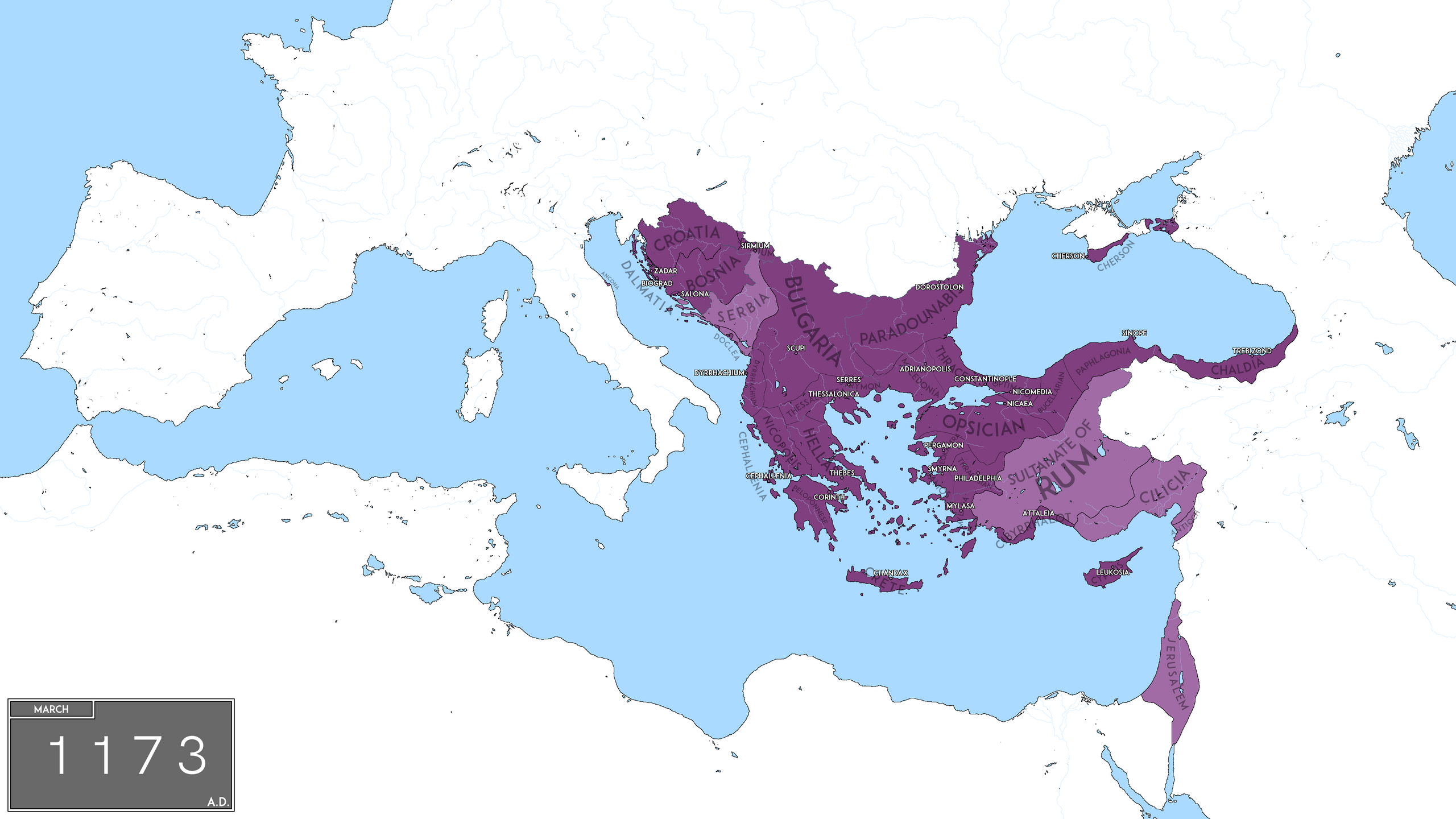
After a long reign of 37 years (1081-1118), Byzantine emperor Alexios I Komnenos had left behind a strong and stable empire on all fronts, thus starting a new golden age for Byzantium known as the “Komnenian Restoration”.

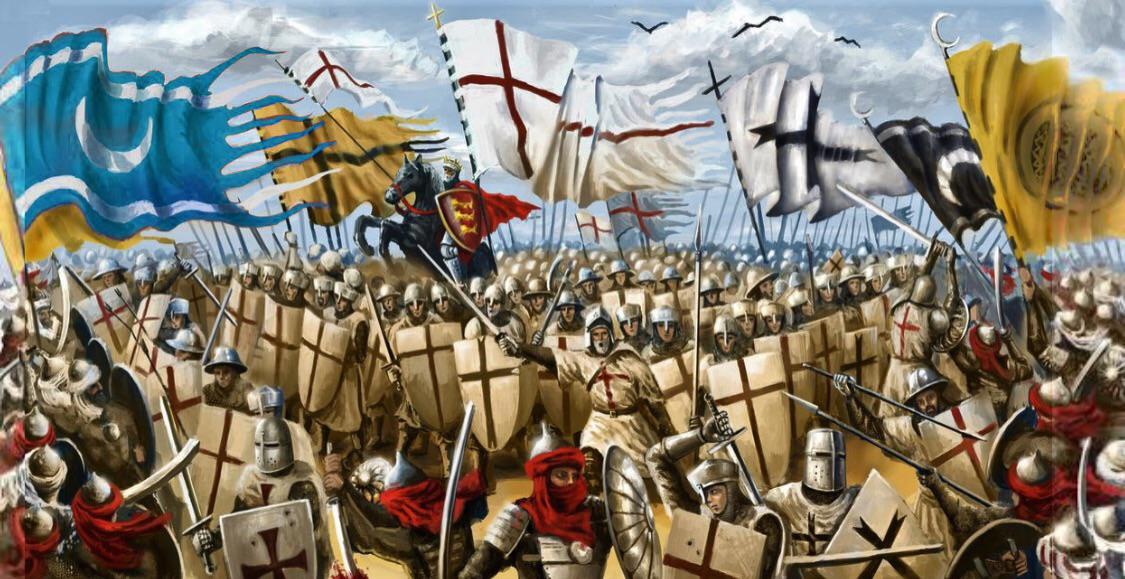
Despite returning some stability and prosperity to Byzantium, Alexios I too brought in new problems such as for one the Crusaders who since the First Crusade (1095-1099) established their own states in the Middle East- the County of Edessa, Principality of Antioch, County of Tripoli, and Kingdom of Jerusalem- collectively known in French as Outremer. Apart from bringing in the Crusades who would true enough cause more difficulties for Byzantium, Alexios I had also introduced the problem being the Republic of Venice who ever since becoming an ally of Byzantium were given excessive trading rights and privileges in Byzantine waters. Following Alexios I’s death in 1118, he was succeeded by his eldest son John II Komnenos (r. 1118-1143) and his reign began successfully as he scored further successes against the Seljuk Sultanate in Asia Minor, Byzantium’s primary eastern enemy and later in 1122 against the Pechenegs who had invaded the Balkans again at the Battle of Beroia which thus saw the complete end of the Pechenegs as a threat to the Byzantine Empire. In the meantime, due to the rising power and influence of Venice that they gained trading in Byzantine waters, John II in 1124 renounced his father’s treaty with them and thus leading to war breaking out with Venice which however went badly for the Byzantines that John II in 1126 decided to stop the conflict by reconfirming his father’s treaty with Venice.

Apart from waging war against the Republic of Venice, John II too from 1127-1129 successfully fought off a Hungarian invasion into the Byzantine Balkans while his rule too was seen as mostly successful and accomplished by his people as he too was seen as a merciful and just ruler who provided a lot for subjects including the construction of a major monastery and hospital complex in Constantinople. In 1130s meanwhile, John II spent most of his time away from the capital campaigning against both the Seljuk and Danishmend Turks in Asia Minor and reclaiming territory from them which once belonged to Byzantium. With his campaigns against the Seljuks and Danishmends more or less over, John II thus began campaigning against the breakaway Armenian Principality in Cilicia all while also getting the rulers of the Crusader states of Antioch, Edessa, and Tripoli to submit to him as vassals in 1137. With the said Crusader states submitting to Byzantium as vassals, John II with their armies combined laid siege to the Muslim held city of Shaizar in 1138 which too eventually submitted to Byzantium as a vassal too. Following his successes in the east, John II resumed campaigning against the Seljuks and Danishmends in Asia Minor, although when his vassal being the Prince of Antioch Raymond of Poitiers (r. 1136-1149) proved to be disobedient towards him, John decided to launch a campaign against Antioch in 1142 with the intention to conquer and subjugate it.
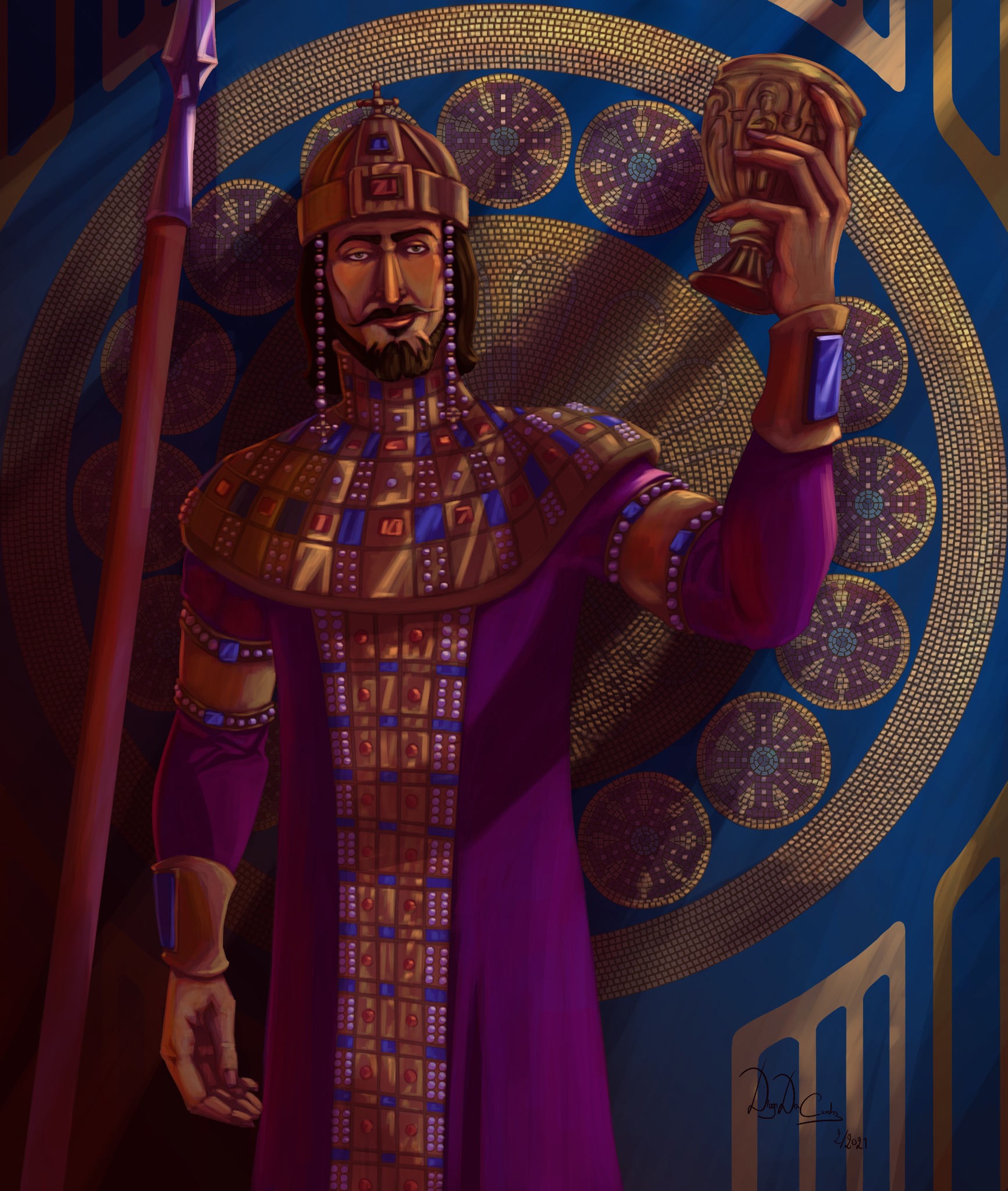
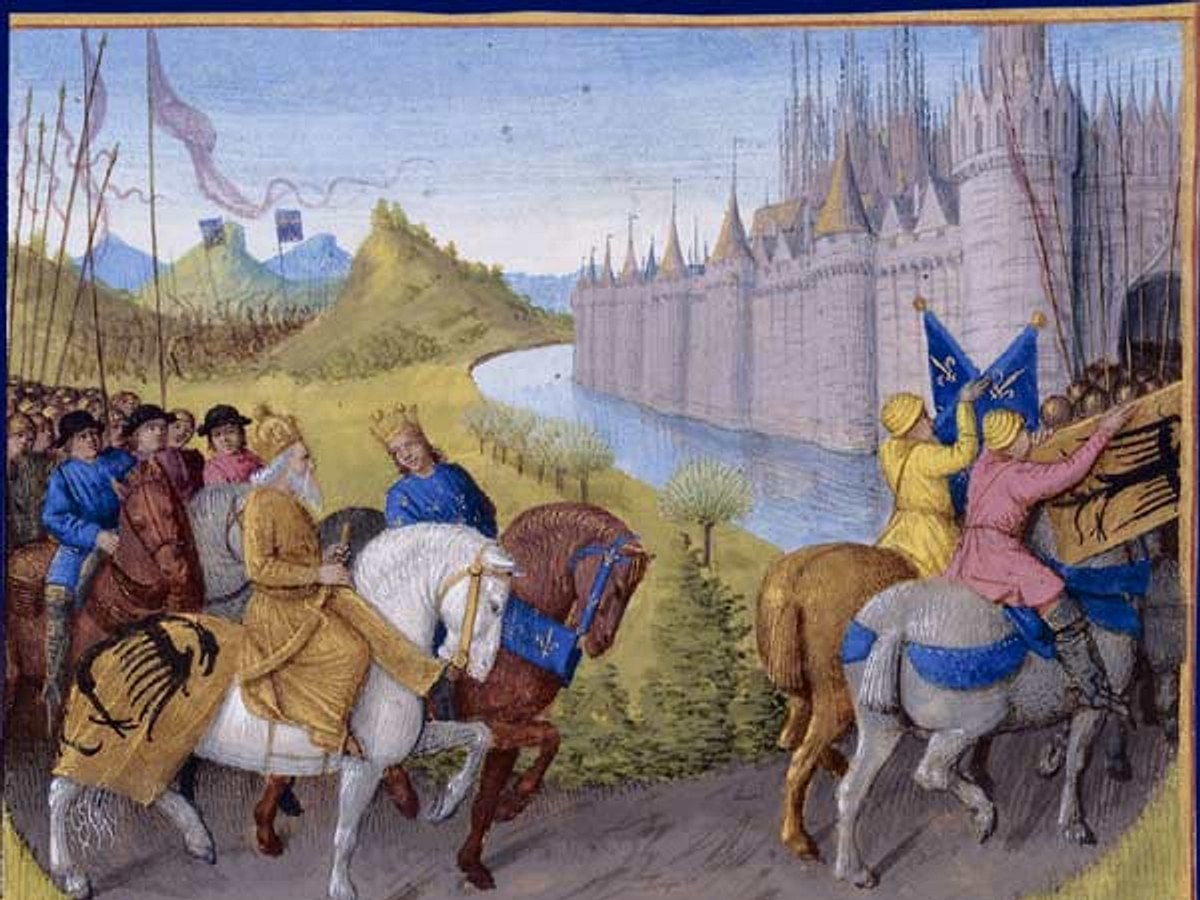
However, when preparing his campaign to finally put Antioch back under direct Byzantine rule, John II died of a hunting accident in Cilicia in 1143 and was thus succeeded by his youngest son Manuel I Komnenos (r. 1143-1180) who as the new emperor cancelled his father’s campaign against Antioch. In the meantime, in 1144, the entire Crusader state of Edessa had fallen to the Muslim warlord Imad al-Din Zengi (r. 1127-1146) which then sent shockwaves across Europe thus leading to the 2nd Crusade being launched in 1147. Just like the First Crusade some 50 years earlier, the 2nd Crusade too passed through Byzantine territory and even into Constantinople itself where they were welcomed by Manuel I and leading this Crusade included the King of France Louis VII (r. 1137-1180) and the King of Germany Conrad III (r. 1138-1152). As the armies of the 2nd Crusade proceeded to fight in the Middle East and assist the Crusader states there, Manuel was preoccupied both with war against the Seljuks in Asia Minor and the Sicilian-Norman invasion of Byzantine Greece in 1148. Although the Byzantines with assistance from both Venice and Conrad III of Germany managed to expel the Norman invasion of Greece, the 2nd Crusade on the other hand ended in total failure when Zengi’s son and successor Nur al-Din Zengi (r. 1146-1174) defeated the Crusader armies at the Battle of Inab in 1149.
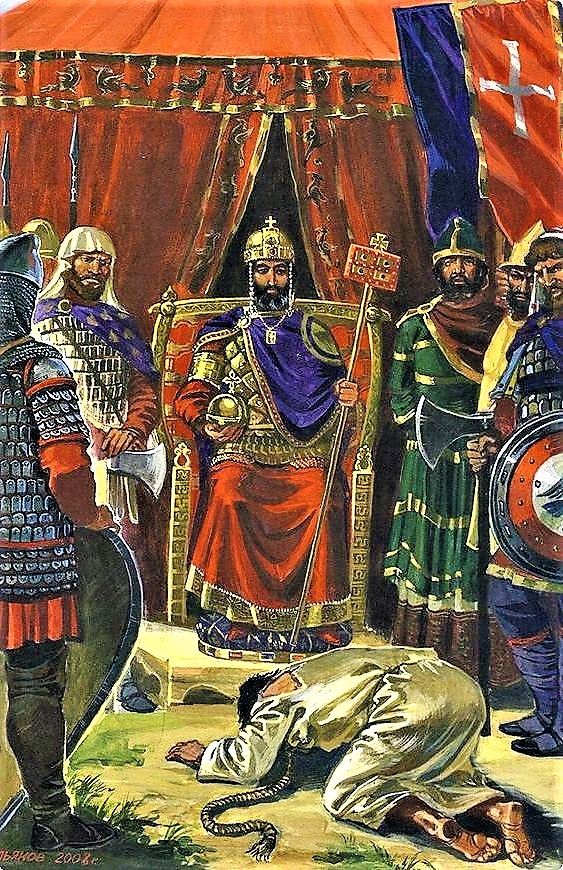
After taking care of the Norman threat and with the 2nd Crusade over, the ambitious Manuel in the 1150s organized a massive Byzantine military expedition to reclaim what they had lost in Southern Italy to the Normans in the previous century and although the invasion of Southern Italy was successful in 1155, it was defeated by the Normans in 1156 who forced the Byzantines to return home. At around the same time as the expedition against the Normans, Byzantine Cyprus was threatened by the new Prince of Antioch Reynald de Chatillon (r. 1153-1161), thus Manuel punished him by launching a campaign against Crusader Antioch which ended with Manuel victorious and Antioch becoming a Byzantine vassal once again. With Antioch now a Byzantine vassal, Manuel married one of its princesses, Maria of Antioch all while the Crusader armies of Antioch and Jerusalem further helped Manuel defeat the Seljuks in Asia Minor. Furthermore, Manuel’s reign also saw Byzantium at war against the Kingdom of Hungary with the Byzantines victorious at the Battle of Sirmium in 1167 and the Hungarian prince Bela adopted by Manuel as his heir until Manuel’s son with Maria, Alexios was born in 1169, thus Bela in 1172 returned to Hungary to be King Bela III (r. 1172-1196).
In 1169 meanwhile, Manuel sent a large army under his best general and nephew Andronikos Kontostephanos to assist the Crusaders of Jerusalem under their king Amalric I (r. 1163-1174) in a campaign against the Fatimid Caliphate in Egypt, however this expedition to conquer Egypt failed due to the lack of cooperation between the Byzantines and Crusaders. Although the Egyptian expedition failed, in 1171 the Fatimid Caliphate was overthrown by the general Saladin (r. 1174-1193) who thus began his own dynasty in the Middle East known as the Ayyubids. Manuel in the meantime in 1171 declared war on the Republic of Venice by arresting all Venetians in Byzantine territory and though Venice responded by invading Byzantium in 1172, the Byzantines managed to defeat this said invasion. Manuel I’s downfall however came in 1176 when he declared war against the Seljuks in Asia Minor for violating their treaty with Byzantium, and though Manuel came close to besieging the Seljuks’ capital of Iconium, the Byzantine army was annihilated by a Seljuk ambush at the mountain pass of Myriokephalon wherein Manuel barely escaped with his life.

Manuel’s last 4 years were thus tragic and although he made a few more attempts to take back lands lost to the Seljuks, the Seljuks were to stay forever in Asia Minor whereas Manuel died in 1180 a broken man leaving the empire to his young and inexperienced son Alexios II Komnenos (r. 1180-1183) who was only 11-years-old. Due to the young age of Alexios II, he was under the regency of his mother, the empress Maria of Antioch but because of her Norman-French origins, she was unpopular among Constantinople’s people all while there too was a strong rivalry over control of Alexios II between her and Manuel’s daughter Maria from a previous marriage wherein the latter called upon Manuel’s estranged and exiled cousin, the conman Andronikos Komnenos to come to Constantinople and seize the throne. With his life-long rival Manuel gone, Andronikos in 1182 rode into Constantinople victorious wherein the people who hated the rule of the empress celebrated his entry to the capital by massacring Constantinople’s Latin inhabitants. Following this event, Andronikos had both Manuel’s daughter Maria and the empress Maria killed and then in 1183 finished off Manuel’s bloodline by killing off the emperor Alexios II himself and dumping his body in the sea, thus Andronikos who was already in his 60s to legitimize himself married the late Alexios II’s 12-year-old wife Agnes of France, therefore Andronikos became the new emperor.

Watch this Lego film above from my channel to see Isaac II Angelos’ story.
Related Articles from the Byzantium Blogger:
Byzantine Alternate History Chapter IX
Byzantine Alternate History Chapter X
10 Times Alexios I Komnenos Saved the Byzantine Empire
7 Key Moments in the Life of Emperor Basil I
7 Times Empress Irene of Athens Exercised Political Power
10 Key Moments in the Life of Emperor Heraclius
6 Times Empress Theodora Exercised Political Power
8 Times Emperor Zeno was a Survivor
5 Achievements and 5 Failures of Theodosius I the Great
10 Achievements of Constantine I the Great
7 Times Constantine XI Exemplified Bravery
10 Unknown Facts About Justinian I the Great
8 Times Michael VIII Palaiologos was an Evil Genius
10 Surprising Facts About Emperor Basil II
5 Reasons to Feel Bad for Justinian II and 5 Reasons to Hate Him
I. Victory- Rise to Power, 1185

As Andronikos I Komnenos came to power in 1183, he initiated what would be a “reign of terror” wherein his sole aim was to rid the Byzantine Empire of most of its aristocrats who he saw as corrupt and this meant torturing and killing every one of them or those who supported them.

Among the aristocrats who suffered under Andronikos I’s bloody rule were Manuel’s top general Andronikos Kontostephanos who together with his sons were blinded by the emperor and Manuel and Andronikos’ cousin Andronikos Angelos, father of the future emperor Isaac II who when his part in a plot against the emperor was discovered fled to the Crusader states in the Middle East. Andronikos I’s rule true enough was literally the Byzantine version of a totalitarian dictatorship wherein he had spies everywhere and that anyone suspected of the slightest disloyalty to the emperor could be executed. Other than that, Andronikos too punished those who stole from shipwrecks by having them hung from the masts of ships, however Andronikos despite his brutality supported the peasants and their rights. Furthermore in 1184, Andronikos launched a campaign against the cities of Prusa and Nicaea in Byzantine Asia Minor which opposed his rule and part of this revolt against Andronikos was Andronikos Angelos’ youngest son Isaac and during the imperial army’s attack on Prusa, Andronikos had Isaac’s mother Euphrosyne placed above a battering ram so that the city’s defenders would surrender, and true enough the city surrendered whereas Andronikos had the defenders impaled outside the city walls, though Isaac here was spared.

In the meantime, the Byzantine Empire under Andronikos I was troubled by foreign invasions, first of all the King of Hungary Bela III used Andronikos’ execution of his allies, the late Manuel I’s wife and son as a pretext to invade the Byzantine Balkans whereas the Serbian prince Stefan Nemanja (r. 1166-1196) who was once a vassal to Manuel I declared Serbia independent from Byzantine rule. Furthermore, many Byzantine noblemen who suffered under Andronikos’ persecutions fled the empire to request assistance against him from foreign rulers including the pope, King of Jerusalem, the Holy Roman emperor, the Norman King of Sicily, and the Seljuk sultan all while another of Andronikos’ relatives, Isaac Komnenos who was imprisoned by the emperor escaped prison in 1184 and fled to Cyprus where he established his own independent state there. In 1185, one of the foreign rulers who Byzantine nobles appealed for help from against Andronikos answered the call, and this was the Norman King of Sicily William II (r. 1166-1189) who then launched a massive naval invasion on the Byzantine Empire wherein his troops captured the port city of Dyrrhachion in Albania from the Byzantines and from there proceeded east to Thessaloniki which they too captured. From Thessaloniki, the Normans then prepared to march further east with the intention to take Constantinople, however Andronikos at least sent troops to counter the Norman attack which true enough slowed it down.
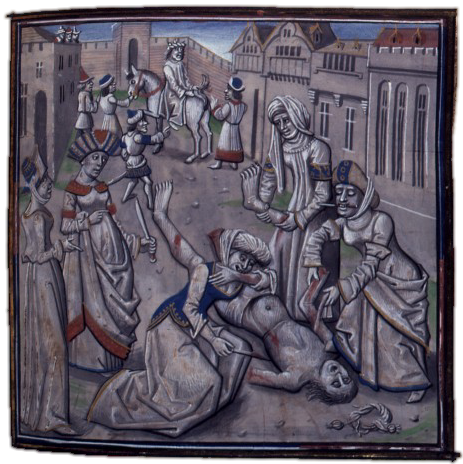
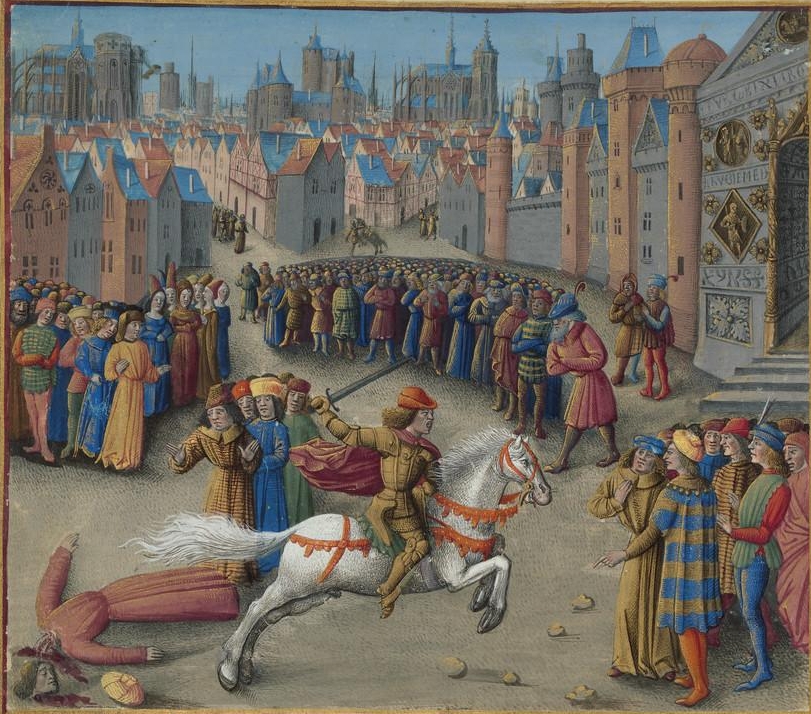
Although the Normans’ march to Constantinople was slowed down, the same people of Constantinople who previously put Andronikos in power back in 1182 turned on him believing he caused the Norman invasion. In the meantime, Andronikos had also received a prophecy that the young aristocrat Isaac Angelos would overthrow him, thus Andronikos sent his henchman Stephen- the same person who killed Alexios II in 1183- to Isaac’s house in Constantinople and arrest him. Isaac however managed to evade arrest by getting on his horse and decapitating Stephen afterwards proceeding to the Hagia Sophia where he rallied the people to his side. In the course of just one day, Isaac with the backing of both his uncles John Angelos- his father’s brother- and Theodore Kastamonites- his mother’s brother- managed to get the people on his side and thus he was crowned as the new emperor. The mob now rioting in favor of Isaac thus stormed the imperial palace, and although Andronikos tried to escape with his wife and mistress, they were eventually caught whereas the old Andronikos was brought before the new emperor Isaac II who handed him over to the people. For 3 days straight, Andronikos I was savagely beaten to death thus having the kind of horrible death that reflected his horrible 2-year reign.
II. Defeat- The Vlach-Bulgarian Uprising
As the new emperor, Isaac II- although already married before- needed an empress, and this was to be the 10-year-old Margaret of Hungary, the daughter of no other than Bela III of Hungary. However, in order to raise funds for his lavish wedding to Margaret, Isaac resorted to taxing his subjects heavily, and those that suffered most from this tax were the people of Bulgaria who had been Byzantine subjects ever since Emperor Basil II’s (r. 976-1025) conquest of the Bulgarian Empire back in 1018.
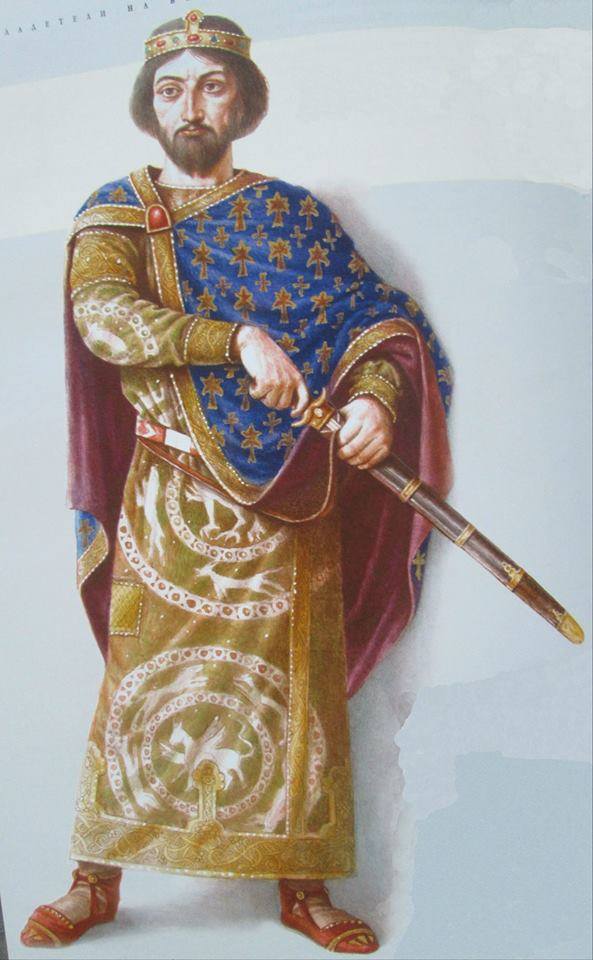
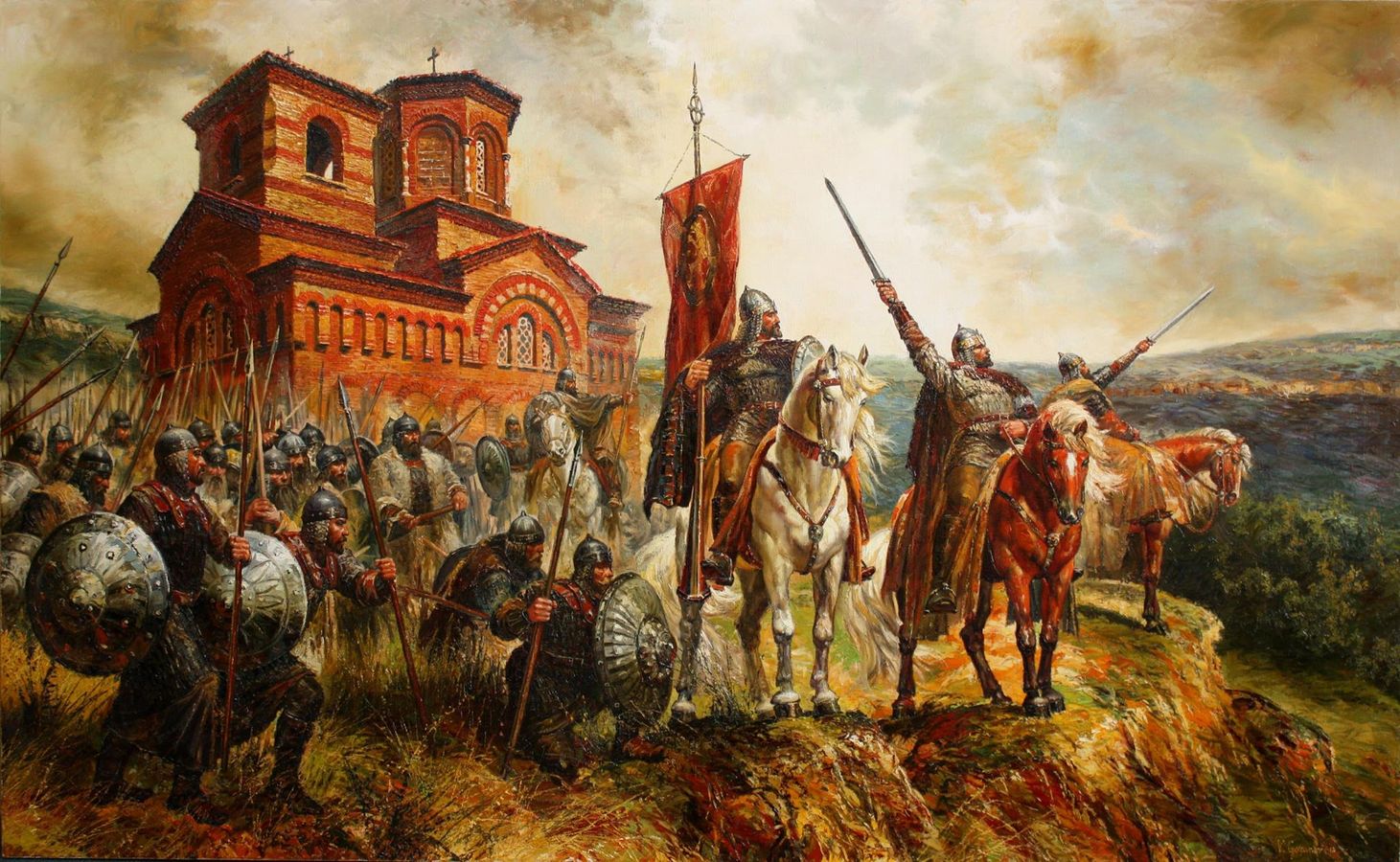
Just a month after becoming emperor, Isaac when preparing for his counterattack against the Norman invasion was approached by two Bulgarian brothers named Asen and Theodor who asked Isaac if they could be enlisted into the Byzantine army to fight off the Normans in exchange for being given land in Bulgaria so that they could raise money to pay the recently imposed tax of Isaac. Asen and Theodor were however treated badly by Isaac and told to leave and thus in response to this, when the brothers returned home to Bulgaria, they declared open rebellion against the Byzantines. In order to convince the people of Bulgaria to join their rebellion, the brothers came up with a propaganda story that the icon of St. Demetrios who was Byzantine Thessaloniki’s patron saint fled the city and “teleported” to Bulgaria which thus meant that St. Demetrios had abandoned Thessaloniki as true enough the city had just been sacked by the Normans, and therefore he now favored the Bulgarians. Eventually, many Bulgarians, Vlachs, Slavs, Cumans, and Pechenegs who were all subjects of the Byzantines joined the rebellion of the brothers- Asen who renamed himself Ivan and Theodor who renamed himself Peter- and thus in October of 1185 as the brothers declared rebellion against Byzantine rule, the Second Bulgarian Empire was born.
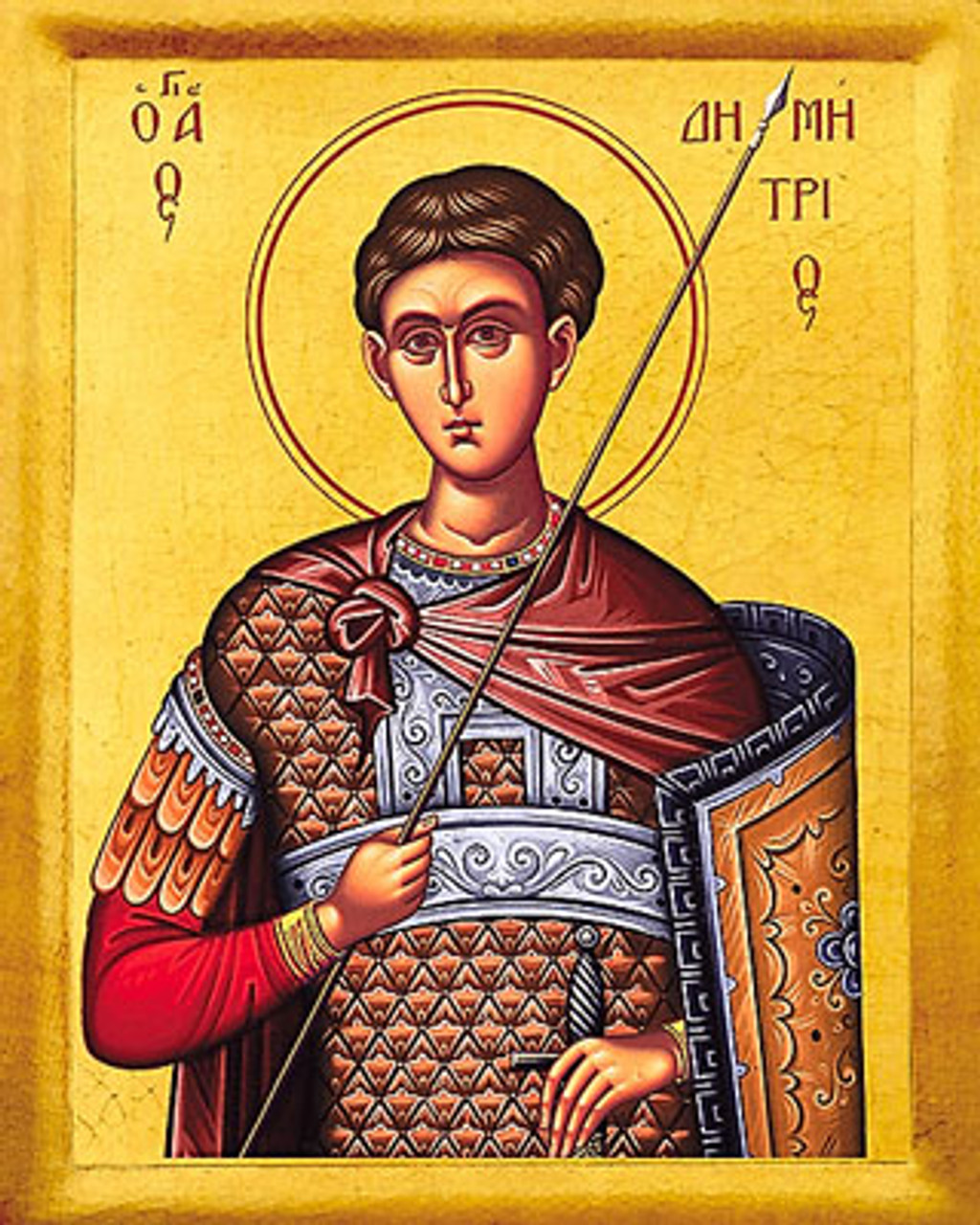
As soon as the rebellion began, those who had joined it raided a number of Byzantine cities in Bulgaria, thus in 1186 Isaac following his lavish wedding to Margaret responded by sending troops to crush this said rebellion. The Byzantines were at first successful that they managed to force many of the rebels to flee across the Danube River frontier whereas Isaac took back the icon of St. Demetrios which was however a fake one, just to prove that the saint favored the Byzantines again. As Isaac returned to Constantinople to celebrate his victory, the Bulgarian rebels once again struck back and retook the lands Isaac captured from them, therefore as the lands the rebels seized grew, the Second Bulgarian Empire too had grown in size. When discovering this, Isaac thus sent two generals to defeat the growing Bulgarian rebellion but at the end, these generals only rebelled by defecting to the rebels.
III. Victory- The Defeat of the Norman Invasion
When becoming emperor in 1185, Isaac II inherited the problem of the Norman invasion of Greece which was still ongoing. The Norman army had true enough already captured and sacked Thessaloniki and split into 3 divisions: one stayed behind in Thessaloniki, one marched east into Thrace, and the last one was headed directly towards Constantinople.
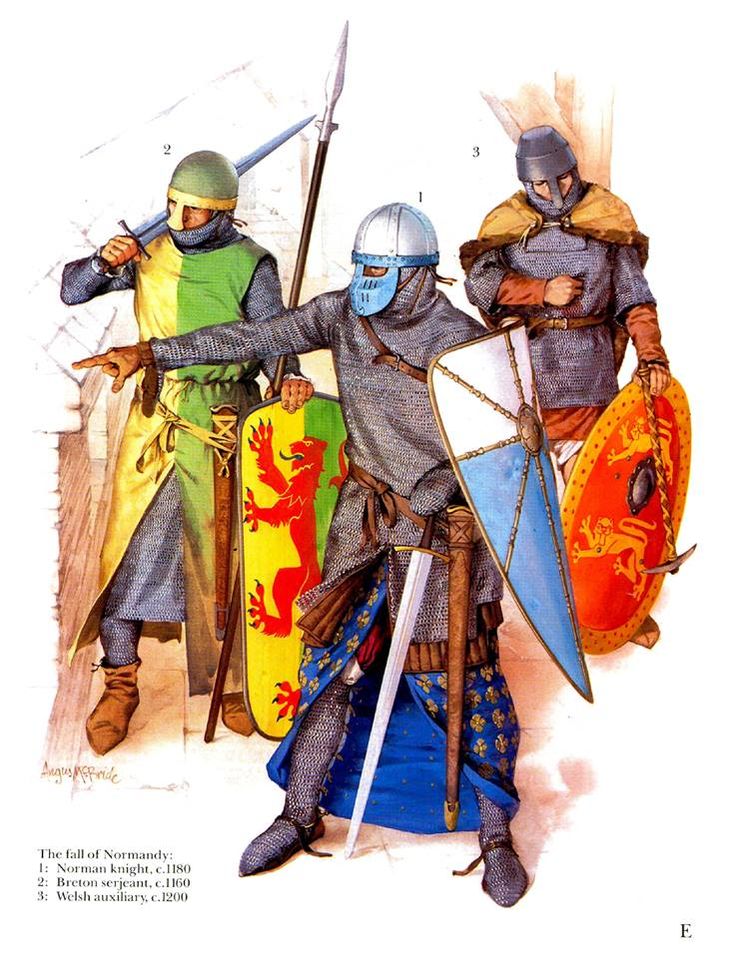
Immediately after becoming emperor, Isaac received an influx of volunteers from Byzantine Asia Minor who were then armed and paid by the new emperor and made to fight under the command of the experienced general Alexios Branas, who although being a loyalist of the late Andronikos I was assigned to block the Normans’ advance to Constantinople. Marching west, Branas and his forces managed to expel the Normans from the town of Mosynopolis in Thrace facing little resistance and from there he chased the Norman army to a site known as Demetritzes where a bloody battle was fought. According to the Byzantine historian of this time Niketas Choniates, the Normans initially planned to ask for peace from the Byzantines, though Branas seeing this as a sign of weakness refused the offer and attacked the Norman camp by surprise thus putting the Normans into flight. At the end of the day, the Byzantines won the battle whereas many Normans were either taken prisoner including their leaders Count Baldwin and Count Richard while those who weren’t captured escaped across the Strymon River.
Following their defeat in November of 1185, the Norman garrison in Thessaloniki abandoned the city and escaped by ship whereas those left behind in the city were massacred by the Byzantines as an act of revenge for the Normans’ sack of the city earlier that year. The Norman invasion of Byzantium thus ended just the same year it began and it was said that more than 4,000 Norman captives were sent to Constantinople where they suffered great mistreatment at the hands of Isaac II. Although the Normans packed up and returned to Sicily in defeat, their fleet still managed to destroy a fleet of 80 ships that Isaac II sent to Acre in order to liberate his older brother Alexios. Furthermore, Isaac now free from the Norman threat sent a fleet of 70 ships to this time reclaim the island of Cyprus from the rebel Isaac Komnenos, but again it was destroyed by the Norman fleet which was headed back to Sicily. Due to the defeat of the Norman invasion of Byzantium, the Norman Kingdom of Sicily eventually fell a few years later being replaced by the German Hohenstaufen Dynasty.
IV. Defeat- The 3rd Crusade in Byzantium
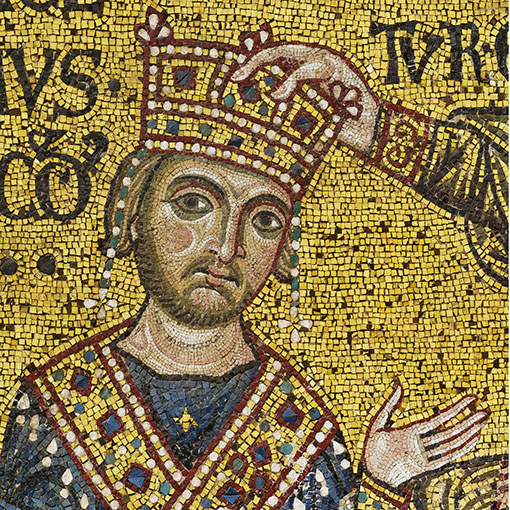
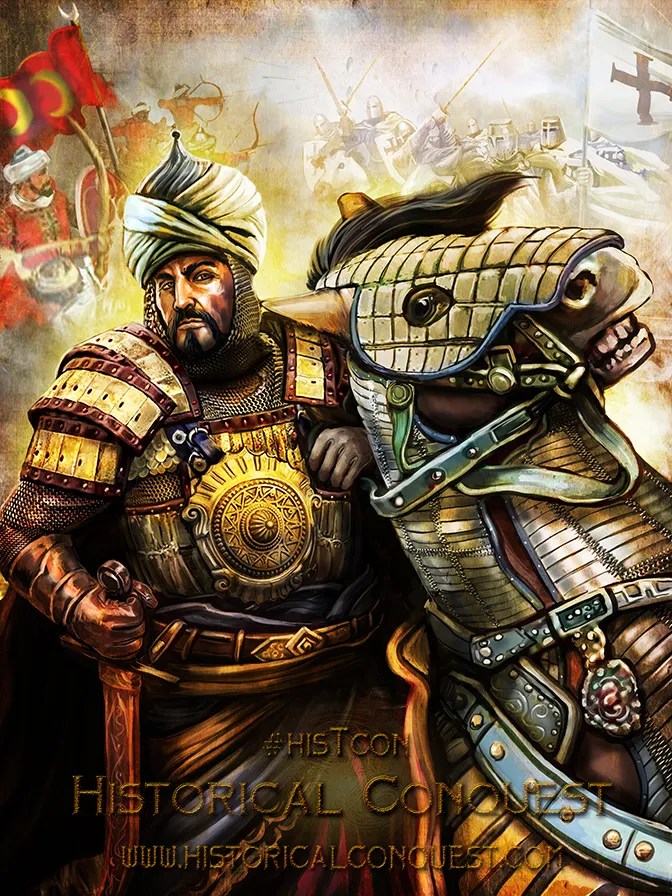
Although Isaac II Angelos’ reign had seen a number of defeats and setbacks as well, some were beyond his control such as the event of the capture of Crusader Jerusalem by the Ayyubid sultan Saladin- who it was believed Isaac made an alliance with- in 1187 which effectively put an end to the Christian Kingdom of Jerusalem.

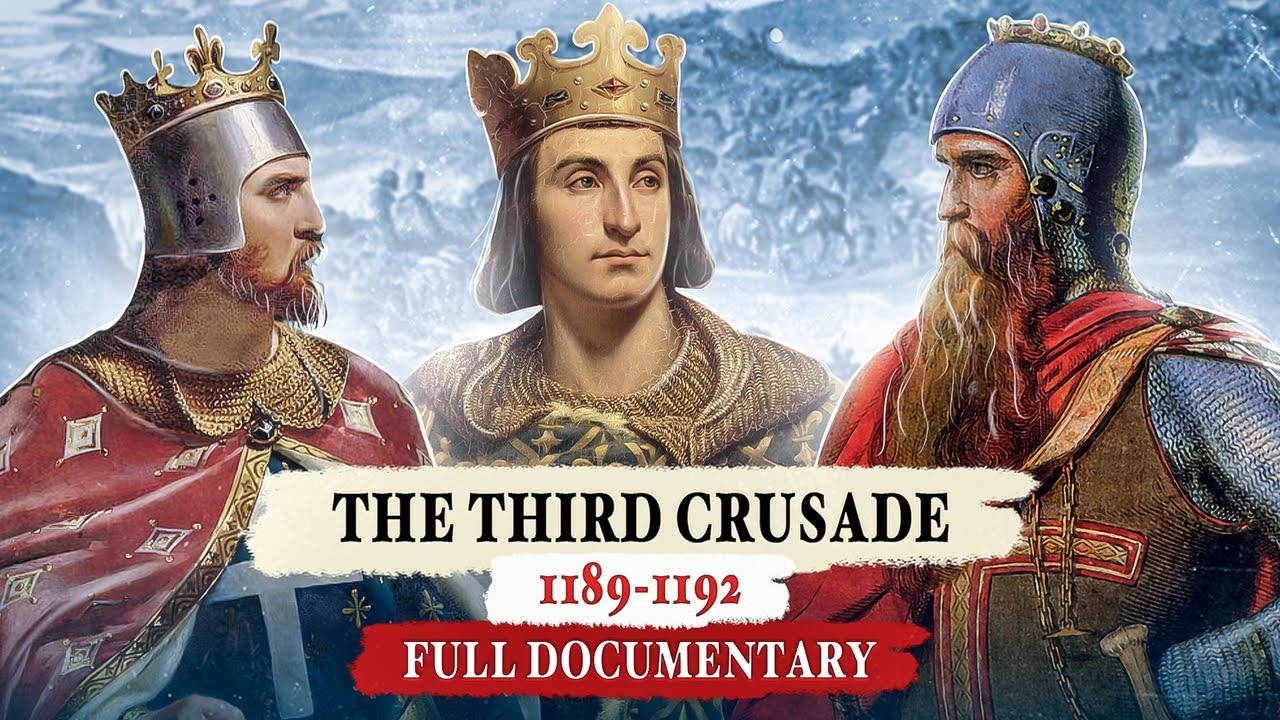
News of the fall of Jerusalem true enough sent shockwaves across Europe and allegedly Pope Urban III died of a heart attack when hearing of the news all while this news too led to the launching of a new Crusade, the 3rd Crusade. This Crusade’s intention now was to recapture Jerusalem from Saladin and it was to be led by 3 of Europe’s most powerful monarchs: the King of England Richard I the Lionheart (r. 1189-1199), the King of France Philippe II Auguste (r. 1180-1223), and the Holy Roman emperor Frederick I Barbarossa (r. 1155-1190). Although the French and English kings and their respective armies took the sea route to the Levant whereas Richard I of England true enough even managed to capture Cyprus from Isaac Komnenos on his way, the German army led by Frederick Barbarossa chose to take the land route from Germany which true enough passed Byzantine territory.
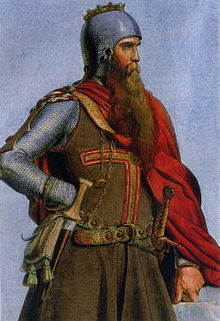
In 1189, Frederick sought and obtained permission to lead his troops through Byzantine territory, however Isaac II was suspicious of Frederick believing that he brought his German troops into Byzantine territory with the intention to conquer it as true enough before marching into Byzantium, Frederick made diplomatic contacts with Byzantium’s enemies then being Serbia under Prince Stefan Nemanja and the Bulgarian rebels under Asen and Theodor as Frederick believed Isaac formed an alliance against his enemy, Saladin. Another reason to why Isaac had suspected Frederick of having intentions to conquer Byzantium was Frederick’s long history of conflict with Manuel I and Frederick’s bad behavior when passing through Byzantine territory back when he was still much younger during the 2nd Crusade wherein, he accompanied his uncle the King of Germany Conrad III. Feeling that Isaac would betray him, Frederick made war against Byzantium anyway by occupying the city of Philippopolis in Bulgaria wherein he defeated a Byzantine army of 3,000 men sent to recapture the city.
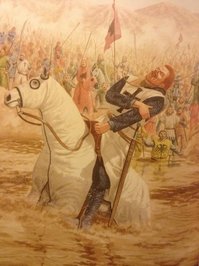
Although the Byzantines managed to harass the German Crusader army as they progressed through Thrace, a number of Armenian deserters revealed to the Germans a strategic plan that the Byzantine troops had set up, thus the Germans caught these Byzantines unprepared and defeated them. Due to this minor defeat the Byzantines had faced, Isaac was forced to come to terms with Frederick by agreeing to release a number of German hostages kept in Constantinople in 1190 whereas Frederick too was forced to release a number of Byzantine captives he took. In exchange for both Isaac and Frederick releasing hostages, the Germans had agreed not to sack local settlements until they departed Byzantine territory. Frederick and his troops were true enough ferried by Byzantine ships across the Sea of Marmara into Asia Minor, however when in Seljuk Asia Minor, Frederick drowned to death in a river, thus his army returned home to Germany before even making it into the Middle East to assist the French and English Crusaders.

V. Victory- Victory over Alexios Branas and Other Local Rebels
Prior to the arrival of the 3rd Crusade in Byzantium but after the defeat of the Norman invasion and the Vlach-Bulgarian uprising in 1185, the general Alexios Branas who gained popularity and prestige for the defeating the said Norman invasion declared rebellion against Isaac II in 1187. Following his victory over the Normans in Greece, Isaac II sent Branas to counter the growing rebellion of Theodor and Asen after the generals Isaac previously sent to crush them defected to them.
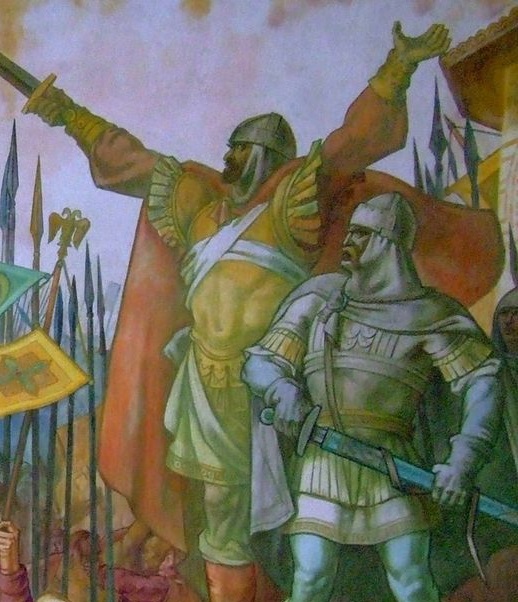
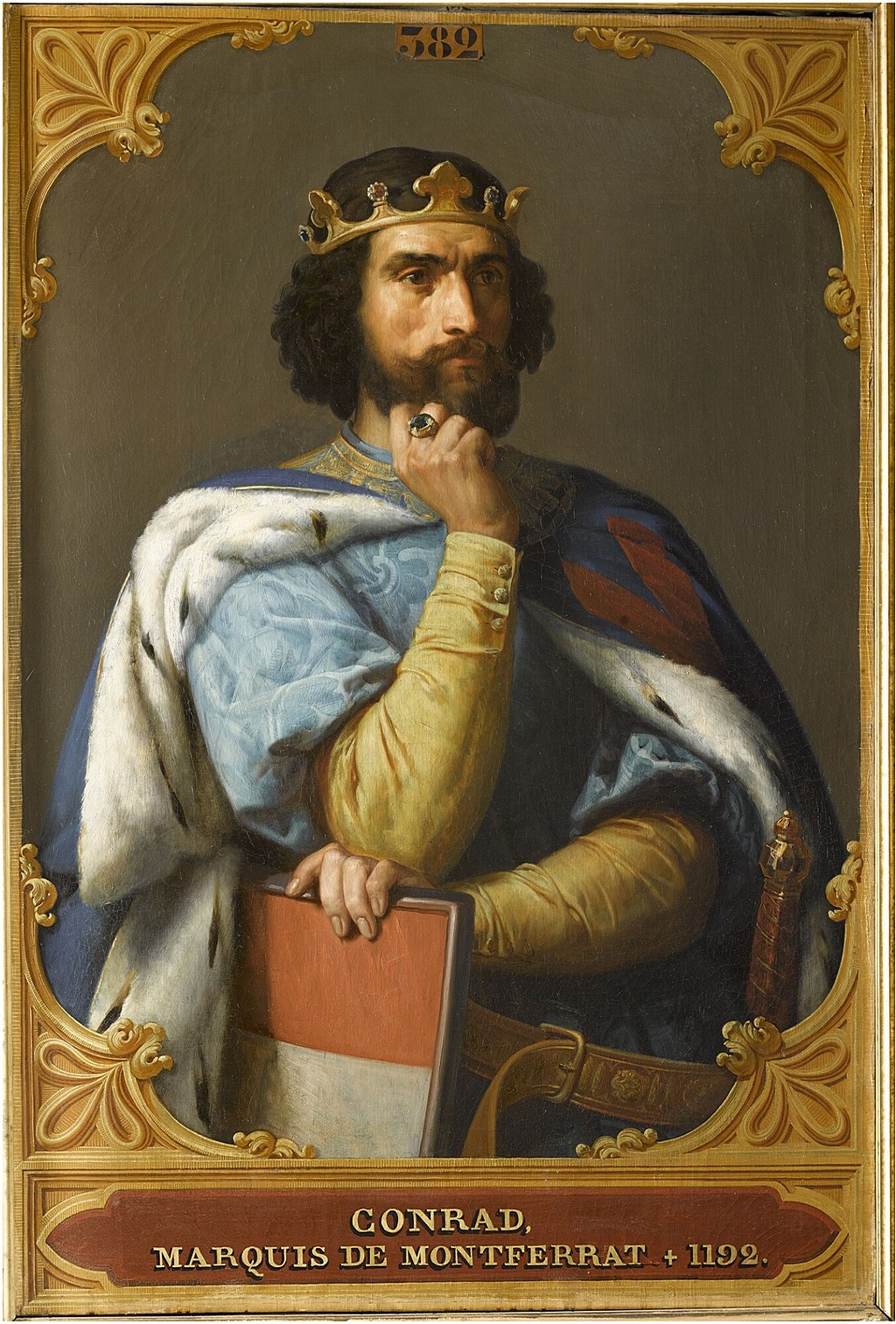
According to the historian Niketas Choniates, Branas was successful in subduing the Bulgarian rebels but because of his success, he decided to use it in order to start a rebellion against Isaac II wherein he true enough proclaimed himself as emperor against him in Adrianople, Branas’ native city. From Adrianople, Branas and his army advanced on Constantinople but did not succeed in attacking its walls as Isaac’s brother-in-law and henchman Conrad of Montferrat led a counterattack out of the city against Branas with his heavily equipped infantry forces. Conrad himself was said to have personally dueled Branas wherein Conrad using his lance unhorsed Branas and knocked him down to the ground wherein Conrad thus decapitated Branas, therefore ending Branas’ rebellion. Branas’ head was thus brought to the imperial palace wherein the emperor Isaac was said to have kicked the head around like a football. Branas’ rebellion now was perhaps the greatest local rebellion Isaac II had to face, however his reign had also faced a number of other local revolts, although smaller in scale to that of Branas’.
One such person to challenge Isaac II’s rule was the late emperor Andronikos I’s nephew also named Isaac who escaped prison and incited a mob to riot in his favor in the Hagia Sophia, however this Isaac was eventually captured and tortured by being suspended in the air and due to his internal organs suffering severe damage, he died the next day. Two other rebels to challenge Isaac II were Basil Chotzas who rebelled near Nicomedia but was captured by imperial forces and thus blinded and imprisoned whereas another one being Constantine Tatikios after secretly establishing a group of 500 individuals in Constantinople to conspire against Isaac II was eventually captured and blinded. In 1188 meanwhile, the general Theodore Mangaphas who was stationed at the city of Philadelphia in Asia Minor with the support of his people suddenly declared rebellion against Isaac II that he even minted his own silver coinage. Isaac thus responded to Theodore’s revolt in 1189 by marching against Theodore in person and then besieging Philadelphia.
Isaac’s siege of Philadelphia however did not last as he got word of Frederick Barbarossa and his German Crusaders- as mentioned earlier- marching into Byzantine territory, thus Isaac agreed to pardon Theodore and return to the Balkans to deal with Frederick on the condition that Theodore returned his loyalty to Isaac. However, this was not yet the last of Theodore Mangaphas as in 1193 he was captured by the Seljuk Turks but was eventually returned to Byzantium while following the fall of Constantinople to the 4th Crusade in 1204, Theodore taking advantage of the chaos declared himself emperor once again with Philadelphia being his territory, though in 1205 he was subdued by the Emperor of Nicaea- the Byzantine emperor in exile- Theodore I Laskaris (r. 1205-1221). Lastly, in 1192, another man challenged the rule of Isaac II pretending to be the late emperor Alexios II, Manuel I’s son who Andronikos I had killed in 1183, and by claiming to be Alexios II back from the dead, this man after allying with the Seljuk sultan Kilij Arlsan II (r. 1156-1192) invaded Byzantine Asia Minor and managed to defeat an imperial army sent by Isaac led by the emperor’s brother Alexios. However, the false Alexios II’s rebellion came to an end right after it started when a priest assassinated him due to collaborating with the Muslim Turks.
VI. Defeat- The Battle of Tryavna, 1190
As the Vlach-Bulgarian rebellion grew larger in 1187, Isaac II responded to it himself by personally leading the campaign against it, however this time he failed at besieging the Bulgarian held city of Lovech, thus he was forced to conclude a treaty with the brothers Asen and Theodor by recognizing the independence of Bulgaria as the Second Bulgarian Empire.
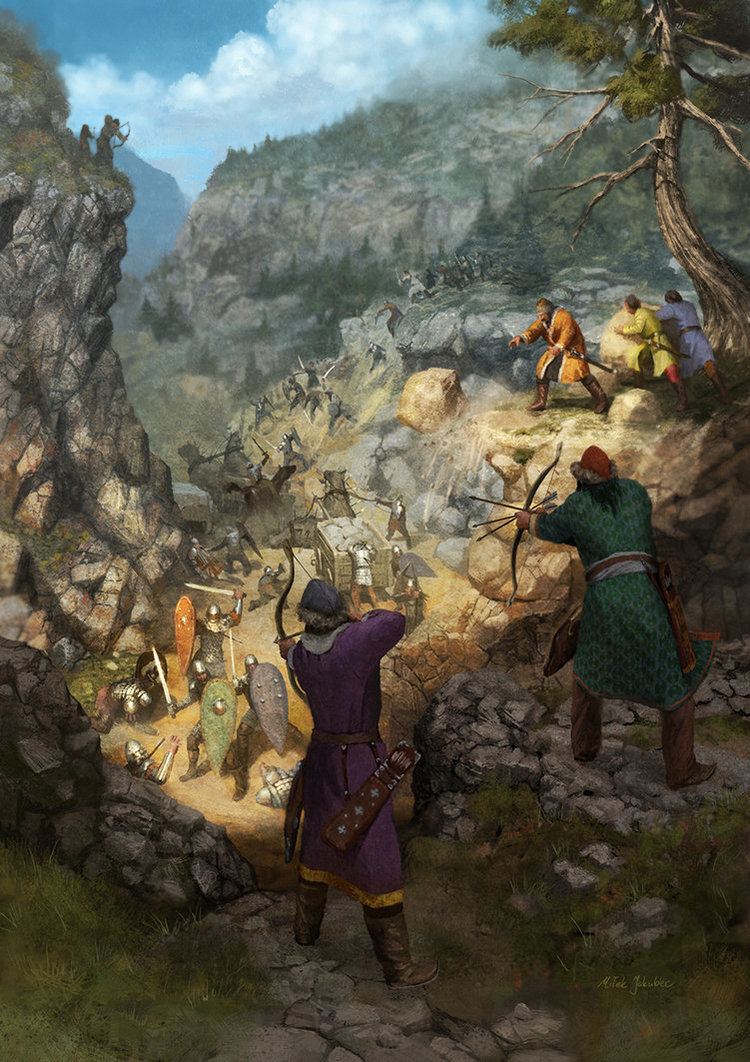
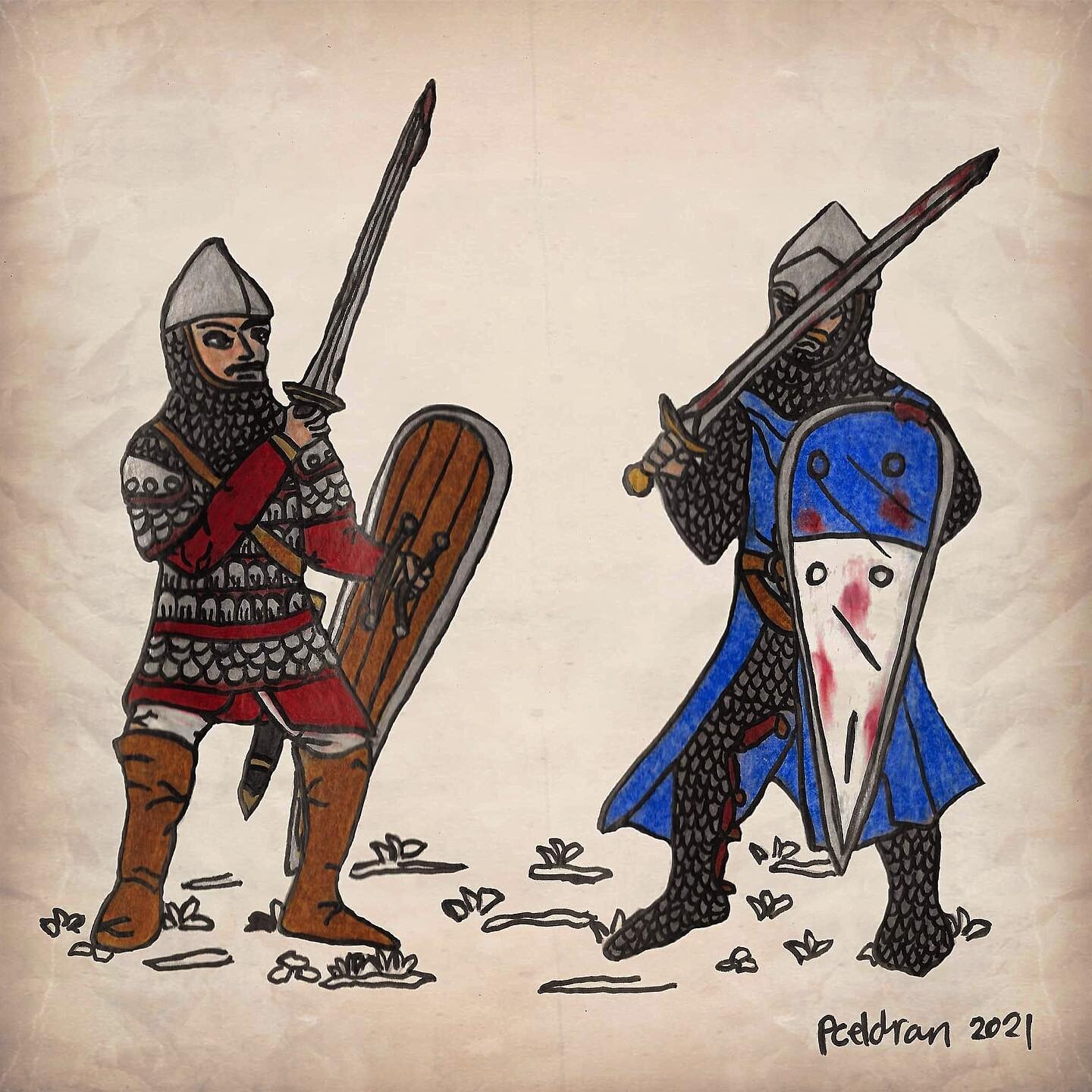
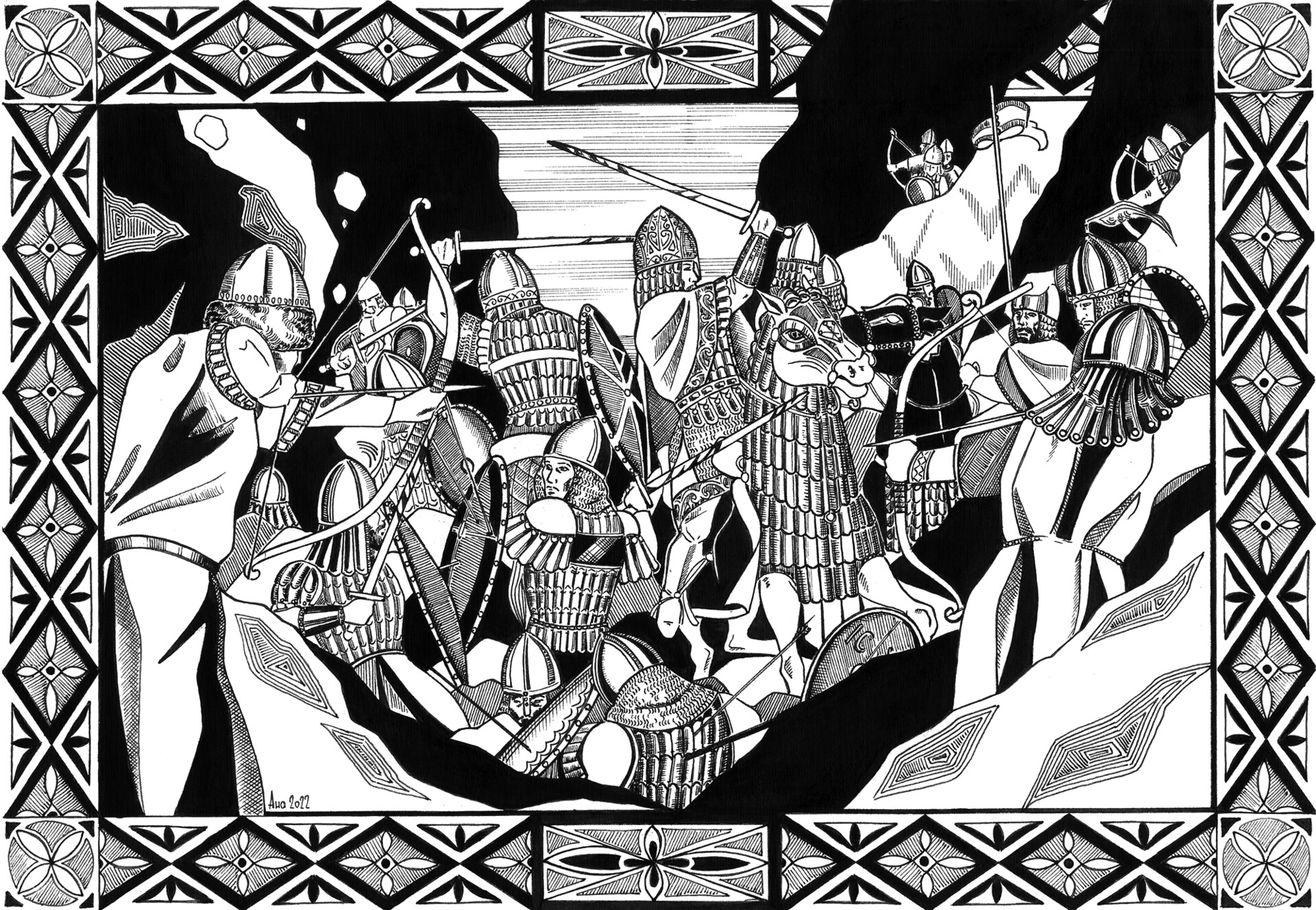
However, Isaac saw the treaty being broken when the brothers allied with Frederick Barbarossa in 1189 by supplying him with troops to march through Byzantium, thus with Frederick out of the picture in 1190, Isaac being free of the German Crusader problem returned his attention back to the Bulgarian rebels. In 1190, Isaac II thus personally led another campaign to subdue the rebels wherein Byzantine troops would invade Bulgarian territory both by land and sea with Isaac himself leading the land invasion. Isaac however failed in besieging the rebels’ capital Tarnovo which was defended by Asen himself, thus following this failure, Isaac led his troops into retreat, however little did they know that they were to face to full might of the rebels at a narrow mountain pass known as Tryavna. Here, as the Byzantines marched through the pass wherein their troops and baggage train stretched for kilometers, the Bulgarian rebels who had arrived before the Byzantines did staged an ambush from above using rocks and arrows.

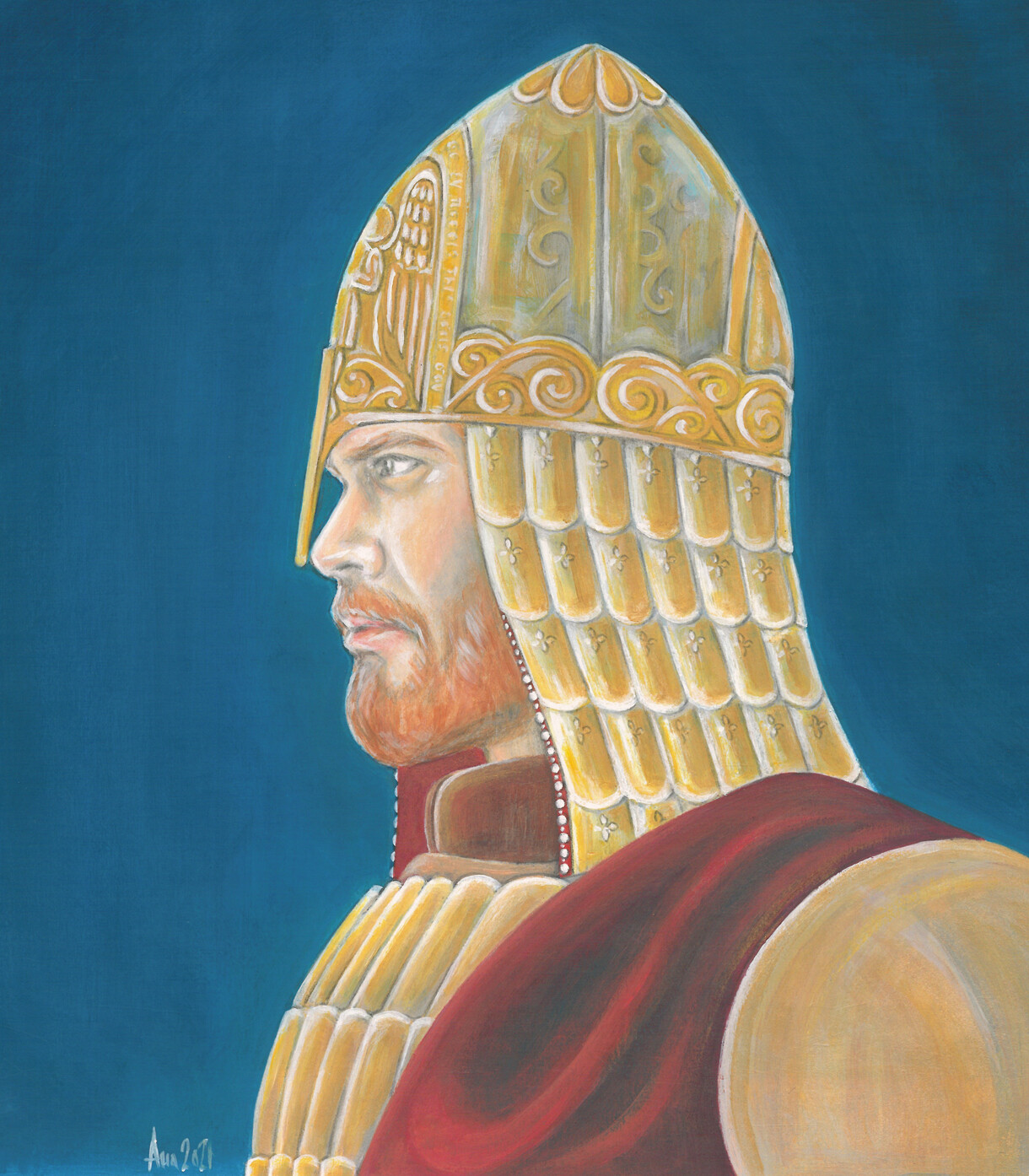
The Byzantine troops thus panicked and broke up in a disorganized retreat which thus led the Bulgarians to charge at them and kill everyone on their way. Isaac II on the other hand barely escaped with his life that his own guards had to cut down their own troops just so that he could get out of the battlefield alive. The Battle of Tryavna thus ended with a catastrophic defeat for the Byzantines wherein the victorious Bulgarians captured the imperial treasure left behind at the pass which included the emperor’s golden helmet, the crown, and the emperor’s gold cross containing relics inside all while the Bulgarians too seized the much more superior weapons of the slain Byzantine soldiers. As a result of this victory, the Bulgarian co-rulers Theodor and Asen grew their power and influence capturing from the Byzantines more cities in Thrace in the following years. Although defeated by the Bulgarians, Isaac II not accepting defeat decided to launch another attack, this time against Serbia in 1191 wherein this time he successfully crushed the Serbians at the Battle of the Morava River resulting in a treaty concluded between Isaac and the Serbian prince Stefan Nemanja which returned Serbia back to the status of being a Byzantine vassal and the city of Nis returned to Byzantine control.
VII. Victory- Isaac II’s Foreign Relations
Although not always successful on the battlefield, Isaac II at least remained mostly popular with his subjects, but his greater successes came in diplomatic relations with foreign powers most of which were done through marriages from among his family members. Isaac himself true enough was a product of dynastic marriages as his great-grandfather was the Byzantine emperor Alexios I Komnenos himself through his grandmother Theodora Komnene, Alexios I’s daughter who was married to the Byzantine nobleman Constantine Angelos.
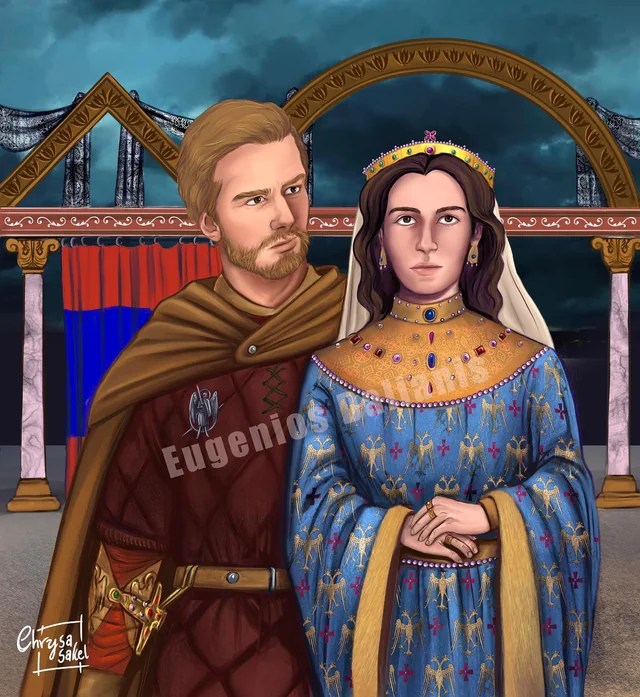
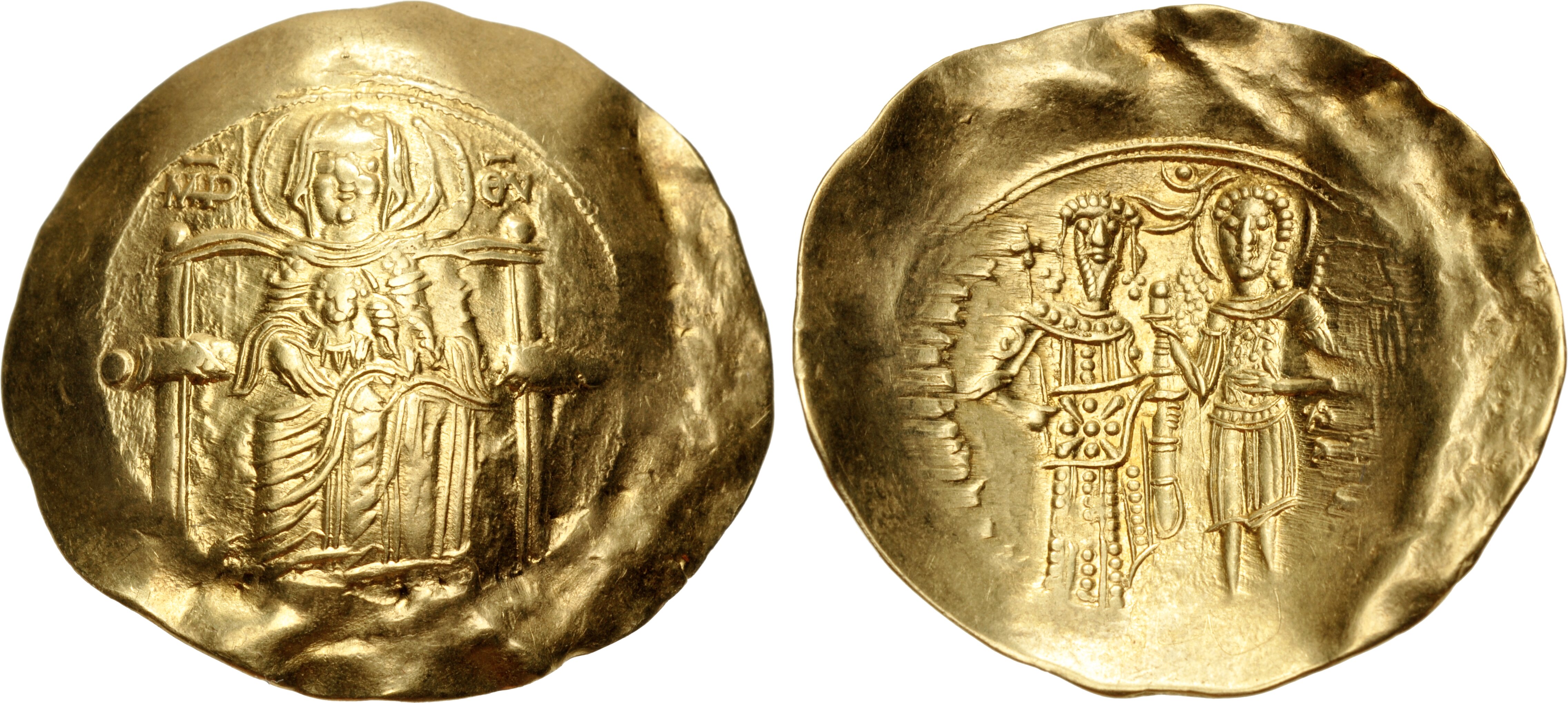
Constantine and Theodora’s son being Isaac’s father the general Andronikos Angelos who was also a cousin of the former emperors Manuel I and Andronikos I Komnenos was in turn married to Euphrosyne Kastamonitissa, another Byzantine noblewoman and together they had 8 children with Isaac being the youngest son born in 1156. Before his rise to power in 1185, Isaac was already married to a Byzantine woman named Irene who may have been a commoner, and when becoming emperor, he had probably divorced her in order to marry the Hungarian princess Margaret, daughter of the King of Hungary Bela III. In 1187 meanwhile, Isaac scored a major success by reconciling with the Republic of Venice- after this agreement was broken off by Manuel I in 1171- and this agreement Isaac made with Venice allowed the Venetians once again favorable trading concessions in Byzantine waters in exchange for Venice to provide between 40 and 100 galleys at 6 months’ notice.
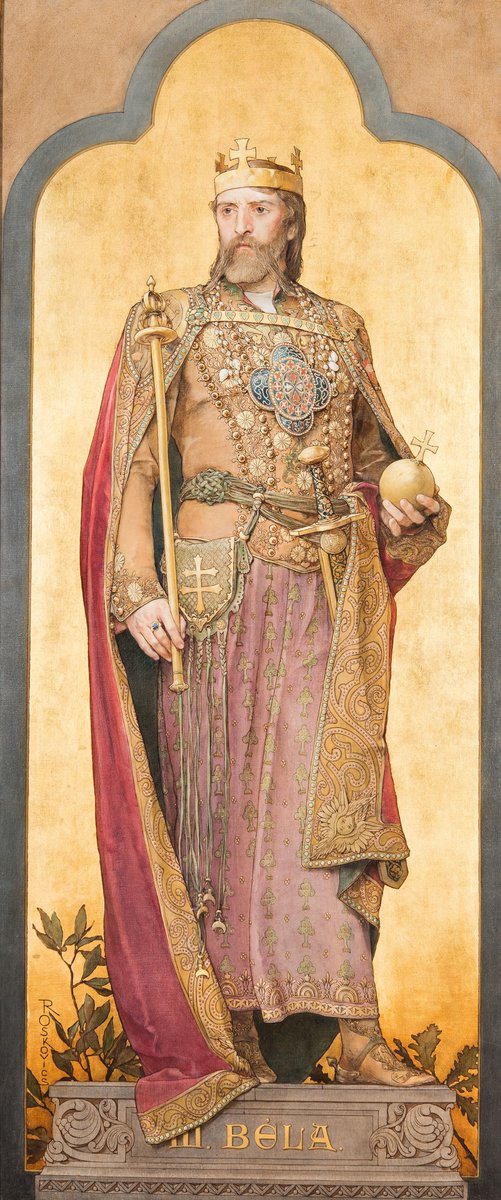
On the other hand, Isaac’s marriage to Margaret of Hungary once again resumed friendly relations between Byzantium and the Kingdom of Hungary under Bela III that true enough, the Hungarians would agree to come to Byzantium’s assistance whenever needed. Meanwhile, among Isaac’s children from his first marriage, one daughter being Anna-Euphrosyne was married to the Russian prince Roman the Great who was both Prince of Novgorod (1168-1170) and following that Prince of Volhynia (1170-1205) and Galicia (1198-1205). Irene Angelina on the other hand who was Isaac’s other daughter from his first marriage was married first to the Sicilian-Norman prince Roger in 1193, although he died in the same year he was married. Irene later married the Duke of Swabia Philip from the House of Hohenstaufen, son of Frederick Barbarossa in 1197 whereas in 1198, Philip became King of Germany until his death in 1208. Due to Irene’s marriage to Philip of Swabia which produced many children married off to different royal houses across Europe, Isaac II is therefore considered to be the ancestor to all European monarchs. Isaac’s sister Theodora Angelina on the other hand was also married to another powerful European monarch being the Marquis of Montferrat in Italy Conrad who served as a henchman to Isaac II when Conrad lived in Byzantium and it was true enough this same Conrad who decapitated the rebel general Alexios Branas in 1187.

Conrad too was the brother of Renier of Montferrat, once a Byzantine Caesar who was married to Manuel I’s daughter Maria Komnene though both were killed in 1182 by Andronikos Komnennos, all while Conrad’s other brother was the Marquis of Montferrat Boniface I (r. 1192-1207) who would later be the leader of the 4th Crusade. Conrad though would not stay long in Byzantium as in 1190 he would abandon Isaac II and travel to the remains of the Kingdom of Jerusalem in the Levant and become its king until his death in 1192. A niece of Isaac meanwhile being Eudokia Angelina, the daughter of Isaac’s older brother Alexios was married to the Serbian prince Stefan Nemanjic- also known as Stefan the First-Crowned- who was the son of the Grand Prince of Serbia Stefan Nemanja, and this marriage alliance was sealed in 1191 after Isaac defeated Stefan Nemanja in battle in order to form an alliance with Serbia. The marriage between Stefan Nemanjic and Eudokia Angelina though did not last long as in 1200, Eudokia was expelled from Serbia, though Stefan Nemanjic would later become the first King of Serbia from 1217 until his death in 1228 and two of his sons with Eudokia would become Kings of Serbia: Stefan Radoslav (r. 1228-1234) and Stefan Vladislav (r. 1234-1243).

VIII. Defeat- Isaac II’s Deposition and Blinding
Following their victory over the Byzantines at the Battle of Tryavna in 1190, the Bulgarians began launching frequent attacks on Byzantine Thrace and Macedonia without anything stopping them this time. By 1194, Asen now Tsar Ivan Asen I of Bulgaria had taken the city of Sofia from the Byzantines and following that the area of the upper Strymon River. In order to distract Asen’s attention, Isaac II decided to strike from the east sending an army under the generals Alexios Gidos and Basil Vatatzes to do the job.
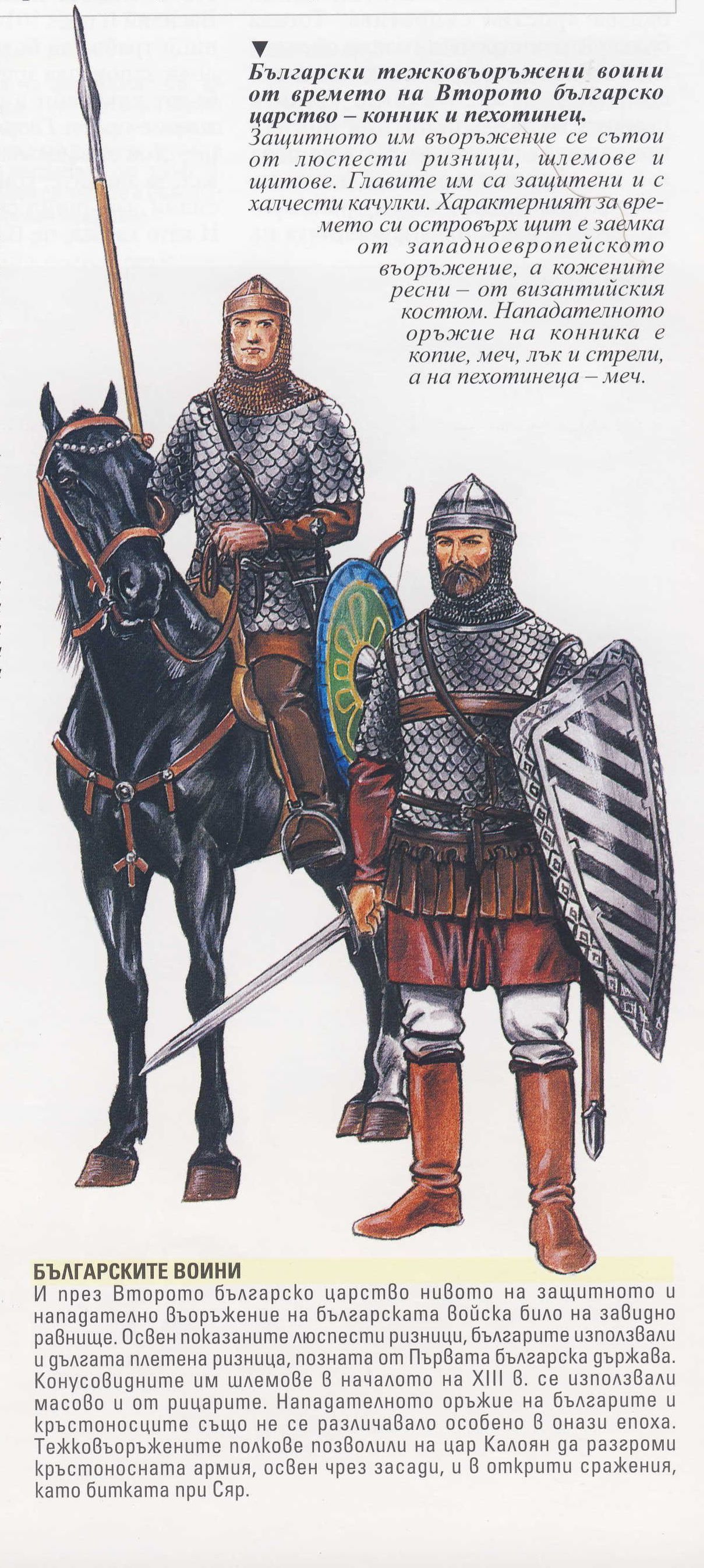
The Byzantines and Bulgarians thus confronted each other at the Battle of Arcadiopolis in Eastern Thrace which once again resulted in a decisive victory for the Bulgarians whereas almost the entire Byzantine army was annihilated and Vatatzes killed in battle. Isaac II however once again could not accept this defeat and so in the following year 1195, he organized a joint expedition with his father-in-law and ally King Bela III of Hungary wherein Isaac was to personally lead an invasion of Bulgarian territory from the south and Bela from the north passing through Belgrade. However, this joint invasion never happened as right when Isaac was assembling his army for his part of the invasion, he was suddenly deposed and blinded by his older brother Alexios in April of 1195. Now, despite Alexios treated well by Isaac that he was even given the honorary court title of Sebastokrator by Isaac, the ungrateful Alexios suddenly decided to turn on his younger brother out of envy that he did not become emperor despite being the older brother, though many of Byzantium’s senators and noblemen too were unhappy with Isaac’s rule and thus wanted Alexios in his stead. Furthermore, Alexios’ power hungry wife Euphrosyne Kamatera had also been wanting to remove Isaac from power and replace him with Alexios who she could control all while the senators and noblemen too wanted Alexios in power as they believed him to be easier to control than Isaac who they originally put in power back in 1185 believing him to be easy to manipulate, yet he was not as easy as they thought. Now, during Isaac’s preparations for his campaign against the Bulgarians in 1195, Alexios who was at Isaac’s camp took advantage of Isaac being away on a hunting trip had the soldiers at the camp proclaim him emperor. As Isaac returned to the camp, it was too late as the soldiers had already turned on him and had now supported his older brother Alexios III Angelos as emperor.

Under Alexios’ orders, Isaac was arrested and taken to a monastery where he was blinded, thus Alexios when returning to Constantinople had Isaac and Isaac’s son also named Alexios put in prison under the close watch of Alexios; Isaac was thus to remain there as a prisoner for the next 8 years. As the new emperor, Alexios III lavishly scattered the money from the imperial treasury to buy off the people for support as Isaac true enough was still loved by the people. Alexios III however spent too much of the treasury to gain the people’s support that when the new Holy Roman emperor Henry VI (r. 1191-1197)- a son of Frederick Barbarossa- demanded a heavy tribute of gold from Alexios or else he would invade Byzantium, Alexios had nothing to pay him. In order to pay this said tribute, Alexios had the tombs of the past Byzantine emperors at the Church of the Holy Apostles looted for gold, however Alexios was lucky as in 1197, Henry VI died and thus there was no longer any need to pay this tribute. The money looted from the tombs was instead used to pay off the Seljuks in Asia Minor to stop attacking Byzantine territory there.

Alexios III’s reign however proved to be more disastrous than that of Isaac II with him being far more incompetent than the already incompetent Isaac II. In Alexios III’s reign, both Hungary and the newly established Bulgarian state attacked Byzantine territory in the Balkans without really anything stopping them all while Byzantium’s alliance with Serbia ended in 1200 when the marriage between the Serbian prince Stefan Nemanjic and Alexios III’s daughter Eudokia was dissolved thus leaving Byzantium with no more allies. With the empire collapsing around him, Alexios III did not care to do anything, rather he spent public money for his palaces and gardens all while he too made the corrupt sale of government positions legal again in order to raise money. In Bulgaria meanwhile, Tsar Ivan Asen I despite his recent victories against the Byzantines was assassinated by one of his noblemen in 1196 thus leaving his brother Theodor-Peter as the sole Tsar of Bulgaria but again he too was assassinated in the following year (1197) whereas their younger brother Kaloyan (r. 1197-1207) took over as the new Bulgarian tsar. However, due to the 3rd Crusade ending not so successfully for the Crusaders, a new Crusade movement was in the making beginning 1198 by the new pope Innocent III and as this movement was brewing, Isaac’s son Alexios escaped prison for Europe to be part of this new Crusade.

IX. Victory- Return to Power and the 4th Crusade
The Byzantine Empire ruled by Alexios III just like how it was under Isaac II before him was in a state of turmoil as local rebellions sprung up all across the empire including in Constantinople itself. As a result of the failed coup of John Komnenos the Fat in Constantinople who proclaimed himself as emperor against Alexios III in 1201, a number of political prisoners had escaped Constantinople, and this included Isaac II’s son Alexios who after disguising himself as a sailor arrived in Italy and from there travelled to the court of his brother-in-law Philip of Swabia in Germany.
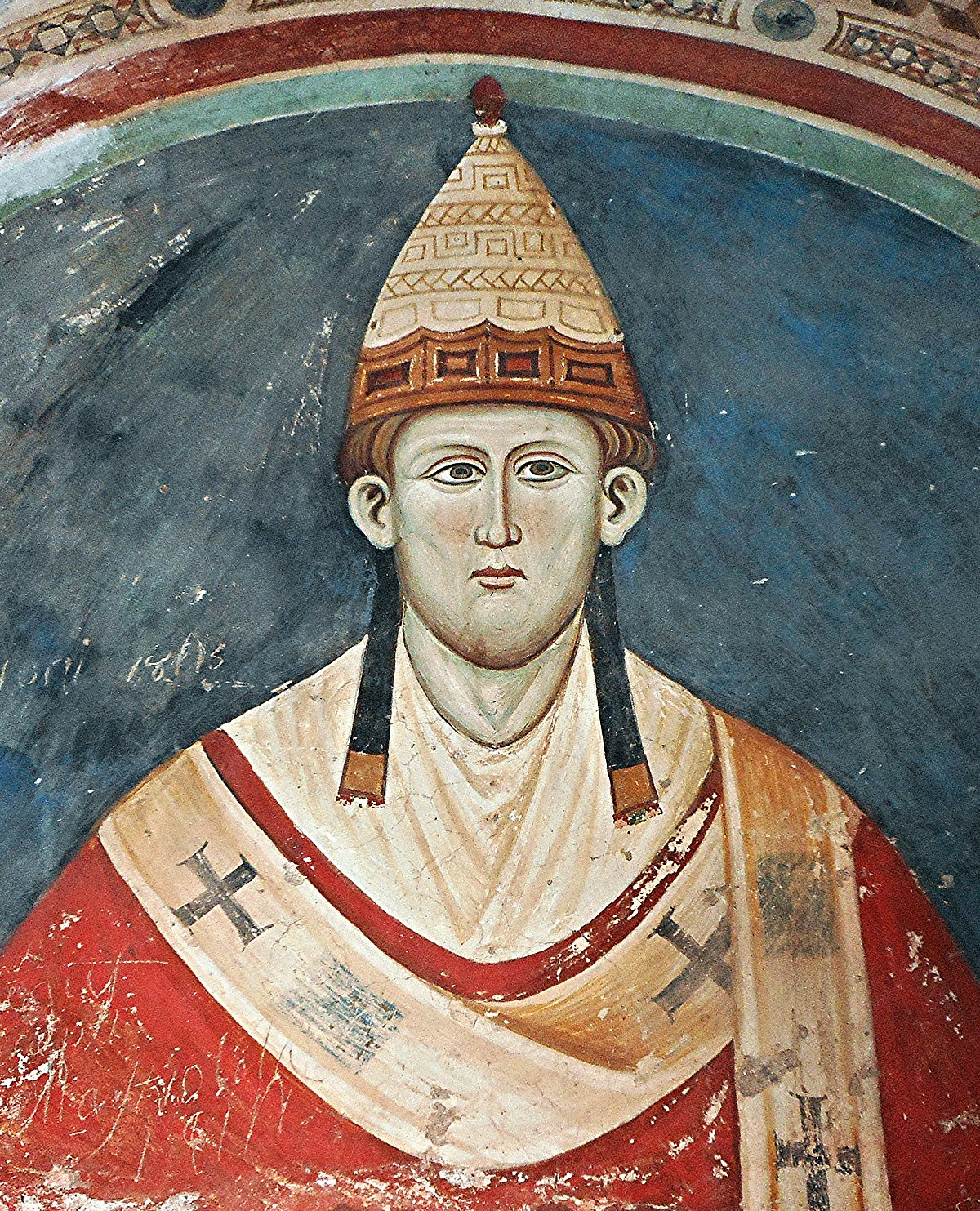
In the meantime, Pope Innocent III had already organized the 4th Crusade with the intention to take back Jerusalem from the Muslims wherein this Crusader army was to first sail to Egypt and from there march north to Jerusalem, however unlike in the 3rd Crusade where powerful armies led by the kings of Europe joined, this time only the armies of the minor nobles of Europe led by the Marquis of Montferrat Boniface I took part as the said kings had their own problems to deal with: France and England were now at war with each other and Germany was facing a political crisis. In order to transport the Crusader army to Egypt, the Republic of Venice constructed numerous ships, although the armies that arrived in Venice to join the Crusade were less in number than what the Doge of Venice Enrico Dandolo (r. 1192-1205) had expected.
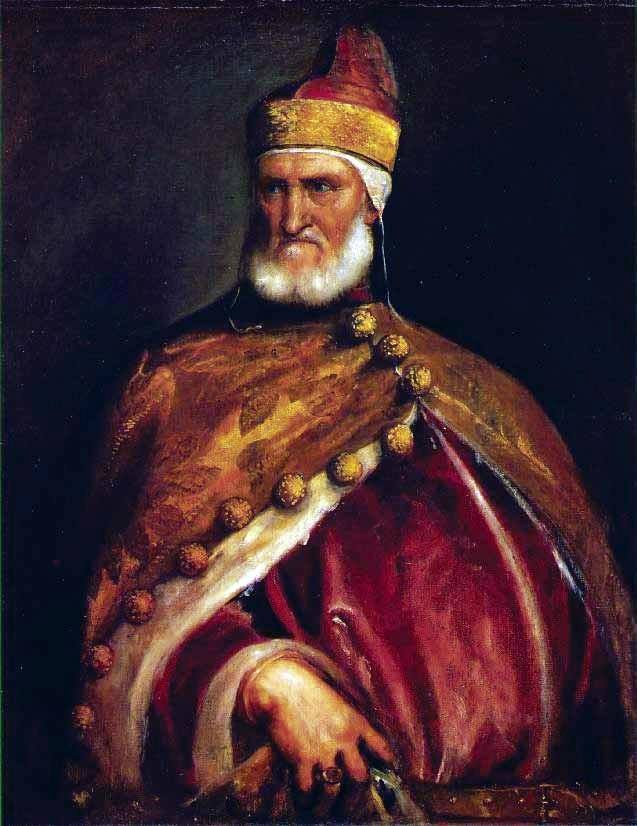
The Doge of Venice Dandolo now was a bitter enemy of the Byzantines as he was blinded back in 1172 by the Byzantines during their war against Manuel I, thus Dandolo surely had the goal to have this Crusade attack Byzantine lands. Dandolo however only agreed to ship the Crusaders to Egypt if the Crusaders would first attack the Hungarian held port of Zara in Croatia, thus the Crusaders agreed and in 1202 successfully captured Zara despite it being held by a Catholic power, therefore the pope sent a letter of excommunication to the Crusade’s leaders. In Zara, the young Alexios Angelos, son of Isaac arrived to meet the Crusaders promising to pay them off their debts to Venice which totaled to 200,000 silver marks while also agreeing to supply them with 10,000 Byzantine soldiers and 20 ships to assist them in their Crusade in the Holy Land and also to submit the Byzantine Church to the pope in exchange for the Crusade helping young Alexios oust his uncle Alexios III and return him and his father Isaac II to the Byzantine throne.

The leaders of the Crusade thus agreed to give in to Alexios’ request as he promised them a lot, thus the Crusade set sail for Constantinople arriving there in 1203 wherein they attacked the city both by land and sea. Here, the Byzantine fleet proved ineffective to fight the Venetian fleet as previously, Alexios III had allowed a corrupt admiral to sell off the ship’s parts, thus the Venetian ships managed to break into the Golden Horn and attack Constantinople’s sea walls. Alexios III though put up a fight against the Crusaders but eventually, he gave up and fled the city to Thrace with the imperial treasury. With Alexios III gone, the people of Constantinople rushed to the prisons and broke Isaac free, thus Isaac despite being blind was later crowned as emperor once again, however the Crusaders had allowed this to happen if Isaac’s son Alexios who was to be their puppet was to be crowned as his father’s co-emperor. Alexios IV was thus crowned as emperor whereas his father Isaac II due to being blind was practically his son’s puppet, though at least Isaac II would be the only Byzantine emperor to rule blind. Now in power, Alexios IV had to face the challenge of paying his debts to the Crusaders considering that the Byzantine treasury was now empty thanks to Alexios III fleeing with it.
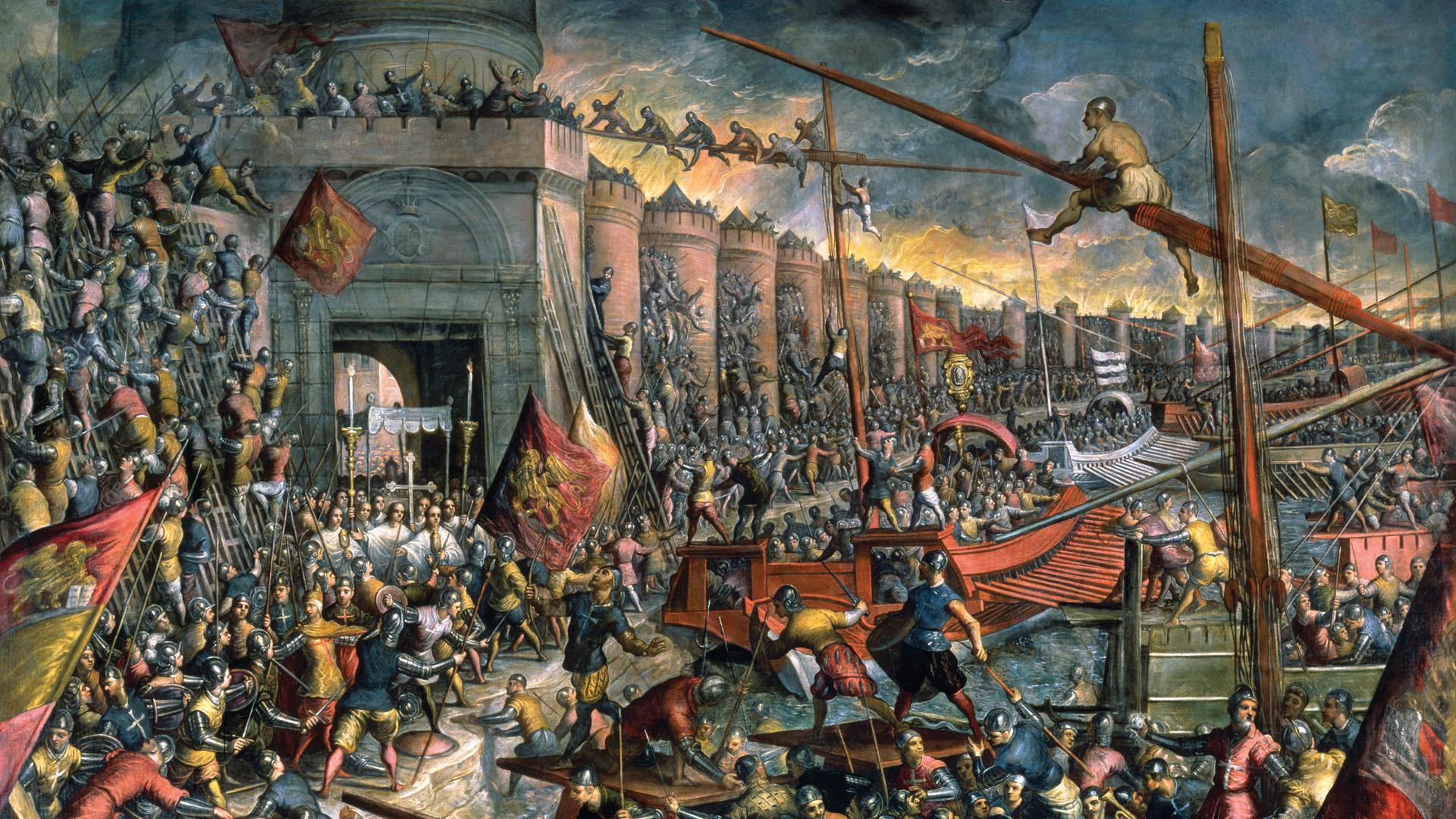
X. Defeat- Death and the Sack of Constantinople, 1204
Although blind, Isaac II’s mind was still intact and thus he knew that his son Alexios IV could never entirely pay the said 200,000 silver marks he promised to the Crusaders.
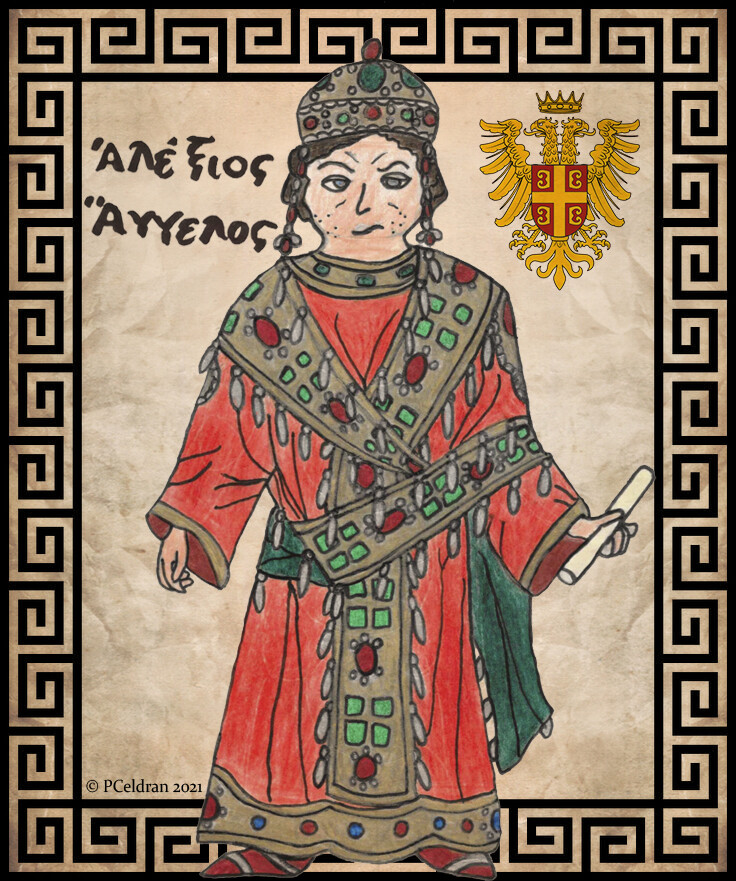
Alexios IV however true enough could not raise up to the said amount, instead he only raised up to half the sum being 100,000 silver marks which he did by melting church treasures and confiscating the property of his political enemies. However, as Alexios IV left Constantinople in search of his uncle Alexios III who fled to Thrace, the local inhabitants of the capital began rioting against Alexios IV and his pro-Crusader policies that tensions between the locals and the Crusaders camped outside the city had grown. Eventually, the Crusaders had grown impatient as they had been camped outside the city for months yet had not received their pay from Alexios IV that they even began launching minor attacks against the city. Alexios IV true enough grew more and more unpopular with the people of Constantinople especially for bringing in the Crusaders in the first place whereas his father too even began turning on him by spreading rumors about him being homosexual. In January of 1204, Alexios IV attempted to get the Crusaders away by launching a number of fire ships to attack the Venetian ships but this failed. At the same time, riots in Constantinople against Alexios IV grew more and more that they even proclaimed a man named Nikolaos Kanabos as emperor against the Angelos father and son.
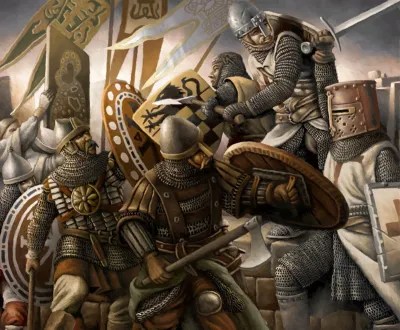
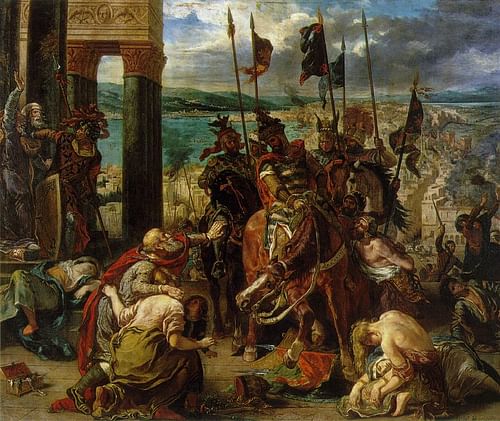
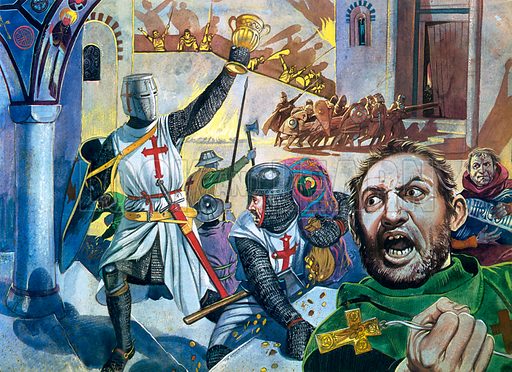
To settle this problem, Alexios IV sent the official Alexios Mourtzouphlos to deal with Kanabos, and although Mourtzouphlos succeeded in arresting and executing Kanabos, he bribed the Varangian Guard to proclaim him as Emperor Alexios V and now as the new emperor, he used his power to arrest and imprison both Alexios IV and Isaac II. Alexios IV was thus strangled to death in prison whereas Isaac II died at the age of 47 from a heart attack when hearing of his son’s death. As the new emperor, Alexios V attempted to get the Crusaders away by negotiating with the Doge of Venice Enrico Dandolo telling him that he would no longer honor Alexios IV’s payment of debts to the Crusaders, however being enraged at this, Dandolo sent troops to attack Alexios V. Following this, the Crusaders then launched their second attack on Constantinople and although Alexios V managed to put up a defense, he eventually fled the city when the Crusaders breached into it in April of 1204. The Varangian Guard though continued to resist but eventually fled when not receiving their pay as the emperor Alexios V true enough fled to Thrace with the former emperor Alexios III’s family. The army of the 4th Crusade thus broke in to Constantinople and brutally sacked the city for days, and thus the Byzantine Empire temporarily fell wherein the new Latin Empire was established with Constantinople as its capital.
Conclusion
Following the 4th Crusade’s Sack of Constantinople and the establishment of the Latin Empire in 1204, the “last” Byzantine emperor Alexios V who fled the city was eventually found, captured, and executed by the Crusaders by the end of 1204. The Count of Flanders Baldwin IX who was a leader of the Crusade thus became the first Latin emperor in Constantinople Baldwin I (r. 1204-1205) whereas the Crusade’s main leader Boniface of Montferrat settled in Thessaloniki and married the late Isaac II’s wife Margaret of Hungary.
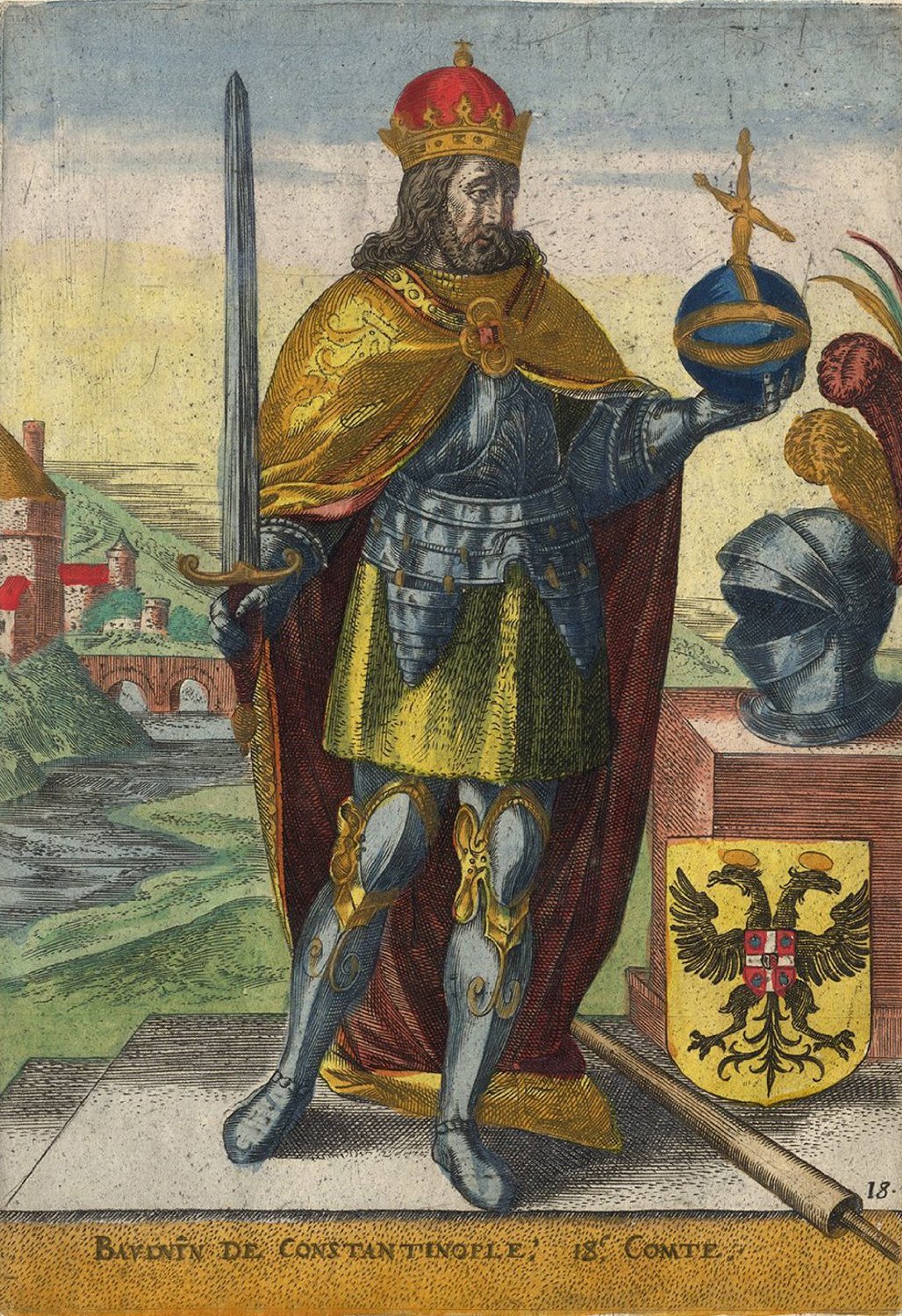
Alexios III in the meantime remained a fugitive finding himself in the newly formed Crusader states including Thessaloniki and the Byzantine breakaway Despotate of Epirus before seeking help from the Seljuks in Asia Minor and leading an invasion into the newly formed Byzantine Empire in exile- the Empire of Nicaea- which was defeated by the Nicaean emperor Theodore I Laskaris- Alexios III’s son-in-law- in 1211, thus Alexios III died exiled to a monastery. With the temporary collapse of the Byzantine Empire in 1204, 3 Byzantine breakaway states were created and these included the Empire of Trebizond along the Black Sea in Northeast Asia Minor founded by the late Andronikos I Komnenos’ grandsons, the Despotate of Epirus in Western Greece founded by Despot Michael I Angelos (r. 1205-1215) who was a cousin of Isaac II and Alexios III, and lastly the Empire of Nicaea in Asia Minor founded by Theodore I Laskaris which was to restore Byzantium through the reconquest of Constantinople from the Latins in 1261. The Second Bulgarian Empire established in the Balkans in 1185 meanwhile was there to stay and the fall of Constantinople to the Latins in 1204 even allowed this new Bulgarian state to grow. Now, with all this trouble Byzantium went through as a result of its temporary collapse due to the conquest of the Crusaders, one may question if Isaac II Angelos and his dynasty were responsible for all of it.
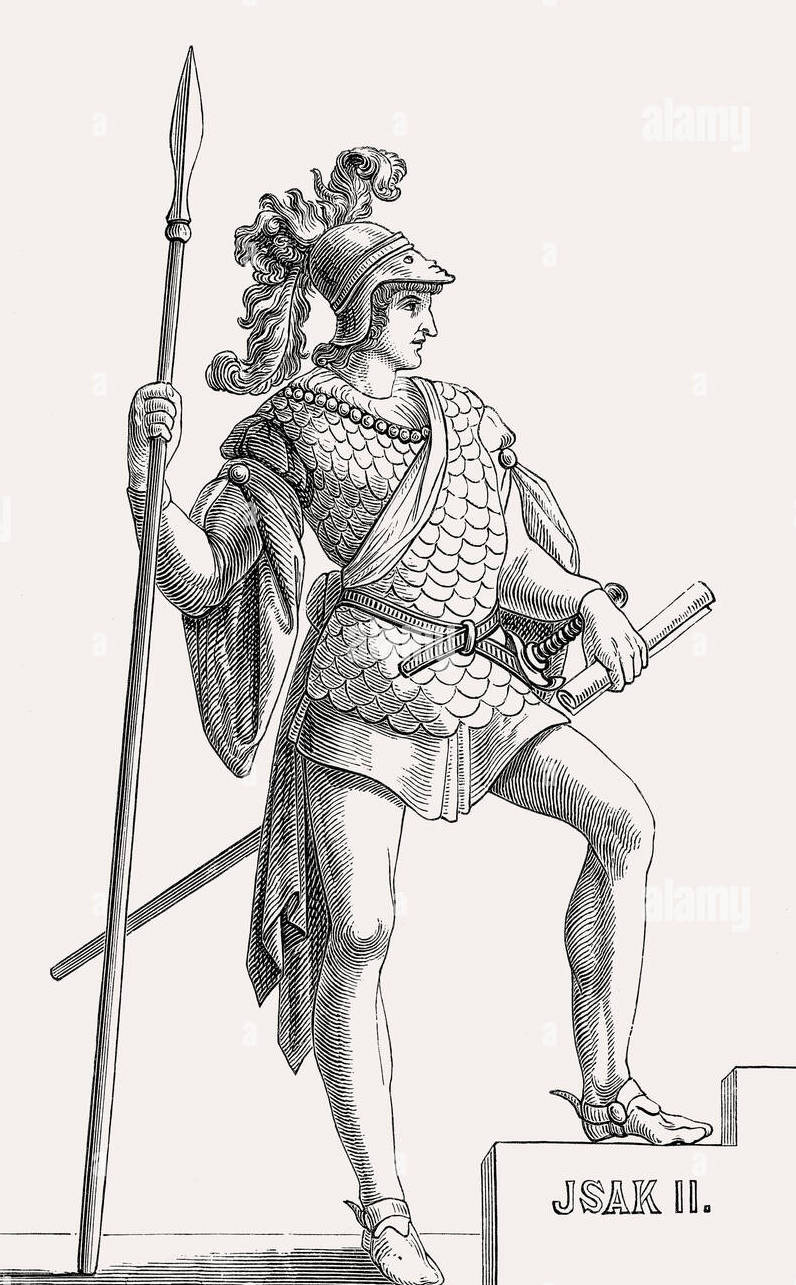
The answer to this question may be a complicated one as there are several people to blame for Byzantium’s temporary collapse in 1204 and these people range from Manuel I Komnenos who alienated Venice in the first place back in 1171, Andronikos I Komnenos who rose to power in 1182 by massacring the Latins in Constantinople thus giving the Western Latins a reason for revenge against the Byzantines, the leaders of the 4th Crusade whose intention was to really loot Constantinople, Alexios III Angelos for blinding his brother Isaac II thus indirectly leading to the 4th Crusade arriving in Constantinople, and of course Alexios IV Angelos who brought the 4th Crusade to Constantinople in the first place in order to return him and his father back to power. Now, as for Isaac II, there is not much to blame him for with regards to the 4th Crusade’s Sack of Constantinople as he did not really do anything that led to it, rather it was more about the circumstances around the world during his time. As emperor, Isaac II was not anything great, but at least during his first reign of 10 years from 1185-1195, he still tried to keep the Byzantine Empire together when everything around started to fall apart while he too at least had the determination to not accept defeat to his enemies. Isaac II surely had a lot of failures during his rule such as his mishandling of the 3rd Crusade, his defeats in battle to the Bulgarian rebels, and losing the throne unexpectedly to his brother, though his reign was still one of the most eventful times not just in Byzantine but in world history as it saw events such as the 3rd and 4th Crusades. It is a true fact that Isaac II’s reign was one of the most unsuccessful in Byzantine history as it saw the golden age Byzantium had during the Komnenos era suddenly deteriorate with the loss of territory on all sides and the empire suddenly dropping in power and prestige, and although Isaac’s incompetence as emperor can be blamed for it, it is not entirely his fault as to put it as a whole, Byzantium’s decline was already imminent when Manuel I Komnenos died in 1180. If Isaac II Angelos no matter how obscure he may be was to have one great legacy, it was perhaps in expanding Byzantium’s influence across Europe through the marriages he formed through his family members to other rulers in Europe and for that reason, Isaac is considered to be the “ancestor of all European monarchs”. Now, what are your thoughts on Isaac II and do you really think he was that incompetent to bring about the decline of Byzantium after his predecessors worked so hard to keep the empire stable? I would like to thank you all for reading this article and please continue to support me by following and subscribing to my sites!
 The Byzantium Blogger