
Posted by Powee Celdran
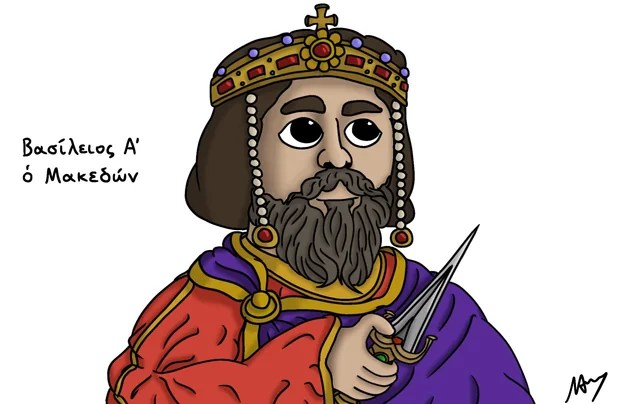
Welcome back to the Byzantium Blogger and here we are again with another Byzantine history article! In this one being the 12th part of this series featuring top lists concerning the lives of emperors who I think have interesting stories, we will go over Emperor Basil I the Macedonian (r. 867-886), the founder of the famous Macedonian Dynasty. Now, when it comes to Byzantine emperors, Basil I has one of the most interesting stories not because he was a great ruler but because of his origins as a simple peasant and how he was able to rise up to the top of society by becoming the emperor himself.

Basil true enough started out as a peasant in the Byzantine Balkans but he did not choose to stay that way for life, rather he went from peasant, to stable boy, to wrestler, to the emperor’s bodyguard and trusted confidant, to co-emperor, and finally the emperor of the Byzantine Empire. By going through this process, this thus shows that Byzantium was a world full of many possibilities and opportunities for people and that anyone if they had the right amount of intelligence and cunning could rise above and even become emperor. Basil I’s story too shows how Byzantium was not the kind of medieval state where rulers had divine rights and that only their sons can succeed them, rather as seen in Basil’s case, again anyone intelligent and cunning enough could become emperor. On the other hand, Basil’s story too shows that in order for someone of humble origins like him to become emperor, it had to be done through violent means as Basil true enough even killed his political rivals including his own friend and benefactor the emperor Michael III (r. 842-867) in order to take the throne. Although originally illiterate and uneducated, Basil I turned out to be more or less effective and intelligent as a ruler as he for one true enough initiated the recodification of Byzantine law into a new code of laws known as the Basilika, something quite extraordinary for someone of humble origins. Additionally, Basil too showed success in the battlefield whether he was personally commanding his armies or not as seen with the annexation of more lands in the east and the restoration of Byzantine control in most of Italy. Apart from that, Basil I too was a skilled diplomat that he maintained good relations between the Churches of Rome and Constantinople while it was under his reign too that Orthodox Christianity spread across the Balkans and Eastern Europe. Basil I’s greatest legacy though was in establishing the Macedonian Dynasty, one of Byzantium’s longest ruling imperial lines and also the dynasty that brought Byzantium into its new golden age. Here in this article, we will go over 7 key moments in Emperor Basil I’s life beginning with his humble origins and proceeding to his mostly successful reign, and finally ending with his rather mysterious death. Before we begin this top 7 list though, I would first give a background to the Byzantine Empire of the 9th century which Basil I grew up in and how the Byzantine Empire managed to regain success in what was known as the “Byzantine Renaissance” after years of constant foreign invasions and difficulties.

Follow me, Byzantine Time Traveller on Social Media:
Instagram: @byzantine_time_traveller
Facebook: Byzantine Time Traveller
Youtube: No Budget Films
Website: Byzantine Time Traveller
Deviantart: Byzantium-blogger55
Art Station: Powee Celdran Porphyrogennetos
Patreon: Byzantine Time Traveller
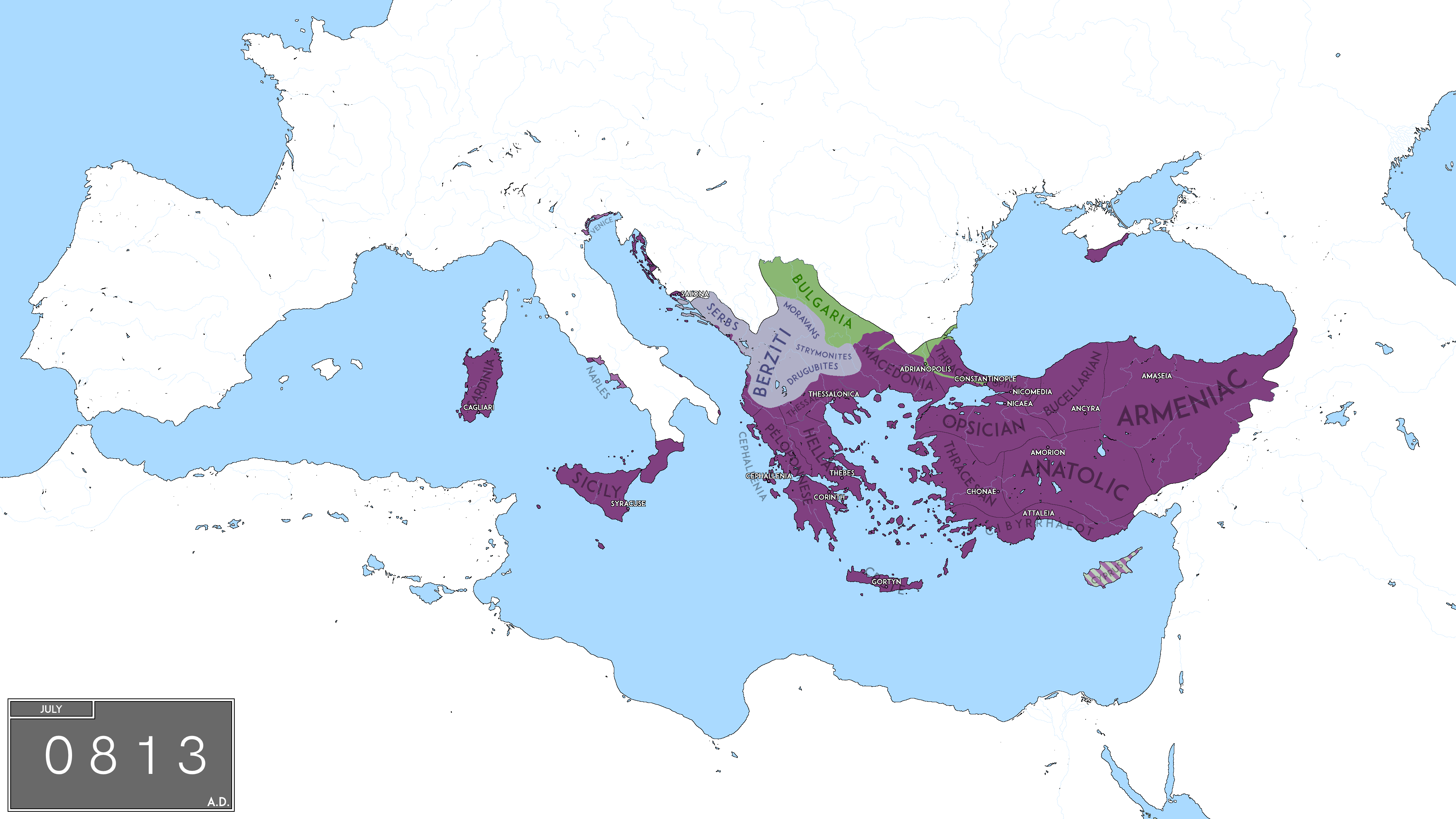
At the turn of the 9th century, the Byzantine Empire was in turmoil as first of all, the sole empress Irene of Athens (r. 797-802) was overthrown in a coup and replaced as emperor by Nikephoros I (r. 802-811) whose reign despite seeing the return of financial stability to the empire also saw numerous defeats namely to the Arabs in the east and to the north against the growing state of Bulgaria under Khan Krum (r. 803-814).
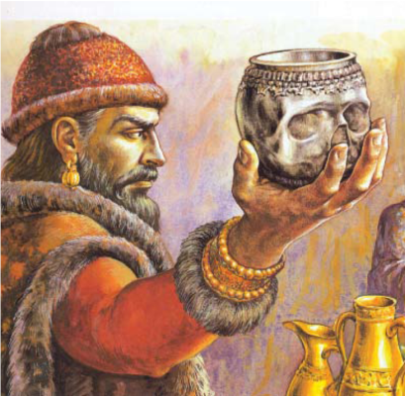
The emperor Nikephoros I true enough even died at the Battle of Pliska against Krum’s Bulgar forces wherein Nikephoros’ skull was said to have turned into Krum’s drinking cup. Following the disastrous Battle of Pliska, Byzantium had gone through a succession crisis wherein Nikephoros I’ son Staurakios (r. 811) only ruled for a few months due to his injuries in the same battle where his father was killed while his successor and brother-in-law Michael I (r. 811-813) also ruled very quick as his reign saw another disastrous defeat to Krum in 813 which thus forced him to abdicate. The future emperor Basil I meanwhile was born in 811- the same year as the disastrous Battle of Pliska- in the Byzantine Theme (military province) of Macedonia to a family of peasants, hence he was known as “Basil the Macedonian”. According to legend, Basil and his family in 813 were taken as captives to Bulgaria by Khan Krum and thus Basil spent his childhood there.
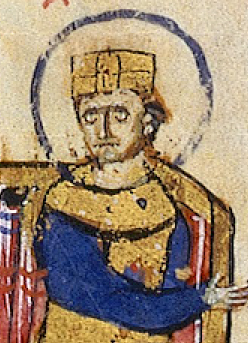
In 813 as well, the emperor Michael I abdicated in favor of his ambitious general Leo the Armenian who then became Emperor Leo V (r. 813-820) and at the beginning of his reign he had to face off the serious threat of Krum who had rampaged his way across Byzantine Thrace and had even laid siege to Constantinople. Krum’s siege however never resulted in anything as during the siege, Krum suddenly died of a stroke whereas his successor Khan Omurtag (r. 814-831) decided to settle peace with Byzantium. The new emperor Leo V however restored the divisive policy of Iconoclasm or the destruction of religious icons which happened to be overturned back in 787 by the empress-regent Irene of Athens at the Second Council of Nicaea. Leo V however did not rule for a long time as in 820 during the Christmas Eve Mass, he was suddenly hacked to death by conspirators of his general Michael the Amorian who he had imprisoned. With Leo V dead, Michael- who too was an Iconoclast- was thus released from prison and immediately crowned as the new emperor Michael II (r. 820-829), although his rule was immediately challenged by the general Thomas the Slav, his former friend together with Leo V.
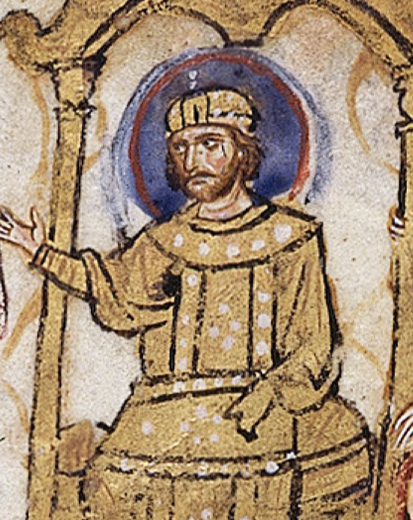
In his rebellion, Thomas proceeded to lay siege on Constantinople for 2 years from 821 to 823 until his forces were decisively defeated by imperial troops assisted by Omurtag’s Bulgars all while Thomas who fled was later captured and executed by Michael II. Thomas’ rebellion and the civil war it caused however deprived the empire of troops that by 824, the Byzantines had lost the island of Crete to Arab Muslim invaders from Southern Spain whereas in 827, Arabs from North Africa had begun their invasion of Byzantine Sicily thanks to the lack of troops to protect both places. Michael II then died in 829 and was succeeded by his son Theophilos (r. 829-842) who as emperor was a more hardline Iconoclast but also a champion of justice and an admirer of the sophisticated court culture of the Arab Abbasid Caliphate despite them being the enemy of Byzantium. As emperor, Theophilos modeled his court and Byzantium’s literary culture after that of the Abbasid Caliphate in Baghdad, though ironically, he spent most of his reign at war against the Arabs of the Abbasid Caliphate.
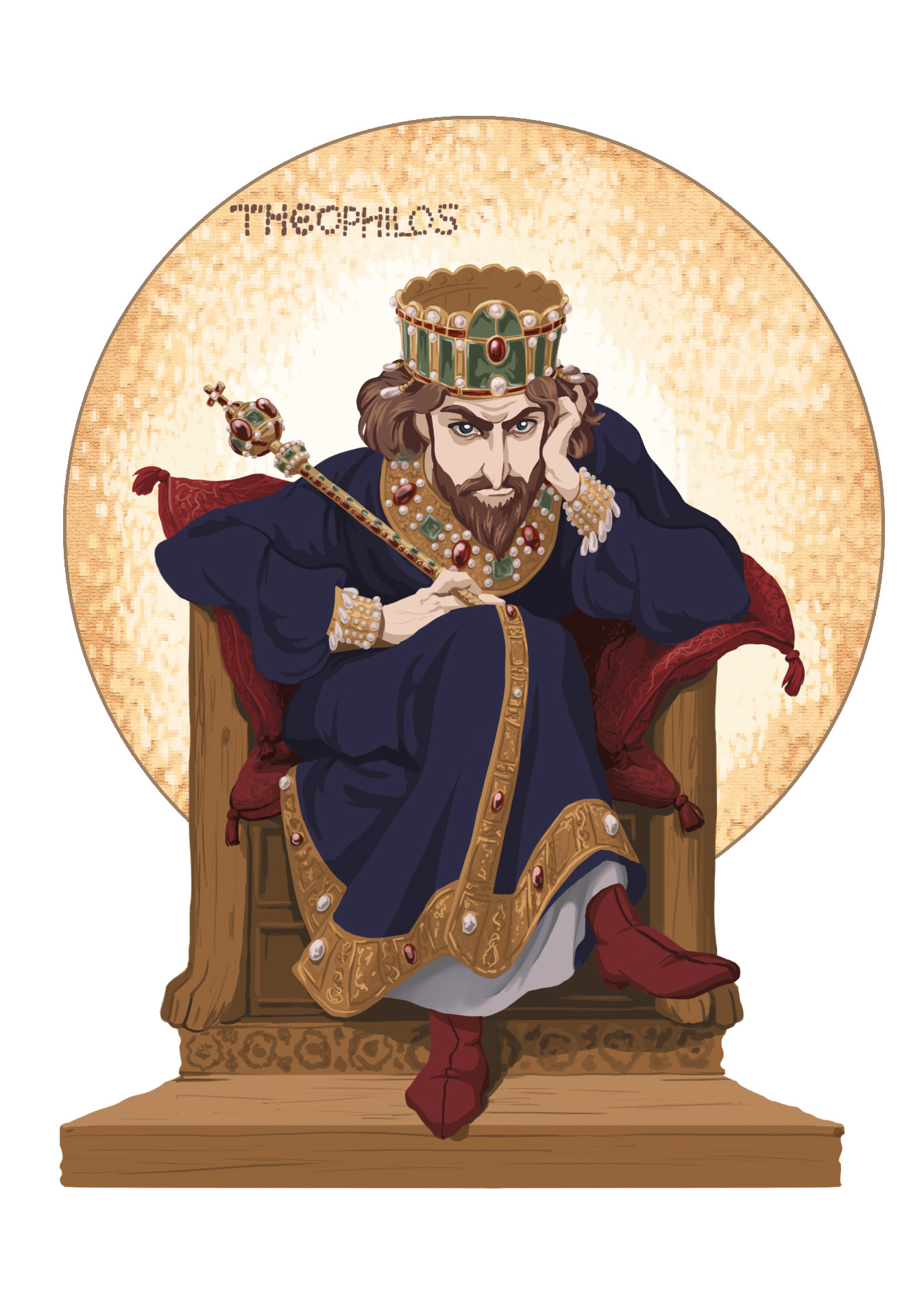
Theophilos had in fact lost multiple times in the battlefield against the Arabs who had invaded Byzantine Asia Minor, first in 830, then in 831, and then again in 833, and despite winning an initial victory over the Arabs in 837, he lost again to them at the catastrophic Battle of Anzen in 838 which was followed by the Arabs’ sack of the city of Amorion in Asia Minor, the birthplace of his father. Although the Arabs invaded Byzantine Asia Minor, they did not annex it to the Caliphate and simply retreated whereas Theophilos due to his failing health died at a young age in 842. Succeeding Theophilos after his death in 842 was his infant son Michael III who was thus under the regency of his mother the empress Theodora and her chief eunuch minister Theoktistos. Under the regency of the Iconophile Theodora, Iconoclasm was finally put to an end once and for all in a council in 843 after the Iconoclast Patriarch of Constantinople John VII was deposed and replaced with the Iconophile Methodios. The regency of Theoktistos and Theodora was true enough successful as it saw the Byzantines score a number of victories over the Arabs including a raid on one of their ports in Egypt in 853 that true enough during this time, the Arab threat from the east had begun to recede.
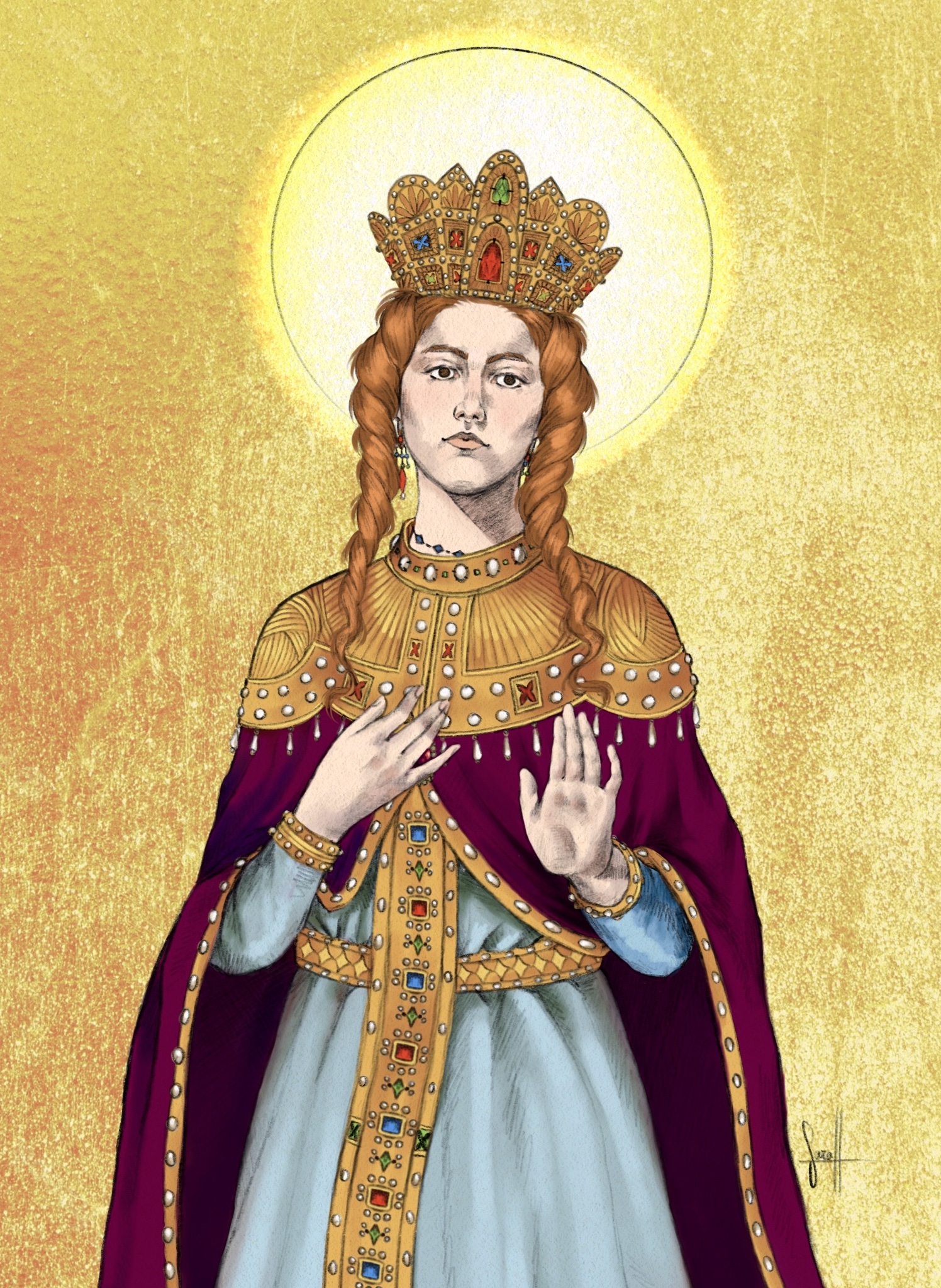
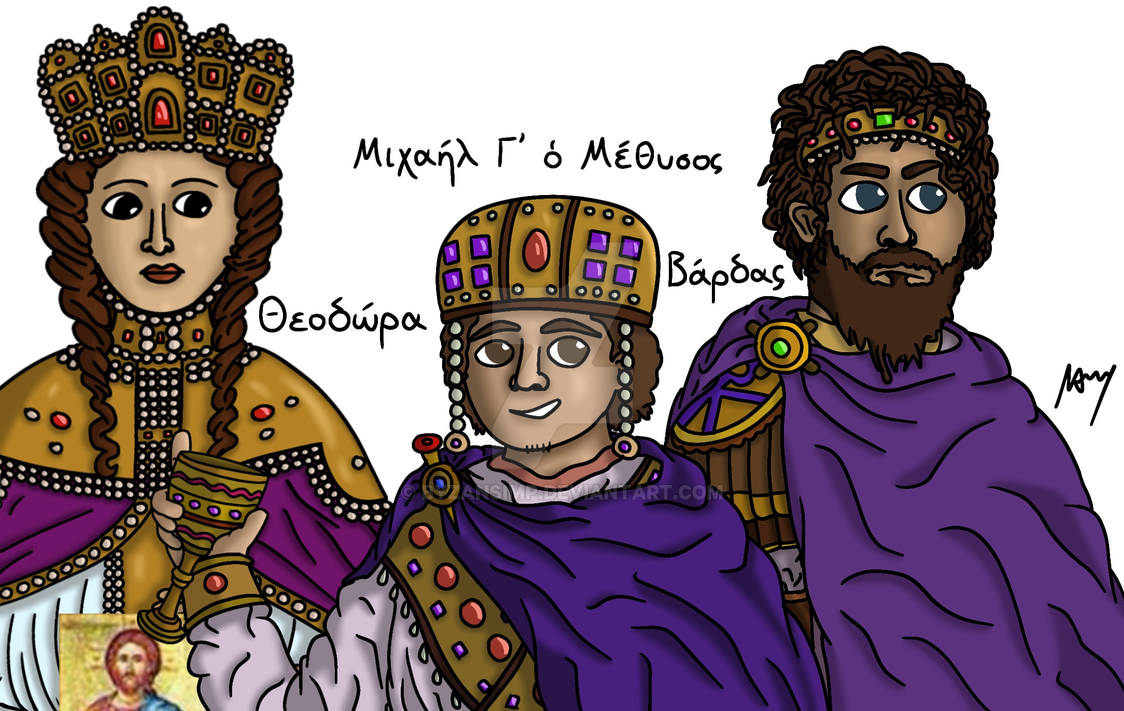
However, when Michael had come of age by 855, he supported by his uncle Bardas- Theodora’s brother- managed to overthrow his mother’s regency first by murdering the eunuch Theoktistos and by 856 banishing his mother to a monastery. Michael III was thus in control of the empire from 856 although under the influence of his brilliant uncle Bardas who he gave the title of Caesar to and it was Bardas who was the one responsible for kick-starting the Byzantine cultural Renaissance by particularly funding the university at Constantinople. One of Bardas’ greatest achievements however was in appointing Photios I, an imperial secretary as the Patriarch of Constantinople in 858 as Photios was true enough the one responsible for sending the Greek missionary brothers St. Cyril and St. Methodius to convert the Slavs of Eastern Europe and the Balkans and the Khazars in Southern Russia to Orthodox Christianity. This therefore was a cold war against the Catholic Church in Rome who also had plans to convert these said people to their form Christianity but with the Byzantines being able to convert them by spreading the faith in the converts’ native Slavic languages and developing a new alphabet for them, they succeeded in the race of converting the Slavs. Michael III in the meantime was also known to have actively campaigned against the Arabs- the Abbasid Caliphate and their vassals- in the east, particularly in 857 and 859, though the latter campaign was later cancelled as Michael had to rush back to Constantinople as in 860, a new enemy from the north being the Kievan Rus’ attacked Constantinople by sea but failed.


Related Articles from the Byzantium Blogger:
Byzantine Alternate History Chapter VII
7 Times Empress Irene of Athens Exercised Political Power
10 Key Moments in the Life of Emperor Heraclius
6 Times Empress Theodora Exercised Political Power
8 Times Emperor Zeno was a Survivor
5 Achievements and 5 Failures of Theodosius I the Great
10 Achievements of Constantine I the Great
7 Times Constantine XI Exemplified Bravery
10 Unknown Facts About Emperor Justinian I the Great
8 Times Michael VIII Palaiologos was an Evil Genius
10 Surprising Facts About Basil II
5 Reasons to Feel Bad for Justinian II and 5 Reasons to Hate Him
I. The Origins of Basil the Macedonian

As already mentioned earlier, Basil was born in 811 in the Byzantine Theme of Macedonia- which was actually in Thrace- to a family of peasants, and despite being known as the “Macedonian” due to his birthplace, his father Bardas was an Armenian peasant resettled in Thrace whereas Basil’s mother Pankalo was either of Greek or Slavic origins. Whether it is true or not, Basil when he became emperor in 867 in order to justify himself as emperor claimed that his ancestors were not mere peasants but members of royal dynasties such as the Arsacid Dynasty of Armenia that ruled it until 428 while he too claimed descent from the legendary Macedonian king Alexander III the Great (r. 336-323BC) and the first Byzantine emperor Constantine I the Great (r. 306-337).
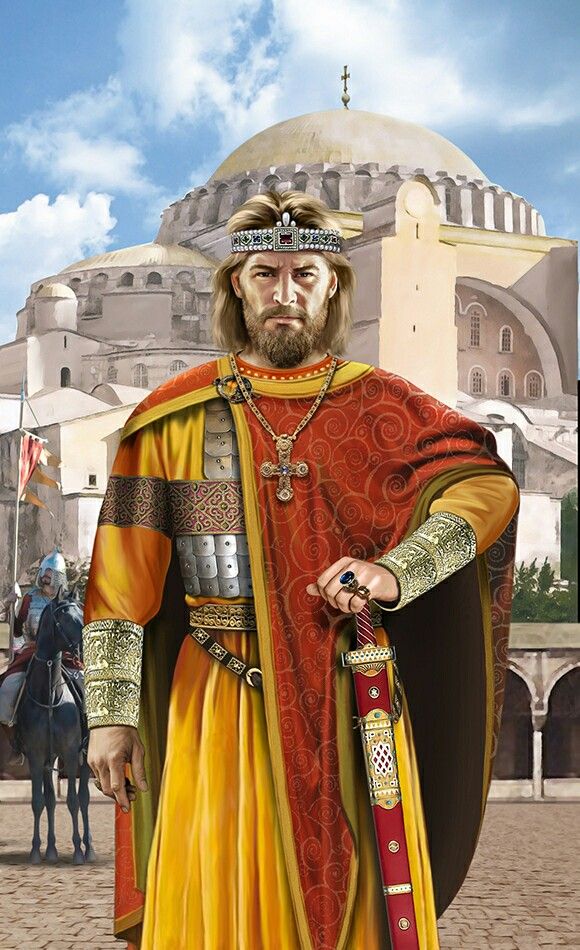
The one thing that was certain however was Basil’s Armenian descent as he was said to have spoken Armenian aside from Greek and when speaking Greek, he was said to have spoken it with a strong Armenian accent. As also mentioned earlier, the young Basil and his family in 813 were carried off as captives to Bulgaria during Khan Krum’s invasion of Byzantine Thrace and that Basil only escaped Bulgaria and returned back to Byzantium already as an adult in 836, though this story cannot be entirely proven. The more acceptable story is that Basil when grown up journeyed from his homeland in Thrace to Constantinople in order to escape poverty by finding a job there. Although the year is not recorded, Basil did find himself in the capital Constantinople where he was lucky enough to find a job as a stable boy in the service of Theophilitzes, a relative of the emperor Michael III’s uncle Bardas. During his time as a stable boy, Basil visited the city of Patras in Greece where he met Danielis, a wealthy local woman in which Basil inherited all her fortune when she died which explains how Basil all of a sudden got rich. Basil later caught the attention of the emperor Michael III possibly in around 862 and there are two stories of how the emperor began to notice him. The first one being that he was able to tame a horse in the imperial stables that nobody could tame and thus the emperor noticed him for that while the second story states that Basil as a strong and able wrestler managed to beat the undefeatable Bulgarian champion in a wrestling match which the emperor had watched.
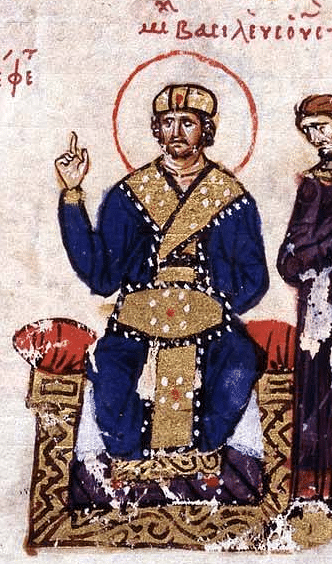
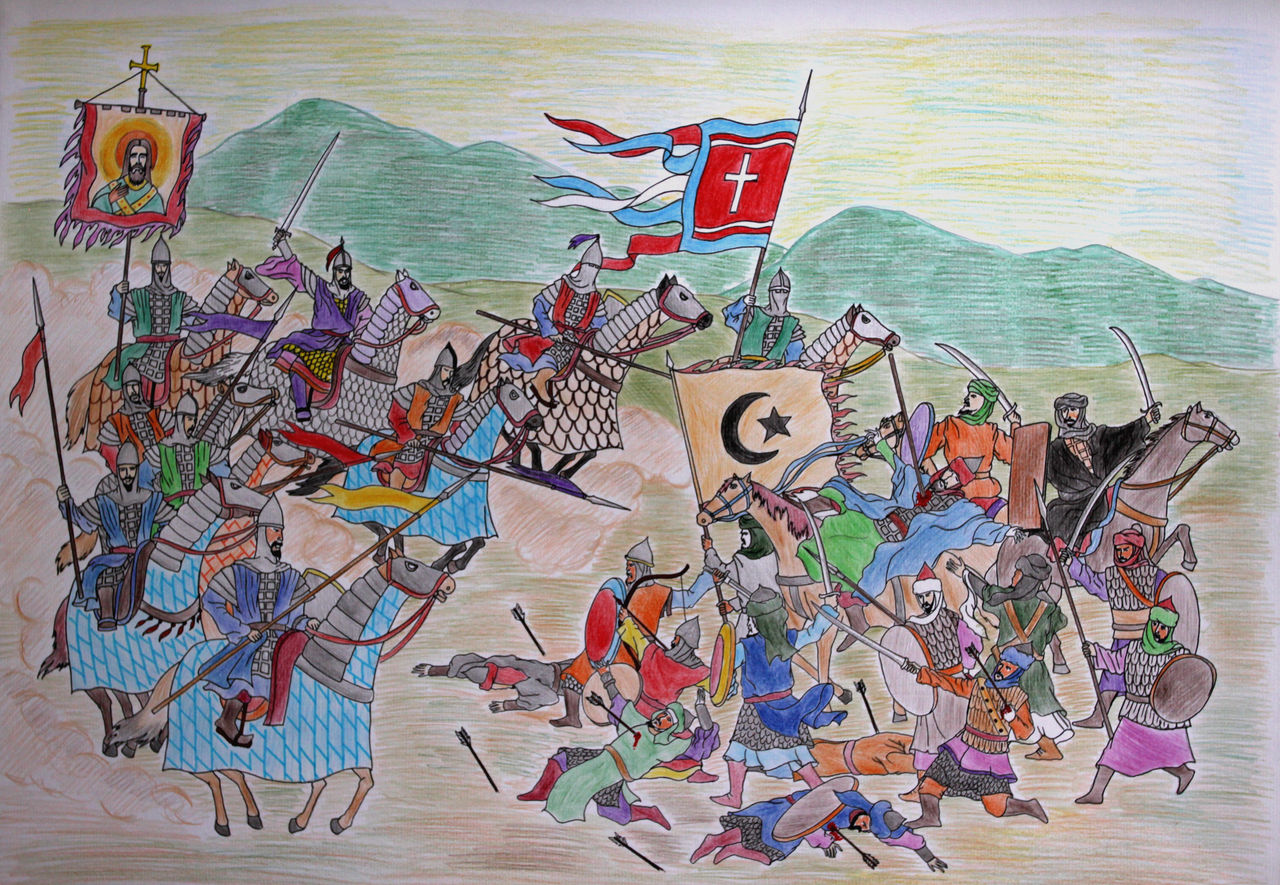
Whatever story was the true one, Michael III when noticing Basil’s abilities made him his favored companion, confidant, and personal bodyguard or Parakoimomenos. Michael III’s reign in the meantime had begun seeing a number of successes in the battlefield as for one in 863, his other uncle and Bardas’ brother Petronas defeated a large combined army of the Paulician separatists of Asia Minor- a heretical Christian sect with their own principality- and the Emirate of Melitene- an Arab vassal of the Abbasid Caliphate- at the Battle of Lalakaon. In this said battle, both the Emir of Melitene Umar al-Aqta and the leader of the Paulicians Karbeas were slain by Byzantine forces, thus this Byzantine victory was said to be the one to turn the tide of war in their favor against the Arabs whereas following this victory, Petronas returned to Constantinople with a triumphal parade awarded by his nephew, the emperor. In 864 meanwhile, Michael III together with Bardas launched a campaign against Bulgaria, their northern neighbor which still remained Pagan in order to convert them to Orthodox Christianity before the pope could convert them Catholicism. Michael III’s invasion of Bulgaria turned out to be a success that the Bulgarian khan Boris I (r. 852-889) when being surrounded by Byzantine forces agreed to settle peace with them by converting to Orthodox Christianity and thus Boris was later baptized wherein Michael was his godfather and so Boris too took the additional name of Michael. Boris’ conversion to Orthodox Christianity was therefore one of Michael III’s reign’s greatest achievements as it eventually saw the Bulgarian state itself convert to Byzantine Orthodox Christianity.
II. Basil’s Murderous Rise to Power
Previously, Michael III was forced by his mother Theodora to marry Eudokia Dekapolitissa, a woman he did not love and thus the marriage was childless although all this time, Michael had kept his longtime mistress Eudokia Ingerina, a daughter of a Varangian (Norse) commander in the imperial guard. In order to avoid scandal as Michael was still married, Michael in 865 had his lover Eudokia Ingerina married to his favorite companion Basil the Macedonian as a way to keep her close.
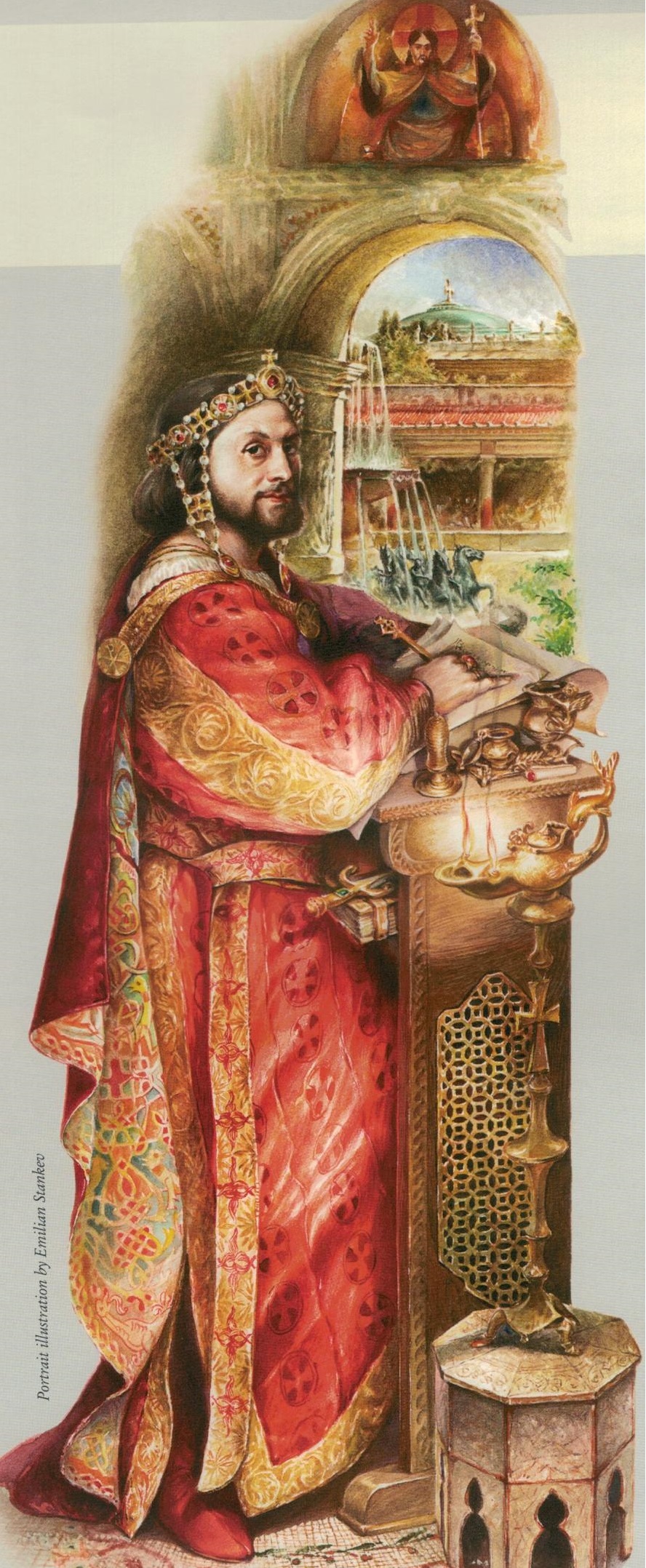
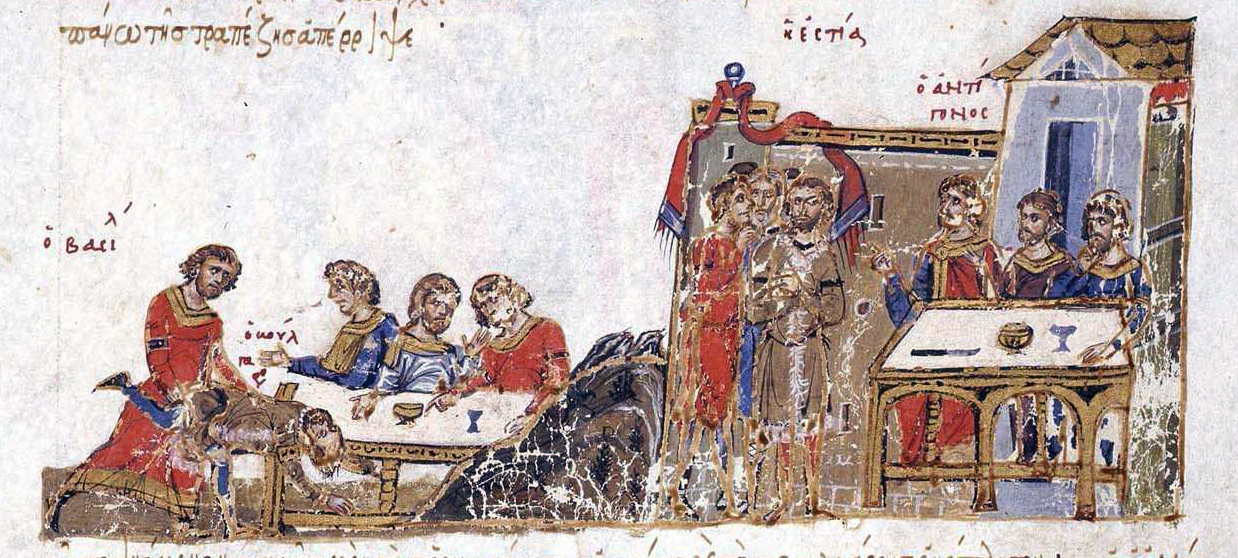
Basil in the meantime was forced by Michael to divorce his lowborn first wife Maria in order to marry Ingerina but in exchange for that, Michael offered to Basil his sister Thekla as a mistress as Michel was to continue his relationship with Ingerina. Basil soon began to influence Michael so heavily to the point that he became even more influential behind Michael’s rule than his uncle Bardas that true enough, Basil was successfully able to convince Michael that Bardas was plotting to overthrow him, something Michael fell for easily. In 866, as Bardas was organizing a campaign to recapture the entire island of Crete from the Arab pirates that had taken over it in 824, he was suddenly murdered under the orders of Basil and Michael. With Bardas dead, Basil then took Bardas’ position of Caesar which was given to him by Michael and following that, Michael even took a step further by crowning Basil as his co-emperor. At the same time as well in 866, Eudokia Ingerina who had been married to Basil gave birth to a son, Leo who was said not to be Basil’s son but Michael’s as true enough following Leo’s birth, Michael III celebrated it with chariot races in the Hippodrome. Basil now in a powerful position began feeling that he could never let go of such power and thus felt that he wanted even more of it and thus the moment Michael III started favoring another courtier named Basiliskianos which therefore threatened Basil, Basil soon enough began plotting Michael’s assassination. During one night in September of 867, as both Michael and Basiliskianos had gotten very drunk during a feast, Basil with a group of his relatives snuck into the palace wherein they destroyed the lock of the door to Michael’s bedroom.
True enough this plan worked as when Michael returned to his room, he was stabbed to death in his sleep by Basil’s conspirators. Immediately after Michael was killed, Basil was immediately crowned as emperor whereas Michael was buried in a church across the Bosporus from Constantinople. Michael’s murder on the other hand was no secret to the people of Constantinople and the imperial court and he was not really mourned as for one the court and people did not really like him for his lack of interest in ruling and his public displays of impiety. Basil I too when being crowned as emperor justified murdering Michael by claiming he had done that to rid the empire of a corrupt and immoral ruler being Michael whereas Basil swore he would be the opposite as a devout Christian emperor. The murder of Michael III too was more or less acceptable to the people as just 47 years earlier in 820, Michael III’s grandfather Michael II came to power as emperor in the same way by murdering his predecessor Leo V.

III. Basil’s Church Policy
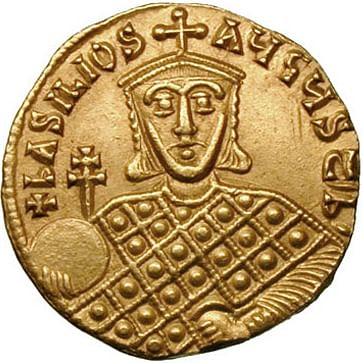
Although Basil I came from humble origins and thus being illiterate and uneducated, he turned out to possess a lot of intelligence including those involving diplomatic affairs as immediately after becoming emperor in 867, he fired the accomplished Patriarch of Constantinople Photios I and replaced him with his predecessor Ignatios as a way to heal the schism with the Church of Rome.

Now, Photios for one did not have any religious background prior to becoming patriarch, rather he was by career a politician and imperial secretary and due to his political and diplomatic skills, Michael III’s uncle Bardas appointed him as Patriarch of Constantinople in 858 and thus removing Ignatios- a eunuch and son of the former emperor Michael I- who had been patriarch since 847. After just a few days of being a priest, Photios suddenly rose up the ranks to becoming Patriarch of Constantinople which was something not taken lightly by Pope Nicholas I in Rome as he preferred someone without political background as Patriarch of Constantinople, in this case being Ignatios who was by career a monk. In 863, the former patriarch Ignatios appealed to Pope Nicholas I declaring Photios as illegitimate due to his political background and thus starting what was known as the “Photian Schism” between the Churches of Rome and Constantinople. Part of this schism was a “cold war” between both Churches on getting the Slavic world in Eastern Europe under their spheres of influence whereas both the Church of Rome and Church of Constantinople were at a race to convert them wherein Constantinople won thanks to the efforts of Photios in sending the missionaries St. Cyril and St. Methodius. The schism further intensified in 867 during a synod presided over by Michael III wherein Photios and the 3 other eastern patriarchs- that of Antioch, Jerusalem, and Alexandria- excommunicated Pope Nicholas I and condemned the Latin clause of the Filioque concerning the procession of the Holy Spirit.

However, this schism suddenly came to an end when Basil I usurped power in 867 when deposing Photios as patriarch and restoring Ignatios to that position. The new pope Adrian II who succeeded Nicholas I in 867 true enough supported Ignatios as Patriarch of Constantinople, and thus good relations between both Churches were restored. Even after Pope Adrian II’s death in 872, relations between Byzantium and the Papacy were still good as the new pope John VIII also saw Basil I as an ally. Basil too eventually reconciled with Photios and thus when Ignatios died at an old age in 877, Basil restored Photios as Patriarch of Constantinople whereas Photios too served as the tutor to Basil’s sons Leo- who may actually have been Michael III’s son- Stephen, and Alexander and also to the Bulgarian prince Simeon, son of the ruling Bulgarian khan Boris I. Due to Photios’ recent success in the conversion of the Slavs and Bulgars to Orthodox Christianity, Pope John VIII too saw him as an ally and even with Photios back as patriarch, the “Photian Schism” did not continue. Additionally, Basil I as an Iconophile continued his predecessor’s mother Theodora’s policy of restoring the veneration of icons that Basil’s reign true enough saw the restoration of religious icons in churches across the Byzantine Empire at such a grand scale, possibly to make up for those years icons were forbidden by the Iconoclast emperors.

IV. Basil’s Domestic Policy and Construction Projects
Although illiterate and uneducated as already mentioned earlier, Basil I the Macedonian as emperor not only possessed a lot of diplomatic skill, he too was a brilliant reformer and patron of the arts and construction projects. Once becoming emperor in 867, Basil undertook a great legislative work in supervising the recodification of Roman laws into a new code of laws known as the Basilika meaning “Imperial Laws”.

This project was meant to update and simplify the “Code of Justinian” or the Corpus Juris Civilis, the Byzantine Empire’s code of laws since the 6th century which was compiled under Emperor Justinian I the Great (r. 527-565). The recodification of Roman laws into a new system which was to be translated into Greek although was said to have begun under the watch of Michael III’s uncle Bardas, however it was Basil who ordered it to be completed, although Basil died before this code of laws could be fully completed as it was during the reign of his son and successor Leo VI (886-912) when it was fully completed. Basil however gets the credit for compiling this updated code of laws for the Byzantine Empire; hence he is often called the “Second Justinian” and true enough Basil like Justinian I came from humble origins as both emperors too were born to peasant families in the Balkans. The “Basilika” meanwhile which consisted of 60 books and smaller legal manuals known as the Esiagoge also saw the translation of imperial laws from Latin to Greek and this would be the Byzantine Empire’s law code until its end with the Ottoman conquest of Constantinople in 1453.
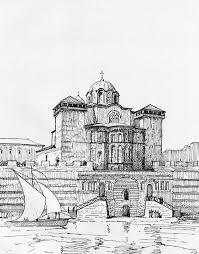
Apart from presiding over the recodification of Byzantium’s laws, Basil was best known for ordering the construction of a new cathedral in the capital known as the Nea Ekklesia or “New Church”. This new cathedral found in the imperial palace complex of Constantinople which was built between 876 and 880 was the first church in Constantinople to be built in such a monumental scale since the construction of the Hagia Sophia in the 6th century under Emperor Justinian I. Additionally, this church too was the first one in Byzantine history to be built in a cross-in-square structure which thus set a new standard for a new style in the structure of Orthodox churches across the Balkans and even in Russia. When it was completed in 880, the Nea Ekklesia was a magnificent site lavishly decorated in marble as Basil seeing himself as the new Justinian spared no expense to decorate his church in order to make it equal the Hagia Sophia in its magnificence. Now, no matter how grand this church was, it no longer exists today as in 1490 with Constantinople now the capital of the Ottoman Empire, the Church of Nea Ekklesia which had been converted into a gunpowder storage by the Ottomans exploded when it was hit by lightning. In the imperial palace complex, Basil too built two additional structures one being the Church of the Theotokos of the Pharos (Church of the Virgin of the Pharos) and his own palatine hall known as the Kainourgion which was richly decorated with mosaics.

V. Conquests in the East
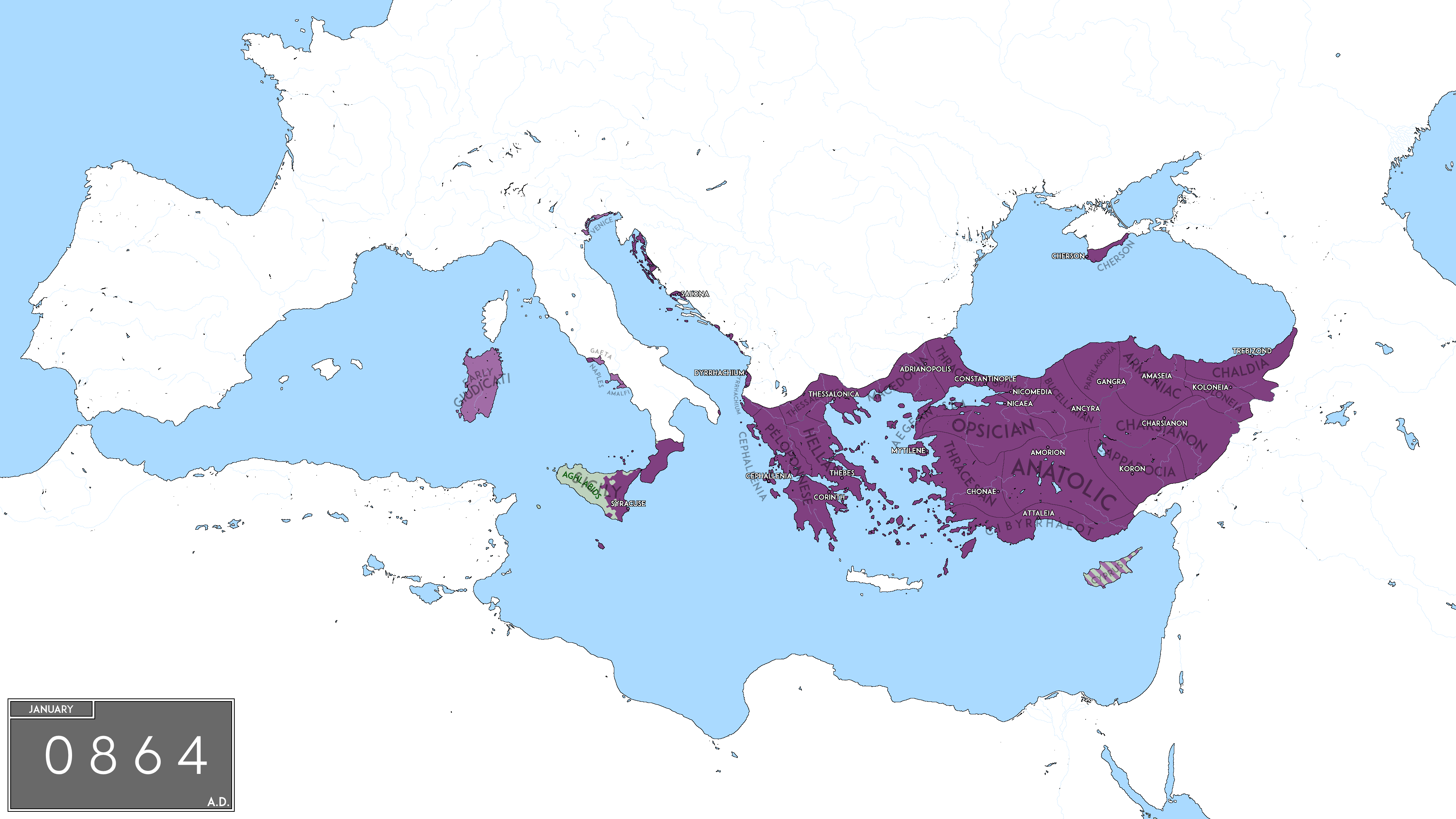
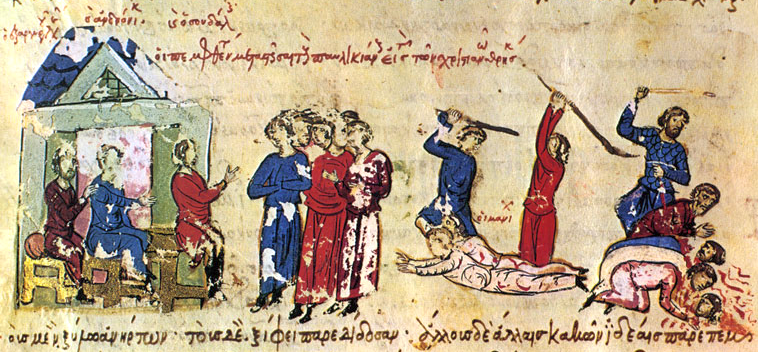
Aside from his domestic policies in recodifying the law, constructing new structures, and being involved in Church politics, Basil I the Macedonian was also known to have been active as a soldier-emperor on the battlefield and this was seen particularly when he defeated the heretical Paulician state assisted by the Arabs in 872. Now, the Paulicians being a heretical sect of Christians had not wanted to be under the rule of the Orthodox Byzantines, and thus they resisted against them. In 843, once the empress-regent Theodora put an end to Iconoclasm for good, she then focused on dealing with the heretical Paulicians wherein it was said that up to 100,000 Paulicians were massacred by Byzantine troops under her orders whereas those who survived fled to the Arabs, most notably to the Emirate of Melitene, an Abbasid vassal.
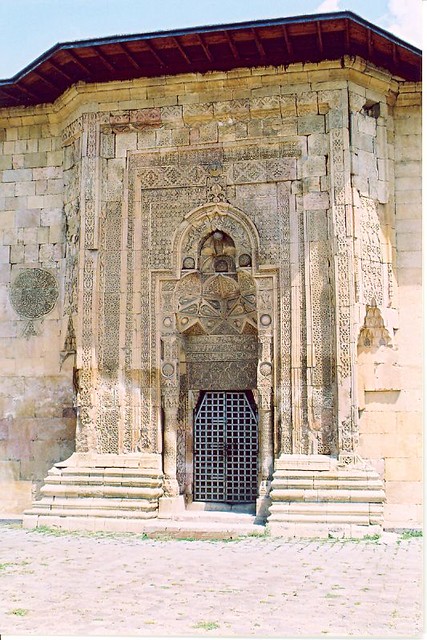
Among the survivors of the massacre was Karbeas, the Paulician leader who with the help of the Emir of Melitene Umar al-Aqta established his own Paulician state in Eastern Asia Minor centered around the city of Tephrike which was its capital. For the next decades, the Paulicians campaigned alongside the Arabs against the Byzantines but ultimately lost to the Byzantines later on at the Battle of Lalakaon in 863- as already mentioned earlier- wherein both the Emir of Melitene Umar al-Aqta and the Paulician leader Karbeas were slain. Although Karbeas was killed in battle against the Byzantines, he was still succeeded by another leader, Chrysocheir and under his rule, the Paulicians assisted by the Arabs again raided into Byzantine territory from 869-870 going as far as to attacking Nicaea and sacking Ephesus. Basil I as the new emperor at this time at first sent ambassadors to Tephrike to negotiate peace with Chrysocheir, however negotiations failed and thus Basil prepared a campaign intended to crush the Paulician state once and for all. Basil though began his campaign in failure in 871 wherein he narrowly managed to escape the battlefield alive which thus allowed Chrysocheir to resume his raids into Asia Minor. However, in 872, Basil struck back by sending his relative the general Christopher to counterattack the Paulicians and thus both forces eventually clashed at the pass of Bathys Ryax, a strategic location. Here, the Paulicians were caught by surprise thanks to Christopher’s strategy of sending two army units to shadow the Paulicians, and thus the Paulicians were eventually routed whereas the Byzantines won the battle. Chrysochier though managed to escape the battlefield with his bodyguards, however he was soon enough wounded by a Byzantine soldier during his escape and thus he fell off his horse and was then beheaded whereas his head was sent to Basil in Constantinople. Following their defeat at the Battle of Bathys Ryax in 872 and the death of Chrysocheir, the Paulician state had collapsed and was thus annexed into the Byzantine Empire all while Tephrike by 878 was captured by the Byzantines and razed to the ground. With the annexation of the Paulician state, the Byzantine Empire thus expanded eastwards as Basil too continued launching campaigns in the east against the last remaining Paulician strongholds and the other Arab emirates there.

VI. Campaigns in Italy
If Basil I was known to have actively campaigned in the east by crushing the Paulician state there and annexing their lands into the Byzantine Empire, he too pursued an active policy to restore Byzantine control to the west particularly Italy thus making him the first emperor since Constans II (r. 641-668) over 200 years ago to actually put attention to what was left of Byzantine Italy. Basil though never personally campaigned in Italy, nevertheless he still organized a number of expeditions to restore what the Byzantines had lost in Southern Italy back into imperial control.
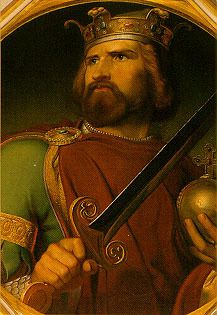
In order to regain territory in Southern Italy and fight off the Arab raids there; Basil concluded an alliance with the Frankish emperor Louis II (r. 844-875) who provided the Byzantines with 139 ships to clear the Adriatic Sea of Arab naval raids. The Frankish emperor Louis II on the other hand since 866 had been campaigning against the Southern Italian city of Bari which had been under Arab control as the Emirate of Bari since the Arabs took the city from the Byzantines in 847. Although Louis II initially failed at capturing Bari, after gaining Byzantine military assistance, he was able to take the city from the Arabs in 871 and take its emir as a prisoner. Louis II then held Bari until his death in 875 as following that, the Byzantines then reoccupied the city in 876. Despite the success in recapturing Bari, Basil I’s reign also saw some failures in Italy most notably the fall of Byzantine Syracuse to the Arab Emirate of Sicily in 878 and this was partly Basil’s fault as he diverted a relief fleet from Sicily to haul marble for the construction of the Nea Ekklesia church in the capital instead. Although Syracuse and much of Byzantine Sicily was lost during Basil I’s reign, his latter reign had also seen the recovery of a lot of territory in Southern Italy from both the Arabs and Lombards thanks to the general Nikephoros Phokas the Elder. By 880, Nikephoros Phokas the Elder had retaken most of the towns and cities in Calabria and Apulia that the Arabs had recently captured and these included Taranto, Rhegion, and Amantia and he continued successfully campaigning deep into Southern Italy up until the region of Basilicata- in which most of it was returned to Byzantine rule- even after Basil’s death in 886. Nikephoros was later recalled to the Balkans by Basil’s successor Leo VI in order to defend it against the Bulgarians who resumed war with the Byzantines by 894.


VII. Last Years and Death
Despite Basil I’s last years seeing some more achievements such as the construction and completion of the church of Nea Ekklesia in the capital in 880, his spirits began to decline in 879 when his eldest and favorite son Constantine from his first marriage suddenly died. Following Constantine’s death, Basil raised his youngest son with Eudokia Ingerina Alexander to the rank of co-emperor as Basil disliked Leo who he was said to have occasionally beaten up physically as Basil did not consider him to be his son but Michael III’s with Eudokia.
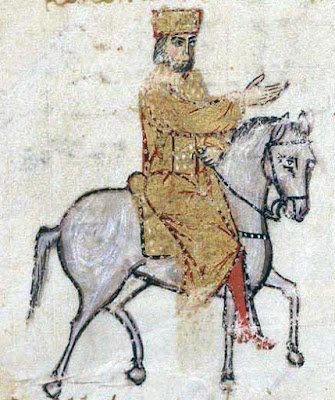
Basil grew further depressed when his wife the empress Eudokia Ingerina died in 882 while in the following year (883), Basil had Leo imprisoned after Basil was informed by the monk Theodore Santabarenos that Leo was plotting to kill him in order to avenge his “real” father Michael III who Basil killed, though it is unclear if whether Leo wanted to have Basil killed or not. On the other hand, Leo too began resenting Basil for forcing him to marry Theophano, a religious woman he did not love, although it was actually Leo’s mother Eudokia who chose Theophano for him. As Leo did not love the woman he was forced to marry, he took in his own lover being Zoe Zaoutzaina, a daughter of Stylianos Zaoutzes, a minister of Basil I, though this also further intensified Basil’s hatred towards Leo. For 3 years then (883-886), Leo remained in prison, however he happened to remain popular among the people and thus his imprisonment resulted in public rioting. Eventually, Basil considered having Leo blinded to prevent him from succeeding as emperor, but he was dissuaded to do so by the patriarch Photios I who was Leo’s teacher.
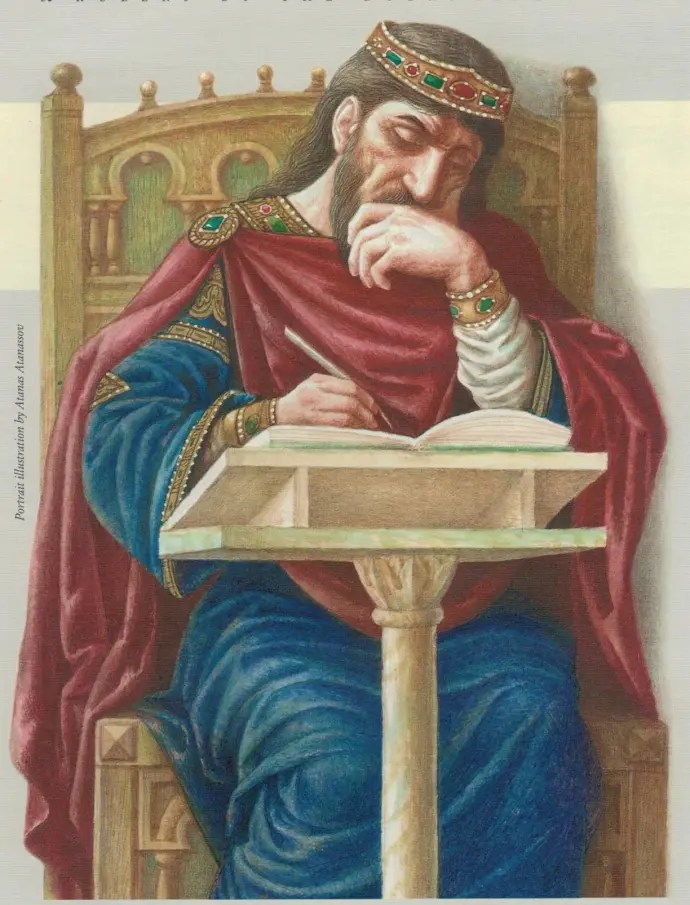
In 886, Basil then released Leo from prison but shortly after this, Basil died from an alleged “hunting accident”. Here, as the 75-year-old Basil went hunting in the woods near Constantinople, his belt was suddenly caught by a deer’s antlers which thus dragged him for 16 miles across the woods. Eventually, he was saved by an attendant who cut him loose with a knife, however the paranoid Basil suspected this attendant of trying to kill him as he held a knife and so Basil had the attendant executed. Basil days later died of a fever caused by the hunting accident, although the accident could possibly have just been a cover-up for Basil may have actually been poisoned to death by the orders of either Leo or Stylianos Zaoutzes, Basil’s minister. Once Basil was dead, Leo VI as his eldest surviving “son” immediately succeeded as emperor and his first act as emperor was to rebury Michael III who he believed was his real father at the Church of the Holy Apostles in Constantinople where almost all Byzantine emperors were buried in, and by doing this, the public too believed that Leo was after all Michael III’s son.
Conclusion
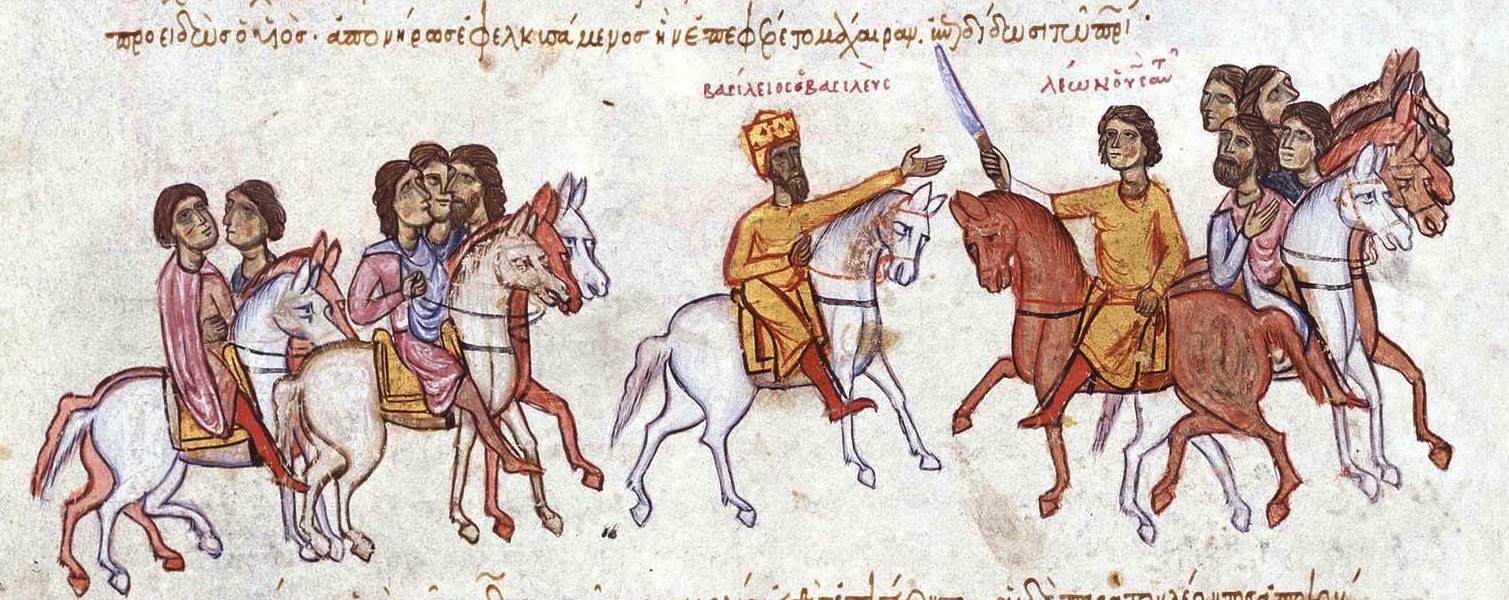
Basil I the Macedonian’s story is surely an impressive one as it shows how one could rise from the bottom of society to the top, yet it also shows how Byzantine society could allow one to do such a thing. The Byzantine emperor true enough was someone who had absolute power, yet Byzantine law never said anything about them having divine rights and for this reason someone with enough intelligence and cunning like Basil I could rise up the ladder from peasant to emperor. On the other hand, Basil’s story too shows the dangers of power and how one cannot stop desiring it especially when first getting a taste of it the way Basil did when rising up to a powerful position under Michael III that he true enough never wanted to let go of it to the point that he even killed Michael who helped him rise to power in the first place in order to become emperor.
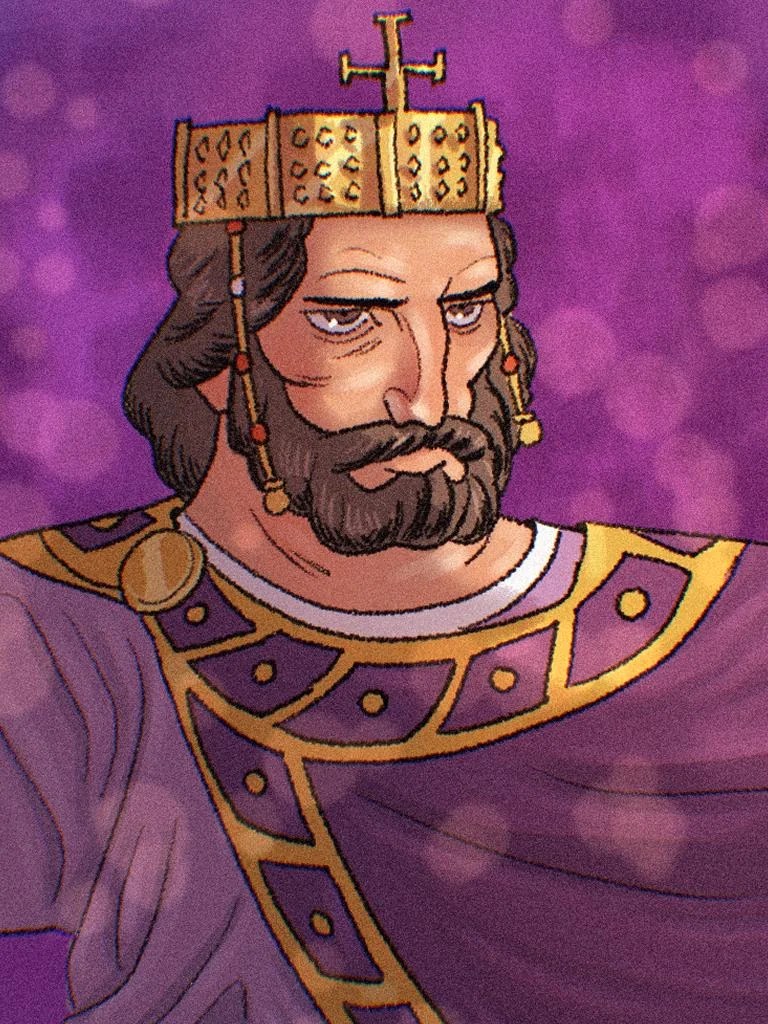
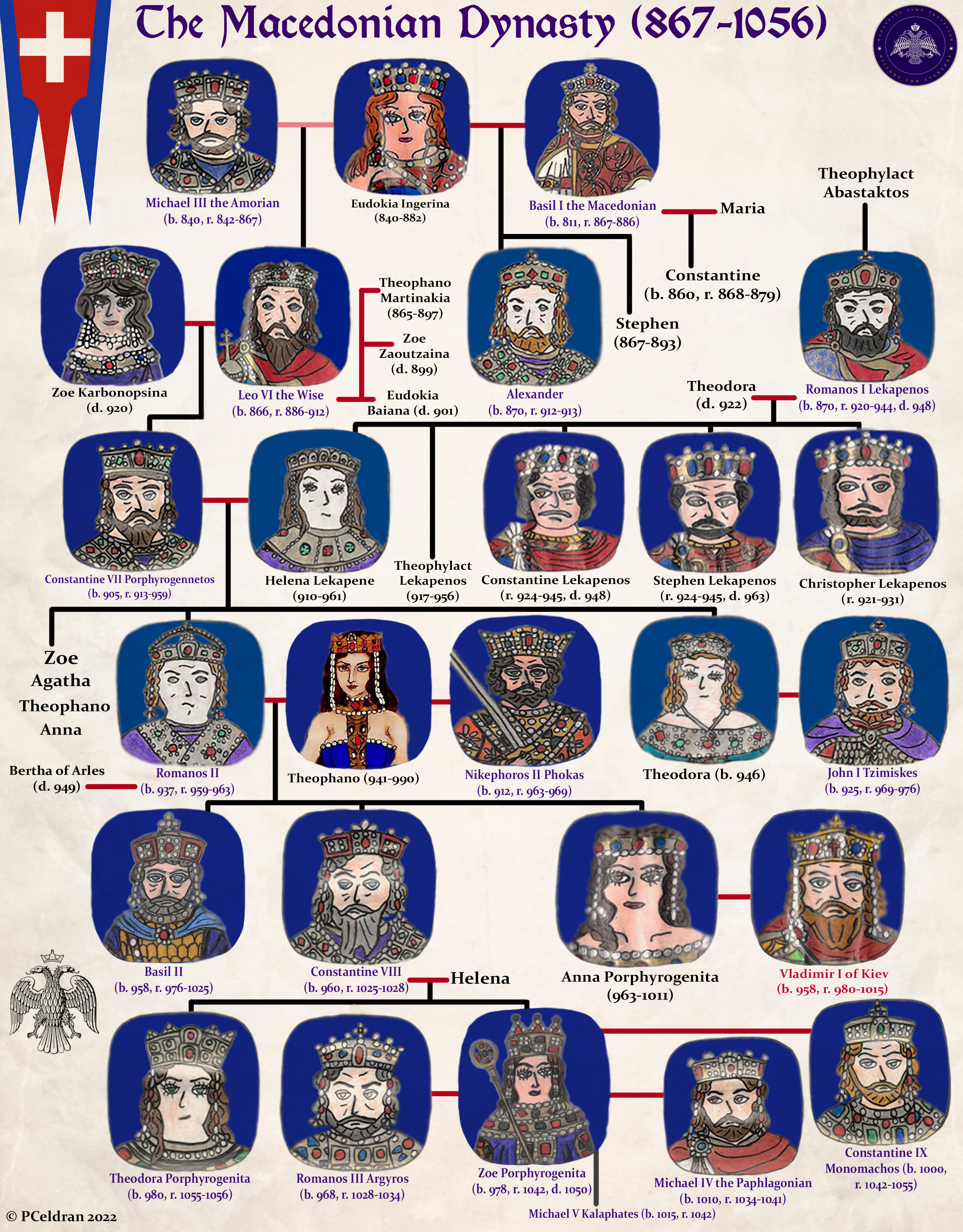
Now, no matter how impressive Basil’s rise to power was, it was still very bloody as it involved murder, but this at least gave the Byzantine Empire its greatest dynasty which would last for nearly two centuries. As emperor, Basil’s reign also surely saw a lot happen for the Byzantine Empire and mostly in positive ways whether it was his successful campaigns in the east or in Italy, new construction projects in the capital and across the empire, and the recodifying of the empire’s laws into a new code. Basil I though may not have been one of the greatest emperors of Byzantium, but his achievements mentioned earlier surely shows that one from such low origins can achieve a lot and have a great amount of intelligence and ability to rule an empire especially one as powerful as Byzantium. When it comes to legacy, Basil I no doubt left a lot and this included first of all his recodification of the empire’s laws into the law code known as the “Basilika” which would be in use until the empire’s fall to the Ottomans in 1453, continuing the Byzantine cultural renaissance that took place in the 9th century through sponsoring large scale construction projects across the empire, and in once again turning the tide of war against the Arabs to the offensive by expanding Byzantine territory to the east again. However, the one greatest legacy of Basil I was in establishing the Macedonian Dynasty, possibly the greatest dynasty in Byzantine history which would last until 1056, though this may be disputed considering that Basil’s “son” Leo may not actually have been his son but Michael III’s which is highly possible. If it is true that Leo VI was actually Michael’s III son then the long-ruling Macedonian Dynasty may have not existed except for the rule of Basil I from 867-886 and that of his youngest son Alexander (912-913) who ruled briefly after Leo VI’s death in 912, thus if Leo VI were actually Michael III’s son then the dynasty that would rule Byzantium until 1056 would not have been the Macedonian Dynasty but still the previous Amorian Dynasty continued. On the other hand, a lot of the information we get of Basil I comes from a biography written about him by his grandson the Byzantine emperor Constantine VII Porphyrogennetos (r. 913-959)- the son of Leo VI- known as the Vita Basilii written in around 950 which portrays Basil as a heroic character and Michael III as evil, yet little would Constantine VII know that his real grandfather was Michael III, the evil man in his story who Basil killed. Now, what are your thoughts on Basil I the Macedonian and do you really think he established the Macedonian Dynasty and left behind a great legacy as emperor? I would like to thank you all for reading this article and please continue to support me by following and subscribing to my sites!
 The Byzantium Blogger