
Posted by Powee Celdran
Welcome back to the Byzantium Blogger and this time we are doing a special edition article critiquing the recently released season 3 of Netflix’s Vikings: Valhalla! It’s been a while since I have done an article which is a review and reaction to something Byzantine, but just last month the latest season of “Vikings: Valhalla” had just been released and on the positive side it does give the medieval Byzantine Empire the representation it deserves on mainstream media.

The Byzantine Empire story arc true enough plays such a prominent role in the series which shows stories happening across medieval Europe in the 11th century and to be fair the Byzantine arc of the season was a very exciting one. However, on the negative side, the Byzantine arc of the series features a great number of historical inaccuracies that historians or even just everyday history enthusiasts such as myself can spot whether it is chronological errors, outfit errors, or the roles of certain historical figures. Now, I true enough watched the series and as a big fan of Byzantine history who knows what happened in 11th century Byzantium, I did spot a number of mistakes. On the other hand, the YouTube channel Byzansimp too has recently posted a video- which can be found below- on the exact same topic as this article being about the historical inaccuracies in the Byzantine arc of season 3 of “Vikings: Valhalla” and this video numbers all the inaccuracies in the series to 100! The most notable errors in the series now include getting the wrong Byzantine emperor for the timeline, vilifying the famous Byzantine general George Maniakes for no reason, embellishing the story arc of the Viking hero Harald Hardrada in the service of Byzantium, and making the obvious mistake of having medieval Byzantine commanders wear Ancient Roman imperial armor. Nevertheless, the series as a whole was exciting to watch especially for Byzantine fans as it surely does show a lot in the Byzantine story, but it would have been a lot better if it got things more historically accurate especially for the Byzantine arc. Now, in this article I will explain the historical inaccuracies of the series per theme and not in a chronological format and I too will not explain all the inaccuracies in the series as the video by Byzansimp has already done that. Now, let us begin with the article!

Follow me, Byzantine Time Traveller on Social Media:
Instagram: @byzantine_time_traveller
Facebook: Byzantine Time Traveller
Youtube: No Budget Films
Website: Byzantine Time Traveller
Deviantart: Byzantium-blogger55
Art Station: Powee Celdran Porphyrogennetos
Patreon: Byzantine Time Traveller
Historically Inaccurate Outfits

The most obvious historical inaccuracies in season 3 of “Vikings: Valhalla” are the outfits worn by the Byzantine characters. For one, the Byzantine soldiers in the series are dressed in golden helmets and breastplates over red tunics which are not historically accurate to the era and do not match anything historical.
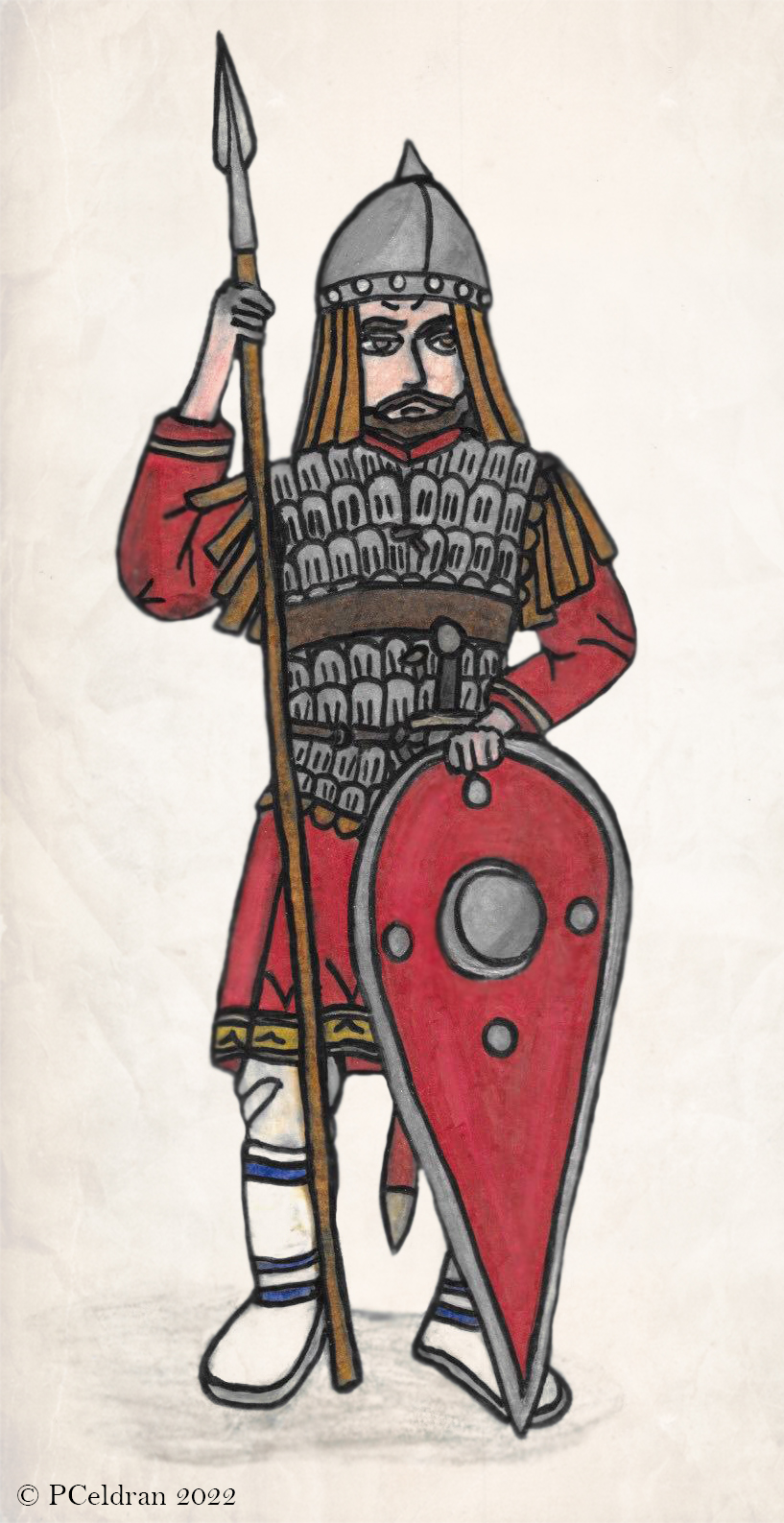
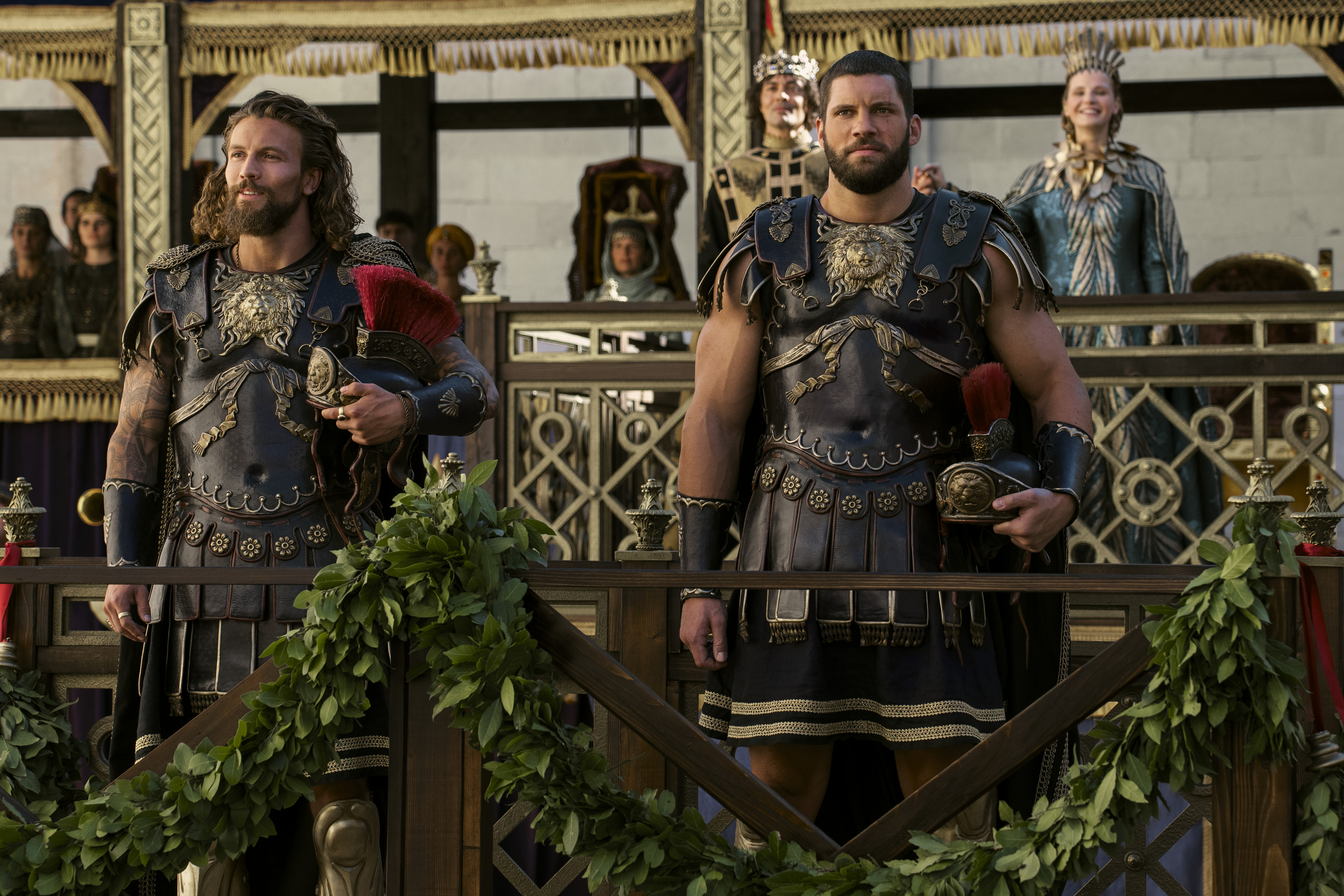
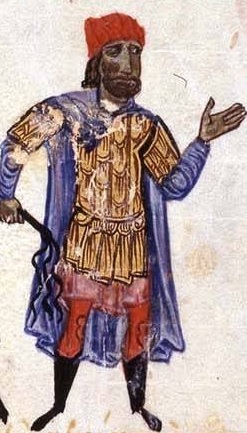
The only accurate part of the outfits worn by the soldiers are the red tunics with gold trimmings beneath their armor as Byzantine soldiers of the 11th century true enough wore them, but it would have been better if the soldiers wore either chainmail or scaled armor over their tunics as worn by the Skoutatoi infantry soldiers of the middle Byzantine Empire. The use of spears by the soldiers meanwhile is historically accurate as Byzantine soldiers true enough did use spears as their primary weapon, although it would be better if they had used kite-shaped shields like the Skoutatoi of Byzantium. The most obvious mistake now is the use of Republic era Ancient Roman leather armor by the general George Maniakes and Harald Hardrada during their triumphal parade into Constantinople as obviously Byzantine generals of the 11th century did not wear such armor. The outfits meanwhile worn by the emperor Romanos III Argyros in the series look more or less accurate to those worn by Byzantine emperors in the 11th century as they are mostly purple and are ornately decorated. The outfits however worn by Romanos’ wife Empress Zoe are mostly not historically accurate to those worn by Byzantine empresses in the 11th century and true enough there is an obvious existing mosaic of Empress Zoe at the Hagia Sophia in Istanbul today which shows exactly what kind of imperial dress she would have been wearing. Later in the series, we get to see clerical outfits in Byzantium and all of them are historically inaccurate as for one the Patriarch of Constantinople Alexios I did not wear colorful robes, this was only worn by Russian patriarchs centuries later. The series too shows Byzantine priests and the patriarch as well wearing plain black robes and again this was only worn by Orthodox priests in modern times, Byzantine era priests would have worn clothes more ornate than that.
The Battle of Syracuse and the Sicilian Expedition
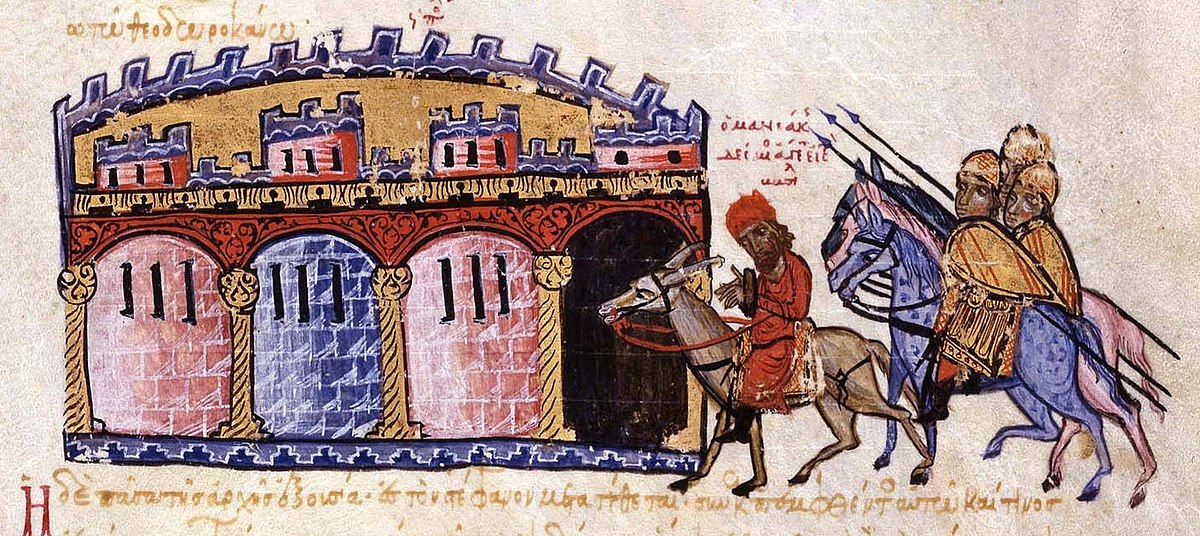
The Byzantine arc in season 3 of “Vikings: Valhalla” opens with the Byzantine military expedition to recapture Syracuse- and the rest of the Sicily- from the Muslim Arab Kalbid Dynasty from North Africa. This expedition true enough did happen in real history taking place from 1038-1040 and Harald Hardrada and George Maniakes were true enough present in it too. Although the expedition to reclaim Sicily did happen, the major mistake the series made was that the emperor during the expedition was Romanos III Argyros (r. 1028-1034) but in real history, Romanos III was already dead by the time of the expedition, hence the Byzantine emperor during it was not Romanos III but his successor Michael IV (r. 1034-1041).
Additionally, the series too shows Romanos III himself present in the campaign leading his troops, however in real history the emperor during the expedition being Michael IV did not even take part in the campaign leading his troops. In real history, the Byzantine expedition to reclaim Sicily went well initially until reinforcements from North Africa arrived in Sicily in 1040. The emperor Michael IV too sent his brother-in-law the incompetent admiral Stephen to assist Maniakes in recapturing Sicily, and although Maniakes won a number of battles against the Arabs, Stephen failed in his task which was to secure the coast of the island. Due to his failures, Stephen was publicly humiliated by Maniakes who constantly beat him with a whip. Stephen however reported his treatment by Maniakes to the emperor Michael IV who then had Maniakes recalled from Sicily and imprisoned in Constantinople until the following year (1041) when Michael IV died. As a result of Maniakes being recalled and the Byzantines’ Lombard and Norman allies rebelling against them, the Sicilian expedition ended in failure for the Byzantines and thus the island returned to Arab rule. In the series however, the Byzantines ended victorious by successfully capturing Syracuse from the Arabs and thus returned to Constantinople with a triumphal parade which true enough did not happen in real history. The series too shows the Byzantine army after capturing Syracuse destroying the city and massacring its Arab population with a flammable substance in the form of yellow salt similar to Greek Fire- this could possibly be the series’ reference to Byzantium’s super-weapon of Greek Fire.

Emperor Romanos III Argyros
At the end of season 2 of “Vikings: Valhalla” we are introduced to the Byzantine emperor who is identified as Emperor Romanos III Argyros (played by Nikolai Kinski). The series is historically inaccurate here as the Byzantine emperor at the time when Harald Hardrada served in the Varangian Guard force of the Byzantine army was not Romanos III but Michael IV. By the time Harald arrived in Constantinople to join the Varangian Guard it was either 1033 or 1034 and although Romanos III may have still been the emperor, Harald probably did not personally meet him whereas the emperor for most of Harald’s time in Byzantium was Michael IV.

The series too depicts Romanos III to be way younger than he actually was as emperor as during his reign (1028-1034), Romanos was already in his 60s unlike in the series where he is depicted as somewhere in his 30s. Now, in real history, Romanos III was born in 968 to the noble Argyros family of Byzantium; his grandmother Agatha was daughter of the Byzantine emperor Romanos I Lekapenos (r. 920-944). When grown up, Romanos was a senior official in the empire and even the “Mayor” of Constantinople during the reign of Constantine VIII (1025-1028) of the Macedonian Dynasty. Without having any sons, Constantine VIII had to choose a successor who would marry his daughter Zoe and although he initially chose the general Constantine Dalassenos to marry her, the Byzantine Senate and the emperor’s advisors convinced him not choose him but Romanos instead as they did not want a strong military man to succeed Constantine VIII but someone weak and easy to manipulate which Romanos seemingly was.

The 60-year-old Romanos then being forced by the emperor divorced his wife and married Zoe who was 50 years old and 3 days after their wedding, Constantine VIII died and thus Romanos III succeeded as emperor. The series too makes a brief mention of Romanos’ predecessor Constantine, although the series says Constantine ruled for only a year whereas in real history, he ruled for 3 years as sole emperor and basically held the title of emperor for almost his entire life (66 years) as he was already crowned as co-emperor in 962 at age 2 by his father Emperor Romanos II (r. 959-963) and for throughout the 49-year reign of his older brother Basil II (976-1025), Constantine was co-emperor. Romanos III too unlike in the series never participated in the Sicilian expedition of 1038-1040 as again, he was already dead by that time whereas his successor Michael IV too never personally joined it despite organizing it. The last time a Byzantine emperor ever came to Sicily to campaign was Constantine IV (r. 668-685) and this was almost 400 years before the setting of the series. In real history though, Romanos III personally led the troops in battle in 1030 in a pointless war against the Arabs of Syria who did not want any war with the Byzantines and true enough this campaign ended in total failure for the Byzantines which made the powerful Byzantine army become a “laughingstock”.

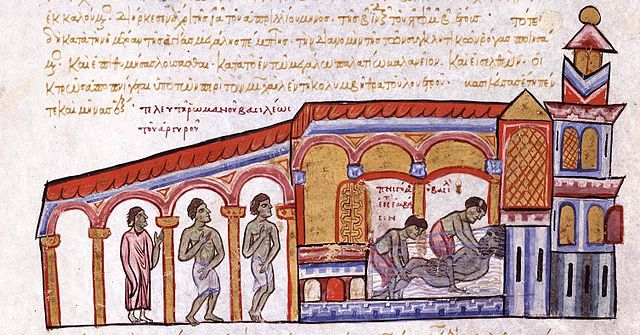
In the series, Romanos says that he was unable to produce children with Zoe and this is in fact true in real history as both Romanos and Zoe did want to produce children despite their old age in order to continue the Macedonian Dynasty that they did all sorts of experiments using all sorts of potions and sorcery to conceive children, but none worked. The failure to produce children thus alienated Romanos from Zoe but unlike in the series where Romanos has someone being Harald be the one to produce his heir with Zoe, in real history this did not happen. In real history, Zoe and Romanos began growing distant from each other wherein they began having their own lovers; for Zoe it was the young courtier Michael the Paphlagonian, brother of the chief eunuch minister John. Eventually, in 1034 Romanos III was assassinated by drowning by servants in his bath possibly by the orders of Zoe and Michael and on the same day as that, Michael and Zoe married and thus Michael succeeded as emperor. In the series though, Romanos was murdered not in his bath but in a party possibly by the orders of George Maniakes who had imperial ambitions. In real history, George Maniakes had just begun his successful career as a general by the time Romanos died and thus it was during Michael IV’s reign afterwards when Maniakes’ career was at its peak.

Empress Zoe Porphyrogenita
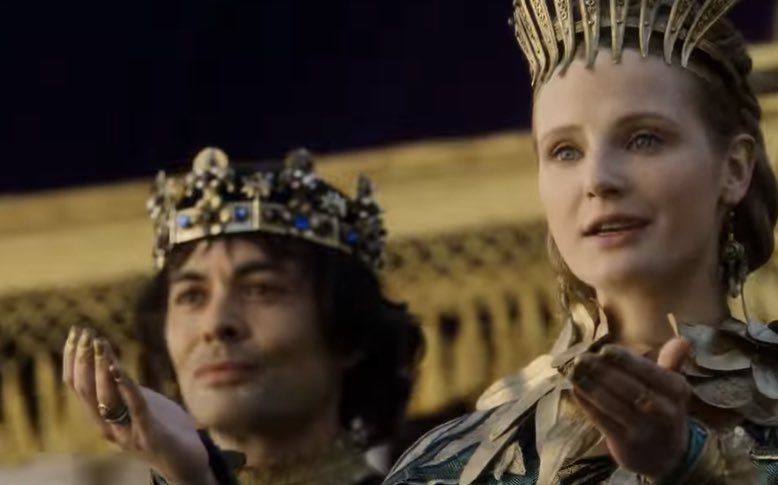
The character of Empress Zoe (played by Sofya Lebedeva) in “Vikings: Valhalla” season 3 was first of all completely historically inaccurate as in the series she is first of all not a Byzantine but the foreign princess Eleana from the Kievan Rus’. The real empress Zoe (born 978) was first and foremost a member of the ruling Macedonian Dynasty and the eldest daughter of Emperor Constantine VIII and thus she was the source of power and legitimacy for all 3 of her husbands who were emperors- Romanos III, Michael IV, and Constantine IX- and of her stepson Michael V (r. 1041-1042).
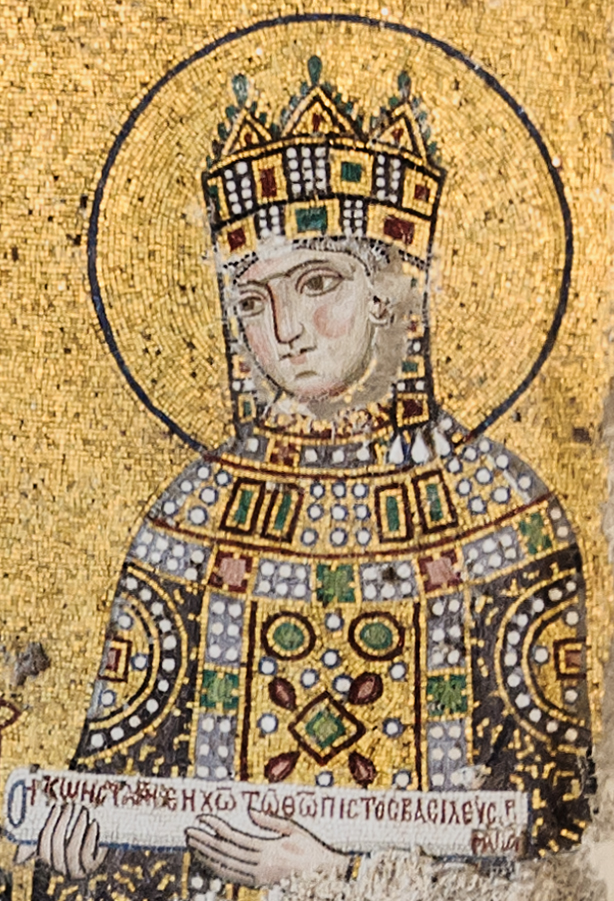
The series therefore totally portrays the empress Zoe inaccurately wherein she is not even Zoe but Eleana who just changed her name to Zoe so that she could fit into the historical timeline. Whether or not this is the real empress Zoe, her character in the series was depicted to be looking too young as in real history, Zoe was already 50 when she became empress in 1028 after marrying Romanos III and therefore during the setting of the series which should probably be in around 1038-1040, Zoe was already by that time in her 60s. Additionally, most of Zoe’s attire as seen in the series does not look very much like the outfits of Byzantine empresses in the 11th century and true enough there is an existing picture in the form of a mosaic of Empress Zoe in the Hagia Sophia in today’s Istanbul which certainly shows you what kind of outfit Empress Zoe would have worn! The series too shows Zoe speaking directly with the other Varangian warriors but in real history it is highly impossible for foreign warriors to speak directly to the emperor and empress. Another thing fictionalized in the series was Zoe’s affair with Harald and although this did not happen in real history as Harald never possibly even got physically close to Zoe, some Norse sagas claim that Zoe wanted to marry Harald at one point that she turned down his request to marry her niece or granddaughter but there’s no historical source that can confirm this as true enough Zoe never had any children or nieces. In real history, only eunuchs and no “bearded men” could enter the gynaeceum or women’s quarters in the palace, thus it was definitely impossible for Harald to have ever entered it as shown in the series. At the end of the series, Zoe is suddenly shown married to General George Maniakes following Romanos’ death, however Maniakes is later killed by Harald who escaped his death sentence and fled Byzantium whereas Zoe’s fate after this scene is left unknown.
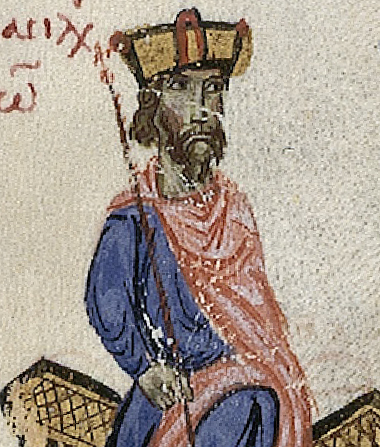
In real history, immediately after Romanos III’s death in 1034, Zoe married her lover Michael the Paphlagonian who then became Emperor Michael IV but later on, he fearing that Zoe would plot against him the way she did with Romanos had Zoe confined to the women’s quarters of the palace under strict surveillance. In 1041, as Michael IV was dying possibly from epilepsy, he even refused to see Zoe whereas Michael’s brother the eunuch John who literally ran the empire for him forced Zoe to adopt their nephew also named Michael. When Michael IV died, his nephew thus succeeded as Emperor Michael V all while he too was adopted by Zoe but Michael V tired of Zoe’s influenced banished her to a monastery which only started riots in the capital in 1042 as Zoe was apparently popular. The riots eventually were successful and Zoe together with her sister Theodora were returned to power by Michael V whereas Michael V was later arrested, blinded, and sent to a monastery to live out the rest of his life. For 2 months in 1042, Zoe co-ruled together with her sister Theodora until a man was desperately needed to rule and thus Zoe married her former lover Constantine Monomachos who then became Emperor Constantine IX (r. 1042-1055). Zoe co-ruled alongside her 3rd husband until her death in 1050 at the age of 72.
Harald Hardrada in Byzantium
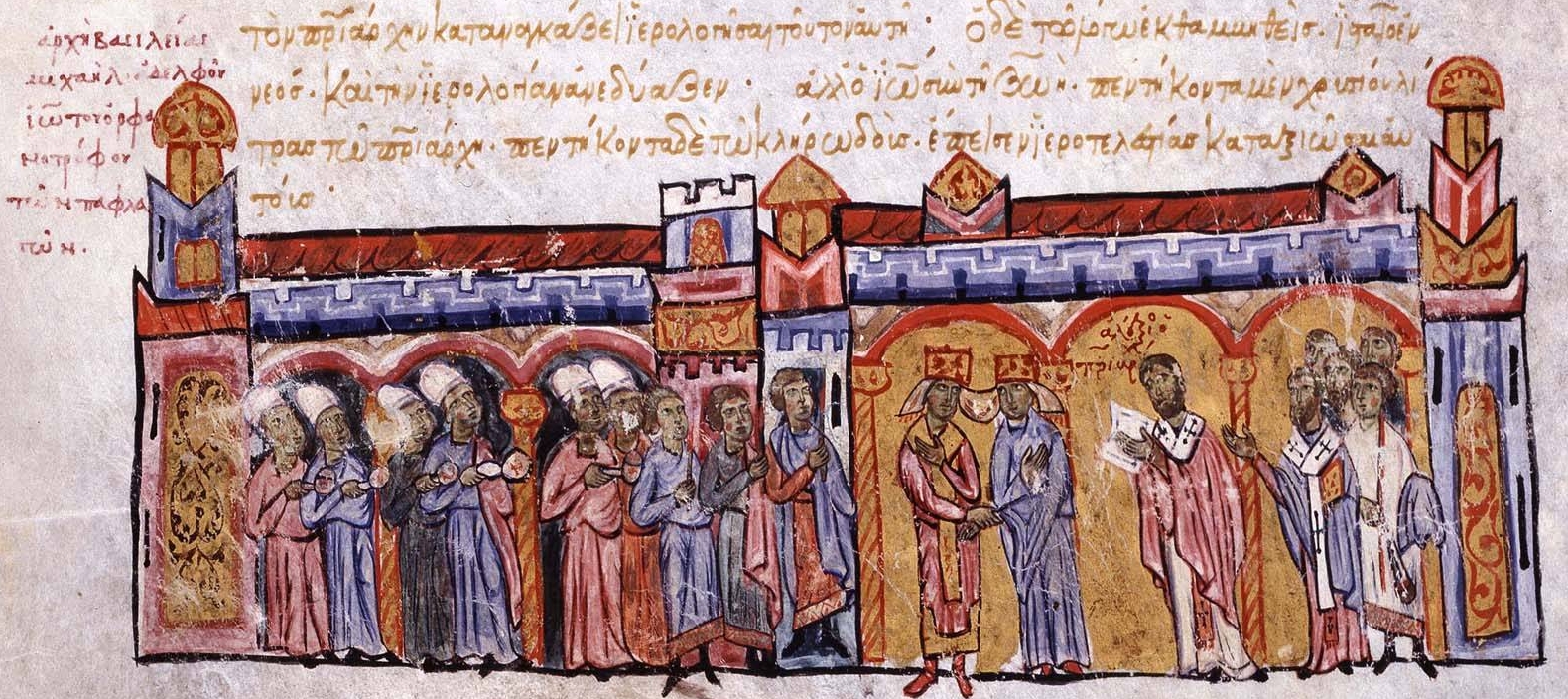
Harald Sigurdsson (played by Leo Suter), also known as Hardrada who would later become King Harald III of Norway (r. 1046-1066) is the central character of the Byzantine arc in season 3 of “Vikings: Valhalla”, and although most of his story there is more or less accurately depicted there are still many errors.
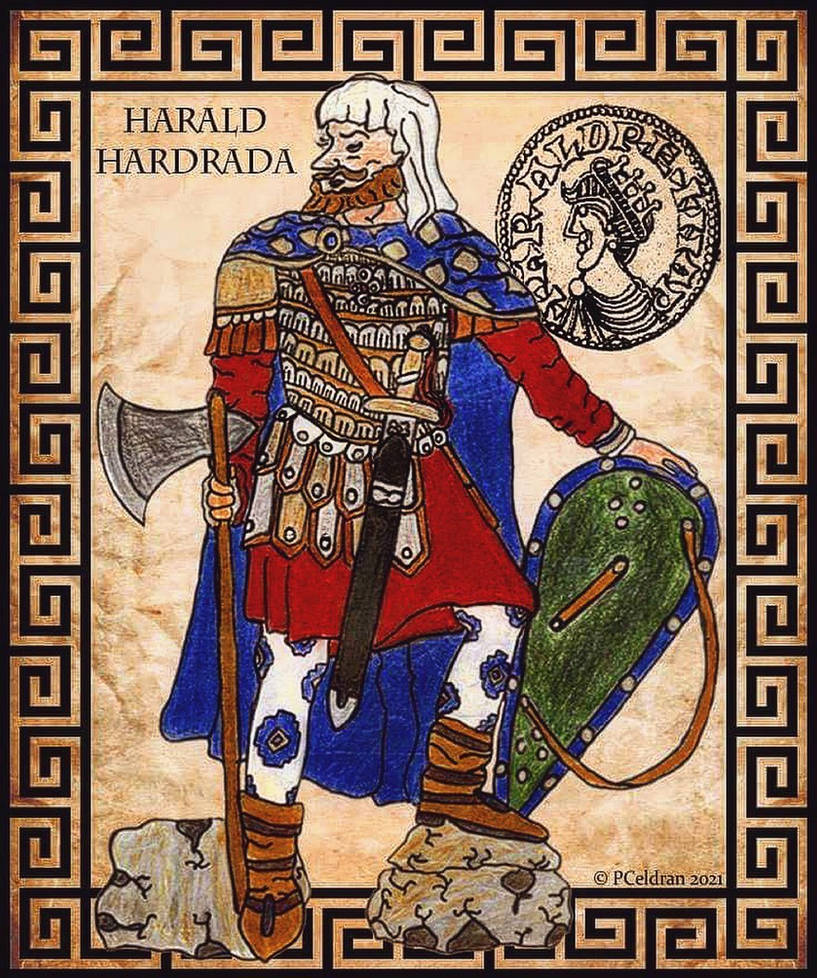
At the beginning of the season which takes place 7 years after the last season ended, Harald is now the commander of the Varangian Guard unit in the Byzantine army sworn to protect the emperor and although the series says he had 2,000 men under his command, in reality he may have had only 500-700. In real history, Harald did true enough command the Varangians in the 1038-1040 Sicilian expedition but unlike in the series, Harald did not develop a brilliant strategy of bringing down the walls of Syracuse by undermining it. As shown in the series when the Byzantines successfully captured Syracuse, Harald personally battled the Emir of Syracuse in a duel, though in real history this did not happen and although the emir was challenged to a duel, it was not by Harald in real history but by the Norman mercenary commander Guillaume Hauteville who earned his nickname “iron-arm” after personally slaying the emir the way Harald did in the series. Unlike in the series where Harald is shown returning to Constantinople with a triumphal parade together with George Maniakes, in real history the expedition in Sicily failed whereas Harald was sent by the emperor Michael IV to put down a rebellion in Italy by the Norman and Lombard contingent of Maniakes’ army and later to Bulgaria to crush the local rebellion of the warlord Peter Delyan who had declared independence from Byzantium.
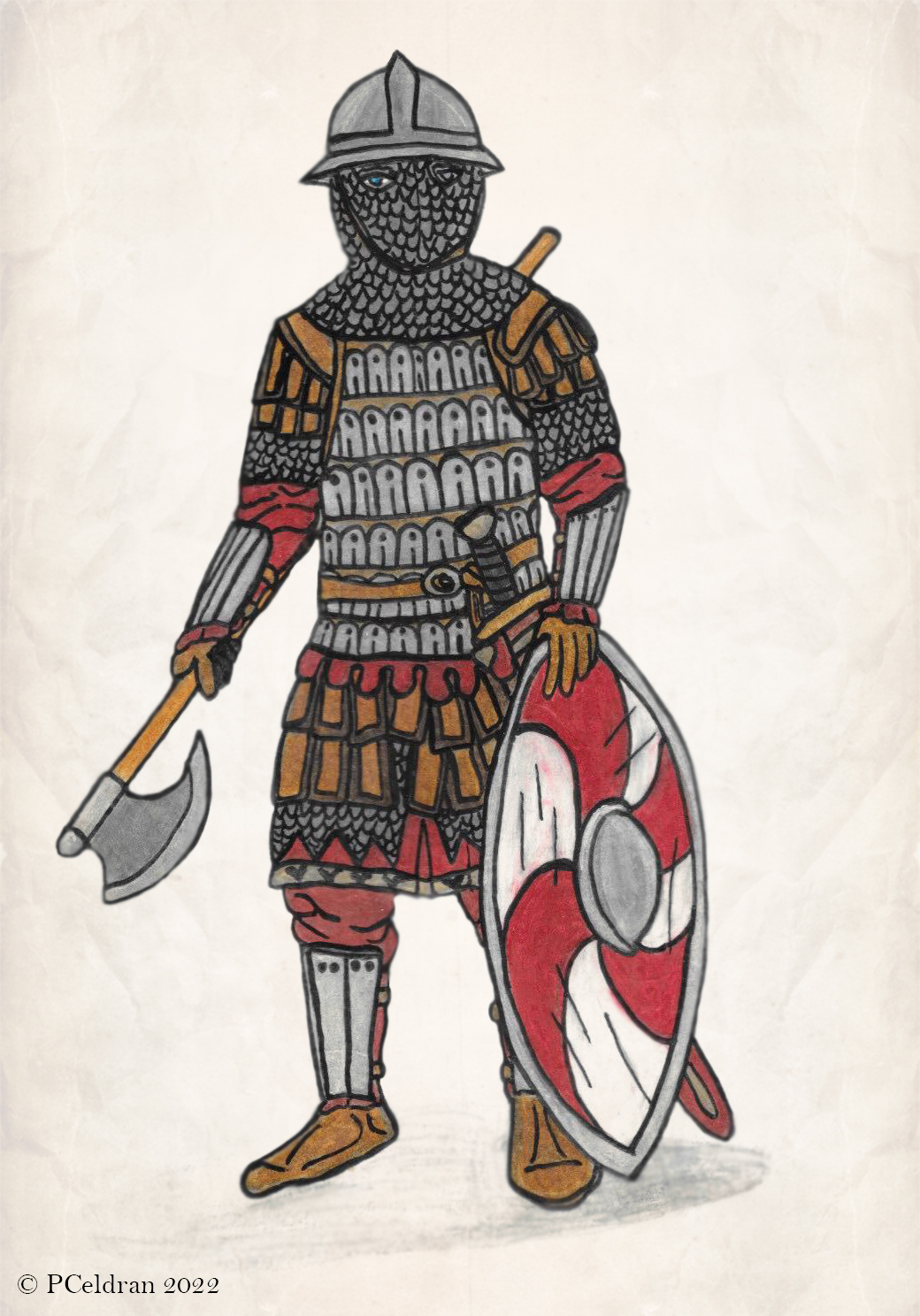
Harald true enough succeeded in putting down the Bulgarian rebellion wherein it is even said that he personally slew Peter Delyan thus giving Harald the nickname “Bulgar-burner” and like in the series as well he was awarded here by the emperor Michael IV with the honorary title of Spatharokandidatos basically for his success in Bulgaria and not in Sicily. This title too in real history was an honorary one and not like as said in the series the “second most powerful in the empire”. In the series as well, Harald true enough was shown having the ambition to return to Norway to be king and this was true in real history as Harald’s purpose to serve in the Varangian Guard was to return home rich enough to claim the Norwegian throne. However, unlike in the series, Harald was never accused of killing the emperor Romanos III in a party and of sleeping with the empress and therefore he was never sentenced to death and definitely not by George Maniakes. Harald true enough in real history was thrown in prison in Constantinople- and not in a deserted island like in the series- but this was after the death of Emperor Michael IV in 1041 as his successor Michael V did not trust Harald. However, when the riots against Michael V broke out in 1042, Harald was broken out of prison all while he too played a role in leading the riots and it is even said that Harald himself was the one who blinded Michael V. Like in the series, Harald did escape Byzantium except that in real history he looted the palace’s treasury- as apparently it was tradition for the Varangian Guards to loot the imperial treasury when the emperor dies, in this case Michael IV. Harald in real history did manage to break a blockade and escape Constantinople against Empress Zoe’s wishes and once leaving Byzantium, he returned to the lands of the Kievan Rus’ under Prince Yaroslav I (r. 1019-1054) who he previously served under. It is possibly Harald who leaked some information to Yaroslav on how to attack Constantinople as true enough in 1043, the Kievan Rus’ fleet showed up in the Bosporus ready to attack Constantinople but at the end failed. The last episode of the series no longer shows Byzantium anymore, instead it shows Harald back in Norway wherein he takes the throne as in real history this did happen in 1046 but the rest of Harald’s story is no longer shown anymore.

General George Maniakes
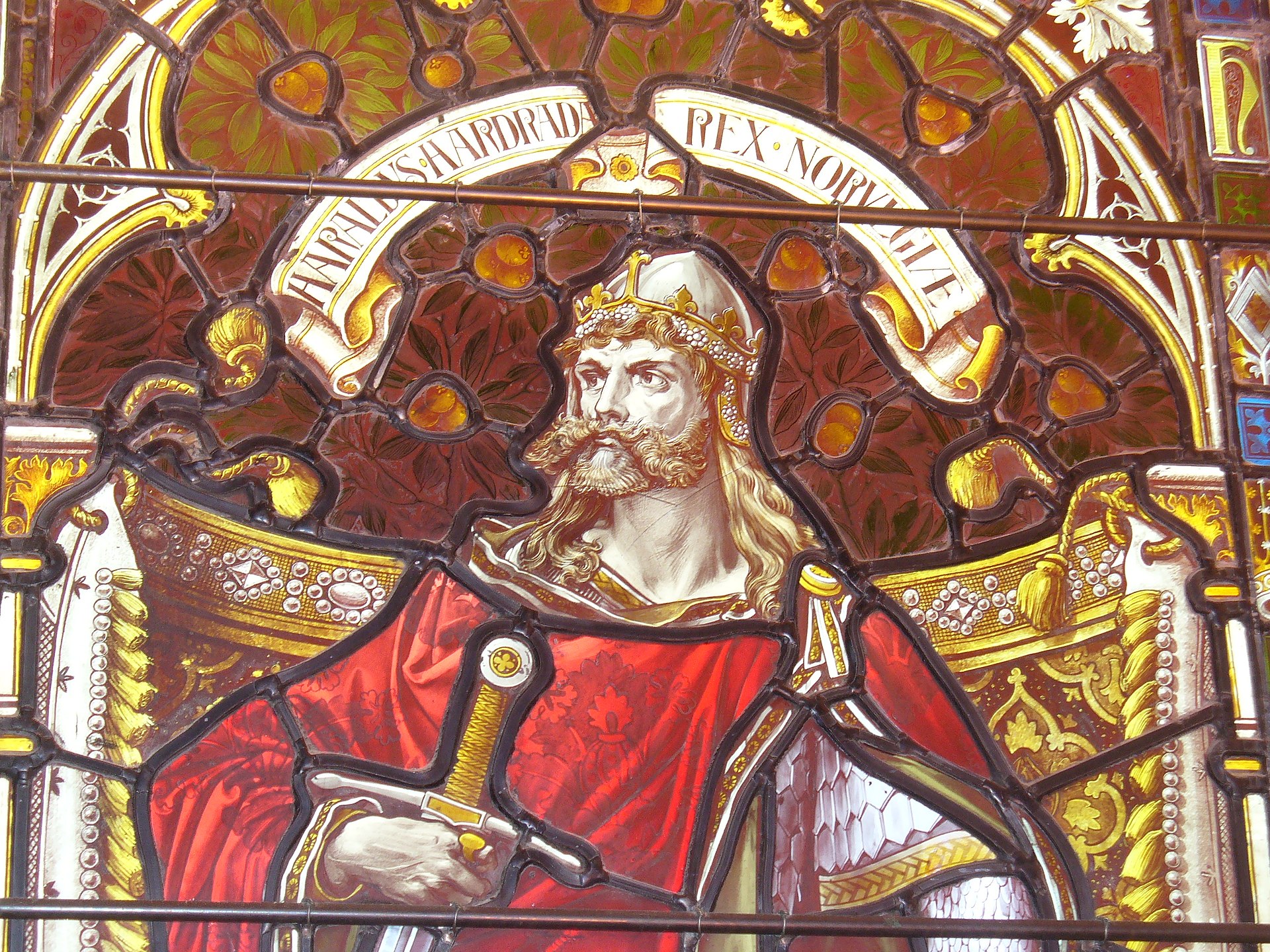
In season 3 of “Vikings: Valhalla”, the famous and successful 11th century Byzantine general George Maniakes (played by Florian Munteanu) is depicted as a ruthless villain having a strong rivalry with Harald Hardrada. Although Maniakes is shown to have a rivalry with Harald in the series, this cannot be proven as historical sources make no such mention of a rivalry between them while real history too makes no mention of Maniakes having imperial ambitions the way he did in the series.

The one thing though the series did get right about Maniakes is his large size and great strength as historical sources true enough does mention him as exceptionally tall and strong while also having a bad temper. During the Sicilian expedition in the series- which Maniakes did lead in real history- Maniakes was shown having an intense hatred towards the Muslim Arabs that he would go as far as to genocide them, however this cannot be confirmed as historical sources make no mention of Maniakes hating the Arabs or Islam in general. Instead, in real history, Maniakes was just portrayed as a general loyal to the empire and emperor/s until he later rebelled when accused of treason. The series too shows Maniakes saying that the Arabs would soon threaten Constantinople and later Jerusalem, but this is untrue in real history as the Arabs by the 11th century were very far from Constantinople unlike in previous centuries and Jerusalem was true enough by this time in Arab hands, under the Fatimid Caliphate which by that time was at peace with Byzantium.

The series too shows Maniakes serving under Emperor Romanos III, though in real history it was only in Romanos III’s reign when Maniakes began his military career successfully defeating the Arabs in Syria and later capturing and defending the city of Edessa from the Arabs. In real history, it was under Michael IV’s reign that Maniakes was the top general of the empire but because of the failure of the Sicilian expedition which he led and due to Maniakes humiliating the emperor’s brother-in-law the admiral Stephen, Maniakes was recalled to Constantinople and imprisoned. However, when Michael IV died in 1041 his nephew and successor Michael V released Maniakes and sent him back to Southern Italy to be its governor. In the series though, once Romanos had been assassinated- which in the series was by Maniakes’ orders- Maniakes threatened to marry Zoe and become emperor, and true enough he is later seen as the new emperor but again the series shows him wearing something historically inaccurate to the era as he wears the robes of a Roman emperor from the 1st or 2nd century AD. Maniakes in the series after he is shown as being the new emperor battles Harald who escaped prison in a duel wherein Harald himself kills Maniakes with a spear. However, in real history Maniakes’ story ends differently as in reality Maniakes later as the governor in Southern Italy had a falling out with the new emperor Constantine IX Monomachos, Zoe’s 3rd and final husband. Being fed up of being accused of treason, Maniakes decided to rebel and thus he even proclaimed himself as emperor against Constantine IX, left Italy with his troops including Varangians, and marched into Greece. However, in 1043, Maniakes met his end in a battle near the city of Thessaloniki against the emperor’s forces wherein like in the series, he was killed with a spear stabbing him in the heart.
Constantinople and the Imperial Palace
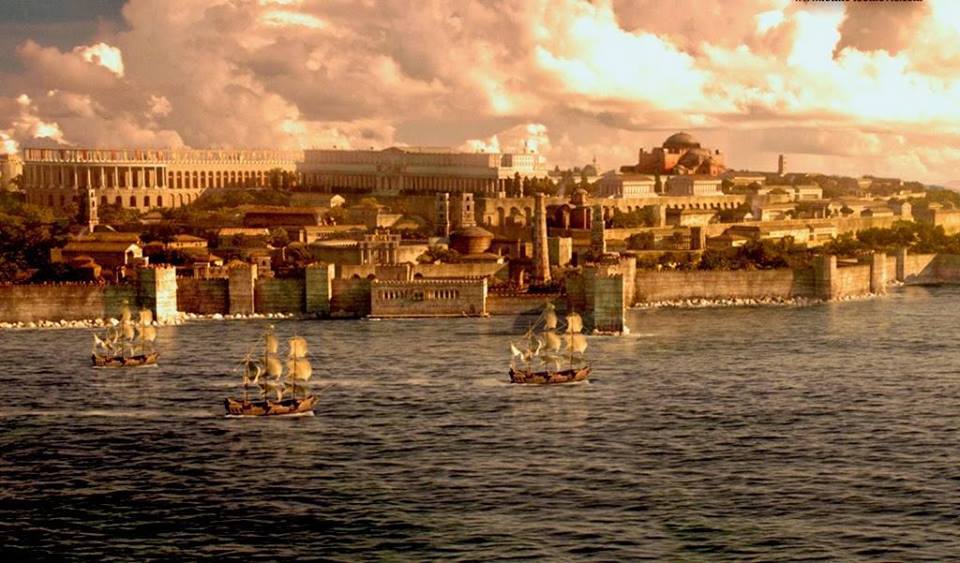
The Byzantine imperial capital Constantinople plays a significant part in the series, and although the city skyline and its landmarks were more or less depicted accurately, there are some minor details that the series got wrong.

For one, as shown in the triumphal parade the Byzantine army were using yellow sun symbols in purple banners, in reality the Byzantines never used such symbols as this sun symbol on a purple flag was used by the Ancient Macedonians of Alexander the Great in the 4th century BC and not by the Macedonian Dynasty Byzantines. The one thing though that the series got correct when it came to banners and standards was the use of crosses over the banners as the Byzantines true enough did use them. Triumphal parades in Constantinople meanwhile began at the Golden Gate of Constantinople and not from a narrow street coming from the harbor as seen in the series. The one thing though that the series got correct about triumphal parades in Constantinople is that it passed through the Mese or main street of Constantinople, although the major mistake in this particular scene was the use of Ottoman Turkish military march music in the background. The imperial palace complex of Constantinople in the series meanwhile was more or less accurately depicted with its lavish halls and walls made of marble and porphyry.
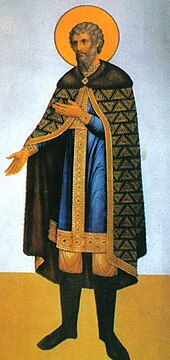
The series too shows underground passageways in the palace which true enough did exist in the imperial palace as a way for people in the palace including the emperor to get around more quickly and safely. However, in real history, foreign rulers who came to the imperial palace in Constantinople were received with a lavish banquet in the palace attended by numerous guests and accompanied by spectacular performances unlike in the series where we see Prince Yaroslav I of the Kievan Rus’ (played by Marcin Dorocinski) just presented with a simple dinner at a room in the palace; this would be more likely if the series took place in the late Byzantine era such as in the 14th or 15th centuries when the empire was too poor to afford such lavish ceremonies but not in the 11th century when Byzantium was at the height of its power. On the other hand, Prince Yaroslav I of the Kievan Rus’ too never visited Constantinople in real history and additionally, the series too says that Yaroslav was Harald’s uncle, but this was not true in real history. Later on, the series shows an Ancient Greek and Roman orgy style party in the imperial palace- where Romanos III is killed- but these kinds of parties certainly no longer took place in 11th century Byzantium and possibly never happened ever since the Roman Empire became Christian in the 4th century.
Other Inaccurate Elements
One of the most major elements the series got wrong was the use of the word “Byzantine” and their empire as the “Byzantine Empire”. The Byzantines during their time true enough never called themselves that, instead they referred to themselves as “Romans” or Romaioi in Greek and their empire still as the “Roman Empire” unlike in the series where they refer to themselves as “Byzantine”. However, I would still agree with the series using the word “Byzantine” as it would make sense in order to avoid confusing their empire with Ancient Rome as if the series would stay historically accurate and refer to themselves as “Roman”, then the audience too would be confused and would think that it is set in Ancient Rome and not in the Middle Ages. Additionally, the emperor Romanos III in his speech mentions that the Byzantine Empire which he ruled stretched from the “Alps to Asia” but this is not true as the 11th century Byzantine Empire only went as far west as Southern Italy and not the Alps, but it was still a massive empire as it covered almost the entire Balkans and stretched west to east from Italy to Armenia and north to south from the Danube to Syria. The series too shows the famous Viking Leif Erikson (played by Sam Corlett)- the first European discoverer of the Americas (Vinland)- serving in Byzantium’s Varangian Guard and travelling to Byzantine Greece but in reality, Leif Erikson never travelled to Byzantium and joined the Varangian Guard as he was already dead by the time of the series; he died possibly in 1025. However, the series did get the scene of Byzantine life in the countryside- in this case being Greece- right as it shows it being under attack by bandits and bandit raids on villages were in fact common in Byzantine history. The series too shows Leif Erikson visiting the mapmaker Callinicus in the Greek island of Corfu, however this mapmaker never existed in real history whereas the Byzantines too in real history never knew that Greenland or the New World had existed as they did not know about Leif Erikson’s discovery of it.

Conclusion
And now this is about it for my own take on what were the inaccuracies of season 3 of Netflix’s “Vikings: Valhalla”. There are possibly many more minor details that the series got wrong historically, but I would not know, otherwise you can check Byzansimp’s latest video if you would want to know more about the series’ inaccuracies. The series surely did have a lot of inaccuracies historically speaking but nevertheless the series was still exciting to watch but more importantly it finally gave us something where the lesser-known and often overlooked Byzantine Empire is represented in popular media. For me, I really think that despite all the inaccuracies, the show has still done an excellent job in bringing the often-overlooked Byzantine Empire and its notable characters such as Emperor Romanos III Argyros, Empress Zoe, George Maniakes, Harald Hardrada, and Byzantine Constantinople itself to life and more so in popular media for the whole world to see. However, I still think that the series would have been way better if the historical research team of it did their research better and avoided at least the simplest historical errors such as the use of the Ancient Roman armor and other outfits and if they got the emperor of the time right being Michael IV and if Zoe was actually the real empress Zoe and not a foreign princess. If the series did get most of the details historically accurate, then I would think that it would be the best possible representation of Byzantium in popular media. Now, I would like to know what are your thoughts on the series and if you really think it did bring Byzantium to life? I hope you enjoyed reading this article too and learned a lot from it and thank you for reading!
 The Byzantium Blogger